Blockchain Characteristics and Acceptance
Joe Abou Jaoude
A Thesis In
The John Molson School of Business
Presented in Partial Fulfillment of the Requirements For the Degree of
Doctor of Philosophy
Business Administration (Supply Chain & Business Technology Management) at Concordia University
Montreal, Quebec, Canada
March 2019
CONCORDIA UNIVERSITY SCHOOL OF GRADUATE STUDIES
This is to certify that the thesis prepared
By: Joe Abou Jaoude
Entitled: Blockchain Characteristics and Acceptance
and submitted in partial fulfillment of the requirements for the degree of
Doctor Of Philosophy (Business Administration - Supply Chain & Business Technology Mgmt) complies with the regulations of the University and meets the accepted standards with respect to originality and quality.
Signed by the final examining committee:
Chair Dr. Juliane Proelss External Examiner Dr. Dimitar Christozov External to Program Dr. Ketra Schmitt Examiner Dr. Dennis Kira Examiner Dr. Marc Alexandre Tomiuk
Thesis Supervisor Dr. Raafat Saade
Approved by______________________________________________________ Dr. Kathleen Boies, Graduate Program Director
March 15, 2019____________________________________________________ Dr. Anne-Marie Croteau, Dean
ABSTRACT Blockchain Characteristics and Acceptance
Joe Abou Jaoude, Ph.D. Concordia University, 2019
Originally conceived as a mechanism to enable a trust-less cryptocurrency – Bitcoin, blockchain has since unbound itself from its original purpose as an increasing number of industries and stakeholders eye the technology as an attractive alternative to solve today’s complex business problems as well as disrupt mature industries. This dissertation explores the uses and application of blockchain in different domains and investigates empirically a theoretical model for its acceptance as the underlying technology for current and future information systems. The research is in three parts/essays: (1) a systematic literature review of blockchain technology to assess the body of research knowledge while also highlighting the major fields of study and areas of its application; (2) exploration of the relevant factors pertaining to blockchain-based information systems Acceptance in order to identify and develop their appropriate measurements; and (3)validation of a theoretical model from consumer decision making which includes trust, and risk but also includes important blockchain related antecedents in order to provide the needed insights for the blockchain consumer adoption/acceptance process. Findings suggest that the exploration of blockchain domains has only begun with Internet of Things, Energy, Finance, Healthcare, and Government as the most promising areas of implementation. Furthermore, perceived usefulness, risk, reputation, intention to transact, familiarity, comfortability, trust, perceived security as well as perceived privacy were identified as critical factors characterising blockchain, and measurements were developed, validated and modeled using a theoretical model. It was found that trust and perceived risk play a major role in driving consumer decisions regarding intention to transact. Furthermore, we find that perceived privacy protection, perceived security protection, reputation, and familiarity strongly influence consumer’s trust and perceived risk in blockchain
ACKNOWLEDGMENTS
This thesis is dedicated to my wife Melissa who has been a constant provider of encouragement and support throughout the challenges of my academic career.
I wish to express my very great appreciation to Professor Saade, my research supervisor whose patience, guidance, encouragement and support made this research work possible.
I would also like to thank Professor Tomiuk for his valuable feedback and expertise regarding the data analysis and methodology.
Finally, I wish to thank my parents for their continuous encouragement and teaching me to work hard for the goals I wish to achieve.
Table of Contents
List of Figures ... viii
List of Tables ... ix
Chapter 1: Introduction ... 1
I. Background ... 1
II. Blockchain Characteristics ... 1
III. Purpose of the Research ... 3
IV. Motivation ... 4
V. Findings ... 7
VI. Contributions ... 8
Chapter 2: Blockchain Applications – Usage in Different Domains ... 10
I. Introduction ... 10
RQ1: What business fields have been addressed in current research on blockchain applications and how has it evolved since 2015? ... 12
RQ2: What solutions have been proposed for the major fields of blockchain applications? . 12 RQ3: What are current research gaps in blockchain business applications?... 12
RQ4: What are the future directions for blockchain business applications? ... 12
II. Background ... 13
III. Research Methodology... 16
A. Stage 1: Criteria and Coding ... 18
B. Stage 2: Article Reduction:... 19
C. Stage 3: Synthesis: ... 21
IV. Literature Review ... 24
A. Internet Of Things ... 26 B. Energy ... 36 C. Finance ... 39 D. Healthcare ... 42 E. Government ... 44 V. Discussion ... 47 VI. Limitations: ... 55 VII. Conclusion ... 55
I. Introduction ... 57
II. Factors in Blockchain Acceptance ... 62
2.1 Reputation ... 63 2.2 Risk ... 64 2.3 Benefit ... 64 2.4 Intentions ... 65 2.5 Familiarity ... 65 2.6 Comfortability ... 65
2.7 Perceived Privacy Protection ... 66
2.8 Perceived Security Protection ... 66
2.9 Trust ... 67
III. Methodology ... 67
IV. Results and Discussion ... 70
Student feedback on reputation ... 70
Student feedback on perceived transaction risk ... 71
Student feedback on perceived risk ... 71
Student feedback on perceived benefit ... 72
Student feedback on intention ... 73
Student feedback on familiarity ... 74
Student feedback on comfortability ... 74
Student feedback on perceived privacy protection ... 75
Student feedback on perceived security protection... 76
Student feedback on trust ... 77
Reliability and validity of the factor analysis ... 78
Exploratory factor analysis model ... 84
V. Conclusion ... 88
Chapter 4: Modeling Blockchain-Based Information Systems ... 90
I. Introduction ... 90
II. Background ... 92
III. Factors for Blockchain Decision Making ... 96
Familiarity (FB)... 96
Perceived Security Protection (PSP) ... 98 Reputation (BR) ... 98 Trust (BT) ... 99 Risk (BCPRB) ... 100 Benefit (PUB) ... 100 Intention to Transact (BPB)... 101
IV. Proposed Hypotheses ... 101
V. Methodology... 102
Context of Study ... 103
Survey & Process ... 103
VI. Psychometric Analysis of Results ... 104
Content Validity ... 104
Construct Validity ... 104
Reliability ... 108
Structural Model Assessment ... 109
VII. Results of SEM ... 110
VIII. Discussion of Results ... 111
IX. Contributions to the literature ... 113
X. Limitations and Future Research... 113
Chapter 5: Conclusion ... 116
I. Summary ... 116
II. Future Research ... 118
III. Limitations: ... 119
List of Figures
Figure 1: Publications with Blockchain in the title by year.. ... 15
Figure 2: Number of publications with Cryptocurrency, Bitcoin or Blockchain in the title by year.. ... 15
Figure 3: The Literature Review Process.. ... 17
Figure 4: Publications from top 4 publishers with Blockchain in the title by year.. ... 18
Figure 5: Publications from top 4 publishers with Blockchain in the title by type.. ... 20
Figure 6: Publications from top 4 publishers with Blockchain in the title by classification. ... 22
Figure 7: Publications from Top 4 Publishers with Blockchain In the Title by Classification by Year. ... 24
Figure 8: Number of Publications of Blockchain Applications from the Top 4 Publishers by Field. ... 25
Figure 9: Student feedback on reputation ... 70
Figure 10: Student feedback on perceived transaction risk ... 71
Figure 11: Student feedback on perceived technology risk ... 72
Figure 12: Student feedback on perceived usefulness ... 73
Figure 13: Student feedback on intention to transact ... 74
Figure 14: Student feedback on familiarity ... 74
Figure 15: Student feedback on comfortability ... 75
Figure 16: Student feedback on perceived privacy protection... 76
Figure 17: Student feedback on perceived security protection ... 77
Figure 18: Student feedback on trust ... 78
Figure 19. The proposed Consumer Decision Making Model ... 102
Figure 20. Results of the structural equation model ... 111
List of Tables
Table 1: Distribution of articles with blockchain in the title by publisher... 19
Table 2: Data Items... 20
Table 3: Journal Articles Published in Peer Refereed Journals from the 4 Top Publishers ... 27
Table 4: Major Subjects of Study Within the Top 5 Fields of Blockchain Application Solution Research. ... 51
Table 5: Blockchain Solutions and Resulting Spinoff Innovations ... 53
Table 6: Construct Cronbach’s Alpha and Eigenvalue ... 79
Table 7: Individual factor loadings for measurement items and constructs... 79
Table 8: Initial EFA factor model ... 85
Table 9: Final EFA factor model with reduced items ... 87
Table 10. Individual factor loadings for measurement items and constructs with Eigenvalues .. 105
Table 11. Individual factor loadings for reduced measurement items and constructs with Eigenvalues ... 107
Table 12. Correlations of Latent Variables ... 109
Table 13. Descriptive Statistics and reliability criteria ... 109
Table 14. Model fit statistics of the measurement model ... 110
Chapter 1: Introduction I. Background
As it stands, most transactions are centralized through third-party organizations that need to be trusted. For example, when you graduate, your employer requests an official transcript as proof of completion of your studies. The university in this case is considered as a trusted intermediary between the student and the employer where its role is to ensure that the information contained within the transaction is accurate and truthful. Why doesn’t the employer ask the student to provide
a copy of their transcript directly? The reason is that of trust, as the candidate can modify the content. In short, the true service or commodity offered by a third-party is trust.
Launched in 2008 by Satoshi Nakamoto in his seminal paper titled “Bitcoin: A peer-to-peer Electronic Cash System”, Bitcoin was the world’s first fully digitally distributed currency. This
innovation has sparked a wave of disruption and change in the finance industry, leading to the creation of FinTech and to a global discussion on the current state of the banking system as well as financial intermediaries including the future of the finance industry and monetary systems (Mackenzie, 2015).
Since the introduction of Bitcoin, cryptocurrencies have surges in popularity and by extension so has their underlying technology. As it stands, there are over 2100 cryptocurrencies running on over 800 blockchains with an overall market capitalization of 135 billion dollars and 30 billion dollars in daily trading led by the top 4 cryptocurrencies (Bitcoin, Tether, Ethereum and Ripple) which constitute over 57% of the market capitalization.
Blockchain is increasingly showing more promise of its application in the areas of “Internet of Things”, digital collaboration, artificial and business intelligence, organizational information systems, technostress, and the dark side of digital innovations. Blockchain is promising enhanced business processes and transactions and at the same time resolve issues of trust. However, although some industries such as the financial sector might see it as a disruptive technology that cannot be avoided, it seems that they are facing the challenge and understanding the need for blockchain to be managed.
While Bitcoin offered many unique features and innovations that lead to the acceleration of its adoption such as proof of work and digitally limited supply, it is blockchain that stands to be the key innovation whose applications seem to spin off away from Bitcoin and the financial services sector in general and into mainstream use across the various industries and technology applications (Underwood, 2016) as it offers three characteristics that render it an attractive and valuable tool for the current digital age: immutability, decentralization, asymmetric encryption and smart contracts (Wang et al., 2018).
Using cryptography and hash functions, blockchain can encrypt a grouping of transactions into what are called blocks to which specific has functions are automatically generated as a result of the content in the block. Any alteration to the block itself would lead to a change in the hash function and since all blocks are linked together through the inclusion of the current and previous hash key in each block, a change to one block would require decrypting and changing all the previous blocks on the chain. This feature allows for several advantages such as the ability to ensure that all information is kept secure and transparent while significantly reducing the risk of an attack thereby making the system capable of existing and operating without the help of trusted third parties and intermediaries (Savirimuthu, 2017).
Blockchain decentralization means that is does not have to rely on a single company or point of service in order to provide and diffuse information. This is done using hash functions and encryption which render the ability to hide sensitive information within a particular transaction only to the relevant stakeholders who possess the proper key to access it. This in turn makes possible the ability to store and simultaneously manage multiple copies and instances of the blockchain on several devices, who act to maintain the ledger and serve as guards to ensure that the future transactions undertaken on the blockchain are legitimate and do not undermine the integrity of the information in the system. This procedure is known as mining and is the primary basis of compensation for the blockchain business model; in this instance the community or
“miners” receive tokens in relation to the amount of effort or computing power required to process the transactions and ensure the integrity of the information (Savirimuthu, 2017).
Blockchain allows for user privacy through the use of asymmetric encryption, which generates a public / private key allowing the user to transact publicly with information while retaining their identity private from the network. This can best be explained through the example of a regular
mailbox, which is tied to a regular address known as the public key that is publicly available and
can be used to send information directly to the user without direct knowledge of that user’s private
information; the mailbox is also tied a physical key which is held and controlled by the individual themselves which render the mailbox unable to be opened by anyone other than the holder of the key. This pairing allows the user to retain their privacy while transacting fully on the blockchain (Savirimuthu, 2017).
Of all features however, perhaps the most versatile and adaptable innovation tied to blockchain technology is the prevalence and use of smart contracts. Smart contracts are computer programs capable of executing and implementing complex instructions without the need for intermediates and human intervention. As it stands, contracts that are made between various parties must be executed either personally by the relevant stakeholder or using an intermediary. Smart contracts remove the obstacle by allowing parameters to be set which automate the execution of certain tasks and functions.
III. Purpose of the Research
In this research, blockchain was studied by first assessing the body of knowledge published in scientific journals and conferences. More specifically, this assessment focused on the application of blockchain. Blockchain is considered as a new paradigm disrupting the way business is done, and as such, it has serious implications to organizational and societal change. We therefore, seek to identify the factors for its acceptance. Finally, we proposed and tested a theoretical model to help us understand the interactions between those factors.
In our comprehensive literature review, we contextualize the initial application of Blockchain technology and trace its evolution into other fields of studies; identify and discuss our literature review methodology, and selection and mapping process. The results of the process are then elaborated followed by a discussion of the Blockchain application research landscape and the various fields covered as well as the respective Blockchain contributions suggested by the literature.
The findings then inform our study to identify the most relevant factors to the adoption and acceptance of blockchain technology by consumers within the previously identified domains. This identification culminates in the development and verification of items designed to measure the
risk, reputation, intention to transact, familiarity, comfortability, trust, perceived security as well as perceived privacy – all of which are critical characteristics defining blockchain.
We then use measures developed, studied and validated in our previous work (Rossiter, 2002, Diamantopoulos, 2005 and Churchill, 1979) in order to apply a structural equation model to blockchain acceptance (Anderson & Gerbing, 1988). To that end we adopt the model established in (Kim et al., 2008) and integrate blockchain characteristics, in order to understand linkages for possible decision-making processes related to blockchain and propose a theoretical model for blockchain acceptance.
IV. Motivation
Blockchain technology has emerged as the central innovation of the Bitcoin system, allowing the decentralization of information through asymmetric encryption and immutability of the ledger while facilitating transactional capabilities within and across blockchains and systems using smart contracts. These features are proving to be valuable disruption components in various industries and domains relying on trusted third parties and intermediaries (Underwood, 2016).
While a few cryptocurrencies have facilitated indirectly, blockchain acceptance among consumers and its adoption into the mainstream especially through cryptocurrencies such as Bitcoin and Ethereum, the relatively small size of these platforms compared to the global financial markets and the national currencies managed by mature, sophisticated financial institutions means that the current integration of blockchain even within the area of FinTech is still not enough to constitute proper consumer acceptance of the blockchain (Folkinshteyn & Lennon, 2016).
Recent research has identified a surge in blockchain related research using bibliometric studies (Miau & Yang, 2018), indicating an increase in the user of blockchain related keywords in academic articles and research studies particularly pertaining to internet of things, smart contracts, payment systems and electronic commerce. Meanwhile, reviews of current research topics on blockchain qualitatively identify major applications of blockchain technology to fields such as internet of things, finance, healthcare (Lu, 2018). A systematic literature review of blockchain identified similar areas in academic research interests in addition to energy and government integration of blockchain.
Blockchain possesses several user advantages when compared to conventional centralized and intermediated systems, thereby opening the door for massive disruption and change in current business models and standards (Roman-Belmonte et al., 2018). However, aside from the technical challenges and limitations, there are several hurdles with regards to consumer acceptance and decision making that the technology needs to overcome (Kamble et al., 2018). These are issues related to reputation, familiarity, security, privacy, trust, risk, benefit and intention which have remained unaddressed in the domain of blockchain based information systems (BBIS) (Folkinshteyn & Lennon, 2016) (Kim et al., 2008).
Given the advent of blockchain as a supporting infrastructure and underlying mechanism enabling the Bitcoin network; blockchain has inherited notoriety due to its association with the cryptocurrency that serves to erode the trust and risk opinions formed by consumers regarding blockchain based information systems (BBIS) (Treleaven et al., 2017). Furthermore, while the hype cycle has served to increase overall public awareness of blockchain technology, it has also propagated misinformation that serves to decrease the overall user familiarity with the platform (Lu, 2018).
Security, privacy and trust are key issues in dealing with consumer perceptions of BBIS, given the novelty and unique nature of the technology and its infrastructure (Dorri et al., 2017). Specifically, blockchain offers a unique approach to these components whereby the decentralization of the information as well as the immutable nature of the ledger allows for greater security due to increased data integrity and a lower risk of theft and disruption. Meanwhile, BBIS provide greater privacy through asymmetric encryption and the advent of the private public key which allows for user anonymity within the system (Yli-Huumo et al., 2016). Finally, the nature of the ledger itself is to enable trust among participants without the use of an intermediary, hence the nature of the trust-less system.
Risk and benefit are especially relevant to the blockchain due to the relatively nascent nature of the technology (Folkinshteyn & Lennon, 2016). The proliferation and standardization of current banking systems and facilitated payment methods stand to offer a lower transaction risk than blockchain technology due to the lack of recourse with BBIS in cases of fraud and identity theft on the blockchain (Cocco et al., 2017). Furthermore, the novelty of the introduced platforms and
stands to impede the general risk associated with the technology, further exacerbated by the traditional transaction risk (Giungato et al., 2017). Furthermore, the mature nature of the current banking system and the flexibility provided by innovative financial products such as direct bank transfers, automated check deposits and mobile payment systems serve to diminish the relative benefits of BBIS in the eyes of customers.
These factors greatly impact the potential for blockchain adoption, and even more so given the relative lack of research concerning their interaction within the consumer decision making and acceptance framework as most of the current literature focuses on the theoretical implications and applications of BBIS while empirical studies in general are limited (Kamble et al., 2018). For these reasons, there is a great need for the study of consumer decision making factors impacting blockchain acceptance in order to facilitate BBIS proliferation among consumers.
However, very few studies have focused on blockchain adoption. Kumpajaya & Dhewanto (2015), focused on the application of the TAM in an extended scope to the acceptance of Bitcoin in Indonesia; while Folkinshteyn & Lennon (2016), conducted a qualitative study to understand the TAM components of Bitcoin among various stakeholders. In relation to blockchain, Kamble, Gunasekaran & Arha (2018), studied the adoption of blockchain among supply chain stakeholders in India.
Luckily there is a strong history of literature pertaining to technology acceptance and consumer decision making models which started increasing exponentially since the late 1980s (Davis, 1993, Venkatesh et al., 2003, Davis et al., 1989).Specifically, the Technology Acceptance Model (Davis, 1989), Theory of Reasoned Action (TRA) (Hill et al., 1977) and the Theory of Planned Behavior (Ajzen, 1991) have been repeatedly combined through various constructs and factors in order to better understand the overall decision-making process of consumers (Kim, Ferrin & Rao, 2008). From the perspective of consumer decision making research, fields such as ecommerce have received extensive study (Pavlou, 2003, and Ha & Stoel, 2009) with Kim et al. (2008) incorporating various constructs of decision making and technology acceptance models along with antecedents of privacy and security protection as well as familiarity and reputation in order to better understand the decision-making process of consumers.
Considering the above, this research was motivated by the fact that blockchain, and not Bitcoin or cryptocurrency, is the true paradigm shift. This shift is not only in the financial sector, but occurring across all layers of information infrastructure and supporting technologies (hardware,
software, databases, business processes, organizational strategies, etc…) Blockchain has the
promise to transform the way society thinks and believes. Considering this, blockchain is not equivalent to a new technology, and as such, research is relatively scarce, little, dispersed and unorganized. It is with that in mind this research was motivated to understand the state of body of knowledge in blockchain, and more specifically, blockchain applications. Then identifying factors and corresponding relationships that are critical for decision making and understanding behavior. V. Findings
We find that blockchain research has increased substantially over the last 2 years and by around 32% as compared to 2015 and before. Furthermore, the outlets in blockchain publications have been through major publication sources primarily Elsevier and IEEE Xplore, which emerged as top publishers. The distribution of the articles has also shifted. Although the rate of publishing in conferences has remained the same, our study shows an important increase in journal publications. This we consider a sign of increased curiosity and demand for answers about the applicability of Blockchain. Relative to other domains of research, the Blockchain body of knowledge is still weak as it is at its infancy. The increase in research in the last two years is not impressive and it needs to be many folds more in order to reach an initial stage of maturity with possible theoretical proposals, models and designs. Expansion of the blockchain research landscape is of utmost importance, and the publication of Blockchain studies in high quality journals and outlets is necessary if we are to make sense out of its future. Another significant shift is the increase of application type publications. In 2015, Blockchain based applications represented 8 of 41 publications (Yli-Huumo et al., 2016). However, 7 of those publications were introduced in 2015 thereby signaling a potential shift in the publication landscape towards blockchain applications. Our study corroborates the existence of this trend with the identification of 151 blockchain application articles. We also identify six domains of blockchain applications (Finance, Insurance, Education, Supply Chain, Healthcare and Energy), one paradigm (IoT and Smart Cities) and six business fields (Transportation, Business Process Management, Fraud detection, Exchange, Resource Management and Rights Management).
Second, we identify relevant items pertaining to the top factors in technology acceptance models, namely familiarity, comfortability, trust, perceived security, perceived privacy, perceived usefulness, reputation, perceived transaction and technology risk as well as intention to use. These measures should make a study of technology acceptance with regards to blockchain technology a feasible endeavor with respect to generating representative and accurate models for blockchain uses and implementations.
Finally, we confirm the unique nature of blockchain technology and reveal special characteristics in relation to traditional information systems such as ecommerce. Specifically, the risk of blockchain technology is unaffected by security and privacy. We also find that familiarity is weakly significant to risk with a low path coefficient.
VI. Contributions
Blockchain as an area of research is relatively new and has many opportunities to make contributions to the body of knowledge. The research provides several contributions to the blockchain body of knowledge:
1. Provide a comprehensive literature review of recent advancement in blockchain research and its evolution, and more specifically and the interest of this study is blockchain applications.
2. The research is the first effort to identify the different domains of blockchain uses. 3. We reveal that high quality research in the area of blockchain is lacking.
4. Identification of factors for blockchain-based information systems’ acceptance and
success.
5. Empirical study of those factors and inter-relationships between them (note that only three empirical studies were found and all three are basic and superficial).
6. The research bridges the gap between acceptance and blockchain 7. The present study lays out the ground work for future research by:
a. Providing blockchain-relevant acceptance measures
b. Exploring empirically the relationship between those measures,
c. Proposes an initial acceptance model for blockchain-based information systems use 8. Adapts a theoretical model from consumer studies, to blockchain acceptance.
9. Links the theoretical model to blockchain characteristics and includes cognitive and affective considerations.
The dissertation is organized as follows. Chapter Two presents the systematic literature review conducted regarding blockchain applications and their primary use cases in the popular domains, Chapter Three discusses the identification of factors affecting blockchain acceptance and consumer decision making including factor identification followed by the development of blockchain related measurements and their validation. Chapter Four leverages the established factors and measurements items to test an established theoretical framework for consumer decision making. Finally, Chapter Five concludes with a summary of the research conducted followed by the limitations of the dissertation and directions for future research.
Chapter 2: Blockchain Applications – Usage in Different Domains I. Introduction
Blockchain can be considered as the newest technology stressing the paradigms of “Internet of Things”, icollaboration, artificial intelligence, technostress, and the dark side of digital innovations. Blockchain seems to have stung all industries and created a buzz seeking opportunities for enhanced business processes and building trust. Yet, some industries such as the financial sector might see it as a disruptive technology that cannot be avoided and needs to be reshaped or managed.
Blockchain is a technology and a method that allows community users to validate, keep and synchronize the content of a transaction ledger which is replicated across multiple users. In other words, Blockchain is a decentralized transaction and data management technology which gained popularity in 2008 when an anonymous individual (or group) posted a white paper introducing Bitcoin – a Blockchain application of a digital currency (Yli-Huumo et al., 2016 and Aste et al., 2017).
As it stands, most transactions between individuals (financial, education, healthcare, etc.…) are
centralized through trusted third-party organizations. For example, when you graduate, your employer requests an official transcript as proof of completion of your studies. This transcript is collected directly from the university, which acts as a trusted intermediary between the student and the employer in order to ensure that the information is accurate and truthful. Why doesn’t the
employer ask the student to provide a copy of their transcript? The reason is that of trust, as the candidate can modify the content to their advantage. In short, the true service or commodity offered by a third-party is trust, and that is precisely the Blockchain proposition.
More specifically, Blockchain offers a decentralized environment where no third-party is in control of the data and trust is not required between the stakeholders. This is achieved through a peer-maintained self-sovereign system where the transactions are time-stamped in a ledger chronologically. The transactions are broadcast to the people who participate in the system such that the ledger is publicly auditable (Aste et al., 2017). Since the transaction information is copied and maintained with the entire community, it cannot be altered or modified without the approval and update of the ledger. This prevents fraud and ensures a digital form of verification allowing
This proposition offers several advantages to the participants within the network. First, the transactions are transparent and publicly available for everyone to check and validate without needing to go through a central authority; Second, the transparency of the information allows for faster processing of transactions and information exchanges due to the elimination of the middle layer between the parties; Third, the information remains anonymous despite its public availability due to the existence of a set of public and private keys associated to an account. The public key is available to everyone, the private key is strictly known by the individual and the identity of that party remains anonymous.
However, while Blockchain technology does offer a promising future, it has likely suffered from the hype of its potential applications. This hype opened the door for questionable and fraudulent enterprises claiming Blockchain technology as their core business. While this may have eroded some trust and confidence particularly in the finance and technology sectors, it has offered the benefit of increasing public attention and interest in the topic. Consequently, it has in turn provided incentive for academic research, its technical aspects and applications.
In order to better understand the true potential of Blockchain as well as its various influences on industry, it is important to assess the current body of research. A systematic review on the current research on Blockchain technology was previously conducted to identify the technical perspective challenges and future directions. The study included works between 2013 and 2015 inclusive (Yli-Huumo et al., 2016).
A quick evaluation of the research output in Blockchain revealed that a spike occurred as of 2016. To that effect we decided to perform an updated literature review to include the research work after 2015 and analyze other than the technical perspective such as Blockchain applications. More specifically, we address the gap with regards to (1) research work since 2015 (during which articles published on Blockchain have dramatically increased) and (2) focus on the business and management aspects of Blockchain - thereby mapping the existing literature around Blockchain applications and the pertaining fields of industry such as finance, healthcare, internet of things,
energy, government, etc.…
methodology, and selection and mapping process. The results of the process are then elaborated followed by a discussion of the Blockchain application research landscape and the various fields covered as well as the respective Blockchain contributions suggested by the literature.
We would like to stress that the use of Blockchain application in this article applies within the scope of the business and industry context and not the technical applications. Consequently, our literature review focuses on the following research questions:
RQ1: What business fields have been addressed in current research on blockchain applications and how has it evolved since 2015?
An important outcome of the present literature review is to compare the current state of research in Blockchain since 2015 while exploring, in addition to works with a technical perspective, other relevant areas such its applications and implementation. Collecting and consolidating a comprehensive body of literature will allow us to better understand the breadth and depth of related subject matter as we categorize and map the appropriate components while identifying the important areas that have been addressed.
RQ2: What solutions have been proposed for the major fields of blockchain applications? Blockchain was created as the underlying technological solution for Bitcoin. However, as time has passed by and a better understanding of Blockchain technology has evolved, its potential application to different sectors of the industry has surfaced. We therefore aim to identify the current researched Blockchain solutions for various industries and business applications.
RQ3: What are current research gaps in blockchain business applications?
The study will help identify the appropriate research gaps either regarding overlooked fields and potential applications within the industry or problems that have yet to be addressed within the industry itself in relation to Blockchain implementation. These findings will also help pave the way and provide guidance and ideas for future research contributions.
RQ4: What are the future directions for blockchain business applications?
A direct result of answering the previous research questions should lead to the identification of important research topics and areas of interest for future research. This contribution will allow the academic community to better leverage the existing attention on Blockchain technology and address the important and needed research questions.
II. Background
Blockchain is the foundational technology behind Bitcoin (a crypto-currency). It is a decentralized transaction and data management technology allowing, in an ideal state for a low trust (or trust-less) exchange system. Information in this system does not rely on a third-party and instead leverages the economies of scale of the peer network to peer-validate the entries and disperse transaction details in a ledger. While Blockchain originated as a base for the financial services sector, and is revolutionizing the industry itself, its application has begun to spread to other sectors.
The rate of Blockchain spread depends on the industry’s potential to benefit from it as well as its
sensitivity to the challenges that Blockchain brings into play (Aste et al., 2017).
The main driver to the adoption of Blockchain technology was the ability to solve the double
spending problem while maintaining the anonymity and privacy of the transacting user’s
information. Double spending is a situation in which a user of a digital currency can spend several times the same amount of money before there has been a realization that the amount has already been spent / claimed.
Blockchain solves the double spending problem with the use of cryptography and having a shared ledger maintained simultaneously by the transacting community, the asymmetric encryption provides the user with a private and public key (similar to a public mailing address and a private key for the mailbox pertaining to that address). Using this combination, users can transact anonymously on the blockchain using their private keys while only being known to the community by their public keys. Through the public keys, the community verifies each transaction across the various copies of the ledger in order to ensure the funds or cryptocurrency has not been previously transferred from the same public address. In the case where two transactions are conducted simultaneously, the transaction that receives the greatest number of confirmations (note not necessarily the one that was conducted first) is the transaction that is validated whereas the other is rejected.
This method is currently the dominant form of blockchain transaction verification and is known as proof of work and suffers from an intensive need for resources and time to verify transactions, sometimes in excess of an hour. This stands in contrast to proof of stake whereby instead of splitting transaction processing relative to computing power, the transactions are split based on the
other risks such as agency issues. The discussion on the advantages and disadvantages of proof of work and proof of stake constitutes a research area and falls outside the scope of this study. This allows for (relatively) rapid verification of the transaction’s legitimacy by the network’s nodes thereby clearing the double spending problem. User’s private information is kept secure by
using a public and private key combination attributed to each party on the network, the system allows the users to utilize the public key in order to conduct the transaction. These details pertaining to the transaction are stored within the block.
The block is then sent to the various nodes across the network to validate the transaction by ensuring that there was no double spending, the cryptographic properties of the blockchain allow a low trust system in which a small number of nodes is required to maintain the integrity of the blockchain and prevent an attack. Once the nodes clear the transaction, it is validated and added to the public ledger and details are stored thereafter. This entire process is conducted in complete anonymity, with neither of the parties and nodes involved having information concerning the identity of the participant.
Blockchain technology also lends itself well to transition into various industry and business applications due to the overall adoption of decentralized development and open source standards. While the above components are important characteristics of most blockchains and contribute significantly to defining their overall purpose, functionality and applicability within the businesses in which they operate; the most important component of the blockchain technology that cannot be modified or altered is the immutability of the ledger itself. When a transaction is processed and validated by the nodes in the network, the information is permanently recorded in the ledger and cannot be modified or erased from the system. In cases, where some modifications and action are required to be undertaken by an authority, smart contracts would come into play to alleviate the problems posed by the immutability of the Blockchain (Aste et al., 2017).
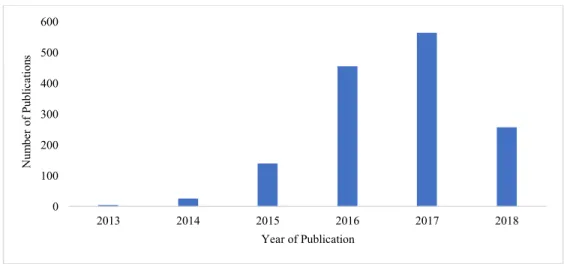
Figure 1: Publications with Blockchain in the title by year. The number of publications with Blockchain or its equivalent in the title has increased substantially since the 2015.
In the present study, we scoped our literature review to focus on the business management and application aspects (instead of the technical perspective only) of blockchain implementation. The motivation is threefold:
First, the explosion in Blockchain research starting 2016, with 2017 represents the most significant year thus far. This is illustrated in Fig. 1 showing the number of articles containing the term Blockchain in the title (using google scholar).
Figure 2: Number of publications with Cryptocurrency, Bitcoin or Blockchain in the title by year. In the first four years, Bitcoin publications were most of the group, however 2016 onwards
saw Blockchain overtake Bitcoin in title occurrences with cryptocurrency on the rise and overtaking Blockchain as well in 2018.
0 100 200 300 400 500 600 2013 2014 2015 2016 2017 2018 N um be r of P ubl ic at ion s Year of Publication 2008 2009 2010 2011 2012 2013 2014 2015 2016 2017 2018 N um be r of P ubl ic at ion s Year of Publication
Second, we believe a current study is warranted on the state of research into blockchain domains due to an apparent shift in research trends pertaining to blockchain, cryptocurrencies and Bitcoin within the last 2 years. While roughly 80% of all research articles prior to 2016 revolved around Bitcoin, Fig. 2 shows that the evolution of Blockchain research significantly surpassed those of Bitcoin, in 2016 and 2017. Furthermore, interest in cryptocurrency research has increased in 2018 and surpassed Blockchain research by about 30%, while research on Bitcoin has decreased gradually since 2015 to its original level in 2011-2012. This provides further justification for the
timeliness of the research itself by indicating a relative slowdown in blockchain’s research
momentum and suggesting that the future direction of research within the field pertains to cryptocurrencies. However, it is important to note that our research focuses on blockchain research specifically and other keywords such as those included in Fig.2 fall outside the scope of this study. Third, our classification framework focuses on Blockchain related applications and explores the associated fields that these applications address as well as the proposed benefits and contributions offered by blockchain to the major areas. This component of our work is the primary contribution as it was not evaluated before, and since practically every industry from aerospace to banking and the United Nations is presently considering its use in one way or another. Yet, the research to help these non-cryptocurrencies focused organizations make sense of blockchain technology while safely utilizing and taking advantage of the opportunities it brings is scarce.
III. Research Methodology
There are many approaches to literatures reviews that have been used in previous research. This includes the work of (Petersen et al., 2015) which outlines a systematic mapping process. Similarly, (Brereton et al., 2007) outlines a process to apply the review to the software engineering field. While there are many similarities and overlaps between the various methodologies, their evaluation and comparison fall outside the scope of this paper.
A systematic literature review approach based on the eight category coding steps established by was followed and presented schematically in Fig. 3. The literature review approach is made up of three sequential stages, namely criteria and coding, aggregation and consolidation (article reduction) and synthesis. The third stage includes synthesis of the final articles set, we identify the core and most relevant articles to our research questions (Carley, 1993 and Saade & Nijher, 2016). We elaborate on the phases and steps taken below.
Figure 3: The Literature Review Process. The three stages of the process: Criteria and coding, article reduction and synthesis categorize the 8 steps of the process.
C ri te ri a & C o d in g A rt ic le R e d u ct io n Sy n th e si s Levels of Synthesis Coding Steps Occurrence / Frequency Distinguish Among Concepts
Process Rules from step 1 to 4 and document
Encode text / information in articles and document Exclude irrelevant
articles
Analysis of results
Identification of subject matter, level of aggregation, and sources,
“Blockchain(s)”, “Cryptocurrency(ies)”, “Bitcoin(s)”
Coding of concepts, “blockchain(s)” was determined sufficient and
the filtering process adopted was predetermined in order to arrive at a reliable count of articles
Scanning through the articles, the extent of use, mention or treatment of blockchain applications was assessed. This lead to a decision on what type of articles will be retained for further analysis.
We found that similar areas of blockchain applications can be worded or expressed differently; we therefore identified similarities between the wordings
Apply the rules from steps 1 to 4. This required the extraction and reading of articles abstracts as well as the full articles when needed. Focus was done on articles that dealt with blockchain applications
A rejection process based on the inclusion/exclusion criteria was conducted here. Such criteria included that the articles be in english with full text availability
In this step the various blockchain application areas were categorized and consolidated based on overall theme and goal. The purpose was to single out the core area of application
Analysis of the most popular areas of blockchain applications is conducted. An overview of the literature as well as limitations and gaps are discussed
Figure 4: Publications from top 4 publishers with Blockchain in the title by year. The number of publications matches the overall trend seen in Fig. 1. However, there is a 2-year lag between the first Blockchain titled publication occurrence in 2013 and those of 2015 for the top publishers. A. Stage 1: Criteria and Coding
1) Levels of Synthesis
We mined google scholar for all articles with the word “Blockchain” in the title, variations such as “Blockchains” were also allowed provided they were included in the title as well. The search yielded 1512 articles. We attempted to expand the search to include cryptocurrency and Bitcoin in the article title but that lead to an unmanageable number of returned articles. Furthermore, the inclusion of Bitcoin or cryptocurrency would incorporate a bias into the finance industry and introduce articles related to the marketing and financing of blockchain technology (i.e. discussing the economic and financial aspects) rather than the application of blockchain within the industry. Since the focus of our research is Blockchain and its applications, we decided to drop the pursuit after cryptocurrency and Bitcoin as they fall outside the scope. We then identified the top publishers in order to retain high quality articles. The resulting publishers/databases are: IEEE Xplore, ACM digital Library, Springer, and Elsevier.
2) Coding Steps
We screened the articles title and abstract to ensure that the topics fit the scope and research questions. Whenever needed, the full paper text was consulted. Articles not written in English, full text not available, posters, or articles addressing different fields or research were excluded. 3) Occurrence / Frequency 0 20 40 60 80 100 120 140 160 2015 2016 2017 2018 N um be r of P ub lic at ion s Year of Publication
This step involves the decision of whether the inclusion should be due to the mere occurrence of the criteria (i.e. blockchain or its equivalent) or due to the frequency by which it occurs. Given that the criteria established in this paper require the occurrence of blockchain in the title, we believe the likelihood of frequency is relatively low and that occurrence relative to its significance to the subject of the publication is enough to merit the inclusion of the work.
4) Distinguish Among Concepts
In order to distinguish among the various concepts regarding the fields of blockchain application literature; we read through the abstracts in order to identify the appropriate classification and field of study. Once this phase was completed, we identified common keywords and concepts across the literature and did a second pass to map the articles to the appropriate categories based on derived classifications and fields. The resulting research resulted in a list of 300 articles.
B. Stage 2: Article Reduction:
5) Process Rules from Steps 1-4 And Document
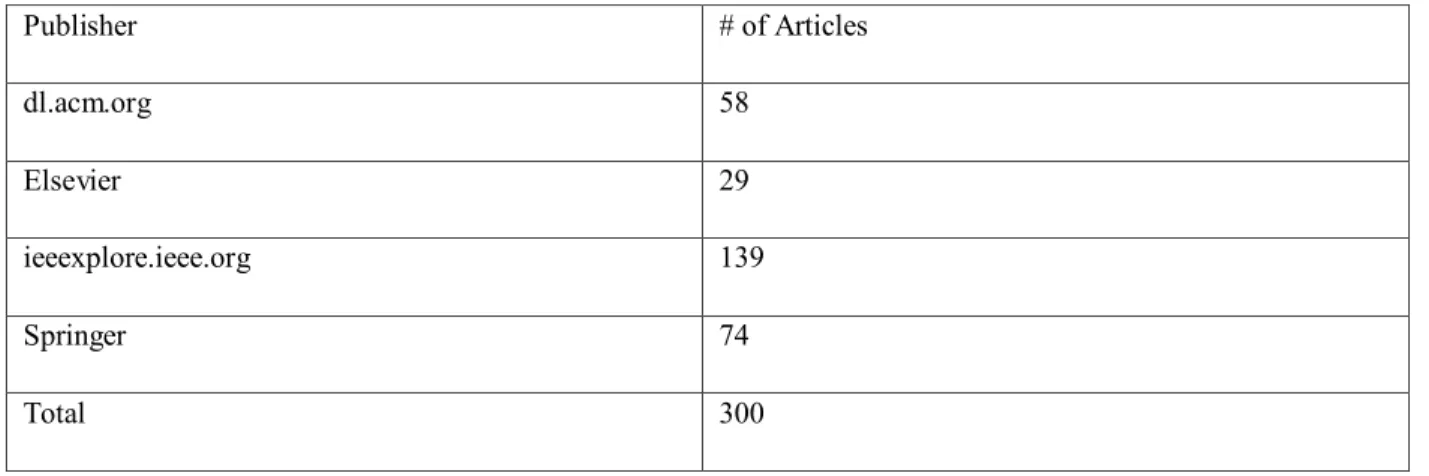
Table 1: Distribution of articles with blockchain in the title by publisher
Publisher # of Articles dl.acm.org 58 Elsevier 29 ieeexplore.ieee.org 139 Springer 74 Total 300
Table I represents the breakdown of the 300 publications by the appropriate publishers. We then categorized the fields of those articles that qualified under blockchain business applications. The information in Table I shows that IEEE has emerged since 2015 as the leading source for blockchain publication research with springer as second and the inclusion of Elsevier as a significant knowledge source.
Figure 5: Publications from top 4 publishers with Blockchain in the title by type. The number of conference publications is the most significant followed by journal publications. This might indicate a shortage in the number of journal submissions pertaining to Blockchain technology. 6) Exclude Irrelevant Articles
While the original number of articles by the top 4 publishers yielded 320, several articles were excluded due to irrelevance, particularly with regards to their fit within the standard classifications by publication type as well as the field of study to which they are attributed. This led to a final number of 300 articles that meet the relevance criteria.
7) Encode Text / Information in Articles and Document
Table II highlights the data items (D…) which were extracted from the papers in question once the
screening criteria were completed. D1 to D12 were collected using the information from google scholar whereas D13 to D18 were inputted after reading and reviewing the articles.
Table 2: Data Items
# Data Item Description
D0 Study Identifier Study Id (1,2,3, etc.…)
D1 Cites # of citations
D2 Authors Name of the author(s)
D3 Title Title of the paper
D4 Year Year of the publication
0 20 40 60 80 100 120 140 160
Book Conference Journal Symposium Workshop
N um be r of P ub lic at ion s Publication Type
D5 Source The event / journal / … from where this originates
D6 Publisher Source dataset for the article
D7 Article URL Article link URL
D8 Cites URL Article URL in google scholar
D9 GS Rank Articles rank in google scholar
D10 DOI Citation source where possible
D11 ISSN Identification number where possible
D12 Query Date date the information was collected
D13 Type Type of publication (conference / journal / etc.…)
D14 Abstract The abstract of the paper
D15 Research Question The research questions of the paper
D16 Findings The findings of the paper
D17 Classification The type of paper (improvement, report, application)
D18 Field of study In the case of application, which field (finance, energy, etc.…)
C. Stage 3: Synthesis: 8) Analysis of Results:
Considering the 320 articles from the previous step, Fig. 5 and Fig. 6 present the number of articles the year and type respectively. While our broader search does show articles containing the term blockchain as of 2013, the data sources selected did not contain such articles until 2015. This was expected as it would take time for Blockchain to build its own momentum as compared to Bitcoin.
Indeed, as shown in Fig. 2, the prevalent keyword in the article titles until 2013 was “Bitcoin” with
blockchain appearing with only 4 article titles in 2013 and 25 articles in 2014. In relation to our established databases, 2015 was the first year with such articles titles in 11 publications. This further highlights the significance of the current research as 2015 represents roughly 3% of all blockchain titles articles, indicating that much of the body of research took place from 2016
Fig. 6 provides information concerning the publication type of the papers included in our study. While the percentage of conference articles up to 2015 remained the same since then at 50%, our findings reveal that the percentage of journal articles since 2015 is 28% as compared to 2.4% in 2015. This is indicative to the increased interest in the business of blockchain, and its gradual increase in its maturity as a research space.
We adapted the classification terms used in previous studies, namely “report”, “improvement” and “application”. Note that, an “improvement” article is one that defines a novel approach of protocol
in order to address the shortcomings and technical limitations of blockchain technology. A “report”
is a discussion, review or incorporation of previously suggested improvements within the context
of a larger topic or area of interest pertaining to blockchain. An “applications” article in our study
is interpreted differently and addresses the applicability of blockchain to business sector (Yli-Huumo et al., 2016). We note that the context of our initial scope incorporates both technical as well as business applications of blockchain.
Figure 6: Publications from top 4 publishers with Blockchain in the title by classification. The number of applications is 151 out of a total of 300, constituting just over 50%. This is indicative
of the overall potential for Blockchain applications in various industries.
Fig. 7 provides a breakdown of the publication classifications from our study. Business topics were 14 out of the top 15 application categories. With blockchain based privacy application constituting the exception among them.
After breaking down the publications by type, we focused on the Blockchain applications related class of articles and proceeded to leverage the 2-step mapping process described earlier in respect to categorizing the primary field covered by the articles. In cases where there were overlapping
0 20 40 60 80 100 120 140 160
Application Improvement Report
N um be r of P ubl ic at ion s Publication Type
topics in the title and abstract with no clear preference to a specific area, we went to the article text in order to assess the prevalent theme of the paper and classify it accordingly.
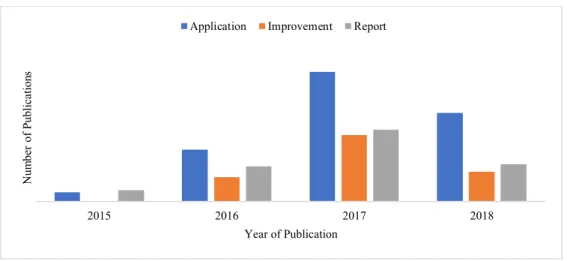
Fig. 7 displays the classification by year of the articles in question. We can see in the graph the
overall trend of significant increase in “application” articles since 2015. Another notable change is the decrease in the amount of “improvement” related publications and the rise of “reports” to overtake “improvements”.
These results were expected in the initial analysis, as the first stage of the research process is the proposal for improvements and modifications to an existing technology and given that reports are by nature dependent on the prevalence of improvements, it follows that they would first lag then overtake them.
Finally, as applications leverage the implementation of blockchain improvements as well as the reports needed to identify the core areas of competency where an application is efficient, it is expected that applications would be the last to spike and increase in significance as interest in the application and implementation of the technology increases.
Using the mapping process allowed us to identify the common areas of research on blockchain applications. 151 articles were identified for this analysis. Fig. 8 shows the distribution of these
“application” articles by field. The Internet of Things (IoT) is the dominant blockchain business
application topic. This is likely due to the high priority and concern raised by privacy and security problems in relation to the interconnectivity and data sharing of devices as well as exposing consumers and public infrastructure assets to security vulnerabilities. In fact, the findings corroborate the body of research, whereby the predominant application proposals for blockchain technology are security and privacy followed by trust (Yli-Huumo et al., 2016).
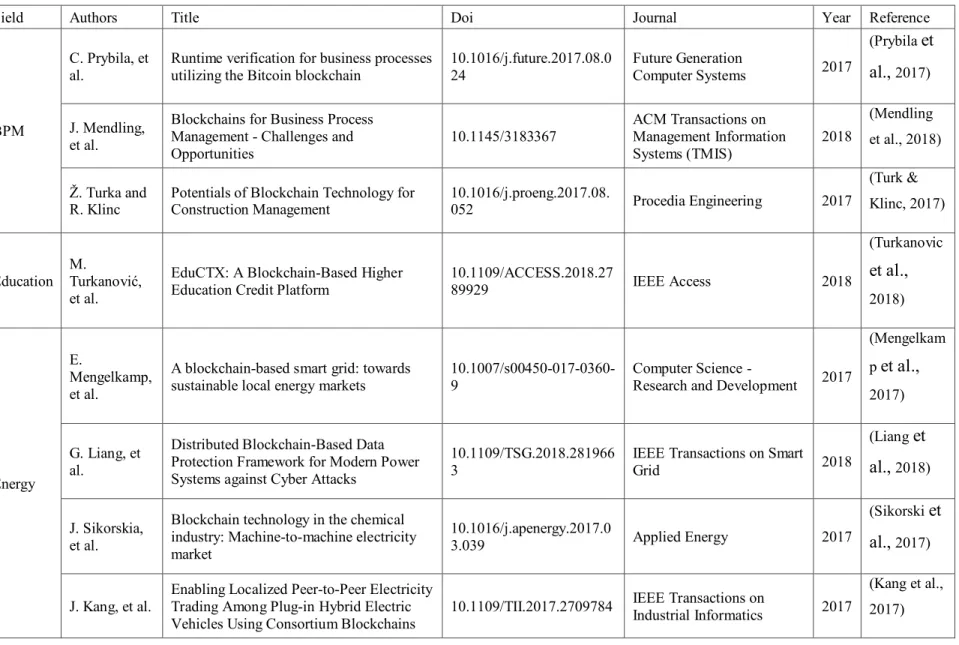
At this point, we needed to select the highest quality articles for final synthesis. We therefore chose to include only peer-reviewed journal-based Blockchain application. In our selection process we chose to include articles from IEEE based magazines with the other journals. Table II presents the final set of articles pertaining to Blockchain applications ready for final analysis and synthesis. The Table includes the authors, title, DOI, Journal, field of application and year.
Figure 7: Publications from Top 4 Publishers with Blockchain In the Title by Classification by Year.
IV. Literature Review
We began with a total of 1512 publications containing the word blockchain(s) in the title. The top 4 publisher were identified with a combined article count of 320. An elimination via the selection criteria resulted in 309 articles. Removing articles with an NA publication nature yielded 301. An additional article was removed due to having an out of scope application parameter bringing the total to 300 articles. Of those articles, 151 were blockchain applications, 65 were improvements to the blockchain and 84 were reports regarding blockchain technology. Table III identifies the 53 journal articles published in peer refereed journals from the 4 top publishers and groups them by the appropriate field of study.
A discussion of the most studied Blockchain applications including those in Table III is elaborated in this section. After reading all those articles, we analyzed the top 5 clusters (see Fig. 8) which we consider as the primary areas/fields of Blockchain-related studies and extracted the areas of research in each, as presented in Table III.
2015 2016 2017 2018 N um be r of P ubl ic at ion s Year of Publication Application Improvement Report
Figure 8: Number of Publications of Blockchain Applications from the Top 4 Publishers by Field. The Top 5 Fields Represent 78 Of The 151 Blockchain Application Literature. We notice that the distribution of articles published in peer reviewed journals from the top 4 publishers follow the overall distribution of the 151 studies pertaining to blockchain applications and domains. Furthermore, the top 5 categories also constitute over 50% of the relevant body of research. However, we do note a key difference with regards to the fifth category; specifically, we find that research pertaining to the government domain of blockchain applications is absent with only one study pertaining to the topic itself. This implies a lag between government related blockchain application and those pertaining to the rest of the major domains of study and can therefore signal an upcoming area of interest and increase in relation to peer reviewed publications. Furthermore, it is important to note the lack of clustering among the authors of the publications included, this indicates that most studies pertaining to the blockchain domain are authored by researchers within the domain to which it is being applied. This in turn signals a need for more centralized research around blockchain domains and its applications as well as the overall evolution of blockchain research thus far.
0 5 10 15 20 25 30 35 Access Control Data Accountability Decision Making Research Environment Fraud Detection Social Networks Data Transfer Education Insurance Smart Cities Supply Chain Privacy Rights Management BPM Transportation Exchange Government Resource Management Finance Healthcare Energy IoT Number of Publications Fi el d of A ppl ic at ion
By far, it seems that most researchers today associate Blockchain application to the IoT. This is maybe due to the fact the IoT paradigm is integrative in nature and not only encompasses all advantages of the highly networked digital world, but also its bias and challenges. It seems that Blockchain in this case holds great promise and researchers are exploring how and to what extent Blockchain can address and solve these challenges.
Although still few, research efforts of Blockchain application in Energy, Finance, Healthcare and Government has been relatively equal. As shown in Table II, there are other dispersed Blockchain application research work (an article here or there) and include fields/areas in education, insurance, supply chain, rights management, transportation, business process management, fraud detection, exchange and resource management.
Overall, it seems that Blockchain applications research is still very young by any standard despite the recent spike in 2017.
A. Internet Of Things
The internet of things was by far the most popular “application” field. Twenty percent (29) of the
151 articles were related to Blockchain applications. All these articles were making the case for
Blockchain’s ability to improve and enhance the internet of things paradigm. In reviewing those
IoT articles we were able to identify several dominant topics within the area: (1) enhanced security of interconnected devices; (2) maintaining anonymity; (3) smart contract provisions; (4) device management mechanisms and protocols; and (5) network security (Christidis & Devetsikiotis, 2016).
1) Enhanced Security of Interconnected Devices
A major problem with the interconnectivity of the millions of devices needed to propagate an IoT phenomenon is the exponential increase in security concerns presented by the various interfaces through which network devices communicate. This includes the various security problems pertaining to the IoT including but not limited to low-level concerns such as interlocking adversaries and insecure
Table 3: Journal Articles Published in Peer Refereed Journals from the 4 Top Publishers
Field Authors Title Doi Journal Year Reference
BPM
C. Prybila, et
al. Runtime verification for business processes utilizing the Bitcoin blockchain 10.1016/j.future.2017.08.024 Future Generation Computer Systems 2017
(Prybila et
al., 2017)
J. Mendling, et al.
Blockchains for Business Process Management - Challenges and Opportunities
10.1145/3183367 ACM Transactions on Management Information Systems (TMIS)
2018
(Mendling et al., 2018)
Ž. Turka and
R. Klinc Potentials of Blockchain Technology for Construction Management 10.1016/j.proeng.2017.08.052 Procedia Engineering 2017
(Turk & Klinc, 2017)
Education M. Turkanović,
et al.
EduCTX: A Blockchain-Based Higher
Education Credit Platform 10.1109/ACCESS.2018.2789929 IEEE Access 2018
(Turkanovic et al., 2018) Energy E. Mengelkamp, et al.
A blockchain-based smart grid: towards sustainable local energy markets
10.1007/s00450-017-0360-9
Computer Science -
Research and Development 2017
(Mengelkam p et al., 2017)
G. Liang, et al.
Distributed Blockchain-Based Data Protection Framework for Modern Power Systems against Cyber Attacks
10.1109/TSG.2018.281966
3 IEEE Transactions on Smart Grid 2018
(Liang et al., 2018)
J. Sikorskia, et al.
Blockchain technology in the chemical industry: Machine-to-machine electricity market 10.1016/j.apenergy.2017.0 3.039 Applied Energy 2017 (Sikorski et al., 2017) J. Kang, et al.
Enabling Localized Peer-to-Peer Electricity Trading Among Plug-in Hybrid Electric
Vehicles Using Consortium Blockchains 10.1109/TII.2017.2709784
IEEE Transactions on
Industrial Informatics 2017
(Kang et al., 2017)
J. Hwang, et al.
Energy Prosumer Business Model Using Blockchain System to Ensure Transparency and Safety 10.1016/j.egypro.2017.11. 037 Energy Procedia 2017 (Hwang et al., 2017) Exchange A. Pazaitis, et al.
Blockchain and value systems in the sharing economy: The illustrative case of Backfeed
10.1016/j.techfore.2017.05 .025
Technological Forecasting
and Social Change 2017
(Pazaitis et
al., 2017)
H.
Subramanian Decentralized blockchain-based electronic marketplaces 10.1145/3158333 Communications of the ACM 2018
(Subramania n, 2017)
J. Lee, M. Pilkington
How the Blockchain Revolution Will Reshape the Consumer Electronics Industry [Future Directions]
10.1109/MCE.2017.26849
16 IEEE Consumer Electronics Magazine 2017
(Lee & Pilkington, 2017)
K. Khaqqi, et al.
Incorporating seller/buyer reputation-based system in blockchain-enabled emission trading application 10.1016/j.apenergy.2017.1 0.070 Applied Energy 2018 (Khaqqi et al., 2018) Finance B.
Egelund-Müller, et al. Automated Execution of Financial Contracts on Blockchains 10.1007/s12599-017-0507-z Business & Information Systems Engineering 2017
(Egelund-Müller et al., 2017)
D. Viana Two Technical Images: Blockchain and High-Frequency Trading 10.1007/s13347-016-0247-x Philosophy & Technology 2016
(Viana, 2016)
E. Morse From Rai stones to Blockchains: The transformation of payments 10.1016/j.clsr.2018.05.035 Computer Law & Security Review 2018
(Morse, 2018)
G. Jesús, L.
Hernández Blockchain entrepreneurship opportunity in the practices of the unbanked 10.1016/j.bushor.2017.07.012 Business Horizons 2017
(Larios-Hernández, 2017)
Y. Guo, C.
Liang Blockchain application and outlook in the banking industry 10.1186/s40854-016-0034-9 Financial Innovation 2016
(Guo & Liang, 2016) Fraud Detection H. Hyvärinen, et al.
A Blockchain-Based Approach Towards Overcoming Financial Fraud in Public Sector Services
10.1007/s12599-017-0502-4
Business & Information
Systems Engineering 2017 (Hyvärinen et al., 2017) Y. Cai, D. Zhu
Fraud detections for online businesses: a perspective from blockchain technology
10.1186/s40854-016-0039-4 Financial Innovation 2016
(Cai & Zhu, 2016)
Governm ent
C. Sullivan,
E. Burger E-residency and blockchain 10.1016/j.clsr.2017.03.016
Computer Law & Security
Review 2017 (Sullivan & Burger, 2017) Healthcar e C. Esposito,
et al. Blockchain: A Panacea for Healthcare Cloud-Based Data Security and Privacy? 10.1109/MCC.2018.011791712 IEEE Cloud Computing 2018
(Esposito et al., 2018)
H. Wu, C. Tsai
Toward Blockchains for Health-Care Systems: Applying the Bilinear Pairing Technology to Ensure Privacy Protection and Accuracy in Data Sharing
10.1109/MCE.2018.28163
06 IEEE Consumer Electronics Magazine 2018
(Wu & Tsai, 2018)
P. Zhanga, et
al. FHIRChain: Applying Blockchain to Securely and Scalably Share Clinical Data 10.1016/j.csbj.2018.07.004
Computational and Structural Biotechnology
Journal 2018
(Zhang et
al., 2018)
Q. Xia, et al. MeDShare: Trust-Less Medical Data Sharing Among Cloud Service Providers via Blockchain
10.1109/ACCESS.2017.27
30843 IEEE Access 2017
(Xia et al., 2017)
X. Yue, et al. Healthcare Data Gateways: Found Healthcare Intelligence on Blockchain with Novel Privacy Risk Control
10.1007/s10916-016-0574-6 Journal of Medical Systems 2016
(Yue et al.,