Theses & Dissertations Graduate Studies Fall 12-18-2015
Classification of Breast Cancer Patients Using Somatic Mutation
Classification of Breast Cancer Patients Using Somatic Mutation
Profiles and Machine Learning Approaches
Profiles and Machine Learning Approaches
Suleyman VuralUniversity of Nebraska Medical Center
Follow this and additional works at: https://digitalcommons.unmc.edu/etd
Part of the Bioinformatics Commons, and the Systems Biology Commons
Recommended Citation Recommended Citation
Vural, Suleyman, "Classification of Breast Cancer Patients Using Somatic Mutation Profiles and Machine Learning Approaches" (2015). Theses & Dissertations. 50.
https://digitalcommons.unmc.edu/etd/50
This Dissertation is brought to you for free and open access by the Graduate Studies at DigitalCommons@UNMC. It has been accepted for inclusion in Theses & Dissertations by an authorized administrator of
CLASSIFICATION OF BREAST CANCER PATIENTS USING
SOMATIC MUTATION PROFILES AND MACHINE LEARNING
APPROACHES
by
Suleyman Vural
A DISSERTATION
Biomedical Informatics Graduate Program
Under the Supervision of Dr. Chittibabu Guda
University of Nebraska Medical Center Omaha, Nebraska
December, 2015
Supervisory Committee: Dr. James Eudy Dr. San Ming Wang Dr. Sanjukta Bhowmick Presented to the Faculty of
the University of Nebraska Graduate College in Partial Fulfillment of the Requirements
CLASSIFICATION OF BREAST CANCER PATIENTS USING SOMATIC MUTATION PROFILES AND MACHINE LEARNING APPROACHES
Suleyman Vural, Ph.D.
University of Nebraska Medical Center, 2015
Advisor: Chittibabu Guda, Ph.D.
The high degree of heterogeneity observed in breast cancers makes it very difficult to
classify cancer patients into distinct clinical subgroups and consequently limits the
ability to devise effective therapeutic strategies. In this study, we explore the use of gene
mutation profiles to classify, characterize and predict the subgroups of breast cancers.
We analyzed the whole exome sequencing data from 358 ethnically similar
breast cancer patients in The Cancer Genome Atlas (TCGA) project. Identified somatic
and non-synonymous single nucleotide variants were assigned a quantitative score (
C-score) that represents the extent of negative impact on the function of the gene. Using
these scores with a non-negative matrix factorization method, we clustered the patients
into three subgroups. By comparing the clinical stage of patients among the three
subgroups, we identified an early-stage-enriched and a late-stage-enriched subgroup.
Comparison of the C-scores (mutation scores) of these subgroups identified 358 genes
that carry significantly higher rates of mutations in the late-stage-enriched subgroup.
Functional characterization of these genes revealed important functional gene families
that carry a heavy mutational load in the late-state-enriched subgroup. Finally, using the
identified subgroups, we also developed a supervised classification model to predict the
help devise an effective treatment plan.
This study demonstrates that gene mutation profiles can be effectively used with
machine-learning methods to identify clinically distinguishable subgroups of cancer
patients. Genes and gene families that carry a heavy mutational load in
late-stage-enriched cancer patients compared to early-stage-late-stage-enriched subgroup were also identified
from functional analysis of genes. The classification model developed in this method
could provide a reasonable prediction of the stage of cancer patients solely based on
their mutation profiles. This study represents the first use of only somatic mutation
profile data to identify and predict breast cancer subgroups and this generic methodology
ACKNOWLEDGEMENTS
I wish to express my deepest gratitude and immeasurable appreciation to the following
people. Indeed, this work would not be possible without your help and support.
I would like to thank my advisor Dr. Chittibabu (Babu) Guda for all the helpful advice, continuous support, and guidance throughout my Ph.D. journey from
Albany to Omaha. I am grateful to my supervisory committee, Dr. James Eudy, Dr. San Ming Wang, and Dr. Sanjukta Bhowmick for their valuable guidance and suggestions. I am indebted to Dr. Xiaosheng Wang for his priceless help on my project. I would like to thank my dear friends in the Guda lab at UNMC for all the enjoyable
moments and stress relieving discussions. Those were truly invaluable and
unforgettable.
I would like to express my gratitude to the Turkish community in Omaha;
their help meant a lot to me. I greatly appreciate all the fruitful discussions we had,
which taught me priceless life lessons.
My heartfelt thanks to my brother and sister, Enis and Zeyneb Vural, for their kind wishes and prayers. A very special thanks to my wife Sevinç Efendi Vural, for all the endless, unconditional support and encouragement. Also, I would like to thank my son Mehmet Selim Vural, your existence is the greatest source of joy in my life. Last but not the least; I would like to extend my deepest thanks to my
beloved parents, Mehmet and Müyesser Vural, to whom I owe my life. I cannot thank you enough for all the sacrifices you have made for me, and for your endless
TABLE OF CONTENTS
ACKNOWLEDGEMENTS ... I TABLE OF CONTENTS ... II LIST OF FIGURES ... IV LIST OF TABLES ... V LIST OF ABBREVIATIONS ... VI Chapter 1: INTRODUCTION ... 1 Chapter 2: BACKGROUND ... 3 Next-Generation Sequencing (NGS) ... 4 Variant Discovery ... 6Machine Learning and Data Mining ... 8
Review of Variation Scoring Methods ... 10
Chapter 3: LITERATURE REVIEW ... 13
Breast Cancer Staging ... 13
Current Breast Cancer Classification ... 14
Histopathological Classification ... 14
ER, PR and HER2 ... 16
Molecular Classification of Breast Cancers ... 16
Other Hybrid Classification Methods ... 19
Chapter 4: MATERIALS AND METHODS ... 21
Datasets ... 21
Data Representation ... 21
Clustering ... 24
Clustering Quality Assessment Methods: Consensus Matrix ... 26
Clustering Quality Assessment Methods: Silhouette Score ... 26
Feature Selection and Optimization Of Clustering ... 27
Characterization Of Clusters ... 30
Development of Supervised Classification Model ... 31
Permutation Test ... 34
Chapter 5: RESULTS AND DISCUSSION ... 35
Exome Data Analysis and Variant Calling ... 35
Classification of Breast Cancers Based On Somatic Mutations ... 36
Characterization of Discovered Clusters ... 47
Network Analysis of Differentially Mutated Genes ... 60
Class Prediction of Breast Cancers Based On Somatic Mutations ... 62
Chapter 6: CONCLUSIONS ... 65
Future Directions ... 66
APPENDIX ... 67
Building The Main Data Structure ... 67
Running NMF Algorithm ... 69
Filter and Sort Data by Variance ... 71
Order Data ... 73
LIST OF FIGURES
Figure 1: Histological classification of breast cancer subtypes based on architectural features and growth patterns ... 15 Figure 2: Molecular classification of breast cancer ... 19 Figure 3: Distribution of total mutational scores for the top 10 variant genes. ... 23 Figure 4: C-scores of 358 significantly mutated genes in late-stage-enriched cluster ... 38 Figure 5: Input matrix with C-scores of the top 50 variant genes. Columns represent patients (358) and rows represent genes. ... 39 Figure 6: Coefficient matrix (H), 3x358 in size, used for assigning samples to clusters. Columns represent patients and rows represent metagenes. ... 40 Figure 7: Basis matrix (W), 854x3 in size, clustering the genes. ... 41 Figure 8: Consensus matrix, 358x358 in size and illustrating the stability of the
clustering. In ideal case, all the entries are expected to be either 0 or 1, making solid colored blocks. The bar on top indicates the clinical stage of each patient. ... 43 Figure 9: Optimal clustering achieved for number of clusters (k) selected as 2 using 910 top variant genes. Even though this case achieved the highest silhouette score, the low number of clusters makes the results biologically unexplainable. ... 45 Figure 10: Optimal clustering achieved for number of clusters (k) selected as 3 using 854 top variant genes. This case is determined to use for further analysis in the project. ... 45 Figure 11: Optimal clustering achieved for number of clusters (k) selected as 4 using 700 top variant genes. The deteriorating clustering quality is visible in consensus matrix’s heatmap plot and its silhouette score. ... 46 Figure 12: Optimal clustering achieved for number of clusters (k) selected as 5 using 930 top variant genes. The deteriorating clustering quality is visible in consensus matrix’s heatmap plot and its silhouette score. ... 46 Figure 13: Interaction network analysis of the top 25 genes showing the highest mutation load in the late-stage-enriched cluster compared to the early-stage-enriched cluster of patients. ... 61 Figure 14: ROC curves showing the relationship between TPR (sensitivity) and FPR (1-specificity) for each class. ... 64
LIST OF TABLES
Table 1: Pseudo code for iteratively applying all potential values for k and number of features to keep ... 29 Table 2: Confusion matrix showing the number of patients predicted to be in a class and actual number of patients in that class. As an example value “a” shows the number of patients correctly predicted to be in Cluster 1. And value “b” shows the number of pa . 33 Table 3: Shows the definition of basic measures, which are used to calculate
performance measures. ... 33 Table 4: Shows the equations to be used to calculate performance measures. ... 33 Table 5: The distribution of patients to clusters according to their ER, PR and HER2 status with Fisher’s Exact test p-values ... 48 Table 6: The distribution of patients to clusters according to their age and TNBC status with Fisher’s Exact test p-values. Even though TNBC distribution resulted a significant p-value, it is not used in the project due to comparison of mutation levels of patients contradicts to biological expectation. ... 48 Table 7: The distribution of patients to clusters according to their BC stage with Fisher’s Exact test p-values. This distribution is selected to be further analyzed in the project. .. 49 Table 8: Definition early and late stage breast cancer in the project ... 49 Table 9: Distribution of patients in the clusters discovered. P-value= 0.02048 ... 50 Table 10: Significant genes that show higher mutation rates in late-stage- enriched cluster (cluster 3). ... 56 Table 11: GSEA classification of 358 genes that have significantly higher mean mutation scores in cluster 3 compared to cluster 1. Note that some of the genes in our gene list are not found in any GSEA gene family. ... 58 Table 12: Distribution of genes to functionally distinct gene families by GSEA. ... 59 Table 13: 10-fold cross-validation performance results of five classifiers. ... 63
LIST OF ABBREVIATIONS
APC Adenomatous Polyposis Coli
AUC Area Under the Curve
BC Breast Cancer
BWA Burrows-Wheeler Aligner
BWT Burrows Wheeler Transform
CADD Combined Annotation Dependent Depletion
CNV Copy Number Variation
dbSNP Single Nucleotide Polymorphism Database
DNA Deoxyribonucleic acid
DCIS Ductal Carcinoma In Situ
EM Expectation Maximization
ER Estrogen Receptor
EMT Epithelial-Mesenchymal Transition
FN False Negative
FP False Positive
GERP Genomic Evolutionary Rate Profiling
GSEA Gene Set Enrichment Analysis
HER2 Human Epidermal Growth Factor Receptor 2
IHC Immunohistochemical
IPA Ingenuity Pathway Analysis
IDC infiltrating ductal carcinoma
ICGC International Cancer Genome Consortium
INDEL Insertion / Deletion
KNN K-Nearest Neighbor
LDA Linear Discriminant Analysis
LCIS Lobular Carcinoma In Situ
ML Machine Learning
MAF Minor Allele Frequency
miRNA micro RNA
NCBI National Center for Biotechnology Information
NGS Next-Generation Sequencing
PR Progesterone Receptors
PCA Principal Component Analysis
PPV Positive Predictive Value
RF Random Forest
RNA Ribonucleic Acid
ROC Receiver Operating Characteristic
SVM Support Vector Machine
SIFT Sorts Intolerant From Tolerant
TCGA The Cancer Genome Atlas
TNBC Triple Negative Breast Cancer
TN True Negative
TNR True Negative Rate
TP True Positive
TPR True Positive Rate
UV Ultraviolet
VEP Variant Effect Predictor
WES Whole exome sequencing
Chapter 1
INTRODUCTION
Cancer is the leading cause of death worldwide accounting for 8.2 million deaths in 2012
(International Agency for Research on Cancer, 2014). According to the World Health
Organization’s latest world cancer statistics, breast cancer leads the cancers by being the most common reason for female mortality (522,000 deaths in 2012) (International
Agency for Research on Cancer, 2013). One in four cancers in women is estimated to be
a breast cancer. Moreover, since 2008, breast cancer incidents have increased by more
than 20% (International Agency for Research on Cancer, 2013).
Breast cancer is a genetically and clinically complex and heterogeneous disease,
comprised of multiple factors that are associated with distinctive histological and
biological features, clinical presentations and behaviors, and responses to therapy. Hence,
the effectiveness of a specific treatment greatly varies among patients. This multifaceted
heterogeneity poses a significant classification challenge in the identification of distinct
subtypes.
Breast cancer classification is routinely used for tailoring treatment decisions by
oncologists, and it is performed according to different schemes based on different criteria.
Major classification methods are based on histopathological analysis, grade and stage of
tumor, and analysis of gene expression signatures.
With recent advancements in next-generation sequencing (NGS) methods, the
current clinical treatment practices for breast cancer classification may benefit from the
classification may be achieved. As the genome sequencing costs are getting cheaper
using NGS technology, mutational profiles of tumor samples can be compared against
those of the normal samples from the same patients to identify somatic mutations that are
specific to a particular patient. Such information from hundreds and thousands of patients
could be effective used by computational methods to cluster them into clinically
distinguishable subgroups and eventually use this information for effective treatment of
cancer patients.
In this work we develop a novel breast cancer classification method using
machine learning methods and NGS data from whole exome sequencing of several
Chapter 2
BACKGROUND
Cancer occurs as a result of the accumulation of point mutations in critical genes,
especially those that repair damaged DNA and control cell growth and division, which
allows cells to grow and divide uncontrollably to form a tumor. Point mutations may
occur spontaneously during DNA replication or caused by mutagens that can be physical,
in the form of radiation from UV rays, X-rays or extreme heat, or chemicals such as
molecules that can change the base pairs or disrupt the structure of DNA.
There are a number of cellular processes that affect the expression level of genes
such as DNA methylation patterns in the genome, histone modifications, transcriptional
regulators some of which are transcriptional factors and miRNAs. However, majority of
these factors display a consequential effect to mutations in the DNA, while the somatic
mutations in a critical set of genes (referred to as driver genes) are considered as the
causative factors for cancers. Due to this causative effect, studying the mutational profiles
of tumor DNA is particularly attractive in the current era of personal genomics. With the
advances made in the field of genome sequencing and computational biology, it is now
possible and also cost effective to sequence only about 1.5% of the total human genome
corresponding to the protein coding regions (referred to as Exome) and yet get
information about 85% of the mutations with large effects on disease-related traits (Choi
et al., 2009).
This section will provide the background information about the basic concepts
that are used throughout the dissertation. We will explain the next-generation sequencing
variant discovery process, followed by explanation about machine learning; and a review
of available scoring methods that quantify the mutations’ impact on the gene function.
Next-Generation Sequencing (NGS)
Since NGS technology was first discovered, DNA sequencing has brought a total
revolution to our current understanding of molecular biology. Since then these
technologies have provided tremendous amounts of data, which are full of biological
insights waiting to be unraveled. Nucleotide sequencing is the name of the process for
determining the order of nucleotides in a given DNA or RNA molecule.
Sequencing has had a rapidly advancing history since its first development by
Edward Sanger in 1975. His technique relies on the chain-termination method referred to
as Sanger sequencing (Sanger, Nicklen, & Coulson, 1977). Sanger sequencing was
established as the first generation sequencing technology and is accepted as the gold
standard. The Human Genome Project was completed using this technology with a cost
of $3 billion and taking a total of 13 years.
With a demand for cheaper and faster sequencing in the early 2000s, the
sequencing field has witnessed rapid improvement with the development of
second-generation sequencing, commonly known as next-second-generation sequencing (NGS)
platforms. These platforms can produce high-throughput sequencing, processing millions
of DNA or RNA fragments from a sample, thus enabling sequencing of a complete
genome in a single day. Modern Sanger sequencing is typically performed by automated
capillary sequencing, while the high-throughput NGS technologies are all based on
majority of the NGS sequencing market and are the source of the sequencing data used in
this dissertation (Zimmerman, 2014), (DeLuca, 2013).
The most notable drawbacks of NGS when compared to earlier sequencing
techniques are higher startup costs and the cost of analyzing the generated data, which
constitutes a majority of the effort. On the other hand, NGS is not limited to analyzing
predefined regions of a genome and is not vulnerable to the inconsistent nature of
microarrays.
NGS methods can target an entire genome or only selected regions of a genome,
e.g. only coding regions of a genome which is called exome, hence named as either
whole genome sequencing (WGS) or whole exome sequencing (WES), respectively. To
summarize the overall sequencing process, small fragments of DNA or RNA are
sequenced and then either aligned to a reference genome (provided that a reference
genome exists) or fed into a de novo assembly process to build relatively contiguous
regions of the genome for further analysis.
Exome sequencing is the high-throughput sequencing of every exon in the human
genome which represents about 1% to 2% of the whole genome (depending on definition
of exome) that corresponds to about 180,000 exons from the coding region, yet contains
information on 85% of the disease-causing mutations (Choi et al., 2009). When compared
to WGS, WES has much lower costs, which makes it possible to perform a standardized
experimental procedure for patients suffering from many diseases, and then help to
discover the causative factors of the disease. However, this ability is balanced by the
calling the true variants, annotating the effects of the changes, filtering the false positive
calls, identifying plausible variants and experimental validation of results.
Variant Discovery
After the sequence reads are aligned to a reference genome, the next step is variant
discovery to identify variable sites in a tumor genome. This procedure can suffer from
high error rates that are due to several factors, including base calling step in sequencers,
alignment errors or insufficient depth of coverage. Variant discovery, often referred to as
variant calling, involves the execution of a number of computational steps in a sequential
order. The whole set of computational steps is called a variant calling pipeline, which
typically contains an aligner and a variant caller with a number of intermediate data
processing steps. As the name suggests, the aligner maps reads to a reference genome and
variant caller identifies variant sites and assigns a genotype to the subject(s).
Sequence alignment is a string matching problem and most efficient methods are
based on Burrows-Wheeler Transform (BWT), which uses data compression to gain
speed and memory efficiency. Among few other aligners, (MOSAIK (Lee et al., 2014),
and CUSHAW3 (Liu, Popp, & Schmidt, 2014)) BWT based aligners including
Burrows-Wheeler Aligner (BWA) BWA mem (H. Li, 2013), BWA sampe (H. Li & Durbin, 2009)
and Bowtie2 (Langmead & Salzberg, 2012) are the most commonly used algorithms.
According to a recent publication, making performance comparison of currently in use
aligners, BWT based aligners achieve similar results, due to their similar algorithms and
out performing other aligners (Cornish & Guda, 2015).
Unlike aligners, there are many variant callers using a variety of algorithms.
section. Main genomic variations that variant callers aim to identify include: single
nucleotide variations (SNVs), and small insertion and deletions (INDELs). Based on the
information from SNVs and INDELs, the consequent effects on transcription such as
splice junctions and splice variants, and on translation such as synonymous and
non-synonymous mutations, loss or gain of stop codons, frame shifts, etc., can be identified.
Even with well-mapped, aligned and calibrated reads resolving simple single nucleotide
variations require sensitive and specific methods and is a challenging task.
SNVs are categorized based on several criteria. Firstly, variations are
distinguished by the way they are inherited. If a variation is identified in germline cells
i.e. sperm or egg cells, it is called as germline variation, and this variation may be
inherited from a parent to an offspring. Alternatively, the genomic variations found in
somatic cells are named as somatic mutations. Somatic mutations are not inherited from a
parent, rather they are acquired by an individual during his/her life time and not passed
on to progeny. Secondly, variations that cause a change in the translated amino acid are
called non-synonymous variations, and those that do not change the amino translated
acid, are called synonymous variations. Lastly, genomic variations with less than 0.05
minor allele frequency (MAF) are considered rare variants that are associated with
diseases and hence are called as mutations.
In this work, we focus on the somatic non-synonymous mutations that occur in
Machine Learning and Data Mining
Machine learning (ML) and data mining are research areas in computer science, where
these names often used interchangeably. ML has gained high attention in recent years due
to the availability of high-throughput data from biological experiments with parallel
advances in the computing power to process and analyze the data using sophisticated
computational tools.
Machine learning is defined as a computational method, aimed to build models,
identify patterns and other regularities in data, and using the experience received from
past information or previous runs available to the learner to improve its performance. The
origin of machine learning dates back to 1957, when the perception model invented based
on the human brain neurons. On the other hand, data mining is a much younger field, first appeared in early 1990s in the database community, which is closely related to and using
techniques from machine learning. Data mining aims to extract useful information from a
data set and transform it into a desirable structure for further use. Machine learning is
widely used in our daily life, example applications include filtering spam emails, weather
forecasting and streaming media suggestions based on earlier seen videos, etc.
Some major problems studied in machine learning and data mining that are used
in this work include:
Classification: The task of assigning a class for a sample. The number of classes is often small and increasing the number of classes increases the complexity of the task, but it
even can be unbound in cases such as text classification or speech recognition
Clustering: Partitioning the samples into homogeneous groups, in such a way that samples in a group are more similar in a specified measure to each other than to those in
the other groups.
Feature selection: The process of selecting a subset of relevant features to use in model building.
Machine learning algorithms can be separated in two distinct groups, namely
supervised, and unsupervised learning methods.
Supervised learning algorithms use labeled data (where each instance of the data
has a known class) to build models and use these models to predict labels of new unseen
data points. In case of continuous labels (such as temperature value in weather
forecasting) the machine learning task is named as regression and for nominal labels
(such as prediction of it will rain or not) the task is called as classification. A simple
classification example would be the prediction of whether or not it will rain today, using
historical values of temperature, humidity and wind speed, which constitute features, and
the labels are “rain” or “no rain”. In this work, we used supervised machine learning
techniques with an aim to make class prediction for breast cancer patients using mutation
profiles. There are many supervised machine learning algorithms available including:
decision trees, artificial neural networks, and support vector machines (Wagner, 2014).
Unsupervised machine learning approaches address the problem of discovering
structure in unlabeled datasets, i.e., the instances of data lack class labels. This problem is
commonly referred as cluster analysis or clustering. As a simple example, unsupervised
clustering of genes based on expression levels to identify co-regulated pathways can be
terms of genomic mutation profiles. Hierarchical clustering and k-means clustering are
the most widely used unsupervised machine learning techniques; however in the
particular case of this dissertation those methods are not sufficient to overcome
sparseness issue. For a detailed explanation of this issue, please refer to the methods
section.
Review of Variation Scoring Methods
The main significance of this work, as mentioned earlier, is to solely use somatic
mutations for breast cancer classification purpose. To achieve this goal, first we need to
convert the text-based somatic mutation data into a meaningful score, which can be used
for further computation in machine-learning. Quantifying the effect of genomic mutations
by itself is a complicated task and there are several methods available for this task. Here,
we present a brief survey of the widely used recent methods. For a detailed review, please
refer to Ritchie and Flicek, 2014 (Ritchie & Flicek, 2014).
Modern sequencing methods yield an extensive list of sequence variations, which
makes manual investigation infeasible; therefore, we need algorithms that can predict the
effect of the discovered genomic variations. These methods can be categorized according
to the underlying algorithm strategy. Firstly, there are several methods using annotations
based on overlap with and proximity to functional elements. These tools consider
annotations of regulatory elements, including regions of open chromatin, regions marked
by histone modification and sequences bound by specific transcription factors. Secondly,
biologically informed rule-based annotation methods use the knowledge of relatively
better understood functions of particular nucleotide sequences and make allele-specific
analysis which include the Ensembl Variant Effect Predictor (VEP) (McLaren et al.,
2010), ANNOVAR (K. Wang, Li, & Hakonarson, 2010), and SnpEff (Cingolani et al.,
2012). Thirdly, we can group methods using annotations based on sequence motifs and
constraints estimated from multiple sequence alignments. These methods evaluate the
variations using their genomic position and employ the fact that if a variation is
discovered in the proximity of a frequently appearing motif or evolutionary conserved
region, then it is expected to impart a higher impact on protein function. Examples
include the widely used the Genomic Evolutionary Rate Profiling (GERP) (Cooper et al.,
2005) and Sorts Intolerant From Tolerant (SIFT) (Ng & Henikoff, 2001) algorithms.
Finally, integrative approaches, using supervised learning algorithms, employ an
alternative approach by attempting to learn informative annotations or combinations of
annotations, by comparing known functional variants with variants for which there is no
direct evidence of functional consequences. The main idea here is to use a ‘training set’
of variants that are labeled as ‘damaging’ or ‘benign’ to identify features or combination of features, which can be used to discriminate between two classes and make accurate
predictions for unseen variants. This approach has been adopted by several tools such as
PolyPhen (Adzhubei et al., 2010) and MutationTaster (Schwarz, Rödelsperger, Schuelke,
& Seelow, 2010).
In this work, we used a more recent method named as Combined Annotation
Dependent Depletion (CADD) (Kircher et al., 2014), which incorporates both genic and
regulatory annotations, as described in the last category above. In contrast to other tools
in its category, CADD uses a training set of variants that have become fixed in the human
that are not observed in human populations. Hence, CADD uses a much larger training
set and avoids sampling (ascertainment) biases associated with existing databases of
Chapter 3
LITERATURE REVIEW
Breast Cancer Staging
The most basic and widely used approach in evaluating treatment options for breast
cancer patients involves determining the clinical stage. The stage of breast cancer
explains the extent of the cancer in the body and determined based on mainly three
measures including tumor size, lymph node status and incidence of metastatic growth.
Stage I tumors are measured up to two centimeters and no lymph node involvement have
been observed. These tumors often called in-situ carcinomas and regarded as a better
prognosis group. Stage II tumors are considered to be between two to five centimeters, or
have spread to the lymph nodes under the arm on the same side as the initiating breast.
Like Stage I tumors, Stage II tumors are also generally effectively treatable. Stage III
tumors are more than two inches in diameter and lymph nodes are heavily involved, or
cancer has spread to other lymph nodes or tissues near the initiating breast. And lastly,
Stage IV tumors are noted with a metastasis that has been identified on underarm,
internal mammary lymph nodes or other organs of the body ("Breast cancer stages",
retrieved from http://www.cancercenter.com/breast-cancer/stages/,”, “Breast Cancer
Stages", retrieved from http://www.nationalbreastcancer.org/breast-cancer-stages,”,
“Breast Cancer Staging and Stages", retrieved from http://ww5.komen.org/BreastCancer/StagingofBreastCancer.html,”).
Current Breast Cancer Classification
The classification of breast cancer currently involves the evaluation of histological
criteria based on morphology and immunohistochemical (IHC) analyses. The traditional
parameters such as histological type, tumor size, histological grade and axillary
lymph-node involvement have been shown to correlate with clinical outcome and provide the
basis for prognostic evaluation (Elston, Ellis, & Pinder, 1999). In addition, IHC markers
such as the expression of hormone receptors (estrogen (ER) and progesterone receptors
(PR)) and the overexpression and/or amplification of the human epidermal growth factor receptor 2 (HER2) provide additional therapeutic predictive value and have important
role in the treatment decision (Harris et al., 2007). As a more modern approach,
microarray-based expression analysis of a select gene panel provides a comprehensive
molecular taxonomic classification to breast cancer tumors. This approach has emerged
as a standard to identify clinically distinguishable molecular subtypes for use in the
current clinical practice.
Histopathological Classification
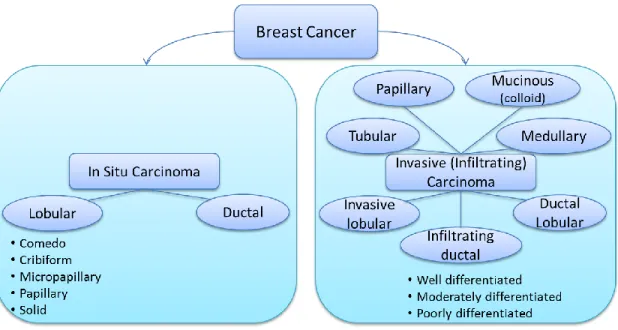
From histopathological perspective, breast cancer can be broadly categorized into in situ
carcinoma and invasive (infiltrating) carcinoma. Breast carcinoma in situ is further
categorized into two types as ductal carcinoma in situ (DCIS) and lobular carcinoma in
situ (LCIS), based on growth patterns and cytological features. DCIS is seen significantly
more common than LCIS and includes a heterogeneous group of tumors. Moreover,
DCIS tumors have traditionally been categorized into five well recognized subtypes
based on their architectural features namely Comedo, Cribiform, Micropapillary,
group of tumors and is sub-classified into several histological subtypes namely
infiltrating ductal, invasive lobular, ductal/lobular, mucinous (colloid), tubular, medullary
and papillary carcinomas. From these subtypes the most common is infiltrating ductal
carcinoma (IDC), which covers 70-80% of all invasive carcinomas (C. I. Li, Uribe, &
Daling, 2005). Further, IDC is also sub-classified according to tumor grade, which is
assessed by evaluating the nuclear pleomorphism, glandular/tubule formation and
proliferative activity (mitotic index). Three main IDC sub-classes by grade are namely
well-differentiated (grade 1), moderately differentiated (grade 2) or poorly differentiated
(grade 3) (Lester & Bose, 2009). This classification is done based on three main criteria
namely, nuclear pleomorphism, glandular/tubule formation and mitotic rate.
Figure 1: Histological classification of breast cancer subtypes based on architectural features and growth patterns. (Malhotra, Zhao, Band, & Band, 2010)
ER, PR and HER2
In conjunction with histopathological classification, characterization of breast cancers
based on the expression of strong biomarkers such as ER, PR, and HER2 has a key role
in guiding therapeutic decisions. About 75-80% of all breast cancers are hormone
receptor positive, and standardized IHC assays are used to determine the selection of
patients for hormone-based therapies. In addition, HER2, an oncogene, is the only
predictive marker checked routinely for clinical purpose. Even though there is an inverse
association between hormone receptors and HER2, 10-15% of all breast cancers are both
hormone receptor and HER2 positive, which are considered to be selected for anti-HER2
based therapies such as the humanized monoclonal HER2 antibody, trastuzumab, which
targets the extracellular domain of the HER2 receptor (Konecny et al., 2003). Lastly, the
10-15% of breast cancer patients are recognized by being both hormone receptor
(ER&PR) negative and HER2 negative, which are known as triple negative breast
cancers (TNBCs). Unfortunately, this type of the breast cancer has the worst prognosis
and currently there is not an effective treatment option for TNBCs (Dawson, Provenzano,
& Caldas, 2009).
Molecular Classification of Breast Cancers
As a more recent technology, gene expression analysis based on microarray studies gave
researchers an opportunity to begin moving towards comprehensive molecular profiling
of breast cancer tumors. These studies have led to the discovery of clinically relevant
molecular breast cancer subtypes and provided additional insights about the heterogeneity
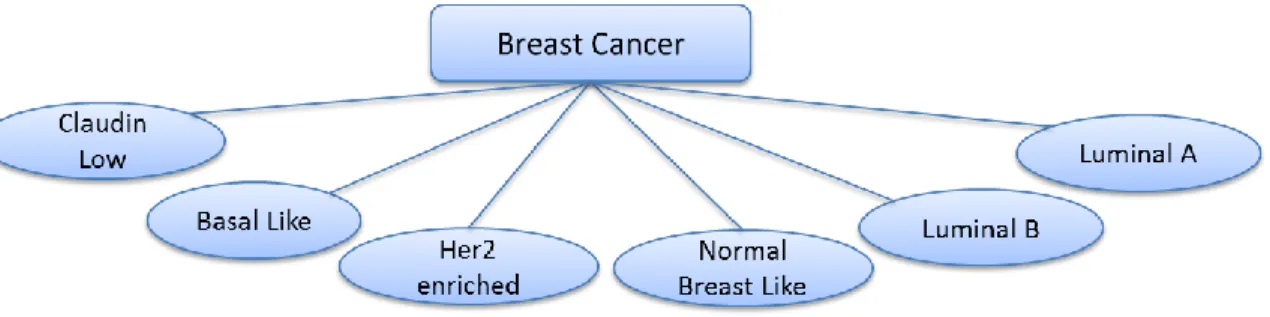
of the disease (Hu et al., 2006; Perou, Sørlie, & Eisen, 2000; Sørlie & Perou, 2001).
identification of five distinct breast cancer subtypes (Figure 2) namely Luminal A,
Luminal B, HER2 overexpressing, Basal-like and Normal breast tissue-like. Importantly,
this molecular classification has successfully discovered sub-classes of ER-positive
and/or PR-positive breast cancers as Luminal A and Luminal B. This is a significant
achievement because even though clinical assessment of IHC utilizes ER, PR, and HER2
status, these markers could not let the separation of these two distinct subtypes, which
have very different clinical outcomes (Sørlie & Perou, 2001; Sørlie & Tibshirani, 2003).
The differences in gene expression patterns in these subtypes reflect the basic
alterations in the cell biology of the tumor and are associated with significant variation in
clinical outcome such as overall survival and disease free survival (Sørlie & Tibshirani,
2003). Particularly, Luminal A subtype patients are found to have relatively better
prognosis while basal-like subtype patients having the worst prognosis.
Following the identification of these intrinsic subtypes, further classification of
breast cancers has been proposed. For example, a study conducted on ER-negative
tumors has revealed that basal breast cancers are actually a heterogeneous group with at
least four main subtypes, and an immune response gene expression module has been
discovered, which points to a good prognosis subtype in ER-negative breast cancer
(Teschendorff, Miremadi, Pinder, Ellis, & Caldas, 2007). Likewise, a different study has
found a new breast cancer intrinsic subtype recognized as Claudin-low or
mesenchymal-like (Prat et al., 2010). A characteristic of this subtype is to show an intermediate
prognosis between basal and luminal subtypes and to be enriched with cells showing
potential (Bruna et al., 2012; Hennessy & Gonzalez-Angulo, 2009; Lehmann et al., 2011;
Lim et al., 2009).
At first, the high cost of gene expression analysis of an abundant number of genes
was the obvious obstacle in adoption of the method for clinical purposes. To overcome
this, researchers narrowed down the gene list by finding distinct gene signatures for
breast cancer subtypes. In one study, investigators have successfully discovered 50 gene
signatures, named as PAM50 (Parker et al., 2009; Tibshirani, Hastie, Narasimhan, &
Chu, 2002), which can effectively differentiate the molecular subtypes using quantitative
real time PCR (qRT-PCR) and is accepted as a replacement for full microarray analysis
with the purpose of molecular classification of breast cancers. Moreover, it is
demonstrated that using the PAM50 gene set for molecular classification had
significantly improved the prediction accuracy for risk of relapse on ER-positive/node
negative patients compared to the model that utilizes only clinical variables such as tumor
size, axillary lymph-node status and histologic grade.
Besides the identification of intrinsic subtypes, gene expression profiling has also
been employed in discovery of distinct prognostic signatures by several groups (Paik,
Shak, Tang, & Kim, 2004; Veer, Dai, & Vijver, 2002; Vijver & He, 2002). Mammaprint,
which is a microarray-based assay of the Amsterdam 70-gene breast cancer signature,
and OncotypeDX, which is a PCR-based assay of a panel of 21 genes, have been
Figure 2: Molecular classification of breast cancer (Malhotra et al., 2010)
Other Hybrid Classification Methods
More recently, thanks to the ease of accessing breast cancer data through projects such as
TCGA and organizations like International Cancer Genome Consortium (ICGC), several
methods proposing integration of multiple approaches for breast cancer clustering have
been published. In 2012, Curtis et al. demonstrated a method combining genome and
transcriptome assessments of 2,000 breast cancer patients. By examining the impact of
somatic copy number aberrations on the transcriptome, they suggested a novel molecular
stratification of breast cancer and revealed novel subgroups (Curtis et al., 2012).
Likewise, in 2014, Ali et al. classified breasts cancer into 10 subtypes based on the
integration of genomic (copy number variation) and transcriptomic (gene expression)
data (Ali et al., 2014). Also in another study, researchers have shown a computational
method that combines gene expression and DNA methylation data to implement machine
learning aided breast cancer patient classification (List et al., 2014). Lastly, in a recent
publication, researchers have proposed a network-based stratification of tumor mutations
interaction networks and applied non-negative matrix factorization to form four subtypes
Chapter 4
MATERIALS AND METHODS
Datasets
In development of this project, we downloaded the sequence variation data in variant call
format (vcf) for the TCGA breast cancer whole exome sequencing data. Since the data in
TCGA comes from a diverse group of patients, to eliminate the population heterogeneity
effect, we retrieved a subset of breast cancer patients (n=358) by selecting only white, not
Hispanic or Latino patients whose clinical and whole exome sequence data are available.
The sequencing data presented in TCGA is processed using several variant callers
including, VarScan2 (Koboldt et al., 2012), SomaticSniper (Larson et al., 2012) Samtools
(H. Li, Ruan, & Durbin, 2008) . Based on our previous experience with variant callers
and supporting literature (Q. Wang et al., 2013), we used the variants discovered by
VarScan2. We obtained an average of 17,640 point variations per patient, generated by
VarScan2, a highly sensitive tool to detection of somatic mutations in exome sequencing
data from normal-tumor pairs.
Data Representation
In this study we used CADD, a method that integrates functional annotations,
conservation, and gene-model information into a single score called C-score. As
mentioned in the original publication, (Kircher et al., 2014) C-scores correlate with
allelic diversity, annotations of functionality, pathogenicity, disease severity,
experimentally measured regulatory effects, and complex trait associations. This score is
denotes more deleterious effects; however since our clustering (NMF) algorithm requires
all data entries to be positive, we transformed all the scores by adding the minimum score
to the original scores.
Our method uses an extensive data structure (mutation score matrix) to keep track
of all the deleteriousness scores (C-scores) of somatic mutations used for machine
learning. The mutation score matrix represents a table that contains the genes in rows and
the patients in columns, yielding a matrix of size 18,117 rows by 358 columns, with at
least one mutation in each row. And each cell contains the sum of all C-scores of
mutations found in a gene for a patient. C-scores in the mutation score matrix ranges
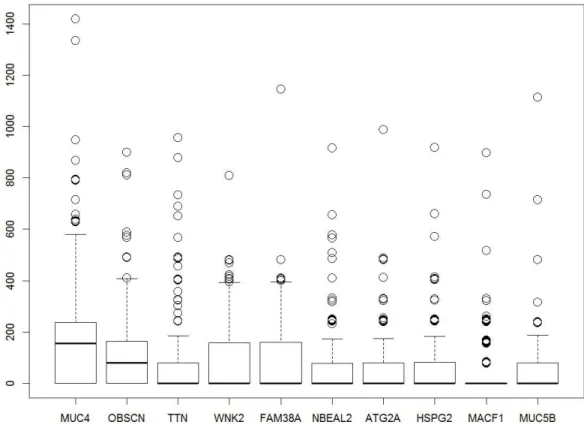
from 0 to 1417.14 and distribution of scores for top 10 variant genes can be seen in
Figure 3. (The Python codes developed to build the data structure and apply
preprocessing steps are provided in the Appendix.) Comparison against the COSMIC
database shows that nine out of these 10 genes (with the exception of FAM38A gene)
have evidence of abundant accumulation of somatic mutations in large population screens
Figure 3: Distribution of total mutational scores for the top 10 variant genes.
Somatic mutation profiles of BC patients exhibit a very sparse data form, unlike
other data types such as gene expression or methylation in which nearly all genes or
markers are assigned a quantitative value in all the patients. Even clinically identical patients may share no more than a single mutation (Bell et al., 2011; Lawrence et al.,
2013; TCGA, 2012). Therefore, this problem introduces too many zero valued entries to
the main data structure (96%). On the other hand, from machine learning perspective,
having a limited number of patients (a far less number of patients than the number of
effected genes in the cohort) introduces a dimensionality challenge commonly known as
the “curse of dimensionality” in machine learning. Generally machine learning algorithms desire to use a dataset, which has number of cases at least 10 times the
number of features, hence giving a minimum 10:1 sample-to-feature ratio. However, in
this study we are faced with a challenge as we observed the sample-to-feature ratio of
1:50 (358/18117) in the main data structure.
In order to overcome the aforementioned challenges, generally there are two
popular approaches, namely; feature extraction and feature selection. Feature extraction
transforms the current existing features into a lower dimensional space and widely used
example methods include principal component analysis (PCA) and linear discriminant
analysis (LDA), while feature selection selects a subset of features without applying any
transformation. These methods increase the sample-to-feature ratio and decrease the
sparseness hence making the clustering both feasible and more effective. In this
dissertation we used both feature selection and feature extraction in succession, as further
explained in below.
Clustering
We implemented an 𝑚 × 𝑛 mutation score matrix to keep track of the sum of the variant scores in all genes, where m is the number of genes (18,117) and n is the number of
samples (358 patients). The value in entry (i, j) indicates the mutation score of gene i in
sample j, which is the sum of all C-scores of mutations found in the gene i for the sample
j.
We used NMF method for clustering, which aims to find a small number of
metagenes, each defined as a positive linear combination of all the genes so that the
method can approximate the mutation load of the samples as positive linear combinations
of these metagenes. Mathematically, this corresponds to factoring a given non-negative
entries, 𝐴 ≈ 𝑊𝐻 using a positive integer number 𝑘 < 𝑚𝑖𝑛{𝑚, 𝑛}. Matrix W, called as a basis matrix and has size 𝑚 × 𝑘, with each of the k columns defining a metagene; and entry 𝑤𝑖𝑗 represents the coefficient of gene 𝑖 in metagene 𝑗. Matrix H is named as coefficient matrix and has size 𝑘𝑥𝑛, with each of the m columns representing the metagene expression pattern of the corresponding sample; and entry ℎ𝑖𝑗 represents the mutation load of metagene 𝑖 in sample 𝑗. There are multiple solutions to this problem and in this study we adopt a method by Brunet et al. (Brunet, Tamayo, Golub, & Mesirov,
2004) that was shown to perform better. The solution to form factors W and H can be
obtained as explained in the following. The method starts by randomly initializing the
matrices W and H and iteratively updates W and H to minimize a divergence function. W
and H are updated by using the coupled divergence equations shown in Equation 1.
𝑊𝑖𝑎 ← 𝑊𝑖𝑎∑ 𝐻𝑢 𝑎𝑢𝐴𝑖𝑢⁄(𝑊𝐻)𝑖𝑢
∑ 𝐻𝑣 𝑎𝑣 , 𝐻𝑎𝑢 ← 𝐻𝑎𝑢
∑ 𝑊𝑖 𝑖𝑎𝐴𝑖𝑢⁄(𝑊𝐻)𝑖𝑢
∑ 𝑊𝑘 𝑘𝑎
Equation 1: Coupled divergence equations to update the W and H matrices
As a result of factorization, we use coefficient matrix H to group our samples into
given number (𝑘) of clusters. Algorithm assigns each sample according to the highest scored metagene in patients designated column in matrix H; meaning that sample 𝑗 will be assigned to the cluster 𝑖 if ℎ𝑖𝑗 is the highest entry in column 𝑗.
To specify the optimal number of clusters (rank of clustering) and features (genes)
to use in clustering, we used consensus matrix and average silhouette width of consensus
Since the NMF algorithm starts with a random initial class assignment of samples,
repeated runs over the same sample set with constant input parameters may not result in
the same sample assigned to the same class between the runs; however, if we observe
only a little variation in these associations between runs, then we can conclude with
confidence that a strong clustering was performed for this set of parameters (number of
clusters and features). This idea forms the basis for our clustering performance
evaluations.
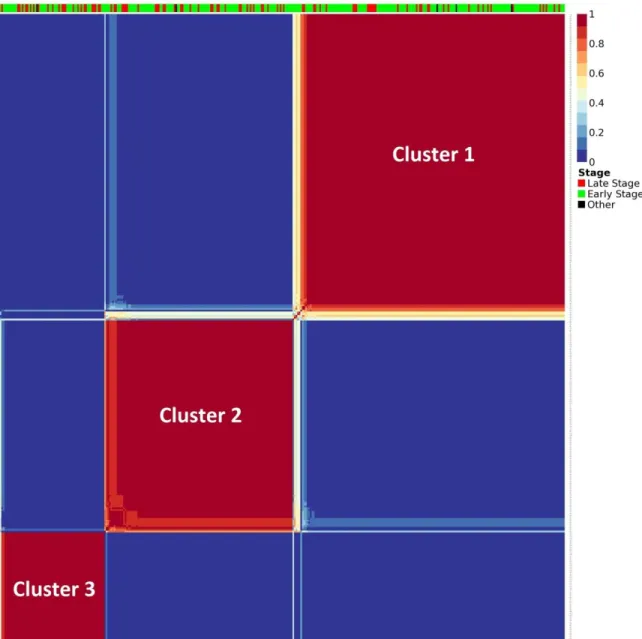
Clustering Quality Assessment Methods: Consensus Matrix
Consensus matrix is a concept proposed by Brunet et al. (Brunet et al., 2004) providing
visual insights about the performance of clustering. The concept can be explained as
follows. In each run, sample to class assignments can be represented by a connectivity
matrix 𝐶 of size 𝑚𝑥𝑚 by entering 𝑐𝑖𝑗 = 1 if samples 𝑖 and 𝑗 are assigned to the same cluster and 𝑐𝑖𝑗 = 0 otherwise. Then the consensus matrix, 𝐶̅, can be calculated by averaging the connectivity matrix 𝐶 for many clustering runs. (We selected to use 100) The value in 𝐶̅𝑖𝑗 ranges from 0 to 1 and reflects the probability of samples 𝑖 and 𝑗 assigned to the same cluster. In the case of a stable clustering then we expect to see most
of the values in 𝐶̅ to be close to 0 or 1.
Clustering Quality Assessment Methods: Silhouette Score
In addition to the consensus matrix, we used average silhouette width of consensus
matrix (silhouette(consensus)), introduced by Rousseeuw (Rousseeuw, 1987), to
quantitatively measure the stability of the clustering runs with different parameters.
average dissimilarity/distance of sample 𝑖 with all other data within its cluster, the value of 𝑎(𝑖) will then indicate how well the sample 𝑖 fits into its assigned cluster by having a smaller value showing better assignment. Then we can define 𝑏(𝑖) by the lowest average dissimilarity of sample 𝑖 to any other cluster that 𝑖 is not a member. In other words 𝑏(𝑖) indicates the average dissimilarity of sample 𝑖 to its closest neighboring cluster or its next best fit cluster. Then the silhouette score of a sample can be calculated as in Equation 2
below. The value of 𝑠(𝑖) can range from -1 to 1, and being close to 1 means that the sample is perfectly clustered. And average of 𝑠(𝑖) over all the samples, named as average silhouette width, shows how well the data has been clustered.
𝑠(𝑖) = { 1 −𝑎(𝑖)𝑏(𝑖), if 𝑎(𝑖) < 𝑏(𝑖) 0, if 𝑎(𝑖) = 𝑏(𝑖) 𝑏(𝑖) 𝑎(𝑖)− 1, if 𝑎(𝑖) > 𝑏(𝑖)
also can be written as 𝑠(𝑖) =max𝑏(𝑖)−𝑎(𝑖)
{𝑎(𝑖),𝑏(𝑖)}
Equation 2: Equation shows how the silhouette score of sample can be computed
Lastly, among several implementations of NMF in various programming
languages, we selected to use an R implementation of NMF, published by Gaujoux and
Seoighe (Gaujoux & Seoighe, 2010), because of its efficient and flexible parallel
processing design and ease of applicability to our study. (The R script preparing the data
and running NMF algorithm is provided in the Appendix.)
Feature Selection and Optimization of Clustering
As also mentioned earlier feature selection constitutes an essential step in any machine
learning algorithms. We separately performed feature selection for supervised
Due to the higher number of features (tens of thousands genes) being much more
than the number of samples (hundreds of samples), we first used feature selection to
select only the informative features for clustering; thus to reduce the feature size. We
ranked the features in decreasing order of their variance values (Equation 3) and selected
top n features for clustering.
𝑆2 =∑(𝑋 − 𝑋̅)2
𝑛 − 1
Equation 3: Variance formula
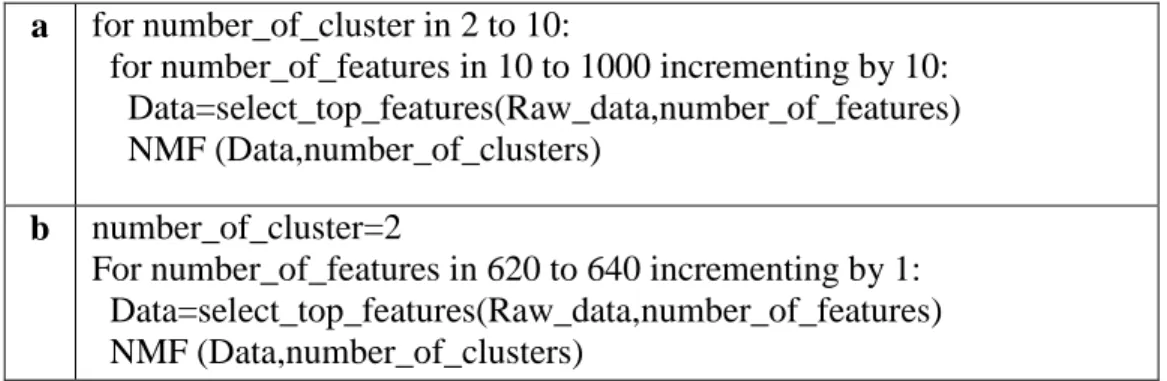
To find the most accurate clustering case, we iteratively run the clustering
algorithm over a range of biologically reasonable parameters which is form 2 to 5 clusters
and for selected top 10 to 1000 variant genes. Since running the algorithm for each
number of cluster and for each 1000 genes would be computationally intensive and not
necessary, in finding the correct number of genes we firstly run the algorithm for genes
that increase 10 each time (10 genes, 20 genes etc.). And in the second step; we run the
algorithm with all the genes in the range around the point we received the highest
consensus silhouette score. As an real case example; we receive the highest silhouette
score for 850 genes with 3 clusters, in the second step we run the algorithm for all the
genes from 840 to 860 genes and found that 856 is actually producing the best clustering.
For better and easier understanding, we present this algorithm in the pseudo code below
in Table. 1. In finding of Later we used the consensus matrix’s silhouette score to
a for number_of_cluster in 2 to 10:
for number_of_features in 10 to 1000 incrementing by 10: Data=select_top_features(Raw_data,number_of_features) NMF (Data,number_of_clusters)
b number_of_cluster=2
For number_of_features in 620 to 640 incrementing by 1: Data=select_top_features(Raw_data,number_of_features) NMF (Data,number_of_clusters)
Table 1: Pseudo code for iteratively applying all potential values for k and number of features to keep
Characterization of Clusters
To characterize the clusters we discovered, we correlated the samples in the clusters with
their clinical features. For simplicity, we defined stage I and II as early stage and stage III
and IV as late stage. The Fisher’s exact test was used to assess the stage tendency of
clusters.
We compared the mutation score of genes between clusters using the Wilcoxon
rank-sum test, and adjusted the multiple testing with the false discovery rate (FDR). The
FDR was estimated using the Benjamini-Hochberg procedure (Benjamini & Hochberg,
1995). We used the R language and environment (RDevelopment, 2012) to run all the
statistical tests. In addition, we performed functional analysis of the differentially
mutated genes between the clusters using the Ingenuity Pathway Analysis (“IPA;
Ingenuity Systems Inc.; Redwood, CA, USA,” n.d.) and the Gene Set Enrichment Analysis (GSEA) tools (Subramanian, Tamayo, Mootha, Mukherjee, & Ebert, 2005).
Development of Supervised Classification Model
For running feature selection, classification model generation using ML algorithms and
performance measurements, we used the Waikato Environment for Knowledge Analysis
(WEKA) (Hall et al., 2009) framework, which is an open-source, Java-based framework.
For feature selection, we used the Information gain attribute evaluator (Mitchell,
1997), and Ranker algorithms implemented in Weka for evaluation and searching of the
features. We used five diverse and most popular ML algorithms; namely RF (Breiman,
2001), Naïve Bayes (Rish, 2001), C4.5 (named as J48 in Weka) (Salzberg, 1994), SVM
(Platt, 1998), and KNN (Stevens, Cover, & Hart, 1967) to build classification models.
For performance measurements, we used 10-fold validation. In 10-fold
cross-validation, patients are randomly partitioned into ten equal sized parts keeping the class
ratio const1ant in each part; nine parts are used for training the classifiers and remaining
part is used for testing. This procedure is repeated ten times, resulting each part is tested
against the models built using other nine parts. The average of performance
measurements of all ten iterations is considered as an unbiased estimate of the whole
classification model. We report the performance of the classifiers using standard
classification evaluation metrics, including: accuracy, sensitivity (true positive rate, TPR,
also called recall), specificity (true negative rate, TNR), false positive rate, false negative
rate, precision (Positive Predictive Value, PPV) and F measure (also called F1 score). In
Table 2, we show confusion matrix, also called contingency table, which is used to
calculate performance measures, and Table 3 values making true positives (TP), false
positives (FP), true negative (TN), and false negatives (FN), are shown And the equations
ROC curves, which graphically present the performance of classifiers for each class and
calculate the area under the curve (AUC) as a numeric evaluation of ROC curves. Also,
we would like to note that even though most of these measures initially defined for binary
classification (having only two classes); they are applicable to multiclass classification by
(Sensitivity) TPR: TP/(TP+FN) (Specificity)TNR: TN/(TN+FP) FPR: FP/(FP+TN) or 1- FNR: FN/(FN+TP) (Precision) PPV: TP/(TP+FP) F measure: 2*(PPV*TPR)/(PPV+TPR)
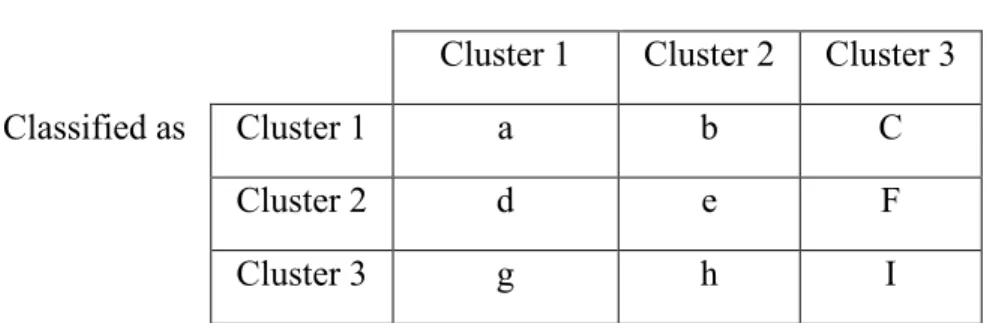
Table 4: Shows the equations to be used to calculate performance measures. Actual label
Cluster 1 Cluster 2 Cluster 3
Classified as Cluster 1 a b C
Cluster 2 d e F
Cluster 3 g h I
Table 2: Confusion matrix showing the number of patients predicted to be in a class and actual number of patients in that class. As an example value “a” shows the number of patients correctly predicted to be in Cluster 1. And value “b” shows the number of pa Cluster 1 Cluster 2 Cluster 3 TP: a e i FP: b+c e+f h+i
TN: e+f+h+i d+g+f+i d+e+g+h
FN: d+g e+h f+i
Table 3: Shows the definition of basic measures, which are used to calculate performance measures.
Permutation Test
Finally, to validate the strength of the achieved prediction accuracy, we run a permutation
test. For this test we generated 10,000 datasets by randomly shuffling patient labels in our
dataset, while keeping the number of patients in each class constant. We run 10-fold
cross-validation with RF classification algorithm together with feature selection step on
these datasets, in the same way used for the real data in the study. We calculated a
p-value by the number of times this validation produced a better accuracy on randomly
shuffled dataset divided by 10,000 as seen in Equation 4.
𝑃𝑒𝑟𝑚𝑢𝑡𝑎𝑡𝑖𝑜𝑛 𝑡𝑒𝑠𝑡 𝑃 − 𝑣𝑎𝑙𝑢𝑒 =#(𝐴𝑐𝑐𝑢𝑟𝑎𝑐𝑦𝑟𝑎𝑛𝑑𝑜𝑚> 𝐴𝑐𝑐𝑢𝑟𝑎𝑐𝑦𝑜𝑟𝑖𝑔𝑖𝑛𝑎𝑙)
10000
Chapter 5
RESULTS AND DISCUSSION
Exome Data Analysis and Variant Calling
We have obtained an average of 17,640 point variations per patient generated by
VarScan2 (Koboldt et al., 2012) and applied a set of filters to select only those that are
likely to exhibit an impact on the function and/or the structure of the gene or protein.
Since the generation of next-generation sequencing (NGS) data and variant calling
involves several error prone steps, filtration of the variant data constitutes a major step in
variant analysis. Firstly, we focus only on the somatic (non-inherited) and
nonsynonymous (cause a change in the translated amino acid) point mutations because of
their perceived impact on disease initiation and progression. Secondly, even though
exome sequencing targets only the coding regions of DNA, the exome capture kits often
amplify off-target non-coding regions such as intergenic, untranslated and intron regions.
Hence, we filter out all the variations outside of the coding region. We analyze the
remaining variations by their impact on the function or structure of the resulting protein.
Finally, we check the population frequency of remaining variations in Single Nucleotide
Polymorphism Database (dbSNP) (Sherry et al., 2001), which is a public achieve for
genetic variation developed and hosted by National Center for Biotechnology
Information (NCBI). In this step, we filter out the variations that are commonly found in
population and hence are not necessarily associated with a disease. Generally, variations
with less than 0.05 minor allele frequency (MAF) are considered as phenotype-causing
Classification of Breast Cancers Based On Somatic Mutations
As a prior step before clustering, we applied feature selection by ranking the features
(genes) in decreasing order of their variance value and selected top n features for
clustering. We optimized the size of n to be 854 genes in our clustering method and
determined the number of clusters k as explained in “Feature selection and optimization
of clustering” section to be 3. Later using the NMF clustering algorithm on our dataset, we stably clustered the samples into 3 groups using the top 854 genes, which have the
highest variance values of mutation scores across all the samples. The three groups
Cluster 1, 2, and 3 involve 169, 121 and 68 patients, respectively. Refer to Materials and
Methods section for more details about the NMF method and to Optimization results
section for detailed information on results of the optimization steps.
Unsupervised clustering is the task of grouping a set of samples that have no label
information, which results in grouping samples in such a way that samples in the same
group are more similar in a specified measure to each other than to those in the other
groups. There are several methods trying to achieve this goal such as k-means clustering,
hierarchical clustering and expectation maximization (EM) algorithms. However, these
methods perform poorly or can not come to a solution when applied to sparse data, as is
the case in our study. Therefore, we selected to use NMF because of its proven superior
performance when tested on applications that use biological data. (Kim, Seo, Joung, &
Kim, 2011; Lawrence et al., 2013; Zheng, Zhang, Ng, Shiu, & Huang, 2011). NMF was
introduced in its modern formulation by Lee and Seung (Lee & Seung, 2001) as a method
As a factorization method, NMF algorithm takes our mutation score matrix as the
input and decomposes it to two smaller matrices (basis matrix W and coefficient matrix
H). The output coefficient matrix (matrix H) is used to make sample cluster assignments.
Refer to methods for more details.
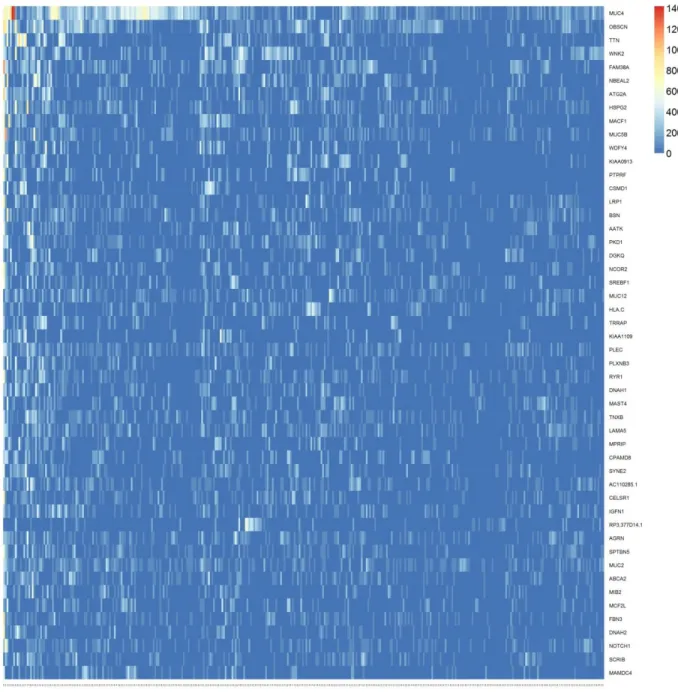
In Figure 4 we show a representation of the input data in the mutation score
matrix with statistically significant genes sorted by their variance in decreasing order;
since the data is extremely sparse the heat map consists of mostly blue cells. In order to
make the heat map more readable to human eye, we show the input data in Figure 5
focusing only the top 50 variant genes. As it can be seen, data still represents a very
sparse form (most of the cells are colored blue meaning a score of zero) that makes most
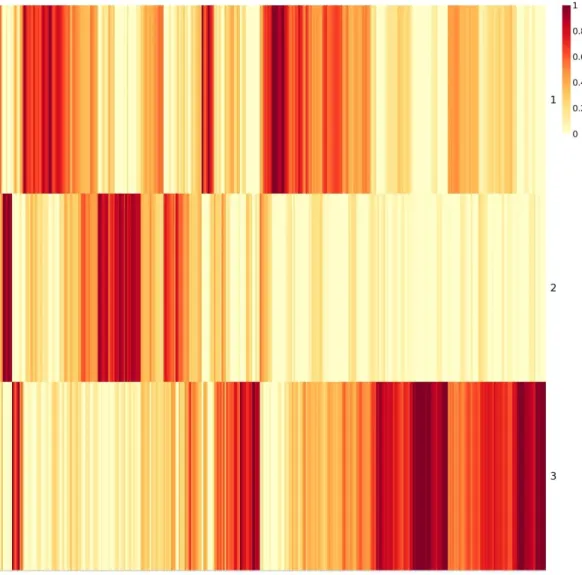
clustering approaches inapplicable. Figures 6 and 7 are the output matrices from
decomposition of the mutation score matrix, which we input to NMF algorithm. Note that
multiplication of the two output matrices will approximately yield the input data. In
Figure 7, we see the basis matrix (W), which is not used in the scope of this study;
however it could serve for clustering purpose of the genes. Figure 6 displays the
coefficient matrix (H), where the rows represent the metagenes that are a compact
representation of all the genes, and columns represent the patients. We use this matrix to
make sample to cluster associations by assigning the samples to the clusters where we
observe the highest metagene value, i.e., the dark red color (see methods section for