POST-SEPARATION PATTERNS OF PARENTING IN AUSTRALIA
WHO OPTS FOR WHICH PATTERNS AND WHY?
BRUCE SMYTH B.A.
A report of research submitted as full requirement for the degree of
Doctor of Philosophy
Department of Sociology
Faculty of Life and Social Sciences
Swinburne University of Technology
ABSTRACT
Despite widespread interest in patterns of parenting after separation in Australia, the gaps in our knowledge remain large and fundamental. Most studies, including those overseas, have taken a quantitative tack, measuring the frequency and overall amount of face-to-face contact between children and non-resident parents (mostly fathers). But obviously there is more to parent–child contact than just time. The nature and quality of the interaction are also important – perhaps even more so.
Recently there has been a push towards recognising and describing both qualitative and quantitative differences in the many ways that parental sharing of time with children can occur after divorce. This thesis attempts to identify and explore some of these differences by comparing five different patterns of care: (i) 50/50 shared care, (ii) little or no contact, (iii) holiday-only contact, (iv) daytime-only contact, and (v) “standard” contact (thought to occur every-other-weekend and half of each school holidays). A representative snapshot of parent–child contact schedules after separation is presented to provide some of the detail of arrangements within this typology. Two (complementary) types of data are used: qualitative data from a series of focus groups with separated parents, and quantitative data from three large representative samples of separated/divorced parents in Australia. Joining the dots between the various pieces of data, there is much to suggest that family dynamics in tandem with demographic factors temper the form that parent–child contact takes, with different combinations of factors clearly linked to qualitatively different patterns of post-separation parenting.
While separating parents need to be encouraged to think more laterally about what arrangements might work best for their children and themselves, the data presented suggest that some parents in Australia are already being very creative and there is much diversity of arrangements. The central argument running through this
dissertation is that arrangements that allow children to experience fluid, meaningful time with each parent are critical for children’s and parents’ wellbeing.
The ideas and data presented here – especially some of the more creative timesharing schedules developed by parents – are likely to be a useful resource for separated parents, and the family law professionals they approach for assistance, to reflect on when developing or refining parenting arrangements after divorce.
DEDICATION
In loving memory of my grandparents, Gertrude and Reuben Cohen, and my friend Paddy.
ACKNOWLEDGEMENTS
First and foremost, I am indebted to the many respondents who participated in this research. This work would not have been possible without their help.
I am especially grateful to Michael Gilding and Kathy Betts of Swinburne University of Technology for their encouragement, support, expert supervision, and helpful comments along the way; my friend and colleague, Ruth Weston, who has also been a bedrock of support and encouragement; and my other friends and colleagues at the Australian Institute of Family Studies, particularly Anna Ferro, Catherine Caruana, Lixia Qu, and Ilene Wolcott, for their help with the Caring for Children after Parental Separation Project. More specifically, Anna Ferro, Catherine Caruana and Carol Whitfield helped transcribe and analyse some of the focus group data. Under supervision, Anna conducted the initial analysis of the focus group data for “standard” contact, while Catherine and Carol did the same for the “daytime-only” contact and holiday-only contact focus groups respectively. Anna also helped to sort and
transpose the contact schedule data, computed some of the descriptive statistics used in Chapter 10, and profiled the focus groups participants whose comments were quoted (see Appendix 2). Lixia Qu provided statistical expertise in transposing the Family Characteristics Survey data, and in calculating the design effect for the HILDA data reported in Chapter 9. I have re-worked the focus group material in Chapters 6–8 so that what remains is my original thought and words.
Other colleagues at the Institute also deserve special thanks: Carolyn Shaw, Claire Walker, and the late Christine McCarthy, for their meticulous transcriptions of some of the focus group interviews; Carole Jean, Anita Emmanoulidis, Judy Adams and other members of the Family Information Centre for their help obtaining much of the material cited in this work; Ross Millward and Melissa Veit for their unwavering expert I.T. support; and the Institute’s editor, Meredith Michie, for minor editorial suggestions along the way as part of the publication process.
I am especially grateful to the Australian Institute of Family Studies for supporting my studies (particularly David de Vaus and David Stanton), and allowing me access to data from the Caring for Children after Parental Separation Project. Much of this dissertation has already been published in different forms in Australia and elsewhere. My hope is that the Institute benefits from these publications, and treats them as a small gesture of my gratitude for its generous support.
Some thanks are beyond words, and this is the case for my long-standing friends, the Bishop family – especially Phil, the Moloney family – particularly Lawrie, the Meagher family – especially Marcia and Jem, Christine Kilmartin, Christine
Millward, and Colin Riess. Thank you for being there in so many ways – sometimes small but mostly big. To my children, Ellie and Jordan; my parents, Judy and David; my brothers, Ricky, Darren, and Mark; my uncle and aunt, John and Sandra; my cousins, Rhonda and Gary – I love each of you more than you will ever know. One special friend, Sophie Holloway, deserves to be singled out. Sophie read every word of this thesis on several occasions, and constantly chanted “You can do it! Keep going!” in the background. May each word come back as a blessing.
This dissertation draws on confidentialised unit record file from the Household, Income and Labour Dynamics in Australia (HILDA) survey. The HILDA Project was initiated and is funded by the Commonwealth Department of Family and Community Services (FaCS) and is managed by the Melbourne Institute of Applied Economic and Social Research (MIAESR). The findings and views reported in this thesis, however, are those of the author and should not be attributed to either FaCS or the MIAESR. Any shortcomings or errors in this work are mine alone.
DECLARATION
No part of this work has been submitted for a higher degree to any other university or tertiary institution.
To the best of the best of my knowledge, any theories or research that are not my own have been acknowledged in the text.
While parts of this thesis draw on joint published or unpublished work, the work presented here is based on my intellectual contribution, and was written and conceptualised by me.
TABLE OF CONTENTS
ABSTRACT II
DEDICATION IV
ACKNOWLEDGEMENTS V
DECLARATION VII
LIST OF TABLES XIII
LIST OF FIGURES XIV
CHAPTER 1: INTRODUCTION 1
Some commonly held “truths” 3
Patterns of parent–child contact in Australia 4
Structure of the thesis 8
Language 8
A typology for categorising contact 9
CHAPTER 2: LITERATURE REVIEW 11
Studies of parent–child contact: What do we know? 13
Australia 13
New Zealand 20
United Kingdom 23
United States of America 26
Canada 31
Summary 32
Parent–child contact and children’s wellbeing 33
Summary 35
The need for a more comprehensive approach 36
CHAPTER 3: RESEARCH DESIGN 38
Qualitative data 38
Quantitative data 44
Dataset 2: HILDA 44
Dataset 3: Caring for Children after Parental Separation 48
Dataset 4: Family Characteristics Survey 50
Summary 50
CHAPTER 4: FIFTY-FIFTY CARE 52
50/50 shared care 52
The focus groups 55
Vignettes 56
Sally and Rod 56
Kathy 57
Key themes 60
Parental motives 60
Work and money 62
The parent–child relationship 64
Paternal competence 65
Logistical challenges 66
Putting kids first 67
Summary 68
CHAPTER 5: LITTLE OR NO CONTACT 70
Fatherless-ness: Society’s most pressing social problem? 70
Research into paternal disengagement 71
The focus groups 75
Vignettes 75
Ross 76
Audrey 77
Key themes 77
Fathers’ perceptions of being "cut out" 81
From Dr Heckle(d) to Mr Hide? The psychology of disengagement 83
“The system” 84
The “shallowness” of sporadic contact 85
Other forms of contact 87
Summary 90
CHAPTER 6: HOLIDAY-ONLY CONTACT 93
The focus groups 96
Vignettes 97
Jackie 97
Gerard 98
Mark 99
Key themes 99
Juggling work, family and holidays 100
Predictability, then quantity, then quality? 101
Other forms of communication 103
Obstruction and disempowerment 105
Physical and emotional space 107
“It gets easier as they get older” 109
Summary 110
CHAPTER 7: DAYTIME-ONLY CONTACT 112
When the difference is night and day 112
Who don’t some children stay overnight? 115
The focus groups 117
Vignettes 118
John 118
Penny 119
Key themes 120
Parental conflict 121
“Hanging out” with Dad 124
Impact on the parent–child relationship 126
“His interest just wasn’t there anymore” 129
Triggers and the status quo 130
Children’s safety and paternal competence 132
New partners and second families 133
Structure or process? 134
CHAPTER 8: “STANDARD” CONTACT 136
The focus groups 138
Vignettes 139
Pia 139
Max 140
Key themes 141
Why an every-other-weekend arrangement? 141
Why not more contact? 144
Quality versus quantity 146
Holidays and special occasions 149
The benefit of detailed contact arrangements 150
Staying child-focused 152
Summary 154
CHAPTER 9: THE DEMOGRAPHY OF PARENT–CHILD CONTACT 156
The prevalence of different patterns of care 156
Profiling separated parents with different arrangements 157
Shared care 161
“Standard” contact 164
Little or no father–child contact 165
Daytime-only contact 167
Summary 168
Where next? 169
CHAPTER 10: PARENT–CHILD CONTACT SCHEDULES 170
Parent–child contact schedules 172
Measuring parent–child contact 175
Methodological issues 176
Findings 178
(i) Different patterns of parenting 178
(ii) Different clusters of contact schedules 179
(iii) Lateral approaches to structuring parenting time 193
Summary 195
CHAPTER 11: THE EXPERIENCE OF TIME WITH CHILDREN 197
It’s about time . . . 201
Ruptures in time 202
The need for a multiplicity of times 204
Time as a lock . . . and a key 206
CHAPTER 12: CONCLUSION AND FUTURE DIRECTIONS 208
Who does what, and why? 209
50/50 shared care 209 Little or no contact 210 Holiday-only contact 211 Daytime-only contact 213 “Standard” contact 214 Summary 214
Limitations and significance of the study 214
Implications 216
Parenting arrangements 216
Managing conflict 217
Implications for policy 218
Future research 220
Parting reflection 221
REFERENCES 223
APPENDIX 1. QUESTION GUIDE 239
APPENDIX 2. FOCUS GROUP PARTICIPANTS* 240
Focus group participants who speak in Chapter 4: Fifty/fifty care 240
Focus group participants who speak in Chapter 5: Little or no contact 241
Focus group participants who speak in Chapter 6: Holiday-only contact 242
Focus group participants who speak in Chapter 7: Daytime-only contact 243
Focus group participants who speak in Chapter 8: “Standard” contact 244
LIST OF PEER-REVIEWED PUBLICATIONS FROM THIS RESEARCH 245
LIST OF TABLES
Table 1. Main reason that the youngest child does not stay overnight with non-resident parent: Separated/divorced parents’ reports where face-to-face parent–child contact is occurring but sleepovers are not (n=148) 115 Table 2. Characteristics of separated/divorced resident and co-parent mothers by care
arrangements of their children (n=632) 159
Table 3. Characteristics of separated/divorced non-resident fathers and co-parent
LIST OF FIGURES
Figure 1. Children aged 0-17 with a natural parent living elsewhere: Frequency of
face-to-face parent–child contact 5
Figure 2. Children aged 0-17 with a natural parent living elsewhere: Frequency of
face-to-face contact by children’s age 6
Figure 3. Children aged 0-17 with a natural parent living elsewhere: Number of
overnight stays each year 7
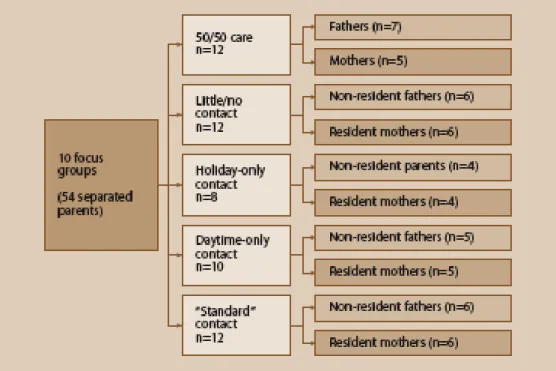
Figure 4. Focus groups and the respective group numbers 40
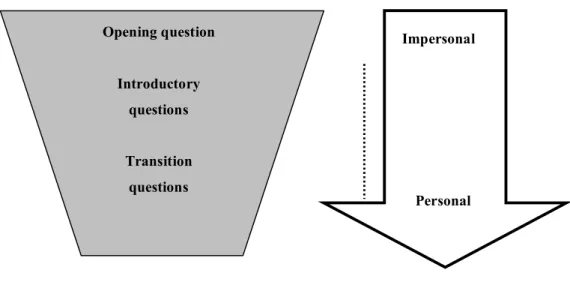
Figure 5. Focus group question structure 42
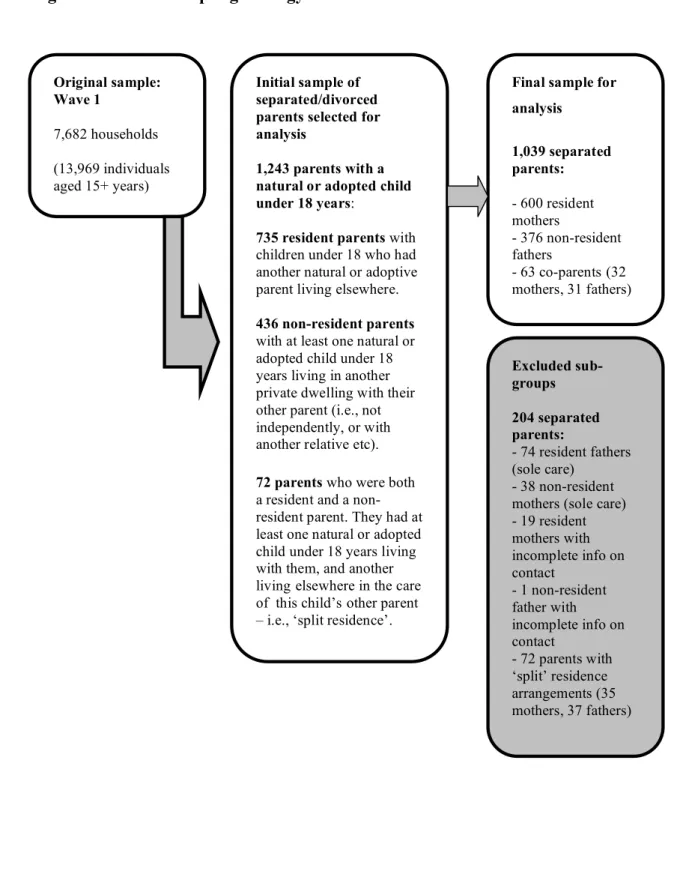
Figure 6. HILDA sampling strategy 46
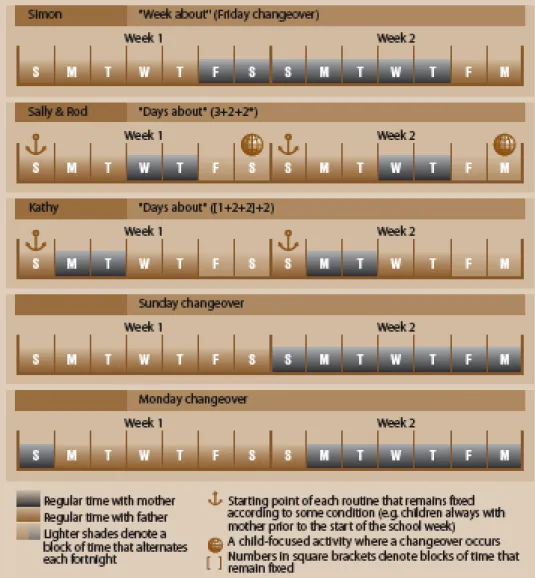
Figure 7. Equal time parenting schedules: Some examples 59
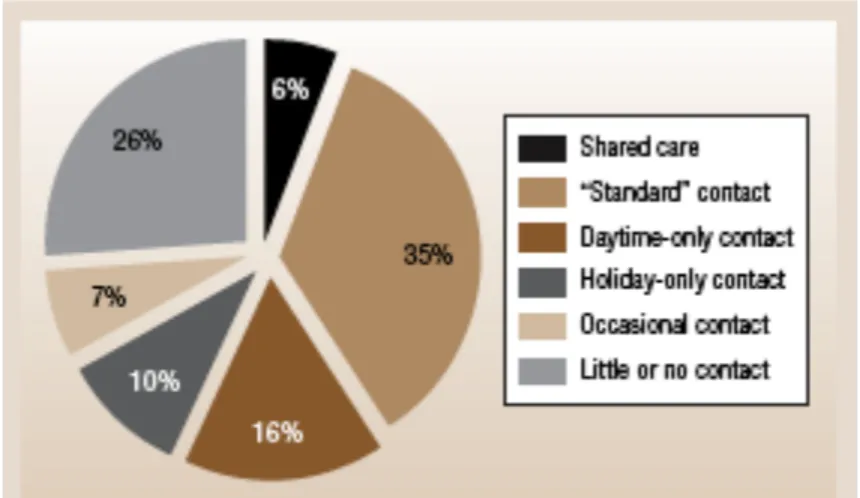
Figure 8. Patterns of post-separation parenting experienced by children with a parent
living elsewhere 157
Figure 9. Eight parenting time options for children of school age (Kelly 2004) 174
Figure 10. Different patterns of parent–child contact after separation 179
Figure 11. Pattern 1: One night a fortnight 180
Figure 12. Pattern 2: Two nights a fortnight 182
Figure 13. Pattern 3: Three or four nights a fortnight (extended weekend contact) 184
Figure 14. Pattern 4: Five or more nights a fortnight (~50/50 care) 186
Figure 15. Pattern 5: One night a week 187
Figure 16. Pattern 6: Two nights in one of the weeks 188
Figure 17. Pattern 7: Two nights each week 188
Figure 18. Pattern 8: Three nights in one of the weeks 190
Figure 21. Some creative examples 194 Figure 22. Level of satisfaction with the level of father–child contact: Resident
mothers’ and non-resident fathers’ reports 198
Figure 23. Level of satisfaction with the level of father–child contact by number of days/overnight stays per year: Resident mothers’ and non-resident fathers’
reports 199
Figure 24. Level of satisfaction with father–child contact by type of contact: Resident
mothers’ and non-resident fathers’ reports 200
Figure 25. Level of agreement with the idea of "equal time" parenting by gender and
CHAPTER 1: INTRODUCTION
Parent–child contact after divorce (more commonly known as “access” or “visitation”) continues to attract much attention – perhaps because it remains a source of conflict for many parents (see, for example, Bainham, Lindley, Richards and Trinder 2003; Department of Justice Canada 2005; HM Government 2004; Dunn, Cheng, O’Connor and Bridges 2004; Lin, Schaeffer, Seltzer and Tuschen 2004; Smart, May, Wade and Furniss 2004). Yet despite widespread interest, the gaps in our knowledge of post-separation patterns of parenting remain large and fundamental. Most studies have taken a quantitative tack, measuring the frequency and/or overall amount of face-to-face contact between children and non-resident parents (mostly fathers). This is not surprising. Time is tangible – it can be counted, divided, and apportioned – and often the thing that is measured is that which is easiest to measure. But obviously there is more to parent–child contact than just time. The nature and quality of the interaction are also important – perhaps even more so (Amato and Gilbreth 1999; Hawkins and Palkovitz 1999; Pleck 1997).
In their recent scholarly review of attempts to measure parent–child contact in the U.S., Argys et al. (2003) conclude that: “[c]urrent data do not yet provide a consistent or clear picture of either the quantity or quality of interactions between children and their non-residential parents” (p.19). Argys and her colleagues go on to make a plea for the collection of more detailed data on contact, and suggest a number of recommendations about what should be collected, how, and from whom. Moreover, Amato and Gilbreth (1999) have urged researchers to adopt more comprehensive measures of contact quality instead of relying on simple measures of contact frequency. Similarly Melli (1999), another prominent U.S. scholar, has argued that research into parent–child contact needs to recognise and take account of the multiple qualitative and quantitative differences in the ways that separated parents can share the care of children.
In Australia, little information has been collected on some of the most rudimentary components of contact, such as the distinction between daytime-only contact versus sleepovers, and holiday-daytime-only contact versus regular contact throughout the year.
Why look at different patterns of parent–child contact? At the level of public policy, the Australian Government held a parliamentary inquiry in 2003 to investigate whether a presumption of joint residence (specifically 50/50 shared care) should become part of Australian family law. Under such a presumption, the starting point in any legal proceedings would be that children spend equal time with each parent unless there was evidence that this arrangement would not be in children’s best interests. The Parliamentary Committee investigating the proposed “joint custody” model recently rejected the notion of “equal-time” parenting in favour of a presumption of “shared parental responsibility” (Commonwealth of Australia 2003; see also the Family Law (Shared Parental Responsibility) Bill 2005 (Cth); Commonwealth of Australia 2005b). However, there is likely to be ongoing lively debate about just what “sharing” the
responsibility for children means, the extent to which it is a realistic legal and moral mandate, and how timesharing (“parenting time”) aligns with a “shared responsibility” model. The Australian Government has recently announced that a network of Family Relationship Centres will be established to help parents consider sensibly what arrangements will best meet their children’s and their own needs (Commonwealth of Australia 2004; Ruddock 2005). Research that explores different patterns of parenting might help to inform these centres of some of the challenges to be faced.
In addition, parents and the various professionals they approach for assistance may often be unaware of different ways of doing things in relation to structuring post-separation parenting arrangements. The rapidly changing nature of family and work-life patterns for men and women as parents and partners has led to a softening of the boundaries around the care of children. But mutually reinforcing social (and legal) customs often fail to reflect actual shifts in social values, practices, and behaviour. The apparent prevalence of every-other-weekend
residential schedules in many western countries perhaps attests to this (see next chapter). In the U.S. context, Lye (1999) found that many legal professionals promoted such schedules and that parents often had limited information about other patterns of care. Examining different parenting arrangements through information-rich mixed-method frameworks can shed light on the qualitatively different experiences these arrangements might provide family members. At a more theoretical level, researchers working in the area of divorce continue to grapple with the many complex issues surrounding restructuring one family unit into two stable functioning units, including setting out the financial and parenting arrangements, and dealing with the many subsequent role transitions for family members. Patterns of parenting in both intact and separated families are often complex and dynamic. There is thus much value in using qualitative approaches to explore the sometimes subtle, sometimes not-so-subtle shifts from one pattern of care to another – such as the shift from every-other-weekend contact, to holiday-only contact, to no contact. Such transitions are likely to involve complex structural and psychological processes that cannot be identified by quantitative data collected at a single point in time.
In setting out the various rationales for this research, it is important to note that the primacy of children’s best interests cuts across all three rationales.
Some commonly held “truths”
Arising out of her clinical practice, Ricci (1997) has developed a set of
propositions about creating cooperative parenting arrangements to help maximise children’s wellbeing after divorce. These ideas (Ricci 1997: 7-8) are likely to have particular relevance in the context of understanding different patterns of contact and their outcomes for family members:
1. “Children love, want, and need both parents”. Both parents are fundamental to a child’s wellbeing and development. Both are central to a child’s world,
transition is handled, especially in relation to how a non-resident parent’s “absence” is handled, is of tremendous importance to a child.
2. “Each child is unique” (as is each family’s circumstances). What one child can deal with, another cannot. The best interests of children should always be paramount in making decisions about contact, with the appropriateness of different patterns of care contingent on many factors, including the quality of care, as well as children’s individual temperament, resilience, stage of
development, and experience.
3. A good legal agreement does not guarantee a good outcome. A good legal agreement alone is often not enough to ensure positive outcomes for everyone happen. Parents need to learn how to put their agreements into practice in daily life.
4. The way that parents relate to each other is critical. According to Ricci: “Children do poorly when their parents are engaged in open hostilities and even worse when their parents involve them in the battle. The longer and more intense the war, the more potential long-term damage to their child.” 5. A “good” divorce, including those involving children, is possible and worth
the effort.1The secret to the “good divorce” is that there are standards of conduct. A good divorce takes work (as does a good marriage). These standards of conduct, Ricci (1997) maintains, can be learned and worked at. These propositions should be borne in mind when exploring different patterns of care because they are likely to underpin the extent to which these arrangements function well or badly for children.
Patterns of parent–child contact in Australia
It is useful at this point to offer a brief contemporary snapshot of post-separation patterns of parent–child contact in Australia. This snapshot sets the scene for
much of what follows. The figures presented are based on data from the latest Family Characteristics Survey (ABS 2004). 2
Figure 1 shows the frequency of face-to-face contact between children and their non-resident parents (typically fathers), according to resident parents’ reports (mostly mothers).
Figure 1. Children aged 0-17 with a natural parent living elsewhere: Frequency of face-to-face parent–child contact
Note: Reported by resident parents.
Source: Family Characteristics Australia (ABS 2004), Catalogue no. 4442.0.
Figure 1 shows that half of all children under 18 with a parent living elsewhere have at least fortnightly face-to-face contact with that parent. Six per cent of children see their other parent at least once a month, 18 per cent of children see their other parent once every three to twelve months – a loose proxy perhaps for holiday-only contact – while 26 per cent see their other parent less than once a year or never.
Figure 2. Children aged 0-17 with a natural parent living elsewhere: Frequency of face-to-face contact by children’s age
* These estimates are subject to high standard error. Note: Reported by resident parents.
Source: Family Characteristics Australia (ABS 2004), unpublished customised tables.
Figure 2 shows that younger children have more frequent contact with their non-resident parent than older children. Of course, older children typically have more independence, and more social and other commitments than younger children. Figure 3 (overleaf) shows the number of nights that children stay with their non-resident parent each year, according to non-resident parents’ reports.
Figure 3. Children aged 0-17 with a natural parent living elsewhere: Number of overnight stays each year
Note: These categories are based on level of care thresholds under Child Support Scheme.2 Reported by resident parents.
Source: Family Characteristics Australia (ABS 2004), unpublished customised tables.
It can be seen in Figure 3 that almost half (49%) of children with a parent living elsewhere never stay overnight with that parent; over 70 per cent spend less than one night a week if at all with their non-resident parent (covering “nil”, “1-35 nights” and part of “36-72 nights”). Only six per cent of children of separated parents spend an equal (or near equal) number of nights with each of their parents (that is, 110 or more nights per year). These data suggest that the experience of time with children after parental separation for many fathers may be stilted and constrained. Of course, it is hard to tell what experiential reality sits under these bars, pie slices, and numbers. In many ways, the above figures raise more questions than answers about the sorts of parenting arrangements that are in place and how these arrangements are experienced. The present study seeks to flesh out some of the detail of these arrangements and experiences.
Structure of the thesis
Following a review of the research literature on parent–child contact (Chapter 2) and an overview of the study’smethodology (Chapter 3), a typology of five distinct patterns of post-separation parent–child contact is proposed and
examined. These patterns are 50/50 “shared care” (Chapter 4), little or no contact (Chapter 5), holiday-only contact (Chapter 6), daytime-only contact (Chapter 7), and “standard” contact (every-weekend or every-other-weekend) (Chapter 8). To embed these findings in the wider national picture, a supplementary analysis is conducted using recent nationally representative data on economic and family-functioning issues – data from Wave 1 of the Household, Income, and Labour Dynamics in Australia (HILDA) survey (Chapter 9). Chapter 10 sets out the contact schedules of children who have a set pattern of care each week or fortnight. These data start to progress the static typology into moving picture form. Two final slices of data are presented in Chapter 11 to support the argument that parent–child contact is really about the subjective experience of time rather than about time as a number to be apportioned between parents. The final chapter (Chapter 12) synthesises and discusses the key findings, notes some of the study’s limitations and strengths, and sets out several practical and policy implications arising from the data.
By comparing the arrangements, motives, reflections and demography of
separated parents with different patterns of parent–child contact, this thesis aims to shed light on what shapes different parenting arrangements in Australia, how these arrangements might be experienced, why they might come about, and how these arrangements might be working for parents and children.
Language
A brief note about language is warranted at the outset. The terms “contact” or “parenting time” will be used throughout this report (instead of “access” or “visitation”). Likewise the term “residence” is favoured over “custody”. This linguistic approach is in keeping with changes in 1996 to the Family Law Act
1975 (Cth), which, among other things, replaced the language of “guardianship”, “custody” and “access” with the less proprietorial “residence” and “contact” (Family Law Reform Act 1995). The language of “custody” and “access” is deeply imbued in the language of parents’ “rights”, adversarial process, and “winning” and “losing” children – none of which is conducive to helping parents to develop and sustain positive healthy relationships as parents, and with
children.
A typology for categorising contact
Since much of this dissertation rests on classifying parents’ arrangements into five different patterns of care, the thinking behind this approach deserves comment. As de Vaus (1994) has pointed out, the way that a typology is developed shapes the labels and categories that flow from it. He distinguished conceptual (‘top down’) typologies from empirical (‘bottom up’, data-driven) typologies.
The typology developed here is a hybrid of each approach but with a strong empirical bent. The categories of “standard contact”, and of holiday-only or sporadic contact, grew out of anecdotal evidence that many parents opt for every-other-weekend arrangements or less frequent patterns of care. But in exploring parent–child contact in different Australian datasets over the past five years, it was also evident that some children spend near equal time with each parent after separation, others only see their non-resident parent in the day, and still others have little or no contact. Thus a five-category classification system – 50/50 “shared care”, little or no contact, holiday-only contact (later contrasted with “sporadic” contact involving no overnights), daytime-only contact, and “standard” contact – suggested itself as part of the early thinking for this investigation.
While there are likely to be many other ways of classifying patterns of parenting after separation, this typology looked to have intuitive appeal: it seemed to be
patterns of care) while also pointing to some of the more qualitative dimensions of parent–child contact in time and space (such as nights, days, long blocks of time, and little or no time). For instance, overnight stays suggest a bed in a home, daytime-only contact may mean time in a park or in a car, while holiday-only contact may mean “fun” or sleeping on a fold-out bed. These potential
experiences under different timeshare arrangements are explored more fully in Chapter 10 and 11, and form the basis of my central thesis: that the experience of time lies at the heart of parent–child contact, and that a multiplicity of temporal and experiential parent–child contexts is important for children’s and parents’ wellbeing. But before exploring these ideas, a review of the post-separation parenting literature is necessary.
CHAPTER 2: LITERATURE REVIEW
Most Western countries continue to wrestle with high rates of relationship breakdown (de Vaus 1997, 2004; Gilding 1997). Australia is no exception. Around one third of all marriages in Australia are predicted to end in divorce (ABS 2002). Estimates of relationship breakdown are much higher, of course, when non-marital relationships and subsequent marriages are also considered, and a growing number of children in Australia, as elsewhere, are experiencing dramatic changes to the structure of their family through parental separation. In 2003 over one million children in Australia under 18 were living with one natural parent and had a parent living elsewhere, usually because of marital dissolution or relationship breakdown (ABS 2004). This represents nearly one in four children in Australia. For 84 per cent of these children, the parent with whom they live is their mother. Many of these children – between one-quarter to one-third depending which dataset is used – appear to have little or no face-to-face contact with their father (ABS 2004; Parkinson and Smyth 2004).
While there is ongoing lively debate about the extent to which “father absence” is the cause of a plethora of social ills for children – from poor academic achievement to youth suicide (see, for example, Blankenhorn 1995; Popenoe 1996; Pryor and Rodgers 2001) – there remains sparse and inconsistent
information on exactly how much and what type of contact occurs between non-resident fathers and their children after parental separation (Argys et al. 2003). Certainly in Australia, there is little information on some of the most basic aspects of contact, such as the distinction between daytime and night-time parenting, and holiday-only contact versus regular contact throughout the year. This chapter summarises Australian studies into parent–child contact, as well as some of the major recent studies conducted in New Zealand, the United
any) substantive gaps exist, and which methodological approaches have been adopted. While the literature is somewhat patchy, different lines of investigation and methodological emphases have occurred in different countries. The literature is therefore sorted by country of origin.
It is important to note at the outset that small pockets of research from Australia and elsewhere are also summarised at the start of subsequent chapters. This is because these pockets of work act as useful context for making sense of the data presented. For instance, several studies of paternal disengagement are examined separately in Chapter 5 as context to the data on little or no father–child contact. Likewise, a small number of studies of relocation are examined separately in Chapter 6 as context to the focus group data on holiday-only contact. There is also an interesting – albeit abstract – literature on the potential links between self-identify, the experience of time, and ruptured relationships (as in the case of parental separation). But it makes sense to introduce this line of thought in Chapter 11 as part of the interpretive lens for understanding differential reporting by men and women. The allocation of literature in this way hopefully makes for a more focussed (self-contained) examination of studies of parent–child contact in this chapter, and a more balanced frame for understanding the many pieces of data presented elsewhere.
It is also worth noting that the following literature review has been guided by an analysis of 292 empirical studies of the impact of divorce on children and parents. This body of literature was examined in the formative stages of this research in the belief that it was the best place in which to locate studies of parent–child contact. To help develop the parameters of this research, a
methodological question asked was: Which domains of parent–child contact have been measured, and how? Only 36 per cent of these studies reported measuring contact and, of these, most (around two thirds) focused only on the frequency or quantity of contact – this is despite emerging evidence that the nature and quality of contact is critical to good outcomes for children (Amato and Gilbreth 1999; Whiteside and Becker 2000).4
Studies of parent–child contact: What do we know?
This literature review begins by examining the Australian studies of parent–child contact. Studies are ordered chronologically.
Australia
Most of the Australian studies of parent–child contact have been conducted with small to medium sized samples of Family Court clients, comprising either men or women. Some studies, nonetheless, have drawn on data from national random samples, comprising independent samples of men and women. Only a handful of studies include data collected directly from children.5
The first detailed study of parent–child contact in Australia began around the time of the introduction of the Family Law Act 1975. Burns (1980) surveyed 233 mothers and 102 fathers whose marriages had ended in the early 1970s.
Respondents replied to advertisements about the study in the Sydney media. Burns found that around half (52%) of the 469 children in the sample rarely or never saw their non-resident parent (father or mother); 27 per cent of children saw their non-resident fathers on a regular weekly or fortnightly basis. According to Burns, almost two-thirds (65%) of mothers whose children rarely or never saw fathers were satisfied with this level of contact; only half of the fathers expressed dissatisfaction with this. According to Burns “the exodus of non-custodial
parents from their children’s lives was truly massive. This exodus was not, however, generally mourned, particularly amongst mothers” (p. 151).
In a much smaller study, Gilmour (1983) drew a sample of 40 separated men from the records of a capital city registry of the Family Court. In marked contrast to Burns’ findings, Gilmour found that most (79%) of the 24 non-resident fathers in the sample saw their children at least once a fortnight.
quota sample of 200 resident parents (88% were mothers) from all separating parents who came into contact with the Brisbane Registry of the Family Court between January and September 1977. Of these parents, 147 were interviewed face-to-face using a highly structured interview schedule. The average time since separation was three years.
Hirst and Smiley found that 22 per cent of non-resident parents in the sample had free or regular flexible contact with children, 15 per cent had regular fixed arrangements, 33 per cent had occasional contact, and 32 per cent had no contact of any sort with their children – according to resident parents. Only 17 per cent of non-resident parents had an every-other-weekend arrangement. This finding ran counter to the view that the “every second weekend” formula was favoured by the Family Court and the legal profession. Hirst and Smiley also found that agreements reached privately were more likely to be flexible and to be viewed as satisfactory by parents than arrangements determined judicially (see also
Harrison 1986; Harrison and Tucker 1986), and that there was a tendency for contact to change and decrease over time.
Weir (1985) conducted face-to-face interviews with 70 resident parents to assess the type and level of contact that children had with their non-resident parent. These parents had been clients of the Melbourne Registry of the Family Court. Weir found that parent–child contact was an “important post-separation
experience for both adults and children” (p. v). Unlike Hirst and Smiley’s (1984) earlier work, two-thirds (66%) of children (n=138) saw their non-resident parent for the weekend each fortnight (or more frequently) three years after separation. Weir found, like Hirst and Smiley, that litigation tended to produce more rigid arrangements than arrangements made privately.
In one of the earliest studies conducted by the Australian Institute of Family Studies, Ochiltree and Amato (1985) examined children’s views of family life. Face-to-face interviews were conducted with a large number of primary and secondary school children in Victoria, and one parent (mainly mothers) of each child. Almost half the children sampled were living in sole parent or stepparent
families. Ochiltree and Amato found that most of the 146 children who no longer lived with their fathers nonetheless continued to see their fathers on a regular basis.6 Primary school children reported doing lots of different activities when they spent time with their fathers; most children mentioned going out and playing together (58% and 41% of children respectively). More than half (64%) of these children would have liked to spend more time with their fathers. By contrast, secondary school children reported staying at home, talking, and working together when they were in their father’s care. Over half (57%) of the secondary school children who had contact were satisfied with the amount of time they had with their fathers. Nonetheless, 41 per cent of secondary children would have liked more time with their fathers.
Smiley, Chamberlain and Dalgeish (1987) also spoke with children, investigating the implications of marital separation. This work was supported by the
Australian Institute of Family Studies. Smiley et al. recruited three groups of children and parents: (i) 20 children whose parents had been separated for about one year; (ii) 22 children whose parents had been separated for about two to three years; and (iii) 28 children whose parents were still together. These families were recruited through schools, the media, and the Family Court in Brisbane. They found that the majority of separated parents (71%) had regular contact with their children, 21 per cent irregular contact, and only 7 per cent (three parents) had no contact at all. Parents who had been separated for two to three years were more likely to report regular and flexible contact than parents who had been separated for around one year. Smiley et al. suggested that children’s adjustment to their parents’ separation often mirrored their parents’ adjustment – especially that of their resident parent; that most parents cope well through the divorce transition; and that most children seem to adjust reasonably quickly to their parents’ separation.
It is helpful to pull together some of the disparate threads evident in the
Australian studies of parent–child contact published in the 1980s. It seems that the first major study, conducted by Burns (1980), derived its impetus from the
of the Act on Australian families. With the establishment of the Family Court, the Court itself began to develop its own interest in research (as evidenced by the in-house study by Weir, and by the Court allowing others access to Family Court samples). A range of sampling strategies (often targeting mothers and children) and different methodologies were nonetheless at play in the 1980s, and it seems that different estimates of contact emerged because of this. These trends
appeared to continue in the 1990s.
McDonald (1990a, 1990b) investigated children’s perceptions of parent–child contact after separation and their adjustment to separation. She collected information from 53 resident parents and their children who had come into contact with the Family Court counselling service in Newcastle, and where parent–child contact was occurring. She found that, while 10-15 per cent of resident parents reported no face-to-face parent–child contact, the majority of children (70%) “continued to have regular and in their view satisfactory access visits for some years following the separation” (1990a: 7).
Gibson (1992) surveyed 125 non-resident fathers who had come into contact with the Family Court counselling service in Sydney and Parramatta. To meet the selection criteria, the fathers needed to have at least one child aged 5-18 years, and to not have shared care or split care of the children. Gibson found that, two to three years after separation, almost half (48%) of non-resident fathers saw their children on a fortnightly or weekly basis with overnight stays, 16 per cent had a similar pattern of care but without overnight stays, 13 per cent reported occasional contact with overnight stays (usually in school holidays), and 23 per cent had little or no contact (15% had no face-to-face contact). Gibson
interpreted these data to depict “a fairly positive picture of access arrangements” (p 26). She found distance and inter-parental conflict to be the two most potent predictors of contact. It is noteworthy that 16 per cent of non-resident fathers in Gibson’s sample reported living more than 500 kilometres from their former partners.
McMurray and Blackmore (1993) conducted in-depth interviews with 68 non-resident fathers aged between 28 and 61 years. Fathers were recruited through the Perth media. Twenty-seven per cent of fathers saw their children weekly, while another 35 per cent had at least monthly face-to-face contact (mostly every other weekend); the remaining 38 per cent saw their children less frequently (some only in the school holidays or when their former partner allowed contact). Thematic analysis of the interview data suggested that the key predictor of contact was the (often poor) quality of the relationship between parents. McMurray and Blackmore noted that the overriding concern for fathers in the sample was missing the daily experience of children in their lives.
Funder (1993; 1996) contributed to one of the landmark studies of divorce in Australia – the Settling Up-Settling Down series (McDonald 1986; Funder, Harrison and Weston 1993). Drawing on a sample comprising 575 divorced parents who had two children, had been married for between 5-14 years, and had divorced in 1981 or 1983 through the Family Court, Funder explored post-separation patterns of parenting.Five hundred and twenty-three parents and their children (including 105 children from 55 families) were re-interviewed in 1987. Funder found that more than 60 per cent of fathers saw their children at least once a year, and that only 13 per cent of parents in the study reported having had no contact of any kind with their children within the prior year. Like Gibson (1992), she concluded that the two most important factors that reduced contact with children were high levels of co-parental conflict and geographic distance between parents’ households. Repartnering by fathers was also found to be related to less frequent contact.
Some commentary is again helpful. It is noteworthy that apart from the study by McDonald, the other studies conducted in the 1990s either focused on non-resident fathers (see Gibson 1992, and McMurray and Blackmore 1993), or at least included them (for example, Funder 1993). Children’s reports featured in two of the four studies. Moreover, two of the four studies were in-house research
divorced parents from the Court. The Family Court thus appeared to have a keen interest in monitoring the impact of the Family Law Act 1975. Although set-up in 1980 to monitor the wellbeing of Australian families, the Institute of Family Studies took some time for its work on contact (for example, Funder 1993) to emerge.7 This is partly because of the complex longitudinal nature of that work.
Studies conducted after the year 2000 have involved either national random samples from the general population or the Family Court. It is worth noting that almost a decade passed between published research into contact between 1993 and 2003 – partly reflecting an apparent drop off in research by the Family Court, and the loss in 1997 of one of the leading family law scholars in Australia, Dr Kathleen Funder, who was working on a follow-up study of parenting
arrangements at the time.8
Building on Funder’s early work, Smyth, Sheehan and Fehlberg (2001) surveyed a representative sample of 237 divorced parents (141 resident mothers, 96 non-resident fathers) in Australia.9 They found that non-resident fathers were more likely than resident mothers to report contact, either weekly (34% and 25% respectively) or fortnightly (38% and 19%). Almost three-quarters (72%) of non-resident fathers reported seeing their children at least fortnightly whereas only 44 per cent of resident mothers reported at least fortnightly father–child contact. Resident mothers (27%) were more likely than non-resident fathers (15%) to report that the non-resident parent rarely (once a year) or never saw his children. They also found that the frequency of contact by telephone and/or by letter tended to reflect the frequency of person contact: the more frequent the in-person contact, the more frequent other forms of contact tended to be.
Smyth et al. also found marked differences between resident mothers and non-resident fathers in their desire to change children’s living arrangements. Few resident mothers (3%) wanted any change compared with 41 per cent of non-resident fathers. Around two-thirds of these dissatisfied fathers wanted children to reside with them while the remaining one-third desired joint 50/50 care.
Parkinson and Smyth (2004), drawing on nationally representative data from the Household, Income and Labour Dynamics in Australia (HILDA) survey, found that 36 per cent of non-resident fathers had not had any face-to-face contact with their youngest child in the previous 12 months. Almost half of fathers reported having children stay overnight, while the remaining 17 per cent saw their children only during the day. Parkinson and Smyth found that repartnering and physical distance appeared to be linked to lower levels of father–child contact. The fact that many of the fathers who were not seeing their children also reported that they wanted more contact was interpreted by Parkinson and Smyth as
evidence that a lack of contact did not mean disinterest. (This line of thought is examined more closely in Chapter 5.)
Hawthorne (2005) surveyed 260 non-resident fathers throughout Australia who had come into contact with the Family Court between 1998 and 2000, had
separated between 1996-1998, and had only one child under 18. He found that 49 per cent of fathers saw their child at least once a week, 26 per cent at least
monthly, 14 per cent at least several times a year, and 11 per cent once a year or less. Work commitments and former partners were the two most commonly reported impediments to parent–child contact.
Taken together, the Australian studies of parent–child contact focus heavily upon the amount of time that fathers spend with their children, with little information on how this time is spent. The findings show that: (a) as might be expected, contact is often influenced by inter-parental conflict, physical distance, and non-resident fathers’ work patterns; (b) not surprisingly, different studies yield different estimates of the frequency of parent–child contact, with smaller Family Court samples producing higher estimates of contact frequency than larger Family Court or general population samples (estimates of little or no contact range from 10–52%; this range is likely to reflect different measures,
methodologies, cohort effects, and sampling biases); and (c) many non-resident fathers report wanting to spend more time with children; likewise, many children report wanting to spend more time with their fathers.
The Australian studies appear to reflect a mix of both academic and government-funded research, with the key studies largely emanating from the Family Court or the Australian Institute of Family Studies. While pockets of research may have reflected policy imperatives (such as the work by Smyth et al. in 2001 in relation to the introduction of the Family Law Reform Act 1995), the general feel of the research is broad, academic, repetitive and patchy, and informed by sociology, psychology, and family law.
New Zealand
Four major studies of parent–child contact have been conducted in New Zealand – two quantitative, two qualitative. Both quantitative studies were published in 1990 by the Department of Justice.10 This body of research appears to have been initiated in an attempt to determine what parenting arrangements separating families in New Zealand had in place, given that other English-speaking countries had been exploring these issues for some time.
Maxwell, Robertson and Vincent (1990) investigated how decisions about children were made after separation, what arrangements were arrived at, and parents’ satisfaction with those arrangements. They drew a random sample of 528 first time clients (ex-couples where possible) of the Family Court from four registries: Otahuhu, Hamilton, Wellington, and Christchurch. Maxwell et al. found that about half of all residence and contact issues were resolved privately without any help from the court, with only a minority of separating couples seeking judicial intervention from the Court in resolving matters relating to children. They also found that little or no contact was far more likely to occur when the court was involved in decision-making than when parents were able to reach their own agreement themselves (rare or no contact: 20% vs 8%).
Moreover, those who were able to reach their own agreements about children were more likely to report being satisfied with the decisions than those who relied on counsellors, lawyers or judges in the making of a decision or where the decision was made unilaterally by the other partner (80% vs ~60%).
Lee (1990) conducted a large longitudinal survey of parent–child contact in New Zealand. She surveyed 490 divorcing couples (980 people) who obtained a dissolution of their marriage for the period 21 March to 30 April; 581 individuals completed the initial questionnaire. Parents had been separated on average for about four years. Lee noted that non-resident parents were inclined to report more frequent parent–child contact than resident parents. Contact also tended to drop off over time. Specifically, where contact was occurring, the majority of children tended to see their non-resident parent at least fortnightly: six months after separation, 57 per cent of resident parents, and 71 per cent of non-resident parents, reported this; one year after separation, 50 per cent of resident parents, and 66 per cent of non-resident parents, reported this; two years after separation, this decreased to 41 per cent of resident parents, and 60 per cent of non-resident parents.
Similar to many of the Australian studies summarised earlier, Lee found that a sizeable proportion of children did not see their non-resident parent at all. This proportion increased over time: six months after separation, 18 per cent of resident parents and 15 per cent of non-resident parents reported no parent–child contact. Six months later, these percentages increased to 22 per cent of resident parents and 16 per cent of non-resident parents. By two years after separation, 25 per cent of resident parents and 16 per cent of non-resident parents reported no parent–child contact occurring.
Not surprisingly, Lee also found that resident parents tended to be more satisfied than non-resident parents with the contact arrangements. Around 26 per cent of non-resident parents were dissatisfied with the arrangements six months after separation, compared with 12 per cent of resident parents. Nonetheless, according to resident and non-resident parents’ reports, children generally enjoyed spending time with both parents (see also Hall and Lee 1994).
Taking a more qualitative tack, Smith et al. (1997) examined children’s, parents’ and lawyers’ perspectives on parent–child contact and related post-separation
children and young people aged 5-20). Seven lawyers were also interviewed. The most popular arrangement was for children to see their non-resident parent every-other-weekend (5/12 families) or every weekend (3/12 families). Three other families had a shared care arrangement, while children in one family travelled from the South Island of New Zealand to the North Island every 3 or 4 weeks to see their father who had moved there. A majority of the children reported that they had little involvement in the decision-making process about their living and care arrangements. Nonetheless most – but not all – children reported being satisfied with the level and type of contact. One of the most important conclusions drawn from the study was that children have clear views about the experience of their parents’ separation, and are extremely capable of expressing these views.
Using a multiple case study approach, Fleming and Atkinson (1999) interviewed 40 families in which the adults had remarried, and one or both had children from a previous union. Four open-ended interviews were conducted: one with the couple together, one with each adult separately, and one with children (19 interviews with 35 children; some individually, others jointly).11 Remarriage
families, suggests Fleming and Atkinson, differ in important ways to other families. Their study sought to chart some of these differences. Fleming and Atkinson found that the most common pattern of care was for the children to see their non-resident parent every-other-weekend and half of each school holiday. But there were also other variants of this including shared care, half of school holidays only, or contact every third weekend. One of the key findings of the study was the frequent changes in contact patterns over time; these changes reflected many different life changes more generally – including children’s wishes, relocation by a parent, and repartnering. Fleming and Atkinson’s study highlights the often fluid, subtle and complex shifts in family dynamics as families change over time. Shifts in patterns of care are one thread in these shifting dynamics.
Although small in number, the New Zealand studies straddle academic and policy interests. No large-scale studies, drawing on data from a national random
sample of the general population, have been conducted. Such studies would help to confirm the patterns found for once-married couples travelling through the Family Court.
United Kingdom
There have been at least four major studies of parent–child contact conducted in the United Kingdom over the past decade.12 Two of these studies sought to improve understanding of non-resident fathers; another study looked at parenthood across households more broadly; and one other, at parent–child contact specifically.
Simpson, McCarthy and Walker (1995) surveyed 91 non-resident fathers who were part of a cohort of families who had passed through the British divorce courts during 1986. Non-resident fathers in the sample (along with their former wives and children) received a series of questionnaires over a five-year period since passing through the court system. In-depth interviews were also carried out in 1992. Simpson and his colleagues found that, some five years after divorce, a significant proportion (23%) of fathers had no contact of any kind with their children; 38 per cent of fathers had at least weekly contact; 23 per cent had weekly to monthly contact; and 16 per cent had less than monthly contact with children (see also Ford, Marsh and Finlayson 1998). Over time, the frequency of contact decreased. Around half (49%) of fathers wanted to change contact arrangements, and almost a quarter of fathers wanted a change in residence arrangements. Simpson found physical distance between parents to be the best predictor of contact frequency. They did not find the quality of the parents’ relationship to be related to contact frequency but were quick to point out that the frequency of contact may not be the best outcome variable to focus on –
overnight stays may be a more meaningful indicator of meaningful parenting time since this allows for more “sustained and meaningful contact with children” (p. 22).
Maclean and Eekelaar (1997) sought to examine the extent to which emotional and financial support for children differ by parents’ relationship status prior to separation – never lived together, never married, and married. They conducted face-to-face structured interviews with 249 parents (78% were resident parents – mostly female [94%]; 22 per cent were non-resident parents – mostly male [91%]). Participants were recruited from a large national random Omnibus telephone survey. They found that there was a much higher degree of parent– child contact where parents had been married compared with parents who had never lived together or never married – perhaps because it represents “a higher degree of investment in the parental relationship” (p. 132). For example, 69 per cent of once married parents reported continuing parent–child contact compared with 35 per cent and 45 per cent of parents who had never lived together or who had never married respectively. In a perhaps starker example of this effect, only 5 per cent of once married parents reported “no parent–child contact ever” compared with 39 per cent and 14 per cent of parents who had never lived together or who had never married respectively. Where contact was occurring, the most common arrangements were for it to happen once (24%) or twice (13%) per week – without overnight stays. Overnight stays occurred in 25 per cent cases. Equal (or near) equal care appeared to occur in somewhere between two and ten per cent of cases. Maclean and Eekelaar made the interesting observation that although parent–child contact often reflects the quality of the parental
relationship, it can also operate to improve the co-parental relationship in the longer term.
Bradshaw, Stimson, Skinner and Williams (1999) sought to improve knowledge about the circumstances of non-resident fathers in Britain. They surveyed 626 non-resident fathers, and then conducted subsequent in-depth interviews with fathers in two sub-groups; one interview focussed on parent–child contact; the other, on child support. Participants were recruited from two existing Omnibus telephone surveys that could identify non-resident fathers. Bradshaw et al. found that 21 per cent of fathers had not seen their children in the year prior, while another 10 per cent had only seen their children once or twice in the past year. By contrast, 47 per cent saw their children at least once each week; 14 per cent,
at least once a fortnight, and 7 per cent, at least once a month. Bradshaw and his colleagues noted that contact was more frequent when the father was working (and paying child support), lived near the children’s mother, the children were young, and the father had no new children living with him. The quality of the co-parental relationship was also found to be an important predictor of contact, and potentially related to his (or his former partner’s) repartnering status.
Trinder, Beek and Connolly (2002) investigated how parents and children negotiate and experience contact after divorce. They conducted in-depth qualitative interviews with 48 resident parents, 35 non-resident parents, and 57 children (aged 11 years, on average) from a total of 61 families. Half the families had made their parenting arrangements entirely by themselves. Families were recruited from a range of sources, including the Family Court, British media, and a supervised contact centre.
Trinder and her colleagues found that the quantity and quality of parent–child contact “varied tremendously” (p. v). They identified nine different patterns of care within three broad groupings: (a) consensual committed arrangements, where parents and children were all committed to regular contact and co-parental conflict was low or contained; (b) faltering arrangements, where contact was sporadic or had stopped, without court involvement; and (c) conflicted
arrangements, where disputes occurred about the type of level of contact because of role conflicts or perceptions of risk.
According to Trinder, Beek and Connelly’s typology, the consensual committed
grouping embodies three subtypes: reconfigured continuing families, in which there is regular parent–child contact, and friendly relationships between parents;
flexible bridgers, in which ad hoc contact arrangements were made, and parents co-operated together to overcome various logistical barriers to contact; and the
tensely committed, where both parents were committed to ongoing, frequent parent–child contact but in the face of a degree of parental tension. Under the
contact, and no arrangement or schedule had ever been adhered to or followed. Finally, under the conflicted grouping, five subtypes are identified: competitively enmeshed, in which both parents fight about their respective roles but do not go to court to do this; conflicted in separated worlds, in which contact issues are resolved by having no contact with each other (that is, “parallel parenting”);
rejected retreaters, in which parents sought a judicial intervention, and the non-resident parent withdrew following a court battle; ongoing battling, in which parents went to court but still continued to fight about contact; and contingent contact, whereby parent–child contact was maintained but was conditional on informal and formal risk management strategies.
More broadly, Trinder et al. found that (a) parent–child contact can place significant demands on children and parents; (b) no single factor – or indeed family member – is responsible for making contact work or not work; and (c) high quality parenting time requires significant proactive efforts – not merely the absence of problems between parents. This study appears to be one of the few studies that has attempted to identify and understand the often complex and primitive interpersonal dynamics surrounding the negotiation of contact, and the outcomes for family members of this process.
The recent UK studies have a strong academic bent, and appear to reflect a need to understand parent–child contact from the non-resident fathers’ view – perhaps in line with mounting pressure in recent years by non-resident fathers for more contact to occur. This strand of research is both rich and erudite.
United States of America
Most research into relationship breakdown more broadly has been conducted in the United States. As a consequence, most studies of parent–child contact are set in the US context. Eight empirical studies stand out in this literature, and are described below.
In their landmark study of how children and parents cope with divorce, Wallerstein and Kelly (1980) interviewed 60 families (including 131 children aged 1-22 years) who had come into contact with a divorce counselling service in California. They found that, five years after the separation, most fathers in the sample continued to see their children and remained interested in their children’s lives. Indeed “45 per cent of children and adolescents, as compared to two-thirds seen after separation, continued to enjoy ‘reasonable visitation’” nearly five years after the separation (p. 236). Only nine per cent of children had no contact with their fathers. Wallerstein and Kelly also found that younger children were more likely than older children to spend overnights and weekends with their fathers, but with age, children’s time with their fathers became briefer.
Furstenberg and Nord (1985), drawing on a large national random sample of US children aged 11-16, conducted another of the early landmark studies. This study remains one of the most commonly cited, perhaps because its estimate of
paternal disengagement was so high. Furstenberg and Nord (1985) found that almost half (49%) of children in the study had not seen their non-resident parents in the past 12 months, only one child in six averaged weekly contact or better, and four out of five children reported that they had not stayed overnight at their non-resident fathers’ house in the past month. Furstenberg and Nord (1985) concluded that “most children have little contact with their non-resident parents, and what contact there is tends to be social rather than instrumental” (p. 893).13 Drawing on data from a 1981 national random survey, Seltzer and Bianchi (1988) also investigated the frequency of contact between children and their non-resident biological parents. Similar to Furstenberg and Nord, they found that a substantial proportion of children had little or no contact with their non-resident parent. Among children living mainly with their mother, 35 per cent never saw their father, while another 24 per cent saw their father less than once a month. Seltzer and Bianchi found that the two best predictors of the frequency of contact were whether the resident parent had repartnered, and the time since separation. Children who lived with a stepparent were less likely to have contact than
children who did not live with a step- or adoptive parent. Father–child contact also generally diminished over time.
Maccoby and Mnookin (1992) explored how children fared with different patterns of care after divorce. These researchers examined data from a sample of around 1,100 Californian families recruited through the divorce courts,
interviewed at three points in time after parents had separated. They found that “three and a half years after parental separation, there were very few children who had not seen their fathers within the past year, and most children in mother-residence families were visiting on a regular basis” (p. 198).14 They also
observed that where children had contact and stayed overnight with their non-resident parent, the most common pattern was alternate weekend contact. Building on the Maccoby and Mnookin study, Buchannon, Maccoby and Dornbusch (1996) interviewed 522 adolescents aged between 10 and 18 years inclusive who were the children of parents interviewed in the original study. Buchannon et al. found that “continuing practical – as well as emotional – ties existed for the great majority of adolescents whose parents had separated four and a half years earlier” (p.147). Most adolescents in the sample were satisfied with the time spent with each parent. Those dissatisfied wanted to see more of their non-resident parent rather than less. While distance between parents’ homes surfaced as a key predictor of contact, the level of co-parental conflict was also implicated – but only insofar as it related to the resident mothers’ level of hostility early after the separation. Buchannon et al. reasoned that resident mothers can function as “gatekeepers” to minimise parent–child contact during this critical time when families are being reformed. One of the most significant findings of the study is that children can do well regardless of whether they are living with their mother, father, or in a shared arrangement – so long as these arrangements were made in the best interests of children.
Braver, Wolchik, Sandler, Sheets, Fogas and Bay (1993) drew on a three-wave longitudinal dataset (comprising both mothers’ and fathers’ reports) to predict parent–child contact patterns and child support payments. They found that
non-resident parents (mostly fathers) tended to report more parent–child contact than resident parents (mostly mothers), and that the most potent predictor of parent– child contact and child support payments was a non-resident parent’s perception that he or she “had some control over the child’s upbringing” (p. 9). Drawing on social exchange theory, they also found support for the idea that “the greater the perceived rewards and the less the perceived costs of the parent–child
relationship, the greater the parental involvement is predicted to be (Braver, Wolchik, Sandler and Sheets 1993: 90).
Stephens (1996: 466) sought to examine the determinants of parent–child contact, and to assess the relative worth of three sociological explanations for what shapes contact: (a) social parenting (in which new relationships and new children can act to constrain contact with first-family children), (b) marital-involvement parenting (in which the fathers’ level of involvement with his children during marriage may shape his level of involvement post-separation, with the age and gender of children acting as potential proxies for pre-separation involvement), and (c) socioeconomic-advantaged parenting (in which the level of paternal involvement can be explained by parents’ socio-economic
characteristics – seeing children requires considerable finances, especially for overnight stays).Drawing on representative data from the US National Survey of Families and Households collected in 1998,Stephens found that fathers in the US appear to have limited contact with their children after divorce that further diminishes over time. (Around 27% of non-resident fathers in the sample saw their children at least weekly; 25%, several times a month; 21%, several times a year; 11%, once a yea