Teachers’ ability to elicit and build on students’ mathematical thinking during
instruction is critical in order to support students’ mathematical growth. An emerging
hypothesis in the field is that the construct of a learning trajectory (LT) has the potential to
support teachers in making sense of and using student thinking to improve teaching and
learning. Early research on teachers’ uses of LTs suggest LTs provide a framework for
making instructional decisions and afford teachers with a means to focus on their students’
mathematical thinking. However, little is known about the specific ways in which teachers
use LTs throughout lesson planning, instruction, and assessment to focus on students’
mathematical thinking.
This study investigated five second grade teachers’ uses of a LT using a multi-case
study design. The ways in which the participants used a LT throughout three teaching cycles
of lesson planning, implementation, and assessment were examined. From this examination,
an initial framework was developed to describe different levels of teachers’ uses of LTs. The
study’s findings suggested that the LT supported teachers in specifying learning goals and
anticipating levels of sophistication among expected strategies. The teachers used the LT to
pay attention to the processes their students engaged in as they solved tasks and it supported
the recognition of important mathematical ideas that surfaced during instruction. The
variation among the ways the LT was used by teachers highlight key aspects to attend to as
we continue to study the ways in which teachers use LTs to focus on students’ mathematical
© Copyright 2012 by Cynthia Page Edgington
by
Cynthia Page Edgington
A dissertation submitted to the Graduate Faculty of North Carolina State University
in partial fulfillment of the requirements for the degree of
Doctor of Philosophy
Mathematics Education
Raleigh, North Carolina
2012
APPROVED BY:
_______________________________ ______________________________
Karen Hollebrands Allison McCulloch
________________________________ ________________________________
Roger Woodard P. Holt Wilson
_______________________________ Paola Sztajn
DEDICATION
BIOGRAPHY
Cynthia Page Whitehouse was born November, 14, 1969 in Fair Haven, New Jersey.
As an Army brat, Cyndi lived in many different parts of the country growing up. Upon
graduating from Mater Dei High School in Santa Ana, California in 1988, Cyndi enrolled in
North Carolina State University. She graduated Magna Cum Laude with a Bachelor of
Science in Mathematics Education in 1992. Cyndi immediately began teaching high school
mathematics in Wake County, NC.
Cyndi spent the majority of her early teaching career at Garner Senior High School
where she taught Geometry, Algebra I and Pre-Calculus. In 1998, Cyndi married David
Edgington, also an NCSU alumnus. She continued teaching in Garner as the lead Geometry
teacher and class sponsor for the Class of 2000. At the end of the 1999-2000 school year,
Cyndi decided to leave the classroom to stay home with her family. In 2005, she began
working on her Master’s Degree on a part-time basis and enrolled full-time two years later.
After receiving her Master’s Degree, Cyndi continued at North Carolina State University to
pursue a Ph.D. in Mathematics Education. Throughout her studies, she worked as a teaching
assistant and most recently as a research assistant on the “Learning Trajectory-Based
ACKNOWLEDGEMENTS
My deepest thanks to:
My advisor and dissertation chair, Dr. Paola Sztajn for her time, feedback, continued support
and guidance on this dissertation, and for providing the opportunity to work on the
LTBI team.
Members of my committee: Dr. P. Holt Wilson and Dr. Allison McCulloch, for their
leadership, thoughtfulness, and most importantly, their friendship; Dr. Karen
Hollebrands and Dr. Roger Woodard, for their leadership, support and insight.
The faculty at NC State and beyond: Dr. Karen Keene, Dr. Hollylynne Lee, Dr. Gemma
Mojica, and Dr. Erin Krupa for their encouragement and advice.
My fellow graduate students: My DSG: Dr. Krista Holstein, Dr. Charity Cayton, and Richelle
Dietz; My LTBI partner, Marrielle Myers; Ayanna Franklin Perry, Zuhal Yilmaz,
Nadia Monrose, Dr. Tina Starling, Marggie Gonzalez, Christine Taylor, Aaron
Trocki, Sarah Wylie, and Reema Alnizami.
The teachers participating in my study: for welcoming me into their classrooms, and for their
dedication to teaching.
My family: Mom, Dad, Andrea, Ben, Don, Beth, Felicia, Grace, Harrison, Ilene, Glenn,
Mary, Kathy, Andy, Elizabeth, and Renee, for their constant love and support.
My friends, whom I am blessed to have: for listening, encouraging, helping, caring for me,
My husband and best friend, David: for sacrificing, supporting me, and always believing in
me.
My amazing children, Zak and Emilie: for understanding, patience, and for always cheering
me on.
TABLE OF CONTENTS
LIST OF TABLES ... xi
LIST OF FIGURES ... xii
CHAPTER ONE ...1
Student Thinking and Teaching ...2
Significance of the Study and Research Questions ...4
Overview of Methodological Approach ...5
Outline of Dissertation ...7
CHAPTER TWO ...8
Theoretical Perspective ...8
Learning Trajectories ...13
Learning trajectories and teaching ...15
Summary ...19
The Teaching Cycle ...19
Lesson planning ...20
Summary ...22
Instruction ...23
Summary ...28
Assessment ...28
Summary ...33
Key Points from the Literature ...33
Conceptual Framework ...34
A framework for analyzing teaching ...35
Five practices to support productive mathematical discourse ...37
A framework for analyzing the teaching cycle by attending to students’ thinking ...40
CHAPTER THREE ...45
Refined Research Questions ...45
Context for the Study ...46
Equipartitioning ...47
The LTBI professional development ...49
The LTBI research ...50
Design of the Study ...52
Definition of the case ...53
Sample ...54
Data Collection and Analysis ...56
Data collection ...56
Data sources ...58
Data analysis ...62
Coding of lesson planning meetings ...63
Coding of individual cases ...67
Validity and Reliability ...70
Validity ...70
Reliability ...71
Subjectivity Statement ...72
Perspectives ...72
Role of the researcher ...74
Ethical Issues ...76
Chapter Summary ...77
CHAPTER FOUR ...78
Lesson Planning Meetings and Instructional Tasks ...79
Lesson planning meeting #1 ...79
Lesson planning meeting #2 ...81
Lesson planning meeting #3 ...82
Summary ...83
Individual Teacher Profiles ...84
Lara ...85
Mathematics instruction ...86
Lara’s participation in the lesson planning meetings ...87
Lesson #1 ...89
Lesson #2 ...89
Lesson #3 ...90
Ellen ...90
Mathematics instruction ...91
Ellen’s participation in the lesson planning meetings ...91
Lesson #1 ...91
Lesson #2 ...92
Lesson #3 ...92
Bianca ...93
Mathematics instruction ...94
Bianca’s participation in the lesson planning meetings ...96
Lesson #1 ...97
Lesson #2 ...98
Lesson #3 ...99
Tracy ...99
Mathematics instruction ...101
Tracy’s participation in the lesson planning meetings ...101
Lesson #1 ...104
Lesson #2 ...104
Lesson #3 ...105
Emma ...105
Mathematics instruction ...106
Lesson #1 ...109
Lesson #2 ...110
Lesson #3 ...110
Summary ...111
Cross Case Analysis ...111
Question 1: Lesson planning ...112
Q1a: How do teachers use the EPLT to choose tasks and specify learning goals?... 113
Considering the purpose of the task ...113
Attending to short and long term goals ...118
Coordinating between proficiency levels and task parameters ...119
Coordinating among proficiency levels ...120
Considering a range of instructional moves ...121
Summary ...124
Q1b: How do teachers use the EPLT to anticipate students’ strategies and approaches to intended instructional tasks? ...124
Identifying specific strategies and misconceptions ...124
Attending to levels of sophistication ...127
Going beyond the goals of the lesson ...128
Summary ...129
Question 2: Instruction ...129
Q2a: How do teachers use the EPLT when monitoring students’ progress as they work on instructional tasks? ...129
Not using the trajectory ...130
Focusing on the process ...131
Recognizing common misconceptions ...132
Attending to levels of sophistication ...135
Connecting to goals of the lesson ...136
Summary ...138
Q2b: How do teachers use the EPLT during whole group discussions? ...138
Not using the trajectory ...139
Focusing on the process ...141
Attending to levels of sophistication ...145
Addressing misconceptions ...150
Making connections between proficiency levels ...153
Moving beyond the goals of the lesson ...155
Summary ...162
Question 3: Assessment ...162
Q3a: How do teachers use the EPLT to determine what counts as evidence of student knowledge? ...162
Not using the trajectory ...163
In relation to big ideas from the trajectory ...165
Beyond the goals of the lesson ...167
Along a continuum of understanding ...169
Summary ...170
Q3b: How do teachers use the EPLT to make conjectures about aspects of instruction that helped or hindered student learning? ...170
Extraneous issues ...171
Making student thinking visible ...172
Questioning ...173
Summary ...174
Question 4: What factors moderate and mediate teachers’ uses of the EPLT to engage in cycles of planning, instruction, and assessment? ...175
Mathematical knowledge for teaching ...175
Beliefs ...176
Curriculum ...177
Use of Five Practices framework ...178
Other ...180
Summary ...180
Chapter Summary ...180
CHAPTER FIVE ...182
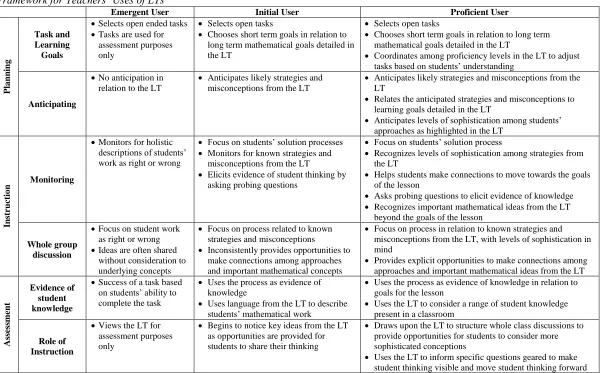
A Framework for Teachers’ Uses of LTs ...184
Lesson Planning ...185
Choosing tasks and goals ...185
Emergent user ...186
Initial user ...186
Proficient user ...187
Anticipating ...187
Emergent user ...187
Initial user ...188
Proficient user ...188
Instruction ...188
Monitoring ...189
Emergent user ...189
Initial user ...190
Proficient user ...190
Whole group discussions ...190
Emergent user ...191
Initial user ...191
Proficient user ...192
Assessment ...192
Evidence of student knowledge ...192
Emergent user ...193
Proficient user ...193
Role of instruction ...194
Emergent user ...194
Initial user ...194
Proficient user ...195
Summary ...195
Limitations ...198
Implications ...199
Teachers ...199
Mathematics educators ...200
Future research ...201
Closing Remarks ...202
REFERENCES ...204
APPENDICES ...219
Appendix A: Teachers’ Beliefs about Mathematics and Mathematics Teaching ...220
Appendix B: Pre-lesson Questionnaire ...226
Appendix C: Observation Protocol ...227
Appendix D: Post-lesson Interview Protocol ...228
Appendix E: Lesson #1 Task ...229
Appendix F: Lesson #2 Task ...232
Appendix G: The Wrapping Paper Task ...234
Appendix H: Lara’s Wrapping Paper Task ...236
Appendix I: Ellen, Bianca, and Tracy’s Wrapping Paper Task ...239
LIST OF TABLES
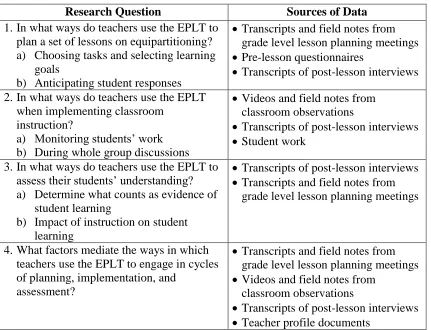
Table 1: Research Questions and Data Sources ...61
Table 2: Initial Codes, Definitions, and Examples ...64
Table 3: Codes Resulting from the Open Coding Process ...66
Table 4: Task Descriptions with Potential Proficiency Levels and Task Parameters ...84
Table 5: Summary of Mathematical Knowledge for Teaching Post-test scores from the LTBI Project ...85
LIST OF FIGURES
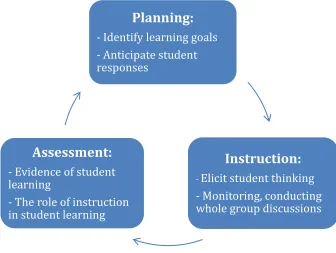
Figure 1: The teaching cycle ...41
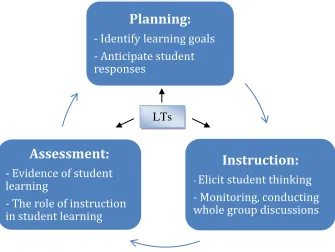
Figure 2: Placing LTs at the center of the teaching cycle ...43
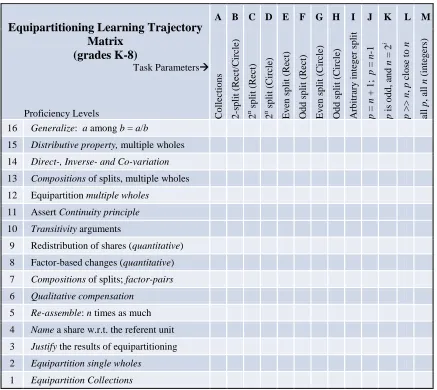
Figure 3: The equipartitioning learning trajectory ...48
CHAPTER ONE
Attention to student thinking has been identified as a critical tool to initiate changes in
teachers’ knowledge for teaching and improvements in classroom instruction (Fennema,
Carpenter, Franke, Levi, Jacobs, & Empson, 1996; Franke, Carpenter, Levi, & Fennema,
2001; Kazemi & Franke, 2004; Sherin & van Es, 2009). In their seminal work with teachers
around children’s mathematical thinking, Fennema and colleagues (1996) developed
Cognitively Guided Instruction that provided teachers with a framework for listening to and
understanding children’s problem solving strategies and mathematical thinking. When given
access to specific knowledge about children’s problem solving, teachers were more likely to
pay attention to their students’ thinking processes, and they made sense of strategies they
observed their students using (Carpenter, Fennema, Peterson, Chiang, & Loef, 1989).
As researchers continued to consider the role of student thinking in teacher learning,
Ball and Cohen (1999) suggested that teacher education should be closely connected to
teachers’ practice and their learning experiences authentic to what takes place in their
classrooms (Garet, Porter, Desimone, Birman, & Yoon, 2001; Putnam & Borko, 2000;
Webster-Wright, 2009). Professional development shifted to explore how teachers learn
from purposefully designed professional learning tasks that incorporate practice-based
artifacts (Ball & Cohen, 1999; Kazemi & Franke, 2004; Silver, Clark, Ghousseini,
Charalambous, & Sealy, 2007). As such, research on professional development in
mathematics education has examined the ways in which focusing on children’s thinking
examine their own mathematical knowledge as well as their instruction (Kazemi & Franke,
2004; Sherin & van Es, 2009; Silver et al., 2007).
Student Thinking and Teaching
One way that research on student thinking is making progress is through the construct
of a learning trajectory. The field of mathematics education hypothesized that learning
trajectories have the potential to support teachers in making sense of and using student
thinking to improve teaching and learning (Daro, Mosher, & Corcoran, 2011). Simon (1995)
first used the term hypothetical learning trajectory to describe paths that learning might
follow as children progress towards intended learning goals. Its hypothetical nature implies
that no teacher or researcher knows exactly how learning will proceed for any one individual.
As a result, teachers rely on their theoretical and experiential knowledge of students and
content. Over time, teachers come to expect specific learning patterns, common strategies,
and misconceptions based on previous experiences teaching particular topics.
More recently, trajectories have gained prominence as a bridge between research and
practice and research has just begun to connect learning trajectories to curriculum
development (Clements & Sarama, 2009), assessment design (Battista, 2004; Confrey,
Maloney, Nguyen, Mojica, & Myers, 2009), and classroom instruction (Bardsley, 2006;
Wilson, 2009). Learning trajectories (LTs) utilize research on student learning to describe
probable pathways of learning over time. These empirically built trajectories differ from the
sequence of topics typically used in instruction, which are most often based on the logic of
and are influenced by the interactions between instruction and students’ prior knowledge. As
such, there is no one correct pathway, but multiple ways to reach certain understandings,
making trajectories approximations of expected learning. However, their empirical nature
provides representations of highly probable steps along paths. Building off of Simon’s
(1995) hypothetical learning trajectory, Clements and Sarama (2009) maintained that, “a
complete hypothetical learning trajectory includes: the learning goal, developmental
progression of thinking and learning, and sequence of instructional tasks” (p. 84). They
explained that integrating these three ingredients can alter what has been previously found in
educational psychology “because it opens up new paths for learning and development” (p.
84).
As these definitions of LTs continue to be refined, researchers are working to
empirically construct trajectories in different mathematical domains (Barrett, Clements,
Klanderman, Pennisi & Polaki, 2006; Battista, 2004; Clements, Wilson, & Sarama, 2004;
Confrey et al., 2009; Nguyen, 2010; Sherin & Fuson, 2005). The authors of the Common
Core State Standards (2010) emphasized the use of research-based LTs in the development of
the new standards and committed to using research and evidence of student learning to
inform future revisions. These trajectories support the development of new standards as they
identify significant clusters of concepts, connect students’ thinking to those concepts, and
offer foundations for describing the interim goals laid out in the content standards (Daro et
al., 2011). Daro et al. (2011) stated that LTs serve “as a basis for informing teachers about
kinds of pedagogical responses that are likely to help students move along” (p. 12).
However, little is known about how teachers come to learn about LTs and appropriate them
into their instruction.
As teachers increasingly attend to student thinking in lesson planning and instruction,
researchers must consider the role of LTs in supporting teachers’ complex work. Research
has yet to address how teachers adjust their lesson planning and instruction when they have
information about common misconceptions and important landmarks inherent in LTs, or how
teachers use evidence of student thinking to inform future instruction in light of LTs. This
study contributes to the research on teachers’ uses of LTs to support attention to student
thinking in lesson planning, instruction, and assessment.
Significance of the Study and Research Questions
Based on one particular mathematics learning trajectory, the Equipartitioning
Learning Trajectory (EPLT, Confrey et al., 2009), the current study sought to examine the
influence of LTs on teachers’ instructional practices. More specifically, this study examined
the ways in which teachers used a LT to plan and implement instruction on equipartitioning,
and assess their students’ knowledge to inform future lessons. From this examination, an
initial framework was developed to describe different levels of teachers’ uses of LTs. The
study was designed to enhance the field’s understanding of how a LT can support teachers’
attention to student thinking during mathematics instruction.
The following research questions are addressed:
2. In what ways do teachers use the EPLT when implementing classroom instruction?
3. In what ways do teachers use the EPLT to assess what happens during instruction?
4. What factors mediate and moderate the ways in which teachers use the EPLT to
engage in cycles of lesson planning, instruction, and assessment?
Overview of Methodological Approach
This study is part of a larger design study to examine the ways in which teachers learn
about learning trajectories and use them in their classrooms. Design studies provide
researchers with a means of studying learning in context and to generate and test theories
through an iterative process (Cobb, Confrey, diSessa, Lehrer, & Schauble, 2003). The study
of learning is considered from both an individual, psychological perspective and a collective,
social perspective. Cobb and colleagues (2003) argued that the two perspectives are not
studied in separation, but that as one is brought to the forefront, the other serves as a situating
context. As such, the current study focused on the individual teacher in the context of the
larger design study.
To examine individual teachers’ uses of a LT, the design of this study followed a case
study design. The study is particularistic (Merriam, 1998) in that its focus is on the particular
phenomenon of the influence of the EPLT throughout cycles of planning, instruction, and
assessment for five elementary school teachers. Moreover, this is a multi-case study (Stake,
1995) bounded by individual teachers to serve as illustrations of the utility of LTs. The final
product is interpretive (Merriam, 1998) in nature as it provides descriptions of teachers’ uses
conceptual categories to depict the ways in which teachers use LTs. Through systematic data
analyses, I interpreted the participants’ experiences to create categories that conceptualize the
utilization of LTs to support attention to students’ mathematical thinking. The end product
emphasized cross-case analysis with the goal of proposing a framework of teachers’ uses of
LTs in their mathematics instruction.
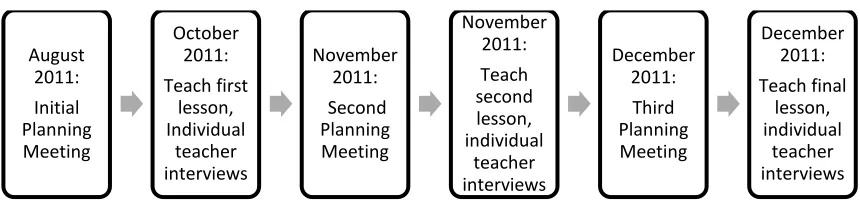
A group of second grade teachers from one elementary school collaboratively
planned and individually implemented a set of lessons on equipartitioning over the course of
one semester. These teachers previously attended a year-long professional development
program designed to teach them about the EPLT. They engaged in a series of teaching
cycles that began with lesson planning, where the LT aided teachers in identifying learning
goals and sub-concepts necessary to support intended learning goals. Teachers then
implemented the designed lessons. Finally, teachers assessed their students’ understanding
by reflecting on the implemented lessons, examining evidence of student learning to inform
future instruction.
The LT offered teachers insight into how to use student work to navigate productive
classroom discourse. The study’s findings showed that the LT supported teachers in
specifying learning goals and anticipating levels of sophistication among expected strategies.
The teachers used the LT to pay attention to the processes their students engaged in as they
solved tasks and it supported the recognition of important mathematical ideas that surfaced
degree, suggesting possible categories to differentiate the ways in which LTs can be used in
instruction.
Outline of Dissertation
This dissertation is organized into five chapters. In Chapter One, I discuss the
significance of the study and an introduction to its focus. In Chapter Two, I describe the
theoretical perspective that undergirds the study, followed by a review of emerging literature
on teachers’ uses of LTs, relevant literature on lesson planning, instruction that is focused on
student thinking, and formative assessment. Then, the conceptual framework used to guide
this study is described. In Chapter Three, the research questions are refined to reflect the
conceptual framework and to clearly focus the study. The methodological approach is
justified and outlined in detail, describing the context, sample, sources of data, and methods
of analysis used. In Chapter Four, I provide profiles of each participant, a detailed
description across the cases, and analysis of the data to answer the research questions.
Finally, in Chapter Five I build on the results of the cross-case analysis to present a
framework of teachers’ uses of LTs, along with limitations, implications, and areas of future
CHAPTER TWO
In this chapter, I present a review of relevant literature to situate the study. I begin by
presenting the theoretical perspective that undergirds this research. Then, after briefly
discussing the construct of learning trajectories, I review studies on teachers’ uses of LTs for
instruction, followed by literature on lesson planning, using student thinking in instruction,
and assessment to inform future instruction. Finally, the conceptual framework used to guide
this study is described.
Theoretical Perspectives
This study takes a social constructivist theoretical perspective on teaching and
learning. In this section, I provide an overview of this perspective and highlight ideas that
are relevant to this study. Among the multiple theoretical viewpoints present in mathematics
education, constructivism is a perspective that has dominated the research community over
the last several decades (Ernst, 2006). Rather than perceive learning as a passive activity
where knowledge is transmitted from teacher to student, constructivism views learning as
actively built from previously formed cognitive structures that reside within an individual.
Constructivism, grounded in the work of Piaget, views knowledge as individually
constructed through an active assimilation of “reality into systems of transformations”
(Piaget, 1970, p. 15). In this view, individuals construct schemes through their experiences
that correspond to their reality, in essence creating models of reality. When an individual
encounters a new problem or situation, the individual searches for internal stability or what
are incorporated into existing schemes, or by accommodation, where existing schemes are
modified to fit new ideas. Piaget (1970) stated that “knowledge, then, is a system of
transformations that become progressively adequate” (p. 15) and from which new structures
are subsequently abstracted.
von Glasersfeld (1984) stated that an individual cannot construct an exact match of
reality, but instead searches for viability, or the notion that as long as an idea serves to
organize the experiential world, then it is useful. He stated, “Just as the environment places
constraints on the living organisms and eliminates all variants that in some way transfers the
limits within which they are possible or ‘viable’, so the experiential world… constitutes the
testing ground for our ideas” (von Glasersfeld, 1984, p. 22). Despite the differences in views
of how schemes change, either through equilibration or viability, constructivism views
learning as constructed within the individual (Ernst, 1994).
What is missing from this perspective is the social and cultural nature of learning that
is present in our world. With foundations in the work of Vygotsky, socio-cultural theory
posits that learning is not individually constructed, but that it is a social process that occurs
when individuals engage with others in meaning-making activities (Cobb, 2007). At the core
of Vygotsky’s (1986) theory of learning is the relationship between thought and language
that develops over time through socio-cultural interactions. He stated, “Unlike the
development of instincts, thinking and behavior of adolescents are prompted not from within
but from without, by the social milieu” (Vygotsky, 1986, p. 108). Opportunities to learn and
for the emergence of conceptual formation and thinking. In addition, language serves as a
bridge between concept formation and socio-cultural interactions by allowing a child to ask
questions, communicate, and participate in social and cultural activities, first developing
within the social realm, then developing within the individual. Vygotsky (1986) stated,
“Any function in the child’s cultural development appears twice or on two planes. First, it
appears on the social plane, and then on the psychological plane. First, it appears between
people as an interpsychological category, and then within the child as an intrapsychological
category” (p. 163).
From both constructivist and socio-cultural perspectives, the role of the teacher and of
instruction is critical to providing students with the types of opportunities to learn described
above. Piaget (1970) marks the importance of problematic tasks that perturb schema so they
may adapt. Vygotsky (1978) acknowledges the importance of instruction as building on
students’ informal experiences (prior knowledge) and then providing students with problem
solving situations within his/her zone of proximal development. A key component from both
perspectives is the function of the interaction between the individual with others around a
cultural activity. For constructivism, the other creates cognitive dissonance in order for the
learner to search for equilibration and learning is studied with a focus on adaptations to
people’s schema. For socio-cultural theory, learning is the process of internalizing
knowledge from culture through interacting with the more knowledgeable other, and as such,
learning is studied with a focus on changes in people’s participation in established cultural
Social constructivism evolved from both the constructivist and socio-cultural
perspectives to provide a theory that acknowledged the view that “both social processes and
individual sense-making have a central and important parts to play in the learning of
mathematics” (Ernst, 1994, p. 64). First used by sociologists, social constructivism came
about to account for the social construction of scientific concepts and mathematics while at
the same time acknowledging the individual learning of ideas. Ernst (1991) stated that “there
is an active construction of knowledge, typically concepts and hypotheses, on the basis of
experiences and previous knowledge…Secondly, there is the essential role played by
experience and interaction with the physical and social worlds” (p. 72). Moreover, the role
of language, conversation, signs, and text are vital to teaching and learning (Ernst, 2006).
Cobb and colleagues (Cobb, 2007; Cobb & Yackel, 1996; Cobb, Yackel, & Wood,
1992) interpreted social constructivism as emergent or distributed cognition perspective.
From this view, individual learning is studied as it occurs in a social context. Learning can
be characterized as the process of self-organization, but this “can be seen to occur as students
participate in and contribute to the development of practices established by a local
community” (Cobb, 1995, p. 25). In this way, the social constructivist perspective takes into
account “both individuals’ socially situated knowing and the taken-as-shared ways of
knowing constituted by these individuals” (Cobb, 1995, p. 26).
Cobb and Yackel (1996) argued that this view is not only appropriate to consider
students’ mathematical learning, but also teachers’ socially situated work. That is to say that,
practices established by a group of teachers and how the individuals participate within the
group. In the context of research, it is often the case that the individual learning is brought to
the forefront while the social and cultural aspects serve as the background context for the
individual.
For the current study, teachers had learned about the trajectory prior to the study, but
this learning continued as they used the trajectory in their instruction. So, although this is a
study about teachers’ uses of LTs, they were also in the process of better understanding and
learning about the LT as they used it. To study teaching and learning from a social
constructivist perspective necessitates the study of the individual as well as the collective.
Hence, in this study, the focus is on the individual teacher’s use of a LT over time where the
teachers’ collectively work together to plan and reflect on their lessons served as the social
and cultural context from which they worked. The teachers were studied individually in their
classrooms and in the social context of their grade level planning meetings. Moreover, my
participation in their planning meetings contributed to the meaning making that occurred for
the teachers as they used a LT to plan and implement instruction on equipartitioning. Ernst
(1994) emphasized that “the social domain impacts on the developing individual in some
formative way, with the individual constructing (or appropriating) her meanings in response
to experiences in social contexts” (p. 66). Hence, while this is a study of the individual
teacher, it is critical to acknowledge the influence of the group on the individual’s way of
Learning Trajectories
As the field of mathematics education explores methods to improve instruction and
student learning, the construct of a learning trajectory (LT) has gained prominence as a
foundation for standards, curriculum, assessment and instruction (Daro et al., 2011). While
various definitions for learning trajectories exist within mathematics and science education
(Battista, 2004; Clements & Sarama, 2009; Confrey et al., 2009; Corcoran et al., 2009;
National Research Council, 2007), Maloney and Confrey (2010) suggested similarities in
these definitions, including: 1) The assumption that students enter the classroom from
different cognitive origins and that the trajectory assists in moving students to more
sophisticated ideas, 2) the assumption that tasks and instruction are not independent of a
learning trajectory, 3) learning trajectories consist of a sequence of goal understandings or
levels that build upon each other from simple to complex, 4) learning trajectories are
constructed from an empirical basis (e.g., a literature review, synthesis, or empirical research
from working with students) but best guesses are sometimes used to fill in gaps, and 5) gaps
in a learning trajectory are completed with additional empirical research and this process is
iterative as it informs the original literature synthesis.
Often cited as the first use of the term learning trajectory in mathematics education
literature, Simon (1995) defined a hypothetical learning trajectory to be, “The learning goals,
the learning activities, and the thinking and learning in which students might engage” (p.
133). Later, the National Research Council (2007) promoted learning progressions in science
topic that can follow one another as children learn about and investigate a topic over a broad
span of time” (p. 211). The 2009 NAEP Science Framework (National Assessment
Governing Board, 2008) emphasized that these trajectories depend on the interaction between
students’ prior knowledge and instruction.
Clements and Sarama (2004) conceptualized LTs as “descriptions of children’s
thinking and learning in a specific mathematical domain and a related, conjectured route
through a set of instructional tasks” (p. 83) calling attention to the inclusion of learning goals
and instruction in the path of students’ learning. The fact that LTs use empirical research on
how students come to learn key mathematical concepts allows educators to consider new
paths for learning other than what is laid out in traditional curricula.
Battista’s (2004) interpretation of a LT consisted of levels of sophistication,
beginning with informal, pre-instructional reasoning, and moving towards formal
mathematical concepts. Along the way, students encounter plateaus, or key processes and
conceptualizations required to reach formal understanding. In his study of cognition-based
assessment, Battista used area and volume measurement tasks with third and fifth grade
students in order to create assessments built from a research-based framework. He claimed
that in order for teachers to support students’ construction of mathematical understanding,
they must be able to identify core mathematical ideas, know conceptual frameworks for
understanding children’s thinking, and utilize a valid set of assessment tasks. In his view, the
learning trajectory provides teachers with information on children’s thinking as well as a
The DELTA research group defined a LT to be an “empirically-supported description
of the ordered network of constructs a student encounters through instruction (i.e. activities,
tasks, tools, forms of interaction and methods of evaluation), in order to move from informal
ideas, through successive refinements of representation, articulation, and reflection, towards
increasingly complex concepts over time” (Confrey et al., 2009, p. 347). This definition
highlights learning trajectories as identifying important aspects of a concept as it evolves
over time, with the influence of instruction.
Although the initial hypothetical learning trajectory was meant to be a framework to
help teachers think about how students’ learning may evolve, it did not provide direct
implications for teaching. Rather, its purpose was to emphasize “the importance of having a
goal and a rationale for teaching decisions and the hypothetical nature of such thinking”
(Simon, 1995, p. 136). Its hypothetical nature implied that no teacher or researcher knows
exactly how learning will proceed. More precisely, teachers rely on expected tendencies
from their theoretical and experiential knowledge of students and content. With the more
recent work to empirically construct LTs, researchers are beginning to study the utility of
LTs for instruction.
Learning trajectories and teaching. Few researchers have studied the implications of LTs for teachers (Bardsley, 2006; Clements, Sarama, Spitler, Lange, & Wolfe, 2011;
McKool, 2009; Mojica, 2010; Wickstrom, Baek, Barrett, Cullen, & Tobias, 2012; Wilson,
2009). Bardsley (2006) conducted a case study of 14 pre-kindergarten teachers on their use
supported learning trajectories on early- childhood mathematical concepts. She concluded
that teachers’ motivation for participating in the professional development influenced how
they used the curriculum materials. Teachers who wanted classroom activities were more
likely to focus on moving students through the levels. However, teachers who participated to
learn better mathematics used the curriculum as a structure for making instructional
decisions.
Continuing to study the Building Blocks curriculum, Clements and Sarama (2008) and
colleagues (2011) reported on a large-scale professional development project to examine the
effectiveness of the curriculum. Using a randomized trial design, the researchers studied 36
teachers in three groups: a treatment group of teachers using the trajectory-based curriculum,
a comparison group of teachers who used a research-based curriculum, and a control group.
Teachers in the treatment group and comparison group received the same amount of
professional development and similar curricular materials. Their results showed that teachers
in the Building Blocks treatment group developed richer mathematical classroom
environments and were more responsive to their students’ mathematical thinking. Moreover,
children in the treatment group had significantly greater gains from pre- to post-tests
compared to students in both the comparison group and the control classrooms. The authors
argued that differences in the treatment group and comparison group can be attributed to
differences in the teachers’ knowledge of the learning trajectories that were foundational to
McKool (2009) conducted a collaborative teaching experiment with one teacher who
utilized a measurement learning trajectory in working with two fifth grade students. McKool
reported that the professional development modeled around LTs supported the teacher in
focusing on her students’ mathematical thinking, improving her ability to assess her students’
knowledge and more effectively use her own mathematical knowledge to consider instruction
to address areas where her students struggled.
More recently, Wickstrom and colleagues (2012) reported a case study of a first grade
teacher who participated in professional development on a learning trajectory for length
measurement. Using Jacobs, Lamb, and Phillips (2010) framework of teacher noticing, the
findings indicated the learning trajectory provided the teacher with language to describe
student thinking, and supported her in attending to strategies students used as they engaged in
length tasks. When the teacher provided evidence of students’ strategies, she was more
successful at interpreting student understanding; however, both acts of noticing were more
difficult during classroom instruction than in individual student interview settings.
Wilson (2009) and Mojica (2010) conducted two related design studies on in-service
and pre-service elementary teachers’ use of the equipartitioning learning trajectory (EPLT) as
a model of student thinking. In Mojica’s study, 56 pre-service teachers participated in an
elementary mathematics methods course that emphasized the EPLT as a way to process and
organize students’ thinking. Her results indicated that learning about the LT deepened the
pre-service teachers’ own knowledge of mathematics and they used the LT to consider
With respect to practicing teachers, Wilson (2009) reported the ways in which 33
teachers from two rural schools used a LT to organize and process students’ mathematical
thinking, and it’s implication for instruction. Using a framework of describing, comparing,
inferring and restructuring as a lens to understand how teachers construct models of student
thinking, Wilson interpreted teachers’ uses of the EPLT throughout a professional
development experience and in classroom instruction. He stated, “As teachers use their own
understandings of mathematics to make sense of students’ behaviors and verbalizations, they
are creating a theoretical model of students’ thinking that allows them to relate and infer
students’ understandings of mathematics” (p. 38).
In the professional development context, Wilson reported that teachers used the EPLT
to predict students’ approaches to tasks and were more aware of students’ verbalizations and
behaviors and their implications for students’ understandings. The LT provided the teachers
in his study with a common language to talk about student thinking related to
equipartitioning. Teachers began to describe student work with more detail (rather than
simply right or wrong) and comparisons of students’ work were made based on empirical
evidence using what they knew theoretically from the trajectory as opposed to age or grade.
Additionally, Wilson found that curricular influences interfered with teachers’ ability
to incorporate equipartitioning tasks into their existing curriculum, and teachers used the
EPLT to evaluate the relative difficulty of a task. In the classroom, he observed teachers
using the EPLT to make sense of various approaches students took to solve equipartitioning
framework for selecting and sequencing student work to afford all students with
opportunities to refine their understanding of equipartitioning concepts during whole group
discussions.
Wilson (2009) and Mojica (2010) concluded that teachers used the learning trajectory
as a tool to organize student behaviors and cognition simultaneously to construct models of
student learning. Pre-service teachers used the trajectory as a means to focus on student
thinking. For in-service teachers, the trajectory provided a tool to unpack previously formed
models to coordinate specific behaviors with cognition.
Summary. The studies reviewed provide evidence of the utility of LTs in focusing instruction on children’s mathematical thinking and providing teachers with a framework for
understanding their students’ thinking. The current study builds on the existing knowledge
base of teachers’ uses of LTs to examine the ways in which teachers use a LT as they engage
in cycles of lesson planning, whole class instruction, and assessment over time.
The Teaching Cycle
Wilson (2009) described instructional activity as planning, teaching, and assessment.
In this study, I refer to iterations of the instructional activity as the teaching cycle. The
separation of the teaching cycle into three phases creates a theoretical support to study each
aspect of instructional activity. Planning relates to the decisions teachers make prior to
instruction. While the terms instruction and teaching are often used interchangeably, for the
purposes of this study, I use instruction to refer to the enactment of classroom teaching.
practice, planning, instruction and assessment do not necessarily occur separately, but
attending to these activities independently allows for a closer examination of the ways in
which teachers use a LT throughout the teaching cycle. Therefore, in this section I review
literature related to each of the three phases of the cycle.
Lesson planning. Often considered a core routine of teaching, lesson planning refers
to the time teachers spend preparing for instruction before students enter the classroom.
Previous research on teacher planning focused on what teachers attend to during lesson
planning, such as content, learning goals, or activities (McCutcheon, 1980; Yinger, 1980).
Much of teachers’ day-to-day planning is done mentally or as notes jotted down in a plan
book with textbook pages listed (John, 2006; McCutcheon, 1980). With respect to how
specific planning time is spent, a study by Decker and Ware (2001) revealed that very little
time is “actually devoted to the tasks that enhance the form of teacher delivery of instruction”
(p. 8) and that specific planning time during the school day is more likely to be spent doing
other tasks such as photocopying, running errands, or interacting with other teachers.
A common practice in any teacher preparation program is to exercise the craft of
writing detailed lesson plans (John, 2006; McCutcheon, 1980). However, such a craft is not
always easy to teach or to learn. Since the 1950’s, a model for planning that is commonly
taught to preservice teachers and used universally is the rational model, or objectives-first
model (McCutcheon, 1980; Yinger 1980; Zahorik, 1975). This model is expressed as a
linear model where planning begins with formulating an objective that describes a desired
these activities, and finally chooses some form of assessment (John, 2006; Yinger, 1980;
Zahorik, 1975). Implicit in this time period is the notion that teachers created their own
objectives and activities for students as opposed to working from mandated standards or
curricula.
Research on teacher planning showed that most teachers do not follow the dominant
model of planning; that is, they do not specifically attend to behavioral objectives first,
activities, and finally assessment (John, 2006; McCutcheon, 1980; Yinger, 1980; Zahorik,
1975). Studies on what teachers attend to in planning their lessons indicated that teachers
focus on ideas such as content, activities or tasks, materials, textbooks, and routines, as well
as students’ needs and backgrounds (Clark & Lampert, 1986; Fernandez & Cannon, 2005;
McCutcheon, 1980; Yinger, 1980; Zahorik, 1975). In his 1975 study of teacher planning,
Zahorik surveyed 194 teachers from various fields to determine what teachers focused on
most often in their lesson planning. The results of the study showed teachers attended to
content more often than objectives. Also, although they were not always attended to first,
activities were thought about by the majority of teachers in the study (Zahorik, 1975).
In a study of 12 elementary school teachers, McCutcheon (1980) found that teachers
used their textbook as a main source for activities and depended heavily upon suggestions
from the teachers’ guide. In a later study, Brown (1988) examined the lesson planning
practices of 12 middle school teachers in various content areas. She found that teachers
relied heavily on curriculum materials, building their lessons off of objectives expressly
More recently, Superfine (2008) studied three teachers’ lesson planning with respect
to a specific mathematics curriculum. Participants taught sixth grade at the same school and
were observed planning and enacting the same unit from a reform-based curriculum.
Through the analysis of pre- and post-lesson interviews, the study revealed two difficulties
the teachers had in planning: anticipating student work, misconceptions, and potential errors
for a given task, and understanding the treatment of the content in the curriculum. She
concluded that the conceptions teachers hold with respect to the teaching and learning of
mathematics as well as years of experience mediated their management of these difficulties.
In an attempt to articulate high-quality mathematics instruction, Corey and colleagues
(2010) studied conversations between seven Japanese student teachers and three cooperating
teachers from one school. These conversations occurred during planning meetings that took
place between the student teachers and their cooperating teachers, where the pairs met on
average three times prior to teaching a lesson. The findings described six principles of
high-quality instruction, with three of the principles directly related to lesson planning: an ideal
lesson is guided by a set of explicit long and short term goals, a particular lesson is created
with clear connections to previous and future lessons, and high-quality instruction requires
anticipating student thinking in relation to the goals of the lesson. This study offers support
for the importance of teachers’ ability to choose learning goals and to consider students’
approaches to intended instructional tasks in order to foster meaningful learning.
Summary. One may question what should be the focus of planning when instruction
planning, Ainley, Pratt, and Hanson (2006) stated, “If teachers plan from tightly focused
learning objectives, the tasks they set are likely to be unrewarding for the pupils, and
mathematically impoverished. If teaching is planned around engaging tasks the pupils’
activity may be far richer but it is likely to be less focused and learning may be difficult to
assess” (p. 24). The research reviewed points to identifying learning goals and anticipating
students’ likely approaches to intended tasks as important foci of lesson planning that takes
student thinking into account. Teachers must consider how to construct lessons that address
specific learning goals and allow teachers to gather evidence of their students’ understanding
towards the chosen goals. Anticipating likely responses and misconceptions can prepare
teachers to navigate the complex moments of instruction. Moreover, as student learning
progresses overtime, teachers’ consideration of learning goals allows them to consider how
to build on students’ current conceptions to reach the intended goals. This study aimed to
examine the utility of a learning trajectory as a resource for identifying goals and anticipating
student work as teachers plan a set of lessons over time.
Instruction. The second element in the teaching cycle is the enactment of teaching, or instruction. Educators have attempted to describe effective instruction and to link specific
acts of instruction to student learning. It cannot be denied, however, that instruction is a
complex task involving students, teachers, and the interactions that take place in classroom
settings. In the past, instruction referred more often to teachers’ visible actions and students’
abilities to replicate those actions (Oser & Baeriswyl, 2001). Over time, educators began to
Instruction became not just about the visible interactions between the teacher and the learner
but also the inner mental processes that take place as a result of those interactions. Cohen,
Raudenbush, and Ball (2003) emphasized this bidirectional relationship and stated,
“Instruction consists of interactions among teachers and students around content” (p. 22).
Building on this interpretation, Hiebert and Grouws (2007) defined instruction as the
“classroom interactions among teachers and students around content directed toward
facilitating students’ achievement of learning goals” (p. 372).
While a plethora of research exists on instruction, due to the nature of this study, I
focus the review of literature on instruction that attends to student thinking. As research on
children’s learning progressed, researchers began to consider the implications of such
research for instruction (Carpenter et al., 1989). The work of cognitive psychologists such as
Piaget and Vygotsky allowed researchers in mathematics education to more clearly articulate
what it means to teach and learn mathematics with understanding. In particular, learning
must be built on prior knowledge and children must have experiences in communicating
about and reflecting on mathematical ideas. In this view, instruction must be centered on
students’ construction of knowledge (Ball, 1993; Carpenter et al., 1989; Lampert, 2001) and
student thinking must serve as launching points for the development of important
mathematical concepts (Rasmussen & Marrongelle, 2006).
Through their research on learning, Bransford, Brown, and Cocking (2000) proposed
that classroom environments must be learner-centered with an emphasis on formative
the students are in the ‘developmental corridor’ from informal to formal thinking, and design
instruction accordingly” (Bransford et al., 2000, p. 35). Instruction requires teachers to build
on students’ prior knowledge and for ideas to be shared and communicated, making student
thinking visible to the teacher and other students.
The most well-known research on instruction centered on student thinking is the
Cognitively Guided Instruction (CGI) project. The initial purpose of the project was to
examine the instruction of teachers who were provided with explicit knowledge derived from
research on children’s thinking (Carpenter et al., 1989). One of the goals of the project was
“to help the teachers understand the ways students intuitively solve problems, so that they
can help students build on that knowledge” (Carpenter et al., 1996, p. 15). Through 80 hours
of professional development over the course of 4 weeks, teachers learned about problem
types and the strategies that children typically use to solve different problems through
watching clinical interviews and conducting interviews with children solving addition and
subtraction problems. The researchers also discussed with teachers broad principles of
instruction centered on students’ active development of understanding and teachers had time
to examine curricular materials and plan for the coming school year. The project teachers
were studied through content assessments and classroom observations throughout the school
year. Carpenter, Fennema and colleagues concluded that by listening to their students’
problem solving strategies and being equipped to make sense of the strategies their students
were using, CGI teachers were better able to adapt their instruction to provide appropriate
Franke, Carpenter, Levi, and Fennema (2001) continued to study teachers’ use of
student thinking four years after their participation in the CGI project. Through interviews
and classroom observations of 22 elementary teachers from six schools who participated in
the CGI study, the researchers sought to understand “what characterized and supported
teachers’ continued learning and growth” (Franke et al, 2001, p. 657). The researchers coded
interview and observation data using a coding scheme that classified teachers’ levels of
engagement with children’s mathematical thinking, and then identified themes related to talk
about students’ mathematical thinking, use of frameworks to organize knowledge of
children’s thinking, and engagement in creating their own knowledge of children’s thinking.
The results of their analyses showed that overall the participants remained engaged with
children’s mathematical thinking. In particular, one highly engaged teacher reported that by
learning to focus on children’s thinking, she not only created, but also built upon and
extended frameworks she used to understand her students’ thinking. She also saw her
classroom as an interactive place for her to build her own knowledge about mathematics and
student thinking.
Jacobs, Lamb, and Phillips (2010) used the construct of professional noticing in order
to characterize the in-the-moment decision making that is foundational to mathematics
instruction that promotes conceptual understanding. They define professional noticing as
comprised of three component skills: attending to children’s strategies, interpreting their
thinking, and deciding how to respond on the basis of children’s thinking. To investigate
responses to prompts based on videos and written work of students engaged in mathematical
tasks. Participants consisted of preservice elementary teachers and experienced practicing
K-3 teachers who participated in CGI-based professional development on children’s
mathematical thinking for varying lengths of time (0 years, 2 years, and 4 years). They
concluded that teachers with limited experience with children’s mathematical thinking
(preservice teachers and teachers yet to start the professional development) struggled to
attend to students’ thinking, while teachers with sustained experience with children’s
mathematical thinking (those who participated in the professional development for 2 or 4
years) consistently coordinating the three components of professional noticing. Thus,
professional development can support teachers in learning to attend to students’
mathematical thinking.
Few researchers have worked as teacher-researchers to study the role of student
thinking in their own instruction (Ball, 1993; Lampert, 2001; Lubienski, 2000). Ball (1993)
reported on her challenges in creating classroom practices that engaged students in
meaningful mathematics and connected to their prior experiences. Her reflections upon her
teaching revealed the necessity to understand the content through the eyes of her students and
“consider the mathematics in relation to the children and the children in relation to the
mathematics” (Ball, 1993, p. 394). In her work as a teacher-researcher using a reform
curriculum, Lubienski (2000) described her pedagogy as consistent with standards-based
instruction where students made their problem solving strategies public and connections
In her book, Teaching Problems and the Problems of Teaching, Lampert (2001)
presented a case study of her own mathematics teaching of a fifth grade class over the course
of one year. Her goals were to use her own teaching using problem-based instruction to
develop a model of practice. Her approach to instruction was to center discussions around
students’ thinking and for students to learn to justify their thinking in a public manner. She
concluded with a model of practice that represents the interactions between the teacher,
students, and the content, emphasizing the importance of the students’ conceptions that they
bring to the complex interactions.
Summary. While the research described above speaks to the value of attending to
student thinking, knowledge about specific teacher practices that support students in making
their thinking explicit and subsequently how teachers respond to such evidence of their
students’ understanding in the moments of instruction is only emerging (Franke et al., 2001).
From previous research, we know that the information about common strategies and
misconceptions highlighted in a LT can support teachers in recognizing these ideas among
their students, make sense of these ideas, and in turn, helping students make connections to
important mathematical ideas. The current study examined how a LT facilitated teachers’
ability to elicit evidence of student thinking and to navigate whole class discussions.
Assessment. The final element in the teaching cycle is assessment. In the report, Knowing What Students Know, Pellegrino, Chudowsky, and Glaser (National Research
Council, 2001) emphasized one of the main purposes of assessment as assisting in learning.
daily observations and interactions that teachers have with their students. These approaches
to collect information about what students know are often referred to as formative
assessments. Pellegrino et al. (2001) characterized assessment as the process of reasoning
from evidence of student learning to make inferences about what students know. The authors
argued that there are three key elements that underlie any assessment and described them as
“a model of student cognition and learning in the domain, a set of beliefs about the kinds of
observations that will provide evidence of students’ competencies, and an interpretation
process for making sense of the evidence” (Pellegrino et al., 2001, p. 44, emphasis in
original).
Formative assessment is ongoing and happens not only during the moments of
teaching where evidence is gathered, but also after instruction when teachers have time to
reflect on their lessons in order to make decisions about future instruction. Reasoning from
evidence of student learning takes time; teachers must stop and consider how the interactions
that occurred during instruction inform what they will do next. For the purposes of this
study, the focus is on formative assessment that occurs after instruction, in the moments in
between lessons, where teachers interpret the evidence they gather during instruction about
their students’ learning to inform future instruction. While the majority of research on
formative assessment focuses on the moments during instruction, reviewing this literature
serves to better understand assessment that takes place in between instructional episodes.
In 1998, Black and Wiliam published an extensive review of over 200 empirical
conclude that while the effective use of formative assessment is positively correlated with
student achievement gains, the ways in which teachers incorporate formative assessment
practices varies and that “reform in this dimension will inevitably take a long time, and need
continuing support from both practitioners and researchers” (Black & Wiliam, 1998, p. 37).
While researchers have identified effective formative assessment strategies and studied
professional development projects that facilitate teachers’ implementation of formative
assessment into their classroom practices (Black, Harrison, Lee, Marshal, &Wiliam, 2004;
Heritage, 2008; McManus, 2008; Wiliam, Lee, Harrison, & Black, 2004), little is known
about teachers’ processes between lessons as they evaluate the learning that took place in
prior lessons to inform future instruction.
Based on their initial literature review, Black and colleagues (2004) studied
secondary science and mathematics teachers’ implementation of formative assessment
practices. Twenty four teachers participated in the project intervention which included
collaboration between the researchers and participants on how to employ specific formative
assessment practices (questioning, comment-only marking, sharing criteria with learners, and
student peer- and self-assessments). The researchers supported the teachers in deciding what
and how they would attempt some of these strategies in their classrooms and collected
evidence of participants’ formative assessment practices through classroom observations,
interviews, and written reflections. An important result from the study was that as the
information on learning theories to help them make sense of the information they were
learning about their students and to build models of student thinking.
Sato, Wei, and Darling-Hammond (2008) examined changes in 16 middle and high
school math and science teachers’ formative assessment practices over a three year period,
where nine of the teachers engaged in the National Board Certification process, and the
remaining seven served as a control group. Researchers collected and analyzed data packets
for each participant consisting of twice-yearly classroom observations, collections of student
work samples, bi-yearly teacher interviews, yearly student and teacher surveys, and final
teacher interviews. The results indicated significant increases in formative assessment
practices for National Board candidates over the control group, for which the researchers
attributed to particular characteristics of the process such as writing prompts asking teachers
to reflect on evidence of student learning and how they use this evidence to modify
instruction, exposure to an explicit definition of formative assessment, and setting clear goals
for teachers’ practice.
Heritage, Kim, Vendlinski, and Herman (2009) conducted a study of teachers’
knowledge of teaching mathematics in order to examine teachers’ abilities to make
inferences from evidence of student learning. Over 100 middle school mathematics teachers
completed an online assessment where teachers reviewed student responses to various
mathematical tasks and answered questions about key mathematical ideas in the task,
evidence of student understanding, what feedback would be appropriate, and what might be
given assessment information, they can articulate key learning principles and evaluate
students’ understanding, but they are less successful in planning the next instructional steps
based on the evidence of student learning.
In contrast, Wilson and Confrey (2011) argued that when provided with a model of
student cognition in the form of a learning trajectory, teachers were able to observe and
interpret student thinking in a more refined way. In a professional development setting,
elementary teachers were able to make inferences about students’ understandings from
student work samples and then make decisions about next instructional steps based on the
progression described in the LT. Similarly, Edgington, Sztajn, Wilson, and Confrey (2011)
found that a LT supported teachers in analyzing student work beyond right or wrong to make
conjectures about student understanding and to consider possible contexts and follow-up
activities that would facilitate students’ thinking.
Sikes (2008) conducted a case study of one elementary school’s use of formative
assessment and its impact on instruction. Through teacher interviews, planning meeting
observations, and document analysis, she examined teachers’ ability to make instructional
decisions working in grade level teams based on data collected through specific formative
tests. While the grade level team meetings gave the teachers opportunities to collaborate on
analyzing data and to make instructional decisions for remediation and differentiated
instruction, the lack of time and organizational structure impeded the teachers’ use of the