
Western University Western University
Scholarship@Western
Scholarship@Western
Electronic Thesis and Dissertation Repository
7-29-2019 10:30 AM
Adaptation of a Deep Learning Algorithm for Traffic Sign
Adaptation of a Deep Learning Algorithm for Traffic Sign
Detection
Detection
Jose Luis Masache Narvaez
The University of Western Ontario
Supervisor
Samarabandu, Jagath
The University of Western Ontario
Graduate Program in Electrical and Computer Engineering
A thesis submitted in partial fulfillment of the requirements for the degree in Master of Engineering Science
© Jose Luis Masache Narvaez 2019
Follow this and additional works at: https://ir.lib.uwo.ca/etd
Part of the Computational Engineering Commons, Other Computer Engineering Commons, and the
Other Electrical and Computer Engineering Commons
Recommended Citation Recommended Citation
Masache Narvaez, Jose Luis, "Adaptation of a Deep Learning Algorithm for Traffic Sign Detection" (2019). Electronic Thesis and Dissertation Repository. 6412.
https://ir.lib.uwo.ca/etd/6412
This Dissertation/Thesis is brought to you for free and open access by Scholarship@Western. It has been accepted for inclusion in Electronic Thesis and Dissertation Repository by an authorized administrator of
Abstract
Traffic signs detection is becoming increasingly important as various approaches for
automa-tion using computer vision are becoming widely used in the industry. Typical applicaautoma-tions
include autonomous driving systems, mapping and cataloging traffic signs by municipalities.
Convolutional neural networks (CNNs) have shown state of the art performances in
classifica-tion tasks, and as a result, object detecclassifica-tion algorithms based on CNNs have become popular in
computer vision tasks. Two-stage detection algorithms like region proposal methods (R-CNN
and Faster R-CNN) have better performance in terms of localization and recognition
accu-racy. However, these methods require high computational power for training and inference
that make them difficult to apply in real-time applications. One-stage detection algorithms like
Single Shot Multibox (SSD) and You Only Look Once (YOLO) are designed to be faster, but
their accuracy is lower compared with the two-stage detector methods. In this project, a traffic
sign detection algorithm is presented, which is inspired mainly by the SSD algorithm and its
variants. The number of layers and the number of scales for object detection were modified to
obtain the best balance in accuracy and speed detection. Experimental tests of this method over
a traffic sign dataset give results of 93.75% mAP versus 89.35% mAP obtained using standard
SSD+MobileNet, the speed of detection is 0.0124 s per image on a GPU.
Keywords: Traffic sign detection, object detection, Convolutional Neural Network, Machine
Learning, Computer Vision, Single Shot Multibox Detector (SSD).
Summary for Lay Audience
Traffic signs detection is becoming increasingly important as various approaches for
automa-tion using computer vision are becoming widely used in the industry. Typical applicaautoma-tions
include autonomous driving systems, mapping and cataloging traffic signs by municipalities.
Deep learning algorithms have shown a state of the art performances in classification tasks. As
a result, object detection algorithms based on deep learning have become popular in computer
vision tasks. They can be divided into two main categories: Two-stage detection algorithms
and one-stage detection algorithms. Two-stage detection algorithms have better performance in
terms of localization and recognition accuracy compared with one-stage detection algorithms.
However, one-stage detection algorithms are designed to be faster, which makes them suitable
for real-time applications where the detection time is crucial. In this project, a traffic sign
de-tection algorithm is presented, which is inspired mainly by state of the art one-stage dede-tection
algorithms. Modifications were made through experimentation to obtain the best balance in
accuracy and detection speed.
Acknowlegements
First, I would like to express my gratitude to my supervisor, Dr. Jagath Samarabandu. Who
gave me the opportunity to study under his guidance. I appreciate all his offerings of time
and ideas to make my graduate student experience invaluable. I would also like to thank my
labmates for their words of support during the time shared in the laboratory.
Last, I would like to thank my parents for their endless love and sacrifices. They always have
been an example of hard work and tenacity. Thanks to my brothers, my sister, my nephew, and
my friends in Ecuador, their support and words of motivation have given me the strength to
pursue and finish this challenge.
Contents
Abstract i
Summary for Lay Audience ii
Acknowlegements iii
List of Figures vi
List of Tables viii
List of Appendices ix
1 Introduction 1
1.1 Overview . . . 1
1.2 Contributions . . . 2
1.3 Thesis outline . . . 3
2 Background 4 2.1 Convolutional neural networks . . . 4
2.2 CNN architectures . . . 9
2.3 Object Detection . . . 11
2.4 State-of-the-art in Traffic Sign Detection . . . 14
2.5 Evaluation metrics . . . 16
3 Traffic signs detector 18 3.1 SSD architecture review . . . 18
3.2 Dataset . . . 22
3.3 Methodology . . . 22
3.4 Experiments . . . 27
4 Conclusions and Future work 35
Bibliography 37
A Detection examples SSD+MobileNet vs. Proposed Algorithm 42
Curriculum Vitae 45
List of Figures
2.1 Typical architecture of a convolutional neural network and its different layers . 5
2.2 A convolutional layer showing the convolutional operation between its
associ-ated filter and the input data . . . 6
2.3 A pooling layer applying a max operation to reduce the size of a feature map . 7
2.4 ReLU layer and its associated thresholding function applied to the input data . 7
2.5 Batch normalization algorithm applied to an inputx. . . 8 2.6 Softmax classifier. For an input z with arbitrary scores for each class j, the
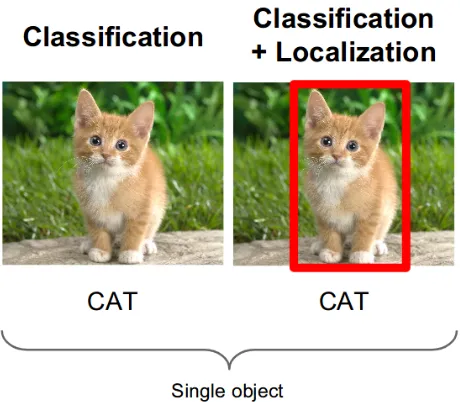
output is a vector with values between 0 and 1 for each class j. . . 9 2.7 Difference between image classification (left) and object detection (right). . . . 11
2.8 High-level diagram for two-stage detectors, showing the region proposal phase
and the classification phase (image from [11]). . . 13
2.9 High-level diagram for one-stage detectors, showing the one-step process that
combines classification and bounding box prediction (image from [11]). . . 14
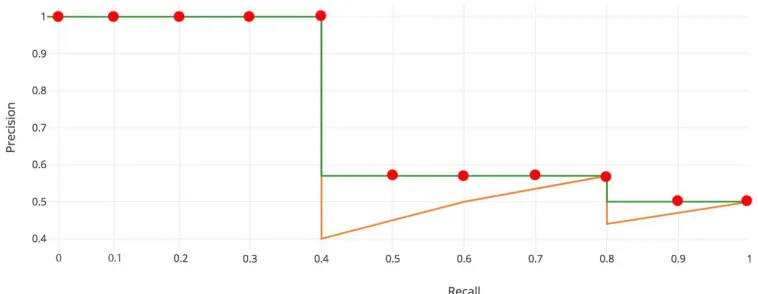
2.10 Interpolated precision-recall curve (green line with red dots) used for the
cal-culation of mean average precision . . . 17
3.1 Comparison between SSD [19] and YOLO [26] network architectures. SSD
adds feature layers to the end of a base network and, uses six feature maps to
make predictions. YOLO uses one feature map to make predictions. . . 19
3.2 Default bounding boxes and aspect ratios in SSD. During training, the
algo-rithm needs the input image and ground truth bounding boxes (a). Anchor
boxes of different aspect ratios are defined at each location in feature maps
with different scales ( for example 8 x 8 (b) and 4 x 4 (c)) (image from [19]). . 20
3.3 Sample images from the dataset. . . 22
3.4 Standard convolutional layer (left) versus Depthwise Separable convolution
layer (right)(image from [10]). . . 23
3.5 Mobilenet architecture for classification tasks. It consists on a traditional con-volutional layer followed by 13 depthwise separable concon-volutional blocks. The last layers are an average pool layer, followed by a fully connected layer and finally, a softmax layer (image from [10]). . . 24
3.6 Feature maps for different layers using an input image of 300x300, with the areas of interest highlighted. The layer of size 75x75 and the layer of size 38x38 can localize the small traffic signs. In the layer of size 19x19, some small traffic signs are missed due to the downsampling process related to CNNs. . . . 25
3.7 Number of anchor boxes vs mean IoU, with six anchor boxes the mean IoU is around 0.75, with ten anchor boxes the mean IoU is around 0.8 . . . 27
3.8 Network architecture for experiment 1 . . . 29
3.9 Network architecture for experiment 2 . . . 31
3.10 Residual blocks used in experiment 3 . . . 33
List of Tables
3.1 Training parameters used in experiments . . . 29
3.2 Results of experiment 1 . . . 30
3.3 Results of experiment 2 . . . 32
3.4 Results of experiment 3 . . . 33
3.5 Comparison of the proposed network against SSD . . . 34
List of Appendices
Appendix A Detection examples SSD+MobileNet vs. Proposed Algorithm . . . 42
Chapter 1
Introduction
1.1
Overview
Traffic signs detection is becoming increasingly important as various approaches for
automa-tion using computer vision are becoming widely used in the industry. Typical applicaautoma-tions
involve Advanced Driver Assistance Systems (ADAS), self-driving cars and mapping and
cat-aloging of traffic signs by municipalities. Convolutional neural networks (CNNs) have shown
state of the art performances in classification tasks, and as a result, object detection algorithms
based on CNNs have become popular in computer vision tasks. Detection algorithms like
Faster region-based convolutional neural networks (R-CNN) [27] and Region-based fully
con-volutional networks (R-FCN) [4] have achieved high performances in terms of localization and
recognition accuracy, however high computational power is required to training and inference.
To decrease inference time, one-stage detectors such as You only look once (YOLO) [26] and
Single shot multibox detector (SSD) [19] have been proposed, but their performance in terms
of accuracy is lower compared with algorithms like Faster R-CNN and R-FCN.
In this thesis, a traffic sign detection algorithm is presented. It is inspired mainly by the SSD
algorithm and its variants [16] [30]. The number of layers, number of scales for object
de-tection and default anchor boxes were determined through experimentation to obtain the best
2 Chapter1. Introduction
balance in accuracy and speed detection.
1.2
Contributions
This thesis proposed an object detector specialized in traffic signs detections, to achieve this
goal, the network architecture of Single Shot Multibox Detector (SSD) was modified trying to
keep the best balance between speed and accuracy. The key characteristics of this algorithm
are:
• Use of MobileNet V1 [10] as base network, instead of VGG-16 which was originally
used as base the network in SSD as well as its variants [16] [30]. MobileNet architecture
was selected as it has similar accuracy as VGG 16 (70.6% vs. 71.5% trained on ImageNet
dataset), but it is 30 times smaller and 27 times less compute-intensive according to its
original paper [10].
• Feature map selection: The object detector is built with a different structure from the
original SSD algorithm. The proposed algorithm makes predictions at two different
scales (19x19 and 38x38). In comparison, the SSD algorithm makes predictions at six
different scales. The number of scales was selected through experimentation, choosing
the option with the best accuracy/speed balance.
• Feature fusion:Following the ideas presented in [16] [18] [15], the feature scales used
for prediction are created via concatenation using feature maps from the base network.
This process allows us to get feature maps with more fine-grained information, which
improves the detection of small objects.
• Bounding boxes and aspect ratios: For the first scale feature map prediction, five
de-fault bounding boxes are calculated for each feature map cell and in the second feature
map scale prediction, five default bounding boxes are calculated for each feature map
1.3. Thesis outline 3
dataset [24] [25]. In comparison, SSD calculates six bounding boxes with fixed aspect
ratios for each feature map scale.
• Show a process to build an objective detector for a specific application.
1.3
Thesis outline
This thesis is structured as follows: Chapter 2 includes a literature review and background
concepts as well as previous work in traffic sign detection. Chapter 3 presents the methodology
used to develop the traffic sign detection algorithm as well as experimental results. Finally
Chapter 2
Background
This chapter introduces the background information and the basic concepts related to
convo-lutional neural networks (CNN), object detectors and previous work in traffic sign detection.
Section 2.1 presents the purpose of the main layers used to build a CNN architecture. Section
2.2 presents the most popular CNN architectures that have achieved state of the art
perfor-mances for object classification. Section 2.3 discusses object detection concepts and the main
frameworks of object detectors based on CNN. Section 2.4 presents the literature review and
previous work related to traffic signs detection, and finally, in section 2.5 the evaluation metrics
for object detection are reviewed.
2.1
Convolutional neural networks
A convolutional neural network (CNN) is a special type of neural network designed to identify
visual patterns from input images. CNNs learn directly from the input data with the automatic
generation of feature maps. CNNs has proven to be very successful in image classification
and object recognition applications. In recent years the use of CNNs has increased because
the feature maps are learned directly during the training process, in traditional object detection
techniques features are designed manually. Another advantage of CNNs is that modern
2.1. Convolutional neural networks 5
tectures can be retrained for individual applications avoiding the need to train the CNN from
scratch. This process is called transfer learning.
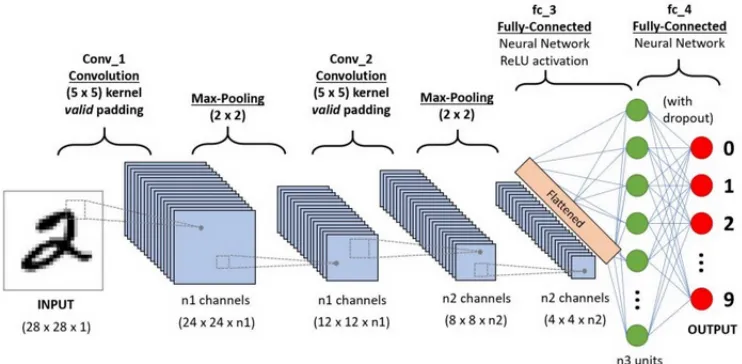
Figure 2.1: Typical architecture of a convolutional neural network and its different layers
CNN architectures consist of many stacked layers (Figure 2.11) where each layer learns diff
er-ent features from the input images. Initial layers usually learn basic features like edges, and the
final layers learn features with higher complexity that uniquely describe the input data.
Con-ventional neural networks consist of an input layer, hidden layers, and an output layer. Each
layer has a specific objective and performs a particular operation, the layers commonly used
are described below.
Convolutional layer
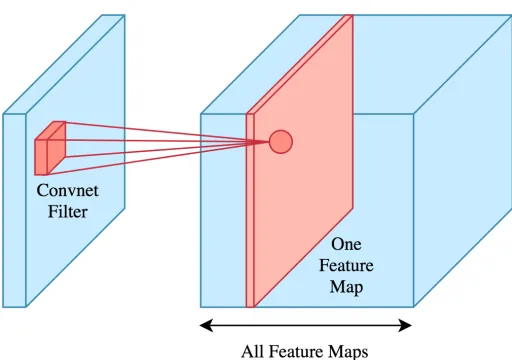
The convolutional layer is the principal component of a CNN. It transforms the input data by
applying convolution operations between its associated kernel (also called filter) and a local
region of the input. The objective of this layer is to construct high-level features of the input
image, that later are used to identify patterns such as shapes and can be used in classification
1from https://towardsdatascience.com/
6 Chapter2. Background
or object detection tasks (Figure 2.22).
Figure 2.2: A convolutional layer showing the convolutional operation between its associated filter and the input data
Pooling layer
The pooling layer has the function of reducing the size of the feature maps to reduce the number
of parameters in the final model and control overfitting during the training process. Pooling
layers are commonly placed after the convolutional layer with a down-sampling factor of 2
(Figure 2.33).
ReLU layer
The ReLU (rectified linear unit) layer applies a non-linear thresholding function to each
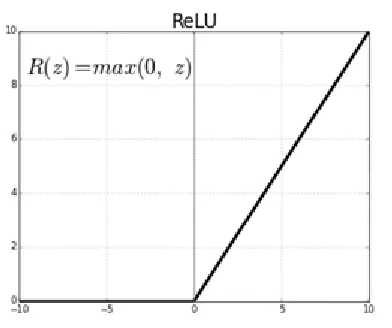
ele-ment of a feature map, where the negative values are set to zero, and the positive values have
no variation (Figure 2.44).
2from https://towardsdatascience.com/
applied-deep-learning-part-4-convolutional-neural-networks-584bc134c1e2
3from http://cs231n.github.io/convolutional-networks/
2.1. Convolutional neural networks 7
Figure 2.3: A pooling layer applying a max operation to reduce the size of a feature map
Figure 2.4: ReLU layer and its associated thresholding function applied to the input data
Batch normalization layer
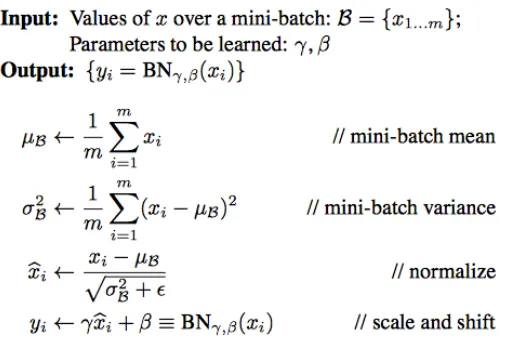
Batch normalization is a technique proposed by Ioffe et al. [12]. This technique addresses
the problem of internal covariate shift by normalizing layer inputs. As is stated in the original
paper, batch normalization permits the use of higher learning rates and also works as a
regu-larizer, reducing the need for Dropout layers [31] that are typically used to reduce overfitting.
8 Chapter2. Background
Figure 2.5: Batch normalization algorithm applied to an inputx.
L2 regularization
Regularization is a technique to control overfitting by adding a penalty term to the loss function.
L2 regularization is the most used form of regularization. It adds the square magnitude of all
parameters as a penalty to the loss function: λP
jw2j. Whereλis the penalty term also known
as regularization parameter or weight decay that determines the amount of penalty added to the
weights of the model.
Softmax classifier
Softmax classifier is a popular multi-class classifier. It uses as activation function the softmax
function, described in the following equation:
fj(z)=
ezj P
kezk
(2.1)
2.2. CNNarchitectures 9
the sum of all its elements is equal to one. The output of the softmax function also represents
the normalized probability that the input feature vectorzbelongs to a particular class j. Figure 2.65) shows an illustration of the softmax classifier.
Figure 2.6: Softmax classifier. For an inputzwith arbitrary scores for each class j, the output is a vector with values between 0 and 1 for each class j.
2.2
CNN architectures
With the increase of computational power and the availability of large datasets, CNNs have
become popular for perform tasks such as image classification. The first successful application
of CNNs is LeNet [14] in 1998 and was used to recognize handwritten and machine-printed
characters. The most popular CNNs architectures that have been used for image classification
in the ImageNet Large Scale Visual Recognition Challenge (ILSVRC) are:
AlexNet
Developed by Alex Krizhevsky, Ilya Sutskever, and Geoff Hinton, AlexNet [13] achieved a
top 5 error rate of 16% on the ILSVRC challenge in 2012. Since its publication, AlexNet has
become a staple in computer vision literature inspiring other successful architectures.
10 Chapter2. Background
GoogLeNet
Developed by work from Szegedy et al. GoogLeNet [35] won the ILSVRC challenge in 2014
with a top 5 error rate of 6.67%, its main contribution is the inception module that uses small
convolution filters allowing the reduction of the number of parameters in the final model.
VGGNet
VGGNet [29] won the second place in the ILSVRC challenge in 2014, because of its
simplic-ity. It is widely used as a feature extractor for other applications such as object detection. With
approximately 140 M of parameters, it requires significant memory and computational power.
ResNet
With a top error rate of 3.57%, ResNet [8] developed by Kaiming He et al. won the ILSVRC
challenge in 2015. It first introduced the concept of “skip connections” that help to reduce the
vanishing gradient problem during the training process.
MobileNet
MobileNet [10] is designed to address computer power limitations in embedded vision
appli-cations. To reduce the number of parameters and the model size, MobileNet uses a depthwise
separable convolution. It achieves similar accuracy values as VGG-16 and GoogleNet with
2.3. ObjectDetection 11
2.3
Object Detection
Object detection is one of the main research areas in computer vision. Its main objective is
to find objects in an image (object localization) and determine the class of the object (object
classification) among a predefined set of categories [40] (Figure 2.76).
Figure 2.7: Difference between image classification (left) and object detection (right).
Traditional object detection algorithms follow a typical pipeline that consists of:
Region selection:To find objects in an image, traditional methods scan the entire image
apply-ing slidapply-ing windows of different sizes and scales and generating smaller image crops that later
are analyzed individually to determine if there is an object inside the sliding window. Due to
the significant number of analyzed candidates, this process is computationally expensive [40].
Feature extraction:To analyze each candidate generated during the sliding windows process,
we need visual features that give us meaningful information about the image. Popular visual
features include SIFT (scale-invariant feature transform) features [20] that have the property
of being invariant to image scale and rotation, HOG (histograms of oriented gradients) features
[5] used in human detection and Haar-like features [17] used in face recognition. However,
12 Chapter2. Background
most of the feature descriptors are designed to detect a specific type of objects, and their
per-formance could be affected by illumination conditions.
Classification: Once we have the feature descriptor vector of each sliding window, the next
step is to classify the image crops in a target object class and background. The most common
algorithm used is SVM (support vector machines) [3].
Non-maxima suppression (NMS): Due to the sliding window process many candidates are
generated and to filter the most significant results, non-maxima suppression is performed. Only
the results with the highest scores are selected as the result of the object detector.
Object detectors based on CNNs have become popular due to the success of the application
of CNN architectures (for example VGGNet [29], ResNet [8]) as feature extractors. Object
detectors based in these CNN architectures have achieved state of the art performances in terms
of accuracy and good enough detection speed to be deployed in mobile devices [11]. CNN
networks have the ability to learn more sophisticated features due to their deep architectures,
finding more complex patterns in images. Features learned by CNNs are more robust than
the features manually designed, which makes CNN architectures more suitable for a variety of
applications since we can train the same model with different datasets. [40].
Generic object detectors based on CNNs have the objective of classifying the objects in an
image and show the position of the objects drawing a rectangular bounding box around them.
Generic CNN based object detection methods can be classified into two groups: two-stage
detectors and one-stage detectors.
Two-stage detectors
Two-stage detector frameworks consist of a two-step process. First, the algorithm focuses in to
generate a region of interest or proposals and then classify each region of interest into
prede-fined object classes(Figure 2.8). Successful algorithms in this category are Region-based fully
2.3. ObjectDetection 13
(R-CNN) [27]. In Faster R-CNN a base network (VGGNet for example) is used as a feature
extractor, and features from an intermediate feature map are selected to generate proposals
(300 in the original paper [27]). In the next stage, these feature proposals combined with the
output of the base network are used to predict object classes and bounding box coordinates.
R-FCN [4] follows a similar process compared with Faster R-CNN, but the regions of interest
are generated from the output of the base network instead of an intermediate feature map. This
change reduces the computational power needed, increasing the speed of detection, training
and achieving similar accuracy compared with Faster R-CNN.
Figure 2.8: High-level diagram for two-stage detectors, showing the region proposal phase and the classification phase (image from [11]).
One-stage detectors
One-stage detectors directly predict the object class and location as a regression problem in a
single pass through a convolutional neural network (Figure 2.9). The main objective of
one-stage detectors is to improve the detection speed, however, their accuracy is lower compared
with two-stage detectors.
The most popular algorithms in this category are You only look once (YOLO) [26] and Single
shot multibox detector (SSD) [19]. YOLO divides the input image in an SxS grid, for each
14 Chapter2. Background
and the number of bounding boxes B are hyperparameters of the algorithm. SSD uses default
anchor boxes with different aspect ratios and scales to make predictions in six feature maps,
with the objective of predict objects with different scales and shapes. The network generates
as output, scores for the presence of objects, and bounding box coordinates.
Figure 2.9: High-level diagram for one-stage detectors, showing the one-step process that com-bines classification and bounding box prediction (image from [11]).
2.4
State-of-the-art in Tra
ffi
c Sign Detection
Traditional traffic signs detection algorithms are based on image processing techniques, where
the feature extraction is performed manually. These methods consider the main characteristics
of traffic signs such as specific color and shape. Color based techniques use the color of the
traffic signs as the main feature to identify their location on the image [33]. Supreethet al. [32] use color segmentation to detect red color traffic signs, the images are transformed to grayscale
from RGB color space. Next, the algorithm selects region candidates in the image applying
shape and size constraints, crops and saves the selected regions, and passed them through a
neural network for classification.
Although color segmentation using the RGB space takes less computational power and time,
it is difficult to apply in real time environments because it requires stable illumination
condi-tions. In order to have algorithms less sensitive to illumination changes, Nguwiet al.[22] use the Hue-Saturation-Intensity (HSI) color space to locate road signs and neural networks for
gener-2.4. State-of-the-art inTrafficSignDetection 15
ate candidate regions. HOG features are used as feature descriptors, and an SVM classifier is
used to identify the traffic sign category.
Shape-based segmentation is as an alternative for color-based segmentation. It relies on the
assumption that traffic signs come in a regular shape (rectangle, triangle, circle, octagon).
Nguyen et al. [23] use Hough transform to detect general shapes (circles, rectangles, etc.) and is complemented with edge detection to detect speed limit and warning signs. Yang et al. [37] use a color probability model to generate areas of interest, alongside with Histogram of Oriented Gradient (HOG) features as a feature descriptor, and a CNN performs the
classifi-cation. Zabihi [38] presents a method for detection and recognition of traffic signs inside the
attentional visual field of drivers, HOG features with SVM are used for detection and SIFT
features with color information for recognition.
With the improvement of computational power and the availability of suitable datasets, deep
learning methods have become popular in computer vision tasks. As was mentioned in the
previous section, the main categories for generic object detectors based on CNNs are two-stage
detectors and one-stage detectors. Many traffic sign detectors based on CNNs use variants of
the generic object detectors. Zhang et al. [39] use a modified version of YOLOv2 [24] to detect traffic signs. The authors changed the filters sizes, and the number of layers to find
the best balance between speed and accuracy. M¨uller et al.[21] present another interesting application of one stage detectors (SSD), it uses a deeper feature extractor and modified default
bounding boxes to increase accuracy for traffic lights detection. Zhu et al. [41] designed a CNN architecture considering that traditional object detectors are trained to detect objects
that occupy a significant portion of an image, in contrast, traffic signs usually occupy a small
16 Chapter2. Background
2.5
Evaluation metrics
Intersection over union
Bounding Boxes are evaluated using the intersection over union (IoU) metric also known as the
Jaccard index, which is a ratio between the intersection and the union of the area of predicted
boxes (Apred) and the area of the ground truth boxes (Agt). IoU is the metric used in the matching
strategy to determine if a default bounding box corresponds to the ground truth box or the
background.
IoU = Apred∩Agt Apred∪Agt
Mean average precision (mAP)
The primary metric of evaluation for object detectors is the mean average precision (mAP). For
the interpolated mAP (Salton and McGill 198) used in the VOC2007 challenge the area under
the precision-recall curve is interpolated at a set of eleven equally spaced recall levels [0, 0.1, .
. . , 1]:
mAP= 1 11
X
r∈{0,0.1,...,1}
pinter p(r)
2.5. Evaluation metrics 17
pinter p(r)= max
˜
r:˜r>r p(˜r)
Where p(˜r) represents the measured precision at a recall value ˜r. As is stated by Everingham et al. [6], interpolating the area under the precision-recall curve reduces the impact of the ”wiggles” in the curve caused by small variations in the ranking of examples. (Figure 2.107).
Figure 2.10: Interpolated precision-recall curve (green line with red dots) used for the calcula-tion of mean average precision
For the Pascal VOC (Visual object classes) dataset, the metric is calculated for an IoU threshold
of 0.5, for the COCO (Common objects in context) dataset the mAP is calculated as an average
of ten different IoU thresholds from 0.5 to 0.95 in steps of 0.05. Taking an average of ten IoU
thresholds, this method rewards models that have better localization precision.
Chapter 3
Tra
ffi
c signs detector
In this chapter, the methodology used to build the traffic signs detector is presented. The final
experiment results are compared against the generic object detector SSD [19]. SSD architecture
is used as a baseline to deploy the model presented in this thesis.
3.1
SSD architecture review
SSD is designed to make predictions on images in one single pass, the output is expressed in
terms of a set of default bounding boxes and a value of confidence of the presence of the target
object class for each default bounding box. The algorithm makes predictions in six different
scale feature maps in an attempt to identify objects of different sizes and shapes. The main
characteristics of the SSD algorithm are:
Multi-scale feature maps for detection
SSD algorithm adds extra convolutional feature layers at the end of the base network, these
layers decrease in size progressively to make predictions on six different layers (with sizes of
38x38, 19x19, 10x10, 5x5, 3x3, 1x1 using VGG16 [29] as the base network). The algorithm
3.1. SSDarchitecture review 19
Figure 3.1: Comparison between SSD [19] and YOLO [26] network architectures. SSD adds feature layers to the end of a base network and, uses six feature maps to make predictions. YOLO uses one feature map to make predictions.
makes four predictions for the first, fifth and sixth layers and six predictions for the remaining
three layers. YOLO in the other hand makes predictions in one feature scale [26], Figure 3.1
shows the difference between these two architectures.
Default bounding boxes and aspect ratios
SSD [19] associate each cell in the feature maps used for prediction with a set of default
bounding boxes. The algorithm predicts the offsets relative to the default box in the cell and a
confidence score that expresses the presence of a target object class inside the default box. For
kgiven locations in a feature map, the algorithm computescclass scores by applying (c+4)k filters for each feature map cell. For an m× n feature map, the output will have a size of (c+4)kmn. SSD algorithm applies default bounding boxes to all the six feature layers used for prediction. These default bounding boxes have different scales and aspect ratios in order to
efficiently predict objects of different sizes and shapes. Figure 3.2 shows an illustration of how
20 Chapter3. Traffic signs detector
Figure 3.2: Default bounding boxes and aspect ratios in SSD. During training, the algorithm needs the input image and ground truth bounding boxes (a). Anchor boxes of different aspect ratios are defined at each location in feature maps with different scales ( for example 8 x 8 (b) and 4 x 4 (c)) (image from [19]).
Matching strategy
During the training process, the ground truth box needs to be matched with a default bounding
box to train the algorithm accordingly. The ground truth is matched with the default
bound-ing box with the best jaccard index (also known as intersection over union). An overlappbound-ing
threshold of 0.5 is used during the training process, the index values below 0.5 are labeled as
background, and the values higher than 0.5 are labeled as a target object. Authors claim that
this gives the network more flexibility, simplifying the learning process [19].
Training Objective
The loss function used for training is a weighted sum of the classification loss (Lcon f) and the
localization loss (Lloc):
L(x,c,l,g)= 1
3.1. SSDarchitecture review 21
WhereNrepresents the number of matched default bounding boxes. The localization loss is the SmoothL1loss [7] between the predicted (l) and ground truth (g) bounding box parameters. The parameters for each default bounding box (d) are its center (cx,cy), width (w) and height (h). All these values are encoded as shown in the following equations:
Lloc(x,l,g)=
N X
i∈Pos m∈{cx,cy,w,h} X
xki jsmoothL1(lim−gˆ m
j) (3.2)
Where:
ˆ gcxj =
(gcxj −dicx) dw
i
ˆ
gcyj = (g
cy
j −d
cy
i )
dh i
ˆ
gwj =log(g
w j
dwi ) gˆ
h
j =log(
gh j
dih)
The classification or confidence loss is the softmax loss over all the target classes (c) [19].
Lcon f(x,c)= −
N X
i∈Pos
xi jplog(ˆcip)− X
i∈Neg
log(ˆc0i) (3.3)
where ˆcip = exp(c
p i)
P
pexp(c p i)
.
Hard negative mining
Because of the matching strategy, a large number of default bounding boxes are labeled as
background, resulting in a high imbalance between the positive classes (target objects) and
negative class (background). In SSD [19], the training samples are filtered by confidence score,
keeping the most significant ones. In the end, the algorithm always tries to keep a ratio of 3:1
22 Chapter3. Traffic signs detector
3.2
Dataset
For this thesis, the dataset used is the CSUST Chinese traffic sign detection benchmark (CCTSDB)1
[39]. The dataset consists of 10000 images and three categories (or classes): mandatory traffic
signs, prohibitory traffic signs, and warning traffic signs. Each image has an annotation file
that contains the coordinates of the ground truth bounding box and the class ID of the target
object. One or more traffic signs can be included in a sample image. For evaluation purposes,
the dataset was split into 80% for the training set and 20% for the test set.
Figure 3.3: Sample images from the dataset.
3.3
Methodology
Base network selection
With the objective to reduce the computational complexity, training, and detection time, the
selection of the base network is a primary task while building an object detector.
3.3. Methodology 23
art convolutional neural networks [29] [8] [34] have deeper architectures with the objective of
reaching high accuracy values. However, these accuracy improvements come with a decrease
in detection speed, which makes deeper networks challenging to apply in real-world scenarios
where the computational cost is a crucial factor.
MobileNet [10] presents a successful design that efficiently balances network size and speed.
According to the authors, MobileNet achieves an accuracy of 70.6% on the ImageNet
clas-sification dataset. In comparison, VGG-16 [29] achieves 71.6% on the same dataset, but,
MobileNet is 30 times smaller than VGG-16 in terms of the number of parameters. The main
component that makes MobileNet a light architecture is the depthwise separable convolution,
which divides the traditional convolutional layer into two parts: depth-wise convolution and
point-wise convolution. The first part, the depthwise convolution, applies a single filter to each
input channel. The second part, pointwise convolution, applies a 1x1 convolution to combine
the outputs of the depthwise convolution in one result [10] [28]. In comparison, a typical
convolution layer, filters and combines the inputs into a set of outputs in one step (Figure 3.4).
Figure 3.4: Standard convolutional layer (left) versus Depthwise Separable convolution layer (right)(image from [10]).
Figure 3.5 shows the mobilenet architecture, which consists of a traditional convolutional layer
followed by 13 depthwise separable convolutional blocks. Each one of these blocks contains
a batch normalization layer to reduce the internal covariate shift and the risk of overfitting
during training. The last layers that are used for classification tasks are an average pool layer,
24 Chapter3. Traffic signs detector
a feature extractor for object detection, the last three layers previously mentioned (responsible
for classification) were removed, following a similar process used in the SSD paper [19].
Figure 3.5: Mobilenet architecture for classification tasks. It consists on a traditional convo-lutional layer followed by 13 depthwise separable convoconvo-lutional blocks. The last layers are an average pool layer, followed by a fully connected layer and finally, a softmax layer (image from [10]).
Feature maps selection for prediction
As mentioned in section 3.1, SSD algorithm uses six feature maps with different scales to make
predictions. The objective is to tackle a central dilemma of object detectors based on CNNs,
the balance between classification and localization. In CNNs, the last layers have more
se-mantic information, which is useful for classification. However, size reduction of feature maps
3.3. Methodology 25
of small objects. This trade-offbetween localization and classification is the main reason why
SSD algorithm uses feature maps of different sizes. The features maps with higher sizes are
responsible for small object detection. However, features in shallow layers do not have enough
semantic information, which makes the classification part more difficult, resulting in a poor
representation when it comes to small object detection. To avoid this drawback, Liet al.[16] and Cao et al. [2] propose feature fusion modules to form a feature map with more context information to improve small object detection while following the same feature pyramid
struc-ture of SSD. Leeet al.[15], propose residual blocks and deconvolution layers to enrich feature maps of shallow layers with context information from the last layers.
Following these ideas, feature maps of different sizes are combined for the final predictions.
The question now is: which feature layers combine?. For this reason, the feature maps are
plotted for different scales of the SSD algorithm using MobileNet as a base network, showing
only the areas of interest (traffic signs). The idea is to identify which feature map is responsible
for the detection of traffic signs of different sizes.
26 Chapter3. Traffic signs detector
Figure 3.6 shows some results for an input image size of 300x300. As can be seen, the output
of layer of size 75x75 and the layer of size 38x38 can localize the small traffic signs in the
sample images. For the layer of size 19x19, some small traffic signs are missed due to the
typical downsampling process related to CNNs.
As part of the experiments for this thesis, different feature maps are fused and tested to
deter-mine the best combination. One and two feature maps for prediction were tried, measuring the
accuracy and computational cost.
Anchor boxes selection
Anchor boxes are a crucial parameter in one-stage object detectors. The aspect ratio, scale, and
the number of anchor boxes should be carefully selected because they impact the efficiency
and accuracy value of our object detector directly. As mentioned in the previous section, SSD
algorithm utilizes a set of default bounding boxes with different scales and aspect ratios for
each feature map used for detection. For this project, the anchor boxes were selected using the
k-means cluster algorithm with the goal of maximize the value of intersection over union (IoU)
in the predictions. As is stated by Redmonet al.[24], using the Euclidean distance as a metric for the k-means algorithm leads to significant errors as the size of the boxes increases. For this
reason, a distance metric based on IoU is used to determine the clusters [24] [25].
d(box,centroid)= 1−IoU(box,centroid) (3.4)
The number of anchor boxes could be considered as a hyperparameter in the training process.
Selecting a high number of anchor boxes may improve the quality of our predictions in terms
of IoU, but this will also increase the computational cost needed for training and prediction. In
order to select the best number of anchor boxes, the average IoU versus the number of clusters
3.4. Experiments 27
Figure 3.7: Number of anchor boxes vs mean IoU, with six anchor boxes the mean IoU is around 0.75, with ten anchor boxes the mean IoU is around 0.8
As we can see in figure 3.7, the relationship between the number of anchor boxes and mean
IoU is not linear. With six anchor boxes, the mean IoU is around 0.75, and with ten anchor
boxes, we have an IoU around 0.8. To get a mean IoU above 0.85, the number of anchor boxes
needs to be at least 17. For the experiments, six anchor boxes were used in the model with
one feature map for prediction. For the model with two feature maps for prediction, ten anchor
boxes were used, five for each feature map.
3.4
Experiments
For all the experiments a computer with an Intel i7-4829K @ 3.70GHz CPU and a NVIDIA
Tesla K80 GPU was used. The size of the images for all the tests is 300x300. The average
precision (AP) was measured with an intersection over union (IoU) threshold of 0.5. The
com-putational cost was estimated, counting the number of multiplications and additions (MAC)
op-erations [10], which is equivalent to calculate the floating point opop-erations per second (FLOPs)
28 Chapter3. Traffic signs detector
(measured in a GPU) are presented. The predictions per class is a fixed number, and it is
di-rectly proportional to the size of the feature map used for prediction. For a feature map of size
m∗nandkanchor boxes, the number of predictions per class is equal tom∗n∗k.
Data augmentation
Following the training strategies used in SSD [19], we used data augmentation to increase
the number of training samples artificially. The objective is to obtain a better generalization
and robustness in our final model. To each image in the training dataset is applied one of the
following options:
• Use the entire input image.
• Sample a patch with an IoU value of 01, 0.3, 0.5, 0.7, or 0.9 with the target object.
• Randomly crop a patch of size between 0.1-1 of the original image size.
After the sampling step, each patch is re-sized to a fixed size and is flipped horizontally with
a probability of 0.5, in addition to applying some photo-metric distortions such as contrast,
brightness, and color manipulation similar to those described by Howard[9].
Training parameters
The proposed algorithm was implemented using Pytorch 0.4 as framework. The source code is
based on open source repositories (ssd.pytorch2and RFBNet3 [30]). The training parameters
and strategies are similar to the ones used in SSD [19]. Stochastic gradient descent (SGD) was
used as the optimization algorithm with an initial learning rate of 0.001, momentum of 0.9, and
a batch size of 32. With the objective of avoiding overfitting, a learning rate decay policy and
L2 regularization with weight decay (penalty parameter) of 0.0005 were applied.
3.4. Experiments 29
Epochs 250
Batch size 32
Optimizer SGD
Learning rate 0.001
Learning Rate Decay Policy Drop by a factor of 10
at 150 and 200 epochs
Momentum 0.9
Weight Decay 0.0005
Table 3.1: Training parameters used in experiments
Experiment 1
The first round of tests consists of building an object detector with one feature map for
detec-tion. For this purpose, the output of the base network, which has a size of 10x10 (for an image
input of 300x300) is upsampled and concatenated with a feature map of a higher scale. For
this experiment, six anchor boxes are used according to the analysis shown in the methodology
section.
Figure 3.8, shows the network architecture for experiment 1. It consists of three tests. For the
first test, the feature map of size 10x10 is upsampled and concatenated with the feature map of
size 19x19. In the second test, the feature map of size 10x10 is upsampled and concatenated
with the feature map of size 38x38. Finally, in the third test, the feature map of size 10x10 is
upsampled and concatenated with the feature map of size 75x75.
30 Chapter3. Traffic signs detector
Results of experiment 1
The results are presented in table 3.2. The test using the feature map of size 38x38 gives
7.73% higher accuracy and 87.7% more computational cost than the model using the feature
map of size 19x19. The reason could be that the feature layer with a higher size (38x38) has
more fine-grained information necessary to detect small objects than the smaller feature map
(19x19) which is reflected in, the higher accuracy value.
The test using the feature map of size 75x75 has a lower accuracy value compared with the test
using the feature map of size 38x38 (86.13% vs. 86.22%) and is 1.61 ms slower. In this case,
the feature map of size 38x38 gave better accuracy values and is faster. For this reason, test 2
showed the best performance in experiment 1. Comparing test 2 vs. test 3, using a feature map
with a higher size did not increase the accuracy values, it seems that the 75x75 feature map is
too shallow and does not contain enough context information, even when combined with the
upsampled 10x10 feature map.
Layers fused AP, IoU: 0.5 Detection time (ms) # Predictions per class MAC (in millions) Parameters (in millions)
10x10 - 19x19 78.49 7.61 2166 1620 4.87 10x10 - 38x38 86.22 8.04 8664 3040 4.81 10x10 - 75x75 86.13 9.65 33750 8450 4.77
Table 3.2: Results of experiment 1
Experiment 2
The second experiment consists of an object detector with two feature maps for detection.
Figure 3.9 shows the network architecture for experiment 2, which consists of three tests. In
the first test, the feature map of size 10x10 is upsampled and concatenated with the feature
map of size 38x38 for the first feature map for detection. The resulting feature map of size
38x38 is upsampled again and concatenated with the feature map of size 75x75 for the second
3.4. Experiments 31
and concatenated with the feature map of size 19x19 for the first feature map for detection.
The resulting feature map of size 19x19 is upsampled again and concatenated with the feature
map of size 38x38 for the second feature map used for detection. Finally, in the third test, the
feature map of size 10x10 is upsampled and concatenated with the feature map of size 19x19
for the first feature map for detection. The resulting feature map of size 19x19 is upsampled
again and concatenated with the feature map of size 75x75 for the second feature map used for
detection. For this experiment, ten anchor boxes are used, five for each feature map used for
detection.
Figure 3.9: Network architecture for experiment 2
Results of experiment 2
The results of experiment 2 are presented in table 3.3. The second test gives an accuracy value
of 0.25% higher and 66.4% less computational cost than the model used in test 3. Compared
with the first test, the second test gives 2.74% higher accuracy with less than the half
compu-tational cost. Comparing test 2 vs. test 3, test 2 reached better accuracy values and is 2.07 ms
faster than test 3. For this reason, test 2 showed the best performance in experiment 2. Similar
to experiment 1, the feature map of size 75x75 does not add any benefit to the performance of
the model. The lack of context information in the shallow layer of the base network could be
32 Chapter3. Traffic signs detector
Layers fused AP, IoU:
0.5 Detection time (ms) # Predic-tions per class MAC (in millions) Parameters (in millions)
10x10 - 38x38 — 38x38 - 75x75 90.74 14.14 35345 5230 5.29 10x10 - 19x19 — 19x19 - 38x38 93.48 10.08 9025 2200 5.37 10x10 - 19x19 — 19x19 - 75x75 93.23 12.15 29930 3660 5.35
Table 3.3: Results of experiment 2
Experiment 3
For experiment 3, is used the same network architecture as in experiment 2. However, instead
of upsampling and concatenation modules, residual blocks are used. As is stated by Lee et al. [15] and Wang et al.[36], residual feature maps try to maintain low-level information of shallow feature maps while having a high-level abstraction of feature maps of the lasts layers
in the base network. By separating the prediction module from the base network, the gradients
of the prediction module do not flow towards the feature maps of the base network [15].
Fig 3.10-a shows the three-way residual block [15]. It consists of three branches: branch one
reduces the number of channels of the input feature map, branch two increases the
represen-tation power of the shallow feature map through a 3x3 convolution layer, and branch three
makes the upsampling through a deconvolution layer, to propagate context information to a
small feature map [15]. For experiment 3, two tests were made. The first test with the
three-way residual block [15]. The second test with a small change in the method of combining the
branch 3 and branch 1, 2, using concatenation instead of element-wise sum, fig 3.10-b.
Results of experiment 3
The results of experiment 3 are presented in table 3.4. The second test gives an accuracy
value of 0.19% higher, 2.31% more computational cost and is 0.42 ms slower than the model
used in test 1. Both tests in this experiment gave better accuracy values than the best result in
experiment 2. Residual blocks can increase accuracy values, and for this application (detecting
3.4. Experiments 33
(a) Three-way residual block as is presented in [15].
(b) Three-way residual block modified for ex-periment 3
Figure 3.10: Residual blocks used in experiment 3
(better accuracy values with an increase of detection time of less than 0.5 ms).
Test AP, IoU: 0.5 Detection time (ms)
MAC (in millions)
Parameters (in millions)
Test 1 93.56 12.02 3030 7.6 Test 2 93.75 12.44 3100 7.7
Table 3.4: Results of experiment 3
Finally, table 3.5 shows the comparison of the proposed network against the generic object
detector SSD with VGG16 and MobileNet as the base network. The detection speed was
evaluated using a NVIDIA Tesla K80 GPU and an Intel i7-4829K @ 3.70GHz CPU. The
com-putational cost measured in multiplications and additions (MAC) operations is not proportional
to the detection speed. The proposed algorithm has 2.67 times MAC operations than the
SSD-MobileNet algorithm. The SSD-SSD-MobileNet is 1.3 times faster than the proposed algorithm in a
CPU. In an GPU the SSD-MobileNet model is 1.49 times faster than the proposed algorithm.
In terms of accuracy, the proposed algorithm reached a higher value (93.75% vs. 89.35%)
compared with SSD-MobileNet.
Compared with SSD-VGG16, as expected, SSD-VGG16 gives a higher accuracy value because
of the use of a deeper base network. For the same reason, SSD-VGG16 is slower compared
34 Chapter3. Traffic signs detector
Method Avg. Precision, IoU: Detection time MAC Parameters
0.5 0.75 0.5:0.95 GPU
(ms)
CPU (sec)
(in millions)
(in millions)
SSD- VGG16 95.71 86.5 75.12 52.75 1.59 30590 24.01 SSD-MobileNet 89.35 68.82 62.41 8.35 0.337 1160 5.65 Proposed algorithm 93.75 88.79 73.47 12.44 0.438 3100 7.7
Chapter 4
Conclusions and Future work
In this thesis, an adapted version of the single shot multibox detector (SSD) algorithm
mod-ified for traffic sign detection is presented. The base network was changed from VGG-16 to
MobileNet. The reason for this change is to use a lighter network architecture, that efficiently
balances network size and detection speed. A common approach seen in deep learning
lit-erature for increasing the accuracy values in object detection applications is using a deeper
and more sophisticated base network. However, deeper architectures require high
computa-tional power, and in some cases, the detection time is too high that makes them not suitable for
real-time applications. The proposed algorithm has a comparable accuracy value (93.75% vs.
95.71%) compared with the Single shot multibox detector (SSD) algorithm (with VGG-16 as
base network), which means that a light size CNN architecture like MobileNet can be used as
a base network to build reliable object detectors when the computational cost is a limitation.
The number of feature maps used for prediction was reduced, from six in the original SSD
algorithm to two. This change was driven by the fact that traffic signs come in regular shapes
(circle, triangle, and rectangle), and in defined colors. Therefore, they could be detected with
simpler convolutional neural networks (CNN) architectures. In experiment 1 and experiment
2 feature fusion map that combines context information from deeper CNN layers with the
information in shallow layers was used. This is more useful for localization purposes. Different
36 Chapter4. Conclusions andFuture work
feature maps were combined to find the combination that provides the best accuracy value.
During these experiments, feature maps visualization has proven to be a useful tool that helps
to identify the best feature map candidates to combine and also have a better understanding of
how the convolutional layers work. An interesting result during the evaluation process showed
that using feature maps of shallow layers (like the feature map of 75x75), will not necessarily
give the best accuracy values. This result shows that although shallow layers provide useful
information to detect small objects. They do not have enough context information that makes
the classification task more difficult.
Results of experiment 3 showed that residual blocks are a good technique to increase context
information in shallow layers in a CNN. Compared with the results of experiment 2, experiment
3 reached higher accuracy values. However, residual blocks also increase the size, complexity
of the network and, detection time. All of these factors need to be taken into account, especially
if the objective is to use the object detector in real-time applications where the detection time is
crucial. The process followed in this thesis can be used to design object detectors for specific
applications, for example, street light detection, waste bin detection for automatic waste
col-lection systems, applications where the target objects have a regular form and a limited range
of colors.
For future work, the goal is to use LIDAR (Light Detection and Ranging) data as part of a
more robust object detector. Test more low computational cost oriented CNN architectures like
MobileNet-V2 [28] and PeleeNet [36] as base network, following the same design process used
in this thesis. Testing different loss functions, especially the localization loss function is also
planned. In SSD algorithm, Smooth L1 is used as a loss function. This loss function tries to
minimize the distance between the ground truth and the predicted bounding box. However, the
similarity between the ground truth and the prediction is measured through intersection over
union (IoU), a loss function based in IoU could increase the quality of the predicted bounding
boxes and the accuracy values because during the training process the algorithm will optimize
Bibliography
[1] N. Ben Romdhane, H. Mliki, and M. Hammami. An improved traffic signs recognition
and tracking method for driver assistance system. In2016 IEEE/ACIS 15th International Conference on Computer and Information Science (ICIS), pages 1–6, June 2016.
[2] Guimei Cao, Xuemei Xie, Wenzhe Yang, Quan Liao, Guangming Shi, and Jinjian Wu.
Feature-fused ssd: fast detection for small objects. InNinth International Conference on Graphic and Image Processing (ICGIP 2017), volume 10615, page 106151E. Interna-tional Society for Optics and Photonics, 2018.
[3] Corinna Cortes and Vladimir Vapnik. Support-vector networks. Mach. Learn., 20(3):273–297, September 1995.
[4] Jifeng Dai, Yi Li, Kaiming He, and Jian Sun. R-FCN: object detection via region-based
fully convolutional networks. CoRR, abs/1605.06409, 2016.
[5] N. Dalal and B. Triggs. Histograms of oriented gradients for human detection. In
2005 IEEE Computer Society Conference on Computer Vision and Pattern Recognition (CVPR’05), volume 1, pages 886–893 vol. 1, June 2005.
[6] M. Everingham, L. Van Gool, C. K. I. Williams, J. Winn, and A. Zisserman. The pascal
vi-sual object classes (voc) challenge.International Journal of Computer Vision, 88(2):303– 338, June 2010.
[7] Ross B. Girshick. Fast R-CNN. CoRR, abs/1504.08083, 2015.
38 BIBLIOGRAPHY
[8] Kaiming He, Xiangyu Zhang, Shaoqing Ren, and Jian Sun. Deep residual learning for
image recognition. CoRR, abs/1512.03385, 2015.
[9] Andrew Howard. Some improvements on deep convolutional neural network based image
classification. arXiv preprint arXiv:1312.5402, 2013.
[10] Andrew G. Howard, Menglong Zhu, Bo Chen, Dmitry Kalenichenko, Weijun Wang,
To-bias Weyand, Marco Andreetto, and Hartwig Adam. Mobilenets: Efficient convolutional
neural networks for mobile vision applications. CoRR, abs/1704.04861, 2017.
[11] J. Huang, V. Rathod, C. Sun, M. Zhu, A. Korattikara, A. Fathi, I. Fischer, Z. Wojna,
Y. Song, S. Guadarrama, and K. Murphy. Speed/accuracy trade-offs for modern
con-volutional object detectors. In2017 IEEE Conference on Computer Vision and Pattern Recognition (CVPR), pages 3296–3297, July 2017.
[12] Sergey Ioffe and Christian Szegedy. Batch normalization: Accelerating deep network
training by reducing internal covariate shift. CoRR, abs/1502.03167, 2015.
[13] Alex Krizhevsky, Ilya Sutskever, and Geoffrey E. Hinton. Imagenet classification with
deep convolutional neural networks. Advances in neural information processing systems, page 1097–1105, 2012.
[14] Y. Lecun, L. Bottou, Y. Bengio, and P. Haffner. Gradient-based learning applied to
docu-ment recognition. Proceedings of the IEEE, 86(11):2278–2324, Nov 1998.
[15] Kyoungmin Lee, Jaeseok Choi, Jisoo Jeong, and Nojun Kwak. Residual features and
unified prediction network for single stage detection. CoRR, abs/1707.05031, 2017.
[16] Zuoxin Li and Fuqiang Zhou. Fssd: Feature fusion single shot multibox detector. CoRR, abs/1712.00960, 2017.
[17] R. Lienhart and J. Maydt. An extended set of haar-like features for rapid object detection.
BIBLIOGRAPHY 39
[18] Tsung-Yi Lin, Piotr Doll´ar, Ross B. Girshick, Kaiming He, Bharath Hariharan,
and Serge J. Belongie. Feature pyramid networks for object detection. CoRR, abs/1612.03144, 2016.
[19] Wei Liu, Dragomir Anguelov, Dumitru Erhan, Christian Szegedy, Scott Reed,
Cheng-Yang Fu, and Alexander C. Berg. SSD: Single shot multibox detector. ECCV, 2016.
[20] David G. Lowe. Distinctive image features from scale-invariant keypoints. International Journal of Computer Vision, 60:91–110, 2004.
[21] Julian M¨uller and Klaus Dietmayer. Detecting traffic lights by single shot detection.
CoRR, abs/1805.02523, 2018.
[22] Y. . Nguwi and A. Z. Kouzani. Automatic road sign recognition using neural networks.
InThe 2006 IEEE International Joint Conference on Neural Network Proceedings, pages 3955–3962, July 2006.
[23] B. T. Nguyen, S. J. Ryong, and K. J. Kyu. Fast traffic sign detection under challenging
conditions. In2014 International Conference on Audio, Language and Image Processing, pages 749–752, July 2014.
[24] Joseph Redmon and Ali Farhadi. Yolo9000: Better, faster, stronger. arXiv preprint arXiv:1612.08242, 2016.
[25] Joseph Redmon and Ali Farhadi. Yolov3: An incremental improvement. arXiv, 2018.
[26] Santosh Redmon, Joseph and Divvala, Ross Girshick, and Ali Farhadi. You only look
once: Unified, real-time object detection. arXiv preprint arXiv:1506.02640, 2015.
[27] Shaoqing Ren, Kaiming He, Ross B. Girshick, and Jian Sun. Faster R-CNN: towards
real-time object detection with region proposal networks. CoRR, abs/1506.01497, 2015.
[28] Mark Sandler, Andrew G. Howard, Menglong Zhu, Andrey Zhmoginov, and Liang-Chieh
Chen. Inverted residuals and linear bottlenecks: Mobile networks for classification,
40 BIBLIOGRAPHY
[29] K. Simonyan and A. Zisserman. Very deep convolutional networks for large-scale image
recognition. CoRR, abs/1409.1556, 2014.
[30] Di Huang Songtao Liu and Yunhong Wang. Receptive field block net for accurate and
fast object detection. arxiv preprint arXiv:1711.07767, 2017.
[31] Nitish Srivastava, Geoffrey Hinton, Alex Krizhevsky, Ilya Sutskever, and Ruslan
Salakhutdinov. Dropout: A simple way to prevent neural networks from overfitting. J. Mach. Learn. Res., 15(1):1929–1958, January 2014.
[32] Supreeth H.S.G and C. M. Patil. An approach towards efficient detection and recognition
of traffic signs in videos using neural networks. In 2016 International Conference on Wireless Communications, Signal Processing and Networking (WiSPNET), pages 456– 459, March 2016.
[33] M. Swathi and K. V. Suresh. Automatic traffic sign detection and recognition: A review.
In2017 International Conference on Algorithms, Methodology, Models and Applications in Emerging Technologies (ICAMMAET), pages 1–6, Feb 2017.
[34] Christian Szegedy, Sergey Ioffe, and Vincent Vanhoucke. Inception-v4, inception-resnet
and the impact of residual connections on learning. CoRR, abs/1602.07261, 2016.
[35] Christian Szegedy, Wei Liu, Yangqing Jia, Pierre Sermanet, Scott Reed, Dragomir
Anguelov, Dumitru Erhan, Vincent Vanhoucke, and Andrew Rabinovich. Going deeper
with convolutions. InComputer Vision and Pattern Recognition (CVPR), 2015.
[36] Robert J Wang, Xiang Li, Shuang Ao, and Charles X Ling. Pelee: A real-time object
detection system on mobile devices. arXiv preprint arXiv:1804.06882, 2018.
[37] Y. Yang, H. Luo, H. Xu, and F. Wu. Towards real-time traffic sign detection and
classifi-cation. IEEE Transactions on Intelligent Transportation Systems, 17(7):2022–2031, July 2016.
[38] Seyedjamal Zabihi. Detection and recognition of traffic signs inside the attentional visual
BIBLIOGRAPHY 41
[39] Jianming Zhang, Manting Huang, Xiaokang Jin, and Xudong Li. A real-time chinese
traffic sign detection algorithm based on modified yolov2. Algorithms, 10:127, 11 2017.
[40] Zhong-Qiu Zhao, Peng Zheng, Shou-tao Xu, and Xindong Wu. Object detection with
deep learning: A review. CoRR, abs/1807.05511, 2018.
[41] Zhe Zhu, Dun Liang, Songhai Zhang, Xiaolei Huang, Baoli Li, and Shimin Hu. Traffi
Appendix A
Detection examples SSD
+
MobileNet vs.
Proposed Algorithm
(a) SSD+Mobilenet (b) Proposed algorithm
43
(a) SSD+Mobilenet (b) Proposed algorithm
44 ChapterA. Detection examplesSSD+MobileNet vs. ProposedAlgorithm
(a) SSD+Mobilenet (b) Proposed algorithm
Curriculum Vitae
Name: Jose Luis Masache Narvaez
Post-Secondary Escuela Superior Polit´ecnica del Litoral
Education and Guayaquil, Ecuador
Degrees: 2004 - 2009 B.Eng. Electronics and Telecommunications Engineering
University of Western Ontario London, ON
2017 - present, Master of Engineering Science
Related Work Teaching Assistant
Experience: The University of Western Ontario 2019

![Figure 2.8: High-level diagram for two-stage detectors, showing the region proposal phase andthe classification phase (image from [11]).](https://thumb-us.123doks.com/thumbv2/123dok_us/1902201.1249050/23.612.136.499.253.418/figure-diagram-detectors-showing-region-proposal-andthe-classication.webp)
![Figure 2.9: High-level diagram for one-stage detectors, showing the one-step process that com-bines classification and bounding box prediction (image from [11]).](https://thumb-us.123doks.com/thumbv2/123dok_us/1902201.1249050/24.612.117.431.168.285/figure-diagram-detectors-showing-process-classication-bounding-prediction.webp)
![Figure 3.1: Comparison between SSD [19] and YOLO [26] network architectures. SSD addsfeature layers to the end of a base network and, uses six feature maps to make predictions.YOLO uses one feature map to make predictions.](https://thumb-us.123doks.com/thumbv2/123dok_us/1902201.1249050/29.612.112.520.82.301/figure-comparison-network-architectures-addsfeature-predictions-feature-predictions.webp)