University of South Carolina
Scholar Commons
Theses and Dissertations
2016
Finding Sanctuary In Sisterhood: A Middle School
Literacy Group Critically Analyzes Race, Gender,
And Size
Dywanna E. Smith University of South Carolina
Follow this and additional works at:https://scholarcommons.sc.edu/etd Part of theLanguage and Literacy Education Commons
This Open Access Dissertation is brought to you by Scholar Commons. It has been accepted for inclusion in Theses and Dissertations by an authorized administrator of Scholar Commons. For more information, please [email protected].
Recommended Citation
F
INDINGS
ANCTUARY INS
ISTERHOOD:
A
M
IDDLES
CHOOLL
ITERACYG
ROUPC
RITICALLYA
NALYZESR
ACE,
G
ENDER,
ANDS
IZEby
Dywanna E. Smith
Bachelor of Arts
University of South Carolina, 2000
Master of Arts in Teaching University of South Carolina, 2002
Submitted in Partial Fulfillment of the Requirements
For the Degree of Doctor of Philosophy in
Language and Literacy
College of Education
University of South Carolina
2016
Accepted by:
Susi Long, Major Professor
Gloria Boutte, Committee Member
Toni Williams, Committee Member
Valerie Kinloch, Committee Member
Tasha Laman, Committee Member
D
EDICATIONTo my parents, Eugene and Ellen Marie Smith, for demonstrating the power of agape
love, unconditional support, faith, and resilience. I am here because of you.
To my sister circle (Donna, Shanise, and Tish) for the love, support, and laughter. You
are light in my life.
To Jen Wilson, a guardian angel, for starting me on the path of discovery. I promised
you I would finish…and I did.
and
To my Blue Diamond Girls for proudly loving and embracing your Blackness. I have
grown more as a scholar from listening to your stories:
I’ve cried alongside each of you. Been both broken and reborn.
Baptized by the power of Black love and resilience, I listened attentively and was
A
CKNOWLEDGEMENTSI began this journey with many uncertainties. I end it strong, proud, and filled
with love because my village has centered and grounded me. Thank you to my village
for carrying me through the difficult times, celebrating my successes, and loving me
regardless. I could not have done this without you. This work stands testimony to the
power of faith. Some of those people are (in no particular order):
Eugene and Ellen Marie Smith
Darrin Smith
Donna Smith
Dwight Smith
Blue Diamond Girls
Dr. Susi Long
Dr. Gloria Boutte
Dr. Tasha Laman
Dr. Toni Williams
Dr. Valerie Kinloch
Dr. Lamar Johnson
Dr. Nathaniel Bryan
Dr. Jennifer Wilson
Dec. Willie T. and Patricia Brown
James Barr
Canisha Fletcher
FOCs
Golden Girls Walking Club
Mt. Olive Baptist Church Family
My sisters of Delta Kappa Gamma Educational Sorority
and the many others who helped along the way
A
BSTRACTThis critical qualitative study documented intersectionalities of race, gender, body
image, and literacies as interpreted by five eighth grade Black female students during an
eight-week after school literacy group. Ethnopoetic methodologies were used to represent
findings and provide insights about how critical literacy engagements can be used to
create discursive spaces where young Black girls describe and define these
intersectionalities, how they are socialized into current beliefs, make meaning of beauty
ideals portrayed in media, and interpret gender, obesity, and race. Through content
analysis of field notes, audio recorded sessions, research partner interviews, researcher
journals, and genre artifacts, this study documented the complexities of this literacy study
group as a contested space for research partners and researcher to exchange affirming as
well as conflicting perspectives; creating transformative and liberatory spaces where they
T
ABLE OFC
ONTENTSDEDICATION ... iii
ACKNOWLEDGEMENTS ... iv
ABSTRACT ... vi
LIST OF TABLES ... xi
LIST OF FIGURES ... xii
CHAPTER ONE:FACING FEARS:INTRODUCTION TO THE STUDY...1
STATEMENT OF THE PROBLEM ...2
RESEARCH PURPOSE ...3
TYPE OF STUDY AND RESEARCH QUESTION ...4
SIGNIFICANCE OF THE STUDY ...4
THEORETICAL FRAMEWORK ...14
DEFINITION OF TERMS ...24
CONCLUSION TO THE INTRODUCTION ...26
CHAPTER TWO:MALIGNED AND MISREAD:REVIEW OF RELATED LITERATURE ...27
CRITICAL THEORY ...27
ANALYZING OBESITY IN ADOLESCENTS ...31
BLACK LOOKS AND REPRESENTATION ...37
BLACK FEMALE ADOLESCENT LITERACIES ...40
RATIONALE:METHODOLOGICAL STANCE ...43
CONTEXT ...46
DATA COLLECTION METHODS ...57
DATA ORGANIZATION ...67
DATA CODING ...68
TRUSTWORTHINESS,TRIANGULATION, AND MEMBER CHECKING ...71
POSITIONALITY ...71
CONCLUSION TO CHAPTER THREE ...74
CHAPTER FOUR:EVOLUTION OF AN ETHNOPOET ...76
LEARNING TO HATE MYSELF:INGESTING DOMINANT IDEOLOGY ...77
CHAPTER FIVE:FINDINGS:ANOVEL IN VERSE ...90
FINDINGS ...90
RESEARCHER’S NOTE:PREFACE TO THE NOVEL ...91
INTRODUCTIONS:APOEM IN FIVE STANZA ...92
FAT:ADEFINITION POEM ...94
FAT:AVISUAL POEM ...95
FAT:ABIOGRAPHY IN FIVE SHORT CHAPTERS:AVISUAL POEM ...96
STEREOTYPES ...98
FAT:ACONFESSIONAL SPOKEN-WORD PERFORMANCE POEM ...100
RESEARCHER’S NOTE:THE SKINNY ON FAT ...102
COLORISM:ADEFINITION POEM ...103
THE COLOR COMPLEX:AN INTRODUCTION BLACKOUT POEM ...104
HEART’S DESIRE:COLORISM IN ACTION ...106
RESEARCH’S NOTE:DELVING INTO SKIN ...107
INTERSECTIONALITY:ADEFINITION POEM ...109
ATALE OF TWO GIRLS:LIFE AS ABLACK GIRL ...110
INCIDENT REMIXED:COUNTEE CULLEN’S EXPERIENCE IN 2015 ...113
ENABLING THE SYSTEM:ACRY FOR HELP DENIED ...114
APOCKET FULL OF WISHES:ATTRACTING THE OPPOSITE SEX ...115
WHAT IS BODY IMAGE? ...116
BLESSINGS UPON BLESSINGS:THE BODY AS ASOURCE OF CONFLICT ...117
RESEARCHER’S NOTE:EXAMINING INTERSECTIONALITIES ...122
COUNTERNARRATIVES:ADEFINITION POEM ...124
NAMING MYSELF:ABODY IMAGE VISUAL POEM ...125
NO APOLOGIES:ACOUNTERNARRATIVE ...126
FAT:ACOUNTERNARRATIVE IN VISUAL FORM ...127
GREATER IS COMING:PRAISE IN LYRICS AND MOVEMENT ...128
BODY LOVE:AN AUTOBIOGRAPHY IN FIVE SHORT CHAPTERS A VISUAL POEM ...129
CHAPTER SIX:ETHNOPOETICS AS AN INTERPRETATIVE TOOL:AREPOSITORY OF WISDOM AND POSSIBILITY (LORDE,1984) ...132
FINDING WISDOM WITHIN THE WORDS:CREATING THE POEMS ...139
CONCLUSION TO CHAPTER SIX ...191
CHAPTER SEVEN:“QUIET AS IT’S KEPT”:IMPLICATIONS FOR PRACTICE AND FURTHER RESEARCH ...193
CONTEXTUALIZING THE IMPLICATIONS ...194
FURTHER RESEARCH ...205
CONCLUDING THOUGHTS ...207
REFERENCES ...209
L
IST OFT
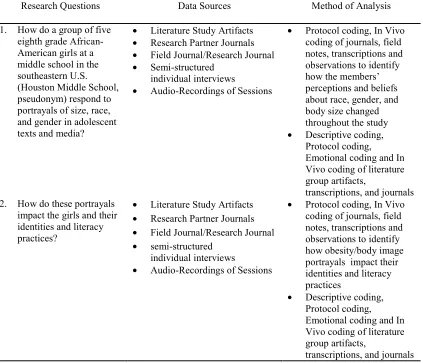
ABLESTable 3.1 Research Questions, Data Sources, and Analysis ...57
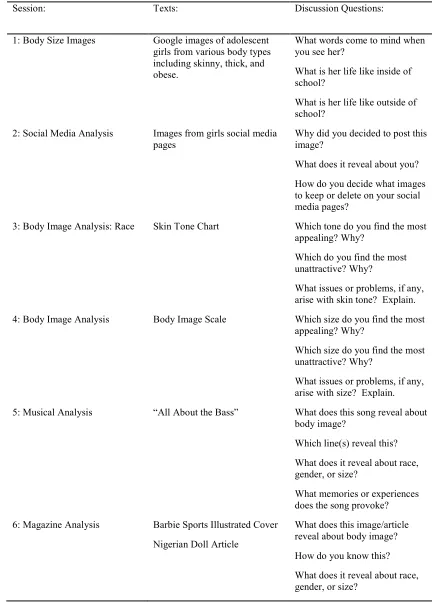
Table 3.2 Text Selection ...61
Table 3.3 Research Timeline ...73
Table 6.1 Characterization Chart ...149
Table 6.2 Word Association Responses...152
Table 6.3 Visual Image Responses ...154
Table 6.4 Meme Analysis ...159
Table 6.5 Body Satisfaction/Dissatisfaction Responses ...181
L
IST OFF
IGURESFigure 1.1 Theoretical Framework ...16
Figure 3.1 Media Center Conference Room ...50
Figure 3.2 Journaling Supplies ...65
Figure 3.3 Partners with Research Supplies ...66
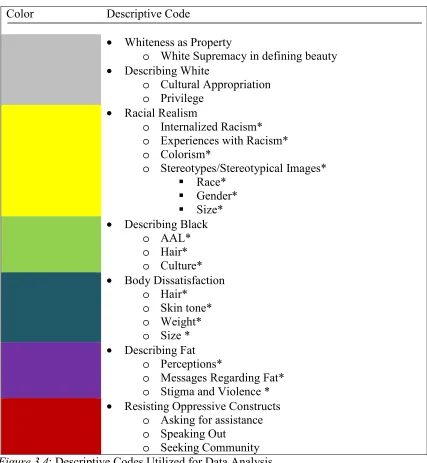
Figure 3.4 Descriptive Codes Utilized for Data Analysis...69
Figure 6.1 Text Annotation Revision Strategy ...147
Figure 6.2 Meme Activity Instructions ...158
Figure 6.3 Skin Tone Scale ...166
Figure 6.4 Literary Heritage ...192
CHAPTER
ONE
F
ACINGF
EARS:
I
NTRODUCTIONT
OT
HES
TUDYI stood naked staring at my reflection in my parent’s bathroom mirror. The face
peering at me was both friend and stranger. While I gazed, tears streamed down her
immense Black cheeks. Her mouth was twisted in pain. Though she did not speak, I knew
her story; bearing the torment of classmates, friends, yelling “Fatso,” calling her ugly,
reminding her she could be beautiful, “if only she lost weight.” Her corpulent form was
foreign and alien. The mounds of fat repulsed her. If she could, she would be willing to
take a knife and carve the vile deformities from her flesh. They preyed on her consuming
her inch by inch; an omniscient presence reminding her that she was Not normal. She was
Not beautiful. She was NOT allowed. What is the point of living if society denies you
entrance?
Her gaze drops to the countertop and she stares at the pain medication, knowing
the small, round White capsules can be both savior and escape. Unflinchingly, she pours
the pills into her hand. As she slowly reaches to taste salvation, her father’s footsteps can
be heard in the hallway coming closer. Soon, his strong Black fists are pounding on the
door, and he yells in a deep baritone, “Dee! Dee! You should be ready by now! Hurry
up!” She stops. There is a moment of awareness; a moment of recognition that the man
who cared for her and loved her would find her lifeless body. Once again, she stares at
their soft taps seem to call to her, tempting her back into their power. They whisper to
her, “Only in death and darkness will you find acceptance.” She closes the pill bottle to
silence their temptation and looks in the mirror at her deep caramel skin, her repulsive fat
curves, and cries; her anguish eclipsing her resolve.
Statement of the Problem
I begin this dissertation with my journey into self-actualization because it
elucidates the struggle to find acceptance in a society where racism (Perry, Steele, &
Hilliard, 2004; Simson, 2004) sexism (Crenshaw, 1991; Hooper, 2012; Rios, 2003) and
sizism (Puhl, Andreyeva, & Brownell, 2008; Sobal, 1999) are paramount. As I moved
into my profession as a middle school teacher and then as a teacher educator, I realized
that messages about weight were sent from every corner of the world and were often
conflated with messages about race and gender. These lessons were absorbed, not only by
me, but by the young women I taught - in news reports (Ogden, 2010); in the novels they
read (Cooner, 2012); in television programming (Marr, 2015); in depictions of fuller
figures displayed in Ebony versus those pictured in Vogue; hearing the term “thick” used
in hip hop songs (Graham, 2015); and observing infomercials for weight loss products
(Hydroxycut, 2010). By worshipping Eurocentric ideals, many adolescent girls, learned
normalcy can only be obtained through a thin White body.
Internalizing Eurocentric idealized beauty standards creates an oppressive
construct and standard which many cannot achieve. This pervasive ideology relegates
African-American adolescent girls, throughout the nation, to the margins of various
spaces in society including school, fashion, and literature. In short, to exist within
racist, sexist, and sizist ideals (Collins, 1998, 2000; Gammage, 2015). Such erasures
cause prolonged, if not permanent, damage to the psyche as they can be a permanent
reminder of the legacy of colonialism around the world but certainly in the U.S. and
predominantly in the lives of African-American adolescent girls (hooks, 1992, 2005;
Patton, 2006; Rubin, Fitts, & Rubin, 2003). My concern for this issue comes not only
from my personal experience but from my observations of numerous Black adolescent
girls struggling with the unbearable burden of race, weight, and esteem and my careful
examination of the literature surrounding these issues. I believe examining and critiquing
racism, sexism, and sizism holistically in the lives of African-American adolescent girls
can help make visible oppressive constructs and create alternative pathways that will
allow them to rename and reclaim their future selves.
Research Purpose
To contribute to the literature that addresses the problem described above, this
study explored and documented how an eighth grade literature study group responded to
depictions of obesity in adolescent literature and media. The purpose of the study was to
provide insights on how adolescent texts can be utilized to analyze societal constructs
which can deny particular aspects of adolescent identity; understand how
African-American middle school girls perceived obesity in media and their daily lives; and
determine what happened when a group of 8th grade African-American adolescent girls
were given the opportunity to create counternarratives about race and obesity.
Specifically, I wanted to learn how these young Black girls responded to the discourse
used to describe and define obesity, were socialized into their beliefs surrounding obesity,
obesity in their everyday lives. Informed by Critical Race Theory and Black feminist
Theory, I wanted to analyze the intersections of race, gender, and body image to note
how intersectionalities may permit or prohibit access into society.
Type of Study and Research Questions
This study, designed to address the problem stated above, employed critical race
narratives, ethnopoetics, and auto-ethnographic methods using critical race and pattern
analysis approaches to examine data and determine findings. The research questions
guiding the study were:
How do a group of five eighth grade African-American girls at a middle school in
the southeastern U.S. (Houston Middle School, pseudonym) respond to portrayals
of size, race, and gender in adolescent texts and media?
1. How do these portrayals impact the girls, their identities and literacy
practices?
2. What happens when they are given the opportunity to create
counternarratives about gender, race, and obesity?
Significance of the Study
I believe this study to be significant in four interconnecting ways. In this section, I
elaborate on each individually to provide clarity. First, this study, which centered on the
convergence of race, gender and size, has the potential to fill gaps in the literature
because little work exists that examines robust accounts of these converging social
identities as articulated by adolescent Black girls. Second, the study examined the use of
critical theories to support eighth grade girls in analyzing the body as a textual artifact,
are often analyzed critically by middle school students, there is a paucity of studies
focusing on students’ examination of body as text. The study also analyzed the ideology
surrounding obesity through the eyes of these young women, a form of analysis rarely
found in current literature. Finally, it potentially broadens knowledge in the field by
offering strategies for changing schools as reproducers of societal inequities to become
places of critical inquiry and examiners of dominant narratives about obesity, race, and
gender.
Providing Robust Accounts of Black Adolescent Girls
Essential to this study is recognition of the objectification of the thin female form,
for example, by turning the female form into objects such as cars, clothing, or liquor
bottles; a practice which often occurs in commercials or advertisements. This
objectification makes the female form susceptible to acts of violence, not always with
traditional weapons, but with the discourse we use to describe young women (Kilbourne,
2012). For example, in 2009, People for the Ethical Treatment of Animals (PETA)
introduced a Super Bowl advertisement which featured several scantily clad women
bound and tied to poles because they could not resist the temptation of vegetable love
(Bahadur, 2013). The advertisement which was created to promote vegetarianism,
received fierce scrutiny and was later removed. To compound this complex matter, the
White race has been normalized and because of the permanence of racism, also known as
racial realism (Bell, 1992), the White female form will always be idealized (Crenshaw,
1991). Thus, as Black females, we are subject to both racism and society’s brutal
objectification (Kyrola, 2014). Additionally, social constructionists argue that, just as
Smolak, 2011). Barak (1998) declared, “There are no purely objective definitions; all
definitions are value laden and biased to some degree,” (p. 21) and so biases about size
unveil additional layers of weight stigma and discrimination. If an individual does not
achieve these visions of constructed normality, they are ostracized and ridiculed
(Brownell, 2005; Demarest & Allen, 2000).
This idea of the White and thin form as normal is depicted in novels, music, and
movies and stands in marked contrast to depictions of the obese, fat, or overweight form
(Kilbourne, 2012). Cahnman (1968) contended in a society which perpetually emphasizes
beauty as status, being obese or overweight disgraces the individual and tarnishes
physical appearance. Many social theorists further argue that the labels “overweight” and
“obese” only serve to marginalize certain individuals in our society (Bordo, 1993; Oliver,
2006; Rothblum & Solovay, 2009). These labels, when internalized, signify the need to
lose weight for personal and social acceptance (Brownell, 2005; Demarest & Allen, 2000;
Jutel, 2005). When understanding these realities in the lives of women in conjunction
with the permanence of racism and how it operates within American society (Bell, 1992;
Delgado & Stefancic, 2012; Ladson-Billings & Tate, 1995); it is easy to see how obese
African-American females experience inequitable practices and institutional racism
conflated with sizism on many levels.
This study created a contested space for African-American female adolescents to
speak their truths about these intersecting identity factors, which allowed the research
partners (participants) to confess past trauma, analyze and critique dominant narratives,
and narrate new understandings. Johnson (2014) described the contested space as, “a site
a space of ease. A contested space can become a tool that pushes people to learn, expand
understanding, take a new perspective, and stretch awareness” (p. 132). A contested
space examines inequitable power distribution by analyzing historical and contemporary
examples simultaneously which allows a multi-level examination of oppressive power
constructs (Baszile, 2013). As a result of the contested spaces created through this study,
it offers richer and more robust stories than currently exist in the field of education which
largely neglects the inclusion and examination of young women’s views and experiences
with regard to the intersection of race, size, and gender.
Engaging Adolescents in Critically Examining the Body as Text
Oliver (2006) contended fat or obese bodies are read as lazy, lacking moral
fortitude, a willing transgression of an established boundary. Similarly, Murray (2005)
stated:
We exist in a culture of negative collective ‘knowingness’ about fatness.
As members of Western society, we presume we know the histories of all
bodies, particularly those of fat women; we believe we know their desires
(which must be out of control) and their will (which must be weak.)
We read a fat body on the street and believe we ‘know’ its ‘truth. (p. 154)
This “presumed knowing” leads to a politicized stigma for obese or overweight
individuals (Brownell, 2005; Demarest & Allen, 2000; Kelley, 2001) and a narrow
monolithic reading of body as text. This becomes a normalized reading, as the reader
draws on society’s messages to filter through information, lenses, and stances; constantly
re-envisioning and reinterpreting a text. However, guiding students to use critical theory
allow the obese frame to be reimagined as beautiful, healthy, and worthy of validation
(Farrel1, 2011; Rothblum & Solovay, 2009). Through this multifaceted process, students
can go beyond superficial residuals; begin to question and challenge obesity; and find
new meaning; thereby resisting traditional educational approaches which restrict the
analysis and discussion of any text and deny critical and reflective thinking (Delpit, 2012;
Gay, 2010; Ladson-Billings, 2000; Mahiri, 2004). It is for this reason I believe
classrooms should always employ critical literacy learning which encompasses social,
political, and historical contexts and allows students to closely examine the influence of
societal establishments on their everyday lives (Wood & Jocius, 2013).
Grounded in these convictions, my study created spaces for and examined the
process of how adolescent girls used critical theories to examine the body as text within
the wider examination of social representations of race, gender, and size. Not only did
they examine these issues critically but with support provided for them to speak back to
those issues, an important element of critical work.
In using this framework that puts body as text at its center, this study pushes the
boundaries of existing research as students and teachers work to unmask and disrupt
practices in oral, written, and popular culture. Students need to critically analyze texts
such as young adolescent literature, social media, and/or music videos (Singhal &
Rogers, 2002) with a specific focus on the inter-relationship of size, race, and gender
(Selvester & Summers, 2012). Drawing from critical theories that emphasize power,
privilege, and empowerment (Alvermann & Hagood, 2000), students and teacher worked
collaboratively to critique dominant social practices through oppositional and resistant
my hope is that this research will broaden notions of what counts as text which can be
read critically and thereby provide models for ways adolescents can be supported in
tackling school and community issues (Morrell, 2008).
Analyzing Obesity Ideology
Simply put, ideology is a set of idea and doctrines which when combined create a
distinct perspective of a social group; it is an essential component in maintaining
domination of one group over another (Marx, Engels, & Hobsbawm, 1996). Gee (2012)
noted Marx’s belief that human beings’ ideologies are a result of interacting with our
physical and social environments and further postulated that societies have been created
to ensure power and privilege for a few elites.
When considering obesity, ideology is paramount in the medical profession; for
example, the ever-changing definitions of “health” which have occurred during the 20th
Century. Oliver (2006) contended over the past two decades, select scientists, doctors,
and health officials have:
actively campaigned to define our growing weight as an epidemic.
They have created a very low definition of what is ‘overweight’
and ‘obese’ so that tens of millions of Americans including archetypes
such as basketball star Michael Jordon are now considered to weigh
too much. And, most importantly, they have established body weight
as a barometer of wellness, so that being thin is equated with being
healthy. (p. 5)
This creation of polarizing dynamics, those who are thin and therefore healthy, and those
and definition for who is allowed to fully participate in society and who must be
marginalized (Bordo, 1993; Farrell, 2011). It also establishes a net worth for the body
because a thin frame is more commercially profitable than an obese frame (NAAFA,
2014). Fat people can be terminated or suspended because of their weight, despite good
job performance (Rothblum, 1990). Up to 6% less earnings than thin people in
comparable positions and fat women suffer more than fat men (Baum, 2004). This is
obesity ideology.
The ideology of obesity is not confined to the workplace alone; it is pervasive in
schools as well. The statistics are startling:
• 1 of 3 children has experienced weight bias from a teacher (Rudd
Report, 2008).
• 2 of every 3 children have experienced weight-related bias from a
classmate (Rudd Report, 2008).
• Teachers have a lower expectation for fat students in comparison to
thinner students (O’Brien, Latner, Ebneter, & Hunter, 2012).
More frightening is research which documents negative attitudes start in preschool and
progress as students’ age (Turnbull, Heaslip, & Mcleod, 2000). Addressing those
alarming realities, this critical study created sorely needed alternative pathways to
self-actualization and body image acceptance by unapologetically confronting obesity
ideology and challenging the perceived wisdom of obesity ideology through the creation
of counternarratives. It also allows for, as Freire (2000) stated, space for stakeholders to
tell their stories of injustice: the bullying, teasing, and violence experienced because of
challenge the master narrative. Engaging in this study revealed the extent to which
obesity ideology operates in conjunction with other systems of power and privilege in the
lives of a small group of adolescent girls. By deeply analyzing such constructs, research
partners became empowered and informed activists who help to dismantle the harmful
effects of this ideology.
Schools as Critical Consumers of Societal Inequities
For many adolescent girls, body weight can be a complicated and sometimes
multi-faceted issue and when there is no space in schools for learning to critically analyze
messages they receive about their bodies, educational institutions become reproducers of
social inequities. This study sought to change that reality by supporting students in
critically analyzing messages about body size including those that emphasize and even at
times rewards fat shaming (Puhl & Heuer, 2009). Consider the successful reality series
The Biggest Loser in which obese contestants battle to see which one can lose the most
weight over a week long period. The show’s climactic moment is always the weekly
weigh-in where contestants stand on a massive scale displaying their weekly weight loss.
Ultimately, the winner of The Biggest Loser challenge receives a cash prize and the
praises of coaches, trainers, family members and friends adoring their new thinner frame.
Viewers are so immersed in the grueling exercise programs and motivational
speeches; they never seem to consider the duality of the show’s name. Honestly, I did
not ponder this subject long myself until 2012, when a former seventh grade student
discussed how she considered the show to be rude and thought it should immediately be
removed from the weekly line-up. When I inquired as to why she held staunchly to this
forefinger and thumb to form an “L” and placed it on her forehead. “That show says you
are not just losing weight, you are going to lose your loser status as well. It’s really a
joke.” Her astute observation aligns with contestant testimonies. Kai Hibbard, a Biggest
Loser contestant in 2006, lost 121 pounds and ridiculed the show because fat-shaming
was paramount. She reflected on how trainers would tell contestants, “You’re going to
die before your children grow up;” “You’re going to die, just like your mother;” and
“We’ve picked out your fat-person coffin” (Marr, 2015). These insensitive remarks were
to be inspiration to drop the dreaded and evil weight; but also serve to reinforce the
notion to be obese is to be relegated to the margins of society (Cash & Smolak, 2011;
McMichael, 2013).
Though the contestants may be the source of shaming, they are praised for
eradicating their fat, but why? Being thin is not synonymous with better health; just as
being overweight is not synonymous with poor health (Farrell, 2011; Oliver, 2006). Yet,
our adolescent girls often experience pressure to conform to normative ideals that equate
being thin with being healthy and beautiful (Littleton & Ollendick, 2003; Nichter, 2000).
The decision, however, to adopt or reject the thin-as-healthy-and-beautiful ideal is
dependent upon experiences with size and body ideals in the contexts of their lives
(Christakis & Fowler, 2007; Eisenberg, Neumark-Sztainer, Story, & Perry, 2005; Milkie,
1999). Because schools are often sites of transformation or reproducers of dominant
ideology (Giroux, 2001), I was led to examine possibilities for the role of educational
institutions in interrupting marginalizing ideologies.
Ironically, the role of schools as critical sites to examine and interrogate body
qualitative literature. Mueller, Pearson, Muller, Frank, & Turner (2010) maintained that
schools blend together “developmentally-similar adolescents for long periods of time
provide a social context that is ripe for observation, judgment, and social comparison.
The foods girls eat, size of their bodies, weight values and behaviors they verbally or
visibly endorse, and their appearance can be observed and used to judge” (p. 65).
Because schools are instrumental in socializing female adolescents, it is crucial to
examine the role schools play in creating weight-related cultural values (Jones, 2001;
Milkie, 1999; Nichter, 2000). Equally important is to examine how schools can become
sites of resistance to hegemony (Langman, 2003), particularly with regard to singular
definitions of beauty, size, and health. Resistance to these dominant definitions can only
be achieved by critically examining the fear and hatred surrounding the obese frame
(Bordo, 1993; Rothblum & Solovay, 2009). This takes a critically courageous stance
rarely exhibited in curriculum and in professional literature.
Freire described courage as a state of being characterized by action “in spite of”
fear (Freire, 2000). For him, courage and fear are alternating sides of the same coin; one
cannot exist without the other. The only way to begin controlling the fear that binds is to
educate it (Freire, 2000). If schools are to be transformational catalysts, adolescent girls
need contested spaces to explore the curiosities and fears regarding obesity. Classrooms
must become dialogic spaces where students are buffered from emotional turmoil,
encouraged to hear, analyze, and interpret alternative points of view; a critical space
which fosters a new way of “knowing” and validating the obese body (Blackburn, 2011;
hooks, 1994). It is this criticality and focus on the need for change in schools which
Theoretical Framework
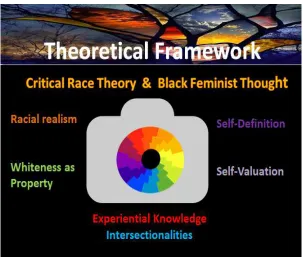
For my theoretical framework I evoked two complementing lenses: Critical Race
Theory (CRT) and Black Feminist Studies (Figure 1.1). Both theories tackle the
complexities of race and racism associated with being Black and female in America. CRT
examines the endemic nature of racism and the intersections of race and gender. It does
not, however, directly address the Black female body. The issue of the Black female form
being both hypervisible while remaining partially invisible is dissected in Black Feminist
Studies. Both theories help to problematize how obese Black females view themselves
through the distortion of dominant ideology. June Jordan (1988) eloquently used the
metaphor of the distorted mirror to illustrate this principle. She noted:
We begin to group up in a house where every true mirror shows us the face of
somebody who does not belong there, whose walk and whose talk will never look
or sound ‘right,’ because that house was meant to shelter a family that is alien and
hostile to us. (p. 161)
Though the Black obese body will never meet White mainstream society’s mark of
desirability because of racism’s endemic presence (Bell, 1992) it is still expected to strive
to obtain this lofty objective. Ironically, it is these failed attempts at desirability which
serve to further mar the spirit and nurture further confusion (Jones & Shorter-Goodman,
2003; Mulholland & Mintz, 2001). The obese Black female form is confined to a “house”
that never has or, accepting the tenant of racial realism, never will love its inherent
beauty. Existing within such warring ideals, trying to love the obese body while being
simultaneously told to abhor it, prohibits liberation and reifies the thin White ideal
Figure 1.1 Theoretical Framework
Critical Race Theory
Critical Theory as a general conceptual base informs my interest in Critical Race
Theory. Critical Race Theory (CRT) originated in legal scholarship with such pioneers as
Derrick Bell (1992), Kimberlé Crenshaw (1991), Richard Delgado (2001) and Mari
Matsuda (1993). Evolving from Critical Legal Studies (CLS), CRT challenged the
fundamental failings of the court system to create and sustain meaningful reform
(Ladson-Billings, 2009). Whereas, CLS critiqued liberalism it did very little to address
the deeply rooted role of racism in American life (West, 1993). Legal scholars realized
new theories and strategies were necessary to challenge more subtle forms of racism
(Delgado & Stefancic, 2001). Loosely defined, CRT is “a strategy that accounts for the
role of race and racism in U.S. education and works toward the elimination of racism as
part of a larger goal of eliminating other forms of subordination such as gender, class,
perspective of racism would contend racism is an extraordinary occurrence which is
willingly enacted by individuals who are propelled by extreme hatred. In contrast, a
critical view of racism argues racism is institutionalized and occurs on a daily basis, it is
sanctioned through color-blind policies and discourse and is sustained by actions
assumed to apply fairly to all (Bell, 1992; Delgado & Stefancic, 2012; Gillborn, 2005;
Ladson-Billings & Tate, 1995). Therefore, CRT analyzes how race, racism, and power
maneuver with individuals, groups, or institutions in American society by deconstructing
dominant ideology and discourse, challenging hegemonic forces that marginalize and
oppress people of Color and provides a platform for social transformation by
reconstructing agency and power distribution (Bell, 1992; Delgado & Stefancic, 2012;
Ladson-Billings, 1998; Lynn & Parker, 2006).
CRT is a set of interrelated beliefs comprised of five main tenets. It (a)
acknowledges racism is endemic in American life and is observed and felt at various
legal, cultural and psychological levels (Tate, 1997); (b) challenges the dominant
ideology of neutrality, objectivity, colorblindness, and meritocracy (Delgado & Stefancic,
2012; Tate, 1997); (c) challenges White supremacy as the notion of Whiteness as
property (Bell, 1992; Ladson-Billings, 1998) ; (d) recognizes the intersectionality and
compounding jeopardies of race, racism, and power with other forms of oppression such
as sexism or classism (Lynn & Parker, 2006; Soloranzo & Yosso, 2001); (e) recognizes
the power and legitimacy of experiential knowledge and voices of Color (Gillborn, 2000;
Ladson-Billings, 1998; Soloranzo & Yosso, 2001). Four of these tenets are pertinent for
this study: Racism’s endemic presence, Whiteness as Property, intersectionalities, and
From a CRT perspective, racism cannot be rigidly defined by acts of overt
discrimination or violence against people of Color; instead, racism must be understood as
a more institutionalized and nuanced presence that is interwoven into the fabric of our
lives and is often unrecognizable by those with power and privilege (Bell, 1992; Delgado
& Stefancic, 2012; Ladson-Billings, 1998). The belief of racial realism is that racism is a
permanent fixture. Critics would argue we live in a post-racial America (Delgado &
Stefancic, 2012; West, 2008) where the dreams and goals of the Civil Rights era have
been achieved and with hard work and dedication anyone can make it. The myth of
post-racial America is just as strong as the myth of meritocracy (Delgado & Stefancic, 2012)
and does not give credence to the on-going struggles of Blacks in America to make
progress in a society which would deny its existence. Since our forced appearance on the
America’s shores, Blacks have held a precarious position. “Tolerated in good times,
despised when things go wrong, as a people we [Blacks] are scapegoated and sacrificed
as distraction or catalyst for compromise to facilitate resolution of political differences or
relieve economic adversity” (Bell, 1992, p. 7). Nearly 22 years after Bell wrote these
words, this fact still holds true. Being born Black in America means a daily struggle to
remain visible and heard in a society which would deem you invisible and mute unless
your presence can enhance society or individuals’ vitality or livelihood. In truth, being
Black in America means striving to uplift and redefine oneself in a society laden with
racial disparities by health, education, employment, income and wealth. The reasons
given for these disparities regularly put the blame unjustly on those who suffer the
consequences of these statistics rather than on the systems of oppression, privilege,
• Black infants are twice as likely as White infants to die before their first
birthday (Center for Disease Control and Prevention, 2013).
• Today, nearly half (48%) of all Black boys drop out of high school and 42
percent of all Black boys have failed an entire grade at least once (Schott
Foundation for Public Education, 2012).
• It is estimated that in their lifetimes, a total of 1 in 32 Black women and 1 in
16 Black men will be infected with HIV (Center for Disease Control and
Prevention, 2013).
• It is estimated that 1 in 6 African-American men have been incarcerated and 1
in 100 African-American women are in prison. Nearly half of the total prison
population consists of African-Americans (Criminal Justice Fact Sheet, 2010).
Prison is The New Jim Crow (Alexander, 2010) and has become America’s
unspoken economic stimulus.
• Black Americans account for nearly 49 percent of all homicide victims in the
U.S. (U.S. Department of Justice, 2007).
• The poverty rate of Black Americans is 27 percent, compared to 9.8 percent
for White Americans (Shierholz & Gould, 2012).
• The median household income of Black Americans is 61 percent of that of
White Americans, roughly $32,229 compared to $55,412 (Shierholz & Gould,
2012).
After analyzing the data, it is easy to understand although race is not biologically real, but
it is socially and politically constructed via law, public policy and social practice to
(Anyon, 2005; Suarez-Orozco & Suarez-Orozco, 2009). The effects of this design are far
reaching and pervasive across generations (Darden & Cavendish, 2011; Wilson, 1997).
From society, we are flooded by the message, “race is only skin deep” Culp (1998)
countered this belief by stating, “race is only skin deep, but White supremacy runs to the
core…and the work of Critical Race Theory is to go beyond the socially constructed
boundaries understanding race’s importance” (p. 1639).
Finally, Ladson-Billings (1998) emphasized Delgado’s (1989) rationale for
understanding the importance of experiential knowledge and voices of Color by stating,
“it provides members of the out-group a vehicle for psychic self-preservation and the
exchange of stories from teller to listener can help overcome ethnocentrism and the
dysconscious (cited in King, 1991) drive or need to view the world in one way”
(Ladson-Billings, 1998, p. 23). In a discourse and construct where fat or obese bodies are read as
lazy, gluttonous, or lacking moral fortitude (Farrell, 2011; McMichael, 2013; Oliver,
2006); experiential knowledge provides a site for a counterstory and reconstruction of
mainstream ideology. In this manner, CRT challenges the many distortions, omissions,
and deficit thinking embedded in traditional school curriculum and creates a space for
critical analysis.
Black Feminist Studies
Black Feminist Studies was an outcome of the Civil Rights struggles and the
feminist movement of the 1960s and 1970s. Pioneered by such greats as Frances Beal
(1979), Patricia Hill Collins (1991), Audre Lorde (1984), bell hooks (1981), and Angela
Davis (1983), Black Feminist Studies argues Black women are positioned differently in
traditional feminist critique which is largely grounded in the White female experience,
Black Feminist Studies “probes the silences, erasures, distortions, and complexities
surrounding the experiences of African-American women” (Guy-Sheftall, 2009, p. 11).
Kimberlé Crenshaw (1989) described how Black women were often excluded from
feminist studies because it was “predicated on a discrete set of experiences that often did
not accurately reflect the interaction of race and gender” (p. 58). Therefore, Black
Feminist Studies is grounded in the principle of intersectionality which postulates that
oppressive patterns are interrelated and influenced by intersecting systems including race,
gender, class, ability, ethnicity and size (Collins, 2000). These converging identities
create compounding jeopardies which cannot be fully explained by examining each
identity in isolation.
In Black Looks: Race and Representation, hooks (1992) examined the intricacies
of analyzing the Black female shape by discussing how media and its representation of
the Black female form are used as pedagogical tools which oppress and exploit. Using
this lens, the body may be viewed as a text which can be read and a text to which society
can add meaning. hooks argues while promoting the hegemony of the thin White ideal,
Black women and adolescent girls are marginalized and their beauty is not seen as being
worthy of visibility and desire. These ideals become prototypes which African-American
women and girls use to assess and judge their bodies (Beauboeuf-Lafontant, 2003;
Melancon & Braxton, 2015).
Black feminist theorist Collins (2000) claimed this homogenized approach to
beauty removes racial and ethnic differences that disturb the thin White norm. Thinness
bombardment of media, film, music and social media which all reinforce White
supremacy with the ultimate goal being the annihilation of Black female subjectivity
(hooks, 1992, 2005). According to Black feminists, beauty, then, is not a matter of
objectivity; it is a matter of judgment. Theorists have long contended social values can be
read through the body (Bordo, 1993; Cahnman, 1968; Glassner, 1988; Rothblum &
Solovay, 2009). In Eurocentric society, the thin White frame denotes happiness, success
and social acceptability (Beauboeuf-Lafontant, 2003; Melacon & Braxton, 2015). In
contrast, the obese Black frame is perceived as being a deviant, lazy, or excessive
(Bailey, 2008; Oliver, 2006; Patton, 2006). Framing the Black female body in this
manner is oppressive and creates a whirlwind of emotion including self-loathing, guilt,
and rage (Beauboeuf-Lafontant, 2003; Jones & Gooden, 2003). Furthermore, since many
Black girls have not critically confronted these images they have no way to acknowledge,
name, and speak their pain (Collins, 2000; hooks, 1989, 1992, 2005; Poran, 2006)
thereby prohibiting healing.
This suffering and marginalization of women of Color as they internalize negative
representations has been a corner of Black Feminist Thought (Beal, 1979; Davis, 1983;
Lorde, 1984). To resist racist representations Black girls must confront the colonizing
ideology by developing a critical consciousness (Collins, 2000; hooks, 1990). This
requires Black females to critique representations for falsehoods and creating new forms
of representations which uplift the Black body. hooks argued (1992) “As long as black
folks are taught that the only way we can…be materially privileged is by first rejecting
blackness, our history and culture, and then there will always be a crisis in black identity.
18). In short, we must confront massive hate by fully loving and embracing our
Blackness. Participation in this study allowed five Black adolescent females to build a
critical conscious in a space designed to allow them to voice their emotional and
psychological turmoil. Being members of a critical and collaborative community which
centered dialogues on race, gender, size and the myriad of intersectionalities which exist
within and across those dialogues, allowed the participants in this study to “engage in
critical dialogue without fear of emotional collapse” in spaces where they could “hear
and know one another in difference and complexities of experience” (hooks, 1994, p.
110). When such transformation takes place, schools and teachers create places of
sanctuary against White domination and hegemonic forces. By invoking Black Feminism,
Black female adolescents are able to view the world through a dual lens which creates an
awakened consciousness and an empowered individual; both states are vital for social,
political and educational reform.
Intersectionalities and Experiential Knowledge: Applying Dual Lens
If theory is the proverbial camera, an instrument which affords the opportunity to
take snapshots of the world to make predictions, analyze patterns or note discrepancies
according to a particular paradigm, research base and/or ideology; then applying both
Critical Race Theory and Black Feminist Theory to the camera only sharpens and refines
the image. The combination of the dual lenses allows both the researcher and reader to
use CRT to closely analyze and interrogate the presence and use of racial realism and
Whiteness as property while drawing on Black Feminist theory to understand how
self-definition and self-valuation can be used as resistance strategies. Dual lenses also allow
theories: intersectionalities and experiential knowledge until a picture which was once
distorted comes into a heightened sense of focus and awareness. These two powerful
theories form the backbone of my theoretical framework.
Consider the intersectional and experiential nature of the following example: in
the film, Precious Knowledge (2011), Director Ari Palos documented the student and
community reaction and criticism as the Tucson Unified School District attempted to
dismantle the Mexican American/Raza Ethnic Studies program. In a pivotal scene, the
documentary main’s antagonist, Arizona’s Attorney General Tom Horne, is surrounded
by protestors and supporters while he gives a speech whose keynote line is, “We are all
part of one race: The human race” (Palos, 2011). At first glance, this line appears
innocent, but by delving into the heart of both CRT and Black Feminist Theory, it is clear
that this myopic belief leads to and is derived from oppression, marginalization and
invisibility.
Consider again Attorney General Horne’s statement, “We are all part of one race:
The human race” (Palos, 2011). It melds the whole of human existence to one single
story that is fraught with multiple dangers because it flattens humanity’s experience into
singular silos and overlooks how our many stories intersect to form our diverse world and
our perceptions of it. When reflecting on the importance of stories told about her and
those she tells about others, Chimamanda Adichie (2010) explained, “The single story
creates stereotypes, and the problem with stereotypes is not that they are untrue, but that
they are incomplete. They make one story become the only story.” Adichie is
resoundingly accurate because she recognizes many lenses shape our experiences and tint
and body size. In much the same way, a theoretical framework grounds how researchers
recognize, name, evaluate, and write about the spaces, places, people, and events in their
work. Thus theory selection must be an introspective and reflective process. Both CRT
and Black Feminist Theory were carefully chosen because they celebrate the strength of
intersectional identities and experiential knowledge. These overlapping identities provide
knowledge and wisdom which must be shared an innovative and liberatory format. For
this reason, I assert this entire dissertation as an example of ethnopoetics. This powerful
theoretical combination and liberating format allow for new stories, often the stories
overlooked because they are deemed unworthy, to be shared with the world.
Definition of Terms
For this study, I utilized the following terms:
Black Feminist Theory: This theory argues that sexism, class oppression, and racism are
inextricably bound together. Unlike traditional feminist theories which often focus on
White females, Black Feminist Theory analyzes the nuances of the Black feminine
experience (Collins, 1991).
Body Mass Index or (BMI): This term refers to a number calculated from a person's
weight and height. BMI provides an indicator of body fatness for most people and is used
in health care to screen for weight categories (CDC, 2012).
Critical Theory: This is a social theory and philosophy oriented toward critiquing and
changing society as a whole. It aims to delve beneath the surface of social life and
normality to analyze and address issues of power, privilege, silencing and
marginalization which exist within an oppressive construct and uncover the assumptions
all interconnected (DuBois, 1903; Freire, 2000; Giroux, 2000; hooks, 1992; Kincheloe,
2008).
Critical Race Theory (CRT) This theory analyzes race and power in society and
comprised of five main tenets (a) racism is endemic in American life (b) challenges the
dominant ideology of neutrality, objectivity, colorblindness, and meritocracy; (c)
recognizes experiential knowledge; (d) challenges he notion of Whiteness as property; (e)
recognizes the intersectionalities with other forms of oppression (Delgado & Stefancic,
2012).
Fat: This is popular culture terminology in the United States to define a person who is
overweight or obese based on most Eurocentric Standards. The term serves to reinforce
Eurocentric ideals. In the early 1990’s, however, the term was appropriated to refer to
someone who is (P.H.A.T.) pretty, hot, and thick (Oliver, 2006).
Obese: This is the term used by the United States Center for Disease Control (CDC) to
describe anyone with a certain body mass; when the term is applied to adolescents, the
“obese” body mass index or BMI is equivalent or above the 95th percentile for
individuals in the United States of the same age and sex (CDC, 2012).
Overweight:This is the term used by the United States Center for Disease Control
(CDC) to describe anyone with a certain body mass; when the term is applied to
adolescents, the “overweight” body mass index or BMI isat or above the 85th percentile
and lower than the 95th percentile for individuals of the same age and sex (CDC, 2012).
Text: Text (in this study) refers toany object printed or unprinted, which can be read,
movies/film, songs, graffiti, social media, gestures, facial expressions, movements, and
the human body.
Thick: This term is popular African-American culture terminology in the United States
to describe a young woman who is curvaceous and has an ample bosom and buttocks.
The term thick is inclusive and does allow for a range of body sizes.
Conclusion to the Introduction
Race, body image, and gender are multidimensional as they represent the racial,
cultural, gendered, and social interpretations of what beauty is and who counts as
beautiful. Yet, within Eurocentric ideals, the definition of beauty is limited and often
contains the descriptors White, female, thin, blond hair and blue eyes. This rigid
definition is repeatedly conveyed through different mediums to reinforce the ideal that
only one definition of beauty is allowed, creating a case of the “haves” and the “have
nots.” Operating on various levels, this oppressive socialization process provides trauma
for many adolescent African-American girls throughout our nation. This study explored
the heart of the converging identities of race, gender, and size in the lives of five
adolescent, African-American girls. The next chapter will provide a synthesis of related
research within which the study is situated. It begins by analyzing obesity definitions and
discourse, delves into the multiple dimensions of Black female representation and
concludes with insights into Black female adolescent literacy practices which were
CHAPTER
TWO
M
ALIGNED ANDM
ISREAD:
R
EVIEW OFR
ELATEDL
ITERATUREPrior to beginning this study, I reviewed existing literature in education and social
sciences which would inform the study. My inquiry centered on distinct bodies of
literature: obesity and adolescents, the Black female form (Black looks and
representation), and African-American female literacies. These bodies of literature were
the stimuli which motivated this particular research study. After collecting and analyzing
data, they continue to be foundational. For these reasons, I review them in this chapter.
The discussion of these bodies of work is prefaced by a brief a look at critical theory
because of its focus on transformation and social change. A critical lens is also necessary
to analyze the differing perspectives on obesity discourse and to examine the
interpretations of the Black female form which has been maligned and misread
throughout history. Finally, critical theory is essential when understanding
African-American female literacies as it moves beyond the traditional notion of literacy as only
reading and writing. Critical theory allows for the recognition of multiple literacies
existing simultaneously and views literacies as “fluid and social practices, which are
forged by attitudes, beliefs, values, and social relationships” (Johnson, 2014, p. 26).
Critical Theory
Critical theory is a social theory and philosophy oriented toward critiquing and
about positive change (Gillespie, 2010). Noncritical theories are the amalgamation of
propositions, conclusions tightly interwoven which attempt to explain the world and how
it arrived to its present state (Given, 2008). Typically flawed many theoretical models,
including critical theory, are largely disseminated as the work of White male researchers
who are grounded in Eurocentric beliefs and values. For this reason, certain aspects,
which formulate Eurocentric value system, go overlooked or unchallenged. In particular,
the lack of attention to the legacy of colonialism leads to a major tension with how we
view and utilize theory as contextualizing the institution of research.
Since colonial times Europeans have perceived most of the world open to
conquest, control and domination. This belief divided the world into two fragments: the
colonizers who maintained power and privilege and the colonized who are purposely
denied power (Smith, 2012). Eurocentrism is the practice, conscious or otherwise, of
placing emphasis on European concerns, culture and values at the expense of those of
other cultures. Eurocentrism involves claiming cultures that are not white or European as
being such, or denying their existence at all (Bhambra, 2007). Growing out of this
historical reality, many theoretical models are founded upon European and
Euro-American ideologies and beliefs which become reified as the theory of the status quo,
designed to maintain the functioning of the world as it presently exists.
With this caveat in mind, I embrace elements of critical theories that aim to delve
beneath the surface of social life and normality and uncover the assumptions that keep us
from a full and true understanding of how the world works and how we are all
interconnected (Green & LeBihan, 1996). At its core, Critical Theory advocates that
social, political, and economic systems which affords power, privilege and wealth to a
selective, often, predetermined few (Tyson, 2006). Freeman and Vasconselos (2010)
contend Critical Theory is an overarching label for participatory, pedagogical, and
action-oriented theoretical approaches. Participatory approaches recognize that knowledge
cannot stand in isolation but must instead be contextualized. True participation can also
not occur without engaging the oppressed in the naming and recounting the injustices
inflicted by the oppressor (Freire, 1998, 2000). Pedagogical approaches describe how
Critical Theory views the world through an enhanced lens which allows for the
reconceptualization of knowledge and power to resist oppressive constructs (Tyson,
2006). Critical Theory is action-oriented because it cannot rely on rhetoric alone, but
instead, must enact change. Embedded in Critical Theory is the belief in a radical hope
(hooks, 1994); an understanding that oppressive sites can be transformed into liberatory
spaces where all voices and stories are recognized.
It is the criticality of Critical Theory which assumes that everything can and
should be interrogated, seeking to overturn unjust power structures and recognize and
dismantle oppression. According to Kincheloe and McLaren (2005), criticality
encompasses “the ability of individuals to disengage themselves from the tacit
assumptions of discursive practices and power relations in order to exert more conscious
control over their everyday lives” (p. 24). They argued that criticality is built upon
introspection and acknowledging privilege and implicit biases which may tint our
perception. Because of this there were and are critical theorists who lack certain
criticality because of their own Whiteness and privilege which still is grounded in this
When reviewing Critical Theory, I was directed to information onMax
Horkheimer Theodor Adorno and Herbert Marcuse (Given, 2008) of the Frankfurt School
of philosophers often cited as the original source of the Critical Theory movement
originating in the 1920s. I recognize Critical Theory has a longstanding history however;
I challenge the idea the Frankfurt theorists were the only critical theorists of the time
period. It is hard to note that these names are grounded in a Eurocentric Patriarchy and a
premise that is heavily based upon Big “T” theories and little “t” theories derived from
the work of primarily European scholars. Traditionally, Big “T” theories are usually
highly recognized and widely accepted within a field (Tyson, 2006). For example, the
work of theorists such as Marx; members of the Frankfurt school; French philosophers
such as Barthes, Derrida, and Bourdieu; and contemporary critical pedagogues such as
Peter McLaren and Henry Giroux, have long been reified in the study of critical theory.
Once again, it is important to note the commonalities among them - White and Male.
Contrastingly, Little “t” theories may be little known and highly relevant theories more
generally recognized and appreciated by specific practitioners (Tyson, 2006).
Foundational to the adoption of critical theory that undergirds this dissertation is
my believe that the insistence of Big “T” theorists and little “t” theorists reinforce a
hierarchal structure for knowledge construction, and ignores racism’s endemic presence
(Delgado & Stefancic, 2012; Tate, 1997). Thus, I approach critical theory recognizing
that if it is to be truly analytical it must be critical of: “capitalism, but also racism,
sexism, and colonialism, and how each of the aforementioned overlaps, interconnects,
and intersects to deform and destroy life and the ongoing prospects of liberation and
While it may go without saying that the adoption of critical theory requires
criticality on the part of the researcher, this is not always the case when it is identified as
foundational to empirical work. Thus, I use a critical lens to express my appreciation for
basic tenets of critical theory but also to challenge its historical reification of
predominantly European scholars. I stand on shoulders of Big “T” theorists who are
foundational to the critical movement but too often left out of the dominant discourse in
critical theory: Sojourner Truth (1863), W.E.B. DuBois (1903), Anna J. Cooper (1998)
and Carter G. Woodson (1933), to name a few. These scholars unapologetically
challenged race and inequitable practices and emphasized the importance of service to
others because it nurtures compassion and deepens insight as it recognizes humanity
(hooks, 1994). They are foundational to my understanding of what critical theory can be.
In addition, if I accept that everyone is a theorist, then Critical Theory’s radical hope and
I would argue, love, allows everyone, students included, to become theorists and activists
further educating themselves and others to recognize and take action against the
oppression, marginalization and power struggles continuing to wage within our world.
Analyzing Obesity in Adolescents
Over the last 30 years, adolescent obesity has quadrupled in the United States
(Ogden, 2010). In 2012, more than one third of children and adolescents were overweight
or obese (Ogden, Carroll, Kit, & Flegal, 2014). The United States Center for Disease
Control argues that adolescent obesity has many important implications for the healthy
well-being of individuals and the American society including heart disease and an
increased risk for developing diabetes (CDC, 2012). It is reported that adolescents who
2004). A reported $14 billion dollars per year is attributed to medical costs and
overweight and obese adolescents (Ogden, 2010). In addition, health analysts argue that
adolescent obesity affects our nation’s ability to protect itself; as more than a quarter of
17- to 24-year-olds are not fit to enroll in the military due to their weight (Ogden, Carroll,
Kit, & Flegal, 2014). These reasons have led to childhood and adolescent obesity being
described as a pandemic of the new millennia (Ogden, 2010).
Defining Obesity
If the issue of adolescent obesity is to be properly addressed, it must be defined.
Yet, the process of defining obesity has led to many differences in the field of obesity
research (Baum, 2004; Christakis & Fowler, 2007). In many health circles, obesityis
determined by using Body Mass Index (BMI), a measure of body fat based on height and
weight (Ogden, 2010). Using this determinant, adolescents in the 85th to 94th percentile
BMI are classified as overweight. Those in the 95th percentile or above are classified as
obese (CDC, 2012).
For adolescents, there are not clear definitions for the terms “overweight,” or
“obesity.” The definition of those terms can differ across countries and research studies
meaning what is seen as overweight and obese can vary from country to country and
culture to culture (Kim & Willis, 2007). As described in the following section, this is
particularly true when analyzing the differences in comparing obesity perceptions in
African-American female adolescents to Caucasian female adolescents. It is important to
further document these contradictions in order to better understand how definitions of
Cultural Differences
It is important to keep in mind positive aspects of Black culture as they relate to
obesity. For African-American adolescents there is a higher rate of obesity with 42.5
Black girls ages 12 to 19 being obese or overweight compared to 37.3 of Black boys
(Christakis & Fowler, 2007). Despite the fact African-American adolescent females are
classified as being more obese or morbidly obese than their racial/ethnic peers; some
sources describe them as more accepting of being overweight or obese and less likely to
try to lose weight (Eisenberg, Neumark-Sztainer, & Story, 2003; Nishina, Ammon,
Bellmore, & Graham , 2006; Poran, 2006; Puhl & Latner, 2007). Nichter (2000)
conducted a study which examined culturally-valued forms of self-presentation, as
identified by African American girls, and, in particular, the context and stimulus in which
these forms are illustrated. Her findings revealed while white girls in the study
maintained a fixed concept of beauty, the African American girls defined beauty through
different criteria including attitude, style, and personality. This finding corresponds to
Collins’ (2000) argument that while Eurocentric beauty ideals are rigidly constructed, the
Afrocentric beauty is “not based solely on physical criteria” (1990, p. 89). This
perception is frequently reinforced by popular African American celebrities such as
Monique, Queen Latifah, and Gabby Sidibe and reinforced in other mediums such as
magazines. Among cover models featured on Ebony, a magazine targeting African
American readers, 76.4% were average weight, and just 5.7% were underweight
(Thompson-Brenner, Boisseau, & Paul, 2011) according to the CDC healthcare
guidelines. These images of Black women’s diverse body range in television and
weight loss. Botta (2000) hypothesizes this can produce a devastating effect. She
contends Black adolescents need:
not identify strongly with White culture in order to be affected by thin ideals
because the thin ideals are no longer just White. Therefore, as more thin Black
ideals appear in the media, we would expect more African-American adolescents
to make comparisons with those images. (p. 147)
Black adolescent girls need a space, such as the one suggested in this study, to interrogate
these changing ideals and analyze impact on identity development and esteem.
Stigma and Violence
For the last 50 years, researchers have documented the prevalence and effects of
obesity stigma in children and adolescents (Kraig & Keel, 2001). Much of the research
has focused on the negative attitudes children and adolescents have regarding obese
individuals (Littleton & Ollendick, 2003;Puhl, Andreyeva, & Brownell, 2008; Puhl &
Heuer, 2009). Studies have also documented females report teasing, bullying and
physical violence more often than males (Latner, Rosewall, & Simmonds, 2007; Latner,
Stunkard, & Wilson, 2005). Prevalent obesity stereotypes portray obese individuals are
lazy, weak-willed, unsuccessful, unintelligent, lack self-discipline, have poor willpower,
and refuse to comply with weight-loss treatment (Janssen, Craig, Boyce, & Pickett, 2004;
Puhl & Latner, 2007).
Davison & Birch (2004) documented the effects of weight-based stigma including
depression, decreased academic performance, low self-esteem and body dissatisfaction.
The longitudinal study including 165 participants revealed that for those participants peer