Dissolved Gas Analysis: Comparison of IEC and Rogers
Method using MATLAB GUI
Musaib Ayoub
1, and Kulraj Kaur
21,2Lovely professional university, Phagwara, India
*Contact: [email protected], [email protected]
Abstract— This paper presents a comparison between two methods of dissolved gas analysis, IEC and Rogers ratio method. Dissolved gas analysis is widely used method for the life assessment of power transformers. Since, transformers form the vital and economically large part of the system. Therefore for the assessment and examining best methods should be implemented. So in order to achieve transparency in results the various approaches of DGA are compared for each other.
Keywords—Transformers, Rogers Method, IEC Method, Dissolved Gas Analysis
1.
INTRODUCTIONTransformer forms an important part of electrical utility systems as it connects two electrical circuits and transfers power between them. Transformers are among the costliest components of transmission and distribution systems. Therefore, their protection is of utmost importance so as to eliminate the chances of faults and outages and also to increase the transformer efficiency and shelf life. Transformer contains windings as its main part. To provide the insulation between these windings and also between winding as transformer body mineral oils are used as insulators. These mineral oils not only perform the insulation functions, but also act a coolant so as to absorb the heat produced. Transformer oils also provide diagnostics of the transformer health. Whenever the transformer is subjected to some fault, heat is produced inside the transformer. Different kinds of gases are generated in the transformer oil. Every fault produced its characteristic gases in the transformer oil in concentrations specific to that very fault. Therefore dissolved gas analysis is carried out to know the health status of the transformer. Detection of the specific gases indicates that the transformer is under fault. The faults indicated by dissolved gas analysis, are corrected according to the analysis. If these faults persist in the power system, the extent of damage may be enormous and also may consume lots of investment.
So in order to protect transformer against such damages, transformer oil is diagnosed and faults are detected. The DGA is an attested method of the fault detection. It involves many processes of sampling of oil units, and achieving gases from the oil by different physiochemical methods such as gas chromatography etc. After the gases have been extracted from oil, the next purpose is to know the concentration of these gases which can be achieved from different methods discussed in the literature.
In this work, five different methods of dissolved gas analysis namely; Dornenburg, Key gas, IEC, Duval Triangle, and Rogers will be discussed along way of diagnosis including different conditional probabilities. Fuzzy logic Interpretation of these methods by the Graphical User interface of these methods in MATLAB for the visual establishment of these methods are developed. This method will increase the efficiency by at least 10% compared to the efficiency of methods mentioned above when taken individually. This method can be also be used for other components containing oil as insulating material.
2.
NEED FOR DISSOLVE GAS ANALYSISThe power system engineers are undergoing great stress in order to meet the growing demand for the electrical energy. Lots of research is going on different aspects of power transmission and distribution. However, the research for the oil insulated transformers has been in hibernation for last hundred years. Presently most of the transformers are susceptible to the collective stresses that ultimately lead to the early expiry of these transformers. Therefore reduces the shelf life of transformers. Hence need for replacing and repairing arises so as to ensure hassle free power supply. Instead of replacement and repairment as it becomes more economical, power utility companies find it easy to continuously monitor and diagnose faults well in advance. Therefore companies are paying full attention at adapting different diagnostic methods, which continuously hand over condition of these transformers. For the said purposes dissolve gas analysis provide efficient and accurate method of online diagnosis and monitoring. However this methods suffers from several disadvantages, it is costly as well as pose some technical boundaries. Also the accuracy of distinguishing different kinds of faults is some sort of disadvantage to this method.
In developed nations the shelf life of transformers in average has crossed the limit of 30 years, which in earlier times used to be maximum age for which the transformers could operate with high reliability. Also deregulations in the power sector enforces the utility companies to stop investing in new power infrastructure for so many years instead operating the available components to their highest capacity, so as to minimize the costs of service.
3.
COMPARISON [image:2.596.307.546.70.175.2]In this paper, IEC and Rogers methods have been elaborated with fuzzy models. These models were evolved to find out better among the two methods. Although the two methods discussed seem quite similar. However basic difference in the method of evaluation differentiates the two. Also, the two methods form different kinds of patterns and also the gas concentrations in the transformers were found to be different. The methods used in this report possess lofty kind of accuracy and were found consistent. The different techniques viz. IEC and Rogers are discussed as follows The table below was used as the source of data for Fuzzy illustration of said techniques
Table 1: Case Study of DGA
3.1IEC Method:
IEC codes are in use from last so many years and its continuous use across globe for the detection of transformer faults has gained much experience. In early times, the concentration of individual gases was used for the transformer fault diagnosis. However the researchers in recent times have proposed several ratios of certain gases that provide more used friendly and simple approach for the diagnosis.
[image:2.596.46.289.232.365.2]Tables given below show the IEC codes for DGA.
Table 2: IEC Method Ranges and Codes 3.1.1 Fuzzy Interpretation for IEC Codes for Dissolve Gas Analysis
Three ratios are present in this method, which are given as input to the fuzzy logic controller. The ratios are provided below
X1= C2H2/ C2H4
X2= CH4/ H2 X3= C2H4/ C2H6
Table 3: Table for ICE Codes
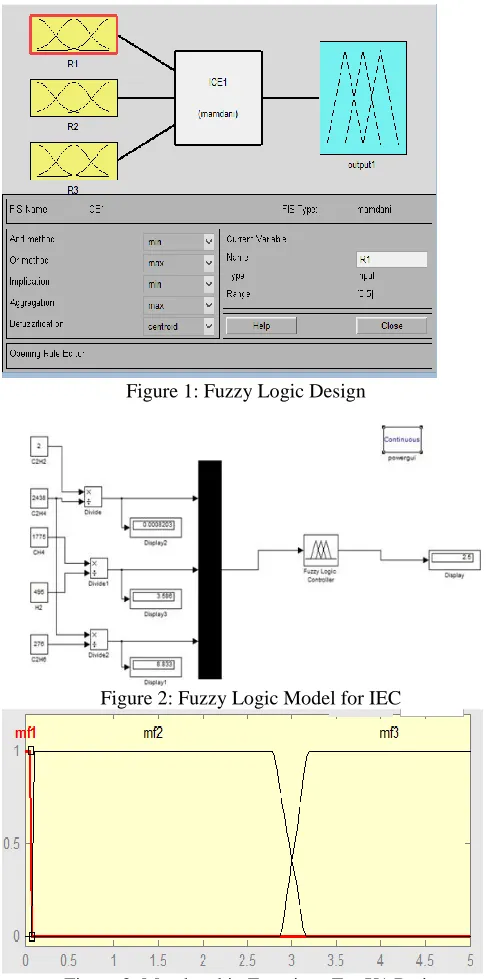
From the table 2, each ratio has three ranges. Each of these ranges acts as a membership function. Each of the ratios X1, X2, X3 are given as variable to the fuzzy logic controller. Different types of membership functions can be used. In this work, trapezoidal type is used as it is most frequently used in fuzzy based systems. Mamdani system has been used as fuzzy interference system.
Figure 1: Fuzzy Logic Design
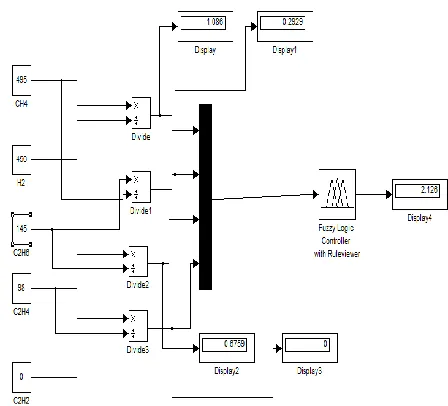
[image:2.596.306.549.273.763.2]Figure 2: Fuzzy Logic Model for IEC
[image:2.596.46.284.500.652.2]Figure 4: IEC code Rule Set
Figure 5: Rule Editor 3.2 Rogers Method:
Among all the dissolve gas analysis approaches, Rogers ration method is the most frequently used method. This method discerns thermal faults as assimilated to other methods. Four ratios are anatomized by Rogers Method. Different techniques aided by computers like Fuzzy systems are used to assess the dealings between the types of fault occurred and the gases produced.
The four ratios are as follows
C2H6/CH4
CH4/H2 C2H2/C2H4
C2H4/C2H6
Below are given the two tables that are exercised in the Rogers method, the first table presents the ratio codes and the second table flashes the diagnosis. This method considers only gases above routine concentrations, pinpoint administering this method might still misstate the data. Decomposition over a range of temperature that is limited is only denoted by the ratio C2H6/CH4.
[image:3.596.45.278.70.389.2]Table 4: Ranges and codes assigned for Rogers Method
Table 5: Code Scheme For Rogers Method 3.1.2 Fuzzy interpretation of Rogers method for dissolve
gas analysis
The Four ratios XR1, XR2, XR3 and XR4 used in this method shticks as input variables. Since the ranges for XR1 are four, therefore four membership functions are used for this input variable. Similarly XR2 has two ranges, XR3 and XR4 has three different ranges. So, they contain two, three and three membership functions respectively. The four ratios are defined as follows;
XR1=CH4/H2
XR2=C2H6/CH4
XR3=C2H4/C2H6 and
XR4=C2H2/C2H4
The implementation of Rogers method using fuzzy systems is as follows.
Fuzzy Model for Rogers Method
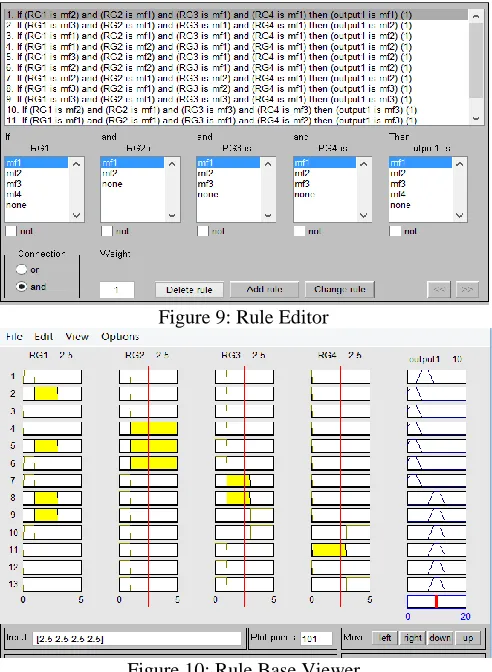
[image:3.596.322.546.396.599.2] [image:3.596.40.269.616.748.2]Figure 7: Membership Functions for ratio XR1 There can be four different faults for example, partial discharge, arching, thermal and normal. Each of these faults is assigned some numeric value. Therefore output of the model will be the fault type based on the assigned codes. The assigned codes to these faults and the membership functions for the output of fuzzy logic controller are shown underneath.
Table 6: Fault Codes for output of fuzzy controller
[image:4.596.307.553.71.407.2]The output membership function for output is shown beneath
Figure 8: Membership Functions for Output As in the IEC method, here also Mamdani system is used as fuzzy interference system. The set of rules for this method is shown below
Figure 9: Rule Editor
Figure 10: Rule Base Viewer
4.
CONCLUSIONDissolve gas analysis is the cheapest technology currently available and easy to understand and interpret different faults. These advantages project dissolve gas analysis as an effective tool for protection of power transformers against any failure or hazard. The diagnosis and the interpretation of results takes into account the results from laboratory methods, health history of the transformer, the physical condition of transformers, maintenance history and the age of transformers. Dissolve gas analysis by and by considers concentration of gases generated in transformers in the range of Parts Per Million (PPM). Therefore there exists lots of scope for this method in detection and interpretation of gas results to conclude presence of any faults on the transformer. It is pertinent to mention here that although scope for future development of this technique exists but to analyze and interpret different gas pattern in the transformer needs more advanced laboratory tests or detection of any buddy fault and also to know the extent of fault damage. Apart from this many power transmission and distribution companies are using this method for continuous online monitoring of transformers, so as to assure them not being damaged permanently and also to reduce new investment on power system components. Because of these reasons it is being adored by power supply agencies.
Rogers method is most common method of dissolve gas analysis. However fails to detect certain faults. All the equipments having oil filled body, health
[image:4.596.44.289.509.669.2]sometime different gases evolved from the mineral oil produces ambiguous results.
Till date Duval triangle methods is not for its easy comprehension of results and is most efficient method. Even an amateur can well handle the method for analyzing different faults gases and interpreting results. This method provides inaccuracy not more than five percent in all cases.
These methods can be implemented using different computer aided softwares and can provide better results when results are compared using fuzzy logic systems
REFERENCES
[1] Jose Ignacio Aizpurua, Victoria M. Catterson, Brian G. Stewart, and Stephen D. J. McArthur, Brandon Lambert, BismarkAmpofo, Gavin Pereira, James G. Cross:―Improving the Accuracy of TransformerDGA Diagnosis in the Presence of Conflicting Evidence,‖ Electrical Insulation Conference (EIC), Baltimore, MD, USA, 11 - 14 June 2017
[2] Priyesh Kumar Pandey, Harmendra Singh, M Rao, and R K Jarial -- 2nd International Conference on Emerging Trends in Engineering and Technology (ICETET'2014), May 30-31, 2014 London (UK): ―Emerging Trends in Diagnosis and Condition Assessment of Power Transformers Based on Health Index‖I. S. Jacobs and C. P.
Bean, ―Fine particles, thin films and exchange anisotropy,‖ in Magnetism, vol. III, G. T. Rado and H. Suhl, Eds. New York: Academic, 1963, pp. 271–350. [3] Sherif S.M. Ghoneim, Ibrahim B.M. Taha—
International Journal of Electrical Power & Energy Systems, 22 February 2016: ―A new approach of DGA interpretation technique for transformer fault diagnosis‖.
[4] U. Mohan Rao & D. Vijay Kumar--International Journal of Electrical and Electronics Engineering (IJEEE), Vol-1, Iss-3, 2012: ―A Novel Technique to Precise the Diagnosis of Power Transformer Internal Faults‖.
[5] Daniel R. Malabanan and Allan C. Nerves--2015 IEEE:―Power Transformer Condition Assessment using an Immune Neural Network Approach to Dissolved Gas Analysis‖.
[6] Ibrahim B. M. Taha, Hatim G. Zaini, Sherif. S. M. Ghoneim-- 15th International Middle East Power Systems Conference (MEPCON’12), Alexandria University, Egypt, December 23-25, 2012:―Comparative Study between Dorneneburg and Rogers Methods for Transformer Fault Diagnosis Based on Dissolved Gas Analysis Using Matlab Simulink Tools‖.
[7] Huo-Ching Sun, Yann-Chang Huang, Chao-Ming Huang--2nd International Conference on Advances in Energy Engineering (ICAEE).2011:―A Review of Dissolved Gas Analysis in Power Transformers‖. [8] Haroldo de Faria Jr, João Gabriel Spir Costa, Jose Luis
Mejia Olivas-- Renewable and Sustainable Energy Reviews 46 (2015):―A review of monitoring methods for predictive maintenance of electric power transformers based on dissolved gas analysis‖.
[9] Ekkarach Wannapring, Cattareeya Suwanasri, Thanapong Suwanasri-
-2016 IEEE:―Dissolved Gas Analysis Methods for Distribution Transformers‖.