R E S E A R C H A R T I C L E
Open Access
Factors associated with successful vaginal
birth after a cesarean section: a systematic
review and meta-analysis
Yanxin Wu
1,2, Yachana Kataria
2, Zilian Wang
1*, Wai-Kit Ming
1*and Christina Ellervik
2,3*Abstract
Background:
Evidence for the relationship between maternal and perinatal factors and the success of vaginal birth
after cesarean section (VBAC) is conflicting. We aimed to systematically analyze published data on maternal and
fetal factors for successful VBAC.
Methods:
A comprehensive search of Medline, Embase, and the Cumulative Index to Nursing and Allied Health
Literature, from each database
’
s inception to March 16, 2018. Observational studies, identifying women with a trial
of labor after one previous low-transverse cesarean section were included. Two reviewers independently abstracted
the data. Meta-analysis was performed using the random-effects model. Risk of bias was assessed by the
Newcastle-Ottawa Scale.
Results:
We included 94 eligible observational studies (239,006 pregnant women with 163,502 VBAC). Factors were
associated with successful VBAC with the following odds ratios (OR;95%CI): age (0.92;0.86
–
0.98), obesity (0.50;0.39
–
0.64), diabetes (0.50;0.42
–
0.60), hypertensive disorders complicating pregnancy (HDCP) (0.54;0.44
–
0.67), Bishop score
(3.77;2.17
–
6.53), labor induction (0.58;0.50
–
0.67), macrosomia (0.56;0.50
–
0.64), white race (1.39;1.26
–
1.54), previous
vaginal birth before cesarean section (3.14;2.62
–
3.77), previous VBAC (4.71;4.33
–
5.12), the indications for the previous
cesarean section (cephalopelvic disproportion (0.54;0.36
–
0.80), dystocia or failure to progress (0.54;0.41
–
0.70), failed
induction (0.56;0.37
–
0.85), and fetal malpresentation (1.66;1.38
–
2.01)). Adjusted ORs were similar.
Conclusions:
Diabetes, HDCP, Bishop score, labor induction, macrosomia, age, obesity, previous vaginal birth, and
the indications for the previous CS should be considered as the factors affecting the success of VBAC.
Keywords:
Vaginal birth after cesarean section, Trial of labor, Delivery
Background
Cesarean delivery rates have increased dramatically
worldwide. In the United States, cesarean section (CS)
rates increased from 5% of all deliveries in 1970 to a
high of 31.9% in 2016 [1] .Although efforts were made
to reduce the number of CS, it failed to achieve the 15%
rate recommended by the World Health Organization
(WHO) [2].
Repeat CS is the most significant factor contributing
to overall increased CS rates [3]. The primary indication
of repeat CS is a prior CS [3]. The trial of labor after
cesarean (TOLAC) is an attempt to reduce CS rates.
Several national medical associations have provided
practice guidelines for vaginal birth after cesarean
sec-tion (VBAC) [4,
5], but these differ across countries [6].
Generally speaking, VBAC is relatively safe when
com-pared with repeat CS [7] .However, TOLAC rates have
dropped significantly worldwide in recent years [8,
9].
For women with a prior cesarean delivery, a trial of
labor will often represent her last opportunity to
experi-ence a normal birth. However, a failed VBAC increases
the risk of maternal and perinatal complications more
than an elective repeat CS [10] .A potential solution to
© The Author(s). 2019Open AccessThis article is distributed under the terms of the Creative Commons Attribution 4.0 International License (http://creativecommons.org/licenses/by/4.0/), which permits unrestricted use, distribution, and reproduction in any medium, provided you give appropriate credit to the original author(s) and the source, provide a link to the Creative Commons license, and indicate if changes were made. The Creative Commons Public Domain Dedication waiver (http://creativecommons.org/publicdomain/zero/1.0/) applies to the data made available in this article, unless otherwise stated.
* Correspondence:[email protected];[email protected];
1Department of Obstetrics and Gynecology, The First Affiliated Hospital, Sun
Yat-sen University, No. 58 Zhongshan Road 2, Guangzhou 510000, People’s Republic of China
2Department of Laboratory Medicine, Boston Children’s Hospital and Harvard
the concerns related to VBAC would be a more accurate
selection of patients opting for TOLAC [11]. Early
com-munication to discuss women
’
s prospects for VBAC
suc-cess and their attitudes towards future births might be
valuable. The probability of successful vaginal birth is
one of the most crucial factors in the decision-making
process during the prenatal counseling of these women.
Two previous meta-analyses were published in 1990
(Rosen et al.) and in 2010 (Eden et al.). Rosen et al.
fo-cused on the indicators in the previous cesarean for
VBAC success [12]. Eden et al. focused on studies about
predictors of VBAC, which were conducted in developed
countries [11]. They found that cephalopelvic
dispropor-tion (CPD) in the previous cesarean, previous breech,
previous vaginal delivery, more than one previous
cesarean, Hispanic ethnicity, advanced age, birth weight
heavier than 4 kg, and use of either augmentation or
in-duction affected the likelihood of VBAC. However, no
previous meta-analysis has focused on the influences of
obesity, diabetes, hypertensive disorders complicating
pregnancy (HDCP), gestational weeks, and interdelivery
interval on the chance of VBAC, which were conflicting.
Therefore, we aimed to perform a systematic review
and meta-analysis of all published reports until 2018 of
vaginal birth after one previous cesarean and maternal
or fetal factors from the historical and current
pregnan-cies, and to quantify the magnitude of each factor and
the quality of the supporting data.
Methods
The study was conducted in accordance with the
Meta-analysis of Observational Studies in Epidemiology
(MOOSE) recommendations (Additional file
22: Text
S1). We have reported our findings following the
Pre-ferred Reporting Items for Systematic Reviews and
Meta-Analyses (PRISMA) reporting guidelines
(Add-itional file
23: Text S2). We submitted the protocol to
Prospero
before
initiation
of
the
analyses
(ID:
CRD42018087395).
Literature search
A search for the following sources was performed from
database inception until March 16, 2018: Medline,
Embase, and Cumulative Index to Nursing and Allied
Health Literature. We used Medical Subject Headings,
keywords and word variants for the trial of labor, vaginal
birth and cesarean in the search strategy, with the help
of an experienced librarian. The search strategy is
out-lined in the Additional file
24: Appendix 1.
Bibliograph-ies of selected review articles were reviewed for
additional relevant studies. Only studies about human
data published in or translated into English were
in-cluded. The Countway Library of Medicine at Harvard
Medical School assisted with crafting and implementing
the literature search,
Exposure
Exposure was defined as maternal or fetal factors for
VBAC. Factors related to previous pregnancies included:
previous vaginal birth (VB) before CS, previous VBAC,
and indications for the previous CS. Factors from the
current pregnancy included: age (year), body mass index
(BMI, kg/m
2), obesity (BMI
≥
30 kg/m
2), smoke, race
(White, Asian, Black, Latina), diabetes (pre-existing,
ges-tational diabetes mellitus), hypertensive disorders
com-plicating
pregnancy
(HDCP),
interdelivery
interval
(between the last two pregnancies), gestational weeks,
Bishop score at admission before delivery, labor
induc-tion, epidural anesthesia during labor, and macrosomia
(birth weight
≥
4 kg).
Outcome
TOLAC was defined as an attempt at vaginal delivery
after a previous cesarean section. A successful VBAC is
defined as spontaneous or instrumental (assisted by
vac-uum or forceps) delivery to a woman undergoing
TOLAC. A failed VBAC is defined as failure to achieve a
VBAC and the delivery ending by emergency cesarean
section. In the study, all of the pregnant women had
ex-perienced TOLAC, and were grouped as successful
VBAC or failed VBAC.
Inclusion criteria
The target population of the study included women of
child-bearing ages, with a single gestation and, one
pre-vious cesarean delivery, and that were candidates for
attempted vaginal birth.
The following criteria were required for eligibility: 1)
mean and SD of the continuous factors and N in women
with successful VBAC and failed VBAC, or 2)
un-adjusted and/ or un-adjusted odds ratio (OR) and 95%
con-fidence interval (CI) for the binary factors in women
with successful VBAC and failed VBAC, or 3) raw N for
the 2*2 tables to calculate the OR and 95% CI for the
binary factors in women with successful VBAC and
failed VBAC.
Exclusion criteria
Data extraction
Two authors (YW and YK) examined studies on the
basis of inclusion and exclusion. Studies were initially
reviewed on titles and abstracts, and those deemed
rele-vant were reviewed in full text. Disparities in selection
were resolved through discussion and ultimately by the
third reviewer (CE). In cases of study duplication, the
more recent studies were selected for inclusion. Data
were extracted by two authors (YW and YK) to verify
the accuracy.
Assessment of risk of bias
The quality of each study was evaluated and scored
in-dependently by two authors (YW and CE) using the
nine-star Newcastle-Ottawa Scale (NOS). Studies were
evaluated based on selection, comparability, exposure,
and outcome, and scored by a maximum of nine points.
Scores above five indicate moderate to high study
qual-ity. The NOS for cohort and case-control studies was
re-trieved
from:
http://www.ohri.ca/programs/clinical_
epidemiology/nosgen.pdf.
Data synthesis
From each study, we extracted or estimated the odds
ra-tio (OR) for each factor and outcome of interest, with
the 95% confidence intervals (CI). We also extracted
mean and SD for continuous variables of each factor.
We used the statistical program Stata 14.0 and the
com-mands
“
metan
”
to calculate random effects summary
es-timates. For continuous variables we used standardized
mean differences (SMD) with 95% CI. For binary
vari-ables, we used ORs and 95% CIs. Statistical
heterogen-eity was assessed graphically with forest plots and
statistically using Cochran
’
s Q-statistic and the I
2value.
Publication bias was measured by Egger
’
s test and by
visually assessing funnel plots. YW and CE were
respon-sible for the data synthesis.
Results
Ninety-four studies were ultimately included in our
ana-lysis [9,
14
–
106]. The study selection process is shown
in Additional file
1: Figure S1. A total of 94 studies were
included in our analysis. Twenty-eight were prospective
cohort studies, and 66 were retrospective observational
studies. No randomized trials were identified. The
num-ber of women in the included studies ranged from 28 to
75,086 (Additional file
18: Table S1). Details of the
se-lected studies and the data extracted from each study
were shown in Additional file
19: Table S2. The
Newcas-tle
–
Ottawa Scale revealed a score of 7
–
8 in case-control
studies and 6
–
9 in cohort studies (Additional file
20:
Table S3). In total, 239,006 women who attempted a
TOLAC were included; the successful rate of VBAC was
68.4%. Compare to the other continents (Additional file
2: Figure S2), women in African region achieved the
lowest successful rate (54.1%) of VBAC (
P
< 0.05).
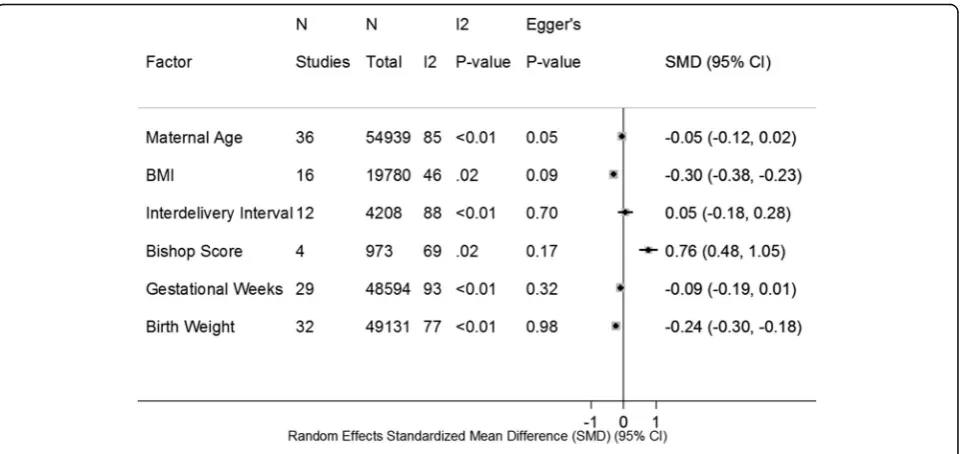
Continuous variable differences of maternal and fetal
factors between successful VABC and failed VBAC are
shown in Fig.
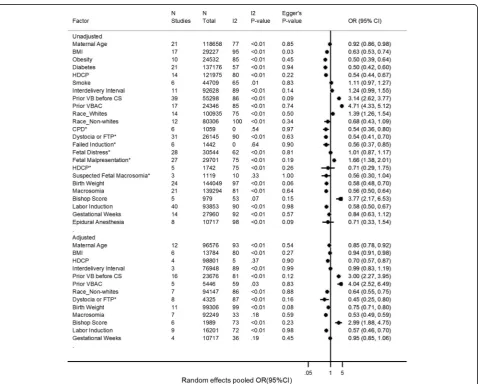
1. The associations of maternal and fetal
factors with the success of VBAC are shown in Fig.
2.
Significant SMD of factors for VBAC were the following:
BMI (SMD,-0.30; 95% CI:
−
0.38,
−
0.23) (Additional file
3:
Figure S3), Bishop score (SMD, 0.76; 95% CI: 0.48, 1.05)
(Additional file
5: Figure S5A), birth weight (SMD,-0.24;
95% CI:
−
0.30,
−
0.18) (Additional file
6: Figure S6A).
Factors associated with statistically significant
in-creased likelihood of VBAC were the following: previous
VB before CS (OR, 3.14; 95% CI, 2.62
–
3.77; adjusted
OR, 3.00; 95% CI, 2.27
–
3.95) (Additional file
7: Figure
S7A and S7B), previous VBAC (OR, 4.71; 95% CI, 4.33
–
5.12; adjusted OR, 4.04; 95% CI, 2.52
–
6.49) (Additional
file
8: Figure S8A and S8B), Bishop score at admission
before delivery (OR, 3.77; 95% CI, 2.17
–
6.53; adjusted
OR, 2.99; 95% CI, 1.88
–
4.75) (Additional file
5: Figure
S5B and S5C), fetal malpresentation as the indication for
previous CS (OR, 1.66; 95% CI, 1.38
–
2.01) (Additional
file
9: Figure S9D), and White race (OR, 1.39; 95% CI,
1.26
–
1.54) (Additional file
10: Figure S10A).
Risk factors associated with statistically significant
de-creased likelihood of VBAC were the following: Age
(OR, 0.92; 95% CI, 0.86
–
0.98; adjusted OR, 0.85; 95% CI,
0.78
–
0.92) (Additional file
11: Figure S11B and S11C),
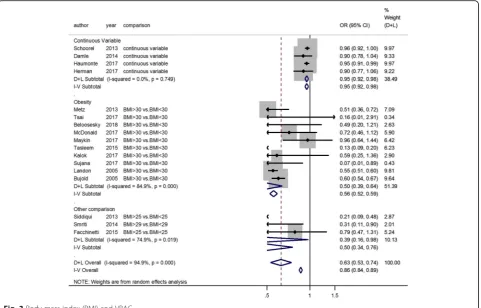
BMI (OR, 0.63; 95% CI, 0.53
–
0.74; adjusted OR, 0.94;
95% CI, 0.91
–
0.98) (Fig.
3
and Additional file
4: Figure
S4), diabetes (OR, 0.50; 95% CI, 0.42
–
0.60) (Fig.
4),
HDCP (OR, 0.54; 95% CI, 0.44
–
0.67; adjusted OR, 0.70;
95% CI, 0.57
–
0.87) (Fig.
5
and Additional file
12: Figure
S12), macrosomia (OR, 0.56; 95% CI, 0.50
–
0.64; adjusted
OR, 0.53; 95% CI, 0.49
–
0.59) (Additional file
6: Figure
S6B and S6C), labor induction (OR, 0.58; 95% CI, 0.50
–
0.67; adjusted OR, 0.57; 95% CI, 0.46
–
0.70) (Additional
file
13: Figure S13A and S13B), Black race compared to
the White (OR, 0.54; 95% CI, 0.19
–
1.54; adjusted OR,
0.51; 95% CI, 0.44
–
0.60) (Additional file
10: Figure S10B
and S10C), Asian race compared to the White (OR, 0.67;
95% CI, 0.50
–
0.90; adjusted OR, 0.72; 95% CI, 0.58
–
0.90) (Additional file
10: Figure S10B and S10C), Latina
race compared to the White (OR, 0.71; 95% CI, 0.56
–
0.89; adjusted OR, 0.70; 95% CI, 0.50
–
1.00) (Additional
file
10: Figure S10B and S10C), and the indications for
previous CS such as cephalopelvic disproportion (CPD)
(OR, 0.54; 95% CI, 0.36
–
0.80) (Additional file
9: Figure
S9A), dystocia or failure to progress (OR, 0.54; 95% CI,
0.41
–
0.70; adjusted OR, 0.33; 95% CI, 0.27
–
0.40)
(Add-itional file
9: Figure S9B and S9E), and failed induction (OR,
0.56; 95% CI, 0.37
–
0.85) (Additional file
9: Figure S9A).
Factors not associated with likelihood of VBAC were
the following: smoke (OR, 1.11; 95% CI, 0.97
–
1.27)
(Additional file
14: Figure S14), interdelivery interval
(OR, 1.24; 95% CI, 0.99
–
1.55; adjusted OR, 0.99; 95% CI,
0.83
–
1.19) (Additional file
15: Figure S15B and S15C),
gestational weeks (OR, 0.84; 95% CI, 0.63
–
1.12; adjusted
OR, 0.95; 95% CI, 0.85
–
1.06) (Additional file
16: Figure
S16B and S16C), epidural anesthesia (OR, 0.71; 95% CI,
0.33
–
1.54) (Additional file
17: Figure S17), and the
indi-cations for previous CS (fetal distress (OR, 1.01; 95% CI,
0.87
–
1.17) (Additional file
9: Figure S9C), HDCP (OR,
0.71; 95% CI, 0.29
–
1.75) (Additional file
9: Figure S9A),
and suspected fetal macrosomia (OR, 0.56; 95% CI,
0.30--1.04) (Additional file
9: Figure S9A).
We also performed the analysis by subgroup for age,
BMI, diabetes, and HDCP. Advanced age (age
≥
35
years-old) is associated with VBAC failure (OR, 0.97;
95% CI, 0.85
–
1.11; adjusted OR, 0.75; 95% CI, 0.65
–
0.86) (Additional file
11: Figure S11B and S11C).
Pre-pregnancy BMI, BMI at first prenatal visit or BMI at
ad-mission before delivery of women with successful VBAC
were lower than those of women with failed VBAC
(Additional file
3: Figure S3). Obesity (BMI
≥
30 kg/m
2)
was a risk factor for failed VBAC (OR, 0.50; 95% CI,
0.39
–
0.64) (Fig.
3). Both pre-existing diabetes (OR, 0.42;
95% CI, 0.33
–
0.55) and gestational diabetes mellitus
(GDM) (OR, 0.53; 95% CI, 0.43
–
0.66) were identified as
risk factors for failed VBAC (Fig.
4). The trends were
similar in chronic/pregnancy-induced hypertension (OR,
0.62; 95% CI, 0.46
–
0.83) and preeclampsia/eclampsia
(OR, 0.50; 95% CI, 0.36
–
0.69) (Fig.
4).
Heterogeneity and publication Bias and sensitivity
analysis
Almost all point estimates were in the same direction,
and I
2heterogeneity < 50% was detected in the following
meta-analysis: OR and adjusted OR of advanced age,
SMD of BMI (pre-pregnancy or at admission before
de-livery), OR of pre-existing diabetes, adjusted OR of
HDCP, adjusted OR of macrosomia, OR and adjusted
OR of previous VBAC, adjusted OR of Black race,
ad-justed OR of Asian race, adad-justed OR of Latina race, OR
of Bishop score, adjusted OR of gestational weeks, and
OR of indications for previous CS (such as CPD, failed
induction, and suspected fetal macrosomia). The rest of
the meta-analyses had either point estimates in both
di-rections or I
2heterogeneity > 50%. If I
2heterogeneity >
50% and
P
-value < 0.05, the meta-analysis was stratified
by study size, location and study design. After stratifying
by subgroup, most I
2heterogeneities became lower
(Additional file
21: Table S4). Except for the SMD of age
and OR of BMI, there was no evidence of publication
bias in the meta-analysis (Figs.
1
and
2).
Discussion
Main findings
Based on the meta-analyses, the following factors were
associated with a successful VBAC: previous VB before
CS, previous VBAC, White race, higher bishop score,
and fetal malpresentation as the indication for previous
CS. The following factors were associated with an
un-successful VBAC: advanced age, obesity, diabetes,
HDCP, non-white race, macrosomia, labor induction,
and CPD, dystocia or FTP, failed induction as the
indica-tions for previous CS. The following factors are not
sta-tistically
associated
with
VBAC
success:
smoke,
interdelivery
interval,
gestational
weeks,
epidural
anesthesia during labor, and the indications for previous
CS
(fetal
distress,
HDCP,
and
suspected
fetal
macrosomia).
Understanding the influences of factors on VBAC
could provide sufficient evidence to assess chances for
achieving a successful vaginal delivery among women
with prior CS. It also could help the clinician provide
evidence-based counseling about VBAC, which has
im-portant implications on avoiding repeated CS. The
evi-dence
quality
was
considered
moderate
on
the
Newcastle-Ottawa Scale.
Strengths and limitations
This meta-analysis is the most recent that
comprehen-sively, critically, and quantitatively assesses the
associ-ation between maternal or fetal factors and the chances
for achieving a successful VBAC, including factors both
from the historical and current pregnancies. It is also the
first large study to specifically evaluate the association
between obesity, diabetes, HDCP, gestational weeks,
interdelivery interval and VBAC success. However, this
study has limitations. First, there might be pertinent
studies that were not identified owing to inherent
limita-tions in database literature searches. Second, the quality
of evidence is limited by data largely derived from
retro-spective observational analyses, with heterogeneous data
reporting and study design. Third, after subgroup
ana-lyzed by study size, location, and study design, I
2hetero-geneity was still high in some meta-analysis, which
might result from the change of the guidelines on VBAC
or guidelines varying in different countries. Forth, there
was publication bias in the meta-analyses of the SMD of
age and the OR of BMI, which might be because positive
results are more likely to be published compared to null
studies and almost these studies showed the similar
trends of the factors related to VBAC. Five, some studies
did not present adjusted OR; however, the pooled
un-adjusted OR was similar to the un-adjusted OR.
Interpretation
Historic maternal and fetal factors
Having experienced a vaginal birth (VB), either before
CS or after CS, tripled the success rates of VBAC.
More-over, the previous VBAC was a stronger predictor of
success than previous VB before CS. These findings can
further confirm that the history of past vaginal deliveries
is of the utmost importance. Previous VB also related to
the lower rate of uterine rupture [18].
Indications for previous CS have important
implica-tions for the chance for VBAC. CPD, dystocia or failure
to progress, failed induction, and suspected fetal
macro-somia were risk factors for failed VBAC. Although the
above conditions might not be present in the next
preg-nancy, the indications for previous CS could help us to
identify the VBAC candidates.
Current maternal and fetal factors
Increased age decreases the likelihood of VBAC. Women
with advanced age were more likely to fail to VBAC,
which was also supported by Eden et al. [11] Age
≥
40
years-old was also a risk for uterine rupture when
women undertook TOLAC [107]. So, younger women,
especially those < 35-years-old, are more likely to have a
successful and safe VBAC.
Maternal obesity carries the risk for many obstetric
complications including macrosomia and increased risk
of CS [108]. Both obesity and macrosomia have negative
impacts on VBAC success. When comparing cases
where obesity occurred at pre-pregnancy or at admission
before delivery, the trends are similar. Faucett et al.
found that women with obesity were more likely to
undergo emergency cesarean for an arrest disorder
be-fore achieving active labor despite having more clinical
interventions to achieve a vaginal birth [109]. A better
understanding of the mechanisms by which maternal
obesity affects the progression of labor, might help to
in-crease the rates of successful VBAC among this
popula-tion. Maternal obesity was also associated with a high
risk of uterine dehiscence or rupture at term gestation
among women with previous CS [110]. Therefore,
ap-propriate weight and weight gain during pregnancy are
vital for maternal health.
Gestational and pregestational diabetes are risk factors
for VBAC failure. Diabetic women could be at high risk
of CS secondary to failed induction, labor arrest, and
fetal distress [111]. Furthermore, pregnant women with
diabetes are more likely to have increased BMI and
weight gain, both of which have a negative influence on
VBAC success. Prevent and control diabetes could help
to increase the likelihood of VBAC.
HDCP has a negative impact on the VBAC success.
HDCP could cause maternal vasospasm, which results in
placental damage and relative insufficiency, leading to
intrauterine fetal growth restriction (IUGR). These
changes in vascular physiology could predispose women
to a VBAC failure due to nonreassuring fetal status [70].
Fortunately, it was found that HDCP did not increase
the risk of uterine rupture [70].
Our results show that interdelivery interval is not
asso-ciated with a VBAC success. The interdelivery interval
shorter than 24 months doesn
’
t relate to VBAC failure.
However, there is only one study reporting the
associ-ation between the interdelivery interval shorter than 18
months and the likelihood of VBAC [41], so we couldn
’
t
conduct a meta-analysis to make sure whether the
inter-val shorter than 18 months is a risk for failed VBAC.
Compared to spontaneous labor, induction of labor is
more likely to decrease the likelihood of VBAC.
How-ever, an unfavorable cervix also decreases the chance of
VBAC success. Whether to perform induction of labor
and when to do it are the questions we meet in clinical
practice. Our results showed that the gestational week at
delivery is not associated to the VBAC success, whether
the cut-off point was 37 gestational weeks, 40 gestational
weeks or 41 gestational weeks. One recent study
re-vealed that induction of labor at 39 gestational weeks
could increase the chance of VBAC compared to
expect-ant management [112], but also of uterine rupture.
Thus, we should consider both benefits and harms to
perform induction of labor for appropriate VBAC
candidates. Gestational week might not serve as an
argu-ment for or against VBAC.
Smoke and epidural anesthesia are not associated with
the chance of VBAC in our study. However, smoke
could increase susceptibility for nonreassuring fetal heart
rate, especially in the second stage of labor, leading to
higher rate of instrumental delivery [113]. Pain relief
during labor makes women more likely to choose
TOLAC. However, epidural anesthesia could also relieve
the pain caused by uterine rupture, which clinicians
should be highly aware of.
During the prenatal counseling of women with one
previous cesarean section, the probability of successful
vaginal birth is one of the most crucial factors. The
his-tory of previous delivery (previous VB before CS,
previ-ous VBAC and the indications for previprevi-ous CS), the
characteristics of the pregnant women (age and race),
the complications (obesity, diabetes and HDCP), the size
of the fetus, the bishop score of the cervix, and the
ne-cessity of labor induction should be highly considered,
which were associated to the success of VBAC. The
cli-nicians should be also aware that uterine rupture could
complicate with TOLAC. TOLAC under continuous
monitoring by a skilled clinician and at facilities with
24-h surgery services [18] s24-hould be guaranteed to increase
the safety of the delivery.
Conclusions
Our results find that age, obesity, diabetes, HDCP,
Bishop score, labor induction, birth weight, previous
va-ginal birth, and the indications for the previous CS
should be considered as the factors related to the
suc-cess of VBAC. This meta-analysis provides the most
comprehensive review of previously reported maternal
and fetal factors for the chance of VBAC. We believe
that the results are important for women who are
preg-nant or are planning to become pregpreg-nant after a
previ-ous CS.
Supplementary information
Supplementary informationaccompanies this paper athttps://doi.org/10. 1186/s12884-019-2517-y.
Additional file 1: Figure S1.Selection of studies (JPG 101 kb)
Additional file 2: Figure S2.Successful rates of VBAC among different continents. *P< 0.001; **P< 0.01; ***P < 0.001; ****P= 0.135 (JPG 56 kb)
Additional file 3: Figure S3.BMI associated with VBAC success -Standardized mean differences. (JPG 142 kb)
Additional file 4: Figure S4.BMI associated with VBAC success -Adjusted odds ratio. (JPG 114 kb)
Additional file 6: Figure S6.Birth weight associated with VBAC success. (A) Standardized mean differences; (B) Odds ratio; (C) Adjusted odds ratio. (JPG 171 kb)
Additional file 7: Figure S7.Previous vaginal birth before CS associated with VBAC success. (A) Odds ratio; (B) Adjusted odds ratio. (JPG 144 kb)
Additional file 8: Figure S8.Previous VBAC associated with VBAC success. (A) Odds ratio; (B) Adjusted odds ratio. (JPG 83 kb)
Additional file 9: Figure S9.Association between indication for previous CS and VBAC. (A) Association of suspected fetal macrosomia, failed induction, cephalopelvic disproportion, and hypertensive disorders complicating pregnancy as the indication for Previous CS with VBAC; (B) Dystocia or failure to progress as the indication for previous CS associated with VBAC success - odds ratio; (C) No association between fetal distress as the indication for previous CS and VBAC- odds ratio; (D) Fetal malpresentation as the indication for previous CS associated with VBAC success - odds ratio; (E) Dystocia or failure to progress as the indication for previous CS associated with VBAC success - adjusted odds ratio. (PNG 692 kb)
Additional file 10: Figure S10.Race associated with VBAC success. (A) White Race associated with VBAC success - odds ratio; (B) Non-White race associated with VBAC success - odds ratio;(C) Non-white Race associated with VBAC success - adjusted odds ratio. (JPG 164 kb)
Additional file 11: Figure S11.Association between age and VBAC. (A) Standardized mean differences; (B) Odds ratio; (C) Adjusted odds ratio. (JPG 169 kb)
Additional file 12: Figure S12.Hypertensive disorder complicating pregnancy associated with VBAC success - Adjusted odds ratio. (JPG 103 kb)
Additional file 13: Figure S13.Labor induction associated with VBAC success. (A) Odds ratio; (B) Adjusted odds ratio. (JPG 121 kb)
Additional file 14: Figure S14.No association between smoke and VBAC. (JPG 95 kb)
Additional file 15: Figure S15.No association between interdelivery interval and VBAC. (A) Standardized mean differences; (B) Odds ratio; (C) Adjusted odds ratio. (JPG 105 kb)
Additional file 16: Figure S16.No association between gestational week and VBAC. (A) Standardized mean differences; (B) Odds ratio; (C) Adjusted odds ratio. (JPG 164 kb)
Additional file 17: Figure S17.No association between epidural anesthesia and VBAC. (JPG 112 kb)
Additional file 18: Table S1.Characteristics of Meta analysis (DOCX 22 kb)
Additional file 19: Table S2.Characteristics of studies considered for this review. (DOCX 77 kb)
Additional file 20: Table S3.Newcastle-Ottawa quality assessment (DOCX 62 kb)
Additional file 21: Table S4.Subgroup analysis of factors (DOCX 73 kb)
Additional file 22: Text S1. MOOSE Checklist (DOC 106 kb)
Additional file 23: Text S2.PRISMA checklist (DOC 118 kb)
Additional file 24: Appendix 1.Search strategy. (DOCX 26 kb)
Abbreviations
BMI:Body mass index; CI: Confidence interval; CPD: Cephalopelvic disproportion; CS: Cesarean section; HDCP: Hypertensive disorders complicating pregnancy; OR: Odds ratio; SMD: Standardized mean differences; TOLAC: Trial of labor after cesarean; VB: Vaginal birth; VBAC: Vaginal birth after cesarean section; WHO: World Health Organization
Acknowledgements
We thank librarian Paul Bain at the Countway Library of Medicine at Harvard Medical School for his assistance with crafting and implementing the literature search.
Authors’contributions
YW and CE were responsible for the design of the study, interpretation of data, and the manuscript draft. ZW and WM participated in the design, acquisition, analysis and interpretation of data. YW and YK were involved in data abstract and verification. All authors read and approved the final manuscript.
Funding None.
Availability of data and materials
All data analyzed during this study are included in this published article and its supplementary information files.
Ethics approval and consent to participate Not applicable.
Consent for publication Not applicable.
Competing interests
The authors declare that they have no competing interests.
Author details
1Department of Obstetrics and Gynecology, The First Affiliated Hospital, Sun
Yat-sen University, No. 58 Zhongshan Road 2, Guangzhou 510000, People’s Republic of China.2Department of Laboratory Medicine, Boston Children’s
Hospital and Harvard Medical School, 300 Longwood Avenue, Boston, MA 02215, USA.3Faculty of Health and Medical Sciences, University of
Copenhagen, Copenhagen, Denmark.
Received: 27 April 2019 Accepted: 20 September 2019
References
1. Joyce A, Martin MPH, Hamilton PD BE, Osterman MHS MJK. Births in the United States, 2016. NCHS Data Brief. 2017;287:1–8.
2. World Health Organization Human Reproduction Programme A. WHO statement on caesarean section rates. Reprod Health Matters. 2015;23(45): 149–50.
3. Cheng YW, Eden KB, Marshall N, Pereira L, Caughey AB, Guise JM. Delivery after prior cesarean: maternal morbidity and mortality. Clin Perinatol. 2011; 38(2):297–309.
4. Bellows P, Shah U, Hawley L, Drexler K, Gandhi M, Sangi-Haghpeykar H, Davidson C. Evaluation of outcomes associated with trial of labor after cesarean delivery after a change in clinical practice guidelines in an academic hospital. J Matern Fetal Neonatal Med. 2017;30(17):2092–6. 5. RCOG: Birth after Previous Caesarean Birth (Green-top Guideline No. 45).
Green-top Guideline No 45 October 2015.https://www.rcog.org.uk/en/ guidelines-research-services/guidelines/q=Birth+after+previous+caesarean+ birth+&subject=&type=Green-top+Guidelines&orderby=title. (Green-top Guideline No. 45 October 2015).
6. Foureur M, Ryan CL, Nicholl M, Homer C. Inconsistent evidence: analysis of six national guidelines for vaginal birth after cesarean section. Birth. 2010; 37(1):3–10.
7. Dodd JM, Crowther CA, Huertas E, Guise JM, Horey D. Planned elective repeat caesarean section versus planned vaginal birth for women with a previous caesarean birth. Cochrane Database Syst Rev. 2013;12:CD004224. 8. Landon MB, Hauth JC, Leveno KJ, Spong CY, Leindecker S, Varner MW,
Moawad AH, Caritis SN, Harper M, Wapner RJ, et al. Maternal and perinatal outcomes associated with a trial of labor after prior cesarean delivery. N Engl J Med. 2004;351(25):2581–9.
9. Knight HE, Gurol-Urganci I, van der Meulen JH, Mahmood TA, Richmond DH, Dougall A, Cromwell DA. Vaginal birth after caesarean section: a cohort study investigating factors associated with its uptake and success. BJOG. 2014;121(2):183–92.
11. Eden KB, McDonagh M, Denman MA, Marshall N, Emeis C, Fu R, Janik R, Walker M, Guise JM. New insights on vaginal birth after cesarean: can it be predicted? Obstet Gynecol. 2010;116(4):967–81.
12. Rosen MG, Dickinson JC. Vaginal birth after cesarean: a meta-analysis of indicators for success. Obstet Gynecol. 1990;76(5 Pt 1):865–9. 13. Bulletins-Obstetrics. CoP: Practice Bulletin No. 184 vaginal birth after
cesarean delivery. Obstet Gynecol. 2017;130(5):e217–33.
14. Beloosesky R, Khatib N, Ganem N, Matanes E, Ginsberg Y, Divon M, Weiner Z. Cervical length measured before delivery and the success rate of vaginal birth after cesarean (VBAC). J Matern Fetal Neonatal Med. 2018;31(4):464–8. 15. Fox NS, Namath AG, Ali M, Naqvi M, Gupta S, Rebarber A. Vaginal birth after a cesarean delivery for arrest of descent. J Matern Fetal Neonatal Med. 2018:1–5. 16. Wen J, Song X, Ding H, Shen X, Shen R, Hu LQ, Long W. Prediction of
vaginal birth after cesarean delivery in Chinese parturients. Sci Rep. 2018; 8(1):3084.
17. Krispin E, Hiersch L, Wilk Goldsher Y, Wiznitzer A, Yogev Y, Ashwal E. Association between prior vaginal birth after cesarean and subsequent labor outcome. J Matern Fetal Neonatal Med. 2018;31(8):1066–72. 18. Kalisa R, Rulisa S, van Roosmalen J, van den Akker T. Maternal and perinatal
outcome after previous caesarean section in rural Rwanda. BMC Pregnancy Childbirth. 2017;17(1):272.
19. Mizrachi Y, Barber E, Kovo M, Bar J, Lurie S. Prediction of vaginal birth after one ceasarean delivery for non-progressive labor. Arch Gynecol Obstet. 2018;297(1):85–91.
20. Tsai HT, Wu CH. Vaginal birth after cesarean section-the world trend and local experience in Taiwan. Taiwan J Obstet Gynecol. 2017;56(1):41–5. 21. McDonald ACE, Wise MR, Thompson JM. Effect of excessive gestational
weight gain on trial of labour after caesarean: a retrospective cohort study. Aust N Z J Obstet Gynaecol. 2018;58(1):64–71.
22. De Bonrostro TC, Tejero Cabrejas EL, Marti Gamboa S, Lapresta Moros M, Campillos Maza JM, Castan Mateo S. Double-balloon catheter for induction of labour in women with a previous cesarean section, could it be the best choice? Arch Gynecol Obstet. 2017;295(5):1135–43.
23. Maykin MM, Mularz AJ, Lee LK, Valderramos SG. Validation of a prediction model for vaginal birth after cesarean delivery reveals unexpected success in a diverse American population. AJP Rep. 2017;7(1):e31–8.
24. Patel MD, Maitra N, Patel PK, Sheth T, Vaishnav P. Predicting successful trial of labor after cesarean delivery: evaluation of two scoring systems. J Obstet Gynaecol India. 2018;68(4):276–82.
25. Nakamura K, Hayashi S, Sasahara J, Okamoto Y, Ishii K, Mitsuda N. Labor after cesarean delivery managed without induction or augmentation of labor. Birth. 2017;44(4):363–8.
26. Kalok A, Zabil SA, Jamil MA, Lim PS, Shafiee MN, Kampan N, Shah SA, Mohamed Ismail NA. Antenatal scoring system in predicting the success of planned vaginal birth following one previous caesarean section. J Obstet Gynaecol. 2018;38(3):339–43.
27. Abreu-Silva J, Castro J, Maia C, Pinho M, Carvalho C. Trial of labour after caesarean section: two-year analysis at a Portuguese Centre. J Obstet Gynaecol. 2017;37(6):704–8.
28. Wassan Yassen A, Nawal D. Factors influencing successful vaginal birth after cesarean delivery. Bahrain Med Bull. 2017;39(1):24-8.
29. Haumonte JB, Raylet M, Christophe M, Mauviel F, Bertrand A, Desbriere R, d'Ercole C. French validation and adaptation of the Grobman nomogram for prediction of vaginal birth after cesarean delivery. J Gynecol Obstet Hum Reprod. 2018;47(3):127–31.
30. Ganer Herman H, Kogan Z, Bar J, Kovo M. Trial of labor after cesarean delivery for pregnancies complicated by gestational diabetes mellitus. Int J Gynaecol Obstet. 2017;138(1):84–8.
31. Mirteymouri M, Ayati S, Pourali L, Mahmoodinia M, Mahmoodinia M. Evaluation of maternal-neonatal outcomes in vaginal birth after cesarean delivery referred to maternity of academic hospitals. J Family Reprod Health. 2016;10(4):206–10. 32. Black M, Bhattacharya S, Philip S, Norman JE, McLernon DJ. Planned repeat
cesarean section at term and adverse childhood health outcomes: a record-linkage study. PLoS Med. 2016;13(3):e1001973.
33. Annessi E, Del Giovane C, Magnani L, Carossino E, Baldoni G, Battagliarin G, Accorsi P, Fabio F. A modified prediction model for VBAC, in a European population. J Matern Fetal Neonatal Med. 2016;29(3):435–9.
34. Gonsalves H, Al-Riyami N, Al-Dughaishi T, Gowri V, Al-Azri M, Salahuddin A. Use of intracervical Foley catheter for induction of labour in cases of previous caesarean section: experience of a single tertiary Centre in Oman. Sultan Qaboos Univ Med J. 2016;16(4):e445–50.
35. Nkwabong E, Fomulu JN, Djomkam Youmsi FL. Trial of labor after cesarean section among women with unique lower segment scarred uterus and fetal weight >3500 g: prognostic factors for a safe vaginal delivery. J Obstet Gynaecol India. 2016;66(Suppl 1):202–6.
36. Khan B, Deeba F, Bashir R, Khan W. Out come of trial of scar in patients with previous caesarean section. J Ayub Med Coll Abbottabad. 2016;28(3):587–90. 37. Comas M, Cochs B, Marti L, Ruiz R, Maireles S, Costa J, Canet Y. Ultrasound
examination at term for predicting the outcome of delivery in women with a previous cesarean section. J Matern Fetal Neonatal Med. 2016;29(23): 3870–4.
38. Miller ES, Sakowicz A, Donelan EA, Grobman WA. Does midtrimester cervical length aid in predicting vaginal birth after cesarean? Am J Obstet Gynecol. 2015;212(6):791.e791–4.
39. Ashwal E, Wertheimer A, Aviram A, Wiznitzer A, Yogev Y, Hiersch L. Prediction of successful trial of labor after cesarean - the benefit of prior vaginal delivery. J Matern Fetal Neonatal Med. 2016;29(16):2665–70. 40. Senturk MB, Cakmak Y, Atac H, Budak MS. Factors associated with successful
vaginal birth after cesarean section and outcomes in rural area of Anatolia. Int J Women's Health. 2015;7:693–7.
41. Singh N, Tripathi R, Mala YM, Dixit R. Scar thickness measurement by transvaginal sonography in late second trimester and third trimester in pregnant patients with previous cesarean section: does sequential change in scar thickness with gestational age correlate with mode of delivery? J Ultrasound. 2015;18(2):173–8.
42. Facchinetti F, Del Giovane C, Petrella E, Annessi E. Induction of labor in women that had a previous cesarean delivery. J Matern Fetal Neonatal Med. 2015;28(1):55–8.
43. Regan J, Keup C, Wolfe K, Snyder C, DeFranco E. Vaginal birth after cesarean success in high-risk women: a population-based study. J Perinatol. 2015; 35(4):252–7.
44. Soni A, Sharma C, Verma S, Justa U, Soni PK, Verma A. A prospective observational study of trial of labor after cesarean in rural India. Int J Gynaecol Obstet. 2015;129(2):156–60.
45. Balachandran L, Vaswani PR, Mogotlane R. Pregnancy outcome in women with previous one cesarean section. J Clin Diagn Res. 2014;8(2):99–102. 46. Gupta S, Jeeyaselan S, Guleria R, Gupta A. An observational study of various
predictors of success of vaginal delivery following a previous cesarean section. J Obstet Gynaecol India. 2014;64(4):260–4.
47. Ugwu GO, Iyoke CA, Onah HE, Egwuatu VE, Ezugwu FO. Maternal and perinatal outcomes of delivery after a previous cesarean section in Enugu, Southeast Nigeria: a prospective observational study. Int J Women's Health. 2014;6:301–5.
48. Shaheen N, Khalil S, Iftikhar P. Prediction of successful trial of labour in patients with a previous caesarean section. J Pak Med Assoc. 2014;64(5): 542–5.
49. Damle LF, Wilson K, Huang CC, Landy HJ, Gomez-Lobo V. Do they stand a chance? Vaginal birth after cesarean section in adolescents compared to adult women. J Pediatr Adolesc Gynecol. 2015;28(4):219–23.
50. Sananes N, Rodriguez M, Stora C, Pinton A, Fritz G, Gaudineau A, Aissi G, Boudier E, Viville B, Favre R, et al. Efficacy and safety of labour induction in patients with a single previous caesarean section: a proposal for a clinical protocol. Arch Gynecol Obstet. 2014;290(4):669–76.
51. Melamed N, Segev M, Hadar E, Peled Y, Wiznitzer A, Yogev Y. Outcome of trial of labor after cesarean section in women with past failed operative vaginal delivery. Am J Obstet Gynecol. 2013;209(1):49.e41–7.
52. Metz TD, Stoddard GJ, Henry E, Jackson M, Holmgren C, Esplin S. Simple, validated vaginal birth after cesarean delivery prediction model for use at the time of admission. Obstet Gynecol. 2013;122(3):571–8.
53. Siddiqui SA. Obstetric factors for unsuccessful trial of labor in second-order birth following previous cesarean. Ann Saudi Med. 2013;33(4):356–62. 54. Birara M, Gebrehiwot Y. Factors associated with success of vaginal birth
after one caesarean section (VBAC) at three teaching hospitals in Addis Ababa, Ethiopia: a case control study. BMC Pregnancy Childbirth. 2013;13:31. 55. Naji O, Wynants L, Smith A, Abdallah Y, Stalder C, Sayasneh A, McIndoe A,
Ghaem-Maghami S, Van Huffel S, Van Calster B, et al. Predicting successful vaginal birth after cesarean section using a model based on cesarean scar features examined by transvaginal sonography. Ultrasound Obstet Gynecol. 2013;41(6):672–8.
population-based prediction model for deliveries at term. BJOG. 2014;121(2):194–201 discussion 201.
57. Obeidat N, Meri ZB, Obeidat M, Khader Y, Al-Khateeb M, Zayed F, Alchalabi H, Kriesat W, Lataifeh I. Vaginal birth after caesarean section (VBAC) in women with spontaneous labour: predictors of success. J Obstet Gynaecol. 2013;33(5):474–8.
58. Yokoi A, Ishikawa K, Miyazaki K, Yoshida K, Furuhashi M, Tamakoshi K. Validation of the prediction model for success of vaginal birth after cesarean delivery in Japanese women. Int J Med Sci. 2012;9(6):488–91. 59. Erez O, Novack L, Kleitman-Meir V, Dukler D, Erez-Weiss I, Gotsch F, Mazor
M. Remote prognosis after primary cesarean delivery: the association of VBACs and recurrent cesarean deliveries with maternal morbidity. Int J Women's Health. 2012;4:93–107.
60. Ouzounian JG, Miller DA, Hiebert CJ, Battista LR, Lee RH. Vaginal birth after cesarean section: risk of uterine rupture with labor induction. Am J Perinatol. 2011;28(8):593–6.
61. Puri P, Abraham M, Grover S. Vaginal birth after one previous lower segment caesarean section. JK Sci. 2011;13:4:179-81.
62. Madaan M, Agrawal S, Nigam A, Aggarwal R, Trivedi SS. Trial of labour after previous caesarean section: the predictive factors affecting outcome. J Obstet Gynaecol. 2011;31(3):224–8.
63. Wanyonyi SZ, Karuga RN. The utility of clinical care pathways in determining perinatal outcomes for women with one previous caesarean section; a retrospective service evaluation. BMC Pregnancy Childbirth. 2010;10:62. 64. Oboro V, Adewunmi A, Ande A, Olagbuji B, Ezeanochie M, Oyeniran A. Morbidity associated with failed vaginal birth after cesarean section. Acta Obstet Gynecol Scand. 2010;89(9):1229–32.
65. Olagbuji B, Ezeanochie M, Okonofua F. Predictors of successful vaginal delivery after previous caesarean section in a Nigerian tertiary hospital. J Obstet Gynaecol. 2010;30(6):582–5.
66. Kwon JY, Jo YS, Lee GS, Kim SJ, Shin JC, Lee Y. Cervical dilatation at the time of cesarean section may affect the success of a subsequent vaginal delivery. J Matern Fetal Neonatal Med. 2009;22(11):1057–62.
67. Olusanya BO, Solanke OA. Adverse neonatal outcomes associated with trial of labor after previous cesarean delivery in an inner-city hospital in Lagos, Nigeria. Int J Gynaecol Obstet. 2009;107(2):135–9.
68. Hollard AL, Wing DA, Chung JH, Rumney PJ, Saul L, Nageotte MP, Lagrew D. Ethnic disparity in the success of vaginal birth after cesarean delivery. J Matern Fetal Neonatal Med. 2006;19(8):483–7.
69. Jerbi M, Hidar S, Ammar A, Khairi H. Predictive factors of vaginal birth after cesarean delivery. Int J Gynaecol Obstet. 2006;94(1):43–4.
70. Srinivas SK, Stamilio DM, Stevens EJ, Peipert JF, Odibo AO, Macones GA. Safety and success of vaginal birth after cesarean delivery in patients with preeclampsia. Am J Perinatol. 2006;23(3):145–52.
71. Smith GC, White IR, Pell JP, Dobbie R. Predicting cesarean section and uterine rupture among women attempting vaginal birth after prior cesarean section. PLoS Med. 2005;2(9):e252.
72. Pathadey SD, Van Woerden HC, Jenkinson SD. Induction of labour after a previous caesarean section: a retrospective study in a district general hospital. J Obstet Gynaecol. 2005;25(7):662–5.
73. Landon MB, Leindecker S, Spong CY, Hauth JC, Bloom S, Varner MW, Moawad AH, Caritis SN, Harper M, Wapner RJ, et al. The MFMU cesarean registry: factors affecting the success of trial of labor after previous cesarean delivery. Am J Obstet Gynecol. 2005;193(3 Pt 2):1016–23.
74. Bujold E, Hammoud A, Schild C, Krapp M, Baumann P. The role of maternal body mass index in outcomes of vaginal births after cesarean. Am J Obstet Gynecol. 2005;193(4):1517–21.
75. Cameron CA, Roberts CL, Peat B. Predictors of labor and vaginal birth after cesarean section. Int J Gynaecol Obstet. 2004;85(3):267–9.
76. Gonen R, Tamir A, Degani S, Ohel G. Variables associated with successful vaginal birth after one cesarean section: a proposed vaginal birth after cesarean section score. Am J Perinatol. 2004;21(8):447–53.
77. Tripathi JB, Doshi HU, Kotdawala PJ. Vaginal birth after one caesarean section: analysis of indicators of success. J Indian Med Assoc. 2006;104(3):113–5. 78. Marchiano D, Elkousy M, Stevens E, Peipert J, Macones G.
Diet-controlled gestational diabetes mellitus does not influence the success rates for vaginal birth after cesarean delivery. Am J Obstet Gynecol. 2004;190(3):790–6.
79. Bujold E, Blackwell SC, Hendler I, Berman S, Sorokin Y, Gauthier RJ. Modified Bishop’s score and induction of labor in patients with a previous cesarean delivery. Am J Obstet Gynecol. 2004;191(5):1644–8.
80. Gyamfi C, Juhasz G, Gyamfi P, Stone JL. Increased success of trial of labor after previous vaginal birth after cesarean. Obstet Gynecol. 2004;104(4):715–9. 81. Grinstead J, Grobman WA. Induction of labor after one prior cesarean:
predictors of vaginal delivery. Obstet Gynecol. 2004;103(3):534–8. 82. Dinsmoor MJ, Brock EL. Predicting failed trial of labor after primary cesarean
delivery. Obstet Gynecol. 2004;103(2):282–6.
83. Durnwald CP, Ehrenberg HM, Mercer BM. The impact of maternal obesity and weight gain on vaginal birth after cesarean section success. Am J Obstet Gynecol. 2004;191(3):954–7.
84. Dadhwal V, Mittal S, Kumar S, Anandlakshmi PN, Vimala N. Vaginal birth after cesarean delivery: Variables affecting outcome. JK Sci. 2003;5:1:11-4. 85. Wong KS, Wong AYK, Tse LHY, Tang LCH. Use of fetal-pelvic index in the prediction of vaginal birth following previous cesarean section. J Obstet Gynaecol Res. 2003;29:2(104-108).
86. Coleman TL, Randall H, Graves W, Lindsay M. Vaginal birth after cesarean among women with gestational diabetes. Am J Obstet Gynecol. 2001; 184(6):1104–7.
87. McNally OM, Turner MJ. Induction of labour after 1 previous Caesarean section. Aust N Z J Obstet Gynaecol. 1999;39(4):425-9.
88. Rageth JC, Juzi C, Grossenbacher H. Delivery after previous cesarean: a risk evaluation. Swiss working Group of Obstetric and Gynecologic Institutions. Obstet Gynecol. 1999;93(3):332–7.
89. Caughey AB, Shipp TD, Repke JT, Zelop C, Cohen A, Lieherman E. Trial of labor after cesarean delivery: the effect of previous vaginal delivery. Am J Obstet Gynecol. 1998;179(4):938–41.
90. Obara H, Minakami H, Koike T, Takamizawa S, Matsubara S, Sato I. Vaginal birth after cesarean delivery: results in 310 pregnancies. J Obstet Gynaecol Res. 1998;24(2):129–34.
91. Ilesanmi AO, Odukogbe A, Olaleye DO. Vaginal delivery after one caesarean section in Nigerian women. J Obstet Gynaecol. 1997;17(2):139–42. 92. Perveen F, Shah Q. Obstetric Outcome after One Previous Ceasarean
Section. J obstet Gynaecol Res. 1997;23(4):341–6.
93. Holt VL, Mueller BA. Attempt and success rates for vaginal birth after caesarean section in relation to complications of the previous pregnancy. Paediatr Perinat Epidemiol. 1997;11(Suppl 1):63–72.
94. Weinstein D, Benshushan A, Tanos V, Zilberstein R, Rojansky N. Predictive score for vaginal birth after cesarean section. Am J Obstet Gynecol. 1996; 174(1 Pt 1):192–8.
95. Lovell R. Vaginal delivery after caesarean section: factors influencing success rates. Aust N Z J Obstet Gynaecol. 1996;36(1):4–8.
96. Thomas M, Khan GQ. Outcome of pregnancy in patients with one previous caesarean section. J Obstet Gynaecol. 2009;14(6):416–9.
97. Wasti S, Turab A, Agha Z, Qazi F, Hussany F, Farid H, Rizvi JH. An audit of labour following Caesarean section at the Aga Khan Medical Centre. Aust N Z J Obstet Gynaecol. 1994;34(5):527.
98. Yasumizu T, Nozawa A, Kinoshita T, Kato J. Trial of vaginal birth following cesarean section for arrest disorders of labor: analysis of patients with well-documented medical records. Asia Oceania J Obstet Gynaecol. 1994;20(4):407–13.
99. Paterson CM, Saunders NJ. Mode of delivery after one caesarean section: audit of current practice in a health region. BMJ. 1991;303(6806):818–21. 100. Bhide A, Caric V, Arulkumaran S. Prediction of vaginal birth after cesarean
delivery. Int J Gynaecol Obstet. 2016;133(3):297–300.
101. Tasleem H, Ghazanfar H. Trial of labor after previous cesarean delivery (TOLAC) and association of BMI and previous vaginal delivery with frequency of VBAC. Bangladesh J Med Sci. 2016;15(4):546–50. 102. Negara IKS, Sujana GAH: Vaginal Birth After Cesarean Characteristics with
Maternal and Perinatal Out Come in Sanglah Hospital, Bali, 1st January 2015 to 31st December 2016 Period: A Descriptive Study. J Global Pharma Technol 2017, 03(9):61–67(0975–8542).
103. Faiz SA, Iqbal J, Yaqoob S. Trial of labor after cesarean delivery: a two year experience. Rawal Med J. 2017;42:231–4.
104. Khanumm S, Khanum A. The frequency of vaginal birth after one cesarean section with vigilant fetal and maternal monitoring. Pakistan J Med Health Sci. 2011;5:3(455-456).
105. Puliyath G. Vaginal birth after caesarean section (VBAC)- A descriptive study from middle east. The Internet Journal of Gynecology and Obstetrics 2009, 12(2).
107. Hidalgo-Lopezosa P, Hidalgo-Maestre M. Risk of uterine rupture in vaginal birth after cesarean: systematic review. Enfermeria Clinica. 2017;27(1):28–39. 108. Wu Y, Ming WK, Wang D, Chen H, Li Z, Wang Z. Using appropriate
pre-pregnancy body mass index cut points for obesity in the Chinese population: a retrospective cohort study. Reprod Biology Endocrinol. 2018; 16(1):77.
109. Faucett AM, Allshouse AA, Donnelly M, Metz TD. Do obese women receive the necessary interventions to achieve vaginal birth after cesarean? Am J Perinatol. 2016;33(10):991–7.
110. Hibbard JU, Gilbert S, Landon MB, Hauth JC, Leveno KJ, Spong CY, Varner MW, Caritis SN, Harper M, Wapner RJ, et al. Trial of labor or repeat cesarean delivery in women with morbid obesity and previous cesarean delivery. Obstet Gynecol. 2006;108(1):125–33.
111. Juhasz G, Gyamfi C, Gyamfi P, Tocce K, Stone JL. Effect of body mass index and excessive weight gain on success of vaginal birth after cesarean delivery. Obstet Gynecol. 2005;106(4):741–6.
112. Palatnik A, Grobman WA. Induction of labor versus expectant management for women with a prior cesarean delivery. Am J Obstet Gynecol. 2015; 212(3):358.e351–6.
113. Lurie S, Ribenzaft S, Boaz M, Golan A, Sadan O. The effect of cigarette smoking during pregnancy on mode of delivery in uncomplicated term singleton pregnancies. J Matern Fetal Neonatal Med. 2014;27(8):812–5.
Publisher
’
s Note