Volume 2008, Article ID 520641,11pages doi:10.1155/2008/520641
Research Article
Microarchitecture of a MultiCore SoC for Data Analysis
of a Lab-on-Chip Microarray
G. Kornaros1, 2and S. Blionas2
1Electronic and Computer Engineering Department (ECE), Technical University of Crete, 73100 Chania, Greece
2Department of Applied Information Technology and Multimedia, Technological Educational Institute of Crete, 71004 Heraklio, Greece
Correspondence should be addressed to G. Kornaros,[email protected]
Received 30 November 2007; Revised 21 May 2008; Accepted 24 June 2008
Recommended by P.-C. Chung
This paper presents a reconfigurable architecture of a lab-on-chip (LoC) microarray device capable to process data either in genotyping or in gene expression applications in a fraction of the time that is required by the usual software methods running on a standard computer. The entire LoC consists of a microfluidics part for the sample preparation and hybridization, a microsystem part including the application specific array of sensors for the electronic detection, and finally a reconfigurable processing part for the data analysis. The proposed data processing and analysis electronic module are an embedded multicore reconfigurable system-on-chip designed to analyze data from the forthcoming high-density oligonucleotide microarrays. The proposed architecture employs reconfigurable technology and has the capacity to process data from microarrays of various sizes from small size ones used in genotyping up to large-scale gene expression arrays. Additionally, the embedded processing cores feature reconfigurable circuitry for implementing the intense part of the processing, supplementing the various computational needs of the diverse applications for microarray real-time data processing and for a scalable reconfigurable architecture to handle also the future high-density microarrays.
Copyright © 2008 G. Kornaros and S. Blionas. This is an open access article distributed under the Creative Commons Attribution License, which permits unrestricted use, distribution, and reproduction in any medium, provided the original work is properly cited.
1. INTRODUCTION
Microarrays are a significant part of the lab-on-chip (LoC) research area and are dedicated either for the parallel assessment of gene expressionfor hundreds or thousands of genes in a single experiment,or for genotyping molecular diagnostics applications and particularly for pharmacoge-nomics. Despite the wideemployment of microarrays in molecular biology and genetics, technical problems still exist, for example, identifying and recognizing reliable data using image processing techniques. Currently, the microarray data
analysis is done with offline photographic methods, and
further quality assessment of the data, after segmentation
spot/background, grid matching, and noise suppression [1,
2], follows. These further data processing steps require a
larger number of data to be stored, particularly when the number of spots on the microarray is of several thousands (gene expression applications), and then to process them for the quality assessment. Those issues so far did not allow the full integration and operation of the LoC microarrays either as standalone devices for possible consumer applications
(e.g., self-tests), or as intelligent systems creating much less
data for further processing [3]. Electronic hybridization
detection allows high integration level of LoCs but the reading of the array of the sensors and the further data processing in case of large microarrays (the number of the sensors on the microarray with embedded electronic detection capability may reach nowadays several thousands), and also the on-chip processing of microarrays, still remain
an open research issue [4–7].
the hybridization of the sample with the biological material put on the microarray spots. The LoC is controlled by the proposed architecture that monitors and adjusts the process of the data produced by the electronic hybridization detec-tion. Subsequently, it executes an automated methodology to flexibly execute normalization, transformation, and removal of unreliable spot raw data. The proposed architecture due to its modularity is capable to further process data ranging from small microarrays (few hundreds of spots) up to large multithousands of spots microarrays producing vast amount of data and evaluate the final results for molecular diagnostics examinations.
Targeted application areas are mutation detection for gene expression, genotyping, and pharmacogenomics. Addi-tionally, the proposed architecture of the LoC device could be used also for prediction, prevention, and even early diagnosis or predisposition of specific diseases. Molecular diagnosis of infectious diseases, virus molecular detection, and so forth are also possible applications. Forthcoming genetic tests not only will be dedicated for diagnostic of diseases but also for personalized medicine treatment (pharmacogenetics). They will also provide information to optimize drug therapy
increasing the efficiency and minimizing the adverse effects
of the developed drugs.
Section 2of the paper describes the state of the art of the microfluidics sample preparation module of the LoC, and of the electronic hybridization detection presenting
two different approaches, the photonic sensors alternative
and the capacitive sensors one.Section 3presents the data
processing algorithms that are required to analyze the electronic hybridization detection sensor data and decide
about the existence of the examined mutations.Section 4is
describing two alternative architectures for the data analysis
of LoC data. Finally, Section 5 is presenting an emulation
of these architectures as well as performance evaluation
results, andSection 6shows the processing of the data of a
microarray with 8500 spots.
2. STATE OF THE ART FOR THE LAB-ON-CHIP
The lab-on-chip consists of subsystems for the sample preparation for the electronic hybridization detection and the data analysis. The sample preparation subsystems in case of DNA analysis concerns DNA extraction, PCR, and hybridization (microfluidics subsystem). Then, electronic hybridization detection subsystem concerns the measure-ment of hybridization “degree” using dedicated biosensors and their associated reading circuitry. Finally, data analysis is the targeted subsystem by this paper and concerns the flow of data from the reading circuitry to the data analysis subsystem and the processing of data by this. Below, there are presented indicatively state of the art implementation approaches for the first two subsystems that are not the target areas of this paper, namely, the sample preparation and electronic hybridization detection subsystems.
DNA extraction and amplification are usually
prerequi-site steps that are needed so as to provide a sufficient number
of copies of the target gene sequences to enable visualization using specific detection modules, and thus identification
or characterization of gene sequences. Conventional genetic analysis in clinical laboratories typically requires bench-top equipment and either manual or robotic transfer of liquids (e.g., 10–500 uL) between tubes (or microwells in the case of microliter plates) for separate steps of the process. Using conventional approaches, DNA extraction is most commonly implemented by initially rupturing the cells (cell
lysis) in a buffer solution (e.g., a solution including SDS),
then capture of the released DNA with either silica particles in a filter-type format, or silica-coated paramagnetic beads which can then be immobilized with a magnet. This allows all other cellular debris to be washed away, after which this “template” DNA can be eluted from the beads and
resuspended in a liquid buffer ready for amplification
using the polymerase chain reaction (PCR). PCR involves cycling the DNA through a series of temperatures using a programmable thermal cycler. Initially, the two strands of the template DNA duplex are separated by denaturation
at ∼95◦C, then short synthetic DNA “primer” sequences
are annealed to the ends of the target section of template
sequence (i.e., at a temperature usually between 50–60◦C),
from which the Taq polymerase enzyme “zips” together the nucleotides present in the reaction mixture to build a new DNA sequence complimentary to template. By cycling the reaction through this process, usually between 25 and 40 times, the number of available copies of DNA increases
exponentially, so as to yield a sufficient of DNA enabling
detection and analysis. DNA analysis will continue either to identify specific sequences in specific parts of the DNA or to compare the expression of genes of various samples and extract results for the role of genes in specific diseases.
Microfluidics parts of LoCs usually implement these sample preparation steps fully automatically. The early years usually were made by silicon and glass. Microfluidics
technology has made great strides in recent years [8–10].
Nowadays a trend toward polymers as substrate material
hasbeen observed ([11], for review see Zhang et al. [12]).
Plastic substrates are less expensive and easier to manipulate in mass production than silica-based substrates. Advances in polymer engineering have led recently to the development of a biochip device consisting of a plastic microfluidic chip, a printed circuit board (PCB), and a Motorola eSensor microarray chip. The plastic chip includes a mixing unit for rare cell capture using immunomagnetic separation, a cell preconcentration/purification/lysis/PCR unit, and a DNA microarray chamber.
The developed LoC uses composite materials based
mainly on plastic foils (especially PDMS) and different
types of fibers (especially silicon carbide fibers). A modular technology for the micrfluidics part of the biochip is under development in the Tyndall National Institute. A similar technology, without the use of metallized fibers, is also
reported in the literature [11].
with pitch 300μm centre to centre and 170μm diameter spots. A heater controls and stabilizes the temperature. The chamber is isolated from external light and has the smallest auto fluorescence as possible. The packaging of the chamber onto the sensors is predicted to be easy for the final assembly of the device. Probes grafting is performed before the chamber assembly. If optical detection is employed then alignment between biological spots and sensors is mandatory, while in the case of the capacitive sensors this is not required. The whole system is compact and is designed for optimized volumes (capillaries, hybridization chamber, tanks). Finally, it is of low consumption, robust, while at the same time ensures waterproofness.
Several protocols for microarray-based SNP and
muta-tion analysis have been developed (as reviewed in [13]).
There is the tiled arrays approach [14] that allows a variety
of electronic detection techniques. Tiled arrays involve the generation of an array of oligos that vary in specific positions in order to create perfect matches to the fragmented DNA molecules which will bind strongly or mismatches that will result in weaker binding.
In the photodetection context, tiled oligonucleotide
arrays are suitable for single color detection [14]. The
fragmented DNA molecules are labeled with a fluorophore probe, and the more or less binding pairs result in relative intensities of the oligo spots that have to be compared. This requires the same amount of functional oligo to be deposited
(by spotting) or synthesized [15] at each spot. The aim
is to minimize variations in the amount of arrayed oligo, which will impede the analysis of single color intensities. The optical setup for the detection includes an excitation light source, typically LEDs or a laser, optical filters to separate the excitation light wavelength for the fluorescence wavelength, and a detector. There is a range of microarray scanners available for scanning and detection of DNA microarray-based platforms. The lowest cost and least sensitive is a CCD- (or CMOS-) based imaging system, where the whole microarray is illuminated with the excitation light source, and image processing is used to determine the results. Alternatively, a laser scanning-based microarray scanner can be used. In this configuration, a laser beam is raster scanned across the microarray device. The fluorescence is collected via appropriate optics and filters into a photomultiplier tube (PMT). Also a 2D array of photon counting sensors on a single chip could enable detection of images of fluorescent hybridized DNA samples. It utilizes the high speed operation and low light level detection capability of the 2nd generation
silicon detectors, the Geiger Mode-APD [16]. These devices
produced using CMOS compatible processing are low power as appropriate for POC and portable applications and will have a low-cost base.
MEMS sensors are based on mechanical movements and deformations of their micromachined components, such as single-clamped suspended beams (cantilevers), double-clamped suspended beams (bridges), or suspended diaphragms.
In capacitive detection, the displacement is measured as a change in the capacitance of a plane capacitor.An approach for the detector array based on the stress induced on a thin
Contacts Si membrane
SiO2
Cavity
Substrate Protein acceptor
(a)
Protein
(b)
Figure1: Hybridization process using capacitive sensors.
silicon membrane due to reactions between the receptor DNA deposited on the membrane surface and the sample under investigation will be explored. This kind of detectors has been successfully applied in biological applications employing silicon cantilevers and optical or piezoresistive detection. Capacitive detection could challenge the sensitiv-ity and flexibilsensitiv-ity achieved by both of these techniques.
Capacitive DNA sensors arrays based on the exploitation of surface stress changes and subsequent bending of an ultra silicon thin membrane are to be fabricated. The membrane will seal the capacitor plates from the electrolyte solution thus enabling capacitive detection.
In this array, each element of the array will be a capacitor comprised of an ultra thin silicon membrane suspended over a cavity and a counter electrode on the substrate. Operation of the device will rely on the induced stress due to the reaction between the receptor DNA, a number of ultra thin silicon membranes covering a shallow cavity formed into a silicon dioxide layer etched on a silicon substrate containing
the counter electrode of the capacitor detector. InFigure 1,
the basic idea is illustrated. The hybridization process (b) results in membrane deflection due to the change of the surface free energy that eliminates the need for attaching labels to detect specific binding. Special provision will be taken so that the device accommodates for the microfluidics to be incorporated on the system.
3. MICROARRAY DATA PROCESSING ALGORITHM
Statistical analysis of microarray data can essentially process massive amounts of data and can also adjust for various sources of variability in order to identify the important genes or existing mutations amongst a large number which are interrogated. This section summarizes some of the issues involved and provides a brief review of the processing algorithm mostly used by the researchers and will be accommodated by the proposed architecture.
All microarray LoC experiments involve a number of distinct steps. The design of an experiment involves the following:
(ii) for each of the above mutations of a gene, the exact sequence of bases named oligos should be printed on the LoC,
(iii) the design of appropriate sources of RNA to be hybridized, and
(iv) the number of replicates for each of the oligos on the LoC for increased statistical confidence.
After hybridization that completes the data acquisition from the LoC sensors takes place, next several data filtering steps must follow. The data must be processed to acquire mutant and wild values; these are represented as red and green in traditional microarrays. In addition, the background intensities should be estimated so as to correct the mutant and wild values. The aim is to adjust for sensor-bias and for any systematic variation other than that due to the
differences between the RNA samples being examined. Then,
the corrected values are further analyzed to decide about the
existence of a mutation in a sample or to select differentially
expressed (DE) genes or to find groups of genes whose
expression profiles can reliably classify the different RNA
sources into meaningful groups. The discussion in this section corresponds roughly to these data analysis steps.
The following notation will be used throughout this section. The mutant and wild sensor measurements are
denoted as Mf and Wf for each spot. The background
intensity will be Ib. Having estimated the background
intensity, it is almost universal practice to correct the mean
values of the measuredMfandWf intensities by subtracting
the mean value of the background,M =Mf −IbandW =
Wf−Ib. These adjusted intensities form the primary data for
all subsequent analyses.
The motivation for background adjustment is that a spot’s measured intensity includes a contribution not specifically due to the hybridization of the target to the probe. For example, nonspecific hybridization may occur and/or fluorescence may be emitted from other chemicals on the detection part of the LoC (in the case of photosensor-based hybridization detection). If such a contribution is present, we would like to measure and remove it so as to obtain a more accurate quantification of the actual hybridization. Research
has begun as discussed in [17] on more sophisticated
methods of background adjustment which will produce positive adjusted intensities even when the background estimate happens to be larger than the foreground. Empirical experience suggests that local background estimates often overestimate the true background while the morphological
method may underestimate it, and these differences have
a marked impact on the M-values for less intense spots.
There is a need for further research on adaptive background correction methodologies which can produce intensities with consistent behavior regardless of background estimator method used.
The data produced by the developed LoC after hybridiza-tion are processed to infer if specific mutahybridiza-tions are present in the examined sample and consequently to decide on what is the appropriate medicine cluster that a patient should get.
Assuming thatNreplicas have been chosen, the microarray
is partitioned toNsubarrays that correspond toNgroups of
sensors. Each subarray is spotted with the wild-type probes and with the mutant probes. There are also spots of an oligo that will never hybridize in order to be used as control and background reference; these are the nonbinding control probes. The calculations to be carried out on the data for a mutation for both the wild and the mutant spots are summarized by the steps of the following algorithm.
Step 1. calculation of the mean values for the wild, the mutant and the nonbinding control spots:
X= 1
N N
i=1
xi, (1)
whereNis the number of replicas for each probe.
Step 2. calculation of standard deviation (SD) for the wild, the mutant and the nonbinding control spots:
σ=
1
N N
i=1
xi−X
2
. (2)
Step 3. the coefficient of variation is then calculated and expressed as a percentage:
CV%=
Standard Deviation
Mean ∗100 (3)
If the calculated CV% is below 60 (as studied in [11]) then
jump to Step5.
If the calculated CV% is over 60 then continue to Step4.
Step 4 (Calculation of new mean values excluding the outliers). Assuming that we would like to keep our mea-surements within the 95% confidence interval, then this
defines a distance of D = 1.96∗SD, where we will keep
our measurements. All measurements outside this region
(MeanValue±D) will be considered as outliers and they will
be excluded. Calculation of new mean values is excluding the outliers. This final mean value of the reference group is memorized to be used in the next step for all the other groups of the LoC.
Step 5 (Background correction). Sources of variation in the microarray such as unequal quantities of starting RNA
or differences in hybridization conditions across the array
usually affect expression intensities. It is therefore required
the task of correction of microarray data so that to determine more meaningful and accurate biological data. This is referred to as background correction. The final values for wild and mutant probes are calculated by subtracting the
background mean value Ibfrom the calculated mean value
after the outliers step (for both wild and mutant), so as to result with the final hybridization detection value of a probe.
Step 6 (Decision about the existence of an SNP). The calculations produce the ratio of the mutant and the wild
mean values (M/W). According to the research results in
[11], if this ratio is greater than 2 then the specific mutation
An alternative approach is to use the log-differential
expression ratio. This is expressed as log2(M/W)=log2M−
log2Wfor each spot. It is convenient to use base-2 logarithms
for the ratioM/Wso thatMis units of 2-fold change. On this
scale,M =0 represents equal expression,M =1 represents
a 2-fold change between the RNA samples,M=2 represents
a 4-fold change, and so on. Hence, in case of using log values then the threshold is the value 1.
Other statistical approaches commonly used to improve
significance estimates are a penalized t-test and a Z
-test using intensity-dependent variance estimates; these are assuming that photographic methods are used to extract the hybridization results, but also apply to our
capacitive-based microarray. However, as shown in [17], the major
shortcoming of the t-statistic is that the replicate ratios
can occasionally be extremely similar due to randomness, producing thus an artificially low standard deviationand
high t values. False positives stemming from this effect
prevent the standardt-statistic from serving as a reliable or
useful test of which genes are truly regulated.
The above steps are repeated for all the interrogated mutations in the LoC, and according to the predefined rules the cluster where a patient belongs is defined and an indication on the disposable LoC informs the consumer (patient), about this decision.
4. SYSTEM-ON-CHIP ARCHITECTURE FOR MICROARRAY DATA ANALYSIS
We describe and evaluate in detail the two alternative architectures of the single-core and multicore approach. Also, the details for the data analysis of the microarray of a custom Lab-on-Chip are described.
4.1. Microarray data analysis on a single core CPU with accelerator
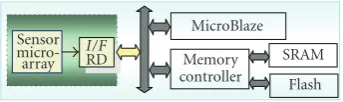
The reading process of the sensors’ values is the first step before the data analysis part; this reading requires a conversion of the indication of the analog sensor to a digital value. Depending on the sensor type, two options exist for the analog to digital conversion. In case of the photosensors traditional A/D, converters are used and their parallel output is forwarded to the data bus to be transferred to the appropriate processing core for further data analysis. In case of the capacitive sensors, capacitance measurement is carried out by measuring frequency; an interface reader (IFRD) is a simple circuitry converting the capacitance changes to digital pulses and subsequently to an arithmetic value if the microarray is capacitive-based. The conversion requires about 1 microsecond for each measurement as discussed in
[18], and it allows for a frequency of reading up to 1 MHz.
Using one reading circuitry, it will need a total of 1 second
for 106spots. These data are forwarded to the processing core
in the case of single core architecture.
As a first approach, the entire microarray could be read and monitored by a single core microprocessor, yet simple
and energy efficient in order to comply with the
require-ments of a cheap, portable, and flexible microsystem for
Sensor
micro-array Memory
controller
I/F
RD
MicroBlaze SRAM
Flash Figure2: Single core data analysis architecture.
pharmacogenomic applications. This
microprogrammed-based system offers itself for easy update of the algorithms in
firmware; these algorithms perform the data processing while at the same time do not cause excessive processing delay. However, high-throughput microarrays with thousands of spots, for achieving real-time performance (less than 1 second waiting for getting the result) will obviously require more processing power as it will be shown at the next section. In the genomics area, the biologists need to compare the expression level of thousands of genes in the same time using at the same time many of these high-end microarrays in parallel. In the next part of the section, we present a reconfigurable system-on-chip with the capacity to handle such applications in real time.
The organization of the LoC microsystem board is
depicted inFigure 2. The device is controlled by the firmware
loaded in single core microprocessor (MicroBlaze operating at 100 MHz). This same core will be responsible to provide a user interface and postprocessing the analysis results via the
μBlaze CPU core. The embedded microprocessor executes
the feature extraction algorithm to decide in which category the patient under analysis belongs to.
In order to evaluate and design a scalable architecture to elaborate large volume of DNA microarray data, we used field-programmable gate array (FPGA) technology. The first target of evaluation is the use of a hardware acceleration unit to perform the computation intensive processing parts. We implemented a single core MicroBlaze-based system on FPGA which executes the processing algorithm depicted in Section 3, while on the other hand we developed a pure hardware accelerator to perform the core algorithmic functions. Regarding the resources in FPGA, the MicroBlaze cost is 730 slices, while a hardware block to calculate the SD result is 155 slices of a Virtex-4 XC4VFX12-FF668-10C device.
Table 1shows that it is required 3400 milliseconds until the calculations of the standard deviations (i.e., a square root operation) are completed for all mutations on the microarray. Obviously, it is very beneficial to adopt a hard-ware accelerator unit since the performance is considerably improved.
Nevertheless, manipulating data from larger-scale microarrays will ask for more increased processing power.
Hence, in addition to hardware acceleration there are
needed more efficient solutions mostly based on multiple
processing cores to achieve real-time operation.
In the nextSection 4.2, the architecture of a multicore
External host
· · · · · ·
· · · · · · · · ·
· · ·
Value Value CoreID CoreID GeneID GeneID
S
. . .
OPB arb.
I/F
Rd 0 Rd 1
I/F
RdK
S
M
S
M M
BRAM
IFRD arbiter synchronizer
BRAM controller
micro Blaze 0
BRAM controller
Micro Blaze 0
BRAM controller
hostI/F
Accel erator
Accel erator . . .
BRAM
BRAM LMB
LMB
Figure3: Organization of the multicore microarray data processing SoC; normalization and statistical estimation are performed in parallel in the MicroBlaze cores assisted by harware accelerators.
Table1: Implementation results: calculation of standard deviation for the sensor data with and without hardware accelerator.
Reading time of entire array 8.25 milliseconds
Standard deviation calculation for one
muta-tion (μBlaze at 100 MHz) 6600 microseconds
Standard deviation calculation for the entire
array (μBlaze at 100 MHz, calculating 850
probes)
5600 milliseconds
Standard deviation calculation for one
muta-tion (using a HW core-accelerator) 0.36 microseconds
Standard deviation calculation for the entire
array (using a HW core-accelerator) 3.06 milliseconds
4.2. A multicore reconfigurable architecture for microarray data processing
Multithousand sensor microarrays for gene expression anal-ysis produce large volume of data that necessitate the employment of a scalable processing microarchitecture and
adjustment of the quality control algorithm of Section 3
for parallel processing. The critical components of prepro-cessing are identified, evaluated, and accelerated in order to minimize the processing time and assure real-time
operation.Figure 3shows the organization of the proposed
reconfigurable architecture.
Considering the processing core frequency that reaches 100 MHZ and using 10 reading circuitries and pipelining of the measurements allow for a reading frequency of 10 MHz. These data are distributed by the IFRD Arbiter synchroniser to the appropriate core for the data processing.
Each interface reader (IFRD) block is assigned to a set of lines of the microarray. If the sensors are CCD-based or photosensors, then multiple analog-to-digital converters can be used instead to the left part of the IFRD with negligible
changes to the right part, which is interfacing to the data
processing farm. AssumingKIFRD blocks andNprocessors,
a simple interconnection bus-based scheme is employed in order to build a low complexity system; this allows each IFRD block to send the retrieved values to the appropriate
processor. The IFRD Arbiter is responsible to initiate and
synchronize the transfers. The protocol supported by the
Arbiter is crucial for the efficient management of data
transfers and triggering of the processing phases; it defines the following system parameters.
(i) The FIFOs in effect in each IFRD block that are
needed to maintain temporary read raw values. (ii) The timing of transfer-events: the IFRD Arbiter
triggers the reading process in a wave like fashion in order to avoid conflicts over the shared bus. An additional reason is that the order of completion of the processing is known in advance and thus the results are expected to arrive in the shared RAM in order.
However, in order to accelerate the processing, a more relaxed approach is adopted: the retrieval of data from the IFRD blocks is not enforced on a strict time window basis. This is also facilitated by the principle of operation of the
LoC. Different IFRD blocks may have to send the retrieved
values to the same processor, since these belong to the same “gene” (replicas of it for the statistical processing). This methodology is used in each large-scale microarray in order to obtain more accurate results by placing the same biological
material on different locations so as to avoid microarray area
variability side effects. In addition, the computations for the
mean values calculations for each of the genes may start just as the first two replicas’ values for each gene arrive to the local BRAM of each MicroBlaze core.
dlmb
bram_block
PORTB PORTA mb_bram
SLMB BRAM BRAM SLMB
lmb_bram_if_cntlrlmb_bram_if_cntlr
dlmb_cntlr ilmb_cntlr
bram_block
PORTB PORTA SLMB BRAM BRAM SLMB
PORTB PORTA
SLMB BRAM BRAM SLMB SLMB PORTB PORTA BRAM BRAM SLMB lmb_bram_if_cntlrlmb_bram_if_cntlr
bram_block_0
bram_block bram_block_1
bram_block bram_block_2
dlmb_cntlr_1
lmb_bram_if_cntlr
dlmb_cntlr_3
lmb_bram_if_cntlr
dlmb_cntlr_5 dlmb_cntlr_0
lmb_bram_if_cntlr
dlmb_cntlr_2
lmb_bram_if_cntlr
dlmb_cntlr_4
PROCESSOR
PROCESSOR
PROCESSOR
ilmb
microblaze microblaze_0
microblaze microblaze_1
microblaze
microblaze_2 microblaze_3 microblaze
DLMB ILMB
DPLBIPLB
DLMB
DLMB ILMB
ILMB
DPLBIPLB DPLBIPLB
DLMB ILMB
DPLB IPLB
mb_plb SLAVES OF mb_plb
SPLB
SPLB
SPLB SPLB xps_gpio xps_uartlite xps_mch_emc LEDs_4Bit RS232_Uart SRAM
xps_timer xps_timer_0
A B C
debug_module_MBDEBUG_0
mdm debug_module
MBDE SPLB DEBUG
lmb_v10_0 lmb_v10_3 lmb_v10_1
lmb_v10_2
lmb_v10_4
lmb_v10_5
Figure 4: The ML405 board hosting a Virtex4-FX20 1 MB SRAM and 128 MB DDR memory; the 4-MicroBlaze system-on-FPGA is responsible to perform the microarray data analysis algorithm in parallel. The accelerator blocks were added directly in the netlist last.
triggers the transfer of each ready value to the correct MicroBlaze. This is also the reason why eventually a small FIFO maybe will be required at each RFID block to store the intermediate read values. Each value read from a sensor at
(x,y) coordinates is considered as the body of a packet send
to a specific processor with a “coreID” identifier—which is the destination. This core handles all the values of the replicas of this gene with the same “geneID” identifier—which stands for the source field of the packet. Each processor handles a number of genes and does not need to wait until all the values arrive. It is obvious that the processing of the mean value starts as soon as there are data in the local BRAM.
The processing in this first phase consists of the sensor data processing algorithm. The simple operations, additions, and subtractions are performed in software while the more complex ones by the hardware accelerator that resides on the second port of the local BRAM. This accelerator block
shown inFigure 3is able to calculate a square root function.
When a value is placed at address sq addr source, then the
accelerator is triggered and 11 clock cycles later (with a clock cycle time of 10 nanoseconds) the result is placed at address
sq addr result. At the same time the MicroBlaze has already
erased the content ofsq addr sourceand then waits for the
outcome to appear.
After the SD result of a gene is computed a third-processing level starts, which aims to identify the outliers that discard them and recalculate normalized mean values. In a fully constrained relaxed system (without the IFRD Arbiter to cause artificial delay), this phase causes the OPB bus to
operate at full throughput. However, this final phase does not last long compared to the rest of the processing.
5. BENCHMARK MEASUREMENTS OF
THE SINGLE AND MULTICORE RECONFIGURABLE ARCHITECTURES
The implementation of the system-on-chip (SoC) of both alternative architectures (single and multicore) using, respec-tively, one and four MicroBlaze CPUs is done in a XC4VFX20-FF668 FPGA using the ML405 prototype board
from Xilinx (see Figure 4). In the case of the multicore
alternative, each MicroBlaze CPU is responsible to handle the processing of 106 (425/4) mutations retrieved from 10
subarrays (we implemented 10 replicas) of 10×85 spots. An
on-chip timer is triggered when we initiate the calculations until each step completes; thus real-time measurements at clock cycle granularity were achieved. The on-board SRAM is used as a shared memory among all MicroBlazes to exchange messages and to store the final normalized data.
In order to evaluate the performance benefits against the additional cost in resources, we used a single core, so as to examine the existence of only one single mutation.
The entire algorithm ofSection 2is executed using floating
point representation of values (without compromising on the accuracy of the results), with and without hardware acceleration.
0 2 4 6 8 10 12 14 16 18
×105
Clo
ck
cy
cles
MicroBlaze (u32) MicroBlaze (float)
MicroBlaze with FP unit (float) MicroBlaze with FP unit, barrel
shifter, integer divider (float) Figure5: Execution time of the algorithm on a MicroBlaze with
different configurations of the MicroBlaze core.
enabling the option of using the hardware acceleration units (floating point, barrel shifter, and integer divider unit) of the
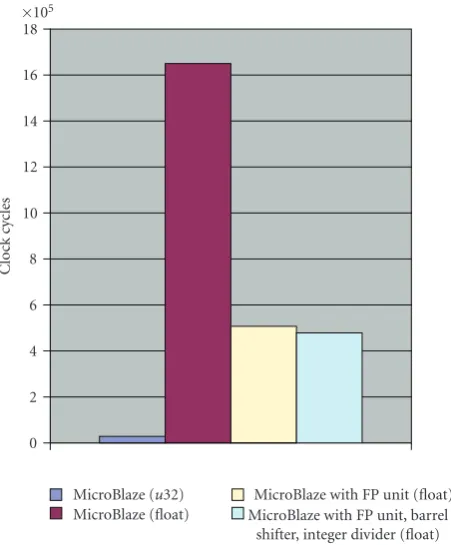
MicroBlaze CPU is a challenging alternative.Figure 5shows
that using the embedded hardware floating-point units of the MicroBlaze core gives a boost of almost 3-fold speedup; if the rest hardware units of MicroBlaze are also enabled
then, asFigure 5depicts, does not payoffin the scope of this
application.
Moreover, employing hardware accelerator for the square root and the division operations improves significantly the
performance. Figure 6compares the cost in clock cycles of
executing the entire algorithm of Section 2 using a single
core, so as to examine the existence of one single mutation using floating point representation (without compromising on the accuracy of the results), with and without hardware acceleration. The plot shows the breakdown of the execution
time for each group of steps according toSection 3. Step2
performs the standard deviation calculation that costs 660 K clock cycles. It is obvious that the lack of use of the hardware
acceleration part has the counter effect of increased runtime.
Hence, it is advantageous to use the hardware core to calcu-late the square root as discussed also in the previous section; adopting this core gives a total time of 19 K clock cycles.
The Virtex4-FX20 device allowed us to implement an SoC with four MicroBlaze cores. Given that we have the list of retrieved values arriving in the local memory of each CPU, the next step is to run the algorithm for each of the interrogated mutations. It must be noted that many
mutations are manipulated by the same CPU. Figure 7
depicts the execution time from the single MicroBlaze system
0 1 2 3 4 5 6 7
×105
Clo
ck
cy
cles
Without acceleration With acceleration s6
s3, s4, s5
s2 s1
Figure6: Comparison of the cost in clock cycles of executing the
entire algorithm (Steps1–6) ofSection 2for one mutation using
floating point representation (we decided not to compromise on the accuracy of the results), with and without hardware acceleration.
0 2 4 6 8 10 12 14 16 18
×106
Clo
ck
cy
cles
Single core 4-core SoC s6
s3, s4, s5
s2 s1
Figure7: Performance of data processing on a single and a four-core system-on-FPGA.
and the fully parallel multicore system using four cores. The overhead due to communication is negligible leading to significant improvement of the total running time.
Table 2summarizes the cost of the implemented system and of the individual components that are critical for performance and the on-chip resources. The system designer can determine the right option to enable during the design and development according to the requirements, balancing cost of silicon area versus processing time. Currently, the system-on-FPGA has the capacity to run the described algorithm for 425 mutations with 10 replicas each in less than 400 milliseconds.
Table2: Implementation results, area resources and performance of a 4-MicroBlaze SoC and analysis breakdown to the critical blocks;
if longer processing times are affordable a less costly solution can be
a 4-MicroBlaze SoC without a floating-point unit.
SoC components in a
Virtx4-FX20 Slices RAMB16
Clock cycle (nanosecond)
Interface readers (×4) 372 6.4
4 blocks square root 608 116
1 Microblaze, 1 Ilmb, 1 Dlmb controller, 1 lmb 32 KB
1546 16
1 MicroBlaze FP unit extra
cost 528
MicroBlaze configuration
System with No FP-Unit 6238 (73%) 64 (94%) 9.9
System with 4 FP-enabled
MicroBlaze 8350 (98%) 64 (94%) 9.9
interface controller; one MicroBlaze acting as a Master to be responsible to transfer the results of the processed data to an external host for further use and visualization.
6. PROCESSING RESULTS FROM A CUSTOM MICROARRAY BY THE SYSTEM-ON-FPGA
The proposedmulticore architecturewas prototyped on anF-PGA platform (Virtex-4-FX20) and was used to process data from a glass slide microarray. The microarray featured 8500 spots for 425 mutations variations and their associated wild type with 10 replicas for each of them. This microarray was designed by the Genomics Lab of the Welcome Trust of Oxford University. The probes on the microarraywere designed to investigate the following factors to determine
their effect on the accuracy of oligonucleotide arrays:
(i) isotherm versus nonisothermal probe design, (ii) oligonucleotide probe length,
(iii) position of mismatch,
(iv) influence of different types of DNA variation (size
of deletion or insertion and nature of substitution-mismatched base pairs do not have equal stability), (v) analysis of both strands,
(vi) length of linker, (vii) use of control probes.
In order to investigate all these parameters and select
the most efficient design of probes for each of 20 selected
mutations, a large number of probes were required; therefore the microarray format selected for use was a custom array.
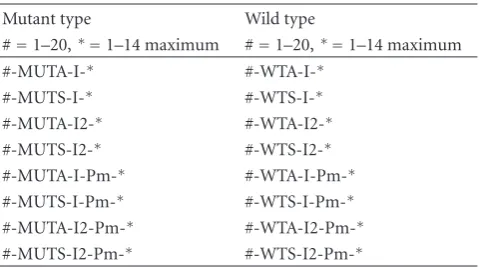
The total number of individual mutations examined was 20 and a total of 425 variations. The specific names of the mutations and of the disease that they are related with are not disclosed here due to ongoing patenting process. Thus, we will use here numbers 1–20 as name and to keep a track of them. MUT will stand for mutation and WT for their associated wild type. For each mutation are printed two kind
Table3: The list of the mutations used in the microarray for getting the data for the performance evaluation.
Mutant type Wild type
#=1–20,∗=1–14 maximum #=1–20,∗=1–14 maximum
#-MUTA-I-∗ #-WTA-I-∗
#-MUTS-I-∗ #-WTS-I-∗
#-MUTA-I2-∗ #-WTA-I2-∗
#-MUTS-I2-∗ #-WTS-I2-∗
#-MUTA-I-Pm-∗ #-WTA-I-Pm-∗
#-MUTS-I-Pm-∗ #-WTS-I-Pm-∗
#-MUTA-I2-Pm-∗ #-WTA-I2-Pm-∗
#-MUTS-I2-Pm-∗ #-WTS-I2-Pm-∗
of probes on the microarray, the probe sequence that binds to the antisense strand and the probe sequence that binds to the sense strand (MUTA and MUTS, resp., with their associated WTA and WTS).
A dedicated software program of Oxford University was used allowing varying parameters so that isothermal probes
can be designed, with different lengths, and with the position
of the mismatch varying around the centre position by a desired distance.
For each sequence, the probes were designed following the isothermal approach (I stands for isothermal), using a 15-mer linker (oligo comprised of 15 bases), within a 5-degree
window (70–75◦C in the dedicated software program) and
also following a lower isothermal (63–68◦C) so to test the
effect of this (I2 stands for the lower isothermal). Pm probes
stand for 25-mer Affymetrix style probes. Thus, the following
variants ofeach mutation are interrogated in the designed
microarray shown inTable 3.
The custom array is being fabricated by Oxford Gene Technologies (OGT). The arrays are fabricated using in situ oligonucleotide synthesis by an ink-jet printing method. The 8.5 K array from OGT uses a hybridization chamber with 8500 oligos in it.
The microarray was clustered in subarrays of 10×85
spots. Each such subarray gives 425 total variations of 20 mutations with their associated wild types. A total of 425 probes were hosted in this array along with their associated wild type, including the positive and nonbinding control sequences. These are used to identify faulty hybridization cases and to define the background correction value. Each of these probes has 10-spot replicas. The algorithm processes 10 measurements for the mutant probe and another 10 for the associated wild type.
Figure 8shows the microarray used for the evaluation of the performance of the proposed architecture. Even if hybridization took place only with Cy3 labelled target, the array was scanned with both channels (red and green), and then only the green channel was analyzed. The picture was taken by an Agilent scanner.
Figure8: The custom microarray used for getting the data of the performance evaluation.
0 2 4 6 8 10 12 14 16
×102
In
te
nsities
A
n
tisense-I-1
A
n
tisense-I-3
A
n
tisense-I-5
A
n
tisense-I-7
A
n
tisense-I-9
A
n
tisense-I-11
A
n
tisense-I-13
Probe name
3-MUTA-I3-WTA-I 3-MUTA-I & 3-WTA-I
3-MUTA-I 3-WTA-I
Figure9: Data analysis results of mutation 3 (antisense strand), by the emulated architecture for wild type hybridization.
architecture on the FPGA executing the algorithmof
Section 3, and the results were used to select the appropriate probes to interrogate the studied mutations.
The hybridization performance of a particular probe was compared between the wild type hybridization and the mutant hybridization. The ratio of the intensity change for that probe was then compared to all the other probes for the same allele present on the array.
The Mutation-3 case (antisense strand) data analysis results for the normal DNA control hybridization is shown inFigure 9.
The Mutation-3 case (sense strand) data analysis results
are shown inFigure 10.
From the calculations of the algorithm, antisense wild type variation 11 and mutant type 8 (3-WTA-I-11,
3-MUTA-0 2 4 6 8 10 12 14 16
×102
In
te
nsities
Sense-I-1
Sense-I-3
Sense-I-5
Sense-I-7
Sense-I-9
Sense-I-11
Sense-I-13
Probe name
3-MUTS-I3-WTS-I 3-MUTS-I & 3-WTS-I
3-MUTS-I 3-WTS-I
Figure10: Data analysis results of mutation 3 (sense strand), by the emulated architecture for wild type hybridization.
I-9) were selected as the most appropriate probes to detect mutation 3.
The data analysis (of normalized values) was carried out using the proposed architecture and allowed the selection of a number of probe pairs suitable for the detection of 18 of the 20 mutations. The total time required to produce these results was 0.4 seconds.
These hybridizations have provided Oxford with a sig-nificant amount of data and hopefully it will allow them to substantially decrease the number of probes to be tested in the future.
7. CONCLUSIONS
When scaling to multithousand sensor microarrays, the data volume increases significantly along with the pro-cessing time. The data analysis of the results retrieved from microarrays requires processing power and is a time-consuming, cumbersome, and often error-prone task. A data processing algorithm that was presented is capable to analyze the electronic hybridization detection sensor data of a LoC and to decide about the existence of the interrogated mutations. Two alternative architectures for the data analysis were emulatied and their performance was evaluated. Data taken from an implemented microarray of 8.500 spots was processed by the emulated architecture, and the results are presented.
Hence, the integrated microsystem is ideal for a range of applications, from small compact devices optimized for genotyping and pharmacogenomic applications up to gene expression analysis.
ACKNOWLEDGMENTS
The authors would like to thank Dr. Lorne Lonie, Marta Paolucci, and Dr. Jiannis Ragoussis from the Genomics Lab of the Wellcome Trust Centre for Human Genetics of the Oxford University for their data to evaluate the performance of the proposed architecture. Also they would like to acknowledge the state of the art section that describes the development of Paul Galvin, Marin Georghe, Mihai Dinca of TYNDALL, Cork, Ireland, (sample preparation), Jean Hue from LETI, Grenoble Cedex, France, (hybridization), and Stephen Bellis from SensL, Cork, Ireland, and Stavros Chantzandroulis from NCSR Demokritos, Agia Paraskevi Attika, Greece, (photosensor and capacitive hybridization electronic detection, resp.).
REFERENCES
[1] F. Model, T. K¨onig, C. Piepenbrock, and P. Adorj´an, “Statistical process control for large scale microarray experiments,”
Bioinformatics, vol. 18, no. 90001, pp. S155–S163, 2002. [2] N. Br¨andle, H. Bischof, and H. Lapp, “Robust DNA
microar-ray image analysis,”Machine Vision and Applications, vol. 15,
no. 1, pp. 11–28, 2003.
[3] S. Bellis, S. Blionas, J. Carrera, et al., “Competitive technol-ogy approaches for electronic hybridisation detection in a microsystem with microfluidics for diagnosis genetic tests,” in
Proceedings of the 28th Annual International Conference of the IEEE Engineering in Medicine and Biology Society (EMBS ’06), pp. 4103–4106, New York, NY, USA, August-September 2006. [4] M. Bicego, M. Del Rosario Martinez, and V. Murino, “A supervised data-driven approach for microarray spot quality
classification,”Pattern Analysis & Applications, vol. 8, no. 1-2,
pp. 181–187, 2005.
[5] V. Rodellar, F. D´ıaz, B. Belean, et al., “Genomic microarray processing on a FPGA for portable remote applications,” in
Proceedings of the 3rd Southern Conference on Programmable Logic (SPL ’07), pp. 13–18, Mar del Plata, Argentina, February 2007.
[6] F. Valafar, “Pattern recognition techniques in microarray data
analysis: a survey,”Annals of the New York Academy of Sciences,
vol. 980, no. 1, pp. 41–64, 2002.
[7] S. Mukherjee, “Classifying microarray data using support
vector machines,” inA Practical Approach to Microarray Data
Analysis, D. Berrar, W. Dubitzky, and M. Granzow, Eds., pp. 166–185, Kluwer Academic Publishers, Dordrecht, The Netherlands, 2003.
[8] R. B. Fair, A. Khlystov, V. Srinivasan, V. K. Pamula, and K. N. Weaver, “Integrated chemical/biochemical sample collection, pre-concentration, and analysis on a digital microfluidic
lab-on-a-chip platform,” in Lab-on-a-Chip: Platforms, Devices,
and Applications, L. A. Smith and D. Sobek, Eds., vol. 5591 ofProceedings of SPIE, pp. 113–124, Philadelphia, Pa, USA, October 2004.
[9] T. Xu and K. Chakrabarty, “A cross-referencing-based droplet manipulation method for high-throughput and
pin-constrained digital microfluidic arrays,” inProceedings of the
Design, Automation & Test in Europe Conference & Exhibition (DATE ’07), pp. 1–6, Nice, France, April 2007.
[10] W. L. Hwang, F. Su, and K. Chakrabarty, “Automated design of pin-constrained digital microfluidic arrays for
lab-on-a-chip applications,” inProceedings of the 43rd ACM/IEEE Design
Automation Conference (DAC ’06), pp. 925–930, San Francisco, Calif, USA, July 2006.
[11] I. Ragoussis, M. Paolucci, and L. Lornie, “D5.1Development of a robust mutation, detection protocol,” Micro2DNA ICT-027333-STP EC project, July 2007.
[12] C. Zhang, J. Xu, W. Ma, and W. Zheng, “PCR microfluidic
devices for DNA amplification,”Biotechnology Advances, vol.
24, no. 3, pp. 243–284, 2006.
[13] A.-C. Syv¨anen, “Accessing genetic variation: genotyping single
nucleotide polymorphisms,”Nature Reviews Genetics, vol. 2,
no. 12, pp. 930–942, 2001.
[14] D. J. Cutler, M. E. Zwick, M. M. Carrasquillo, et al., “High-throughput variation detection and genotyping using
microarrays,”Genome Research, vol. 11, no. 11, pp. 1913–1925,
2001.
[15] T. R. Hughes, M. Mao, A. R. Jones, et al., “Expression profiling using microarrays fabricated by an ink-jet oligonucleotide
synthesizer,”Nature Biotechnology, vol. 19, no. 4, pp. 342–347,
2001.
[16] J. C. Jackson, A. P. Morrison, D. Phelan, and A. Mathew-son, “A novel silicon Geiger-mode avalanche photodiode,” in Proceedings of the IEEE International Electron Devices Meeting (IEDM ’02), pp. 797–800, San Francisco, Calif, USA, December 2002.
[17] Y. H. Yang, M. J. Buckley, S. Dudoit, and T. P. Speed, “Compar-ison of methods for image analysis on cDNA microarray data,”
Journal of Computational and Graphical Statistics, vol. 11, no. 1, pp. 108–136, 2002.
[18] G. Kornaros, et al., “Architecture of a consumer
lab-on-chip for pharmacogenomics,” in Proceedings of the IEEE