ISSN(Online): 2320-9801
ISSN (Print) : 2320-9798
I
nternational
J
ournal of
I
nnovative
R
esearch in
C
omputer
and
C
ommunication
E
ngineering
(An ISO 3297: 2007 Certified Organization)
Vol. 3, Issue 8, August 2015
A Web Based Queries Search Key Word for
Spatial Objects
R.Karthikeyan
1, V.Khanna
2Assistant Professor, Department of Computer Science Engineering, Bharath University, Chennai, Tamil Nadu, India1
Dean, Department of Information Technology, Bharath University, Chennai, Tamil Nadu, India2
ABSTRACT: In this paper, we have a tendency to gift new system to guage Location-Dependent spatial search
Queries that searches for victimisation keywords. Here it providing Distance classification technique and providing a dynamic object mapping mechanism, during this spatial Object search is extremely economical and versatile for varied forms of queries, namely, vary search and nearest neighbor search, on objects over large-scale networks. In spatial object search, an outsized road network is organized as a hierarchy of interconnected regional sub-networks increased with 1) shortcuts for fast network traversals; and 2) object abstracts for guiding traversals. during this paper, we have a tendency to gift (i) the look and implementation of the only and multisource classification technique, (ii) economical object search algorithms, and that we conducted intensive experiments with real spatial object search on road networks. The experiment result shows the prevalence of road over the progressive approaches.
I. INTRODUCTION
Open GIS (Geographical Information System) is full Integration spatial data that is providing location-based services. Many vendors start to provide map and navigation services (Google Map, MapQuest, Yahoo! Map etc.) along with convenient geo-tagging tools that enable the content providers (e.g., retail stores, facilities and general users) to publish location-dependent information on digital maps. Here, we refer to location-dependent information (e.g., point of interest, traffic, and local events) as spatial objects (or objects for short). We define queries that search for spatial objects with respect to user-specified locations as location-dependent spatial queries (LDSQs). For people participating a conference as an example, some useful LDSQs include Q1: find hotels within one mile from the conference venue; Q2: locate the nearest bus station to the conference venue; and Q3: find a restaurant closest to the hotels of the conference.
ISSN(Online): 2320-9801
ISSN (Print) : 2320-9798
I
nternational
J
ournal of
I
nnovative
R
esearch in
C
omputer
and
C
ommunication
E
ngineering
(An ISO 3297: 2007 Certified Organization)
Vol. 3, Issue 8, August 2015
.
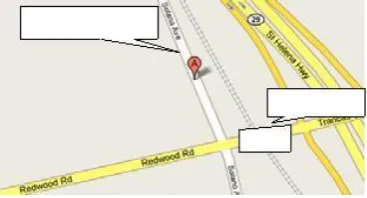
Figure 1: Spatial Object tagged on digital map
In processing LDSQs on a road network, two basic operations, namely, network traversal and object lookup, are involved. The former visits network nodes and edges according to network proximity, while the latter accesses and checks the attributes of objects located at traversed nodes or edges against object search criteria. Objects collected during the course of a traversal form a query result. Logically, the more network traversals and object lookups are involved, the larger the query processing overhead is incurred. As network traversals and object placements are constrained by the network topology, nodes and edges (i.e., the entire network) conceptually form an object search space. Observing some search subspaces (e.g., the middle portion bounded by a dashed line in Fig. 2) do not have objects of interest, we could facilitate network traversals by pruning those subspaces without objects of interest. This observation inspires an idea of search space pruning, based on which we design a novel, efficient, and extensible system framework, for processing LDSQs on road networks.
Figure 2: Distance Index
II. EXISTING SYSTEM
Existing works on processing LDSQs on road networks are categorized as solution-based approaches and extended spatial database approaches, which are reviewed below. Solution-based approaches and Distance Index) utilize some precomputed results to evaluate LDSQs. WhileVN3, UNICONS, SPIE only cater for NNqueries, Distance Index supports both range and NN queries. Distance Index precomputes for all nodes the distances and pointers to subsequent nodes on paths toward individual objects, and encodes them as distance signatures. To reduce the storage overhead of distance signatures, distance ranges, rather than precise distances, are adopted such that distances within one range share the same signature. Fig. 2 illustrates the distance signatures on objects o1 and o2 stored at nq and nq0, with d0 < d1 < d2 < d3. As we can observe, distance ranges maintained about objects located at nearby nodes can be very similar or even identical, thus consuming redundant storage. This, in fact, incurs impractically large storage overhead.
In general, the pitfalls of solution-based approaches include high precomputation overhead, massive storage overhead, and expensive result maintenance cost. Besides, they adapt poorly to other types of queries, and to objects and network updates.
ISSN(Online): 2320-9801
ISSN (Print) : 2320-9798
I
nternational
J
ournal of
I
nnovative
R
esearch in
C
omputer
and
C
ommunication
E
ngineering
(An ISO 3297: 2007 Certified Organization)
Vol. 3, Issue 8, August 2015
they determine network distances between individual candidate object and the query point based on shortest path algorithms or materialized distances and finally, they discard false candidates whose network distances actually are larger than the threshold[2].
The second strategy is based on network expansion that gradually expands a search range on a network until all the nodes and edges that satisfy the search criteria are visited. Objects on those visited nodes and edges form the result set. Although more efficient than Euclidean distance bound approaches, network expansion approaches are still inefficient due to the slow node-by-node expansion toward all directions.
III. PROPOSED SYSTEM
In this section, we present the concept, design and implementation of our Spatial Object Search. We first introduce Rnets, shortcuts and object abstracts, i.e., the key design in support of search space pruning in Spatial Object., and then discuss Rnet hierarchy formation. More, we present Route Overlay and Association Directory, the two core components in LDSQimplementation.[3]
Definition 1. Rnet. In a network N = (N,E), anRnet R = (NR,ER,BR) represents a search subspace, where
NR, ER and BR stand for nodes, edges and border nodes in
R, and
(1)ER E,
(2)NR = {n|(n, n ’) ER (n’, n)
ER}, and
(3)BR = NR ∩ {n|(n, n’ ) E’ (n’, n)
E’},
Where E’=E − ER.
Definition 2. Object Abstract. The objectabstract of an Rnet R, O(R), represents all the
objects residing on edges in ER, i.e., O(R) =_e ERO(e).
Definition 3. Shortcut. The shortcut, S(b,’),between border nodes b and b’ ( BR) of an Rnet R bears the shortest path SP(b,b’) and its distance ||b, b’||. It is noteworthy that the edges that contribute to SP(b, b’) might not necessarily be included in ER..[4]
To find objects in terms of their network distances and attributes, a search algorithm may implicitly form a search tree originated at the query node. Following the topology of the network, the portion of the network covered by a search tree conceptually represents a search space. Scanning an entire search space incurs significant traversal overheads. Skipping some search subspaces that do not contain objects of interest from detailed examinations presents an optimization opportunity.[5]
ISSN(Online): 2320-9801
ISSN (Print) : 2320-9798
I
nternational
J
ournal of
I
nnovative
R
esearch in
C
omputer
and
C
ommunication
E
ngineering
(An ISO 3297: 2007 Certified Organization)
Vol. 3, Issue 8, August 2015
respectively. Thus, many subspaces do not contain objects of interest and can be pruned.[6] Though well received in various database searches, to the best of our knowledge, the idea of search space pruning has not been exploited in the context of object search on road networks.[7]
A).Route Overlay and Association Directory
To facilitate network traversals that explore a network in a node-by-node fashion, we adopt a node-oriented storage scheme that associates nodes with edges and their corresponding distances to their neighboring nodes. As the network is formulated as a hierarchy of Rnets, one straightforward storage scheme is to store all Rnets where border nodes and shortcuts are nodes and edges as separate networks in addition to the original network .[8] This implementation, however, has to maintain separate structures and thus may complicate the search traversals, since search mechanisms need to switch between different networks. Based on Definition 4 that the border nodes in parent Rnets are always the border nodes in some of their child Rnets, our novel index structure, namely Route Overlay, that naturally flattens a hierarchical network into a plain network can effectively avoid all the shortcomings of the separate[9]
B). Search Algorithm
We, in this paper, focus on k-nearest neighbor (kNN) queries and range queries. A kNN query (e.g., Q2 in Section 1) returns the k objects of interest closest to nq. A range query (e.g., Q1 in Section 1) sets a distance range and retrieves all objects of interest with their distances from nq within the range. Our algorithms based on the idea of network expansion upon object search can perform searches efficiently since it navigate Rnets in detail only if they contain objects of interest; otherwise it bypasses them.
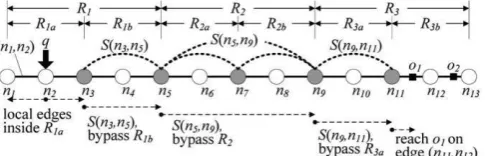
Figure 4: Example of Single Source NN Query
Next, a longer shortcut S(n5, n9) at n5 is taken to skip R2 from detailed traversal. Further, the search at n9 reaches
n11via S(n9, n11).[10] Now, as R3b contains objects, the traversal follows thephysical edges and the object o1 is found after exploring n11. From the figure, we can see the search only takes three jumps from n3 to n11, that significantly saves the traversal cost, compared with traversing physical edges between the query node and the objects[11].
ISSN(Online): 2320-9801
ISSN (Print) : 2320-9798
I
nternational
J
ournal of
I
nnovative
R
esearch in
C
omputer
and
C
ommunication
E
ngineering
(An ISO 3297: 2007 Certified Organization)
Vol. 3, Issue 8, August 2015
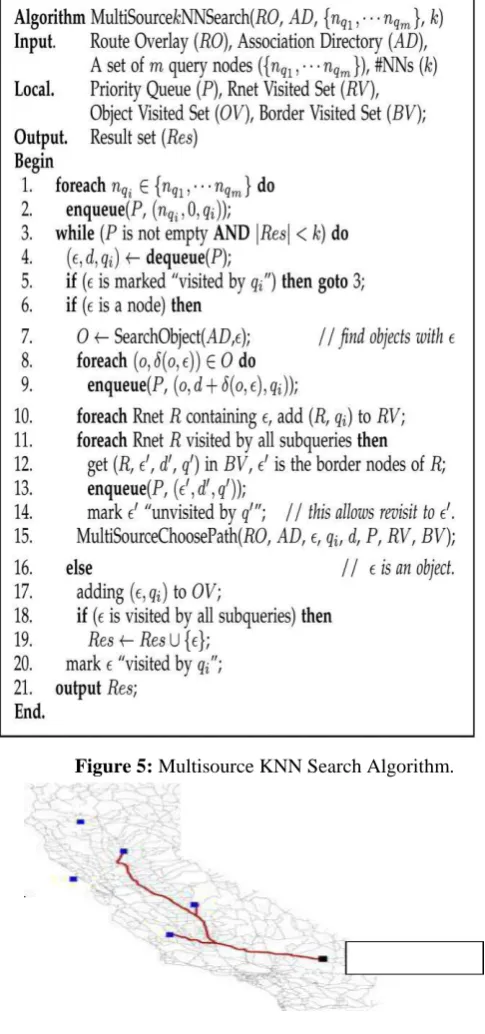
Figure 5: Multisource KNN Search Algorithm.
Query object
ISSN(Online): 2320-9801
ISSN (Print) : 2320-9798
I
nternational
J
ournal of
I
nnovative
R
esearch in
C
omputer
and
C
ommunication
E
ngineering
(An ISO 3297: 2007 Certified Organization)
Vol. 3, Issue 8, August 2015
IV.PERFORMANCE EVALUATION
This section evaluates our proposed spatial object searches on framework in terms of both indexing overhead and query performance. We applied Spatial object on four real road networks, namely, CA, NA, SF, and PRS.5 CA and NA consist of highways in California and North America, respectively. SF and PRS correspond to streets and roads in San Francisco and Paris, respectively. We generated 100 to 100,000 objects following either uniform distribution or clustered distribution over these road networks. To simulate clustered distribution, we select a set of nodes as cluster centroids and distribute equal numbers of objects within 10 nodes around them
A. Index Construction
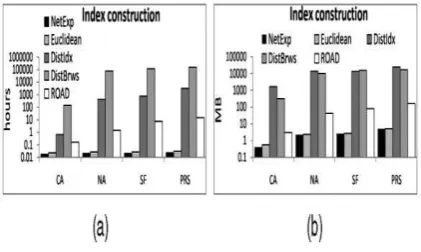
The first experiment set evaluates the index construction time and index sizes for all the approaches with various numbers of objects and networks. Here, we use the default p and l for ROAD and leave the evaluation of their impacts in the final set of experiments.
Figure 7: Index Construction (a). IndexConstruction Time (b). Index Size
B. Query Performance
The second set of experiments evaluate the search performance of particular locations and other approaches in answering singlesource LDSQs and multisource LDSQs on the following factors:
1. Network path
2. Numbers of objects,
3. Object distributions,
4. Query parameters, and
5. The number of sources for multiple-source LDSQs.
ISSN(Online): 2320-9801
ISSN (Print) : 2320-9798
I
nternational
J
ournal of
I
nnovative
R
esearch in
C
omputer
and
C
ommunication
E
ngineering
(An ISO 3297: 2007 Certified Organization)
Vol. 3, Issue 8, August 2015
Figure 8: Source KNN Query Performance (a). Networks (b). No of Objects (c). Distribution(d). k
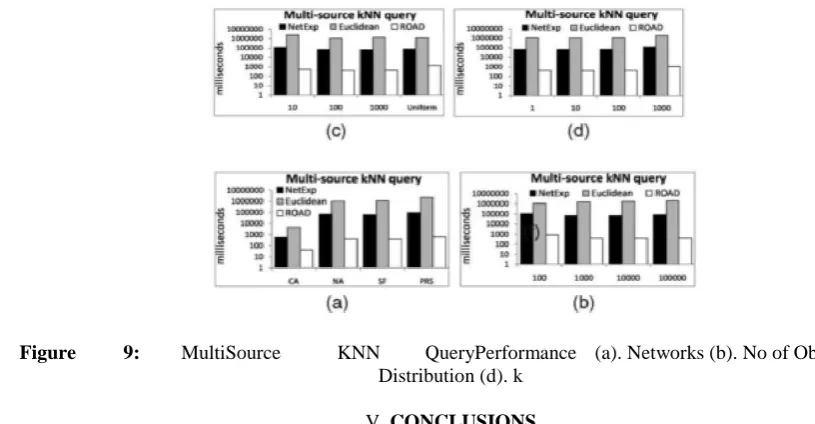
As there are no approaches on top of DistIdx and DistBrws presented in the literature supporting multisource LDSQs, we ignore them in this and next experiments. In the first four experiments, we fix m at two (i.e., two-source kNN queries), as shown in Fig. 9a, 9b, 9c, and 9d, and the last experiment studies the impact of m with k set to one (i.e., multisource NN queries), as shown in Fig. 17e. As observed from the results, ROAD consistently performs better than NetExp and euclidean. This is because NetExp has to explore all the subnetworks (i.e., edges and nodes) around query points; while euclidean has to invoke multiplenetwork traversals to determine the network distances of candidate objects. Differently, ROAD can effectively prune away some search spaces that have no result objects
Figure 9: MultiSource KNN QueryPerformance (a). Networks (b). No of Objects(c).
Distribution (d). k
V. CONCLUSIONS
ISSN(Online): 2320-9801
ISSN (Print) : 2320-9798
I
nternational
J
ournal of
I
nnovative
R
esearch in
C
omputer
and
C
ommunication
E
ngineering
(An ISO 3297: 2007 Certified Organization)
Vol. 3, Issue 8, August 2015
response to these needs, we propose a new system Extensible Fast Nearest Neighbor Search with Keywords for KNN processing, in this paper. The design of Location dependent achieves a clear separation between objects and network for better system extensibility. It also exploits search space pruning, a powerful technique for efficient object search.[21] Upon the framework, efficient search algorithms for single source and multisource LDSQs are devised. Via a comprehensive performance evaluation on KNN Search by keywords, the new system LDSO is shown to significantly outperform the state-of-the-art techniques
REFERENCES
[1] H. Hu, D.L. Lee, and J. Xu, “Fast Nearest Neighbor Search on Road Networks,” Proc. 10th Int’l Conf. Extending Database Technology (EDBT), pp. 186-203, 2006.
[2] Kalaiselvi V.S., Prabhu K., Ramesh M., Venkatesan V., "The association of serum osteocalcin with the bone mineral density in post menopausal women",Journal of Clinical and Diagnostic Research, ISSN : 0973 - 709X, 7(5) (2013) pp.814-816.
[3] H. Hu, D.L. Lee, and V.C.S. Lee, “Distance Indexing on Road Networks,” Proc. Int’l Conf. Very Large Data Bases (VLDB), pp. 894- 905, 2006
[4] Jayalakshmi T., Krishnamoorthy P., Kumar G.R., Sivamani P., "The microbiological quality of fruit containing soft drinks from Chennai", Journal of Chemical and Pharmaceutical Research, ISSN : 0975 – 7384, 3(6) (2011) pp. 626-630.
[5] Ken C.K. Lee, Wang-Chien Lee, Baihua Zheng, and Yuan Tian ROAD: A New Spatial Object Search Framework for Road Networks. IEEE transactions on knowledge and data engineering, vol. 24, no. 3, March 2012
[6] H.-J. Cho and C.-W. Chung, “An Efficient and Scalable Approach to CNN Queries in a Road Network,” Proc. Int’l Conf. Very Large Data Bases (VLDB), pp. 865-876, 2005.
[7] Kaliyamurthie K.P., Parameswari D., Udayakumar R., "QOS aware privacy preserving location monitoring in wireless sensor network", Indian Journal of Science and Technology, ISSN : 0974-6846, 6(S5) (2013) pp.4648-4652.
[8] H. Samet, J. Sankaranarayanan, and H. Alborzi, “Scalable Network Distance Browsing in Spatial Databases,” Proc. SIGMOD Conf., pp. 43-54, 2008.
[9] M.L. Yiu, N. Mamoulis, and D. Papadias,“Aggregate Nearest Neighbor Queries in Road Networks,” IEEE Trans. Knowledge and Data Eng., vol. 17, no. 6, pp. 820-833, 2005.
[10] Sharmila D., Muthusamy P., "Removal of heavy metal from industrial effluent using bio adsorbents (Camellia sinensis)", Journal of Chemical and Pharmaceutical Research, ISSN : 0975 – 7384, 5(2) (2013) pp.10-13.
[11] M.R. Kolahdouzan and C. Shahabi, “Voronoi-Based K Nearest Neighbor Search for Spatial Network Databases,” Proc. 30th Int’l Conf. Very Large Data Bases (VLDB), pp. 840-851, 2004.
[12] Udayakumar R., Khanaa V., Saravanan T., Saritha G., "Retinal image analysis using curvelet transform and multistructure elements morphology by reconstruction", Middle - East Journal of Scientific Research, ISSN : 1990-9233, 16(12) (2013) pp.1781-1785.
[13] R. Dechter and J. Pearl, “Generalized Best-First Search Strategies and the Optimality of A,” J. ACM, vol. 32, no. 3, pp. 505-536, [14]Dr.A.Muthu Kumaravel, KNOWLEDGE BASED WEB SERVICE, International Journal of Innovative Research in Computer and Communication Engineering, ISSN(Online): 2320-9801,pp 5881-5888, Vol. 2, Issue 9, September 2014
[15]Dr.A.Muthu Kumaravel, Data Representation in web portals, International Journal of Innovative Research in Computerand Communication Engineering, ISSN(Online): 2320-9801,pp 5693-5699, Vol. 2, Issue 9, September 2014
[16]Dr.Kathir.Viswalingam, Mr.G.Ayyappan,A Victimization Optical Back Propagation Technique in Content Based Mostly Spam Filtering ,International Journal of Innovative Research in Computer
and Communication Engineering ,ISSN(Online): 2320-9801 , pp 7279-7283, Vol. 2, Issue 12, December 2014 [17]Kannan Subramanian,FACE RECOGNITION USINGEIGENFACE AND SUPPORT VECTOR
MACHINE,International Journal of Innovative Research in Computerand Communication Engineering,ISSN(Online): 2320-9801,pp 4974-4980, Vol. 2, Issue 7, July 2014.
[18]Vinothlakshmi.S,To Provide Security & Integrity for Storage