Not enough vitamin D
Health consequences for Canadians
Gerry Schwalfenberg
MD CCFPABSTRACT
OBJECTIVE
To review the evidence on vitamin D (VTD) insufficiency and deficiency from a Canadianperspective and to highlight some of the known and evolving implications of insufficiency or deficiency for health.
QUALITY OF EVIDENCE
PubMed was searched for articles on VTD insufficiency or deficiency and the rolethey play in various diseases and conditions. Level I and II evidence indicates that lack of VTD has a major role in short- and long-latency diseases.
MAIN MESSAGE
The long winters in Canada and lack of exposure to the sun contribute to lower levelsof VTD among Canadians in late winter and spring. Currently recommended levels of fortification and supplementation are likely not high enough to restore adequate levels of VTD in the body. Repletion and maintenance therapy might be needed.
CONCLUSION
Many Canadians are at risk of VTD insufficiency or deficiency. Assessment of VTD status isimportant because optimal levels of VTD have been determined for various conditions. Low levels of VTD have negative implications for bone health and the health of other cell types.
RÉSUMÉ
OBJECTIF
Faire le point sur les données concernant l’insuffisance/la déficience en vitamine D (VTD) d’unpoint de vue canadien et rappeler certaines des conséquences connues ou présentement à l’étude de ce problème pour la santé.
QUALITÉ DES PREUVES
On a consulté PubMed à la recherche d’articles sur l’insuffisance ou la déficienceen VTD et sur leur rôle dans diverses maladies ou conditions. Des preuves de niveaux I et II indiquent qu’un manque de VTD joue un rôle important dans des maladies d’apparition rapide ou lente.
PRINCIPAL MESSAGE
Les longs hivers canadiens et le manque d’exposition au soleil contribuent àabaisser les niveaux de VTD chez les Canadiens en fin d’hiver et au printemps. Il est probable que les niveaux d’aliments enrichis ou de suppléments actuellement recommandés ne soient pas suffisants pour assurer des niveaux adéquats de VTD dans l’organisme. Il pourrait être nécessaire de restaurer et de maintenir les réserves.
CONCLUSION
Plusieurs Canadiens sont à risque d’insuffisance ou de déficience en VTD. L’évaluationdu bilan de la VTD est important parce que des niveaux optimaux de VTD ont été établis pour diverses conditions. Les bas niveaux de VTD ont des effets négatifs sur la santé de l’os et sur celle d’autres types de cellules.
This article has been peer reviewed.
Cet article a fait l’objet d’une révision par des pairs.
Can Fam Physician 2007;53:841-854
T
his article reviews the guidelines for adequate intake of vitamin D (VTD), some of the basic physi- ology of VTD, and the relevance of the VTD recep-tor in some disease states. The definition of VTD status, and the prevalence, etiology, and treatment of inade-quate status for various diseases will be discussed.Quality of evidence
MEDLINE was searched using the words “vitamin D” and “vitamin D receptor” combined with “insufficiency,” “deficiency,” “osteoporosis,” “neuromuscular function,” “falls,” “cardiovascular disease,” “autoimmune disease,” “diabetes,” “cancer,” and “treatment.” Articles containing
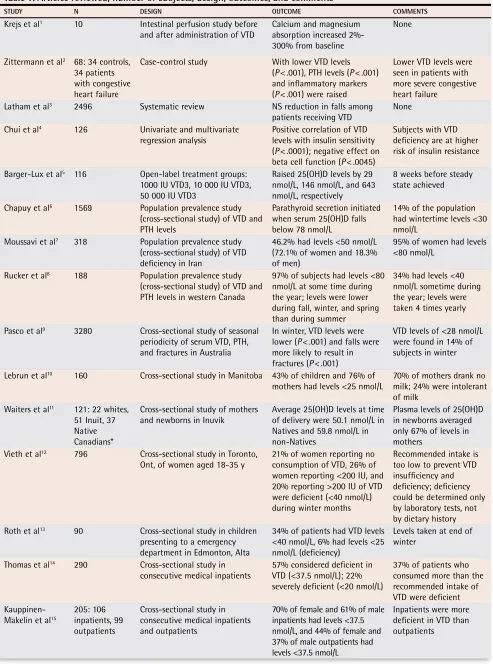
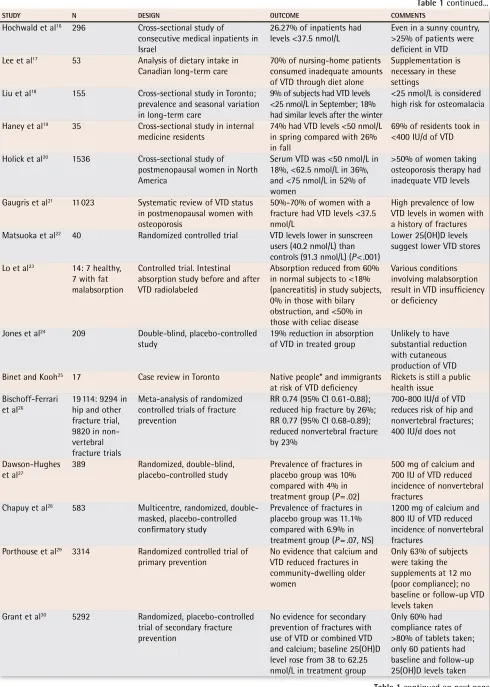
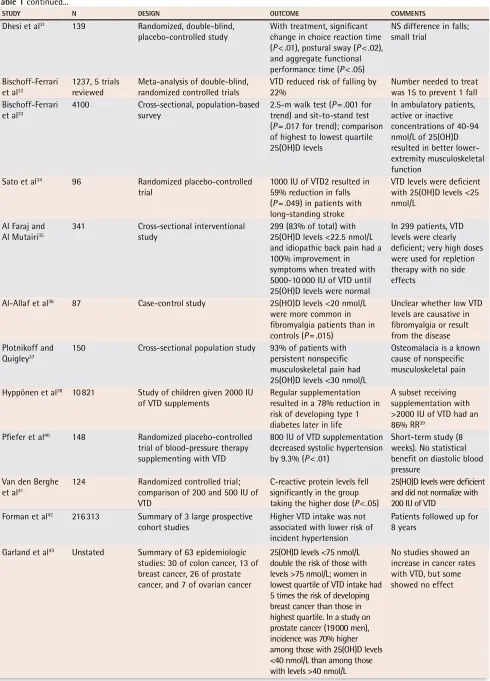
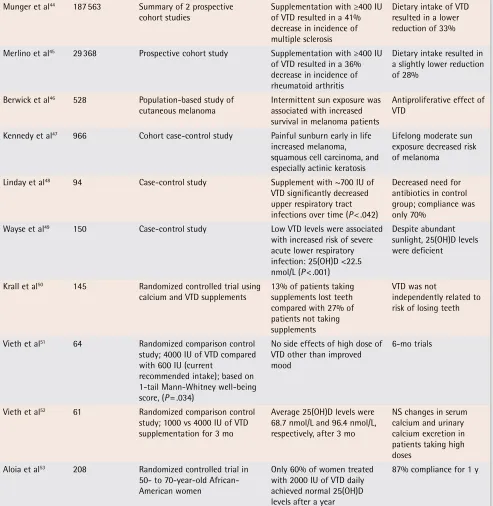
levels I, II, and III evidence were found. Original studies reviewed in this paper are listed in Table 1.1-53
Past and current (1997) guidelines for adequate intake of vitamin D (VTD) are shown in Table 2.54-57 Some have
recommended that new guidelines for breastfed infants and people with osteoporosis are needed. New guide-lines might be forthcoming after review of new data relating to our understanding of VTD and its role in chronic diseases with long latency periods.58
Background
Vitamin D, a steroid hormone produced in the skin, has specific regulatory or functional effects on other parts of the body. Vitamin D is hydroxylated in the liver to 25-hydroxyvitamin D (25[OH]D) and further hydroxylated in the kidney to 1,25-dihydroxyvitamin D. Hydroxylation in the kidney is regulated closely by parathyroid hor-mone (PTH), hypocalcemia, and hypophosphatemia and is inhibited by 1,25-dihydroxyvitamin D.59 As well,
1,25- dihydroxyvitamin D (produced locally within cells) regu-lates gene transcription through nuclear high-affinity VTD receptors.60 These receptors are found in the classic
target organs: gut, bone, kidney, and parathyroid61 and
many other tissues as well, such as brain, breast, colon, heart, pancreas, prostate, skin, and immune system. Vitamin D regulates cell growth and maturation, inhibits
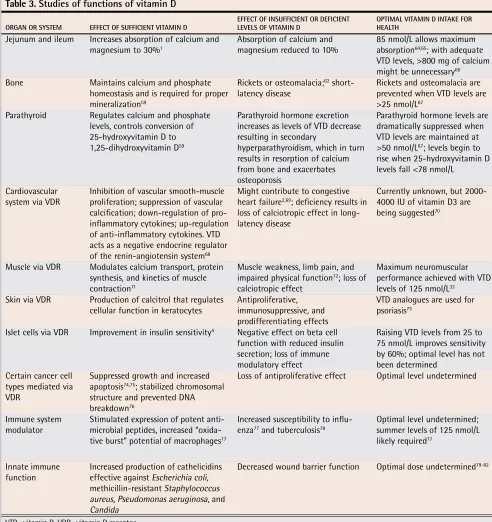
renin production, stimulates insulin secretion, and mod-ulates the function of activated T- and B-lymphocytes and macrophages62,63 (Table 3,1,2,4,33,59,62,64-82 Figure 1).
Assessing VTD status
The major circulating metabolite of VTD is serum 25(OH)D, which has a half-life of between 10 and 19 days.5 It is the best indicator of VTD status and reflects
levels from dietary intake and synthesis in the skin.83
Levels <25 nmol/L are generally considered deficient; levels <80 nmol/L are considered insufficient.84 There
is some concern about the reliability and consistency of serum 25(OH)D laboratory results,85 although there has
been some improvement in the quality of tests in the past few years. The 2 main assays commercially avail-able are listed in Table 4.86,87 Liquid chromatography,
which is the criterion standard, is not readily available.
Prevalence of VTD insufficiency or deficiency
Globally, VTD insufficiency or deficiency has been noted in many countries, from high school students in Iran7 to
healthy western Canadians.8 Substantial seasonal
vari-ability has been noted in both Canada and Australia above and below the 37th parallel, respectively, with up to 97% of Canadians having inadequate levels of VTD at some time during the winter or spring.8,9
Mothers and infants among native Canadian Cree in Manitoba have been found to be severely deficient in VTD, even in midsummer.10
In Inuvik, 48% of Inuit moth- ers were found to be deficient in VTD despite supplemen-tation.11 Seasonal variations were found in a Canadian
study of healthy women in Toronto, Ont, and supplemen-tation with 400 IU of VTD did not prevent insufficiency in the winter.12
A study in Edmonton, Alta, showed that chil-dren and adolescents had low levels of VTD.13,88
Three studies in the United States, Finland, and Israel found that inpatients had insufficient or deficient levels of VTD.14-16 Only 30% of patients in 3 Canadian
long-term care facilities got adequate amounts of VTD through diet alone.17 Long-term care residents in
Toronto had VTD deficiency that increased from 9% in the fall to 18% in the spring.18 Not only are
inpa-tients at risk, but internal medical residents who work long hours indoors are also.19 A global study of VTD
in postmenopausal women with osteoporosis showed that levels were deficient in 28.4% of them. There was no significant difference in levels among community-dwelling people and nursing-home patients. Deficiency increases with age; about 50% of those aged 70 and 80% of those aged 90 are deficient.89 In a study of North
American postmenopausal women, all taking an agent to treat or prevent osteoporosis and 59% taking ≥400 IU of VTD daily, 18% had levels below 50 nmol/L, and 52% had levels below 75 nmol/L. Despite supplementation, about 50% of women have suboptimal VTD levels.20 A
systematic review of 30 articles written in the past 10 years on VTD inadequacy in menopausal women sup-ports these findings.21
Etiology of VTD deficiency and insufficiency
The risk factors that contribute to low levels of VTD are numerous and are summarized in Table 5.10,22-24,90-110
Classic effects of VTD insufficiency or
deficiency on disease
Vitamin D deficiency causes rickets in children and osteomalacia in adults. Rickets cases are still being reported in Canada.25,111 Osteomalacia also still
occurs, but its symptoms are much less specific and
Table 1.
Articles reviewed, number of subjects, design, outcomes, and comments
STUDY N DESIGN OUTCOME COMMENTS
Krejs et al1 10 Intestinal perfusion study before
and after administration of VTD
Calcium and magnesium absorption increased 2%-300% from baseline
None
Zittermann et al2 68: 34 controls,
34 patients with congestive heart failure
Case-control study With lower VTD levels (P < .001), PTH levels (P < .001) and inflammatory markers (P < .001) were raised
Lower VTD levels were seen in patients with more severe congestive heart failure
Latham et al3 2496 Systematic review NS reduction in falls among
patients receiving VTD None Chui et al4 126 Univariate and multivariate
regression analysis Positive correlation of VTD levels with insulin sensitivity (P < .0001); negative effect on beta cell function (P < .0045)
Subjects with VTD deficiency are at higher risk of insulin resistance
Barger-Lux et al5 116 Open-label treatment groups:
1000 IU VTD3, 10 000 IU VTD3, 50 000 IU VTD3
Raised 25(OH)D levels by 29 nmol/L, 146 nmol/L, and 643 nmol/L, respectively
8 weeks before steady state achieved
Chapuy et al6 1569 Population prevalence study
(cross-sectional study) of VTD and PTH levels
Parathyroid secretion initiated when serum 25(OH)D falls below 78 nmol/L
14% of the population had wintertime levels <30 nmol/L
Moussavi et al7 318 Population prevalence study
(cross-sectional study) of VTD deficiency in Iran
46.2% had levels <50 nmol/L (72.1% of women and 18.3% of men)
95% of women had levels <80 nmol/L
Rucker et al8 188 Population prevalence study
(cross-sectional study) of VTD and PTH levels in western Canada
97% of subjects had levels <80 nmol/L at some time during the year; levels were lower during fall, winter, and spring than during summer
34% had levels <40 nmol/L sometime during the year; levels were taken 4 times yearly
Pasco et al9 3280 Cross-sectional study of seasonal
periodicity of serum VTD, PTH, and fractures in Australia
In winter, VTD levels were lower (P < .001) and falls were more likely to result in fractures (P < .001)
VTD levels of <28 nmol/L were found in 14% of subjects in winter
Lebrun et al10 160 Cross-sectional study in Manitoba 43% of children and 76% of
mothers had levels <25 nmol/L 70% of mothers drank no milk; 24% were intolerant of milk
Waiters et al11 121: 22 whites,
51 Inuit, 37 Native Canadians*
Cross-sectional study of mothers and newborns in Inuvik
Average 25(OH)D levels at time of delivery were 50.1 nmol/L in Natives and 59.8 nmol/L in non-Natives
Plasma levels of 25(OH)D in newborns averaged only 67% of levels in mothers
Vieth et al12 796 Cross-sectional study in Toronto,
Ont, of women aged 18-35 y 21% of women reporting no consumption of VTD, 26% of women reporting <200 IU, and 20% reporting >200 IU of VTD were deficient (<40 nmol/L) during winter months
Recommended intake is too low to prevent VTD insufficiency and deficiency; deficiency could be determined only by laboratory tests, not by dietary history Roth et al13 90 Cross-sectional study in children
presenting to a emergency department in Edmonton, Alta
34% of patients had VTD levels <40 nmol/L, 6% had levels <25 nmol/L (deficiency)
Levels taken at end of winter
Thomas et al14 290 Cross-sectional study in
consecutive medical inpatients
57% considered deficient in VTD (<37.5 nmol/L); 22% severely deficient (<20 nmol/L)
37% of patients who consumed more than the recommended intake of VTD were deficient
Kauppinen-Makelin et al15
205: 106 inpatients, 99 outpatients
Cross-sectional study in consecutive medical inpatients and outpatients
70% of female and 61% of male inpatients had levels <37.5 nmol/L, and 44% of female and 37% of male outpatients had levels <37.5 nmol/L
Inpatients were more deficient in VTD than outpatients
STUDY N DESIGN OUTCOME COMMENTS
Hochwald et al16 296 Cross-sectional study of
consecutive medical inpatients in Israel
26.27% of inpatients had
levels <37.5 nmol/L Even in a sunny country, >25% of patients were deficient in VTD Lee et al17 53 Analysis of dietary intake in
Canadian long-term care
70% of nursing-home patients consumed inadequate amounts of VTD through diet alone
Supplementation is necessary in these settings
Liu et al18 155 Cross-sectional study in Toronto;
prevalence and seasonal variation in long-term care
9% of subjects had VTD levels <25 nmol/L in September; 18% had similar levels after the winter
<25 nmol/L is considered high risk for osteomalacia
Haney et al19 35 Cross-sectional study in internal
medicine residents 74% had VTD levels <50 nmol/L in spring compared with 26% in fall
69% of residents took in <400 IU/d of VTD
Holick et al20 1536 Cross-sectional study of
postmenopausal women in North America
Serum VTD was <50 nmol/L in 18%, <62.5 nmol/L in 36%, and <75 nmol/L in 52% of women
>50% of women taking osteoporosis therapy had inadequate VTD levels
Gaugris et al21 11 023 Systematic review of VTD status
in postmenopausal women with osteoporosis
50%-70% of women with a fracture had VTD levels <37.5 nmol/L
High prevalence of low VTD levels in women with a history of fractures Matsuoka et al22 40 Randomized controlled trial VTD levels lower in sunscreen
users (40.2 nmol/L) than controls (91.3 nmol/L) (P < .001)
Lower 25(OH)D levels suggest lower VTD stores
Lo et al23 14: 7 healthy,
7 with fat malabsorption
Controlled trial. Intestinal absorption study before and after VTD radiolabeled
Absorption reduced from 60% in normal subjects to <18% (pancreatitis) in study subjects, 0% in those with bilary obstruction, and <50% in those with celiac disease
Various conditions involving malabsorption result in VTD insufficiency or deficiency
Jones et al24 209 Double-blind, placebo-controlled
study 19% reduction in absorption of VTD in treated group Unlikely to have substantial reduction with cutaneous production of VTD Binet and Kooh25 17 Case review in Toronto Native people* and immigrants
at risk of VTD deficiency Rickets is still a public health issue Bischoff-Ferrari
et al26
19 114: 9294 in hip and other fracture trial, 9820 in non-vertebral fracture trials
Meta-analysis of randomized controlled trials of fracture prevention
RR 0.74 (95% CI 0.61-0.88); reduced hip fracture by 26%; RR 0.77 (95% CI 0.68-0.89); reduced nonvertebral fracture by 23%
700-800 IU/d of VTD reduces risk of hip and nonvertebral fractures; 400 IU/d does not
Dawson-Hughes et al27
389 Randomized, double-blind,
placebo-controlled study Prevalence of fractures in placebo group was 10% compared with 4% in treatment group (P = .02)
500 mg of calcium and 700 IU of VTD reduced incidence of nonvertebral fractures
Chapuy et al28 583 Multicentre, randomized,
double-masked, placebo-controlled confirmatory study
Prevalence of fractures in placebo group was 11.1% compared with 6.9% in treatment group (P = .07, NS)
1200 mg of calcium and 800 IU of VTD reduced incidence of nonvertebral fractures
Porthouse et al29 3314 Randomized controlled trial of
primary prevention No evidence that calcium and VTD reduced fractures in community-dwelling older women
Only 63% of subjects were taking the supplements at 12 mo (poor compliance); no baseline or follow-up VTD levels taken
Grant et al30 5292 Randomized, placebo-controlled
trial of secondary fracture prevention
No evidence for secondary prevention of fractures with use of VTD or combined VTD and calcium; baseline 25(OH)D level rose from 38 to 62.25 nmol/L in treatment group
Only 60% had compliance rates of >80% of tablets taken; only 60 patients had baseline and follow-up 25(OH)D levels taken
Table 1 continued...
STUDY N DESIGN OUTCOME COMMENTS
Dhesi et al31 139 Randomized, double-blind,
placebo-controlled study With treatment, significant change in choice reaction time (P < .01), postural sway (P < .02), and aggregate functional performance time (P < .05)
NS difference in falls; small trial
Bischoff-Ferrari et al32
1237, 5 trials
reviewed Meta-analysis of double-blind, randomized controlled trials VTD reduced risk of falling by 22% Number needed to treat was 15 to prevent 1 fall Bischoff-Ferrari
et al33
4100 Cross-sectional, population-based survey
2.5-m walk test (P = .001 for trend) and sit-to-stand test (P = .017 for trend); comparison of highest to lowest quartile 25(OH)D levels
In ambulatory patients, active or inactive concentrations of 40-94 nmol/L of 25(OH)D resulted in better lower-extremity musculoskeletal function
Sato et al34 96 Randomized placebo-controlled
trial 1000 IU of VTD2 resulted in 59% reduction in falls (P = .049) in patients with long-standing stroke
VTD levels were deficient with 25(OH)D levels <25 nmol/L
Al Faraj and Al Mutairi35
341 Cross-sectional interventional
study 299 (83% of total) with 25(OH)D levels <22.5 nmol/L and idiopathic back pain had a 100% improvement in symptoms when treated with 5000-10 000 IU of VTD until 25(OH)D levels were normal
In 299 patients, VTD levels were clearly deficient; very high doses were used for repletion therapy with no side effects
Al-Allaf et al36 87 Case-control study 25(HO)D levels <20 nmol/L
were more common in fibromyalgia patients than in controls (P = .015)
Unclear whether low VTD levels are causative in fibromyalgia or result from the disease Plotnikoff and
Quigley37 150 Cross-sectional population study 93% of patients with persistent nonspecific
musculoskeletal pain had 25(OH)D levels <30 nmol/L
Osteomalacia is a known cause of nonspecific musculoskeletal pain
Hyppönen et al38 10 821 Study of children given 2000 IU
of VTD supplements
Regular supplementation resulted in a 78% reduction in risk of developing type 1 diabetes later in life
A subset receiving supplementation with >2000 IU of VTD had an 86% RR39
Pfiefer et al40 148 Randomized placebo-controlled
trial of blood-pressure therapy supplementing with VTD
800 IU of VTD supplementation decreased systolic hypertension by 9.3% (P < .01)
Short-term study (8 weeks). No statistical benefit on diastolic blood pressure
Van den Berghe et al41
124 Randomized controlled trial; comparison of 200 and 500 IU of VTD
C-reactive protein levels fell significantly in the group taking the higher dose (P < .05)
25(HO)D levels were deficient and did not normalize with 200 IU of VTD
Forman et al42 216 313 Summary of 3 large prospective
cohort studies
Higher VTD intake was not associated with lower risk of incident hypertension
Patients followed up for 8 years
Garland et al43 Unstated Summary of 63 epidemiologic
studies: 30 of colon cancer, 13 of breast cancer, 26 of prostate cancer, and 7 of ovarian cancer
25(OH)D levels <75 nmol/L double the risk of those with levels >75 nmol/L; women in lowest quartile of VTD intake had 5 times the risk of developing breast cancer than those in highest quartile. In a study on prostate cancer (19 000 men), incidence was 70% higher among those with 25(OH)D levels <40 nmol/L than among those with levels >40 nmol/L
No studies showed an increase in cancer rates with VTD, but some showed no effect
Table 1 continued...
are easily missed.112
Vitamin D is used to treat osteo-porosis, but studies using calcium and 400 IU of VTD showed little effect on fractures. Most but not all studies using calcium and 700 to 800 IU of VTD did show a reduction in fractures.26-28,113 No benefit was
seen from 1000 mg of calcium and 800 IU of VTD in a primary prevention trial29 and a secondary
preven-tion trial.30,114 Compliance was poor in both studies,
and only 63% of patients were still taking treatment
after 12 months in the former study, and only 1.1% of patients had baseline VTD levels taken in the lat-ter study.
Supplementing with 400 IU of VTD for 8 weeks raised the measured 25(OH)D level by a mere 11 nmol/ L in healthy men.5 To date, no studies have ensured
that all subjects in treatment groups consistently had VTD levels >78 nmol/L. There is still great controversy over the benefit of VTD in fracture control.
STUDY N DESIGN OUTCOME COMMENTS
Munger et al44 187 563 Summary of 2 prospective
cohort studies Supplementation with ≥400 IU of VTD resulted in a 41% decrease in incidence of multiple sclerosis
Dietary intake of VTD resulted in a lower reduction of 33%
Merlino et al45 29 368 Prospective cohort study Supplementation with ≥400 IU
of VTD resulted in a 36% decrease in incidence of rheumatoid arthritis
Dietary intake resulted in a slightly lower reduction of 28%
Berwick et al46 528 Population-based study of
cutaneous melanoma Intermittent sun exposure was associated with increased survival in melanoma patients
Antiproliferative effect of VTD
Kennedy et al47 966 Cohort case-control study Painful sunburn early in life
increased melanoma, squamous cell carcinoma, and especially actinic keratosis
Lifelong moderate sun exposure decreased risk of melanoma
Linday et al48 94 Case-control study Supplement with ~700 IU of
VTD significantly decreased upper respiratory tract infections over time (P < .042)
Decreased need for antibiotics in control group; compliance was only 70%
Wayse et al49 150 Case-control study Low VTD levels were associated
with increased risk of severe acute lower respiratory infection: 25(OH)D <22.5 nmol/L (P < .001)
Despite abundant sunlight, 25(OH)D levels were deficient
Krall et al50 145 Randomized controlled trial using
calcium and VTD supplements 13% of patients taking supplements lost teeth compared with 27% of patients not taking supplements
VTD was not
independently related to risk of losing teeth
Vieth et al51 64 Randomized comparison control
study; 4000 IU of VTD compared with 600 IU (current
recommended intake); based on 1-tail Mann-Whitney well-being score, (P = .034)
No side effects of high dose of VTD other than improved mood
6-mo trials
Vieth et al52 61 Randomized comparison control
study; 1000 vs 4000 IU of VTD supplementation for 3 mo
Average 25(OH)D levels were 68.7 nmol/L and 96.4 nmol/L, respectively, after 3 mo
NS changes in serum calcium and urinary calcium excretion in patients taking high doses
Aloia et al53 208 Randomized controlled trial in
50- to 70-year-old African-American women
Only 60% of women treated with 2000 IU of VTD daily achieved normal 25(OH)D levels after a year
87% compliance for 1 y
25(OH)D—25-hydroxyvitamin D, CI—confidence interval, IU—international units, NS—nonsignificant, PTH—parathyroid hormone, RR—risk reduction, VTD—vitamin D.
*Native is used to refer to the indigenous and aboriginal inhabitants of Canada and their descendants.
Table 2.
Canadian recommendations for adequate intake of vitamin D:
1975 to 2007.
AGE 1975-1983 IU 1990 IU 1997 IU 1997-2007 IU
0-12 mo 100 200 200 400*
1-50 y 100 200 200 200
51-70 y 100 200 400 800†
≥71 y 100 200 600 800†
Data derived from Committee for the Revision of Dietary Standards in Canada,54,55 Scientific Review Committee,56 and Institute of Medicine.57 *Recommended by the Canadian Paediatric Society.
†Recommended by the Canadian Osteoporosis Society for patients at risk of osteoporosis.
Table 3.
Studies of functions of vitamin D
ORGAN OR SYSTEM EFFECT OF SUFFICIENT VITAMIN D EFFECT OF INSUFFICIENT OR DEFICIENT LEVELS OF VITAMIN D OPTIMAL VITAMIN D INTAKE FOR HEALTH
Jejunum and ileum Increases absorption of calcium and
magnesium to 30%1 Absorption of calcium and magnesium reduced to 10% 85 nmol/L allows maximum absorption64,65; with adequate
VTD levels, >800 mg of calcium might be unnecessary66
Bone Maintains calcium and phosphate
homeostasis and is required for proper mineralization59
Rickets or osteomalacia;62
short-latency disease Rickets and osteomalacia are prevented when VTD levels are >25 nmol/L67
Parathyroid Regulates calcium and phosphate levels, controls conversion of 25-hydroxyvitamin D to 1,25-dihydroxyvitamin D59
Parathyroid hormone excretion increases as levels of VTD decrease resulting in secondary
hyperparathyroidism, which in turn results in resorption of calcium from bone and exacerbates osteoporosis
Parathyroid hormone levels are dramatically suppressed when VTD levels are maintained at >50 nmol/L67; levels begin to
rise when 25-hydroxyvitamin D levels fall <78 nmol/L
Cardiovascular
system via VDR Inhibition of vascular smooth-muscle proliferation; suppression of vascular calcification; down-regulation of pro-inflammatory cytokines; up-regulation of anti-inflammatory cytokines. VTD acts as a negative endocrine regulator of the renin-angiotensin system68
Might contribute to congestive heart failure2,69; deficiency results in
loss of calciotropic effect in long-latency disease
Currently unknown, but 2000-4000 IU of vitamin D3 are being suggested70
Muscle via VDR Modulates calcium transport, protein synthesis, and kinetics of muscle contraction71
Muscle weakness, limb pain, and impaired physical function72; loss of
calciotropic effect
Maximum neuromuscular performance achieved with VTD levels of 125 nmol/L33
Skin via VDR Production of calcitrol that regulates
cellular function in keratocytes Antiproliferative, immunosuppressive, and prodifferentiating effects
VTD analogues are used for psoriasis73
Islet cells via VDR Improvement in insulin sensitivity4 Negative effect on beta cell
function with reduced insulin secretion; loss of immune modulatory effect
Raising VTD levels from 25 to 75 nmol/L improves sensitivity by 60%; optimal level has not been determined
Certain cancer cell types mediated via VDR
Suppressed growth and increased apoptosis74,75; stabilized chromosomal
structure and prevented DNA breakdown76
Loss of antiproliferative effect Optimal level undetermined
Immune system
modulator Stimulated expression of potent anti-microbial peptides, increased “oxida-tive burst” potential of macrophages77
Increased susceptibility to influ-enza77 and tuberculosis78
Optimal level undetermined; summer levels of 125 nmol/L likely required77
Innate immune
function Increased production of cathelicidins effective against Escherichia coli, methicillin-resistant Staphylococcus aureus, Pseudomonas aeruginosa, and Candida
Decreased wound barrier function Optimal dose undetermined79-82
Figure 1.
Physiologic actions and potential benefits of vitamin D:
References are listed in Tables 1,3, and 7.
1. Sources of VTD
7-dehydrocholesterol in skin with UVB becomes pre–vitamin D3 Fortified foods (milk, etc), fish, sun-dried shittake mushrooms, supplements
Vitamin D3
2. Hydroxylation in liver to 25(OH)D 3a. Synthesis of 1,25(OH)3D in various cells (local production via the a hydroxylase enzyme) that acts on the VDR or a toll-like receptor in the macrophage
Circulating 25(OH)D source of VTD for cells
3b. Further hydroxylation in kidney to 1,25-dihydroxyvitamin D (classic pathway) in proximal tubule epithelial cells
CARDIOVASCULAR
DISEASE
via the renin
-angiotensin system
Stimulates
expression of potent antimicrobial peptides in macrophages and neutrophils, and increases the “oxidative burst” potential of macrophages Prevents autoimmune
diseases, such as MS, type 1 diabetes, inflammatory bowel disease,
and
RA via the VDR
Selected
CANCER CELLS via the VDR:
cell-growth regulation
ISLET CELL
Increases insulin production via the VDR
SKIN
Psoriasis via
antiproliferative, immunosuppressive,
and
prodifferentiating
effects
MUSCLE
Increases protein synthesis via VDR, increased number and size of type 2 muscle fibres ILEUM AND JEJUNUM Increases absorption
of calcium,
magnesium, and phosphate via an active transport mechanism
BONE
Deposition of calcium closely regulated by calcium, phosphate, and
PT
H,
as
w
ell
as
ci
rcu
lat
ing
1,25-dihydroxyvitamin D
Antiproliferative, prodifferentiating, increases apoptosis,
decreases angiogenesis
VTD
improves insulin sensitivity
UVB and
VTD analogues in creams are standard therapy VTD supplementation resulted in improvements in neuromuscular function and balance, and in nonspecific neuromuscular pain VTD is necessary for this transport to take place,
increasing absorption
from
10% to 30%
Deficiency results in short-latency disease (rickets, osteomalacia); insufficiency results in long-latency disease (osteoporosis)
Lowers systolic blood
pressure,
inhibits vascular smooth muscle proliferation,
suppresses vascular calcification, down-regulates proinflammatory cytokines, up-regulates
anti-inflammatory
cytokines
Lower VTD levels lead to increased susceptibility to tuberculosis, increased susceptibility to influenza and to upper and lower respiratory tract 2000 IU/d of VTD from age 1 on has been shown to decrease develop
-ment of type 2 diabetes by 80%
after 30-y follow-up;
400 IU/d
supplementation reduces RA and MS
by 40%
Cell types that benefit from supplementation: colon cancer pancreatic cancer breast cancer prostate cancer ovarian cancer non-Hodgkin’s lymphoma
melanoma (increased
survival)
Increasing
25(OH)D from 25 to 75 nmol/L improves insulin sensitivity by
60%
Levels of
94-100 nmol/L
improved function best; maximum benefit seen at 125 nmol/L VTD levels of 85 nmol/L maximized
absorption; >800 mg of calcium might be unnecessary when VTD levels are adequate Level of circulating 25(OH)D required for
prevention of rickets and
osteomalacia is
25 nmol/L; level of circulating 25(OH)D required to prevent a rise in PTH is 78 nmol/L
Optimal VTD dose has not been determined. Further studies are required. Insufficiency or deficiency increases
risk in several disease states. Levels of 125 nmol/L have been suggested and might be required
MS—multiple sclerosis, PHT—parathyroid hormone, RA—rheumatoid arthritis, UVB—ultraviolet B, VDR—vitamin D receptor, VTD— vitami
n D, 25(OH)D— 25-hydroxycholecalciferol.
Table 5.
Risk factors for low serum vitamin D levels
RISK FACTORS REASON
Inadequate exposure to the sun
• Skin type
• Season, latitude, angle of the sun
• Use of sunscreen22,90
• Time of day • Covering the skin
- Dark skin requires up to 5 times the length of exposure because of melanin content - People living at latitudes higher than the 37th parallel cannot get adequate amounts of UVB from the sun during winter months
- Continuous use of sunscreen with greater than factor 8 UVB protection22; controversial
because of risk of skin cancer, but UVB decreases risk of internal cancer
- Ultraviolet B is at its maximum from 10:00 AM to 2:00 PM91; exposure to 1 minimal
erythemal dose* in a swimsuit can provide the equivalent of 10 000 IU of VTD92
For various religious or cultural reasons
Inadequate dietary intake Limited intake of foods rich in VTD, such as oily fish and fish-liver oil, low intake of fortified foods or no use of supplements; strict vegans and non-milk drinkers are at higher risk93
Obesity Irreversible sequestration of VTD in the fat pool, especially if body mass index is >30 and person does little outdoor activity94
Exclusive breastfeeding Breast milk is low in VTD10,95; supplementing with 4000 IU of VTD has been shown to
achieve adequate levels in both mother and child96
Pregnancy Adequate maternal VTD levels are required to ensure fetal bone health and general health of mother and child97-100
Age
• Decreased production of VTD
through the skin
• Age-related lactose intolerance • Immobility
• Aging kidneys
- A 70-year-old person’s skin can synthesize only 25% as much VTD as a young
person’s101-102; conversion of 7-dehydrocholesterol in aging skin is considerably lessened103
- Reduced intake of fortified milk
- More time housebound or in hospital; many are institutionalized - Decreased renal conversion of VTD
Comorbid conditions Malabsorption syndromes, such as Crohn disease, Whipple disease, cystic fibrosis, and sprue, as well as severe liver disease23
Drug interactions
• Drugs that impair VTD activation or
increase its clearance
• Drugs that impair VTD absorption
- Phenytoin, carbamazepine, rifampin, cimetidine, thiazides104-106; lithium raises
parathyroid hormone levels and lowers levels of the active hormone 1,25-dihydroxyvitamin D107
- Mineral oil laxatives or fat substitutes, such as Olestra24; obesity management
medications, such as orlistat108; or bile-acid sequestrants, such as cholestyramine
and colestipol109
Variations in metabolism of VTD Some Indo-Asians have increased 24-hydroxylase activity that results in low serum levels of 25-hydroxyvitamin D110
IU—international units, UVB—ultraviolet B, VTD—vitamin D.
*The amount of sunlight to which a person can be exposed before the skin begins to turn slightly red. Minimal erythemal dose varies from person to person depending on skin type.
Table 4.
Assessment of vitamin D levels
ASSAY MEASUREMENT COMMENTS
Radioimmunoassay Uses antibodies that recognize both
25(OH)D3 and 25(OH)D2 Most commonly used assay; coefficient of variability in assay is 12%-18% in normal range of VTD (85-147.5 nmol/L) and 10%-25% in lower range of VTD
(20-62.5 nmol/L)86
Competitive binding protein assay Reagent separates VTD from binding
proteins Often yields values about 30% higher (nonspecific) but might not detect 25(OH)D287
Effects of insufficiency or
deficiency on other disease states
Neuromuscular effects. Vitamin D acts on the VTD
receptor in skeletal muscle cells by binding to the nuclear receptor and also to a cell membrane recep-tor, which results in numerous physiologic actions.71
Severe VTD deficiency is associated with muscle weak-ness, limb pain, and impaired physical function.3,31,115 A
meta-analysis looking at ambulatory and institutional-ized older patients found a reduction in falls of more than 20% with use of VTD. This effect was indepen-dent of calcium supplementation.32 In the most
cur-rent multidose study of institutionalized older patients, supplementation with 800 IU of VTD resulted in a 72% reduction in falls.116
Another review found no such asso-ciation.3 There is also evidence that idiopathic low back
pain in patients with VTD deficiency markedly improves when VTD levels are restored.35 Low levels of VTD are
also common in patients with fibromyalgia and chronic refractory nonspecific musculoskeletal pain.36,37,117
Type 1 and 2 diabetes. A prospective study (begun in 1966)
using 2000 IU of VTD in children resulted in an 80% reduc-tion in development of type 1 diabetes during the next 30 years.38 Studies using 400 IU of VTD early in life did not
show a protective effect, and higher doses are being sug-gested.39,118 Increasing VTD levels from 25 to 75 nmol/L
results in a 60% improvement in insulin sensitivity.4,119 Low
VTD levels were also shown to have a negative effect on beta cell function.120 The improvement in insulin sensitivity
was greater with VTD than improvement seen with either troglitzone (54%) or metformin (13%).4,121
Multiple sclerosis and rheumatoid arthritis. Living at
higher than 37° latitude increases the risk of developing multiple sclerosis by >100%. Taking a multivitamin with 400 IU of VTD reduces the risk by 40%.44,122
Women tak-ing a multivitamin with 400 IU of VTD reduced their risk of developing rheumatoid arthritis by 40%.45,122
Cardiovascular disease. Increased VTD levels suppress
renin expression and renin levels and thus result in down-regulation of the renin-angiotensin system in ani-mals.123 Several mechanisms have been suggested for
VTD’s protective role in cardiovascular disease.68
Supplementation with calcium and VTD results in a substantial 9.3% decrease in systolic blood pressure and a 5.4% decrease in heart rate.40 Supplementing with VTD
substantially reduces C-reactive protein levels in criti-cally ill patients.41 Low VTD levels might contribute to
congestive heart failure.2 In 3 large prospective cohort
studies, however, higher intake of VTD was not associ-ated with lower risk of hypertension.42 Clinical trials are
needed to evaluate whether the morbidity and mortality associated with cardiovascular disease are reduced by optimal intake of oral VTD.
Cancer. Evidence from 63 observational studies indicates
that inadequate VTD levels are a risk factor for certain types of cancer, such as breast, colon, ovarian, and pros-tate cancer.43,124,125 Vitamin D and VTD analogues can
induce cell death in some cancer cell lines.74,75 Exposure
to the sun might increase risk of skin cancer, but VTD has been shown to suppress growth and increase apop-tosis in melanoma cells.126 The risks and benefits of sun
exposure are a topic of hot debate at this time.46,127,128
Psoriasis. Vitamin D analogues are used for psoriasis
along with ultraviolet-B light. Treatment is successful because of the antiproliferative, immunosuppressive, and prodifferentiating effects of VTD.73,129
Sources of VTD
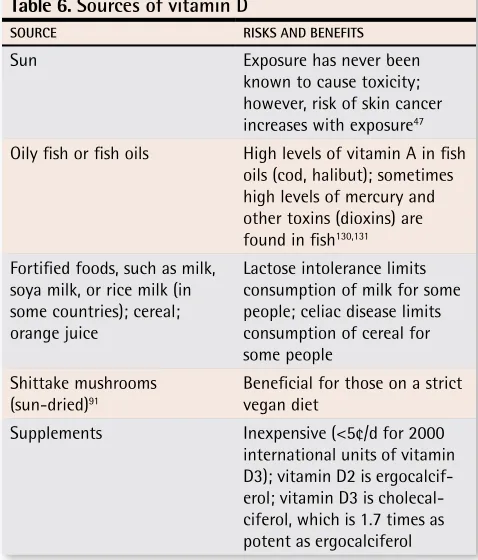
The best way to increase VTD levels is to expose the skin to the sun. This has never been known to cause toxicity because of self-regulatory factors in the skin. Other sources of VTD are listed in Table 6.47,91,130,131
Treatment of VTD insufficiency and deficiency
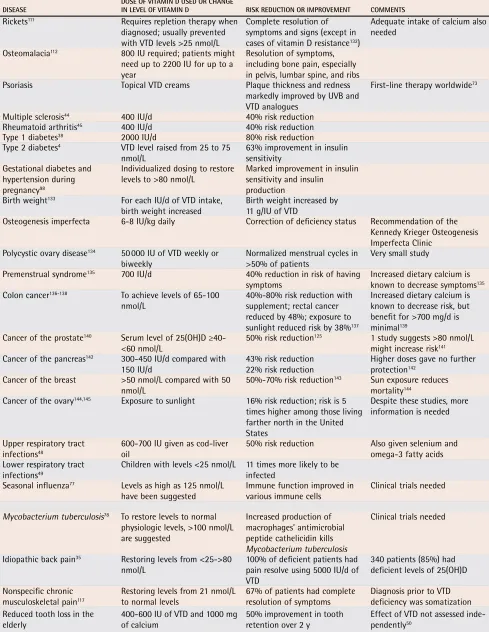
The beneficial effects of VTD on various diseases are listed in Table 7.4,35,38,44,45,48-50,73,77,78,98,111,112,117,132-145 The
question is, how can one vitamin influence so many dis- orders in a positive way? Just as abnormal levels of thy-roid hormone can affect many cell systems, abnormal levels of VTD, a hormone, appear to affect many cell systems. Our understanding of the non-bone effects has greatly increased in the last 10 years.
To maintain a healthy blood level of 25(OH)D (80 to 100 nmol/L), most healthy patients require at least 1000
Table 6.
Sources of vitamin D
SOURCE RISKS AND BENEFITS
Sun Exposure has never been
known to cause toxicity; however, risk of skin cancer increases with exposure47
Oily fish or fish oils High levels of vitamin A in fish oils (cod, halibut); sometimes high levels of mercury and other toxins (dioxins) are found in fish130,131
Fortified foods, such as milk, soya milk, or rice milk (in some countries); cereal; orange juice
Lactose intolerance limits consumption of milk for some people; celiac disease limits consumption of cereal for some people
Shittake mushrooms (sun-dried)91
Beneficial for those on a strict vegan diet
Table 7.
Benefits of vitamin D for various diseases, dosages, and comments
DISEASE DOSE OF VITAMIN D USED OR CHANGE IN LEVEL OF VITAMIN D RISK REDUCTION OR IMPROVEMENT COMMENTS
Rickets111 Requires repletion therapy when
diagnosed; usually prevented with VTD levels >25 nmol/L
Complete resolution of symptoms and signs (except in cases of vitamin D resistance132)
Adequate intake of calcium also needed
Osteomalacia112 800 IU required; patients might
need up to 2200 IU for up to a year
Resolution of symptoms, including bone pain, especially in pelvis, lumbar spine, and ribs
Psoriasis Topical VTD creams Plaque thickness and redness
markedly improved by UVB and VTD analogues
First-line therapy worldwide73
Multiple sclerosis44 400 IU/d 40% risk reduction
Rheumatoid arthritis45 400 IU/d 40% risk reduction
Type 1 diabetes38 2000 IU/d 80% risk reduction
Type 2 diabetes4 VTD level raised from 25 to 75
nmol/L 63% improvement in insulin sensitivity Gestational diabetes and
hypertension during pregnancy98
Individualized dosing to restore
levels to >80 nmol/L Marked improvement in insulin sensitivity and insulin production
Birth weight133 For each IU/d of VTD intake,
birth weight increased Birth weight increased by 11 g/IU of VTD
Osteogenesis imperfecta 6-8 IU/kg daily Correction of deficiency status Recommendation of the Kennedy Krieger Osteogenesis Imperfecta Clinic
Polycystic ovary disease134 50 000 IU of VTD weekly or
biweekly Normalized menstrual cycles in >50% of patients Very small study
Premenstrual syndrome135 700 IU/d 40% reduction in risk of having
symptoms Increased dietary calcium is known to decrease symptoms135
Colon cancer136-138 To achieve levels of 65-100
nmol/L 40%-80% risk reduction with supplement; rectal cancer reduced by 48%; exposure to sunlight reduced risk by 38%137
Increased dietary calcium is known to decrease risk, but benefit for >700 mg/d is minimal139
Cancer of the prostate140 Serum level of 25(OH)D ≥40-
<60 nmol/L 50% risk reduction
125 1 study suggests >80 nmol/L
might increase risk141
Cancer of the pancreas142 300-450 IU/d compared with
150 IU/d
43% risk reduction 22% risk reduction
Higher doses gave no further protection142
Cancer of the breast >50 nmol/L compared with 50
nmol/L 50%-70% risk reduction
143 Sun exposure reduces
mortality144
Cancer of the ovary144,145 Exposure to sunlight 16% risk reduction; risk is 5
times higher among those living farther north in the United States
Despite these studies, more information is needed
Upper respiratory tract infections48
600-700 IU given as cod-liver oil
50% risk reduction Also given selenium and omega-3 fatty acids Lower respiratory tract
infections49
Children with levels <25 nmol/L 11 times more likely to be infected
Seasonal influenza77 Levels as high as 125 nmol/L
have been suggested
Immune function improved in various immune cells
Clinical trials needed
Mycobacterium tuberculosis78 To restore levels to normal
physiologic levels, >100 nmol/L are suggested
Increased production of macrophages’ antimicrobial peptide cathelicidin kills Mycobacterium tuberculosis
Clinical trials needed
Idiopathic back pain35 Restoring levels from <25->80
nmol/L 100% of deficient patients had pain resolve using 5000 IU/d of VTD
340 patients (85%) had deficient levels of 25(OH)D
Nonspecific chronic musculoskeletal pain117
Restoring levels from 21 nmol/L
to normal levels 67% of patients had complete resolution of symptoms Diagnosis prior to VTD deficiency was somatization Reduced tooth loss in the
elderly
400-600 IU of VTD and 1000 mg of calcium
50% improvement in tooth retention over 2 y
Effect of VTD not assessed inde-pendently50
IU of VTD each day if they do not get exposure to the
sun.63,146 Topping up to adequate levels quickly is the
goal. Recommended repletion therapy consists of 50 000 IU of vitamin D2 weekly for 8 weeks or 2000 IU of vita-min D3 daily for 8 weeks.147 Doses of 4000 IU of vitamin
D3 have been used safely for several months, and there is evidence that doses up to 2000 IU/d can be consid-ered safely (Table 851-53,148-153).52
Conclusion
Low levels of VTD are considered a major public health problem in Canada, especially during the winter. Those with risk factors should be screened for low 25(OH)D levels and repletion therapy instituted if needed. Researchers have estimated that the oral dose of vita-min D3 to attain and maintain 25(OH)D levels >80 nmol/ L is 2200 IU/d if baseline levels are 20 to 40 nmol/L, 1800 IU/d if levels are 40 to 60 nmol/L, and 1160 IU/d if
levels are between 60 and 80 nmol/L.64
We need to ensure that patients have healthy blood levels of 25(OH)D to prevent levels of parathyroid hor-mone from rising and to maximize absorption of cal-cium, magnesium, and phosphate. Positive effects on bone are marginal at best unless patients consume at least 800 IU/d of VTD. The emerging and exciting role of the VTD receptor and the actions of VTD in maintaining health in other cell types have become more apparent during the last decade.
Competing interests
None declared
Correspondence to: Dr Gerry Schwalfenberg, #301,
9509-156 St, Edmonton, AB T5P 4J5; telephone 780 484-1433; fax 780 489-1211; e-mail [email protected]
References
1. Krejs GJ, Nicar MJ, Zerwekh JE, Norman DA, Kane MG, Pak CY. Effect of 1,25-dihydroxyvitamin D3 on calcium and magnesium absorption in the healthy human jejunum and ileum. Am J Med 1983;75(6):973-6.
2. Zittermann A, Schleithoff SS, Tenderich G, Berthold HK, Korfer R, Stehle P. Low vitamin D status: a contributing factor in the pathogenesis of congestive heart failure? J Am Coll Cardiol 2003;41(1):105-12.
3. Latham NK, Anderson CS, Reid IR. Effects of vitamin D supplementation on strength, physical performance, and falls in older persons: a systematic review. J Am Geriatr Soc 2003;51(9):1219-26.
4. Chiu KC, Chu A, Go VL, Saad MF. Hypovitaminosis D is associated with insulin resistance and beta cell dysfunction. Am J Clin Nutr 2004;79(5):820-5. 5. Barger-Lux MJ, Heaney RP, Dowell S, Chen TC, Holick MF. Vitamin D and
its major metabolites: serum levels after graded oral dosing in healthy men.
Osteoporos Int 1998;8(3):222-30.
6. Chapuy MC, Preziosi P, Maamer M, Arnaud S, Galan P, Hercberg S, et al. Prevalence of vitamin D insufficiency in an adult normal population. Osteoporos Int 1997;7(5):439-43.
7. Moussavi M, Heidarpour R, Aminorraya A, Pournaghshband Z Amini M. Prevalence of vitamin D deficiency in Isfahani high school students in 2004.
Horm Res 2005;64(3):144-8.
8. Rucker D, Allan JA, Fick GH, Hanley DA. Vitamin D insufficiency in a population of healthy western Canadians. CMAJ 2002;166(12):1517-24.
9. Pasco JA, Henry MJ, Kotowicz MA, Sanders KM, Seeman E, Pasco JR, et al. Seasonal periodicity of serum vitamin D and parathyroid hormone, bone resorption, and fractures: the Geelong Osteoporosis Study. J Bone Miner Res 2004;19(5):752-8. Epub 2004 Jan 19.
10. Lebrun JB, Moffatt ME, Mundy RJ, Sangster RK, Postl BD, Dooley JP, et al. Vitamin D deficiency in a Manitoba community. Can J Public Health 1993;84(6):394-6. 11. Waiters B, Godel JC, Basu TK. Perinatal vitamin D and calcium status of northern
Canadian mothers and their newborn infants. J Am Coll Nutr 1999;18(2):122-6. 12. Vieth R, Cole DE, Hawker GA, Trang HM, Rubin LA. Wintertime vitamin D
insufficiency is common in young Canadian women, and their vitamin D intake does not prevent it. Eur J Clin Nutr 2001;55(12):1091-7.
13. Roth DE, Martz P, Yeo R, Prosser C, Bell M, Jones AB. Are national vitamin D guidelines sufficient to maintain adequate blood levels in children? Can J Public Health 2005;96(6):443-9.
Table 8.
Source and dose of vitamin D, side effects, and potential toxicity:
Reported side effects of vitamin D include
nausea, vomiting, headache, metallic taste, vascular or nephrocalcinosis, and pancreatitis. Reported contraindications
to vitamin D include hypercalcemia in sarcoidosis; metastatic bone disease
148; other granulomatous diseases, such as
tuberculosis and Crohn disease (active phase) that have disordered vitamin D metabolism in activated macrophages
149;
and Williams syndrome
150(infantile hypercalcemia).
SOURCE AND DOSE OF VITAMIN D* SIDE EFFECT OR TOXICITY COMMENTS
Maximum sun exposure No known vitamin D toxicity, but too much exposure to UVB (burns) results in increased risk of skin cancer
10 000 IU (oral equivalent easily achieved with full-body exposure and results in levels of 148-163 nmol/L); in lifeguards exposed to the sun, kidney stones are more common151
About 10 to 15 min of sun exposure of hands and arms midday when sun is overhead needed to achieve daily requirement (about 400 IU)
No known side effects; too much exposure to UVB (burns) results in increased risk of skin cancer
Dark skin requires 4 times as much sun exposure to get the same dose
Use of 2000 IU in African Americans (after
1 y) No known side effects Failed to achieve a level of 80 nmol/L in 40% of patients53
Use of 4000 IU for 6 mo Improved mood the only side effect noted Average level of 25-hydroxyvitamin D was 110 nmol/L,51 a level seen with
adequate sun exposure; no increase in serum calcium noted
4000 IU for 3 mo No notable side effects52
Use of vitamin D2 (synthetic analogue) Several metabolites with unknown side
effects Toxicity reported using higher levels
152,153
14. Thomas MK, Lloyd-Jones DM, Thadhani RI, Shaw AC, Deraska DJ, Kitch BT, et al. Hypovitaminosis D in medical inpatients. N Engl J Med 1998;338(12):777-83. 15. Kauppinen-Makelin R, Tahtela R, Loyttyniemi E, Karkkainen J, Valimaki MJ. A high prevalence of hypovitaminosis D in Finnish medical in- and outpatients. J Intern Med 2001;249(6):559-63.
16. Hochwald O, Harman-Boehm I, Castel H. Hypovitaminosis D among inpatients in a sunny country. Isr Med Assoc J 2004;6(2):82-7.
17. Lee LT, Drake WM, Kendler DL. Intake of calcium and vitamin D in 3 Canadian long-term care facilities. J Am Diet Assoc 2002;102(2):244-7.
18. Liu BA, Gordon M, Labranche JM, Murray TM, Vieth R, Shear NH. Seasonal prevalence of vitamin D deficiency in institutionalized older adults. J Am Geriatr Soc 1997;45(5):598-603.
19. Haney EM, Stadler D, Bliziotes MM. Vitamin D insufficiency in internal medi-cine residents. Calcif Tissue Int 2005;76(1):11-6.
20. Holick MF, Siris ES, Binkley N, Beard MK, Khan A, Katzer JT, et al. Prevalence of Vitamin D inadequacy among postmenopausal North American women receiving osteoporosis therapy. J Clin Endocrinol Metab 2005;90(6):3215-24. 21. Gaugris S, Heaney RP, Boonen S, Kurth H, Bentkover JD, Sen SS. Vitamin D inadequacy among post-menopausal women: a systematic review. QJM 2005;98(9):667-76.
22. Matsuoka LY, Wortsman J, Hanifan N, Holick MF. Chronic sunscreen use decreases circulating concentrations of 25-hydroxyvitamin D. A preliminary study. Arch Dermatol 1988;124(12):1802-4.
23. Lo CW, Paris PW, Clemens TL, Nolan J, Holick MF. Vitamin D absorption in healthy subjects and in patients with intestinal malabsorption syndromes. Am J Clin Nutr 1985;42(4):644-9.
24. Jones DY, Miller KW, Koonsvitsky BP, Ebert ML, Lin PY, Jones MB, et al. Serum 25-hydroxyvitamin D concentrations of free-living subjects consuming Olestra.
Am J Clin Nutr 1991;53(5):1281-7.
25. Binet A, Kooh SW. Persistence of Vitamin D-deficiency rickets in Toronto in the 1990s. Can J Public Health 1996;87(4):227-30.
26. Bischoff-Ferrari HA, Willett WC, Wong JB, Giovannucci E, Dietrich T, Dawson-Hughes B. Fracture prevention with vitamin D supplementation: a meta-analysis of randomized controlled trials. JAMA 2005;293(18):2257-64.
27. Dawson-Hughes B, Harris SS, Krall EA, Dallal GE. Effect of calcium and vita-min D supplementation on bone density in men and women 65 years of age or older. N Engl J Med 1997;337(10):670-6.
28. Chapuy MC, Pamphile R, Paris E, Kempf C, Schlichting M, Arnaud S, et al. Combined calcium and vitamin D3 supplementation in elderly women: confir-mation of reversal of secondary hyperparathyroidism and hip fracture risk: the Decalyos II study. Osteoporos Int 2002;13(3):257-64.
29. Porthouse J, Cockayne S, King C, Saxon L, Steele E, Aspray T, et al. Randomised controlled trial of calcium and supplementation with cholecalciferol (vitamin D3) for prevention of fractures in primary care. BMJ 2005;330(7498):1003.
30. Grant AM, Avenell A, Campbell MK, McDonald AM, MacLennan GS, McPherson GC, et al. Oral vitamin D3 and calcium for secondary preven-tion of low-trauma fractures in elderly people (Randomised Evaluation of Calcium Or vitamin D, RECORD): a randomised placebo-controlled trial. Lancet 2005;365(9471):1621-8.
31. Dhesi JK, Jackson SH, Bearne LM, Moniz C, Hurley MV, Swift CG, et al. Vitamin D supplementation improves neuromuscular function in older people who fall.
Age Ageing 2004;33(6):589-95.
32. Bischoff-Ferrari HA, Dawson-Hughes B, Willett WC, Staehelin HB, Bazemore MG, Zee RY, et al. Effect of Vitamin D on falls: a meta-analysis. JAMA 2004;291(16):1999-2006.
33. Bischoff-Ferrari HA, Dietrich T, Orav EJ, Hu FB, Zhang Y, Karlson EW, et al. Higher 25-hydroxyvitamin D concentrations are associated with better lower-extremity function in both active and inactive persons aged > or =60 y. Am J Clin Nutr 2004;80(3):752-8.
34. Sato Y, Iwamoto J, Kanoko T, Satoh K. Low-dose vitamin D prevents muscular atrophy and reduces falls and hip fractures in women after stroke: a randomized controlled trial. Cerebrovasc Dis 2005;20(3):187-92.
35. Al Faraj S, Al Mutairi K. Vitamin D deficiency and chronic low back pain in Saudi Arabia. Spine 2003;28(2):177-9.
36. Al-Allaf AW, Mole PA, Paterson CR, Pullar T. Bone health in patients with fibro-myalgia. Rheumatology (Oxford) 2003;42(10):1202-6.
37. Plotnikoff GA, Quigley JM. Prevalence of severe hypovitaminosis D in patients with persistent, nonspecific musculoskeletal pain. Mayo Clin Proc 2003;78(12):1463-70. 38. Hypponen E, Laara E, Reunanen A, Jarvelin MR, Virtanen SM. Intake of vitamin
D and risk of type 1 diabetes: a birth-cohort study. Lancet 2001;358(9292):1500-3. 39. Harris SS. Vitamin D in type 1 diabetes prevention. J Nutr 2005;135(2):323-5. 40. Pfeifer M, Begerow B, Minne HW, Nachtigall D, Hansen C. Effects of a short- term vitamin D(3) and calcium supplementation on blood pressure and parathy-roid hormone levels in elderly women. J Clin Endocrinol Metab 2001;86(4):1633-7. 41. Van den Berghe G, Van Roosbroeck D, Vanhove P, Wouters PJ, De Pourcq L,
Bouillon R. Bone turnover in prolonged critical illness: effect of vitamin D. J Clin Endocrinol Metab 2003;88(10):4623-32.
42. Forman JP, Bischoff-Ferrari HA, Willett WC, Stampfer MJ, Curhan GC. Vitamin D intake and risk of incident hypertension: results from three large prospective cohort studies. Hypertension 2005;46(4):676-82.
43. Garland CF, Garland FC, Gorham ED, Lipkin M, Newmark H, Mohr SB, et al. The role of vitamin D in cancer prevention. Am J Public Health 2006;96(2):252-61. 44. Munger KL, Zhang SM, O’Reilly E, Hernan MA, Olek MJ, Willett WC, et al.
Vitamin D intake and incidence of multiple sclerosis. Neurology 2004;62(1):60-5. 45. Merlino LA, Curtis J, Mikuls TR, Cerhan JR, Criswell LA, Saag KG, et al. Vitamin
D intake is inversely associated with rheumatoid arthritis: results from the Iowa Women’s Health Study. Arthritis Rheum 2004;50(1):72-7.
46. Berwick M, Armstrong BK, Ben-Porat L, Fine J, Kricker A, Eberle C, et al. Sun exposure and mortality from melanoma. J Natl Cancer Inst 2005;97(3):195-9.
47. Kennedy C, Bajdik CD, Willemze R, De Gruijl FR, Bouwes Bavinck JN. The influ- ence of painful sunburns and lifetime sun exposure on the risk of actinic kerato-ses, seborrheic warts, melanocytic nevi, atypical nevi, and skin cancer. J Invest Dermatol 2003;120(6):1087-93.
48. Linday LA, Shindledecker RD, Tapia-Mendoza J, Dolitsky JN. Effect of daily cod liver oil and a multivitamin-mineral supplement with selenium on upper respira- tory tract pediatric visits by young, inner-city, Latino children: randomized pedi-atric sites. Ann Otol Rhinol Laryngol 2004;113(11):891-901.
49. Wayse V, Yousafzai A, Mogale K, Filteau S. Association of subclinical vitamin D deficiency with severe acute lower respiratory infection in Indian children under 5 y. Eur J Clin Nutr 2004;58(4):563-7.
50. Krall EA, Wehler C, Garcia RI, Harris SS, Dawson-Hughes B. Calcium and vita-min D supplements reduce tooth loss in the elderly. Am J Med 2001;111(6):452-6.
51. Vieth R, Kimball S, Hu A, Walfish PG. Randomized comparison of the effects of the vitamin D3 adequate intake versus 100 mcg (4000 IU) per day on biochemi-cal responses and the wellbeing of patients. Nutr J 2004;3:8.
52. Vieth R, Chan PC, MacFarlane GD. Efficacy and safety of vitamin D3 intake exceeding the lowest observed adverse effect level. Am J Clin Nutr 2001;73(2):288-94.
53. Aloia JF, Talwar SA, Pollack S, Yeh J. A randomized controlled trial of vita-min D3 supplementation in African American women. Arch Intern Med 2005;165(14):1618-23.
54. Committee for the revision of Dietary Standards for Canada. Dietary standard for Canada. Ottawa, Ont: Canadian Publishing Centre, Supply and Services Canada; 1976.
55. Committee for the revision of Dietary Standards for Canada. Dietary stan-dard for Canada. Recommended intakes for Canadians. Ottawa, Ont: Canadian Publishing Centre, Supply and Services Canada; 1983.
56. Scientific Review Committee. Nutrition recommendations. Ottawa, Ont: Canadian Government Publishing Centre, Supply and Services Canada; 1990. 57. Institute of Medicine. Dietary reference intakes for calcium, phosphorus,
mag-nesium, vitamin D, and fluoride. Washington, DC: National Academies Press; 1997. 58. Whiting SJ, Calvo MS. Dietary recommendations for vitamin D: a critical need
for functional end points to establish an estimated average requirement. J Nutr 2005;135(2):304-9.
59. Lips P. Vitamin D physiology. Prog Biophys Mol Biol 2006;92(1):4-8.
60. DeLuca HF. Overview of general physiologic features and functions of vitamin D. Am J Clin Nutr 2004;80(6 Suppl):1689S-96S.
61. Stumpf WE, Sar M, Reid FA, Tanaka Y, DeLuca HF. Target cells for 1,25-dihy- droxyvitamin D3 in intestinal tract, stomach, kidney, skin, pituitary, and parathy-roid. Science 1979;206(4423):1188-90.
62. Dusso AS. Brown AJ, Slatopolsky E. Vitamin D. Am J Physiol Renal Physiol 2005;289(1):F8-28.
63. Holick MF. The influence of vitamin D on bone health across the life cycle. J Nutr 2005;135(11):2726S-7S.
64. Heaney RP. The Vitamin D requirement in health and disease. J Steroid Biochem Mol Biol 2005;97(1-2):13-9.
65. Heaney RP, Dowell MS, Hale CA, Bendich A. Calcium absorption varies within the reference range for serum 25-hydroxyvitamin D. J Am Coll Nutr 2003;22(2):142-6. 66. Steingrimsdottir L, Gunnarsson O, Indridason OS, Franzson L, Sigurdsson G.
Relationship between serum parathyroid hormone levels, vitamin D sufficiency, and calcium intake. JAMA 2005;294(18):2336-41.
67. Lips P, Duong T, Oleksik A, Black D, Cummings S, Cox D, et al. A global study of vitamin D status and parathyroid function in postmenopausal women with osteoporosis: baseline data from the multiple outcomes of raloxifene evaluation clinical trial. J Clin Endocrinol Metab 2001;86(3):1212-21.
68. Zittermann A, Schleithoff SS, Koerfer R. Putting cardiovascular disease and vitamin D insufficiency into perspective. Br J Nutr 2005;94(4):483-92. 69. Vieth R, Kimball S. Vitamin D in congestive heart failure. Am J Clin Nutr
2006;83(4):731-2.
70. Zittermann A, Schleithoff SS, Koerfer R. Vitamin D insufficiency in congestive heart failure: why and what to do about it? Heart Fail Rev 2006;11(1):25-33. 71. Pedrosa MA, Castro ML. Role of vitamin D in the neuro-muscular function. Arq
Bras Endocrinol Metabol 2005;49(4):495-502.
72. Bischoff-Ferrari HA, Orav EJ, Dawson-Hughes B. Effect of cholecalciferol plus calcium on falling in ambulatory older men and women: a 3-year randomized controlled trial. Arch Intern Med 2006;166(4):424-30.
73. Lehmann B, Querings K, Reichrath J. Vitamin D and skin: new aspects for der-matology. Exp Dermatol 2004;13(Suppl 4):11-5.
EDITOR’S KEY POINTS
•
Inadequate levels of vitamin D (VTD) have classically
been associated with bone disorders, such as rickets,
osteomalacia, and osteoporosis.
•
New research has demonstrated that VTD receptors
are present throughout the body and that VTD has
much broader effects than previously believed.
•
Current recommendations for VTD supplementation
might be inadequate to ensure appropriate blood
levels of VTD.
POINTS DE REPèRE DU RÉDACTEUR
•
Les niveaux inadéquats de vitamine D (VTD)
ont généralement été associés à des anomalies
osseuses comme le rachitisme, l’ostéomalacie et
l’ostéoporose.
•
Les études récentes ont montré qu’il y a des
récep-teurs de VTD un peu partout dans l’organisme et que
la VTD a des effets beaucoup plus étendus qu’on ne
le croyait auparavant.
•