MCKENZIE, KENDALL ELAINE. Toward a Convergence Research Framework for Hospital Interface Design: Integrating User Needs, Big Data, and Specialized Knowledge into Complex Decisions (Under the direction of co-chairs Dr. Sharon M. B. Joines and Dr. Maria E. Mayorga).
In order to support the growing operational activities of hospital systems and their unique
complexities, there has been an increased focus in recent years on research related to healthcare
operations, as well as the associated technologies used to support hospital processes. A common
thread within healthcare research is the idea of decision support (e.g. clinical decision support),
which facilitates the collection, processing, and/or display of relevant information to a
decision-maker, often in real time. The end-use artifact of decision-related research is broadly called a
decision support tool or a decision support system (DSS). A DSS receives information as input,
processes this information in some way, and then displays it. Information is often displayed to
the decision-maker through a user interface, which we have termed a decision support interface
(DSI). Hospital environments are permeated with DSIs to assist with complex clinical decisions
during daily operations and must be created by a developer or programmer. Regardless of who
develops a given interface, it is clear that the hospital DSI design process is usually approached
with only a partial perspective, which is not reflective of the holistic convergence research
approach. The primary contribution of this design research dissertation is creating a process
framework, founded in convergence research practices, to guide the hospital DSI design process.
The chapters that follow analyze various aspects of the hospital DSI design process, in an effort
to propose an initial structure for a process framework, based on convergence research
principles, to guide the design of hospital decision support interfaces. The framework aims to
© Copyright 2020 by Kendall McKenzie
Integrating User Needs, Big Data, and Specialized Knowledge into Complex Decisions
by
Kendall Elaine McKenzie
A dissertation submitted to the Graduate Faculty of North Carolina State University
in partial fulfillment of the requirements for the degree of
Doctor of Philosophy
Design
Raleigh, North Carolina 2020
APPROVED BY:
_______________________________ _______________________________ Dr. Sharon M. B. Joines Dr. Maria E. Mayorga
Committee Co-Chair Committee Co-Chair
ii DEDICATION
This work is dedicated to all my family and friends who have supported me at various
points throughout my career as a PhD student. Special thanks to my parents and brother for their
consistent encouragement, my graduate school peers for their fellowship, and the members of my
iii BIOGRAPHY
Kendall McKenzie is a PhD Candidate in the College of Design at North Carolina State
University (NCSU) and a graduate research assistant in the university’s Department of Industrial
and Systems Engineering. She holds a B.A. in Visual Communication from the University of
North Carolina at Chapel Hill, and a M.Eng. in Industrial and Systems Engineering from NCSU.
Her research interests are highly interdisciplinary, focusing on integrating principles from the
disciplines of systems engineering, human factors, and design research to solve problems in
iv ACKNOWLEDGMENTS
First, I want to acknowledge my co-chairs and committee members, without whom I
would not have grown into the truly interdisciplinary researcher I am today. Dr. Sharon Joines
taught me how to straddle the disciplines of engineering and design. Dr. Maria Mayorga
encouraged me to pursue my personal interests, even as they veered outside of her own area of
expertise. Dr. Douglas Gillan guided me through cognition-related investigations. And Professor
Kelly Umstead pushed me to ground my research in real-world applications. Second, I want to
thank Dr. Jeanne Huddleston from the Mayo Clinic for her advice and mentorship. Finally, I
v TABLE OF CONTENTS
LIST OF TABLES ... vii
LIST OF FIGURES ... viii
CHAPTER 1: Problem Context and Motivation ... 1
1.1. A Reflection on the Current State of Hospital Decision Support ... 1
1.2. Practical Challenges of Hospital DSI Development ... 4
1.3. Contribution of Current Investigation ... 6
1.4. Document Organization ... 7
1.5. Key Terminology ... 7
CHAPTER 2: Literature, Theory, and Research Design ... 9
2.1. Overview of Relevant Literature Categories ... 9
2.1.1. Healthcare Information Visualization ... 9
2.1.2. Patient Allocation Decision-Making ... 11
2.1.3. Physician Workload Balancing ... 11
2.2. Theoretical Perspective ... 12
2.2.1. Common Theoretical Perspectives ... 12
2.2.2. A Pragmatic Approach to Healthcare ... 14
2.3. Research Design ... 15
2.3.1. Conceptual Diagram ... 15
2.3.2. Research Questions and Methodology ... 17
CHAPTER 3: Understanding Clinician Mental Models in Sepsis Diagnosis: Implications for Decision Support System Development ... 19
3.1. Introduction ... 19
3.2. Data and Methods ... 21
3.2.1. Participant Selection ... 22
3.2.2. Data Collection Procedure ... 22
3.2.3. Response Coding and Analysis ... 22
3.3. Theory ... 24
3.4. Results ... 24
3.4.1. Digital Map and Final Word Set ... 25
3.4.2. Comparisons between Provider Types ... 28
3.4.3. Comparisons between Specialties ... 29
3.4.4. Statistical Tests ... 31
3.5. Discussion ... 31
3.6. Conclusions ... 34
CHAPTER 4: Exploring, Evaluating, and Prioritizing Decision Support Needs for Inpatient Allocation: Characterizing a Common Process Across Multiple Hospitals... 36
4.1. Introduction ... 36
4.2. Background and Significance ... 37
4.3. Methods ... 38
4.3.1. Setting and Participant Sample ... 39
4.3.2. Semi-Structured Interviews ... 40
4.3.3. Online Surveys ... 41
vi
4.4.1. Exploring Themes in Inpatient Allocation Processes ... 44
4.4.2. Evaluating Existing Decision Support Tools ... 45
4.4.3. Identifying Key Concepts in Inpatient Allocation Decisions ... 46
4.4.4. Prioritizing Concepts to Inform Decision Support Interface Design ... 47
4.5. Practical Implications for Decision Support Interface Design ... 47
4.6. Conclusion ... 50
CHAPTER 5: Employing Conjoint Analysis in Healthcare: A Practical Approach for Eliciting and Modeling Clinicians’ Perceptions of Workload in Complex Hospital Scenarios... 51
5.1. Background ... 51
5.2. Relevant Literature ... 52
5.2.1. Background on Conjoint Analysis ... 53
5.2.2. Existing Approaches to Workload Quantification ... 55
5.3. Research Contribution ... 56
5.4. Methodology Description... 57
5.5. Results of Case Study ... 60
5.6. Discussion and Limitations ... 66
5.7. Conclusion ... 67
CHAPTER 6: Proposal of a Convergence Research Framework to Guide the Design of Hospital Decision Support Interfaces ... 68
6.1. Introduction ... 68
6.2. Proposed Framework ... 69
6.3. Practical Implications... 70
6.4. Limitations and Future Work ... 71
6.5. Concluding Remarks ... 72
REFERENCES ... 73
APPENDICES ... 86
Appendix A: Example Process Design Frameworks ... 87
Appendix B: Semi-Structured Interview Questions ... 89
vii LIST OF TABLES
Table 1 Creswell’s four worldviews of research ... 13
Table 2 Representative terms selected for each set of synonymous terms, organized by word category ... 27
Table 3 Hospital characteristics and number of study participants ... 40
Table 4 Comparison of inpatient allocation process characteristics across facilities ... 43
viii LIST OF FIGURES
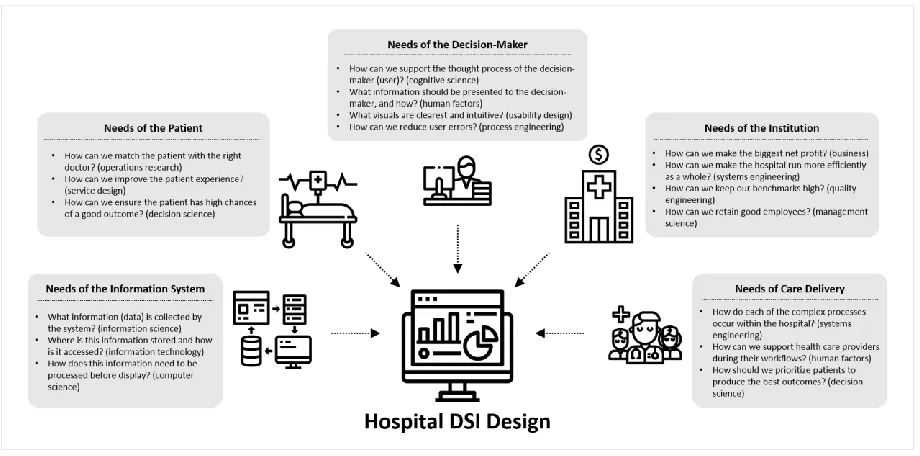
Figure 1 High-level diagram showing convergence of disciplinary expertise to answer
research questions that support stakeholder needs in the DSI design process... 6
Figure 2 Literature review diagram... 10
Figure 3 Conceptual diagram representing the problem of interest ... 16
Figure 4 High-level diagram of relationships between dissertation chapters ... 18
Figure 5 Number of physician & nurse respondents by current department of employment 25 Figure 6 Sample of the digital map of unique words from respondents, organized by word category and positioned according to relatedness ... 26
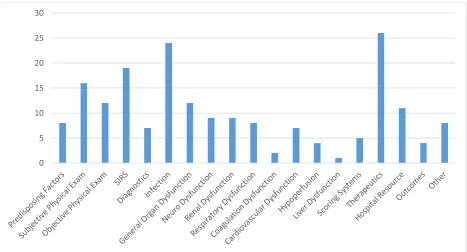
Figure 7 Count of distinct words mentioned by providers in each of the 19 broad word categories ... 28
Figure 8 Percentage of responses from each provider type (i.e. physicians, nurses) falling into each of the broader word categories ... 29
Figure 9 Percentage of responses from each hospital department (i.e. emergency medicine, critical care, internal medicine, research) falling into each of the broader word categories... 30
Figure 10 High-level overview of inpatient allocation process ... 38
Figure 11 Sample of PowerPoint bullseye exercise uploaded into the online survey ... 42
Figure 12 Results from SWOT (Strengths, Weaknesses, Opportunities, Threats) analysis of existing inpatient allocation decision support tools ... 46
Figure 13 Steps of the proposed workload score development approach ... 58
Figure 14 Nine factors identified as influential to clinician workload through Delphi methodology ... 61
Figure 15 Factors ordered by average rank ... 62
Figure 16 Sample question from choice-based survey ... 63
ix Figure 19 Final customized workload score calculation ... 66
1 CHAPTER 1: Problem Context & Motivation
This chapter serves as an introduction, providing the reader with problem context and
background information that might be helpful in understanding this body of dissertation research.
First, we describe the current state of hospital decision support, in general, and then we narrow
our focus to decision support interfaces. Next, we discuss the contribution of this investigation.
Finally, we explain how the document is organized and define some key concepts for the reader.
1.1. A Reflection on the Current State of Hospital Decision Support
The healthcare industry has experienced dramatic changes in recent decades, due to a
variety of factors. First, with the largest aging population to-date, the demand placed on
healthcare delivery systems has been increasing steadily and is projected to continue until at least
2050 [1] [2]. Second, with the passing of the Affordable Care Act of 2010, the government
became a primary stakeholder in the United States healthcare industry [3]. The incorporation of
governmental objectives (which often compete with the objectives of other stakeholders) into
healthcare delivery has resulted in increased focus on (and funding for) (i) the improvement of
healthcare metrics, (ii) the reduction of healthcare costs, and (iii) the utilization of technology to
support safe and efficient healthcare [4] [5]. Third, as technological advancement has exploded
in recent years, the healthcare domain has received increased attention from researchers in all
fields to support such technologies. As a result, healthcare facilities and workflows have become
more complex, permeated with more devices, more displays, more machines, and more data than
ever before [6]. Finally, there has been significant diversification of the healthcare workforce
(e.g. more non-physician clinicians, more support staff, more administrators), resulting in
additional communication challenges and knowledge barriers during the care delivery process
2 The changes in the healthcare industry as a whole have led to new dynamics within the
daily operations of healthcare facilities, especially hospitals [9]. Years ago, healthcare was
provided almost entirely by one’s primary care provider, and hospitals were used almost
exclusively as temporary surgery locations; today however, healthcare is provided by a variety of
different doctors and facilities over the course of a patient’s lifetime (often dependent upon
specific patient needs), and visits to the hospital are far more common [10]. Hospitals have
become massive, multi-department systems that provide a wealth of services to patients around
the clock [11]. From a patient’s perspective, hospitals are healthcare facilities that deliver
safety-critical services to patients. From an executive’s perspective, hospitals are seen as transactional
businesses that staff many different types of people to manage their complex operations. From a
researcher’s perspective, hospitals are viewed as massive data and research hubs that should be
utilized to advance scientific knowledge [12].
Regardless of the manner in which hospitals are perceived, however, common challenges
usually surface in their daily operations. First, patients need to be treated and kept safe, but
important health details sometimes get lost among the many moving pieces of a hospital
environment [5]. Second, healthcare providers want (and need) to spend time with their patients
in order to properly evaluate and treat them, but workflow and documentation requirements often
mean that at least half of their time is spent in their offices, summarizing their decisions and
looking at screens [11]. Third, hospitals require an extremely wide variety of personnel (from
administrators to surgeons, with varying levels of education) in order to run their daily
operations; however, communicating complex healthcare concepts across employees with such
different bases of knowledge often results in misunderstandings or errors [7]. Clearly, hospital
3 competing stakeholder objectives, they are currently experiencing more pressure than ever to
leverage available information to provide healthcare that is better, faster, safer, and cheaper.
In order to support the growing operational activities of hospital systems and their unique
complexities, there has been an increased focus in recent years on research related to healthcare
operations [12]. Additionally, the majority of this research relates to some sort of technology that
will be used in hospitals [13]. Published research that investigates topics related to technology
use in hospital operations spans a wide variety of disciplines, including engineering, computer
science, operations research, psychology, ergonomics, informatics, and design [14] [15] [16] [17]
[18] [19] [20]. However, this research has only begun to scratch the surface of investigating
healthcare delivery-related problems, since technology is constantly developing, and a wealth of
complex healthcare issues remain to be explored.
A common thread within healthcare research is the idea of decision support (e.g. clinical
decision support), which facilitates the collection, processing, and/or display of relevant
information to a decision-maker, often in real time [21]. In general, many researchers (including
those in healthcare operations) can often connect their work, at least loosely, to the idea of
“supporting” a specific decision point in some way or another. The end-use artifact of
decision-related research is broadly called a decision support tool or, when it involves automation, a
decision support system (DSS). A DSS receives information as input, processes this information
in some way, and then displays a set of relevant information for a given decision. Information is
often displayed to the decision-maker through a user interface [21], which we have termed a
decision support interface (DSI). Hospital environments are permeated with DSIs to assist with
4 The increased prevalence of DSIs in hospitals has attracted the attention of researchers
who want to inform the design and development of such decision support artifacts. Research
questions related to DSIs include: How can we help a doctor make the best decision? What
information does the decision-maker need to see in order to make a decision, and in what
format? How can DSIs be augmented to reduce errors and poor decisions? How can we use
machine learning to make DSIs smarter? How can the design of a DSI be used to incentivize
consideration of all possible outcomes of a decision? When is the optimal timing for a
recommendation to be displayed on a DSI?
All of these research questions are valuable in informing hospital DSI design and
development, but there are challenges with translating this disjointed evidence-based research
into practice. First, hospital DSI research investigations are often reported only in disciplinary
silos with limited communication of findings to other domains [5]. Second, DSI-related research
findings are often not applied in practice due to challenges with the hospital DSI development
process (described further in the next section). Recent advocacy for convergence research
suggests that improved solutions can be found when complex problems, such as supporting
hospital operational decisions, are approached in a way that utilizes findings from multiple
disciplines [23].
1.2. Practical Challenges of Hospital DSI Development
In practice, the request to develop a new hospital DSI will likely come from management
and be directed either to an in-house information technology (IT) department or an in-house
design department (although some hospitals are able to outsource to large software companies).
When translating hospital DSI-related research into practice, various challenges arise that do not
5 First, hospital DSI design and development is heavily limited by the knowledge base of
the developer (i.e. the individual (or team of individuals) responsible for designing, developing,
and programming a hospital interface). In practice, the developer of a hospital DSI is often just
one individual (or very small team of individuals from the same department), whose knowledge
pertains only to a single discipline (e.g. computer science). In effect, this means that a single (or
heavily limited) disciplinary perspective is taken during the DSI development process.
Some hospitals have the resources to use a team approach to DSI development; but even
when this is the case, the team is often small, and members do not have an organized method for
addressing and integrating the considerations of multiple different disciplines. Additionally,
hospital employees who stand to provide valuable input on a DSI development team (usually
providers) are often distracted by either (a) patient care or (b) participating on multiple
interdisciplinary project teams (e.g. DSI development, facility redesign, quality improvement
programs, etc.) at a given time. In the cases where hospital DSIs are outsourced to commercial
software companies with dedicated R&D departments, process fidelity, clinical details, and
interface customization often fall short.
Regardless of who develops a given interface, it is clear that the hospital DSI design
process is usually approached with only a partial perspective, which is not reflective of the
holistic convergence research approach. A partial approach might mean that knowledge from all
disciplines is not represented or considered, or that only one aspect of the interface (e.g. graphic
design/layout) is successful while other important aspects (e.g. predictive capability, patient
safety considerations, fidelity to users’ mental models) suffer.
However, these risks can be mitigated during the design process by taking a convergence
6 approach to research in complex domains that transcends disciplinary boundaries. A convergent
approach is appropriate for informing the DSI development process because of (a) the
complexity of hospital operations and clinical decisions and (b) the opportunity to integrate
knowledge across a variety of research disciplines. Figure 1 identifies various stakeholder groups
whose perspectives might be considered during the DSI design process and lists some specific
questions that researchers in different disciplines might strive to investigate.
Figure 1. High-level diagram showing convergence of disciplinary expertise to answer research questions that support stakeholder needs in the DSI design process
1.3. Contribution of Current Investigation
The primary contribution of this design research dissertation is creating a process
framework, founded in convergence research practices, to guide the hospital DSI design process.
A process framework is a model that “specifies steps (stages, phases) in the process of translating
research into practice, including the implementation and use of research” [24]. Process
frameworks are often represented by diagrams. Examples of some existing process framework
7 While others have created similar frameworks to guide healthcare interface design in the
past [25] [26] [27] [28], this research is the first to approach hospital DSI development from a
truly convergent (as defined by the Institute of Medicine and other prominent organizations [23])
perspective. By employing convergence research principles in the creation of a framework, we
aim to produce an initial framework structure that is broad (i.e. not domain-specific), and thus,
easily accessible to any individual (e.g. designer, developer, programmer, engineer, etc.) who
might need a “roadmap” that outlines (a) the steps to take during the hospital DSI design process,
(b) the important things to consider at each step, and (c) the resources available to the DSI
developer for addressing any issues that may arise.
1.4. Document Organization
The remainder of this document is organized into five chapters. Chapter 2 provides an
overview of relevant literature, describes the theoretical perspective that serves as the basis of
this research, and presents an overview of the research design. Chapters 3, 4, and 5 describe three
different investigations (i.e. studies) into hospital DSI design. Chapter 6 presents an initial draft
of a design process framework for hospital DSI development, discusses the practical implications
of such a framework, and proposes future work.
1.5. Key Terminology
Research that involves multiple disciplines requires interactions between experts in
different fields, each of which usually utilizes its own domain-specific vocabulary when
communicating about complex ideas. Thus, in order to ensure clarity of understanding for
readers across multiple domains, this section provides short explanations of key concepts and
8
• domains / fields / disciplines: used interchangeably to refer to areas of study
• operations / processes: used interchangeably to refer broadly to general activities involved in the delivery of healthcare service at a hospital
• decision support tool: an artifact that provides information to aid a decision-maker, whether manual (e.g. checklist) or automated (e.g. analytics software)
• decision support system (DSS): an automated electronic system or tool that provides information to aid a decision-maker
• decision support interface (DSI): the portion of the DSS that a decision-maker sees and interacts with, often a displayed on a screen or monitor
• convergence research: a transdisciplinary approach to complex problem-solving that often integrates life sciences, physical sciences, engineering, and design [23]
• provider / clinician: used interchangeably to refer to any person who provides
clinical healthcare services to patients (e.g. nurses, doctors)
• designer / developer: used interchangeably to refer to an individual (e.g. graphic designer, software programmer, user experience designer, etc.) who is responsible
for ultimately creating a decision support tool, system, or interface artifact
• design process framework: a set of general instructions (e.g. roadmap, diagram) to guide designers and developers through appropriate and necessary
9 CHAPTER 2: Literature, Theory, and Research Design
This chapter provides a detailed and technical description of the perspective taken
throughout this body of research. First, an overview of relevant literature is provided. Next,
theoretical perspectives are introduced, and the specific perspective selected as the foundation
for this research (i.e. pragmatism) is described. Finally, a conceptual diagram representing the
problems investigated in this research is presented, and an overview of the research design is
provided.
2.1. Overview of Relevant Literature Categories
The literature relating to this problem falls into the three broad categories: (i)
communication and visualization of information (e.g. how is complex information
communicated, and what display types are most informative?), (ii) efficient decision-making
(e.g. what information is required to make a decision, and what algorithm should be used to
make efficient decisions?), and (iii) distribution of workload (e.g. what factors contribute to
workload, and how can workload be distributed equitably?). When each of these broad
categories is narrowed to focus on this specific problem in healthcare, three smaller bodies of
literature result, pertaining to healthcare information visualization, patient allocation decisions,
and workload balancing for hospitalists and other healthcare providers. Figure 2 shows the three
primary categories and identifies specific articles that fall into each category, as well as category
overlaps.
2.1.1. Healthcare Information Visualization
Information visualization principles have been employed in a variety of ways to enhance
healthcare processes and operations, and there are multiple approaches that can be used to
10 visualization in healthcare have been identified, including treatment planning, examination of
patients’ medical records, representation of pedigrees and family history, communication and
shared decision making, and life management and health monitoring [30]. Common visualization
techniques used with electronic health record data often rely on colors, density, and filters to
communicate information [31]. Best practices and standardization for medical data visualizations
are likely to become increasingly important, as clinicians continue to work in a cognitively
complex environment that is heavily dependent upon data [32]. Unique approaches have been
used to visualize information pertaining to clinical guidelines [33] and community health
datasets [34], but a visualization for the purpose of equitability between healthcare providers
(e.g. workload, patient allocations, capacity, etc.) has not yet been documented. A user-centered
framework for redesigning healthcare interfaces exists [25], but it has not yet been applied for
the purpose of balancing provider workload.
11 2.1.2. Patient Allocation Decision-Making
Systems engineering literature pertaining to patient allocation decisions provides some
recommendations for methods that can be used to allocate incoming patients among hospital
resources. For example, existing patient allocation models have been based in methods such as
machine-learning [35], dynamic multiagent resource allocation [36], queuing analysis [37],
dynamic programming [38], and computer simulation [39]. However, none of this research
creates an algorithm based on the thought process of the decision-maker who actually allocates
patients. Cognitive mapping [40] is one method that can be used to represent the strength of
relationships between concepts in a decision-maker’s mental model. Cognitive mapping of
information can be used to improve the design of tasks because it helps represent the “mental
landscapes” of users [41].
2.1.3. Physician Workload Balancing
Workload of healthcare providers is a research topic with several existing investigations,
but information about the workload specific to hospitalists is lacking. Understanding,
monitoring, and balancing hospitalist workload is important because it correlates directly with
certain aspects of patient care quality [42]. One of the first surveys conducted to understand the
work that hospitalists do throughout the day identified clinical work, teaching, and research as
three of the primary components of hospitalist workload [43]. A more recent survey of
hospitalists to understand their job satisfaction found its key predictors to be organizational
climate, quality of care, organizational fairness, personal time, compensation, and relationships
with leaders and patients [44]. Communication between providers and operational employees is
imperative for balancing hospital workload, but hospitals do not typically have much support for
12 and augment or serve as a proxy for communication between hospital staff. Burnout is an issue
related to hospitalist workload, as evidenced by studies in which the majority of hospitalists
report that they intend to leave the career for either a fellowship program or to work in another
specialty, such as primary care [46]. A Hospitalist Morale Index instrument was developed to
measure and quantify hospitalist morale, in an attempt to improve hospitalist retention [47].
2.2. Theoretical Perspective
It is important that researchers define their perspective before research begins, and this is
often accomplished with the development of a problem-specific framework. The perspective
taken in this research is described by two components: a research paradigm (i.e. theoretical
perspective) and a conceptual diagram. A research paradigm is an investigator’s set of
assumptions about the world [48]. A conceptual diagram is a representation of the current state
of the problem, its key constructs and factors, and the relationships between its key elements
[49]. A researcher’s perspective when approaching a given problem can significantly impact the
direction of an investigation, especially in dictating which methodologies should be used.
2.2.1. Common Theoretical Perspectives
In the discipline of design research, for which this dissertation is written, we
acknowledge there are multiple ways to approach a given investigation, depending on the
researcher’s perspective of the problem. A researcher’s choice of theoretical perspective can
significantly impact the course of a study, so it is important to determine this framework before
research begins. Four primary perspectives taken by design researchers are
positivism/post-positivism, constructivism, transformative, and pragmatism. Important characteristics of each
worldview, as described by Creswell [50], are summarized in Table 1. A quick review of the
13 follows, in order to provide context for the theoretical perspective of this research. In general,
ontology refers to one’s perspective about “the nature of what exists,” and epistemology refers to
“how one is able to know what exists” [48].
Positivists and post-positivists take an objectivist perspective in their research, focusing
on determination, reductionism, and theory verification, usually by employing empirical
observation and measurement [51]. This perspective assumes there is a reality that exists “out
there” that can be fully and objectively known (or at least known with some probability) [48].
Constructivists take a subjective perspective, focusing on understanding social and historical
constructions and generating theories, often by combining multiple participants’ perceptions of
reality [52]. Naturalistic, qualitative, and interpretive frameworks are often used by
constructivists, who believe knowledge emerges as the research and respondents co-create
understandings or their “relative” realities [48]. Researchers with a transformative theoretical
perspective use collaborative techniques to investigate political problems that are often focused
on power and justice issues. Social and advocacy issues are common topics in transformative
research [50]. Pragmatists take a problem-centered approach to research, often using pluralistic
methods to produce solutions that display results in real-world scenarios [50]. In general,
pragmatists assume that the “useful truth” takes precedence over the “factually correct” [48].
Table 1. Creswell's four worldviews of research [50]
Post-positivism Constructivism Transformative Pragmatism
• Determination
• Reductionism
• Empirical observation and measurement
• Theory verification
• Understanding
• Multiple participant meanings
• Social and historical construction
• Theory generation
• Political
• Power and justice oriented
• Collaborative
• Change-oriented
• Consequences of actions
• Problem centered
• Pluralistic
14 The specific methods employed in research investigations are often heavily dependent
upon theoretical perspective. The methodology selected for use in a given study should align not
only with the theoretical perspective of its investigators, but also with the characteristics of the
problem being researched [50]. Eight primary research methodologies include historical,
theoretical, qualitative, correlational, experimental/quasi-experimental, simulation/modeling,
logical argumentation, case study, and action research. Each research methodology lends itself
toward the use of a specific set of tactics for data collection and analysis. Examples of tactics for
data collection include direct measurements, focus groups, statistical analyses, observations,
interviews, content analysis, and cognitive mapping [48]. Not all methodologies and tactics are
appropriate for the overall research objective of a given problem.
2.2.2. A Pragmatic Approach to Healthcare
Traditionally, the majority of research fields take either a positivist/postpositivist
(objectivist) perspective, or a constructionist (subjectivist) perspective, and then their
methodological choices follow [53]. However, since the unique barriers and limitations on
researchers in healthcare settings (e.g. patient privacy policies, safety restrictions, controlled
access, geographically-dispersed operations, etc.) can preclude the use of certain methodologies,
and since hospitals are often results-driven, research related to hospital DSI design is aptly suited
for the pragmatic theoretical perspective.
The ability of pragmatism to merge techniques from different disciplines is particularly
valuable in large healthcare facilities like hospitals, since they are aiming to meet the objectives
of their many stakeholders, who often have very diverse (sometimes even competing) sets of
priorities [54]. Additionally, the pragmatic perspective fosters innovation, since it relaxes
15 creative thinking. This characteristic of pragmatism is particularly valuable as an approach to
healthcare-related research, since healthcare innovations are a primary driving force in the
pursuit to balance the objectives of containing healthcare costs and improving healthcare quality
[55].
It is important to note that, while the pragmatic perspective values practical and
results-oriented investigations, research conducted from this theoretical standpoint is not necessarily
applied research. In the context of this dissertation as a whole, pragmatism is identified as the
theoretical perspective that aligns most closely with the researcher’s viewpoint; and a pragmatic
perspective was taken when selecting study methodologies. The integration of the studies into a
framework is basic research in the field of design research, since it expands the existing
knowledge on approaches to interface development.
2.3. Research Design
By building upon the findings of relevant literature and adopting a pragmatic theoretical
perspective, we are able to develop a graphical representation of our problem, define our
research questions, and select the methodologies best suited for the objectives of this research.
2.3.1. Conceptual Diagram
The underlying theories described in the previous section can be combined with other
concepts to create a conceptual diagram that represents the issues being considered in this
research. A conceptual diagram (also called a conceptual framework) is a representation of the
current state of the problem, its key constructs and factors, and the relationships between its key
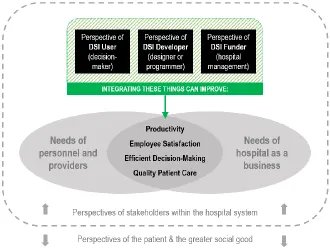
elements [49]. Figure 3 provides the conceptual diagram created represent the focus of this
16 The dotted line in the diagram indicates that the scope of this research considers primarily
the perspectives of stakeholders within the hospital system. The perspectives of the patient and
the greater social good are not directly considered in this research; however, these perspectives
are not entirely ignored, since they are often indirectly influenced by improvements in the
efficiency and accuracy of hospital processes. The gray circles represent the needs and objectives
of hospital stakeholders in this research. Needs relate to either hospital personnel (e.g. providers,
administrators, etc.) or hospital business activities (e.g. processes, efficiency, etc.).
Commonalities between these groups include the needs for productivity, employee satisfaction,
efficient decision-making, and quality patient care. The striped box communicates that the
perspectives of users (i.e. hospital decision-makers), developers (i.e. designers or programmers),
and funders (i.e. hospital management) can be integrated into hospital DSI design to help satisfy
many needs that are common among hospital stakeholders.
17 2.3.2. Research Questions & Methodology
The research presented in this dissertation ultimately seeks to explore how principles
from multiple disciplines can begin to be integrated (i.e. converge) into a design process
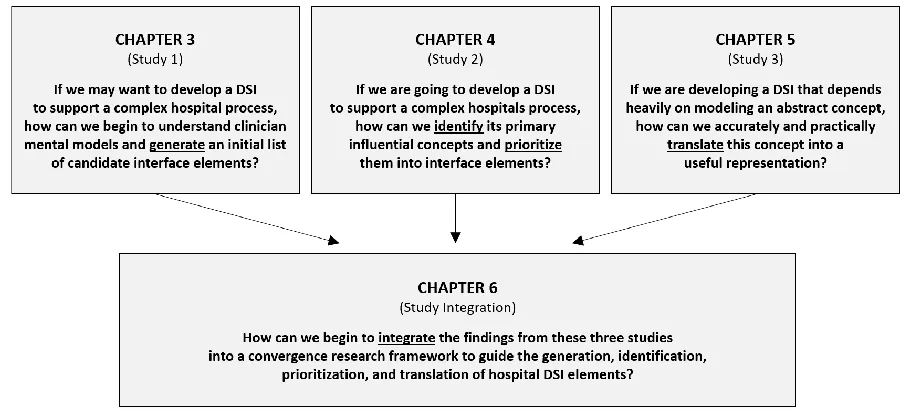
framework that can guide hospital DSI development. This primary objective is broken into a
series of three sub-questions that are investigated in subsequent chapters (listed below).
Additional specific research questions are also addressed within each chapter.
1. If we may want to develop a DSI to support a complex hospital process (e.g.
clinical diagnosis of sepsis), how can we begin to gain understanding of clinician
mental models and generate an initial list of candidate interface elements to
explore? (Chapter 3)
2. If we are going to develop a DSI to support a complex hospital process (e.g.
allocation of inpatients to doctors), how can we identify its primary influential
concepts and prioritize them into interface elements? (Chapter 4)
3. If we are developing a DSI to support a complex hospital process that depends
heavily on an abstract element (e.g. provider perception of current workload
level), how can we accurately and practically translate this concept into a useful
representation? (Chapter 5)
The investigations in this body of research follow a mixed methods experimental design,
which supports the pragmatic theoretical perspective. The idea behind this methodology is that a
topic of interest (i.e. hospital DSI design) is examined from both quantitative and qualitative
perspectives [50]. Figure 4 outlines the broad objectives of each chapter in this dissertation and
18
19 CHAPTER 3: Understanding Clinician Mental Models in Sepsis Diagnosis:
Implications for Decision Support System Development
Sepsis, a deadly physiologic response to an infection, has gained substantial attention
from researchers over the past few years as leading sepsis organizations and initiatives –
including Surviving Sepsis Campaign, World Health Organization, Centers for Medicaid and
Medicare, and Sepsis Alliance – agree that rapid diagnosis and treatment of sepsis are crucial for
improved patient outcomes. This study conducts an initial investigation into healthcare
providers’ mental models related to sepsis diagnosis. We asked clinician participants to perform
a word-association exercise to elicit the first 15 words they associate with sepsis diagnosis. We
analyzed the words collected from participants by placing them into categories, coding similar
responses, and comparing words mentioned by different provider groups. The objective of these
comparisons is to provide insight into the differences that may exist across clinician mental
models relating to sepsis diagnosis, with the larger goal of informing the design of decision
support systems (DSS) that aid this task. Improved understanding of clinician mental models will
result in DSS that are more intuitive, easier to implement, and adaptable for different clinical
sectors (e.g., emergency medicine, internal medicine). The word-association exercise conducted
in this study served to identify a final group of words that will be used in a subsequent study to
create fuzzy cognitive maps of clinician mental models for sepsis diagnosis.
3.1. Introduction
Sepsis, defined as an infection with associated acute organ system dysfunction, is a
common reason for hospitalization as well as the single most expensive condition treated in U.S.
hospitals [56]. Even though this disease accounts for nearly half of all hospital deaths [57], there
20 difficult. Over the past decade, medical guidelines related to sepsis have constantly evolved as
the clinical community searches for consensus on the definition, diagnostic criteria, and
treatment recommendations pertaining to the disease [58].
The difficulties associated with understanding and diagnosing sepsis are compounded by
the complexity of the healthcare system in which clinicians must diagnose the disease. The
healthcare system includes clinical practice, business organization, information management,
research, education, and professional development, all of which are interdependent and built
around interacting systems that have inherently unpredictable attributes [59]. The clinician’s
autonomy is a “crucial contextual feature” of the complex landscape of any healthcare work
environment that must be preserved, since clinical knowledge is increasingly specialized [60]. In
particular, clinicians work in complex healthcare work systems and processes and deal with the
ambiguities of lived experience on a daily basis [61]. Supporting their diagnostic
decision-making using technology that matches the complexity of their mental landscape remains a
challenge.
The complexity of the healthcare work environment has attracted the attention of
researchers within the fields of engineering, human factors, psychology, design, and computer
science, all of whom aim to develop solutions and tools that facilitate clinical diagnosis. Some
researchers have attempted to look at the healthcare system through the lens of functional
decomposition, a method that separates a complex system into smaller sub-systems to understand
how work is distributed across the system as a whole [62]. However, it has become clear that
dividing the work of clinicians into independent components is not a simple task. Instead,
researchers are challenged to develop solutions for clinical diagnosis that can be integrated
21 first described in 1976 as decision support tools, serving as visual representation schemes with a
computational framework [40]. These maps illustrate knowledge as a network of concepts and
their causal relationships. In fuzzy cognitive maps, the relations between elements of a “mental
landscape” imitate the way of decision making in humans and resemble human reasoning [41],
providing greater utility of the model. These maps provide inexact (fuzzy) linguistic expression
of concepts and causal links and allow for comparisons between individuals.
This study is focused on describing healthcare providers’ mental models related to sepsis
diagnosis through a word-association exercise to elicit the top words they link with sepsis
diagnosis. The extensive complexity of the sepsis syndrome and high associated mortality,
coupled with its lack of a diagnostic gold standard, makes sepsis an ideal clinical condition to
target with this methodology. This exercise is the first step in involving end-users (i.e. clinicians)
in the DSS design process by investigating their mental models, and in particular, their
vocabulary, related to sepsis diagnosis. Sepsis diagnosis DSS developed to match either
individual clinician mental models or shared mental models [63], at least in vocabulary, could
promote a better understanding of the similarities and discrepancies in clinical diagnosis
processes of different individuals. Consequently, this could inform development and
implementation of DSS that are aligned with clinician mental models.
3.2. Data and Methods
The word-association exercise described in this paper served as an initial step in our
ultimate goal of creating fuzzy cognitive maps of clinician mental models related to sepsis
diagnosis. Cognitive map generation will ultimately utilize a set of no more than 15 words,
including two control words (i.e. words unrelated to sepsis diagnosis that share similar clinical
22 found most relevant to sepsis diagnosis based on frequency after aggregation and coding.
Relevance is defined as the identification of supporting features for reasoning and diagnosis [64].
Methodology is based on expert opinion and represents a novel approach to cognitive mapping
[65] and think-aloud approaches [66] [67] that have been used for experts and novices to
verbalize their thinking and actions when they process and integrate information with relevant
knowledge to performance reasoning and diagnostic tasks.
3.2.1. Participant Selection
Participants for the word-association exercise were selected in a convenience sample
from Christiana Care Health System in Newark, Delaware, Mayo Clinic in Rochester,
Minnesota, and MedStar Health in Washington, District of Columbia. We recruited different
types of clinician participants (i.e. physicians, nurses) across various specialties (i.e. emergency
medicine, internal medicine, critical care, research). Participation in the word-association
exercise was voluntary. This project has been declared exempt due to its low risk by the MedStar
Health Institutional Review Board.
3.2.2. Data Collection Procedure
Each participant was asked, “What are the first 15 words that come to mind when you
think of sepsis diagnosis?” Responses were recorded by hand or provided over email, and there
was no time limit placed on completion of the word-association task. Participants were
encouraged to provide a full set of 15 words, however, when this proved difficult for some
participants, we accepted as few as 12 words.
3.2.3. Response Coding and Analysis
We placed each unique word into one of 19 broader word categories, defined by the
23 clinical predispositions, subjective physical exam, objective physical exam, systemic
inflammatory response syndrome (SIRS), diagnostics, infection, general organ dysfunction,
specific organ dysfunctions based on system (neurological dysfunction, renal dysfunction, liver
dysfunction, respiratory dysfunction, coagulation dysfunction, cardiovascular dysfunction,
hypoperfusion), scoring systems, therapeutics, hospital resources, outcomes, and other. With
clinical input, we then created a digital map of all the unique words, positioned according to
word category and relatedness.
Using the digital map, we identified and coded words that were essentially synonymous
to the words in each set (e.g. fever, febrile, high temperature) and assigned them a primary word
to be used in the analysis. We quantified the total number of times that each of the words in this
set (using the primary words to aggregate synonyms) were mentioned by respondents and
ordered the list of words by this value, from most to least. Starting from the top of this list, we
considered each primary word individually for inclusion, excluding any words that were (i)
related to therapeutics (to adhere to our objective describing sepsis diagnosis); or (ii) specific
types of an already-included word (e.g. bacteremia is a specific type of infection). We stopped
this process once 13 words had been identified for inclusion in the final word set.
We assessed for variations in responses between provider type and specialty. The
analysis was conducted at the word-category level and among the final set of 13 selected words.
To identify statistically significant differences between provider type and clinical specialty with
regards to word selection and frequency, we used Fisher exact tests and chi-square tests.
Post-hoc corrections for multiple statistical tests were not employed, since this research investigation
is exploratory in nature and rooted in behavioral science [68] [69]. All analyses were completed
24 3.3. Theory
A number of methods and theories have been used to inform this body of work, including
decision theory in clinical diagnosis, clinical reasoning, and various cognitive strategies (e.g.
pattern recognition, the hypothetico-deductive method) that physicians may employ when
diagnosing a patient [70] [71]. Because of its complexity, the diagnosis of sepsis comes with
unique challenges to clinicians; clinical decision support systems could bridge the gap between
the uncertainty of sepsis and the confidence of an appropriate diagnosis and treatment pathway.
Decision support systems must integrate seamlessly into the clinical workflow, a challenging but
critical characteristic that has a large impact on acceptance by clinicians [72].
Decision theory related to clinical diagnosis seeks to determine how a provider selects a
final approach for treating a patient when multiple alternatives for treatment are available [73].
Mental models, a practical application of decision theory, have been used to understand decision
making processes across several other disciplines including aviation, engineering, architecture,
and law [74] [75]. When applied to healthcare, mental models can reveal decision making
processes such as diagnosis and treatment pathways, approximating the clinical gestalt on which
providers rely in situations of uncertainty. This insight would be particularly valuable in the
context of a heterogeneous and complex disease such as sepsis. By studying mental models
among various clinician types and settings, we can begin to understand the differences in
decision making processes that influence the DSS’s integration into unique clinical workflows,
informing compatible design to promote acceptance by providers.
3.4. Results
A total of 34 clinicians participated in the word-association exercise. The distribution of
25 nurses. For our analysis, attending physicians and resident physicians were pooled into a single
group of 20 (59%) physicians. The specialty distribution was 16 (47%) emergency medicine, 4
(12%) critical care (intensive care providers), 7 (21%) internal medicine, and 7 (21%) clinicians
employed by a hospital research institute. The distribution of employment departments for
physicians versus nurses is shown in Figure 5. Since some participants provided fewer than 15
words in the word-association exercise, the total number of words included in this analysis was
490, which is 96% of the potential 510 words that could have been collected.
Figure 5. Number of physician and nurse respondents by current department of employment 3.4.1. Digital Map and Final Word Set
Respondents provided 192 unique words that related to sepsis diagnosis, many of which
were closely related and could be ultimately categorized into 19 categories. The digital map of
these words, which was used to organize all distinct responses by word category and positioned
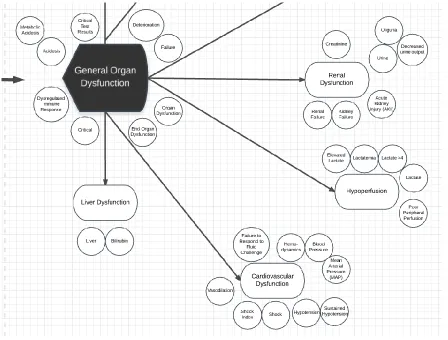
according to relatedness within each category, was extensive; a sample of the digital map is
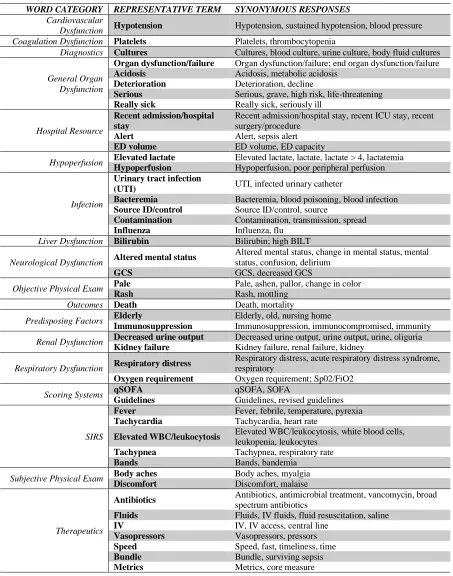
provided in Figure 6. The 19 categories identified from the digital mapping process, and the
coding of the distinct words within those categories are presented in Table 2. The distribution of
distinct words mentioned by providers across the 19 word categories is shown in Figure 7. The
0 2 4 6 8 10 12
Emergency Medicine Internal Medicine Critical Care Research
26 category “other” included descriptive words that did not relate to the broad categories (e.g.,
tricky, subtle, bad, screening).
Using the selection procedure described in the methodology section, we were able to
select a final set of words most related to sepsis diagnosis. The final list of 13 sepsis-related
words, along with the total number of times in parentheses they were mentioned by participants
in the word-association exercise were included: hypotension (28), fever (27), elevated lactate
(25), altered mental status (22), tachycardia (19), infection (19), elevated white blood cells (19),
tachypnea (12), shock (11), cultures (11), elderly (9), sick (7), and decreased urine output (7).
27
Table 2. Representative terms selected for each set of synonymous terms, organized by word category
WORD CATEGORY REPRESENTATIVE TERM SYNONYMOUS RESPONSES Cardiovascular
Dysfunction Hypotension Hypotension, sustained hypotension, blood pressure Coagulation Dysfunction Platelets Platelets, thrombocytopenia
Diagnostics Cultures Cultures, blood culture, urine culture, body fluid cultures
General Organ Dysfunction
Organ dysfunction/failure Organ dysfunction/failure; end organ dysfunction/failure
Acidosis Acidosis, metabolic acidosis
Deterioration Deterioration, decline
Serious Serious, grave, high risk, life-threatening
Really sick Really sick, seriously ill
Hospital Resource
Recent admission/hospital stay
Recent admission/hospital stay, recent ICU stay, recent surgery/procedure
Alert Alert, sepsis alert
ED volume ED volume, ED capacity
Hypoperfusion Elevated lactate Elevated lactate, lactate, lactate > 4, lactatemia Hypoperfusion Hypoperfusion, poor peripheral perfusion
Infection
Urinary tract infection
(UTI) UTI, infected urinary catheter
Bacteremia Bacteremia, blood poisoning, blood infection
Source ID/control Source ID/control, source
Contamination Contamination, transmission, spread
Influenza Influenza, flu
Liver Dysfunction Bilirubin Bilirubin; high BILT
Neurological Dysfunction Altered mental status
Altered mental status, change in mental status, mental status, confusion, delirium
GCS GCS, decreased GCS
Objective Physical Exam Pale Pale, ashen, pallor, change in color
Rash Rash, mottling
Outcomes Death Death, mortality
Predisposing Factors Elderly Elderly, old, nursing home
Immunosuppression Immunosuppression, immunocompromised, immunity
Renal Dysfunction Decreased urine output Decreased urine output, urine output, urine, oliguria Kidney failure Kidney failure, renal failure, kidney
Respiratory Dysfunction Respiratory distress
Respiratory distress, acute respiratory distress syndrome, respiratory
Oxygen requirement Oxygen requirement; Sp02/FiO2
Scoring Systems qSOFA qSOFA, SOFA
Guidelines Guidelines, revised guidelines
SIRS
Fever Fever, febrile, temperature, pyrexia
Tachycardia Tachycardia, heart rate
Elevated WBC/leukocytosis Elevated WBC/leukocytosis, white blood cells,
leukopenia, leukocytes
Tachypnea Tachypnea, respiratory rate
Bands Bands, bandemia
Subjective Physical Exam Body aches Body aches, myalgia
Discomfort Discomfort, malaise
Therapeutics
Antibiotics Antibiotics, antimicrobial treatment, vancomycin, broad
spectrum antibiotics
Fluids Fluids, IV fluids, fluid resuscitation, saline
IV IV, IV access, central line
Vasopressors Vasopressors, pressors
Speed Speed, fast, timeliness, time
Bundle Bundle, surviving sepsis
28
Figure 7. Count of distinct words mentioned by providers in each of the 19 broad categories 3.4.2. Comparisons between Provider Types
Frequency analysis was conducted to understand the differences in responses between
provider types (i.e. physicians, nurses). Figure 8 shows the percentages of physician and nurse
responses that fell into each of the 19 broader word categories. Physicians mentioned words
across all word categories. The top four categories physicians’ responses were drawn from were
SIRS (19%), cardiovascular dysfunction (15%), hypoperfusion (12%), and infection (10%).
Attending physicians mentioned words across all of the broad word categories, whereas resident
physicians mentioned words in only 10 of the 19 categories. Nurses mentioned words in all word
categories except liver dysfunction. The top four categories nurses’ responses were drawn from
were SIRS (18%), infection (15%), therapeutics (13%), and subjective physical exam (9%).
In the final set of 13 words, physicians most frequently mentioned hypotension, elevated
lactate, fever, and tachycardia. Nurses most frequently mentioned fever, altered mental status,
hypotension, tachycardia, and tachypnea.
29
Figure 8. Percentage of responses from each provider type (i.e. physicians, nurses) falling into each of the broader word categories
3.4.3. Comparisons between Specialties
Frequency analysis was conducted to understand the differences in responses between
specialties (i.e. emergency medicine, critical care, internal medicine, research). Figure 9 shows
the percentages of emergency medicine, critical care, internal medicine, and research institute
responses that fell into each of the 19 broader word categories.
Emergency medicine clinicians mentioned words across all word categories, and the top
four categories their responses were drawn from were SIRS (20%), therapeutics (14 %),
infection (13%), and cardiovascular dysfunction (10%). Critical care clinicians mentioned words
across all word categories except outcomes, and the top four categories their responses were
drawn from were therapeutics (21%), SIRS (11%), infection (11%), and cardiovascular
dysfunction (9%). Internal medicine clinicians mentioned words across all word categories
30 responses were drawn from were SIRS (23%), infection (18%), subjective physical exam (12%),
and therapeutics (10%). Clinicians working at research institutes mentioned words in all
categories except liver dysfunction and scoring systems. The top three categories their responses
were drawn from were infection (17%), SIRS (15%), and cardiovascular dysfunction (9%).
In the final set of 13 words, emergency clinicians most frequently mentioned
hypotension, elevated lactate, fever, and elevated white blood cell count. Critical care clinicians
most frequently mentioned infection and shock. Internal medicine clinicians most frequently
mentioned fever, altered mental status, hypotension, and tachycardia; general organ dysfunction
was never mentioned by internal medicine clinicians. Clinicians currently at research institutes
most frequently mentioned fever, hypotension, tachycardia, and altered mental status.
31 3.4.4. Statistical Tests
For each word category, we conducted a Fisher exact test using the percentages shown in
Figure 8 and Figure 9, to determine whether or not the distribution of words mentioned in that
category was independent of each provider’s type and specialty. The test results were significant
in three word categories—SIRS (p = 0.0135), diagnostics (p = 0.0231), and neurological
dysfunction (p = 0.0092)—suggesting that the types of words mentioned in these categories may
be dependent upon provider type and specialty. A chi-square test confirmed these results.
3.5. Discussion
Although automated systems may provide significant advantages in clinical decision
support for sepsis diagnosis, the development and implementation of a clinical DSS is a complex
task. Not only must the DSS effortlessly connect into the massive network of data sources in a
single healthcare institution, it must also be intuitive and easy to learn if clinicians are going to
accept and adopt it.
This work will inform the design of DSS that aid in the task of sepsis diagnosis. Thus, it
has implications for clinicians as well as DSS developers in engineering, operations research,
and computer science. For example, we can think of the mental model as a tool for data and
knowledge extraction. In a DSS, this information could feed a data/knowledge warehouse linked
to a knowledge management [76]. The authors propose a feedback structure whereby the DSS
can itself help improve the mental model and ultimately improve decision making. Furthermore,
since mental models have been reported as being suitable to analyze unstructured problems (e.g.
highly complex, with uncertainty and lack of consensus) [77], the use of such models in DSS
32 Applying these results into the process of DSS development will allow for a personalized
approach in guided education. The future of DSS is one in which feedback and guidance is
provided contextually with awareness as to the location and provider. Recognizing that it is
important to deliver the same conceptual message to all providers caring for sepsis, there are
opportunities to highlight and augment the decision support environment and to provide
education during use of the tool based on performance and trends seen in efforts such as these.
For example, there is discrepancy between internal medicine providers and emergency medicine
providers in their appreciation of “general organ dysfunction,” which should prompt a more
directed education and feedback loop for internal medicine providers. Additionally, emergency
physicians describing a high prevalence of “elevated white blood count” associated with sepsis
should prompt a directed education on the low sensitivity of this marker in sepsis. However, the
low association of respiratory dysfunction and coagulation dysfunction with sepsis across all
specialties provides an opportunity for increased attention within DSS development to improve
this awareness.
The failure to show significant difference between provider types or specialties within 16
of the 19 word categories in our analysis yields positive gains for DSS development. Knowing
that providers share a similar model for diagnosing sepsis allows developers to create a single
DSS system that could be tailored to fit a provider’s role and specialty based on available data
elements and workflow. Maintaining the balance between standardized care delivery and
individualized clinical diagnosis process is particularly challenging in conditions that are
complex and lack consensus in definition, such as sepsis. While individual differences in
cognitive processing of diagnosis-related information are inherent to clinical decision making,
33 relative to each other, and (ii) relative to the condition of interest. Capturing and categorizing
common mental elements specific to a clinical condition can inform not only the underlying
diagnostic decision making process, but help to measure the association between different
information categories and the clinical diagnosis. Comparing mental models based on provider
features (such as provider type) over time has implications for the development of interfaces and
tools that match the complexity of the mental landscapes that providers in dynamically changing
clinical conditions with uncertain trajectories maintain. Further implications for other domains
include diagnosis of acute and chronic conditions, and the impact of complexity as well as
uncertainty as part of the diagnostic decision making in hospital and ambulatory settings.
Our results support the clinical consensus that neurological dysfunction and altered
mental status are important aspects of sepsis diagnosis; however, evidence of these
characteristics in electronic health record data is slim. As researchers continue to search for ways
to improve sepsis diagnosis, it will become increasingly important for this information to be
available as data within a computerized health system.
The primary limitation of this work is the sampling strategy, which was based on
convenience. While our results were sufficient to serve our specific purpose, they may not be
generalizable to clinicians from other healthcare institutions despite being representative of three
unique healthcare systems. In soliciting words from more clinicians, we could potentially
identify trends in subcategories (like provider type and specialty) and by soliciting more personal
characteristics, could evaluate word choices by elements like years of training and/or expertise.
Additionally, there may be bias in our categorization of words into unique categories based on
34 A final limitation of this study was the decision to exclude words related to therapeutics
when selecting our final set of 13 words. Therapeutics was the broad word category mentioned
most often by providers, even though they were asked to provide words related to sepsis
diagnosis. These results suggest that providers view diagnosis and therapy as highly intermingled
concepts that are difficult to tease apart.
The next phase of this research will use the 13 words identified by this study, along with
two control words, to produce fuzzy cognitive maps that show the intensity of relationships
between words related to sepsis diagnosis. Visual representations or graphic forms have
advantages in representing complex thinking and cognition in flexible ways. Prior studies have
indicated that verbal text alone is limited in representing the understanding of complex issues,
and a diagram is sometimes worth a thousand words [78]. We will compare cognitive map
associations between (i) provider types, (ii) current department of employment, and (iii) level of
clinician experience in order to understand how a sepsis diagnosis DSS might be optimally
designed and tailored to match the existing mental models of its specific users.
Additional fundamental human factors research relating to the mental models of
clinicians would be beneficial to the healthcare domain, a complex setting that relies heavily on
the intellect and expertise of its human clinicians. Controlled lab studies with clinicians have the
potential to produce more detailed results that can inform DSS developers and others who aim to
improve healthcare delivery through support roles.
3.6. Conclusions
This study analyzed the responses of healthcare providers to a word-association exercise
that was designed to elicit the terms clinicians most closely associate with sepsis diagnosis.
35 and departments of employment, although these remain to be confirmed by future research that
will quantify the relationship between the 15 words. The healthcare system, which relies heavily
on the valuable human cognition of clinicians, is a complex work environment that merits future
cognitive research to support both sepsis diagnosis and intuitive DSS design.
Acknowledgments
This work was supported by the Sepsis Early Prediction Implementation System
(SEPSIS) Collaborative, funded by the National Science Foundation [grant numbers 1522072,
1522106, 1522107]; and by the National Library of Medicine of the National Institutes of Health

![Table 1. Creswell's four worldviews of research [50]](https://thumb-us.123doks.com/thumbv2/123dok_us/1763514.1226754/25.612.106.509.561.660/table-creswell-s-worldviews-research.webp)