2018 3rd International Conference on Information Technology and Industrial Automation (ICITIA 2018) ISBN: 978-1-60595-607-7
Progress in the Application of Ranging
Technology in Intelligent Driving
Zhuo Yang, Chang Xu, Baoqing Deng, Shaoqun Zeng,
Shaohua Yang, Qiping Li and Zhongbo Yang
ABSTRACT
Ranging is the basis of intelligent driving technology for vehicles. The accuracy and reliability of ranging are directly related to the safety and reliability of intelligent driving. Sensors are the basis of ranging, and various types of sensors have different characteristics due to their different structures and characteristics. This paper introduces several commonly used microwave testing technology, comparative analysis of the various technical principle, difference and error sources with examples of typical, provide a reference for future selection of sensor workers.1
INTRODUCTION
With the rapid development of automotive technology and computer technology, automotive intelligent driving technology has attracted more and more attention. As one of the basic technologies of intelligent driving technology, the accuracy and timeliness of distance measurement is directly related to the success or failure of intelligent driving technology. Therefore, this paper takes the ranging sensor as the research object, and summarizes and summarizes it.
ULTRSONIC RANGING
Ultrasonic technology is currently the fastest growing and most widely used modern acoustic technology in the field of acoustics. Ultrasonic means a kind of mechanical wave with a resonant frequency above 20KHZ, It travels in a straight
line in an air medium. It has the characteristics of small diffraction phenomenon and good directionality. It has strong reflection characteristics to objects. Moreover, the ultrasonic energy has a small energy attenuation in liquids and solids, and therefore has a strong penetrating power against rain, fog, and snow.
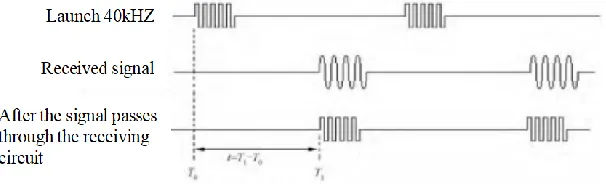
Principle of ranging: The ultrasonic transmitter emits ultrasonic waves in a certain direction, and the reflected waves reflected by the obstacles are received by the ultrasonic receiver. According to the known propagation speed of ultrasonic waves in the air (340 m/s), and the process time t recorded by the timer, calculate the distance s (s = 340t/2) of the emission point from the obstacle, also known as time difference ranging method[1]. Figure 1 shows the timing sequence of sound waves.
The advantage of ultrasonic ranging is that it does not require direct contact with the object being measured, has good directionality and is easy to control, it can overcome the harsh weather conditions such as rain, fog and snow, and is often used in car sonar radar to complete measurement work. The ultrasonic sensor in the moving vehicle receives the ultrasonic reflected signal emitted by itself, and then transmits the signal to the brake control unit through the processing signal of the single chip microcomputer. Real-time braking response is made according to the distance of the vehicle to reduce the frequency of “rear end” in accident traffic[2].
[image:2.612.145.448.514.606.2]Ultrasonic guide blind system: The obstacle information around the visually impaired person detected by the system is converted into a sound signal (voice prompt) and a mechanical signal (vibration alert). The system has built-in multiple ultrasonic probes to measure the distance of obstacles in all directions. The digital tube and buzzer are used to realize the sound and light warning, and the triode controls the switch of the micro motor to realize the tactile prompt[3]. In the past design, infrared rays are often used to detect obstacles, but compared with ultrasonic waves, there are many infrared interference sources. Under the interference of reflected light, it is easy to judge mistakes and false alarms. Therefore, ultrasonic ranging is also one of the core technologies for automatic obstacle avoidance of home intelligent robots.
TABLE I. RELATIONSHIP BETWEEN SOUND VELOCITY AND TEMPERATURE.
Temperature(℃) -30 -20 -10 0 10 20 30 100
Sound speed(m/s) 313 319 325 331 338 343 349 386
Smart toilet body sensor: Taking the single-chip microcomputer as the control center, the back-and-forth distance of the ultrasonic transmission is calculated by the time difference, it can tell if someone is there by the change in spacing. The reed switch and the magnet sensor are identified only by the switch of the door and the door lock action; The intelligent toilet body sensor overcomes the Judgment error in the case of the former closing the door without locking the door, and the installation is simpler and the work is stable and reliable[4].
Ultrasonic ranging also has certain limitations. For example, the speed of sound wave propagation is affected by temperature, as shown in Table 1-1. When the temperature change is not obvious, the speed of sound is basically constant, and if necessary, it can be corrected by temperature compensation to obtain high-precision measurement results.
In addition to the temperature, there are some environmental factors, such as the noise pollution generated by the road distance measuring vehicle, which will also affect the measurement results; Secondly, the ultrasonic energy attenuation is proportional to the square of the propagation distance. The farther the distance is, the more serious the attenuation is, and the less the reflected sound waves are, the more the reception is impossible, and the measurement sensitivity is reduced. Therefore, the short-distance measurement control is best between 4 and 5 m, and the farthest is not more than 10 m.
LASER RANGING TECHNOLOGY
Laser ranging is based on laser as a light source, mainly divided into two major categories: pulse method and phase method. The former uses the measurement of the round-trip pulse interval to know the distance, and is mostly used for long-distance measurement, and the maximum measurement long-distance can reach more than 30km; The latter achieves ranging by measuring the phase difference between the sinusoidal transmitted signal and the echo signal modulated on the continuous laser beam[5], and the measurement accuracy is up to the millimeter level. In addition, the phase method can better solve the error problem in short-distance measurement, but the system handles the signal more complicated.
Union used laser technology to measure the distance between the Earth and the Moon. At that time, the error was 250m. Today, laser ranging technology is still the dominant application technology in satellite monitoring and aerospace.
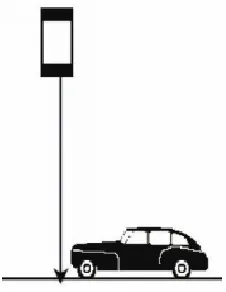
[image:4.612.250.363.247.393.2]China is a big traffic country, and the emergence of intelligent traffic based on laser ranging technology has provided great convenience to vehicle traffic to a certain extent. Such as laser speedometer, car collision avoidance system, traffic flow monitoring, vehicle drawing, vehicle pedestrian violation monitoring and other applications in sophisticated monitoring and measurement[6]. Figure 2 shows a simple diagram of vehicle flow monitoring and outline scanning of the vehicle, Figure 3 shows a block diagram of the car intelligent collision avoidance system.
Figure 2. Vehicle outline drawing.
[image:4.612.164.432.443.616.2]The car intelligent collision avoidance system uses the laser beam to identify the distance between the car itself and the target car. When it is less than the predetermined safety distance, the system will break the car and give the driver an alarm. It can even make an instant judgment and response to the car's driving according to the speed, distance, car braking distance and response time of the target car to prevent driving accidents[6]. For example, the Chinese professor at Virginia Tech University developed the world's first car designed for the blind with laser ranging technology as the core. In addition to road ranging, some handheld laser range finder built-in intelligent optical compensation system can meet a variety of measurement needs, achieving millimeter-level measurement accuracy, suitable for a variety of different environments, ordinary distance measurement, interior decoration, building inspection, etc. With the advantages of all-weather, high precision, anti-interference and miniaturization, laser ranging technology has become an important technical means in the field of space exploration. Helicopter collision avoidance, three-dimensional imaging and laser tracking, etc., have extremely high application value in military and industrial fields[7].
VISUAL RANGING SYSTEM
Visual ranging systems are mostly used in machine vision positioning, target tracking and visual obstacle avoidance. It plays an important role in the field of robotics and is an indispensable basic technology in visual navigation and servo control[8]. The system can be divided into binocular, monocular and multi-vision systems according to the number of cameras used.
The working principle of the binocular ranging system is to imitate the way humans use the binocular parallax to sense the distance of objects[9]. Shooting the same target using two digital cameras of the same specification, two cameras have a certain distance and are in parallel. Since the spatial positions of the two cameras do not coincide, the imaging of the target on the photosensitive elements of the two cameras is inevitably different (called aberration). In this way, as long as the position coordinates of a certain feature point in the two images (this process is called image matching) are found, and the optical axes of the two cameras are known, the distance can be measured by using the triangulation formula[9].
With the development of underwater robot technology,visual ranging technology has also been applied to the field of underwater ranging. Some complex underwater operations such as underwater docking, underwater welding, underwater target grabbing, etc. are all based on the aid of a binocular vision ranging system. However, compared with the terrestrial surveying environment with better imaging conditions and sufficient information, the underwater environment limited by the imaging environment has lower image quality, less information, difficult feature extraction, poor matching accuracy and difficult to achieve effective ranging. Therefore, there are few studies on underwater binocular ranging[11], and the development of this field needs further study.
Microwave Ranging Technology
In 1886, Hertz discovered that electromagnetic waves would be reflected back by solids, and the basic principles of early radars were formed. In 1933, the US Naval Laboratory demonstrated a radar that emitted 3 MHz of radio waves and was able to detect the presence of the aircraft within 50 miles, this has opened a new era of microwave ranging.
The microwave is a high-frequency electromagnetic wave with a frequency between 300MHz and 300GHz. The property is closer to the light wave and propagates along a straight line. When the microwave encounters the metal, it is completely reflected back, while the insulators such as glass, plastic and porcelain are almost traversed and not absorbed. Microwaves have penetrated into all walks of life in just a few decades, and have had a profound impact on social development and people's lives, and have involved many fields.
The measurement of microwave ranging is completed by measuring the time delay of the echo signal relative to the transmitted signal. Linear frequency modulation ranging system is to estimate the frequency of the echo signal, according to the linear relationship of frequency and delay time(τ) to determine the distance[12].
Frequency modulated continuous wave (FMCM) ranging systemhas the characteristics of small size, light weight, low cost, high integration and resolution, strong anti-interference, and has wide application prospects in precision guidance and automobile collision avoidance[12]. In road vehicle identification technology, compared with laser detection technology, the cost of microwave recognition is lower.
snow, but also reduce energy attenuation during the propagation process. It can also work around the clock in harsh environments such as high temperature, high humidity and dustiness[14].
Most ranging techniques are capable of detecting multiple targets, but other ranging techniques such as ultrasound are “failed” when the target is completely or partially obscured (with obstacles). The diffraction effect of the microwave allows the microwave to detect a part of the target that is completely occluded, but the application of this effect remains to be further studied. In addition, the microwave can pass through insulators such as glass, plastic and porcelain, and can be measured in a dusty measurement environment. The Position meter in cement production is designed based on this characteristic of microwave. Due to the large amount of dust in the measured ambient air, most of the surface of the material is floating dust, and some distance measuring equipment’s cannot be accurately measured due to interference. Microwave measurement cannot only penetrate the dust in the air to the surface of the material, but also reflect back to the Position meter to complete the accurate measurement.This technology solves the problem of material position measurement[15]. Such as the LR400 (using 24 GHz high frequency to improve the beam angle) developed by Siemens, the FM continuous wave type level gauge.
CONCLUSIONS
Several of the ranging techniques mentioned in this paper have extraordinary performance in different fields, but there are still some drawbacks in some aspects, which can be applied in the intelligent driving ranging of automobiles in one or several combinations. For example, microwaves and ultrasonic waves have energy loss during airborne propagation, but relatively less microwave loss. Non-line-of-sight propagation and multipath effects also have an impact on ultrasonic ranging, accurate calculations still require the support of a large number of hardware facilities [16]; At present, visual inspection is mainly used for high-precision measurement at close range. As the size and distance of the target object increase, the measurement accuracy advantage is not as good as that of laser ranging, and is greatly affected by weather factors.
ACKNOWLEDGEMENTS
REFERENCES
1. Guangzhan Yuan, Kai Li. 2017. “Design of Ultrasonic Ranging System Based on Single Chip Microcomputer,” Yunnan Hydropower, 33(02):115-117.
2. Zhian Li. 2009. “Vehicle Ranging and Intelligent Control System,” Science and Technology, (11): 155-156.
3. Xinyu Du. 2012. Application of Ultrasonic Ranging in Intelligent Guide Blind System [D]. Nanjing University of Science and Technology.
4. Jiao Zhou. 2009. “Design of Intelligent Toilet Body Sensor Based on Ultrasonic Ranging Principle,” Science and Technology, (12):264.
5. Miao Liu, Xueyou Yang, Changjie Liu. 2012. “Phase Shift Laser Range Finding with a Novel Quadrature Modulation Method and System Implementation,” Chinese Journal of Lasers, 2: 159-164.
6. Jianyong Chen. 2010. “Application of Laser Ranging Technology in Intelligent Transportation,”China Security, (10): 94-97.
7. Wei Qi, Zheng You, Gaofei Zhang, Jian Sun, Chi Zhang. 2008. “Application of Laser Ranging Technology in Space,” China Aerospace, (05): 38-42.
8. Yanxiang Han, Zhisheng Zhang, Min Dai. 2011. “Monocular Vision Measurement Method for Target Ranging,”Optics and Precision Engineering, (5): 1111.
9. Hua Duan. 2003. Computer 3D Reconstruction Based on Binocular Stereo Vision[D]. Nanjing: Nanjing University of Aeronautics and Astronautics.
10. Zhenqing Zhao, Dong Ye, Gang Chen, Yubo Guo. 2014. “Binocular Visual Pose Measurement Method Based on Vertical Straight Line Feature,”Acta Optica Sinica, 34(10):185-191.
11. Mingwei Sheng, Hao Zhou, Hai Huang, Hongde Qin. 2018. “Research on Underwater Binocular Vision Ranging Method,” Journal of Huazhong University of Science and Technology(Natural Science Edition), 46(08): 93-98.
12. Daqing Zheng, Weimin Chen, Li Chen, Cunlong Li, Peng Zhang. 2015. “Research on Continuous Microwave Radar Ranging Based on Amplitude Modulation,” Journal of Electronics & Information Technology, 37(01):43-49.
13. Fangxiu Jia, Zhenliang Ding, Feng Yuan, et al.. 2010. “Real-time Laser Range Finding System for Moving Target Based on All-phase Fourier Transform Spectrum Analysis,”Acta Optica Sinica, 30(10): 2928-2934.
14. Hong Zhou, Xianglin Zou, Bangchun Wu. 2007. “Design and Development of Port Crane Crash-Preventing System Based on FMCW Radar,” Chinese Journal of Scientific Instrument, 28(9): 1689-1694.
15. Wenyu Zhang. 2005. “Application of Microwave Ranging Technology in Cement Production,” Electric Times, (11):97-100.