OPTIMIZATION USING FODPSO ALGORITHM FOR UHF RFID
READER ANTENNA
Madona Jenifer D. and Sivasundarapandian S. Department of ETCE, Sathyabama University, Chennai, India
E-Mail: [email protected]
ABSTRACT
A new FODPSO algorithm is used to design the radio frequency identification (RFID) reader antenna for gain optimization is presented in this paper. The problem of choosing the optimum locations and the associated parameters of readers in RFID communication systems is considered. In this paper, a novel optimization algorithm, namely the multi-community FODPSO, is proposed to solve the complicated RFID network planning problem of large-scale system. The effectiveness of using FODPSO (Fractional Order Darwinian Particle Swarm Optimization) for RFID reader antenna design will be investigated by a number of iterations required to achieve optimum solution along with the quality of solution. To validate the proposed design methodology, an antenna working at UHF radio-frequency identification (RFID) band is benchmarked.
Keywords: circular polarization, optimization, FODPSO, reader antenna, radio frequency identification (RFID).
1. INTRODUCTION
RFID technology is mostly used for short-range communication applications like inventory management and supply chain monitoring. Radio Frequency Identification (RFID) as a short-range radio technology for automated data collection is becoming an integral part of our life. Hence there has been a worldwide thrust to improve on RFID technology [1]. Particle swarm optimization is an optimization algorithm and it is based on swarm intelligence and this paper represents different types of improved versions of PSO. The PSO can be combined with the other intelligent optimization methods to design several compound optimization methods [2]. This paper also presents a comparative study between the Bacteria-Foraging (BF) and Particle-Swarm Optimization (PSO) algorithms application based to the antenna-array optimization is difficulty. The peresentation of the Bacteria-Foraging Algorithm is varying by its different parameters in beamforming and null-steering problems and its along with the sidelobe suppression is also done for various degrees of difficulty. The generic cost function is developed and the parameters of can be controlled to meet the requirements of application. The null depth is compared for two algorithms, sidelobe level and rate of convergence for interference signals. The acts of these methods are compared for output noise power and same noise inputs. The final Results are shown for an antenna-array system [3]. This paper analyse the effectiveness of the Particle Swarm Optimization (PSO) technique for controlling the adaptive antenna arrays and the PSO uses the SNR and its fitness functions are to find a set of array weights to effectively maximize the power towards a desired direction and avoid direction of interferes. The existing results show that the PSO is capable of solving the problem using less number of fitness function evaluations. In addition, the gain levels in the direction of nulls are calculated and the PSO obtains greater values for the same number of iterations [4].
This paper uses a method of particle swarm optimization (PSO) based beams optimization algorithm is proposed to maximize the cell spectral efficiency in that the downtilts and powers of the two vertical beams are mapped and the cell spectral efficiency is defined by its fitness function. In order to update the velocity of the particles according to some methods with all constraints and the optimum can be presented. The Simulation results show that a high cell spectral efficiency can be achieved with a low complexity. [5] In this paper, a Particle swarm optimization algorithm is proposed to solve the problem of premature convergence. This will help to improve the ability of global optimization. Then it extend the particle swarm to improve the local optimization facility. The arrangement results show that the new algorithm converges much faster and stronger global optimization ability [6].
There are some types of parameters in RFID reader antenna which are related to closely with the antenna structure such as resonant frequency, the return loss and bandwidth in the antenna design .The Structure and its properties of the antenna is a complex nonlinear system. In this case, a neural network is used to express the nonlinear system. For giving a large number of data for samples, the adaptive particle swarm algorithm is used to prepare network by simulation experiment which is used to verify the degree of neural networks and simulation results. The research result shows that PSO neural network can improve the level of micro strip antenna and attain the antenna design rapidly [7].
TRE operator tentatively deletes readers during the search process of PSO and is able to recover the deleted readers after a few generations if the deletion lowers tag coverage. Using TRE, the proposed algorithm is capable of adaptively adjusting the number of readers used in order to improve the overall performance of RFID network. In the experiment, six RNP benchmarks and a real-world RFID working scenario are tested and four algorithms are implemented and the Experimental results show that the proposed algorithm is capable of achieving higher coverage and using fewer readers than the other algorithms [8].
This paper presents a proposed improved intelligent optimization algorithm for the application of feedback design and it also improved the Particle Swarm Optimization. Then it combined the algorithms to improve specific of regressing and reducing the error. So it optimized the parameters of feedback design. The Experimental results show that the proposed improved intelligent optimization algorithm is efficient [9].
An improved particle swarm based optimization algorithm is proposed to solve the proposed optimization problem. But the Simulation results shows that the improved particle swarm optimization algorithm can achieve lower queue delay and the proposed algorithm increased by considerably compared by fixed power allocation algorithm [10].
By using PSO, a new optimal radiation pattern of adaptive linear array is imitative. The adaptive antenna system is not only used to suppress interference and also by placing a null in the direction of the interfering source. But also used to derive the maximum power pattern in the direction of desired signal due to an optimal radiation pattern design. The Signal Interference Ratio (SIR) can be maximized. Then, the simulation results are also presented in this paper [11].
An Adaptive Particle Swarm Optimization algorithm (PSO) is proposed for real time pattern shaping. Then the problem is formulated and solved by means of proposed algorithm. The simulated results are used to demonstrate the effectiveness and the design flexibility of adaptive PSO in the framework of arrays [12].
A Particle Swarm Optimization (PSO) for micro-strip antenna is presented in this paper. A dual-band RFID reader broadband antenna is designed and optimized using Ramped Convergence PSO (RCPSO). It uses a Multi-Start algorithm that works on a specific set of optimization parameters. The algorithm is implemented by using Matlab for the RCPSO computations. This can be used for Zeland IE3D simulation and fitness evaluation. The gain improves a significant of 2 dBi over SHF band while keeping the effective antenna size same [13].
This paper represents an optimization technique for microstrip patch antenna using particle swarm optimization (PSO). A microstrip patch antenna is designed and it is utilized to demonstrate the optimization methods. The PSO algorithm was developed and executed in MATLAB. The Comparison between the conventional antenna and PSO optimized antenna shows remarkable
improvement over bandwidth. For the microstrip patch antenna, the bandwidth increased by 15% [14].
Section II gives brief reviews of the canonical PSO and the RCPSO algorithm and then presents the proposed multi-community FODPSO algorithm in details. Section III covers the implementation of the algorithm to optimize the antenna array. Section IV established the algorithm for developing UHF reader antenna. In Section V, the optimization results are presented. Section VI presents the concluding remarks of the paper.
2. PROPOSED FODPSO ALGORITHM
In this paper, the PSO was tweaked for the problem at hand. Their performances were not evaluated and fitness was considered negative infinity. This work is based on maximization problem that is maximum gain achievable.
Ramped convergence PSO or RCPSO is basically prejudiced regarding the antenna. The phenomena of patch antennae are understood and it is hard to extend them to complex geometric shapes and parametric analyses. Thus, the RCPSO implements a multi-start algorithm as premature convergence is a key drawback with PSO. It has been named ramped convergence PSO, or RCPSO. It breaks down the search space to a two- or three-dimensional space and applies a rapid convergence PSO to it. The process is repeated for the next set of dimensions in the optimization problem.
Fitness is expressed by the following equation:
Fitness=ΣLeft-Hand circular polarization gain at 0.84,
0.86, 0.88…0.94, 0.96, 2.42, 2.44…2.58, 2.6GHZ.
The FODPSO algorithm may be stated as follows:
Step-1: Initialize the algorithm constants
Step-2: Then initiate the random velocity particles (i). Step-3: evaluate objective function
Step-4: Update the particle and swarm best values. Step-5: Then update the velocity of particle.
Step-6: If stopping ctriteria is satisfied, the output results will be displayed.
Step-7: If the stopping criteria is not satisfied, then the value of i is incremented
Step-8: If the value of i is greater than the total number of particles, the value is incremented and go to step 3.
In this paper, the RCPSO was modified for antenna design problems and this approach repeatedly leads to poor convergence properties and increased fitness function evaluation (FFE). So, we propose to investigate the new algorithm’s performance by implementation on a RFID reader antenna and evaluation of antenna.
FODPSO does not use the gradient of the
FODPSO algorithm works by having a population called a swarm of candidate solutions called particles. The movements of the particles are guided by their own best known position in the search-space as well as the entire swarm's best known position. When improved positions are discovered then it will show the activities of the swarm. The process is repeated and suitable solution will be discovered.
The advantage of using ISM bands like 2.4GHz (2.40-2.483GHz) is a higher range with high data transfer rate, but the drawback is that a clear line of sight from the antenna to the tag should be assured. However, as the operating frequency of RFID systems rises to the microwave region, the reader antenna design becomes more acute and critical. In this microstrip antennas are very attractive choice because of their well-known advantages of low profile, conformal to carrier and easy fabrication.
3. IMPLEMENTATION
FODPSO is defined by using the inline functions to optimize the antenna array.
AntennaBinaryArray=randint (OptimizeAntenna,1)
Then BPSK modulation is used, In BPSK, individual data bits are used to control the phase of the carrier. During each bit interval, the modulator shifts the carrier to one of two possible phases, which are 180 degrees or π radians.
The theoretical equation for bit error rate (BER) with Binary Phase Shift Keying (BPSK) modulation scheme in Additive White Gaussian Noise (AWGN) channel will be derived.
AntennaArrayModulation(i)=Antenna Binary Array(i) Then the pathches of the antenna are defined by the number of iterations and rearranged. then the number of bits can be increased by increasing the number of iterations. Then multiply both the BPSK modulated data for increasing the size.
tb1 (k) =Antenna Array Modulation (i)*pb1 (j);
Then the data can be transmitted and the BPSK modulation can be derived in AWGN for power allocation to find the axial ratio of optimized antenna. After that, the orthoganity pattern is obtained.
PatternGen_Orthogonality=zeros (1, 360)
The radiation pattern of RF antenna is obtained by using the equation:
Ortho (Orthogonal) =abs ((cos(pi*cos (X(Orthogonal))/2))/sin(X(Orthogonal)))
Total radiation pattern is obtained by:
Total_Radiation(Orthogonal)=abs(Ortho(Orthogonal)*Patt ernGen_Orthogonality (Orthogonal))
4. UHF RFID READER ANTENNA
In this paper, a compact dual-band RFID reader antenna has been proposed in which the radiating patch is at the top portion of the handheld device and can be very suitable to be adjusted with the circuitry of the reader. A combination of shorted wall patch technique with a U-shaped slot on the patch and an L-U-shaped slot in the
ground is used to achieve the compactness and dual-frequency operation. The proposed antenna is able to operate in almost all the frequencies of universal UHF and ISM 2.4GHz frequency bands.
Radio frequency identification (RFID) systems have been widely used recently in supply chain management by retailers and manufacturers to identify and track goods efficiently. RFID system provides a wireless detection of the goods which usually consists of reader/writer and tag. Typically, the reader transmits RF power to the tag, which then sends a unique coded signal back to the reader, while the writer can change the information contained within the tag. Therefore, in the reader side the antenna needs to be carefully designed to ensure good performance of the RFID system. The system can be operated in different frequency bands in accordance to the standard regulation. Several frequency bands have been assigned to the RFID applications.
Recently, UHF and ISM bands are becoming more attractive because of their suitability and cost effectiveness for various applications. UHF RFID tags dominate the market due to their salient features of long distance and high speed reading, more data storage capability and being more immune to environmental factors such as liquids and human presence. However, there is not a specific UHF range accepted worldwide for the RFID applications. Spectral allocation for UHF RFID applications by governments varies from one country to another.
5. OPTIMIZATION RESULTS
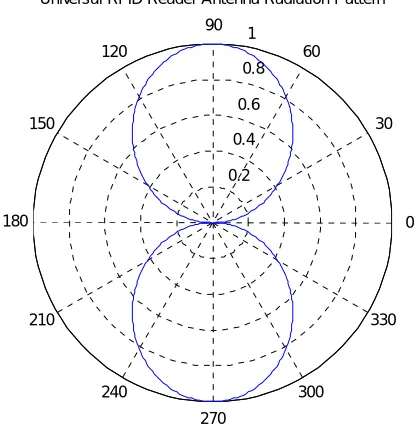
Figures 1 and 2 compares the axial ratio of optimized antenna. Figure-1 shows that a positive gain is achievable in this region. It keeps increasing up to 5GHz at the optimum frequency range. Figure-2 shows that a positive gain is achievable in this region. It keeps increasing up to 2.6 GHz at the optimum frequency range.
Figure-2. Antenna optimization using RCPSO.
0 100 200 300 400 500 600
0 0.5 1 1.5 2 2.5 3 3.5 4
Generation
Fi
tn
e
s
s
d
B
iC
Global best fitness against generations of RCPSO
Figure-3. Global best fitness against generations of RCPSO.
Finally, Figure-4 shows how the fitness of the antenna improved over the generations of RCPSO. The optimization stagnates about 480th generation. Considering the fact that this is a 12-dimensional antenna and that the RCPSO algorithm is designed for exhaustiveness of search, rather than speed of convergence, this is an acceptable value. The RFID reader antenna was optimized using classical RCPSO to provide as a reference for optimization performance. FODPSO can be converted back to classical RCPSO by setting to infinity and making all dimensions active at once.
0 100 200 300 400 500 600 700 800 900 1000
0 1 2 3 4 5 6 7 8
Generation
F
itnes
s
d
B
iC
[image:4.612.321.532.101.316.2]Global best fitness against generations of FODPSO
Figure-4. Global best fitness against generations of FODPSO.
Figure 3 and 4 compares the global best fitness against genarations of RCPSO and FODPSO. Figure-4 shows how the fitness of the antenna improved over the generations of FODPSO. The optimization stagnates about 960th generation. FODPSO algorithm is designed for exhaustiveness rather than speed ogf convergence
0.2 0.4
0.6 0.8
1
30
210
60
240
90
270 120
300 150
330
180 0
[image:4.612.80.288.310.486.2]Universal RFID Reader Antenna Radiation Pattern
[image:4.612.321.528.441.657.2]2 4 6 8
10
30
210
60
240
90
270 120
300 150
330
180 0
[image:5.612.107.261.93.279.2]Orthogonality Radiation Pattern
Figure-6. Antenna polarization using FODPSO.
2 4
6 8
10
30
210
60
240
90
270 120
300 150
330
180 0
Universal RF TOTAL PATTERN
Figure-7. Antenna polarization using FODPSO.
0.2 0.4 0.6
0.8 1
30
210
60
240 90
270 120
300 150
330
180 0
[image:5.612.337.520.151.303.2]Universal RFID Reader Antenna Radiation Pattern
Figure-8. Antenna polarization using FODPSO with 360 degree.
Figure 5 to 8: The normalized measured radiation patterns (in dBi) of the optimized antenna. (a) and (b) are at 5 GHz. (c) and (d) are at 5 GHz. (a) and (c) are azimuth
planes. (b) and (d) are elevation planes (Azimuth is parallel to the substrate). Solid and dashed lines represent and respectively.
1 1.5 2 2.5 3 3.5 4 4.5 5 -50
-40 -30 -20 -10 0 10 20
Fig 3 profile of antenna before and after optimization
Frequency in GHz
Ga
in
F
a
c
to
r
[image:5.612.102.265.310.488.2]Initial Optimization
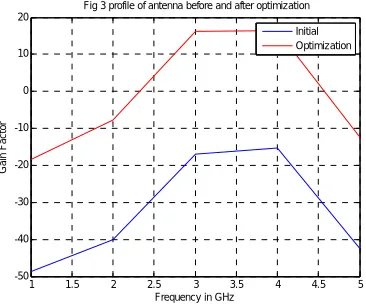
Figure-9. Antenna Gain Factor before and after optimization.
Figure-9 compares the gain of initial to optimized antenna and it shows that the optimized design covers both RFID bands precisely. The optimized design has minima at 1000 MHz and 5 GHz, which are approximately the center of UHF and SHF bands.
6. CONCLUSIONS
In this paper, a novel evolutionary algorithm, FODPSO, is applied to a micro-strip loaded circular slot antenna. The optimization process used MATLAB to implement FODPSO simulate the designs. The proposed algorithm achieved desired performance as shown by the parameters of the optimized design. This algorithm achieved high gain for greater read range. The optimized design is rather compact and exhibits practically ideal circular polarization. The orthogonal circular polarization detection array antenna is proposed. The Both-sided technology is effectively employed to realize the array antenna.
The structure of the array antenna is very simple. We have presented a low complexity transmit antenna subset selection algorithm based on the cross entropy optimization method for antenna selection OFDM wireless communication systems. The proposed selection algorithm obtains near-optimal capacity while holding very fast convergence.
FUTURE WORK
[image:5.612.120.261.517.681.2]based on the cross entropy optimization (CEO) method for antenna selection MIMO orthogonal frequency division multiplexing (MIMO-OFDM) systems. The capacity implemented by our algorithm converges to within optimal capacity obtained by exhaustive search (ES). This capacity convergence is independent of the number of selected transmit antennas. Furthermore, this algorithm requires the computational complexity of the ES method. Moreover, it also leads to the positive effect for the system bit error rate (BER) performance.
REFERENCES
[1] L. Ukkonen, L. Sydanheimo, and M. Kivikoski, “Read
range performance comparison of compact reader antennas for a handheld UHF RFID reader,” in Proc. IEEE Int. Conf. on RFID, Mar. 26-28, 2007, pp. 63-70.
[2] Qinghai Bai, “Analysis of Particle Swarm
Optimization Algorithm,” Inner Mongolia University for Nationalities. vol. 3. No.1K. Elissa, “Title of paper if known,” unpublished.
[3] Tanumay Datta and Iti Saha Misra, “A Comparative
Study of Optimization Techniques in Adaptive Antenna Array Processing: The Bacteria-Foraging Algorithm and Particle-Swarm Optimization.” IEEE Antennas and Propagation. vol. 51, pp. 69-81.
[4] Virgilio Zuniga, Ahmet Erdogan, Tughrul Arslan,
“Control of Adaptive Rectangular Antenna Arrays using Particle Swarm Optimization, ’’IEEE Conference on antennas and propagation. pp. 385-388, 2010.
[5] Yaying wu, Xiaohui Li, Yongquiong Hei, “downtilts
adjustment and power allocation algorithm based on pso for 3d mimo systems, ’’IET International Conference on information and communication Technologies. pp. 557-563, 2013.
[6] Xinghua Wu, “A Density Adjustment Based Particle
Swarm Optimization Learning Algorithm for Neural Network Design, ’’International Conference on electrical and control Engineering. pp. 2829-2832, 2011.
[7] Guo Zhitayo, Yuon jinli, Gu Junhuo, “Design and
Research of RFID Microstrip Antenna Based on
Improved PSO Neural Networks,’’9th International
conference on Antennas propagation and EM Theory. pp. 251-254, 2010.
[8] Yue-Jiao Gong, Meie Shen, Jun Zhang, “Optimizing
RFID Network Planning by Using a Particle Swarm Optimization Algorithm With Redundant Reader Elimination, ’’IEEE Transactions on industrial informatics. vol. 8, no. 4, pp. 900-912, Nov. 2012
[9] M. Wu, “Improved intelligent optimization algorithm
for the application of feedback design,” J. Conver. Inf. Technol. vol. 6, no. 9, Sep. 2011.
[10]Suwen Tang, Yunzhi Qian, Ming Chen, “Improved
Particle Swarm Optimization Algorithm Based Cross-layer Power Allocation Scheme in Distributed Antenna Systems, ’International conference on wireless communication and signal processing. pp. 1-4, Nov. 2009.
[11]Chao-Hsing Hsu, Chun-Hua Chen, Wen-Jye Shyr,
Kun-Huang Kuo, Yi-Nung Chung and Tsung-Chih Lin, ’’Optimizing Beam Pattern of Linear Adaptive Phase Array Antenna Based on Particle Swarm Optimization, ’’Fourth international conference on genetic and Evolutionary Computing. pp. 586-589, Dec. 2010.
[12]Hassan M. Elkamchouchi, May Mansour Wagih,
’’Dynamic Null Steering in Linear Antenna Arrays Using Adaptive Particle Swarm Optimization Algorithm, ’’Third international conference on wireless and mobile communications. pp. 24, March. 2007.
[13]S. Kibria, M. T. Islam and B. Yatim, “Compact dual
band RFID reader antenna designed using ramped
convergence particle swarm optimization,” Przegląd
Elektrotechniczny ISSN 0033-2097R. 89 NR 4/2013.
[14]M. T. Islam, N. Misran, T. C. Take, and M.