Art and Design Theses Ernest G. Welch School of Art and Design
8-11-2015
Damnatio Memoriae in Non-Royal Tombs: Case
Studies in the Theban Necropolis
Margaret Deane
Follow this and additional works at:https://scholarworks.gsu.edu/art_design_theses
This Thesis is brought to you for free and open access by the Ernest G. Welch School of Art and Design at ScholarWorks @ Georgia State University. It has been accepted for inclusion in Art and Design Theses by an authorized administrator of ScholarWorks @ Georgia State University. For more information, please [email protected].
Recommended Citation
Deane, Margaret, "Damnatio Memoriae in Non-Royal Tombs: Case Studies in the Theban Necropolis." Thesis, Georgia State University, 2015.
CASE STUDIES IN THE THEBAN NECROPOLIS
by
MARGARET TAYLOR DEANE
Under the Direction of Melinda Hartwig, PhD
ABSTRACT
Ancient Egyptian belief in an afterlife influenced a wide variety of architectural and art
forms. In the Eighteenth Dynasty at Thebes, non-royal officials were equipped with tombs that
were decorated to aid in their everlasting sustenance and rebirth in the hereafter as well as
commemorate them to living visitors. Part of this continuation of life involved the participation
of the funerary cult of the deceased, as well as the prompting of visitors to speak the owner’s
name and provide the required offerings—allowing (and encouraging) public access to the
decorated tomb chapel. However, some visitors wished to harm the deceased’s perpetuation of
life. In order to obliterate the memory of the tomb owner in the minds of the living and his
existence in the afterlife, enemies carefully hacked the tomb owner’s images out of the
decoration program in an act of damnatio memoriae. The owners of Theban tombs 66, 75, and
76 fell victim to this intentional destruction by contemporary hands.
CASE STUDIES IN THE THEBAN NECROPOLIS
by
MARGARET TAYLOR DEANE
A Thesis Submitted in Partial Fulfillment of the Requirements for the Degree of
Master of Art
in the College of Arts and Sciences
Georgia State University
Copyright by Margaret Taylor Deane
CASE STUDIES IN THE THEBAN NECROPOLIS
by
MARGARET TAYLOR DEANE
Committee Chair: Melinda Hartwig
Committee: Glenn Gunhouse
Lela Urquhart
Electronic Version Approved:
Office of Graduate Studies
College of Arts and Sciences
Georgia State University
DEDICATION
I dedicate the following pages to the kas of Marcille Van Liere Deane and Charles
Reynolds, two of my beloved grandparents who passed away during the research and writing of
this thesis, as well as to Rothko, my canine companion who would have been painted under my
ACKNOWLEDGEMENTS
Foremost, I would like to express my gratitude to my advisor, Dr. Melinda Hartwig, for
her expertise, patience, understanding, photographs, and hours of talking about damnatio
memoriae in Theban tombs. My other committee members, Drs. Glenn Gunhouse and Lela
Urquhart, also provided much guidance and constructive feedback throughout the research and
writing of this thesis. I am extremely grateful to have met Dr. Liz Cummins—thankful for her
encouragement, advice, and friendship. A special thanks to Drs. John Decker and Maria Gindhart
for their efforts to help me find funding. To my fellow graduate students, Megan, Brooke,
Stephanie, Brianne, and Lauren, thanks for making my experience at Georgia State University
and in Atlanta such a memorable time of my life. We did it! To Jake, thanks for always believing
in me and keeping me sane for nearly a decade. I look forward to what is in store for us in
Memphis. Last, but certainly not least, I would like to thank my parents for their unrelenting
TABLE OF CONTENTS
ACKNOWLEDGEMENTS ... v
LIST OF TABLES ... vii
LIST OF FIGURES ... viii
1 INTRODUCTION ... 1
2 CONTEXTUAL FRAMEWORK ... 3
2.1 Types of Destruction ... 5
3 LITERATURE REVIEW ... 11
4 METHODOLOGY ... 15
5 CASE STUDIES ... 17
5.1 Theban Tomb 66—Hepu ... 18
5.1.1 Transverse hall ... 20
5.1.2 Longitudinal hall... 28
5.2 Theban Tomb 75—Amenhotep-si-se ... 33
5.2.1 Transverse hall ... 35
5.3 Theban Tomb 76—Tjenuna ... 48
5.3.1 Transverse hall ... 50
6 CONCLUSION ... 58
LIST OF TABLES
Table 2.1 Attributes of the living and the dead (from Nicola Harrington 2013). ... 5
Table 2.2 Types of Destruction. ... 10
Table 5.1 TT 66 Tomb Chapel Measurements ... 19
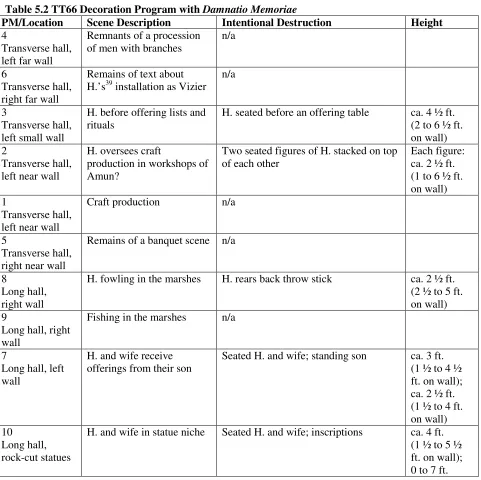
Table 5.2 TT66 Decoration Program with Damnatio Memoriae ... 19
Table 5.3 TT 75 Tomb Chapel Measurements ... 34
Table 5.4 TT 75 Decoration Program with Damnatio Memoriae ... 34
Table 5.5 TT 76 Tomb Chapel Measurements ... 49
LIST OF FIGURES
Figure 2.1 Typical New Kingdom Theban tomb schematic. ... 5
Figure 5.1 Sheikh abd el-Qurna on the West Bank of Thebes... 17
Figure 5.2 TT 66 plan (Porter and Moss). ... 18
Figure 5.3 TT 66: PM 4—Procession of men with branches. ... 23
Figure 5.4 TT 66: PM 6—Remains of text of Hepu’s installation as vizier. ... 23
Figure 5.5 TT 66: PM 3—Offering list and rituals before Hepu and his wife. ... 24
Figure 5.6 TT 66: Small wall (right wing). ... 24
Figure 5.7 TT 66: PM 1, 2—Craft Production before two figures of Hepu. ... 25
Figure 5.8 TT 66: PM 2—Two seated figures of Hepu excised from the wall. ... 26
Figure 5.9 TT 66: PM 5—Remains of a banquet scene. ... 27
Figure 5.10 TT 66: Longitudinal hall. ... 30
Figure 5.11 TT 66: PM 10—Niche with rock-cut statues of Hepu and his wife. ... 30
Figure 5.12 TT 66: PM 9—Fishing and fowling scene. ... 31
Figure 5.13 TT66: PM 7—Neferhebef giving offerings to Hepu and his wife. ... 32
Figure 5.14 TT 66: PM 7—Hepu and his wife receive offerings from their son. ... 32
Figure 5.15 TT 75 plan (Porter and Moss). ... 33
Figure 5.16 TT 75: PM 3—Amenhotep’s rewarding and presentation of gifts. ... 39
Figure 5.17 TT 75: PM 3—Seated Thutmose IV in a kiosk. ... 39
Figure 5.18 TT 75: PM 3—Amenhotep-si-se presents a bouquet to Thutmose IV. ... 40
Figure 5.19 TT 75: PM 3—Amenhotep receives reward and returns home. ... 40
Figure 5.20 TT 75: PM 6, 5—Amenhotep’s installation as HPA and purification. ... 41
Figure 5.22 TT 75: PM 5—Purification ritual. ... 43
Figure 5.23 TT 75: PM 1, 2—Amenhotep oversees the workshops and fields of Amun. 44 Figure 5.24 TT 75: PM 2—Amenhotep-si-se oversees the fields of Amun. ... 44
Figure 5.25 TT 75: PM 4—Amenhotep-si-se and his wife seated before a banquet. ... 45
Figure 5.26 TT 75: PM 4—Offering bearers. ... 46
Figure 5.27 TT 75: Detail of musicians and dancers. ... 47
Figure 5.28 TT 75: PM 4—Amenhotep-si-se's arrival to the banquet by chariot. ... 47
Figure 5.29 TT 76 plan (Porter and Moss). ... 48
Figure 5.30 TT 76: PM 5—Tjenuna offering a pectoral to Thutmose IV and Hathor. .... 52
Figure 5.31 TT 76: Looking toward PM 3. ... 53
Figure 5.32 TT 76: PM 3—Priest offering bouquet of Amun to Tjenuna and wife. ... 53
Figure 5.33 TT 76: PM 4—Upper register of Tjenuna's parents seated before offerings. 54 Figure 5.34 TT 76: PM 4—Lower register of Tjenuna’s parents-in-law. ... 54
Figure 5.35 TT 76: PM 2—Tjenuna inspecting the cattle. ... 55
Figure 5.36 TT 76: PM 1—Tjenuna offering braziers. ... 56
1 INTRODUCTION
A proper burial was essential for the successful transition into a transfigured being in the
afterlife. The tomb itself, the ‘home for eternity,’ served as the catalyst for this shift each ancient
Egyptian diligently prepared to make. Each aspect of the tomb held an important meaning for the
owner and their funerary cult. In the Eighteenth Dynasty of the New Kingdom, the structure,
layout, and decoration of the tomb of a non-royal official was thoughtfully chosen to
commemorate his life and ensure a successful transition into the afterlife. The tombs of officials
that served the pharaoh in varying capacities dotted the western desert cliffs and were oriented
towards their ruler’s mortuary temple or to the Temple of Amun at Karnak on the opposite bank.
Similar in function to the nearby pharaohs’ mortuary temples, these tombs served the deceased
officials’ funerary cult and perpetuated their memory for eternity—or until the deceased became
a victim of damnatio memoriae.1 As the Latinized term devised by modern day scholars
suggests, damnatio memoriae references the damnation of an individual’s memory into oblivion.
This phenomenon has occurred from the onset of the earliest civilizations, but it is best known
from Roman imperial portraiture.2 However, the earliest practice of damnatio occurred
thousands of years before throughout the ancient Near East in response to the power represented
by an image.
As the focus of this study, the decorated walls located in the above ground tomb chapel
incurred intentional destruction to the tomb owner by enemies. My first exposure to this
phenomenon was through photographs and line drawings of the decoration program of Theban
1 Melinda Hartwig, Tomb Painting and Identity in Ancient Thebes: 1419-1372 BCE (Turnhout, Belgium: Brepols,
2004), 5-8.
2See Eric Varner, Mutilation and Transformation: Damnatio Memoriae and Roman Imperial Portraiture. In Roman
tomb 75 of se, a Second High Priest of Amun. Every instance of
Amenhotep-si-se’s large, painted figure was chiseled out along and within the outline of his image. What does
intentionally damaging an image of a person actually mean?
Sifting through the different categories of destruction (defined in the next section), the
following discussion will address the damage as the result of ill-intentioned, enemy-driven
damnatio memoriae found in the tombs of officials that are securely dated to the reign of
Thutmose IV of the Eighteenth Dynasty (1400-1390 BCE). The significance of the tomb to the
owner and the decoration in the tomb chapel (discussed in the next section) gives insight into
how detrimental the removal of the deceased’s figure was to their eternal well-being. For the
ancient Egyptians (and other cultures of the ancient Near East), representations of people, deities,
and objects were imbued with the life force of what is signified in the various mediums.3 The
three Theban tombs (denoted as TT from here on) for analysis are those of Hepu (TT 66),
Amenhotep-si-se (TT 75), and Tjenuna (TT 76). In addition to the tomb chapel walls themselves,
I use ancient Egyptian religious and mortuary literature to understand the relationship between
the various components of ancient Egyptian identity to the tomb structure and decoration. I
propose that the carefully excised images of an individual were attacked to mimic acts of
violence to a human body with the intention to act on two levels—to ritually “kill” the living
entity embodied by the image and to erase their memory in the minds of the living.
3 Natalie M. May,
Iconoclasm and Text Destruction in the Ancient Near East and Beyond (Chicago: The University
2 CONTEXTUAL FRAMEWORK
‘Little is in life on earth, Eternity is in the necropolis.’ – (Amen)user (TT 131), 18th Dynasty4
All life long, ancient Egyptian officials prepared for the inevitable day of departure to the
‘Field of Reeds.’ Their status in life determined what kind of burial and funerary equipment
could be afforded. Ideally, a proper burial as attested in the literature asks for, above all, “a
goodly burial in the west.”5 Regardless of how the official received his portion of the necropolis,
once the tomb was hewn from the rock cliff, the walls provided the necessary information to
assist the tomb owner on two levels—to mirror his status in life into the afterlife and to maintain
his position and importance to future generations who would provide for his funerary cult.6
A number of aspects constituted an individual in life and death (Table 2.1). Each of the
following components, or “manifestations,” of a person had their own afterlife. First and
foremost, the physical body was preserved in the likeness of the deceased to serve as the eternal
home for the ka, ba, heart (ib and h 3ty), and shadow.7 The body was mummified and contained
the ib, which was believed to be the seat of moral character and would be weighed against the
feather of ma’at in hopes of the deceased being declared by Osiris as m3 h rw, or “true of
voice.”
There are three different levels of typical Eighteenth Dynasty rock-cut tombs with distinct
functions and relationships to ancient Egyptian religion (Figure 2.1). Accessible to the public, the
tomb chapel rests between the two opposing realms of the sun (upper level) and underworld
(lower level). The middle ground, starting in the forecourt leading into the tomb chapel proper,
served as a meeting point between the living and the dead, with hopes of an intervention by their
4 Aidan Dodson, The Tomb in Ancient Egypt (London: Thames and Hudson, 2008), 8. 5 Hartwig, 22.
6 Dodson, 13-14.
7 Hartwig, 5; Nicola Harrington,
Living with the Dead: Ancestor Worship and Mortuary Ritual in Ancient Egypt
departed loved one. Required offerings, corporal or verbal, sustained the tomb owner’s ka, or life
force, within the tomb. As a laud to the solar cult, the uppermost portion of the tomb structure,
open to the rays of the sun, consisted of a superstructure in the shape of a pyramid or façade with
recesses for funerary cones and, sometimes, a place for a stelophorus statue containing a solar
hymn. Void of light, the lower level echoed the cavernous land of Osiris where the body would
be laid to rest. The shaft would typically be cut into the floor of the inner chamber before the
statue niche and end in a burial chamber. The mummified corpse of the tomb owner was placed
in the burial chamber. Further protected by sarcophagi and coffins, the mummy functioned as the
home and final resting place for the dead person’s ba and ka. Together, the name, mummy,
statues, and two-dimensional references to the tomb owner worked in conjunction with his
mortuary cult to eternally perpetuate his existence on earth and in the afterlife.8
In the tomb chapel, visitors, encouraged to speak the deceased’s name, deposited offerings
and letters or participated in festivals within the confines of the liminal space of the tomb chapel.
Eighteenth Dynasty tombs were typically an inverted T-shape in plan. This layout clearly divided
the eastern land of the living from the western land of the dead in hall form. Despite the actual
layout of the tomb, each tomb was ritually placed on an east-west axis. In combination with text,
each scene adorning the walls of the transverse hall of the T-shaped tomb were carefully picked
to relay significant events and the most important aspects of the tomb owner’s career. Subtle and
more obvious references to rebirth, domination over chaos, and continuous cycles of the seasons
also decorate the walls throughout the transverse and longitudinal halls.9 As the largest, most
elaborate, and most frequently depicted figure, the tomb owner was easy to identify—and thus an
easy target for intentional destruction by enemies. Blickpunktsbilder, or the focal walls opposite
8 Hartwig, 5-7.
the tomb entrance, receive the most natural light and highlight significant scenes, usually
showing the close relationship between the pharaoh and the tomb owner or an equally important
aspect of their career.10
Table 2.1 Attributes of the living and the dead (from Nicola Harrington 2013).
Attributes of the living Additional
attributes gained after death
Objects created for the continuation of the dead to living world
Other
Ka (k3; vitality) Corpse (h 3t) Tomb (is, mr, 3h t) Heka (h k3; magic)
Ba (b3; movement) Mummy (s’h ) Statues (twt) Akh (3h ; powerful state of entire being)
Name (rn; individuality) Stelae (‘h ’, wd) ib-heart (emotion, intellect,
morality); h 3ty-heart (physical
organ)
Offering tables (‘b3)
ht-body (physical appearance) Anthropoid busts (twt)
Shadow (s wt; movement) Shabtis (us bty)
Figure 2.1 Typical New Kingdom Theban tomb schematic.
2.1 Types of Destruction
All of the elite tombs located in the western desert have some form of damage. To
differentiate damnatio memoriae, all types of damage need to be outlined. Enemy-driven
destruction in the tomb chapels of the officials in the Theban cemetery can be detected in a few
forms. According to Alan Shulman’s study from 1969, damnatio memoriae is “the practice of
destroying the memory and very existence of a person from the knowledge of both his
contemporaries and posterity. To the Egyptians this practice had a dual purpose—to wipe out the
victim’s memory on earth and to destroy his existence in the afterworld.”11 His definition
requires a threefold condition that I cannot agree with.For Shulman, the practice must consist of
the removal of every reference to both the individual’s name and image on all of their
monuments. By his definition, a true damnatio memoriae must consist of both the victim’s name
and image.12 However, this depends on a level of literacy unattainable by the ancient Egyptian
population at large. In regards to the figure of the tomb owner, his or her image was removed
typically in one of two ways. One mode of execution partially removed the figure, with focus
given to the face as the seat of identity. The other mode was more thorough as it removed the
entire image of the tomb owner, carefully following the outline of his or her figure. Oftentimes,
damage to the name was rarely executed fully, if at all. Ann Macy Roth describes eight modes of
mutilation carried out on Hatshepsut’s relief-cut images: 1 – scratching with a pointed
implement, 2 – chipped silhouette with a flat chisel, 3 – rectangular roughening, 4 – smoothing
and plastering, 5 – replacement of her figure with an inanimate object or replacement of her
cartouches, 6 – patching, 7 – covering, and 8 – dismantling.13 The painted tomb chapels of
officials on the west bank of Thebes in my study only contain Roth’s second mode of destruction
with clearly defined chisel marks following (and occurring within) the outline of the figures.
A large amount of destruction is simply ‘wear and tear’ over the few thousand years of
their existence. Natural destruction can take many forms, such as earthquakes and other natural
disasters. Additionally, not all tombs were created equally. The quality of the rock cliffs varies
11 Alan Shulman, “Some Remarks on the Alleged ‘Fall’ of Senmut,” Journal of the American Research Center in Egypt, Vol. 8, 36.
12 Ibid, 37.
13 Betsy Bryan, “Episodes of Iconoclasm in the Egyptian New Kingdom,”
across the desert. Rock-cut tombs cut into the friable limestone led to a bad state of repair from
the onset, while other tombs weakened and collapsed over time. Rock-cut tombs honeycombed
the desert cliffs and occasionally newer tomb construction would accidentally encroach on an
earlier tomb. This type of natural and accidental destruction is fairly easy to recognize. It consists
of large visible cracks, collapsed walls, and holes with signs of repair. Furthermore, wasps were
no strangers to the Theban tombs. For those tombs inhabited by wasps, nests were attached to the
ceilings and walls—leaving telltale outlines and damaging underlying decoration.
Usurpation of tombs could also result in intentional destruction of the original tomb
owner’s name and of specific aspects of the decoration program, including the biographical texts,
which were replaced with the name and personal details of the new owner.14 Even though tomb
chapels were open to the public, a group of Nubian mercenaries, called the Medjay, were
employed in the necropolis to guard the tombs as best as they could from those who would harm
them. Some cases of usurpation could be the result of tombs abandoned by the funerary cult—
potentially a few generations after the owner was buried.15 Ancient Egyptians from later
dynasties could also benefit from the existing tomb by altering the personal information to
transfer the magical imagery and text to themselves.16
Dramatic changes in the ancient Egyptian religion prompted another form of destruction.
Enforced by Akhenaten, the religious reform under his rule favored a single god in the form of
the sun disk called the Aten. Amun, the hidden one, was quickly abandoned in favor of the all
14 Examples in the Eighteenth Dynasty include TT 22, TT 54, and TT 77 from Porter and Moss’ Topographical Bibliography of Ancient Egyptian Hieroglyphic Texts, Reliefs, and Paintings, Vol. I The Theban Necropolis
(Oxford: Clarendon Press, 1960).
15 Nicola Harrington notes in Living with the Dead that the deceased’s memory typically faded from social memory
after a couple of generations before being absorbed into the collective ancestor community, 29.
16 During the tumultuous times of the Third Intermediate Period, tombs were reused and usurped as the result of
too visible Aten.17 The resulting Amarna destruction was thoroughly executed throughout the
Theban necropolis by the agents of Akhenaten. The top priority of this type of destruction was to
erase any mention of the beloved Theban god, Amun. However, as Peter Der Manuelian points
out, the semi-literate Atenist agents scanned the walls for Amun and ended up taking out words
with the mn sign (a game board). Misreadings of mni (to perish), mn (to establish), and mn’t
(nurse) were removed since their spellings included the same hieroglyph in the spelling of
Amun.18 Likewise, other targeted gods, such as Amun’s consort Mut, were wrongfully excised.19
Represented by the single vulture hieroglyph, the goddess Mut was effaced from monuments
together with Amun. The same misreading of the vulture-mwt sign occurred in contexts clearly
referring to words such as “mother” or names that incorporate the protective goddess.
While pushing his new monotheistic religion, Akhenaten banned the traditional
polytheistic religion along with the hieroglyphs that represented the previous worship of gods
represented by three ntr signs or the ntr sign with the three strokes of plurality.20 In addition to
undermining the sole worship of the Aten, ntrw was also closely associated with one of Amun’s
epithets as “king of the gods.” Interestingly, ntrw written with three strokes of plurality was
frequently overlooked by the Atenists. It might be that signs associated with gods (Imn, mwt,
ntrw) were thought to remind ancient Egyptians familiar with the traditional religion of the
previous, now abandoned, gods, and had to be removed because of such associations. It is
possible that the Akhenaten followers were given a list of words to banish from the monuments
and took care of it without knowledge of Egyptian vocabulary and grammar as evidenced by the
inconsistent and occasionally incorrect execution. As far as images are concerned, the sem priest
17 Peter Der Manuelian, “Semi-Literacy in Egypt: Some Erasures from the Amarna Period,” Gold of Praise: Studies on Ancient Egypt in Honor of Edward F. Wente (Chicago: Oriental Institute, 1999), 286.
was the target of Amarna destruction in the Theban tombs of officials. Identifiable by the leopard
or panther skin garment worn across their body, sem priests were systematically removed from
the decoration program because of their “historical costume,” described by Jan Assmann as the
antithesis of Amarna art; the art of the Amarna Period aimed to only represent reality.21 Serving
as one of the most important figures for the sustenance of the deceased in the tomb along with
the lector priest, a sem priest is typically shown before the tomb owner and his wife, providing
the required offerings to sustain them. After the death of Akhenaten, the religion quickly reverted
back to the traditional and favored worship of Amun and the entire Egyptian pantheon of gods.22
The next type of destruction would occur a few thousand years later, but similarly by
people who were monotheists. Coptic Christians took refuge in western Thebes, specifically in
tombs of the officials, either to live as monks or to avoid Roman taxation.23 In addition to
dwellings, ancient Egyptian tombs were sometimes converted to small churches and shrines.
Evidence of Coptic Christian occupation in the rock-cut tombs of western Thebes is indicated by
archaeological evidence of alterations to the existing structure, such as the addition of doors,
shelves, and expansions into other tombs. Other modifications to the decoration program include
graffiti scratched into the wall’s surface in Coptic or covering existing scenes with a coat of
plaster or whitewash on which to apply their own religious motifs.24 The eyes, and sometimes
faces, of painted individuals were also removed from the wall to prevent the images from
21 Jan Assmann, Death and Salvation in ancient Egypt (Ithaca: Cornell University Press, 2005), 303.
22 It has been noted by Norman de Garis Davies in The Tomb of Puyemre at Thebes (TT 39) that the hacked out
mentions of the name “Amun” were restored into the relief decoration as part of secondary post-Amarna
reconstructions: “The votaries of the worship of Aton entered it and erased the name of Amon; Ramesside piety or policy tried to make good the injury some generations later, but used neither skill nor intelligence,” xviii. For secondary post-Amarna restorations of state monuments see Peter Brand, “Methods Used in Restoring Reliefs Vandalized During the Amarna Period” and “Secondary Restorations in the Post-Amarna Period.”
23 Alexander Badawy,
Coptic Art and Archaeology: The Art of the Christian Egyptians from the Late Antique to the Middle Ages (Cambridge: M.I.T. Press, 1978), 33.
“looking” at the new inhabitants, who were apparently fearful of the original pagan elements of
decoration.25
Table 2.2 Types of Destruction.
Type Description
Natural Cracked and collapsed walls (earthquakes, poor stone quality), wasp nests
Usurpation Removal of original tomb owner’s name, painted name of usurper, changes in decoration (text, image)
Amarna Amun (text, image), other gods (text, image), sem-priests, rams and other animals/symbols
sacred to Amun(-Ra)
Coptic Focus on faces—eyes especially, gods, graffiti, Coptic crosses, whitewash or painting over existing wall decoration
Enemy-Driven Partial and full body of tomb owner (sometimes his wife), name of tomb owner
25 Betsy Bryan, “Memory and Knowledge in Egyptian Tomb Painting,”
3 LITERATURE REVIEW
In the context of ancient Egypt, scholarship on damnatio memoriae primarily focuses on the
most obvious and thorough examples in the royal sphere. Most famously, ancient Egyptians
attempted to rewrite history by removing the name and images of Hatshepsut from her
monuments. Daughter of the pharaoh Thutmose I and his primary wife Ahmose, Hatshepsut
married her half-brother Thutmose II, the son of the pharaoh’s secondary wife Mutnofret. After
the death of her brother-husband, Hatshepsut shared the rule of Egypt with her step-son and
nephew Thutmose III. Eventually, Thutmose III ordered the removal of Hatshepsut from
monuments, most likely to ensure his son Amenhotep II’s uncontested rise to pharaoh.26 This
intentional destruction left her two-dimensional images full of chisel marks and her statues
obliterated, surviving today only by conservationists piecing her back together. The royal
examples of this public display of eradication surely provided the inspiration for the private
execution and similar acts in the officials’ tombs in the Theban necropolis.
One of the earliest mentions of damnatio memoriae was published in the Journal of the
American Research Center in Egypt in 1969 by Alan Shulman, entitled “Some Remarks on the
Alleged “Fall” of Senmut.”27 Senmut provides an interesting case study for the investigation of
what damnatio memoriae is and how it can be carried out on both two- and three-dimensional
monuments. In the previous section, I referenced Schulman’s definition of this practice. His
explanation of damnatio memoriae must include “both the effacement of the likeness of a person
on whom it was to be inflicted and simultaneous and complete erasure of his name wherever it
occurred.”28 This refers to the concept of the power of a person’s name, which constitutes an
essential component of their identity. While I agree that, whenever possible, this would be the
ideal method of execution for a true damnatio memoriae, it is too limiting in its scope and lacks
the nuance needed to define this act. In the cases throughout the Theban necropolis, it is rare to
find the removal of both the targeted individual’s name and image in every single occurrence.
However, the image of the tomb owner is frequently removed from his most obvious
representations throughout the tomb. The fact that the tomb owner’s image is more frequently
removed than his name would account for the literacy level of the offender carrying out the
defilement. Shulman places emphasis on the name, and thus ‘identity,’ of the tomb owner as the
most important aspect of the deceased—noting that “even if every other vestige of him had been
destroyed, as long as [the name] was intact, the identity of its owner was intact.”29 In other
words, as long as their identity was recognizable, the person’s existence was safeguarded. The
frequency of instances in which only images of the tomb owner were deliberately hacked out
questions this line of thought.
About thirty years later, Patricia Bochi published an article called “Death by Drama: The
Ritual of Damnatio Memoriae in Ancient Egypt.”30 Bochi’s focus is the importance of identity
(social and visual) with an emphasis on ritual remembrance. Likewise, losing one’s identity
resulted in damnation. Instead of examining existing monuments created by the person, the
author looks to figurines created to be broken or curse the identified individual.31 It is her
argument that the manufacture of these objects (figurines of desecration—the voodoo doll and
pseudo-tablet types) express a higher level of a ritualized act over the mutilation of existing
images.
29 Ibid, 36.
30 Patricia A. Bochi, “Death by Drama: The Ritual of Damnatio Memoriae in Ancient Egypt,”
Göttinger Miszellen
171 (1999), 73-86.
In a study of damnatio memoriae carried out in the tomb of Ay (KV-23), Richard Wilkinson
was able to determine the number of agents involved in the purposeful destruction of Ay’s
image, his ka’s image, and his name by a close examination of the chisel width and depth.32 Even
more fascinating, the direction and patterning of the chisel marks was used by Wilkinson to
suggest whether the individual was left- or right-handed and what his approximate height might
have been. Such a study could prove useful in determining how many people could be involved
in the obliteration of an official to help answer questions about who could authorize the
systematic removal and further implications on the tomb owner’s second, final, death.
In 2012, the University of Chicago hosted a conference entitled Iconoclasm and Text
Destruction in the Ancient Near East and Beyond. The resulting publication consists of papers on
intentional destruction from the earliest instances in Mesopotamia to late medieval Christianity.
Egyptologists Betsy Bryan and Robert Ritner contributed chapters on New Kingdom iconoclasm
and the power of images (and consequential image destruction) to ancient Egyptians,
respectively. Betsy Bryan approaches this act of intentional destruction with examples dating to
the Eighteenth Dynasty. Royal examples include the erasure of Hatshepsut and Akhenaten
(Amenhotep IV) from their monuments. Additionally, she addresses Amarna destruction,
targeting the traditional gods with particular attention to Amun, set in motion by Akhenaten in at
least year eight of his reign.33 In the non-royal sphere, Theban tombs of officials, the focus of my
study, are discussed. Bryan highlights important pitfalls in the analysis of iconoclasm in private
tombs as well as the difficulty, and impossibility, of determining the exact reasons and
organizers behind the act. Brilliantly laid out, Bryan’s study concludes by attributing the
32 Richard H. Wilkinson, “Controlled Damage: The Mechanics and Micro-History of the
Damnatio Memoriae
mutilation of images to “hindering their potential activity in the world,”34 not the resulting death
of the embodied spirits. While I agree that this was certainly part of the reason for destruction of
the tomb owners’ images, I cannot fully abandon the consequence of the obliteration of the
victims’ components living within the images (ka, ba, and akh) by the hands of the executers.
In “Killing the Image, Killing the Essence: The Destruction of Text and Figures in Ancient
Egyptian Thought, Ritual, and ‘Ritualized History,’” Robert Ritner contextualizes the ancient
Egyptian perception of images and the link with iconoclasm. He looks to the Egyptian language
to shed light on their insight and nuances of the terms for “images,” concluding a close
connection with an understood “point of contact with the represented entity.”35 In sum, the
existence of an image (or text) ensured the existence of the person or object’s essence. Likewise,
their destruction resulted in the death of the entity. Ancient Egyptians, in response to the fear of
being forgotten to the living and obliterated from the afterlife, acquired a number of insurance
policies to serve as vehicles for their spirits after death—the mummy, the coffin, images, texts,
and statues. There is no way to know if these additional objects, located within the tomb or at
local temples, suffered damage at the hands of enemies. However, the function of the tomb—as a
sacred space of commemoration and resurrection of the deceased—points toward the meaning
behind the harm of its images and texts by adversaries.
34 Ibid, 377.
35 Robert K. Ritner, “Killing the Image, Killing the Essence: The Destruction of Text and Figure in Ancient
4 METHODOLOGY
If one looks hard enough, intentional destruction can be found everywhere. I observed
partial and full body destruction in numerous Theban tombs in many reigns of the Eighteenth
and Nineteenth Dynasties and started to see “destruction” where it was almost impossible to tell
if it was deliberate or not. In order to ensure the intentional destruction laid out in this study is, in
fact, damnatio memoriae, the following parameters have been put in place. To be certain the
study only examines the destruction by the tomb owners’ contemporaries, I have limited the
evidence to a single reign, firmly dated to that of Thutmose IV in the Eighteenth Dynasty based
on the presence of the pharaoh’s cartouche in the tomb. As a study examining the decoration
program of walls, access to photographs were necessary to determine eligible tombs. Prof.
Melinda Hartwig provided photographs of officials’ tombs that served Thutmose IV taken during
the research stage of her dissertation on tomb painting and identity in Thebes. Only tombs in
which the tomb owners’ images have been hacked out fully, following the outline of the figure,
were chosen; other types of damages allow too much speculation on destruction that ‘could’ be
considered damnatio memoriae or executed for reasons unrelated to the present discussion. Of
the seven tombs with photographic evidence, three tombs exhibited the main criterion of
damnatio memoriae with the full body excision of deceased and often times their relatives—
Theban tombs 66, 75, and 76.36 These parameters will establish the contemporary practice of
damnatio memoriae and construct a pattern from the available evidence.
As extensions of the deceased’s mummy, I argue that his or her two- and
three-dimensional images represented the animated corpse and, therefore, could be subjugated in death
by ritually “killing” the vehicle of his essence. The end result was the hacked pattern silhouette
36 Eliminated due to the lack of fully intact decorated walls, TT 116 does feature the anonymous tomb owner’s
of the victims’ representations, which had two meanings for ancient Egyptians. To the living
visitors to the tomb, the ghost-like images tainted the memory of the deceased. To the dead,
defiled figures represented in the tomb, the essence of their being ceased to exist as their
The following case studies attest to the varied executions of enemy
well as the difficulty of discerning
76) are situated on the prominent and highly sought
the tomb owners served the pharaoh Thutmos
traces of damnatio memoriae can be detected on the wall
examination special attention will be given to the particular scenes in whic
[image:28.612.72.541.289.592.2]damage occurs as well as the loca
Figure 5.1 Sheikh abd el-Qurna on the West Bank of Thebes.
5 CASE STUDIES
The following case studies attest to the varied executions of enemy-driven destruction as
well as the difficulty of discerning such damage. All of the tombs in this study (TT 66, 75, and
the prominent and highly sought-after hill of Sheikh abd el-Qurna. Each of
the tomb owners served the pharaoh Thutmose IV who reigned 1400 to 1390 BC
can be detected on the wall surfaces of every tomb chapel. In the
pecial attention will be given to the particular scenes in which the intentional
damage occurs as well as the location on the wall.
on the West Bank of Thebes.
driven destruction as
in this study (TT 66, 75, and
Qurna. Each of
e IV who reigned 1400 to 1390 BCE. Similarly,
surfaces of every tomb chapel. In the
5.1 Theban Tomb 66—Hepu
Hepu, the owner of TT 66, served as a Vizier (t3t) to Thutmose IV, despite his modest
sized tomb. As the most powerful position below the pharaoh, the Viziers of the north and south
delegated the tasks of Egypt’s large bureaucracy during Thutmose IV’s reign. Following
Friederike Kampp-Seyfried’s tomb types, TT 66 is classified as type 5b, a typical Eighteenth
Dynasty inverted T-shaped tomb plan with a forecourt, a transverse hall, and a long hall ending
in a statuary shrine to Hepu and his wife, a Chantress of Amun (shm yt nt [Imn]), Renni (
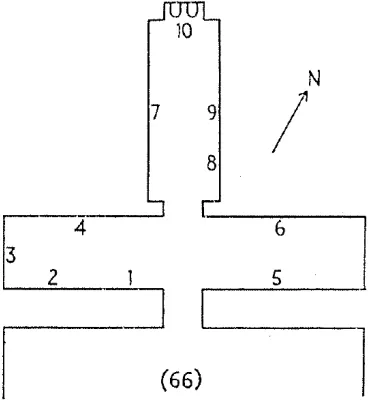
Rn-n3y) (Figure 5.2).37 The overall condition of the tomb chapel is fragmentary at best. However,
what does remain of the decorative program shows Hepu as a worthy recipient of a funerary cult.
Entire walls have suffered extensive damage largely due to what appears to be natural causes.
Sheila Whale notes the poor condition of the tomb and states that Hepu and his wife “appear to
[image:29.612.78.263.409.609.2]have been damaged by enemies.”38
Figure 5.2 TT 66 plan (Porter and Moss).
37 Friederike Kampp-Seyfried, Die thebanische Nekropole Zum Wandel des Grabgedankens von der XVIII. bis zur XX. Dynastie (Mainz, 1996), 287.
38 Sheila Whale, The Family in the Eighteenth Dynasty of Egypt: A Study of the Representation of the Family in
Private Tombs (Sydney: The Australian Centre for Egyptology, 1989), 202. Nina de Garis Davies also notes that
Table 5.1 TT 66 Tomb Chapel Measurements
Location Length Width Height
Transverse hall 10.48 m. (34 ft. 2/3 in.)
2.07 m. (6 ft. 9 ½ in.)
2.68 m. (8 ft. 9 ½ in.) Longitudinal hall 5.4 m.
(17 ft. 8 2/3 in.)
2.07 m. (6 ft. 9 ½ in.)
2.3 m.
[image:30.612.67.548.161.641.2](7 ft. 11/20 in.)
Table 5.2 TT66 Decoration Program with Damnatio Memoriae
PM/Location Scene Description Intentional Destruction Height 4
Transverse hall, left far wall
Remnants of a procession of men with branches
n/a
6
Transverse hall, right far wall
Remains of text about
H.’s39 installation as Vizier n/a
3
Transverse hall, left small wall
H. before offering lists and
rituals H. seated before an offering table ca. 4 ½ ft. (2 to 6 ½ ft. on wall) 2
Transverse hall, left near wall
H. oversees craft
production in workshops of Amun?
Two seated figures of H. stacked on top of each other
Each figure: ca. 2 ½ ft. (1 to 6 ½ ft. on wall) 1
Transverse hall, left near wall
Craft production n/a
5
Transverse hall, right near wall
Remains of a banquet scene n/a
8
Long hall, right wall
H. fowling in the marshes H. rears back throw stick ca. 2 ½ ft. (2 ½ to 5 ft. on wall) 9
Long hall, right wall
Fishing in the marshes n/a
7
Long hall, left wall
H. and wife receive
offerings from their son Seated H. and wife; standing son ca. 3 ft. (1 ½ to 4 ½ ft. on wall); ca. 2 ½ ft. (1 ½ to 4 ft. on wall) 10
Long hall, rock-cut statues
H. and wife in statue niche Seated H. and wife; inscriptions ca. 4 ft. (1 ½ to 5 ½ ft. on wall); 0 to 7 ft.
5.1.1 Transverse hall
The small wall (PM 3) at the end of the left wing of the transverse hall is an example of a
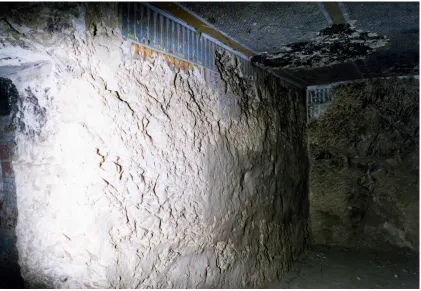
number of kinds of destruction on one wall (Figure 5.5). The wall surface is mostly rugged and,
while the cause of the damage is unknown, the absence of clearly defined marks of damnatio
memoriae prohibits the assumption of intentional destruction. An entire wall in this condition
could be the result of poor stone quality or naturally occurring disasters. However, this wall has
suffered numerous modes of destruction over time. The initial layer of destruction is the
intentional mutilation of the figures of Hepu and his wife receiving offerings and rituals of which
currently his hacked out head and upper chest area survive.40 As a whole, the text is mostly
intact. In the area directly above Hepu’s head, however, the text appears to be removed with the
same chisel marks as his body, possibly signifying a true damnatio memoriae by the removal of
his name in conjunction with his figural outline. Noticeable throughout the entire tomb chapel,
but particularly in the left wing of the transverse hall, is a layer of a black substance coating the
wall’s surface. The discoloration appears to have bonded to certain pigments more strongly than
others. For instance, the blue paint in the frieze decoration is more resistant than the color used
inside the design, which can be assumed red as seen on a less effected wall, and is now a
saturated black. Based on the settlement of the black substance and the resultant darkening of the
wall surface, the fire would have occurred after the enemy-driven defacement of Hepu and the
subsequent natural damage to the lower portions of the wall.41 Exposed rock, rough and random,
is consistent with the natural destruction defined at the start of this paper. It may also be the
consequence of the fire, which led to the destabilization of the decoration that later fell off the
40 Whale, 203. Nina Davies, 11. Each author states the presence of Hepu’s wife in the original scene, but her
presence is difficult to see within the damage—making it hard to tell if her figure is hacked out like her husband’s.
wall. In contrast to the lower portion of the wall, the upper left damage occurred after the fire, as
it is stark white with no traces of black residue.
The long walls on either side of the offering scene are in poor condition with only
fragments of the original decoration in place (Figures 5.3 and 5.4). Similarly to the small wall,
the large, rugged areas of damage do not appear to be the result of intentional destruction with
the goal of damnatio. As Vizier, Hepu oversaw the production of equipment and fine products
for the benefit of the state. Fulfilling this duty in the tomb decoration, two depictions of Hepu
stacked on top of one another show him seated before three smaller registers of craftsmen
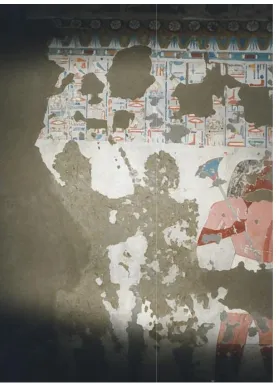
(Figure 5.8). On each chair, only the ghost image of the Vizier remains. Once again, the full
body of Hepu is carefully removed from the wall’s surface in each instance, following his
outline. The same approach to the removal of Hepu’s image was executed as the ghost images
are made of chisel marks that follow the outline of his figure and the implements of authority he
holds—pre-dating the fire. The text before the upper excised Hepu appears largely untouched
except for a couple of damaged areas that appear to be the result of Amarna destruction as “the
House of Amun” has been erased. Interestingly, “the Vizier, Hepu” was also removed, but this
seems to be the consequence of the Atenist agents removing “Amun” from the wall—accidently
removing this nearby portion of text. An investigation of the scenes with minor figures
completing tasks on behalf of Hepu reveal yet another layer of destruction. There are many
clearly defined scratches that correspond with one craftsman’s face, arms, and the Thutmose IV
statue he works on. Immediately below, more graffiti-like scratches appear in the form of
continuous “M”s. The scratches appear lighter than the tinted surface and might suggest a later
date than the fire and the damnatio memoriae of Hepu’s figure (or have been filled by
Opposite this wall, an even more fragmented wall leaves traces of males carrying
branches in a procession (Figure 5.3). Entirely damaged, the right wing of the transverse hall
address an issue when assessing the damnatio memoriae of the tomb owner since every scene
Figure 5.3 TT 66: PM 4—Procession of men with branches.
[image:34.612.74.495.392.683.2]Figure 5.5 TT 66: PM 3—Offering list and rituals before Hepu and his wife.
[image:35.612.73.490.391.676.2]5.1.2 Longitudinal hall
The longitudinal hall, however, provides more instances of the removal of Hepu from his
tomb chapel (Figure 5.10). Remnants of a fishing and fowling scene are located on the right wall
of the longitudinal hall (PM 8 and 9). Hepu, about to release his throw stick, is once again fully
and carefully removed from the marshy swamp as seen in Figure 5.12. One would expect to have
a mirrored image of Hepu fishing with a spear to balance the fowling pose, but the section of the
wall that would have shown this is completely damaged as seen in the left portion of Figure 5.12.
A male figure stands on the prow of the boat, most likely a son.42 The area is damaged by natural
causes because of the haphazard portions of the wall missing, but the minor figure was not
targeted as part of the damnatio memoriae campaign. Directly across from the fishing and
fowling scene, Hepu and his wife, now removed, are the recipients of offerings from their son
who is also removed (Figures 5.13 and 5.14). Unfortunately the scene of seated Hepu and his
wife has suffered subsequent damage after their initial damnatio memoriae, but the feet of Hepu
follow the thorough mutilation of his figure throughout the rest of the tomb chapel (Figure 5.14).
The tomb owner’s son, Neferhebef who is labeled as a wab priest of Amun, also suffered a full
body defacement because he was represented in the capacity of a funerary sem priest, wearing
the leopard or panther skin garment that caused his removal by the Atenists.43Sem priests, not
necessarily the low priestly rank of Neferhebef, were systematically removed from tombs as part
of Akhenaten’s religious revolution. However, he was removed later than the figures of his
parents as part of Amarna destruction, along with the name “Amun” throughout the tomb,
because of his role as sem priest to his parents’ mortuary cult. At the end of the longitudinal hall,
rock-cut statues of Hepu and his wife are heavily mutilated (Figure 5.11). All inscriptions have
42 Whale, 203.
been removed, but Hepu is most likely the figure on the left and the slimmer figure on the right is
probably his wife.44 Each and every depiction of Hepu and his family have been systematically
removed from the life-sustaining decoration program of the tomb chapel despite the poor
condition of many of the walls.
Figure 5.10 TT 66: Longitudinal hall
Figure 5.11 TT 66: PM 10—Niche with rock TT 66: Longitudinal hall.
Figure 5.13 TT66: PM 7—Neferhebef giving offerings to Hepu and his wife.
5.2 Theban Tomb 75—Amenhotep-si-se
The Second High Priest of Amun during the reign of Thutmose IV, Amenhotep-si-se, is
the owner of Theban tomb 75. Classified as type 5b, the plan of Amenhotep-si-se’s house for
eternity is a typical inverted T-shape tomb of the Eighteenth Dynasty (Figure 5.15).45 This tomb,
as with that of Hepu, also suffered significant damage to entire walls, typically leaving only
fragments for researchers to work with. Only the transverse hall will be discussed since the
longitudinal hall has lost nearly all the efforts of the ancient Egyptian artists.
Figure 5.15 TT 75 plan (Porter and Moss).
Table 5.3 TT 75 Tomb Chapel Measurements
Location Length Width Height
Transverse hall 14.9 m. (48 ft. 10 ¾ in.)
1.9 m.
(6 ft. 2 4/5 in.)
2.65 m. (8 ft. 8 1/3 in.) Longitudinal hall 4.8 m.
(15 ft. 9 in.)
2.1 m.
(6 ft. 10 2/3 in.)
2.4 m
(7 ft. 10 ½ in.)
Table 5.4 TT 75 Decoration Program with Damnatio Memoriae
PM/Location Scene Description Intentional Destruction Height 3
Transverse hall, far left wall
A.46 presents a bouquet and gifts to Thutmose IV; A. receives the Gold of Honor
A. before Thutmose IV in a kiosk; two mirrored figures of A.—one being bestowed with the Gold of Honor, the other returning home
All figures ca. 4 ft. (2 to 6 ft. on wall)
6
Transverse hall, far right wall
A.’s installation as Second High Priest of Amun
Two consecutive figures of the same height in procession—one with an unguent cone (probably A.)
Both figures ca. 4 ft. (2 to 6 ft. on wall)
1
Transverse hall, near left wall
A. oversees the workshops
of Amun A. holding a staff ca. 5 ½ ft. (1 ½ to 7 ft. on wall)
2
Transverse hall, near left wall
A. oversees the fields of Amun
A. holding a staff ca. 4 ½ ft. ( 1 ½ to 6 ft. on wall)
5
Transverse hall, right small wall
A. being purified by priests A. between priests performing purification ritual; two sets of seated couples before offerings on either side
ca. 1 ½ ft. (6 ½ to 8 ft. on wall); both ca. 1 ft. (6 ½ to 7 ½ ft. on wall) 4
Transverse hall, near right wall
A. and his wife at a banquet
A. and his wife (R.)47 seated before a table of offerings
A: ca. 5 ft. (1 ½ to 6 ½ ft. on wall); R: ca. 4 ft. (1 ½ to 5 ½ ft. on wall)
46 Amenhotep-si-se.
5.2.1 Transverse hall
On the left wing of the transverse hall, the near wall (Figure 5.23) has incurred minor
damage with small missing areas of plastered decoration. Nevertheless, the dominating figures of
Amenhotep-si-se show the characteristic removal of his full body as the result of damnatio
memoriae. By the doorway in Figure 5.23, it is difficult to recognize, but what would have been
Amenhotep-si-se’s figure stands with his sons as they inspect the workshops of Amun depicted
in the smaller registers before them. The intentional damage and surrounding accidental damage
has now been filled in and smoothed over by the work of conservators, thus, removing the ‘hand’
in the form of chisel marks of the enemy performing damnatio memoriae. The profile of
Amenhotep-si-se’s face and his bent arm holding a staff of authority are discernable despite the
loss of chisel mark width and depth into the wall surface. About halfway down the wall, another
large representation of Amenhotep-si-se is precisely hacked out from the decoration program
(Figure 5.24) as he inspects the fields of Amun and chariot makers in the succeeding four
registers. Not only is the tomb owner’s entire figure removed, but the attributes of authority he
holds are excised as well. Except for a few patches, the original chisel marks are maintained and
are evidence for intentional enemy-driven destruction. The small wall at the end of the left wing
of the transverse hall is completely obliterated from what appears to be a naturally occurring
collapse of the prepared and plastered wall surface, but the far wall show more indications of ill
intent to the figures of Amenhotep-si-se (Figure 5.16).
Bestowed upon Amenhotep-si-se, the Gold of Honor, or shebyu collar, was the highest
award given by the pharaoh to his most worthy officials. Unfortunately, the figure of the Second
High Priest did not escape the view of his enemy (Figure 5.19). Curiously, the figure
that this figure is the tomb owner as he returns home after receiving his reward because the
accompanying text captions the scene as “coming home from the mark of distinction by the
king.”48 Regardless, the visual legibility of the second figure most likely could be assumed to be
the tomb owner since it the same height as the clearly delineated image of Amenhotep-si-se
being donned with the Gold of Honor. Without a label addressing the figure (given the enemy
was even literate), it is better to be safe than sorry in an attempt to obliterate the commemoration
of the owner in this life and the hereafter. Above the rewarding scene, smaller registers feature
the fine goods Amenhotep-si-se was in charge of overseeing in the temple of Amun-Re at
Karnak. The gifts are neatly arranged before Thutmose IV, seated in an elaborate kiosk, on the
occasion of the New Year’s festival as indicated by traces of the distinctive crown and fillet worn
by the pharaoh during this particular event (Figure 5.17).49 The image of Thutmose IV and the
kiosk scene are mostly smoothed over from conservation efforts and no longer allow for an
interpretation on whether the damage was the result of expected environmental damage of the
rock-cut tomb or hostile purpose. One last instance of the removal of Amenhotep-si-se occurs on
this wall as he offers life in the form of a bouquet to Thutmose IV, a popular play on words
because both “life” and “bouquet” are ankh ( nh ) (Figure 5.18).50 Arms outstretched and legs
apart, the tomb owner’s figure has been dutifully removed following the outline of his image.
Unlike the objects of authority Amenhotep-si-se holds in other scenes, the lower portion of the
bouquet of Amun is still intact while the upper portion is filled in and smoothed over, but
appears to follow the outline as well.
The right wing of the transverse hall sustains the ordinary types of damage as the result of
being millennia old in addition to instances of intentional mutilation of numerous figures (Figure
5.20). On the right end of the far wall, the only remaining decoration, Amenhotep-si-se is in
procession to his installation as Second High Priest of Amun. The preceding figures wear wigs,
and consequently, are not actively shown as priests who were characterized by their shaved
heads. In contrast, the two fully expunged figures in procession do not appear to be wearing a
formal wig, thus indicating a priestly status (Figure 5.21). Perhaps the similar appearance of the
two shaven men was another instance in which the executioner of Amenhotep-si-se’s damnatio
memoriae removed both figures at the risk of not knowing for certain which image was that of
Amenhotep-si-se. Accompanying text above the scene indicates possible removal of hieroglyphs
since the mutilation neatly falls within the confines of the column outlines. The carefully
attacked hieroglyphs within the text are the result of Amarna destruction with the removal of the
god Amun, featured numerous times in a description of the appointment of Amenhotep-si-se
(containing the god’s name) in a high office to serve the targeted god. The tomb owner’s name
was not attacked purposely because the hieroglyphs for “hotep-si-se” (“si” as the duck sign; “se”
as the kneeling man sign) remain after the hacked out portions of text that would follow the
missing “Amun.” Additionally, his title of Second High Priest of Amun (Hm-ntr tpy snw n Imn)
remains intact except for the “Amun” at the end.
The small wall at the end of the right wing of the transverse hall, too, has incurred
damage—both natural and deliberate (Figure 5.22). Among the destruction, the removed figure
of Amenhotep-si-se as he is purified by priests at the center of the composition is clearly the
result of purposeful damage, following the outline of his figure. Flanking the scene of the
purification ritual on each side, a seated couple has also been chiseled away, probably the parents
On the final wall of the transverse hall, the seated figures of Amenhotep-si-se and his
wife have been removed from the banquet before them (Figure 5.25). Different from every other
removal of Amenhotep-si-se and the seated couples, the figures of the tomb owner and his wife
(and daughter seated next to her mother) are mostly hacked out; this is definitely part of the
damnatio memoriae to the owner and his wife. Intense focus is given to the complete eradication
of all of their heads, arms, and legs. His wife, Roy, is most fully excised, while his daughter’s
legs are mainly visible as she kneels on a mat. With the figure of Amenhotep-si-se, his arm
positioned across his body is removed along with his legs. Interestingly, his chest and the lower
portion of his body to his knees features haphazard chisel marks and leave this area largely
untouched—unlike anything previously discussed. This approach seems to target the most
important areas of the deceased’s representation. In regards to the minor figures in the banquet
scene, quite a few appear to have sustained injuries to their heads (Figures 5.26 and 5.27). As in
most cases with signs of damage, the affected areas are filled to prevent worsening loss.
Arriving to his own banquet by chariot, Amenhotep-si-se is mostly intact possibly
because he is represented unexpectedly small, and therefore presumably undetected by his
enemy (Figure 5.28). More surprising are the thin marks scratched on the surface of the portion
of the wall. Consistent with their execution to other scratches noted in this tomb, the marks do
not necessarily point to a language, which would make it easier to pinpoint the timeframe of
Figure 5.16 TT 75: PM 3—Amenhotep
Figure 5.17 TT 75: PM 3—Seated Thutmose IV in a kiosk.
Amenhotep’s rewarding and presentation of gifts.
[image:50.612.72.259.397.686.2]Figure 5.18 TT 75: PM 3—Amenhotep
Figure 5.19 TT 75: PM 3—Amenhotep receives reward
Amenhotep-si-se presents a bouquet to Thutmose IV.
[image:51.612.72.474.404.685.2]Figure 5.23 TT 75: PM 1, 2—Amenhotep
Figure 5.24 TT 75: PM 2—Amenhotep
Amenhotep oversees the workshops and fields of Amun.
Amenhotep-si-se oversees the fields of Amun.
[image:55.612.73.263.382.680.2]Figure 5.27 TT 75: Detail of musicians and dancers.
Figure 5.28 TT 75: PM 4—Amenhotep
TT 75: Detail of musicians and dancers.
[image:58.612.73.473.390.676.2]5.3 Theban Tomb 76—Tjenuna
The largely destroyed tomb of Tjenuna (Tnw-n3), Fan Bearer and Chief Steward of the
King (t3w h w imy-r pr wr), and his wife Nebetawy (Nbt-t3wy)51 also features many layers of
destruction beyond the expected wear over time consistent with those of the tomb chapels of
Hepu and Amenhotep-si-se. Distinctly different in plan, Tjenuna’s tomb is classified as type 7a,
in which the transverse hall is widened and features four columns along the horizontal axis
(Figure 5.29).52 Consistent with Theban tombs of the Eighteenth Dynasty, TT 76 has a
longitudinal hall along the central axis. Only the best-preserved walls will be analyzed in terms
[image:59.612.78.297.316.618.2]of the evidence damage—all located on the right wing of the transverse hall.
Figure 5.29 TT 76 plan (Porter and Moss).
51 Whale, 194.
Table 5.5 TT 76 Tomb Chapel Measurements
Location Length Width Height
Transverse hall 11.3 m. (37 ft. 7/8 in.)
5.6 m.
(18 ft. 4 ½ in.)
3.10 m.
(10 ft. 2 1/20 in.) Longitudinal hall 9.59 m.
(31 ft. 5 9/16 in.)
2.12 m. (6 ft. 11 ½ in.)
2.94 m. (9 ft. 7 ¾ in.)
Table 5.6 TT 76 Decoration Program with Damnatio Memoriae
PM/Location Scene Description Intentional Destruction Height 5
Transverse hall, far left wall
T.53 and another person present a pectoral to Thutmose IV and Hathor
Two consecutive figures of the same height—T. and an unidentified person
Both figures ca. 4 ft. (2 ½ to 6 ½ ft. on wall)
4
Transverse hall, far left wall of niche
Offerings before the parents and parents-in law of T.
Two sets of couples seated before tables piled with offerings
Both couples ca. 1 ½ ft. (bottom: 4 ½ to 6 ft.; top: 7 to 8 ½ ft. on wall) 3
Transverse hall, left small wall
A priest presents offerings and a bouquet to T.
Seated T.; a column of text ca. 3 ft. ( 4 ½ to 7 ½ ft. on wall); ca. 6 ft. (2 ½ to 8 ½ ft. on wall)
2
Transverse hall, left near wall
T. inspecting cattle T. holding a staff ca. 5 ft. (2 ½ to 7 ½ ft. on wall)
1
Transverse hall, left near wall
T. offering braziers T. standing with his arms out ca. 3 ½ ft. (2 ½ to 7 ft. on wall)
5.3.1 Transverse hall
Here, the small wall (Figures 5.31 and 5.32) appears to mainly suffer by the hand of
Tjenuna’s enemy and additional collapsing areas of wall, which have been filled by conservators.
The full body of the seated Fan Bearer has been cautiously expunged following the painted
image, including his outstretched arms to meet an elaborate bouquet presented to him by an
unknown man. Whereas the offering bearer’s body is unscathed by destruction, his damaged, or
removed, face could be the result of intentional malice, but is more likely later destruction
unrelated to Tjenuna. In the caption to the scene below, the text appears to have at least one
column neatly removed and could correspond with the deliberate elimination of Tjenuna by an
adversary. On the wall to the left of the offering scene, a few registers consist of couples seated
before offerings. From photographs, the couples, parents and parents-in-law of Tjenuna, in the
top and bottom registers respectively, suffer the same focused hack marks as seen and discussed
on the neighboring wall of the tomb owner and his wife (Figures 5.33 and 5.34). As in the tomb
of Amenhotep-si-se, large areas are missing and filled to avoid further damage. The text
associated with the lower register looks as if someone smeared water across the wall in broad,
horizontal strokes beginning just under a decoration band separating the two registers to the right
above the offering table before the seated couple (Figure 5.34). Text cancellation is usually done
with a tool to remove any indication of the original, fully denying its existence. The smeared
text, on the other hand, leaves the text legible yet disfigured. As the process of hacking numerous
rows of text was a time consuming task, the use of water to loosen and smear paint pigments
may be a quicker alternative.54 The effect would still seem to cancel out the benevolent function
54 This could possibly be damnatio memoriae but carried out in a different manner than the hacked out figures.