Spin-dependent electronic structure of the Co-Al(OP)
3interface
Sabine Müller1, Sabine Steil1, Andrea Droghetti2, Nicolas Großmann1,
Stefano Sanvito2, Velimir Meded3, Andrea Magri3, Bernhard Schäfer3, Olaf Fuhr3, Mario Ruben3, Mirko Cinchetti1,4, and Martin Aeschlimann1
1Department of Physics and Research Center OPTIMAS, University of
Kaiserslautern, Erwin-Schrödinger-Str. 46, 67663 Kaiserslautern, Germany
2School of Physics and CRANN, Trinity College Dublin, Dublin 2, Ireland
3Institute of Nanotechnology, Karlsruhe Institute of Technology, 76344
Eggenstein-Leopoldshafen, Germany
E-mail: [email protected]
Abstract. We have studied the spin-dependent electronic properties of the interface
formed between epitaxial Co thin films deposited on Cu(001) and the experimental molecule Tris-(9-oxidophenalenone)-Aluminium(III) (Al(OP)3), created as a variation of
the prototypical organic semiconductor Alq3 to tailor the spin filtering properties by
modifying chemisorption with the cobalt. The interfaces have been grown under UHV conditions by progressive deposition of 0.5 nm to 5 nm Al(OP)3 on the freshly prepared
Cobalt substrate. For every growth step we have monitored the energy level alignment at the interface as well as the polarization of the occupied manifold by spin-resolved photoemission spectroscopy. We identify two hybrid interface states in the energy window of 2 eV below the Fermi energy. The first is at 0.9 eV below EF and
shows an 8% higher spin polarization than Co, while the second is at 1.6 eV below EF
and shows a spin polarization reduced by 4%.
Organic semiconductors constitute a very promising material class for spintronics applications [1]. The interest in the spin properties of organic semiconductors was originally stimulated by the observation of magneto-resistive effects in spin-valve structures prepared with an organic-based spacer [1-3]. Recently, it has become clear that the performance of such organic
spintronic devices is strongly determined by the peculiar spin-dependent properties of the hybrid interface formed between the organic semiconductor and the ferromagnetic electrodes [4-5].
Such spinterfaces [6] constitute indeed a new playground for exploiting the spin properties of
organic materials, as they can be potentially used both as tunable spin filters [7] with enhanced or even inversed spin polarization with respect to the ferromagnetic electrodes [4] or as independent supramolecular layers showing interface magneto-resistive effects [8].
Co/Alq3 is the prototypical spinterface, as it constitutes the basic building block of a large
number of organic spintronics devices [1]. Recent spin- and time-resolved spectroscopy experiments have revealed the existence of spin polarized hybrid interface states (HISs) at the
Co/Alq3 interface, which act microscopically as spin-traps and thus determine the spin-filtering
properties of the Co/Alq3 interface [11]. Moreover, different recent works suggest that this
interface can be easily tuned to control the spintronic performance of organic spin valves [9-10].
Another intriguing pathway to tailor the spin properties of the Co/Alq3 interface, and thus to
directly control and tune the performance of the related devices, is to systematically engineer
the electronic properties of Alq3 by chemical substitution. Different electronic properties of the
molecule will inevitably lead to a modified interaction (in character and strength) between the molecule and the ferromagnetic substrate, and thus to modified spin filtering properties of the spinterface.
This is the approach that we propose in this paper. We make use of the mutability of organic semiconductors [12] to create the experimental molecule
Tris-(9-oxidophenalenone)-Aluminium(III) (Al(OP)
3) as a variation of the aromate Alq3. Al(OP)3 was developed to produce a
molecule that has bigger ligands then Alq3. We expect a stronger chemisorption of the molecule
on cobalt, resulting in different spin-dependent properties of the Co/Al(OP)3 spinterface with
respect to Co/Alq3. After having introduced the molecular system, we present a systematic
characterization of the spin-dependent properties of the Co/Al(OP)3 interface by spin-dependent
spectroscopy and compare them to the well known properties of Co/Alq3. Our spectroscopic
studies are corroborated by density functional theory (DFT) calculations. This study thus
provides a full characterization of the Co/Al(OP)3 system which we propose as a first step
toward chemical functionalization of spinterfaces for organic spintronics applications.
The synthesis of the Al(OP)3 was carried out as previously described [13] (see Appendix). In
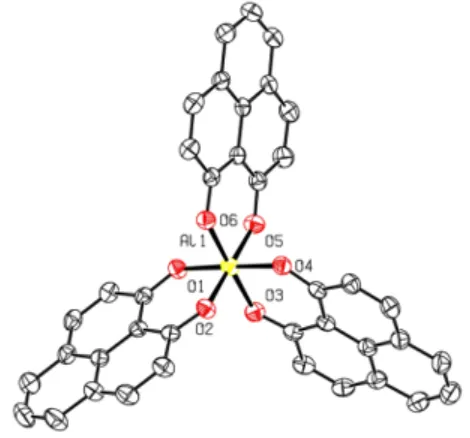
order to achieve a high purity of the material several purification steps as column cromatography and recrystallization by solvent slow evaporation were performed, purity was checked stepwise by common analysis thechiques as Nuclear Magnetic Resonance (NMR spectroscopy), mass spectrometry (MALDI-TOF) and elemental analysis. Single crystals of the compounds were obtained, the molecular structure was resolved by X-ray single crystal diffraction for the first time (see Fig. 1) and therefore reported (see Appendix, further details can be found in the Cambridge Crystallographic Data Centre, reference number: CCDC 963395). The atoms coordinates could be extrapolated from the X-ray single crystal diffraction and were used as starting point for the DFT optimization of the molecule structure in “gas phase”.
As a first step to the characterization of the spin-dependent properties of Co/Al(OP)3 we study
here the formation of the interface formed between epitaxial Co thin films deposited on Cu(001)
and Al(OP)3. The organic molecule was progressively grown on a freshly deposited Cobalt thin
All spectroscopic measurements were performed with an UHV-system consisting of one spectrometer chamber and two evaporator-chambers. The base pressure in the
spectrometer-chamber is 4 · 10 −11 mbar. The evaporator chambers enable to produce the Co/Al(OP)3 system
in-situ, which is crucial to obtain a clean surface and a high quality interface. Cobalt is
evaporated by an Omicron EFM3 evaporator at a pressure of 10 −10 mbar. Al(OP)3 is deposited
with a Knudsen-cell from Kentax GmbH evaporator at a pressure of 9 · 10 −10 mbar. The
depo-sition rates are monitored by a quartz crystal balance calibrated with ellipsometry.
The 3.5 nm thin Co films were deposited by electron beam epitaxy on a Cu(001) single crystal.
Afterwards the substrate was annealed at 370K. This results in a metastable tetragonally distorted Co fcc structure with an in-plane magnetic unaxial anisotropy along the (110) direction
of copper [15-16]. The Co/Cu(001) film was then progressively covered with Al(OP)3, to form
the Co/Al(OP)3 interface.
To detect the occupied manifold of the Co/Al(OP)3 system we performed ultraviolet
photoemission spectroscopy (UPS) and near threshold photoemission spectroscopy (NT-PS) [17]. UPS was performed by using an Omicron HIS 13 vacuum ultra-violet lamp (VUV), which
operates at the HeI line (hν = 21.2 eV). The excitation source for NT-PS is a Ti:sapphire laser
system with a central wavelength of 800 nm, 82 MHz repetition rate, a pulse power of 1.5 W and a pulse duration of 100 fs. The output is frequency quadrupled by using two beta-barium borate crystals (BBO) leading to the fourth harmonic of the fundamental with a photon energy of 5.95 eV. For both UPS and NT-PS the light incident angle was 45°. The emitted photoelectrons are energy- and spin-selected by a spin detector based on spin polarized low-energy electron diffraction (Focus SPLEED) mounted on a commercial cylindrical sector
analyzer (Focus CSA). The acceptance angle of the detector system is ±13° and its energy
resolution is 0.22 eV. All presented measurements were performed at room temperature.
Figure 2 shows the UPS spectra of the Co/[x nm]Al(OP)3 system for x= 0.5 nm, 1 nm, 1.5 nm, 2
nm, 3 nm, 5 nm. The left panel of the Figure 2 shows the low energy cutoff of the UPS spectra,
with maximum intensity normalized to 1. From the position of the cutoff (Ecutoff) we can extract
the work function Φ =(21.2-Ecutoff) eV. The change in work function with increasing Al(OP)3
coverage extracted from the UPS spectra is depicted in the inset of Figure 2. We observe a
reduction of the work function Φ with increasing Al(OP)3 coverage up to 1.5nm. This reduction
is caused by a negative interface dipole with strength Δ = -1.5 eV. This value is virtually
identical to the interface dipole observed for the Co/Alq3 system [11]. Note that the work
function is almost constant for coverage above 1.5 nm (indicated by the vertical line in the
graph), suggesting that at this nominal coverage the Co is completely covered by Al(OP)3
molecules [19-20]. We thus define 1 monolayer Al(OP)3 as the nominal thickness of 1.5 nm.
The right panel of Figure 2 shows the UPS spectra in the region of the HOMO magnified for
more detail. We observe a progressive shift of the HOMO of the Al(OP)3/Co-system towards
lower energies with increasing Al(OP)3coverage. The shift is plotted in the inset as a dashed red
line. The HOMO position ranges from -2.6 eV at x = 0.5 nm to -3.3 eV at x = 5 nm, and shifts
almost linearly as a function of Al(OP)3 coverage. In contrast to the work function, the HOMO
position does not remain constant for coverage above 1.5 nm. The shift in energy of the HOMO
position is most probably due to the different conditions experienced by the Al(OP)3 molecules
in a submonolayer, a monolayer, a bulk molecular film, and at the surface of a molecular film,
as described by Hill et al. [21]. In particular, the surrounding potential of the cobalt film of the neighboring molecules and of the vacuum will vary with coverage. As UPS is surface sensitive, the UPS spectra contain mainly information about the first monolayer of organic molecules.
However, for 2nm and 3nm Al(OP)3 coverage the spectra contain a non vanishing contribution
from the Co-Al(OP)3 interface (the cobalt Fermi energy is still visible in the UPS spectra), while
Figure 3 shows the UPS spectrum of the Co/[5nm]Al(OP)3 system after subtraction of the
inelastic electron background function given by Henrich et al. [22]. By approximating the
spectrum with a multi-peak function, we determined eight occupied states of Al(OP)3. Their
energetic position is listed in the table in Figure 6. As already mentioned, at 5 nm Al(OP)3
coverage, electrons originating from the Co and from the Co/Al(OP)3 interface cannot be
photoemitted anymore, since in the UPS experiment their mean free path is considerably smaller than 5 nm. This means that the molecular orbitals determined by UPS from the
Co/[5nm]Al(OP)3 system can be compared to the occupied manifold of a free Al(OP)3
molecule. As, to our knowledge, neither experimental nor theoretical studies about the free
Al(OP)3 have be reported, we have performed density functional theory (DFT) calculations in
order to obtain some insight into its electronic structure.
The DFT calculations were carried out with the NWCHEM [23] and the Turbomole [24] quantum chemistry package. The hybrid exchange correlation functional B3LYP [25] was employed together with the 6-31G* basis sets, which gives well converged results for all quantities of interest. B3LYP and other hybrid functionals have been employed successfully in
the description of the free Alq3 molecule [26-27] and, in that case, the density of states compares
quantitatively with the UPS spectrum [27-28]. Furthermore hybrid functionals often improve the description of molecular spectra by partially correcting for the inherent self-interaction error of local and semi-local functionals [29].
The geometry optimization of the free molecule was carried out in two different ways: firstly, without imposing any symmetry (and using as initial condition the experimental condensed phase geometry) and, secondly, by requiring the molecule coordinates to transform according to
the C3 point group. The results of both optimizations were found to be consistent and the
computed Al-O bond lengths are 1.89 Å, a value which is almost identical to that obtained for
the Al-O bonds in Alq3 [26]. We note that only minor differences between the computed
geometry of the free molecule and the experimental geometry of the molecule in the crystalline phase were found. Furthermore most of the electronic properties (HOMO-LUMO gap, dipole moment etc…) are predicted to be virtually identical (within the numerical uncertainties of our calculations) for the two cases.
The HOMO energy can be computed accurately by using the ΔSCF method [30] and it is found
to be equal to -6.6 eV. This result is in good agreement with the HOMO position (with respect
to the vacuum energy) inferred from the UPS spectra of the Co/[5nm]Al(OP)3 system. In fact, as
show in Figure 6, this is about -6.9 eV. Similarly, through the ΔSCF method, the LUMO is
calculated to be at -1.25 eV and the transport gap is then equal to 5.35 eV, i.e. about 0.5 eV
smaller than the computed Alq3 transport gap [26].
The DFT-B3LYP spectrum superimposed to the UPS spectrum of the Co/[5nm]Al(OP)3 system
is also displayed in Figure 3 (purple). Since the generalized eigenvalue corresponding to the HOMO is at -5.57 eV (i.e. about 1 eV higher in energy than the experimental HOMO position respect to the vacuum energy), the entire theoretical spectrum was first displaced in order to
align the HOMO eigenvalue with the ΔSCF HOMO and, then, shifted so that the 0 eV energy
coincided with the Co Fermi energy. By doing that, a fairly good agreement between the experimental and the theoretical spectrum is obtained. The eight-peaks structure is clearly recognizable, although some differences between theoretical and experimental results are present. These are mainly visible in the region between -5 and -7 eV, where the theoretical spectrum presents two symmetric peaks with a small extra feature in between, while the UPS spectrum presents a sharp peak beside a broader shoulder (called respectively HOMO-4 and HOMO-3). The origin of this difference between the DFT and the UPS spectra are not clear yet and a complete understanding of the problem would require the comparison between various computational schemes. However this goes beyond the goals of the present work and it may be considered in future studies.
Interestingly, in Al(OP)3 the ligands solely bind to the Al3+ ion via oxygen donor atoms in the
symmetrically non-equivalent positions. As a consequence, the calculated vacuum molecular
dipole of Al(OP)3 turns out to be very small when compared to Alq3, namely 0.5 vs. 4.1 Debye.
Experimentally, spinterface dipole moments of Al(OP)3 and Alq3 are virtually identical (Δ = 1.5
eV, see Figure 6), which points out to the fact that the interface facilitates symmetry breaking. The symmetry can be broken due to at least two distinct mechanisms: Firstly, interface charge transfer and hybridization and, and secondly, by substantial environment symmetry lowering. The low symmetry of the environment, in its turn, can break the internal symmetry of the molecule, resulting in significant increase of the intrinsic molecular dipole.
We now proceed in discussing the near threshold photoemission spectroscopy (NT-PS)
experiments. Figure 4 shows the normalized NT-PS spectra for the Co/[xnm]Al(OP)3 system. In
the spectra, three features are visible. The first spectroscopic feature close to EF arises from
excitation of a Cobalt bulk state with Δ5 symmetry [16]. Accordingly, its intensity decreases for
increasing Al(OP)3 coverage and has almost vanished already at x = 2 nm. Two further features
are visible in the spectra for coverage up to 3 nm. Those two features are only present in the spectra for coverage between 0.5 nm and 3 nm, and disappear at x = 5 nm. This means that with
NT-PS we detect two hybrid interface states (HISs), forming at the Co/Al(OP)3 interface. This
confirms the recent observation that NT-PS performed on hybrid systems consisting of a metallic underlayer and a nonmetallic top layer is highly sensitive to the metal-nonmetal interface [31].
In order to extract the exact energetic position of the two HISs, we performed a multi-peak fit as illustrated in Figure 5 exemplarily for the x = 2 nm spectrum. In the fit, the position of the two peaks is a variable in the multi-peak function, while the photoemission intensity at the low
energy cutoff, arising from the Al(OP)3 HOMO, is modeled by a further peak at the energetic
position determined with the UPS experiments. The energetic position of the two HISs, extracted from the multi-peak fit is marked in Figure 4 by vertical lines. The two states are
named HIS1 and HIS2, respectively. In analogy with the HOMO of Al(OP)3, the energetic
position of the two interface states shifts to lower energy with increasing coverage of Al(OP)3,
which we interpret again as a result of the interaction of these states with the surrounding potential of Co, the neighboring molecules and the vacuum [21].
In the following we evaluate and discuss the spin-polarization of the detected HISs. To be able to compare the spin polarization of Co to that of the HISs over the complete energy range of the NT-PS measurements, we used Cesium to lower the work function of the Cobalt. It is known that Cesium does not influence significantly the spin polarization of Cobalt [16]. The spin-polarization (SP) measured by NT-PS from the cesiated Cobalt sample (CsCo in the following) ranges between 30% and 40%, in agreement with [16,32]. Figure 5 shows the relative SP
measured by NT-PS from the Co/[xnm]Al(OP)3system for x = 0.5 nm, 1 nm, 1.5 nm, 2 nm and
3 nm. The relative SP is calculated by normalizing the SP of Co/[xnm]Al(OP)3 to the SP of
CsCo, determined previously on a different Cobalt sample. The relative SP gives thus a measure
of the variation of the Co SP when the Co/Al(OP)3 spinterface is formed. We observe that the
relative SP for x = 1.5 nm deviates from the SP measured at the other Al(OP)3 coverage; it is
about 10 % higher above the whole energetic range. Note that at x = 1.5 nm we are mostly
sensitive to the Co/Al(OP)3 spinterface, and thus we detect the true spinterface SP. In fact, for x
< 1.5 nm the interface dipole and therefore the HISs are not completely formed and thus their spectral weight is very low. For x > 1.5 nm, on turn, the spectral weight of spin-polarized electrons originating from the spinterface is much lower than the spectral weight of unpolarized
electrons excited from the HOMO in bulk Al(OP)3. This artificially reduces the value of the
detected SP of the HIS2 state, which decreases much strongly with increasing Al(OP)3 thickness than the SP of the HIS1 state. The spin polarization of both HISs states decreases for
increasing Al(OP)3 thickness also as a consequence of spin-flip processes experienced by the
spin-polarized electron photoexcited at the Co-Al(OP)3 interface while they travel through the
Al(OP)3 layer before being photoemitted.
We now analyze in detail the behavior of the relative SP for x= 1.5 nm, i.e. the Co-Al(OP)3
100%, up to 10% higher than the SP of Co. Averaged over the energetic region of HIS1 we observe an enhancement of the SP of 8%. At the energetic position of the HIS2, the relative SP is below 100%, on average 4% lower than the SP of Co. We thus conclude that the HIS1 has a SP parallel to the Cobalt magnetization, while the HIS2 is either unpolarized or polarized antiparallel to the Cobalt magnetization.
In conclusion, we investigated the Co/[xnm]Al(OP)3 system by spin-dependent photoemission
spectroscopy. Our findings are summarized in Figure 6: The left part shows the energy level alignment for x = 1.5 nm, which is extracted from the NT-PS spectra and reflects the alignment
of the Co/Al(OP)3 spinterface. We identify two hybrid interface states in the energy window of
2 eV below the Fermi energy. The spinterface electronic structure near EF is dominated by two
hybrid interface states, HIS1 and HIS2. The HIS1 is located at E-EF = -0.9 eV and shows on
average a 8% higher spin polarization than the Co surface. The HIS2 is located at E-EF = -1.6
eV and shows on average a spin polarization of 4% lower than the SP of Cobalt. The middle
part of Figure 6 shows the energy level alignment at the Al(OP)3 coverage of x = 5 nm, i.e. bulk
Al(OP)3. We determined eight occupied states of Al(OP)3 and an interface dipole of Δ = -1.5
eV. For comparison to the Co/Alq3 system, in the right part of Figure 6 we present the energy
level alignment reported from the Co/Alq3 interface in Ref. [11]. As already discussed the
interface dipoles are virtually identical, and moreover also the position of the HOMO is quite
similar: -2.8eV for Al(OP)3 and -2.4eV for Alq3. However, the formed hybrid interface states
formed for the two molecules are crucially different: two states at the Co/Al(OP)3 interface vs.
one state at the Co/Alq3 interface. Besides providing a full characterization of the
spin-dependent electronic properties of the Co/Al(OP)3 system, our results thus also demonstrate the
success of the chemical tailoring approach proposed for the engineering of spinterfaces.
Acknowledgments
The research leading to these results was partly funded by the SFB/TRR 88 “3MET” from the DFG. VM would like to acknowledge financial support of FP7-infrastructure project MMM@HPC EC and the joint STFC-DFG project MODEOLED.
Reference
[1] Dediu V A, Hueso L E, Bergenti I and Taliani C 2009 Nature Materials8 707-16
[2] Xiong Z H, Wu D, Vardeny Z V and Shi J 2004 Nature427 821–4
[3] Santos T S, Lee J S, Migdal P, Lekshmi I C, Satpati B abd Moodera J S 2007 Phys. Rev.
Lett. 98 16601
[4] Barraud C, Seneor P, Mattana R, Fusil S, Bouzehouane K, Deranlot C et al. 2010
Nature Physics6 1-6
[5] Dediu V A 2013 Nature Physics9 210-211
[6] Sanvito S 2010 Nature Physics6 562-4
[7] Cinchetti M, Neuschwander S, Fischer A, Ruffing A, Mathias S, Wüstenberg J-P and
Aeschlimann M 2010 Phys. Rev. Lett.104 217602
[8] Raman K V, Kamerbeek A M, Mukherjee A, Atodiresei N, Sen T K, Lazić P et al. 2013
Nature493 509-13
[9] Prezioso M, Riminucci A, Graziosi P, Bergenti I, Rakshit R, Cecchini R et al. 2012 Adv.
Mater.25 534-8
[10] Schulz L, Nuccio L, Willis M, Desai P, Shakya P, T Kreouzis et al. 2010 Nature
Materials10 39-44
[11] Steil S, Großmann N, Laux M, Ruffing A, Steil D, Wiesenmayer M, Mathias S, Monti
O L A, Cinchetti M and Aeschlimann M 2013 Nature Physics9 242-7
[12] Naber W J M, Faez S and van der Weil W G 2007 Journal of Physics D: Applied
[13] Haddon R C, US patent, 2002, 6428912
[14] Sheldrick G M 2008 Acta Cryst.A64 112-22
[15] Cinchetti M, Heimer K, Wüstenberg J-P, Andreyev O, Bauer M, Lach S, Ziegler C, Gao
Y and Aeschlimann M 2009 Nature Materials8 115-9
[16] Andreyev O, Koroteev, Sànchez-Albaneda M, Cinchetti M, Bihlmayer G, Chulkov E V,
Lange J, Steeb F, Bauer M, Echenique P M, Blügel S and Aeschlimann M 2006 Phys.
Rev. B 74 195416
[17] Cinchetti M, Wüstenberg J-P, Sànchez-Albaneda M, Steeb F, Conca A, Jourdan M and
Aeschlimann M 2007 J. Phys. D 40 1544-7
[18] Curioni A, Boero M and Anderoni W 1998 Chem. Phys. Lett.294 263-71
[19] Toyoda K, Nakano Y, Hamada I, Lee K, Yanagisawa S and Morikawa Y 2009 Journal
of Electron Spectroscopy and Related Phenomena147 78-84
[20] Shen C and Kahn A 2001 Organic Electronics2 89-95
[21] Hill I G, Mäkinen A J and Kafafi Z H 2000 J. Appl. Phys.88 883-95
[22] Henrich V E, Li X and Zhang Z 1993 Journal of Electron Spectroscopy and Related
Phenomena63 253-65
[23] Valiev M, Bylaska E J, Govind N, Kowalski K, Straatsma T P, van Dam H J J, Wang D,
Nieplocha J, Apra E, Windus T L and de Jong W A 2010 Comput. Phys. Commun.181
1477-89
[24] TURBOMOLE V6.5 2012, http://www.turbomole.com
[25] Becke A D 1993 J. Chem. Phys.98 5648-5652
[26] Martin R L, Kress J D, Campbell I H and Smith D L 2000 Phys. Rev. B 61 15804-11
[27] Bisti F, Stroppa A, Donarelli M, Picozzi S and Ottaviano L 2011 Phys. Rev. B 84
195112-17
[28] Droghetti A, Pemmaraju C D and Sanvito S 2013 Electronic structure of
tris(8-hydroxyquinolinato)aluminium(III) from many-body perturbation theory.
In preparation.
[29] Dori N, Menon M, Kilian L, Sokolowski L, Kronik L and Umbach E 2006 Phys. Rev. B
73 195208-13
[30] Jones R O and Gunnarsson O 1989 Rev. Mod. Phys.61 689-746
[31] Fetzer R, Lösch M, Ohdaira Y, Naganuma H, Oogane M, Ando Y, Taira T, Uemura T,
Yamamoto M, Aeschlimann M and Cinchetti M 2013 Revealing the spin and symmetry properties of the buried Co2MnSi/MgO interface by low energy spin-resolved
photoemission. arXiv:1209.4368
[32] Steil S, Goedel K, Ruffing A, Sarkar I, Cinchetti M and Aeschlimann M 2011 Synthetic
Figure 1. Molecular structure of Al(OP)3 (hydrogen atoms and solvent molecules are omitted
[image:8.595.87.322.72.291.2]Figure 2. UPS spectra of the Co/[xnm]Al(OP)3 system with x=0nm (Co substrate), 0.5 nm, 1
nm, 1.5 nm, 2 nm, 3 nm, 5 nm. The right panel shows the UPS spectra in the HOMO region
magnified for more detail. The HOMO (marked with a circle) shifts to lower energies for
increasing x. The right panel shows the region of the low energy cutoff; here the UPS spectra
have been normalized to 1. The maximal energetic shift of the low energy cutoff (Δ= -1.5 eV) is
also marked. Inset: Shift of the work function (black) and shift of the HOMO (red, dashed)
versus Al(OP)3 coverage. Cobalt work function is 5.1 eV, energetic position of the HOMO for
Figure 3. (UPS Spectrum of the Co/[5 nm] Al(OP)3 system after subtraction of the inelastic
electron background function performed according to Ref. (22) (brown). The spectrum is fitted with an 8-peak function (black) providing the energetic position of eight occupied states of
Al(OP)3 (grey: HOMO, HOMO-1,..., HOMO-7). The purple vertical bars indicate the energy of
the generalized eigenvalues calculated with DFT-B3LYP, while the purple continuous line represent the density of states with a Gaussian broadening of 0.22 eV to include the inhomogeneous broadening originating from the instrumental resolution.
[image:10.595.74.492.73.407.2]Figure 4. Normalized NT-PS spectra of the Co/[x nm]Al(OP)3 system with 0.5 nm, 1 nm, 1.5
nm, 2 nm, 3 nm, 5 nm. The energetic position of the two interface states HIS1 and HIS2,
Figure 5. Multi-peak fit used to extract the energetic position of HIS1 and HIS2 states,
exemplarily shown for the NT-PS spectrum of the Co/[1.5 nm] Al(OP)3 system. HIS1 and HIS2
are variables in the multi-peak function while the HOMO is at the energetic position extracted
from the UPS spectra. The right y-axis indicates the relative SP of the Co/[x nm]Al(OP)3
system, calculated as ratio between the SP of the Co/[x nm]Al(OP)3 and the SP of cesiated
Cobalt (CsCo), measured by spin-resolved NT-PS.
[image:12.595.78.474.93.369.2]Figure 6. Energy level alignment of the Co/[x nm]Al(OP)3 system for x = 1.5 nm and x = 5 nm
compared to the energy level alignment of the Co/Alq3 interface. The energy level alignment for
x = 1.5 nm is extracted from the NT-PS spectra and reflects the alignment of the Co/Al(OP)3
spinterface. The alignment for x = 5 nm reflects the occupied manifold bulk Al(OP)3 and is
extracted from the UPS spectra. The alignment at the Co/Alq3 interface is taken from Ref. [11].
Appendix
All the reactions were carried under Argon inert atmosphere using standard Schlenk techniques. All the chemicals are commercially available and were used without any further purification,
toluene was distilled over Na. 1H and 13C NMR spectroscopic data were recorded on a Bruker
Ultrashield plus 500 spectrometer with solvent-proton as internal standard. Mass spectrometric data were acquired by Matrix-assisted laser desorption/ionization time-of-flight experiments (MALDI-TOF) with no additional matrix compound other than the sample itself. Elemental analysis was carried out to determine the mass fractions of carbon and hydrogen of the sample. 9-Hydroxyphenalenone (1.0203 g, 5.2 mmol) was dissolved in 50 ml of freshly distilled toluene, aluminum chloride (0.2134 g, 1.6 mmol) was added and the solution was refluxed overnight at 110° C. The yellow precipitate was filtered and washed thoroughly with fresh toluene. The crude product was purified by column chromatography and by recrystallization from
CH2Cl2/CH3CH2OH yielding to the pure yellow powder (0.7673 g, yield 75%). Suitable crystals
for single crystal X-ray diffraction were obtained by slow evaporation of chloroform at room
temperature. 1H NMR (500 MHz, CDCl3, 25° C, δ(ppm)): 8.01 (d, 2H, J=9.5 Hz), 7.96 (d, 2H,
J=7.5 Hz), 7.51 (t, 1H, J=7.5 Hz), 7.14 (d, 2H, J=9.0 Hz). 13C NMR (125 MHz, CDCl
3, 25° C,
δ(ppm)): 179.09, 141.34, 132.86, 127.94, 127.87, 125.29, 122.91, 113.40. MALDI-TOF MS (Da): m/z (rel. intensity, assigned structure) = 416.87 (100%, C26H14O2Al calc. = 417.07).
Elemental analysis found (calculated) for C39H27O8Al (Al(C39H21O6)·2H2O, 650.64 g mol-1):
C 72.29 (71.99)%; H 4.01 (4.19)%.
Single crystal X-ray diffraction data were collected on a STOE IPDS II diffractometer with
graphite monochromated Mo Kα radiation (0.71073 Å). Structure solution and refinement
against F2 were carried out using shelxs and shelxl software [14]. Refinement was performed with anisotropic temperature factors for all non-hydrogen atoms (disordered atoms were refined isotropically); hydrogen atoms were calculated on idealized positions. Crystallographic and
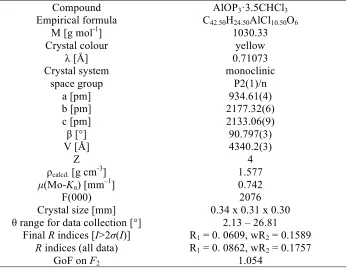
[image:14.595.111.458.481.751.2]refinement data of Al(OP)3 are summarized in the Table 1.
Table 1. Crystallographic and refinement data of Al(OP)3 measured at T=180(2)K .
Compound AlOP3·3.5CHCl3
Empirical formula C42.50H24.50AlCl10.50O6
M [g mol-1] 1030.33
Crystal colour yellow
λ [Å] 0.71073
Crystal system monoclinic
space group P2(1)/n
a [pm] 934.61(4)
b [pm] 2177.32(6)
c [pm] 2133.06(9)
β [°] 90.797(3)
V [Å] 4340.2(3)
Z 4
ρcalcd. [g cm-3] 1.577
µ(Mo-Kα) [mm–1] 0.742
F(000) 2076
Crystal size [mm] 0.34 x 0.31 x 0.30
θ range for data collection [°] 2.13 – 26.81
Final R indices [I>2σ(I)] R1 = 0. 0609, wR2 = 0.1589
R indices (all data) R1 = 0. 0862, wR2 = 0.1757
![Figure 2. UPS spectra of the Co/[xnm]Al(OP)3 system with x=0nm (Co substrate), 0.5 nm, 1 nm, 1.5 nm, 2 nm, 3 nm, 5 nm](https://thumb-us.123doks.com/thumbv2/123dok_us/8794301.910815/9.595.94.452.108.364/figure-ups-spectra-xnm-al-op-nm-substrate.webp)
![Figure 3. (UPS Spectrum of the Co/[5 nm] Al(OP)3 system after subtraction of the inelastic electron background function performed according to Ref](https://thumb-us.123doks.com/thumbv2/123dok_us/8794301.910815/10.595.74.492.73.407/spectrum-subtraction-inelastic-electron-background-function-performed-according.webp)
![Figure 4.
Normalized NT-PS spectra of the Co/[x nm]Al(OP)3 system with 0.5 nm, 1 nm, 1.5 nm, 2 nm, 3 nm, 5 nm](https://thumb-us.123doks.com/thumbv2/123dok_us/8794301.910815/11.595.78.493.73.372/figure-normalized-nt-ps-spectra-nm-al-op.webp)
![Figure 5. Multi-peak fit used to extract the energetic position of HIS1 and HIS2 states, exemplarily shown for the NT-PS spectrum of the Co/[1.5 nm] Al(OP)3 system](https://thumb-us.123doks.com/thumbv2/123dok_us/8794301.910815/12.595.78.474.93.369/figure-multi-extract-energetic-position-states-exemplarily-spectrum.webp)
![Figure 6.
Energy level alignment of the Co/[x nm]Al(OP)3 system for x = 1.5 nm and x = 5 nm compared to the energy level alignment of the Co/Alq3 interface](https://thumb-us.123doks.com/thumbv2/123dok_us/8794301.910815/13.595.83.491.78.474/figure-energy-alignment-compared-energy-level-alignment-interface.webp)