A Note on Domatic Subdivision Stable Graphs
M. Yamuna
*, K. Karthika
School of Advanced Sciences, VIT University, Vellore, Tamilnadu, India *Corresponding Author: [email protected]
Copyright © 2014 Horizon Research Publishing All rights reserved.
Abstract
A domatic partition of a graph G = ( V, E ) is a partition of V into disjoint sets V1, V2, ..., VK such that each Vi is a dominating set for G. A subdivision of a graph G is a graph resulting from the subdivision of edges in G. In this paper we discuss about the minimal properties of domatic subdivision stable graph and we show that every graph is an induced subgraph of a domatic subdivision stable graph. We discuss methods of generating new domatic subdivision stable graphs from existing domatic subdivision stable graphs using graph operations.Keywords
Domatic Partition, Subdivision, Dominating Set, Minimal Set1. Introduction
We consider only simple connected undirected graphs G = ( V, E ). Pn denotes the path of length n. The open neighborhood of vertex v ∈ V ( G ) is defined by N ( v ) = { u ∈ V ( G ) | u v∈ E ( G ) } while its closed neighborhood is the set N [ v ] = N ( v ) ∪ { v }. The private neighborhood of v ∈ D is defined by pn [ v, D ] = N ( v ) – N ( D – { v } ). We say that H is a subgraph of G, if V ( H ) ⊆ V ( G ) and uv ∈ E ( H ) implies uv ∈ E ( G ). If a subgraph H satisfies the added property that for every pair u, v of vertices, uv ∈ E ( H ) if and only if uv ∈ E ( G ), then H is called an induced subgraph of G and is denoted by < H >. We indicate that u is adjacent to v by writing u ⊥ v. For properties related to graph theory we refer to West, D. B, [1].
A set of vertices D in a graph G = ( V, E ) is a dominating set if every vertex of V – D is adjacent to some vertex of D. If D has the smallest possible cardinality of any dominating set of G, then D is called a minimum dominating set — abbreviated MDS. The cardinality of any MDS for G is called the domination number of G and it is denoted by γ ( G ). A γ - set denotes a dominating set for G with minimum cardinality. A dominating set D is minimal dominating if no proper subset of D is a dominating set. A vertex in V – D is k – dominated if it is dominated by at least k – vertices in D. For properties related to domination we refer to Haynes, T. W. et al., [3, 4].
In [2], Vestergaard, P. D. et al., have studied the domatic
numbers and total domatic numbers of graphs having cut vertices. In Theorem 1, 3 and 4 of [2], they have provided upper bounds related to domination numbers and provided conditions for attaining the sharp bounds.
In [6], Yamuna, M. et al., have defined domatic subdivision stable graphs. In Theorem 1, 2 and 3 of [6], they have provided bounds for domatic subdivision stable graphs and obtained necessary and sufficient conditions for the domatic partition of the domatic subdivision stable graphs.
2. Materials and Methods
A domatic partition of a graph G = ( V, E ) is a partition of V into disjoint sets V1, V2, ...,VK such that each Vi is a dominating set for G. The domatic number is the maximum number of such disjoint sets and it is denoted by d ( G ).
A subdivision of a graph G is a graph resulting from the subdivision of edges in G. The subdivision of some edge e with endpoints { u, v } yields a graph containing one new vertex w, and with an edge set replacing e by two new edges, uw and wv. We shall denote the graph obtained by subdividing any edge uv of a graph G, by Gsd uv. Let w be a vertex introduced by subdividing uv. We shall denote this by Gsd uv = w.
Yamuna, M and Karthika, K. [6], defined a new graph called domatic subdivision stable graph. A graph G is said to be domatic subdivision stable( dss ), if d ( G ) = d ( Gsd uv), for all uv ∈ E ( G ).
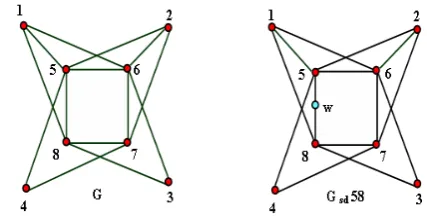
[image:1.595.323.537.592.701.2]Example of Dss Graph
Figure 1. G is dss. Here d ( G ) = | { 5, 6 }, { 8, 2, 4 }, { 1, 7, 3 } | = 3 and d ( Gsd 58 ) = | { 4, w, 6 }, { 5, 2, 3 }, { 1, 7, 8 } | = 3. This is true for all uv ∈ E ( G ). Let S = { 5, 6, 7, 8 } ⊆ V ( G ). < S > = C4 in G.
results,
R1. Let G be any graph. Then d ( Gsd uv ) ≤ 3.
R2. When d ( G ) = 3, d ( Gsd uv ) = 3 if and only if there is a partition Z = { V1, V2, V3 } for G such that
i. V1 and V2 are dominating sets for G such that u ∈ V1, v ∈ V2.
ii. v is 2 – dominated with respect to V1. iii. u is 2 – dominated with respect to V2. iv. V3 dominates atleast G – { u } – { v }.
R3. When d ( G ) = 2, d ( Gsd uv ) = 3 if and only if there is a domatic partition d ( G ) = | { V1 }, { V2 } |, u ∈ V1, v ∈ V2 such that
i. v is 2 – dominated with respect to V1. ii. V2 = V12 ∪ V22, where
a. v ∈ V12, u is 2 – dominated with respect to V12. b. V22 does not dominate atleast one of u or v, that is V22
is a dominating set for G – { u } – { v }.
3. Results and Discussion
Minimal Dominating Sets and dss Graphs
In this section we provide results relating domatic subdivision stable graphs and minimal properties of the dominating sets.
Theorem 1
Let d ( G ) = 2 and d ( Gsd uv ) = 3. There is a domatic partition for G such that atleast one Vi, i = 1, 2 is not minimal.
Proof
Let d ( G ) = 2 and d ( Gsd uv ) = 3 = |{ V1 }, { V2 }, { V3 }|. By result R3, V1, V2 ∪ V3 – { w } are dominating set for G, such that V2 ∪ V3 – { w } is not minimal, since V2 itself is a dominating set.
If | V3 – { w } | ≥ 2, then V1 ∪ V13, V2 ∪ V23 are dominating set for G, where { V13, V23 } is a partition for V3 – { w }. This implies, there is a partition for G say d ( G ) = | { V1 ∪ V13 }, { V2 ∪ V23 } |, such that both the sets in the partition are not minimal.
Theorem 2
If d ( G ) = | { V1 }, { V2 } | such that V1 and V2 are both minimal for all possible domatic partition for G, then d ( Gsd uv ) ≠ 3.
Proof
If d ( Gsd uv ) = 3, say d ( Gsd uv ) = | { U1 }, { U2 }, { U3 } |, then by R1, let us assume that, u ∈ U1, v ∈ U2, w ∈ U3. U1, U2, U3 – { w }are dominating sets for G also. Then d ( G ) = | { U1 }, { U2 } ∪ { U3 – { w }} | is a domatic partition for G such that U2 ∪ {{ U3 } – { w }} is not minimal, a contradiction to our assumption.
Theorem 3
When d ( G ) = 2, d ( Gsd uv ) = 2 if for all possible partition d ( G ) = | { V1 }, { V2 } | if Vi is not minimal, i = 1, 2, then
i. If Vi1 is a dominating set for G, Vi2 does not dominate G – { u } – { v }, where Vi = Vi1 ∪ Vi2. ii. V12 ∪ V22 does not dominate G – { u } – { v }.
Proof
Let d ( G ) = | { V1 }, { V2 } | such that atleast one Vi is not minimal satisfying the conditions of the theorem.
Let V1 = { V11 ∪ V12 } and V2 = { V21 ∪ V22 }.Assume that V11 and V21 are minimal dominating sets for G. Given that V12, V22 and V12 ∪ V22 does not dominate G – {u} – { v }. In this case, d ( Gsd uv ) ≠ 3. Suppose d ( Gsd uv ) = 3, say d ( Gsd uv ) = | { U1 }, { U2 }, { U3 } |. Then as in Theorem 2, d ( G ) = | { U1 }, { U2 ∪ { U3 – { w }}} | is a domatic partition for G such that U3 – { w } dominates G – { u } – { v }, a contradiction to the hypothesis of the theorem. Since d ( Gsd uv ) ≠ 3, d ( Gsd uv ) = 2.
Theorem 4
Let d ( G ) = 2 such that
i. Atleast one of Vi is not minimal.
ii. V11, V21 are minimal dominating sets for G, where V1 = { V11 ∪ V12 } and V2 = { V21 ∪ V22 }.
iii. V12, V22 dominates G – { u } – { v }.
Then there is atleast one partition for G, where u, v does not belong to the same partition.
Proof
Assume that u, v belong to the same partition for every possible domatic partition for G, say u, v ∈ V1, where d ( G ) = | { V1 }, { V2 } |.
Case i V2 is not minimal
Let V2 = V21 ∪ V22, where V21 is a dominating set and V22 dominates G – { u } – { v }. Let V3 = { V22 ∪ { u }} and V4 = { V21 ∪ { V1 – { u }}}.
Case ii V1 is not minimal
Let V1 = V11 ∪ V12, where V11 is a dominating set for G, V12 dominates G – { u } – { v }. Then u, v ∈ V11. Let V3 = { V12 ∪ u }, V4 = { { V11 – { u }} ∪ { V2 }}.
Case iii V1 and V2 are both not minimal
Let V1 = { V11 ∪ V12 } and V2 = { V21 ∪ V22 }, where V11 and V21 are minimal dominating sets for G. Let V12, V22 dominate G – {u} – {v}, u, v ∈ V11. Let V3 = {V12 ∪ {u}}, V4 = { { V11 – {u} } ∪ {V2}}.
In all three cases d ( G ) = | { V3 }, { V4 } | is a domatic partition for G such that u ∈ V3, v ∈ V4, a contradiction. Hence there is atleast one partition for G, where u, v does not belong to the same partition.
Theorem 5
Let d ( G ) = 3. If for any u v ∈ E ( G ), there is a domatic partition d ( G ) = | { V1 }, { V2 }, { V3 } | such that
i. u ∈ V1, v ∈ V2,
ii. u is selfish with respect to V1, iii. v is selfish with respect to V2, then d ( G sd uv ) = 3.
Proof
Let d ( G ) = 3 and u v ∈ E ( G ). Let d ( G ) = | { V1 }, { V2 }, { V3 } | such that the conditions of the theorem is satisfied. Then,
When u ∈ V1, v is 2 – dominated. When v ∈ V2, u is 2 – dominated. V3 dominate G – { u } – { v }.
Remark
If G is a graph such that d ( G ) = 3 and the conditions of the Theorem 5 is satisfied for all uv ∈ E ( G ), then G is dss. Theorem 6
Let d ( G ) = | { V1 }, { V2 }, …, { Vk } |. If G is a graph such that d ( G ) = k only if exactly one of Vi is a γ - set, then every Vi, i = 1, 2, …, k are minimal dominating set.
Proof
Let d ( G ) = | { V1 }, { V2 }, …, { Vk } | be a domatic partition for G satisfying the conditions of the theorem.
Let Vi be the γ - set for G. Assume that there is one Vj, j ≠ i, j = 1, 2, …, k that is not minimal. Let Vj = Vj1 ∪ Vj2 such that Vj1 is a minimal dominating set. Then V1, V2, …, Vi ∪ Vj2, …, Vj – Vj2, …, Vk is a domatic partition for G such that d ( G ) = k, which contains no γ - set, a contradiction to our assumption.
Generating New dss Graphs Using Graph Operations
In this section we show that every graph is an induced subgraph of a dss graph, and discuss two methods of generating new dss graphs from existing dss graphs.
Theorem 7 Any tree is dss. Proof
Let T be any tree. We know that, d ( T ) = 2 always. d ( Tsd uv ) is also a tree. We know that for any graph d ( G ) ≤δ + 1, which implies d ( Tsd uv ) = ( V, V – D ) = 2, for all uv ∈ E ( G ). Hence any tree is a dss graph.
Remark
1. Let G be any graph such that G has atleast one pendant vertex. Then G is a dss graph.
2. If G has more than one pendant vertex then G – v is also a dss graph, for all u, v ∈ V ( G ).
Theorem 8
Every graph is an induced subgraph of a dss graph H such that d ( H ) = 2.
Proof
Consider G o K1, for any connected graph G with n – vertices. Let H = G o K1. H and Hsd uv has atleast one pendant vertex, for all uv ∈ E ( H ). This implies, d ( H ) = d ( H sd uv ) = 2, for all uv ∈ E ( H ). By Remark 1, every graph is an induced subgraph of a dss graph H such that d ( H ) = 2.
Theorem 9
Every graph is an induced subgraph of a dss graph H such that d ( H ) = 3.
Proof
Let G be a graph with n – vertices. Let V ( G ) = { v1, v2, …, vn }. Consider n – copies of the complete graph K3: yiwiui, i = 1, 2, …,n. Merge vi with ui and label the new vertex as xi, i = 1, 2, …, n. We include the following edges.
y1y2, y2y3, …, yn – 1yn, yny1 and x1y2, x2y3, …, x n – 1yn, xny1, that is V ( H ) = { xi, yi, wi }, i = 1, 2, …, n, which implies | V ( H ) | = 3n, E ( H ) = E ( G ) ∪ { xiyi , xiwi, wiyi } ∪ { x1y2, x2y3, …, x n – 1yn, xny1} ∪ { y1y2, y2y3, …, yn – 1yn, yn y1 }, that is | E ( H ) | = | E ( G ) | + 5n.
Let X = { x1, x2, …, xn }, Y = { y1, y2, …, yn } and W = { w1,
w2, …, wn }. As P3: xiwiyi , i = 1, 2, …, n are subgraphs of H, By R1, d ( H ) ≤ 3. Also d ( H ) = | { X }, { Y }, { W } | = 3. Let d ( Hsd uv ) = w, for all uv ∈ E ( G ).
d ( Hsd yiwi ) = | { wi, X – { xi } }, { w, Y – { yi } }, { yi, xi, W – { wi } } | = 3, for all i = 1, 2, …, n.
d ( Hsd wixi ) = | { yi, xi, W – { wi } }, { w, X – { xi } }, { wi, Y – { yi } } | = 3, for all i = 1, 2, …, n.
d ( Hsd xiyi ) = d ( Hsd xiyj ) = | { X }, { Y }, { w, W } | = 3, for all i ≠ j, i, j = 1, 2, …, n.
d ( Hsd yiyj ) = | { yi, X – { xi } }, { yj, W – { wj } }, { w, wj, xi, Y – { yi } – { yj } } | = 3, for all i ≠ j, i, j = 1, 2, …, n. d ( Hsd xixj ) = | { xi, Y – { yi } }, { xj, W – { wj } }, { w, wj, yi, X – { xi } – { xj } } | = 3, for all i ≠ j, i, j = 1, 2, …, n. This implies, d ( Hsd uv ) = 3, for all uv ∈ E ( H ), that is d ( H ) = d ( Hsd uv ) = 3.
Hence every graph is an induced subgraph of a dss graph H such that d ( H ) = 3.
[image:3.595.327.535.303.435.2]Example
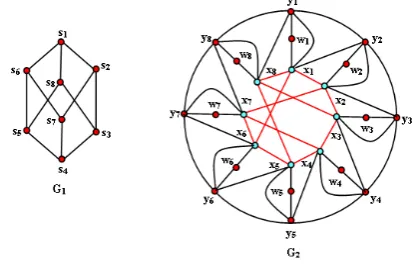
Figure 2. G1 is not dss. Also < x1, x2, …, x8 > = G1 in G2. The induced subgraph is shown in red lines.
Vestergaard, P. D and Zelinka. B. [2], have provided the following result.
Let G be the union of two graphs G1 and G2 having exactly one common vertex a; this vertex a is the cut vertex of G. The graph obtained from G1 and G2 by deleting a will be denoted respectively by G1′, G2′.
R4. With the above notation, for every graph G, the domatic numbers satisfy
min { d ( G1 ), d ( G2 ) } ≤ d ( G ) ≤ 1 + min { d ( G1′ ), d ( G2′ ) }.
They define a saturated vertex as follows
Saturated Vertex
A vertex x of a graph G is called saturated, if it is adjacent to all other vertices of G. For example in the complete graph Kn every vertex is saturated.
Theorem 10
Let G1 and G2 be two graphs such that d ( G1 ) = d ( G2 ) = k. Let u ∈ V ( G1 ), v ∈ V ( G2 ) such that d ( G1 – { u } ) = d ( G1 ), d ( G2 – { v } ) = d ( G2 ). Let G be the graph obtained by merging vertex u and v. Then d ( G ) = k.
Proof
Let u ∈ V ( G1 ), v ∈ V ( G2 ) such that d ( G1 ) = d ( G2 ) = k. Let u ∈ V ( G1 ), v ∈V ( G2 ) such that d ( G1 – { u } ) = d ( G1 ), d ( G2 – { v }) = d ( G2 ). Let G be the graph obtained by merging vertex u and v.
Claim 1
If d ( G ) = d ( G – { u } ), for some u ∈ V ( G ), then u cannot be a saturated vertex.
Proof
If possible assume that u is a saturated vertex. Since d ( G ) = d ( G – { u } ) = k (say), there are k – dominating sets V1, V2, …, Vk for G – { u }. Since u is a saturated vertex, V1, V2, …, Vk are dominating sets for G also, which implies V1, V2, …, Vk, u are all dominating sets for G. This implies | d ( G ) | > k, a contradiction. So, if d ( G ) = d ( G – { u } ), for any graph G, u is not a saturated vertex.
From Claim 1, we conclude that u and v are not saturated vertices with respect to G1 and G2.
Since uv is a cut vertex, we observe that, if U1 is a dominating set for G, then U1 can be partition as
U U {uv}, if uv U U
U U , if uv U
∪ ∪ ∈
=
∪ ∉
11 12 1
1
11 12 1
where V ( U11) ⊆ V ( G1 ), U12 ⊆ V ( G2 ).
Also we observe that, U11 ∪ { u }, U12 ∪ { v } are dominating sets for G1and G2 respectively, if uv ∈ U1. U11, U12 are dominating sets for G1 and G2 respectively, if uv ∉ U1. Since d ( G1 – { u } ) = d ( G2 – { v } ) = k, by R4 , d ( G ) ≤ k + 1.
Claim 2
d ( G ) ≠ k + 1. Proof
[image:4.595.357.512.276.396.2] [image:4.595.364.500.466.621.2] [image:4.595.100.256.571.709.2]If possible, let d ( G ) = k + 1 = | { V1 }, { V2 }, …, { Vk }, { Vk + 1} |. Let Vi = Vi1 ∪ Vi2, where Vi1 = V ( G1 ) – { u }, Vi2 = V ( G2 ) – { v }. Let uv ∈ V1. By claim 1, there is atleast one vertex say u1 ∈ G1, v1 ∈ G2 such that uv, u1, v1 ∈ V1. { V11 ∪ { u }, V21, …, Vk1, V ( k + 1 )1 } is a domatic partition for G1, since V21, V31, …, Vk1, V ( k + 1 )1 dominates G1, a contradiction as d ( G1 ) = k. This implies, d ( G ) ≠ k + 1. By claim 2, we conclude that d ( G ) = k.
Converse of Theorem 10 need not be true. Example
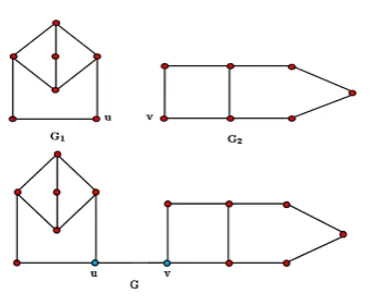
Figure3. d ( G ) = d ( G1 ) = d ( G2 ) = 5, but d ( G1 – { u } ) = d ( G2 – { v } ) = 4, that is d ( G1 ) ≠ d ( G1 – { u } ) and d ( G2 ) ≠ d ( G2 – { v } ). Theorem 11
If G1 and G2 are dss graphs such that d ( G1 ) = d ( G2 ) = 3, d ( G1 ) = d ( G1 – { u } ), d ( G2 ) = d ( G2 – { v } ), for some u ∈ V1, v ∈ V2, then the graph G obtained by merging u and v is also dss.
Proof
By Theorem 10, we know that d ( G ) = 3. Let Gsd xy = w, for some xy ∈ E ( G ). Let e = xy ∈ E ( G ), either e ∈ E ( G1 ) or e ∈ E ( G2 ). Assume that e ∈ E ( G1 ).
Since G1 is dss, let d ( G1 sd xy ) = | { U1 }, { U2 }, { U3 } |such that u ∈ U1. Since d ( G2 ) = 3, let d ( G2 ) = | { C1 }, { C2 }, { C3 } | such that v ∈ C1. Then { U1 ∪ C1 – { u } – { v } ∪ { uv }, U2 ∪ C2, U3 ∪ C3 } is a domatic partition for Gsd xy, which implies d ( Gsd xy ) ≥ 3. Since P3: xwy is a subgraph of G, by R1, we know that d ( Gsd xy ) ≤ 3. This implies d ( Gsd xy ) = 3. This is true for every e ∈ E ( G ), that is G is dss. Example
Figure 4. d ( G1 ) = d ( G1sd xy ) = 3, xy ∈ E( G1 ) and d ( G2 ) = d ( G2 sd xy ) = 3, xy ∈ E( G2 ). Here d ( G ) = d ( Gsd ab ) = 3, for all ab ∈ E( G ). Converse of Theorem 11 need not be true.
Example
Figure 5. G is a dss graph, d ( G ) = d ( G1 ) = d ( G2 ) = 3, d ( G1 – { 3 } ) = d( G2 – { 6 } ) = 2, that is d ( G1 ) ≠ d ( G1 – { 3 } ) and d ( G2 ) ≠ d ( G2 – { 6 } ).
Theorem 12
If G1 and G2 are dss graphs such that d ( G1 ) = d ( G2 ) = 2, d ( G1 ) = d ( G1 – { u } ), d ( G2 ) = d ( G2 – { v } ), for some u ∈ V1, v ∈ V2, then the graph G obtained by merging u and v is also dss.
Proof
d ( G ) ≥ 2, which implies d ( Gsd xy ) ≥ 2, for all xy ∈ E ( G ). For any e ∈ E ( G ), either e ∈ E ( G1 ) or e ∈ E ( G2 ). Assume that e ∈ E ( G1 ). If possible assume that d ( Gsd xy ) = 3, xy ∈ E ( G1 ). By R3, there is a domatic partition d ( G ) = | { V1 }, { V2 } |, x ∈ V1, y ∈ V2 such that
i. x is 2 – dominated with respect to V1. ii. V2 = V12 ∪ V22, where
a. y ∈ V12, y is 2 – dominated with respect to V12. b. V22 does not dominate atleast one of x or y, that is V22
is a dominating set for G – { x } – { y }. { V1, V12, V22 ∪ { w } } is a domatic partition for G1sd xy such that x ∈ V1, y ∈ V12, which implies d ( G1 sd xy ) = 3, a contradiction as G1 is dss. This implies d ( G sd xy ) ≠ 3, that is d( Gsd xy ) = 2. Hence G is dss.
Example
Figure 6. d ( G1 ) = d ( G1sd xy ) = 2, xy ∈ E( G1 ) and d ( G2 ) = d ( G2 sd xy ) = 2, xy ∈ E( G2 ). Here d ( G ) = d ( Gsd ab ) = 2, for all ab ∈ E( G ).
Conclusion
Using R1, for the graph G, G1, G2 in the above notations of Theorem 11 and 12 , we conclude that, if G1 and G2 are dss, then G is also dss.
Vestergaard, P. D and Zelinka. B. [2], have proved the following results.
Let H be the graph obtained from two disjoint graphs H1, H2 by joining a vertex a1 of H1 with a vertex a2 of H2 by a bridge b. By H1′ we denote the graph obtained from H1 by deleting a1, by H2′ the graph obtained from H2 by deleting a2. R5. For the domatic numbers of H, H1, H2 the following inequalities hold:
min { d ( H1 ), d ( H2 ) } ≤ d ( H ) ≤ 1 + min { d ( H1 ), d ( H2 ) }.
R6. For the graphs H, H1, H2 in the above notations the equality d ( H ) = 1 + min { d ( H1), d ( H2 ) } holds if and only if the following condition is fulfilled: For each i ∈ { 1, 2 } such that d ( Hi ) = min { d ( H1 ), d ( H2 ) } there exists a partition { D1i, D2i , …, Dd + 1i } ( where d = d ( Hi ) ) of the vertex set of Hi such that D1i, …, Ddi are dominating sets in Hi and Dd + 1i is a dominating set in Hi', but not in Hi.
N: Let G1 and G2 be two graphs such that d ( G1 ) = d ( G2 )
= 3. Let u ∈ V ( G1 ), v ∈ V ( G2 ). Let G be the graph obtained by joining u and v with a bridge.
Theorem 13
Let G, G1, G2 be the graphs satisfying the above notation N. Then d ( G ) = 3 and G is dss if and only if there exist no partition D1i , D2i, D3i , D4i for the vertex set of Gi such that D1i , D2i, D3i are dominating sets for Gi, D4i are dominating sets for Gi' but not for Gi.
Proof
By R5 and R6 d ( G ) ≤ 3. Since d ( G1 ) = d ( G1 sd xy ) = d ( G2 ) = d (G2 sd xy) = 3, let d (G1) = |{U1}, {U2}, {U3}|, d ( G1 sd xy ) = | { X1 }, { X2 }, { X3 } |, d ( G2 ) = | { V1 }, { V2 }, { V3 } |, d ( G2 sd xy ) = | { Y1 }, { Y2 }, { Y3 } |. | Ui ∪ Vi |, i =1, 2, 3 is a domatic partition for G, which implies d ( G ) = 3.
Let e ∈ E ( G ), either e ∈ E ( G1 ) or e ∈ E ( G2 ) or e = uv. i. If e = xy ∈ E ( G1 ), then | Xi ∪ Vi | is a domatic
partition for G, i = 1, 2, 3.
ii. If e = xy ∈ E ( G2 ), then | Yi ∪ Ui | is a domatic partition for G, i = 1, 2, 3.
iii. If e = uv, let us assume that u ∈ U1, v ∈ V1. U1 ∪ V2 is a dominating set for Gsd uv, since v is 2 – dominated. U2 ∪ V1 is a dominating set for Gsd uv, since u is 2 – dominated. U3 ∪ V3 ∪ { w } is a dominating set for Gsd uv, that is d ( Gsd uv ) = | {U1 ∪ V2}, {U2 ∪ V1}, {U3 ∪ V3 ∪ { w }} | such that u ∈ U1 ∪ V2, v ∈ U2 ∪ V1.
From i, ii and iii we conclude that d ( G ) ≥ 3. Since P3: xwy is a subgraph of G, by R1, we know that d ( Gsd xy ) ≤ 3, which implies d ( Gsd xy ) = 3.
We conclude that d ( G ) = d ( Gsd ab ) = 3, for all ab ∈ E ( G ).
Assume that, G is a dss graph such that d ( G ) = 3. By our assumption d ( G1 ) = d ( G2 ) = 3, G1 and G2 are dss graphs. Let G1′ = G1 – { u }, G2′ = G2 – { v }. If there is a partition d ( Gi ) = | { D1i }, { D2i }, { D3i }, { D4i } |, so that D1i , D2i, D3i are dominating sets for Gi, D4i are dominating sets for Gi' but not for Gi, then by R6 d ( G ) = 4, a contradiction to our assumption d ( G ) = 3. This implies G, G1, G2 are graphs which satisfy the condition of the theorem.
Example
Figure 7. d ( G1 ) = d ( G1sd xy ) = 3, xy ∈ E( G1 ) and d ( G2 ) = d ( G2 sd xy ) = 3, xy ∈ E( G2 ). Here d ( G ) = d ( Gsd ab ) = 3, for all ab ∈ V( G ). Theorem 14
( G ) = 2 and G is dss. Proof
For any e ∈ E ( G ), either e ∈ E ( G1 ) or e ∈ E ( G2 ) or e = uv. If possible assume that d ( G sd xy ) = 3, x ⊥ y.
i. e = xy ∈ E ( G1 ).
Proof is similar to the proof of Theorem 12. As in Theorem 12, we get a contradiction, since { V1, V12, V22 ∪ { w } } is a domatic partition for G1 sd xy.
ii. e = xy ∈ E ( G2 ). Contradiction as in ( i ). iii. e = uv
Let d ( G ) = | { V1 }, { V2 } |, that satisfies the conditions of R3. Let V1= X1 ∪ X2, where V ( X1 ) ⊆ V ( G1 ), V ( X2 ) ⊆ V ( G2 ). Let V12 = Y1 ∪ Y2, where V ( Y1 ) ⊆ V ( G1 ), V ( Y2 ) ⊆ V ( G2 ). V22 = Z1 ∪ Z2, where V ( Z1 ) ⊆ V ( G1 ), V ( Z2 ) ⊆ V ( G2 ). Let Z = { X1, Y1, Z1 }. Z is a domatic partition for G1 such that X1, Y1 are dominating sets for G1, Z1 dominates G1 – { u }, d ( G ) = 1 + min { d ( G1 ), d ( G2 ) } = 1 + 2 = 3, a contradiction as d ( G ) = 2.
From i, ii and iii d ( Gsd uv ) ≠ 3, that is d ( Gsd uv ) = 2. Hence G is dss.
[image:6.595.89.276.341.489.2]Example
Figure 8. d ( G1 ) = d ( G1sd xy ) = 2, xy ∈ E( G1 ) and d ( G2 ) = d ( G2 sd xy ) = 2, xy ∈ E( G2 ). Here d ( G ) = d ( Gsd ab ) = 2, for all ab ∈ E( G ).
Conclusion
For the graph G, G1, G2 in the above notations of theorem 13 and 14, we conclude that, if G1 and G2 are dss, then G is also dss.
4. Conclusion and Future Work
We have used only two graph operations for generating new dss from existing ones. One can generate new dss graphs by applying other graph operations like union, intersection, ring sum etc. Just like the operation to build the larger graphs from smaller ones, one can also do the opposite, decompose a large graph, that is dss graph to smaller graphs that are dss.
REFERENCES
[1] D. B. West. Introduction to graph theory, second ed., Prentice - Hall, New Jersey 2007.
[2] P. D. Vestergaard and B. Zelinka.. Cut – Vertices and Domination In Graphs, Mathematica Bohemica, Vol. 120, No. 2, pp: 135 – 143, 1995.
[3] T. W. Haynes, S. T. Hedetniemi, Fundamentals of Domination in Graphs, Marcel Dekker, New York, 1998. [4] T. W. Haynes, S. T. Hedetniemi, and P. J. Slater, Domination
in Graphs - Advanced Topics, Marcel Dekker, New York, 1998.
[5] M. Yamuna and K. Karthika. Domination Stable Graphs, LAP Lambert Academic Publishing, Germany, 2012. [6] M. Yamuna and K. Karthika. Domatic Subdivision Stable