The London School of Economics and Political Science
Defying Moderation?
The Transformation of Radical
Irish Republicanism, 1969-2010
_____________________________________
Matthew Whiting
D
ECLARATIONI certify that the thesis I have presented for examination for the PhD degree of the London School of Economics and Political Science is solely my own work other than where I have clearly indicated that it is the work of others (in which case the extent of any work carried out jointly by me and any other person is clearly identified in it).
The copyright of this thesis rests with the author. Quotation from it is permitted, provided that full acknowledgement is made. This thesis may not be reproduced without the prior written consent of the author.
I warrant that this authorization does not, to the best of my belief, infringe the rights of any third party.
A
BSTRACTThis thesis examines the causal pathways underpinning the moderation of radical ethno-nationalism using the case of Irish republicanism (Sinn Féin and the IRA) between 1969 and 2010. Through the application of the ‘inclusion-moderation’ framework, I argue that a strong macro-institutional framework is central to the process of moderation. Existing explanations that emphasise the role of interplay, exchange and leadership choices typically neglect the importance of this wider institutional framework in enabling and shaping the decisions made. In the case of Irish republicanism, the processes of electoral participation, bargaining to design stable democratic institutions, and securing credible guarantees to protect their interests from the United States, all combined and reinforced each other to create a scenario whereby republicans moderated. These processes hinged upon stable democratic institutions that were perceived by republicans as embodying relatively low risks for participation, providing a stable basis for future competition, and rendering the future of Northern Ireland as part of the United Kingdom potentially uncertain. Moderation was a gradual and path-dependent process of increasing returns whereby contact with the stable institutions imposed constraints against radicalism and incentives towards moderation.
A
CKNOWLEDGEMENTSMy biggest academic debt is undoubtedly owed to Bill Kissane, who supervised this thesis. He provided expert input and advice throughout, striking an ideal balance between giving me freedom to explore my own ideas while always encouraging me to explore these in a rigorous academic fashion. I am very grateful for the interest, guidance and enthusiasm he consistently showed in my work as well as to my academic life in general.
A number of other academics in the Government Department of the LSE provided me with support at various stages. Simon Hix was always available and willing to provide useful advice and support, not just for my thesis but for my academic career as a whole. Denisa Kostovicova provided valuable comments on an earlier draft of this thesis, while Jim Hughes, Chun Lin and Jonathan Hopkin also gave their support and advice along the way.
Studying for a thesis can be a lonely affair, especially when it takes more than six years to complete, but I was lucky to have a wonderful cohort of friends who supported me throughout. Johannes Wolff not only helped me to get married, get a cat, and move home (twice), but he also provided great friendship, even if he did manage to finish before me. Mike Seiferling was an ideal (but dirty) flat-mate and the living embodiment of a philosopher king – many important academic debates were solved in deep intellectual discussion in our kitchen. Stefan Bauchowitz’s unwavering lack of enthusiasm for life was always inspirational and his friendship is greatly appreciated. José Javier Olivas was the social glue that held us all together, while David Marshall was a pillar of support and always on hand with his ready wit. Uli Theuerkauf has been a fantastic colleague to work with and will be much missed when I leave. Others who have kept me sane throughout with advice and friendship at various stages of my time at the LSE are Anar Ahmadov, Guy Burton, Micheál Ó’Keeffe, Nick Vivyan, and Eric Woods.
Without support from my family I would certainly not have been able to start, let alone complete, this PhD. I couldn’t ask for a better sister than Sinéad and her love and support has been hugely important throughout, as has that of Niall, Orla, Cillian and Jonathan. Zeynep is entirely wonderful and stupendously clever, and provided feedback on all my work, always making it better. I love her very much and she is undoubtedly the best thing that ever happened to me. I’m also hugely lucky that Elif came into my life and she has brought more laughter and enjoyment (and a decided lack of political science) than I ever imagined.
C
ONTENTSList of Tables and Figures
List of Abbreviations
1 The Transformation of Irish Republicanism as a Form of
Moderation 1
2 The Ethno-National Challenge to Existing Theories of
Moderation 27
3 Radical and Moderate Irish Republicanism, 1916-1937 and 1969-2010
45
4 Electoralism, Strategic Participation, and Inexorable Moderation 76
5 Democratisation and Reining in Radical Republicanism 110
6 Irish-America and the International Dimension to Republican
Moderation 148
7 Reimagining Ethno-National Moderation – Lessons from Irish
Republicanism 180
8 Conclusion 210
Appendix 228
L
IST OFT
ABLES ANDF
IGURESTable 1 The Variables Explaining the Process of Moderation in this
Study 16
Table 2 Protestant vs. Catholic Unemployment Rates and Catholic
Unemployment Differentials 121
Table 3 The Percentage of Catholics Composing Selected Employment Groups
122
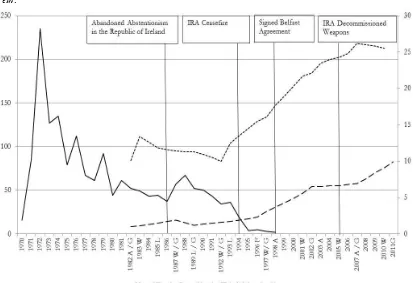
Fig. 1 The Number of Deaths Caused by the IRA Compared Against the Percentage Vote Share of Sinn Féin
93
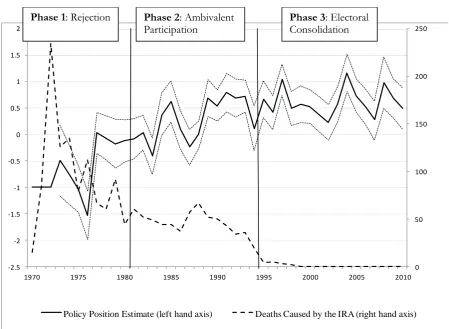
Fig. 2 The Changing Policy Position of Irish Republicanism Along a ‘Revolutionary-Reformist’ Dimension and the Number of Deaths Caused by the IRA
100
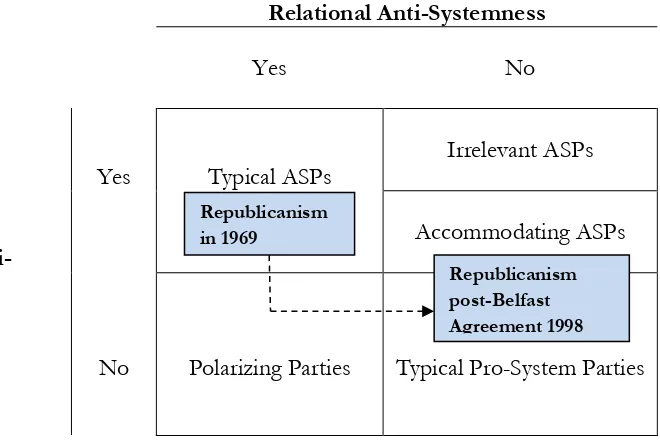
Fig. 3 The Changing Anti-System Position of Irish Republicanism 199
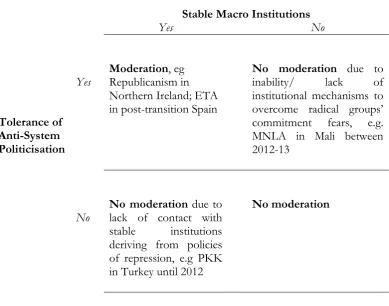
Fig. 4 Variables to Explore the Extension of this Conceptual
8
A
BBREVIATIONSANIA Americans for a New Ireland Agenda AIA Anglo-Irish Agreement (1985) AP An Phoblacht (The Republic) DUP Democratic Unionist Party
IICD Independent International Commission on Decommissioning INC Irish National Caucus
IPP Irish Parliamentary Party IRA Irish Republican Army MP Member of Parliament (UK) NA National Archives, UK NAI National Archives of Ireland NORAID Irish Northern Aid Committee
PRONI Public Records Office of Northern Ireland PSNI Police Service of Northern Ireland RN Republican News
RUC Royal Ulster Constabulary
SDLP Social Democratic and Labour Party
TD Teachta Dála (Member of Parliament in Ireland) UUP Ulster Unionist Party
1
CHAPTER 1
T
HET
RANSFORMATION OFI
RISHR
EPUBLICANISM AS AF
ORMOF
M
ODERATION____________________________________________________________________
Two contrasting speeches, both assessments of republicanism1 by British Prime Ministers
but made 25 years apart, highlight the scope of the transformation it has undergone. On the 12th October 1984, Margaret Thatcher, surrounded by security officers, declared to the
Conservative Party faithful ‘This government will not weaken. This nation will meet that challenge. Democracy will prevail’. The challenge she was referring to was that posed by the Irish Republican Army’s (IRA) armed campaign and Sinn Féin’s anti-system politics, groups she clearly viewed as posing an anti-democratic challenge to the legitimate existing political order. The reason for a particularly visible security presence that day was that she was speaking just hours after the IRA had come close to assassinating her at the Grand Hotel in Brighton during a Conservative Party Annual Conference. Some days later, Thatcher reiterated this same sentiment, stating that ‘all attempts to destroy democracy by terrorism will fail’ and she viewed the bombing as an attempt to ‘destroy the fundamental freedom that is the birth-right of every British citizen: freedom, justice and democracy’.2 By 2010, a
British Prime Minister was making a very different speech. Instead of accusing Sinn Féin and the IRA of attempting to destroy democracy, Gordon Brown praised their co-leadership of Northern Ireland’s power-sharing executive and their constructive role in all-party talks to devolve policing and justice powers. After securing an all-all-party agreement Brown stated that ‘This is the last chapter of a long and troubled story and the beginning of a new chapter after decades of violence, years of talks, weeks of stalemate’.3
For many, as for Gordon Brown, this moment represented the completion of the implementation of the Northern Irish peace process, a process that had begun 16 years earlier. This peace process had ended one of the most intractable post-World War II conflicts in the developed world: a 25-year ethno-nationalist war between Irish republicans fighting to unify Ireland on the one side, and the British army fighting to quell the rebellion
1 Throughout this thesis I use the term ‘republicanism’ as a short had for the collective grouping of
Provisional Sinn Féin and the Provisional IRA, unless otherwise stated.
2 Thatcher, M. ‘Speech to Finchley Conservatives. 25 Years as MP’, 20th October 1984.
2 along with British loyalists fighting to remain part of the United Kingdom on the other side. Licklider has noted that ‘ending a civil war involves a policy change by at least one side’,4 but very few people could have imagined the overwhelmingly dramatic nature of the
policy change that was to occur within republicanism. In less than three decades they turned away from their initial starting point of advocating and using violence, rejecting the existing ruling institutions, and making revolutionary claims to an alternative sovereignty. Today this has been replaced with non-violent political participation, acquiescence to be governed by reformed institutions still under British sovereignty, and accommodation with former political rivals. They still retain an alternative claim to sovereignty, but this is now a reformist rather than a revolutionary claim, an aspiration to be reached gradually through consensus rather than a pre-political right to be seized violently.
Understanding the transformation of such ethno-national radicalism is not fully explicable within existing political science frameworks. For example, the transformation of radical political actors and organisations is related to, but distinct from transitions to democracy. The democratic transitions framework assumes that a process of democratisation should reach an ideal end-point, typically a form of democratic consolidation that closely resembles that of a Western liberal democracy.5 Transitions that stop short of this stage are seen as
stalled or failed, rather than analysed as possible alternative forms of a democratic path. The focus on a failure to reach a pre-defined ultimate goal often leads to overlooking a myriad of changes that might occur within a political unit, even if a consolidated liberal democracy never emerges along the expected path. A standard transitions framework fails to capture adequately this complexity or ‘grey area’ that arises when states and political groups do not develop through a standard set of stages whereby everything becomes ‘normalised’.6
We cannot assume that a moderating party will necessarily ever come to embody the values of tolerance or pluralism that are seen as hallmarks of a consolidated liberal democracy, but this should not necessarily imply that their transformation is incomplete. In the case of an ethno-nationalist party with a violent history, they may never be able to accept a plurality of sovereignty and expecting them to do so is illusory. Republicanism’s final position entailed
4 Licklider, R. ‘How Civil Wars End: Questions and Methods’. In R. Licklider. (ed.) Stopping the Killing: How
Civil Wars End. (New York: New York University Press, 1993), p. 14.
5 Carothers, T. ‘The End of the Transition Paradigm’. Journal of Democracy 13(1) 2002, p. 5-21.
6 Such a stages approach is most clearly evident in the seminal article, Rustow, D. ‘Transitions to Democracy:
3 acquiescing to the ruling institutions and becoming wholly accommodating, but this disguises their singular lack of willingness to tolerate alternative claims to sovereignty over Northern Ireland or view them as possessing any legitimacy. An editorial in the official Republican newspaper in 2005, An Phoblacht, stated that IRA decommissioning represented a change in strategy but that republicans must still ‘continue to weaken the union with Britain, maximise broad-based national and international support for Irish re-unification and implement practical steps towards All-Ireland integration’.7 One week later Martin
McGuinness offered the traditional republican interpretation of the conflict as emanating solely from British attempts to maintain an illegitimate colonial presence in Northern Ireland, stating that ‘Britain’s role in Ireland has historically been negative and divisive. We have seen the consequences of this in every generation particularly since the partition of the island, against the wishes of the Irish people, 80 years ago’.8 In their disbandment the IRA
reaffirmed their historical right to armed struggle and republicanism today continues to celebrate its history of armed resistance. When announcing the final decommissioning of their weapons, the IRA declared that ‘we reiterate our view that the armed struggle was entirely legitimate’. In short, there is a difference between accommodating to a political order and accepting that political order as normatively legitimate.9 It is precisely for this
reason that conflicts over symbolic issues have taken on such prominence in Northern Ireland, more so than conflicts over the social order.
Other concepts such as de-radicalisation and demilitarisation also fail to capture the transformation of republicanism adequately. Della Porta and LaFree argue that ‘radicalization may be understood as a process leading towards the increased use of political violence, while de-radicalization, by contrast, implies reduction in the use of political violence’.10 This is not the sole definition of radicalisation, but in general
de-radicalisation emphasises the reduction of violence as the key aspect of the process.11 In this
7AP, 28th July 2005, p. 3. 8 AP, 4th August 2005, p. 7.
9 Przeworski, A. ‘Some Problems in the Study of the Transition to Democracy’. In G. O’Donnell, P.
Schmitter and L. Whitehead. (eds.) Transitions from Authoritarian Rule. Comparative Perspectives. (Baltimore: Johns Hopkins University Press, 1986), p. 53.
10 Della Porta, D. and G. LaFree. ‘Guest Editorial: Processes of Radicalization and De-Radicalization’.
International Journal of Conflict and Violence 6(1) 2012, p. 5.
11 There are some exceptions. For example, Kissane, B. ‘Electing Not to Fight: Elections as a Mechanism of
4 regard, it is similar to the notion of demilitarisation, which is akin to a society-wide process of reducing and eliminating violence from politics. Lyons describes demilitarisation as ‘creating and reinforcing the incentives and opportunities for the institutions of wartime based on violence, insecurity and fear to transform themselves into institutions of peacetime based on security and trust that can sustain peace and democracy’.12 The notions
of de-radicalisation and demilitarisation have a generally narrow focus and short-term time horizon looking at the events that immediately precede and proceed the rejection of violence. Much de-radicalisation research has been at the individual level, looking at social-psychological influences and opportunity structures for radicalising individuals into violence, often at the expense of wider political processes.13 Studies of de-radicalisation
largely emanate from the literature examining radical social movements, where violence is understood in terms of key concepts, such as collective action, resource availability, interplay with the state and strategic choices within certain opportunity structures.14
According to these approaches, de-radicalisation is a product of the shutting down of available avenues of political contestation and incentivising the pursuit of democratic politics to co-opt radical groups. The politics of such groups may remain confrontational and anti-establishment, but if there are limited opportunities to pursue this through extra-constitutional methods and sufficient incentives to pursue this through established political channels, then a group will divert their means. It is within this framework that Tilly argues there is no real difference between paramilitary anti-state violence and mildly confrontational protest movements – rather the distinction hinges on opportunity structures.15
While undoubtedly valuable, and indeed these ideas have been well applied to the case of Sinn Féin as I shall shortly discuss, they run the risk of overlooking the role of stable institutions in favour of examining factors such as interplay, stalemates and ripe moments. Della Porta and LaFree distinguish between the micro, meso and macro levels of de-radicalisation, arguing that each level is driven by different causal mechanisms.16 Briefly, the
12 Lyons, T. Demilitarizing Politics. Elections on the Uncertain Road to Peace. (Boulder: Lynne Rienner, 2005), p. 3-4. 13Della Porta and LaFree; Sedgwick, M. ‘The Concept of Radicalization as a Source of Confusion’. Terrorism
and Political Violence 22(4) 2010, p. 480-1. One such example that looks at individual process of (de-)radicalisation in the republican case is Alonso, R. The IRA and Armed Struggle. (London: Routledge, 2007).
14 One of the most widely cited examples of such an approach is Della Porta, D. Social Movements Political
Violence and the State: A Comparative Analysis of Italy and Germany. (Cambridge: Cambridge University Press, 1995). See also McAdam, D., J.D. McCarthy and M.N. Zald. Comparative Perspectives on Social Movements. Political Opportunities, Mobilising Structures and Cultural Framings. (Cambridge: Cambridge University Press, 1996).
5 micro level refers to the level of the individual; the meso level refers to the level of the organisation; and, the macro level refers to the level of the state and its institutions. Clearly these overlap but it is equally clear that explanations will focus on causal factors that sit more at one level than another. Social movement approaches tend to look at the meso and micro level, focusing on organisational dynamics and perceived opportunity structures, or the interactions between the organs of the state and the organisation’s capacity. However, the macro-level also needs to be acknowledged. Institutions need not only be seen as the contingent effects of strategic interaction between actors, but rather then can also provide predictable bases for political development.17 If institutions are understood as providing a
stable base to political competition then they can potentially regulate conflict because radical actors may perceive an opportunity for relatively low risk political gains through this system. In short, the inclusion of radicals within stable and strong institutions can produce moderation by systematically inhibiting radicalism.
The Inclusion-Moderation Hypothesis
It is precisely this macro level and the idea that institutions provide stable bases of political competition that the theory of ‘moderation through political inclusion’ attempts to capture. Much work has been done in recent years to define the concept of moderation precisely. The distinction between radicalism and moderation is often assumed to reflect the distinction between actors and organisations that recognise existing institutions as an appropriate forum for political contestation and those who refuse to do so and instead choose to work outside them, often but not necessarily using political violence. In other words, the radical-moderate distinction is related to whether a group attempts to overthrow the existing political status quo (revolution) or whether it attempts to work through the existing institutions in order to achieve its goals (reform). Importantly, this is distinct from whether a group is democratic or not as some revolutionary groups may be revolutionary democrats opposing an authoritarian status quo. For Schwedler, this form of moderation is best understood as multi-dimensional whereby a party can become moderate in some issues and policies while retaining or even hardening their stance on other issues.18 As such, it
17 Alexander, G. ‘Institutions, Path Dependence and Democratic Consolidation’. Journal of Theoretical Politics
13(3) 2001, pp. 249-70.
18 Schwedler, J. ‘Can Islamists Become Moderates? Rethinking the Inclusion-Moderation Hypothesis’. World
6 would be a mistake to think of institutional contact as leading teleologically to a moderate end-point but rather some aspects or dimensions can remain immune and rigidly radical.
This distinction between revolution and reform is indeed valuable but it is not clear that political participation is actually enough to classify a group as moderate. There are ongoing debates about whether some anti-system groups may attempt to use existing political institutions to undermine or challenge those institutions. In the most extreme version, this may entail a party looking for a democratic mandate in order to dismantle democracy permanently. There are also less extreme versions: an Islamist group looking to impose a form of Shari’a law but choosing to pursue an electoral mandate to do so may still be considered radical; or more pertinently to the case of Irish republicanism, sub-state nationalist groups looking to secede from a nation may pursue an electoral mandate but still be radical in their goals. This brings us to the heart of one of the main issues that has taken centre stage in debates about moderation – the need to distinguish between behaviour and ideology in order to separate ‘genuine’ moderates from those radical groups who merely present a facade of moderation.19 For authors such as Schwedler, Wickham and Tezcür,
moderation must necessarily entail ideological moderation, which can be considered as discrete from behavioural moderation.20 According to this perspective, changing behaviour
to become more accommodating and accept existing ruling structures is one thing, but changing goals and beliefs to become more tolerant of opposition is entirely another. It is for this reason that Schwedler gives a substantive definition of what it means to moderate, with an emphasis upon value change. She defines moderation as ‘movement from a relatively closed and rigid worldview to one more open and tolerant of alternative perspectives’.21
Schwedler explains the causes of moderation by reference to what she labels an ‘inclusion-moderation’ hypothesis. 22 This builds on key ideas from the party politics and
democratisation literatures that were developed in the context of class and religious politics. For example, Przeworski and Sprague in their analysis of the transformation of socialist
Parties’. Development 50(1) 2007, pp. 56-61; Schwedler, J. Faith in Moderation. Islamist Parties in Jordan and Yemen. (Cambridge: Cambridge University Press, 2006).
19 It is worth noting that a similar distinction has been pursued in the concept of de-radicalisation and the
distinction between attitudes and behaviour. See Della Porta, D. and G. LaFree, p. 7.
20 Schwedler, 2011; Tezcür, G.M. The Paradox of Moderation: Muslim Reformers in Iran and Turkey. (Austin:
University of Texas Press, 2010); Wickham, C.R. ‘The Path to Moderation: Strategy and Learning in the Formation of Egypt’s Wasat Party’. Comparative Politics 36(2), 2004: p. 205-228.
7 parties in early 20th century Europe argue that the decision to participate in elections
imposed new institutional constraints upon socialist party elites.23 Participation enforced a
situation where the party needed to moderate their radical platform to secure more votes or else remain radical but face political marginalisation. In a somewhat similar vein, Kalyvas in his analysis of Christian Democracy in Europe argues that electoral participation changed the organisational structure of these parties, leading to the emergence of a non-theological party elite who were more willing to moderate their position in return for votes.24 The
democratisation literature also informs the ‘inclusion-moderation’ hypothesis. Huntington, for example, argues that in return for greater political inclusion, radical groups agree to ‘abandon violence and any commitment to revolution, to accept existing basic social, economic, and political institutions...and to work through elections and parliamentary procedures in order to achieve power and put through their policies’.25 This is a similar
viewpoint to the literature that finds that rebellious masses may strike mutually beneficial bargains with elites that entail abandoning revolution in return for gradual and relatively stable transitions.26
Does Inclusion Work in the Case of Ethno-National Radicalism?
27Theories developed in one specific context do not always travel smoothly to another context. McGarry and O’Leary discuss the challenges of deploying consociational theory in an ethno-national setting characterised by contestation over self-determination, given that the theory was originally developed in the context of countries divided over class or religion.28 In a highly pertinent parallel, they argue that ‘the emphasis in traditional
23 Przeworski, A. and J.D. Sprague. Paper Stones. A History of Electoral Socialism. (Chicago: Chicago University
Press, 1986).
24 Kalyvas, S.N. The Rise of Christian Democracy in Europe. (Ithaca: Cornell University Press, 1996).
25 Huntington, S.P. The Third Wave. Democratisation in the Late Twentieth Century. (Norman: University of
Oklahoma Press, 1991) p. 170.
26 For example, Di Palma, G. To Craft Democracies: An Essay on Democratic Transitions. (Berkley: University of
California Press, 1990).
27 In this study I take one of the main political science understandings of ‘ethno-national’. Nationalism ‘seeks
to defend and promote the interests of the nation’ and nationalist behaviour is based on ‘the feeling of belonging to a community which is seen as the nation’. The ethno element implies that the nation is defined in narrow ethnic terms based on essentially exclusive or ascriptive criteria. Ethno-nationalists are often drawn to ethno-centrism, which entails a high degree of bias by individuals towards their own ethnic group and against other ethnic groups. Kellas, J.G. The Politics of Nationalism and Ethnicity. (Basingstoke: Macmillan, 1998, second edition), p. 4-6.
28 McGarry, J. and B.O’Leary. ‘Consociation and its critics. Northern Ireland after the Belfast Agreement’. In
8 consociational theory is on who should exercise power at the level of the central government. However, self-determination disputes are often about the legitimacy of the central government itself’.29 This does not imply that consociationalism is of no use to
analysing ethno-national disputes. Indeed, McGarry and O’Leary show how it can be modified to become a useful theoretical and practical tool for managing ethno-national conflict. Similarly, the inclusion-moderation approach embodies the assumptions of the class and religious contexts in which it was developed, but with some modification it can become a useful tool in the ethno-national context.
The inclusion-moderation approach assumes that the legitimacy of a central government is not disputed, albeit deep tensions may exist over the direction of policies passed by that central government. The socialist and Christian Democratic parties of the early 20th century
competed within recognised states and the political units were not disputed, albeit who should control the power of the state was disputed. What is more, these were large mass parties rather than smaller, niche parties like ethno-national parties often are. Similarly, in countries such as Jordan and Egypt, Islamist radicals accept the state as a legitimate political unit, albeit again control over that state is hotly contested.30
Ethno-national divisions and contestation over self-determination lead to particularly intractable conflicts that often tend to be less negotiable than more economic based conflict.31 The ideological distance between opposing class interests is typically not as great
as that between competing nationalist claims. Indeed it is the rigidity of the ethno-national cleavage that led Kitschelt to argue that ethno-national parties may not respond to the same incentives and disincentives as other mainstream parties.32 While ethno-national parties may
pursue changes to cultural laws, such as devolved educational policies or recognition of minority languages, this is generally not sufficient to satisfy their ethno-national demands. It is important to examine in-depth how and why a radical ethno-nationalist movement goes through the process of moderation and if its ethno-nationalist dimension prevents any expected moderation from occurring due to its visceral nature. Additionally, the moderation of religious and class based radicalism focuses on parties with no history of institutional
29 ibid, p. 374.
30 See Schwedler 2006 and Wickham 2004 respectively.
31 See, for example, Gurr, T.R. and B. Harff. Ethnic Conflict in World Politics. (Boulder: Westview Press, 2003,
second edition).
32 Kitschelt, H. The Transformation of European Social Democracy. (Cambridge: Cambridge University Press, 1994),
9 violence. While early socialists may have engaged in street protests or rioting, this was never institutionalised into a quasi-military form within the socialist movement. The same is true of the Christian Democratic parties. There are obvious examples of violent Islamist movements around the world today, however, the studies of moderation and Islamist parties have been concerned with parties without a violent history, such as the Islamic Action Front in Jordan or the Wasat Party in Egypt. That is not to say that the transformation of violent groups has not been dealt with in the political science literature. There are many such case studies and these too emphasise reforms of governing institutions in a more inclusive direction as a way of facilitating the transformation of rebel soldiers into politicians.33 There has also been a highly influential debate around
institutional design and the management of violence.34 Yet in these instances, moderation is
not the dependent variable but something more akin to demilitarization or political participation tends to be what is examined. Yet as I have already discussed, demilitarization and participation are not synonymous with moderation, and purely restricting the focus to violence overlooks the totality of the transformation. Instead it is more informative to adopt the breadth of the notion of moderation but explore how this applies to the ethno-national context.
Existing explanations of moderation emphasise the path-dependent nature of the process. This in itself indicates that the context in which moderation occurs is all important. If moderation is path-dependent, then we cannot assume the same destination for all journeys nor that the causal pathways work in the same way. In fact, upon close inspection, there are a number of reasons why a violent ethno-national party may require a modified understanding of moderation due to the restricted context in which dominant understandings have been developed and refined. Key processes of moderation, such as electoral participation or democratic bargaining, pre-suppose a generally recognised state
33 There are many examples of studies looking at rebel to politician transformations, such as De Zeeuw, J.
(ed.) From Soldiers to Politicians. Transforming Rebel Movements After Civil War. (Boulder: Lynne Rienner, 2008); Söderberg Kovacs, M. ‘When Rebels Change Their Stripes: Armed Insurgents in Post-War Politics’. In A. Jarstad and T. Sisk. (eds.) From War to Democracy: Dilemmas of Peacebuilding. (Oxford: Oxford University Press, 2008), pp. 134-156; Van Engeland, A. and R.M. Rudolph. (eds.) From Terrorism to Politics. (Hampshire: Ashgate, 2008); Deonandan, K., D. Close and G. Prevost. From Revolutionary Movements to Political Parties. Cases from Latin America and Africa. (New York: Palgrave Macmillan, 2007); Manning, C. ‘Armed Opposition Groups into Political Parties: Comparing Bosnia, Kosovo, and Mozambique’. Studies in Comparative International Development 39(1) 2004, pp. 54-76.
34 Hartzell, C.A. and M. Hoddie. Crafting Peace. Power Sharing Institutions and the Negotiated Settlement of Civil Wars.
10 over which parties compete for electoral control or a democratic bargain in which the entity to be democratised is largely accepted. However, should such a legitimate entity be absent, then we cannot assume that these causal mechanisms will operate in the same fashion. So while it is clear that the theory of moderation could potentially be a powerful tool in explaining the moderation of a violent ethno-nationalist party, it is not actually clear or self-evident that this theory is currently applicable without some modification to take account of the ethno-national context.
The Limits to Existing Understandings of the Transformation of Irish
Republicanism
Republicans throughout their entire history from 1969 to the present day, even in the midst of the most intense and violent IRA campaigns, always considered themselves to be the only true democrats on the island of Ireland and they consistently used the language of democracy and liberal rights to present their viewpoint. According to republicans, their struggle was necessarily an armed one because the structures and institutions of British democracy as administered in Northern Ireland systematically disadvantaged Irish nationalists, leaving them with no other choice but to pursue violence in order to achieve change and secure political freedom and equality for everyone on the island of Ireland. In short, violence was justified as being necessary to create a just democracy. Of course, from the unionist and British point of view, Northern Ireland throughout the entire conflict period held regular inclusive elections which could be freely contested, a competitive party system, and civil and political liberties. In other words, many of the criteria of a procedural definition of democracy, such as Dahl’s,35 were met. As such, republican violence was seen
as an atavistic and primordial response to an historical political settlement with which they did not agree. What is more, militant Irish nationalism was tyrannical in its persistent denial of the right of the unionist community to be British and in its desire to impose what it claimed to be the will of the whole island of Ireland upon its Northeast corner.
Bourke has highlighted that there is a distinction between a functioning democratic process and a functioning democratic state,36 and republicans most certainly rejected Northern
Ireland as being an example of the latter. The partition of Ireland was seen as an outrageous
11 gerrymander imposed under the threat of British war, which gave what should be the minority unionist community a numerical majority in the Northeast corner of Ireland purely in order to elevate them to a position of privilege based on the exploitation of Irish nationalists. The British imposed conception of democracy was seen as a centralising and imperialist one that concentrated power in the hands of the manufactured majority without due consideration for the position and preferences of the sizeable minority of Irish nationalists. A majoritarian system of government allowed unionist politicians to create effectively a ‘one-party state’ and use the institutions of that state to favour unionist communities while nationalist communities were relegated to second-class citizens.37
Discrimination in the field of public employment, public housing and policing were all cited as evidence of the veracity of this perspective. What is more, the British security forces and Northern Irish police were seen as discriminating against the nationalist community and utilised by the unionist community to prop up an illegitimate regime. Jim Gibney, a former IRA prisoner, current Sinn Féin executive member and key party strategist, described living in Northern Ireland as being ‘at the mercy of an unbridled Orange administration who had inflicted terror, poverty, second class citizenship and oppression on nationalists down through the decades’.38 This view was also pervasive at the mass level with one local
republican activist arguing that ‘as the unionist majority is in-built, the elections are sheer farce, the opposition being removed by the bullet...The election has been won by the massacre of the opposing party. So please stop thinking of Ulster as a democracy. It is an insult to the theory of free elections, which will never be allowed in this military dictatorship which is the most repressive regime in the present uncivilised world’.39
Northern Ireland was seen as irreformable and instead violent revolutionary change was required because the British along with British loyalists would not willingly agree to revolutionary change that threatened their privileged position.
In spite of such trenchant views, almost 30 years later republicans engaged in the very reformism they had previously denigrated and they began to work with the British and Irish governments and with the unionist community to design new ruling institutions for Northern Ireland. Revolutionary action was put behind them, even if at times revolutionary rhetoric remained. In 1994 the IRA embarked upon what was to become a permanent ceasefire and subsequently decommissioned all their weapons some protracted 11 years
37 Farrell, M. Northern Ireland. The Orange State. (London: Pluto Press, 1980). 38 Quoted in AP, 30th July 1994, p. 4.
12 later. The Belfast Agreement of 1998 established a power-sharing settlement from which Sinn Féin were seen to be big winners. By adopting more moderate positions whilst still retaining their historical hard-line image,40 Sinn Féin rose to become the largest nationalist
party in Northern Ireland, the second largest political party overall, and co-leaders of the Northern Ireland Executive. Their fortunes also increased in the Republic of Ireland, rising from marginal outsiders to become the fourth largest party at the 2011 general election. In recent years Sinn Féin in their capacity as co-leaders of the Northern Ireland Executive responded to the threat of ‘dissident’ terrorist attacks on the Northern Irish state by disillusioned republicans by utilising the justice and policing powers at their disposal to pursue and capture those responsible, even though in some cases these were their former comrades-in-arms.41 The personification of this transformation comes in the figure of
Martin McGuinness, a former commander of the IRA in Derry who in 2007 was elected the deputy First Minister of Northern Ireland and polled extremely well in a failed bid to become the President of the Republic of Ireland in 2011. In this figure, the transition from solider to statesman can be seen as a metaphor for the journey from anti-system and violent republicanism to mainstream and reformist republicanism.
Throughout all this, republicanism itself claimed that it had not fundamentally changed but rather it merely entered a ‘new phase’ of the struggle and it had not lost sight of its original agenda in a post-conflict age.42 The right to armed struggle to achieve Irish freedom
remains but this right does not need to be exercised because post-Belfast Agreement Northern Ireland opened a path for legitimate and equal political contestation between the competing nationalisms, removing the element of systematic discrimination that was in-built into Northern Ireland’s earlier incarnation. Accepting the new institutional arrangements, however, certainly did not imply accepting the legitimacy of the political unit itself and in republican eyes Northern Ireland remains illegitimate and a reminder of the need for territorial unification in order to realise self-determination and ‘true’ Irish democracy. Nonetheless, the doctrine is now Irish unity through consent rather than through force. This confusion and sophistry is at the heart of much of republican politics today.
40 Mitchell, P., G. Evans and B. O’Leary. ‘Extremist Outbidding in Ethnic Party Systems is Not Inevitable:
Tribune Parties in Northern Ireland’, Political Studies 57(2) 2009, p. 416.
41 Frampton, M. The Legion of the Rearguard. Dissident Irish Republicanism. (Dublin: Irish Academic Press, 2010) p.
90.
42 See, for example, speech given by Gerry Adams on 1 March 1994. http://www.sinnFéin.ie/contents/15190
13 An extensive number of valuable and insightful studies have been undertaken that attempt to tackle republicanism’s seemingly volte-face. Initial contributions came from the field of journalism and these focused on presenting the main changes that republicans went through and their consequences.43 Similarly, many historical studies also focused upon
piecing together the main events and key players in the transformation of the movement and deconstructing some of its complexities and contradictions.44 Using these studies it is
possible to identify a consensus regarding the key events in republicanism’s journey. This generally sees their conversion beginning with the IRA prisoners’ hunger strikes of 1981/2, which opened the eyes of the movement to the possibility of electoral politics, followed by leadership changes, changing internal priorities (most notably, the ending of abstentionism), and subsequently engaging in talks with the Social Democratic and Labour Party (SDLP), which predisposed them to more extensive peace talks. The main shortcoming of these works is the lack of the use of comparative theories to understand this transformation. They tend to understand change as rooted in a ‘pragmatic’ tendency which has historically permeated republicanism and which also explains the moderation of earlier incarnations. Explaining change with reference to pragmatism may just be using a vague label for a theoretical process that could be specified much more precisely. This has contributed to an overall situation in which developments in republicanism have not been placed in a wider comparative perspective.
Political science approaches have also made some valuable contributions but they have primarily relied, either explicitly or implicitly, upon a social movement framework that draws on ideas of interplay between British state strategies and republicans to explain their moderation. The best of these works comes from Bean who uses social movement theory to argue that the British used funding channelled through civil society to draw republicans into contact with the soft power of the state. Republicans, although aware of the tactic that Britain was pursuing, had no choice but to increase their engagement with the state but they
43 Moloney, E. A Secret History of the IRA. (London: Allen Lane, 2002); McKittrick, D. and D. McVea. Marking
Senese of the Troubles. (Belfast: Blackstaff, 2000); Taylor, P. Provos: The IRA and Sinn Féin. (London: Bloomsbury, 1997).
44 Frampton, M. The Long March: The Political Strategy of Sinn Féin, 1981-2007. (Basingstoke: Palgrave Macmillan,
14 did so by establishing this as a new arena of political confrontation.45 Similarly, McIntyre
sees republicanism’s changing goals as a response to British strategies of co-option. As Britain adopted less militant and more political strategies, this defined the space in which republicanism competed and they responded by becoming more political too.46 Murray and
Tonge have emphasised how interplay between republicans and their nationalist political rivals, the SDLP, led to the adoption of a constitutional and non-violent conception of nationalism, marginalising the traditional republican viewpoint. Ironically, republicans became the electoral victors by adopting the SDLP’s non-violent stance for themselves.47 In
another argument by Tonge et al, again interplay between key political elites in the British and Irish states and republicans is emphasised as producing the transformation.48 The idea
of interplay also underpins much of the work that looks at the peace process in general and not just specifically at the transformation of Irish republicanism. Dixon has argued that the transformation of politics in Northern Ireland is best analysed in terms of the marketing and choreography of the Belfast Agreement which slowly shifted the ground on which republicans were competing, rather than necessarily deriving from any substantial change within republicanism.49 Other studies of the peace process adopt explanations that focus on
leadership choices and how these played out to produce the moderate outcome.50
Although there is much to commend the dominant literature in this field to date, most notably in terms of identifying key events and time periods worthy of close attention, two salient problems with how this topic has been tackled so far are evident. Firstly, many of the existing explanations overlook the role of macro political institutions as providing stable bases of political competition. The existing debates have failed to tackle head-on how institutions gradually drew in radical republicanism and imposed a series of constraints and incentives to adopt more moderate positions. A gradualist macro-political institutional approach helps to correct the tendency in the literature that sees the evolution of
45 Bean K. ‘‘The Economic and Social War Against Violence’. British Social and Economic Strategy and the
Evolution of Provisionalism’. In A. Edwards and S. Bloomer. (eds.) Transforming the Peace Process in Northern Ireland. From Terrorism to Democratic Politics. (Dublin: Irish Academic Press, 2008), pp. 163-174; Bean, K. The New Politics of Sinn Féin. (Liverpool: Liverpool University Press, 2007).
46 McIntyre, A. ‘Modern Irish Republicanism: The Product of British State Strategies’, Irish Political Studies
10(1) 1995, pp. 97-121;
47 Murray, G. and J. Tonge. Sinn Féin and the SDLP. From Alienation to Participation. (London: C. Hurst, 2005). 48 Tonge, J., P. Shirlow and J. McAuley. ‘So Why Did the Guns Fall Silent? How Interplay, not Stalemate,
Explains the Northern Ireland Peace Process’. Irish Political Studies 26(1) 2011, pp. 1-18.
49 Dixon, P. Northern Ireland. The Politics of War and Peace. (Basingstoke: Palgrave MacMillan, 2008, second
edition).
50 McGrattan, C. Northern Ireland. 1968-2008. The Politics of Entrenchment. (Basingstoke: Palgrave, 2010);
15 republicanism as composed of two broadly dichotomous periods of radicalism and moderation, when in reality it is necessary to specify how these periods overlapped and some aspects remained immune to moderation. These complexities are much better captured and understood through the ‘inclusion-moderation’ framework.
Secondly, many of the existing approaches have allowed an implicitly non-comparative focus to proliferate in studies of Northern Ireland. There are of course notable and valuable exceptions to this, not least Bean’s work mentioned above,51 but in general explanations are
offered that fail to look to broader comparative theories and processes. Explanations that focus on the interplay of key actors or interplay between the British strategies and republicans often fail to draw on theoretical explanations that find similar processes elsewhere or to demonstrate fully the lessons from this case for other instances. In general the vast majority of work fails to make any use of wider comparative theories to illuminate republicanism’s journey, thus continuing to propagate the questionable notion that Northern Irish politics is sui generis.52
The Contribution of This Thesis
This study applies the ‘inclusion-moderation’ thesis to the case of Irish republicanism to answer a number of related questions:
1. What does it mean to be radical or moderate in Irish republicanism’s ethno-national context?
2. What was the role of stable and predictable macro-institutions in the moderation of Irish republicanism?
51 Both McGarry, J. and B. O’Leary. Explaining Northern Ireland: Broken Images. (Oxford: Oxford University
Press, 1995), and O’Leary, B. and J. McGarry. The Politics of Antagonism. Understanding Northern Ireland. (London: The Athlone Press, 1996, second edition), were crucial to bringing a more comparative dimension to studies of the conflict in Northern Ireland. Other comparative studies of Northern Ireland are referred to and drawn upon throughout this study.
52 For example, in 2011, David Trimble (leader of the Ulster Unionist Party during the Belfast Agreement
16 3. Is the ‘inclusion-moderation’ thesis a useful approach to explain the moderation of a
violent ethno-national party?
[image:23.595.91.528.290.360.2]I answer these questions by applying the ‘inclusion-moderation’ approach to the case of Irish republicanism, albeit supplementing this to include an international dimension which has been identified as important in this case. My dependent variable is ‘political moderation’ (and part of this study deals with what exactly that means in this case) and my three independent variables are ‘electoral participation’, ‘democratic bargaining’ and ‘international intervention’, as shown in Table 1 below.
Table 1: The Variables Explaining the Process of Moderation Used in this Study
Pathway Case Independent
Variable
Independent Variable
Independent Variable
Dependent Variable
Irish
Republicanism, 1969-2010
Electoral
Participation Democratic Bargaining American International Intervention
Multi-dimensional moderation
My central argument is that at a small number of critical junctures, republican elites made important decisions which set the organisation on a path-dependent route to moderation caused by the predictable and stable effect of key institutions. In other words, the ideas and interests of actors in interaction with a wider institutional setting explain moderation. In spite of the fact that republicans did not view the British state and its institutions as legitimate, contact with these institutions over a prolonged period of time still induced moderation. Republicans did not need a prior normative commitment to the state in order to fall under the moderating effect of the constraints and incentives created by elections and democratic bargaining. In this respect, the inclusion-moderation thesis is useful in explaining ethno-national moderation.
17 for. Republicans did not change their long-term values. They continue to assert an alternative claim to sovereignty and the legitimacy of armed struggle and they reject suggestions that Northern Ireland can now be considered as a bi-national state. The power-sharing deal was only accepted instrumentally and it is conditional upon serving their goal of achieving a united Ireland. According to existing substantive definitions, this would fall short of ideological moderation because values such as tolerance and pluralism have not been embraced. Yet republican moderation is also more than strategic, even if this is how it originally started. They repeatedly demonstrated a commitment to defending the new Northern Irish institutions from dissident threats from disgruntled former comrades-in-arms who reject the peace process. Additionally, agreeing to decommissioning and endorsing the Police Service of Northern Ireland embody ideological changes as well as behavioural ones, given the distance that republicanism had to travel to agree to this. Therefore, I offer an alternative understanding of moderation to capture the inherent ambiguity between behaviour and values that exists in this ethno-national case.
It is important to note that my contribution is exclusively to the study of moderation and not to the party politics literature, democratic bargaining literature and international arena literature per se. Due to the need to focus my area of study I cannot discuss the implications of this case for theories of electoral participation or what implications this might have for wider debates about democratic transitions. Rather while I certainly use the ideas from these bodies of literature extensively, I do so in order to gain insights about moderation and it is to the concept of moderation that I restrict my critical appraisals.
Irish Republicanism as a Pathway Case
This study uses the ‘pathway case’ of Irish republicanism to examine moderation in the case of a violent ethno-national party. I am treating Irish republicanism as one example of the broader universe of violent ethno-national organisations that have moderated. Thus, in line with Gerring’s definition of case study research, I treat republicanism as a single unit for the purpose of understanding a larger class of similar units.53 Gerring refined the concept of a
pathway case as an alternative to Ekstein’s notion of a crucial case, which he argued was of limited analytical use given that it is difficult to find a crucial case that definitively proves or
53 Gerring, J. ‘What Is a Case Study and What Is It Good For?’. American Political Science Review 98(2) 2004, p.
18 disproves a social science theory.54 However, in many instances the links between a
dependent and independent variable may already be established in a theory, but the causal mechanisms between these variables may be underspecified or ambiguous. As such, using Irish republicanism as a pathway case allows me to explore in-depth the causal mechanisms underpinning an already established relationship between an independent and a dependent variable.
Using a single case study to explore the issues addressed in this thesis can be seen as a strength rather than a shortcoming. Case study approaches have long since moved beyond the traditional criticism that small or single-N studies that are selected according to the dependent variable are of limited value.55 It has been persuasively argued that as long as
researchers do not attempt to over-generalise their findings, then a single-site case study can be very valuable for understanding complex causal processes in a manner that is neglected when purely observing what correlates with variations in an outcome.56 Case study research
is particularly useful for refining the clarity of key concepts by taking into account the importance of context, thus avoiding Sartori’s well documented pitfall of ‘conceptual stretching’.57 Through ‘hoop’ and ‘smoking gun’ tests complex causality can be established
using a single case.58 Hoop tests ensure that the case demonstrates that the exploratory
theories provide necessary conditions but this does not necessarily imply that they are sufficient to ensure an outcome. Smoking gun tests find a clear causal link between an independent and a dependent variable, thus demonstrating that the theory provides sufficient conditions to explain the outcome being examined. Importantly, it is crucial that the theory being examined can be falsified so that it is not accepted deterministically, through methods such as process tracing and critical junctures.
The nature of organisational and institutional change is best understood in path-dependent terms. Here I distinguish between the macro stable institutions that I view as independent
54 Gerring, J. ‘Is There a (Viable) Crucial-Case Method?’. Comparative Political Studies 40(3) 2007, pp. 231-253. 55 This claim was most prominently made by King, G., R.O. Keohane and S. Verba. Designing Social Inquiry.
Scientific Inference in Qualitative Research. (Princeton: Princeton University Press, 1994), p. 208-211.
56 George, A.L. and A. Bennett. Case Studies and Theory Development in the Social Sciences. (Cambridge, Mass.: MIT
Press, 2005), p. 32.
57 Sartori, G. ‘Concept Misinformation in Comparative Politics’. American Political Science Review 64(4) 1970, pp.
1033-1053.
58 Bennett, A. and C. Elman. ‘Qualitative Research: Recent Developments in Case Study Methods’. Annual
19 variables and the meso level party institution that I view as dependent.59 The change in
republicanism can be understood as the outcome of a path-dependent process of the interaction of these stable macro institutions. Pierson argues that path dependence is a process of ‘increasing returns’, whereby a decision made at a critical juncture sets events along a specific path from which it is very difficult to return because of the increasing returns that are accumulated by staying on the same path and the high costs associated with changing paths.60 Similarly, Mahoney defines path dependence as ‘those historical sequences
in which contingent events set into motion institutional patterns of event chains that have deterministic properties’.61 In this way, path-dependent approaches draw our attention to
identifying the causal processes that take place early in the stages of a historical sequence, acknowledging their contingent nature at the moment of their occurrence and then understanding how they have deterministic consequences by greatly increasing the likelihood of staying on the chosen path going into the future.
There is a vibrant debate within the field of historical institutionalism about how and why institutions change and this debate has important implications for my approach to studying the transformation of republicanism. There are two differing approaches to understanding institutional change. The first is the idea of punctuated equilibria.62 This viewpoint argues
that institutions are highly continuous bodies and that institutional change is difficult. Given their stickiness, change only comes through exogenous crises, such as economic depression or wars, which have a dramatic impact on institutions. However, this impact is only episodic and soon a new institutional equilibrium arises which in turn becomes highly sticky until the next major crisis hits. In other words, institutions are characterised by long periods of self-reinforcing stability punctuated by dramatic change derived from exogenous factors. The other model of institutional change sees this as much more gradual and incremental. The institutions themselves create opportunities for actors to embark upon
59 See Hall, P.A. and R.C.R. Taylor. ‘Political Science and the Three New Institutionalisms’. Political Studies
44(5) 1996, pp. 936-957, for an overview of the three main forms of ‘new institutionalisms’ in the social sciences, namely historical institutionalism, rational choice institutionalism and sociological institutionalism. Where rational-choice institutionalism tends to see agents as being influenced by exogenous preferences for the course of action that will deliver them the maximum gains, historical institutionalism tends to see preferences as being constructed through the process of institutional development itself, thus providing a more complete understanding of institutional change.
60 ibid; also, P. Pierson. Politics in Time. History, Institutions and Social Analysis. (Princeton: Princeton University
Press, 2004); Pierson, P. ‘Increasing Returns, Path Dependency, and the Study of Politics’. American Political Science Review 94(2) 2000, p. 251.
61 Mahoney, J. ‘Path dependence in historical sociology’. Theory and Society 29(4) 2000, p. 507.
62 Krasner, S.D. ‘Approaches to the State: Alternative Conceptions and Historical Dynamics’. Comparative
20 institutional change as adaptation is required. 63 Even if institutions do not change, then the
configuration of institutions may change gradually, thus producing different outcomes.
In some respects we need no longer choose between these two models. Recently there has been a move to acknowledge that institutional change can derive from both processes. Cortell and Peterson have refined an explanation that accounts for both dramatic, episodic change and incremental change.64 They argue that international and domestic events open a
window of opportunity for key actors. If their preferences are such that they want change, they will move to exploit this opportunity. Their preferences emerge from a complex interaction of external pressures derived from the trigger as well as ideology and political calculation. The success and extent of efforts to change institutions depends upon the extent to which existing institutional configurations allow for actors to implement their goals. Streeck and Thelen have put forward a somewhat similar framework for understanding how incremental change can actually lead to dramatic change without the need for a precipitating crisis.65 Whilst they acknowledge that some circumstances, such as
wars or civil wars, generate crucial moments that cause major institutional change, they argue that most change is in fact incremental and endogenous to the polity rather than derived from an external shock. Using a series of key case studies they show that gradual transformation through processes such as displacing some institutions with other institutions or adding new institutional layers to existing institutions rather than wholesale replacement, can lead to major transformations.
When looking at republicanism it is clear that much of the change occurred in a gradual fashion as a result of the stable and predictable effect of institutions on elite choices. Yet we cannot dismiss completely key decisions at crucial turning points when explaining the moderation of republicanism, such as the hunger strikers’ decision to contest elections or the decision to call a ceasefire. These few key decisions are best seen as critical junctures that set republicanism down the road of predictable path-dependent change. Critical junctures are ‘situations in which the structural (that is economic, cultural, ideological,
63 Thelen, K. and S. Steinmo. ‘Historical institutionalism in comparative politics’. In S. Steinmo and K.
Thelen. (eds). Structuring Politics. Historical Institutionalism in Comparative Perspective. (Cambridge: Cambridge University Press, 1992), p. 16.
64 Cortell, A.P. and S. Peterson. ‘Altered States: Explaining Domestic Institutional Change’. British Journal of
Political Science 29(1) 1999, pp. 177-203.
65 Streeck, W. and K. Thelen. ‘Introduction: Institutional Change in Advanced Political Economies’ in W.
21 organizational) influences on political action are significantly relaxed for a relatively short period, with two main consequences: the range of plausible choices open to powerful political actors expands substantially and the consequences of their decisions for the outcome of interest are potentially much more momentous’.66 These junctures represent the
opportunities for contingent agency that derive from some exogenous crisis or structural change and whose consequences lock-in an institutional pattern along a deterministic path.67
To tease out the path-dependent determinism, I use process tracing. This is an ideal method to test moderation in this case given its suitability in tracing complex causality, path-dependent patterns, and both dramatic and gradual institutional change.68 The
usefulness of process tracing for this type of research is evident from George and Bennett’s summation of the strengths of the method as entailing an ‘insistence on providing [a] continuous and theoretically based historical explanation of a case, in which each significant step toward the outcome is explained by reference to a theory’.69 Its strength lies in testing a
specific historically contextualised outcome against a set of theoretical assumptions and enabling the research to pick this apart in order to untie complex causal processes. Given the aims of this thesis, this makes it an ideal approach to adopt. The danger with such a method, particularly given its insistence on the contingency and contextualisation of outcomes, is that a theory is always accepted. In reality, much evidence that is discovered may be useful for many alternative explanations while only some evidence will be supportive of just one explanation. Therefore, ‘process tracing is more persuasive to the extent that the researcher has guarded against confirmation bias. It is important in this respect to look within a case for the observable implications of a wide range of alternative explanations, to give these explanations a “fair shake” vis-a-vis the evidence, and to develop sufficient diverse, detailed and probative evidence to elevate one explanation’.70
66 Capoccia, G. and R.D. Kelemen. ‘The Study of Critical Junctures: Theory, Narrative, and Counterfactuals in
Historical Institutionalism’. World Politics 59(3) 2007, p. 343.
67 Mahoney defines contingency as ‘the inability of theory to predict or explain, either deterministically or
probabilistically, the occurrence of a specific outcome. A contingent event is therefore an occurrence that was not expected to take place, given certain theoretical understandings of how causal processes work’, p. 513.
68 Capoccia and Kelemen have also suggested the possibility of using ‘analytical narratives’ for examining the
impact of critical junctures, however, given its tendency towards a more rational-choice institutionalism approach I have opted for process tracing, which is more widely used in historical institutional studies.
22 To understand the impact of macro-institutions upon republicanism, I drew on a range of archival data sources from a number of different perspectives. I consulted the National Archives (NA) in Kew, London; the National Archives of Ireland (NAI); and, the Public Records Office of Northern Ireland (PRONI). Through this process I was able to understand the transformation of republicanism from the perspective of the three main state-actors in the domestic context. The main limitation of this data is that the 30-year rule restricts access to files relating to events after 1982 (final data collection was undertaken in January 2013). To understand the transformation from the republican perspective I examined all policy documents produced by Sinn Féin, key announcements by the IRA, and important speeches by senior republic