i
Hayley Vingerhoets
April 2018
A thesis submitted in partial fulfilment of the requirements
of the University of East London for the degree of Doctor
of Applied Educational and Child Psychology
Word Count: 38,226
IMPLEMENTING GROWTH
MINDSET (PRACTICE) IN
SCHOOLS: AN EXPLORATION
OF TEACHERS' VIEWS USING A
ii Abstract
Growth mindset has become a highly popularised term within education and wider fields. An initial literature review highlighted that Carol Dweck and
colleagues are a dominant presence within the research and little research has been undertaken within the UK. This doctoral thesis aimed to address this shortcoming, through exploring how schools have implemented mindset theory, and what they perceived to be most useful, from the perspectives of teachers.
Using critical realism as an ontological and epistemological underpinning, this research adopted grounded theory methodology to gain an understanding of the lived experiences of growth mindset practice. Semi-structured interviews were conducted with five participants from different mainstream schools, all of whom were directly responsible for mindset application. Interviews were recorded, transcribed and analysed following the principles of Strauss and Corbin’s (1998) approach to grounded theory.
iii Declaration
This thesis has not already been accepted for any degree and it is not being submitted for any other degree.
This work is being submitted in partial fulfilment of the requirements of the University of East London for the degree of Professional Doctorate in Educational and Child Psychology.
The research is the result of my own work and investigation, except where otherwise stated. Additional sources are acknowledged by explicit references in the text and references are listed in full, in the appendix.
I hereby grant permission for this thesis, if accepted, to be available for reading and for inter-library loans. The title and summary can be made available to outside organisations.
iv Acknowledgements
I would firstly like to thank my director of study, Janet Rowley and placement supervisor, Imogen Howarth for your continued support, patience and guidance.
To the schools and staff members who were directly involved in this research, I am truly grateful. Without your time and willingness to participate, I may still be searching for participants! I couldn’t have done this without you, and your openness and honesty.
v List of Tables
Table 2. 1. Assumptions held by the researcher prior to data collection and
analysis. ... 23
Table 3. 1 Key concepts within grounded theory methodology. ... 33
Table 3.2. Participant inclusion criteria for the present study. ... 36
Table 3. 3. Participant characteristics. ... 37
Table 3. 4. Examples of memos recorded by the researcher throughout different stages of data collection and analysis. ... 45
Table 4. 1. Extracts from interview transcripts illustrating microanalysis and initial open codes. ... 57
Table 4. 2 Extracts from the coding system depicting how each level of coding is linked. ... 58
Table 5. 1. A table depicting the search terms used in the literature review which included ‘growth mindset’ related terms and the number of results yielded. ... 93
Table 5. 2. A table depicting the search terms used when attempting to broaden the search, and the the number of results yielded. ... 94
vi List of Figures
Figure 3. 1. The conceptual framework of this research. ... 28
Figure 3. 2. Process of data analysis ... 41
Figure 4. 1. A visual representation of the process of data analysis. ... 55
Figure 4. 2. A visual representation of the final coding structure. ... 56
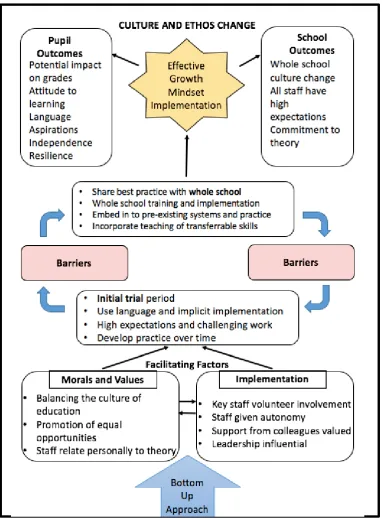
Figure 4. 3. A visual representation of the proposed theory. ... 82
Figure 4. 4. A simplified visual representation of the proposed theory. ... 83
vii List of Abbreviations
BME – Black and minority ethnic BPS – British Psychological Society
CPD – Continued professional development CYP – Children and young people
ELAI – Emotional Literacy Assessment and Intervention EP – Educational Psychologist
EPS – Educational Psychology Service
GCSE’s – General certificate of secondary education IQ – Intelligence quotient
LA – Local authority
NGN – Nurture Group Network
PATHS – Promoting alternative thinking strategies PEP – Principal Educational Psychologist
SAT – Statutory assessment test SDT – Self-Determination Theory
viii
Table of Contents
1.Introduction ... 1
1.1 Chapter Overview ... 1
1.2 Terminology ... 1
1.3 Background ... 1
1.3.1 National Context ... 2
1.3.2 Local Context ... 4
1.4 History of Mindset and Psychological Underpinning ... 4
1.4.1 Background of Understanding and Measuring Intelligence ... 5
1.4.2 Implicit Theories of Intelligence ... 6
1.4.3 Locus of Control and Attribution Theory ... 7
1.4.4 Neuropsychology and Brain Plasticity ... 9
1.5 Growth Mindset within an Educational Context ... 9
1.6 Relevance and Rationale ... 10
1.6.1 Overview ... 10
1.6.2 Within a Local Context ... 10
1.7 Research Questions ... 11
2. Literature Review ... 13
2.1 Chapter Overview ... 13
2.2 Grounded Theory and Literature Reviews ... 13
2.3 Research Conducted by Carol Dweck ... 14
2.3.1 Mindset and Attainment ... 15
2.3.2 Mindset and Well-Being ... 18
2.3.3 Mindset and Teacher Interventions ... 19
2.4 Strengths and Limitations of Literature ... 21
2.5 Researcher’s Worldview ... 22
2.6 Chapter Summary ... 24
3. Methodology ... 25
3.1 Chapter Overview ... 25
3.2 Purpose of Enquiry ... 25
3.3 Conceptual framework ... 26
3.3.1 Ontology and Epistemology ... 26
3.3.2 Critical Realism ... 27
3.3.3 Critical Realism and the Current Study ... 28
3.4 Research Design ... 29
3.4.1 Introduction to Grounded Theory ... 30
3.4.2 Types of Grounded Theory ... 31
3.4.3 Characteristics of Grounded Theory (Strauss & Corbin, 1998) ... 32
3.4.4 Rationale for Grounded Theory ... 33
3.5 Data Collection ... 34
3.5.1 Sampling Strategy ... 34
3.5.2 Process of Sampling and Recruitment ... 35
3.5.3 Characteristics of Sample ... 36
3.6 Data Collection ... 38
3.6.1 Strategy for Data Collection ... 38
ix
3.7 Data Analysis ... 40
3.7.1 Constant Comparison ... 41
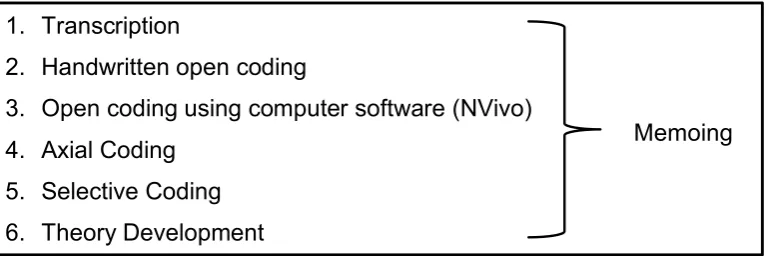
3.7.2 Coding Process ... 41
3.7.3 Open Coding ... 42
3.7.4 Axial coding ... 43
3.7.5 Selective coding ... 43
3.7.6 Memoing ... 43
3.7.7 Saturation ... 45
3.8 Design Strengths and Limitations ... 45
3.8.1 Trustworthiness ... 45
3.8.2 Credibility ... 46
3.8.3 Transferability ... 47
3.8.4 Dependability and Confirmability ... 48
3.8.5 Threats to Validity ... 49
3.8.6 Respondent and Researcher Bias ... 49
3.9 Ethics ... 50
3.9.1 Gaining Ethical Approval ... 51
3.9.2 Consent ... 51
3.9.3 Risk of Harm ... 52
3.9.4 Confidentiality and Anonymity ... 53
3.9.5 Data Storage ... 53
3.10 Chapter Summary ... 53
4. Findings ... 54
4.1 Chapter Overview ... 54
4.2 Data Analysis ... 54
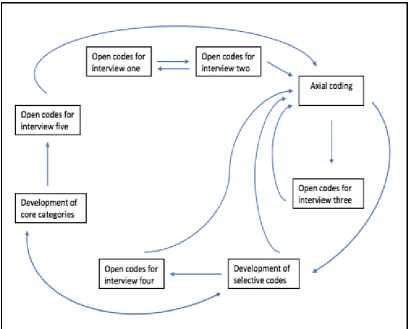
4.2.1 The Process Employed ... 54
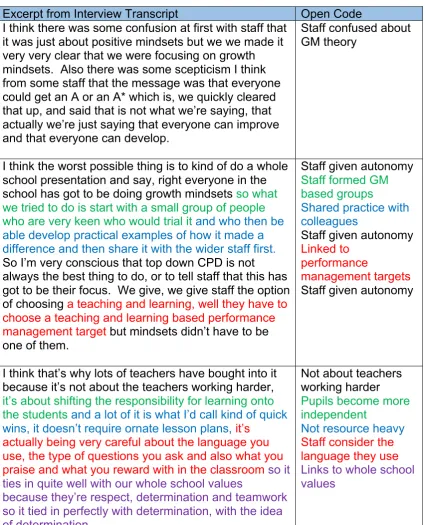
4.2.2 Example of Coding Process ... 56
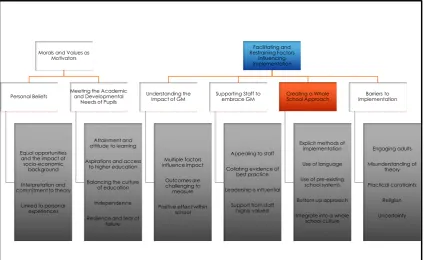
4.3 Category and Theme Construction ... 58
4.3.1 Conceptual Category One: Morals and Values as Motivators ... 59
4.3.2 Conceptual Category Two: Facilitating and Restraining Factors Influencing Implementation ... 65
4.4 Proposed Theory and Justification of Content ... 81
4.4.1 A Whole School Approach ... 83
4.4.2 Facilitating Factors of Implementation ... 84
4.4.2.1 Morals and Values ... 85
4.4.2.2 Implementation ... 85
4.4.3 The Cycle of Implementation ... 86
4.4.4 Effective Implementation and Outcomes ... 89
4.5 Summary of Chapter ... 89
5. Systematic Literature Review ... 91
5.1 Chapter Overview ... 91
5.2 Purpose and Rationale of a Post Analysis Review of Published Literature 91 5.3 Secondary Literature Review ... 91
5.3.1 Search Strategy ... 92
5.3.2 Findings from the Literature Review ... 95
5.3.3 Conclusions Drawn from Systematic Literature Review ... 104
5.4 Chapter Summary ... 105
6. Discussion ... 106
6.1 Chapter Overview ... 106
x
6.2.1 Findings in Relation to the Research Questions ... 106
6.2.2 Contradictions Within and Between Participant Views ... 109
6.2.3 Grounded Theory in Relation to the Literature Reviews ... 111
6.2.4 Grounded Theory in Relation to Self-Determination Theory ... 118
6.3 Critical Considerations of the Current Study ... 121
6.4 Looking Ahead and Next Steps ... 125
6.4.1 Future Directions for Research ... 125
6.4.2 Implications for Practice ... 127
6.4.3 Dissemination Strategy ... 128
6.5 Personal Reflections of the Research Process. ... 129
6.6 Chapter Summary ... 130
6.7 Concluding Comment ... 131
References ... 132
Appendices ... 140
Appendix 1. Ethics Approval Letter. ... 140
Appendix 2. Participant Information Sheet. ... 143
Appendix 3. Participant formal consent form for adults. ... 145
Appendix 4. Interview Schedules ... 147
... 149
Appendix 5: Participant Debrief ... 150
Appendix 6. Example of Interview Transcript ... 151
Appendix 7. Record of Memos ... 152
Appendix 8. Evidence of Final Coding Structure. ... 157
Appendix 9. Evidence of Code Quantity and Saturation ... 159
Appendix 10. Miscellaneous Codes ... 160
Appendix 11. Evidence of Member Checks ... 161
11.1 Initial Email Sent ... 161
11.2 Reply from Participant ... 161
Appendix 13. Summary of Articles Included in the Systematic Literature Review ... 162
1
1.Introduction
“We like to think of our champions and idols as superheroes who were born different from us. We don’t like to think of them as relatively ordinary people who made themselves extraordinary” (Dweck, 2008, p. 90).
1.1 Chapter Overview
This chapter will provide the background to the present research, exploring both the national and local context within which it was conducted. Theories of
intelligence will be detailed to provide a foundation to understanding the origins and rise of growth mindset. The underpinning psychological theory will then be explored. The rationale for and relevance of this piece of research will also be discussed.
1.2 Terminology
The history of research into human intelligence, ability and skill has
operationalised terms such as ‘implicit theories’ or ‘entity and incremental’ to understand the beliefs we hold regarding our capabilities. It is important to note, the more recent use of popularised terminology such as ‘mindset’ coined by psychologist Carol Dweck, is increasingly used to reflect one’s beliefs regarding their intelligence. Furthermore, the terms ‘fixed’ and ‘growth’ are used to
recognise the difference in nature between such beliefs. It is the assumption of this research that Dweck’s work on mindsets has a far wider mainstream use within education. Therefore, this phrase will continue to be used throughout the present study.
1.3 Background
2
researcher aimed to find out teachers’ views on what aspects of these practices influenced pupils’ effort and resilience in response to failure or challenge.
1.3.1 National Context
Within education, the contextually relevant constructs for this research relate to attainment and well-being (see Chapter 2 for more information). Attainment is typically an objective measure of achievement within education. In the UK, the General Certificate of Secondary Education (GCSE) and Statutory Assessment Tests (SAT) results are commonly used as measures of children and young people’s (CYP) attainment in school. However, ‘well-being’ is a much harder construct to define and measure. Psychologists have tended to focus their research on ‘subjective well-being’ (Diener, Suh, Lucas, & Smith, 1999). This refers to “a person’s cognitive and affective evaluations of his or her life” (Diener, Oishi & Lucas, 2002, p. 63).
3
with only thirty-nine percent achieving five good GCSEs (Social Mobility and Child Poverty Commission, 2015).
A report published by The Children’s Society (2015) surveyed over 53,000 children from a diverse range of countries and cultures. Their findings revealed that England was ranked 14th of 15 countries for life satisfaction. The report also suggests children are unhappy in English schools, as 7.1% of twelve year olds reported low levels of well-being and happiness. The report also found that, as English children got older, their self-reports of unhappiness at school also increased. In the most recent wave of research from the survey, children in the UK reported ‘school’ as an aspect of their life they were unhappiest about. Despite the large survey size, the results published in this report should be reviewed with caution. Firstly, ‘subjective well-being’ is a complex social construct, therefore, a simple survey may not be sufficient in eliciting rich, detailed data needed to understand participant responses. Also,
the subjective nature of self-report surveys makes them vulnerable to bias and one could argue that they may not be a valid and reliable way of collating data from CYP. This is particularly true for the concept of ‘subjective well-being’; an abstract construct which may be difficult for CYP to fully understand.
4
1.3.2 Local Context
This research was conducted within the county of Suffolk; a rural county in the East of England. The county has a population of 735,000 residents, 95.2% are of white ethnicity, whilst 4.8% are of black and minority ethnic groups. In 2014, 51% of young people in Suffolk schools achieved five A*-C grade GCSEs
compared to the national average of 53%. In addition to this, statistics show that the educational performance was also below the national average for 11-year olds at the end of Key Stage 2 (Suffolk County Council, 2015). At the end of the 2013-2014 academic year, the attainment gap between disadvantaged CYP and their peers in Key Stage 2 had also widened (Suffolk County Council). As a result of these statistics, Suffolk issued a School Improvement Strategy called ‘Raising the Bar’. Within the document, it states that “raising educational attainment is its number one priority” (Suffolk County Council, 2015, p. 2).
Prior to the onset of this study, the researcher conducted a simple internet search to explore whether any local schools made reference to ‘growth mindset’ on their websites. A large number of schools, both LA, private, primary and secondary all claimed to apply growth mindset theory within their schools. Consequently, a follow-up internet search highlighted that the LA of Suffolk offered training on growth mindset practices through external providers only. This implied that the LA recognised the potential benefits of this theory, but did not have the resources to offer training internally.
1.4 History of Mindset and Psychological Underpinning
5
1.4.1 Background of Understanding and Measuring Intelligence
Alfred Binet pioneered the development of standardised assessments, the tools to measure a person’s intelligence (Siegler, 1992) The idea behind such
assessments suggest that intelligence is a static entity, something that can be measured in a systematic way. Therefore, one would assume that an
intelligence measurement (Intelligence quotient, IQ) taken on two different occasions should elicit the same result, as intelligence is not subject to change. However, even Binet himself held an alternative view of intelligence, stating that:
A few modern philosophers assert that an individual’s intelligence is a fixed quantity, a quantity which cannot be increased. We must protest and react against this brutal pessimism… With practice, training, and above all, method, we manage to increase our attention, our memory, our judgment and literally become more intelligent than we were before. (Binet & Heisler, 1975, p. 107)
Cattell (1940, 1943) was one of the first to separate the general concept of intelligence into two distinct entities. He proposed the notion of fluid and crystallised intelligence to account for differences elicited from mental ability testing. Although he claimed these were different entities, they worked together and interacted to form an overall ‘general’ intelligence. Within the theory, Cattell (1940, 1943) described fluid intelligence as the ability to solve novel or abstract tasks. It reflects one’s problem solving capability and it believed to have a physiological basis. According to Cattell, this notion of intelligence is
6
1.4.2 Implicit Theories of Intelligence
Two converging views emerged from research related to differences in the beliefs held regarding intelligence. Entity beliefs, or entity theorists, believe that intelligence is pre-determined and fixed over time. Alternatively, incremental beliefs or theorists view intelligence as a malleable trait, and something that can be cultivated over time. Those who pertain to an incremental belief, claim new skills can be acquired through learning and effort. Dweck and Leggett (1988) suggest the two beliefs can impact both behaviour and motivation. Those who endorse entity theory, are more likely to strive towards performance related goals. That is, they are motivated by success and achievement in order to be viewed favourably in comparison to peers. In contrast, incremental theorists are more likely to endorse learning or task-related goals. The focus shifts towards increasing competence and mastery-oriented goals (Dweck & Leggett, 1988).
Whilst scholars and psychologists explicitly debate theories regarding intelligence, Hong, Chiu, & Dweck (1995) suggest, for the layperson, beliefs about intelligence are far more implicit. Therefore, their views regarding their own intelligence may take the form of background assumptions, not readily voiced or expressed. Hong, Chiu and Dweck (1995) claim from their research, that these implicit theories of intelligence typically take two forms; the belief that intelligence if fixed and pre-determined (entity theorists) or the belief that
intelligence can improve and is malleable (incremental theorists). These two theories of intelligence “appear to create different psychological worlds for students: one that promotes resilience and one that does not” (Yeager & Dweck, 2012, p. 304). These implicit theories form the basis of Dweck’s work, with growth mindset being consistent with the incremental theory of intelligence (Reynolds & Birdwell, 2015).
7
found that the animals were unlikely to try to avoid similar adversities in the future, even in new situations where escaping or avoidance was possible. This is described as the process of learned helplessness. The animals lost all sense of control and typically became withdrawn and unreactive (Long, Wood,
Littleton, Passenger & Sheehy, 2011). Dweck observed this phenomenon which prompted her to investigate how CYP respond to challenges and failure. Her work revealed a disparity in the way CYP responded to failure; some thrived at the challenge thus remaining motivated, whilst others gave up.
Dweck (2006) proposed that differences between the children that maintained their motivation to learn in response to failure, and those that gave up, was a result of their mindset. The belief that intelligence is fixed or predetermined denotes a ‘fixed mindset’. People who possess a fixed mindset believe qualities such as talent or creativity are finite and cannot be changed. Therefore, a fixed mindset is congruent with entity theory of intelligence. Dweck harnessed these ideas by promoting the idea of a ‘growth mindset’. This is the belief that
intelligence can change as a result of effort. A growth mindset allows one to believe that basic abilities can be improved through perseverance and learning, hence the idea that intelligence is malleable. The notion of a ‘growth mindset’ is consistent with incremental beliefs regarding intelligence.
1.4.3 Locus of Control and Attribution Theory
People generally try and make sense of the world by looking for causes or reasons particular phenomena occur (Long et al., 2011). More specifically, we tend to look for attributions to help explain our own actions and the effects it has on our subsequent motivation and behaviour. Rotter (1966) proposed a scale that helped explain the differences in people’s attributions. If one believes that have control over their lives and what happens to them, they are said to have an internal locus of control. Conversely, an external locus of control means that what happens is the result of external variables outside of one’s control.
8
environment, success or failure can be attributed to one’s locus of control (internal or external), how stable the cause is (stable or unstable) and the perceived controllability of the cause (high or low controllability). If a pupil believes their success is due to intelligence they were born with, this would be an internal, stable and uncontrollable cause. If, on the other hand, success was attributed to effort, this would be viewed as an internal, unstable and highly controllable cause. The difference in attributions influence a person’s motivation and future behaviour as you would expect those with an external locus of
control and low perception of controllability to exert less effort than those with an internal locus of control and high perception of controllability.
Implicit theories of intelligence, or mindsets, too influence the meaning of effort and failure (Dweck, 2006). Those who subscribe to an entity theory or a ‘fixed mindset’ view effort negatively as tasks should be easy. Being successful at a task reinforces the idea that you are intelligent. If effort is needed to be
successful, it poses a threat to the fixed mindset that you are an intelligent person. Possessing a fixed mindset prevents one from attempting challenging or difficult tasks, as if you do not succeed easily, it is probably because you do not have the skills or ability to do so. According to this view, this ability is pre-determined and innate, with little value placed on effort or the process of learning. Conversely, those who possess an incremental theory of intelligence or a ‘growth mindset’ view challenges or difficult tasks positively, as
opportunities to learn. Dweck (2006) found evidence of these differences amongst four and five year olds who were given the choice of redoing an age-appropriate jigsaw puzzle, or trying to solve an insoluble puzzle. Children with a fixed mindset preferred the age-appropriate tasks, whilst those adopting a growth mindset chose to continue attempting the impossible puzzle.
9
1.4.4 Neuropsychology and Brain Plasticity
Integral to the theory of growth mindset is the notion that the brain can grow and adapt following new learning experiences. This idea has gained momentum over the last decade with new and exciting research providing scientific
evidence of such phenomena (Maguire, Woollett, & Spiers, 2006; Mechelli et al., 2004; Gaser & Schlaug, 2003). This research supports the claim that the brain is plastic; with practice and directed effort, the brain can change and new cells form. This is referred to as neuroplasticity or brain plasticity.
Neuroplasticity refers to the brain’s ability to reorganise itself and form new neural pathways and connections as a direct result of learning. Therefore, the brain is rewiring itself in response to the stimulation of a learning experience. These experiences cause cells to form new, strong connections, with unused connections being replaced (Ponti, Peretto, & Bonfanti, 2008). This process, referred to as ‘pruning’, is “largely determined by environmental influences and represents learning” (Craika & Bialystokb, 2006).
1.5 Growth Mindset within an Educational Context
The idea of a growth mindset has direct implications for schools and education. According to Diener and Dweck (1978), CYP’s beliefs about their own
intelligence will influence how they approach their learning, motivation, effort and resilience. CYP who attribute their failures to lack of ability are likely to demonstrate a decrease in performance when they experience failure (learned helplessness). In contrast, CYP who attribute failure to lack of effort, often show improvement in performance in response to failure (Diener & Dweck, 1978). Therefore, direct teaching of growth mindsets could promote positive
characteristics, such as resilience and perseverance within CYP.
10
like ‘well done, you are such a clever girl’ suggests that success in the task was down to intelligence and not effort or practice. This type of praise enhances a fixed mindset, and leads CYP to neglect effort as their ability is innate.
Alternatively, praise such as ‘you did really well on that test, you must have worked really hard’, reinforces the effort it takes to succeed and encourages a growth mindset.
1.6 Relevance and Rationale
1.6.1 Overview
The theory of growth mindset has existed for decades. However, the popularity and uptake of the theory has only more recently gained momentum in the UK, but with little research or theory on how growth mindset practices are best implemented within schools. Thus the theory proposed within this research should be of great interest. Within a national context, the theory may be of interest to EPs in different local authorities, whereby further research and investigation could be undertaken following the findings reported in this study. Locally, this research will be of interest to EPs, Head Teachers and Special Educational Needs Coordinators (SENCos) who are well positioned to deliver educational initiatives. This research is also relevant to leaders within the LA, as the proposed theory provides a resource which could be cultivated and utilised within a traded service to schools.
The development of a model or framework for implementing growth mindset in schools has clear relevance for the profession of Educational Psychology due to the psychological underpinning behind the theory. Additionally, EPs are ideally positioned to support educational provisions in developing growth mindset practices due to their level of training, understanding of psychological theory and their role, which enables them to work both systemically with schools as well as directly with CYP.
1.6.2 Within a Local Context
11
details how pupil attainment must be improved in line with national averages. This provides clear rationale for the investigation of growth mindset practice in Suffolk schools. The current literature claims that growth mindset interventions can not only raise educational achievement, but can also reduce the attainment gap for disadvantaged CYP too (see section 2.3 for more information).
Additionally, the literature shows that little formal research has been conducted in the UK and presently, there is no theory or framework for how growth mindset should be implemented in to school practice. This research aimed to address these shortcomings.
By adopting a grounded theory approach, the researcher will formulate a
framework that can be used to support the implementation of growth mindset in educational settings. This will not only be useful for practitioners in schools, but also for the Educational Psychology Service (EPS) in making recommendations of best practice. It will provide an evidence base on which to inform work in this area. It is hoped, this will be a valuable contribution to both Suffolk’s
Psychology and Therapeutic Services, but also the Educational Psychology profession.
1.7 Research Questions
The current study had two main aims. Firstly, to identify how schools are implementing and encouraging CYP and staff to adopt a growth mindset. Secondly, the researcher’s intention was to gain a greater understanding of the views of teachers in the implementation of growth mindset interventions to identify what they perceived to be the most useful practices in influencing change.
12
Accordingly, two main research questions were identified:
Ø How are schools currently implementing growth mindset theory into everyday practice?
13
2. Literature Review
2.1 Chapter Overview
This chapter will provide an in-depth exploration of the literature associated with the present study. First, the approach to reviewing literature will be explained, in relation to grounded theory methodology. Then, the work of Carol Dweck will be highlighted to provide a background in to the existing evidence base regarding growth mindset application in schools. Finally, the systematic literature review undertaken will be presented, followed by a summary of the strengths and limitations of the current body of mindset research.
2.2 Grounded Theory and Literature Reviews
Glaser and Strauss (1967), the pioneers of grounded theory, argue that a review of existing literature should only be conducted post data collection and analysis to minimise bias and potential contamination of theory. Original grounded theorists, therefore, only refer to literature in order to confirm or
challenge the emerging theory. This allows researchers to remain impartial, and explore new areas which may not have been explored before, thus not placing any restraints on theory development (Sutcliff, 2016). However, more recent researchers such as Thornberg (2012) propose that this is not always possible for social science researchers, such as those within educational fields. There are practical implications, such as having to provide justification to research boards for the relevance of the chosen topic of study (Thornberg, 2012; Strauss & Corbin, 1998). Furthermore, it is naive for one to suggest that they can enter research free from pre-existing knowledge.
14
initial questions for the first phase of data collection and identify areas for theoretical sampling (Strauss & Corbin, 1998).
Once emerged within data collection and analysis, Strauss and Corbin (1998) proposed that if literature is “used as an analytic tool then it can foster
conceptualisation” (p. 53). This permits the use of literature to confirm the researcher’s own theory, or it can be used to explore discrepancies in concepts between pre-existing and emerging theory.
Congruent with Strauss and Corbin’s (1998) approach, existing literature was explored in this research prior to data collection. The aim was to highlight the key areas to be explored and provide justification of the significance of this research within educational psychology. Furthermore, the researcher
acknowledges some awareness of growth mindset theory and chose to report the initial literature review to highlight existing knowledge to contribute to the reflexivity of this research.
2.3 Research Conducted by Carol Dweck
Dweck has devoted the majority of her professional career to conceptualising and promoting growth mindset. She, along with multiple colleagues, have conducted a plethora of research to provide a strong evidence base for the applications of her work. Dweck claims that a growth mindset can substantially improve educational attainment even reducing attainment gaps (Blackwell, Trzesniewski & Dweck, 2007; Grant & Dweck, 2003; Dweck & Molden, 2013; Paunesku et al., 2015). Dweck’s body of research also shows additional benefits of growth mindset in the areas of well-being and health. Multiple studies consistently show increased resilience in children and young people who have a growth mindset (Yeager & Dweck, 2012; Mueller & Dweck, 1998). These will now be explored in more detail.
15
students can be redirected to see intellectual ability as something that can be developed over time with effort, good strategies, help from others, then they are more resilient when they encounter the rigorous learning opportunities
presented to them” (p. 306).
This review has included research which has identified, measured or
manipulated a CYP’s or teachers’ mindset. The intervention included within the research had to be based on growth or fixed mindset, incremental or entity theories of intelligence, or more generally, the malleability of intelligence. The interventions included were based in educational settings and aimed to measure a CYPs’ effort, attainment or well-being.
2.3.1 Mindset and Attainment
Blackwell et al. (2007) conducted two studies to explore the effects a growth mindset had on mathematics attainment. In the first study, Blackwell et al. (2007) administered a motivational questionnaire in order to identify student beliefs about mindset and intelligence. Multiple self report measures were used to assess the students’ motivation and beliefs within the classroom, compared to the control group. Each measure consisted of a Likert type scale and was subject to test-retest reliability across a two-week period. Over 370 seventh-grade (age 12-13 year olds) students of different ethnicity, ability and socio-economic status participated in the study. The students’ mathematics
achievement was then monitored over a two-year period, using the academic grades given to students at each term.
Based on the initial questionnaires, findings showed that students who believed their intelligence was a malleable quality linked effort and hard work with
16
endorsed a growth mindset were outperforming their fixed mindset peers in mathematics two years later.
These results from study one led Blackwell et al. (2007) to hypothesise that if they were to teach students to view their intelligence as a malleable quality, then they, too, should improve their motivation to learn and their academic attainment. Students were split into two groups; one group received eight weeks of study skills training (control group), the other were taught study skills as well as the principles of growth mindset (experimental group). Prior to intervention, both groups demonstrated a declining math ability. However, the researchers used the same measures detailed in their first study, and found that those who received growth mindset teaching, significantly improved their
grades, compared with the control group, who continued to decline. However, the pre and post intervention spanned across one term, so conclusions
regarding the longevity of change cannot be drawn. Each of the studies conducted by Blackwell et al. (2007) were undertaken in one school, make cross school comparisons and further generalization of results challenging. Furthermore, in addition to the subjective nature of self-report measures, the test-retest reliability measure was undertaken across a two-week period, not the two-year phase in which the study was conducted and self-report measures used, posing further doubt over the reliability of the results.
Further research to support growth mindset interventions improving academic attainment were conducted by Grant and Dweck (2003). They examined college students studying chemistry and not only found that an orientation towards a growth mindset predicted higher levels of achievement, but students with
initially poor grades, were more likely to progress quickly and catch up with their peers.
17
of underperforming students over one academic term. The intervention also increased the number of CYP achieving satisfactory grades in core subjects by 6.4%. The scale and replicability of this study demonstrates how short-term interventions can be scaled across numerous schools at a limited cost. However, this study does not explore the long-term effects the online intervention has on academic attainment.
These studies present evidence for how growth mindset interventions can improve attainment of CYP in education. The study conducted by Paunesku et al. (2015) even suggests that such interventions may be effective in bridging gaps in attainment for underachieving groups of CYP. Aronson, Fried, and Good (2002) were interested in whether black African American students
exposed to incremental theories of intelligence would not only adopt the change in mindset, but also achieve greater academic success. African American
students who were asked to act as a pen pal and advocate a growth mindset position demonstrated greater academic enjoyment and engagement.
Additionally, they obtained higher grades than the two control groups. Although white students who participated in the study also saw an increase in academic attainment, their enjoyment and engagement in college remained the same. Although these results appear to support the benefits of mindset intervention, the researchers recognise the limitations of their analysis, stating they “cannot conclude that the positive effects of the malleability training on GPA were mediated by malleability beliefs” (Aronson, Fried & Good, 2002, p. 121). The researchers explained this finding may be due to sample sizes resulting in unstable correlations, or reliability issues with the self-report malleability of intelligence scale. Consequently, readers may be unable to confidently conclude it was the change in beliefs regarding intellect that improved participant’s academic attainment.
Another study not only found the growth mindset interventions can narrow the achievement gap for minority groups, but they actually had a disproportionately positive effect on such students. This was found after African American
18
As highlighted, CYP from low socio economic backgrounds continue to fall behind their peers academically, with white disadvantaged boys being the most adversely affected (The Centre for Social Justice, 2014). Good, Aronson and Inzlicht (2003) explored the gaps in achievement that continue to be generated while using standardised assessment tools. They predicted that growth mindset interventions would enable 12-13 year-old female, minority and low-income adolescents to improve their tests scores and overcome the negative effect of stereotypes. Older students mentored the participants to view intelligence as malleable. Students who were mentored in the malleability of intelligence, outperformed their counterparts in the control group. Additionally, large effect sizes for females demonstrate the gains in mindset intervention for reading and mathematics attainment.
The scores in this study were obtained at the start and end of an academic school year using the Texas Assessment of Academic Skills (TAAS) test, a statewide standardised achievement test. Although Good, Aronson and Inzlicht (2003) set out to highlight the bias in such assessment tools, they failed to control for the ethnicity of participants, meaning comparisons in achievement between different minority groups could not be obtained. The study also failed to make pre and post comparisons of students scores, only administering the test post intervention. Therefore, it may be that the female participants in this research were outperforming male students to begin with. Although these results cast doubt over the use of standardised assessments, it is encouraging to see research that suggests that test scores significantly increase in response to a growth mindset intervention.
2.3.2 Mindset and Well-Being
19
mobility initiatives. In a report for the all-party parliamentary group on social mobility, Paterson, Tyler and Lexmonds’ (2014) highlight the importance of character development. Their report recognises that “personal resilience and emotional well-being are the missing link in the chain”. Furthermore, they acknowledge that “social and emotional ‘skills’ underpin academic and other success – and can be taught” (p. 10). They describe character and resilience as an umbrella term consisting of a combination of personal attributes. Attributes such as perseverance, the ability to bounce back from adversity, self-control and self-direction considered crucial to character development, all of which are congruent with a growth mindset.
Yeager and Dweck (2012) reviewed research and found that redirecting CYP’s mindset towards an incremental theory of intelligence promoted their resilience. This was demonstrated in the CYPs’ ability to cope with challenging school transitions and higher levels of completion rates in difficult mathematics
courses. Yeager et al. (2014) measured the implicit theories of pupils aged 14-15 years old, alongside measures of stress and self-reported physical health. Participants then completed a computer programme designed to elicit feelings of social exclusions and on completion, measures of attitude toward social exclusion were taken. Eight months after the initial assessment, the participants who held incremental beliefs reported less stress and physical illness compared to pupils with entity beliefs. However, the researchers themselves state that they cannot control for, or even identify, the contextual factors that may have supported these results over the eight-month period. Also, findings may be explained in terms of the experiences of students in the treatment group. For example, it may be plausible that participants that demonstrated less stress initially in response to induced social exclusion, were more resilient in making new friends, thus having greater social support and stability. It may have been these factors which led to successful outcomes over time.
2.3.3 Mindset and Teacher Interventions
20
teachers had in the delivery of mindset interventions (Shumow & Schmidt, 2015). Within this study, two groups of students participated in an online
mindset intervention supervised by the researchers themselves. The two groups were taught by different teachers. The researchers found that the teacher of the students who reported greater improvement in outcomes, more readily adopted and modelled the growth mindset stance themselves, compared to the other teacher.
Dweck and Mueller (1998) went further in exploring teacher effects of practising growth mindset by looking specifically at the use of praise. They conducted two studies with over 400 children aged between 9-12 years old. In the first
experiment, students were given an easy puzzle and praised for either their intelligence or their effort. It was found that those who were praised for their effort then chose to attempt a much harder puzzle. In the second experiment, Dweck and Mueller (1998) gave the participants an extremely difficult puzzle to test their fear of failure. Those who previously received praise for their effort, demonstrated far more persistence than their counterparts, who were reported to have exerted far less effort.
The studies cited thus far were all conducted in America. One of the few studies to be conducted in the UK presented less conclusive findings. Rienzo, Rolfe and Wilkinson (2015) conducted research into mindset interventions in the UK on behalf of the Education Endowment Foundation. They looked at
21
Despite this, the progress made in English was close to being statistically significant, which could indicate potential for future interventions.
2.4 Strengths and Limitations of Literature
The research presented thus far provides a large evidence base for the use of growth mindset interventions for CYP in educational settings. The research clearly shows that teaching CYP about the malleability of intelligence not only improves their academic attainment (Blackwell et al., 2007; Grant & Dweck, 2003; Paunesku et al., 2015) but also promotes their well-being and health outcomes (Yeager & Dweck, 2012; Yeager et al., 2014). Longitudinal studies also show that these positive outcomes are not short-lived (Blackwell et al., 2007).
One strength highlighted by the research suggests that growth mindset interventions are particularly beneficial for reducing attainment gaps between disadvantaged groups in education. For example, African American boys at risk of stereotype threat (Aronson et al., 2002; Dweck & Molden, 2013) as well as minority groups or those from low socio-economic backgrounds (Good et al., 2003) were able to make significant gains in their educational progress.
Furthermore, these interventions went as far as to demonstrate that they had a disproportionately positive effect on disadvantaged groups. The interventions implemented within the research presented differing models in their method of delivery. However, whether participants received direct teaching, completed online learning modules, or acted as advocates for growth mindsets in
mentoring programmes, all methods gave rise to positive outcomes, although not all were statistically significant. This suggests the core messages of adopting a growth mindset have the power to influence change, regardless of the method employed. Additionally, these interventions appear to be easy to deliver as they are not resource heavy, as well as relatively low in cost to administer.
22
of the existing research into growth mindset interventions are conducted by Dweck and her colleagues. Therefore, the findings may have been influenced by experimenter bias. Dweck has devoted her professional career to this particular domain of psychology, and may be motivated to draw conclusions that support her work. Consequently, an extremely large proportion of the research was conducted in America, meaning the evidence base for the
application of mindset interventions within the UK, although promising, remains weak (Rienzo et al., 2015). The evidence base for mindset interventions may be more credible if a broader range of literature existed that was carried out by those not directly invested in the development of mindset interventions.
Although one of the key benefits of growth mindset interventions is the positive effect they can have on specific groups of disadvantaged CYP, the research fails to explore if these findings would be consistent with CYP with special educational needs. CYP with special educational needs in Britain are
significantly less likely to be successful academically than their peers (Andrews, Robertson & Hutchinson, 2017), yet the lack of studies into this remains a huge gap in the existing literature. In addition, the majority of the research is
conducted with older students of mainly secondary and college age. It would be difficult to know if similar results could be replicated with younger students.
Finally, one the of main limitations of the existing research is that there is very little evidence of what works best in order to inform future interventions. Despite the depth of the evidence, there is no clear method which has shown to be more effective than alternative means of intervention delivery. We know a variety of methods have proven successful, but the research fails to directly compare different delivery methods in order to see which is the most effective. This shortcoming provides difficulties for schools and professionals wanting to replicate interventions.
2.5 Researcher’s Worldview
23
2007, p. 186). This involves holding an awareness that the researcher
influences the researched and vice versa. They are engaged in an interactive process whereby the researcher’s beliefs impact the research process in
addition to the real world research influencing the beliefs, thoughts and feelings of the researcher. Fox et al. (2007) argue that reflexivity is integral to
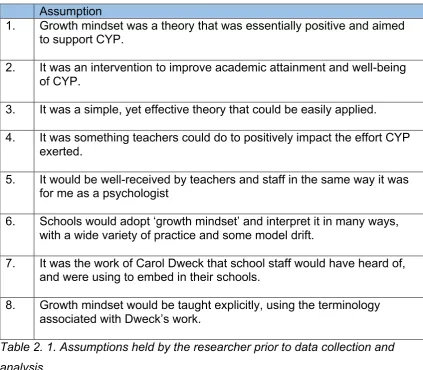
interpretive qualitative research. Ahern (1999) acknowledges that achieving total objectivity through reflexivity is unrealistic for qualitative research. Additionally, she argues that true objectivity is unnecessary. Instead, Ahern (1999) advocates for explicitly noting researcher assumptions. Through this process, the researcher is attempting to use reflexivity to ensure participants’ true perspectives are reflected in the data. Engward and Davis (2015) suggest that disclosure of the researcher’s perspectives and position contribute to reflexivity and thus identification of potential bias. The assumptions the present researcher held prior to, and throughout this study, were noted using a research diary (see Appendix 7). These are detailed in Table 2.1 below:
Assumption
1. Growth mindset was a theory that was essentially positive and aimed to support CYP.
2. It was an intervention to improve academic attainment and well-being of CYP.
3. It was a simple, yet effective theory that could be easily applied. 4. It was something teachers could do to positively impact the effort CYP
exerted.
5. It would be well-received by teachers and staff in the same way it was for me as a psychologist
6. Schools would adopt ‘growth mindset’ and interpret it in many ways, with a wide variety of practice and some model drift.
7. It was the work of Carol Dweck that school staff would have heard of, and were using to embed in their schools.
[image:33.595.114.538.393.763.2]8. Growth mindset would be taught explicitly, using the terminology associated with Dweck’s work.
24
To further contribute to the reflexivity of this research, the researcher
acknowledges that it is naïve to think we can undertake research with little or no prior knowledge or awareness of the topic under investigation. As grounded theory researchers, we recognise that we cannot start off as a blank slate with no preconceived ideas about the research topic. Thornberg (2012) refers to this as ‘naïve empiricism’. This contributed to the justification of the initial literature review. However, the researcher recognised the risk of pre-existing knowledge potentially finding its way in to the data (Strauss & Corbin, 1998; Thornberg, 2012). Familiarisation of concepts may result in the researcher looking for confirmation within the data instead of ensuring the concepts are truly emerging from the analysis. The process of constant comparison helped avoid the risk of ideas from the initial literature review, being forced in to the emerging theory.
2.6 Chapter Summary
25
3. Methodology
3.1 Chapter Overview
This chapter details the purpose of this research, outlining the conceptual theoretical and epistemology framework that underpins both the research area and the researcher’s own positioning. Justification for the choice of employing a qualitative design will be explored with a detailed exploration of different
approaches within grounded theory methodology. The chapter goes on to describe the process of data collection including the sampling techniques, participants, measures taken and analysis. It concludes with looking at the strengths and limitations of the chosen methodology, specifically highlighting issues surrounding validity and ethics.
3.2 Purpose of Enquiry
It is important to carefully consider how research is framed. Fox, Martin and Green (2007) recognise that “research has different purposes that are best served by different research designs” (p. 21). Consequently, the purpose of a study will heavily influence how the research is undertaken.
Typically, research within social sciences is distinguished according to a
tripartite classification (Robson, 2002). However, Robson (2002) added a fourth purpose of research enquiry to account for the growing interest in conducting real world research. Robson (2002) describes how one research study may have one or multiple purposes, depending on the topic being researched. However, it is more typical for one purpose to take precedence.
The four categories are summarised as:
Ø Exploratory – to gain a greater understanding of little known or under-researched phenomena.
Ø Descriptive – to provide an accurate, detailed reflection of people, events or phenomena.
26
Ø Emancipatory – to create opportunities to empower or promote change within a real world context.
As discussed in the initial literature review (see Chapter 2), growth mindset has been well researched in America but there is very limited knowledge regarding its application in the UK. As the researcher aims to gain a greater
understanding of an area which is relatively unknown and under researched, the purpose of this current study is therefore exploratory. Both research
questions are exploratory in nature; however, the researcher was aware that as the research proceeds, the purpose may evolve.
It was hoped that the exploratory disposition of the research questions would elicit rich, detailed data that would enable the development of a theory of growth mindset implementation and practice. Consistent with exploratory methods of enquiry, it was an attempt to form the basis of future research.
3.3 Conceptual framework
3.3.1 Ontology and Epistemology
Mertens (2015) quite simply defines one’s ontological position, or sometimes known as research paradigm, as how one views the world. It reflects how a person views reality. The issue of ontology has been of great debate within social sciences research. Moore (2005) argues that the profession of educational psychology should give greater attention to ontology and epistemology. Moore (2005) suggests that greater consideration should be given to the theoretical foundations of EP practice given the ever changing society and complex context within which professionals both practice within and research.
27
typically synonymous with quantitative research. Moore (2005) argues that the tendency for educational psychologists to adopt a positivist position has limited and even hindered their work.
Social constructivists hold an ontological stance that views reality as being socially constructed. As Mertens (2015) describes, the basic assumptions of this paradigm are that “researchers should attempt to understand the complex world of lived experience from the point of view of those who live it” (p. 16-17). From this perspective, each person has their own constructed view of the world and research will never be truly independent from the researcher’s own values.
3.3.2 Critical Realism
The ontological position adopted by this research is ‘critical realism’. Sayer (2000) argues that critical realism provides “a third way between” (p. 3) the reductionist stance of positivism and constructionists’ multiple interpretations of meaning. Critical realists accept the notion that one reality exists, but
acknowledge that the understanding of this reality is inevitably distorted by human limitations and biases (Mertens, 2015). Therefore, research can only seek to highlight or explain reality within varying degrees of probability. Maxwell (2012) states that critical realists:
Deny that we can have any “objective” or certain knowledge of the world, and accept the possibility of alternative valid accounts of any phenomenon. All theories about the world are seen as grounded in a particular perspective and worldview, and all knowledge is partial, incomplete, and fallible (p. 5).
28
realist epistemologies to have an awareness of their own cultural beliefs and personal values and remain reflexive in considering how these may impact the interpretation of data and theory. Thus, the values of the observer can influence the observed (Robson, 2011). The researcher and the research findings are, therefore, entwined in an interactive process.
3.3.3 Critical Realism and the Current Study
A research epistemology is highly influenced by the perception of the
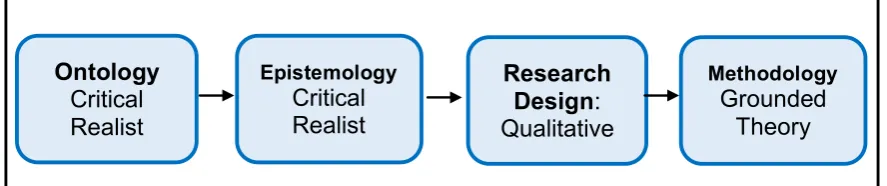
relationship between the researcher and the researched. When epistemology and ontology are combined together in research, they provide the theoretical basis of the research that defines how knowledge is viewed within an
[image:38.595.106.550.447.540.2]understanding of reality. These positions steer a researcher towards methodology best suited for the researcher and their study. This is often depicted as a conceptual framework. See Figure 3.1 for the conceptual framework of this research.
Figure 3. 1. The conceptual framework of this research.
Anastas (1998, in Robson, 2002) proposes that critical realism is an optimal approach for value based professions such as educational psychology and is ideal for real world research. Within practice based research, critical realists seek to explain social phenomena and gain a greater understanding of varying perspectives based on the assumption that data collected from participants can uncover something about their lived reality. Underpinning this is the idea that mechanisms (or processes) exist that can trigger desired outcomes or positive
Ontology Critical Realist
Epistemology Critical Realist
Research Design: Qualitative
Methodology Grounded
29
change. Robson (2011) describes how critical realist researchers aim to
“develop knowledge and understanding about the mechanism through which an action causes an outcome, and about the context which provides the ideal conditions to trigger the mechanism” (p. 30). This is a useful approach when dealing with complex social phenomena (Elster, 1989).
Central to this research was the idea that some CYP persist and demonstrate resilience when faced with challenging tasks, whilst others avoid challenges and appear to give up quickly. Mindset (fixed or growth) can be viewed as a mechanism to explain this phenomenon. This research was interested in the concept of growth mindset and aimed to identify the mechanisms that trigger CYP to believe that they can acquire new skills and continue to learn as a result of hard work and strategy. Of particular interest is the context required in which to trigger the mechanisms. For example: what was it that schools and staff did that impacted a child’s mindset and what was needed for this to take place? A critical realist would therefore aim to identify multiple mechanisms through the interpretation of underlying social processes.
This research rejected a positivist position as it accepts there may not be one objective truth. Instead, the culture of school and education is far more complex, with individuals each holding their own view of reality. Furthermore, the focus of this research was not on observable, measureable behaviour, but the lived experiences and perceptions of individuals within educational settings.
Positivists’ natural alignment to quantitative research was not deemed
appropriate for this research. Although historically, controlled experiments were regarded as the only true scientific approach to research, such methodology for this study would be hard to design and not conducive to the exploratory
purpose of this research.
3.4 Research Design
30
practical implications such as capacity, time, capability and available support. Robson (2002) proposed three research designs to consider when undertaking real world research. These are a fixed design (quantitative), flexible design (qualitative) or multi-strategy research (using both quantitative and qualitative methods).
Hatch (2002) proposes that qualitative research is defined by several characteristics. It is the following qualities that distinguish it from alternative research designs:
Ø research takes place in a naturalistic setting, Ø focus is on the perspectives of participants,
Ø the researcher is viewed as a tool for data collection, Ø the researcher engages with data collection first hand, Ø there is an inductive process of data analysis, and Ø the researcher takes a reflexive stance.
The exploratory nature of the research questions in this study naturally lends itself to qualitative data and a flexible research design. King, Keohane and Verba (1994) also state that qualitative research is deemed most appropriate when the focus is on individual perceptions of processes within a social context. The current study explored the experiences of participants within an educational context, and is therefore well placed to have adopted a flexible research design. 3.4.1 Introduction to Grounded Theory
31
research has been widely applied within social science fields (Lawrence & Tar, 2013).
Strauss and Corbin (1998) suggest that the emphasis on generating theory makes grounded theory distinguishable from alternative qualitative research methods. Researchers adopting this method do not begin with preconceived theories but allow theory to develop throughout the process of data collection and analysis. This gives way to a contextualised theory which is more likely to represent ‘reality’ (Strauss & Corbin, 1998). Grounded theory was therefore an appropriate methodology for this research as little was known about the
application of growth mindset within the context of UK schools. Subsequently, the researcher was not aiming to prove/disprove existing theory. Instead, grounded theory provided a framework with which to understand the phenomenon under investigation and the conditions in which supports the implementation of growth mindset (Willig, 2013).
3.4.2 Types of Grounded Theory
Grounded theory is regarded as one of the most disputed and debated of research methods (Walker & Myrick, 2006). However, it is generally accepted within the domain of qualitative research that three main versions of grounded theory exist (McCallin, 2004). The methodologies proposed by Glaser and Strauss (1967), Strauss and Corbin (1998) and Charmaz (2000; 2006) reflect paradigm shifts from an initial positivist stance to a social constructivist world view.
32
constructed by the researcher, having acknowledged that the decisions made by the researcher throughout the process will have impacted the data, and thus, the findings. Within this approach, theory is merely one way of representing the findings, rather than reflecting reality (Willig, 2008).
This research aligned itself with Strauss and Corbin’s (1998) approach to grounded theory as it was best suited to the critical realist ontological and epistemological orientation of this study. Strauss and Corbin (1998) assume an objective reality exists but seek to understand it through the multiple
perspectives of participants. Willig (2013) elaborates further by suggesting that just because a researcher may be unaware of a reality, it does not mean it does not exist. It merely needs to be observed and documented through human interpretation. In the present study, the process of understanding how to
enhance growth mindsets within educational settings is understood by using the views of participants as a tool to highlight the mechanisms involved in
promoting change. The critical realist epistemological stance acknowledges the role of the researcher in interpreting the data and reaching such findings.
3.4.3 Characteristics of Grounded Theory (Strauss & Corbin, 1998)
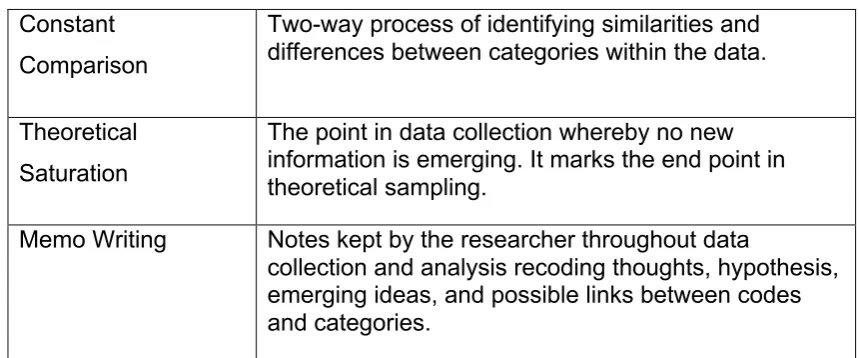
Although grounded theory is widely used in real world research, it has been argued that many researchers refer to their work, or findings, as ‘grounded theory’ yet very few have actually adhered to the guidelines and procedures set out by the key originators (Hatch, 2002). These guidelines are regarded as flexible tools as opposed to strict rules but nevertheless have consistent approaches (Charmaz, 2006; Sutcliffe, 2016). For this purpose, key concepts that are integral to grounded theory and were utilised in the present study are briefly described (Table 3.1).
Concept within Grounded Theory
Description of Concept
Theoretical Sampling Process of selecting participants based on the data collected thus far.
Theoretical Sensitive Coding
33
Constant Comparison
Two-way process of identifying similarities and differences between categories within the data.
Theoretical Saturation
The point in data collection whereby no new information is emerging. It marks the end point in theoretical sampling.
Memo Writing Notes kept by the researcher throughout data
[image:43.595.110.540.68.247.2]collection and analysis recoding thoughts, hypothesis, emerging ideas, and possible links between codes and categories.
Table 3. 2 Key concepts within grounded theory methodology.
Each of the above concepts are explored in greater detail below. 3.4.4 Rationale for Grounded Theory
Grounded theory was deemed a suitable methodology for the present study as the researcher was not seeking to prove pre-determined hypotheses, but aimed to gain a greater understanding of an area whereby no pre-existing theories existed. Robson (2011) supports this view stating that grounded theory is particularly useful “in applied areas of research, and novel ones, where the theoretical approach to be selected is not clear or is non-existent” (p. 192). Lawrence and Tar (2013) also state that “grounded theory makes its greatest contribution in areas in which little research has been done” (p. 35).
Additionally, the researcher acknowledged their inexperience in conducting formal research. The systematic, explicit procedures for conducting the research, analysing data, and generating theory provided a framework for working with qualitative data. It also provided the researcher with a trustworthy and transparent process whilst respecting “the messiness of real data”
34
Alternative qualitative methods of research were considered but were not conducive to the aim of the present study: to develop a contextualised theory of growth mindset implementation in mainstream schools. Thematic Analysis was discarded as a data analysis method as it is not recommended for exploring complex social phenomena and does not go beyond highlighting patterns in data (Robson, 2011). Interpretative Phenomenological Analysis (IPA), Narrative Analysis and Discourse Analysis were also considered to be inappropriate, and not conducive to the critical realist position this study adopted.
3.5 Data Collection
3.5.1 Sampling Strategy
Schools which promote the use of growth mindset were integral to this research as they could provide a unique insight in to how theory is applied in context. The initial two participants were recruited as they could share their experiences and knowledge which were essential to the development of theory. This is known as a purposive sampling method. Purposive sampling is a non-random method whereby the goal is “to generate new theories by obtaining new insights or fresh perspectives” (Mertens, 2015, p. 319). This method of sampling was based on the researcher’s perception but also allowed them to strategically choose participants in order to elicit a depth of meaningful data.
Subsequent participants were recruited following the analysis of the initial interviews in line with the methodology of this research. Within a grounded theory approach, this method of sampling is known as theoretical sampling. Glaser and Strauss (1999) describe this method as:
The process of data collection for generating theory whereby the analyst jointly collects, codes and analyses his data, and then decides what data to collect next and where to find it, in order to develop his theory as it emerges. (p. 45)
35
constant comparison. Interviews continued to be conducted until the data
analysis reached theoretical saturation (see section 3.4.3 for more information).
Unlike traditional research, this study did not aim to recruit participants to represent a wider population nor develop a theory which could be generalised. Flick (2014) describes sampling methods within grounded theory methodology:
People to be studied are selected according to their relevance to the research topic; they are not selected for constructing a (statistically) representative sample of a general population. (p. 137)
3.5.2 Process of Sampling and Recruitment
At the time this research was undertaken, there were 251 primary schools, 2 middle schools and 42 secondary schools within the LA, including LA controlled schools, academies, and free schools. To narrow the search, the first step in participant recruitment was to identify schools within the LA which claimed to promote growth mindset. To do this, two methods were utilised. Firstly, the researcher conducted a simple internet search using a well-known search engine. The search terms were ‘school growth mindset’. This was completed twice, firstly, including the name of the local town and including the name of the county in the subsequent search. This yielded a list of 13 schools which
referenced growth mindset on their websites. Secondly, the researcher asked colleagues within the local Educational Psychology Service for the names of any schools they were aware of that were using growth mindset. This added an additional five schools to potentially recruit.
36
Participants were invited to partake in the research if they met the inclusion criteria as depicted in Table 3.2:
Table 3.3. Participant inclusion criteria for the present study.
It was essential that participants were directly involved in implementing growth mindset in their setting. It was expected that participants would hold a position of leadership or responsibility that made them accountable for the continued professional development (CPD) of staff or educational initiatives in school as these typically encompassed growth mindset. As they were integral to the implementation of growth mindset practice across whole school provisions, they were considered to be the stakeholders of information required in the initial phase of this research. Participants were also required to have worked in the educational setting for a minimum of one full academic year to ensure they have experience of a full cycle of growth mindset application and were well
positioned to comment on the impact it may have had.
Consistent with theoretical sampling and grounded theory methodology, the number of participants was not known in advance. Additional participants were sought after the coding of the previous interview. The choice of participant was influenced by the emerging themes and concepts from the data analysis.
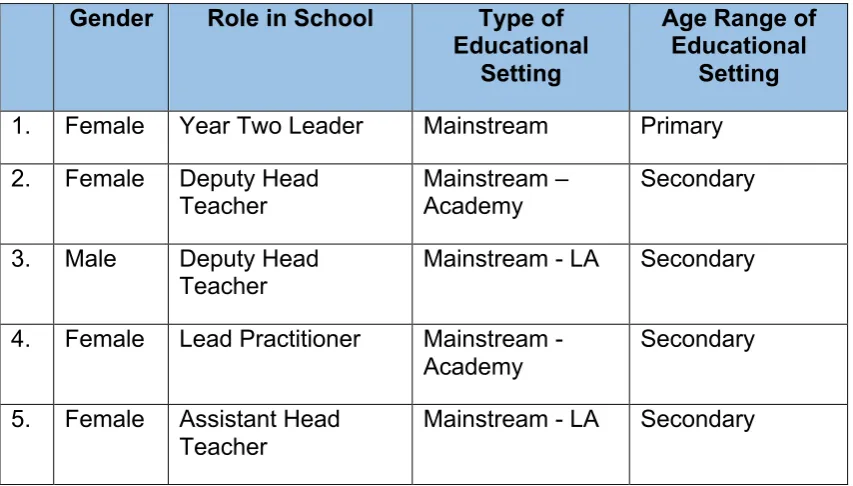
3.5.3 Characteristics of Sample
The participants that took part in this research are described in Table 3.3 below: Inclusion Criteria for Purposive Sampling:
• Participants must be employed by an educational setting
within the LA.
• Participants must have worked in the same setting for a
minimum of one full academic year
• They must have responsibility for, or direct involvement in,