Voice Command Based Robotic Vehicle Control
P R Bhole1, N L Lokhande2, Manoj L Patel3, V D Rathod4, P R Mahajan5
1, 2, 3, 4, 5
Department of Electronics & Telecommunication, R C Patel Institute of Technology, Shirpur, Maharashtra, India
Abstract: Speech recognition is a technology where the system understands the words given through speech. Voice Controlled Robot (VCR) is a mobile robot whose movement can be controlled by the commander by giving specific voice commands. The speech is received by a microphone and processed by the voice module. When a command for the robot is recognized, then voice module sends a command message to the robot’s microcontroller. The microcontroller analyses the message and takes appropriate actions. The goal of this project is to introduce hearing AI sensor and also the speech recognition to the mobile robot such that it is capable to interact with human through Spoken Natural Language (NL). Two type of approach we have chosen for Voice User Interface (VUI) implementation - using a Hardware and Software SR system, and this system uses an android application to recognize human voice and is converted to text; text is further processed and used to control robotic movements.
Keyword: Speech Recognition, Robot, Microcontroller, Arduino, Bluetooth, Android
I. INTRODUCTION
In today’s era, smart phones are becoming more powerful with reinforced processors, larger storage capacities, richer entertainment function and more communication methods. When we say voice control, the first term to be considered is Speech Recognition i.e. making the system to understand human voice. Speech recognition is a technology where the system understands the words (not its meaning) given through speech. In other words, Speech recognition technology is a great aid to admit the challenge and it is a prominent technology for Human-Computer Interaction (HCI) and Human-Robot Interaction (HRI) for the future.
Speech is an ideal method for robotic control and communication. The speech recognition circuit we will outline, functions independently from the robot’s main intelligence. To control and command an appliance (computer, VCR, TV security system, etc.) by speaking to it, will make it easier, while increasing the efficiency and effectiveness of working with that device. At its most basic level speech recognition allows the user to perform parallel tasks, (i.e. hands and eyes are busy elsewhere) while continuing to work with the computer or appliance.
Speech is an ideal method for robotic control and communication. The main objective is to minimize the cost involving in the project and power consumption satisfying the need of the day at the same time. Our goal extends in involving our proposal to provide efficient, accessibility and manipulation of everyday objects.
Now day’s smart phones are becoming more powerful with reinforced processors, larger storage capacities, richer entertainment function and more communication method. Bluetooth is mainly used for data exchange; add new features to smart phones. Bluetooth technology, created by telecom vendor Ericsson in 1994 [1], shows its advantage by integrating with smart phones. The person use digital technology at home or office, and has transfer traditional wired digital devices into wireless devices.
In recent years an open source platform Android has been widely used in smart phones [2] [4]. Android has complete software package consisting of an operating system, middleware layer and core applications. Different from other existing platforms like IOS, it comes with software kits (SDK), which provides essential tools and applications. Using a smart phone as a brain of robot is already an active research field with several open opportunities and promising possibilities. This project presents a review of current robots controlled by mobile phone and a closed loop control systems using audio channels of mobile devices, such as phones and tablet computers. In our work we move the robot (forward, backward, left right) by the android application such as “BT Voice control for Arduino”.
A. Why to build the robots?
Robots are indispensable in many manufacturing industries. The reason is that the cost per hour to operate a robot is a fraction of the cost of the human labour needed to perform the same function. More than this, once programmed, robots repeatedly perform functions with a high accuracy that surpasses that of the most experienced human operator. Human operators are, however, far more versatile. Humans can switch job tasks easily. Robots are built and programmed to be job specific.
II. LITERATURESURVEY
In 2003, Worldwide investment in industrial robots up 19%. In first half of 2004, orders for robots were up another 18% to the highest level ever recorded. Worldwide growth in the period 2004-2007 forecast at an average annual rate of about 7%. Over 600,000 household robots in use - several millions in the next few years. UNECE issues its 2004 World Robotics survey. Summarize the existing homemade robotic car projects that use Arduino microcontroller platform in their project. WiFi Robot and Wifly Mini is wireless supported robot which can control by user within limited range while MAEP 2.0 only can move around itself without control by user. MAEP 2.0 has ultrasonic sensors which provide obstacle detection to avoid from collision.
M. Narayana et al. proposed that, a speech recognition module is not required to recognize human voice to control robot. Here, in this system an android application is usually recognize and process human voice which is afterword converted into text that making use of google speech to text converter. Using Bluetooth text is transferred to the robot. Further text is processed through the microcontroller to control the robot accordingly [3]. Ritika Pahuja et al. proposed that based on Android smartphone robot controlled through using 8051 Microcontroller [5].
A. WIFi Robot
WiFi Robot is a remote control car that can be driven over the internet or with a laptop wirelessly from up to 500m away. It built in with a live-feed network camera so that it can be driven without line of sight. It consist of a remote control car, a Cisco Linksys router, Arduino (ATmega168) Free duino Max Serial, a customize power supply unit, a Panasonic BL C1A web camera and a tiny horn. There are quite a numbers of large size accessories attach to the remote control car such as router and webcam which made it slightly bigger in size and not mobility. Besides, no LED light is attach to the car will produce low clarity of video streaming if it is moving in dark area.
B. Arduino Wifly Mini
Arduino Wifly Mini is control by using console game controller and it communicates over Wi-Fi. The Wifly module provides Arduino with a function to send and receive messages over a WiFi network. The Wifly module communicates with the WiFi access point which specified in programmed configuration. It mounted on top of an UNO board. Arduino Wifly Mini sends the video feed via a 1.3 GHz 300 mW video transmitter. The Arduino initiates a serial connection with the Wifly and these two devices communicate and exchange information. The Arduino Wifly process exchanged information’s in UDP (User Datagram Protocol) packet form. Although UDP is not reliable as TCP but it response faster than TCP. A triple axis accelerometer is mounted at the front of the vehicle. This is use to detect the change in acceleration of robot speed.
C. Mobile Arduino Experimental Platform (MAEP) 2.0
MAEP is a microcontroller robot which capable to avoid obstacle surrounded by detecting them with ultrasonic and infrared sensor built by a hobbyist with a nickname General Geek. In this project, it choose the Ultrasonic Distance Sensor as the obstacle detection sensor while the infrared sensor is use for cliff detection. The Ultrasonic Distance Sensor mounted with the standard Parallax servo which provides rotation for obstacle detection. Arduino UNO microcontroller board is chosen in this project because it is easier to program than other microcontroller and lower cost. Besides, 2 parallax continuous servos is chosen for wheel rotating in order to move forward or left and right turning.
III. METHODOLOGY
In this proposed system we perform various studies on control style variants for robots. It shows that, possible to learn to efficiently manipulate real world objects with only voice (human voice) as a control mechanism. The purpose of this research is to provide simple robot hardware architecture so that this structure can focus on Bluetooth connection infrastructure. It is also useful for educational robotics because can build their own robots with low cost. Typical robot control architecture shows as follows:
A. AT89S52
The device which we used in our project was the ‘AT89S52’ which is a typical 8051 microcontroller manufactured by Atmel. The AT89S52 is a low-power, high performance CMOS 8-bit microcontroller with 8k bytes of in-system programmable ash memory.
B. HC Serial Bluetooth
C. HC-06 Specifically includes:
1) Master device: HC-06-M, M=Master
2) Slaver device: HC- 06-S, S=Slaver
The main function of Bluetooth serial module is replacing the serial port line, such as: One connects to Bluetooth master device while the other one connect to slaver device.
D. Voltage Regulator
A voltage regulator is designed to automatically maintain a constant voltage level. A voltage regulator may be a simple “Feed Forward” design or may include negative feedback control loops. It may use an electromechanical mechanism, or electronic components. Depending on the design, it may be used to regulate one or more AC or DC voltage.
E. DC Geared Motors
Electric machines are a means of converting energy. Electric motors are classified into two categories: DC (Direct Current) and AC (Alternating Current). DC motors are distinguished by their ability to operate from direct current.
DC motors consist of one set of coils, called armature winding, inside another set of coils or a set of permanent magnets, called the stator.
F. Relay
A relay is an electrically operated switch. Many relays use an electromagnet to mechanically operate a switch, but other operating principles are also used, such as solid-state relays. A type of relay that can handle the high power required to directly control an electric motor or other loads is called a contractor.
G. UART
Universal asynchronous receiver/ transmitter are usually an individual integrated circuit used for serial communications over a computer or peripheral device serial port. UART are now commonly included in microcontrollers.
IV. RESULTSANDDISCUSSION
The proposed system is basically based on Voice Controlled Robotic Vehicle helps to control robot through voice commands received via android application.
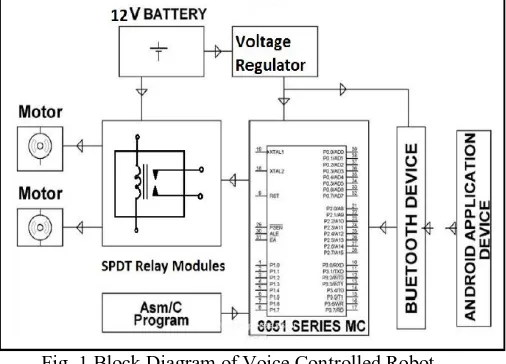
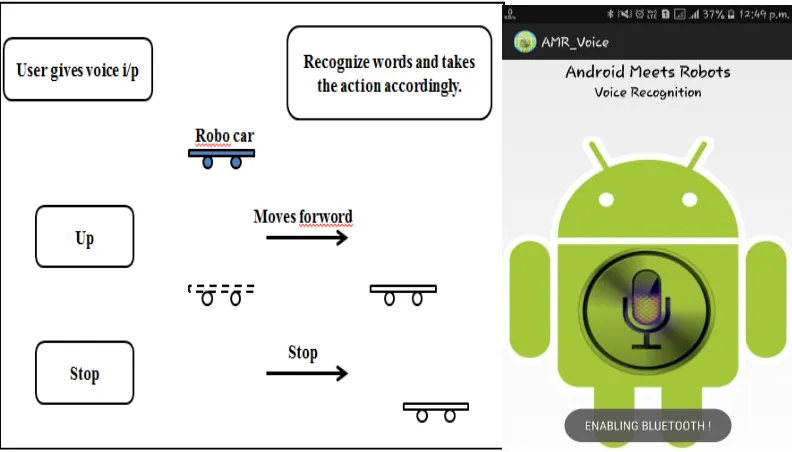
[image:4.612.187.440.506.688.2]The Voice Controlled Vehicle is controlled through voice commands given by the user who is operating the project. These voice command needs to be given through an android app which is installed on the users android mobile. Speech recognition is done within the android app and then a respective command is sent to the voice controlled robot vehicle. Microcontroller fitted on the Vehicle decodes these commands and gives an appropriate command to the motors connected to the vehicle.
Fig. 1 Block Diagram of Voice Controlled Robot
Microcontroller is a central processing unit (CPU) of the Robot. Microcontroller is further connecting to the relay. Also 3 - terminal voltage regulator is used it give 12v to relay and 5v to the microcontroller. The robotic vehicle then move when relay is operate as per the command received via android application and motor is drive. We used here geared motor so vehicle is also operates in local area. Bluetooth decoder is always connected to Robot and another mobile phone is used to control the movements of the Robot. It gives ASCII code output. This receiver enables wireless transmission reception of serial data. It has 10 meters range. DC motor is used for robotic vehicle movement.
A. Fixed Commands
There are 5 fixed commands which can be used to control basic robot actions:
1) Up: It is the command to move the robot straight forward unless a new command is sent.
2) Down: It is the command to move the robot straight backward unless a new command is sent.
3) Right: It is the command which turns the robot right unless a new command is sent.
4) Left: It is the command which turns the robot left unless a new command is sent.
5) Stop: It is the command which stop the robot.
B. Procedure
Here are the steps for how to use android application to control the robotic vehicle.
1) Download the application “BT VOICE CONTROL FOR ARDUINO” from Google play store and install it.
2) First make sure your HC-05 Bluetooth module is paired with your mobile. The default password for pairing is “1234” or “0000”.
3) Check once you get started with the application, the Bluetooth of the mobile is automatically enabled.
4) Click on “connect robot” option present in options menu.
5) Now select HC-05 to get paired with the module. After pairing it is ready to use.
6) Now click on the “MIC” icon and speak or instruct the robot verbal.
7) When you speak “left” your speech gets recognized and converted into text. That text is transferred to robot through Bluetooth.
8) The robot receives the string, decodes it and compares it with the Instructions that are described in the program and moves the robot in forward direction.
9) The same in the case of Up, Left, Right, down Stop.
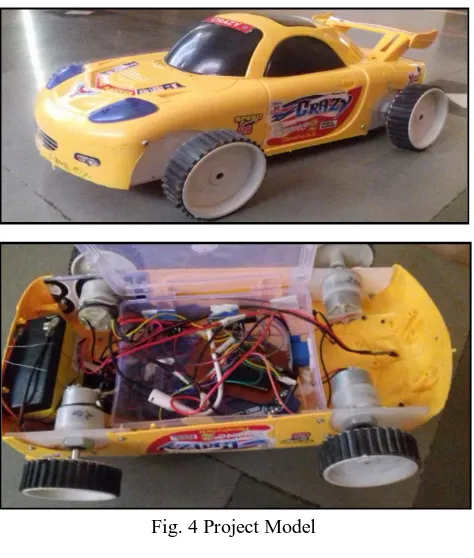
[image:5.612.114.510.458.684.2]10) As per command given from android app, motor is drive in up, down, left, rightand stop in this way.
Fig. 4 Project Model
V. CONCLUSIONS
The integration of voice recognition and navigation system into robotic vehicle which helps for disabled people. This speech control system, though quite simple, shows the ability to apply speech recognition techniques to the control application. Our robot can understand control Commands spoken in a natural way, and carry out action. The method is proved for real-time operation. Simply in this system an android application is used to recognize human voice and is converted to text, text is further processed and used to control robotic movements.
REFERENCES
[1] Android Developers Guide. Android Architecture. [online] 2013.URL:http://.android.com/about/versions/index.html.
[2] Arvind Kumar Saini, Garima Sharma, Kamal Kishor Choure, “BluBO: Bluetooth Controlled Robot”, International Journal of Science and Research (IJSR), National Conference on Knowledge, Innovation in Technology and Engineering (NCKITE), 10-11 April 2015.
[3] Dr. M. Narayana, Abhinay Alishety, Harsha Chapala, “Voice Control Robot using Android Application”, IJEIR, Volume 4, Issue 2, 2015, pp. 332-337. [4] Heidi Monson, “Bluetooth technology and implementations”, John Wiley & Sons, 1999.
[5] Ritika Pahuja, Narender Kumar. “Android Mobile Phone Controlled Bluetooth Robot Using 8051 Microcontroller” proceedings of IJSER, Volume 2 Issue 7, July 2014, pp. 2347‐3878.
[6] Potts, J. and Sukittanon, S., “Exploting bluetooth on android mobile mobile devices for home security application”, proceedings of Southeastcan, Florida, USA, 2012