© 2017, IRJET | Impact Factor value: 5.181 | ISO 9001:2008 Certified Journal
| Page 1598
IMPROVED NAND FLASH MEMORIES STORAGE RELIABILITY USING
NONLINEAR MULTI ERROR CORRECTING CODES
ARNENI ANILKUMAR
1, E.RAMAKRISHNA
2, K.GEETHA
3, Dr.R.RAMACHANDRA
41
(PG Scholor,
VLSI,Dept of ECE, SKD, Gooty, Andhrapradesh, India.)
2
(Assistant Professor, Dept of ECE, SKD, Gooty, Andhrapradesh, India).
3
(Associate Professor & HOD, Dept of ECE SKD, Gooty, Andhrapradesh, India)
4
(Principal SKD, Gooty, Andhrapradesh, India)
---***---Abstract:-
Multi-level cell (MLC) NAND flash memories are
popular storage media because of their power efficiency and large storage density. Conventional reliable MLC NAND flash memories based on BCH codes or Reed-Solomon (RS) codes have a large number of undetectable and miscorrected errors. Moreover, standard decoders for BCH and RS codes cannot be easily modified to correct errors beyond their error correcting capability t = (d-1)/2, where d is the Hamming distance of the code. Here, we propose general construction of nonlinear multi-error correcting codes based on concatenations or generalized from Vasil’ev codes. The proposed constructions can generate nonlinear bit-error correcting or digit-error correcting codes with very few or even no errors undetected or miss corrected for all code words. Moreover, codes generated by the generalized Vasil’ev construction can correct some errors with multiplicities larger than t without any extra overhead in power consumption compared to schemes where only errors with multiplicity up to t are corrected. The design of reliable MLC NAND flash architectures can be based on the proposed nonlinear multi-error correcting codes.
The results show that using the proposed nonlinear error correcting codes for the protection of MLC NAND flash memories can reduce the number of errors undetected or mis corrected for all code words to be almost 0 at the cost of less than 20% increase in power and area compared to architectures based on BCH codes and RS codes.
1.INTRODUCTION
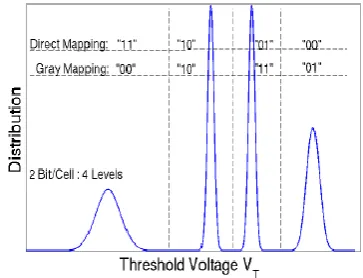
MLC memory cell can store numerous bits by decisively controlling the edge voltage level. By and by, the limit voltage of the entire memory cluster fulfills a Gaussian dispersion because of arbitrary assembling varieties. Figure 1.1 delineates the limit voltage dispersion of a multi-level cell which can store 2 bits. Mean by the standard deviation of the center two Gaussian dispersions. The standard deviations of the external two disseminations are around 4 and 2.
[image:1.595.345.527.368.507.2]Every voltage extend relates to a particular rationale esteem spoken to as a 2-bit binary vector. Distinctive plans can be utilized for mapping the rationale qualities to binary vectors. An immediate mapping was utilized as a part of while the proposed to utilize a Gray mapping to enhance the dependability of the memory since it is more probable that a voltage level will be taken as one of its adjoining levels amid READ operation when mistake happens.
Figure 1: Threshold Voltage Distribution for MLC storing 2bits
© 2017, IRJET | Impact Factor value: 5.181 | ISO 9001:2008 Certified Journal
| Page 1599
account an adaptable plan of all the more intense blunder rectifying codes for NAND flash recollections.
Memories Similar to SLC streak recollections, the essential disappointment systems for MLC NAND streak recollections incorporate limit voltage conveyance, program/read exasperate, information maintenance, programming/eradicating perseverance and single occasion surprise. Be that as it may, while for SLC streak recollections a considerable measure of mistakes are uneven, e.g. blunders presented by program unsettling influence and information maintenance, for MLC NAND streak recollections mistakes have no favored symmetry.
Exploratory outcomes demonstrate that blunders in MLC streak recollections will probably happen consistently inside a page with no detectable burstiness or neighborhood information reliance. Subsequently, all through the paper we expect an arbitrary symmetric blunder demonstrate, where P(e) = p||e||(1 − p)n−||e||, p is the crude piece twisting rate and ||e|| is the assortment of the mistake. we need to underline that the proposed nonlinear t-mistake rectifying codes can likewise give an ensured level of unwavering quality in circumstances where the blunder model is erratic or multi-bit blunders are more plausible.
With a specific end goal to exhibit the benefit of using least separation incompletely vigorous code to secure memory against delicate mistakes, we think about the blunder recognition/revision properties and additionally the equipment overhead of a (39, 32, 4) stretched out Vasil'ev code to the alteration of a being used (39, 32, 4) broadened Hamming code. To ensure twofold information rate DIMM memory in a Virtex-II Pro device.
It portray the usefulness of the memory read and compose operations, encoding the data, and finding the blunders of recovered information to execute the calculation.
Amid a WRITE operation, the redundant bits of the code are produced by the encoder and spared in the redundant memory square. Amid a READ operation, the ECC square processes the mark of the recovered information and executes the mistake rectification calculation. In the event that uncorrectable mistakes happen, ERR will be attested and no remedy will be endeavored.
2. LITERATURE SURVEY
The expansion of the capacity thickness and the reduction of the cost per bit of blaze recollections were traditionally accomplished by the forceful scaling of the memory cell transistor until the multilevel cell (MLC) innovation was produced and executed in 1997. The semiconductor business witnesses a touchy development of the NAND streak memory showcase in the previous quite a long while. Because of its high information exchange rate, low power consumption, huge capacity thickness and long mechanical strength, the NAND streak recollections are broadly utilized as capacity media for gadgets, for example, versatile media players, advanced cameras, cell phones and low-end net books.
MLC innovation depends on the capacity to decisively control the measure of charge put away into the drifting door of the memory cell with the end goal of setting the limit voltage to various diverse levels corresponding to various rationale values, which empowers the capacity of multiple bits per cell. Be that as it may, the expanded number of programming limit voltage levels negatively affects the dependability of the gadget because of the diminished operational edge. The crude bit error rate of the MLC NAND streak memory is around 10 and is no less than two requests of size more regrettable than that of the single-level cell (SLC) NAND streak memory.
© 2017, IRJET | Impact Factor value: 5.181 | ISO 9001:2008 Certified Journal
| Page 1600
In a versatile rate ECC architecture in view of BCH codes was proposed. The plan had four operation modes with various error adjusting capacities. An ECC architecture in light of Reed-Solomon (RS) codes of length 828 and 820 information digits constructed over was proposed, which can adjust all bit errors of variety not exactly or equivalent to four. The architecture accomplishes higher throughput, requires less territory overhead for the encoder and the decoder yet needs 32 more redundant bits than architectures in light of BCH codes with a similar error rectifying ability. In, an architecture in light of hilter kilter restricted extent error redressing code was proposed, which can amend every single deviated error of multiplicities up to " t'. The above architectures depend on straight square codes and have countless errors. For any direct code with k information bits, the quantity of imperceptible errors is 2K.
Recollections assume a vital part in today's system-on-chip (SOC) plans. At the season of introduction of glimmer memory 70% of the chip zone in a large portion of today's processors is taken by installed memory and this number is required to achieve 90% by 2011. As memory involves a major rate of the region on a chip, it is particularly powerless against single-event-upset (SEU) brought about by single, enthusiastic particles like high-vitality neutrons and alpha particles. SEU briefly changes the condition of the gadgets and results in delicate errors, which are non-damaging and show up as undesirable bit flips in memory cells and registers. With continuous scaling, SEU spins out to be more likely and the delicate error rate increments. As the speed of the gadgets ends up noticeably higher the relative size of the clock transition timing window expands, which makes gadgets more touchy to SEU. The abatement of connected voltage additionally raises the delicate error rate since bit inversion will probably happen when the electrical charge put away in the memory cell is low because of reduction in the voltage.
Straight single error correction, double error detection codes (SEC-DED) is utilized as a part of present day PC systems as a countermeasure against delicate errors to build the unwavering quality of the system. These codes have Hamming separation 4 and can rectify all single bit errors and identify all double bit errors. Within the sight of multiple errors,the unwavering quality of systems using error protection plans in view of direct codes might be questionable. For any direct (n, k) SEC-DED error amending codes, the quantity of imperceptible multiple errors is 2k. In addition to this, an immense number of
multiple errors will be miscorrected as single bit errors. As a rule SEU brings about multiple bit distortions, these codes may not be adequate to accommodate a high dependability.
Truth be told, abnormality of systems created by multiple bit upset (MBU) was at that point detailed. It was demonstrated that the Cassini Solid-State Recorder was encountering a high rate of uncorrectable multiple bit errors. It has concluded that the MBU rate was architecture needy and any architecture of DRAM-based outlines must be investigated deliberately to stay away from sudden high MBU rate. The unwavering quality of systems secured by two sorts of single error amending codes was analyzed. The error rate was accounted for and it additionally concluded that conventional ECC may not be adequate to ensure gadgets against multiple bit errors for certain configuration designs. The expansion of MBU rate in profound submicron advancements break down the situation much further. In 65nm triple-well SRAMs with a thin cell architecture, the rate of multiple bit errors created by neutron incited SEU increments by an element of 10 contrasted and that in 90nm innovations, almost 55% of the errors because of neutron radiation were multiple bit errors. In spite of the fact that there are instruments like bit interleaving that can be utilized to limit the error rate contribution of multiple bit errors, regardless of whether it is sufficient under such high MBU rate is as yet obscure.
© 2017, IRJET | Impact Factor value: 5.181 | ISO 9001:2008 Certified Journal
| Page 1601
are contrasted with the broadened Hamming codes with demonstrate the upside of the proposed approach.
The Intel Strata Flash memory innovation speaks to a cost achievement for glimmer memory gadgets by empowering the capacity of two bits of information in a single blaze memory transistor. This paper will examine the evolution of the no-account/cell innovation from conception to production. The glimmer memory business has developed from about $50M in 1987 to generally $2.5B in 1997 because of its extraordinary blend of functionality and cost.
Flash memory gadgets are presently found in for all intents and purposes each PC and cellular phone and are one of the key components of the developing advanced imaging and sound markets. Taken a toll for every bit reduction of blaze memory gadgets has been traditionally accomplished by forceful scaling of the memory cell transistor utilizing silicon prepare scaling methods, for example, photolithography line width reduction. While trying to quicken the rate of cost reduction beyond that accomplished by process scaling, an exploration program was begun in 1992 to create strategies for the dependable stockpiling of multiple bits of information in a single blaze memory cell. The Intel Strata Flash no-account/cell memory innovation is the principal yield of the multi-bit per cell stockpiling exertion. By putting away two bits in a single memory transistor, the memory cell range is viably sliced down the middle permitting the capacity of twice as much information in an indistinguishable territory from the standard single bit per cell innovation. This gives understanding into the Intel Strata Flash memory innovation advancement exertion. It talks about the evolution of the no-account/cell ability from conception to production and the difficulties that were effectively overcome to deliver an excellent item perfect with the standard single bit per cell gadgets. This additionally introduces cases that grandstand the advantages of the current Intel Strata Flash memory gadgets and examines a portion of the main impetuses for high thickness streak memory.
NAND Flash memory items have spined into the innovation of decision to fulfill high thickness, Non unstable memory prerequisites in numerous applications. NAND Flash innovation gives a lot of capacity at a value point lower than any of today's semiconductor options. NAND Flash advancement has concentrated on minimal effort per bit, bringing about an innovation that requires fundamentally more system association than other blaze advances. Specifically, NAND Flash memory can be required to
experience minor information corruption sooner or later amid ordinary operation.
PROPOSED SYSTEM
The Encoder and Decoder Architectures for the proposed nonlinear multi error adjusting codes are given beneath. We gauge the territory, the inactivity and the power consumption of the proposed architectures and contrast them with architectures in view of BCH codes and RS codes.
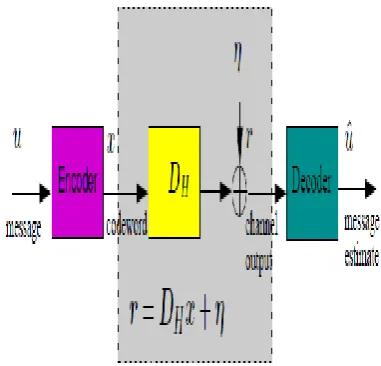
Basic Block Diagram of Encoder and Decoder Architecture
[image:4.595.318.509.443.626.2]The Below shown block Diagram Represents the basic block diagram of encoding and decoding of the input message bits which are given to store the information. In the above indicated figure u is the information message bits where it can take the qualities and it encodes the information message bits and sent to the blaze memory and there it stores the information and in the event that we need to redress the errors or check for the errors it should be possible by doing the disentangling of the put away bits and subsequently we can check and right the errors.
Fig 2 Basic Block Diagram of encoder and decoder architecture
Encoder
© 2017, IRJET | Impact Factor value: 5.181 | ISO 9001:2008 Certified Journal
| Page 1602
case the information sources are eight and the yield bits are 3 which gives binary qualities.
NAND Flash Memory
NAND Flash gadgets utilize one of two diverse memory cell innovations. The primary cell configuration is the traditional implementation, where every memory cell speaks to a single bit of information. The single-bit-per-cell approach is arranged as single-level cell (SLC). The second approach is to program every cell in incremental sums. With this approach, the information esteem is dictated by how "hard" a cell has been modified.
This multilevel cell (MLC) approach enables every cell to speak to 2 bits of information. Verifiably, SLC NAND Flash gadgets have given enhanced information trustworthiness when contrasted and their MLC partners. The information respectability in MLC requires a significantly more modern error correction plot than is utilized for SLC NAND Flash gadgets.
This specialized note depicts the utilization of straightforward Hamming codes to identify and adjust information corruption that happens amid ordinary SLC NAND Flash gadget operation. The Hamming calculation is fit for repairing single-bit information disappointments and distinguishing whether 2 bits have spined out to be adulterated. The Hamming calculation is an industry acknowledged technique for error detection and correction in numerous SLC NAND Flash-based applications
Decoder
A binary code of n bits is fit for speaking to up to 2n unmistakable components of the coded information. A decoder is a combinational circuit that converts binary information from the n coded contributions to a most extreme of 2n remarkable yields. On the off chance that the n bit coded information has unused bit combinations, the decoder may have under 2n yields. The Decoder exhibited here are called n to m line decoders, where m<n.
Encoder Architecture
The encoders for straight BCH codes and RS codes are conventionally actualized in light of direct criticism enlist (LFSR) architecture. Both the serial and the parallel architectures for LFSRs are very much contemplated in the group. When all is said in done, the serial LFSR needs k clock cycles while the parallel LFSR needs only (k/q) clock cycles to complete the computation of the redundant bits at
the cost of higher equipment multifaceted nature, where k is the quantity of information bits and q is the parallelism level of the LFSRs. Contrasted with the encoder for straight BCH codes, the encoder for the proposed nonlinear t error adjusting code fundamentally requires one more multiplier in GF(2r2)and two r2 registers.
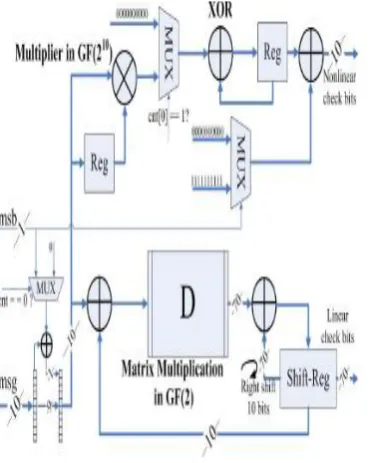
The architecture of the encoder for the nonlinear (8281, 8201, 11) 5-error remedying code is appeared in Figure 3.2. The plan depends on the parallel LFSR proposed. The parallelism level of the outline is ten. Amid each clock cycle, ten information bits are inputted to the encoder. The most significant bit (MSB) of the message is inputted by means of a different port.
The principal information bit for the direct BCH code is determined by XORing msb with the main bit of message at the primary clock cycle (when cnt = 0 as appeared in the figure).
The base portion of the architecture is a parallel LFSR used to create the redundant bits for straight BCH codes. D is a 10 × 70 binary grid. Amid each clock cycle, the ten most significant bits in the move enroll is XORed with the new info and after that duplicated by D. The yield of the multiplier is XORed with the moved information of the move enroll to produce the contribution to the enlist.
© 2017, IRJET | Impact Factor value: 5.181 | ISO 9001:2008 Certified Journal
| Page 1603
Figure 3: Encoder Architecture for nonlinear 5 ECC
Decoder Architecture
The decoding of the nonlinear t-error-revising codes requires the interpreting of a direct BCH code with one less information bits. The standard decoder for the direct BCH codes for the most part contains three sections: the disorder computation hinder, the error locator polynomial generation piece and the Chien seek square. The Decoder square of BCH code requires only four pieces and the Decoder hinder for RS code requires an additional piece and absolutely it requires five squares. Give us access insight about the each piece for both BCH codes and RS codes.
Syndrome Computation
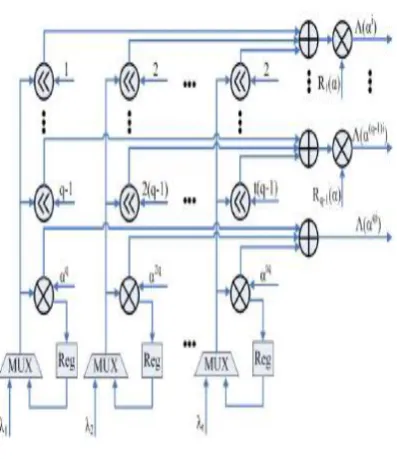
Without loss of generality, assume that the linear BCH code is a narrow-sense BCH code. Denote by ˜c = (˜x1, ˜x2 · · · ˜xn−1, ˜xn) the received codeword. For a (n, k, d = 2t + 1) linear t-error-correcting BCH codes, the syndromes are defined as Si , 0 ≤ i ≤ 2t-1, where is the primitive element of a finite field GF(2m). For binary linear BCH codes, S2i = Si2. Thereby only odd-numbered Si needs to be computed from ˜c. The other syndromes can be computed using a much simpler square circuit in GF (2m). To enhance the throughput of the decoder, a parallel plan can be connected to prepare multiple bits per clock cycle. Figure 3.3 demonstrates the disorder computation circuit with a parallelism level of q for one Si, t such structures are required for the entire square. In our plan the parallelism
[image:6.595.322.549.136.316.2]level is ten. The computation of disorders for the direct BCH code will be done in 827 clock cycles.
Figure 4 Syndrome Computation block with a parallelism level of q for BCHcodes
Error Locator Polynomial Generation
After the disorders are registered, the error locator polynomial Λ will be produced utilizing Berlekamp-Massey(BM) calculation. The equipment implementations of the BM calculations have been very much contemplated in the group. In our plan a completely serial structure is utilized to limit the region overhead. The outline for the most part requires three multipliers in GF (2m) and two FIFOs. The error locator polynomial Λ of degree t can be created in t(t + 3)/2 clock cycles are required to produce the error locator polynomial Λ. At the point when t = 5, the quantity of clock cycles required is 20.
© 2017, IRJET | Impact Factor value: 5.181 | ISO 9001:2008 Certified Journal
| Page 1604
Figure 5: Chien Search
Error Magnitude Computation for RS Codes
Besides the error locator polynomial, the Berlekamp-Massey algorithm can also generate the error magnitude polynomial where is the syndrome polynomial. According to Forney’s algorithm, the error magnitude at position can be computed.
Decoder Architecture for the Nonlinear Multi-Error Correcting Codes
The decoder for the nonlinear multi-error correctingcodes presented in Theorem 1 is similar to the decodersfor BCH codes and RS codes. The main differenceis as follows. First, the nonlinear multi-error correcting codes need to compute the nonlinear syndrome when receiving the possibly distorted code words and recompute after correcting errors located. Second, afterthe decoding of the linear codes is completed and is recomputed,one more clock cycle is required for the decoder of thenonlinear code to verify the error correcting results.
Input : cˆ=( xˆ1,xˆ2,xˆ3) Output : e = (e1,e2,e3), ERR begin
Decode V, Compute S; if Ev=0, S=0 then
No Errors are detected, ERR=0; else if Ev=0, S≠0 then
Uncorrectable multi errors are detected, ERR=1; else if Ev=-1 then
Uncorrectable multi errors are detected, ERR=1;
else Ev>0; if eˆ1=0 then
Errors in the redundant digits are detected, ERR=0;
else Compute xˆ1= xˆ1+ eˆ1, xˆ2= xˆ2+ eˆ2; Compute Sˆ=f(xˆ1)+xˆ2;
if S=0 then e=(eˆ1,eˆ2,eˆ3), ERR=0;
else Uncorrectable multi errors are detected, ERR=1; ‘+’in the above indicates Xor-ing Operation
Theorem 1: Algorithm for BCH codes and RS codes
[image:7.595.322.550.321.587.2]The decoder for the nonlinear multi-error correcting codes based on Theorem 2 is slightly more complicated than the decoder for codes based on Theorem 1.
Figure 6: Decoder Architecture for Nonlinear Error Correcting Codes
© 2017, IRJET | Impact Factor value: 5.181 | ISO 9001:2008 Certified Journal
| Page 1605
Input : cˆ=( xˆ1,xˆ2,xˆ3) Output : e = (e1,e2,e3), ERR
begin Decode V, Compute eˆ2, Ev, S; if Ev=0, S=0 then
No Errors are detected, ERR=0; else if Ev=0, S≠0 then if d=3 then
Errors either occur only in the redundant bits are uncorrectable multi-errors;
ERR=1;
else Decode U, compute eˆ1, eˆ3,Ev; if Ev>0 then e=(eˆ1,(β( eˆ1),0), eˆ3); e will only be corrected when ||e||≤t;
ERR=0 when errors are corrected and ERR=1 otherwise; else
Uncorrectable multi errors are detected, ERR=1; else if Ev=-1 then
Uncorrectable multi errors are detected, ERR=1; else Ev is larger than 0;
Compute:; xˆ2= xˆ2+ eˆ2; vˆ=(β( xˆ1),0)+ xˆ2);
xˆ3= xˆ3+f(vˆk) (vˆk is the information part of vˆ); Decode U according to xˆ1 and xˆ3;
If Ev=0 then e=(0, eˆ2,0);
e will be only corrected if there are errors in the information bits;
ERR=0 when errors are corrected and ERR=1 otherwise; else if Ev>0 then
e=(eˆ1,(β( eˆ1),0)+ eˆ2 ,eˆ3);
e will only be corrected when ||e||≤t and there are errors in the information bits;
ERR=0 when errors are corrected and ERR=1 otherwise; else Ev=-1, uncorrectable multi errors are detected, ERR=1;
‘+’in the above indicates Xor-ing Operation Theorem 2: Algorithm for Nonlinear Block codes
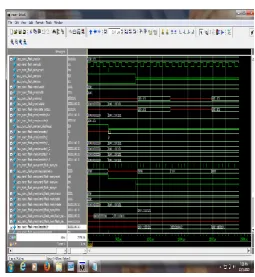
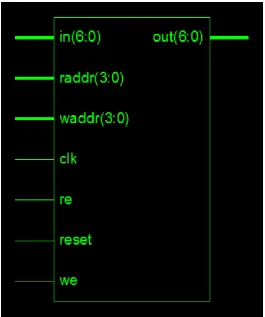
[image:8.595.310.566.114.392.2]10. SIMULATION RESULTS:
Figure 7 Input & Output of the NAND Flash Memory
RTL Schematic
© 2017, IRJET | Impact Factor value: 5.181 | ISO 9001:2008 Certified Journal
| Page 1606
[image:9.595.35.301.120.438.2]Technology Schematic
Figure 9 Technology Schematic
Table1: The output of the linear BCH decoder
[image:9.595.316.566.407.706.2]By this BCH Decoder we can identify the error vector and the errors of variety will be larger than that of "t" esteem and subsequently this straight square strategy is hard to discover the errors and correction of that error is additionally as incomprehensible. The proposed technique for either the decoder or encoder piece works satisfactorily and this can adjust the errors up to least of the hamming separation.
Table 2: Comparison of the number of miscorrected errors for the (8262, 8192, 11) linear BCH code and the proposed (8281, 8201, 11) nonlinear 5-error-correcting
code
The Table 2 shows the comparison of Linear and Nonlinear Block codes in BCH Codes and it shows clearly the number of miscorrected errors for the given input data word.
Table 3 Comparison of the area, the latency and the power consumption of the (8262, 8192, 11) linear BCH code and the proposed (8281, 8201, 11) nonlinear code
(8262,8192,11) Linear BCH Code
(8281,8201,11) Nonlinear Code
Encode r
Decode r
Encode r
Decode r
Parallelism Level
10 10 10 10
Clock Speed(Hz)
1G 400M 1G 400M
Throughput 10Gb/s 4Gb/s 10Gb/s 4Gb/s
Latency(Cycles )
820 1674 820 1675
Latency(µs) 0.82 4.185 0.82 4.1875
Area(µm2) 1674.6 19182. 2
2765.3 21017. 1
Power(mW) 1.294 5.329 2.158 5.439
[image:9.595.38.244.500.633.2]© 2017, IRJET | Impact Factor value: 5.181 | ISO 9001:2008 Certified Journal
| Page 1607
nonlinear block codes which can detect the 5 errors and correct up to 5 errors.
Timing Summary
Speed Grade: -4
Minimum period: 5.014ns (Maximum Frequency: 199.442MHz)
Minimum input arrival time before clock: 7.742ns
Maximum output required time after clock: 4.368ns
CONCLUSION
The constructions of two nonlinear multi-error revising codes are proposed. Their error redressing calculations are introduced. The proposed codes have a great deal less imperceptible and miscorrected errors than the conventional BCH codes and RS codes. The code constructed can likewise revise a few errors with assortment larger than its error amending ability with no additional overhead in zone, timing, and power consumption contrasted with plans that right only up to errors. The beyond-error redressing capacity of the displayed nonlinear multi-error amending codes brings about a further change of the unwavering quality of the system.
FUTURE SCOPE
The plans of solid MLC NAND streak recollections in view of the proposed nonlinear multi-error amending codes are exhibited. We look at the territory, the inertness and the power consumption of the dependable MLC NAND streak architectures utilizing the proposed nonlinear multi-error adjusting codes to architectures in view of BCH codes and RS codes. The encoder and the decoder for every one of the choices are displayed in Verilog and blended in RTL Design Compiler. The outcomes demonstrate that architectures in light of nonlinear multi-error amending codes can have near zero imperceptible and miscorrected errors while consuming under 20% more zone and power consumption than architectures in light of the BCH codes and the RS codes.
REFERENCES
1. G. Atwood, A. Fazio, D. Mills, and B. Reaves, “Intel Strata Flash TM memory technology overview,” Intel Technology Journal, 1997.
2. J.Cooke, “The inconvenient truths about NAND flash memory,” Micron MEMCON’07 presentation, 2007. 3. R. Dan and R. Singer, “White paper: Implementing MLC
NAND flash for cost-effective, high capacity memory,” M-Systems, 2003.
4. R. Bez, E. Camerlenghi, A. Modelli, and A. Visconti,“Introduction to flash memory,” Proceedings of the IEEE, vol. 91, no. 4, pp. 489–502, April 2003. 5. G. Cellere, S. Gerardin, M. Bagatin, A. Paccagnella, A.
Visconti, M. Bonanomi, S. Beltrami, R. Harboe- Sorensen, A. Virtanen, and P. Roche, “Can atmospheric neutrons induce soft errors in NAND floating gate memories?” Electron Device Letters, IEEE, vol. 30, no. 2, pp. 178–180, Feb. 2009.
6. M. Bagatin, G. Cellere, S. Gerardin, A. Paccagnella, VA. Visconti, S. Beltrami,Vand M. Maccarrone, “Single event effects in 1Gbit 90nm NAND flash memories under operating conditions,” in On-Line Testing Symposium, 2007. IOLTS 07. 13th IEEE International, July 2007, pp. 146–151.
7. F. Irom and D. Nguyen, “Single event effect characterization of high density commercial NAND and NOR nonvolatile flash memories,” Nuclear Science, IEEE Transactions on, vol. 54, no. 6, pp. 2547–2553, Dec.2007.
8. W. Liu, J. Rho, and W. Sung, “Low-power high throughput BCH error correction VLSI design formulti-level cell NAND flash memories,” in Signal Processing Systems Design and Implementation,2006. SIPS ’06. IEEE Workshop on, Oct. 2006, pp.303–308.
9. R. Micheloni, R. Ravasio, A. Marelli, E. Alice,V. Altieri, A. Bovino, L. Crippa, E. Di Martino,L. D’Onofrio, A. Gambardella, E. Grillea, G. Guerra,D. Kim, C. Missiroli, I. Motta, A. Prisco, G. Ra one,M. Romano, M. Sangalli, P. Sauro, M. Scotti, and S. Won, “A 4Gb 2b/cell NAND flash memory with embedded 5b BCH ECC for 36mb/s system read throughput,” in Solid-State Circuits Conference, 2006.ISSCC 2006. Digest of Technical Papers. IEEE International, Feb. 2006, pp. 497–506. 10. F. Sun, S. Devarajan, K. Rose, and T. Zhang, “Designof
on-chip error correction systems for multilevelNOR and NAND flash memories,” IET Circuits, Devicesand Systems, vol. 1, no. 3, pp. 241–249, 2007.
11. T.H. Chen, Y.Y.Hsiao, Y.T.Hsing, and C.W.Wu,“An adaptive-rate error correction scheme for NAND flash memory,” in VLSI Test Symposium, 2009.VTS’09. 27th IEEE, May 2009, pp. 53–58.
© 2017, IRJET | Impact Factor value: 5.181 | ISO 9001:2008 Certified Journal
| Page 1608
codes,” in Signal Processing Systems, 2008.SiPS 2008. IEEE Workshop on, Oct. 2008, pp. 94–99
13. Y. Cassuto, M. Schwartz, V. Bohossian, and J. Bruck, “Codes for multi-level flash memories: Correcting
asymmetric limited-magnitude errors,” in Information Theory, 2007. ISIT 2007. IEEE International Symposium on, June 2007, pp. 1176–1180.
AUTHORS:
1. ARNENI ANILKUMAR.
He completed his professional career of education in B.Tech (ECE) at Sri Krishnadevaraya engineering college, Gooty and pursuing M.Tech from Sri Krishnadevaraya engineering college, Gooty, Anantapur(AP).He is interested in VLSI
2. E.RAMAKRISHNA has 4 years experience in teaching in graduate and post graduate level and she presently working as Assistant professor in department of ECE Sri Krishnadevaraya Engineering College, Gooty, AP, India.
3. Ms.K.GEETHA has completed his professional career of education in B.Tech (ECE) from JNTU Anantapur. He obtained M.Tech degree from BITM,Ballary.. At present working as an Associate Professor and Head of the ECE Department in Sri Krishnadevaraya Engineering College,
Gooty of Anantapuramu district (AP).
4. Dr.R.RAMACHANDRA has completed his professional career of education in B.Tech (MECHANICAL) from JNTU Hyderabad. He obtained M.Tech degree from JNTU, Hyderabad. He obtained Phd degree from JNTU, Hyderabad At present working as Principal in Sri
Krishnadevaraya Engineering College, Gooty of