
Soil Properties (UofMD)
8
0
0
Full text
(2) of each size present. The largest soil particles are referred to as sand, intermediate particles as silt, and the smallest particles as clay. Soil structure refers to how these soil particles are bound together into larger particles called aggregates.. Soil Structure Soil structure refers to the manner and stability with which individual sand, silt, and clay particles are bound together into units called aggregates. Generally, iron and organic matter act as adhesives to bind the soil particles into stable aggregates. Soil aggregation is an important characteristic of soil fertility; the greater the degree of aggregation, the better the soil “tilth” and the more pore space available to supply air and water to plant roots. In addition to the many small pores within each aggregate, there are many large pores between aggregates that facilitate moisture retention and availability. Organic matter is one of the most important factors contributing to stable soil aggregation. Cultural practices that increase soil organic matter generally also improve soil structure and tilth. Tillage is generally considered to be the major factor responsible for destroying soil structure, as intensive tillage results in significantly reduced levels of soil organic matter.. Soil Texture Based on the mixture of sand, silt, and clay particles, 12 distinct soil textural classes have been defined. A textural triangle showing these textural classes is presented in Figure 1. If a soil contains primarily sand-sized particles, it is defined as a sand. If it has less sand and more silt, the texture may be a loamy sand or a sandy loam. Increasing amounts of clay could result in sandy clay loam or sandy clay. If a soil has approximately equal proportions of sand, silt, and clay, it is classified as a clay loam. Soil texture directly influences the amount of pore space in a given soil—the smaller the soil particles, the more total pore space. Thus, a soil with a high percentage of clay particles contains considerably more pore space than a soil with a high percentage of silt or sand particles. The more pore space available in a soil, the more air and water the soil can retain. However, because a fine-textured soil might have more total pore space than its coarse-textured counterpart does not necessarily mean that the finer textured soil will contain proportionately more available moisture. The smaller the pore spaces, the more tightly soil moisture is retained. At field capacity, a clay soil will hold more moisture than a sandy soil, but a clay soil also holds more moisture at the permanent wilting point than a sandy soil. The amount of available water in a soil is the difference between the amount of water retained at field capacity and the amount retained at the permanent wilting point. There is no constant relationship between soil texture and available soil moisture. Some of the moisture retained in a finetextured soil is unavailable to plants because capillary forces retain it more tightly. More water is available in a coarse-textured soil for a short period of time. But because capillary forces are much weaker in the larger pores, the force of gravity causes sandy soils to lose moisture more rapidly than their finer textured counterparts.. Soil Organic Matter Physically, ideal soils are composed of approximately one-half solid material and one-half pore space. In Maryland soils, most of the solid material (approximately 95 to 98 percent) is mineral in nature. The remaining 2 to 5 percent of the solid material is organic matter. Soil organic matter consists primarily of decayed or decaying plant and animal residues and is a very important soil component. It helps to (1) improve soil's physical condition, (2) increase water infiltration and water holding capacity, (3) improve soil tilth by enhancing soil aggregate stability, (4) decrease soil erosion losses, (5) supply available plant nutrients (nitrogen, phosphorus, and sulfur), and (6) augment the soil's cation exchange capacity. On the average, soil organic matter contains about 5 percent nitrogen. Unfortunately, this nitrogen is tied up in organic compounds and is not immediately available to plants. As organic matter breaks down, or mineralizes, nitrogen is released slowly to plant roots. Usually not enough nitrogen is released during the growing season to support the needs. 2. 6. Soil structure refers to the binding of sand, silt, and clay particles into soil aggregates. Soil pore size and the amount of soil water and air retained are influenced by soil structure. 7. Soil organic matter contributes to soil fertility and tilth by contributing nutrients, increasing CEC, and cementing soil particles into stable aggregates. For highest productivity, soils should be managed in such a way that organic matter levels are maintained or improved and not depleted. 8. It pays to become familiar with soil resources. Soil tests for pH, texture, calcium, magnesium, phosphorus, potassium, and organic matter should be conducted on a regular basis. Other special soil tests are also available to diagnose more difficult soil fertility problems. 9. To be useful, soil test results and lime and fertilizer recommendations must be calibrated scientifically to plant response. 10. Maryland Cooperative Extension offers soil testing and lime and fertilizer recommendations for a modest cost. For more information about this program, contact your county Extension office (listed in the county government section of the telephone directory).. Summary The following soil fertility and plant nutrition principles related to soil properties must be considered carefully for optimum soil management: 1. Manage nitrogen from fertilizer, manure, and sludge carefully to maximize efficiency and reduce potential environmental enrichment. 2. Adjust soil pH to the recommended level to achieve maximum balanced availability of plant nutrients. Base lime recommendations on a calibrated soil test that measures pH and buffering capacity. 3. Cation exchange capacity (CEC) represents the soil's storehouse of essential plant nutrients and is higher in finer textured soils than in coarser textured soils. CEC is also linked directly to soil pH buffering and the determination of lime requirement. 4. Percent base saturation (% BS) is directly related to soil pH and represents the relative availability of many positively charged nutrients (cations) such as calcium, magnesium, and potassium. 5. Soil texture refers to the proportions of sand, silt, and clay in a soil and affects leaching, nutrient and moisture retention, and aeration.. 7.
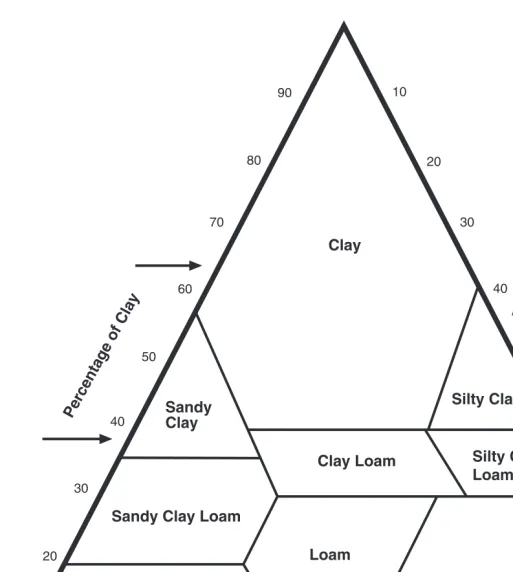
(3) 70. 30. Clay 40. Cla. y. 60. of ge Pe. 50. Silty Clay. Sandy Clay. 40. ilt. rce. nta. 50. fS. 6. 20. eo. Nutrient availability is influenced strongly by soil pH. This is especially true for phosphorus, which is most available between pH 6.0 and 7.5. Elements such as iron, aluminum, and manganese are especially soluble in acid soils. Above pH 7.0, calcium, magnesium, and sodium are increasingly soluble. Phosphorus is particularly reactive with aluminum, iron, and calcium. Thus, in acid soils, insoluble phosphorus compounds are formed with iron, aluminum, and manganese. At pH levels above 7.0, the reactivity of iron, alu-. 80. tag. Nutrient Availability and Soil pH. 10. 90. en. minum, and manganese is reduced, but insoluble phosphorus compounds containing calcium and magnesium can become a problem. To maximize phosphorus solubility and hence availability to plants, it is best to maintain soil pH within the range of 6.0 to 7.5. Overliming can result in reduced phosphorus availability just as quickly as underliming. In general, the availability of nitrogen, potassium, calcium, and magnesium decreases rapidly below pH 6.0 and above pH 8.0. Aluminum is only slightly available between pH 5.5 and pH 8.0. This is fortunate because, although plants require relatively large quantities of nitrogen, phosphorus, and potassium, aluminum in appreciable quantities can become toxic to plants. If managed properly, soil pH is a powerful regulator of nutrient availability. Manganese, zinc, and iron are most available when soil pH is in the acid range. As the pH of an acid soil approaches 7.0, manganese, zinc, and iron availability decreases and deficiencies can become a problem, especially on those soils that do not contain appreciable amounts of these elements. These micronutrients frequently must be supplemented with fertilizers when soil levels are low, when overliming has occurred, or when soil tests indicate a deficiency. There is a delicate balance between soil pH and nutrient availability. It is important that soils be tested regularly and that the pH be maintained in the recommended range to achieve maximum efficiency of soil and fertilizer nutrients. Assuming that the proper soil test-plant response calibration research has been carried out, soil testing can be an extremely valuable tool for monitoring soil fertility levels and estimating the most efficient and profitable lime and fertilizer recommendations. In recent years, soil testing has become even more important as an effective tool for helping to reduce nutrient enrichment of the environment. Maryland Cooperative Extension can provide soil testing and lime and fertilizer recommendations for citizens at a modest cost. More information about this program is available from the county Extension offices, which are listed in the telephone directory under “County Government.”. rc Pe. techniques for Maryland soils is to determine soil texture. Research has shown that, with just a few exceptions, for soils within a particular physiographic region, a positive direct relationship exists between soil texture and the CEC. Thus, as soil texture varies from coarse to fine on the Coastal Plain (for example, from sand to silt loam to loam to clay loam), CEC and buffering capacity increase. Simplified tables and equations have been developed to estimate the amount of liming material needed to achieve a desired pH goal when the current soil pH and texture are known. Another technique that some soil-testing laboratories use to develop an ag-lime recommendation is known as the lime requirement test. With this procedure, in addition to determining the normal water pH, a second pH measurement, known as the buffer pH, is required. For a normal water pH reading, the soil is allowed to equilibrate in distilled water. A pH meter is used to measure how much the soil changed the pH of the unbuffered distilled water. The buffer pH differs in that the soil is allowed to equilibrate in a specially prepared solution that has previously been buffered to a known pH. The buffer solution, as well as the soil, resists changes in pH. A pH meter is used to determine how much the soil was able to overcome the resistance of the buffer solution to a change in pH. The buffer pH technique directly reflects the soil's buffering capacity and the result can be used in a formula to calculate the amount of ag-lime required to achieve the desired change in pH.. 60. Silty Clay Loam. Clay Loam 30. 70. Sandy Clay Loam Loam. 20. 80. Silt Loam. Sandy Loam 10. 90. Loamy Sand Sand 90. Silt 80. 70. 60. 50. 40. Percentage of Sand. Figure 1. Textural classes of soils.. 3. 30. 20. 10.
(4) Also, because similar charges repel one another, some of the soluble negatively charged ions (anions), such as nitrate (NO3 ) and sulfate = (SO4 ), are not bonded to soil colloids and are more easily leached than their positively charged counterparts. Organic colloids contribute a relatively large number of negative charges per unit weight compared with the various types of clay colloids. The magnitude of the soil's electrical charge contributed by colloids is an important component of a soil's ability to retain cationic nutrients in a form available to plants.. of nonleguminous plants unless the soil has been generously manured or the crop is following a good legume forage, such as alfalfa or hairy vetch. For efficient crop production, soils low in nitrogen must be supplemented with nitrogen from fertilizers or manure. When crop residues are left to decompose in the soil, nitrogen and sulfur may become temporarily tied up. Decomposition is carried out by soil microorganisms that feed on crop residues. Nitrogen and sulfur in the decomposing residues are used to build protein in the bodies of the microorganisms. If the decomposing organic material has a high carbon nitrogen ratio (that is, a relatively low nitrogen content), the soil microorganisms will take up and use any available soil and fertilizer nitrogen for growth. This process is referred to as nitrogen immobilization. The nitrogen thus bound up becomes temporarily unavailable to plants until the microorganisms themselves die and decompose. Although the nitrogen is temporarily unavailable to plants, immobilization prevents it from being lost through leaching or volatilization. In addition to its contribution to plant nutrition, soil organic matter also helps to reduce soil erosion losses by increasing infiltration and aggregate stability. It is important that good soil organic matter levels be maintained by employing practices that result in reduced losses of this critical soil component (for example, reduced tillage, use of manures, and crop residues).. Cation Exchange Capacity The ability of a soil to retain cations (positively charged ions) in a form that is available to plants is known as cation exchange capacity (CEC). A soil's CEC depends on the amount and kind(s) of colloid(s) present. Although type of clay is important, in general, the more clay or organic matter present, the higher the CEC. The CEC of a soil might be compared to the size of a fuel tank on a gasoline engine. The larger the fuel tank, the longer the engine can operate and the more work it can do before a refill is necessary. For soils, the larger the CEC, the more nutrients the soil can supply. Although CEC is only one component of soil fertility, all other factors being equal, the higher the CEC, the higher the potential yield of that soil before nutrients must be replenished with fertilizers or manures. When a soil is tested for CEC, the results are expressed in milliequivalents per 100 grams (meq/100 g) of air-dried soil. For practical purposes, the relative numerical size of the CEC is more important than trying to understand the technical meaning of the units. In general, soils in the southern United States, where physical and chemical weathering have been more intense, have lower CEC's (1-3 meq/100 g) than soils in the northern United States, where higher CEC's are common (15-25 meq/100 g) because weathering has not been as intense. Soils in warmer climates also tend to have lower organic matter levels, and thus lower CEC's than their northern counterparts. Soils high in clay content, and especially those high in organic matter, tend to have higher CEC's than those low in clay and. Soil Colloids During physical and chemical weathering processes in which rocks, minerals, and organic matter decompose to form soil, some extremely small particles are formed. Colloidal-sized particles are so minuscule that they do not settle out when in suspension. These particles generally possess a negative charge, which allows them to attract positively charged ions known as cations. Much like a magnet, in which opposite poles attract one another, soil colloids attract and retain many plant nutrients in an exchangeable form. This ability, known as cation exchange capacity, enables a soil to attract and retain positively charged nutrients (cations) such as potassium (K+), ammonium (NH4+), hydrogen (H+), calcium (Ca++), and magnesium (Mg++).. 4. (the negative logarithm of the hydrogen ion concentration). The pH scale ranges from 0 to 14. A soil pH value of 7.0 is neutral. At pH 7.0, the hydroxyl ion [OH ] and the hydrogen ion [H+] concentrations exactly balance one another. At pH values below 7.0, soils are acidic because the [H+] ion concentration is greater than the [OH ] ion concentration. At pH values above 7.0, soils are basic because there are more [OH ] than [H+] ions. Most agricultural soils in Maryland have a pH range between 4.5 and 7.5. Although there are some exceptions, the preferred pH range for most plants is between 5.5 and 7.0. Legumes prefer higher pH's (pH values of 6.2-7.0) than do grasses (pH values of 5.8-6.5). Because the pH scale is logarithmic rather than linear, the difference in acidity between each pH value varies by a factor of 10, not 1. Therefore, a soil with a pH of 5.0 is 10 times more acid than a soil with a pH of 6.0. A soil with a pH of 4.0 will be 100 times more acid than a soil with a pH of 6.0 and 1,000 times more acid than a soil at pH 7.0. This is an extremely important factor to consider when developing liming recommendations to correct acid soils. Soil pH also reflects percent base saturation (% BS) of the CEC. This term refers to the relative number (percentage) of the CEC sites on the soil colloids that are occupied by bases such as calcium (Ca++), magnesium (Mg++), and potassium (K+). In general, at pH 7.0 the base saturation is 100 percent. By rule of thumb, for every one-half unit drop in soil pH, the % BS declines by about 15 percent (pH 6.5 = 85 percent BS, pH 6.0 = 70 percent BS, pH 5.5 = 55 percent BS, and so forth). This information can be useful to calculate the approximate amounts of available nutrients present in a soil at a given pH.. organic matter. The CEC of soils in Maryland generally ranges from 1-2 meq/100 g for coarse-textured Coastal Plain soils to as high as 12-15 meq/100 g for certain Piedmont and Mountain soils. The CEC of most medium-textured soils of the Piedmont region ranges about 8-12 meq/100 g. There are many practical differences between soils having widely different CEC's. It has already been mentioned that the inherent fertility (exchangeable nutrient content) of soils varies in direct relationship to the magnitude of the CEC. Another important CECrelated property is soil buffering capacity, that is, the resistance of a soil to changes in pH. The higher the CEC, the more resistance soil has to changes in pH. The CEC and buffering capacity are directly related to the amount of liming material required to produce a desired change in pH. Higher CEC soils require more lime than those with low CEC's to achieve the same pH change. If CEC is analogous to the fuel tank on an engine, soil pH is analogous to the fuel gauge. The gauges on both a large and a small tank might read three fourths full; but, obviously, the larger tank will contain more fuel than the smaller tank. If a soil test indicates that two soils, one with a low CEC and the other with a high CEC, have the same low pH, indicating that they both need lime, the one with the higher CEC will require more liming material to bring about the desired pH change than will the one with the lower CEC. The reason for this difference is that there will be more exchangeable acidity (hydrogen and aluminum) to neutralize in the high CEC soil than in the lower CEC soil. Thus, a soil high in clay or organic matter will require more liming material to reduce soil acidity (and raise the pH) than a low organic matter sandy soil will.. -. -. -. Ag-Lime Recommendations. Soil pH and Percent Base Saturation. To predict how much liming material (calcium and/or magnesium carbonate) will be necessary to change the pH of a soil from one level to another, other information is needed in addition to the soil's pH. It is also necessary to estimate the soil's buffering capacity, that is, the soil's ability to resist a change in pH. There are several ways to estimate a soil's buffering capacity so that a liming recommendation can be developed. One of the simplest. Soil pH is one of the most important characteristics of soil fertility because it has a direct impact on nutrient availability and plant growth. The pH scale is a logarithmic expression of hydrogen ion [H+] concentration in the soil solution. Mathematically, pH equals -log [H+]. 5.
(5) Also, because similar charges repel one another, some of the soluble negatively charged ions (anions), such as nitrate (NO3 ) and sulfate = (SO4 ), are not bonded to soil colloids and are more easily leached than their positively charged counterparts. Organic colloids contribute a relatively large number of negative charges per unit weight compared with the various types of clay colloids. The magnitude of the soil's electrical charge contributed by colloids is an important component of a soil's ability to retain cationic nutrients in a form available to plants.. of nonleguminous plants unless the soil has been generously manured or the crop is following a good legume forage, such as alfalfa or hairy vetch. For efficient crop production, soils low in nitrogen must be supplemented with nitrogen from fertilizers or manure. When crop residues are left to decompose in the soil, nitrogen and sulfur may become temporarily tied up. Decomposition is carried out by soil microorganisms that feed on crop residues. Nitrogen and sulfur in the decomposing residues are used to build protein in the bodies of the microorganisms. If the decomposing organic material has a high carbon nitrogen ratio (that is, a relatively low nitrogen content), the soil microorganisms will take up and use any available soil and fertilizer nitrogen for growth. This process is referred to as nitrogen immobilization. The nitrogen thus bound up becomes temporarily unavailable to plants until the microorganisms themselves die and decompose. Although the nitrogen is temporarily unavailable to plants, immobilization prevents it from being lost through leaching or volatilization. In addition to its contribution to plant nutrition, soil organic matter also helps to reduce soil erosion losses by increasing infiltration and aggregate stability. It is important that good soil organic matter levels be maintained by employing practices that result in reduced losses of this critical soil component (for example, reduced tillage, use of manures, and crop residues).. Cation Exchange Capacity The ability of a soil to retain cations (positively charged ions) in a form that is available to plants is known as cation exchange capacity (CEC). A soil's CEC depends on the amount and kind(s) of colloid(s) present. Although type of clay is important, in general, the more clay or organic matter present, the higher the CEC. The CEC of a soil might be compared to the size of a fuel tank on a gasoline engine. The larger the fuel tank, the longer the engine can operate and the more work it can do before a refill is necessary. For soils, the larger the CEC, the more nutrients the soil can supply. Although CEC is only one component of soil fertility, all other factors being equal, the higher the CEC, the higher the potential yield of that soil before nutrients must be replenished with fertilizers or manures. When a soil is tested for CEC, the results are expressed in milliequivalents per 100 grams (meq/100 g) of air-dried soil. For practical purposes, the relative numerical size of the CEC is more important than trying to understand the technical meaning of the units. In general, soils in the southern United States, where physical and chemical weathering have been more intense, have lower CEC's (1-3 meq/100 g) than soils in the northern United States, where higher CEC's are common (15-25 meq/100 g) because weathering has not been as intense. Soils in warmer climates also tend to have lower organic matter levels, and thus lower CEC's than their northern counterparts. Soils high in clay content, and especially those high in organic matter, tend to have higher CEC's than those low in clay and. Soil Colloids During physical and chemical weathering processes in which rocks, minerals, and organic matter decompose to form soil, some extremely small particles are formed. Colloidal-sized particles are so minuscule that they do not settle out when in suspension. These particles generally possess a negative charge, which allows them to attract positively charged ions known as cations. Much like a magnet, in which opposite poles attract one another, soil colloids attract and retain many plant nutrients in an exchangeable form. This ability, known as cation exchange capacity, enables a soil to attract and retain positively charged nutrients (cations) such as potassium (K+), ammonium (NH4+), hydrogen (H+), calcium (Ca++), and magnesium (Mg++).. 4. (the negative logarithm of the hydrogen ion concentration). The pH scale ranges from 0 to 14. A soil pH value of 7.0 is neutral. At pH 7.0, the hydroxyl ion [OH ] and the hydrogen ion [H+] concentrations exactly balance one another. At pH values below 7.0, soils are acidic because the [H+] ion concentration is greater than the [OH ] ion concentration. At pH values above 7.0, soils are basic because there are more [OH ] than [H+] ions. Most agricultural soils in Maryland have a pH range between 4.5 and 7.5. Although there are some exceptions, the preferred pH range for most plants is between 5.5 and 7.0. Legumes prefer higher pH's (pH values of 6.2-7.0) than do grasses (pH values of 5.8-6.5). Because the pH scale is logarithmic rather than linear, the difference in acidity between each pH value varies by a factor of 10, not 1. Therefore, a soil with a pH of 5.0 is 10 times more acid than a soil with a pH of 6.0. A soil with a pH of 4.0 will be 100 times more acid than a soil with a pH of 6.0 and 1,000 times more acid than a soil at pH 7.0. This is an extremely important factor to consider when developing liming recommendations to correct acid soils. Soil pH also reflects percent base saturation (% BS) of the CEC. This term refers to the relative number (percentage) of the CEC sites on the soil colloids that are occupied by bases such as calcium (Ca++), magnesium (Mg++), and potassium (K+). In general, at pH 7.0 the base saturation is 100 percent. By rule of thumb, for every one-half unit drop in soil pH, the % BS declines by about 15 percent (pH 6.5 = 85 percent BS, pH 6.0 = 70 percent BS, pH 5.5 = 55 percent BS, and so forth). This information can be useful to calculate the approximate amounts of available nutrients present in a soil at a given pH.. organic matter. The CEC of soils in Maryland generally ranges from 1-2 meq/100 g for coarse-textured Coastal Plain soils to as high as 12-15 meq/100 g for certain Piedmont and Mountain soils. The CEC of most medium-textured soils of the Piedmont region ranges about 8-12 meq/100 g. There are many practical differences between soils having widely different CEC's. It has already been mentioned that the inherent fertility (exchangeable nutrient content) of soils varies in direct relationship to the magnitude of the CEC. Another important CECrelated property is soil buffering capacity, that is, the resistance of a soil to changes in pH. The higher the CEC, the more resistance soil has to changes in pH. The CEC and buffering capacity are directly related to the amount of liming material required to produce a desired change in pH. Higher CEC soils require more lime than those with low CEC's to achieve the same pH change. If CEC is analogous to the fuel tank on an engine, soil pH is analogous to the fuel gauge. The gauges on both a large and a small tank might read three fourths full; but, obviously, the larger tank will contain more fuel than the smaller tank. If a soil test indicates that two soils, one with a low CEC and the other with a high CEC, have the same low pH, indicating that they both need lime, the one with the higher CEC will require more liming material to bring about the desired pH change than will the one with the lower CEC. The reason for this difference is that there will be more exchangeable acidity (hydrogen and aluminum) to neutralize in the high CEC soil than in the lower CEC soil. Thus, a soil high in clay or organic matter will require more liming material to reduce soil acidity (and raise the pH) than a low organic matter sandy soil will.. -. -. -. Ag-Lime Recommendations. Soil pH and Percent Base Saturation. To predict how much liming material (calcium and/or magnesium carbonate) will be necessary to change the pH of a soil from one level to another, other information is needed in addition to the soil's pH. It is also necessary to estimate the soil's buffering capacity, that is, the soil's ability to resist a change in pH. There are several ways to estimate a soil's buffering capacity so that a liming recommendation can be developed. One of the simplest. Soil pH is one of the most important characteristics of soil fertility because it has a direct impact on nutrient availability and plant growth. The pH scale is a logarithmic expression of hydrogen ion [H+] concentration in the soil solution. Mathematically, pH equals -log [H+]. 5.
(6) 70. 30. Clay 40. Cla. y. 60. of ge Pe. 50. Silty Clay. Sandy Clay. 40. ilt. rce. nta. 50. fS. 6. 20. eo. Nutrient availability is influenced strongly by soil pH. This is especially true for phosphorus, which is most available between pH 6.0 and 7.5. Elements such as iron, aluminum, and manganese are especially soluble in acid soils. Above pH 7.0, calcium, magnesium, and sodium are increasingly soluble. Phosphorus is particularly reactive with aluminum, iron, and calcium. Thus, in acid soils, insoluble phosphorus compounds are formed with iron, aluminum, and manganese. At pH levels above 7.0, the reactivity of iron, alu-. 80. tag. Nutrient Availability and Soil pH. 10. 90. en. minum, and manganese is reduced, but insoluble phosphorus compounds containing calcium and magnesium can become a problem. To maximize phosphorus solubility and hence availability to plants, it is best to maintain soil pH within the range of 6.0 to 7.5. Overliming can result in reduced phosphorus availability just as quickly as underliming. In general, the availability of nitrogen, potassium, calcium, and magnesium decreases rapidly below pH 6.0 and above pH 8.0. Aluminum is only slightly available between pH 5.5 and pH 8.0. This is fortunate because, although plants require relatively large quantities of nitrogen, phosphorus, and potassium, aluminum in appreciable quantities can become toxic to plants. If managed properly, soil pH is a powerful regulator of nutrient availability. Manganese, zinc, and iron are most available when soil pH is in the acid range. As the pH of an acid soil approaches 7.0, manganese, zinc, and iron availability decreases and deficiencies can become a problem, especially on those soils that do not contain appreciable amounts of these elements. These micronutrients frequently must be supplemented with fertilizers when soil levels are low, when overliming has occurred, or when soil tests indicate a deficiency. There is a delicate balance between soil pH and nutrient availability. It is important that soils be tested regularly and that the pH be maintained in the recommended range to achieve maximum efficiency of soil and fertilizer nutrients. Assuming that the proper soil test-plant response calibration research has been carried out, soil testing can be an extremely valuable tool for monitoring soil fertility levels and estimating the most efficient and profitable lime and fertilizer recommendations. In recent years, soil testing has become even more important as an effective tool for helping to reduce nutrient enrichment of the environment. Maryland Cooperative Extension can provide soil testing and lime and fertilizer recommendations for citizens at a modest cost. More information about this program is available from the county Extension offices, which are listed in the telephone directory under “County Government.”. rc Pe. techniques for Maryland soils is to determine soil texture. Research has shown that, with just a few exceptions, for soils within a particular physiographic region, a positive direct relationship exists between soil texture and the CEC. Thus, as soil texture varies from coarse to fine on the Coastal Plain (for example, from sand to silt loam to loam to clay loam), CEC and buffering capacity increase. Simplified tables and equations have been developed to estimate the amount of liming material needed to achieve a desired pH goal when the current soil pH and texture are known. Another technique that some soil-testing laboratories use to develop an ag-lime recommendation is known as the lime requirement test. With this procedure, in addition to determining the normal water pH, a second pH measurement, known as the buffer pH, is required. For a normal water pH reading, the soil is allowed to equilibrate in distilled water. A pH meter is used to measure how much the soil changed the pH of the unbuffered distilled water. The buffer pH differs in that the soil is allowed to equilibrate in a specially prepared solution that has previously been buffered to a known pH. The buffer solution, as well as the soil, resists changes in pH. A pH meter is used to determine how much the soil was able to overcome the resistance of the buffer solution to a change in pH. The buffer pH technique directly reflects the soil's buffering capacity and the result can be used in a formula to calculate the amount of ag-lime required to achieve the desired change in pH.. 60. Silty Clay Loam. Clay Loam 30. 70. Sandy Clay Loam Loam. 20. 80. Silt Loam. Sandy Loam 10. 90. Loamy Sand Sand 90. Silt 80. 70. 60. 50. 40. Percentage of Sand. Figure 1. Textural classes of soils.. 3. 30. 20. 10.
(7) of each size present. The largest soil particles are referred to as sand, intermediate particles as silt, and the smallest particles as clay. Soil structure refers to how these soil particles are bound together into larger particles called aggregates.. Soil Structure Soil structure refers to the manner and stability with which individual sand, silt, and clay particles are bound together into units called aggregates. Generally, iron and organic matter act as adhesives to bind the soil particles into stable aggregates. Soil aggregation is an important characteristic of soil fertility; the greater the degree of aggregation, the better the soil “tilth” and the more pore space available to supply air and water to plant roots. In addition to the many small pores within each aggregate, there are many large pores between aggregates that facilitate moisture retention and availability. Organic matter is one of the most important factors contributing to stable soil aggregation. Cultural practices that increase soil organic matter generally also improve soil structure and tilth. Tillage is generally considered to be the major factor responsible for destroying soil structure, as intensive tillage results in significantly reduced levels of soil organic matter.. Soil Texture Based on the mixture of sand, silt, and clay particles, 12 distinct soil textural classes have been defined. A textural triangle showing these textural classes is presented in Figure 1. If a soil contains primarily sand-sized particles, it is defined as a sand. If it has less sand and more silt, the texture may be a loamy sand or a sandy loam. Increasing amounts of clay could result in sandy clay loam or sandy clay. If a soil has approximately equal proportions of sand, silt, and clay, it is classified as a clay loam. Soil texture directly influences the amount of pore space in a given soil—the smaller the soil particles, the more total pore space. Thus, a soil with a high percentage of clay particles contains considerably more pore space than a soil with a high percentage of silt or sand particles. The more pore space available in a soil, the more air and water the soil can retain. However, because a fine-textured soil might have more total pore space than its coarse-textured counterpart does not necessarily mean that the finer textured soil will contain proportionately more available moisture. The smaller the pore spaces, the more tightly soil moisture is retained. At field capacity, a clay soil will hold more moisture than a sandy soil, but a clay soil also holds more moisture at the permanent wilting point than a sandy soil. The amount of available water in a soil is the difference between the amount of water retained at field capacity and the amount retained at the permanent wilting point. There is no constant relationship between soil texture and available soil moisture. Some of the moisture retained in a finetextured soil is unavailable to plants because capillary forces retain it more tightly. More water is available in a coarse-textured soil for a short period of time. But because capillary forces are much weaker in the larger pores, the force of gravity causes sandy soils to lose moisture more rapidly than their finer textured counterparts.. Soil Organic Matter Physically, ideal soils are composed of approximately one-half solid material and one-half pore space. In Maryland soils, most of the solid material (approximately 95 to 98 percent) is mineral in nature. The remaining 2 to 5 percent of the solid material is organic matter. Soil organic matter consists primarily of decayed or decaying plant and animal residues and is a very important soil component. It helps to (1) improve soil's physical condition, (2) increase water infiltration and water holding capacity, (3) improve soil tilth by enhancing soil aggregate stability, (4) decrease soil erosion losses, (5) supply available plant nutrients (nitrogen, phosphorus, and sulfur), and (6) augment the soil's cation exchange capacity. On the average, soil organic matter contains about 5 percent nitrogen. Unfortunately, this nitrogen is tied up in organic compounds and is not immediately available to plants. As organic matter breaks down, or mineralizes, nitrogen is released slowly to plant roots. Usually not enough nitrogen is released during the growing season to support the needs. 2. 6. Soil structure refers to the binding of sand, silt, and clay particles into soil aggregates. Soil pore size and the amount of soil water and air retained are influenced by soil structure. 7. Soil organic matter contributes to soil fertility and tilth by contributing nutrients, increasing CEC, and cementing soil particles into stable aggregates. For highest productivity, soils should be managed in such a way that organic matter levels are maintained or improved and not depleted. 8. It pays to become familiar with soil resources. Soil tests for pH, texture, calcium, magnesium, phosphorus, potassium, and organic matter should be conducted on a regular basis. Other special soil tests are also available to diagnose more difficult soil fertility problems. 9. To be useful, soil test results and lime and fertilizer recommendations must be calibrated scientifically to plant response. 10. Maryland Cooperative Extension offers soil testing and lime and fertilizer recommendations for a modest cost. For more information about this program, contact your county Extension office (listed in the county government section of the telephone directory).. Summary The following soil fertility and plant nutrition principles related to soil properties must be considered carefully for optimum soil management: 1. Manage nitrogen from fertilizer, manure, and sludge carefully to maximize efficiency and reduce potential environmental enrichment. 2. Adjust soil pH to the recommended level to achieve maximum balanced availability of plant nutrients. Base lime recommendations on a calibrated soil test that measures pH and buffering capacity. 3. Cation exchange capacity (CEC) represents the soil's storehouse of essential plant nutrients and is higher in finer textured soils than in coarser textured soils. CEC is also linked directly to soil pH buffering and the determination of lime requirement. 4. Percent base saturation (% BS) is directly related to soil pH and represents the relative availability of many positively charged nutrients (cations) such as calcium, magnesium, and potassium. 5. Soil texture refers to the proportions of sand, silt, and clay in a soil and affects leaching, nutrient and moisture retention, and aeration.. 7.
(8) Fact Sheet 640. Basic Principles of Soil Fertility II: Soil Properties Soil fertility and plant nutrition are important components in crop production. In addition to providing basic physical support for plants, productive, fertile soils also supply moisture and air to the roots and act as a reservoir for available plant nutrients. The management of soils is often taken for granted and sometimes neglected altogether. This uninformed perspective ultimately may cost the farmer many dollars in lower yields and reduced fertilizer efficiency. Improperly managed nutrients also may create serious environmental problems if they are allowed to contaminate surface and ground water. To better understand the importance of soil fertility and how to manage soils more efficiently, growers and their advisors need to become more familiar with the essential plant nutrients and to improve their understanding. Basic Principles of Soil Fertility II: Soil Properties by V. Allan Bandel Extension Soils Specialist Bruce R. James Assistant Professor, Soil Chemistry John J. Meisinger Adjunct Professor, Soil Fertility Department of Agronomy University of Maryland, College Park. Issued in furtherance of Cooperative Extension work, acts of May 8 and June 30, 1914, in cooperation with the U.S. Department of Agriculture, University of Maryland, College Park, and local governments. Thomas A. Fretz, Director of Maryland Cooperative Extension, University of Maryland. The University of Maryland is equal opportunity. The University’s policies, programs, and activities are in conformance with pertinent Federal and State laws and regulations on nondiscrimination regarding race, color, religion, age, national origin, sex, and disability. Inquiries regarding compliance with Title VI of the Civil Rights Act of 1964, as amended; Title IX of the Educational Amendments; Section 504 of the Rehabilitation Act of 1973; and the Americans With Disabilities Act of 1990; or related legal requirements should be directed to the Director of Personnel/Human Relations, Office of the Dean, College of Agriculture and Natural Resources, Symons Hall, College Park, MD 20742.. P92/R2002. of such important soil properties as texture, structure, organic matter, anion and cation retention, cation exchange capacity (CEC), base saturation (BS), and pH (acidity). In addition to learning more about the basic components of soil fertility, it is also important to understand the relationships that exist among these properties. These topics and others are discussed in this Fact Sheet and its companion, “Basic Principles of Soil Fertility I: Plant Nutrients.”. Soil Texture and Structure Soil texture and soil structure are often confused with one another; they are not the same. Soil texture refers to the size of the individual soil particles and the relative quantity.
(9)
Figure
Related documents
3: The effect of PTU-exposure (1.5, 3, and 6 ppm) and levothyroxine therapy (Hypo 6 ppm + Levo) on the distance moved (A) and the escape latency (B) of the male
and purified compounds against murine fibroblast cells (L929) and African green monkey kidney cells (Vero), the cell lines were incubated with different doses of two-fold
Мөн БЗДүүргийн нохойн уушгины жижиг гуурсанцрын хучуур эсийн болон гөлгөр булчингийн ширхгийн гиперплази (4-р зураг), Чингэлтэй дүүргийн нохойн уушгинд том
The high level of coastal litter in the study region adds to the findings of the Report on the State of the Mediterranean Marine and Coastal Environment, which
Sponge (Porifera) from the Mediterranean Coast of Turkey (Levantine Sea, eastern Mediterranean), with a Checklist of Sponges from the Coasts of Turkey..
We prospectively investigated the effectiveness and safety of a 1:1 dose switch from sevelamer hydrochloride to BXL in stable hemodialysis patients, including the effects of the
Although examination of Ks and Ko values in different conditions do not show much of a trend among themselves, the values suggest similar order of magnitude among Ks or Ko
Out of 121 patients, 4 (3.3%) develop VT, 3 (2.47%) develop VF and 5(4.13%) develop complete heart block and there was no significant difference regarding VT, VF and
