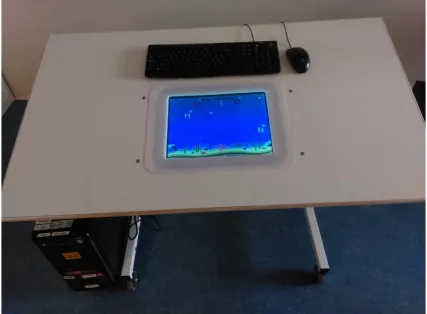
Systems development for diagnostics
and dexterity rehabilitation by
means of touchscreen technology
Student:
Michele Confalonieri
Tutor:
Index
1 Introduction ... 5
2 Problem definition ... 7
2.1 Rehabilitation and diagnostic in current society ... 7
2.2 Definition of the disease of the people involved in the project 9 2.2.1 Parkinson ... 9
2.2.2 Right Hemiplegia ... 11
2.2.3 Left Hemiplegia ... 12
2.2.4 Injury to the peripheral nerves... 13
2.2.5 Multiple Sclerosis ... 14
2.2.6 Ataxia ... 15
2.2.7 Cognitive disorder ... 16
2.3 Correlation of neurocognitive and physical areas ... 16
2.4 Force concept in the rehabilitation ... 20
3 Exergames introduction ... 24
3.1 Definition ... 24
3.2 Application fields ... 26
3.3 Some exemple ... 26
4 Clinical requirements ... 28
4.1 Currently methods and device used ... 28
4.1.1 The initial situation in the hospital ... 28
4.1.2 The new hospital ... 30
4.2 Description of the requirements of the medical staff and of the patients ... 31
5.1 Definition of technical specification ... 34
5.2 Definition of software specification ... 36
5.3 Equipment’s ... 37
5.3.1 Force Panel ... 37
5.3.2 LCD display ... 37
5.3.3 Touch screen sensor ... 37
5.3.4 Load cell ... 39
5.3.5 Amplification module ... 41
5.3.6 Base plate, display case and carter ... 42
5.3.7 User accessibility ... 45
5.3.8 Definition of the development environment ... 48
5.3.9 Calibration of the Force Panel ... 49
6 Tests development ... 54
6.1 Patients' data management ... 55
6.1.1 Tests managements ... 57
6.2 Test implementation ... 60
6.3 “Apprendimento Immagini” test development ... 62
6.3.1 Objective ... 62
6.3.2 Neurocognitive and physical areas involved ... 63
6.3.3 Settings ... 63
6.3.4 Game environment ... 65
6.3.5 Measured parameters ... 66
6.4 “Giu dal tubo” test development ... 67
6.4.5 Measured parameters ... 72
7 Rehabilitation program definition ... 73
7.1 Standardized tests for the patients evaluation ... 73
7.2 Procedure description ... 77
7.3 ... 80
7.4 ... 80
7.5 Structure of data for the analysis ... 84
7.5.1 Bouncing bubble ... 84
7.5.2 Magma in the Box: ... 86
7.5.3 Biliard ball: ... 88
7.5.4 Memory Card Test ... 89
7.6 Exemple of elaboration of data ... 90
8 Future works ... 92
8.1 Leapmotion ... 92
8.2 Oculus & Google cardboard ... 93
8.3 Intel RealSense ... 96
8.4 Augmented reality in the medical rehabilitation ... 96
9 Conclusion ... 100
1
Introduction
This thesis stems from the need to implement the existing technology in the rehabilitation. Smartphones, touch screen technology, apps, which are a common part of our daily life don’t find an application in clinical practice.
The aim of this work is to verify the effectiveness of using this technology both in the hospital and outside.
The exergames we developed can be played on usual touchscreen devices, on personal computers and on the custom device built in our laboratory.
The device used during our experimentation is now installed in a medical facility with other latest generation medical devices like the Armeo and two different types of exoskeletons.
In the first part of this project we focused on developing some exergames oriented to the rehabilitation of persons affected by strokes and in the characterization of people affected by Parkinson. In the second part, because of the strong correlation between physical activity and neurocognitive functions we decided to use the device since the very beginning of the rehabilitation process, developing some kind of exergames used also to monitor patients during this phase.
Thanks to the collaboration with the medical staff we analysed and summarized the macro areas and the neurocognitive functions involved during the rehabilitation process.
To develop the exergames based on what we decided with the medical staff we used the game engine called Unity3D and we wrote the code of the exergames in C#.
After a first test phase in which the medical staff tried the exergames and gave us a feedback, we fixed the bugs and decided to integrate all the exergames in a common platform.
Then, we defined an official procedure for the rehabilitation program based on this new method in order to submit it to the ethics committee.
In a second phase, the medical staff selected the group of patients to be assigned to the test program, and defined some useful indicators about the neurocognitive functions involved. Finally, to validate the efficiency of this protocol, patients need to executed the exergames for a certain time, after which the medical staff measured the indicators.
In this way we were able to validate the efficiency of the exergames and of the device installed.
2
Problem
definition
2.1 Rehabilitationanddiagnosticincurrentsociety
According to (Clerici e Gherardi 2012/2013), rehabilitation is a problem solving and educational process in which the aim is to increase the quality of life of a person both in physical, functional, social and emotional aspect with less restriction on his operative choice. Physical therapy is a medical branch based on physical energy.
In the first half of last century with rehabilitation it was intended physical therapy, a method with proof evidence of efficacy and without specific indication on how to do it. Then with kinesitherapy and specific procedure for the diagnostic and prognosis the physical therapy became “physical medicine. (Bocacrdi, La riabilitazione oggi,che cosa,dove,chi 2010)
In an article written after Jesy conference about the impact of the new technology in the Governance Rehabilitation the author said that though the absence of valid results on technological point of view the application of this technological aspects by the medical staff validate the effectiveness of the this device in the rehabilitation area. The author assert that now it is the task of scientific research to identify the mechanism behind this functional therapy and to define which are the appropriate method of administration.
The article continue and said that in the conference it was affirmed that in according with this prospective of efficacy it is necessary that these procedures became a standard and all the people should be able to use that without any kind of discrimination also by money aspect.
According to research by Andersson et al. (2003) the patient normally makes good progress during the beginning of the rehabilitation program when there are regular meetings and practice sessions with the physiotherapist/ occupational therapist (PT/OT). The problems often begin when the patient is supposed to continue their rehabilitation at home and on their own. Lack of motivation due to boredom and lack of support from family and friends can make the rehabilitation progress slow down. According to Broeren (2002) the use of meaningful and rewarding activities has been shown to improve the patient’s motivation to practice. (Lövquist e Dreifaldt 2006).
In the article the authors said that According to (Carr e Shepherd 2003) computer games are likely to be increasingly used in training for various aspects of upper-limb movement. They state that the use of a game focuses attention on the outcome of the movement as opposed to the movement itself. The motivating effects of being an active participant on an interesting task may be powerful facilitators in the rehabilitative process.
In her article about phsicolgy of the handicap (Mottareale s.d.) said that diagnose a disability is not like diagnose an illness. So for the disability it is necessary to made a functional diagnosis in which the doctor analyse the deficit and the residual potential of the patient in order to design the right therapy.
The functional diagnosis is made by a staff composed by:
‐ A Doctor who made medical diagnosis to identify the causes of
disability
‐ A Psychologist who made a diagnostic interview using some
kind of test
‐ A social worker who investigate on personal relation between
‐ Educators which carry out investigation in order to identify an
educational plan for each person
2.2 Definitionofthediseaseofthepeopleinvolvedintheproject
In this party we speak about the possible diseases of the person involved in this project. I quote what one of the doctor who supported me during this project said when I asked him some advice on the disease that I’m going to explain.
“You ask me to give a neurology treaty…”
What I’m going to do here after is a brief introduction to the pathologies involved in the project.
Neurodegenerative diseases such as Alzheimer, Parkinson, Huntington’s disease, Amyotrophic Lateral Sclerosis (SLA ), are diseases characterized by a slow and progressive loss of one or more function of nervous system. This kind of disease until now are treated with poor results by using only symptomatic drugs.
The number of person affected by neurodegeneration it’s dramatically high. The Alzheimer affects about 600,000 people in Italy and 5 million in the world. This number is expected to increase in absence of a valid therapy due to the increase of the elderly people which are the people mostly affected by this kind of disease. Person affected by Parkinson in Italy are more than 250,000 and like Alzheimer over 65 years of age the incidence increase significantly. (Di Pietro s.d.)
2.2.1 Parkinson
Parkinson’s involves the malfunction and death of vital nerve cells in the brain, called neurons. Parkinson's primarily affects neurons in an area of the brain called the substantia nigra. Some of these dying neurons produce dopamine, a chemical that sends messages to the part of the brain that controls movement and coordination. As PD progresses, the amount of dopamine produced in the brain decreases, leaving a person unable to control movement normally. cit[http://www.pdf.org/about_pd]
The specific group of symptoms that an individual experiences varies from person to person. Primary motor signs of Parkinson’s disease include the following.
tremor of the hands, arms, legs, jaw and face. This type of
tremor is noticeable if the person is at rest and it is reduced when he perform a specific task. This disease has been observed when the person affected by Stroke use the Force Panel, in fact while he performing the exercise like dragging some figure with the finger he tends to reduce the tremor in the hand.
bradykinesia or slowness of movement
rigidity or stiffness of the limbs and trunk
Both man and women could be affected by Parkinson disease
2.2.2 Right Hemiplegia
Hemiplegia is a condition that affect one side of the body and this is a results of the ictus. In this case the disease affect the left side of the brain.
analytical skills, problems with chronology (in order of time, cause and effect), reduced timing and speed skills, left and right confusion, difficulty in dealing with numbers, understanding numbers and money, slow, shows some insecure, anxious and withdrawn behaviour, risk of depression, chance of changing moods, easily overwhelmed by emotions.
Is it impossible to associate one dysfunction to one side or the other of the brain but in most case there some problem associated to one side of the brain injured.
2.2.3 Left Hemiplegia
Like for the right Hemiplegia is a condition that affect one side of the body and this is a results of the ictus. In this case usually the person injured show this symptoms:
movement disorders
numbness or paralysis on the left side of the body
impaired vision on the left side of both eyes. As if both glasses
on the left side have been taped off (hemianopia)
not realizing that the left side of the body or space exists
(neglect)
the sense of space and time can be bad giving someone depth, shape, colour and size cannot assess and lost. Spatial
awareness problems
visuospatial problems
often someone has little insight into his own behaviour,
problems and limitations (anosognosia)
less understanding of (he or she does not 'understand') social
situations
language is often taken literally and jokes and underlying
messages are not easily understood
difficulty understanding humour
difficult to estimate what the other emotion in the voice
explains as anger, relief, sadness, joy (prosody)
recognizing faces can be bad (prosopagnosia)
difficulty in seeing the whole
do not know how one should dress in what order (apraxia)
fast, impulsive behaviour, and sometimes inappropriate
behaviour
sometimes little consideration for others
overestimating him / herself
reduced self-control
easily aroused
reduced disease understanding
2.2.4 Injury to the peripheral nerves
The radial nerve runs down the underside of the arm and controls movement in the triceps (muscle located at the back of the upper arm), responsible for extending the wrist and fingers, and controls sensation in a portion of the hand.
Injuries to the radial nerve are called either radial neuropathy or radial nerve palsy. Injury can occur as a result of physical trauma, infection, or exposure to toxins.
2.2.5 Multiple Sclerosis
Multiple sclerosis (MS) is an unpredictable, often disabling disease of the central nervous system that disrupts the flow of information within the brain, and between the brain and body. (nationalmssociety s.d.)
2.2.6 Ataxia
2.2.7 Cognitive disorder
Cognitive disorders are a category of mental health disorders that primarily affect learning, memory, perception, and problem solving, and include amnesia, dementia, and delirium. While anxiety disorders, mood disorders, and psychotic disorders can also have an effect on cognitive and memory functions, the DSM-IV-TR does not consider these cognitive disorders, because loss of cognitive function is not the primary (causal) symptom.[1] Causes vary between the different types of disorders but most include damage to the memory portions of the brain.[2][3][4] Treatments depend on how the disorder is caused. Medication and therapies are the most common treatments; however, for some types of disorders such as certain types of amnesia, treatments can suppress the symptoms but there is currently no cure.
(wikipedia, https://en.wikipedia.org/wiki/Cognitive_disorder s.d.)
2.3 Correlationofneurocognitiveandphysicalareas
Cognitive Rehabilitation Therapy (CRT) is the process of relearning cognitive skills that have been lost or altered as a result of damage to brain cells/chemistry. If skills cannot be relearned, then new ones have to be taught to enable the person to compensate for their lost cognitive functions. The process of CRT comprises 4 components:
Education about cognitive weaknesses and strengths. The focus
here is on developing awareness of the problem.
Process Training. This refers to the development of skills
through direct retraining or practicing the underlying cognitive skills. The focus here is on resolving the problem.
Strategy Training. This involves the use of environmental,
Functional Activities Training. This involves the application of the other three components in everyday life. The focus here is on real life improvements.
The Brain Injury Interdisciplinary Special Interest Group (BI-ISIG) of the American Congress of Rehabilitation Medicine defines cognitive rehabilitation therapy to be a:
(ConnorB, et al. s.d.) "systematic, functionally-oriented service of therapeutic cognitive activities, based on an assessment and understanding of the person's brain-behaviour deficits." "Services are directed to achieve functional changes by (1) reinforcing, strengthening, or re-establishing previously learned patterns of behaviour, or (2) establishing new patterns of cognitive activity or compensatory mechanisms for impaired neurological systems" (Harley, et al., 1992, p.63).
(www.societyforcognitiverehab.org s.d.)
The pathology that could benefit from the cognitive rehabilitation therapy include Stroke, Multiple sclerosis, cognitive problems, etc. In his book “Cognitive Rehabilitation Therapy for Traumatic Brain Injury” the autor said that tahnks to the evolution by the society could help to survive to alot of people affected from various type of disabilities, like injuried soldiers or people affected by stroke.
Clinicians and researchers develop a lot of therapy in order to recover the function affected by the disease. In his book he speak also about the relation with the physical and neurocognitive during the rehabilitation process. The clinicians and researchers saw the need to provide cognitive as well as physical rehabilitation.
As shown in some studies, neurocognitive deficits, make less effective the rehabilitation process, it is important that the patient and doctor are able to communicate with each other and in particular it is essential that the patient is capable of understanding and interpreting the instructions of the doctor .
Stroke can cause impairments of comprehension, memory, visual recognition, attention, and sequencing of actions that can have profound effects on physical functioning. To benefit from physical rehabilitation patients must be able to understand the therapist’s commands, remember instructions, recognize physical objects in the environment, attend equally to both sides of space, maintain arousal levels sufficiently to co-operate throughout a treatment session and continue to utilize what the therapist has taught in their everyday lives (Riddoch et al, 1995). If the aim of rehabilitation is to optimize treatment outcomes then all factors influencing these outcomes need to be addressed, including cognitive impairments, in designing effective systems for intervention. (ConnorB, et al. s.d.)
In recent study researcher try to use this technology also for neurocognitive rehabilitation, in this case we found great evidence of interaction of cognitive and physical area during rehabilitation programs.
In his work Connor use a joystick with force feedback associated with the errorless learning approach in order to demonstrate that the rehabilitation of the person affected by stroke.
He investigate investigated the effectiveness of haptic guided EL compared to trial and error (errorful: EF) learning on a perceptual motor task with twelve patients who had visuoperceptual deficits following stroke.
MIT-MANUS, for upper limb rehabilitation has been realized of people affected by stroke.
In this paper the author show the implementation of a new version of the previous device, but in our point of view what is interested is that already in 1991 the researcher evidentiate that the brain is able to In his article the author presents a new version of the device, but what is interesting is that in 1991 it became evident that the human brain is capable of self-reorganization or plasticity. Afferent and efferent limb stimulation can lead to synaptogenesis and the re-establishment of the neural pathways that control volitional movement, potentially leading to impairment reduction, added functional capabilities, and reduced disabilities. (Krebs, et al. 2007). In an article Brummel (Brummel, et al. 2012) proposes a new protocol with the intent to show how in a rehabilitation program is important to involve both the physical area that cognitive.
In a 2006 article, Smeets (Smeets et al. 2006), concludes that a rehabilitation protocol improves functions affected by disease. In his study, the group of patients waiting for a period of 10 weeks before starting a rehabilitation program shows less significant improvements compared to the other two groups that start immediately the rehabilitation. The author does not show differences instead by neurocognitive point of view and physical.
Within the project are defined 4 groups of patients:
WL: group of patients who have to wait 10 weeks before
starting rehabilitation
APT group of patients receiving a physical rehabilitation
treatment
CBT: group of patients who received a cognitive rehabilitation
At the end of the program are highlighted big differences between the first group and the other, while the other three groups do not present particular differences..
2.4 Forceconceptintherehabilitation
The use of devices in which the parameter of the force exerted by the patient during the execution of the exercises is still an area of rehabilitation relatively unexplored.
While the spread of personal computers before, and touchscreen devices such as smartphones and tablet then, gave the opportunity for serious games to find increasing space in the field of rehabilitation, the force measurements and the development of interfaces based on this is still mostly in the experimental phase.
In literature we found device like robotic arm and joystick with force feedback used for the rehabilitation of neurocognitive and physical function of people affected mostly by Strokes.
Connor (Connor, et al. 2002) use an errorless learning therapy, he use an active force feedback joystick to guide the patients during the execution of the test.
In another article the authors try out a device capable of generating a force feedback on the patient during the execution of exercises which simulate the activities of normal daily reality
(The Hong Kong Polytechnic University 2014)
From a theoretical point of view, this work seeks to test the following hypotheses: (i) force feedback regulates the smoothness, accuracy, and duration of the subject’s movement and (ii) inclusion of science learning in the exercise increases participants’ interest in the tasks. (Cappa, et al. 2013).
3
Exergames
introduction
In this chapter we are going to introduce the concept of exegaming. A great part of our work is about developing a new sets of exercise based on this type of tests.
3.1 Definition
At a glance, “Serious Games” appear to be a recent phenomenon. A market study shows that the worldwide Serious Games market is worth 1.5 billion € in 2010 (J. Alvarez, V. Alvarez, Djaouti, & Michaud, 2010). If we consider this statistic as an indicator of the success of “Serious Games”, we can question whether they really represent the “first attempt” at using video games for serious purposes.
The terms evolved to designate “games that do not have entertainment, enjoyment or fun as their primary purpose” (Michael & Chen, 2005). (Djaouti, et al. s.d.)
The current definition of “Serious Games” appears to follow the lead set by Sawyer & Rejeski (2002).
A serious game is an interactive computer application, with or
without a significant hardware component, that has a challenging goal;
is fun to play and/or engaging;
incorporates some concept of scoring;
imparts to the user a skill, knowledge, or attitude that can be
applied in the real world.
principles and learn constructive principles [Papert80]. With LOGO, children can create complex geometric shapes by instructing a mechanical or on-screen turtle to move iteratively in specified directions for specific distances. See the LOGO foundation Web site, el.media.mit.edu/logo-foundation, for examples of games written in LOGO.
The genesis of the commercial video game industry was the development of simulators for the military. Initial accounts of serious gaming and the modern military date back to the late 1920s, when Edwin Link built the first flight simulator [Kelly70]. During WW II, approximately 10,000 Link Blue Boxes were produced and used to train a half-million Allied aviators. Following the war, Link's company continued to develop simulators for the military, NASA, and the commercial airline industry.
Medicine is second only to the military in directing the evolution of serious games. The reasons for this influence include a tradition of biomedical modeling and simulation, significant government funding for research into computer-based instruction for physicians, and the attractiveness of the lucrative medical market to hardware vendors and software developers (Bergeron 2006)
In his article Djaouti speak about seriousgame and healthcare, in 1992 Raya System design a game in order to teach to the kids how to manage the diabet.
So the term seriousgames is not so new in the vocabulary as showed now, but now the increase of new technology and the easy tool realized to give to the user the possibility to realize their own application increase the number of seriousgames.
3.2 Applicationfields
For what concern our interested area the seriousgames are applied in a lot of different type of disease like Stroke, Multiple sclerosis, and many different type of cognitive disease.
In 2006 Lövquist and Dreifaldt presented an application based on an immersive workbench and a haptic device, designed to motivate
stroke patients in their reha-bilitation of their arm. (Dömők, et al.
s.d.)
During our project we analyse some seriousgames taken from the
website http://www.retiaperte.it/eserciziperlamente/ in which a
speech therapist collect a series of test used to rehabilitate person affected by affected by cognitive disease.
3.3 Someexemple
They developed a virtual labyrinth system. The Labyrinth contributes to an overall pleasant and encouraging exercise experience. The patients see this as a complement to the rehabilitation techniques used today and it gives them alternative exercises that are encouraging, challenging and fun to help ease their recovery [11] .[ The design of a hapticexercise for post-stroke arm rehabilitation.]. “Break the Bricks” is a classic brick-breaker game. The aim of the game is to break all the bricks with a bouncing ball, while keeping the ball from falling down with a block. The user can control the block by
moving the phone. These precise arm. (Dömők, et al. s.d.).
4
Clinical
requirements
In this chapter we are going to define the needs of the medical staff and patients. Thanks to a series of meetings we went to analyze the current method used in rehabilitation.
We highlighted what are the advantage and disadvantage of these techniques. So we went to identify possible areas in which to apply the Force Panel.
4.1 Currentlymethodsanddeviceused
4.1.1 The initial situation in the hospital
The rehabilitation method used in the rehabilitation area of Villa Rosa’s hospital in first two year of the project were based on physical medicine approach that the physiotherapist use with the patients. Here there was a series of medical bed used by the patients that under the supervision of the physiotherapist performed a series of exercise in order to recover physical function affected by the disease.
For what concerns the rehabilitation of the upper limbs in addition to the normal physical exercises were present a series of "simple games" like those used by children in kindergartens to allow the patient to easily and gradually regain some of their physical function affected by the disease.
In a dedicated area it was installed the ARMEO, a robotic arm, that the physiotherapist use with the patients to execute some interactive exergames.
The ARMEO is an exoskeleton with integrated springs with the adjustable arm support. It embraces the whole arm, from shoulder to hand, and counterbalances the weight of the patient’s arm, enhancing any residual function and neuromuscular control, and assisting active movement across a large 3D workspace.
In this area was placed also the previous version of the Force Panel used during the Veritas project.
This is the situation in the rehabilitation area of Villa Rosa when we start with the project.
4.1.2 The new hospital
Here are installed the Armeo two different kind of exoskeleton similar to the figure, a pneumatic glove like in picture and some different visual interaction device.
4.2 Description of the requirements of the medical staff and of the
patients
An analysis of those that are the classical method used by the staff, the big drawback is the lack of patient motivation in performing this type of exercises. The patients are bored if they have to perform a test with toys such as cubes or wooden of different forms.
According with Carr e Shephard (Carr e Shepherd 2003) technological device are more interesting especially in the initial phase of the rehabilitation therapy. For example while using the first version of Force Panel I interact with a stroke patient who had participated in the past in shooting competitions. It was interesting and stimulating to see the patient's enthusiasm in telling me that with the ARMEO his shooter performances were still very good, in fact in a seriousgames inspired by the shooting it was still better.
With PHP instead it was motivated in trying to improve his dexterity by running a game based on Fitts’ law.
Speaking with the medical staff it emerges that in general the seriousgames installed on the devices, are of poor quality both from the point of view of graphics and in terms of physical stimulus.
For example during the rehabilitation session with the exoskeleton there is a monitor in front of the patients that shows a road that runs, there is no interaction or changes on the screen. The quality of the graphics is old stile, like commodore64 games.
The medical staff needs a tool that is easy to use, many of them do not have a great familiarity with the computer and with programs like Excel, Word, etc.
Staff must not spend time to understand how to use the tool, he must be able to setup the option of the test in a few and simple steps.
One of the requirements is to create an archive where the doctor can save:
The list of the patients with their data
The standardized parameter of the patients
This specification is useful for the next step of the project. The doctor is able to monitor the patients during the rehabilitation therapy.
administer the test with the default settings determined by the selected patient.
The results obtained during the exercises should be saved in custom folders with a format as simple and intuitive as possible so that the physiotherapist can access and monitor the patient in the simplest possible way.
Patients who undertake the rehabilitation process are usually the person of a certain age, other times they are people who move with the aid of a wheelchair, is of fundamental importance that the instrument is designed by considering these issues.
5
Technical
requirements
and
development
environment
In this chapter we go to translate the needs highlighted in the previous chapter in a series of technical requirements.
We define a specification useful for develop the project in the right way.
Analyzing in depth the project will highlight two different categories of technical specifications; one based on a hardware and the other software-based.
Obviously these are intrinsically connected, in fact, the selecting a particular type of hardware will involve the use of a certain type of software, and vice versa.
5.1 Definitionoftechnicalspecification
If we analyse what described in the previous chapter, one of the fundamental requirements for the medical operators is that the device need to be easy to use also with people with have non confidence with personal computer.
The device is installed in the hospital where the accessibility by the external staff is not so easy. Another requirements is that the instrument should require the minimum of maintenance, so it need to be robust and protected by accidental bumps. In addition the electronics parts mounted in the device must be stable and also need to be calibrated only in the initial phase.
All equipment used must be capable of being handled by a single person and with the minimum possible operations, in fact, usually there is only one doctor with the patient during the rehabilitation session.
The session usually take one hour and so the time used to setting up the device should be as little as possible in order to dedicate as much time as possible for the rehabilitation exercises.
To be easy to use To be robust
Stable Electronics
Minimum number of calibration
Set-up of the entire system should be simple
Set-up of the entire system should take a little time
From the patient point of view the device must be accessible for people with reduced mobility.
The screen used must be large enough to be able to project images large enough, patients are often elderly people who have vision perceptual problems.
The screen should not be too large because person with reduced mobility cannot reach some screen region, this can strain patients before the end of the session.
The device must be oriented to increase screen visibility as a function of ambient light.
Summarizing all requirements of both patient and physiotherapist:
Requirement Subject
To be available for patients with reduced mobility Patient
Screen size nor too big nor too small Patient
To be orientable Patient
To be easy to use Patient/ Doctor
To be robust Doctor
Stable electronics Doctor
Minimum number of calibration Doctor
Set-up of the entire system should be simple Doctor
5.2 Definitionofsoftwarespecification
We must distinguish between the part that is concerned to the archive management and the part focused on the design of the exergames.
The graphical interface for the patients data management need to be as easy as possible in fact one of the requisite is that the due to the poor familiarity of the medical staff with the computer the software interface need to be as easy as possible.
We decide to implement an archive based on subfolder. We have the parent one which is like “NameSurname”. In this folder we save a .txt file with the data of the patient:
- Name
- Surname
- Birthday
- Disease
In a file .csv we save the data and all the standardized parameters measured by the doctor. So we have an history of the clinical evolution of the patient during the rehabilitation.
In the folder there are also subfolders with the name of the seriousgames in which we store the settings used in the last session and a file .csv with all the parameter measured during the test for each session.
After the first debugging phase we find out that the physiotherapists do not have the adequate knowledge of Excel so we now start to implement another program to visualize a report of the performance of each test for each patient.
5.3 Equipment’s
5.3.1 Force Panel
The device used during the experimentation has been realized in the university laboratory. The main parts that make up the hardware are:
- An LCD screen 15 "
- A capacitive touchscreen sensor and its electronics hardware
interface
- A load cell with the relative power supply and filtering modules
- The base plate, the cover of the screen and on the protective
cover
5.3.2 LCD display
Thanks to the experience by using the first version of Force Panel with patients with different types of disabilities and after an analysis with medical staff we identified that the optimum size of the screen is 15 ".
In this way you have a good visibility during test execution, this si a very important factor since it often they work with olde people that may suffer from impaired in vision. An excessive size of the screen would require the patient to make too large movements and in some case some areas of the screen be inaccessible. In this way we avoids excessively fatigue for the patient's limb.
5.3.3 Touch screen sensor
fine wires which are embedded into a glass laminate construction. These wires are connected to the touchscreen controller circuitry, and an oscillation frequency is established for each wire. Touching the glass causes a change in frequency of the wires at that particular point, the position of which is calculated and identified by the controller. The controller then outputs the x-y touch coordinate via a USB communication link. Unlike other capacitive systems where the operator touches the actual conducting surface of the sensing panel, the active component of the Zytronic Projected Capacitive X-Y Controller touchscreen is embedded within the glass laminate construction ensuring long product life and stability.
Compared to the previous version that use a resistive touchscreen with the new version the touch is managed as a mouse. In this way we can develop the software and the exergames more easily and we can also use the touchscreen to manage all other applications such as Excel, Word, etc.
The technical specification of the touch screen are:
Power Requirements USB Controller powered from regulated VBUS 5V dc ±5% (max) tolerance external power supply
Resolution <1mm
Speed of Response <10ms
Positional Accuracy <1.5% of reported position in recommended viewing area.
Optical Resolution >4 lines/mm (NBS1963A) Light Transmission ~90%
Sensor Thickness <3mm
5.3.4 Load cell
While performing the test we measure the force exerted by the patients by using a load cell type PW6CC3MR.
Here after dtasheet:
Maximum capacity (Emax) 5 kg
Minimum LC verification interval 0.5 g
Max. platform size 300x300 mm
Sensitivity (Cn) 2,2 ± 0,2 mV/V
Relative reversibility error (dhy) ± 0.0166 % di Cn
Non-linearity (dlin) ± 0.0166 % di Cn
Off-center load error ± 0.0233 % di Cn
This type of sensor has allowed us to create a robust system, more than the one used for the previous version of the Force Panel.
One of the problem of the previous device is the risk of damage the measure system.
Load cell image with the harmonic wires which connect the lower base with the upper platform
This type of configuration allowed to measure with good accuracy the perpendicular force exerted by the user to the screen, but the entire device was very delicate and sensitive to impacts.
In this image it is evident the delicate harmonic wire system that constrain the device on the lateral side.
Image of the upper part with the load cell ( blue part) fixed on the lower end
Section of the base with the load cell and the two spacing blocks.
As you can be seen from the datasheet, the load cell is capable of measuring a weight that is not in axis with the constraint point up to a distance of 300 mm along the x-axis and 300 mm along the y axis. The choice of a 15"screen has allowed us to use this type of sensor.
5.3.5 Amplification module
Figura 1 – Modulo di condizionamento.
Figura 2 – Convertitore DC/DC per alimentare
i circuiti di condizionamento.
5.3.6 Base plate, display case and carter
Most of the electronics mounted on the instrument is fixed to the base plate. This has been obtained from an aluminum plate so that the load cell fixed on it can be considered a fixed joint.
alimentation board of the light of the LCD screen and the controller of the touch screen.
The spacing between the Display and the rear of the Touchscreen should be at least 3mm. This 3mm spacing should be created using a double sided adhesive gasket (i.e. VHB tape or some form of foam gasket). Layers of gasket may have to be built up to obtain the required spacing. The important point here is that even under compression the uniform spacing should remain at least 3mm.
To protect from dust and possible damage the electronics of the system on the sides four metal plates were fixed.
5.3.7 User accessibility
In section 4.1 concerning the definition of technical specifications it has highlighted the need to make the instrument usable by people with specific physical and motor deficits, such as people who have to use wheelchairs or people with vision problems.
possible to easily adjust the height position and the orientation of the instrument and thus the visibility of the screen.
On the table it was made a hole in size of the Force Panel, in this way the FP has been fixed to the lower part of the table leaving the screen on the same plane of the table.
5.3.8 Definition of the development environment
As regards the implementation of exergames we were evaluated several possibilities:
1. Implementing exergames working directly with OPENGL
delegating part of window management to Qt and then writing the code directly in C ++.
2. Use the Ide of Processing for the management of the GUI and
also for the tests implementation.
3. Make the GUI with Qt and the seriousgame with a game engine
dedicated as Unity3D.
Each of these three approaches has advantages and disadvantages. The main advantage of using Qt is the possibility to compile code for different platforms including Windows and Mac.
The disadvantage is the need for a dedicated class for the serial communication management with Arduino. In this way we also need to write a program to run separately before each session to ensure that communication between Arduino and PC is synchronized, otherwise we cannot acquire the force values.
Another difficulty writing interface with Qt is absence of useful libraries that are able to realize the plot of results and saving files in a format compatible with other software such as Excel.
problem is that in this case we the need to write many lines of code just to load the two-dimensional images to be used in tests.
The alternative is to use part of the Qt libraries that allow management of the highest level of the graphics with certain limitations, or use a game engine dedicated. In our case, we are focused on a Unity3D game engine, a semiprofessional game engine where the freeware version is already quite full and the supporting literature is very wide. The main advantage of a game engine is the ease of implementation of what in technical terms is called the scene and that once the code is compiled generate the game environment. This game engine give us the possibility to write the code both in C# and in Java. The main advantage of the C# is that it is very similar to C++ the code used with the Qt and they are easily interfaced.
C# and .NET have a lot of library and default classes that helps programmer during his work. In our case it was easily implement a class in order to open a serial communication between the PC and Arduino.
With this game engine like with Qt it’s possible to compile the code with different platform like Windows, MAC and Android.
We decide to take the advantage of the Qt for what concerned the graphical interface and the archive management. For the serious game implementation we decide to use the Unity3D game engine. In accordance with E Lövquist and U Dreifaldt (Lövquist e Dreifaldt 2006) another advantage of developing a system like this is the easiest way to include new test in the Rehabilitation platform.
5.3.9 Calibration of the Force Panel
system and is the main interface to allow calibration to take place and the settings of the touchscreen to be altered.
Una volta installato il driver del dispositivo touchscreen è possibile utilizzare un programma dedicato per calibrare la lettura del tocco con lo schermo.
We write a dedicated software in order to calibrate the load cell mounted on the Force Panel. We need to calculate calibration parameter to convert the Arduino data output in the respective real value of force.
For the Force Panel calibration we need:
- Force Panel
- A personal computer with Arduino driver installed
- The Ide Processing
- A series of weights between 100 g and 2 kg. The load cell is
able to measure from 1 g to 5 kg but the weight of the
a circular area with a diameter about 1 cm. For the calibration we use a series of 200 g of weights
- Matlab, for the data analysis and to find out the calibration
value.
The software is written using Processing because it’s very easy to interface this IDE with Arduino and to create a simple interface in order to acquire the data.
The calibration procedure shall be as follows:
1. To set:
a. the value of the weight used
b. the discretization of the grid (the number of rows and
columns in which it intends to split the screen)
c. the index of the row and column in which it will place the
weight.
In the Ide.
2. To start the program
3. To place the weight in the right position. The screen is
projected a grid of horizontal and vertical lines as a function of the values settled in step 1. To the Index of the row and
column set in step 1 a circle of radius approximately 5 mm diameter is projected to indicate the acquired position.
4. To press ENTER key once to start the PC recording data that
Arduino receives from the load cell.
5. To press the ENTER key to terminates the acquisition and store
6. Returns to point 1, settings new position or weight value until all the grid point and all the weight value are inserted.
7. To run Matlab calibration software to extract the calibration
value.
During the preliminary analysis of the data acquired we try to correlate these three variable:
- The x coordinate of the point
- The y coordinate of the point
- The weight value
We consider a fourth order polynomial to calculate the coefficients.
Analyzing the results, it was verified that the formula used can be simplified as follows.
The only two variables of interest are the y coordinate and the weight value. By analysing the data we find a linear dependencies of the two variable considered.
6
Tests
development
In this chapter we describe the implementation of some of the exergames used in this project.
In the first part we are going to define how it is managed the archive of the patients and the Rehabilitation platform used for the selection of patients. With this tool it is also possible to setting up the personalization of the test in accordance with the needs of the individual
The second part is focused on the design of the exergames. We start by analysing existing test already used in rehabilitation therapy. For what concern this kind of test we find a lot of material in the web site
http://www.retiaperte.it/eserciziperlamente/ and a great support by
the medical staff involved in the project.
We try to find a way to introduce the force concept in the seriousgame that we design for the rehabilitation therapy.
In accordance with E Lövquist and U Dreifaldt (Lövquist e Dreifaldt 2006), to make an exercise encouraging, stimulating, engaging and playable for a stroke patient several design aspects have to be considered. These aspects are the result of literature studies, informal interviews with medical doctors, physiotherapists, occupational therapists and a study with stroke patients.
Here in the table we summarize there requirements
Reward system, by using some type of feedback like a scoring system, audio feedback, etc.
Difficulty. The degree of the disease it is different for each patients. It’s important to vary the difficulty level of the game in order to keep the engagement of the patient
Real time feedback
Intuitive task
New possibilities. Take care to the patients requirements and try to introduce in the exergames real life situations in order to rehabilitate the patients from the social point of view.
Graphical interface appeal it is necessary not only to increment the interest of the patients but also because usually people affected by disease have visuo spatial problem, it’s really important to take care on this aspect.
In the first debugging phase we verify the importance of instruction of the tests. The game implemented in fact can be used with some different objective but the data acquired system is designed to evaluate some specific tasks.
It is very important to explain not only to the patients the objective of the test but also to therapist. Not all the therapist are involved in all the steps of the project and so they don’t now in depth the aim of each seriousgame. During the implementation of the test we need to write an instruction page for each test after a discussion with the doctor to find the right word to use.
6.1 Patients'datamanagement
The device installed in Villa Rosa hospital is linked to a personal computer with Windows 7 installed.
We realize a software to create a database of the patients, so the physiotherapists are able to manage the patients’ data directly by using the Force Panel as user interface.
The GUI is based on Qt libraries and it is implemented using C++ programming language.
On the left side of the GUI we have one icon for each exergames implemented in the Force Panel. The physiotherapist selects from this menu the test that he want to administrate to the patient.
In the right side of the Rehabilitation platform you can see the list of patients just been added to the database. Also in this case the physiotherapist need to select the patients when he start the session. When the patients is selected on the top of the screen is displayed the name and surname of the person.
In the centre of the screen is showed the option for each serious game. The value settled depends on the patients selected and the physiotherapist can change and save this value during the session. When the patients start a new session the Rehabilitation platform reload the configuration of the previous one.
At the bottom of the screen there are a number of buttons which have the following features:
- Run the exergames
- Save the current options
- Add new user
6.1.1 Tests managements
We now start describing the normal procedure performed by the physiotherapist at the beginning of the session. We explain each function that can be used during the session. In the last part we understand how we can change the user data.
The first time a patients start using Force Panel there is no data about him in the database. The physiotherapist need to insert the data in the archive.
In specific he need to insert:
- Name
- Last name
- Date of birth
- Treatment initiation date
- Type of disability
In the bottom part of the interface there is a button to add a new user. The doctor press the button and is opened a second window like the one below.
In this second interface, you must enter the details of the patient and to be able to save the new patient you must enter at least the name, surname, date of birth and type of disability. Once you have filled out all necessary fields physiotherapist goes to save the new patient. In the event that the person has already been inserted displays an error message.
After this procedure the window is closed and you return to the home page. If the patient is not selected by default, the physical therapist can select it from the side menu and then the top of the interface displays the selected user.
Now physiotherapist select the exergame to be executed by the patient by selecting the test in the left side of the interface.
In general terms all the exergames have common settings for what concern the settings of the force parameters and for the audio feedback.
When we start the Rehabilitation platform the software verify USB device connected, if it identify the Force Panel in the option page of each test the force modality check box is checked by default.
With these option active it is possible setting up the upper and lower threshold value; the range value that the patients need to use during the exercise. It is possible to set the permanence time in the force range, in fact during the test in order to activate the target the user usually need to maintain the pressure in the range for a certain time. To give a practical example if the patients need to select a number of object with the force modality selected, he need to place the finger on the target and exert a pressure in the range value for the time previous settled, after that time the object is selected.
With regard to the audio feedback we have two different type independently selectable.
Background music, this type of feedback could be a positive
stimulus for some kind of patients, but with some other could be a distractor.
Audio feedback, a sound to indicate to the patient if complete
the task in the right way. For example when the user select the target the program emit two different sound one if he select the right ones the other if he select the wrong target. This type of feedback could be helpful for the patient during test execution.
patient data interface, in this page physiotherapist can update the standardized indicators in to monitoring the evolution of the patient during the therapy. New data are saved in a specific file for each patients, in this file are save all the parameter with the data of evaluation.
So it is possible to evaluate the effectiveness of the rehabilitation therapy.
6.2 Testimplementation
In this part we are going to illustrate two of the seven exergames designed during the project, we are going to define the neurocgonitive and physical area involved.
During the meetings with the medical staff we analyse the specific function involved during the rehabilitation therapy. We start from the physical exercise that the physiotherapist do with the patients and we also analyse some seriousgames already implemented.
We found a lot of seriousgame for neurocognitive rehabilitation in the
site www.retiaperte.it/eserciziperlamente/. In this game the
interaction of the player is made by the keypad or mouse.
We find a way to reimplement that in order to play with touchscreen device. We also define some physical function that can be rehabilitated with this seriousgames. In order to use the tests with the Force Panel we also figure out a way to introduce the force feedback in this exercise.
Macrofunctio n Specific function Specification Environmental correlations For example Orientation Spatial Orientation Temporal Orientation
Ability to organize the self-perception in the space and in in the time
Orient oneself of “where and when” in specific situations
What time is it? Where are you?
Attention Vigilance/Ale rtness
Activations level of arousal
Physiological quickness in
stimulus responses Selectiv attention Sustained attention Divided attention
Selection of one attention target and inhibition of distractors To preserve attention in a long time Division of attentive resources between many simultaneous stimulus/tasks
Ability of to take the interested stimoulus out of contest and to ignore the distractors, in a span of time
Pay attention to more informations or more tasks
Try to listen to a conversation while as other
conversations are in progress Speak on the telephone while you are cooking
Memory Short Term Memory (MBT) and Working memory (WM) Temporary retention system, elaboration and selection of visuo-spatial
information, verbal and write, finalized to make a cognitive task
MBT: memory and recall of just presented informations
WM: ability of keep in memory the informations for the all time necessary for finalize the task
Ability to repeat the last expression that you have hear
For solve algebrical calculation, I must remember many prior changeovers
Long Term Memory (MLT)
Permanent or part time retention system, in the memory stock
Capacity to organize events, situation, learnings, in order to render available this informations if necessary
Serf-memory, memory of events, learning knowledges Executive functions Planning Attention Control – To inhibit inappropriat e responses Set Shifting – Cognitive flexibility Abstraction Motivation Include this capacities To planning action’s strategies To inhibit automated behaviours To planning strategies for problem solving Abstaction and classification of stimulus and events
To be able to organize own actions and behaviours, in relation of the enviromental requests, social relations, even in non-ordinary situations
to pay Language Verbal production Oral comprehensi on
Ability to produce understandable verbal messages Ability to understand verbal messages
Ability to interact in the usual comunications
To interact through the word and listening in a conversation between 2 or more persons Visual perception Object Space Ability to recognize the objects, through the visual channel Ability to elaborate the surronding space
To recognize the objects
To recognize the places and environments
To distinguish between a pen and a pencil
Distance between me and an object
Motion Executive Strategical Patterns of finalized motor behaviour Programmation of motor actions, in relation of space into take place the action and in relation with the around subjects
To climb a mountain
6.3 “ApprendimentoImmagini”testdevelopment
6.3.1 Objective
The game, realized using Unity Game Engine, is characterized by an advanced graphical interface. This game engine allows us to develop high level applications, in particular from the graphical point of view. The game consists of different levels and scenes. This is important in order to give to the patient an increasing impact, but also to help the users with particular pathology (like hemiparesis).
6.3.2 Neurocognitive and physical areas involved
The macro area, from a neurological point of view, involved in this exercise is the long term memory.
In particular this game requires some capabilities:
Permanent or part time retention system, in the memory
stock
Capacity to organize events, situation, learning’s, in order to
make available this information if necessary
6.3.3 Settings
At the beginning of the game the application loads the appropriate settings. This information is stored in a file with a common format. In particular, the user can set:
Number of targets to be selected
The constant force value
6.3.4 Game environment
The game consist in two different scenes. When doctor press the play button the targets to be selected are showed in the middle of the screen for a certain time settled in the menu. The number of targets to be selected is also defined in the menu and it could be a value from 1 to 5. After this time the scene switch in the game scene, here in function of the selected level ( Very easy, Easy, Medium and Hard ) the scene is fulfilled with the objects placed on fixed shelves. The number of objects increase with the difficulty of the level and the dimension of them decrease with it.
The user has to select the correct targets in order to complete the level. The objects are randomly placed in a grid in which the rows and columns depends from the selected level.
If force mode is disabled when the user click on the right target it fall down from the shelf and disappear, otherwise a sound feedback it’s given to the user.
If the force mode is enabled in order to select the right object the user needs to press on it in a certain range of force. He need to maintain a constant pressure for a certain time previously settled. On the top part of the screen, a slider indicates the actual force intensity and the two thresholds.
When the patient achieves the target score the game stops and return to the setting page. At the end of the game the application writes the performance data in a specific file.
6.3.5 Measured parameters
To realize the evaluation of the performances, the game stores information about:
Time to complete the game.
Total number of error
Number of error to select each target.
o In the modality without force it is the distance from the
centre point of the target and the click position.
o In the force modality it is the mean of the distance from
the centre point of the target and the click position during all the permanence time.
RMS (root mean square) of the force applied to the force panel.
RMS (root mean square) of the distance between the release
position and the vertical line passing to the center of the nearest pipe entrance.
Kind of food
In order to calculate the RMS of the force it is necessary to determine the average value of the samples and then the variance of the measure.
Starting from the average of the force calculated after N sample
( ):
1
Where is the current sample.
It is possible to simplify the equation in order to obtain an on-line recursion:
1 ∗ The variance of the measure, defined by:
1 1∗ can be simplified:
1
1∗ 1∗
It is possible to use the same approach in order to calculate the RMS of the distance between the target position and the touch position.
6.4 “Giudaltubo”testdevelopment
path to bring the game object to its goal. The user has to bring an object (ball, fruit) and drag it at the beginning of the right path. At this time the object, thanks to the gravity force, falls following the selected path and then it reaches the target
6.4.2 Neurocognitive and physical areas involved
The macro areas, from a neurological point of view, involved in this exercise are the executive functions and the visual perceptions.
In particular this game requires some capabilities:
Planning of action’s strategy
Inhibition of automatic behaviors
Planning strategy for problem solving
Abstraction and classification of stimulus and events
Ability to recognize the objects through the visual channel
6.4.3 Settings
At the beginning of the game the application loads the appropriate settings. This information is stored in a file with a common format. In particular, the user can set:
Game Mode
Low and high threshold of the force
Maximum target score reachable from each goal
Game level
6.4.4 Game environment
corresponding target. The software selects a game object randomly and it put it on a cloud in the top left part of the page. After the selection of the path, the patient can drag the game object above to the correct pipe. The dragging is enabled when the force applied to the display remains between the two thresholds. On the top part of the screen, a slider indicates the actual force intensity and the two thresholds. The user has to reach the target score placed in the top right part of the screen. If a specific target has been already achieved, the patient has to reject its using the trash path on the right. When the patient achieves the target score the game stops and the user can select to restart the level or return to the setting page. At the end of the game the application writes the performance data in a specific file.
6.4.5 Measured parameters
To realize the evaluation of the performances, the game stores information about:
Time to complete the game.
Position error.
Planning error.
RMS (root mean square) of the force applied to the force
panel.
RMS (root mean square) of the distance between the release
position and the vertical line passing to the center of the nearest pipe entrance.
7
Rehabilitation
program
definition
In this chapter we describe the protocol designed with the medical staff in order to evaluate the effectiveness of the device Force Panel and of the seriousgame used with the patients during the rehabilitation therapy.
7.1 Standardizedtestsforthepatientsevaluation
In our project the doctor decide to use two type of test in order to evaluate the patients.
The first one is the Fuegl-Meyer test. Lisa Zeltzer in StrokEngine define that the Fugl-Meyer Assessment (FMA) is a stroke-specific, performance-based impairment index. It is designed to assess motor functioning, balance, sensation and joint functioning in patients with post-stroke hemiplegia (Fugl-Meyer, Jaasko, Leyman, Olsson, & Steglind, 1975; Gladstone, Danells, & Black, 2002). It is applied clinically and in research to determine disease severity, describe motor recovery, and to plan and assess treatment.
According to (Fugl-Meyer, et al. 1975) they present a numerical cumulative score system for assessment of the development of score function and balance in patients who have sustained a cerebrovascular injury leading to hemiparesis/hemiparalysis.
The evaluation comprises three different but interdependent part:
1. Motor function and balance
2. Some sensation qualities
3. Passive range of motion and occurrence of joint pain
Motor function (UE maximum score = 66; LE maximum score = 34)
Sensory function (maximum score = 24)
Balance (maximum score = 14)
Joint range of motion (maximum score = 44)
Joint pain (maximum score = 44)
Here a table in which we summarize the advantage and disadvantage of this test.
Advantage Disadvantage
Gives a good over view of the patients motor and sensory function
The Sensation, Balance, Joint Range of Motion and Joint Pain domains have been criticized as less well suited for this instrument given its intended purpose
Can be used in a variety of settings Joint Range of Motion may be a measured
differently depending on the administrator, so the inclusion of the Joint Pain domain may be unnecessary
With a stroke patient it will give a good idea of the function of the affected limb.
Distal fine motor functions may be underrepresented (finger movement not assessed)
Can be used as a pre and posttest. You can see if changes have happened due to intervention or more motor and sensory is coming back to the client.
Arm scores are more heavily weighted than the leg scores
Better measures of balance are now available Inclusion of subjective items on the Sensation and Joint Pain domains may reduce the measures reliability
The second one it’s the Nine Hole peg test which is used to measure the finger dexterity in patients with Stroke, Parkinson, Multiple Sclerosis and other neurocognitive disease.