www.mojet.net
The application of a game-based AR
learning model in English sentence
learning
Dan Wang [1], Mas Nida Md. Khambari [2]
http://dx.doi.org/10.17220/mojet.2020.01.005
[1] [email protected], Universiti Putra Malaysia, Malaysia
[2] [email protected], Universiti Putra Malaysia, Malaysia
ABSTRACT
In recent years, the application of augmented reality (AR) technology has been explored in numerous disciplines. This research focused on English sentence learning and utilized the activity theory as the basis to structure a game-based AR learning model (GBARLM). The aim of the investigation was to describe the model and explore the following questions: 1. How did the change of teacher’s role influence the effect of English sentence learning in this model? 2. How did the game-based AR learning environment affect English collaborative learning? This study was implemented in a vocational college in China and semi-structure interview and questionnaire were utilized to collect data. The results of the investigation revealed that the change of teacher’ role had a positive influence on the students' English learning effect and it enhanced learning interaction, motivation and reduced students’ mental pressure. Furthermore, the game-based AR learning environment could facilitate collaborative learning through enhancing learning motivation and providing more discussion, time and learning materials for students.
Keywords: AR learning environment, game-based learning, collaborative learning, activity theory, augmented reality technology
INTRODUCTION
Nowadays, information and communication technology (ICT) is undergoing rapid development and increasingly affects education. The emerging technologies engaged students more thoroughly in learning and improved teaching quality (Penprase, 2018). In the fourth industrial revolution, augmented reality (AR) technology was listed as one of the 12 emerging analog technologies (Lee et al.,2018). The report of America Technology Virtual & Augmented Reality (VR/AR) pointed out that “AR technology has the potential to be a standard tool in education and could revolutionize the way in which students are taught for both the K-12 segment and higher education (college and beyond)” (Goldman Sachs, 2016, p.30). AR technology is referred as virtual objects which are superimposed on the real world, providing users with access to rich and meaningful multimedia content (Billinghurst, Kato & Poupyrev, 2001). AR technology is increasingly being utilized in the educational area and compared with the internet-based learning environment, the features and distinct advantages of the AR technology reformed the teaching environment and enabled students to interact with the real environment, which was considered as an impossible leaning approach before (Billinghurst, 2002).
BACKGROUND OF THE STUDY
AR technology was applied in many different educational domains such as biology education,
www.mojet.net engineering education, language education, chemistry education, history education, mathematics education (Sirakaya, Alsancak Sirakaya, 2018). Many researchers focused on applying AR technology in English vocabularies learning in primary school or kindergarten (Koutromanos, Sofos & Avraamidou, 2015). For instance, Chen and Wang (2015) investigated the effect of a mobile augmented reality (AR) for English vocabulary learning in elementary school students. Another study conducted by Hsieh and Lee (2008) explored the effectiveness of an AR English vocabularies learning system for kindergarten children. Few studies pay attention to the vocational college and determine how AR technology environment affects the learning of English sentences. Besides, many articles focused on collaborative learning in the network environment of e-learning. Durrington and Du (2013) argued that online collaborative learning had much significant value because of its positive effect on cognitive development. The advantages of online collaborative learning included co-constructing knowledge and developing skills of critical thinking (Chiong & Jovanovic, 2012). Furthermore, with regards to collaborative learning of AR technology, some studies were implemented in different disciplines such as physical course (Wang, Duh, Li, Lin & Tsai, 2014) or history course (De Lucia, Francese, Passero & Tortora, 2012). However, few studies focus on English collaborative learning under the background of AR technology. Therefore, in this research, the activity theory was adopted to construct a game-based AR learning model (GBARLM) to explore the research questions: 1. How did the change of teacher’s role influence the effect of English sentence learning in this model? 2. How did the game-based AR learning environment affect English collaborative learning?
The activity theory had been utilized as an analytical tool by Vygotsky (1978) and expanded by Engeström (1999). It organized the information of learning activity to explain the interconnected and inseparable relationship in the components of the activity system (Nardi, 1996). A well known, Engeström (1999) put forward the model of activity theory, which consisted of three core components (subject, object and community) and three secondary components (tools, rules and division of labor). Secondary components also formed the link between the core components. The relationship between them was shown in Figure1.
.
Figure1.Model of Activity Theory
(adopted from Jonassen & Rohrer-Murphy, 1999, p.63)
In this research, subjects, namely the learners in the teaching design (Tsai, Galyen, Xie & Laffey, 2010) were fifty vocation college students in China. The students all registered for the college English course and they had mastered the basic English knowledge. Next, the object namely the teaching goal or learning objective was to learn English sentence expressions. Specifically, the students tried to introduce one of the buildings such as language lab, library, dining room, teaching building and cinema in the campus, attempted to describe the buildings’ location and stitched the map of campus. Additionally, the community referred to other common learners except learners themselves and played a significant role in the studying process and influenced learners consistently (Kaptelinin & Nardi, 2006). In this study, the teacher was defined as the primary community to facilitate the students to reach the goal. Moreover, tools were described as teaching environment in teaching design. In this research, mobile equipment (mobile phone), AR technology, AR program with learning resources (picture, video, audio and 3D graphics) and physical objects constructed the learning environment. In this game, the rules which were used to coordinate the subject and object, and was a restriction and convention in an activity was designed by the researcher (Yu & Lee, 2015). Besides, the division of labor that different members had different tasks during the teaching process were two game roles including the teacher and students (Carvalho et al., 2015).
www.mojet.net
METHODOLOGY
A qualitative method was employed with fifty vocational college students. The questionnaires regarding collaborative learning and teacher’s role were used as a basis to collect the feedback of the participants. Based on the result of the questionnaire, interviews were conducted to obtain the in-depth research data and interviewees are selected from five big teams randomly, which can enhance the credibility of study (Merriam & Tisdell, 2015). The data collected from questionnaires was analyzed by using a questionnaire website namely WJX.CN and the interview transcripts were analyzed using Nvivo software.
Model design
The model was implemented in the course of College English and it was tested by fifty vocational college students. The whole model was based on activity theory to design, which has been discussed in the background part. The specific model combining AR technology will be described in the following part.
Design of learning environment
Collins (2005) stated that it was significant to construct an efficient learning environment to learn English in the area of computer-assisted language studying. In this study, the whole AR learning environment primarily composed of lead-in (point 1), interaction with the game level (point 2), game over (point 3) and the virtual 3D cartoon character (point 4). AR technology was used in each point through the form of overlaying the virtual graphics or 3D onto real-world objects.
At the beginning of the activity (point 1), five pictures including the library, teaching building, language lab, dining hall and cinema were used as markers through EasyAR platform. Students could use their phones in which the AR apps have been installed to scan the pictures. The supplementary virtual information including the video of English introduction about one of the buildings, the 3D building and a conversation video about how to find building was superimposed on the real picture, which construct a combining reality and virtual material learning environment (Figure 2).
Figure 2. The markers for lead-in and AR-based learning environment
At the game level (point 2), students scanned the items which were located on the teacher’s desk. Subsequently, the video regarding the requirement of the game level was superimposed. Meanwhile, the virtual 3D cartoon character (point 4) was also displayed to represent the players in the game process. Especially when students scanned the teacher’s item, a virtual 3D cartoon character would be superimposed. Additionally, at the end of the game (point 3), students stitched the correct campus map and scanned the picture of game over, the video about the introduction of the whole campus and a congratulatory message was shown on the real map, which showed the team had finished the game successfully and reached the teaching goal.
www.mojet.net Figure 3. The markers for game over and 3D cartoon character
Game rules
The game had five parts and each part included one learning content of the buildings. For this task, each team with ten students worked together to finish each part. Therefore, there were a total of five small teams, each of which chose a picture randomly and then scanned the picture by mobile phone to begin the game. Firstly, each small team members needed to interact with the content alone and a discussion was allowed between team members after independent thinking. Then players were required to describe the building’s basic situation and how to find it. After getting the answers, the players went to the game level which was played by the teacher. If students’ responses did not reach the requirement, the small teams would be informed to go back to learn again. After the five small teams finished the work respectively, students scanned the picture of “game over” to complete the learning activity.
FINDINGS AND DISCUSSION
In order to answer the first research question “How did the change of teacher’s role influence the effect of English sentence learning in this model? ”, a set of survey questionnaires and interviews were conducted among the participants. The questionnaire findings acquired from the data analysis were illustrated below.
Figure 4. The likeability of teacher's role in the game (1 to 5: 1 means none; 5 means extremely)
www.mojet.net Figure 5. The usefulness of teacher’s role for learning effect
(1 to 5: 1 means none; 5 means extremely)
According to the pie chart (Figure 4), it showed that most students like the new role of the teacher, which preliminarily confirmed that the AR-based new teacher’s role obtained students’ positive feedback. Teacher namely community in this study was one of the core components of an activity which is significant for the whole learning process (Nardi, 1996). In this model, the function of teacher and division of labor was extremely different from the traditional teaching form. Teacher no longer directly imparted knowledge to students, but participated in knowledge exploration of students, and as a very vivid role. Through the in-depth interview, the findings indicated that students showed positive attitude for the new defination of teacher namely “game level”. Moreover, the findings of interviews also revealed the reasons why students like the new teacher’ role. It was found that the new teacher’ role created a new way of interaction and enhanced learning motivation. The positive influence of the new teacher’s role was beneficial for the effect of English sentence learnings. Ertmer and Ottenbreit-Leftwich (2010) also pointed out the teacher’s role should be changed and the instruction of the student-centered in the technology learning environment can improve the effect of learning. The result of the questionnaire (Figure 5) also directly showed that most students thought teacher’s new role improved the effect of English sentence learning. Teacher as the primary community effectively facilitate the students to reach the goal (Nardi, 1996). Combining the findings of interviews, it showed that apart from the reasons of creating a new way of interaction and enhancing learning motivation, the change of teacher’s role eliminated the pressure from traditional teacher’s role in China, which promoted the effect of English learning. The partial evidences of interview transcripts were as following:
Xu: The teacher becoming a virtual character is very interesting.
Zhang: The teacher as a virtual character can give us feedback for the content of previous studying, and the interaction enhances the effect of learning. Wei: The way that the teacher participates in the game is very exciting.
Zeng: the new role of teacher makes me feel relax and I can try to answer some questions.
The findings involving the second research question, namely “How did the game-based AR learning environment affect English collaborative learning? ” were represented graphically in Figure 6 and 7.
www.mojet.net Figure 6. The positive influence of the AR learning environment
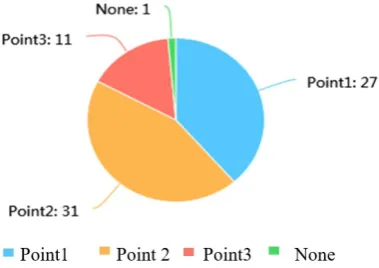
Figure 7. The likeability of collaborative learning in each point
According to the result of the questionnaire (Figure 6), students thought that the game-based AR learning environment directly and significantly influenced learning motivation. Besides, understanding of English sentence and collaborative learning were also directly impacted by the game-based AR learning environment. Through further interviews, the findings revealed that the use of AR technology enhanced learning motivation, which boosted understanding of English sentence and collaborative learning. A favorable technical support environment would develop students’ collaborative learning (Resta & Laferrière, 2007). In this model, the tool namely AR learning environment positively impacted collaborative learning
through the direct and indirect way. The result of the questionnaire (Figure 7) provided the general situation of collaborative learning in the AR learning environment. The finding showed that most students like collaborative learning in the lead-in and interaction parts of the model. Combining the findings of the further interviews, it was found that the AR-based materials attracted students to engage in collaborative learning and interact with the teacher, which enhanced collaborative learning. The finding was supported by Wang, Duh, Li, Lin and Tsai (2014) and authors also claimed that the virtual contents were overlaid on the real objects, students could obtain the sense of excitement to enhance collaborative learning. Additionally, the finding also pointed out in the lead-in part, AR technology provided more opportunities such as more discussion, time and materials for students to attend the collaborative learning. The result was verified by Dinis, Guimaraes, Carvalho and Martins (2017) where they pointed out that the AR learning environment can facilitate the students’ collaborative learning and significantly boost the inquiry process. The evidence is as the following excerpts:
Huang: 3D virtual graphics is very interesting, which facilitates understanding.
Li: The learning approach is interesting and provides enough space to think and discuss.
Liu: It is very interesting that the virtual interpretation of knowledge can overlay onto the real pictures.
www.mojet.net Xiao: The content introduction of learning through virtual content is very clear and interesting so that the discussions afterwards with team member become positive.
Yang: The well-designed point 1 and 2 provides many opportunities to discuss which is guided by virtual content.
Ren: In order to finish the game successfully, each small team should complete their own parts in part 1 and 2. Therefore, the discussion is treated seriously.
Through the representation of the evidences and discussion of the findings, it was found that both the new teacher’s role and the novel game-based AR learning environment have showed the positive effect on students.
CONCLUSION
Based on the result of the questionnaires and interviews, it was particularly evident that in this model, the change of teacher’ role had a positive influence on the students' English learning. Sandholtz (1997) also claimed that it was significant to refine the role of the teacher in the technology environment and the change of teacher’ role improve the achievement of learning. Specifically, this study revealed that the new teacher’ role created a new way of interaction, enhanced learning motivation, reduced students’ mental pressure, which boosted the effect of English sentence learning. According to the activity theory, teacher as a community in this study and AR learning environment as activity’s tool were crucial for the whole learning process (Nardi, 1996). In the 21 st century, the teachers’ mindsets and role should be changed and the new technologies already become the essential factor to acquire the successful learning outcomes (Ertmer & Ottenbreit-Leftwich, 2010). Apart from that, in this research, the findings also pointed out the game-based AR learning environment could directly or indirectly boost cooperative learning. It was found that the characteristics of AR technology could enhance the students’ enthusiasm in English learning, which promoted English collaborative learning. Furthermore, the findings also indicated that because the game-based AR learning environment provided more discussion, time and materials for students, the collaborative learning was enhanced by the circumstance. The result was supported by Wang, Duh, Li, Lin and Tsai (2014) who argued that the AR system facilitated students’ collaborative inquiry learning effectively. Kaptelinin and Nardi (2006) pointed out a favorable teaching environment will make learning more efficient. When instructors design a teaching environment, the new teacher’s role needs to design carefully and properly incorporate technologies, which can enhance the learning effect. AR technology is a fantastic technology which can be an effective tool for instructors.
Suggestions
In the study, many problems need to be improved and paid attention to. Firstly, the model can be further developed and the AR learning environment can be expanded and enriched such as adding more technical points. In addition to that, teachers’ functions in the model can be enriched as well by interaction. Additionally, the group numbers and group members were a little big, which resulted that the whole learning process spent a lot of time and was not too easy for teachers to control. Furthermore, students also needed to spend a long time to record the content of the discussion. In future studies, suitable numbers of groups and group members will be explored. Lastly, the whole learning process needs relatively better learning place and infrastructure, especially on internet connection to ensure a seamless learning process.
www.mojet.net
REFERENCES
Billinghurst, M., Kato, H., & Poupyrev, I. (2001). The magicbook-moving seamlessly between reality and virtuality. IEEE Computer Graphics and applications, 21(3), 6-8.
Billinghurst, M. (2002). Augmented reality in education. New horizons for learning, 12(5), 1-5.
Chen, C. P., & Wang, C. H. (2015). The effects of learning style on mobile augmented-reality-facilitated English vocabulary learning. In Information Science and Security (ICISS), 2nd International Conference, 1-4.
Carvalho, M. B., Bellotti, F., Berta, R., Gloria, A. D., Sedano, C. I., & Hauge, J. B., et al. (2015). An activity theory-based model for serious games analysis andconceptual design. Computers & Education, 87(C), 166-181.
Chiong, R., & Jovanovic, J. (2012). Collaborative learning in online study groups: An evolutionary game theory perspective. Journal of Information Technology Education: Research, 11, 81-101.
Collins T.G. (2005) English class on the air: mobile language learning with cell phones. The Fifth IEEE International Conference on Advanced Learning Technolo-gies. 5–8.
De Lucia, A., Francese, R., Passero, I., & Tortora, G. (2012). A collaborative augmented campus based on location-aware mobile technology. International Journal of Distance Education Technologies (IJDET), 10(1), 55-73.
Durrington, V. A., & Du, J. (2013). Learning tasks, peer interaction, and cognition process an online collaborative design model. International Journal of Information and Communication Technology Education (IJICTE), 9(1), 38-50.
Dinis, F. M., Guimarães, A. S., Carvalho, B. R., & Martins, J. P. P. (2017). Virtual and augmented reality game-based applications to civil engineering education. Global Engineering Education Conference.1683-1688.
Engeström, Y. (1999). Activity theory and individual and social transformation. Perspectives on activity theory, 19(38).
Ertmer, P. A., & Ottenbreit-Leftwich, A. T. (2010). Teacher technology change: How knowledge, confidence, beliefs, and culture intersect. Journal of research on Technology in Education, 42(3), 255-284.
Goldman Sachs, (2016). America Technology Virtual&Augmented Reality.Retrieved from http://www.useit.com.cn/thread-11263-1-1.html> (18/03/2016 02:47).
Hsieh, M. C., & Lee, J. S. (2008). AR marker capacity increasing for kindergarten English learning. International Multi Conference of Engineers and Computer Scientists, 1, 663-666.
Jonassen, D. H., & Rohrer-Murphy, L. (1999). Activity theory as a framework for designing constructivist learning environments. Educational technology research and development, 47(1), 61-79.
www.mojet.net Koutromanos, G., Sofos, A., & Avraamidou, L. (2015). The use of augmented reality games in education: a review of the literature. Educational Media International, 52(4), 253–271. Retrieved from https://doi.org/10.1080/09523987.2015.1125988.
Kaptelinin, V., & Nardi, B. (2006). Activity Theory in Interaction Design. MIT Press.
Lee, M., Yun, J., Pyka, A., Won, D., Kodama, F., Schiuma, G., ... & Yan, M. R. (2018). How to respond to the Fourth Industrial Revolution, or the Second Information Technology Revolution? Dynamic new combinations between technology, market, and society through open innovation. Journal of Open Innovation: Technology, Market, and Complexity, 4(3), 21.
Merriam, S. B., & Tisdell, E. J. (2015). Qualitative research: A guide to design and implementation. John Wiley & Sons.
Nardi,B. A. (1996) .Context and consciousness: Activity the-ory and human-computer interaction.Mit Press
.
Penprase, B. E. (2018). The fourth industrial revolution and higher education. Higher education in the era of the fourth industrial revolution. 207-229.
Resta, P., & Laferrière, T. (2007). Technology in support of collaborative learning. Educational Psychology Review, 19(1), 65-83.
Sandholtz, J. H. (1997). Teaching with technology: Creating student-centered classrooms. Teachers College, Columbia University, 1234 Amsterdam Ave., New York, NY 10027. Teachers College Press.
Sirakaya, M., & Alsancak Sirakaya, D. (2018). Trends in Educational Augmented Reality Studies: A Systematic Review. Malaysian Online Journal of Educational Technology, 6(2), 60-74.
Tsai, I. C., Galyen, K., Xie, X., & Laffey, J. (2010). Using activity theory to examine social interaction of online learning. EdMedia: World Conference on Educational Media and Technology. 1202-1211.
Vygotsky,L. (1978).Mind in society: The development of higher psychological process.Cambridge,MA:
Harvard University Press.
Wang, H. Y., Duh, H. B. L., Li, N., Lin, T. J., & Tsai, C. C. (2014). An investigation of university students’ collaborative inquiry learning behaviors in an augmented reality simulation and a traditional simulation. Journal of Science Education and Technology, 23(5), 682-691.
Yu, S., & Lee, I. (2015). Understanding EFL students’ participation in group peer feedback of L2 writing: A case study from an activity theory perspective. Language Teaching Research, 19(5), 572-593.