• No results found

The Method for Assigning Priority Levels (MAPLe): A new decision-support system for allocating home care resources

N/A
N/A
Protected

Academic year: 2020

Share "The Method for Assigning Priority Levels (MAPLe): A new decision-support system for allocating home care resources"

Copied!
11
0
0

Loading.... (view fulltext now)

Full text

(1)

Open Access

Technical advance

The Method for Assigning Priority Levels (MAPLe): A new

decision-support system for allocating home care resources

John P Hirdes*

1,2

, Jeff W Poss

1

and Nancy Curtin-Telegdi

1

Address: 1Department of Health Studies and Gerontology, University of Waterloo, University Avenue West, Waterloo, Ontario, N2L 3G1, Canada

and 2Homewood Research Institute, Delhi Street, Guelph, Ontario, N1E 6K9, Canada

Email: John P Hirdes* - [email protected]; Jeff W Poss - [email protected]; Nancy Curtin-Telegdi - [email protected] * Corresponding author

Abstract

Background: Home care plays a vital role in many health care systems, but there is evidence that appropriate targeting strategies must be used to allocate limited home care resources effectively. The aim of the present study was to develop and validate a methodology for prioritizing access to community and facility-based services for home care clients.

Methods: Canadian and international data based on the Resident Assessment Instrument – Home Care (RAI-HC) were analyzed to identify predictors for nursing home placement, caregiver distress and for being rated as requiring alternative placement to improve outlook.

Results: The Method for Assigning Priority Levels (MAPLe) algorithm was a strong predictor of all three outcomes in the derivation sample. The algorithm was validated with additional data from five other countries, three other provinces, and an Ontario sample obtained after the use of the RAI-HC was mandated.

Conclusion: The MAPLe algorithm provides a psychometrically sound decision-support tool that may be used to inform choices related to allocation of home care resources and prioritization of clients needing community or facility-based services.

Background

In Canada, the United States, and internationally, home care is playing an increasingly prominent role in the health care system [1-5], with the aim of reducing costs related to other services, including acute hospitalization and nursing home placement. For example, the Commis-sion on the Future of Home Care in Canada [6] recom-mended the extension of public funding to cover the cost of four types of home care: acute medical care, post-acute rehabilitation, community-based palliative care, and mental health services for clients with behavior-man-agement needs. Although home care accounts only for a

small fraction of total expenditures in the Canadian and US health care systems, it has been the sector with the most rapid relative rate of growth in costs [7,8]. In the United States, state 'waiver' programs were introduced with the aim of reducing nursing home utilization among the frail elderly [9]. For example, Michigan's MI-Choice program uses a targeting approach to identify and inter-vene with those elderly persons at greatest risk of immi-nent institutionalization in order to prolong their stay in the community.

Published: 26 March 2008

BMC Medicine 2008, 6:9 doi:10.1186/1741-7015-6-9

Received: 22 February 2008 Accepted: 26 March 2008

This article is available from: http://www.biomedcentral.com/1741-7015/6/9

© 2008 Hirdes et al; licensee BioMed Central Ltd.

(2)

Despite the widespread belief that home care has the potential to reduce expenditure in other parts of the health care system, there is evidence to suggest that tar-geted home care probably holds the greatest promise for cost-effective service delivery [10-15]. For instance, if serv-ices are provided to a predominantly healthy population, it may be difficult to show any benefits related to home care given that the clients are relatively independent and are at low risk of transition to poor health [16]. On the other hand, if services are provided too late in the disable-ment process, it may be difficult to reduce the risk of insti-tutionalization [17,18]. The relevant risk factors may be less modifiable and/or the informal network may no longer be able or willing to continue given the level and duration of burden they have endured. Moreover, for per-sons who are most severely functionally and cognitively impaired, home care may not be a sustainable means of prolonged service delivery due to the demands on formal and informal resources.

Home care case managers are charged with making deci-sions about the allocation of community and institutional resources for the care of the frail elderly in the community. Their decisions are commonly made on the basis of com-prehensive assessments; however, in many jurisdictions these assessments are not standardized, have not been tested for reliability and validity, and are not accompa-nied by decision-support algorithms that aid in interpre-tation of the assessment results. Therefore, one might argue that, despite the use of geriatric assessment instru-ments, the decisions of case managers are often subjec-tively based and inconsistent due to idiosyncratic differences among clinicians. Clinicians themselves are also often inconsistent over time. A consequence of this type of approach is that limited resources may be allo-cated ineffectively. There may be a mismatch between needs that are either undetected or discounted inappro-priately and the services offered to home care clients. The cost of health care can be driven up by poor communica-tion among health professionals, exacerbacommunica-tions of illness or disability, unnecessary admission to long-term care set-tings, and avoidable hospitalizations. It is particularly important to provide effective home care to persons at imminent risk of nursing home placement because, once admitted, the likelihood of return to the community declines substantially and the formal costs of care grow substantially.

In 2003, the province of Ontario began to open numerous long-term care facilities across the province. Approxi-mately 15,000 new beds were added to a system of about 50,000 beds in response to perceptions that persons requiring long-term care were using excessive amounts of acute hospital resources. With the opening of these new facilities, the provincial government recognized that there

was a need to employ a systematic method of admitting new residents into those beds in order to ensure that the available spaces were taken by persons with the highest level of need and to minimize the chance of premature institutionalization.

In 2002, Ontario mandated the implementation of the Resident Assessment Instrument – Home Care (RAI-HC) [3,4,19,20] for use with all long-stay home care clients in the province. The implementation of the RAI-HC pro-vided a new information source upon which decisions regarding nursing home placements and allocation of community-based services could be made. A review of the literature and consultation with the field was undertaken in order to identify decision-support systems that may aid in the allocation of community and institutional resources. Three main candidate methodologies were identified. First, Miller [21] developed a crosswalk from the Ontario eligibility criteria for long-term care to the RAI-HC. However, this study showed that, using the exist-ing algorithm, approximately 80% of Ontario long-stay home care clients would be eligible for long-term care placement, making this algorithm relatively uninforma-tive.

The INST-RISK system developed by Morris et al [22] is an indexing system that considers approximately 20 func-tional, medical, social, and psychological measures to develop a summary score of risk of institutionalization, which is then stratified into four risk levels. The Regina Risk Indicator Tool [23] appears to be a derivative of this earlier work in that it makes only minor modifications to the system previously developed by Morris et al. There are a number of limitations with the INST-RISK approach, including: (a) the use of a number of independent varia-bles (such as gender, income) that appear to have little or no predictive power for institutionalization; (b) the appli-cation of identical weights to variables of differing levels of importance for institutionalization; and (c) compati-bility concerns due to measurement inconsistencies between the INST-RISK items and the RAI-HC.

(3)

place-ment. RAI-HC items were then used to model case man-ager decisions, beginning with those identified as eligible for nursing home places and information and referral (that is, the extreme values) and ending with homemak-ing as a residual category. Fries and James [9] reported moderate levels of overall agreement (weighted kappa = 0.55) between the case managers' ratings and the levels of care suggested by the MI-Choice algorithm, independent of the availability of informal support (see [25] for a dis-cussion of kappa values). In the MI-Choice waiver pro-gram, this algorithm identified approximately 8% of clients as eligible for nursing home placement; however, in preliminary analyses performed as part of the present study, it classified less than 2% of Ontario home care cli-ents in that category. Therefore, in contrast to Ontario's existing eligibility criteria, the MI-Choice system would allow for very few clients to be considered for entry into long-term care homes. A second concern was that the algorithm appeared to be insensitive to clinical complex-ity among younger home care clients, who were not part of the original MI-Choice study.

Since no existing system was found to be appropriate for the Ontario context, an effort was launched to develop a new decision-support algorithm for allocating home care resources based on the RAI-HC. The Method for Assigning Priority Levels (MAPLe) was created to assist case manag-ers in determining the relative priority that should be attached to a client regardless of whether he or she needs community or institutional services. Instead of attempting to match client care characteristics to specific venues or types of care, the MAPLe system prioritizes clients to iden-tify those in most urgent need of services, irrespective of the care setting. The aim of this paper is to describe the development and validation efforts undertaken as part of the development of the MAPLe system.

Methods

Sample

The study sample for the derivation of the MAPLe algo-rithm comprised 4,836 clients assessed as part of normal clinical practice by 14 Ontario Community Care Access Centres (CCACs) that implemented the RAI-HC on a pilot basis prior to its mandate by the provincial government. These assessments were completed between 1999 and 2001. Personal identifiers, such as name and health card number, were stripped from the record or encrypted in a way that would prevent identification prior to the trans-mission of the data to the research group. All assessments were performed by case managers (typically nurses or social workers) and data quality was checked by reviewing the first 10 assessments performed by each newly trained case manager. In addition, statistical checks were made for problems such as missing values and item non-response. Ethics clearance for secondary analysis of the data was

obtained through the University of Waterloo Office of Human Research.

The samples for the validation of the MAPLe were obtained through data that were made available to inter-RAI (developers of the inter-RAI-HC) through license agree-ments with researchers, service providers, or governagree-ments using the RAI-HC. Validation samples included RAI-HC data on home care clients in: Winnipeg Regional Health

Authority (WRHA) of Manitoba (n = 7,915), British

Columbia (n = 1,081), Nova Scotia (n = 180), Georgia (n = 12,761), Michigan (n = 19,491), Italy (n = 6,151), Ice-land (n = 297), Sweden (n = 178), and Japan (n = 3,106). In all settings, the RAI-HC was completed by home care professionals; however, as will be seen later, these differ-ent jurisdictions target differdiffer-ent populations for home care services. Consequently, these samples differ noticea-bly with respect to clinical characteristics, such as func-tional status.

An additional validation sample was available using 2003–2005 RAI-HC data for eight CCACs after the man-dated implementation of the RAI-HC began. These data were linked to actual nursing home admissions following the assessment (n = 27,234).

Measures

Data for the derivation of the MAPLe system were almost entirely based on elements available in the RAI-HC assess-ment. The RAI-HC was created by interRAI [26], a 29-country, not-for-profit research network devoted to con-ducting cross-national research through the development and application of comprehensive assessment systems for various sectors of the health care system. A number of studies have been completed previously to demonstrate the reliability and validity of the RAI-HC [19,22,27,28] and the instrument is now being implemented in eight Canadian provinces/territories [29] and 15 US states [30]. It was also recently used in an 11-country study funded by the European Union to evaluate home care services in Europe [31]. The RAI-HC comprises an assessment form with approximately 300 clinical elements covering medi-cal, functional, psychologimedi-cal, social, and environmental strengths, preferences and needs of home care clients, a variety of embedded scales that can be used for outcome measurement, and 30 care-planning protocols identifying areas of current or imminent need [19,32-34].

Analysis

(4)

short or medium term. Therefore, it is appropriate to iden-tify other adverse outcomes that are interim steps along a continuum that may ultimately result in nursing home placement. With this in mind, two other RAI-HC items were identified as dependent variables for this analysis. First, caregiver distress was used, because the collapse of the caregiving network could represent a major risk factor and precursor to institutionalization [35]. Second, the RAI-HC item 'client better off elsewhere' was used to iden-tify the subset of clients who personally felt that they would be, or were rated by others (that is, family or clini-cians) as being, better off living in an environment other than the current setting in the community. Hence, there were three binary dependent variables used for this analy-sis: (i) presence of signs of caregiver distress in the RAI-HC assessment; (ii) rating oneself or being rated by others as being better off elsewhere in the RAI-HC assessment; and (iii) actual nursing home admissions within the next quarter after the RAI-HC assessment. Each of these varia-bles might be considered to be indirect markers of 'need' for additional services in the sense that they are poten-tially avoidable negative outcomes whose likelihood of occurring may be reduced by high-quality home care serv-ices.

The next step was the identification of potential inde-pendent variables to be included in the analysis. Candi-date items were chosen based on three information sources. First, a detailed review of the literature was used to develop a list of identified risk factors. Gaugler et al [36] recently completed a meta-analysis of the epidemiological literature on nursing home placement, which provides a useful summary of the types of variables that were consid-ered here. Second, items used in the Ontario eligibility cri-teria crosswalk and in the MI-Choice system were considered. Third, an expert panel focus group meeting was held with clinicians, policymakers, and service pro-viders in home care to identify factors they considered important contributors to risk of institutionalization and adverse outcomes among home care clients. Among the analytic considerations affecting variable selection were: the ability to explain variation in the three dependent var-iables; avoidance of provider or service variables in favor of person-specific clinical variables; psychometric proper-ties of the individual items; and the risk of misrepresenta-tion of item scores by family members or case managers to increase (or reduce) the client's probability of access to services.

The analysis of the data involved four major steps. First, bivariate analyses were performed to identify individual independent variables that were associated with each of the three dependent variables. This information proved useful in future stages of the analysis for testing alternative models and for identifying candidate items for the

deci-sion-tree analysis. Second, decideci-sion-tree analysis was per-formed using SAS Enterprise Miner. This data-mining program uses a combination of automated interaction detection (AID) and computer-assisted regression trees (CARTs), which can be used with continuous and binary independent variables, respectively. The decision-tree analysis began with modeling the item that the client would be better off elsewhere. The criterion for splitting branches of the decision tree was the Gini coefficient, which provides a statistical test of the degree of homoge-neity in the groups in different branches. Although Enter-prise Miner automatically recommends splits for independent variables, it is possible to override the sug-gested splits in order to use more clinically meaningful categorizations where appropriate. Therefore, the devel-opment of the decision tree was guided by both empirical and clinical choices.

A variety of alternative decision-tree models were pre-sented to a steering subcommittee of the MAPLe develop-ment group in order to evaluate the clinical appropriateness and policy implications of different mod-els. This subcommittee played a critical role in identifica-tion of the final model. For example, one candidate decision tree split the population according to whether the client lived alone or lived with others as its first split. However, following an extensive discussion by the steer-ing subcommittee, it was recognized that the use of livsteer-ing arrangements as an independent variable in the MAPLe algorithm would result in a problematic steering effect. Family members may become reluctant to take relatives into their homes as frailty worsens for fear that such an action could reduce a client's access to nursing home serv-ices, should they be needed. For this reason, living arrangement was excluded as an independent variable from all subsequent decision-tree analyses.

(5)

the final algorithm yielded a logistic regression model with roughly equivalent increments in risk levels with each increase in the MAPLe score. The final step was to val-idate the MAPLe algorithm against the other Canadian, US, and international data to determine the extent to which MAPLe yielded similar results across provinces and cross-nationally.

Results

Figure 1 provides a schematic representation of the final MAPLe algorithm [37]. The measures used to differentiate the level of risk for all three outcomes of interest were: ADL impairment, cognitive impairment, behavior distur-bance, decline in decision-making, problems with medi-cation management, pressure ulcers or stasis ulcers, environmental challenges, falls, inadequate meals, prob-lems with meal preparation, difficulty swallowing, and the RAI-HC's nursing home risk care-planning protocol. In the derivation sample, this algorithm yielded five dif-ferent groups ranging from low to very high risk. The low-, mild-low-, and moderate-risk categories contain approxi-mately one-quarter of the sample each. The high-risk cat-egory included 18% and the very-high-risk group was about 7% of the sample.

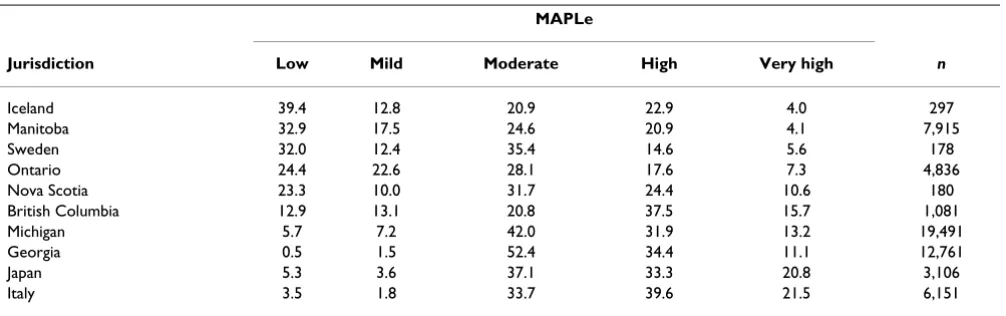
Table 1 provides the distribution of MAPLe priority levels in 10 different jurisdictions. Iceland, Manitoba, Sweden, and Ontario were similar in that the majority of home care clients were skewed toward the low, mild, and mod-erate MAPLe priority levels. In each of these jurisdictions, less than 10% of the clients were in the very high MAPLe levels. In contrast, the Michigan, Georgia, Japan, and Italy samples were strongly skewed toward the moderate, high, and very high MAPLe levels, with less than 10% of clients falling in the low and in the mild MAPLe categories. The distributions of the Nova Scotia and British Columbia samples fell into an intermediate range between these two extremes.

Table 2 provides the Ontario results for the algorithm der-ivation by comparing MAPLe priority levels against the three dependent variables. With respect to nursing home admissions, there is a substantial increase in risk of admis-sion within the next 90 days for every increment in MAPLe. Compared with the low MAPLe level, the risk of nursing home admission increases threefold for the mod-erate category and tenfold for the very high MAPLe level. Although these relative changes in risk are substantial, the large majority of clients were not admitted within the next

Schematic representation of the MAPLe algorithm Figure 1

Schematic representation of the MAPLe algorithm. no ADL

impairment

ADL impairment

CPS>

= 2

no Beh

Beh

Dec’n making worse

Env’t OR med.mgmt

Ulcers

no Ulcers

Ger . Screen

self-reliant

Ger . Screen impaired

no mealprep

meal prep.

no wanderingno risk cap

no Beh Beh

Beh

no Beh

wandering OR risk cap

CPS <= 2

CPS >

= 3

Falls

not few meals not swallowingnot falls

few meals OR swallowing OR

falls

CPS <= 1

Dec’n making

not worse

No Env’t

No med.mgmt

high

high

mod.

high

low

mild mod.

very high

very high high

very high

very high high

high not Falls

(6)

90 days, including those in the very high MAPLe category. Only 14.5% of those in the very high level were admitted within 90 days; however, the annual risk would be much higher because the increments in placement rates are likely to be cumulative over time. The pattern for caregiver distress is more pronounced than that of nursing home placement. Both the absolute and relative differences across MAPLe categories are greater than the results for nursing home admission alone. There is a fivefold higher risk of caregiver stress comparing the moderate to the low MAPLe categories, and a 26-fold higher risk comparing the very high to the low MAPLe categories. In absolute terms, the difference between the very high and low MAPLe categories is a 47.4% increment in the rate of car-egiver distress. Similar patterns are also noted for clients being rated as better off elsewhere. Although the incre-ments in the relative rise in risk of being rated as better off elsewhere are not as large as with the other two dependent

variables, the absolute differences between MAPLe groups remain substantial.

Table 3 provides the cross-jurisdictional results for car-egiver distress. Although there were some minor discrep-ancies within countries between adjacent MAPLe categories, there was a clear trend of increased rates of car-egiver distress with higher levels of MAPLe. It is interesting to note, however, that the relative rate of change in car-egiver stress across MAPLe levels varies noticeably across cultures. For example, the two Nordic country samples show marked increases in caregiver distress at the very high levels, and a similar pattern is found in British Columbia. These results are also evident in jurisdictions where there is a tendency towards a higher proportion of home care clients in the high MAPLe categories. For exam-ple, in both Michigan and Italy, there is a strong linear increase in rates of caregiver distress with MAPLe levels.

Table 1: Distribution of MAPLe priority levels in 10 jurisdictions

MAPLe

Jurisdiction Low Mild Moderate High Very high n

Iceland 39.4 12.8 20.9 22.9 4.0 297

Manitoba 32.9 17.5 24.6 20.9 4.1 7,915

Sweden 32.0 12.4 35.4 14.6 5.6 178

Ontario 24.4 22.6 28.1 17.6 7.3 4,836

Nova Scotia 23.3 10.0 31.7 24.4 10.6 180

British Columbia 12.9 13.1 20.8 37.5 15.7 1,081

Michigan 5.7 7.2 42.0 31.9 13.2 19,491

Georgia 0.5 1.5 52.4 34.4 11.1 12,761

Japan 5.3 3.6 37.1 33.3 20.8 3,106

Italy 3.5 1.8 33.7 39.6 21.5 6,151

Table 2: Percentage of clients entering long-term care home, caregiver distress, and ratings of being better off elsewhere by MAPLe priority level, Ontario derivation sample (n = 4,835)

MAPLe

Dependent variable Low Mild Moderate High Very high

Admitted to long-term care home within 90 days

Absolute rate 1.3% 2.9% 4.7% 7.5% 14.5%

Adjusted odds ratio* Reference 2.14 3.64 5.91 11.35

Caregiver distress

Absolute rate 3.6% 8.0% 15.8% 26.1% 51.0%

Adjusted odds ratio* Reference 2.50 4.96 9.31 26.61

Better off elsewhere

Absolute rate 6.4% 9.1% 10.2% 18.9% 33.1%

Adjusted odds ratio* Reference 1.40 1.67 3.39 7.10

n 1,181 1,094 1,358 852 351

(7)

On the other hand, while the rates still increase with higher MAPLe levels, the trend is relatively flatter in Geor-gia and Japan.

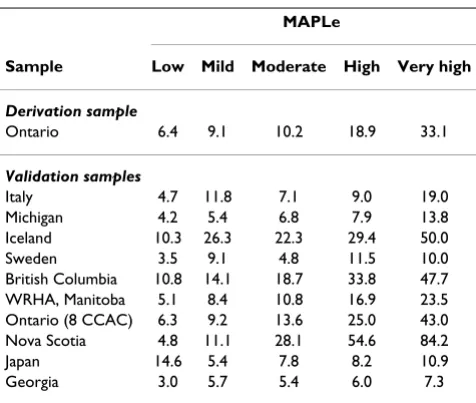
Table 4 provides the cross-jurisdictional results for ratings that the client would be better off elsewhere. Again, there is a relatively consistent pattern where higher MAPLe lev-els translate into a higher proportion of clients being rated as being better off elsewhere. The only clear exception to this trend is in Japan, where the MAPLe low category is most likely to be rated as better off elsewhere. However, only about 5% of the Japanese sample fell into the MAPLe low category, and may represent an unusual subpopula-tion of Japanese home care clients.

Table 5 provides results for the Ontario and the Manitoba samples on two variables that were not considered in the derivation of MAPLe: formal community service cost and hours of informal care. This analysis is limited to Ontario and Manitoba because these are the only Canadian sam-ples based on large-scale pilot implementations of the

RAI-HC, rather than smaller research studies. Therefore, these samples are more likely to reflect the actual pattern of service provision and informal care in the population of home care clients in these two provinces. With respect to formal service costs, higher MAPLe priority levels are associated with higher weekly costs of formal care; how-ever, the trend appears to be somewhat non-linear with a threshold level evident at the MAPLe moderate category. That is, for the low and mild categories, the costs of formal services are approximately $100 CDN per week, com-pared with between $180 CDN and $300 CDN per week for the three higher MAPLe categories. Informal care fol-lows a somewhat different trend in the sense that there is a more linear relationship between MAPLe levels and hours of informal care estimated by caregivers. The differ-ences are pronounced across MAPLe levels, ranging from 7.3 hours in low MAPLe clients in Ontario to 36.0 hours in their very high counterparts. Therefore, it is not surpris-ing that higher MAPLe levels are also associated with higher levels of caregiver distress.

Table 3: Cross-jurisdictional comparison of rates of caregiver distress by MAPLe priority level

MAPLe

Sample Low Mild Moderate High Very high

Derivation sample

Ontario 3.6 8.0 15.8 26.1 51.0

Validation samples

Italy 14.5 21.8 28.5 40.2 55.8

Michigan 11.9 12.2 26.1 33.5 52.1

Iceland 6.0 15.8 8.1 16.2 50.0

Sweden 1.8 9.1 14.3 15.4 50.0

British Columbia 8.6 8.5 16.4 36.1 48.8 WRHA, Manitoba 5.7 10.2 15.7 23.5 41.2 Ontario (8 CCAC) 4.2 7.4 14.1 23.3 41.0

Nova Scotia 0.0 5.6 19.3 38.6 36.8

Japan 15.2 5.4 19.7 14.7 18.6

Georgia 3.0 7.8 8.5 13.6 13.1

Table 4: Cross-jurisdictional comparison of percentage of clients rated as better off elsewhere by MAPLe priority level

MAPLe

Sample Low Mild Moderate High Very high

Derivation sample

Ontario 6.4 9.1 10.2 18.9 33.1

Validation samples

Italy 4.7 11.8 7.1 9.0 19.0

Michigan 4.2 5.4 6.8 7.9 13.8

Iceland 10.3 26.3 22.3 29.4 50.0

Sweden 3.5 9.1 4.8 11.5 10.0

British Columbia 10.8 14.1 18.7 33.8 47.7 WRHA, Manitoba 5.1 8.4 10.8 16.9 23.5 Ontario (8 CCAC) 6.3 9.2 13.6 25.0 43.0

Nova Scotia 4.8 11.1 28.1 54.6 84.2

Japan 14.6 5.4 7.8 8.2 10.9

Georgia 3.0 5.7 5.4 6.0 7.3

Table 5: Mean weekly formal and informal care by MAPLe priority level, Ontario derivation sample and WRHA Manitoba

MAPLe

Resource use Low Mild Moderate High Very high

Mean weekly cost of formal care ($CDN)

Ontario (derivation sample) 85.6 97.2 185.2 194.1 219.7

WRHA, Manitoba 94.9 106.1 227.2 295.9 277.3

Mean weekly hours of informal care

Ontario (derivation sample) 7.3 10.2 21.9 25.4 36.0

(8)

Figure 2 shows a survival plot of time to nursing home admission by MAPLe priority level using the eight CCAC validation sample for Ontario. Longitudinal data were not available from the other jurisdictions, so it was not possi-ble to replicate these analyses outside of Ontario. The sur-vival plot shows a clear separation of nursing home admission rates for all five MAPLe levels. After one year of follow up, 4.8% of clients in the MAPLe low level were admitted to nursing homes, compared with 47.4% of those in the very high level.

Discussion

MAPLe provides an empirically sound decision-support system that will allow case managers to make more sys-tematic evaluations of the needs of clients and the urgency with which they should respond to those needs. Using three different outcomes, with validation results in six countries, MAPLe clearly differentiated the risk of adverse outcomes, including institutionalization. Case managers who have completed an RAI-HC assessment can obtain the MAPLe results automatically from software in which the algorithm is embedded and these results then provide a context against which person-specific service recom-mendations may be made. It should be noted, however, that the intent is not to use MAPLe as an automated deci-sion-making system devoid of clinical judgment. Instead, case managers considering MAPLe scores should also

engage in a full discussion with the client, family, and other formal service providers to develop person-specific recommendations that take into account the individual's strengths, preferences, and needs. For example, some cli-ents who score low on the MAPLe algorithm may rate themselves as being in poor health, may be showing signs of depression, or may have had an overnight hospital stay or frequent emergency room visits. It would be inappro-priate to treat such an individual as an 'information and referral only' client if the case manager believes these other clinical considerations to be of critical importance. On the other hand, individuals in the very high MAPLe category do not necessarily require immediate nursing home placement because, for example, they may have family members who are both willing and able to address their current level of need in the community. Similarly, alternative housing arrangements may provide these indi-viduals with the appropriate resources to remain relatively independent with access to formal supports when needed.

While MAPLe may be used to make person-centered resource allocation decisions at the individual level, it may also be used as a monitoring system at the regional, organizational, national, and international levels to eval-uate practice patterns. That is, one may stratify popula-tions according to MAPLe levels and then compare the performance of home care agencies with respect to

out-Survival plot of time to nursing home admission by MAPLe priority level, Ontario (eight CCAC validation sample) Figure 2

Survival plot of time to nursing home admission by MAPLe priority level, Ontario (eight CCAC validation sample).

0

0.2

0.4

0.6

0.8

1

0

60

120

180

240

300

Days

P

rop

or

ti

on

N

o

t i

n

N

u

rs

in

g

H

o

m

e

low

mild

moderate

high

very high

(9)

comes of care within MAPLe levels. Such a benchmarking system may be used to identify jurisdictions where MAPLe-adjusted nursing home admissions, for example, are higher than expected based on the experience of other regions. Similarly, MAPLe levels at intake can be used to examine regional variations in access to services by level of need.

The introduction of MAPLe into normal, daily use in home care can be expected to have an impact on the nature of services provided by agencies. That is, clients with lower MAPLe levels will be less likely to receive serv-ices than they may have been in the past, and clients with higher MAPLe levels will presumably be more likely to access those services because they are more readily identi-fiable. That being said, it is not necessarily true that sub-groups of home care clients need to be excluded from all services based on low MAPLe scores. The choice of who receives services and what type of services are provided remains a value-based decision to be made by policymak-ers and clinicians in each jurisdiction. In that regard, the cross-national results for MAPLe shown in Table 3 do not imply that some countries are providing services correctly while other countries erroneously target light-care clients. The main benefit of implementing MAPLe would be that persons with higher levels of need should be at a relatively higher level of priority for access to services than those with lower-level needs. That does not preclude the possi-bility of persons at the lowest level receiving appropriate services.

The present study made some important decisions regard-ing the role of informal support in the development of the prioritization system for community and institutional services. The choice to include measures of the informal support system (that is, caregiver stress) as a dependent variable rather than as an independent variable was important for methodological, clinical, and policy-related reasons. From a methodological perspective, the use of measures of informal support as independent variables would create a situation where those variables become highly vulnerable to systematic response bias in order to gain access to desired services when used in normal clini-cal practice. That is, if family members believe that saying they could do more to help a client would place their rel-ative in a lower priority level, there would be a strong dis-incentive to making such claims. Therefore, any items reflecting the capacity of the informal network to provide care could become less valid after the implementation of such a system. The introduction of this type of bias will make it more difficult to differentiate between families who are showing clear signs of distress and those who have continued capacity to provide more services. From a policy perspective, one must be concerned about the potential unintended consequences of a steering effect

that would result in family members being less likely to provide informal care. The capacity of the home care sys-tem to function adequately is heavily dependent on the provision of informal care by family members. Extreme caution should be taken with the introduction of policy measures that may provide disincentives to families to be involved. At the same time, distress among caregivers should be a concern to home care service providers and policy makers.

Although the present study showed that the MAPLe sys-tem is related to both the formal costs of service provision and hours of informal care, MAPLe is not intended to be an alternative to case-mix systems (for example, as an alternative to the RUG-III/HC [38] system). That being said, the introduction of MAPLe will have important implications for case-mix distributions in both home care and in long-term care facilities. As MAPLe begins to be used, one might expect the relative resource intensity of home care clients to increase because greater priority will be given to clients with higher levels of need. Similarly, to the extent that MAPLe is used as a decision-support sys-tem for nursing home placement, it is likely to result in a shifting of the distribution of new admissions to long-term care settings towards those community-based clients with the highest levels of need. Therefore, the introduc-tion of MAPLe may have the effect of increasing case-mix or resource intensity in both home care and nursing home settings.

This study also demonstrates the benefits of using a grouping methodology, as with decision-tree analysis, compared with indexing systems that simply assign a lin-ear increase in scores for any combination of variables. Unlike systems such as the RRIT or INST-RISK, MAPLe is able to consider the impact of specific combinations of variables (for example, cognitive impairment combined with functional impairment).

(10)

propor-tion of clients rated as being better off elsewhere with each increment in the MAPLe level. It would be useful to con-duct future research in these other countries to determine the extent to which MAPLe is indeed predictive of actual institutionalization in those settings. In addition, it is important to recognize that clients, family members, and home care professionals may not always share the same view about the most appropriate care setting. These poten-tially different perspectives should be taken into account when determining what services would be most appropri-ate for a given client.

An important next step for research with the MAPLe sys-tem is to conduct intervention studies to determine the extent to which the level of risk associated with a given MAPLe category can be reduced. For example, could addi-tional measures be put in place that would have the result of yielding a lower than expected institutionalization rate within a MAPLe category, or could the risk factors that have placed the client in that MAPLe category be reversed? For instance, falling is a major factor contributing to higher MAPLe scores. If a falls intervention was put in place that actually prevented future falls, conceivably, the individual's MAPLe scores would decline over time.

It will also be important to conduct research into the extent to which MAPLe is relevant to home care outcomes other than caregiver distress or nursing home placement. For example, it is not necessarily the case that clients with higher MAPLe scores feel more socially isolated or lonely or that they would benefit from interventions such as friendly visiting programs or transportation services. Therefore, it would be helpful to consider what comprises the full spectrum of benefits that could be realized through high-quality home care. This might be done through qualitative studies of home care clients, caregiv-ers, case managcaregiv-ers, and administrators. Once these bene-fits are identified, further research should be conducted on the effectiveness of MAPLe as a targeting system for persons at risk of adverse outcomes in other domain areas.

MAPLe also has potential benefits for the support of cross-national research. The problem that population-level information cannot be equated across jurisdictions is an important limitation of any home care research that is not based on individual-level observations. Indeed, results in Table 1 show that it would be a faulty assumption to believe that home care clients in Italy are comparable with home care clients in Ontario, for example. However, by using the MAPLe system to stratify samples with individ-ual-level data, one could be more confident in the equiv-alence of samples being compared across two or more jurisdictions.

Conclusion

The MAPLe algorithm provides an empirically based deci-sion support tool that may be used to inform choices related to the allocation of home care resources and prior-itization of clients needing community or facility-based services. MAPLe is a valid predictor of nursing home placements, caregiver distress and ratings that the client would be better off elsewhere, and it has been shown to perform well in a variety of international jurisdictions. MAPLe may be used at the individual level to support clin-ical decision-making, but it may also be used with aggre-gated data to inform policy development and planning.

Competing interests

The author(s) declare that they have no competing inter-ests.

Authors' contributions

JPH led the study design and data analysis and wrote the draft manuscript. JWP prepared the data, collaborated in data analysis, and co-wrote the manuscript. NCT provided clinical advice to support the data analysis and interpreta-tion of data. The final manuscript was reviewed and approved by all authors.

Acknowledgements

Financial support for this research was provided by a number of organiza-tions, including the Ontario Ministry of Health and Long Term Care, the Health Transition Fund, the Canadian Institutes for Health Research, the South Central and South West Community Care Access Centres, and interRAI. The authors gratefully acknowledge helpful comments and insights provided by Barbara Nytko, Lois Cormack, Kim Voelker, and Mary Chase. In addition, we are grateful to Dr Roberto Bernabei (Italy), Dr Palmi Jonnson (Iceland), Dr Gunnar Ljunggren (Sweden), Dr Naoki Ikegami (Japan), Dr Brant Fries, and Dr John Morris (United States) who provided access to international RAI-HC data and Dr Danielle Papineau who pro-vided access to British Columbia data. We also thank Hebrew Senior Life for support in analysis of the international data.

References

1. Wilkins K, Park E: Home care in Canada. Health Rep 1998, 10:29-38.

2. Health Canada: Report on the National Roundtable on Home and Com-munity Care, February Ottawa: Health Canada; 1999.

3. Hirdes JP, Fries BE, Morris J, Steel K, Mor V, Frijters DH, LaBine S, Schalm C, Stones MJ, Teare G, Smith T, Marhaba M, Perez E, Jönsson P: Integrated health information systems based on the RAI/ MDS series of instruments. Healthc Manage Forum 1999, 12:30-40.

4. Hirdes JP, Morris JN, Fries BE, Bernabei R: Society's adaptation to its own aging: A new challenge for community-based health care. In Aging and Health: A Global Challenge for the Twenty-First Century

Kobe: World Health Organization; 1999:205-212.

5. MacAdam M: Home care: It's time for a Canadian model.

Healthc Pap 1999, 1(4):9-36.

6. Romanow RJ: Building on Values: The Future of Health Care in Canada

Ottawa: Commission on the Future of Health Care in Canada; 2002:1-90.

(11)

Publish with BioMed Central and every scientist can read your work free of charge

"BioMed Central will be the most significant development for disseminating the results of biomedical researc h in our lifetime."

Sir Paul Nurse, Cancer Research UK

Your research papers will be:

available free of charge to the entire biomedical community

peer reviewed and published immediately upon acceptance

cited in PubMed and archived on PubMed Central

yours — you keep the copyright

Submit your manuscript here:

http://www.biomedcentral.com/info/publishing_adv.asp

BioMedcentral 8. Canadian Institute for Health Information: Public-sector Expenditures

and Utilization of Home Care Services in Canada: Exploring the Data

Ottawa: Canadian Institute for Health Information; 2007.

9. Fries BE, James M: Identifying "appropriate" applicants for home and community based services: the MI Choice screen-ing system. Cent Home Care Policy Res 2003, 13:1-6.

10. Weissert WG, Cready CM, Pawelak JE: Home and community care: three decades of findings. In Health Care of the Elderly: An Information Source Book Edited by: Petersen ML, White DL. Newbury Park, CA: Sage Publications; 1989.

11. Weissert WG, Hedrick SC: Lessons learned from research on effects of community-based long-term care. J Am Geriatr Soc

1994, 42:348-353.

12. Weissert WG, Hedrick SC: Outcomes and costs of home and community-based long-term care: Implications for research-based practice. In New Ways to Care for Older People, Building Sys-tems based on Evidence Edited by: Calkins E, Boult C, Wagner EH, Pac-ala JT. New York: Springer; 1999:143-157.

13. Thompson LG: Clear goals, solid evidence, integrated systems, realistic roles. Healthc Pap 2000, 1:60-66.

14. van Haastregt JCM, Diederiks JPM, van Rossum E, de Witte LP, Cre-bolder HFJM: Effects of preventive home visits to elderly peo-ple living in the community: Systematic review. BMJ 2000, 320:754-758.

15. Gianopoulos C, Bolda EJ, Baldwin M, Olsen L: What works? Maine's statewide uniform assessment and home care plan-ning system tells all. Gerontologist 2001, 41:309-311.

16. van Rossum E, Frederiks CMA, Philipsen H, Portengen K, Wiskerke J, Knipschild P: Effects of preventive home visits to elderly peo-ple. BMJ 1993, 307:27-32.

17. Caro FG: Asking the right questions: the key to discovering what works in home care. Gerontologist 2001, 41:307-308. 18. Branch LG: Community and long-term care services: what

works and what doesn't? Gerontologist 2001, 41:305-306. 19. Morris JN, Fries BE, Steel K, Ikegami N, Bernabei R, Carpenter GI,

Gilgen R, Hirdes JP, Topinkova E: Comprehensive clinical assess-ment in community setting: Applicability of the MDS-HC. J Am Geriatr Soc 1997, 45:1017-1024.

20. Hirdes JP, Frijters DH, Teare GF: The MDS-CHESS scale: a new measure to predict mortality in the institutionalized elderly.

J Am Geriatr Soc 2003, 51:96-100.

21. Miller D: A comparative analysis of eligibility criteria for long term care placement: Developing a new algorithm for Ontario. In MA Thesis University of Waterloo; 1997.

22. Morris JN, Sherwood S, Gutkin CE: Inst-Risk II: an approach to forecasting relative risk of future institutional placement.

Health Serv Res 1988, 23:511-536.

23. Gillis L, Parsons L, Neville S, Stein G: A practical approach to understanding risk of institutionalization in two Canadian cities: the Regina Risk Indicator Tool. Healthc Manage Forum

2004, 17:12-17.

24. Fries BE, Shugarman LR, Morris JN, Simon SE, James M: A screening system for Michigan's home- and community-based long-term care programs. Gerontologist 2002, 42:462-474.

25. Landis JR, Koch GG: The measurement of observer agreement for categorical data. Biometrics 1977, 33:159-174.

26. interRAI [http://www.interrai.org]

27. Landi F, Tua E, Onder G, Carrara B, Sgadari A, Rinaldi C, Gambassi G, Lattanzio F, Bernabei R: Minimum data set for home care: a valid instrument to assess frail older people living in the community. Med Care 2000, 38:1184-1190.

28. Kwan CW, Chi I, Lam TP, Lam KF, Chou KL: Validation of mini-mum data set for home care assessment instrument (MDS-HC) for Hong Kong Chinese elders. Clin Gerontol 2000, 21:35-48.

29. Hirdes JP: Addressing the health needs of frail elderly people: Ontario's experience with an integrated health information system. Age Ageing 2006, 35:329-331.

30. Hawes C, Fries BE, James ML, Guihan M: Prospects and pitfalls: use of the RAI-HC assessment by the Department of Veter-ans Affairs for home care clients. Gerontologist 2007, 47:378-387. 31. Carpenter I, Gambassi G, Topinkova E, Schroll M, Finne-Soveri H, Henrard JC, Garms-Homolova V, Jonsson P, Frijters D, Ljunggren G, Sorbye LW, Wagner C, Onder G, Pedone C, Bernabei R: Commu-nity care in Europe. The Aged in Home Care project (AdHOC). Aging Clin Exp Res 2004, 16:259-269.

32. Morris JN, Fries BE, Mehr DR, Hawes C, Phillips CD, Mor V Lipsitz LA: MDS cognitive performance scale. J Gerontol Med Sci 1994, 49:M174-M182.

33. Morris JN, Fries BE, Morris SA: Scaling ADLs within the MDS. J Gerontol Med Sci 1999, 54(11):M546-M553.

34. Morris JN, Carpenter GI, Berg K, Jones RN: Outcome measures for use with home care clients. Can J Aging 2000, 19(Suppl 2):87-105.

35. Yaffe K, Fox P, Newcomer R, Sands L, Lindquist K, Dane K, Covinsky KE: Patient and caregiver characteristics and nursing home placement in patients with dementia. JAMA 2002, 287:2090-2097.

36. Gaugler JE, Duval S, Anderson KA, Kane RL: Predictors of nursing home admission in the U.S.: A meta-analysis. BMC Geriatrics

2007, 7:13.

37. interRAI: Resource Allocation and Screening [http:// www.interrai.org/section/view/?fnode=30]

38. Björkgren MA, Fries BE, Shugarman LR: A RUG-III based case-mix system for home care. Can J Aging 2000, 19(Suppl 2):106-125.

Pre-publication history

The pre-publication history for this paper can be accessed here:

Figure

Figure 1 provides a schematic representation of the finalMAPLe algorithm [37]. The measures used to differentiatethe level of risk for all three outcomes of interest were:ADL impairment, cognitive impairment, behavior distur-bance, decline in decision-maki
Table 1: Distribution of MAPLe priority levels in 10 jurisdictions
Table 3: Cross-jurisdictional comparison of rates of caregiver distress by MAPLe priority level
Figure 2Survival plot of time to nursing home admission by MAPLe priority level, Ontario (eight CCAC validation sample)Survival plot of time to nursing home admission by MAPLe priority level, Ontario (eight CCAC validation sample).

References

Related documents

manipulations, across disciplines/content areas/multiple sources Level 1 of DOK is the lowest level and requires students to recall or perform a simple process.As DOK increases

For this research, fragile watermarking is projected where the method of operation is to let the embedded watermark to be destroyed easily if the watermarked image

This paper aims to evaluate this relationship using descriptive statistics to illustrate how BA impacts performance considering the different maturity levels and SCOR process

This thesis analyzed the effect capitation based resourcing has on the incentives for the commander of military treatment facilities (MTFs). Specifically, what incentives do

However, as regards the safety and quality of food produced abroad and sold on the Slovak market, in these answers, Figure 2 also shows the dissatisfaction of respondents with

In steady state, a temperature difference as high as 15°C can be measured for the solar heat reflective paint formulated with 3M Glass Bubbles XLD6000. The aim of the Cool

Do you think that New Media such as blogs and social networking sites will play an increasingly important role in investment.. decisions in

In order to overcome these barriers, educational systems need to closely examine how to help teachers acquire the expertise to use computer technology, integrate technology with