Sobhita Rani P
Department of Pharmaceutics, C M College of Pharmacy, Mallareddy Group of Institutions, Maisammaguda, Dhulapally, Hyderabad-500014. Andhra Pradesh, India.
Email: [email protected] Address for correspondence
Access this article online www.japer.in
Formulation and Evaluation of HPMC and Physillium Husk based
floating tablets of Curcumin for Ulcer
INTRODUCTION
Oral drug delivery is the most widely utilized route of
administration among all the routes that have been
explored for systemic delivery of drugs via
pharmaceutical products of different dosage form.
Oral route is considered most natural, uncomplicated,
convenient and safe due to its ease of administration,
patient acceptance, and cost-effective manufacturing
process.[1]
Pharmaceutical products designed for oral delivery
are mainly conventional drug delivery systems, which
are designed for immediate release of drug for rapid
absorption. These immediate release dosage forms
have some limitations such as:[2, 3]
1) Drugs with short half-life require frequent
administration, which increases chances of
missing dose of drug leading to poor patient
compliance.
2) A typical peak-valley plasma concentration-time
profile is obtained which makes it difficult to
attain steady state condition.
3) The unavoidable fluctuations in the drug
concentration may lead to under medication or
overmedication as the CSS values fall or rise
beyond the therapeutic range.
4) The fluctuating drug levels may lead to
precipitation of adverse effects especially of a
drug with small therapeutic index, whenever
overmedication occurs.
In order to overcome the drawbacks of conventional
drug delivery systems, several technical
advancements have led to the development of
controlled drug delivery system that could
revolutionize method of medication and provide a
number of therapeutic benefits.[4]
Drug Delivery Systems:
Controlled Drug Delivery Systems:
Controlled drug delivery systems have been
developed which are capable of controlling the rate of
drug delivery, sustaining the duration of therapeutic
activity and/or targeting the delivery of drug to a
tissue[5].
Controlled drug delivery or modified drug delivery
systems are conveniently divided into four categories.
Research Research Research
Research ArticleArticleArticleArticle
The purpose of the present study was to develop floating matrix tablets for Curcumin using psyllium husk as release controlling polymer and to compare the release pattern with synthetic polymers like HPMC K15M and HPMC K100M. Formulations were prepared by wet granulation method and evaluated for floating lag time, swelling index, erosion, drug content and In-Vitro drug release profile. It was found that floating duration of the formulation containing psyllium husk alone was less than that containing similar concentration of HPMC K15M and HPMC K100M. Release rate of the formulation containing psyllium husk in combination with HPMC K15M more than the formulation containing similar amount of HPMC K100M. The In-Vitro release data and drug release mechanism of the optimized formulation followed the higuchi kinetics and matrix type respectively. It can be concluded that psyllium husk can be a promising polymer for gastro retentive floating drug delivery systems in combination with synthetic polymers.
Keywords: Curcumin, psyllium husk, floating lag time, floating drug delivery system, HPMC K15M & HPMC K 100M.
ABSTRACT ABSTRACT ABSTRACT ABSTRACT
P Sobhita Rani*, T Neelima Rani, V Jayanth3, Lavanya Reddy
Department of Pharmaceutics, C.M. College of Pharmacy, Maisammaguda, Dhulapally Secunderabad-500014, Andhra Pradesh, India.
1) Delayed release
2) Sustained release
3) Site-specific targeting
4) Receptor targeting
Oral Controlled Drug Delivery Systems:
Oral controlled release drug delivery is a drug delivery
system that provides the continuous oral delivery of
drugs at predictable and reproducible kinetics for a
predetermined period throughout the course of GI
transit and also the system that target the delivery of a
drug to a specific region within the GI tract for either
local or systemic action.
Gastroretentive Dosage Form (GRDF):[9, 10]
It is evident from the recent scientific and patient
literature that an increased interest in novel dosage
forms that are retained in stomach for a prolonged
and predictable period of time exists today in
academic and industrial research groups. One of the
most feasible approaches for achieving a prolonged
and predictable drug delivery in the GI tract is to
control the gastric residence time (GRT), i.e. gastro
retentive dosage form (GRDFs or GRDS).
GRDFs extend significantly the period of time over
which the drugs may be released. They not only
prolong dosing intervals, but also increase patient
compliance beyond the level of existing controlled
release dosage form.
Need for gastroretentive drug delivery system: [11]
Various drugs have their greatest therapeutic effect
when released in the stomach, particularly when the
release is prolonged in a continuous, controlled
manner. Drugs delivered in this manner have a lower
level of side effects and provide their therapeutic
effects without the need for repeated dosages or with
a low dosage frequency. Sustained release in the
stomach is also useful for therapeutic agents that the
stomach does not readily absorb, since sustained
release prolongs the contact time of the agent in the
stomach or in the upper part of the small intestine,
which is where absorption occurs and contact time is
limited. Under normal or average conditions, for
example, material passes through the small intestine
in as little as 1-3 hours.5 In general, appropriate
candidates for CRGRDF are molecules that have poor
colonic absorption but are characterized by better
absorption properties at the upper parts of the GIT.
Dosage form with prolonged GRT, i.e. gastro retentive
dosage form (GRDF), will bring about new and
important therapeutic options such as :
1. This application is especially effective in sparingly
soluble and insoluble drugs. It is known that, as the
solubility of a drug decreases, the time available for
drug dissolution becomes less adequate and thus the
transit time becomes a significant factor affecting drug
absorption. To override this problem, erodible,
gastroretentive dosage forms have been developed
that provide continuous, controlled administration of
sparingly soluble drugs at the absorption site.
2. GRDFs greatly improve the pharmacotherapy of the
stomach through local drug release, leading to high
drug concentration at the gastric mucosa. (For e.g.
Eradicating Helicobacter pylori from the submucosal
tissue of stomach) making it possible to treat stomach
and duodenal ulcers, gastritis and oesophagitis,
reduce the risk of gastric carcinoma and administer
non-systemic controlled release antacid formulations
(calcium carbonate).
3. GRDFs can be used as carriers for drugs with
so-called absorption windows. These substances for e.g.
antiviral, antifungal and antibiotic agents
(Sulphonamides, Quinolones, Penicillins,
Cephalosporins, Aminoglycosides, Tetracyclines etc.)
are taken up only from very specific sites of the GI
mucosa.
Approaches to Gastric Retention [17, 18]
Buoyant/ Floating Systems:
Floating Drug Delivery Systems [19] (FDDS) have a bulk
density lower than gastric fluids and thus remain
buoyant in the stomach for a prolonged period of time,
Fig 1. Graphic of Buoyant tablet, which is less dense than the stomach fluid and therefore remains in the
fundus.
While the system is floating on the gastric contents,
the drug is released slowly at a desired rate from the
system. After the release of the drug, the residual
system is emptied from the stomach. This results in an
increase in the GRT and a better control of
fluctuations in the plasma drug concentrations.
Floating systems can be classified into two distinct
categories, non-effervescent and effervescent systems.
Fig 2: is showing the floating drug delivery in stomach
Mechanism of floating systems: [22]
Various attempts have been made to retain the
dosage form in the stomach as a way of increasing the
retention time. These attempts include introducing
floating dosage forms (gas generating systems and
swelling or expanding systems), mucoadhesive
systems, high-density systems, modified shape
systems, gastric-emptying delaying devices and
co-administration of gastric emptying delaying drugs.
Among these, the floating dosage forms are the most
commonly used. Floating drug delivery systems
(FDDS) have a bulk density less than gastric fluids and
so remain buoyant in the stomach without affecting
the gastric emptying rate for a prolonged period of
time. While the system is floating on the gastric
contents, the drug is released slowly at the desired
rate from the system. After release of drug, the
residual system is eliminated from the stomach. This
results in an increased GRT and a better control of the
fluctuations in plasma drug concentration. However,
besides a minimal gastric content needed to allow the
proper achievement of the buoyancy retention effect,
a minimal level of floating force (F) is also required to
maintain the buoyance of the dosage form on the
surface of the meal. To measure the floating force
kinetics, a novel apparatus for determination of
resultant weight has been reported in the literature.
The apparatus operates by measuring continuously
the force equivalent to F (as a function of time) that is
required to maintain a submerged object [Figure 2].
F = F buoyancy - F gravity = (Df - Ds) gv
Where,
F= total vertical force, Df = fluid density,
Ds = object density, v = volume and
g = acceleration due to gravity.
Types of Floating Drug Delivery Systems (FDDS)
[23, 24]
Based on the mechanism of buoyancy, two
distinctly different technologies have been
utilized in development of FDDS which are:
A. Effervescent System, and
B. Non- Effervescent System.
Advantages of FDDS: [28, 29]
Floating dosage systems form important
technological drug delivery systems with gastric
retentive behavior and offer several advantages in
drug delivery. These advantages include:
1. Improved drug absorption, because of increased
GRT and more time spent by the dosage form at
its absorption site.
2. Controlled delivery of drugs.
3. Delivery of drugs for local action in the stomach.
4. Minimizing the mucosal irritation due to drugs,
5. Treatment of gastrointestinal disorders such as
gastro-esophageal reflux.
6. Simple and conventional equipment for
manufacture.
7. Ease of administration and better patient
compliance.
8. Site-specific drug delivery.
Disadvantages of FDDS:
1. Gastric retention is influenced by many factors
such as gastric motility, pH and presence of food.
These factors are never constant and hence the
buoyancy cannot be predicted.
2. Drugs that cause irritation and lesion to gastric
mucosa are not suitable to be formulated as
floating drug delivery systems.
3. High variability in gastric emptying time due to
its all or non-emptying process. Gastric emptying
of floating forms in supine subjects may occur at
random and becomes highly dependent on the
diametral size. Therefore patients should not be
dosed with floating forms just before going to
bed.
MATERIALS AND METHODS
Materials: Curcumin, HPMC K15M, HPMC K100M,
Psyllium husk, Sodium bicarbonate, Citric acid,
Magnesium stearate, Talc, Polyvinyl pyrrolidone K-30,
Hydrochloric acid, Potassium chloride, Potassium
Dihydrogen Phosphate and Disodium Hydrogen
Phosphate.
The equipments used in this study were
Dissolution Apparatus, Disintegration Apparatus, UV
Spectrophotometer, Digital Balance, Hardness Tester,
Friability Tester, Punching Machine, Vernier Callipers
and FT-IR.
Methods:
Formulation of Floating Tablets:
Different batches of floating matrix tablets were
prepared by wet granulation method using different
ratios of drug, psyllium husk, HPMC K 15 M and HPMC
K 100 M. The respective powders (drug & polymers)
were blended thoroughly and a dump mass was
prepared by adding the granulating agent (5 % PVP
K-30 in isopropyl alcohol). Dump mass was passed
through sieve number 10 and dried in hot air oven at
600C for 20mins. After drying, granules were further
passed through sieve number 22 to attain the
uniformity in granules. Finally, optional additives like
magnesium stearate and talc were added and finely
blended. The required amount of the blend was
weighed and fed manually into the die of single punch
tableting machine to produce tablets using concave
faced punch of suitable diameter. The tablet hardness
was maintained in the range of 2-5 kg/cm2. The
compositions for polymeric solutions were mentioned
in Table1.
Table 1: Compositions for Different Formulations
S.
No Ingredients
Formulations (in mg/tablet )
F1 F2 F3 F4 F5
1 Curcumin 100 100 100 100 100
2 HPMC K15M 200 - - 100 -
3 HPMC K100M - 200 - - 100
4 Psyllium husk - - 200 100 100
5 Sodium
bicarbonate 50 50 50 50 50 6 Citric acid 25 25 25 25 25
7 Magnesium
stearate 20 20 20 20 20
8 Talc 5 5 5 5 5
Evaluation of Prepared Tablets: Floating tablets of curcumin extract were evaluated for
following physicochemical parameters:
Preformulation Studies:It is one of the important
prerequisite in development of any drug delivery
system. Preformulation studies were performed on
the drug, which included solubility and compatibility
studies.
A. Description
Curcumin was physically examined for colour and
odour etc.
B. Solubility
Solubility of curcumin was determined in water,
phosphate buffer 7.4, ethanol, DMSO, tetra hydro
furan etc.
C. Interaction Studies
Interaction of drug with polymers was confirmed by
IR interaction studies. The pure drug along with
polymer was subjected to IR studies. Combinations
studied were pure drug, drug with HPMC K15M, drug
with HPMC K100M and drug with psyllium husk.
Pre and Post Compression parameters:
Primary stock solution: 100 mg of curcumin was
accurately weighed and dissolved in 30 ml ethanol
and diluted to 100 ml with distilled water.
Secondary stock solution: 1 ml of primary solution
was diluted to 100 ml distilled water to get a
concentration of 10 μg /ml. From these 1 ml was
pipette out diluted to 10 ml to get a concentration of 1
μg/ml.Aliquots of 1 ml, 2 ml, 4 ml, 6 ml, 8 ml, and 10
ml were pipette out and diluted to 10 ml with distilled
water to get a 1 μg, 2 μg, 4 μg, 6 μg, 8 μg, and 10μg
concentration of curcumin. Standard graph was
plotted by keeping the known concentration on X-axis
and obtained absorbance on Y-axis. The results are
presented in table and represented graphically.
Construction of Standard Plot of Curcumin:
Drug Content Determination (Assay): USP defines
content uniformity test for tablets containing100 mg
or less of drug substance in case of uncoated tablets
and for all sugar coated tablets regardless to the drug
content.
Ten tablets are individually assayed for their
content (according to the method described in the
individual monograph) the requirements for content
uniformity are met if the amount of the active
ingredient in each tablet lies within the range of
85-115 % of the label claim.
Thickness 47- 49: The dimensions of the tablet like
thickness, diameter were measured using vernier
calipers. Ten tablets were selected randomly for this
test and the average value was reported.
Size and Shape 54-58: The particle size and shape plays
a major role in determining solubility rate of the drugs
and thus potentially its bio availability. The particle
size of the formulations was determined using sieve
analysis.
Weight Variation: If the drug forms greater part of
the tablet, any variation in the tablet weight obviously
indicates a variation in the active ingredient. Weigh 20
tablets individually (i.e. determine the weight of each
tablet alone; X1, X2, X3… X20)
The average weight of tablets=Total weight of tablets/ Number of tablets
Average weight of tablets (X) = (X1+X2 +X3+…+ X20)/20
Hardness: Tablets require a certain amount of
strength, or hardness and resistance to friability, to is
withstand mechanical shocks of handling in
manufacture, packaging and shipping .Special
hardness testers are used for this purpose (manually
or motor driven testers). The test measures crushing
strength property defined as the compressional force
applied diametrically to a tablet which just fracture or
break it. A force of about 4 Kg is considered the
minimum requirement for a satisfactory tablet.
Certain tablets such as lozenges and buccal tablets
that are intended to dissolve slowly intentionally are
made hard; others such as immediate-release tablets
are made soft.
Friability Test: Friability test was done by Roche
friabilator. Ten tablets were weighed and were
subjected to the combined effect of attrition and shock
by utilizing a plastic chamber that revolves at 25 rpm
dropping the tablets at distance of 6 in. with each
revolution. Operated for 100 revolutions, the tablets
were de dusted and reweighed. The percentage
friability was calculated.
Disintegration Test 54-58: This test determines
whether tablets disintegrate within a prescribed time
when placed in a liquid medium under prescribed
experimental conditions. The U.S.P. device to test
disintegration uses 6 glass tubes that are open at the
top and 10 mesh screens at the bottom end. To test for
disintegration time, one tablet is placed in each tube
and the basket rack is positioned in a 1L beaker of
water. Simulated gastric fluid at 370C ± 20C was used.
The tablet should remain 2.5 cm below the surface of
2.5 cm from the bottom of the beaker in their
downward movement. The basket containing the
tablets was moved up and down through a distance of
5-6 cm at a frequency of 28 to 32 cycles per
minute.Floating of the tablets can be prevented by
placing perforated plastic discs on each
tablet.
In-Vitro Drug Release Studies54-58: The In-Vitro drug release studies of the 7 batches of curcumin floating
drug delivery formulations were performed using USP
dissolution rate test apparatus.
The dissolution medium was 900 ml 0.1N HCl.
The dissolution medium was kept in thermostatically
controlled water bath, maintained at 37±0.50C. The
tablet was placed into the vessel and a suitable device
such as a wire or glass helix was used and the speed of
rotation was kept at 50 rpm. At predetermined time
intervals 5 ml of samples were withdrawn and
replaced by an equal volume of fresh medium to
maintain the sink conditions. Samples collected at
0.5,1,2,3,4,5,6,7,8,9,10,12and 24hrs were filtered and
analyzed at each interval for curcumin content
released at λmax of 420 nm using UV-Visible Spectrophotometer. The results were tabulated in
table 9.6 and represented graphically in graph 9.3.
Release Kinetics:
The analysis of drug release mechanism from a
pharmaceutical dosage form is an important but
complicated process and it is particularly evident in
the case of Floating drug delivery. As a model
dependent approach, the dissolution data are fitted to
five popular release models such as zero-order, first-
order, diffusion, erosion and power law equations,
which have been described in the literature. The order
of release from matrix systems was described by using
zero- order kinetics or first- order kinetics. The
mechanism of drug release from floating drug delivery
systems was studied by Higuchi equation and erosion
equation.
Floating Lag Time50- 51: Effect of formulation
variables on the floating properties of gastric floating
drug delivery system was determined by using
continuous floating monitoring system and statistical
experimental design. The time taken by the dosage
form to float is termed as floating lag time and the
time for which the dosage form floats is termed as
floating time. The test for floating time measurement
is usually performed in simulated gastric fluid or 0.1M
Hcl maintained at 370ºc. It is determined by using
dissolution apparatus containing 900 ml of
0.1mole/lit as a dissolution medium at 370ºc. Floating
properties of FDDS that enable them to be retained in
stomach for prolonged period of time is usually
acquired due to low density of the HBS dosage forms. Swelling Studies54-58: Swelling of hydrophilic polymer
such as Hydroxy Propyl Methylcellulose greatly
depends upon the contents of the stomach and the
osmolality of the medium. For each formulation, one
tablet was weighed and placed in a beaker containing
200 ml of distilled water. After each hour the tablet
was removed from beaker and weighed again up to
8hours. The percentage weight gain by the tablet was
calculated by using the formula:
Swelling index (S.I) = {(Wt-Wo)/Wo} x 100
Where,
S.I. = swelling index
Wt = Weight of tablet at time t
Wo = Weight of tablet before immersion
Erosion Studies54,-58: Erosion studies were performed
by a method dissolution test apparatus was used for
this purpose. The dry matrices were weighed, placed
in dissolution basket containing 900 ml of 0.1 N HCl
(pH 1.2) maintained at 37 ± 0.5°C, and the basket was
rotated at 100 rpm. At regular intervals, the whole
basket-matrix assembly was removed from the
dissolution vessels and dried to a constant weight in a
hot air oven at 50°C.
Matrix erosion (%) =Wdt/W0×100
Wdt- weights of dried tablet at time t
W0 -initial weight of dry tablet
Results and Discussion:
Floating drug delivery tablets were being
formulation of FDDS by using different polymes like
phyllium husk, HPMC K 100 and HPMC K15 and to
evaluate its efficacy in reducing ulcers caused by
H.pylori. The Floating drug delivery tablets
were characterized for their weight variation,
hardness, friability, drug content determination,
disintegration, in-vitro dissolution studies, IR, floating
lag time, swelling studies and erosion studies.
Evaluation of Floating Tablets:
Preformulation Studies:
1. Description: Curcumin was physically examined
for colour and odour etc. It is an orange yellow
powder, with characteristic odour.
2. Solubility: Curcumin was insoluble in water, poorly
soluble in buffer solution pH 7.4, and soluble in
ethanol, DMSO, and Tetra hydro furan (THF).
Pre and Post Compression Parameters:
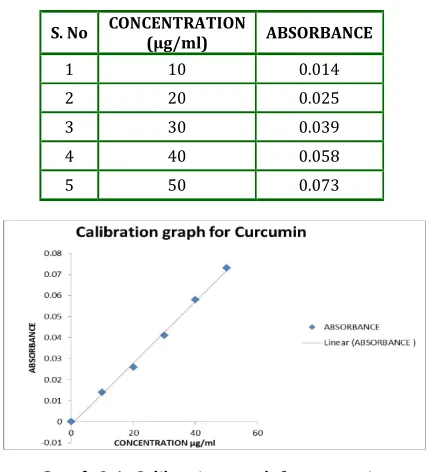
Calibration Curve for Curcumin: The standard plot
as per dilutions 10, 20, 30, 40, and 50 μg/ml
mentioned in the experimental procedure for
curcumin was done and the results are tabulated in
Table9.1 and plotted in Graph 9.1.
Table 9.1: Standard values for calibration curve of curcumin
S. No CONCENTRATION (µg/ml) ABSORBANCE
1 10 0.014
2 20 0.025
3 30 0.039
4 40 0.058
5 50 0.073
Graph 9.1: Calibration graph for curcumin
Drug Content Determination: The assay of the
different formulations F1, F2, F3, F4, F5 were
determined as given in the experimental methods and
the results were tabulated in Table 9.2.
Table 9.2: Drug content determination
S. NO FORMULATIONS ASSAY
1 F1 99.6±0.85%
2 F2 98.21±0.41%
3 F3 92.32±0.47%
4 F4 105.15±0.35%
5 F5 100.48±0.72%
The assay or drug content in the formulations ranged
between 92-106%. The assay value of F4 was found to
be higher compared to the other formulations.
Weight Variation Test: Weight variation test results were plotted in Table 9.3.
Table 9.3: Weight variation
S. NO FORMULATION % WEIGHT
1 F1 100.2 % ± 1.58%
2 F2 99.8 % ± 2.87%
3 F3 101.3 % ± 1.93%
4 F4 103.6 % ± 2.33%
5 F5 98.3 % ± 1.85%
No of tablets taken= 20
Limit of % weight = 90%-110%
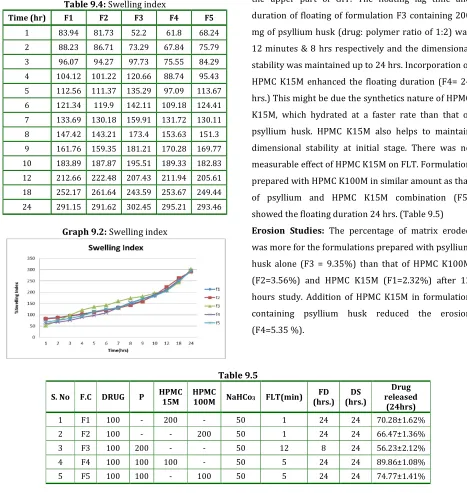
Swelling Index: Swelling is a vital factor to ensure
floating. To obtain floating, the balance between the
swelling and water must be reported. The formulation
containing psyllium husk took about 5-8hrs to swell
completely as compared to the formulation prepared
with HPMC K100M that took 3-5 hrs.to swell
completely. In the first hour of study, the swelling
index for formulation prepared with psyllium husk
alone was 52.2% (batch F3) and 81.73% (batch F2)
for the formulation prepared with HPMC K100M. The
swelling index after complete swelling was 302.45%
for formulation prepared with psyllium alone (F3) and
291.62% for formulation prepared with HPMC K100M
alone (F2). The difference in the swelling index was
because, psyllium husk is a natural agent that took
more time to hydrate when compared to synthetic
formulation containing psyllium enhanced the
swelling index at initial stage (F4= 61.8%) but
swelling index after complete swelling was decreased
(F4 = 295.21%). Finally the swelling index optimised
formulation after complete swelling was for 295.21%
formulation containing psyllium husk in combination
with HPMC K15M.
Table 9.4: Swelling index
Time (hr) F1 F2 F3 F4 F5
1 83.94 81.73 52.2 61.8 68.24
2 88.23 86.71 73.29 67.84 75.79
3 96.07 94.27 97.73 75.55 84.29
4 104.12 101.22 120.66 88.74 95.43
5 112.56 111.37 135.29 97.09 113.67
6 121.34 119.9 142.11 109.18 124.41
7 133.69 130.18 159.91 131.72 130.11
8 147.42 143.21 173.4 153.63 151.3
9 161.76 159.35 181.21 170.28 169.77
10 183.89 187.87 195.51 189.33 182.83
12 212.66 222.48 207.43 211.94 205.61
18 252.17 261.64 243.59 253.67 249.44
24 291.15 291.62 302.45 295.21 293.46
Graph 9.2: Swelling index
Floating Capacity: Floating duration & dimensional
stability are important in case of once daily
formulation to obtain the continuous and constant
drug release up to the 24 hrs. If physical integrity of
the formulation is not maintained, the tablet could
break down in to the small fragments and escape from
the upper part of GIT. The floating lag time and
duration of floating of formulation F3 containing 200
mg of psyllium husk (drug: polymer ratio of 1:2) was
12 minutes & 8 hrs respectively and the dimensional
stability was maintained up to 24 hrs. Incorporation of
HPMC K15M enhanced the floating duration (F4= 24
hrs.) This might be due the synthetics nature of HPMC
K15M, which hydrated at a faster rate than that of
psyllium husk. HPMC K15M also helps to maintain
dimensional stability at initial stage. There was no
measurable effect of HPMC K15M on FLT. Formulation
prepared with HPMC K100M in similar amount as that
of psyllium and HPMC K15M combination (F5)
showed the floating duration 24 hrs. (Table 9.5) Erosion Studies: The percentage of matrix eroded
was more for the formulations prepared with psyllium
husk alone (F3 = 9.35%) than that of HPMC K100M
(F2=3.56%) and HPMC K15M (F1=2.32%) after 12
hours study. Addition of HPMC K15M in formulation
containing psyllium husk reduced the erosion
(F4=5.35 %).
Table 9.5
S. No F.C DRUG P HPMC 15M HPMC 100M NaHCo3 FLT(min) (hrs.) FD (hrs.) DS
Drug released
(24hrs)
1 F1 100 - 200 - 50 1 24 24 70.28±1.62%
2 F2 100 - - 200 50 1 24 24 66.47±1.36%
3 F3 100 200 - - 50 12 8 24 56.23±2.12%
4 F4 100 100 100 - 50 5 24 24 89.86±1.08%
5 F5 100 100 - 100 50 5 24 24 74.77±1.41%
F.C = Formulation Code, P = Psyllium Husk Powder,
NaHCo3 =Sodium Bi Carbonate, FLT = Floating Lag Time,
In-Vitro Studies: The In-Vitro release studies were
performed as mentioned in the experimental methods
and the results were tabulated below in the table 9.6
and represented graphically in Graph 9.3. Two
different polymers (Psyllium husk and HPMC) were
used to prepare the floating tablets. It was observed
that type of polymer influences the release pattern.
The formulation prepared with psyllium husk alone
showed more sustained release (F3 =56.23%) than
those prepared with HPMC K100M (F2 =66.47%) and
HPMC K15M (F1 =70.28%) after 24hrs study. But
formulations prepared with psyllium husk alone were
not able to float up to 24 hrs. To enhance floating
duration HPMC K15M was added. The formulation
containing HPMC K15M and psyllium (F4) was able to
float up to 24hrs and release rate was enhanced
(F4=89.86%).Finally, the cumulative percent release
from optimized formulation prepared with psyllium in
combination with HPMC K15M (F4=89.86%) was
more than that of formulation prepared with HPMC
K100M (F5=74.77%).
Release Kinetics: The In-Vitro release data of
optimized formulations were treated with different
kinetics models to explain the release kinetics
curcumin from floating matrix tablets. These models
were zero order, first order, higuchi model. Higuchi
model was considered as the best fitted model.
Table 9.6: In-Vitro release profiles of the formulations
TIME
(hrs) F1 F2 F3 F4 F5
0.5 1.74±0.36 1.23±0.27 0.24±0.4 3.08±0.21 2.52±0.19 1 5.11±0.93 3.27±0.73 1.33±0.90 9.46±0.21 7.89±0.91 2 8.37±0.42 6.65±0.84 3.70±0.78 13.27±0.93 10.21±1.34 3 10.34±1.55 7.11±1.24 5.73±1.99 16.96±1.20 12.9±1.81 4 12.92±0.83 10.54±1.25 8.26±0.96 19.49±1.94 16.76±1.13 5 16.01±0.82 13.52±0.72 11.63±0.95 21.7±2.0 19.14±1.36 6 19.72±0.85 17.95±1.14 14.34±0.62 25.58±1.14 23.51±0.25 7 23.38±0.39 20.26±0.67 19.88±0.34 31.95±0.98 27.88±1.16 8 28.38±0.29 26.49±0.72 22.11±0.47 36.19±1.34 31.50±0.16 9 33.61±0.86 30.69±1.16 26.17±0.59 41.45±1.69 37.62±0.58 10 39.74±0.86 34.75±0.93 29.23±0.67 46.87±0.66 41.42±1.26 12 46.82±0.59 43.11±0.81 38.14±1.13 51.79±0.16 48.61±0.94 18 55.48±0.67 52.34±1.19 47.99±2.19 61.80±1.52 58.73±1.98 24 70.28±1.62 66.47±1.36 56.23±2.12 89.86±1.08 74.77±1.41
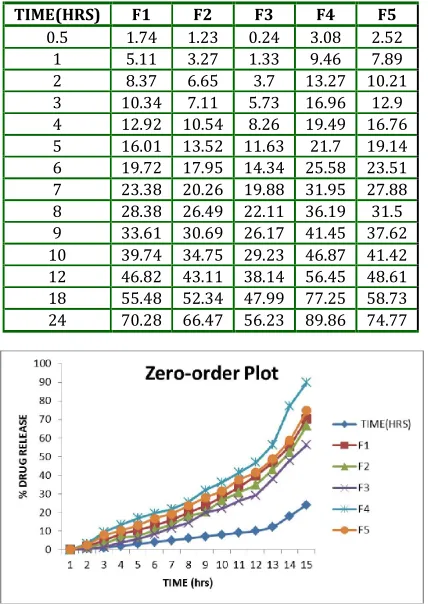
Graph 9.3: Dissolution profiles of curcumin formulations
Graph 9.3.1: Dissolution profiles of curcumin formulations
Table 9.9.1: Zero-order plot
TIME(HRS) F1 F2 F3 F4 F5
0.5 1.74 1.23 0.24 3.08 2.52 1 5.11 3.27 1.33 9.46 7.89 2 8.37 6.65 3.7 13.27 10.21 3 10.34 7.11 5.73 16.96 12.9 4 12.92 10.54 8.26 19.49 16.76 5 16.01 13.52 11.63 21.7 19.14 6 19.72 17.95 14.34 25.58 23.51 7 23.38 20.26 19.88 31.95 27.88 8 28.38 26.49 22.11 36.19 31.5 9 33.61 30.69 26.17 41.45 37.62 10 39.74 34.75 29.23 46.87 41.42 12 46.82 43.11 38.14 56.45 48.61 18 55.48 52.34 47.99 77.25 58.73 24 70.28 66.47 56.23 89.86 74.77
Table 9.9.2: First-order plot
TIME(HRS) F1 F2 F3 F4 F5
0 2 2 2 2 2
0.5 1.9924 1.9946 1.9989 1.986 1.9889
1 1.9772 1.9856 1.9942 1.9568 1.964
2 1.962 1.9701 1.9836 1.9382 1.953
3 1.9526 1.9679 1.9747 1.9193 1.94
4 1.9399 1.9516 1.9625 1.9058 1.92
5 1.9242 1.9369 1.9463 1.8938 1.9077
6 1.9046 1.9141 1.9328 1.8717 1.8836
7 1.8843 1.9017 1.9037 1.8328 1.858
8 1.855 1.866 1.8915 1.8049 1.8357
9 1.822 1.8408 1.8682 1.767 1.795
10 1.78 1.8146 1.8498 1.7253 1.7677
12 1.7257 1.755 1.7914 1.6389 1.7109
18 1.6485 1.678 1.7161 1.3569 1.6156
24 1.473 1.525 1.6412 1.006 1.4019
Graph 9.5: First-order plot
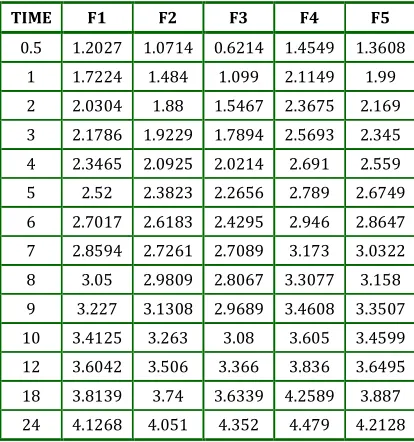
Table 9.9.3: Hixon Crowell plot
TIME F1 F2 F3 F4 F5
0.5 1.2027 1.0714 0.6214 1.4549 1.3608
1 1.7224 1.484 1.099 2.1149 1.99
2 2.0304 1.88 1.5467 2.3675 2.169
3 2.1786 1.9229 1.7894 2.5693 2.345
4 2.3465 2.0925 2.0214 2.691 2.559
5 2.52 2.3823 2.2656 2.789 2.6749
6 2.7017 2.6183 2.4295 2.946 2.8647
7 2.8594 2.7261 2.7089 3.173 3.0322
8 3.05 2.9809 2.8067 3.3077 3.158
9 3.227 3.1308 2.9689 3.4608 3.3507
10 3.4125 3.263 3.08 3.605 3.4599
12 3.6042 3.506 3.366 3.836 3.6495
18 3.8139 3.74 3.6339 4.2589 3.887
24 4.1268 4.051 4.352 4.479 4.2128
Graph 9.6: Hixon Crowell plot
Table 9.9.4: Higuchi plot
√TIME F1 F2 F3 F4 F5
0 1.74 1.23 0.24 3.08 2.52
0.7071 hr. 5.11 3.27 1.33 9.46 7.89
1 hr. 8.37 6.65 3.7 13.27 10.21
1.414 hrs. 10.34 7.11 5.73 16.96 12.9
1.732 hrs. 12.92 10.54 8.26 19.49 16.76
2 hrs. 16.01 13.52 11.63 21.7 19.14
2.2360 hrs. 19.72 17.95 14.34 25.58 23.51
2.449 hrs. 23.38 20.26 19.88 31.95 27.88
2.6457 hrs. 28.38 26.49 22.11 36.19 31.5
2.8284 s.hr 33.61 30.69 26.17 41.45 37.62
3 hrs. 39.74 34.75 29.23 46.87 41.42
3.1623 hrs. 46.82 43.11 38.14 56.45 48.61
3.464 hrs. 55.48 52.34 47.99 77.25 58.73
4.243 hrs. 70.28 66.47 56.23 89.86 74.77
Graph 9.7: Higuchi plot
Interaction Studies:
Drug-polymer interaction study FTIR: Interaction
of drug with polymers was confirmed by carrying out
IR interactions studies. The IR overlay spectrum of
drug alone and drug with polymer were seen. It shows
that there are no interactions found between the drug
CONCLUSION
From the above work it can be concluded that the
objective of the proposed project has been fulfilled
and hydro dynamically balanced systems for curcumin
using psyllium husk, HPMC K15M and HPMC K 100M
have been successfully formulated and evaluated. The
conclusion of the studies can be summarized as:
Psyllium husk might be a promising polymer for
gastro retentive floating drug delivery systems in
combination with synthetic polymer like HPMC K
15M. Use of HPMC K 15M with psyllium husk
enhanced the floating duration and helped to maintain
the dimensional stability at initial stage, which is
necessary in case of once daily formulations. The F4
(HPMC K15M + Psyllium husk) formulation was the
optimized formulations for hydro dynamically
balanced systems From FT-IR studies it was
concluded that no interactions exists between drug
and polymers. Optimized formulation followed the
Higuchi kinetics while the drug release mechanism
was found to be diffusion type through swollen
matrix.
REFERENCES
1. Leon Lachman, Herbert a. Liberman, the theory and
practice of industrial pharmacy: p.293- 302.
2. Robinson jr., lee vhl. Controlled drug delivery:
fundamentals and applications, 2nd ed. Marcel
Dekker; New York: 1978. P.24-36
3. Brahmankar dm, jaiswal sb. Bio pharmaceutics and
pharmacokinetics a treatise. 1st ed. Vallabh
prakashan; new Delhi: 1995.p.64-70
4. Chein yw. Novel drug delivery systems. 2nd ed.:
marcel Dekker New York; 1992. P.4-56
5. Ansel pharmaceutical dosage form and drug delivery
system, Lippincott, 7th edition: pg. 553
6. Gennaro ra. Remington: the science and practice of
pharmacy. 20th Ed. New York : Lippincott Williams;
2000.p.1045
7. Banker gs, Rhodes ct. Modern pharmaceutics. 3rd
ed.: marcel Dekker; new York 1996.p.678-721
8. Vyas sp, khar rk. Controlled drug delivery: concepts
and advances. 1st ed. Vallabh prakashan;new Delhi :
2002.p.345-376
9. P.G.Yeole, Floating drug delivery system: need and
development. Ind.J.Pharm Sci, 2005,67(3); 265-272
10. Shweta Arora, Floating drug delivery: A Review,
AAPS pharm SciTech, 2005; article 47
11. Shweta Arora, Javed Ali, Alka Ahuja, Roop K.Khar,
“Floating Drug Delivery Systems-A Review” AAPS
Pharm SciTech)
12. Ross and Wilson anatomy physiology and health
education; Churchill Livingston; 9th edition: 295-311
13. Wilson krw, Waugh a. Anatomy and physiology in
health and illness. 9th ed. Churchill Livingstone;
London: 1996. P342-345
14. Garima chawla, gupta, pharmaceutical technology:
july2003
15. Desai s, Bolton s. A floating controlled release
system: in-vitro – in-vivo evaluation. Pharm. Res.
1993; 10: 1321-1325.
16. Davis SS, Stockwell AF, Taylor MJ. The effect of
density on the gastric emptying of single and
multiple unit dosage forms, Pharm Res 1986; 3:
208-213.
17. Garg s, Sharma s. Gastro retentive drug delivery
systems. Pharmatech. 2003; 160-164.
18. Dr.Jose, Khalid shah, gastro retentive drug delivery
system: business brief; Pharmtech, 2003.
19. Deshpande AA, shah nh, Rhodes Ct., development of
a novel controlled release system for gastric
retention. Pharm. Res. 1997; 14(6): 815-819.
20. Garima chawla- a means to address regional
variability in intestinal drug absorption:
pharmaceutical technology; 2003
21. David ss. The effect of density on the gastric
emptying on single and multiple unit dosage forms.
Pharm res. 1986; 3: 208-213.
22. Garg S. and Sharma S. Gastro retentive Drug Delivery
System, Business Briefing: Pharmatech. 2003,
160-166.
23. H.g. Siva Kumar, floating drug delivery system for
prolonged gastric residence time: a review, ind. J.
Pharm. Edu; oct-dec-2004.
24. B.n.singh, h.kim.floating drug delivery system an
approach to control drug delivery via gastric
retention; journal of controlled release 63 (2000);
235-259.
25. P. G Yeole., S. Khan, V. F Patel., Floating drug delivery
systems: Need and Development, Indian J. Pharm.
26. B.y.choi, h.j.park, preparation of alginate beads for
floating drug delivery system: effect of co2 gas
forming agent.
27. Timmermans j, moes aj. The cut off size for gastric
emptying of dosage forms. J. Pharm. Sci. 1993; 82:
854.
28. Bhavana v, khopade aj, Jain wd, shelly and Jain nk.
Targeted oral drug delivery. Indian drugs 1996; 33:
365-373.
29. Roop k. Khar controlled drug delivery, gastro
retentive system pg;202-203.
30. Margret chandira, Sachin, Debjit bhowmik, B.
Jayakar:formulation and evaluation of mucoadhesive
oral tablet of clarithromycin, the pharma research (t.
pharm. res.), (2009), 2; 30-42
31. Singla A, Goswami D. characterization of
mucoadhesive tablets of ciprofloxacin.
webmedcentral pharmaceutical sciences
2010;1(9):wmc00586
32. G.C. Rajput et al. Stomach Specific Mucoadhesive
Tablets As Controlled Drug Delivery System – A
Review Work / international journal on
pharmaceutical and biological research vol. 1(1),
2010, 30-41
33. Dilip.C, Shabir ali T.K. :formulation and evaluation of
transdermal patches of curcumin, scholars research
library der pharmacia lettre, 2010, 2(5): 117-126
(http://scholarsresearchlibrary.com/archive.html)
34. H. N. Aswatha ram, Prachiti lachake, Ujwal kaushik,
and C.S. Shreedhara: formulation and evaluation of
floating tablets of liquorice extract
35. Andrew m. anderson, Matthew s. mitchell, and Ram
s. mohan:isolation of curcumin from tumeric,
jchemed.chem.wisc.edu journal of chemical
education, 2000, v. 77 (3), 359-360.
36. Aditi pandey, Sanjay k. katiyar : determination and
comparison of the curcuminoid pigments in turmeric
genotypes (curcuma domestica val) by high
performance liquid chromatography,international
journal of pharmacy and pharmaceutical
sciences,issn- 0975-1491 vol 2, issue 4, 2010
37. Jasim hilo naama, Ali a. al-temimi and Ahmed a.
hussain al-amiery :study the anticancer activities of
ethanolic curcumin extract, african journal of pure
and applied chemistry vol. 4(5), pp. 68-73, may 2010
available online at
http://www.academicjournals.org/ijps issn 1992 -
1950 © 2010 academic journals
38. Ida musfiroh, Wiwiek indriyati, Yasmiwar susilawati,
Asri percekawati:curcumin quantification in dosage
forms using high performance liquid
chromatography
39. Shishir shishodia, Gautam sethi, and Bharat b.
Aggarwal curcumin: getting back to the roots, ann.
n.y. acad. sci. 1056: 206–217 (2005). © 2005 new
york academy of sciences.doi:
10.1196/annals.1352.010
40. Shishu, Neeta gupta, and Nidhi aggarwal
:bioavailability enhancement and targeting of
stomach tumors using gastro-retentive floating drug
delivery system of curcumin—“a technical note”,
aaps pharmscitech, vol. 9, no. 3, september 2008 (#
2008) doi: 10.1208/s12249-008-9096-y
41. Niraj vyas, Kanan gamit, Mohammad y. khan,
Siddharth panchal and k. Pundarikakshudu
simultaneous estimation of curcumin and piperine in
their crude powder mixture and ayurvedic
formulation using high performance thin layer
chromatography, international journal of research in
pharmaceutical and biomedical sciences issn:
2229-3701.
42. Onita de, Parag kundu,Snehasikta swarnakar,T.
Ramamurthy, Abhijit Chowdhury,g. Balakrish Nair,
and Asish k. Mukhopadhyay: antimicrobial activity of
curcumin against helicobacter pylori isolates from
india and during infections in mice_antimicrobial
agents and chemotherapy, apr. 2009, p. 1592–1597.
43. Saraswathi R Krishnan.P.N, Dilip.C, Shabir Ali T.K.;
Formulation and evaluation of transdermal patches
of curcumin,Der Pharmacia Lettre, 2010, 2(5):
117-126
44. Yasir M, Asif M, Bhattacharya A, Bajpai M,
Development and Evaluation of Gastroretentive Drug
Delivery System for Theopylline using Psyllium
Husk, International Journal of ChemTech Research
CODEN( USA): IJCRGG ISSN : 0974-4290 Vol.2, No.2,
pp 792-799, April-June 2010.
45. Raymond C Rowe, Paul J Sheskey and sian C owen;
Hand book of pharmaceutical excipients, 5th edition.
46. Saraswathi R * Krishnan.P.N, Dilip.C, Shabir Ali T.K.
Formulation and evaluation of transdermal patches
of curcumin. Al Shifa College Of Pharmacy, Kizhattur,
47. Higuchi WI. Diffusional models useful in
biopharmaceutics- Drug release rate processes. J
Pharm Sci. 1967;56:315.
48. Arora S, Ali A, Ahuja A, Khar RK, Baboota S. Floating
drug delivery systems: A review. AAPS
PharmSciTech 2005; 6(3): E372- E390.
49. Chien YW. Rate control drug delivery systems:
controlled release vs. Sustained release. Med Prog
Techn 1989; 15: 21-46.
50. Robinson J.R, Lee V.H.L.: Controlled drug delivery:
fundamentals and applications, 2nd edition. Marcel
Dekker, Inc., NY 1987.
51. Rodriguez C.F., Bruneau N., Barra J., Alfonso D.,
Doelkar E.: In: Handbook of Pharmaceutical
Controlled Release Technology, Wise D.L. Ed., Marcel
Dekker Inc., NY 2000.
52. Lachman L, Lieberman ha, kanig JL. The Theory and
Practice of Industrial Pharmacy. Philadelphia, PA:
Lea and Febiger: 317-318, 1987.
53. Baumgartner S, Kristel J, Vreer F, Vodopivec P, Zorko
B. Optimization of floating matrix tablets and
evaluation of their gastric residence time. Int J
Pharm. 2000; 195: 125-135.
54. D. Harries., H. L. Sharma. GI transit of potential
bioadhesive formulations in man: A scintigraphic
study. J. Control. Release, 1990,12: 45-53.
55. Patel VF, Patel NM, Yeole PG. Studies on formulation
and evaluation of ranitidine floating tablets. Indian J
Pharm Sci. 2005;67:703–9.
56. Raghuram RK, Srinivas M, Srinivas R, Once-daily
sustained- release matrix tablets of nicorandil:
formulation and in vitro evaluation. AAPS
PharmaSciTech [serial online] Vol.4, E61, 2003.
57. Hogan, J.E. (1989). Hydroxypropyimethylcelluose
sustained release technology. Drug Dev. Ind. Pharm.
15: 975-999.
58. Huang, Y., Khanvilkar, K.H., Moore, A.D. and
Hilliard-Lott, M. (2003). Effects of manufacturing process
variables on in vitro dissolution characteristics of
extended-release tablets formulated with
hydroxypropyl methylcellulose. Drug Dev. 29: 79-88.
How to cite this article: P Sobhita Rani*, T Neelima Rani, V Jayanth, Lavanya Reddy; Formulation and Evaluation of HPMC and Physillium Husk based floating tablets of Curcumin for Ulcer; J. Adv. Pharm. Edu. & Res. 2014: 4(1): 80-92.
Source of Support: Nil, Conflict of Interest: Nil