Vol.7 (2017) No. 3
ISSN: 2088-5334
Using the Intelligent Agents for Planning the Learning Time
in a Distance Learning System
Imane Kamsa
#, Rachid Elouahbi
#, Fatima El khoukhi
* #Department Mathematics and Computer Science, University Moulay Ismail, Meknes, Morocco E-mail: [email protected]
*Team Modelling Applied Informatics in Humanities, University Moulay Ismail, Meknes, Morocco E-mail:[email protected]
Abstract
—
In this paper, Intelligent Agent (IA) and Pedagogical Graph (PG) are combined to plan a personalized timetable and regulate the disturbances produced on this calendar of learning. This work is done by three intelligent agents: Scheduler Agent (SA), Regulatory Agent (RA), and Decision Agent (DA). The function of SA is to calculate the period of each learning unit modeling in the pedagogical graph for each learner before starting his learning process. This operation takes into account the understanding speed, the rhythm, the periodic learning time, the expected time of learning units and the learning path regulations. The work of RA and DA is to adjust and take the decision to update timetable bearing in mind the impact of its perturbation and the chance given to the learner. The major benefit of this work is always to keep the time flexible in the e-learning while exercising a weak and indirect influence on the learner for optimal learning because the time sequence in learning has a favor impact in the acquisition.Keywords
—
e-learning; timetable; personalization; intelligent agents; pedagogical graphI. INTRODUCTION
The E-learning is one of the most significant terms of distance education. It witnesses a constant growth and a prominent use in all areas and at all levels. This method of learning is presented as an efficient method for temporal and spatial flexibility [1], [2]. It enables learners to work remotely at their own pace and according to their availability. 'Study when I want and where I want' is the supreme privilege of e-learning. However, this advantage can be a handicap if the student does not know how to exploit it carefully and benefit from his temporal freedom.
At school, the learning time is programmed by a teacher who is planning a schedule of pedagogical activities, which clarifies the stopwatch of the temporal progression of the learner. However, at the online learning, the learner is alone in front of the management of his learning time. The absence of skills, the lack of order and organization as well as the freedom and the total autonomy lead to a random learning and a poor acquisition of knowledge [3]. We can agree on the fact that planning is the key to a successful learning either in-class or online. Without organization, the learner is not able to guarantee the achievement of the training objectives even if the homework and the assessment are delivered in the required time.
In this context, the first goal of our approach is to help the online learner to schedule automatically and dynamically his learning time by offering him a personal schedule adapted to his rhythm and his availability. This work is done by intelligent agents whose role is to build and manage the timetable specific to each learner [4], [5].
The present paper is organized as following. In section I, we recall some works that have adopted the intelligent agents in e-learning. In section II, we present the different ways of online learning techniques, explain our contribution and then describe the graphic modeling approach of a training item. In Section III, we describe our intelligent agents, their functionality as well as their internal communication and the experiment of our approach on a reduced pedagogical objective. Section IV is devoted to some conclusions and some perspectives for our future projects.
A. Related Works
performance. The schedule and its organization are key factors in a successful academic year. This is also confirmed by the work of Veran et al. [7]. Moreover, the work of Mbog [8] confirmed that time is a decisive factor for the achievement of a pedagogical objective and that no training program can be applied successfully without setting its timetable. The schedule must be centered on the student so that he can succeed in his studies and extracurricular activities. This is ensured by the work of Misandeau [9].
Another study by Suchaut [10] proved that time remains an inevitable ingredient of any phase of learning because it structures all pedagogical activities. It also certified that the organization and optimal use of school time is an essential condition of learning.
In the work of ("The pedagogical benefits of the new organization of school time") [11], the author assured that the adaptation of school time to learner offers him adequate chance to learn enjoyably and participate extensively in the acquisition of knowledge.
A very significant number of studies in the literature certify that the management of learning time plays a crucial role in the acquisition of knowledge and school success. It is obvious that the majority of these studies view the importance of time management in classical education. Therefore, why not also give online learners an opportunity to benefit from this major asset of maximizing learning by planning learning time?
B. Statement of the Problem
1) Ways of Online Learning: Online learning can be
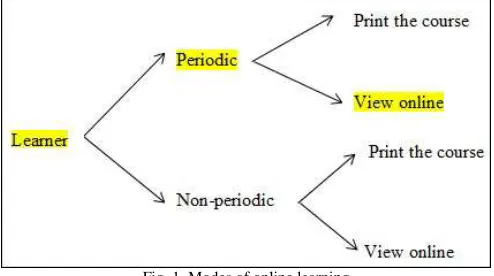
accomplished in different ways depending on the choices of learners [12] (Fig. 1). Some choose a fixed and regular time for the completion of their pedagogical activities, while others follow their learning in a random manner. They do not give much care to a regular time interval for training. Thus, most learners prefer to print the courses over a paper to use them later [13]; others follow their training on computer online. This categorization has been taken from an interview realized by Jelmam [14]. Our approach is mostly directed to the periodic learners considering the advantages provided. They can choose the appropriate time and the right place to focus on their learning. In addition, they become more involved in achieving their goals. Similarly, we have given more attention to learners taking online courses, because they are mainly the most affected by the problem of time management of learning in comparison to those who print the course to save time well and have written documents available to be consulted everywhere.
Fig. 1 Modes of online learning
C. Approach Aims
The absence of an automatic and personal planning time of learning is the major drawback of e-learning. We focused on this problematic in order to fix it and make the e-learning environment more effective and efficient. Based on the principle planning for better acting [15], [16], we developed our automatic and dynamic approach to planning the learning time to the learners. This approach allows building a personal schedule for each learner and supervises him to be more regular and disciplined throughout the learning process. The aim of our work is twofold [17]:
• Always keep the major advantage of e-learning to allow each learner to work at his own pace and according to his availability.
• Provide a personalized learning schedule automatically to help him to achieve his pedagogical goals.
For this reason, we guide our work towards intelligent agents giving rise to distributed treatment in a dynamic environment. We suggest for this study three autonomous entities acting in real time for a good planning and good managing of the learning time.
II. MATERIAL AND METHOD
A. Modeling the Learning Pedagogical Graph
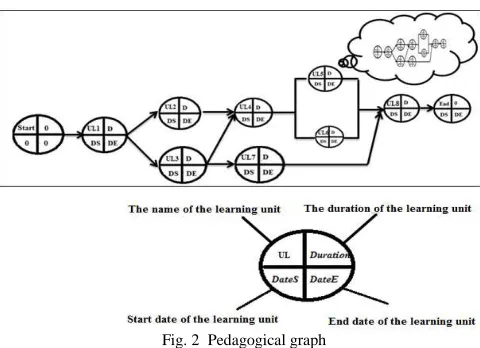
To model the possible path that the learner can follow in order to complete his pedagogical objective, we choose a pedagogical graph as a model defined by the triplet G = (V, E, V °) [18] (Fig. 2).
V: represents the start and the end knots of the pedagogical objective, in addition to the units of learning (ULi). ULi can be a curriculum, a chapter or an assessment created to accomplish a learning objective. There are two types of ULi: the elementary ULi, which is not decomposable and the ULi modular, which is decomposed into subunits.
E: is the set of links between learning units modeling possible navigations between ULi.
V°: is the set of knots in subgraph i.e. all the subunits.
1) Type of Connection between the ULi:
Oriented link between UL1 and UL2 is defined by the teaching team.
Oriented link between UL3 and UL4 created by the learner during the learning process.
Fig. 2 Pedagogical graph
B. Intelligent Agents for Personal Planning Time Learning
A multi-agent system is "a system composed of a set of autonomous and intelligent entities that coordinate their knowledge to achieve a goal or solve a problem" [19]. We talk about an intelligent agent when it is capable of performing a flexible action automatically in relation to its objectives [20], [21], [22]. In this context, the integration of multi-agent system was the best solution in our approach for great satisfaction to our ultimate goal and better communication between various entities developed in the present paper.
1) Scheduler Agent SA: Since registration in the
e-learning system, every learner is supported by the Scheduler Agent. This agent works offline before the outbreak of the learning process. Its role is to plan ahead a personalized learning time of each unit for each learner.
The primary objective of our approach is to better satisfy the online learner, by taking care of their learning time plans to help him to achieve his training objective in an appropriate time period.
Fig. 3 shows the data flow diagram that describes the tasks performed by SA.
Fig. 3 The SA data flow diagram
In order to make the learner’s personal schedule available, SA extracts fundamentals data for personalization (D1), namely the periodic rhythm of the learner and the learning speed. Similarly, it extracts the pedagogical graph of the relevant training objective: a set of teach units ULi with an
average duration Dui (D2). Through extraction of the input data, SA calculates the personalized learning time of each unit, which means the date of start and end using planning formulas that will be discussed later. In the end, it structures the schedule that will be operational and exploitable by the learner. In this context, the achievement of objectives is equally assured, and the frequency of failure is low. The learner is well supported; he works at his own pace and with minor requirements taken into consideration: so as to be punctual and respect the schedule.
Description of SA Actions
Identify the learner properties: The learner profile is a key element in generating and planning the employment of learning time. The profile is represented by an amount of information about the characteristics of the learner [23]. In our work, SA extracted two properties, allowing the individualization of the learner when it comes to his learning times:
• The learning speed: learners have a slow learning speed, medium or fast. This property is passed to allow the success of each learner.
• The periodic training time of learner: It facilitates not only better planning of his schedule but also allows it to exploit to the fullest the periods of his intellectual availability.
Identify the learning unit properties: For each ULi ϵ V we
associate a data list ULi (SDi, EDi, PTT, Pi, PLDi and DTi) where:
- SDi is the Start Date at which the learner can start learning ULi.
- EDi is the End Date permitted to the learner when he must complete the learning ULi. So [SDi, EDi] means the time interval of learning ULi.
- PTT is the Periodic training time of the learner (i.e. 1 hour per day / per week …) given by the learner and regulated by the regulatory agent in case of disturbances.
- Pi is the priority of the ULi.
PLDi is the Personalized Learning Duration of the learner
ADi is the Average Duration of learning ULi, SLL is the Speed of Learning of the Learner, and ASL is the Average Speed of Learning.
- TLDi is the Total Learning Duration of an ULi estimated from the speed of learning of the learner.
LP is the Learning Period of the learner, and LTP is its Learning Time per Period.
Calculate the learning dates: The aim of the scheduler agent is to provide learning dates of each ULi which may be (2)
followed by the learner and presented in the pedagogical graph. This forecast is based on his predecessors respecting all the time and precedence constraints.
- The Start Date SDi is the date in which an ULi can be started. To evaluate this, it is necessary to list all the paths that lead to this ULi, and then we withhold the maximum value of the end dates of the last ULi constituting each path.
(1)
Where j belongs to the set of predecessors of i vertices, noted and defined as follows:
The End Date (EDi) is the date that an ULi must be completed. Its value is equal to the ceiling of the sum of its starting date, its duration, and its Acceptable Delay Threshold ADTi.
(6)
Where
(7)
TD is the Tolerable Delay for a Time Unit TU.
Structure the response: SA provides dates for each ULi with a preliminary timetable, which allows the learner to view the forecasts concerning the conduct of his learning process and optimizing his learning time.
2) Regulatory Agent (RA): RA has a double mission,
namely: the detection of disturbances occurred on schedule during the learning process. This will cause the second mission that is in real time regulation of disturbances produced on the schedule.
Fig. 4 Activity diagram RA
The modeling of activity diagram of our RA agent was inspired by a multi-agent approach modeling the information system of the Urban Traffic Systems [24]. This diagram is illustrated in Fig. 4. Here one can see that RA begins by updating the learning time of the current unit in real time, then checks if its actual end date is less or equal than the last expected end date. If the response is yes, the timetable is not disturbed, and the agent gets to rest for an instant (configurable: until the learning of the next ULi). When it reacts, it restarts the same comparison. Otherwise, if the answer reports that the schedule is disrupted in this ULi, the agent look for the details of this disturbance in order to calculate its influence on the end date of the learning process. If this delay has an acceptable impact and the learner has more chances of being late, the replanning of the ULi to follow is necessary, if not, an alert message will be sent to DA.
Description of RA Actions
Before describing the goals of the regulating agent, we must define the possible disturbances in the e-learning mode.
Definition of disturbance: Any event that may modify the use of learning time directly or indirectly and which has the effect difference between the projected schedule and the actual schedule can be defined as a disturbance [25]. A disturbance usually results in irregularities in the learning process changing the intervals of achieving the ULs. Several factors can cause these disturbances. This can be classified according to external and internal factors (Fig. 5).
Fig. 5 Disruption factors
For the distance learning system, in the case of internal disturbance, a schedule update is needed. In the case of external disturbances, the pace of the learner will always remain the same. The regulating agent will then propose an extension of learning time because in this case, the responsible agent is the system and this delay means for the learner a long waiting time.
Detecting the disturbance: for detecting a disturbance, RA updates the learning date of current ULi in real time and then calculates the difference between forecast dates and actual dates (Fig. 6).
Fig. 6 Activity diagram of disturbance detection
Calculate the impact of disturbance
Fig. 7 Activity diagram of the impact of the disruption
When it comes to impact calculation, we have to initially check its type first. If there is an internal distribution, RA will calculate the effect of this disruption. If it has an acceptable impact on the starting date of successors units and the learner has not completed the chances of being late, the replanning is required, if not an alert message will be sent to DA (Fig. 7).
Algorithm for calculating the impact of the disturbance
Where j belongs to the set of successors of i vertices, noted and defined as follows:
And
Schedule regulation: In our approach, the learner can choose courses among several options to achieve his educational goals. In order to regulate the estimated time employment, RA changes the learning time of the learner by adding an Extra Duration ED to the learning units where its priority is different to 1 to rectify the delay made.
(10)
With
(11)
3) Decision Agent DA: DA is an agent that is triggered
when the learner makes unacceptable delay. Its main role is to accept or reject the extension of the completion date of the training. The Fig. 8 shows the behavior of the decision agent facing an unacceptable delay, indicating how the decision is it taken.
Fig. 8 Activity diagram of DA
From its inception, DA stops functioning waiting for the event that may reactivate and trigger its process. The event in question comes from the RA (receiving a message from the RA). Fig. 8 describes this event, and the features of DA are summarized overall in:
-Receiving an alert that indicates that the student has made an unacceptable delay in ULi.
-Sending a priority request, in which DA asks the learner the justifications and causes of this inadmissible delay. The communication between the learner and this agent is through its communication interface.
-Examining of the data received to make a good decision making by analyzing the learner’s response to judge the given reasons. (Illness justified by a medical certificate, professional mission or mission staff convinced).
Begin
If (real-time end of ULi > date scheduled for the end of ULi) then a disturbance exists
If (real-time end of ULi > scheduled starting date of ULj) then the disturbance has impacts
If (delay ≤ Date of completion of training - Date scheduled for the end of ULi – number of the remaining units to follow +1) then acceptable delay
Else Unacceptable delay
Sending an alert to ADL End if
End if End if End
-Transmission of the final decision to the learner (either DA accept the justifications given by the learner, and it gives him another chance by the extension of the date of completion of training, or it refuses its justifications, and in this case, the learner fails in its training).
Extension of the Training Date
The extension of the date of completion of training is performed by offsetting the dates of the learning units by the actual delay performed.
(12)
(13)
C. Communication between Agents
To ensure the coordination between our agents, the channels of communication must establish a view to facilitate exchanges and interactions in a dynamic system and in a perpetual movement [26].
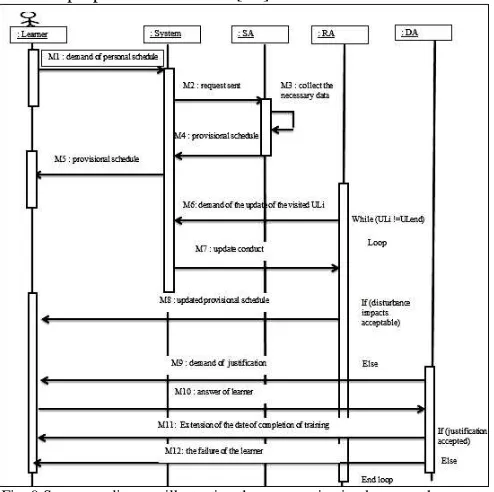
Fig. 9 Sequence diagram illustrating the communication between the agents
The UML sequence diagram modeling in our context is shown in Fig. 9. It demonstrates how our agents interact and collaborate between them through the exchange of the messages M.
III.RESULTS AND DISCUSSION
In order to examine the impact of temporal planning on the performance of learners, a questionnaire was devised and sent to a sample of 56 undergraduate learners enrolled in the department of History studies at the Faculty of Arts and Humanities in Meknes. The questionnaire requested learners to determine if the planning of learning time impacts their learning performance. The result obtained proved that temporal planning positively affects the productivity of learners.
Fig. 10 Point of view of the respondents
As illustrated in the Fig. 10, 90% of the respondents stated that when they schedule their learning tasks, they achieved their objectives in due time, while just 10% of them said that the planning of learning time did not affect their productivity.
The results of this study are very encouraging to implement our approach and support online learners by offering them a planning tool of learning time. To this point, we have highlighted scheduler agent which aims to serve learners during their learning process by offering them personalized planning.
A. Experimental Data
As we have already mentioned, the database of the experiment is a pedagogical graph, the average duration of each learning unit and learning properties.
1) Pedagogical Graph: This is a typical graph, handmade, with reasonable connectivity connected to four learning units, a start vertex, and end vertex. In this graph, UL4 is assumed as a test unit (Fig. 11).
Fig. 11 Typical pedagogical graph
2)The Average Duration of Each Learning Unit: in order
TABLEI DURATION OF LEARNING UNITS
Learning unit Duration
Start 0h
UL1 2h
UL2 2h.30min
UL3 1h
UL4 3h
End 0h
3) Properties of Learners: Each learner has his own learning pace, and his own periodic training period. The model learner who was chosen to project planning and regulation process of learning time has an average attainment speed.
The following paragraphs describe his schedule as well his regulation in case of disturbance.
B. Analysis and Results of the Experiment
1) Planning: To ensure the success of online learning,
the planner agent imposes an employment custom time, which the learner must comply.
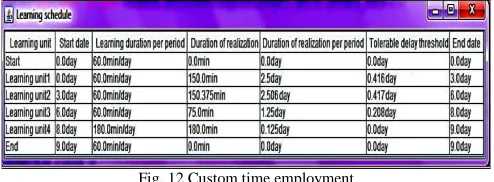
Fig. 12 Custom time employment
Fig. 12 shows a summary indicating the parameters specified by the learner as its periodic training time and the parameters that are automatically calculated or settled by the system according to the rules and formulas specified above (start date, end date, duration of realization, duration of realization by period and the acceptable threshold delay).
SA provides to the learner a structured personal schedule, which appears in Fig. 13 shown below.
Fig 13. Custom schedule
The schedule is illustrated in Fig. 13, determining the beginning and the end of each learning unit that must be respected by the learner. This experiment showed that it is possible to use a learning time manager in an online training process. This shows that we can achieve our scientific design
goals by building a customized schedule that manages the learner’s temporal progression of learning. Moreover, the proposed schedule is flexible and always respects the major advantage of e-learning “study when I want”. The results indicate that there is no strong pressure on the learner. The SA offers the intervals of time to complete each learning unit in which the learner can manage his learning time at his own pace in order to perform in a perfect way. However, this schedule is beneficial for just periodic learners. The question posed here is “how can we manage the learning time for non-periodic online learners?”
2) Regulation: In our second study, we tried to highlight
the role and advantages of the regulating agent in our design and scientific approach. In case the learner has an acceptable delay, the regulatory agent will rearrange the learner schedule time. The purpose of RA is to enable the learner to catch up and control the delay accumulated in a dynamic way, which allows him to achieve the pedagogical goal in the scheduled time and ensure a better knowledge construction.
3) Collection Data: The operation of the RA basically
amounts to collect data needed to detect disturbances namely actual end dates.
We assume that our learner could not complete the learning unit 2 at the end provided by the SA, and he made a one-day delay (actual end date of UL2= 7 day)
In this case, the RA will reschedule the learning time of the remaining units and repropose a new schedule that the learner must follow.
Fig. 14 Regulated learning schedule
Fig. 14 presents the schedule of the learner after its regulation. This regulation is mainly based on the periodic learning time the learner and the starting date and end of the remaining learning units.
In the first place, RA functionality seems equally appropriate for an acceptable impact disturbance. The objective of the RA is reached. The result shows that in the case of a tolerable delay, it is possible to regulate the accumulated delay by proposing an update of the schedule. Nevertheless, the decision and regulation are based on the actual end date of each learning unit which makes this method of collecting information on the actual end date is particularly toilsome. In this perspective, we will determine in our future work the data collected by RA to appreciate the actual end date of each learning unit.
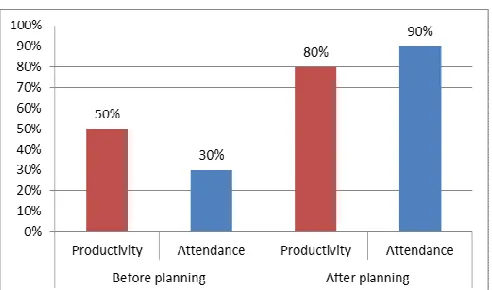
Fig. 15 Increased productivity and attendance of learners after a personal planning of their learning process.
As this figure shows (Fig. 15), there is a significant increase in the productivity of learners in terms of accomplished assessments. Eighty percent of learners passed the test with good mark when they used personalized study schedule compared to their productivity when they used a random one, only 50% of learners passed the test with the good mark. This confirms the influence of a programmed and continuous learning on learners’ success.
There is also a remarkable increase in the participants’ punctuality of attendance when they use a personal schedule compared to using an unplanned timetable. This punctuality is determined in terms of complying with the submission deadline of the work requested. In the planned learning process, 90% of learners returned their work on the requested date, while just 30% of learners returned their work on the requested date in an unplanned learning process. In conclusion, the planning of learning-time is a necessary condition for the success of learners whether in-class or online.
IV.CONCLUSIONS
Planning learning time is a key element for academic success whether in classical teaching or in e-learning programs. This paper presents a very useful approach to plan timetable dynamically and personally in an e-learning environment. The aim of this research was to offer to learners a solution that can help them to achieve their pedagogical goal in an optimal time. This solution is very interesting, and the results are very encouraging. The learners have shown a great satisfaction, and their productivity is increased. In our next work, we will perform the planning approach by adding other constraints for example: Planning synchronous learning units, holidays and examination timetables, etc.
REFERENCES
[1] S. Naidu, “Designing Instruction for eLearning Environments,” pp. 1-20, 2001. [Online]. Available :
http://www.c3l.uni-oldenburg.de/cde/media/readings/naidu01.pdf.
[2] E. Uyttebrouck, “Le flexibilite temporelle dans une formation continuée à distance,” International Journal of E-Learning & Distance Education, vol. 18, no. 4, pp. 16-34, 2007.
[3] C. McLoughlin, and L. Marshall, “Scaffolding: A model for learner support in an online teaching environment’, In Flexible futures in tertiary teaching,” Proceedings of the 9th Annual Teaching Learning Forum, vol. 2, no. 4, 2000.
[4] S. Latha, A.M. Moamin, A.S. Mohd and M.Z.M. Yusoff, “ An Emotion-based Model for Improving Students’ Engagement using Agent-based Social Simulator,” International Journal on Advanced Science, Engineering and Information Technology, vol. 6, no. 6, pp. 952-958, 2016. [Online]. Available: http://dx. doi.org/10.18517/ijaseit.6.6.1300.
[5] I. Kamsa, R. Elouahbi, R. and F. El Khoukhi, “Intelligent Agents for Dynamic Optimization of Learner Performances in an Online System,” Journal of Information Technology Education: Research (JITE: Research), volume 16, pp. 31-45, 2017. [Online]. Available: https://www.informingscience.org/Publications/3627.
[6] L. Pirot, and J.M. De Ketele, “L’engagement académique de l'étudiant comme facteur de réussite à l'université Étude exploratoire menée dans deux facultés contrastées,” Revue des sciences de l’éducation, vol.26, no.2, pp.367-39,2000, DOI : 10.7202/000127ar. [7] D.J.P. Véran, S. Rivemale, and M.H. Bodilis, “L'emploi du temps,
clé d'une année scolaire réussie ?,” Revue numérique des professionnels de l'éducation, 2014. [Online]. Available: http://www.cap-education.fr/article-l-emploi-du-temps-cle-d-une-annee-scolaire-reussie-119451680.html.
[8] Mbog, “Comment gérer son emploi de temps en classe d'examen?,” 2014. [Online]. Available: http://reglo.org/posts/comment-gerer-son-
emploi-de-temps-en-classe-d-examen-42%204.%20http://lemirail.es.free.fr/spip.php?article21.
[9] Misandeau. “Un emploi du temps centré sur l’élève,” The high school organization of Matin, France, 2014. [Online]. Available: http://lemirail.es.free.fr/spip.php?article21.
[10] Suchaut, B. “L’organisation et l’utilisation du temps scolaire à l’école primaire : enjeux et effets sur les élèves,” Conference on the initiative of the city of Cran-Gevrier (Haute-Savoie), France, pp. 1-17, 2009. [Online]. Available: https://halshs.archives-ouvertes.fr/halshs-00395539.
[11] The pedagogical benefits of the new organization of school time, (2014), Press Conference, Ministry of National Education, Higher education and research, France, 2014. [Online]. Available: http://www.ain.gouv.fr/IMG/pdf/2014_benefices_rythmes_scolaires-dossier-presse_329488_0-2.pdf.
[12] H. Holec, “Autonomie de l’apprenant: de l’enseignement à l’apprentissage,” Éducation permanente, no. 107, pp. 1-5, 1991. [13] G. Dieumegard, and M. Durand, “L'expérience des apprenants en
e-formation,” Revue de littérature, Savoirs, vol. 7, pp. 93-109, 2005. [14] Y. Jelmam, “Apprentissage en ligne et temporalités,” France.net, vol.
3, pp. 42-49, 2011.
[15] M. Musial, F. Pradère, and A. Tricot, “Comment concevoir un enseignement?,” De Boeck, 2012.
[16] H. Silaban, “Applying Interactive Planning on Science and Technology Policy in State Personnel Agency,” International Journal on Advanced Science, Engineering and Information Technology, vol. 6, no. 5, pp. 689-696, 2016. [Online]. Available: http://dx.doi.org/10.18517/ijaseit.6.5.1027.
[17] I. Kamsa, F. Elghibari, R. Elouahbi, S. Chehbi, and F. El Khoukhi, “Learning time planning in a distance learning system using intelligent agents,” IEEE In Information Technology Based Higher Education and Training (ITHET), International Conference on , pp. 1-4, 2015.
[18] I. Kamsa, R. Elouahbi, F. El Khoukhi, T. Karite, and H. Zouiten “Optimizing collaborative learning path by ant’s optimization technique in e-learning system,” In Information Technology Based Higher Education and Training (ITHET), 2016 International Conference on, (pp. 1-5). IEEE, 2016. [Online]. Available: http://ieeexplore.ieee.org/abstract/document/7760697/?reload=true. [19] M. Sghaier, “Combinaison des techniques d’optimisation et de
l’intelligence artificielle distribuée pour la mise en place d’un système de covoiturage dynamique,” (Doctoral dissertation, Ecole Centrale de Lille), 2011.
[20] N.R. Jennings, “Controlling cooperative problem solving in industrial multi-agent systems using joint intentions,” Artificial intelligence, vol. 75, no. 2, pp. 195-240, 1995.
[21] M. Wooldridge, “An introduction to multiagent systems,” John Wiley & Sons, 2009.
[22] I. Kamsa, R. Elouahbi and F. El khoukhi, “Interaction in online system is a favor key for learners’ success,” International Journal on Advanced Science, Engineering and Information Technology, vol. 7, no, 2, 2017. [Online]. Available : http://dx.doi.org/10.18517/ijaseit.7.2.1475.
2011. [Online]. Available : http://liris.cnrs.fr/Documents/Liris-5146.pdf
[24] M. Chabrol, and D. Sarramia, “Modélisation orientée objets du système d'information des Systèmes de Trafic Urbain: une approche multi-agents,” Université Blaise Pascal–Clermont-Ferrand II LIMOS, 2001.
[25] M.F. Feki, “Optimisation distribuée pour la recherche des itinéraires multi-opérateurs dans un réseau de transport co-modal,” Doctoral dissertation, Ecole Centrale de Lille, 2010.