ISSN: 2374-2380 (Print) 2374-2399 (Online) Copyright © The Author(s). 2014. All Rights Reserved. Published by American Research Institute for Policy Development
The Influence of Internet Usage on Academic Performance and Face-to-Face Communication
Sushma Bagavadi Ellore1, Suman Niranjan2 and Ulysses J. Brown, III3
Abstract
The Internet is an integral part of most college students with more than 90 percent of the college students in United States have access to the Internet. Addiction to the Internet and online social network sites can affect a student’s academic performance both positively and negatively. Controlled use of the Internet can have positive influence on student’s academic performance. College students influence of the Internet usage, Facebook usage, online media usage, polychronicity and student’s interest in university on their academic performance and face-to-face communication skills is studied. Eight scales, that include Internet usage, Facebook usage, online media use for education, online media use for non-education, polychronicity, student interest in university, academic performance and face-to-face communication are measured. Structural equation modeling is used to evaluate the hypotheses. Findings indicate student interest in university significantly influences academic performance. Additionally Internet usage and student interest in university significantly predict face-to-face Communication.
Keywords: Polychronicity, Facebook, Internet, Online Media, Academic Performance, Face-to-Face Communication
1. Introduction
The use of the Internet has become a central part of the developed and developing societies around the world. Approximately 78.1 percent of the United States population use Internet on a regular basis (Internet World Stats, 2012).
1 MBA Student, College of Business Administration, Savannah State University, 3219 College Street, Savannah, GA 31404. Tel: 912-401-2390, Email: [email protected]
2 Assistant Professor of Management , Jordan # 209 College of Business Administration, Savannah State University, 3219 College Street, Savannah, GA 31404. Ph: 912-358-3424, Fax: 912-358-3925, E-mail: [email protected]
3 Associate Professor of Management, College of Business Administration, Savannah State University, 3219 College Street, Savannah, GA 31404.
Close to 245 million people use Internet in United States, ranking among top ten countries in the world with highest Internet usage. Studies have shown that more than 90 percent of college students in United States use Internet actively, this accounts for approximately 20 million college students (National Center for Education Statistics). Internet has become an integral part of almost every college student, while a large fraction of college students think that the Internet is extremely beneficial to their education, specifically conducting research and communicating with their peers and faculty (Jones et al., 2007), a small proportion of college students seem to experience academic problems as a result of excessive use of the Internet (Anderson, 2001; Jones et al., 2007; Morahan-Martin & Schumacher, 2000).
According to the Internet World Stats 2012, the number of Facebook users in the United States roughly equal to 166 million (53 percent of United States population). The amount of Facebook usage in the United States clearly provides evidence that, one of the most commonly used purposes of the Internet is social network websites, like Facebook and a growing other social network websites including Twitter, MySpace, and Linkedin etc. Educators and parents of college students are often interested in knowing the effects of online social network on their academic performance, student development, and success (Abramson, 2011; Junco, 2011; Kamenetz, 2011). Research shows that Facebook is the most popular social media website. Approximately 85 percent to 99 percent of the college students use Facebook (Hargittai, 2007; Jones & Fox, 2009). This raises an important question about the nature of influence Facebook usage has on academic performance of college students. A recent survey conducted by EDUCAUSE (a non-profit organization located in Colorado, USA) in 2011 which included 3,000 college undergraduate students from 1, 179 colleges and universities has shown that students juggle between personal and academic interactions and learn more in online class environment (Dahlstrom et al., 2011).
Research has also found differences in the use of the Internet and adoption of technology along gender, racial and socioeconomic lines, this is referred to as digital divide (Junco, Merson, & Salter, 2010).
Several studies in psychology have found that increased time spent on the Internet can lead to negative impact on a person’s ability to communicate appropriately face-to-face with friends, peers, family members including parents (Anderson, 2001; Brignall& Van Valey, 2005; Neu, 2009; Pierce, 2009). Although limited studies have focused on college students, none have looked at specific details like the influence of online media for education and non-education on face-to-face communication skills.
This research focuses on finding the influence of the Internet usage, Facebook usage, online media usage for education and non-education, polychronicity, and students interest in university on student’s academic performance and their face-to-face communication skills of college students in a Historically Black College. Prior research (Anderson, 2001; Brignall& Van Valey, 2005; Coyne et al., 2013; Hargittai, 2007; Jones & Fox, 2009; Neu, 2009; Pierce, 2009)has extensively focused on the influence of the Internet and social networks on either student academic performance or face-to-face communication (social engagement). Factors such as, polychronicity, student interest in university, and use of online media for education and non-education have not been studied earlier together in the current context.
The paper is organized as following; the relevant literature is discussed in theory and hypothesis section. Later the methodology section evaluates the research hypotheses using several statistical procedures. The research findings are discussed within the context of the existing literature followed by limitations, implications and directions for future research.
2. Theory and Hypotheses
2.1 Actual and Perceived Internet Usage
The Internet based technology has been changing rapidly over the last three decades, and has significantly changed the online digital business (Bharadwaj et al., 2013), for example a significant proportion of transactions in business to business and business to customer environment use Internet based technology for communication, placing orders, financial transactions etc. Students are not immune to this change; they have access to increased Internet based applications than a decade ago. In addition, increased numbers of students gain access to the Internet each year and arguments have been made by researchers about their academic performance being influenced both positively and negatively with the increased use of the Internet (Englander et al., 2010). Several studies have focused on the actual and the perceived role of the Internet has played on the student’s academic performance. Very few studies have focused on the actual role of the Internet (based on the actual hours spent on the Internet) on student academic performance (Englander et al., 2010). Whereas several studies have focused on the perceived role Internet plays on student academic performance. In this research we consider both the perceived as well as the actual role of the Internet on the student’s academic performance.
Cheng and Huang (2005), conducted a survey at a major university, they found that the usage of the Internet was significantly correlated with the students perceptions of learning as well as their job prospects. Matthews and Schrum (2003) conducted a survey at a large public university in southeast of United States. Based on the study, a significant positive correlation between grade performance and (1) perception of the Internet as a useful academic tool, and (2) amount of time spent on the Internet was found. One of the early studies conducted on the use of the Internet among college students by Scherer (1997) found that among a group of 531 students only 2 percent believed that the Internet has a negative influence on their academic performance, although 13 percent believed that dependent patterns of the Internet use always interfered with their regular activities (academic, professional and social related work).
A more recent survey conducted by Englander et al., (2010) show a negative relation between the amount of time spent on the Internet per week and students exam performance in a micro-economic class. Based on prior research two research hypotheses are proposed here:
H1a: Perceived useof the Internet has a positive impact on student’s perceived academic performance
H1b: Actual useof the Internetis negatively correlated withstudent’s actual academic performance
2.2Influence of the Internet on Face-to-Face Communication
Face-to-Face communication is part of the broader research in psychology, this forms an important part of personality characteristic, specifically related to social anxiety or shyness (Pierce, 2009). Research suggests that increased non-interactive activity online will detract from in-person interactions and other activities that result in improving or substituting face-to-face social relations (Pierce, 2009; Weiser, 2001; Zhao, 2006). In a meta-analysis conducted by Brignall and Van Valey(2005), they found that individuals become less comfortable communicating face-to-face when they spend more time on the Internet. A study of the Internet use was conducted in a large university, consisting of 1296 college students, those who reported higher use of the Internet had a direct positive correlation with decreased academic grades, decreased amount of sleep, and fewer opportunities for face-to-face interactions (Anderson, 2001). A more recent study that included 300 participants who played an online multiplayer role game reported that their face-to-face social life had suffered as a result of increased online activity (Neu, 2009). Literature suggests there is a strong influence of the Internet Usage on face-to-face communication.
As described earlier, a few studies find positive influence of the Internet usage on face-to-face communication, whereas a few find negative influence. Thus the following hypothesis is tested:
2.3 Facebook Usage
Online social networking websites such as Facebook, Twitter and MySpace are used regularly by millions of college students (Paul et al., 2012). A survey of 3000 students conducted in 2011 in the United States revealed that 90 percent of the college students are using Facebook and 37 percent use Twitter (Dahlstrom et al., 2011). Given the popularity and familiarity of Facebook among college students, the authors chose Facebook instead of any other social networking website. Last few years revel that over involvement or obsession with Facebook has a negative impact on academic performance (Kirschner&Karpinski, 2010; Paul et al., 2012). If students are to succeed academically well, they would need to have a higher attention span, since attention span indirectly influences academic performance (Barkley, 2006; Dupaul& Volpe, 2009). Kirschner and Karpinski (2010) found overall GPA of the college students has a significant negative effect on the study time per week; the decreased study time might have an indirect effect on the student’s academic performance. Based on the information above the following hypotheses are tested:
H3: Perceived use of Facebook has a significant impact on student’s perceived academic performance
Face-to-face communication is sometimes synonymously used for explaining social anxiety. In one of the early studies conducted by Krauth et al., (1998), they found that online interactions will result in lower face-to-face interactions. Later Erwin et al., (2004) found that for socially anxious individuals communicating with others via the Internet using social networking websites will help them avoid the fear of face-to-face communication, but at the same time will also hinder them from communicating via face-to-face. More recently it was found that females report more social anxiety with face-to-face interactions compared to males. Based on the information the following hypotheses will be tested:
H4a: Perceived use of Facebook has a significant impact on face-to-face Communication
2.4 Online Media for Education and Non-Education
With the easy access to the Internet for a vast majority of students on campus, the Internet is not only used by students for visiting social network websites, but students use it for a wide variety of purposes which can be broadly categorized into media used for education and non-education purposes. Online media used of education purposes include students utilizing their online time to improve their knowledge relevant to the academic interests, for example, online homework manager, watching news and videos related to the student’s academic courses, watching online lectures etc. The online media used for non-education purposes are usually related to entertainment, for example, watching movies online, listening to music online, online gaming, watching television channels via the Internet etc.
Recent and past studies have shown negative association between academic outcomes and the use of electronic media (includes offline and online media usage), students would perform poorly with increased use of the electronic media (Anand, 2007; Fox et al., 2009; Jacobsen&Forste, 2011; Kubey et al, 2001; Pool et al., 2000). Not much research has been done specifically addressing the online media for education and non-education usage, existing studies focuses mainly on measuring the amount of time spent on the use of the electronic media (Jacobsen&Forste, 2011; Juster et al., 2003). In this research, the focus is specifically on the amount of time college students spend on the online media for education and non-education usage, and its influence on academic performance. The following hypotheses will be tested:
H5: Perceived use of online media for education has a positive impact on academic performance
H6: Perceived use of online media for non-education has a negative impact on academic performance
Online media for education as well as non-education should have similar effects on face-to-face interactions, since both result in some level of displacement effect. The following hypotheses will be tested:
H7: Perceived use of online media for education has a negative impact on face-to-face Communication
H8: Perceived use of online media for non-education has a negative impact on face-to-face Communication
2.5 Polychronicity and Student Interest in the University
Traditional time behaviors corresponds to persons who are monochronic, people who prefer to concentrate on one activity at a time, focus on step-by-step approach, and perform one-thing-at-a-time (Kaufman-Scarborough &Lindquist,1998). Polychronicity refers to people who are comfortable with switching activities, managing multiple activities at the same time, and handling interruption of activities (Kaufman-Scarborough &Lindquist,1998).Kaufman-Scarborough and Lindquist (19198) identify the relationship between traditional time management and polychronicity, which can be used to predict an individual's time behavior. The results suggested that the impact of a person being polychronic or monochronic time style is significantly important consideration for managing time. Students who are polychronic can very well spend time on academic related activities, stay active on the Internet, and communicate face-to-face with friends and family (Rouis, 2012).
Student interest in the university represents a self-engagement of the student in the learning process of the university, their willingness to attend classes, involvement in student organizations on campus, completing homework, and activities that will improve their learning habits. In an ideal situation students involvement in the university will result in higher levels of inner happiness (Chapman, 2003). Thus we evaluate the following hypotheses:
H9: Higher Polychronic abilities in students will have a positive impact on their Academic Performance
H10: Higher Polychronic abilities in students will have a positive impact on theirface-to-face Communication skills
H12: Increased student interest in the university will have a positive impact on theirface-to-face communication skills
3. Method
3.1 Procedures
The data was collected during regular class meetings and the survey consisted of a total of ten pages. The instrument took approximately 15 minutes to complete. All participants involved in this research were volunteers. Students were asked to complete nine instruments: Background Information Form (BIF), Facebook usage scale, Internet usage scale, online media usage for education purposes scale, online media usage for non-education purposes scale, polychronicity scale, student interest in university scale, academic performance scale, and face-to-face communication scale. The BIF form recorded the following demographic information: age, gender, race, attendance status, major, class rank, hours (per day) used for Internet, Facebook, online media for education and non-education.
3.2 Measures
The Facebook usage scale is a 5-item instrument developed by Agarwal andKarahanna (2000), the instrument uses a five point Likert scale from 1 (Strongly Disagree) to 5 (Strongly Agree). High score represents time passing by quickly and more time being spent on Facebook. Internal consistency of the instruments is measured using Cronbach alpha reliability estimate. The reliability of Facebook usage scale was 0.946. A 13-item the Internet usage scale developed by Paul et al., (2012) is administered to the participants, the instrument uses a five point Likert scale with1 (Less Often) to 5 (Very Often). A high score on this scale is indicative of heavy use of the Internet for various reasons. The alpha value on the Internet usage scale is 0.787.
A similar 5-item scale developed by Purcell et al., (2010) is used to measure online media usage for non-education purposes, it uses a five point Likert scale with 1 (Less Often) to 5 (Very Often). High score on this scale indicates a lot of time spent on watching or listening to online media for non-education. An alpha value of 0.695 was obtained for online media usage for non-education purposes scale. The polychronicity scale consists of 16-items developed by Kaufman-Scarborough and Lindquist (1999), the instrument uses a five point Likert scale from 1 (Strongly Disagree) to 5 (Strongly Agree). High score on this scale indicates high levels of polychronicity. Alpha value of 0.764 was obtained for polychronicity scale.
A 9-item student interest in university scale developed by Harrold (2006) is administered to all participants, the instrument uses a five point Likert scale from 1 (Strongly Disagree) to 5 (Strongly Agree). Alpha value of 0.832 was obtained for student interest in university scale. High score on this scale indicates high levels of student interest in university. The academic performance scale consists of 6-items developed by Appleton et al., (2006), the instrument uses a five point Likert scale from 1 (Strongly Disagree) to 5 (Strongly Agree). High score on this scale indicates high levels of student’s perceived academic performance. Alpha value of 0.705 was obtained for academic performance scale. The face-to-face communication scale consisted of 4-items developed by Pierce et al., (2009), the instrument uses a five point Likert scale from 1 (Very Uncomfortable) to 5 (Very Comfortable). High score on this scale indicates high levels of student’s comfort with face-to-face communication. Alpha value of 0.789 was obtained for face-to-face communication scale. The alpha value for all the scales meets the minimum threshold level (Hair et al., 1998; Nunnally, 1978).
3.3 Sample and Analysis
Table-1.Demographic Characteristics
Sample Characteristics (n = 207) % of Sample
Gender
Male 44.4
Female 55.6
Race
African American 77.8
Caucasian 9.2
Asian 3.4
Hispanic (Black) 1.4
Hispanic (White) 2.4
Other 5.8
Age
18-23 75.4
24-29 15.5
30-35 6.3
36-41 0.5
42-47 0.5
48-53 1.0
54-59 0.5
60 and over 0.5
Class Rank
Freshman 1.5
Sophomore 29.9
Junior 29.4
Senior 34.8
Graduate 4.4
College Major
Business 75.5
Other 24.5
Enrollment Status
Full-time student 94.6
Part-time student 4.9
Items related to Facebook usage scale, Internet usage scale, online media usage for education purposes scale, online media usage for non-education purposes scale, polychronicity scale, student interest in university scale, academic performance scale, and face-to-face communication scale were summed to form total scores and were subject to path analysis using linear structural relations software, LISREL (version 9, Jöreskog&Sörbom, 2010). The proposed model used in LISREL is shown in Figure 1. A one-way ANOVA analysis for all variables with gender as categorical variable is conducted using SPSS software.
Figure1: A Hypothesized Model of Academic Performance and Face-to-Face Communication.
Facebook Usage
Internet Usage
Face-to-Face Communication
Skills
Online Media Usage for Education
Online Media Usage for Non-Education
Polychronicity
Student Interest in University
4. Results
4.1 Correlation Analysis and Sample Statistics
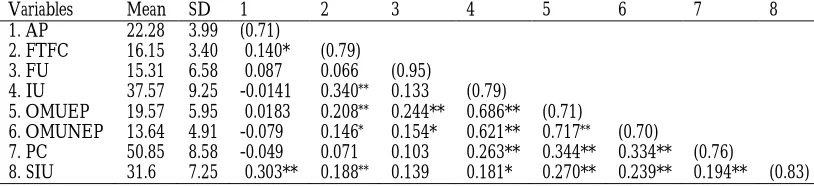
Table 2 consists of mean, standard deviation, cronbach alpha and zero-order correlations for all variables in the model. From Table 2, Academic performance is found significantly correlated with face-to-face communication (r = 0.140, p = 0.048) and student interest in university (r = 0.303, p = 0.001). Face-to-face communication is also significantly correlated with Internet usage (r = 0.340, p = 0.001), online media for education (r = 0.208, p = 0.001), online media for non-education (r = 0.146, p = 0.039), and student interest in university (r = 0.188, p = 0.008).
Table-2. Means, Standard Deviation, Zero-Order Correlations, and Reliability Estimates
Variables Mean SD 1 2 3 4 5 6 7 8
1. AP 22.28 3.99 (0.71)
2. FTFC 16.15 3.40 0.140* (0.79)
3. FU 15.31 6.58 0.087 0.066 (0.95)
4. IU 37.57 9.25 -0.0141 0.340** 0.133 (0.79)
5. OMUEP 19.57 5.95 0.0183 0.208** 0.244** 0.686** (0.71)
6. OMUNEP 13.64 4.91 -0.079 0.146* 0.154* 0.621** 0.717** (0.70)
7. PC 50.85 8.58 -0.049 0.071 0.103 0.263** 0.344** 0.334** (0.76)
8. SIU 31.6 7.25 0.303** 0.188** 0.139 0.181* 0.270** 0.239** 0.194** (0.83)
Reliability estimates are on the diagonals in parentheses; SD: Standard Deviation *Significant at the 0.05 level; **Significant at the 0.01 level.
FU = Facebook Usage
IU = Internet Usage
OMUEP = Online Media Usage for Education Purposes OMUNEP = Online Media Usage for Non-Education PC = Polychronicity
4.2 One-way ANOVA
A one way ANOVA analysis is conducted to test the gender differences in Facebook usage, Internet usage, online media usage for education purposes, online media usage for non-education purposes, polychronicity, student interest in university, academic performance, and face-to-face communication.
Based on the results provided in Table 3, gender difference was found only in the Internet usage. Subsequent contrast testes revealed that male college students spend more time on the Internet compared to female college students.
Table-3. One-way ANOVA Testing Procedure for the Categorical Variable Gender (n=207)
F-value p-value Gender1
FU 2.676 0.103
IU 9.094 0.003**
OMUEP 2.512 0.115
OMUNEP 3.095 0.080
PC 0.074 0.786
SIU 3.860 0.051
AP 2.342 0.128
FTFC 0.346 0.557
**Significant at the 0.01 level; *Significant at the 0.05 level 1variable denotes categorical variable
FU = Facebook Usage IU = Internet Usage
OMUEP = Online Media Usage for Education Purposes OMUNEP = Online Media Usage for Non-Education PC = Polychronicity
4.3 Structural Equation Model
A two-step approach was employed to test the model using structural equation method. The first step was to check if the model has an acceptable fit. Second step is to conduct a path analysis for the model and interpret structural coefficients.
A covariance-based structural equation modeling is usedfor analysis. Prediction-oriented measures that are parametric isused for the evaluation of the covariance-based structural equation modeling (Hair et al., 2009). Fit indices like, GFI (Goodness-of-Fit Index), NFI (Normative Fit Index), NNFI (Non Normative Fit Index), RMSEA (Root Mean Square Error Approximation), and CFI (Comparative Fit Indices) are reported in CBSEM (Hair et al, 2009). The goodness of fit indices (except RMSEA) compares the model’s absolute fit by comparing the fitted model with the actual data, and the values range from 0-1. Values greater than 0.9 indicate acceptable fit (Hair et al., 2009).
Chi-square is one of several measures used in assessing the overall model fit, and “assesses the magnitude of discrepancy between the sample and fitted covariance matrices” (Hu &Bentler, 1999: 2),larger the value of Chi-Square the poorer is model fit for the same degrees of freedom. Since Chi-square value is heavily dependent on the degrees of freedom, and the value of Chi-square is always large when the sample size is large, a better measure is relative (or) normed Chi-square (χ2/df) (Wheaton et
al., 1977).GFI and AGFI proposed by Jöreskog and Sorbom is an alternative to Chi-square (Tabachnick&Fidell, 2007). A value of 0.9 and above for GFI and AGFI are considered to be indicators of good model fit (Miles &Shevlin, 1998). The root mean square error approximation (RMSEA) was also considered here, since it provides an estimate of measurement error. Tucker-Lewis Index (also known as Non-Normed Fit Index) assesses model fit by placing penalty on the model for additional parameters added to the model. The NFI provides information on how much better does a model fit compared to the baseline model (Bentler&Bonett, 1980). CFI compares the predicted covariance matrix to observe covariance matrix.
The root mean square error approximation (RMSEA) less than 0.08 is indicative of a acceptable model (MacCallum et al., 1996), RMSEA value of the current model is equal to 0.044, indicating a good fit (MacCallum et al., 1996). The GFI value is above its recommended threshold level of 0.90 (Tabachnick&Fidell, 2007). The NNFI, NFI and CFI are well above the acceptable threshold level of 0.9. Overall, indices are found to have an acceptable threshold values, indicating a satisfactory fit.
Table-4. Fit Indices for the Baseline Model1
Model 2(df) p-value 2/df RMSEA GFI NNFI NFI CFI Baseline 1.38 (1) 0.24 1.38 0.044 1.00 0.98 1.00 1.00
1
Statstics are based on a sample of 207 respondents
Degrees of freedom are in parentheses after Chi-square value.
RMSEA = Root mean square error of approximation. GFI = Goodness-of-fit index.
NNFI = Non-normed fit index. NFI = Normed fit index. CFI = Comparative fit index. df = Degrees of freedom.
4.4 Interpretation of Structural Model
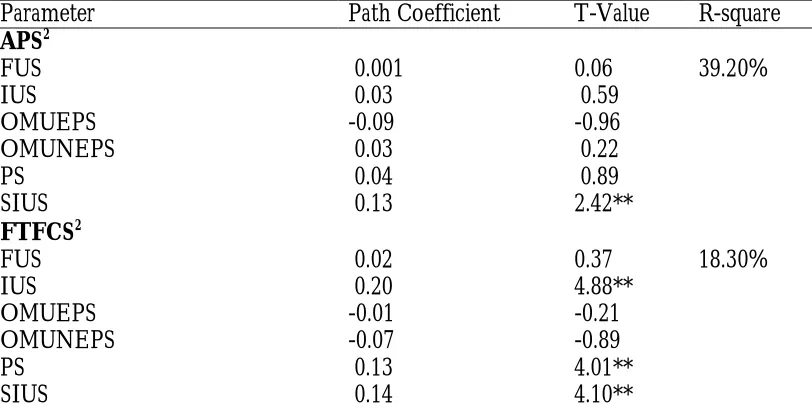
Table 5 presents the unstandardized structural path coefficients for the model. With academic performance and face-to-face communication as endogenous variables, and Facebook usage, Internet usage, online media usage for education purposes, online media usage for non-education purposes, polychronicity, student interest in university as exogenous variables. Table 5 also provides information if the path is significant. The squared multiple correlations (SMC), which indicate the amount of variance in endogenous variables explained by exogenous variables is provided in Table 5. For academic performance and face-to-facecommunication, R-square was found to be 39.2 percent and 18.3 percent.
To test hypothesis 1b a bivariate correlation analysis was conducted between two BIF variables, spent time on the Internet (hours/day) and Overall Grade Point Average (OGPA). Insignificant correlation was found between the two variables (r = -0.007, p = 0.924), indicating that actual daily use of the Internet does not have an impact on the students actual academic performance. No support was found for hypothesis 1b. Based on results from Table 5, support was established for hypothesis 2, which stated that perceived use of internet has a strong positive impact on face-to-face Communication.
Table-5. Unstandardized Structural Coefficients for the Model1
Parameter Path Coefficient T-Value R-square
APS2
FUS 0.001 0.06 39.20%
IUS 0.03 0.59
OMUEPS -0.09 -0.96
OMUNEPS 0.03 0.22
PS 0.04 0.89
SIUS 0.13 2.42**
FTFCS2
FUS 0.02 0.37 18.30%
IUS 0.20 4.88**
OMUEPS -0.01 -0.21
OMUNEPS -0.07 -0.89
PS 0.13 4.01**
SIUS 0.14 4.10**
1
Statistics are based on a sample of 207 respondents. 2
These are endogenous variables in the model; the exogenous variables are listed underneath.
*Significant at the 0.05 level; **Significant at the 0.01 level.
FU = Facebook Usage IU = Internet Usage
OMUEP = Online Media Usage for Education Purposes OMUNEP = Online Media Usage for Non-Education PC = Polychronicity
SIU = Student Interest in University AP = Academic Performance FTFC = Face-to-Face Communication
Similarly support is established for hypotheses 11 and 12, which state that student interest in university has a significant positive impact on academic performance of a student as well asface-to-face communication.
5. Discussion and Conclusion
The purpose of this study was toinvestigate whether the amount of time spent online would have a significant impact on the student’s academic performance as well as their ability to communicate face-to-face. Specifically the study considered the amount of time spent on Facebook, Internet, online media for education and non-education. Additionally the purpose of the study was to examine the relationship between polychronic students and their academic performance as well as face-to-face interactions. Lastly, the study focused on student’s interest in university and its influence on academic performance as well as face-to-face communication.
Using structural equation modeling, majority of the hypotheses were evaluated in this study. Results show that academic performance significantly predicts students interest in the university. Additionally we also find that Internet usage and polychronicity significantly influencesface-to-facecommunication. Moreover we find that no gender differences are found in all the variables except Internet Usage. Male college students spend more time on internet compared to females.
As mentioned earlier we find a significant positive relationship between Internet usage and face-to-face communication. Initially one would expect, as one spends more time on the Internet there would be less time available forface-to-face communication, but we see a contradictory result. Prior research states if the Internet is used for improving existing relationships or making new relationships, this would help in reduction of anxiety levels. One of the reasons would be spending more time on the Internet and making new friends or improving relationship can potentially make a person more comfortable with face-to-face communication.
The amount of time spent on Facebook does not have a significant relationship with either academic performance or face-to-face communication. One of the potential reasons for this could be attributed to the decline in the number of college students using Facebook over the last couple of years. There has been a drop of 25 percent in college students using Facebook in 2012 compared to 2011(Paul et al., 2012). Students seem to be migrating to a plethora of online social networking websites now available,whichcan be viewed as one the reasons for non-significant results.
Online media for education and education was found to have an non-significant relationship with both academic performance as well as face-to-face communication. Not much prior research has been accomplished specifically addressing online media. Based on the results we can infer that students do not get distracted from their academic responsibilities by watching or listening to content online and seem to effectively manage available time. Student’s comfort level when communicating face-to-face also does not seem to be influenced by the time spent on online media.
It appears to be natural for a polychronic user to be comfortable with face-to-face communication.Student interest in the university has a significant positive relationship with the academic performanceand face-to-face communication skills. This is consistent with the findings from the literature (Chapman, 2003; Rouis, 2012; Scarborough & Lindquist, 1998). Greater student’s interest in the university would meanincreased academic dedication, thus resulting in good academic performance. We find that student interest in the university has a significant positive relation with face-to-face communication. A successful student would effectively communicate with peers as well as instructors not only via e-mail or social networks, but also face-to-face. This explains why there is a significant impact of student interest in university related to face-to-face communication skills.
This study understands the important role that the Internet usage has on the comfort level of face-to-face communication. The study also provides evidence that spending time on Facebook does not seem to adversely affect the academic performance of a student, and polychronic students are very comfortable communicating face-to-face.
The results of this study should be interpreted with a few limitations. A large proportion of survey respondents belongs to African American (n = 160), only a few freshmen students (n =4) responded to the survey, and very few part-time students (n = 10). The result of the study does not have a diverse student population, and may have reduced the power of the subsample. The study is limited only to one university in one specific location of the country, and could potentially have a cultural bias. Another limitation about the current study is related to self-reporting survey questions, most of the questions were based on the perception of the student. Tracking the actual usage of internet by individual college student would provide the most accurate results.
Future research will consider a scale for digital media usage instead of online media usage, similarly considering other online social networking sites instead of limiting to Facebook. These changes can help generalize the existing results further.
Acknowledgement
The first and second authors of this paper contributed equally.
References
Abramson, L. (February 9, 2011). Can social networking keep students in school? NPR: Morning Edition, Retrieved−November 1, 2013−from—
http://www.npr.org/2011/02/09/133598049/can-social-networking-keep-students-in-school.
Agarwal, R., &Karahanna, E. (2000). Time flies when you're having fun: cognitive absorption and beliefs about information technology usage. MIS Quarterly, 24(4), 665-694. American College Health Association. (Fall, 2007). American College Health
Association-National College Health Assessment: Reference group executive summary fall 2007. Retrieved − November 1, 2013 − from --http://www.acha-ncha.org/docs/ACHA-NCHA_Reference_Group_ExecutiveSummary_Fall2007.pdf
Anand, V. (2007). A study of time management: The correlation between video game usage and academic performance markers. CyberPsychology& Behavior, 10(4), 552-559. Anderson, K. J. (2001). Internet use among college students: An exploratory study. Journal of
American College Health, 50(1), 21-26.
Appleton, J. J., Christenson, S. L., Kim, D., &Reschly, A. L. (2006). Measuring cognitive and psychological engagement: validation of the student engagement instrument. Journal of School Psychology, 44(5), 427-445.
Barkley, R. A. (2006). Attention deficit hyperactivity disorder: A handbook for diagnosis and treatment. Third Edition. New York: Guilford Press.
Bentler, P. M., &Bonett, D. G. (1980). Significance tests and goodness of fit in the analysis of covariance structures. Psychological Bulletin, 88(3), 588-606.
Bharadwaj, A., El Sawy, O. A., Pavlou, P. A., &Venkatraman, N. (2013). Digital business strategy: toward a next generation of insights. MIS Quarterly, 37(2), 471-482.
Brignall, T.W., III & Van Valey, T. (2005). The impact of internet communications on social interactions. Sociological Spectrum, 25, 335-348.
Chapman, E. (2003). Alternative approaches to assessing student engagement rates. Practical assessment, Research and Evaluation, 13(8). 29-39
Cheung, W., & Huang, W. (2005). Proposing a framework to assess Internet usage in university education: an empirical investigation from a student's perspective. British Journal of Educational Technology, 36(2), 237-253.
Dahlstrom, E., Boor, T., Grunwald, P., &Vockley, M. (October, 2011). The ECAR National Study of Undergraduate Students and Information Technology, Research Report, Retrieved −November 1, 2013 – from-- http://www.educause.edu/ecar
DuPaul, G. J., & Volpe, R. J. (2009). ADHD and learning disabilities: research findings and clinical implications. Current Attention Disorders Reports, 1(4), 152-155.
Englander, F., Terregrossa, R. A., & Wang, Z. (2010). Internet use among college students: tool or toy?Educational Review, 62(1), 85-96.
Erwin, B. A., Turk, C. L., Heimberg, R. G., Fresco, D. M., &Hantula, D. A. (2004). The Internet: home to a severe population of individuals with social anxiety disorder? Journal of Anxiety Disorders, 18(5), 629-646.
Fox, A. B., Rosen, J., & Crawford, M. (2009). Distractions, distractions: does instant messaging affect college students' performance on a concurrent reading comprehension task? CyberPsychology& Behavior, 12(1), 51-53.
Hair, J. F., Jr.,Black, W. C., Babin. B.J., & Anderson, R. E.(2009). Multivariate Data Analysis. Seventh edition. Upper Saddle River, New Jersey: Prentice Hall Publishing Company. Hargittai, E. (2007). Whose space? Differences among users and non‐users of social network
sites. Journal of Computer‐Mediated Communication, 13(1), 276-297.
Harrold, R. (2006). Student interest survey: 1971–2006: Tracking student interests, activities, and characteristics for 35 years at the University of Minnesota.
Jacobsen, W. C., &Forste, R. (2011). The wired generation: Academic and social outcomes of electronic media use among university students. Cyberpsychology, Behavior, and Social Networking, 14(5), 275-280.
Jones, S., & Fox, S. (2009). Generations online in 2009. Data memo. Washington, DC: Pew Internet and American Life Project. Retrieved−November 2, 2013−from --http://www.pewinternet.org/w/media//Files/Reports/2009/PIP_Generations_200 9.pdf.
Jones, S., Johnson‐yale, C., Pérez, F. S., & Schuler, J. (2007). The Internet landscape in college. Yearbook of the National Society for the Study of Education, 106(2), 39-51. Jöreskog, K.G. &Sörbom, D. (2010). LISREL 8.8 for Windows [Computer software]. Skokie,
IL: Scientific Software International, Inc.
Junco, R. (2012). The relationship between frequency of Facebook use, participation in Facebook activities, and student engagement. Computers & Education, 58(1), 162-171.
Junco, R., Merson, D., & Salter, D. W. (2010). The effect of gender, ethnicity, and income on college students' use of communication technologies. Cyberpsychology, Behavior, and Social Networking, 13(6), 619-627.
Juster, F. T., Ono, H., & Stafford, F. P. (2003). An assessment of alternative measures of time use. Sociological Methodology, 33(1), 19-54.
Kamenetz, A. (February 9, 2011). Gates Foundation bets on Facebook app to help kids graduate. Fast Company, Retrieved − November 1, 2013 − from -- ttp://www.fastcompany.com/1725665/gates-foundation-bets-on-facebook-app-to-help-kids-graduate
Kirschner, P. A., &Karpinski, A. C. (2010). Facebook and academic performance. Computers in Human Behavior, 26(6), 1237–1245.
Kraut, R., Patterson, M., Lundmark, V., Kiesler, S., Mukophadhyay, T., &Scherlis, W. (1998). Internet paradox: A social technology that reduces social involvement and psychological well-being? American Psychologist, 53(9), 1017.
Kubey, R. W., Lavin, M. J., & Barrows, J. R. (2001). Internet use and collegiate academic performance decrements: Early findings. Journal of Communication, 51(2), 366-382. MacCallum, R. C., Browne, M. W., & Sugawara, H. M. (1996). Power analysis and
determination of sample size for covariance structure modeling. Psychological Methods, 1(2), 130-149.
Matthews, D., &Schrum, L. (2003). High-speed Internet use and academic gratifications in the college residence. The Internet and Higher Education, 6(2), 125-144.
Miles, J., &Shevlin, M. (2007). A time and a place for incremental fit indices. Personality and Individual Differences, 42(5), 869-874.
Morahan-Martin, J., & Schumacher, P. (2000). Incidence and correlates of pathological Internet use among college students. Computers in Human Behavior, 16(1), 13-29. Neu, S. (2009). Use of Massively Multiplayer Online Role Play Games by College Students
(Doctoral dissertation). Available from ProQuest Dissertations and Thesis Database (ATT No. 3344420).
Nunnally, J. C. (1978). Psychometric Theory. Second edition. New York, NY:McGraw-Hill. Paul, J. A., Baker, H. M., & Cochran, J. D. (2012). Effect of online social networking on
student academic performance. Computers in Human Behavior. 28(6), 2117-2127 Pierce, T. (2009). Social anxiety and technology: Face-to-face communication versus
technological communication among teens. Computers in Human Behavior, 25(6), 1367-1372.
Pierce, T. (2009). Social anxiety and technology: face-to-face communication versus technological communication among teens. Computers in Human Behavior, 25(6), 1367-1372.
Pool, M. M., Van der Voort, T. H., Beentjes, J. W., &Koolstra, C. M. (2000). Background television as an inhibitor of performance on easy and difficult homework assignments. Communication Research, 27(3), 293-326.
Purcell, K., Smith, A., &Zickuhr, K. (2010). Social media & mobile internet use among teens and young adults (pp. 155-79). Washington, DC: Pew internet & American life project.
Rouis, S. (2012). Impact of Cognitive Absorption on Facebook on Students' Achievement. Cyberpsychology, Behavior, and Social Networking, 15(6), 296-303.
Sherer, K. (1997). College life on-line: Healthy and unhealthy Internet use. Journal of College Student Development.38(6), 655-665.
Tabachnick, B. G., Fidell, L. S., &Osterlind, S. J. (2001). Using Multivariate Statistics.Fifth Edition. New York: Allyn and Bacon.
Wheaton, B., Muthen, B., Alwin, D., F., & Summers, G. (1977). Assessing reliability and stability in panel models.Sociological Methodology, 8 (1), 84-136.
Wintour, P. (February 24, 2009). Facebook and Bebo risk ‘infantilizing’ the human mind. Retrieved−November 2, 2013−from—