Doctor of Psychology (PsyD) Theses and Dissertations
1-1-2015
The Effectiveness of Patient-Centered
Interdisciplinary Approach to Treating Chronic
Pain in the Primary Care Setting
Corie Diane Houlbjerg
George Fox University, [email protected]
This research is a product of the Doctor of Psychology (PsyD) program at George Fox University.Find out moreabout the program.
This Dissertation is brought to you for free and open access by the Theses and Dissertations at Digital Commons @ George Fox University. It has been accepted for inclusion in Doctor of Psychology (PsyD) by an authorized administrator of Digital Commons @ George Fox University. For more information, please [email protected].
Recommended Citation
Houlbjerg, Corie Diane, "The Effectiveness of Patient-Centered Interdisciplinary Approach to Treating Chronic Pain in the Primary Care Setting" (2015).Doctor of Psychology (PsyD).Paper 191.
The Effectiveness of a Patient-Centered Interdisciplinary Approach to Treating
Chronic Pain in the Primary Care Setting
by
Corie Diane Houlbjerg
Presented to the Faculty of the
Graduate Department of Clinical Psychology
George Fox University
in partial fulfillment
of the requirements for the degree of
Doctor of Psychology
in Clinical Psychology
Newberg, Oregon
Dedication
I dedicate this work to my Great Uncle Bion D. Barger and my Great Aunt Patricia
Barger. Thank you for teaching me the gift of education, the beauty of helping others, and
the power of paying it forward. The support and encouragement you provided me
throughout my training enabled me to pursue and achieve my goals with a clear mind and a
peaceful heart. I eagerly await my opportunity to continue the legacy you have so
Abstract
It is estimated that over half of the United States adult population experiences chronic pain,
leading to high medical expenses and loss of productivity. Due to widespread impacts on
daily living, chronic pain patients experience loss of function and depression. The most
common traditional approach to treatment has been prescription opioid medication, which
continues to be a controversial practice due to the high risk of addiction, misuse, and
negative side effects. As the medical field moves toward a more holistic approach to
treatment, a group of primary care clinics within a larger healthcare system in the Greater
Portland, Oregon area established a patient-centered interdisciplinary approach to treating
chronic pain patients. This study evaluated the effectiveness of this new approach through
chart review. Specifically, this study examined opioid prescription dosages over time,
patient utilization of medical services over time, and trends in provider utilization of
standard pain program procedure during the early stages of development and
implementation of the treatment program. The results helped to highlight the strengths
and growing edges in the current implementation of the treatment program procedures.
Results also conveyed that when the procedures are utilized, outcomes appear to be
favorable to the patient sample and work toward achieving the goals set forth by the
healthcare system, including improvement in patient outcomes, decrease in opioid dosages,
and decline in overutilization of healthcare services. Future studies will be needed to
Table of Contents
Approval Page ... ii
Dedication ... iii
Abstract ... iv
List of Tables ... viii
List of Figures ... ix
Chapter 1: Introduction ... 1
Chronic Pain ... 1
Biopsychosocial Impact ... 2
Decreased function ... 2
Depression ... 2
Current Treatment ... 3
Burden on the Primary Care System ... 4
High utilization ... 4
Patient-provider interactions ... 4
Inadequate training ... 5
Workflow ... 5
Interdisciplinary Approach to Treating Chronic Pain ... 6
Patient-centered care ... 6
Behavioral health integration ... 7
A Patient-Centered Interdisciplinary Approach ... 8
Chapter 2: Methods ... 12
Participants ... 12
Materials ... 13
Chart review ... 13
Nine-Item Patient Health Questionnaire ... 13
Pain Disability Index ... 14
Patient Activation Measure ... 15
Procedure ... 15
Demographics ... 16
Mental health diagnoses ... 16
Pain diagnoses ... 16
Pain review appointment ... 17
Standard screeners ... 17
Behavioral health integration ... 17
Utilization of medical services ... 18
Opioid dosage ... 18
Chapter 3: Results ... 20
Hypothesis 1 ... 20
Hypothesis 2 ... 23
Hypothesis 3 ... 25
Hypothesis 4 ... 28
Chapter 4: Discussion ... 33
Implications ... 33
Limitations ... 35
Directions for Future Research ... 36
Conclusion ... 37
References ... 38
Appendix A Persistent Pain 2014 Objectives ... 46
Appendix B Patient Health Questionnaire (PHQ-9) ... 47
Appendix C Pain Disability Index ... 48
Appendix D Patient Activation Measure ... 49
List of Tables
Table 1 Demographic Information ... 13
Table 2 Prevalence of Mental Health Diagnoses ... 21
Table 3 Prevalence of Chronic Pain Diagnoses ... 22
Table 4 Changes In Morphine Equivalent Dosage Over Time ... 31
List of Figures
Figure 1 The mean number of PCP visits, six months before
and six months after a Pain Review Appointment for
patients who were and were not referred to BHI services ... 27
Figure 2 The mean morphine equivalent dosage (MED) over time
Chapter 1
Introduction
Chronic Pain
The International Association for the Study of Pain (IASP) defines pain as “an
unpleasant sensory and emotional experience associated with actual or potential tissue
damage, or described in terms of such damage” (Merskey & Bogduk, 1994, p. 210). While
acute pain lasts no longer than six months and resolves when the source of the pain has
healed, chronic pain is defined as pain that persists for longer than six months (IASP,
1986). The development of chronic pain can occur as a result of many factors, and the
specific cause can be difficult to pinpoint. Chronic pain may result from a variety of
diseases and illnesses, including but not limited to cancer, rheumatoid arthritis, and
osteoarthritis (Nicholson, 2003). Other individuals may experience chronic low back pain,
neck pain, or nerve pain following surgical procedures or physical injuries (Institute of
Medicine, 2011).
Pain is reported more than any other physical symptom-based condition in the
general population (Kroenke, 2003). It has been estimated that 57% of the United States
adult population experiences chronic pain (Matthias et al., 2010). The annual economic
cost of chronic pain is projected to be at least $560-$630 billion in medical expenses,
disability, and loss of productivity, with 75% of the 23.5 million disabled individuals in the
of Medicine, 2011; Loeser, 1999). Individuals with chronic pain are also more likely to
develop other medical conditions, causing the financial burden to increase even higher
(Jensen & Turk, 2014). The high prevalence and economic impact of chronic pain in society
only begins to highlight the necessity of further research and effective care for this
condition.
Biopsychosocial Impact
Decreased function. In addition to financial problems and physical discomfort, chronic pain patients often face a number of other difficulties as a result of this condition.
These individuals will often report that their pain has resulted in significant impairment to
various areas of their well-being and activities of daily living (ADLs), including occupation
and employment, social and romantic relationships, and leisure activities (Otis & Hughes,
2010). Patient complaints include decreases in muscle strength and physical performance
(Onder et al., 2006), limited mobility and ability to care for self at home (Achterberg et al.,
2010; Soldato et al., 2007), and lower self-ratings of overall health status (Reyes-Gibby,
Aday, & Cleeland, 2002).
Depression. Given the significant impact of chronic pain on ADLs and well-being, this population experiences higher levels of depression, with up to 46% of pain patients
seen in the primary care setting presenting with depression comorbidity (Bair et al., 2008;
Kroenke et al., 1994). A recent study found that chronic pain patients with comorbid
depression may perceive more severe pain and greater disability (Bair, Robinson, Katon, &
Kroenke, 2003). Patients who experience depression in addition to chronic pain conditions
Rodrigues, Mercurio-Riley, & Dunn, 2013; Ritzwoller, Crounse, Shetterly, & Rublee, 2006)
and often have poorer treatment outcomes than patients who solely experience either pain
or depression alone (Bair et al., 2004; Poleschuck et al., 2009). Not only are these patients
seeking health care services more frequently, but they are not seeing improvement in their
health.
Current Treatment
The complexity of chronic pain etiology and presentation can make it a difficult
condition to treat. Opioid medication has been utilized as the primary mode of treatment
for moderate to severe pain, dating back thousands of years (Booth, 1986). It has been
estimated that up to 90% of chronic pain patients have been prescribed opioids to manage
their conditions (Rosenblum, Marsch, Joseph, & Portenoy, 2008). Common opioid drugs
prescribed today to treat chronic pain include morphine, oxycodone, hydrocodone,
transdermal fentanyl, and methadone (Nicholson, 2003).
There is pervasive controversy regarding the use of opioid medications to treat
chronic pain conditions. While there is evidence that these drugs appear to be the most
effective in providing relief of pain initially (Chou, 2013), research has indicated that the
benefits of opioids declines in long-term use (Krashin, Sullivan, & Ballantyne, 2013). Deyo
and colleagues (2011) found that prolonged use of opioids can result in increased mental
health concerns and high utilization of medical services. There is also continued concern
regarding the risk of misuse, addiction, and negative side effects (Rosenblum et al., 2008).
As opioid medications increase in both dosage and prevalence, issues related to “opioid
Tunks, 2011; Matthias et al., 2010). Given the controversy, physicians may vary greatly in
their approach to prescribing these drugs, and the ramifications can be steep. Research has
discovered an increase in lawsuits against physicians for overtreatment, under treatment,
or even murder regarding opioid medications (Reidenberg & Willis, 2007). Difficulties
with “multiple unsanctioned dose escalations, episodes of lost or stolen prescriptions, and
positive urine drug screenings for illicit substances” further complicate opioid-based
treatment (Michna et al., 2004, p. 250). These concerns have lead legal agencies and
medical organizations to closely monitor and regulate opioid prescription practices
(Shurman, Koob, & Gutstein, 2010). The tension caused by these risks and the uncertainty
of the benefits fuel the motivation to reevaluate this treatment approach.
Burden on the Primary Care System
High utilization. Pain is one of the most frequent patient complaints seen by
primary care providers (PCPs) for treatment (Breuer, Cruciani, & Portenoy, 2010). One
third of PCP visits are for chronic pain complaints (Chilemsky et al., 2013; Upshur,
Luckmann, & Savageau, 2006). When this population seeks treatment at their PCP office, it
typically is not just to address their pain. A recent study found that not only are chronic
pain patients accessing services at their PCP office at higher frequencies than the general
population, but they are also frequently seeking PCP services to address comorbidities,
further increasing both the number of visits and the time spent in the appointments
(Chilemsky et al., 2013).
interactions with their PCPs, including feeling distrusted and accused of drug-seeking
behaviors (Upshur, Bacigalupe, & Luckmann, 2010). Though the patient-provider
relationship is important for positive health outcomes in treating chronic pain, interactions
often are strained by expressed anger and deceptive behaviors (Matthias et al., 2010).
Likewise, PCPs often describe working with pain patients as a “thankless job” and can
become easily frustrated in working with this population (Matthias et al., 2010). These
factors together contribute to an ongoing burden for both patients and PCPs.
Inadequate training. Both PCPs and their patients face significant challenges, as PCPs are under pressure to provide treatment for a condition they receive very little
training on. In a recent study, 30% of PCPs indicated that they did not receive any training
or education in pain management during medical school, residency, or continued medical
education courses, while only 10% indicated that they received training in this area during
each phase of their medical education (Green, Wheeler, Marchant, LaPorte, & Guerrero,
2001). Other research revealed that 81.5% of attending physicians found their training
regarding chronic pain management in medical school to be inadequate (Upshur et al.,
2006).
Workflow. Beyond lack of proper training, PCPs also face the logistical challenge of time constraints that hinder the appropriate assessment and treatment of complex
conditions such as chronic pain (Bendtsen, Hensing, Ebeling, & Schedin, 1999). Full
evaluation of a patient’s report of pain complaints requires extensive discussion of a
variety of domains. PCPs must not only inquire information regarding the intensity,
between the pain and other conditions, such as disease, injury, and health behaviors
(Duckworth, Iezzi, & Sewell, 2009). PCPs may give higher priority to other symptoms or
life-threatening conditions and run out of time before allowing more attention to chronic
pain complaints (Otis, Macdonald, & Dobscha, 2006).
Interdisciplinary Approach to Treating Chronic Pain
Scientific research has expanded the understanding of chronic pain mechanisms
beyond a traditional biomedical perspective to the more comprehensive biopsychosocial
model, attending to all aspects of the patients’ presentations (Gatchel, Peng, Peters, Fuchs,
& Turk, 2007; McDaniel & DeGruy, 2014). This offers broader options to consider new
approaches that may help enhance traditional treatment methods and improve patient
outcomes. Given the high rate of patients seeking treatment from their PCPs and the broad
range of patient needs, primary care offices have begun to reestablish how they care for
this population. Interdisciplinary teams consisting of physicians, nurses, pharmacists, case
managers, and behaviorists can provide more thorough and integrative assessment and
treatment of chronic pain patients (Gatchel, McGeary, McGeary, & Lippe, 2014; Otis, Reid, &
Kerns, 2005). Restoring a positive working relationship between the patient and providers
as well as addressing mental health needs may be just two of many important tasks for this
team to focus on.
Patient-centered care. Interdisciplinary teams can align with a patient at a more individualized level to address their unique needs. These teams may utilize what is known
as patient-centered care to enhance a good working relationship between the patient and
McIlvain, Backer, McVea, & Crabtree, 2005), both of which have shown to be particularly
important in treating chronic pain conditions (Tait, 2008). Key components to a
patient-centered care model include communicating empathy toward patients and empowering
patients to view themselves as active and vital partners in their healthcare (Tait, 2008).
Providers work to go beyond the standard assessment of a condition and spend time
learning about the individual patient’s experience of their condition (Fiscella et al., 2004).
In other words, patient-centered care seeks to enhance what is known as patient activation.
Patient activation is the patient’s perception of their own knowledge, skills, and confidence
regarding the management of their medical conditions (Hibbard, Stockard, Mahoney, &
Tusler, 2004) and has been linked to health status, health-related behaviors, seeking
information about healthcare, and the patient’s readiness to make changes to manage their
medical conditions (Fowles, Terry, Xi, Hibbard, Bloom & Harvey, 2009). Outcome research
on patient-centered care has shown increased patient satisfaction, decreased patient
concerns, increased emotional health, and decreased diagnostic tests and referrals
(Matthias et al., 2010). Patient-centered care may be an answer to providing chronic pain
patients with more positive experiences in the healthcare system and increased
engagement in their own care.
Behavioral health integration. Behavioral health integration (BHI) is when mental
health providers, typically psychologists, provide services directly in the primary care
clinic as part of the healthcare team (Otis et al., 2005). BHI providers can be key players in
fostering patient-centered care and the biopsychosocial model, as the field of psychology
promoting patient activation (McDaniel & DeGruy, 2014). A BHI provider functions as an
active member of the treatment team to provide a more thorough and detailed evaluation
of the patient’s limitations and needs regarding their medical condition, help develop a
more individualized treatment plan (Duckworth et al., 2009), and check-in with the patient
between PCP visits to evaluate progress and promote patient engagement (McDaniel &
DeGruy, 2014). BHI providers are trained in techniques stemming from
cognitive-behavioral therapy (CBT) and acceptance and commitment therapy (ACT), which have
shown to be especially effective mental health interventions for treating chronic pain in
addition to mental health concerns (Otis et al., 2005; Vowles, Witkiewitz, Sowden, &
Ashworth, 2014). BHI providers can partner with clinic administration to aid in the
evaluation of patient and program outcomes (Solberg et al., 2010) and serve as a consultant
to problem solve changes that may need to be developed (McDaniel & DeGruy, 2014).
Having a BHI provider as a member of the treatment team helps to alleviate the pressure
placed on PCPs that can often be perceived as solely responsible for accomplishing these
many demanding tasks, as well as offer more individualized and comprehensive treatment
plans for patients.
A Patient-Centered Interdisciplinary Approach
A group of primary care clinics within a larger healthcare system in the Greater
Portland, Oregon area established an interdisciplinary team consisting of PCPs, clinical
pharmacists, case managers, and BHI providers to facilitate a new patient-centered care
approach for chronic pain in three primary care clinics (Appendix A). Clinical pharmacists
equivalent dosage (MED). This list of high-risk patients was sent to PCPs at each clinic,
who then met with patients for a Pain Review Appointment to develop individualized
patient-centered care plans and offer appropriate referrals. PCPs were instructed to utilize
a standardized pain visit template in the electronic medical chart documentation for
reviewing the chronic pain history of their patients, including administering a small set of
brief screeners (9-Item Patient Health Questionnaire, Pain Disability Index, and Patient
Activation Measure). Case managers also contacted the patients to assist with identifying
and arranging patient needs, such as accessing necessary referrals, arranging
transportation, or connecting them to financial services.
The entire interdisciplinary team met monthly to discuss patient cases and
collaborate in forming effective approaches to patient care. Providers from each discipline
presented their impressions based on direct patient contact and chart reviews. Together,
the team processed options for next steps for treatment and developed recommendations
for referrals. Patients were often encouraged to attend chronic pain education courses
offered through the larger healthcare organization to learn more about how pain is
processed neurologically and discuss what alternative treatment options beyond
medication were available. PCPs also referred patients to BHI providers working in the
primary care clinics. Common behavioral interventions used by BHI providers included
providing psychoeducation about pain and comorbidity with mental health concerns, CBT,
ACT, relaxation training, mindfulness interventions, and motivational interviewing. BHI
providers addressed both the chronic pain and co-occurring mental health concerns,
Effectiveness of a New Approach
This study was designed to examine the effectiveness of a patient-centered
interdisciplinary approach to caring for chronic pain patients within a primary care setting
that offers integrated behavioral health services. Specifically, this study aimed to
determine if this new approach to care impacted patient engagement in BHI services,
patient utilization of medical services, and opioid prescription dosages. Additionally,
trends of PCP utilization of standard pain program procedures were analyzed to evaluate
the levels of implementation for this new approach.
The hypotheses for this study were as follows:
Hypothesis 1: The number of mental health diagnoses will be positively correlated
with the number of PCP visits prior to the Pain Review Appointment.
Hypothesis 2: The number of mental health diagnoses will be positively correlated
with a referral to BHI services.
Hypothesis 3: Chronic pain patients who utilize BHI services will display a decrease
in PCP visits, other office visits, and other patient encounters over time.
Hypothesis 4: Patients who received a Pain Review Appointment will display a
decrease in opioid medication dosage over time.
Additionally, the primary researcher evaluated PCP utilization of the standard
procedures for providing patient-centered interdisciplinary care to chronic pain patients
by identifying the following: (a) how many patients received a Pain Review Appointment
with their PCP, (b) how many PCPs used the Standard Pain Review Template in chart
administered the standard screeners related to their care at the Pain Review Appointment
(9-Item Patient Health Questionnaire, Pain Disability Index, and Patient Activation
Measure), (d) how many patients were referred to BHI services at the Pain Review
Appointment, (e) how often the reason for BHI referral was included in documentation,
Chapter 2
Methods
Participants
This study consisted of an examination data that was collected from the electronic
medical record (EMR) of 106 patients who received care at one of three primary care
clinics within a larger healthcare system in the Greater Portland, Oregon area. Subjects
were patients identified by the clinic pharmacists through chart review who are prescribed
opioid medication at or above 120 mg morphine MED for management of chronic pain
conditions. Patients who were prescribed only non-opioid analgesics to manage their
chronic pain conditions were excluded. Patients who were prescribed opioid medications
to manage acute pain conditions (e.g., injuries or postoperative pain) were excluded.
Patients who were deceased were excluded. Sixteen were identified as being deceased at
the time of the chart review and were therefore eliminated from the study. Of the
remaining 90 patients, the mean age of patients included in this study was 54.94 (SD =
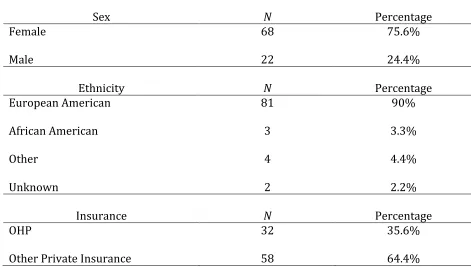
11.28). The sample consisted of 75.6% (n = 68) women and 24.4% (n =22) men (Table 1).
The ethnicity breakdown for this sample was 90% European American (n = 81), 3.3% (n =
3) African American, 4.4% (n = 4) Other, and 2.2% (n = 2) Unknown. Insurance coverage
for this sample was 35.6% (n = 32) with Oregon Health Plan (OHP) and 64.4% (n = 58)
Table 1
Demographic Information
Materials
Chart review. A BHI intern working in one of the clinics previously collected data for each of the identified patients by reviewing the EMR within the healthcare system. This
data set consisted of information from specific sections of the EMR, including
demographics, problem list, current medication list, medication history, encounter history,
and progress notes from PCP visits. The primary researcher utilized this data set for this
study.
Nine-Item Patient Health Questionnaire. It was anticipated that scores from a depression screening measure would be found in the archival data set. The 9-Item Patient
Sex N Percentage
Female 68 75.6%
Male 22 24.4%
Ethnicity N Percentage
European American 81 90%
African American 3 3.3%
Other 4 4.4%
Unknown 2 2.2%
Insurance N Percentage
OHP 32 35.6%
Health Questionnaire (PHQ-9) is a brief, self-report measure commonly used in the primary
care setting to screen for major depression symptoms (Kroenke, Spitzer, & Williams, 2001;
Appendix B). Symptoms evaluated by the PHQ-9 include anhedonia, depressed mood, sleep
disturbance, fatigue, negative feelings about oneself, difficulty concentrating, psychomotor
disturbance, and thoughts of suicide or self-harm. Instructions indicate to rate the
frequency of each symptom over the past two weeks on a 3-point Likert Scale. Response
options are 0 (not at all), 1 (several days), 2 (more than half the days), and 3 (nearly every
day). The total possible score on this measure is 27. A provisional diagnostic impression
may fall under one of the following categories depending on the total score: minimal
depression symptoms (total score between five and nine); minor depression or dysthymia
(total score between 10-14); major depression, moderately severe (total score between
15-19); major depression, severe (total score between 20-27). Instructions indicate to then
determine the degree to which the symptoms endorsed interfere with ADLs. Selection
options for this question include not difficult at all, somewhat difficult, very difficult, and
extremely difficult. The PHQ-9 has displayed good psychometric qualities when used in the
primary care population (Arroll et al., 2010).
Pain Disability Index. It was anticipated that scores from a pain disability
screening measure would be found in the archival data set. The Pain Disability Index (PDI)
is a brief, self-report measure of a patient’s perception of interference in ADLs due to the
experience of pain (Tait, Pollard, Margolis, Duckro, & Krause, 1987; Appendix C). Areas of
functioning assessed by this measure include family/home responsibilities, recreation,
seven items on the PDI are rated on an 11-point Likert Scale, ranging from 0 (no disability)
to 10 (worst disability). The maximum score on this measure is 70, with higher scores
indicating more disruption in ADLs due to the experience of pain. The PDI is the most
commonly used measure to assess pain disability and has displayed good psychometric
qualities (Turk & Melzack, 2011).
Patient Activation Measure. It was anticipated that the scores from a patient activation screening measure would be found in the archival data set. The Patient
Activation Measure (PAM) is a brief, self-report measure of a patient’s perception of their
own knowledge, skills, and confidence regarding the management of their medical
conditions (Hibbard et al., 2004; Appendix D). Areas evaluated on the PAM include
medications, lifestyle changes, etiology of their medical condition, and treatment options.
The 13 items on the PAM are rated on a 4-point Likert Scale, ranging from 1 (Strongly
Disagree) to 4 (Strongly Agree); all items include a not applicable option. Higher scores on
this measure indicate higher levels of patient activation. The total score on the PAM will
fall into one of the four following categories: Level 1 (starting to take a role), Level 2
(building knowledge and confidence), Level 3 (taking action), and Level 4 (maintaining
behaviors). The PAM is widely used and has displayed good psychometric qualities
(Hibbard et al., 2004).
Procedure
All data was previously gathered by a current BHI intern working within one of the
primary care clinics through EMR chart review. The BHI intern utilized the list of identified
primary care clinics. The BHI intern gathered all data in an Excel spreadsheet that was
then uploaded into SPSS by the primary researcher for analysis. Approval from the George
Fox Internal Review Board (IRB) was secured for the analysis of the data.
Demographics. The BHI intern collected demographic information through EMR
chart view, including age, sex, ethnicity, primary care clinic, PCP, and insurance. Insurance
was grouped into one of two categories: OHP or other private insurance.
Mental health diagnoses. The BHI intern accessed the problem list of each patient through EMR chart review to identify the frequencies of various mental health diagnoses in
this sample. The presence of mental health diagnoses were recorded in condensed
categories based on categories and diagnoses found in the EMR system as well as the
Diagnostic and Statistical Manual of Mental Disorders, Fifth Edition (DSM-5; American
Psychiatric Association, 2013). The categories include: Depressive Disorders, Anxiety
Disorders, Trauma- and Stressor-Related Disorders, Substance-Related and Addictive
Disorders, Opioid Dependence, Bipolar and Related Disorders, Schizophrenia Spectrum and
Other Psychotic Disorders, Sleep-Wake Disorders, Attention-Deficit/Hyperactivity Disorder
(ADHD), Memory Disorders, and Other Mental Health Disorders. Other Mental Health
Disorders include cognitive disorder, premenstrual dysphoric disorder, stress, altered
mental status, and obsessive-compulsive disorder. Opioid Dependence was coded
separately from Substance-Related and Addictive Disorders due to the chronic pain
population in this study.
to three high priority pain diagnoses were recorded and then condensed into the following
categories: chronic pain, back pain, degenerative disc disease (DDD), fibromyalgia and
other neuromuscular pain, rheumatoid arthritis, carpal tunnel, osteoarthritis, neuropathy,
spinal-related pain, migraine/headache, and other specific localized pain.
Pain review appointment. The BHI intern accessed the progress notes from PCP office visits for each patient through EMR chart review to determine whether or not the
patient received a Pain Review Appointment. When the Pain Review Appointment did
occur, the progress note from this visit indicated if the Standard Pain Review Template was
utilized in chart documentation.
Standard screeners. The BHI intern accessed the progress note through EMR chart review for patient that received a Pain Review Appointment to indicate if the standard
screeners (PHQ-9, PDI, and PAM) were administered during that visit. When the screeners
were administered, the documented scores were collected. Due to underutilization of these
screeners at follow-up PCP visits after the Pain Review Appointment, the primary
researcher was unable to analyze data regarding screener scores at follow-up visits.
Behavioral health integration. The BHI intern accessed the history of patient encounters through EMR chart review for each patient in the entire sample to determine if
they had ever seen a BHI provider, regardless of whether or not they received a Pain
Review Appointment. For patients who had seen a BHI provider, the total number of BHI
visits was recorded. For patients who received a Pain Review Appointment, the PCP
progress note from that visit indicated if the PCP referred the patient to BHI services
documentation indicated if a reason for BHI referral was included. When a reason for BHI
referral was included, the documentation indicated if pain was mentioned. All of these
indications were collected by the BHI intern and included in the data set.
Utilization of medical services. The BHI intern accessed the history of patient encounters through EMR chart review for each patient who received a Pain Review
Appointment to identify the total number of PCP visits, other office visits, and other patient
encounters six months prior to the Pain Review Appointment and six months following the
Pain Review Appointment. Other office visits included appointments with other clinic
providers besides the PCP, care coordination appointments, visits in the immediate care
department, lab appointments, and ED visits. Other office visits did not include BHI
appointments, as that data was tracked separately and BHI utilization was being promoted
as part of the pain treatment protocol. Other patient encounters included patient
telephone calls, patient emails, and documentation related to patient care. Medication
refills were excluded from other patient encounters, as they are a routine monthly
procedure for prescribing opioid medications long-term.
Opioid dosage. The BHI intern accessed the medication history through EMR chart review for each patient who received a Pain Review Appointment to evaluate the MED at
the time of the Pain Review Appointment and any changes in MED over time. The BHI
intern reviewed the medication history to identify the MED every two months for one year
after the Pain Review Appointment (e.g., MED two months after the Pain Review
the Pain Review Appointment, and so on). The BHI intern utilized the opioid dose
Chapter 3
Results
The EMRs of 106 primary care patients were reviewed. Sixteen were identified as
deceased at the time of the review and were therefore eliminated from the study. Of the 90
remaining patients, the sample consisted of 68 women and 22 men with a mean age of
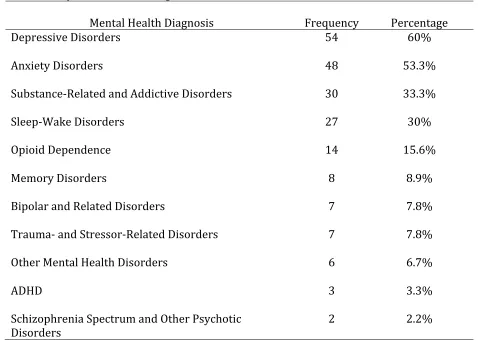
54.94 (SD = 11.28). Table 2 displays the prevalence of mental health diagnoses found on
the problem lists for this sample. The mean number of mental health diagnoses on the
problem list was 2.38 (SD = 1.61) with 87.8% of the sample having at least one mental
health diagnosis (n = 79).
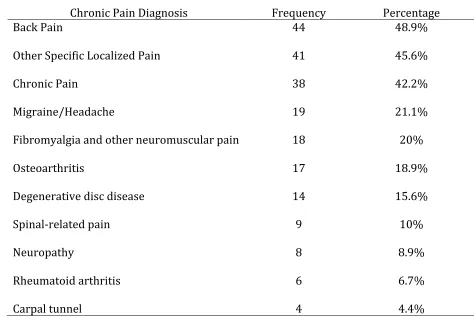
Table 3 displays the prevalence of chronic pain diagnoses based on up to three top
priority chronic pain diagnoses. The mean number of pain diagnoses on the problem list
was 4.22 (SD = 2.49), based on total number of pain diagnoses on the chart, regardless of
priority status.
Hypothesis 1
The number of mental health diagnoses will be positively correlated with the number
of PCP visits prior to the Pain Review Appointment. Data was collected for the 48 patients
who received a Pain Review Appointment regarding the total number of mental health
diagnoses on the problem list and the total number of PCP visits prior to the Pain Review
Table 2
Prevalence of Mental Health Diagnoses
Mental Health Diagnosis Frequency Percentage
Depressive Disorders 54 60%
Anxiety Disorders 48 53.3%
Substance-Related and Addictive Disorders 30 33.3%
Sleep-Wake Disorders 27 30%
Opioid Dependence 14 15.6%
Memory Disorders 8 8.9%
Bipolar and Related Disorders 7 7.8%
Trauma- and Stressor-Related Disorders 7 7.8%
Other Mental Health Disorders 6 6.7%
ADHD 3 3.3%
Schizophrenia Spectrum and Other Psychotic
Disorders 2 2.2%
relationship between the number of mental health diagnoses and the number of PCP visits
before the Pain Review Appointment. Results displayed a moderate positive correlation
between the number of mental health diagnoses and the number of PCP visits before the
Pain Review Appointment (r (46) = 0.36, p = .011). As the number of mental health
diagnoses on the problem list increased, the number of PCP visits prior to the Pain Review
Table 3
Prevalence of Chronic Pain Diagnoses
Chronic Pain Diagnosis Frequency Percentage
Back Pain 44 48.9%
Other Specific Localized Pain 41 45.6%
Chronic Pain 38 42.2%
Migraine/Headache 19 21.1%
Fibromyalgia and other neuromuscular pain 18 20%
Osteoarthritis 17 18.9%
Degenerative disc disease 14 15.6%
Spinal-related pain 9 10%
Neuropathy 8 8.9%
Rheumatoid arthritis 6 6.7%
Carpal tunnel 4 4.4%
Additionally, point-biserial correlations were conducted to determine the
relationship between the two most common mental health diagnoses in this population
(depression and anxiety) and the number of PCP visits prior to the Pain Review
Appointment. Results indicated moderate positive correlations between the diagnoses of
depression (rpb = 0.35, p = .016) and anxiety (rpb = 0.34, p = .017) and the number of PCP
Appointment were moderately correlated with the presence of the diagnoses of depression
and anxiety.
Hypothesis 2
The number of mental health diagnoses will be positively correlated with a referral to
BHI services. Data was collected for the 48 patients who received a Pain Review
Appointment regarding the number of mental health diagnoses on the problem list and
whether or not they were referred to BHI services during their Pain Review Appointment
with their PCP. A point-biserial correlation was conducted to determine the relationship
between the number of mental health diagnoses and the presence of a BHI services referral
during the Pain Review Appointment. Results displayed no correlation between the
number of mental health diagnoses and the presence of a BHI referral during the Pain
Review Appointment (rpb = 0.02, p = .90). The number of mental health diagnoses was not
correlated with the presence of a BHI services referral during the Pain Review
Appointment.
Additionally, point-biserial correlations were conducted to determine the
relationship between the two most common mental health diagnoses in this sample and the
presence of a BHI services referral during the Pain Review Appointment. Results indicated
no correlation between depression and the presence of a BHI services referral (rpb = -0.03,
p = .854) and a small positive correlation between anxiety and the presence of a BHI
services referral (rpb = 0.18, p = .202). There was no relationship between a depression
diagnosis and referral to BHI services. Patients with a diagnosis of anxiety were more
Point-biserial correlations were conducted to determine the relationship between
the five most common pain diagnoses in this population (back pain, other specific localized
pain, chronic pain, migraine/headache, and fibromyalgia and other neuromuscular pain)
and the presence of a BHI services referral at the Pain Review Appointment. Results
displayed a moderate positive correlation between migraine/headache and BHI services
referral (rpb = 0.33, p = .022), small correlations between chronic pain (rpb = 0.21, p = .155)
and other specific localized pain (rpb = 0.12, p = .390) and BHI services referral, and small
negative correlations between back pain (rpb = -0.27, p = .065) and fibromyalgia and other
neuromuscular pain (rpb = -0.16, p = .275) and BHI services referral. Patients with
diagnoses of migraine/headache, chronic pain, and other specific localized pain were more
likely to be referred to BHI services at the Pain Review Appointment. Patients with
diagnoses of back pain and fibromyalgia and other neuromuscular pain were less likely to
be referred to BHI services at the Pain Review Appointment.
For the 48 patients who obtained a Pain Review Appointment, data was collected
regarding the number of PCP visits, number of other office visits, and number of other
patient encounters (e.g., telephone calls, emails, other chart documentation) six months
prior to the Pain Review Appointment. Point-biserial correlations were conducted to
determine the relationship between patient utilization of primary care clinic services prior
to the Pain Review Appointment and the presence of a BHI services referral at the Pain
Review Appointment. Results indicated a moderate correlation between the number of
PCP visits and a BHI services referral (rpb = 0.33, p = .023), a small to moderate correlation
.046), and no correlation between other office visits and a BHI services referral (rpb = -0.03,
p = .816). Patients with more PCP visits and more other patient encounters prior to the
Pain Review Appointment were more likely to be referred to BHI services. There was no
relationship between the number of other office visits and the presence of a BHI referral.
Hypothesis 3
Chronic pain patients who utilize BHI services will display a decrease in PCP visits,
other office visits, and other patient encounters over time. For the 48 patients who had a
Pain Review Appointment, the patients who were both referred to BHI services and utilized
BHI services were identified and grouped, and patients who were not referred to BHI
services were grouped. The BHI intern recorded the total number of BHI appointments for
all patients in both groups. In the entire sample of 90 patients, 19 patients (21.1%) saw a
BHI provider at least once, with 8 patients receiving a referral during the Pain Review
Appointment and 11 patients accessing BHI services through another referral source. For
the patients who were referred at the Pain Review Appointment, the mean number of BHI
appointments was 3.88 (SD = 3.80), while the mean number of BHI appointments for the
patients who accessed BHI services through another referral source was 4.27 (SD = 3.74).
Patients who were referred at the Pain Review Appointment but did not utilize BHI
services were excluded from this comparison (n = 2). The BHI intern recorded the number
of PCP visits both six months prior to the Pain Review Appointment and six months
following the Pain Review Appointment for both groups. A repeated-measures ANOVA was
conducted to determine differences between the two groups regarding the number of PCP
significant main effect of time on number of PCP visits (F (1, 44) = 7.71, p = .01), a
significant main effect of BHI referral and utilization on number of PCP visits (F (1, 44) =
5.60, p = .02), and no interaction of time and BHI referral and utilization on number of PCP
visits (F (1, 44) = 0.59, p = .45); means are displayed in Figure 1. Both groups displayed
significantly more PCP visits six months prior to the Pain Review Appointment in
comparison to six months after the Pain Review Appointment. Patients who were referred
to and utilized BHI services displayed significantly more PCP visits in comparison to those
who were not referred to BHI services. Both groups displayed a statistically similar decline
in PCP visits over time.
Independent samples t-tests were conducted to determine the difference between
the number of PCP visits six months prior to the Pain Review Appointment and six months
after the Pain Review Appointment for both groups. Results indicated that patients who
were referred to and utilized BHI services displayed a significantly higher number of PCP
visits prior to the Pain Review Appointment than patients who were not referred to BHI
services (t (44) = -2.41, p = .02), but no significant difference between the two groups for
the number of PCP visits six months after the Pain Review appointment (t (44) = -1.59, p =
.119). Paired samples t-tests were conducted to determine the change in number of PCP
visits over time for each group. Results displayed a significant decline in the number of
PCP visits over time for patients who were not referred to BHI services (t (37) = 2.85, p =
.007), and a decline that is not deemed statistically significant for patients who were
referred to and utilized BHI services (t (9) = 1.79, p = .11). Although results showed a
Figure 1: The mean number of PCP visits, six months before and six months after a Pain Review Appointment for patients who were and were not referred to BHI services.
frequency of PCP visits six months before the Pain Review Appointment to a much lower
frequency of PCP visits six months after the Pain Review Appointment that is not
statistically different from those who were not referred to BHI services, the number of
patients referred to BHI services is so small that it is not a statistically significant decline.
The BHI intern collected data regarding the number of other office visits six months
repeated-measures ANOVA was conducted to determine differences between the two groups
regarding the number of other office visits six months before and after the Pain Review
Appointment. Results indicated no main effect of time on the number of other office visits
(F (1, 44) = 0.05, p = .82), no main effect of BHI referral and utilization on number of office
visits (F (1, 44) = 0.25, p = .62), and no interaction of time and BHI referral and utilization
on number of other office visits (F (1, 44) = 0.02, p = .45). There were no significant
changes in the number of other office visits over time for both groups and no significant
differences in the number of other office visits between the two groups before or after the
Pain Review Appointment.
The BHI intern collected data regarding the number of other patient encounters (e.g.
telephone calls, emails, other chart documentation) six months prior to and six months
after the Pain Review Appointment for both groups. A repeated-measures ANOVA was
conducted to determine differences between the two groups regarding the number of other
patient encounters six months before and after the Pain Review Appointment. Results
indicated no main effect of time on the number of other patient encounters (F (1, 44) =
0.40, p = .53), a significant main effect of BHI referral and utilization on number of other
patient encounters (F (1, 44) = 8.40, p = .01), and no interaction of time and BHI referral
and utilization on number of other patient encounters (F (1, 44) = .003, p = .96). This
indicates that patients who were referred to and utilized BHI services displayed a higher
number of other patient encounters six months prior to the Pain Review Appointment and
six months after the Pain Review Appointment in comparison to patients who were not
Hypothesis 4
Patients who received a Pain Review Appointment will display a decrease in opioid
medication dosage over time. For the 48 patients who received a Pain Review Appointment,
data was collected regarding the MED at the time of the Pain Review Appointment. The
MED was then recorded for one year following the Pain Review Appointment in two-month
intervals (e.g., MED two months after the Pain Review Appointment, MED four months after
the Pain Review Appointment, and so on). A repeated-measures ANOVA was conducted to
determine changes in MED over time. Results indicated a main effect of time on MED (F
(1.61, 75.55) = 9.38, p = .001; Figure 2). This indicates that patients who had the Pain
Review Appointment displayed a significant decline in MED over the following year. Paired
samples t-tests were conducted to determine if the mean difference in dosage between
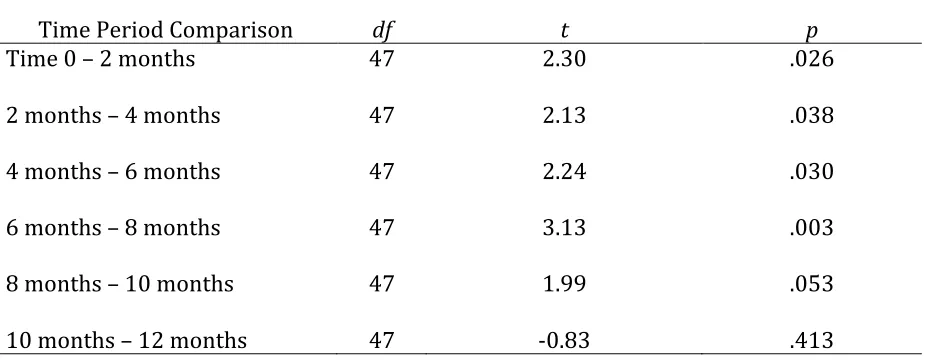
each two-month period is significant. Results displayed a significant decline in dosage
between each two-month period until the change between the 8- and 10-month periods (t
(47) = 1.99, p = .053), as well as no significant decline between the 10- and 12-month
periods (t (47) = -0.83, p = .413); see Table 4. This indicates that there was a significant
decline in MED for approximately 8 months following the Pain Review Appointment, at
Table 4
Changes In Morphine Equivalent Dosage Over Time
Time Period Comparison df t p
Time 0 – 2 months 47 2.30 .026
2 months – 4 months 47 2.13 .038
4 months – 6 months 47 2.24 .030
6 months – 8 months 47 3.13 .003
8 months – 10 months 47 1.99 .053
10 months – 12 months 47 -0.83 .413
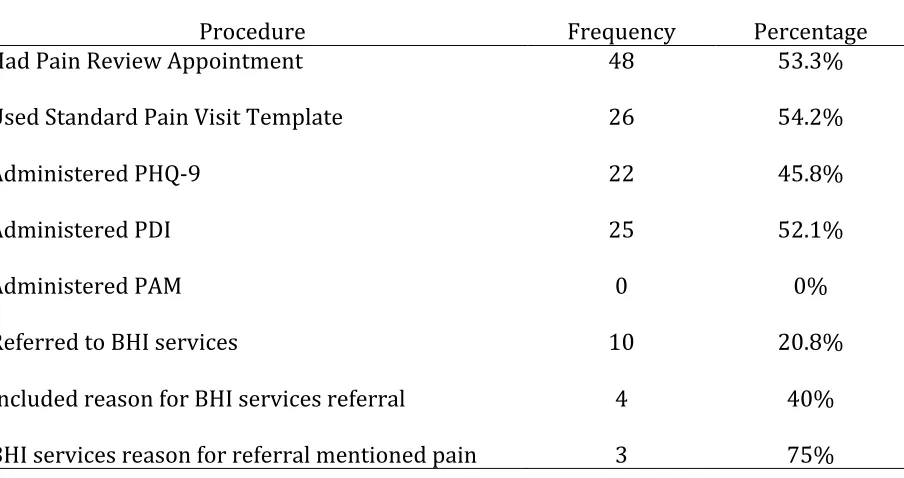
PCP Utilization of Standard Procedures
Data was collected to evaluate the PCP utilization of the standard procedures
defined by the healthcare organization for providing patient-centered interdisciplinary
care to chronic pain patients. Of the 90 patients eligible for a Pain Review Appointment,
53.3% (n = 48) received a Pain Review Appointment. Incidence rates for PCP utilization of
standard pain program procedures and BHI services referrals are displayed in Table 4. The
Table 5
PCP Utilization of Standard Pain Program Procedures
Procedure Frequency Percentage
Had Pain Review Appointment 48 53.3%
Used Standard Pain Visit Template 26 54.2%
Administered PHQ-9 22 45.8%
Administered PDI 25 52.1%
Administered PAM 0 0%
Referred to BHI services 10 20.8%
Included reason for BHI services referral 4 40%
Chapter 4
Discussion
Implications
A main purpose of this study was to examine the effectiveness of a patient-centered
interdisciplinary approach to treating chronic pain within a primary care setting by
exploring trends in patient utilization of medical services, opioid prescription dosages, and
PCP utilization of established treatment program procedures. The central aim is to be able
to use the results of this study to provide formative feedback that may enhance further
development of this treatment program, and ultimately improve patient care, outcomes,
and quality of life. Results from this study indicate that the Pain Review Appointment was
associated with several patient outcomes, including a significant decline in the number of
PCP visits over time. While patients who were referred to and attended BHI services had a
greater number of PCP visits prior to the Pain Review Appointment than those who were
not referred to BHI services, both groups displayed a notable reduction in number of PCP
visits following the Pain Review Appointment. These results indicate that the Pain Review
Appointment, whether the patient is enrolled with BHI or not, is an effective intervention in
decreasing PCP visits for high utilization rates within the chronic pain population.
Additionally, results displayed a significant decrease in opioid dosage over time for
approximately eight months following the Pain Review Appointment before leveling off.
decline in dosage was statistically significant. When the PCP meets with the patient to
outline a treatment plan at this visit, it appears that patient outcomes begin to improve and
overutilization begins to decline as the PCP and the patient work together to initiate an
individualized plan to begin tapering opioid medications down to a safer dosage. This
offers an excellent opportunity for other treatment team members, such as care
coordinators and BHI providers, to provide additional support for the purpose of
continuing to work toward the medication tapering goals while also being mindful of
patient needs as they make this adjustment.
This study offered insight into how PCPs utilized the standard procedures
developed for this treatment approach. Use of the standard procedures was moderate in
the number of patients who received a Pain Review Appointment and utilization of
templates, as well as some of the standard screeners. However, use of standard procedures
was low to absent in other measures, such as making BHI referrals and administering the
PAM. However, it appears that when the procedures were put into action, the results
aligned with the goals of the program; patient outcomes began to improve and
overutilization began to decline. These prospects may enhance motivation in PCPs and the
healthcare system as a whole for increased application of the standard procedures.
Although the number of BHI services referrals was low, this study began to highlight
which factors were correlated with a BHI services referral. While patients struggling with
depression were not referred to BHI consistently, patients with anxiety were more
frequently referred. Further, pain diagnoses of migraine/headache, chronic pain, and other
system burden seemed to be a determining factor for BHI referral with both greater
frequency of patient encounters, as well as patient telephone calls and emails. Results from
this study indicate that chronic pain patients with mental health comorbidity, especially
those with depression and anxiety, tend to display greater utilization of medical services.
Gaining a better understanding of which patients are currently being referred to BHI
services may highlight blind spots as to patient presentations that appear to be overlooked
for the opportunity to enhance their treatment with BHI services. This may in turn lead to
greater intentionality in increasing BHI services referrals as part of the treatment plans.
Limitations
A primary limitation from this study that covers widespread factors revolves around
variable engagement and utilization. Given that about half of the sample did not receive a
Pain Review Appointment, two of the standard screeners were only moderately used, one
standard screener was never used, only a small amount of patients were referred to BHI
services, and an even smaller amount ever saw a BHI provider, many possible outcomes
could either not be examined at all or the results could not be deemed significant. The
study was unable to assess changes in screener scores over time or the influence of patient
engagement in BHI services. Assessing data of patients from three different clinics and 19
different PCPs provides additional difficulty generalizing results, as at this time it does not
appear that all clinics and providers are following a standardized treatment procedure.
Other limitations of this study concern the design of the research. As this was an
outcome study of a preexisting treatment program rather than a study including a
including which patients received a Pain Review Appointment or which patients were
referred to BHI services. This study did not control for extraneous variables that may have
contributed to patient outcomes, such as involvement in other chronic pain treatment (e.g.,
support groups, physical therapy, naturopathy, other mental health treatment, etc.).
Because the Pain Review Appointment was considered to be the beginning of enrollment in
the pain program and thus was the starting data point for many variables, many data points
were not collected for patients who did not receive the Pain Review Appointment, resulting
in the inability to make comparisons between patients who had the Pain Review
Appointment and patients who did not on factors such as changes in opioid dosage over
time and patient utilization of medical services over time.
Directions for Future Research
Subsequent studies on this treatment program may offer useful conclusions
following increased utilization of program procedures and patient engagement in BHI
services. In the meantime, further research may focus on missing data points in the current
sample. Gathering data for patients who did not receive a Pain Review Appointment on
factors such as opioid dosage over time and patient utilization of medical services over
time would allow for comparisons between groups and enhance the ability to make more
accurate conclusions regarding the significance of the results from this study. Clinical case
analyses of the current sample could offer greater depth in understanding the factors that
contribute to the effectiveness of this treatment program and the barriers that prevent
engagement and utilization. Closely examining EMR documentation in other patient
who appear actively engaged in the treatment program continue to display high volume of
these encounters over time.
Conclusion
This study offered an examination of a patient-centered interdisciplinary approach
to chronic pain treatment in the primary care setting, specifically during the early stages of
development and implementation of the treatment program. The results helped to
highlight the strengths and growing edges in the current implementation of the treatment
program procedures. Results also conveyed that when the procedures are utilized,
outcomes appear to be favorable to the patient sample and work toward achieving the
goals set forth by the healthcare system. Future studies will be needed to ensure that these
References
Achterberg, W., Gambassi, G., Finne-Soveri, H., Liperoti, R., Noro, A., Frijters, D., & Ribbe, M.
(2010). Pain in European long-term care facilities: cross-national study in Finland,
Italy and The Netherlands. Pain, 148(1), 70-74. doi:10.1016/j.pain.2009.10.008
Aita, V., McIlvain, H., Backer, E., McVea, K., & Crabtree, B. (2005). Patient-centered care and
communication in primary care practice: What is involved?. Patient Education &
Counseling, 58(3), 296-304. doi:10.1016/j.pec.2004.12.008
American Psychiatric Association. (2013). Diagnostic and statistical manual of mental
disorders (5th ed.). Washington, DC: American Psychiatric Publishing.
Arnow, B. A., Blasey, C. M., Lee, J., Fireman, B., Hunkeler, E. M., Dea, R., & Hayward, C. (2009).
Relationships among depression, chronic pain, chronic disabling pain, and medical
costs. Psychiatric Services, 60(3), 344-350. doi:10.1176/appi.ps.60.3.344
Arroll, B., Goodyear-Smith, F., Crengle, S., Gunn, J., Kerse, N., Fishman, T., & Hatcher, S.
(2010). Validation of PHQ-2 and PHQ-9 to Screen for Major Depression in the
Primary Care Population. Annals of Family Medicine, 8(4), 348-353.
doi:10.1370/afm.1139
Bair, M., Robinson, R., Eckert, G., Stang, P., Croghan, T., & Kroenke, K. (2004). Impact of pain
on depression treatment response in primary care. Psychosomatic Medicine, 66(1),
17-22.
Bair, M. J., Robinson, R. L., Katon, W., & Kroenke, K. (2003). Depression and Pain
Bair, M., Wu, J., Damush, T., Sutherl, J. M., & Kroenke, K. (2008). Association of depression
and anxiety alone and in combination with chronic musculoskeletal pain in primary
care patients. Psychosomatic Medicine, 70(8), 890-897.
Beehler, G. P., Rodrigues, A. E., Mercurio-Riley, D., & Dunn, A. S. (2013). Primary care
utilization among veterans with chronic musculoskeletal pain: A retrospective chart
review. Pain Medicine, 14(7), 1021-1031.
Bendtsen, P., Hensing, G., Ebeling, C., & Schedin, A. (1999). What are the qualities of
dilemmas experienced when prescribing opioids in general practice? Pain, 82(1),
89-96.
Booth, M. (1986). Opium: A history. New York, NY: St. Martin’s Press.
Breuer, B., Cruciani, R., & Portenoy, R. K. (2010). Pain management by primary care
physicians, pain physicians, chiropractors, and acupuncturists: A national survey.
Southern Medical Journal, 103(8), 738-747.
Chelimsky, T., Fischer, R., Levin, J., Cheren, M., Marsh, S., & Janata, J. (2013). The primary
practice physician program for chronic pain (© 4PCP): Outcomes of a primary
physician-pain specialist collaboration for community-based training and support.
Clinical Journal of Pain, 29(12), 1036-1043. doi:10.1097/AJP.0b013e3182851584
Chou, R. (2013). Steering patients to relief from chronic low back pain: Opioids' role.
Journal of Family Practice,62(3), S8-S13.
Deyo, R., Smith, D., Johnson, E., Donovan, M., Tillotson, C., Yang, X., . . . Dobscha, S. (2011).
Opioids for back pain patients: Primary care prescribing patterns and use of
Duckworth, M. P., Iezzi, T., & Sewell, M. (2009). Assessing and managing chronic pain in the
primary care setting. In L. C. James, W. T. O'Donohue (Eds.), The primary care toolkit:
Practical resources for the integrated behavioral care provider (pp. 183-197). New
York, NY: Springer.
Fiscella, K., Meldrum, S., Franks, P., Shields, C. G., Duberstein, P., McDaniel, S. H., & Epstein,
R. M. (2004). Patient trust: Is it related to patient-centered behavior of primary care
physicians? Medical Care, 42(11), 1049-1055.
doi:10.1097/00005650-200411000-00003
Fowles, J., Terry, P., Xi, M., Hibbard, J., Bloom, C., & Harvey, L. (2009). Measuring
self-management of patients' and employees' health: further validation of the Patient
Activation Measure (PAM) based on its relation to employee characteristics. Patient
Education & Counseling, 77(1), 116-122. doi:10.1016/j.pec.2009.02.018
Gatchel, R. J., McGeary, D. D., McGeary, C. A., & Lippe, B. (2014). Interdisciplinary chronic
pain management: Past, present, and future. The American Psychologist,69(2),
119-30.
Gatchel, R. J., Peng, Y., Fuchs, P. N., Peters, M. L., & Turk, D. C. (2007). The biopsychosocial
approach to chronic pain: Scientific advances and future directions. Psychological
Bulletin,133(4), 581.
Green, C. R., Wheeler, J. C., Marchant, B., LaPorte, F., & Guerrero, E. (2001). Analysis of the
physician variable in pain management. Pain Medicine, 2(4), 317-327.
Hibbard, J. H., Stockard, J., Mahoney, E. R., & Tusler, M. (2004). Development of the Patient
and consumers. Health Services Research, 39(4p1), 1005-1026.
doi:10.1111/j.1475-6773.2004.00269.x
Institute of Medicine (2011). Relieving pain in America: A blueprint for transforming
prevention, care, education, and research. Washington, DC: National Academies
Press.
International Association for the Study of Chronic Pain (1986). Classification of chronic
pain. Pain, 3(Suppl. 3), 1-226.
Jensen, M., & Turk, D. (2014). Contributions of psychology to the understanding and
treatment of people with chronic pain: Why it matters to all psychologists. The
American Psychologist,69(2), 105-18.
Kahan, M., Mailis-Gagnon, A., & Tunks, E. (2011). Canadian guideline for safe and effective
use of opioids for chronic non-cancer pain: implications for pain physicians. Pain
Research & Management: The Journal of the Canadian Pain Society = Journal De La
Société Canadienne Pour Le Traitement De La Douleur, 16(3), 157-158.
Krashin, D., Sullivan, M., & Ballantyne, J. (2013). What are we treating with chronic opioid
therapy? Current Rheumatology Reports,15(3), Current Rheumatology Reports,
2013 Mar, Vol.15(3).
Kroenke, K. (2003). Patients presenting with somatic complaints: epidemiology, psychiatric
co-morbidity and management. International Journal of Methods in Psychiatric
Kroenke, K., Spitzer, R. L., & Williams, J. W. (2001). The PHQ-9: Validity of a brief depression
severity measure. Journal of General Internal Medicine, 16(9), 606-613.
doi:10.1046/j.1525-1497.2001.016009606.x
Kroenke, K., Spitzer, R., Williams, J., Linzer, M., Hahn, S., deGruy, F., & Brody, D. (1994).
Physical symptoms in primary care. Predictors of psychiatric disorders and
functional impairment. Archives of Family Medicine, 3(9), 774-779.
Loeser, J. D. (1999). Economic implications of pain management. Acta Anaesthesiologica
Scandinavica, 43(9), 957-959. doi:10.1034/j.1399-6576.1999.430914.x
Matthias, M. S., Parpart, A. L., Nyland, K. A., Huffman, M. A., Stubbs, D. L., Sargent, C., & Bair,
M. J. (2010). The patient-provider relationship in chronic pain care: Providers'
perspectives. Pain Medicine, 11(11), 1688-1697.
doi:10.1111/j.1526-4637.2010.00980.x
McDaniel, S., & DeGruy, F. (2014). An Introduction to primary care and psychology.
American Psychologist,69(4), 325-331.
Merskey, H., & Bogduk, N. (1994). Classification of chronic pain: Descriptions of chronic pain
syndromes and definitions of pain terms. Seattle, WA: IASP Press.
Michna, E., Ross, E. L., Hynes, W. L., Nedeljkovic, S. S., Soumekh, S., Janfaza, D., & Jamison, R.
N. (2004). Predicting aberrant drug behavior in patients treated for chronic pain:
Importance of abuse history. Journal of Pain and Symptom Management, 28(3),
250-258. doi:10.1016/j.jpainsymman.2004.04.007
Nicholson, B. B. (2003). Responsible prescribing of opioids for the management of chronic
Onder, G., Cesari, M., Russo, A., Zamboni, V., Bernabei, R., & Landi, F. (2006). Association
between daily pain and physical function among old–old adults living in the
community: Results from the ilSIRENTE study. Pain (03043959), 121(1/2), 53-59.
doi:10.1016/j.pain.2005.12.003
Otis, J. D., & Hughes, D. H. (2010). Psychiatry and chronic pain: Integration and coordination
with primary care. Psychiatric Times, 27(12), 24-27.
Otis, J. D., Macdonald, A., & Dobscha, S. K. (2006). Integration and coordination of pain
management in primary care. Journal of Clinical Psychology, 62(11), 1333-1343.
doi:10.1002/jclp.20313
Otis, J. D., Reid, M., & Kerns, R. D. (2005). Multidisciplinary approaches to pain management
in primary care settings. In L. C. James & R. A. Folen (Eds.), The primary care
consultant: The next frontier for psychologists in hospitals and clinics (pp. 41-59).
Washington DC: American Psychological Association. doi:10.1037/10962-003
Poleshuck, E. L., Talbot, N. L., Su, H., Tu, X., Chaudron, L., Gamble, S., & Giles, D. E. (2009).
Pain as a predictor of depression treatment outcomes in women with childhood
sexual abuse. Comprehensive Psychiatry, 50(3), 215-220.
doi:10.1016/j.comppsych.2008.08.001
Reidenberg, M., & Willis, O. (2007). Prosecution of physicians for prescribing opioids to
patients. Clinical Pharmacology and Therapeutics, 81(6), 903-906.
Reyes-Gibby, C. C., Aday, L., & Cleeland, C. (2002). Impact of pain on self-rated health in the