CC S.. = BY NC ND
http://doi.org/10.5114/bta.2019.90242
An improved procedure for
in vivo
and
in vitro
propagation
of
Buxus hyrcana
, an ornamental shrub critically
at risk of extinction
NASER NEGAHDAR, DAVOOD HASHEMABADI*, BEHZAD KAVIANI
Department of Horticultural Science, Rasht Branch, Islamic Azad University, Rasht, Iran
Abstract
The ornamental shrub, Buxus hyrcana is a threatened species due to the attacks of some pathogens. Rooting of
this valuable shrub using propagation techniques such as cuttings is very slow. The present study was carried out to evaluate the effect of different concentrations of indole-3-butyric acid (IBA) and kinetin (KIN) on rooting of semi-hardwood cuttings and in vitro propagation of B. hyrcana. In propagation experiment, the basal region of the cuttings was treated with IBA and KIN solutions (0.00, 500, 1000 and 2000 mg/l of each). The cuttings were then transferred to rooting beds filled with perlite. After a rooting period of 60 days, some morphological para-meters were measured. The 500 mg/l KIN along with 1000 mg/l IBA induced the largest number of roots (16.80 per plantlet). A maximum of 8.16 cm root length per plantlet was obtained with 1000 mg/l IBA together with 1000 mg/l KIN. The largest number of leaves (105.00) was observed in rooted stem cuttings treated with 2000 mg/l IBA along with 1000 mg/l KIN. In tissue culture experiment, the medium enriched with 2.00 mg/l KIN together with 0.50 mg/l IBA was found to be suitable for obtaining the maximum leaf number (11.43 per explant). A higher rooting frequency was also observed with the highest rooting of 6.50 roots per cutting achieved in
plantlets grown in a medium supplemented with KIN and IBA (1.00 mg/l each). In vitro rooted plantlets were
cultivated in plastic pots containing peat and perlite (in ratio of 1 : 1). The plantlets were successfully acclimatized in an adaptation greenhouse with a survival rate of 95% exhibiting normal developmental patterns.
Key words: endangered plants, ornamentals, plant growth regulators, rooting, stem cutting, tissue culture
Introduction
Buxus from the family Buxaceae is a genus contai-ning about 70 species of evergreen shrubs and trees found in habitats ranging from rocky hills to woodlands in Europe, Asia, Africa and Central America. Common boxwood (Buxus hyrcana or Buxus sempervirens) is a bushy, rounded shrub or small tree with ovate to ob-long, glossy and dark green leaves. Boxwoods are grown mainly for their foliage, which may be variegated (Bric-kell and Zuk, 1996). This species is in danger of extinc-tion due to the invasion with some pathogens.
Propagation of boxwood is done by seeds and cut-tings. Seeds propagation is a slow process; it is time con-suming and results in heterogeneous plants with segre-gation of traits. Vegetative propasegre-gation is an alternative
method for conservation of endangered plants threate-ned with extinction; it also helps to maintain certain desired characteristics in the plants (Hartmann et al., 2002). Roots produced in the cultures in vitro through the use of plant growth regulators (PGRs) are stronger and emerge faster and more in number than those pro-duced without application of PGRs (Sağlam et al., 2014). The formation of root primordium cells depends on the presence of endogenous auxins in the cutting area or on application of exogenous auxins. Adventitious root for-mation in cuttings is an important process for vegetative propagation of many plant species, especially hard- and semi-hard wood cuttings of trees and shrubs (Husen et al., 2015; Kaviani and Negahdar, 2017).
N. Negahdar, D. Hashemabadi, B. Kaviani
418
The success of vegetative reproduction depends on the interaction of hereditary factors and some biological and external factors particularly PGRs (de Oliveira et al., 2003; Davidović et al., 2015). The application of exo-genous PGRs, especially the auxins group, can increase the success of adventitious rooting in the stem; IBA is the most commonly used auxin (Hartmann et al., 1997; Brondani et al., 2012; Davidović et al., 2015;Kaviani and Negahdar, 2017). Rooting of tree species through stem cuttings is affected by several factors particularly culti-vation beds and PGRs (Hartmann et al., 2002). Appli-cation of auxins, especially IBA and α-naphthaleneacetic (NAA) is recommended for production of adventitious roots in stem-cutting propagation of many shrubs and trees (Hartmann et al., 2002; Hunt et al., 2011; Husen et al., 2015; Kaviani and Negahdar, 2017). Tsipouridis et al. (2003) demonstrated that IBA at 2000 mg/l concentration stimulated rooting of hardwood and semi-hardwood cut-tings of peach trees (Prunus persica (L.) Batch). Hart-mann et al. (1997) revealed that the application of IBA at 2500 to 4000 mg/l concentration had the best results in rooting of the semi-hardwood cuttings of apple, plum, and olive. The positive effect of 3000!4000 mg/l auxin in in-creasing rooting the cuttings of woody ornamental shrubs such as roses and Chinese hollyhock has been demonstra-ted (Al-Sagri and Alderson, 1996). Usually, a concentra-tion of 2000!4000 mg/l will result in a proper rooting for most shrubs and evergreens (Poston, 2007).
The application of biotechnology and tissue culture in particular, is an appropriate method for reproduction of rare and threatened plants that are difficult to propagate. This method is becoming increasingly important for propagation and preservation of rare and endangered plant species (Kaviani and Negahdar, 2017). Plant tissue culture and micropropagation techniques also play an im-portant role in preservation programs and management of botanical collections (Mahendran and Bai, 2009). Kaviani and Negahdar (2017) reported that the maxi-mum in vitro multiple shoot formation in B. hyrcana was obtained through the use of 1.00 mg/l 6! benzylamino-purine (BAP). The optimum PGR combination for the largest number of roots was found to be 0.50 mg/l BAP and 1.00 mg/l NAA. There are very few reports regar-ding propagation of B. hyrcana through the rooting of semi-hardwood stem cuttings. Furthermore, the only reference found regarding the in vitro propagation of this species was the previous study by the present group
on B. hyrcana (Kaviani and Negahdar, 2017). Therefore, the objectives of this study were to 1) develop an effective protocol for root induction from hard-wood stem cuttings; and 2) to establish a reliable procedure for in vitro propagation of B. hyrcana, a threatened ornamental shrub.
Materials and methods
Boxwood (Buxus hyrcana Pojark.), an ornamental shrub species, was obtained from a commercial land-scape and garden company in Mazandaran province, Iran. The acquired plants were used as mother plants. The mother plants were transported to the plant tissue culture laboratory located in the Hyrcan Agricultural Science and Biotechnology Research Institute, Amol, Iran.
Experiment 1. In vivo propagation
Plant materials and treatments
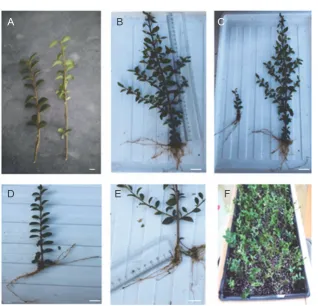
Stems collected from two-years-old plants grown in a greenhouse were used as the source of cuttings. Stem cuttings of 20 cm length with 16 leaves (Fig. 1A) were disinfected by immersion in silver Nano-particles at a con-centration of 250 mg/l for 10 s. To induce adventitious rooting, the basal region of the stem cuttings was dipped in solutions containing 0 (control, no IBA and KIN), 500, 1000 and 2000 mg/l of both IBA and KIN for 10 s.
Cultivation bed and growth conditions
After the treatments, the cuttings were placed in pots filled with perlite. They were maintained in a green-house to induce rhizogenesis. Fertilization was not per-formed. Plastic pots (70 × 38 × 4 cm3) were used as the cultivation container (Fig. 1F). The temperature of greenhouse was adjusted to 24EC and the air relative humidity (RH) so that it exceeded 80%.
Measured parameters
Evaluations were performed after a rooting period of 60 days. Plantlets height, stem diameter, shoot number, leaf number, node number, root length and root number were measured.
Experimental design and statistical analysis
cut-tings were randomly assigned per treatment; thus, a total of 320 cuttings were used. All the statistical ana-lyses were done by using Microsoft Excel 2013 and Statistical Package for Social Sciences (SPSS) v 16.0. The analysis of variance (ANOVA) procedure for facto-rial experiments was used to test for the significant effect of treatments, followed by least significant diffe-rence (LSD) test for comparisons of different means of different treatments.
Experiment 2. In vitro micropropagation
Explant source and sterilization
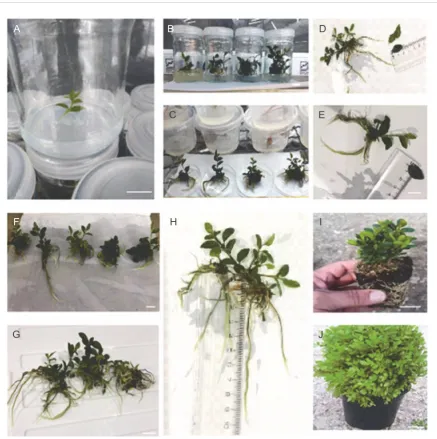
Shoot tips obtained from the mother plants was used as explants for the establishment of cultures. Shoots (4!5 cm long) were washed under running tap water for 60 min. with a few drops of washing liquid. Shoots were transported to aseptic conditions in a laminar air hood. They were then surface sterilized with 20% sodium hypochlorite (NaOCl) for 10 min and rinsed with auto-claved water 3!5 times. Then, explants were disinfected with 0.5% (w/v) HgCl2 for 15 min and rinsed with steri-lized distilled water for 5 min. Finally, they were placed in the 5% ethanol for 5 min and then fully rinsed with sterilized distilled water. Under aseptic conditions in a laminar air hood, shoot tips (8!10 mm) were excised from the shoots and used as explant (Fig. 2A).
Culture medium, treatments, and measured parameters The surface-sterilized explants were cultured in MS (Murashige and Skoog, 1962) medium fortified with 0.50, 1.00 and 2.00 mg/l of KIN and IBA or no PGRs as control. Sucrose (3%) was used as carbon source and media were solidified with Agar–agar (0.8%). The pH of the medium was adjusted to 5.7 ± 0.10 and autoclaved at 15 psi, 121EC for 30 min. The cultures were maintained in a growth chamber at 24 ± 1EC with a 16-h photoperiod and a photo-synthetic photon density flux of 50 μmol m!2s!1 provided by cool white fluorescent lamps and 75!80% RH. After 2 months of culture, the parameters including leaf length, leaf diameter, leaf number, root length, root number and viability percentage of plantlets were calculated.
Plantlets acclimatization
In vitro rooted plantlets were washed with sterile water to remove the nutrient agar adhered to the roots and were cultivated in plastic pots containing peat and
perlite (in a ratio of 1 : 1). Plantlets were covered by thin plastic bags, transferred to the greenhouse and kept at 25 ± 1EC and 70!80% RH. They were then watered re-gularly and were exposed gradually to external environ-ment by removing the plastic bags around the pots.
Experimental design
A factorial experiment in a completely randomized design was conducted. The experiment consisted of four replicates with one plant per replicate. Data were re-corded from 200 explants after 8 weeks of culture. All the statistical analyses were carried out using Statistical Package for Social Sciences (SPSS) v 16.0. The ANOVA procedure for factorial experiments was used to test whether the treatments had significant effects; this was followed by least significant difference (LSD) test for comparisons of different means of different treatments.
Results
(Ta-N. Negahdar, D. Hashemabadi, B. Kaviani
420
A B C
D E F
Fig. 1. Root and shoot induction on stem cuttings of Buxus hyrcana induced by different concentrations of KIN and IBA. A) standardized stem cuttings; B) plantlets height (treated with 1000 mg/l IBA); C) shoot number (treated with 500 mg/l KIN plus 1000 mg/l IBA – right and control – left); D) node number (treated with 500 mg/l IBA); E) root length (treated with 1000 mg/l KIN plus 1000 mg/l IBA); F) acclimatized plants in tray (scale bar = 1 cm)
Table 1. Mean comparison of the effect of different concentrations of KIN on measured parameters of Buxus hyrcana (in vivo conditions)
KIN
[mg/ l] numberNode
Plantlet height
[cm]
Shoot number
Root length
[cm]
Root number
Length of the longest root
Stem diameter
[cm]
Leaf number
0 10.67a 23.57a 6.40b 6.75a 6.68c 6.19a 0.36a 80.00a
500 6.34d 15.20c 7.67a 6.62a 7.85b 6.95a 0.38a 84.30a
1000 8.58c 15.91c 6.98ab 6.56a 8.32a 7.29a 0.36a 82.50a
2000 9.61b 18.22b 7.05ab 6.84a 6.94c 6.77a 0.40a 84.30a
Means with different letters on the same column are significantly different (P < 0.05) based on LSD test
ble 3). Differences between root length in cuttings trea-ted with each one of KIN and IBA singly were not signi-ficant (data not shown). The longest root (11.40 cm) was obtained with the treatment of 1000 mg/l KIN (Table 3). The longest root obtained under control (without appli-cation of KIN and IBA) was 4.06.
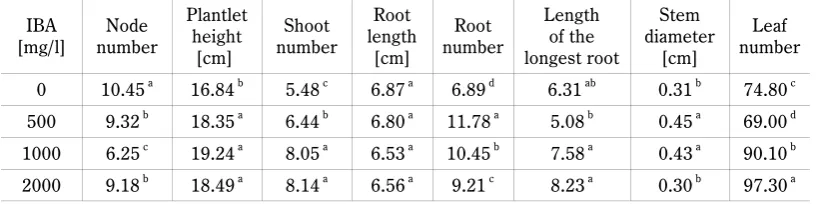
Table 2. Mean comparison of the effect of different concentrations of IBA on measured parameters of Buxus hyrcana (in vivo conditions)
IBA
[mg/l] numberNode
Plantlet height
[cm]
Shoot number
Root length
[cm]
Root number
Length of the longest root
Stem diameter
[cm]
Leaf number
0 10.45a 16.84b 5.48c 6.87a 6.89d 6.31ab 0.31b 74.80c
500 9.32b 18.35a 6.44b 6.80a 11.78a 5.08b 0.45a 69.00d
1000 6.25c 19.24a 8.05a 6.53a 10.45b 7.58a 0.43a 90.10b
2000 9.18b 18.49a 8.14a 6.56a 9.21c 8.23a 0.30b 97.30a
Means with different letters on the same column are significantly different (P < 0.05) based on LSD test
with 1000 mg/l IBA and control induced faster growth of shoots in relation to the other treatments (P < 0.01), with 26.70 and 24.30 cm length at 65 days, respectively (Table 3). The lowest value of the length of the shoots was obtained with the treatment of 500 mg/l KIN; this treatment resulted in shoots 9.20 cm long. Needless to say, too high length of plantlets is not an advantage for ornamental species from aesthetic point of view; the or-namentals with more compact shoots are more beautiful. The treatment without KIN and IBA (control) produ-ced only 3.60 shoots (P < 0.01) and 42.30 leaves (P < 0.01 for KIN together with IBA and IBA alone, not for KIN alone) per cutting at 65 days (data not shown). The concentrations of 1000 mg/l KIN and 2000 mg/l IBA induced the maximum shoot number (9.26) (Fig. 1C) and leaf number (105.00) per cutting (Table 3). These amounts are about three fold higher than those of produ-ced in control cuttings. Table 3 shows the production of more than 8 shoots per cutting when 500 or 2000 mg/l KIN in combination with 500, 1000 or 2000 mg/l IBA were applied. This result suggests the importance of applying both KIN and IBA for achieving greater number of shoots and leaves. There was no positive relationship between increasing KIN and IBA concentrations and increase in the number of shoots and leaves (Table 3). The concentration of 1000 mg/l KIN along with 500 mg/l IBA and 2000 mg/l KIN along with 1000 mg/l IBA resulted in better values for the stem diameter (both with 0.53 cm per cutting) (Table 3). The treatment without KIN and the treatment containing the highest concentrations of KIN and IBA showed least effects on stem diameters.
Effect of PGRs on in vitro propagation of shoot tips
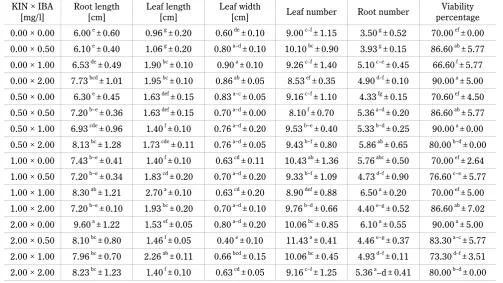
The number, length and width of leaves formed per shoot explants were strongly dependent on the compo-sition of media. Successful leaf length (2.26 and 2.70 cm per explant) was obtained in media fortified with 2.00 mg/l KIN together with 1.00 mg/l IBA, and 1.00 mg/l KIN together with 1.00 mg/l IBA, respectively (Table 6, Fig. 2D). Minimum leaf length (0.96 cm) was calculated in a medium without KIN and IBA (control). Medium with 0.50 mg/l KIN and 0.50 mg/l IBA formed leaves with a low frequency (8.10 per explant) – Table 6. A combination of 2.00 mg/l KIN and 0.50 mg/l IBA was found to be the most suitable PGRs regime, achieving the largest number of leaves with 11.43 leaves per explant (Table 6, Fig. 2B). IBA at a concentration of 1.00 mg/l was found to be more effective for leaf width (Fig. 2E). The combination of 2.00 mg/l KIN and 0.50 mg/l IBA also did not improve the leaf width. Plantlets produced in media containing 2.00 mg/l IBA, 2.00 mg/l KIN, and 0.50 mg/l KIN together with 1.00 mg/l IBA showed 90% viability percentage (Table 6).
Table 3. Mean comparison of the effect of different concentrations of KIN and IBA on measured parameters of Buxus hyrcana (in vivo conditions)
KIN × IBA
[mg/l] Node number Plantlet height[cm] Shoot number Root length[cm] Root number of the longest rootLength Stem diameter[cm] Leaf number 0 × 0 14.50a± 0.50 24.30a± 3.29 3.60e± 0.00 6.50ab± 0.50 6.10h± 0.50 4.06f± 0.56 0.33bc± 0.05 42.3g± 0.57
0 × 500 12.50b± 1.32 21.00bc± 0.50 7.83ab± 0.15 7.36a± 0.30 12.12c± 1.20 4.80ef± 1.21 0.36b± 0.05 86.3c–e± 2.88
0 × 1000 6.50fg± 0.50 26.70a± 0.72 6.96bc± 0.63 5.70b± 0.40 10.44cd± 1.21 8.80abc± 3.27 0.47a± 0.00 90.0cd± 9.00
0 × 2000 9.20cd± 0.26 20.30cd± 0.20 6.23c± 1.95 7.43a± 0.40 8.56cde± 0.43 5.80b–f± 1.94 0.26c± 0.05 101.6ab± 4.50
500 × 0 6.83e–g± 0.35 9.20j± 0.17 4.56d± 2.03 6.86a± 1.06 7.54de± 0.32 4.80ef± 1.21 0.33bc± 0.05 81.3d–f± 6.65
500 × 500 5.50gh± 0.86 22.70b± 0.17 8.76a± 1.20 6.50ab± 0.50 13.78ab± 1.02 4.36f± 0.56 0.46a± 0.05 76.0ef± 3.00
500 × 1000 7.86d–f± 0.28 14.93gh± 0.40 8.93a± 0.73 6.56ab± 0.66 16.80a± 0.60 9.86ab± 1.64 0.36b± 0.05 88.6cd± 3.21
500 × 2000 8.86cd± 0.32 14.00hi± 1.30 8.73a± 0.41 6.56ab± 0.57 11.86cd± 0.75 8.80a–e± 4.20 0.36b± 0.02 91.3b–d± 3.05
1000 × 0 10.20c± 1.21 12.83i± 0.45 6.53bc± 0.77 6.70a± 0.43 8.10cde± 1.04 11.40a± 2.90 0.26c± 0.05 94.3a–c± 8.51
1000 × 500 6.46fg± 2.66 17.23ef± 1.47 4.60d± 0.20 6.50ab± 0.50 9.67d± 0.47 4.26f± 0.15 0.53a± 0.05 45.0g± 2.65
1000 × 1000 7.50d–f± 1.32 16.43fg± 1.00 7.83ab± 0.85 8.16a± 0.30 12.42c± 1.28 5.53c–f± 2.10 0.33bc± 0.05 90.0cd± 6.00
1000 × 2000 10.16c± 0.75 17.16ef± 1.80 9.26a± 0.47 5.70b± 0.40 14.23ab± 0.87 9.16a–d± 4.35 0.33bc± 0.05 105.0a± 2.64
2000 × 0 10.26c± 0.80 19.03c–e± 1.15 6.23c± 0.15 6.83a± 0.40 6.89f–g± 0.48 5.70b–f± 2.11 0.33bc± 0.05 81.3d–f± 6.65
2000 × 500 12.83ab± 1.25 12.46i± 0.97 4.56d± 0.28 6.56ab± 1.06 10.54cd± 0.86 7.10a–f± 4.63 0.46a± 0.05 72.6f± 7.51
2000 × 1000 6.84e–g± 0.43 18.90de± 1.24 8.76a± 0.37 6.50ab± 0.50 10.76cd± 0.90 5.13d–f± 1.88 0.53a± 0.05 92.0b–d± 5.64
2000 × 2000 8.50cde± 1.80 22.50b± 0.50 8.63a± 0.55 6.56ab± 0.66 6.60f–g± 0.88 9.16a–d ± 1.68 0.26c ± 0.05 91.3b–d ± 6.05
Table 4. Mean comparison of the effect of different concentrations of KIN on measured parameters of Buxus hyrcana (in vitro conditions)
KIN [mg/l]
Root length
[cm]
Leaf length
[cm]
Leaf diameter
[cm]
Leaf
number numberRoot percentageViability
0.00 6.67c 1.50c 0.79a 9.22b 4.60b 78.30ab
0.50 7.14bc 1.60bc 0.76ab 9.13b 5.22a 81.80a
1.00 7.53b 1.84a 0.66bc 9.60ab 5.25a 75.80b
2.00 8.47a 1.66b 0.62c 10.18a 5.21a 81.60a
Means with different letters on the same column are significantly different (P < 0.05) based on LSD test
Table 5. Mean comparison of the effect of different concentrations of IBA on measured parameters of Buxus hyrcana (in vitro conditions)
IBA [mg/l]
Root length
[cm]
Leaf length
[cm]
Leaf diameter
[cm]
Leaf
number numberRoot percentageViability
0.00 7.41a 1.38d 0.71a 9.66a 5.17a 75.16b
0.50 7.15a 1.50c 0.65a 9.81a 4.62b 83.33a
1.00 7.43a 1.94a 0.74a 9.44a 5.36a 75.00b
2.00 7.82a 1.79b 0.74a 9.22a 5.13a 84.16a
Means with different letters on the same column are significantly different (P < 0.05) based on LSD test
as determined by measured root length. There was no significant difference in the length of roots per explants treated with different concentrations of IBA. Other treat-ments showed significant differences in root length and root number (data not shown).
Plantlets were acclimatized in the plant growth cham-ber benefited from the high humidity and other incuba-tion condiincuba-tions during the 2 weeks and showed 95% survival (Fig. 2I and Fig. 2J). Plantlets were then taken out of the growth chamber and transferred to an adapta-tion greenhouse for another 2 weeks after repotting in pots containing a mixture of peat and perlite (in ratio of 1 : 1). All the acclimatized plantlets were successfully established and formed new leaflets (Fig. 2H). Acclimati-zed plants had normal leaf development and lacked de-tectable morphological variation and showed apparently uniform growth and true-to-type morphology.
Discussion
In vivo propagation
B. hyrcana is a species critically at the risk of extinc-tion mainly due to the invasion of pathogens (Kaviani
and Negahdar, 2017). The main pathogen is a type of witch moth, Cydalima perspectalis. The population of B. hyrcana in northern part of Iran has been reduced to 20!30%. This plant has great commercial potential. Box-woods are evergreen shrubs and trees; they are popular in gardens and landscapes (Kaviani and Negahdar, 2017). Thus, they should be protected. Propagation by rooting of semi-hard wood cuttings and in vitro propaga-tion are the effective methods for conservapropaga-tion and rapid multiplication of the species in danger of extinction. Ef-fective production of shoots and adventitious roots in plant tissue culture laboratory and greenhouse ensures a constant production of clones throughout the year. Just a single work was reported (by the authors of this article) about propagation and micropropagation of B. hycana Pojark (Kaviani and Negadar, 2017).
N. Negahdar, D. Hashemabadi, B. Kaviani
424
A B D
C E
F H I
G J
Fig. 2.In vitro development of Buxus hyrcana. A) early stage of in vitro culture (the explants were shoot apex (scale bar = 1 cm)); B) shoot multiplication from explants cultured on Murashige and Skoog (MS) medium containing different concentrations of KIN and IBA; C) fully developed plantlets out of culture media; D) measurement of leaf length; E) measurement of leaf width; F) plantlets containing shoots and roots ready for acclimatization; G) regenerated plantlets from media containing different concentrations of KIN and IBA with fully developed roots; H) measurement of root length; I) acclimatization phase; J) viable
ex vitro plants growing under standard greenhouse conditions (scale bar = 2 cm except for A)
shrubs species such as Pausinystalia johimbe and Pon-gamia pinnata (Hartmann et al., 2002; Tchoundjeu et al., 2004; Kesari et al., 2009). Auxins, natural or artificially applied, are known to play a significant role in sti-mulating root initiation in stem cuttings of woody spe-cies (Hartmann et al., 2011). The application of auxins in the basal region of cuttings and mini-cuttings is pre-valent worldwide to promote the adventitious rooting of woody species (Hartmann et al., 2011; Brondani et al., 2012). A great variation was observed among the types,
Table 6. Mean comparison of the effect of different concentrations of KIN and IBA on measured parameters of Buxus hyrcana (in vitro conditions)
KIN × IBA
[mg/l] Root length[cm] Leaf length[cm] Leaf width[cm] Leaf number Root number percentageViability
0.00 × 0.00 6.00e± 0.60 0.96g± 0.20 0.60de± 0.10 9.00c–f± 1.15 3.50g± 0.52 70.00ef± 0.00
0.00 × 0.50 6.10e± 0.40 1.06g± 0.20 0.80a–d± 0.10 10.10bc± 0.90 3.93g± 0.15 86.60ab± 5.77
0.00 × 1.00 6.53de± 0.49 1.90bc± 0.10 0.90a± 0.10 9.26c–f± 1.40 5.10c–e± 0.45 66.60f± 5.77
0.00 × 2.00 7.73bcd± 1.01 1.95bc± 0.10 0.86ab± 0.05 8.53ef± 0.35 4.90d–f± 0.10 90.00a± 5.00
0.50 × 0.00 6.30e± 0.45 1.63def± 0.15 0.83a–c± 0.05 9.16c–f± 1.10 4.33fg± 0.15 70.60ef± 4.50
0.50 × 0.50 7.20b–e± 0.36 1.63def± 0.15 0.70a–d± 0.00 8.10f± 0.70 5.36a–d± 0.20 86.60ab± 5.77
0.50 × 1.00 6.93cde± 0.96 1.40f± 0.10 0.76a–d± 0.20 9.53b–e± 0.40 5.33b–d± 0.25 90.00a± 0.00
0.50 × 2.00 8.13bc± 1.28 1.73cde± 0.11 0.76a–d± 0.05 9.43b–f± 0.80 5.86ab± 0.65 80.00b–d± 0.00
1.00 × 0.00 7.43b–e± 0.41 1.40f± 0.10 0.63cd± 0.11 10.43ab± 1.36 5.76abc± 0.50 70.00ef± 2.64
1.00 × 0.50 7.20b–e± 0.34 1.83cd± 0.20 0.70a–d± 0.20 9.33b–f± 1.09 4.73d–f± 0.90 76.60c–e± 5.77
1.00 × 1.00 8.30ab± 1.21 2.70a± 0.10 0.63cd± 0.20 8.90def± 0.88 6.50a± 0.20 70.00ef± 5.00
1.00 × 2.00 7.20b–e± 0.10 1.93bc± 0.20 0.70a–d± 0.10 9.76b–d± 0.66 4.40e–g± 0.52 86.60ab± 7.02
2.00 × 0.00 9.60a± 1.22 1.53ef± 0.05 0.80a–d± 0.20 10.06bc± 0.85 6.10a± 0.55 90.00a± 5.00
2.00 × 0.50 8.10bc± 0.80 1.46f± 0.05 0.40e± 0.10 11.43a± 0.41 4.46e–g± 0.37 83.30a–c± 5.77
2.00 × 1.00 7.96bc± 0.70 2.26ab± 0.11 0.66bcd± 0.15 10.06bc± 0.45 4.93d–f± 0.11 73.30d–f± 3.51
2.00 × 2.00 8.23bc± 1.23 1.40f± 0.10 0.63cd± 0.05 9.16c–f± 1.25 5.36a–d ± 0.41 80.00b–d± 0.00
Means with different letters on the same column are significantly different (P < 0.05) based on LSD test; mean ± std. dev.
in the base of stem cuttings. IBA increases the con-centration of endogenous auxins; the accumulation of IBA in the basal region of stem cuttings acts as a meta-bolizing agent and signal to produce roots (Husen, 2008). PGRs, especially IBA, change the metabolism of enzymes, carbohydrates, RNA, DNA and proteins (Dai et al., 2004; Husen and Pal, 2007; Brondani et al., 2012). IBA is the best auxin for general use because it is nontoxic to plants over a wide concentration range than other auxins; it is also effective in promoting the root formation of a large number of plant species (Hartmann et al., 2002).
In this study, various combinations of different con-centrations of an auxin (IBA) and a cytokinin (KIN) were tested on rooting of semi-hard-wood cutting of B. hyr-cana. The authors succeeded in inducing roots twice as much as possible (16.80 per cutting) by treating the cut-ting with 500 mg/l KIN in combination with 1000 mg/l IBA, compared to the control. Moreover, the longest roots were observed in stem cuttings treated with 1000 mg/l KIN in combination with 1000 mg/l IBA. Con-trary to author’s finding, successful rooting without the
application of auxin has been reported in a number of tropical tree species like Allanblackia floribunda (Atan-gana et al., 2006). Such contrasting results may be due to the variation in endogenous auxin contents in a parti-cular species.
N. Negahdar, D. Hashemabadi, B. Kaviani
426
its low activity and slow degradation by auxin degrada-tion enzymes (Singh et al., 2014). However, high con-centrations of auxin can cause damage to the base of the cutting. Auxin can be effective to rooting cuttings at a certain concentration, depending on the species and cultivar; on the other hand, it will have an inhibitive ef-fect at higher concentrations (Galavi et al., 2013). Con-trary to the authors’ findings, Husen et al. (2015) and Singh et al. (2014) showed that a high concentration of IBA (3000 and 2000 mg/l, respectively) was most effec-tive for root production in terms of number and length in Morus alba L. Induction of more roots with higher IBA concentration has been reported in various plants such as Dalbergia melanoxylon, Vitis vinifera, Thuja com-paecta and Macleania rupestris (Amri et al., 2010; Galavi et al., 2013; Singh et al., 2013; Veloza et al., 2014). Alizadeh and Grigorian (2002) demonstrated that the increase in NAA concentration from 1000 to 2000 mg/l increased rooting in semi-hardwood cuttings of almond–peach hybrid, whereas decrease in rooting was observed at concentration of 3000 mg/l. Investigation of Shirzad et al. (2012) on Ficus benjamina revealed that the maximum root number and root length was obtained with 4000-6000 mg/l IBA. Sağlam et al. (2014) showed superiority of IAA than NAA and IBA for root induction and growth in Salvia fruticosa Mill. These researchers showed that the maximum root number values (77.40) were obtained in stem cuttings treated with 400 mg/l of IAA, NAA and IBA, respectively. In IBA application, especially at concentrations of 300 and 400 mg/l, notable increases in root length were observed (Sağlam et al., 2014).
Present study showed the positive effect of KIN and IBA on shoot and leaf number, because the smallest number of shoots and leaves were produced in control plantlets. Maximum shoot and leaf number was obtained in cuttings treated with 1000 mg/l KIN in combination with 2000 mg/l IBA. The author’s work showed the sy-nergic effect of KIN and IBA in terms of stimulating the production of highest shoot and leaf number. The in-vestigation of Singh et al. (2014) on the rooting of stem cuttings of Morus alba L. demonstrated that the number of leaves per cutting was maximum in 2000 mg/l of IBA, followed by 1500 mg/l of IBA. The minimum number of leaves per cutting was calculated in control. Increase in leaf number may be due to vigorous rooting induced by the PGRs enabling the cuttings to absorb more nutrients
and thereby produce more leaves (Stancato et al., 2003; Singh et al., 2014).
In vitro propagation
The results of the present study showed 100% of roo-ting on all the media tested (including the control) a month after the treatment. Maximum root number was produced in medium containing 1.00 mg/l of both KIN and IBA. Similar observation was made with B. hyrcana where explants cultured on MS medium supplemented with 0.50 mg/l BAP in combination with 1.00 mg/l NAA produced the largest number of roots (Kaviani and Ne-gahdar, 2017). IBA is more effective for rooting as com-pared with other auxins as reported for many woody spe-cies (Onay, 2000; Kalinina et al., 2007). IBA and NAA promoted rooting of different trees and shrubs species (Takihira et al., 2007; Noroozi Sharaf et al., 2011; Chen et al., 2012). The current investigation revealed that ex-plants cultured on medium fortified with 2.00 mg/l KIN without IBA induced high root number and maximum root length. It is possible that, the content of auxins in the explants of B. hyrcana is adequate for root growth. The requirement of PGRs for shoot and root regenera-tion is species-specific. In the present study, all the plantlets were successfully acclimatized with a survival rate of 95%.
Conclusions
B. hyrcana is in danger of extinction. Complementary in vivo and in vitro approaches represent important tools for ex situ conservation of plants germplasms particularly those threatened. The present study consti-tutes the second report on the propagation and micro-propagation of B. hyrcana Pojark. Results in the current study demonstrated that the use of both KIN and IBA in appropriate concentrations induced higher rooting per-centage and shoot proliferation in both propagation and micropropagation experiments. Following transfer to the adaptation greenhouse, 95% of the rooted shoots survi-ved. The procedure presented in this study can be im-plemented for the mass production of B. hyrcana on a commercial scale.
References
Alizadeh A., Grigorian V. (2002) Rooting assessments of semi
hardwood cuttings of almond - peach hybrid under mist conditions. Iranian J. Hort. Sci. Tech. 2(3): 143!154. Al-Sagri F., Alderson P.G. (1996) Effect of IBA, cutting type
and rooting media on rooting of Rosa centifolia. J. Hort. Sci. 71: 729!737.
Amri E., Lyaruu H.V.M., Nyomora A.S., Kanyeka Z.L. (2010)
Vegetative propagation of African Blackwood (Dalbergia melanoxylon Guill. & Perr.): Effects of age of donor plant, IBA treatment and cutting position on rooting ability of stem cuttings. New For. 39: 183–194.
Atangana A.R., Tchoundjeu Z., Asaah E.K., Simons A.J., Khasa
D.P. (2006) Domestication of Allanblackia floribunda:
amenability to vegetative propagation. For. Ecol. Manag. 237: 246–251.
Brickell C., Zuk J.D. (1996) A-Z Encyclopedia of garden plants. The American Horticultural Society. DK Publishing, Inc. New York, USA: 199.
Brondani G.E., Baccarin F.J.B., de Wit Ondas H.W., Stape J.L.,
Gonçalves A.N., de Almeida M. (2012) Low temperature,
IBA concentrations and optimal time for adventitious ro-oting of Eucalyptus benthamii mini-cuttings. J. For. Res. 23(4): 583!592.
Chen F.C., Wangb C.Y., Fang J.Y. (2012) Micropropagation of
self-heading Philodendron via direct shoot regeneration. Sci. Hort. 141: 23–29.
Corrêa L.R., Fett-Neto A.G. (2004) Effects of temperature on adventitious root development in microcuttings of Eucal-yptus saligna Smith and EucalEucal-yptus globulus Labill. J. Therm. Biol. 29(6): 315–324.
Dai W., Cheng Z.M., Sargent W.A. (2004) Expression of the
rolB gene enhances adventitious root formation in hard-wood cuttings of aspen. In Vitro Cell. Dev. Biol. – Plant. 40(4): 366–370.
Davidović V., Popović R., Radulović M. (2015) Influence of IBA and NAA (0.8%) + (IBA 0.5%) phytoregulators to the rizhogenesis of the mature lemon tree-shoots (Citrus limon (L.) Burm. and Citrus meyearii Y. Tan.). Agric. For. 61(2): 243–250.
de Oliveira A.P., Nienow A., y Calvete A., de Oliveira E. (2003)
Rooting potential capacity of peach tree cultivars of semi-hardwood and semi-hardwood cuttings treated with IBA. Rev. Bras. Frutic. 25: 282–285.
Ďurkovič J. (2008) Micropropagation of mature Cornus mas
‘Macrocarpa’. Trees. 22: 597–602.
Galavi M., Karimian M.A., Mousavi S.R. (2013) Effects of dif-ferent auxin (IBA) concentrations and planting-beds on rooting grape cuttings (Vitis vinifera). Ann. Rev. Res. Biol. 3(4): 517–523.
Hartmann H.T., Kester D.E., Davies F.T., Geneve R.L. (1997)
Plant propagation: principles and practices. 6th edition, Prentice-Hall, Inc., Englewood Cliffs, New Jersey. Hartmann H.T., Kester D.E., Davies F.T., Geneve R.L. (2002)
Plant propagation: principles and practices. 7th edition, Prentice Hall, Inc., Upper Saddle River: 176–328. Hartmann H.T., Kester D.E., Davies J.R.F.T., Geneve R.L.
(2011) Plant propagation: principles and practices. 8th edition, Prentice-Hall, São Paulo: 915.
N. Negahdar, D. Hashemabadi, B. Kaviani
428
Husen A., Iqbal M., Siddiqui S.N., Sohrab S.S., Masresha G. (2015) Effect of indole-3-butyric acid on clonal propagation of mulberry (Morus alba L.) stem cuttings: rooting and associated biochemical changes. Proc. Natl. Acad. Sci., Sect. B, Biol. Sci., India.
Husen A., Pal M. (2007) Metabolic changes during
adventi-tious root primordium development in Tectona grandis Linn. f. (teak) cuttings as affected by age of donor plants and auxin (IBA and NAA) treatment. New For. 33 (3): 309–323.
Husen A. (2008) Clonal propagation of Dalbergia sissoo Roxb.
and associated metabolic changes during adventitious root primordium development. New For. 36(1): 13–27.
Kalinina A., Daniel C., Brown W. (2007) Micropropagation of
ornamental Prunus spp. and GF305 peach, a Prunus viral indicator. Plant Cell Rep. 26: 927–935.
Kaviani B., Negahdar N. (2017) Propagation,
micropropaga-tion and cryopreservamicropropaga-tion of Buxus hyrcana Pojark., an en-dangered ornamental shrub. South Afr. J. Bot. 111: 326–335.
Kesari V., Krishnamachari A., Rangan L. (2009) Effect of
au-xins on adventitious rooting from stem cuttings of candi-date plus tree Pongamia pinnata (L.), a potential biodiesel plant. Trees. 23: 597–604.
Lu M.C. (2005) Micropropagation of Vitis thunbergii Sieb. et
Zucc., a medicinal herb, through high-frequency shoot tip culture. Sci. Hort. 107: 64–69.
Lucía G.R., Jesicad I., Andreaa C., Verónicab B., Paulaa B.,
Sandrac P.Á., Alejandrod E. (2015) A protocol for the in
vitro propagation and polyploidization of aninterspecific hybrid of Glandularia (G. peruviana × G. scrobiculata). Sci. Hort. 184: 46–54.
Mahendran G., Bai V.N. (2009) Mass propagation of Satyrium
nepalense D.Don.—A medicinal orchid via seed culture. Sci. Hort. 119: 203–207.
Murashige T., Skoog F. (1962) A revised medium for rapid
growth and bioassays with tobacco tissue cultures. Physiol. Plant. 15: 473–479.
Noroozi Sharaf A.R., Hamidoghli Y., Zakizadeh H. (2011) In
vitro seed germination and micropropagation of primrose (Primula heterochroma Stapf.) an endemic endangered Iranian species via shoot tip explants. Hort. Environ. Bio-technol. 52(3): 298–302.
Onay A. (2000) Micropropagation of Pistachio from mature
trees. Plant Cell Tiss. Org. Cult. 60: 159–162.
Poston A.L. (2007) Cutting propagation and container
produc-tion of Rudy Haag burning bush [Euonymus alatus Rudy Haag]. M.Sc. Thesis, University of Kentucky.
Pruski K.W., Astatkie T., Nowak J. (2005) Tissue culture pro-pagation of Mongolian cherry (Prunus fruticosa) and Nan-king cherry (Prunus tomentosa). Plant Cell Tiss. Org. Cult. 82: 207–211.
Sağlam A.C., Yaver S., Başerİ., Cínkiliç L. (2014) The effects of different hormones and their doses on rooting of stem cuttings in anatolian sage (Salvia fruticosa Mill.). APCBEE Procedia. 8: 348–353.
Shirzad M., Sedaghathoor Sh., Hashemabadi D. (2012) Effect
of media and different concentrations of IBA on rooting of “Ficus benjamina L.” cutting. J. Ornamen. Hortic. Plants. 2(1): 61–64.
Singh K.K., Choudhary T., Kumar A. (2014) Effect of various
concentrations of IBA and NAA on the rooting of stem cuttings of mulberry (Morus Alba L.) under mist house condition in Garhwal Hill region. Ind. J. Hill Farm.27(1): 74–77.
Singh K.K., Rawat J.M.S., Tomar Y.K., Kumar P. (2013) Effect
of IBA concentration on inducing rooting in stem cuttings of Thuja compecta under mist house condition. Hort. Flora Res. Spectrum. 2(1): 30–34.
Stancato G.C., Aguiar F.F.A., Kanashiro S., Tavares A.R. (2003) Rhipsali grandiflora Haw. propagation by stem cut-tings. Sci. Agricola. 56: 185–190.
Takihira M., Otani M., Tsuchiya S., Shimada T. (2007) Plant
regeneration from leaf explants of auricula cultivars (Pri-mula × pubescens Jacq.). Plant Biotech. 24: 425–427. Tchoundjeu Z., Mpeck M.L., Asaah E., Amougou A. (2004)
The role of vegetative propagation in the domestication of Pausinystalia johimbe K. Schum, a highly threatened medi-cinal species of West and Central Africa. For. Ecol. Manag. 188: 175–183.
Tsipouridis C., Thomidis T., Isaakidis A. (2003) Rooting of
peach hardwood and semi-hardwood cuttings. Aust. J. Exp. Agric. 43: 1363–1368.
Veloza C., Duran S., Magnitskiy S., Lancheros H. (2014)
Ro-oting ability of stem cuttings of Macleania rupestris Kunth A.C. Sm., a South American fruit species. Int. J. Fruit Sci. 14: 343–361.
Wendling I., Brondani G.E., Dutra L.F., Hansel F.A. (2010)
Mini-cuttings technique: A new ex vitro method for clonal propagation of sweetgum. New For. 39 (3): 343–353. Zhu X.Y., Chai S.J., Chen L.P., Zhang M.F., Yu J.Q. (2010)