RESEARCH ARTICLE
Application of a non-invasive,
non-destructive technique to quantify
naphthalene emission rates from museum
objects
Fabiana Portoni
1*, Josep Grau‑Bové
2and Matija Strlič
2Abstract
For the last 30 years, the cultural heritage sector has undertaken research into pesticide residues in museum objects. However, quantitative studies of volatile residues remain scarce. This research presents an active air sampling meth‑ odology to obtain qualitative and quantitative data for naphthalene as the most common pesticide found in the sampled objects. The sampling procedure comprises of placing contaminated objects inside a sampling chamber fitted with a sorbent tube filled with TENAX, then connected via tubing to a calibrated sampling pump. The sample is desorbed and analysed using automated thermal desorption (ATD) paired with gas chromatography‑mass spec‑ trometry (GCMS). The obtained information allows the calculation of emission rates and modelling of emissions in common museum situations such as inside a box, cabinet or display case. This information informs decision‑making regarding ventilation in storage areas and health and safety implications for museum professionals and other stake‑ holders coming in contact with objects.
Keywords: Pesticide contamination, Pesticide sampling, Health and safety, Air quality, Naphthalene
© The Author(s) 2019. This article is distributed under the terms of the Creative Commons Attribution 4.0 International License (http://creat iveco mmons .org/licen ses/by/4.0/), which permits unrestricted use, distribution, and reproduction in any medium, provided you give appropriate credit to the original author(s) and the source, provide a link to the Creative Commons license, and indicate if changes were made. The Creative Commons Public Domain Dedication waiver (http://creat iveco mmons .org/ publi cdoma in/zero/1.0/) applies to the data made available in this article, unless otherwise stated.
Introduction
Nowadays, the vast majority of museums have Integrated Pest Management strategies, which aim to control pests without the need to use toxic chemicals [1]. However, from the seventeenth century until the 1990s, it was com-mon practice in the cultural heritage field to use a wide variety of pesticides to treat and prevent pest damage to museum collections [2–8]. Some of these compounds are not persistent [6] and have now degraded or dissi-pated due to their high volatilities [7], but many remain in the objects, and in case and box interiors, especially in the case of wooden structures and present a health and safety concern for those working or engaging with the collections.
In many museums, most organic objects from indig-enous and world cultures collections are suspected to have pesticide contamination [2–5, 7, 9]. Treatment of collections with pesticides was general practice and often museums only hold general documentation such as staff logbooks and purchase records that mention the use of various persistent chemicals such as: dichlorodiphenyl-trichloroethane (DDT), paradichlorobenzene, lindane and pentachlorophenol to protect objects from pest damage; however, the records are not comprehensive and treatments are usually not linked to specific objects [2, 5, 7]. The lack of understanding of the extent of contami-nation makes it a challenge to understand the health and safety implications. The query extends beyond identifica-tion, as the different physical and chemical characteris-tics affect how long a pesticide remains in the object [6].
In the last three decades, research has been under-taken in museums to identify and quantify toxic resi-dues in their collections. Since 2000, there have been
Open Access
*Correspondence: [email protected] 1 The British Museum, Great Russell St, Bloomsbury, London WC1B 3DG, UK
international conferences focusing on pesticide identifi-cation, mitigation and decontamination in museum con-texts [10, 11]. Some of the latest research in the field has focused on quantification and correlation of the results with the health and safety implications of such residues [12, 13].
Naphthalene is a common volatile pesticide residue found in museum collections [2, 4, 8, 14–16]. The choice of the compound for this study was arbitrary as it was the most common present in the chosen objects. Naphtha-lene (C10H8) is a polycyclic aromatic hydrocarbon (PAH),
flammable white solid [17] classed as a volatile organic compound (VOC) [18, 19]. It has been used as a com-mon repellent against moths and moth larvae in muse-ums since the late 19th century [2, 5] when it was placed inside storage cabinets to protect artefacts [2]. In the UK, use of naphthalene as a pesticide has been prohibited since 2008 [20, 21].
Naphthalene has a vapour pressure of 11 Pa at 25 °C [22], which makes it sublimate rapidly at room tem-perature [23] and therefore dissipate in areas with good ventilation [4]. In the museum context however, most naphthalene was used inside object boxes and closed cab-inets with low air exchange where naphthalene vapour can reach equilibrium, volatilise or re-crystallize on the objects and cabinets [24]. Moreover, in controlled indoor environments pesticides were shown to degrade at slower rates than in other contexts [7], which is why naphtha-lene can be identified in the headspace of objects years after application [4, 5, 14–16].
Human exposure to naphthalene via inhalation, inges-tion or dermal contact can have adverse health effects such as nausea, vomiting, pain in the abdomen, diar-rhoea, fever and may even lead to convulsions, coma and death [25]. Naphthalene has also been identified as a possible human carcinogen by the International Agency for Research on Cancer (IARC) [26]. There are no stud-ies that confirm the carcinogenetic effect of naphthalene in humans. However, it is reasonably anticipated to be a human carcinogen after bioassays completed in rodents by the National Toxicology Program (NTP) confirmed it as an animal carcinogen [27].
In the museum context, volatile pesticide residues in collections need to be studied using non-invasive (not requiring a sample from the object) [16] and multi-res-idue techniques (able to identify various compounds), with a low limit of detection (LOD) and with minimal or no impact on the museum environment [16].
Solid phase micro extraction (SPME) paired with gas chromatography mass spectrometry (GCMS) is a non-invasive, multi residue technique, which has been previ-ously used to identify volatile pesticide residues [14, 16]. SPME was further used to obtain quantitative results, e.g.
in combination with gas chromatography with flame ioni-sation detection (GC-FID) [14]. Active sampling using sorbent tubes and automated thermal desorption (ATD) paired with GCMS has also been used to quantify vola-tile organic compounds (VOCs) and semi-volavola-tile organic compounds (SVOCs), especially pesticides [12, 13, 28] and specifically naphthalene [15].
Research into emission rates of pesticides, using dif-ferent absorbent materials such as Tenax TA™, Polyure-thane foam (PUF) and styrene divinylbenzene polymer (SDVB-polymer) placed in emission test chambers and micro chambers has been undertaken [29, 30]. Moreo-ver, there are several industry standards that focus on the determination of volatile emissions using environ-mental chambers [31–34]. These standards focus mainly on samples from industry materials designed for routine testing by manufacturers or indoor air quality (IAQ) pro-fessionals [31]. Several aspects of the existing standards make them unsuitable to be directly translated into the museum context. These include: (i) inability to deal with complete, fragile, aged objects instead of (new) samples, (ii) impractical application within a museum to avoid transportation of objects to external facilities, (iii) need to use equipment and materials unsuitable for use inside museum areas such as collection stores and conserva-tion studios. Moreover, the informaconserva-tion that aims to be obtained from the standard protocols differs slightly from what is needed in the museum context. In other indus-tries, the actual samples are often un-contaminated and sampling must be undertaken within standard environ-mental conditions. In the museum context, the aim is to understand the behaviour of objects identified as con-taminated, including the possibility of cross-contamina-tion, within the museum environmental conditions.
A suitable method to calculate the emission rates of a vol-atile pesticide from an individual contaminated museum object has not been developed yet and would provide use-ful information for health and safety assessments regarding the quality of air surrounding objects inside object enclo-sures, display cases or in storage areas [6, 7, 10, 13].
This research applies a non-invasive, non-destructive technique, based on industry standards, to quantify emis-sions and calculate the emission rates of pesticides from individual objects. Since there is no direct correlation between the amount of a compound present and its emis-sion rate, our results enable us, for the first time, to assess the potential for harm to staff.
Experimental
Criteria for object selection
• Objects that have been flagged as having a strong chemical smell.
• Objects acquired by the museum before 1930, con-sidered to be vulnerable to pest damage, such as feathers, fur and wool, which are otherwise in very good condition.
• Objects that have been recorded as giving members of staff physical discomfort e.g. burning of the eyes, headaches and/or a sore throat.
• Objects with crystalline surface deposits suspected to be pesticide residues.
• Objects of suitable size to fit inside the sampling enclosure.
The group of objects selected were ethnographic arte-facts with feathers and could thus be assumed to have a substantial specific surface area.
Preliminary analyses and volatile compound selection
In order to confirm the presence of specific organic pes-ticide residues in individual objects, it was necessary to complete analytical screening to pre-select case study objects on the basis of volatiles.
Eight objects with suspected contamination were selected for analytical screening using SPME fibres analysed with GCMS. Sampling was carried out in the immediate vicinity of the objects for at least 48 h and the fibres were then analysed with GCMS. This
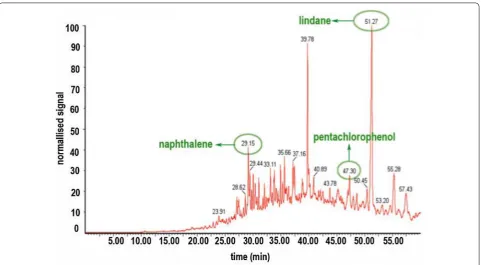
confirmed the presence of 3 organic pesticides: lindane (1,2,3,4,5,6-hexachlorocyclohexane), naphthalene and pentachlorophenol (2,3,4,5,6-pentachlorophenol, Fig. 1). Naphthalene was the most common residue, present in 5 objects. Therefore, it was decided to focus the rest of the research on this specific compound.
Sampling method
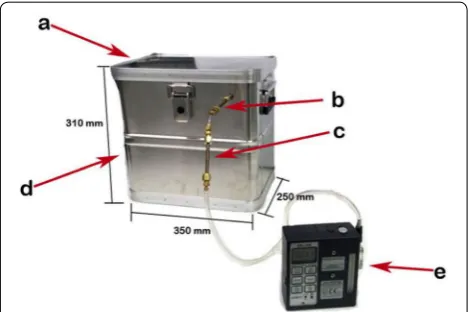
A tightly sealed aluminium carrying case (H 310 mm, W 350 mm, D 250 mm, volume 30 L) was transformed into a sampling enclosure. Aluminium was chosen as an alternative to stainless steel, normally used in sampling chambers, as it is also an extremely low outgassing non-reactive material. The weight of the sampling enclosure was also considered to be of importance. Moreover, alu-minium has previously been used as an alternative to stainless steel in other types of chambers [35].
To ensure air tightness, all gaps were sealed with epoxy resin and all joins were covered with thermally resistant aluminium tape (Scotch, 3 M, USA). After placing the object inside the enclosure for sampling, the gap between the lid and the body of the enclosure was also sealed with aluminium tape.
Before each sampling the enclosure was decontami-nated in a ventilated oven at 60 °C for 60 min.
The objects were placed inside the enclosure through the removable lid. The air from inside the enclosure was sampled using stainless steel desorption tubes loaded
with TENAX TA™ (Markes International, UK) attached to an air sampling pump (SKC-224-PCMIX8, Dorset UK) with a set flow rate (see Fig. 2).
The flow rate was 0.5 l/min in all the experiments. The pump was calibrated using an electronic gas mass flow meter (GFM) (Aalborg, USA), using two sorbent tubes connected to the pump emulating the same set-up as in the sampling chamber. This was repeated before each sampling.
Objects were placed in the area where the sampling would take place for at least 12 h prior to sampling in order for the artefacts to equilibrate to the temperature and relative humidity of the space. Immediately prior to sampling, objects were placed inside the enclosure and left to equilibrate for 10 min. Subsequently, the enclosure was flushed for 2.5 h at 0.5 l/min. This was to achieve complete air exchange prior to sampling. A filter/inlet tube was attached to the back of the enclosure to ensure the air inside the chamber would be free from external contaminants (see Fig. 2). To sample, new tubes were installed and the pump run for 2 to 5 h.
The temperature and relative humidity inside the enclosure were monitored using a data logger (Hanwell HumBug, UK).
To create a control of the sampling enclosure, the exact same experimental procedure for sampling was followed without placing any contaminated objects inside the enclosure. The control run was completed in duplicate at a temperature of 17 °C ± 1 °C which allowed obtaining
the background amount of naphthalene inside the enclo-sure and in the air that was pulled in through the filter tube. The average background of naphthalene obtained from the control runs was 0.25 ng ± 0.7. The average
background naphthalene was deducted from the results of sampling with objects to obtain the naphthalene being emitted from the objects over a specific amount of time.
Sampling enclosure for quantitative assessment of naphthalene emissions
To assess quantitative emissions from objects it was necessary to develop a sampling enclosure that would allow volatiles emitted from objects to be sampled using a steady flow through TENAX TA™ sorbent tubes (see Fig. 2). The enclosure allows for objects to be placed inside (a). The tightly sealed aluminium enclosure is fit-ted with two apertures to filter the air coming into the enclosure and sample the air pulled out of the enclosure. This setup allowed volatiles from objects to be sampled in a non-invasive, non-destructive way. The majority of the industry standards [31–33] require small samples from the material being tested which is avoided when possi-ble when testing museum artefacts. Both apertures were fitted with desorption tubes loaded with TENAX TA™ (Markes International, UK), fitted through a Swagelok® stainless steel bulkhead union tube fitting. After sam-pling, the tubes were analysed with ATD-GCMS to iden-tify naphthalene present during sampling.
The tube attached to the aperture at the back (d-not in view in image) of the enclosure filtered the incoming air to minimise the background signal of external vola-tiles within the chamber. Two sorbent tubes, in series, were attached to the aperture at the front. This allowed the front tube (b) to sample volatiles within the cham-ber whilst the back tube (c) made it possible to check for naphthalene breakthrough, indicating saturation on the first tube. The air pump (e) kept the desired air flow rate of 0.5 l/min.
Calibration
For the purpose of quantification, known amounts of naphthalene from a reference standard were spiked on to sorbent tubes and analysed.
All sorbent tubes were preconditioned by heating at 320 °C for 60 min. The sorbent tubes were subse-quently desorbed using an ATD Perkin Elmer thermal desorber-Turbo Matrix 650 Perkin Elmer Clarus 560 D paired with a Perkin Elmer Clarus 560-mass spec-trometer gas chromatograph. The column used was a 60 m × 0.25 mm × 1.5 μm VOCOL fused silica capillary column. The GCMS used He as a carrier gas. The ATD-GCMS method used had a pre-purge time of 1 min with a flow rate of 25 ml/min. Sorbent tubes were desorbed at 300 °C for 8 min. The trap had a minimum temperature of − 10 °C and a maximum temperature of 330 °C with a 5 min hold time. The trap heating rate was 40 °C/s and a Fig. 2 Experimental sampling enclosure to quantitatively measure
split flow rate of 25 ml//min. The total GC cycle time was 60 min and the flow temperature 250 °C [36].
The eluted compounds were analysed using NIST Mass Spectral Library (MS search 2.0 Library). To obtain results specifically for naphthalene, the chromatograms were analysed using selected ion monitoring (SIM) mode. To ensure repeatability, a blank tube was desorbed and analysed for every batch of tubes analysed, as well as two tubes with known spiked amounts of naphthalene.
The stock solution prepared for all experiments was 38 mg of naphthalene diluted in 10 ml of hexane. The reagents used were crystalline naphthalene (C10H8)
99.6% purchased from Alfa Aesar (Heyshan UK) and hexane ≥ 98.5% purchased from Honeywell laboratories from Sigma Aldrich (Saint Lewis MO, USA). The stock solution was diluted prior to the experiment.
Quantification of naphthalene
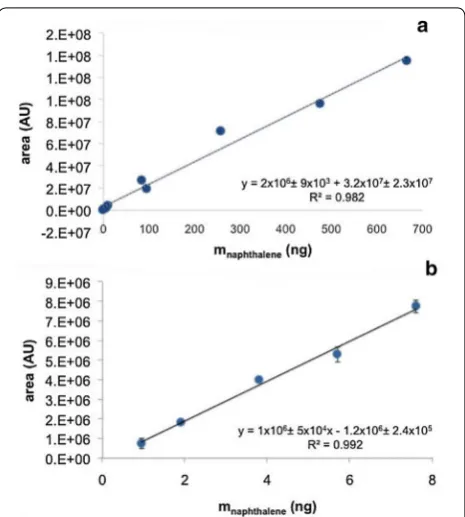
For the quantification of naphthalene from the sam-ples, two calibration curves were produced by spiking the sorbent tubes with known amounts of naphthalene (Fig. 3). Plot A represents the entire linear range, while plot B represents the working range for naphthalene in our experiments. The LOD calculated from plot B was 0.65 ng/ml.
Results and discussion
Analysis of museum objects
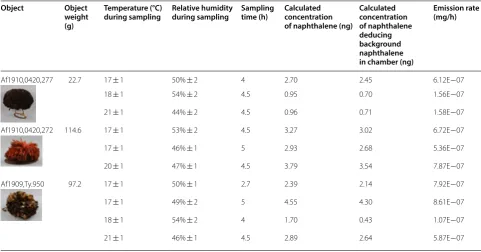
Three objects with confirmed naphthalene contamina-tion were sampled at various temperatures for specific amounts of time (Table 1). The emission rates were calcu-lated by dividing the mass of naphthalene by the duration of sampling.
The same experimental procedure was followed with-out placing any contaminated objects inside the enclo-sure to calculate the blanks. There were run in duplicate at 17 °C ± 1 °C. The average background of naphthalene was 0.25 ng ± 0.70, and this value was subtracted from the measurements obtained with objects.
To determine the repeatability of sampling, one of the objects was sampled in triplicate at the same tempera-ture ± 1 °C (Table 1).
All objects were analysed in two different environments with a maximum difference in temperature of 4 °C ± 1 °C. This had the aim to see if there was a difference between the emission rates, as naphthalene vapour pressure depends on temperature [37–39]. However, the variation of temperature did not lead to a clear trend of the emis-sion rates. Higher extremes in temperatures would have been advisable in this experiment, but were not allowed for conservation reasons.
Environmental modelling of naphthalene concentrations in enclosed spaces
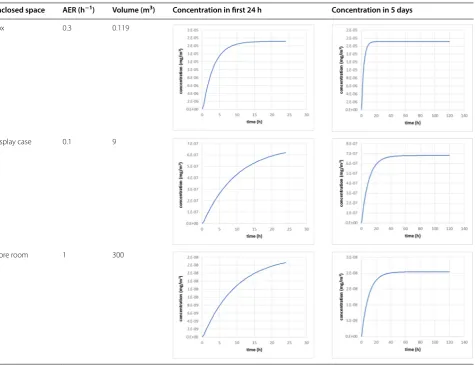
The measured emission rates allowed the modelling of the naphthalene concentrations for a period of time inside a box, a display case or a storage room. The follow-ing model describes an enclosure where the air exchange (AER) is known or can be approximated, which is usually the case [40]. The evolution of the concentration of naph-thalene was calculated using Eq. (1). This equation has been obtained with a mass balance, and has been numer-ically integrated in order to obtain the concentration as a function of time:
where δC/δt is the partial derivative of the change of con-centration (c) with time (mg/h m3), in is inflow (mg/h),
out is outflow (mg/h) and is the volume of the enclosure (m3).
Scenarios were developed (see Table 2) taking the average emission rate of one of the objects sampled (Af1909,Ty.950) and assuming it was the only con-taminated object stored inside a box, display case and a museum store. The AER rates used for the modelling are approximations based on representative rates for those scenarios based on literature sources [40–43].
δC/δt=(in−out)/V
After an initial increase in concentration, the emis-sions tend towards equilibrium in all scenarios within 24 h. After 5 days, it is possible to consider the environ-ments to have reached an equilibrium concentration, which decreases in the following order: box > display case > room.
However, as mentioned by Glastrup [4], in spaces with good ventilation, naphthalene residues can dissipate fast. Previous research at the Smithsonian Institution has even looked into rapid air exchange as a passive method of naphthalene decontamination of museum objects [5, 24]. However, most objects with suspected contamina-tion are stored inside enclosures, drawers or cabinets and it is important to consider that the concentrations reach equilibrium (as shown in Table 2), or even re-crystallize on object’s surface [24].
Effect of naphthalene residues on air quality
The above calculated equilibrium concentrations can be compared with the recommended exposure limits according to health organisations and standardization bodies. The naphthalene levels of exposure that can cause adverse effects by inhalation quoted by Public Health England are 78.6 mg/m3 for eye irritation and 1310 mg/
m3 immediately dangerous to life and health [44]. The
naphthalene standard workplace exposure limit for an 8 h period (TWA) is 50 mg/m3 [20].
For the objects sampled in this study, the naphthalene concentrations in enclosed spaces are several orders of magnitude below the recommended upper limits. How-ever, it is relevant to note that these emissions are from individual objects and not from all objects with contami-nation in the collections. Moreover, the concentrations do not represent exposures generated by actual work-ing conditions such as handlwork-ing, examinwork-ing or treatwork-ing the objects at close range to ones breathing zone. Fur-ther experimentation and research would be required to complete a health and safety assessment in such complex cases.
Conclusions
This research presents a non-invasive, non-destructive methodology to quantify naphthalene emissions from contaminated museum objects, based on established industry standards modified for use in museum environ-ments. The technique demonstrates an active air sam-pling design, which requires placing an object inside a sampling chamber fitted with a pump. Volatiles emitted from the object are absorbed onto sorbent tubes loaded with TENAX, and later analysed using ATD-GCMS. The sampling set-up had minimal impact on the objects or their environment and was undertaken within the museum.
Table 1 Details of sampling and calculation of naphthalene concentrations and emission rates
Object Object
weight (g)
Temperature (°C)
during sampling Relative humidity during sampling Sampling time (h) Calculated concentration of naphthalene (ng)
Calculated concentration of naphthalene deducing background naphthalene in chamber (ng)
Emission rate (mg/h)
Af1910,0420,277 22.7 17 ± 1 50% ± 2 4 2.70 2.45 6.12E−07 18 ± 1 54% ± 2 4.5 0.95 0.70 1.56E−07
21 ± 1 44% ± 2 4.5 0.96 0.71 1.58E−07
Af1910,0420,272 114.6 17 ± 1 53% ± 2 4.5 3.27 3.02 6.72E−07
17 ± 1 46% ± 1 5 2.93 2.68 5.36E−07
20 ± 1 47% ± 1 4.5 3.79 3.54 7.87E−07
Af1909,Ty.950 97.2 17 ± 1 50% ± 1 2.7 2.39 2.14 7.92E−07
17 ± 1 49% ± 2 5 4.55 4.30 8.61E−07
18 ± 1 54% ± 2 4 1.70 0.43 1.07E−07
Quantification of naphthalene was successful after the creation of a calibration curve obtained by spiking known amounts of naphthalene standard solution. The quantita-tive data can be further used to assess the toxicological impact of the contaminated objects on people accessing the collections.
The research focussed on determination of emission rates for individual objects. This allows a better under-standing of the behaviour of contaminated objects within situations common in museum contexts such as inside storage enclosures, boxes, drawers, cabinets, or display cases. This is crucial to assess the impact the artefacts could have on the air quality within museums and the risk to the health and safety of people working with such objects. Moreover, the information obtained by model-ling can inform approaches to ventilation, which can improve the dissipation of the volatile residues.
Naphthalene was selected in this study, as it was the most common volatile found in the group of objects sam-pled. With regard to the objects sampled, the main find-ings were:
• The experimental design allowed the quantification of naphthalene and calculation of emission rates of all the contaminated artefacts sampled.
• Objects were sampled at two temperatures 17 °C ± 1 °C and 21 °C ± 1 °C. The change in temper-ature did not result in a clear trend in the emissions. • All objects sampled showed comparable emission
rates.
• The amount of naphthalene emitted by the individual objects tested was used in modelling the concen-trations in enclosed spaces, and shown to be lower than the recommended exposure limits. However, to
Table 2 Environmental modelling of naphthalene concentrations in three common museum scenarios: inside a box, a display case and a storage room
Enclosed space AER (h−1) Volume (m3) Concentration in first 24 h Concentration in 5 days
Box 0.3 0.119
Display case 0.1 9
obtain a true representation of the health and safety implications of working with contaminated objects it would be required to complete a full exposure assess-ment.
The sampling methodology could be generally used to assess volatile pesticide (or other VOC) emissions from entire museum objects. Establishing the impact of emission rates on indoor air quality (i.e. outside of boxes, display cases and storage rooms) and the effect on health and safety of members of staff and visitors in specific cases would require further analysis via an industrial hygiene/occupational health exposure moni-toring survey. The research would require to be com-pleted over a statistically valid number of samples of representative work with identified contaminated objects.
An interesting area of further research would be to use the method presented in this paper to analyse a larger amount of objects (a relevant sample size of the collection) with suspected contamination. Moreo-ver, the objects sampled in this research were those suspected of contamination, according to the object selection criteria. It would be interesting to randomly analyse a selection of other objects to get an idea of the volatiles present in artefacts that are not usually flagged as heavily suspected of contamination.
Abbreviations
AER: air exchange rate; ATD: automated thermal desorption; CAS: chemi‑ cal abstracts service; DDT: dichlorodiphenyltrichloroethane; GC‑FID: gas chromatography‑flame ionisation detector; GC–MS: gas chromatography– mass spectrometry; IARC : International Agency for Research on Cancer; IUPAC: International Union of Pure and Applied Chemistry; LOD: limit of detection; LOQ: limit of quantitation; NIST: National Institute of Standards and Technol‑ ogy; NTP: National Toxicology Program; PAH: polycyclic aromatic hydrocarbon; SIM: selected ion monitoring; SPME: solid phase micro extraction; SVOC: semi‑volatile organic compound; TWA : time weighted average; VOC: volatile organic compound.
Acknowledgements
At the British Museum, particular thanks to Anna Buelow, Julie Hudson, Jamie Hood, Amy Foulds, Rachel Kitcherside, Ellie Welch and David Beck as well as all the collections move project team for their support and flexibility to sample objects from the collection.
At UCL, we are grateful to Katehrine Curran, Mark Underhill, Miriam Wright and Dzhordzhio Naldzhiev for their advice.
A special thanks to Joseph Bolt for his help with the graphical abstract. Authors’ contributions
All co‑authors jointly developed the concept of this work. FP surveyed the literature and carried out the object sampling at the museum. FP and MS elaborated the calibration curve, method of quantitation and analysed the data. JGB designed the environmental modelling tool, JGB and FP analysed the data and worked on the environmental modelling. All authors contributed to the manuscript. All authors read and approved the final manuscript. Funding
This study was funded by Engineering and Physical Sciences Research Council (EP/L016036/1).
Availability of data and materials
All data generated or analysed during this study are included in this published article.
Competing interests
The authors declare that they have no competing interests. Author details
1 The British Museum, Great Russell St, Bloomsbury, London WC1B 3DG, UK. 2 Institute for Sustainable Heritage, University College London (UCL), Central House, 14 Upper Woburn Place, London WC1H 0NN, UK.
Received: 11 April 2019 Accepted: 24 July 2019
References
1. Pinniger D, Meyer A. Integrated pest management in cultural heritage. London: Archetype; 2015. p. 1–2.
2. Pool M, Odegaard N, Huber M. Identifying the pesticides: pesticide names, classification, and history of use. In: Odegaard M, Sadongei A, editors. Old poisons, new problems: a museum resource for managing contaminated cultural materials. 1st ed. Walnut Creek: Altamira Press; 2005. p. 5–32.
3. Hanh O, Krug S. Consequences of historical pest control in archives and museums. Blessing and curse—biocides: application, analysis, evaluation. Berlin: German Historical Museum Foundation; 2016. p. 23–7. https :// www.dhm.de/filea dmin/medie n/relau nch/samml ung‑und‑forsc hung/ Publi katio nen/Biozi de_en_Ansic ht.pdf. Accessed 25 Aug 2018. 4. Glastrup J. Insecticide analysis by gas chromatography in the stores of
the Danish National Museum’s ethnographic collection. Stud Conserv. 1987;32(2):59–64.
5. Goldberg L. A history of pest control measures in the anthropology col‑ lections, National Museum of Natural History, Smithsonian Institution. J Am Inst Conserv. 1996;35(1):23–43.
6. Odegaard N, Zimmt W. Pesticide removal studies for cultural objects. Pre‑ serving aboriginal heritage: technical and traditional approaches. Ottawa: Canadian Conservation Institute; 2007. p. 217–24.
7. Palmer P, Martin M, Wentworth G, Caldararo N, Davis L, Kane S, et al. Analysis of pesticide residues on museum objects repatriated to the Hupa tribe of California. Environ Sci Technol. 2003;37(6):1083–8. 8. Charlton A, Domoney K, Uden, J. Pesticide residues on the Cook‑voyage
collections at the Pitt Rivers Museum, University of Oxford. In: ICOM‑CC 17th Triennial Conference Preprints, Melbourne, 15–19 September 2014. Paris: International Council of Museums; 2014. http://icom‑cc‑publi catio ns‑Inter net.org/publi catio nDeta il.aspx?cid=89c8b 25a‑d062‑4207‑8f51‑ 01cf9 26cfd 7f. Accessed 25 Aug 2018.
9. Kaczkowski R, Makos K, Hawks C, Hunt M. Investigation of residual contamination inside storage cabinets: collection care benefits from an industrial hygiene study. J Am Inst Conserv. 2017;56(2):142–60. 10. Sirois P, Johnson J, Shugar A, Poulin J, Madden O. Pesticide contamina‑
tion: working together to find a common solution. The current state of affairs. Preserving aboriginal heritage: technical and traditional approaches. Ottawa: Canadian Conservation Institute; 2007. p. 175–86. 11. Contaminated collections: preservation, access and use. Proceedings of
a symposium held at the National Conservation Training Center (NCTC), Shepherdstown, West Virginia. April 6–9 2001. Collection Forum, volume 17. 2001. http://www.spnhc .org/media /asset s/cofo_2001_V17N1 2.pdf. Accessed 25 Aug 2018.
12. Marcotte S, Estel L, Leboucher S, Minchin S. Occurrence of organic bioc‑ ides in the air and dust at the Natural History Museum of Rouen, France. J Cult Herit. 2014;15(1):68–72.
13. Schieweck A, Delius W, Siwinski N, Vogtenrath W, Genning C, Salthammer T. Occurrence of organic and inorganic biocides in the museum environ‑ ment. Atmos Environ. 2007;41(15):3266–75.
publi catio n/26690 9122_Subst ituti ng_SPME_for_noses _in_the_detec tion_and_quant ifica tion_of_mothb all_vapor s_from_texti les_in_the_ Natio nal_Museu m_of_the_Ameri can_India n_colle ction . Accessed 25 Aug 2018.
15. Rushworth I, Higgitt C, Smith M, Gibson L. Non‑invasive multiresidue screening methods for the determination of pesticides in heritage collec‑ tions. Herit Sci. 2014;2(1):3.
16. Ormsby M, Johnson J, Heald S, Chang L, Bosworth J. Investigation of solid phase microextraction sampling for organic pesticide residues on museum collections. Collection Forum. 2006;20(1–2):1–12.
17. Jia C, Batterman S. A critical review of naphthalene sources and expo‑ sures relevant to indoor and outdoor air. Int J Environ Res Public Health. 2010;7(7):2903–39.
18. Uria‑Tellaetxe I, Navazo M, de Blas M, Durana N, Alonso L, Iza J. Gas‑ phase naphthalene concentration data recovery in ambient air and its relevance as a tracer of sources of volatile organic compounds. Atmos Environ. 2016;131:279–88.
19. Naphthalene, Summary Risk Assessment Report. Ispra (VA) Italy: European Commission Joint Research Centre Institute for Health and Consumer Protection European Chemicals Bureau; 2003. https ://echa. europ a.eu/docum ents/10162 /e1dc4 188‑c5b1‑444d‑8ff1‑71002 ebe12 d6. Accessed 23 Aug 2018.
20. EUR‑Lex‑32009R1107‑EN‑EUR‑Lex. Eur‑lex.europa.eu. 2009. https ://eur‑ lex.europ a.eu/legal ‑conte nt/EN/TXT/?uri=celex :32009 R1107 . Accessed 25 Aug 2018.
21. University of Hertfordshire, PDB: Pesticide Properties DataBase, naphtha‑ lene. 2018. https ://sitem .herts .ac.uk/aeru/ppdb/en/Repor ts/1312.htm. Accessed 24 Aug 2018.
22. International Chemical Safety Cards (ICSC) ICSC 0667‑NAPHTHALENE. Ilo. org. 2018. http://www.ilo.org/dyn/icsc/showc ard.displ ay?p_lang=en&p_ card_id=0667&p_versi on=2. Accessed 25 Aug 2018.
23. Price P, Jayjock M. Available data on naphthalene exposures: strengths and limitations. Regul Toxicol Pharmacol. 2008;51(2):15–21.
24. Heald S, Madden O. Investigation into naphthalene mitigation on museum objects. Conference: NATCC Preprints, 8th North American textile conservation conference. NATCC; 2011. p. 291–7. https ://www. resea rchga te.net/publi catio n/28144 1456_Inves tigat ions_into_napht halen e_mitig ation _on_museu m_objec ts. Accessed 25 Aug 2018. 25. Public Health England, Naphthalene General Information. 2017. https ://
asset s.publi shing .servi ce.gov.uk/gover nment /uploa ds/syste m/uploa ds/ attac hment _data/file/65990 2/Napht halen e_gener al_infor matio n.pdf. Accessed 28 Aug 2018.
26. IARC Monographs on the evaluation of carcinogenic risks to humans: some traditional herbal medicines, some mycotoxins, naphthalene and styrene, Lyon, France: World Health Organisation; 2002. https ://monog raphs .iarc.fr/wp‑conte nt/uploa ds/2018/06/mono8 2.pdf. Accessed 26 Aug 2018.
27. NTP (National Toxicology Program). 14th Report on Carcinogens, four‑ teenth edition. Naphthalene CAS No. 91‑20‑3 USA: U.S. Department of Health and Human Services, Public Health Service; 2016. https ://ntp.niehs .nih.gov/ntp/roc/conte nt/profi les/napht halen e.pdf. Accessed 19 June 2019.
28. Johnson, J, Heald S, Chang L. Case studies in pesticide identification at the National Museum of the American Indian. ICOM‑CC 14th triennial meeting. The Hague, Netherlands: International Council of Museums; 2005. p. 89–95.
29. Mull B, Jann O. Biocide emissions from materials in the air. Blessing and curse—biocides: application, analysis, evaluation. Berlin: German Historical Museum Foundation; 2016. p. 12–4. https ://www.dhm.de/filea dmin/medie n/relau nch/samml ung‑und‑forsc hung/Publi katio nen/Biozi de_en_Ansic ht.pdf. Accessed 25 Aug 2018.
30. Schieweck A, Lohrengel B, Siwinski N, Genning C, Salthammer T. Organic and inorganic pollutants in storage rooms of the Lower Saxony State Museum Hanover, Germany. Atmos Environ. 2005;39(33):6098–108.
31. ASTM International. D5116‑17. Standard Guide for small‑scale envi‑ ronmental chamber determinations of organic emissions from indoor materials/products. West Conshohocken; 2017.
32. ASTM International. D6330‑98(2014). Standard Practice for Determination of Volatile Organic Compounds (Excluding Formaldehyde) emissions from wood‑based panels using small environmental chambers under defined test conditions. West Conshohocken; 2014.
33. ASTM International. D6803‑13. Testing and sampling of volatile organic compounds (including carbonyl compounds) emitted from paint using small environmental chambers 1. West Conshohocken. 2014. 34. ASTM International. D6177‑14. Standard practice for determining emis‑
sion profiles of volatile organic chemicals emitted from bedding sets. West Conshohocken; 2014.
35. Gallilee M, Chiggiato P, Costa Pinto P, Ferreira L, Lepeule P, Perez Espinos J, Prever‑Loiri L, Sapountzis A. Development of Aluminium Vacuum Chambers for the LHC Experiments at CERN. In: 5th international particle accelerator conference, 15–20 June 2014, Dresden, Germany, 2014 http:// inspi rehep .net/recor d/13137 78/files /wepme 040.pdf. Accessed 12 July 2019.
36. Naldzhiev D, Mumovic D, Strlic M. Method development for measuring volatile organic compound (VOC) emission rates from spray foam insula‑ tion (SPF) and their interrelationship with indoor air quality (IAQ), human health and ventilation strategies. In: 38th AIVC conference, 2017—venti‑ lating healthy low‑energy buildings. 3 and 14 September 2017. Notting‑ ham: AIVC; 2017. http://disco very.ucl.ac.uk/id/eprin t/15705 65. Accessed 24 Aug 2018.
37. Ambrose D, Lawrenson I, Sprake C. The vapour pressure of naphthalene. J Chem Thermodyn. 1975;7(12):1173–6.
38. Macknick A, Prausnitz J. Vapor pressures of high‑molecular‑weight hydro‑ carbons. J Chem Eng Data. 1979;24(3):175–8.
39. Dortmind Data Bank. Vapor pressure of naphthalene from Dortmund Data Bank. Ddbst.com. 2018. http://www.ddbst .com/en/EED/PCP/ VAP_C123.php. Accessed 25 Aug 2018.
40. Calver A, Holbrook A, Thickett D, Weintraub S. Simple methods to meas‑ ure air exchange rates and detect leaks in display and storage enclosures. In: ICOM‑CC 14th triennial meeting. The Hague, Netherlands: Interna‑ tional Council of Museums; 2005. p. 597–609.
41. Ankersmit H, van Bommel M, Calver A, Ligterink FJ, Thickett D, Watts S. The performance of showcases; air exchange rates and pollutants (part I and II). In: IAQ 2003: 5th meeting of the indoor air pollution working group, University of East Anglia, School of Environmental Sciences, Norwich, April 28th–29th. 2003. http://www.iaq.dk/iap/iaq20 03/2003_11. htm.
42. Padfield T, Klenz Larsen P, Aasbjerg Jensen L, Rhyl‑Svendsen M. The potential and limits for passive air conditioning of museums, stores and archives. In: Museum Microclimates, National Museum of Denmark Copenhagen, 19–23 November 2007: Copenhagen: National Museum of Denmark, p. 191–8. https ://www.conse rvati onphy sics.org/mm/padfi eld_2/padfi eld_2.pdf.
43. Thickett D, Fletcher P, Calver C, Lambarth S. The effect of air tightness on RH buffering and control. In: Museum Microclimates, National Museum of Denmark Copenhagen, 19–23 November 2007: Copenhagen: National Museum of Denmark, p. 245–51. https ://www.conse rvati onphy sics.org/ mm/thick ett_2/thick ett_2.pdf.
44. Public Health England, Naphthalene Incident Management. 2017. https ://asset s.publi shing .servi ce.gov.uk/gover nment /uploa ds/syste m/uploa ds/attac hment _data/file/62153 6/Napht halen e_incid ent_manag ement .pdf Accessed 15 Mar 2019.
Publisher’s Note