Describing student threshold learning experiences in interprofessional contexts: A phenomenographic study
A Dissertation Submitted to the College of Graduate and Postdoctoral Studies In Partial Fulfillment of the Requirements for
the Degree of Doctor of Philosophy In the Department of Educational Administration College of Education, University of Saskatchewan
Saskatoon, Saskatchewan
By
Natasha Hubbard Murdoch MN CMSN(C) RN
Permission to Use
In presenting this dissertation in partial fulfillment of the requirements for a Postgraduate degree from the University of Saskatchewan, I agree that the libraries of this University may make it freely available for inspection. I further agree that permission for copying this dissertation in any manner, in whole or in part, for scholarly purposes may be granted by the professor who supervised my dissertation work or, in his absence, by the Head of the Department or Dean of the College in which my dissertation work was done. It is understood that any
copying or publication or use of this dissertation or parts thereof for financial gain shall not be allowed without my written permission. It is also understood that due recognition shall be given to me and to the University of Saskatchewan in any scholarly use which may be made of any material in my dissertation.
Requests for permission to copy or make other use of material in this thesis in whole or in part should be addressed to:
Head of the Department of Educational Administration College of Education University of Saskatchewan 28 Campus Drive Saskatoon, SK. S7N 0X1 Canada OR Dean
College of Graduate and Postdoctoral Studies University of Saskatchewan
116 Thorvaldson Building, 110 Science Place Saskatoon, Saskatchewan S7N 5C9
Abstract
The purpose of this research was to describe the threshold concept of interprofessionality. Threshold concepts are often troublesome learnings but, once understood, transform the way students see the world. Interprofessionality is the deployment of innovative team knowledge toward a common goal at the crux of education and practice and is based in values and professional codes. Thirteen healthcare students from eight different professional programs relayed their experiences of working with others from 15 different healthcare backgrounds about crossing the threshold from a uniprofessional bounded perspective to interprofessional learning and working. This threshold was an a-ha!-moment or significant learning experience. The method employed was phenomenography based in a social constructionist epistemology.
Phenomenography is research into how humans experience phenomena through the creation of a unique hierarchy of categories based on the similarities and differences in student learning from superficial to deep. The participants were a convenience sample of students from three
educational institutions in Saskatchewan. Students were invited to share a reflective writing or be interviewed regarding an interprofessional experience that included a patient. Students were interviewed in a stepwise approach with the subsequent student contributing to category development as each interview was aggregated. Students reported on serendipitous learning opportunities but also provided critique of the limited structured experiences available within their educational programs. The student experiences reflected the liminal chaos of being a healthcare student, moving through the stages to becoming a professional. The
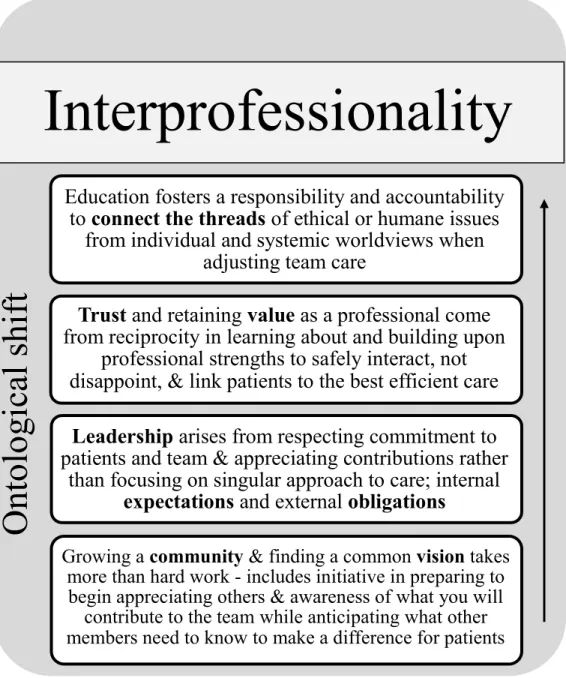
phenomenographic categories reflect student conceptions of their interprofessional learning about the patient experience from individual through community to global interactions. The short names for the four learning steps were: 1) community vision, 2) leadership expectations and obligations, 3) trust and value, and 4) ‘connect the threads.’ Emerging from this
phenomenographic outcome space, which was the threshold moment of interprofessionality, was the resultant ontological shift, the change in worldview from being a student to becoming an interprofessional team member. This research led to conclusions about authentic structured IPE for students as a bridge between education and healthcare settings, differentiating the experience of being a student or a healthcare student, and the delivery of patient care or patient-centred care.
Acknowledgments
This dissertation has been an amazing journey. I went into it with the promise to myself to enjoy every step. Learning about education, academia and interprofessionality, as well as, my stance and place within all that has been exciting, frustrating, challenging and enlightening but in the end, I have kept my promise.
Thank you to IPE Coordinators and mentors Darlene Scott and Doreen Walker who always knew the path. Kudos to all the faculty and students who have engaged in IPE and especially those who shared their experiences for this work.
I continue to be immensely grateful to Dr. Marcel D’Eon and Dr. Susan McClement for their support of me pursuing my dream.
I am also grateful to have shared this journey with the incredible cohort who named themselves 2S2Q – even though I’m still waiting for my t-shirt. Thank you all for laughter, hugs, advice and continued friendship! I have learnt so much from you: Anahit, Barb, Cindy, David, Hongsen, Irene, Joel, Josie, Taneisha, Tania, Theresa, and Tracy.
My committee members, Drs. Keith Walker, Vicki Squires, and Michael Cottrell shaped my work and my pedagogy. As you have modelled, may I continue to consider democracy and philosophy when reflecting on my interactions with students and practitioners.
My cognate, Dr. Arlene Kent-Wilkinson, has always been a consummate professional nurse and incredibly supportive guide. I am a thankful student and colleague.
Thank you to my external, Dr. Carole Orchard for your work, the framework that guides worldwide interprofessional practice, and the conversations that advance interprofessionality. No one explains how lonely a PhD program is in times like comps, waiting for ethics, writing and waiting, thinking and waiting, reading and waiting… What you find is the supports needed to keep going. Katrina Hutchence, I appreciate your navigation skills! PhinisheD is a gracious online community that was equally supportive, motivational and educational. I have gained so much knowledge, so many resources, and found so many smart people to learn from in
twitterverse! #phdlife #academicchatter. I have to send a special shout out to Dr. Paul Newton and Dr. David Burgess for Zombie class. That experience will continue to feed me and the love of my topic for years
The rite of passage begins long before the first day and now I understand how it continues after. Roslyn, Madeline, Marilee and Pamela – you always know when to send the right text
message…
Finally, Dr. Pat Renihan...coffee, hugs, family and 😊! Words cannot express the experience of learning from you to be Educator, Professor, Researcher and Mentor. I am eternally grateful for your gift of time.
Dedication
For my parents, Craig and Margaret Hubbard ….look what you started
To Laura and Thomas
No two better people to discuss philosophy with...love you!
Brian
the life we build
Few people have the imagination for reality
- Johann Wolfgang von Goethe
It’s OK to be a glowstick,
sometimes we have to break before we shine. - Anonymous
Table of Contents Permission to Use ... i Abstract ... ii Acknowledgments... iii Dedication ... iv Table of Contents ... v
List of Tables ... viii
List of Figures ... ix
Chapter 1: Introduction ... 1
Interprofessionality: Threshold Concept ... 2
Liminality ... 4
Statement of the Problem: The Threshold Moment ... 5
Delimiting the Research Gap ... 6
Study Purpose and Research Questions ... 7
Description of the Study ... 8
Delimitations of the Study ... 8
Limitations of the Study ... 9
Significance of the Dissertation ... 9
My Nursing Background... 11
Definition of Terms... 12
Overview of the Dissertation ... 14
Chapter 2: Literature Review ... 15
The Literature Search ... 17
The Student Experience of IPE ... 18
IPE in Experiential Learning Settings ... 18
Student teams on interprofessional training units. ... 19
Nordic experiences... 19
Developing professional identity. ... 20
The roles of other professionals. ... 21
Bounded teamwork. ... 23
United Kingdom... 25
Australia. ... 26
Canada... 27
Summary. ... 29
Interprofessional student teams in student run clinics. ... 30
Acute care clinical placements... 35
Community focused placements. ... 38
Community-based agencies ... 38
Schools. ... 40
Rural communities. ... 42
IPE in Educational Settings ... 43
Summary ... 45
The Liminal Experience of Health Profession Education ... 46
Chapter 3: Research Methods ... 58 Epistemology ... 58 Research Design... 60 Methodology ... 61 Methodological Procedures ... 63 Bracketing. ... 63 Positionality. ... 65 Selection of Participants ... 66 Participants. ... 67 Data Collection ... 68 Reflective writings. ... 68 Interviews. ... 69 Data Analysis ... 69
Establishing Rigor: Trustworthiness and Authenticity ... 74
Trustworthiness. ... 74
Authenticity... 75
Ethical Considerations ... 76
Summary ... 77
Chapter 4: Voices of Learning through the Chaos ... 78
Healthcare Student Threshold Moments ... 79
Sylvia: Shift ... 79
Helen: Bigger Brain ... 80
Elanna: Awareness of Bias ... 82
Samantha: Not Left Out to Dry... 84
Rose: Foster Understanding and Find a Mutual Goal ... 85
Jennifer: Why Haven’t We Figured This Out Yet? ... 87
Kathryn: Teamwork Made Me Walk into that Room ... 88
Wil: Just Doing What We Believe In ... 90
Maureen: Now I See the Role My Profession Plays ... 91
Elizabeth: You Used My Info to Form Your Plans and That Was Cool ... 92
Synthesis: Learning Contexts ... 94
IPE in Experiential Settings ... 94
IPE in Educational Settings ... 98
Collective Voices of Student Chaos – a Phenomenographic Vignette ... 99
Analysis: The Threshold Concept of Interprofessionality ... 102
Interprofessional Learning Steps ... 102
Community vision. ... 104
Leadership from expectations and obligations. ... 107
Trust and Value. ... 113
Connect the threads. ... 118
The Ontological Shift of Interprofessionality ... 124
Summary of Findings ... 129
Chapter 5: Conclusions, Discussion and the Future ... 130
Summary of the Dissertation ... 130
Response to Research Questions ... 131
The Individual Experience of Change ... 132
Significance of the Learning Experience ... 132
Reflection and Change Following Learning ... 132
Conclusions ... 133
Student vs Healthcare Student Liminality ... 133
Authenticity – What do You Really Need to Cross the Bridge? ... 134
The Patient Paradox ... 135
Discussion ... 137
Authentic IPE in Saskatchewan ... 137
Liminal Threshold Moments ... 139
Implications... 142
Implications for Educational Practice ... 142
Implications for Policy ... 142
Implications for Theory ... 143
Implications for Research ... 145
Reflections on Research ... 148
Concluding Statement ... 148
Appendix A: Acronyms ... 149
Appendix B: Consent form ... 150
Appendix C: Reflective guiding questions ... 153
Appendix D: Interview Guide ... 154
Appendix E: Aggregate interview sample ... 156
List of Tables
Table 3.1 Students involved in interprofessional education ...68 Table A.1 Acronyms………149
List of Figures
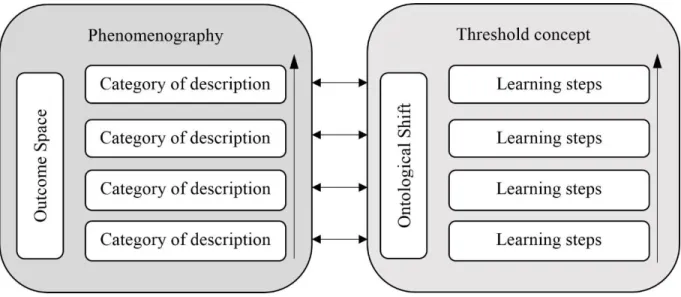
Figure 1.1 The relationship of liminal phases to threshold concept criteria ... 5 Figure 3.2 Simplified combination of the comparison and contrast of phenomenography to a
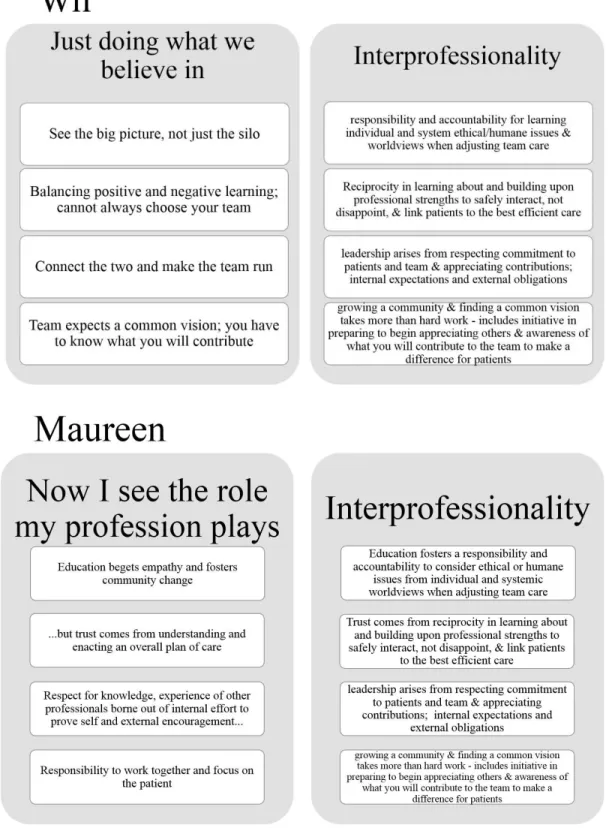
threshold concept ... 73 Figure 4.3 The threshold concept of interprofessionality, phenomenographically derived .... 103 Figure E.4 Comparison of categories for Wil and Maureen. ... 156
Chapter 1: Introduction
There is a recurring argument about labelling interprofessional education (IPE) and the most accepted definition is when diverse student or practitioner groups learn with, from and about each other in the contexts of health and education with the purpose of providing quality care for patients, families and communities (Centre for Advancement of Interprofessional Education [CAIPE], 2017). The use and meaning of words in this definition were not lost on healthcare students. In the study by Bainbridge (2008) of interprofessional health education, students representing nine different professions described learning as difficult because each word — with, from and about — reflected a complex learning process with a range from superficial to deep engagement. Additionally, practitioners attending the Global Forum on Innovation in Health Professional Education (Institute of Medicine [IOM], 2013) focused on transdisciplinary professionalism, defined as “an approach to creating and carrying out a shared social contract that ensures multiple health disciplines working in concert, are worthy of the trust of patients and the public” (IOM, 2013, p. II-2). Both definitions highlight the struggle to combine education, practice and community, which means allowing practitioners to retain a sense of professional identity while sharing a transcendent ideology (IOM, 2013). In retrospect, decades before this iteration of IPE being defined as with, from and about, Hammick (1998) encouraged the recontextualization of professional knowledge into collaborative practice.
By applying the sociology of pedagogy by Bernstein (1996), Hammick (1998) extrapolated that the power of a profession rested in its organized body of knowledge; the creation of clear boundaries between other professions and the concomitant ability to insulate itself. Bernstein (1996) described this process of boundary building as, “how power relations are transformed into discourse and discourse into power relations” (p. 12). In even earlier work than Berstein and Hammick, the World Health Organization (WHO, 1988) reported awareness that during education programs, students were taught to think and encouraged to focus on a view of health that was either physical, mental or social. WHO (1988) stated, despite knowing the scope of the definition of health, students “actually practice as though their beliefs were narrower” (p. 14). Therefore, the suggestion is that health education programs encouraged a narrow focus for each discipline to assist students to articulate their value as a provider, albeit to solidify the worthiness of that profession (Khalili, Hall, & DeLuca, 2014). Students must exhibit confidence in their clinical judgment according to their discipline because whether working individually or
on a team, that contribution is how they will be judged by other professions (Falck, 1977). Authors have surmised that this withdrawal into disciplinary boundaries was a way of no longer being considered in a ‘handmaiden’ role to medicine and was also an expected phase in
development of a profession (Kane, 1975; Rogers, 1932; Witz, 1990) including a method to attain legitimization through autonomy (Baldwin Jr., 1996/2007; Kane, 1975; Salhani & Coutler, 2009). The resultant paradox is that learners have always been expected to contribute as
individuals and as group members, where the learned behaviours involve “adaptations to each other’s differences around such variable [sic] as profession, method, use of knowledge, skill, and professional goal” (Falck, 1977, p. 36). Proponents of familiarizing students to interprofessional education continue to cite the adage, learning as a team assists in working as a team (Barr, 1998; Freeth, Hammick, Koppel, Reeves, & Barr, 2002; Hammick, 1998; Romanow, 2002).
Learning to collaborate is a process as well as an outcome (Goldman, Zwarenstein, Bhattacharyya, & Reeves, 2009). In completing a scoping review on IPE and interprofessional collaboration (IPC), Goldman et al. (2009) suggested a move from educating with individualistic psychological theories to sociocultural complex learning in teams. Changing the pedagogical approach may assist the change from teaching in silos to integrating IPE into curricula as “it is incumbent upon health professional educators to determine whether IPE competencies are competencies that all health professional students must share” (Oandasan & Reeves, 2005, p. 31). Faculty embody the cross-over between the health and education contexts, by the nature of their roles as educators and professionals, and therefore require understanding of the student experience of learning interprofessionality to be able to facilitate those experiences.
In this chapter I provide an overview of this dissertation. First, I define the nature of interprofessionality. I introduce the concept of liminality as an experience of crossing a threshold and bounding the learning experience. I provide a statement of the research problem, delimit the research gap, and offer the purpose and research questions, as well as suggesting the significance of the dissertation.
Interprofessionality: Threshold Concept
Despite a differentiation between academia and practice, both contexts struggle to
integrate IPE. Frodeman (2013) stated, “higher education is on the cusp of major transformation, driven by the defunding of the public university, technological innovation, and changing societal expectations. Cost overruns, privatization, and the Internet are undermining the twentieth century
model of higher education” (p. 1922). Collaborative health education has been viewed as an ‘expensive luxury’ which is perceived as undermining “professional autonomy and disciplinary identity” (Baldwin Jr., 1996/ 2007, p. 28) as well as minimizing the focus on specialized versus generalized knowledge. Health practice transformation is required to meet the inadequacies of the current system exhibited by inadequate staffing, the escalating cost of healthcare, low community engagement and poor patient outcomes (Baldwin Jr., 1996/ 2007; O'Brien-Pallas, Tomblin Murphy, Shamian, Li, & Hayes, 2010; WHO, 1988). Over the last 60 years, the most sustainable health teams were created for ideological reasons, especially increasing access to care for community, geriatric, rural or veteran populations (Baldwin Jr., 1996/ 2007). Rather than the pragmatics of developing teams, both education and health contexts require a refocus on the ideals of collaboration through interprofessionality.
Interprofessionality is “innovative knowledge deployment” (Brooks & Thistlethwaite, 2012, p. 405). Interprofessionality was considered an emerging concept described as a
counterpoint (Royeen, Jensen, Chapman, & Ciccone, 2010), or an interdependence between education and practice with “unique characteristics in terms of values, codes of conduct, and ways of working” (D'Amour & Oandasan, 2005, p. 9). Practitioners strive for a common
purpose, commitment to the team and respect for others including the patient. This team identity, based in practice, connotes innovative working and marks interprofessionality as a different concept from interdisciplinarity.
But how is interprofessional working defined? Most definitions “fail to capture the underlying complexity of working across disciplinary boundaries” (Brooks & Thistlethwaite, 2012) and lack the required criteria for professionals to work well together and the systems to support collaborative working. Building on the movement away from the focus on
uniprofessional roles, Brooks and Thisthlethwaite (2012) suggested that interprofessionality is co-configuration work that has an element of organizational disruption — where professional values have a higher priority than the structure of systems. Therefore, they suggested that rather than consensual collaboration which encourages teamwork and minimizes tension, yet
perpetuates the status quo of professional boundaries, an element of conflictual collaboration promotes transformative practice.
Interprofessionality, then, is a threshold concept; a core learning outcome which
& Land, 2003). More than a core concept, which is a building block required to progress in knowledge development, Meyer and Land (2003) stated a threshold concept is similar to a portal, the opening of a previously locked door to an understanding that is transformative, irreversible, integrative, bounded and potentially troublesome. Davies (2006) suggested that threshold
concepts denote a way of thinking and practising that is more than just applying or understanding concepts. He stated this way of thinking is how members see and experience their community. The binding of thinking and practising is “the way in which [key professional] concepts are related, the deep-level structure of the subject which gives it coherence and creates a shared way of perceiving that can be left unspoken” (Davies, 2006, p. 71). This community ideology must be learned to gain entrance as a member but can prove troubling to learn and teach. Troublesome knowledge may be conceptually difficult, an alien perspective, or at a level of complexity such as tacit knowledge (Perkins, 1999). Davies (2006) believed there are distinctive ways of thinking and practising which was often left tacit and it is the role of the educator to assist students to recognize those tacit concepts. Teaching students to connect abstract concepts to real world situations is a crucial function but difficult to factor into disciplinary learning environments (Meyer & Land, 2003).
Liminality
Learners who are unable to understand threshold concepts may remain in a state of liminality; an ambiguous or suspended state (Meyer & Land, 2003) often described as being betwixt and between (Turner, 1967). A concept originally from anthropology, liminality was described as a process through tribal rites of passage for youth becoming men. The three phases of liminality are separation, margin and aggregation and oft cited examples include cultural, religious or social experiences of becoming, analogous to entering or leaving a community, such as being birthed, religious ceremonies, or death rituals. Individuals are separated from who they were prior to entering a state of change, cross the threshold, and then are reconstructed within a new world view, leaving the past behind. “During the liminal period [individuals] are
alternatively forced and encouraged to think about their society, their cosmos, and the powers that generate and sustain them” (Turner, 1967, p. 53) breaking up the process into constituent parts, questioning and then repatterning to a coherent whole. Therefore, passage through the liminal threshold is “a source both of creativity and critique of the prevailing forms of thought and being” (Palmer, 2001). Similar to youth learning to become community members, learners
on the cusp of the threshold may mimic or portray a lack of authenticity as either a way of testing the future role (Oandasan & Reeves, 2005) or to reveal misunderstanding (Royeen et al., 2010). Alternatively, through the threshold, learners redefine the boundaries of their knowledge to embody and integrate threshold concepts. In this case, through interprofessionality, students no longer mimic teamwork as in multiprofessional working, but collaborate, communicate and co-configure teams.
Statement of the Problem: The Threshold Moment
The relationship between attaining the threshold and progressing through liminal stages is depicted in Figure 1.1, the threshold concept framework (Meyer, Land & Baillie, 2010). Linearly represented the student encounters troublesome knowledge in the preliminal or separation phase. As the student reconfigures the newly integrated knowledge, in this marginal phrase, an
ontologic shift occurs. The resultant transformation is revealed through irreversible knowledge translation that is exhibited as bounded ways of thinking or practicing as a re-aggregated professional. This process, however, is not necessarily linear. As stated, students may not attain the threshold becoming ‘stuck’ in a preliminal phase or oscillating between and amongst phases until the threshold concept is understood. The threshold moment, as depicted, is within the liminal phase with dynamic tendrils dynamically reaching through and spreading across phases.
Those students who attain the threshold may have mixed emotions. In describing the liminal threshold, Palmer (2001) stated, “truth or insight may be a pleasant awakening or rob one of an illusion; the understanding itself is morally neutral. The quicksilver flash of insight may make one rich or poor in an instant” (p. 4). The feelings before and after this transformative learning moment may be memorable, but the student may not realize what specifically was learned, just that an important moment was reached. Royeen et al. (2010) stated that health education should allow “students to experience that ‘A-ha!’ moment, after which they cannot imagine the provision of health care from any perspective other than one of interprofessionality” (p. 252). There is a gap in the literature and research between interprofessional learning (IPL) activities and the student experience of liminal interprofessionality in health education.
Delimiting the Research Gap
Interprofessional education in Canada (Gilbert, 2010) began with the first initiative in the 1960s and spread to become movements in the UK and the US in the 1970s, through the first set of national funding at the turn of the century. The policy initiative, Interprofessional Education for Collaborative Patient Centered Practice (IECPCP) had objectives to promote and demonstrate the benefits of IPE, increase educator preparation and capacity, increase the number of trained health providers in IPE, stimulate networking and knowledge transfer and facilitate collaboration in education and health settings (Gilbert, 2010; Oandason et al., 2004). The next step was the development of the Canadian Interprofessional Health Collaborative (CIHC), which, because of initial federal funding began ‘mainstreaming’ IPE, culminating most recently in a national competency framework (CIHC, 2010). The six competencies within this CIHC framework reflect the education and socialization efforts of researchers and educators worldwide, best evaluated in a review “to develop a theoretically based and empirically tested understanding of IPE and [interprofessional collaboration]” (Reeves et al., 2011, p. 168). The six competencies in the CIHC framework are: role clarification, collaborative leadership, interprofessional
communication, interprofessional conflict resolution, team functioning and
patient/client/family/community centred care. The interprofessional framework maps interventions for education, practice and the organization, from pre-practice to practice and levels outcomes from intermediate (the intervention itself), to the patient and for the system. This empirical framework begins to address the issue of proving whether IPE has a direct impact on the patient experience.
The current focus in IPE research worldwide is on this patient experience of collaborating in healthcare, improving population health outcomes and reducing healthcare costs (Brandt, Lutfiyya, King, & Chioreso, 2014). Research and education shifted to understanding the types of IPE appropriate for context (Freeth et al., 2002) and student cohorts. A unique review covered the models of IPE for university-based allied health programs, specifically addressing student characteristics and context (Olson & Bialocerkowski, 2014). The researchers suggested:
re-imaging IPE as a process moves the research agenda away from single factor cause-effect thinking towards understanding how different types of IPE produce different types of outcomes within the particular learning environment and how these lead to long-term behaviour and system changes. (Olson & Bialocerkowski, 2014, p. 243)
Their primary concern was that IPE modules are focused on medical and nursing students and these cannot be transferred to allied health students, or health and education delivery models.
Within the context of healthcare education there is a newness to threshold concept theory (Burchmore, Irvine & Carmichael, 2008). The appropriate definition of threshold concept was inconsistent in the literature, pointing to a lack of consensus on which characteristics are required to delineate a threshold concept. My study begins to address the gaps noted above by revealing the phenomenographical learning experience of healthcare students in interprofessional contexts with a patient centered focus.
Study Purpose and Research Questions
The purpose of this study was to explore healthcare student threshold learning experiences within the context of interprofessional education. Questions which guided the research include the following:
1. What were the experiences of students, in specific situations, in which there has been a threshold moment?
2. What was the context before and after the threshold moment?
3. What were the individual experiences of change associated with the threshold moment?
4. What were student perceptions of the significance of the learning experience (knowledge, skills, and appreciations)?
5. What subsequent reflection or change occurred among these students following the experience relating to their learning?
Description of the Study
This study was a phenomenographic analysis from a social constructionist
epistemological lens. Healthcare students were sequentially interviewed and invited to contribute to the development of four hierarchical categories showing their learning through an
interprofessional experience, from superficial to deep. Analysis was performed by comparing similarities and differences of experiencing a threshold moment in the presence of a patient. The final set of four categories represent the learning steps students encountered to pass the threshold toward understanding interprofessionality. In phenomenography, the learning steps are set within an outcome space which encompasses the process of learning but also acknowledges the
transformational change that occurs from the learning experience. Delimitations of the Study
Interprofessionality is conceptualized in the interprofessional education for collaborative patient centred practice (IECPCP) framework (D’Amour & Oandason, 2005). The interface between education and health systems is often the focal point for patient participation. The framework recognizes the micro, meso and macro level factors, including culture that impacts and is impacted by, both systems as well as the individuals working and learning within. D’Amour and Oandason (2005) note that educators and students should reflect on culture and values but also note that rigorous research would lead to rigorous conceptualization of the components of this framework. My study was delimited to the healthcare student experience at the micro level describing the variety of contexts rather than organizational and systemic cultures as a way to narrow the focus of the study to learning.
The results of this study are delimited to the phenomenon of the threshold moment within the context of interprofessional learning for 13 healthcare students in Saskatchewan who
attended one of the three main educational institutions. Saskatchewan is a province with approximately one million people with the two largest urban settings being inclusive of almost 60% of the entire population. Therefore, a large number of people live in rural and remote settings. The institutions are Saskatchewan Polytechnic (Sask Polytech), University of Regina (URegina), and University of Saskatchewan (USask), with respective yearly student enrolments of 12 400 (Saskatchewan Polytechnic Institutional Research and Analysis, 2018), 15 500 (University of Regina Office of Resource Planning, 2018), and 22 400 (University of
across the province. There are also numerous regional colleges. The majority of healthcare students are enrolled in the seven programs at USask, the only medical university in the
province. URegina has more programs related to community safety, including nursing and social work. Sask Polytech delivers certificate through diploma to degree programs for assistants and counselors, through technicians to the psychiatric nursing degree. Data were collected from April 2018 through February 2019. While participants were from across the province in mostly urban centres, the experiences described may be too few to extrapolate to a provincial view of healthcare education in the province. However, considering the lack of structured IPE delivered to healthcare students, this study was a useful snapshot of whether interprofessionality occurs. Limitations of the Study
Despite a plethora of approaches to recruitment and the large number of students in healthcare education programs across the province, a convenience sample of thirteen students was attained. The variety of experiences suggested an understanding of the threshold moment, even if serendipitous, rather than structured, learning occurred.
Phenomenography is traditionally employed in hard sciences and limited in use for health concepts. Interprofessionality is a complex construct that is defined by systems, contexts, and a multitude of individual personal and professional perspectives. Phenomenography allows for this variety in approaches to learning.
There was no structured acute clinical IPE experiences for any healthcare students in the province. There are two student-run clinics where an interprofessional approach is the focus. There have been a few community- or school-based interprofessional clinical or patient mentor experiences in the last decade which have struggled to be maintained without faculty champions. The majority of structured IPE is delivered through educational institutions with minimal if any patient involvement in design or delivery. The sustainable events include problem-based
learning, SPICE, or the One Health Leadership conference. Research in specific learning contexts is further described in Chapter 2.
Significance of the Dissertation
The significance of this dissertation is fourfold, having implications for educational practice, policy, theory and research. Despite the plethora of research in interprofessional education and practice in the last few decades, researchers continue to state that patient and/or system outcomes continue to be omitted in the evaluative literature (Reeves, Perrier, Goldman,
Freeth, & Zwarenstein, 2013). As well, the majority of literature is evaluative rather than knowledge creation or emerging outcome research (Freeth et al., 2002). The widely published experts suggested that positivist designs dominated, and more interpretive and critical research is necessary to “help to identify the contextual mechanisms for the impact of interprofessional education” (Freeth et al., 2002, p. 44). Thistlethwaite (2012) agreed, calling for constructionist underpinned studies answering research questions such as “How is professional identity constructed and experienced? How is collaborative practice developed and experienced? [and] What is the nature of interprofessionalism?” (p. 66). This dissertation addressed this interpretive constructionist gap by searching for interprofessionality as a threshold concept.
Believing that interprofessional education will eventually show a relationship to better health care and patient experiences, Brandt et al. (2014) touted the development of the Triple Aim strategy (Berwick, Nolan, & Whittington, 2008) in the United States. The Triple Aim highlighted the focus of interprofessional education and collaboration in its goal to create better health, better care and better costs. The intent was to “to fix the US healthcare system by simultaneously improving patient experiences of care (including quality and satisfaction), improving the health of populations and reducing the per capita cost of healthcare” (Berwick et al., 2008, p. 2). Because there was little research tying pre-qualification IPE to improved patient and team experiences in healthcare, this dissertation begins to address the connection between the student and patient experience.
To make that patient experience a more explicit focus, Thistlethwaite and Moran (2010) searched the literature for learning outcomes appropriate for interprofessional education. Those learning outcomes include “the patient’s central role in interprofessional care (patient-focused or centred care), understanding of the service user’s perspective (and family/carers), working together and cooperatively in the best interests of the patient, patient safety issues, recognition of patient’s needs, [and] patient as partner within the team” (Thistlethwaite & Moran, 2010, p. 511). All the participants in this study worked with patients. However, four students in this study had threshold moments that were with patient actors or from a public health research perspective. Students were able to transfer that transformative learning to experiences they were having in clinical with patients. The interviews in this dissertation revealed the student experience of being with a patient to achieve interprofessionality.
Authors have stated that negative outcomes are rarely reported in the IPE literature, postulating that students may tie a negative educational experience to their perception of IPE (therefore suggesting that quantitative measures do not properly address both educational and interprofessional outcomes) (Freeth et al., 2002). Steinert (2005) stated that the ‘learning together to work together’ adage also relates to interprofessional education teams designing interventions for students that model collaboration and authentically address professional practice. To that end, she suggested three foci for faculty development: “a) interprofessional education and collaborative patient-centred practice, b) teaching and learning, [and] (c)
leadership and organizational change” (Steinert, 2005, p. 66). Encouraging faculty development of excellence in teaching may result in positive learning experiences. This dissertation seeks to describe the threshold experience of interprofessionality, for in understanding the construct, educators may more appropriately design student experiences.
My Nursing Background
My memories of my early nursing career are shaped by successful team environments. In long-term care, nurses listened to demands of coworkers, striving to enhance workflows for the chance to hear stories from the residents. On orthopedics, nurses shared the physical work of assisting others to relearn how to move, often with foreign metal tools; joints, crutches and wheelchairs. In oncology, nurses shared knowledge and emotion with a variety of team
members, but most strikingly with patients and families. My work life has been a combination of good communication, everyone in the room had a voice, and acceptable decisions, which were based in well applied best evidence. The best teams ensure equal communication and problem-solving and shared power with the patient.
The next evolution of my career was teaching these fundamental nursing concepts such as listening, teamwork and the power of knowledge to affect a care plan. As I mastered my teaching of those concepts, education became about interprofessional rather than uniprofessional perspectives. My increasing involvement on education teams at Saskatchewan Polytechnic and the University of Saskatchewan which develop and deliver interprofessional problem-based learning (iPBL) has furthered my mastery from teaching to facilitating team concepts. I often feel that the PBL development teams exist to support faculty development, unlearning of uniprofessional skills, and support student attainment of what they already inherently know, strengthening of interprofessional skills. Current planned iPBLs for healthcare students in
Saskatoon, across Saskatchewan Polytechnic, the University of Regina and the University of Saskatchewan, are based in the concepts of community-focused family intervention, chronic obstructive pulmonary disease, First Nations health, HIV/AIDS, palliative care, student stress and are inclusive of students in the following programs: continuing care assistant (CCA), dentistry, disability support worker (DSW), medicine, nursing, nutrition, pharmacy, pharmacy technician, physiotherapy (PT), practical nursing, public health, social work (SW), veterinarian, and youth care worker (YCW) diploma. The significance of this scope is that interprofessional competencies are required of iPBL developers to share leadership and perform cross-boundary work to achieve successful student experiences. The knowledge required to successfully contribute to iPBL development teams with such a wide scope of healthcare experience and student variety has arisen out of my work (and/or personal experience) over the years in health and education with each one of these professional groups.
Definition of Terms
For the purposes of this study and as a point of departure, several terms are defined.
Health and Social Care Worker: “A wholly inclusive term which refers to all people engaged in
actions whose primary intent is to enhance health” (WHO, 2010). This includes regulated, unregulated and support workers who engage in health promotion or prevention, conventional or complementary delivery of health services, diagnosis and treatment or health management.
Healthcare student: An individual undergoing a program of preparation in any health or social care education program. According to Gilbert (2010), Statistics Canada reports over 65 different health professions and clinical science occupations which is commensurate with the definition of health and social care worker.
Interdisciplinarity: The integration and synthesis of knowledge between disciplines; a process of creating new knowledge (Klein, 1990). Etymologically, the root word discipline relates to an academic field. The focus is the pertinence of knowledge and how it affects society (Frodeman, 2010). The prefix inter- serves to identify the boundaries and crossovers among disciplines. Alternatively, the suffix –ity is a quality or a state of being (Harper, 2019), and that quality is being engaged in learning about an academic field (Weingart, 2000). Therefore, from this etymological argument, the disciplinary context is typically learning, teaching and research in higher education (Brooks & Thistlethwaite, 2012).
Interprofessionality: “The development of a cohesive practice between professionals from
different disciplines. It is the process by which professionals reflect on and develop ways of practicing that provides an integrated and cohesive answer to the needs of the
client/family/population” (D’Amour & Oandason, 2005, p. 9). It involves continuous communication and knowledge sharing with optimized patient participation and interaction between team members whether in education or practice.
Interprofessional collaboration: “A partnership between a team of health providers and a client
in a participatory, collaborative and coordinated approach to shared decision-making around health and social issues” (CIHC, 2010, p. 24). Participant evidence of IPC during the threshold moment was described as patient or patient actor contribution, including advocacy, shared communication with another healthcare student or provider and an approach to care that was determined or changed because of the interaction with the patient and collaborators.
Interprofessional education: The most widely cited definition of IPE was the object of a study in which students and faculty determined that each word used has particular meaning
(Bainbridge & Wood, 2012). Incorporating the results of that study, the definition of IPE used for this dissertation is students learning about, with and from each other (CAIPE, 2017) with two caveats. First, that professional is widely defined, incorporating the World Health Organization definition of health and social care worker, and second, that the interprofessional team includes the patient. IPE is both a process and an outcome (Olson & Bialocerkowski, 2014).
Interprofessional learning: “Learning arising from interaction between members (or students) of two or more professions. This may be a product of interprofessional education or happen spontaneously in the workplace or in education settings” (Hammick, Freeth, Koppel, Reeves, & Barr, 2007, p. 7).
Interprofessional practice: “occurs when practitioners from two or more professions work together with a common purpose, commitment and mutual respect” (Interprofessional
Professionalism Collaborative, 2011) to make “different, complementary contributions to patient focused care” (Leatherd, as cited in McCallin, 2001, p. 419). This term is used differently across the globe and remains inconsistently defined. For the purposes of this paper this term was used to also mean interprofessional working.
Interprofessionalism: “The deconstruction of professional knowledge and identity and its recasting in new forms of knowledge and action” (Bines, as cited in Barr, 1998, p. 184). This is
best accomplished through a competency-based approach where the focus moves toward the attainment of collaborative skills which requires not just a focus on knowledge, but social engagement.
Liminality: The experience of passing through the three phases of separation, margin and aggregation (Turner, 1969). The separation phase is denoted by detachment from society structure. The second phase, crossing the threshold, is ambiguous and chaotic compared to the first and third phases. The final phase of passage is a re-aggregation with corresponding stability.
Patient: The etymology of the word relates to suffering (Neuberger, 1999). A debated word and definition suggesting a submissive power relationship with health care providers, yet a word more descriptive of a relationship based on decisions supporting everyday health. Alternative words are client, customer, consumer, resident and user which all have unique connotations based on context (i.e., long-term care) or country. For consistency, this term is used throughout.
Threshold concept: A core learning outcome which transforms the way a student understands and interprets a concept, subject or worldview (Meyer & Land, 2003). More than a core concept, which is a building block required to progress in knowledge development, a threshold concept is similar to a portal; the opening of a previously locked door to an understanding that is
transformative, irreversible, integrative, bounded and potentially troublesome. The related notion of passing through the threshold moment is the experience discussed throughout this dissertation.
Overview of the Dissertation
In this chapter I gave an overview of the field of interprofessional education and research including the continuing argument over terminology, the conceptualization of
interprofessionality as a threshold concept and how that may be revealed through the liminal experience of healthcare students. In chapter two, I provide a literature review in three parts: the context of interprofessional education, which includes students and patients collaborating together, the experience of liminality in healthcare and the threshold concepts for healthcare students. Chapter three delineates the phenomenographic research design within a social constructionist epistemology with subsequent chapters reporting the findings (Chapter 4), and summary, discussion, and implications (Chapter 5).
Chapter 2: Literature Review
The purpose of this study was to explore healthcare student threshold learning
experiences in interprofessional contexts. The literature review is presented in three sections, interprofessional education experiences, liminality experienced in health care education and threshold concepts in health care education. The scope of literature in pre-qualifying
interprofessional education is quite large and therefore has been narrowed in two ways. Because an exemplar in pedagogy and structure exists to create a highly authentic learning experience, the interprofessional training unit section is a thorough synthesis of its design and subsequent
deployment across the world. For these interprofessional training units, the scope of literature culminated in the Canadian experience. Decreasing in authenticity, and because a multitude of student run clinics exist in North America, the literature was limited to Canadian design. Secondary to the Canadian experience, IPE literature was narrowed further and only included when reporting on the patient experience in some way.
The CIHC (2010) stated that patient-centred care was when the interprofessional team sought engagement and participation for creating a patient-practitioner partnership in the design and implementation of care. However, there is a diversity of ideas about what patient
participation is for both patient and practitioner making the concept of participation elusive; negatively impacting the care relationship. The concept analysis of patient participation by Cahill (1996) differentiated a hierarchy that progresses from patient involvement/collaboration, through participation, to partnership where health providers work to acknowledge that the patient is a worthy contributor. The purpose of involving the patient is not a token act, but a response to patient dissatisfaction with care delivered in a bureaucratic and patronizing way that minimizes patient rights and the responsibility to take ownership of health outcomes. Cahill (1996)
suggested that patient involvement is where the patient voice is elicited. Alternatively, patient collaboration is where the working relationship includes the patient in decision-making. The ultimate goal is patient partnership which suggests commitment, a contract and reciprocity (Cahill, 1996). For patients to be full partners in care, rather than the current gap of being recipients of care, Cahill (1996) stated that nurses must relinquish power and sense of clinical autonomy to focus on communication, facilitation and empowerment skills.
As the gap between patient and provider began closing in the late 90s, the realization arose that a similar gap existed within professional education programs. The professional health
culture promoted being responsible and accountable which often translated to control (Farrell, Towle, & Godolphin, 2006). For practitioners to enact partnership, they required an education foundation that mitigates the ‘us versus them’ dichotomy in care (Tew, Gell, & Foster, 2004). Focusing on patient-centred care changes both the culture of how education is delivered and the value base; rather than practitioners with expert knowledge, the patient is a partner in recovery. “The immediacy of input from service users [patients] and carers is likely to mean that students taught by users and carers will be equipped to work in a more effective or qualitatively different way than those taught about relating to users and carers" (Tew et al., 2004, p. 11). The ‘patients as partners’ philosophy in health education offers a more challenging and enriching learning environment within which patients value the chance to reconcile their understanding of their illness experience and students remember authentic patient narratives (Farrell et al., 2006).
In general, patient involvement in health student education is reported more often as evaluation of the process of increasing involvement rather than as an outcome (Rhodes, 2012). The five-step ladder of involvement (Tew et al., 2004) shows increasing participation by patients from “non-participation, to tokenism, to citizen control” (Rhodes, 2012, p. 186) where level 1, 2 and 3 move from no involvement through limited to growing involvement. Level 4 is
collaboration where patients and carers are valued as team members, involved in multiple ways to plan or evaluate student experiences, are compensated as equals for their contributions, and receive training and support (Tew et al., 2004). Level 5 is partnership which is deemed to be systematic and strategic decision-making toward patient experiences in health student education which includes organizational infrastructure such as funding, induction, and employment contracts (Tew et al., 2004). As part of her concept analysis, Rhodes (2012) conceded that few programs evaluated in the literature achieve level 5 partnership although that might be the goal over time. Rhodes’ (2012) concept analysis raised a question about the utility of interprofessional health student groups collaborating with patients as well as the implications for design of IPE placements.
Towle et al. (2010) warned against a tokenistic approach to partnerships which may promote stereotyping and highlight the higher education induced health hierarchy. In their recent review of patient involvement, the authors advocated for authentic active participation rather than the historical approach, stating, “patients have always been central to medical education, but have usually been used to provide passive illustrations of interesting conditions or as part of
students' experiential learning in clinical settings" (Towle et al., 2010, p. 65). The review used a taxonomy which included six attributes of patient involvement (degree of involvement, duration of contact, patient autonomy, training for the patient, patient involved in planning, and
institutional commitment) in a matrix with six levels of educational engagement (paper based, standardized, shared experience, teaching or evaluating students, equal partners in education, evaluation, curricular development and at a sustained institutional level) (Towle et al., 2010). Every healthcare profession espouses patient-centred care (Towle et al., 2010), but students in practice placements are not collaborating, merely engaging with patients; this interaction
represents a level 1 lack of participation because the attributes of patient involvement, including developing an authentic relationship and recognition of that contribution to education are not met (Rhodes, 2012). Therefore, a judicious approach was taken in excluding literature in this review. The focus of this literature review was on the pre-qualifying student experience of
interprofessional education which involved and engaged patients in the experience. The Literature Search
This synthesis of the literature is described in three sections: the students’ experience of interprofessional education, liminality in healthcare education and threshold concepts in
healthcare education. The database Scopus was used. Narrowing the interprofessional literature was difficult because authors often do not differentiate pre-qualifying to practitioner IPE, or they comment on patient-centred care as a desired outcome but not on patient inclusion in IPE, and health education is varyingly described in unique combinations of allied health, medical, and non-medical programs. As well, interprofessional versus interdisciplinary are terms used with inconsistency. Therefore, the search included combinations of the following terms:
(inter*, multi*, trans*) and (*professional or *disciplinary) Health student
Education
Patient experience
Pre-qualifying, pre-licensure, undergraduate Post-secondary or higher education
The literature describing the exemplar interprofessional student experience, interprofessional training units (ITUs), was not limited by date, thereby showcasing the historical and contextual scope. Because ITUs were developed and continue to be delivered in the Nordic countries and
represent the most authentic interprofessional learning experience, the global literature was retained to show ITU development as it moved through different countries toward
implementation in Canada. While ITUs, or similar such experiences, do not exist in
Saskatchewan the literature presented outlined the significance of moving toward pedagogic authenticity. The remaining Canadian literature on student interprofessional experiences was limited to a decade. The final sections of liminality and threshold concepts in healthcare had so few results that neither date nor country were limited, but the context was limited to healthcare education.
Other than the section on interprofessional training units, inclusion criteria was research or program evaluation that addressed student and/or patient response. Excluded were any IPE events that did not include the patient voice, such as case-based or problem-based learning and simulation. The literature is presented in three sections because no one study was found
describing the interprofessional threshold concept, with corresponding liminal transition, for pre-qualifying healthcare students.
The Student Experience of IPE
Two subsections were expounded in this literature review: 1) IPE in experiential learning settings, where students met patients in clinical environments, and 2) IPE in educational settings, where the perception was that patients met students in a learning environment. Interprofessional education in experiential learning settings was split into areas of focus: 1) interprofessional training units, 2) student run clinics, 3) acute care placements, and 4) community-based
placements. Again, for the chosen literature, the patients in these settings have varying levels of engagement, from passive recipients of care, to evaluating student care, to assisting with design. IPE in Experiential Learning Settings
Healthcare education is driven by clinical experience where students can practice and receive role modelling on skills, behaviours, and interactions with patients and other providers. Since the majority of student time is directed at clinical which is often specifically tied to patients, the literature was reviewed for IPE in experiential learning settings. Interprofessional teams with a variety of members and increased accessibility were found in urban institutional settings. The following literature presents the exemplar interprofessional learning experience first, the interprofessional training unit, followed by examples of IPE in settings which have less
authenticity in the design. The exemplar chosen is based on the previous section on the taxonomy of patient involvement and engagement in interprofessional education.
Student teams on interprofessional training units. Interprofessional education can be designed for education settings and simulation but the most authentic learning of
interprofessional practice is on interprofessional training units because work-based learning: in a dynamic real-time context where the students under supervision of trained staff are considered as professionals in a team, can provide the students more powerful learning scenario because they in such a setting have the possibility to assess the patient needs and act from these when providing care for the patients. (Jakobsen & Hansen, 2014, p. 407) This section of the literature gives a very explicit focus on the development of interprofessional training units in their birthplace, the Nordic countries, followed by the subsequent uptake elsewhere, ending with the only two examples which exist in Canada.
Nordic experiences. A mandate from a government educational department required healthcare students to have interprofessional experiences in their training and this led to the creation of interprofessional training units (Hylin, Nyholm, Mattiasson, & Ponzer, 2007). The foundation of interprofessional training units (ITUs) worldwide is Linkoping which has been the structure and epitome of interprofessional prequalifying clinical goals for all other units noted in the literature. The Faculty of Health Sciences in Linkoping, Sweden (Wahlström, Sanden & Hammar, 1997) has integrated IPE for over twenty years which began with a 10-week course for all students to learn health, ethics and the ‘conditions of life,’ and culminated in a two-week rotation on an interprofessional training unit.
This mandatory two-week clinical placement has teams comprised of one to two medical students, two to three nursing students, one physiotherapy and one occupational therapy (OT) student (Wahlström et al., 1997) with other settings creating teams dependent on the context and availability of professional students such as SW (Lidskog, Löfmark & Ahlstrom, 2007). For the majority of ITUs, the student team works with older adults who have undergone surgery for hip fracture or knee replacement on an orthopedic or rehabilitation ward because it is a priority to rehabilitate clients back to their previous level of functioning. These teams are generally
supervised by an orthopedic consultant (also university faculty), a junior orthopedic surgeon and a nurse who are accessible full time, with occupational and PT available part time. Alternate contexts and patients included the emergency room (ER) for assessment of orthopedic conditions
(Ericson, Masiello & Bolinder, 2012) and long-term care (Lidskog et al., 2007). Student teams were responsible for the care of five to twelve patient beds which were a section of the larger institutional ward. This section had its own workspace for student teams which did not obstruct the flow of patients or work on regular wards. In general, the daily routine included team planning, prioritizing care, and taking part in rounds, followed by team contributions to general nursing care, profession specific tasks, then team debriefing. Care conferences were organized for reporting between student groups on the next rotation. The goal of the ITUs was for students to leave the ward realizing “teamwork is the most natural method of working, and the benefits of working without prestige barriers and across professional boundaries [would] become evident" (Wahlström et al., 1997, p. 428). The basic pedagogical tenet was that the quality of care never dropped below what any patient would receive on any other ward.
The instructional design of the units was focused on integrative learning strategies
(Wahlström et al., 1997) that assisted students to differentiate and discuss their professional roles and responsibilities (Fallsberg & Hammar, 2000) but also assist them to move from novice to expert in their awareness of interprofessional competencies. Integrative learning strategies included small group learning and working, because IPE can be learned from others, but cannot be taught (Wilhelmsson et al., 2009), or teamwork strategies such as dialogue, reflection and sharing care. Students appreciated time to discuss team performance, collaboration, and
management of patient cases as this impacted their ability to meet goals of the clinical placement (Ericson et al., 2017).
Integrative learning strategies led to a process of development of interprofessional competencies. This development was promoted on ITUs through learning of 1) the student’s individual professional identity, 2) understanding the roles of other professionals, and 3) awareness of the team as a bounded entity (Lindh Falk, Hult, Hammar, Hopwood & Dahlgren, 2013).
Developing professional identity. The value of an ITU in particular to develop a student’s professional identity was noted in a study where students were asked whether they perceived they had achieved competence in interprofessional working with a focus on understanding individual and other professional roles (Hallin, Kiessling, Waldner & Henriksson, 2009). All students gained increased clarity of their own role, which is highly significant since all groups, but medicine were in their last rotation. “These findings strengthen the assertion that acquired
knowledge, skills and attitudes differ between IPE and uniprofessional education" (Hallin et al., 2009, p. 156). Depending on the health and education contexts, IPE may be the first opportunity to expose professional roles to others. In articulating their role to others, students can strengthen the understanding of their own professional identity.
The increased awareness for students of the roles of others arose in unexpected situations as compared to the expected experiences that occur in their own profession. Ponzer, Hylin, Kutsoffsky, Mattiasson and Nordstrom (2004) reported medical students complained about a lack of autonomy in IPE and postulated this arose from receiving less attention than other members of the team such as OT. The goal for OT was prioritizing patient independence for discharge home. Medicine perceived the patient role as less important possibly because patient autonomy was not championed in medicine as compared to other professions like OT. The researchers stated this question “illustrates one of the cultural differences between the four professions involved” (Ponzer et al., 2004, p. 735) and hence highlights how dealing with conflicting roles in interprofessional and patient interaction can redefine partnerships.
Qualitative findings were reported in another study with a key theme being students moving from chaos to clarity in their personal, professional and interprofessional development (Hallin & Kiessling, 2016). Students gained self-confidence in taking responsibility for patient care and gaining a comprehensive view of practice but Hallin and Kiessling (2016) stated students had to adapt to a feeling of professional security in working on a team. Students were required to work through prioritizing their own professional responsibilities within team expectations.
The roles of other professionals. The second level of development is understanding the roles of others (Lindh Falk et al., 2013) often learned in comparison to a student’s own
professional identity. A series of unique studies, on understanding the roles of others as key to professional and interprofessional identity development, need to be singled out as no other study has described students’ perceptions of others. The first study by Lidskog et al. (2007) determined that, “to learn is to change one's conception of, in this case, different professions” (p. 388). A variety of categories were revealed for each professional group from the interviews by Lidskog et al. (2007). Some students described the other professions based on tasks or the relation to the team while others describe the profession based on perspectives and the role of the patient. The description of nurses included their focus on medical tasks and getting them done at the expense
of caring. Even though the patient was described as the focus of care, the nurse arose as the actor to help, putting the patient in a passive role. The descriptions of occupational therapy students were about being task focused and practical. Their goals were toward better functioning instead of managing life, which made their wish to train in conflict with the patient’s wishes. However, they were perceived as positive and always emphasizing possibilities. The setting, or arena for OT practice was on life outside the care environment, whereas for nurses it was in the moment at the bedside. Social workers were perceived as being directed by laws and guidelines and had a public authority. Patient wishes were the point of departure for SW and the arena was the social life of the patient. Student groups perceived that SWs could not make judgments without the contributions of others as they were dependent on medical insight and care. The researchers concluded that seeing the tasks of professions is not enough and can jeopardize collaboration.
Negative stereotyping can occur when learning is not balanced between professional and interprofessional identity development. The ultimate effect is reduced quality of patient care when the focus should be the role of the patient in planning and “the aim should be to see each other as resources in striving for high-quality patient-centered care” (Lidskog et al., 2007, p. 397). However, positive changes in attitude can occur on an ITU and may be the result of stereotypical views being challenged through reflection and discussion (Jakobsen, 2016), for example, whether other professions are caring versus subservient (Jacobsen & Lindqvist, 2009).
Stereotyping and social categorization can be positive and is useful to establish
interprofessional identity (Jacobsen, Fink, Marcussen, Larsen & Baek Hansen, 2009; Lidskog, Löfmark, & Ahlstrom, 2008). Analysis in the second study by Lidskog et al. (2008) was on comparing ways of conceptualization but individually, rather than aggregate as in the first study. The researchers stated that “the members of each professional group need to be seen by others as they see themselves, at least with respect to valued characteristics where they see themselves as distinct from other groups” (Lidskog et al., 2008, p. 522), termed mutual differentiation. The researchers argued that students should feel professionally distinct, but that professional distinctiveness could be accomplished in comparison with others as this was a way to discern both the professional and interprofessional roles. The most obvious change in conceptualization, during this study, was in perceptions of SW students because their role was not as well known previous to the IPE experience. The focused learning outcomes on an ITU need to be on having
students ask questions of each other because these findings indicate that conceptions can be changed through IPE.
Bounded teamwork. The third level of development promoted by ITUs is
interprofessional teamwork or understanding the team as a bounded entity (Lindh Falk et al., 2013). Working together and decision-making for the patients’ interests provided a challenge of caring for patients as a team while still learning and implementing profession specific
responsibilities (Lindh Falk et al., 2013). This continuous back-and-forth between unexpected and expected was referred to as a boundary zone, where the students struggled to negotiate their learning. Students learned about their own profession by experiencing a broader view and taking responsibility in working for others. Ultimately, students moved from their own professional view to focusing on a well-functioning clinical pathway for the patient (Jacobsen & Lindqvist, 2009). Students often perceived unexpected responsibilities on ITUs. This required student teams to negotiate boundaries. The resultant frustration may be because clinical educators were
teaching from a traditional healthcare framework but also expecting the students to think non-traditionally. The implication of that statement is that interprofessional principles need to be deeply embedded in educational experiences to decrease the ambiguity for student learning and educator delivery.
However, a study by Ericson et al. (2012) in the emergency room utilized the ambiguity inherent in patients without diagnoses to show the strength of interprofessional teamwork. "The inflow of undiagnosed patients with a variety of complaints can give the students ample
opportunities to collaborate on how to best address the patient's care on the basis of their different professional perspectives" (Ericson et al., 2012, p. 324). Medical students obtained profession-specific training moreso than others and made positive comments about team training, gaining responsibility and independence and learning about roles probably because there is constant participation of a physician in outpatient ER as compared to the other wards. The researchers do state that the prerequisite for teamwork is knowing one's own and each other’s roles and competencies and this can only result from experiences where the “ability to assess one's own earlier knowledge and preconceived notions” (Ericson et al., 2012, p. 325) is attained.
These transformational learning ideas were corroborated in three studies which included longitudinal or retrospective evaluation by practitioners who had completed prequalifying IPE (Hylin et al, 2007; Jakobsen, Baek Hansen & Eika, 2011; Pelling, Kalen, Hammar & Wahlström,