����������������������� Impr oving School Leadership VOLUME 1: POLICY AND PRACTICE
Improving School Leadership
VOLUME 1:
POLICY AND PRACTICE
As countries strive to reform education systems and improve student results, school
leadership is high on education policy agendas. But in many countries, the men and women who run schools are overburdened, underpaid and near retirement. And few people are lining up for their jobs.
What leadership roles contribute most to improving student learning? How best to allocate and distribute leadership tasks? How to develop the right skills for effective school
leadership? How to make the profession attractive to high-quality candidates?
This book is based on an OECD study of school leadership practices and policies around the world. Offering a valuable cross-country perspective, it identifies four policy levers and a range of policy options to help governments improve school leadership now and build sustainable leadership for the future.
Companion Volumes
Improving School Leadership Volume 2: Case Studies on System Leadership examines
innovative approaches to sharing leadership across schools in Belgium (Flanders), Finland and the United Kingdom (England) and leadership development programmes for system improvement in Australia and Austria.
Improving School Leadership: The Toolkit is designed to support policy makers and practitioners
to think through reform processes for schools and education systems in their national context. It is available as a free download at www.oecd.org/edu/schoolleadership. Effective school leadership is viewed as key to education reform worldwide. These books will be of interest to policy makers, school boards, school administrators, principals, teachers and parents.
The full text of this book is available on line via this link:
www.sourceoecd.org/education/9789264044678
Those with access to all OECD books on line should use this link:
www.sourceoecd.org/9789264044678
SourceOECD is the OECD online library of books, periodicals and statistical databases.
For more information about this award-winning service and free trials ask your librarian, or write to us at [email protected]. ISBN 978-92-64-04467-8 91 2008 05 1 P
-:HSTCQE=UYY[\]:
PRINCIP DISTRIBUTED LEADERSHIP LEADERSHIP TE AM HEAD TEAC HER HEADTECHERLEADERSHIPTEAM
PRINCIPALDISTRI
HEAD TEACHE
R DISTRIBUTED
LEADERSHIP PR INCI
LEADERSHIPTEAM
PRINCIPALDISTRIB
UTEDLEADER
SHIPHEADTEACH
ER LEADERSHHEA
D TEACHER PRINCIPAL
D
DISTRIBUTED L
EADERSHIP PR
INCIPAL LEADER
SHIP TEAM HEA
D TEACHER DISTRI
PRINCIPALDISTRIB
UTEDLEADERSHIP
HEAD TEACH
ER LEADERSHIPTEAM
PRINCIPALDISTRIB
UTEDLEADER
SHIPHEAD TEACH
ER LEADERSHIPTEAM
PRINCIPAL HE AD TEACHER L EADERSHIP TE AM DISTRIBUT ED LEADERSH IP PRINCIPAL L EADERSHIP TE AM HEAD DISTRIBUTED
LEADERSHIPLEADER
SHIPTEAMHEAD
TEACHER PRINCI
PAL DISTRIBUTED
LEADERSHIP LEADER
SHIPTEAMHEAD
TEACHER PRINCI
PAL DISTRIBUTED
LEADERSHIP
LEADERSHIP TE
AM HEAD TEAC
HER DISTRIBUTED LE
ADERSHIP PRINCIPAL
LEADERSHIP TE
AM HEAD TEAC
HER DISTRIBU TED
HEADTEACH
ER LEADERSHIPTEAM
PRINCIPALDISTRIB
UTEDLEADER
SHIPHEADTEACH
ER LEADERSHIPTEAM
PRINCIPALDISTRIB
UTEDLEADER
SHIPHEADTEACH
ER LEADER HEAD TEACHE R DISTRIBUTED LEADERSHIP PR INCIPAL LEADER SHIP TEAM HEA
D TEACHER DISTRIBU
TED LEADERS
HIP PRINCI
LEADERSHIP
TEAMPRINCIPAL
DISTRIBUTED LEADER
SHIPHEADTEACH
ER
PRINCI
PAL DISTRIBUTED
LEADERSHIP HEAD
TEACHER LEADER
SHIPTEAMPRINCI
PAL DISTRIBUTED
DISTRIBUTED L EADERSHIP PR INCIPAL LEADER SHIP TEAM HEA D TEACHER DI STRIBUTED LE
ADERSHIP PRINCIPAL
LEADERSHIP
DISTRIBUTED
LEADERSHIPHEAD
TEACHER LEADER
SHIPTEAM PRINCI
PALDISTRIBUTED
LEADERSHIPHEAD
TEACHER LEADER
SHIPTEAM PRINCI
PALDISTRIBUTED
LEADERSHIP
PRINCIPAL LEADERS
HIP TEAM HEAD
TEACHER DIST
RIBUTED LEAD
ERSHIP PRINCI
PAL LEADERSHIP TEA
M HEAD TEACH
ER DIST
HEADTEACH
ER LEADERSHIP TEAM
PRINCIPALDISTRIB
UTEDLEADER
SHIPHEADTEACH
ER LEADERSHIP TEAM
PRINCIPAL DISTRIB
UTEDLEADER
SHIP HEADTEACH
ER LEADER
LEADERSHIP TE
AM HEAD TEAC
HER DISTRIBUTED LE
ADERSHIP PRINCIPAL
LEADERSHIP TE
AM HEAD TEAC
HER DISTRIBU TED L
LEADERSHIPTEAM
PRINCIPALDISTRIBUTED
LEADERSHIPHEAD
TEACHER LEADER
SHIPTEAM PRINCI
PALDISTRIBUTED
LEADERSHIPHEAD
TEACHER LEADER
SHIPTEAMPRIN
HEAD TEACHE R DISTRIBUTED LEADERSHIP PR INCIPAL LEADER SHIP TEAM HEA
D TEACHER DISTRIBU
TED LEADERS
HIP PRINC
PRINCIPALDISTRIB
UTEDLEADERSHIP
HEAD TEACH
ER LEADERSHIPTEAM
PRINCIPALDISTRIB
UTEDLEADER
SHIPHEAD TEACH
ER LEADERSHIPTEAM
PRINCIPALDISTRIB
UTEDL DISTRIBUTED L EADERSHIP PR INCIPAL LEADER SHIP TEAM HEA D TEACHER DI STRIBUTED LE
ADERSHIP PRINCIPA
DISTRIBUTED
LEADERSHIPHEAD
TEACHER LEADER
SHIPTEAMPRINCI
PALDISTRIBUTED
LEADERSHIPHEAD
TEACHER LEADER
SH
PRINCIPAL LEADERS
HIP TEAM HEAD
TEACHER DIST
RIBUTED LEAD
ERSHIP PRI
HEADTEACH
ER LEADERSHIP
TEAMPRINCIPAL
DISTRIBUTEDLEADER
SHIPHEADTE
LEADERSHIP TE
AM HEAD TEAC
HER DISTRIBU
LEADERSHIPTEAM
PRINCIPALDISTRIB
U
Improving School
Leadership
VOLUME 1:
POLICY AND PRACTICE
Improving School
Leadership
VOLUME 1: POLICY AND PRACTICE
AND DEVELOPMENT
The OECD is a unique forum where the governments of 30 democracies work together to address the economic, social and environmental challenges of globalisation. The OECD is also at the forefront of efforts to understand and to help governments respond to new developments and concerns, such as corporate governance, the information economy and the challenges of an ageing population. The Organisation provides a setting where governments can compare policy experiences, seek answers to common problems, identify good practice and work to co-ordinate domestic and international policies.
The OECD member countries are: Australia, Austria, Belgium, Canada, the Czech Republic, Denmark, Finland, France, Germany, Greece, Hungary, Iceland, Ireland, Italy, Japan, Korea, Luxembourg, Mexico, the Netherlands, New Zealand, Norway, Poland, Portugal, the Slovak Republic, Spain, Sweden, Switzerland, Turkey, the United Kingdom and the United States. The Commission of the European Communities takes part in the work of the OECD.
OECD Publishing disseminates widely the results of the Organisation’s statistics gathering and research on economic, social and environmental issues, as well as the conventions, guidelines and standards agreed by its members.
Also available in French under the title:
Améliorer la direction des établissements scolaires VOLUME 1 : POLITIQUES ET PRATIQUES
Corrigenda to OECD publications may be found on line at: www.oecd.org/publishing/corrigenda.
© OECD 2008
OECD freely authorises the use, including the photocopy, of this material for private, non-commercial purposes. Permission to photocopy portions
of this material for any public use or commercial purpose may be obtained from the Copyright Clearance Center (CCC) at [email protected] or the
Centre français d'exploitation du droit de copie (CFC) [email protected]. All copies must retain the copyright and other proprietary notices in their
original forms. All requests for other public or commercial uses of this material or for translation rights should be submitted to [email protected].
This work is published on the responsibility of the Secretary-General of the OECD. The opinions expressed and arguments employed herein do not necessarily reflect the official views of the Organisation or of the governments of its member countries.
Foreword
School leadership is now an education policy priority around the world. Increased school autonomy and a greater focus on schooling and school results have made it essential to reconsider the role of school leaders. There is much room for improvement to professionalise school leadership, to support current school leaders and to make school leadership an attractive career for future candidates. The ageing of current principals and the widespread shortage of qualified candidates to replace them after retirement make it imperative to take action.
Improving School Leadership, Volume 1: Policy and Practice explains why school leadership has become a key policy priority and sets out four policy levers which, taken together, can contribute to improve school leadership and school outcomes. The book is based on an OECD study of school leadership around the world, with the participation of Australia, Austria, Belgium (Flemish and French Community), Chile, Denmark, Finland, France, Hungary, Ireland, Israel, Korea, The Netherlands, New Zealand, Norway, Portugal, Slovenia, Spain, Sweden and the United Kingdom (England, Northern Ireland and Scotland).
Each of these 22 education systems prepared a detailed background report analysing national approaches to school leadership. In addition, five case studies on school leadership focusing on system improvement and training and development complement the comparative work by providing examples of innovative practice (published in a
companion volume, Improving School Leadership, Volume 2: Case Studies on System
Leadership). In this way, we were able to collect the information necessary to compare country developments and adopt an innovative and forward-looking approach to policy making.
TheImproving School Leadership activity produced a significant body of knowledge on this issue in the form of country background reports and innovative case study reports,
all of which are available on the OECD website at www.oecd.org/edu/schoolleadership.
Many people shared their expertise and knowledge to make this a successful activity and there have been many opportunities for exchange. Three international conferences and three workshops brought together national coordinators, representatives of international organisations and a network of research experts.
The authors are indebted to the countries who took part in the study, to the extremely engaged national coordinators, to the expert teams who participated in the country visits and provided valuable comments on the report and to the countries that hosted conferences and workshops. We are grateful to HSBC Education Trust and David Hopkins for supporting the case studies and to Judith Chapman, Andrew Hargreaves, Tony Mackay, Robert Schwartz and Fani Stylianidou for their expert contributions to the activity.
This activity was carried out by the Education and Training Policy Division of OECD’s Directorate for Education under the leadership of Abrar Hasan (until his retirement) and Deborah Roseveare (since June 2007). Peter Chambers and Susan Copeland edited the report and Judith Corcoran, Jennifer Gouby and Ross Wilkins provided administrative support.
Table of contents
Executive summary ... 9
Chapter 1.School leadership matters ... 15
1.1 Introduction ... 16
1.2 The concept of school leadership ... 18
1.3 School leadership is a policy priority ... 19
1.4 School leadership responds to changing policy environments ... 22
1.5 The current reality of school leadership ... 27
1.6 Summary: why school leadership matters ... 32
Annex 1.A1.Research concerning factors influencing student learning ... 33
Annex 1.A2. Levels of school policy decision making ... 35
References ... 36
Chapter 2.(Re)Defining school leadership responsibilities ... 41
2.1 Supporting school leadership autonomy ... 42
2.2 Core responsibilities of school leadership ... 44
2.3 Improving the definition of school leadership responsibilities ... 61
2.4 Summary conclusions and recommendations ... 64
Annex 2.A1.Evaluation of public schools in lower secondary education ... 67
References ... 68
Chapter 3.Distributing school leadership ... 73
3.1 Who participates in school leadership? ... 74
3.2 Distributed leadership at work ... 81
3.3 School boards play an important role ... 87
3.4 Summary conclusions and recommendations ... 93
Annex 3.A1.Distribution of leadership and the role of school boards ... 96
References ... 102
Chapter 4.Developing skills for effective school leadership ... 107
4.1 Professionalisation of leadership development varies across countries ... 108
4.2 The different stages of leadership development ... 113
4.3 Institutions focused on leadership development... 125
4.4 Methodology and content ... 131
4.5 Summary conclusions and recommendations ... 136
Annex 4.A1. Preparatory training for school leadership ... 139
Annex 4.A2.Formal induction programmes for beginning school leadership... 143
Annex 4.A3.In-service professional development for school leadership ... 146
Chapter 5.Making school leadership an attractive profession ... 157
5.1 The supply of school leaders ... 158
5.2 Recruiting an effective workforce ... 161
5.3 Providing adequate remuneration ... 170
5.4 Professional organisations for school leaders... 175
5.5 Supporting school leaders’ career development ... 177
5.6 Summary conclusions and recommendations ... 180
Annex 5.A1.Recruitment of principals ... 183
Annex 5.A2.Professional associations for school leaders ... 187
Annex 5.A3.Employment status and duration ... 188
Annex 5.A4.Performance appraisal of school leaders ... 189
References ... 192
Boxes 1.1 The OECD Improving School Leadership activity ... 17
1.2 OECD scenarios: what might schooling look like in the future? ... 21
2.1 Leading learning organisations in Sweden ... 50
2.2 England: using evaluation information for improving performance ... 52
2.3 “Communities of schools” in Belgium (Flanders) ... 58
2.4 School-municipality co-operation in Finland ... 59
2.5 System leadership in England ... 61
2.6 School leadership frameworks across countries ... 63
3.1 Teachers also exercise leadership roles ... 79
3.2 Distributed leadership in Finland ... 80
3.3 A set of principles for distributed leadership ... 83
3.4 Characterisation of different models of school leadership in England ... 85
3.5 Leadership distribution and rewards in New Zealand and Northern Ireland... 86
3.6 Training opportunities for school boards ... 92
4.1 Coherent leadership training and development provision in Victoria, Australia ... 114
4.2 Scottish education leadership development... 115
4.3 Selected leadership qualifications ... 118
4.4 Leadership “taster” courses in the Netherlands ... 120
4.5 The Swedish national head teachers training programme ... 121
4.6 Some induction programmes and their impact ... 122
4.7 Chile’s head teacher training for school leadership ... 124
4.8 The Austrian Leadership Academy ... 125
4.9 Teaming up with the private sector for school leadership development ... 130
4.10 Some features of school leadership development programmes in the United States ... 134
5.1 Bringing business leaders into schools: experience from the Netherlands ... 163
5.2 Recruitment and selection criteria of school leaders in Victoria (Australia) ... 164
5.3 Identifying and developing future leaders ... 167
5.4 Professionalising recruitment procedures in Austria ... 168
5.5 Responding to principals’ salary concerns in selected countries ... 172
Figures
1.1 Number of principals in primary and secondary schools ... 28
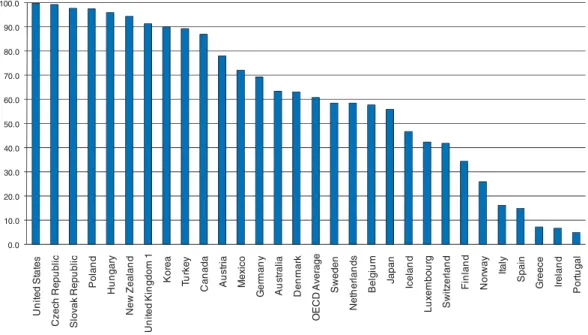
1.2 Percentage of principals aged 50 and over ... 29
1.3 Percentage of female principals ... 30
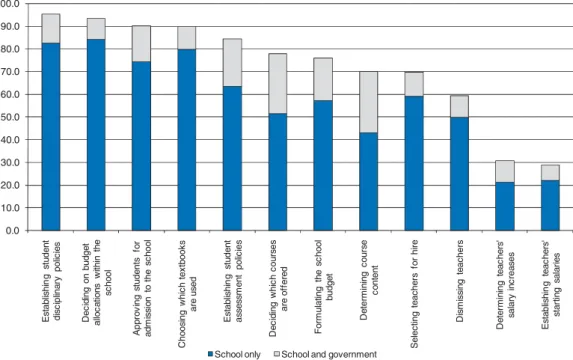
2.1 Average involvement of schools in decision making across OECD countries ... 43
2.2 School leadership autonomy in curricular decisions ... 46
2.3 Observation of lessons by principals or senior staff ... 48
2.4 School leadership autonomy in resources ... 53
2.5 School leadership autonomy in teacher remuneration ... 54
2.6 School leadership autonomy in teacher hiring and firing ... 55
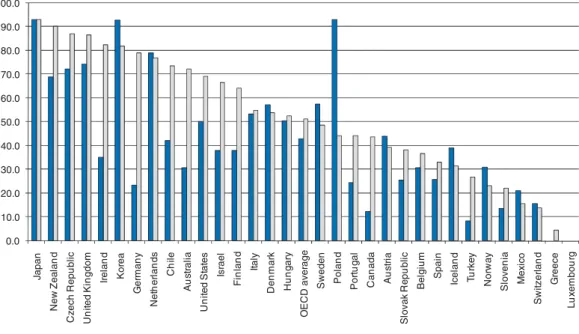
3.1 Who is involved in different school level responsibilities across OECD countries ... 75
3.2 School board participation in school resource decisions ... 89
4.1 Leadership development approaches across countries ... 109
5.1 Secondary school principal salaries in relation to GDP per capita ... 171
Executive summary
Why school leadership matters
School leadership has become a priority in education policy agendas internationally. It plays a key role in improving school outcomes by influencing the motivations and capacities of teachers, as well as the school climate and environment. Effective school leadership is essential to improve the efficiency and equity of schooling.
As countries are seeking to adapt their education systems to the needs of contemporary society, expectations for schools and school leaders are changing. Many countries have moved towards decentralisation, making schools more autonomous in their decision making and holding them more accountable for results. At the same time, the requirement to improve overall student performance while serving more diverse student populations is putting schools under pressure to use more evidence-based teaching practices.
As a result of these trends, the function of school leadership across OECD countries is now increasingly defined by a demanding set of roles which include financial and human resource management and leadership for learning.
There are concerns across countries that the role of principal as conceived for needs of the past is no longer appropriate. In many countries, principals have heavy workloads; many are reaching retirement and it is getting harder to replace them. Potential candidates often hesitate to apply, because of overburdened roles, insufficient preparation and training, limited career prospects and inadequate support and rewards.
These developments have made school leadership a priority in education systems across the world. Policy makers need to enhance the quality of school leadership and make it sustainable.
The OECD has identified four main policy levers which, taken together, can improve school leadership practice:
1. (Re)define school leadership responsibilities
Research has shown that school leaders can make a difference in school and student performance if they are granted autonomy to make important decisions. However autonomy alone does not automatically lead to improvements unless it is well supported. In addition, it is important that the core responsibilities of school leaders be clearly defined and delimited. School leadership responsibilities should be defined through an understanding of the practices most likely to improve teaching and learning. Policy makers need to:
• Provide higher degrees of autonomy with appropriate support
School leaders need time, capacity and support to focus on the practices most likely to improve student learning. Greater degrees of autonomy should be coupled with new models of distributed leadership, new types of accountability and training and development for school leadership.
• Redefine school leadership responsibilities for improved student learning
Policy makers and practitioners need to ensure that the roles and responsibilities associated with improved learning outcomes are at the core of school leadership practice. This study identifies four major domains of responsibility as key for school leadership to improve student outcomes:
− Supporting, evaluating and developing teacher quality: School leaders have to be able to adapt the teaching programme to local needs, promote teamwork among teachers and engage in teacher monitoring, evaluation and professional development.
− Goal-setting, assessment and accountability: Policy makers need to ensure that school leaders have discretion in setting strategic direction and optimise their capacity to develop school plans and goals and monitor progress, using data to improve practice.
− Strategic financial and human resource management: Policy makers can enhance the financial management skills of school leadership teams by providing training to school leaders, establishing the role of a financial manager within the leadership team, or providing financial support services to schools. In addition, school leaders should be able to influence teacher recruitment decisions to improve the match between candidates and their school’s needs.
− Collaborating with other schools: This new leadership dimension needs to be recognised as a specific role for school leaders. It can bring benefits to school systems as a whole rather than just the students of a single school. But school leaders need to develop their skills to become involved in matters beyond their school borders.
• Develop school leadership frameworks for improved policy and practice
School leadership frameworks can help provide guidance on the main characteristics, tasks and responsibilities of effective school leaders and signal the essential character of school leadership as leadership for learning. They can be a basis for consistent recruitment, training and appraisal of school leaders. Frameworks should clearly define the major domains of responsibility for school leaders and allow for contextualisation of local and school-level criteria. They should be developed with involvement by the profession.
2. Distribute school leadership
The increased responsibilities and accountability of school leadership are creating the need for distribution of leadership, both within schools and across schools. School boards
also face many new tasks. While practitioners consider middle-management
unclear; and those involved are not always recognized for their tasks. Policy makers need to broaden the concept of school leadership and adjust policy and working conditions accordingly.
• Encourage distribution of leadership
Distribution of leadership can strengthen management and succession planning. Distributing leadership across different people and organisational structures can help to meet the challenges facing contemporary schools and improve school effectiveness. This can be done in formal ways through team structures and other
bodies or more informally by developing ad hoc groups based on expertise and
current needs.
• Support distribution of leadership
There is a need to reinforce the concept of leadership teams in national frameworks, to develop incentive mechanisms to reward participation and performance in these teams and to extend leadership training and development to middle-level management and potential future leaders in the school. Finally, policy makers need to reflect on modifying accountability mechanisms to match distributed leadership structures.
• Support school boards in their tasks
Evidence shows that effective school boards may contribute to the success of their schools. For this to happen, it is crucial to clarify the roles and responsibilities of school boards and ensure consistency between their objectives and the skills and experience of board members. Policy makers can help by providing guidelines for improved recruitment and selection processes and by developing support structures to ensure active participation in school boards, including opportunities for skills development.
3. Develop skills for effective school leadership
Country practices and evidence from different sources show that school leaders need specific training to respond to broadened roles and responsibilities. Strategies need to focus on developing and strengthening skills related to improving school outcomes (as listed above) and provide room for contextualisation.
• Treat leadership development as a continuum
Leadership development is broader than specific programmes of activity or intervention. It requires a combination of formal and informal processes throughout all stages and contexts of leadership practice. This implies coherently supporting the school leadership career through these stages:
− Encourage initial leadership training: Whether initial training is voluntary or mandatory can depend on national governance structures. Governments can define national programmes, collaborate with local level governments and develop incentives to ensure that school leaders participate. In countries where the position is not tenured, a trade-off must be found to make it worthwhile for principals to invest time in professional development. Efforts also need to be made to find the right candidates.
− Organise induction programmes: Induction programmes are particularly valuable to prepare and shape initial school leadership practices and they provide vital networks for principals to share concerns and explore challenges. These programmes should provide a combination of theoretical and practical knowledge and self-study.
− Ensure in-service training to cover need and context: In-service programmes need to be seen in the context of prior learning opportunities for school leadership. Where there are no other initial requirements, basic in-service programmes should encourage development of leadership skills. In-service training should be also offered periodically to principals and leadership teams so they can update their skills and keep up with new developments. Networks (virtual or real) also provide informal development for principals and leadership teams.
• Ensure consistency of provision by different institutions
A broad range of providers cater to school leadership training needs, but the training they offer must be more consistent. In some countries, national school leadership institutions have raised awareness and improved provision of leadership development opportunities. In other countries, where there are many providers but no national orientations, it is important to have clear standards and ensure a focus on quality. Many governments have standards, evaluations and other mechanisms to monitor and regulate programme quality.
• Ensure appropriate variety for effective training
A broad body of knowledge supported by practice has identified the content, design and methods of effective programmes. It points to the following key factors: curricular coherence, experience in real contexts, cohort grouping, mentoring, coaching, peer learning and structures for collaborative activity between the programme and schools.
4. Make school leadership an attractive profession
The challenge is to improve the quality of current leadership and build sustainable leadership for the future. Evidence indicates that potential applicants are deterred by the heavy workload of principals and the fact that the job does not seem to be adequately remunerated or supported. Uncertain recruitment procedures and career development prospects for principals may also deter potential candidates. Strategies to attract, recruit and support high-performing school leaders include the following:
• Professionalise recruitment
Recruitment processes can have a strong impact on school leadership quality. While school-level involvement is essential to contextualise recruitment practices, action is necessary at the system level to ensure that recruitment procedures and criteria are effective, transparent and consistent. Succession planning – proactively identifying and developing potential leaders – can boost the quantity and quality of future school leaders. Eligibility criteria should be broadened to reduce the weight accorded to seniority and attract younger dynamic candidates with different backgrounds. Recruitment procedures should go beyond traditional job interviews to include an expanded set of tools and procedures to assess candidates. Finally, those who are on the hiring side of recruitment panels also need guidelines and training.
• Focus on the relative attractiveness of school leaders’ salaries
The relative attractiveness of salaries for school leaders can influence the supply of high quality candidates. Policy makers need to monitor remuneration compared to similar grades in the public and private sectors and make school leadership more competitive. Establishing separate salary scales for teachers and principals can attract more candidates from among the teaching staff. At the same time, salary scales should reflect leadership structures and school-level factors in order to attract high performing leaders to all schools.
• Acknowledge the role of professional organisations of school leaders
Professional organisations of school leaders provide a forum for dialogue, knowledge sharing and dissemination of best practices among professionals and between professionals and policy makers. Workforce reform is unlikely to succeed unless school leaders are actively involved in its development and implementation through their representative organisations.
• Provide options and support for career development
Providing career development prospects for school leaders can help avoid principal burnout and make school leadership a more attractive career option. There are many ways to make the profession more flexible and mobile, allowing school leaders to move between schools as well as between leadership and teaching and other professions. Current country practice provides some examples to draw from, including alternatives to lifetime contracts through renewable fixed-term contracts and options for principals to step up to new opportunities such as jobs in the educational administration, leadership of groups or federations of schools and consultant leadership roles.
Chapter 1
School leadership matters
This chapter provides the rationale for policy makers to invest in school leadership policy. It describes the focus of this study, the importance of school leadership and the major challenges countries face in school leadership policy. Effective school leadership is essential to improve teaching and learning within each school and to connect the individual school to the outside world. But school leaders across OECD and partner countries are facing challenges which policy makers need to address. In recent years, the workload of school leaders has expanded and intensified as a result of increased school autonomy and accountability for learning outcomes. As the expectations of what schools should achieve have changed dramatically, countries are seeking to develop new forms of leadership better suited to respond to the needs of rapidly evolving societies. This involves enhancing the capacity of current leaders and preparing and training future leaders.
1.1 Introduction
As the key intermediary between the classroom, the individual school and the education system as a whole, effective school leadership is essential to improve the efficiency and equity of schooling. Within each individual school, leadership can contribute to improve student learning by shaping the conditions and climate in which teaching and learning occur. Beyond the school borders, school leaders can connect and adapt schools to changing external environments. And at the school-systems interface, school leadership provides a bridge between internal school improvement processes and externally initiated reform.
But school leadership does not operate in static educational environments. As countries are seeking to adapt their education systems to the needs of contemporary society, the expectations for schools and school leaders have changed profoundly. Many countries have made schools more autonomous in their decision making while centralising standards and accountability requirements and demanding that schools adopt new research-based approaches to teaching and learning. In line with these changes, the roles and responsibilities of school leaders have expanded and intensified. Given the increased autonomy and accountability of schools, leadership at the school level is more important than ever.
Policy makers need to adapt school leadership policy to new environments by addressing the major challenges which have arisen over the past decades. There is a growing concern that the role of school principal designed for the industrial age has not changed enough to deal with the complex challenges schools are facing in the 21st century. Countries are seeking to develop new conditions for school leadership better suited to respond to current and future educational environments. As expectations of what school leaders should achieve have changed, so must the definition and distribution of tasks, as well as the levels of training, support and incentives.
Ensuring future quality leadership is also vital for school improvement. In most
countries, the leadership workforce is ageing and large numbers of school leaders will retire over the next five to ten years. At a time of high demographic turnover in school leaders, education systems need to focus on fostering future leaders and making leadership an attractive profession. The contemporary challenge of leadership, in systemic terms, is not only to improve the quality of current leaders but also to develop clear plans for future leadership and effective processes for leadership succession.
The above developments and challenges have made school leadership a priority in education policy agendas across OECD and partner countries. In their 2001 and 2004 meetings, OECD education ministers emphasised the key role of school leadership in helping OECD education systems respond to the needs of rapidly changing societies. In response, the OECD proposed to conduct an international activity to help policy makers compare their approaches to school leadership policy, identify innovative practices and provide policy options for action.
Twenty-two education systems in nineteen countries participated actively in the OECD Improving School Leadership activity (Box 1.1) by providing individual country
background reports and sharing knowledge to look for viable alternatives.1 The high level
1
All activity documents can be found on the OECD Improving School Leadership webpages at
of interest and participation shows that developing and sustaining effective school leadership is of great importance for OECD education systems and is likely to become even more so in the future.
The present comparative report draws on materials and events from the OECD
Improving School Leadership activity to present a broad analytic overview and set of policy recommendations for improving school leadership. It identifies four policy levers for action: redefining the roles and responsibilities of school leadership; distributing school leadership tasks; developing skills for effective school leadership; and making
school leadership an attractive profession. A parallel reportImproving School Leadership,
Volume 2: Case Studies on System Leadership focuses on approaches that have encouraged and developed school leaders to work together for system-wide school improvement (Pont, Nusche and Hopkins, 2008).
Box 1.1 The OECD Improving School Leadership activity
The purpose of the OECD activity was to give policy makers information and analysis to help them formulate and implement school leadership policies leading to improved teaching and learning. The objectives were:i) to synthesise research on issues related to improving leadership in schools; ii) to identify innovative and successful policy initiatives and practices; iii) to facilitate exchanges of lessons and policy options among countries; and iv) to identify policy options for governments to consider.
Methodology: Parallel complementary approaches were developed to achieve these objectives more effectively. Participating countries provided a country background report following a common framework (analytical strand). Additionally, a small number of case studies ina) school leadership for system-wide improvement andb) training and development of school leaders complement the work by providing examples of innovative practice (innovative case study strand). This approach made it possible to collect the information necessary to compare country developments while adopting a more innovative and forward looking approach to policy making.
Outputs: In addition to this report, a companion volume, Improving School Leadership,
Volume 2: Case Studies on System Leadership, explores five case studies of innovative practices
in system leadership and provides some recommendations. A set of practical materials on school leadership complements this work with the aim of helping translate the recommendations into practice. All reports can be found on the OECD Improving School Leadership web pages at
www.oecd.org/edu/schoolleadership.
Participating countries: Australia, Austria, Belgium (Flanders and French Community), Chile, Denmark, Finland, France, Hungary, Ireland, Israel, Korea, The Netherlands, New Zealand, Norway, Portugal, Slovenia, Spain, Sweden, United Kingdom (England, Northern Ireland and Scotland). The French and Flemish Communities of Belgium as well as England, Northern Ireland and Scotland participated as independent units, because their education policies are decentralised. Throughout the report, whenever data is available, they are cited separately.
Thedefinition of school leaders guiding the OECD activity suggests that effective school leadership may not reside exclusively in formal positions but may instead be distributed across a number of individuals in the school. Principals, deputy and assistant principals, leadership teams, school governing boards and other school-level professional personnel can contribute as leaders to the goal of learning-centred schooling. The precise distribution of these leadership contributions can vary depending on factors such as governance and management structure, levels of autonomy and accountability, school size and complexity and levels of student performance.
1.2 The concept of school leadership
Before moving on to the analysis of school leadership policy, it is important to understand the concept of leadership that this report supports. There is a vast amount of literature exploring generic leadership issues. This report concentrates on school leadership, accepting that there are common elements and trends in leadership practice across sectors and lessons can be learned from non-educational environments as well.
A central element of most definitions of leadership is that it involves a process of
influence(OECD, 2001a). As Yukl has phrased it, “most definitions of leadership reflect the assumption that it involves a social influence process whereby intentional influence is exerted by one person [or group] over other people [or groups] to structure the activities
and relationships in a group or organisation” (Yukl, 2002). The term intentional is
important, as leadership is based on articulated goals or outcomes to which the process of influence is expected to lead.
Depending on country contexts, the term school leadership is often used interchangeably with school management and school administration. Although the three concepts overlap, we use them with a difference in emphasis. An often-quoted phrase is “managers do things right, while leaders do the right thing” (Bennis and Nanus, 1997). While leadership involves steering organisations by shaping other people’s attitudes, motivations and behaviours, management is more closely associated with maintenance of current operations (Bush and Glover, 2003). Dimmock (1999) provides a distinction between school leadership, management and administration while also recognising that the responsibilities of school leaders often encompass all three:
Irrespective of how these terms are defined, school leaders experience difficulty in deciding the balance between higher order tasks designed to improve staff, student and school performance (leadership), routine maintenance of present operations (management) and lower order duties (administration).
This report considers that successful schools need effective leadership, management
and administration. While the report’s focus is on leadership, this term may encompass
managerial and administrative tasks as well. The three elements are so closely intertwined that it is unlikely for one of them to succeed without the others.
The emphasis of this report is on school leaders, including but not confined to school
principals.2 The concept of principalship is rooted in the industrial model of schooling,
where one individual bears the prime responsibility for the entire organisation.
Leadership is a broader concept where authority to lead does not reside only in one person, but can be distributed among different people within and beyond the school. School leadership can encompass people occupying various roles and functions such as principals, deputy and assistant principals, leadership teams, school governing boards and school-level staff involved in leadership tasks.
2
The terms principal, director, headmaster, head teacher and head will be used interchangeably, except when some special connotation requires the use of one term in particular, in which case the reason for that designation will be clear in context.
1.3 School leadership is a policy priority
School leadership has become a priority in education policy agendas across OECD and partner countries because it plays a key role in improving classroom practice, school policies and connections between individual schools and the outside world.
It contributes to improved student learning
There is increasing evidence that within each individual school, school leaders can contribute to improved student learning by shaping the conditions and climate in which teaching and learning occur. A large body of research on school effectiveness and improvement from a wide range of countries and school contexts has consistently highlighted the pivotal role of school leadership in making schools more effective (Scheerens and Bosker, 1997; Teddlie and Reynolds, 2000; Townsend, 2007).
An important finding emerging from the research is that the relationship between school leadership and student learning is mostly indirect. As school leaders work mainly outside the classroom, their impact on student learning is largely mediated through other people, events and organisational factors such as teachers, classroom practices and school climate (Hallinger and Heck, 1998). The finding that the relationship between leadership and student learning is mediated through such factors underscores the powerful role of the school leader in helping to create the conditions for effective teaching and learning. School leaders influence the motivations, capacities and working conditions of teachers
who in turn shape classroom practice and student learning.3
Moving a step further, the research on school leadership effects has revealed a number of leadership roles and responsibilities that are particularly conducive to enhancing student learning. Findings of the research on leadership effects have recently been consolidated in a number of reviews and meta-analyses. These show that certain leadership practices are associated with measurable improvements in student learning
(Hallinger and Heck, 1998; Marzano et al., 2005; Robinson, 2007; Waters et al., 2003).
This report identifies four major domains of responsibility as key tasks for school leadership to improve teaching and learning within their schools: supporting and developing teacher quality, defining goals and measuring progress, strategic resource management and collaboration with external partners (Chapter 2).
It bridges educational policy and practice
School leadership also plays a major role in education reform. Much has been written about top-down versus bottom-up strategies for school improvement and there is widespread agreement that the two need to be combined and synchronised (Fullan, 2001; Hopkins, 2008; Moos and Huber, 2007). While higher levels of the educational system can provide policy directions for schools, their success often depends on the motivations and actions of leaders at the school level.
For centrally initiated reforms to become meaningful to all school-level stakeholders, they need to be associated with internal school improvement activities in a coherent way
(Stoll et al., 2002). Successful implementation and institutionalisation of reform requires
3
See Annex 1.A1 for further background information on research concerning factors influencing student learning and conceptual and methodological challenges related to the impact of school leadership.
leadership at the school level to promote adaptations of school processes and systems, as well as cultures, attitudes and behaviours.
Therefore, unless school leaders feel a sense of ownership of reform and agree with its purposes it is unlikely that they will engage their staff and students in externally defined reform objectives. School reform is more likely to be successful if school leaders are actively involved in policy development and formulation. Continuous dialogue and consultation between policy makers and those who lead schools at the front line are thus essential for successful large scale reform.
It links schools to their environments
In addition, school leaders are in charge of connecting and adapting schools to their
surrounding environments. According to Hargreaves et al. (2008), school leaders will
increasingly need to lead “out there” beyond the school, as well as within it, in order to influence the environment that influences their own work with students. In small towns and rural areas, school leaders have traditionally stood among the most important leaders in their communities. While it may be argued that urbanisation, immigration and school size have weakened school-community ties, these and other pressures on family structures have at the same time contributed to make the community responsibilities of school leaders even more important today.
School leaders play an important role in strengthening the ties between school personnel and the communities that surround them (Fullan, 2001). Leaders of the most successful schools in challenging circumstances are typically highly engaged with and
trusted by the schools’ parents and wider community (Hargreaves et al., 2008). They also
try to improve achievement and well-being for children by becoming more involved with other partners such as local businesses, sports clubs, faith-based groups and community organisations and by integrating the work of the school with welfare, law enforcement and other agencies (PricewaterhouseCoopers, 2007).
Moreover, in rapidly changing societies, the goals and objectives to be achieved by schools and the ways to get there are not always clear and static. In increasingly globalised and knowledge-based economies, schools must lay the foundations for lifelong learning while at the same time dealing with new challenges such as changing demographic patterns, increased immigration, changing labour markets, new technologies and rapidly developing fields of knowledge.
As a result of these developments, schools are under enormous pressure to change and it is the role of school leadership to deal effectively with the processes of change. A great variety of scenarios for the future of schooling could be imagined from current societal trends and different contexts. While the future cannot be predicted, the OECD
Schooling for Tomorrow project (OECD, 2001c) reflected on possible developments that will shape schools in the future and proposed six hypothetical scenarios for school systems over the next 10 to 20 years (Box 1.2). The scenarios are not intended to be totally realistic but can help clarify possible schooling developments and how policy makers, stakeholders and school-level actors might influence and adapt to them. The roles and responsibilities of school leadership in each of these scenarios would vary widely.
Box 1.2 OECD scenarios: what might schooling look like in the future? From “stable bureaucratic systems” to “system meltdown”
BURE AUCRAT IC SY STE M
1
Schools in Back to the Future Bureaucratic SystemsThis scenario shows schools in powerful bureaucratic systems that are resistant to change. Schools continue mostly with “business as usual”, defined by isolated units – schools, classes, teachers – in top-down administrations. The system reacts little to the wider environment and operates to its own conventions and regulations.
RE – S CHOOL IN G
2
Schools as Focused Learning OrganisationsIn this scenario, schools function as focal learning organisations, revitalised around a knowledge agenda in cultures of experimentation, diversity and innovation. The system enjoys substantial investment, especially to benefit disadvantaged communities and maintain high teacher working conditions.
3
Core SocialSchools as CentresIn this scenario, the walls around schools come down but they remain strong organisations, sharing responsibilities with other community bodies such as health or social services. Much emphasis is given to non-formal learning, collective tasks and intergenerational activities. High public support ensures quality environments and teachers enjoy high esteem. DE – S CHOOL IN G
4
TheExtended Market ModelThis scenario depicts the widespread extension of market approaches – in who provides education, how it is delivered, how choices are made
and resources distributed. Governments withdraw from running
schooling, pushed by dissatisfaction of “consumers”. This future might bring innovation and dynamism and it might mean exclusion and inequality.
5
Learning inNetworksreplacing schools
This scenario imagines the disappearance of schools per se, replaced by learning networks operating within a highly developed “network society”. Networks based on diverse cultural, religious and community interests lead to a multitude of diverse formal, non-formal and informal learning settings, with intensive use of ICTs.
CRI
S
IS
6
Teacher ExodusandSystem MeltdownThis scenario depicts a meltdown of the school system. It results mainly from a major shortage of teachers triggered by retirement, unsatisfactory working conditions, more attractive job opportunities elsewhere.
Source: OECD (2001),What Schools for the Future? OECD, Paris.
According to the OECD (2005a), as countries “move rapidly towards becoming knowledge societies with new demands for learning and new expectations of citizenship, strategic choices must be made not just to reform but to reinvent education systems so that the youth of today can meet the challenges of tomorrow”. At the school level, leadership is increasingly in charge of leading teachers to respond to uncertain futures and new challenges. They must continuously adapt their school to the demands of the outside
world and redefine its tasks in response to a changing environment (Stoll et al., 2002). An
essential role of school leadership therefore is to ensure that both students and teachers can continuously learn, develop and adapt to changing environments.
1.4 School leadership responds to changing policy environments
The organisational arrangements for schools have changed significantly over time due to profound changes within the societies they serve. While school context and system-level differences have differential implications for the exercise of school leadership across countries, a number of global trends have impacted on schools across OECD countries. Very broadly, over the past decades, school leaders in OECD countries have evolved from practising teachers with added responsibilities, to head teachers and bureaucratic administrators, to professional managers and, in some countries, to leaders of learning. This section gives a short overview of the major trends in educational governance which have shaped school leadership over time.
The industrial model of schooling: bureaucratic administration
Before the advent of mass primary and secondary education, schools had most commonly been run by a teacher with added supervisory responsibilities for buildings, students and staff (OECD, 2001b). The position of principal emerged with the development of public schooling as an essential social service in industrialising economies in the second half of the 19th century. Increased industrialisation and the accelerated need for workers with basic education required more systematic school organisation, which resulted in the appointment of a part-time or full-time administrator at the school level.
In the early 20th century, schools were designed to fit industrial models of efficient production. According to OECD (2001b) “the organisation and content of schooling in many ways reflected industrial development. Just as factories were organised as branches of a larger enterprise conforming to predetermined common standards, so public education came to follow a supervisory style with anticipated outcomes and the principal in the role of branch manager.”
In the bureaucratic management systems predominant throughout most of the 20th century, the principal held overall responsibility for the operation of an individual school within a wider system run by the central bureaucracy (Aalst, 2002). The roles within the school were quite clearly delimited. Teachers operated in relative isolation from each other and the principal’s role was most commonly conceived of in terms of bureaucratic administrator or head teacher, or some combination of the two.
Thebureaucratic administrator was seen as responsible for the overall operation of the school or implementation of the school project. This individual was responsible for overseeing compliance with national, state, or municipal legislation, regulations and guidelines and was accountable for the use of resources.
The head teacher was seen as primus inter pares, first among equals. This person retained a greater or lesser degree of teaching responsibilities and handled the non-teaching tasks of managing resources and communicating with parents and other elements of the education system. Collegial relationships were prized, in the sense that teachers were considered the instructional experts and left to their own, rarely disturbed in their classrooms.
New public management: towards decentralisation, autonomy and
accountability
As countries strive to transform their education systems to prepare students with the knowledge and skills needed to function in rapidly changing societies, most OECD countries are adopting a number of similar policy trends. Since the early 1980s, “new public management” structures stressing decentralisation, school autonomy, parental and community control, shared decision making, outcomes-based assessment and school choice have become the predominant school governance approach in many countries and have significantly altered education systems (Mulford, 2003). The rationale behind these governance approaches is that autonomy and accountability can respond more efficiently to local needs. This section briefly describes the impact of these changes on the roles and responsibilities of school leaders (see also Chapter 2).
Decentralisation and school autonomy
Many countries have increased decision making authority at lower levels of the educational system. Decentralisation of educational decision making can be implemented in a variety of forms and the implications for school leaders vary accordingly. Decentralisation may involve delegating responsibilities to the school level, or to intermediate levels such as states, provinces and local educational authorities (OECD, 2004a). Among the recent decentralisation movements having an impact on school
leadership, Glatter et al. (2003) distinguish two models of decentralisation which have
important implications for the role of school leaders.
Local empowerment refers to the transfer of responsibilities to an intermediate authority between central (or state) governments and schools, such as school districts in the United States. In such contexts, schools are generally viewed as part of a local educational system or a broader network of schools, with reciprocal rights and obligations
(Glatter et al., 2003). The municipal or local education authority may play a role in
connecting schools to other public services and community development as well as in encouraging schools to collaborate with each other. School leaders may thus be asked to play a greater role in leadership “beyond the school borders” (Chapter 2).
School empowerment (or school autonomy) refers to the devolution of responsibilities to the school level. Transferring decision making powers to schools has been a major objective of the decentralising and restructuring reform movements since the 1980s. In contexts of increased school autonomy, school leaders are asked to fulfil responsibilities that call for expertise which many do not have through formal training. New responsibilities include establishing budgeting and accounting systems, choosing and ordering materials, setting up relationships with contractors and vendors, designing recruitment schemes for hiring teachers, to name just a few. In many cases, school autonomy makes the job of school leaders more time-consuming by increasing their administrative and managerial workload. As financial and personnel responsibilities are sharply increasing, school autonomy is sometimes associated with less time and attention for providing leadership for improved teaching and learning.
Decentralisation often also requires school leaders to engage more in communication, co-operation and coalition building. Where local empowerment is predominant, school leaders are required to develop strong networking and collaboration skills and to engage with their peers and with intermediate bodies throughout the local education system. Where school empowerment prevails, the teaching staff, parents and community
representatives are often formally or informally brought into the school-level decision making process (OECD, 2001b). School leaders thus need to continuously negotiate between top-down demands from central regulations and standards, internal demands from teachers and students and external expectations from parents and the local community.
While most countries are moving to more decentralised models of governance, important differences remain between different countries (Annex 1.A2.). In highly centralised systems where most decisions are still made at the national or state level, the school leader’s job remains quite narrowly confined to translating policies decided at higher administrative levels into a reality for teachers and students. At the other end of the continuum, in systems that have decentralised authority over curriculum, personnel and budgets to the school level, the school leader’s job is very different, with much more responsibility in areas such as human and financial resource management or instructional leadership. In most countries, however, school governance is closer to the middle of the continuum, with some functions centralised, others decentralised and substantial interplay among leaders at the different levels of the education system.
Accountability for outcomes
While there is a clear trend towards decentralising responsibilities for budget, personnel and instructional delivery in most OECD countries, many have simultaneously centralised curriculum control and/or accountability regimes to the state or central government as a way to measure and promote school progress (OECD, 2007b). Accountability frameworks and reporting of performance results create new obligations for schools and school leaders to perform according to centrally defined standards and expectations.
As requirements for regular standardised testing are increasing, the role of the school leader has changed in many countries, from being accountable for inputs to being accountable for the performance outcomes of teachers and students. Increasing accountability requirements put pressure on school leaders to produce documented evidence of successful school performance. This may substantially add to the paperwork and time constraints for school leaders because they are required to carefully record, document and communicate school-level and student-level developments.
In their planning processes, school leaders are increasingly expected to align local curricula with centrally mandated standards. According to Leithwood (2001), school leaders are expected to become “more strategic in their choices of goals and more planful and data-driven about the means to accomplish these goals”. This involves interpretation of test results for school improvement and mastery of skills associated with data-wise management.
School choice and competition
Another observed trend across OECD countries is a move towards increasing school choice. One-third of OECD countries make information on school evaluation available to parents for the purpose of informing school choice (OECD, 2007b). In some cases, school choice is deliberately used as a mechanism to enhance competition between autonomous schools. In systems where funding follows the student, parents are treated as clients who choose the school providing the best quality.
Even if not all school choice settings actually put pressure on schools and school leaders to compete, in some environments school leaders are more and more expected to market their schools efficiently, know what competing schools offer, develop niches for their schools and maintain good customer relations with students and parents (Leithwood, 2001). Therefore they are required to lead strategically and discern a wide range of local, national and international developments, threats and opportunities that may affect their schools (Barnett, undated).
A renewed focus on teaching and learning
The policy directions reviewed above have been part of a broader trend to strengthen education systems and improve student performance. For most countries, this has meant some or all of the following: raising levels of overall student performance, closing the gap in achievement between student populations, providing inclusive education services for such populations as students with special needs and immigrant children, reducing dropout rates and achieving greater efficiency. The combination of mandates and programmes developed to reach these goals has one common denominator: to increase the focus of schools on teaching and learning.
Schools in several countries are in particular being asked to increaseindividualisation
and personalisation of learning and instruction and to provide more inclusive and multicultural instruction. As the key intermediary between central policy and classroom practice and as the primary agent setting the conditions in school for effective teaching and learning, the school leader bears much of the responsibility for translating policy into improved teaching and learning.
Scholars (Elmore, 2008; Mulford, 2003) are now suggesting that an essential function of school leadership is to foster “organisational learning”, that is to build the capacity of the school for high performance and continuous improvement through the development of staff, creating the climate and conditions for collective learning and thoughtful use of data to improve curriculum and instruction.
Catering to the needs of increasingly diverse student populations
Schools in almost all countries are serving a more heterogeneous population and are under pressure to provide more inclusive and multiculturally sensitive programmes. Countries as diverse as Austria, Chile and Finland report facing challenges of increasingly heterogeneous populations for whom teachers may need to adopt more sensitive teaching methods and to invest extra effort in overcoming skills and language obstacles. Many countries are setting policy goals to address these issues.
In Austria for example, every school must develop a programme to ensure that each student who failed to reach the objectives of the curriculum receives a suitably individualised education. Similarly, municipal primary and lower secondary schools in Denmark must develop a study plan for each student. Schools in several countries such as England, Ireland and Spain face the challenge of ensuring effective education for considerable numbers of traveller and migrant students. Personalisation strategies in countries like Sweden and England are driving schools to embed assessment, data analysis and the design of learning experiences into the routine of teaching, to adopt a broader range of teaching techniques, to offer a more responsive curriculum, to adapt the organisation of the school and to establish links with service providers beyond the school.
New understanding and approaches to teaching and learning
Research has added to and in some cases radically altered, conceptions of student learning and cognition and of teaching and instruction, so schools must adopt new approaches to teaching and learning and to the organisation of instruction. School programmes in many countries have traditionally emphasised passive rote learning and didactic teacher-centred instruction. Assessments have measured fact-based memorisation and recall rather than deep understanding, ability to synthesise with other knowledge and applications in real-world situations outside the classroom.
The requirements brought about by the development of knowledge societies and the higher comparability of student outcomes across countries due to international assessments such as PISA are leading some countries to modify their modes of instruction and student work (OECD, 2007a). Many countries strive to exploit the possibilities of more powerful forms of active, constructivist learning and “teaching for understanding”. Ireland, for example, has revised the primary school curriculum to encourage the use of active teaching and learning methodologies and the post-primary syllabi to emphasise more independent, active learning.
Teaching has traditionally been practised as a solo art by individual teachers alone in their classrooms. Autonomy was highly prized and intrusions into solitary practice were resisted. But a large body of convincing research in the last two decades has developed new views of effective teaching that are based on the development of professional
learning communities (Louis et al., 1996; Stoll and Louis, 2007).
School leaders must master the new forms of pedagogy themselves and they must learn how to monitor and improve their teachers’ new practice. Moreover, instead of
serving as head teacher primus inter pares, they have to become leaders of learning
responsible for building communities of professional practice. Methods of evaluation and professional development take more sophisticated application and principals must embed them into the fabric of the work day.
While practices vary across countries, it is clear that school leadership is generally expected to play a more active role in instructional leadership: monitoring and evaluating teacher performance, conducting and arranging for mentoring and coaching, planning teacher professional development and orchestrating teamwork and cooperative instruction. Countries also note a shift in emphasis from more administration- and management-type functions to leadership functions of providing academic vision, strategic planning, developing deeper layers of leadership and building a culture and community of learning.
As a result of the increasing central mandates and programmes, changing student populations and growing knowledge about effective practice, schools are under enormous pressure to change and it is the school leader’s role to manage the processes of change. The transformation of policy into results occurs most critically through the adaptation of practice in the school and classroom. This process is complex and must be led intentionally and skilfully. In some cases, resistance to change needs to be overcome with carefully structured support, relevant information, a clear sense of purpose and goals and opportunities to learn requisite skills (Hall and Hord, 2005). While some changes are purely technical and can be readily accomplished, more significant change calls for deeper adjustment of values and beliefs about the work (Heifetz, 1998). Sophisticated skills of “adaptive” (Heifetz and Linsky, 2002) and “transformational” leadership (Burns, 1978; Leithwood, 1992; Leithwood and Jantzi, 1990; Leithwood and Jantzi, 2000) are needed here.
1.5 The current reality of school leadership
We need to contrast these trends with the current practice and shape of school leadership in OECD countries. Traditionally in many countries there has been only one individual – the principal – holding a formal leadership position in schools. While the roles and responsibilities of principals have varied in different contexts and over time, the existence of principals remains a common feature of OECD education systems.
In many countries there is growing concern that the role of principal designed for the needs of a different time may not be appropriate to deal with the leadership challenges schools are facing in the 21st century. Even as countries are adopting more distributed and collaborative approaches to leadership, on average across OECD countries, it is the principal who carries the largest bulk of school-level leadership responsibilities (OECD, 2004b). This section gives a brief overview of the characteristics of the principal workforce and the major challenges facing the profession.
Principals work in a variety of contexts
Depending on the school contexts in which they work, principals face very different sets of challenges. School-level differences or contextual factors have important implications for their leadership practice. Leithwood (2005), in a review of the findings of case studies in seven countries, found features of the “organisational or wider social context in which principals work” that impact on their practices. These features include:
student background factors, school location (e.g.urban, rural), school size, government or
public versus non-government designation of schools, school type and school level (elementary, middle, secondary).
In other studies, the level of schooling has been found to influence the type of leadership practices required. Primary schools tend to be smaller and involve different leadership challenges than large secondary schools. Small primary schools provide more opportunities for principals to spend time in the classroom and closely monitor teachers, whereas leaders in large secondary schools tend to influence teaching more indirectly and may rely on teacher leaders or department heads to engage in curricular issues
(Leithwood et al., 2004). In many primary schools, principals are also classroom teachers,
which may lead them to envisage their leadership in a more collegial and participative way. Heck for example, found that principals in effective primary schools are more directly involved in instructional issues than principals in effective secondary schools (Heck, 1992).
Figure 1.1 indicates that in all countries except Belgium (French Community) and Sweden, the majority of school leaders work in primary schools. Countries like Australia, Ireland, Norway, New Zealand, Denmark and Northern Ireland have traditionally large numbers of small, rural primary schools. As Southworth (2002) has pointed out, failure to analyse school sector differences may lead to imprecise discussions and development of leadership. When designing school leadership policy, it is important for governments to take account of contextual factors to respond more effectively to the different needs of principals in different types of schools.
Figure 1.1 Number of principals in primary and secondary schools, 2006/07, public schools 0 5000 10000 15000 20000 25000 30000 Fr an c e 1 E n gl an d S pai n Ne th e rl a n d s A u s tr a lia Au s tr ia S w eden