Persistent link: http://hdl.handle.net/2345/bc-ir:104148
This work is posted on eScholarship@BC,
Boston College University Libraries.
Boston College Electronic Thesis or Dissertation, 2015
Copyright is held by the author, with all rights reserved, unless otherwise noted.
of classroom practice and on student
achievement: A relational analysis
between student learning objectives and
value-added modeling
Lynch School of Education
Department of
Educational Research, Measurement, and Evaluation
TEACHER EVALUATION BASED ON
AN ASPECT OF CLASSROOM PRACTICE AND
ON STUDENT ACHIEVEMENT:
A RELATIONAL ANALYSIS BETWEEN STUDENT LEARNING
OBJECTIVES AND VALUE-ADDED MODELING
Dissertation
by
JIEFANG HU
submitted in partial fulfillment
of the requirements for the degree of
Doctor of Philosophy
May 2015
TEACHER EVALUATION BASED ON
AN ASPECT OF CLASSROOM PRACTICE AND
ON STUDENT ACHIEVEMENT:
A RELATIONAL ANALYSIS BETWEEN STUDENT LEARNING
OBJECTIVES AND VALUE-ADDED MODELING
by
Jiefang Hu
Dr. Henry I. Braun, Dissertation Chair
ABSTRACT
With teachers being largely held accountable for student learning outcomes, it is of critical importance to identify effective and ineffective teachers through the
development and implementation of a successful teacher evaluation system. Addressing the call to explore indicators of teacher effectiveness and enhance the traditional methods and practices of teacher evaluation, this study extends current efforts investigating
different approaches to measuring teacher effectiveness through exploration of the relationship between two indicators of teacher effectiveness: the value-added estimates based on student test performance and growth, and the quality of student learning
objectives (SLO) developed by teachers. It uses data from a large school district in North Carolina, comprising student achievement outcomes in mathematics and reading across five grades and three years. Different hierarchical linear models are employed to obtain teachers’ VAM estimates with regression adjustments for prior years of achievement, student background characteristics, and teacher level covariate adjusted for each set of
models. Weighted Least Squares (WLS) analysis, logistic regression, and point-biserial analysis are used to examine the variations in the relationships among teachers’ VAM estimates, SLO quality and SLO attainment status across years and grades. The HLM results revealed fluctuations in teachers’ VAM rankings obtained at different stages of the model sequence that caused the correlations with SLO quality to vary as well. The WLS results indicated that the correlations between VAM and SLO quality also varied across years and grades. Further data analysis revealed generally weak associations between SLO quality and attainment status, as well as those between teachers’ VAM estimates and whether their SLOs were achieved.
ACKNOWLEDGEMENTS
I have gained tremendous support from many people during this dissertation journey, without whom I would never have made it through. I would like to express my deepest gratitude to each and every one of them.
First of all, I am extremely thankful for my Committee Chair, Dr. Henry Braun, who devoted a lot of his time in guiding me through the entire process, teaching me how to think and write in a more effective and efficient way. This is the single most
meaningful and valuable learning experience in my whole life.
I would also like to thank the other two Committee members, Dr. Larry Ludlow and Dr. Dennis Shirley who have provided great support in this process. Dr. Ludlow has been an incredible mentor in all these years, giving me kind help at every step of my path towards a Ph.D. degree. Dr. Shirley’s knowledge and insight was essential to deepen my understanding and complete the dissertation.
There are other ERME faculty members to whom I would like to say thank you. Drs. Ina Mullis and Michael Martin granted me great support during the years I worked at TIMSS & PIRLS International Study Center. I am also grateful for Dr. Camelia Rosca for her generous support and practical advice on the dissertation data. My gratitude also goes to my colleagues at CTAC, Bill Slotnik, Gerry Harge, Barbara Helms, and Joe Frey who supported my access and understanding of the dataset.
Finally, the love of my family has been the spiritual support through my highs and lows during these years. My mother and father gave me endless trust while I was faced with difficulties. I owe many thanks to my lovely son and daughter, Zayne and Julaine – you don’t know how many times I got more motivated by watching your sleeping faces at midnight. Of course, the most special thank you should go to my husband – I would not have accomplished this without your love and inspiration.
TABLE OF CONTENTS
CHAPTER 1. INTRODUCTION ... 1
1.1 Description of the Problem ... 1
1.2 Purpose and Research Questions ... 8
1.3 Significance of the Study ... 10
1.4 Outline of the Dissertation ... 12
CHAPTER 2. LITERATURE REVIEW ... 14
2.1 Importance and Impact of Teacher Quality ... 14
2.1.1 Importance of Teacher Quality ... 14
2.1.2 Impact of High-‐ and Low-‐ Quality Teaching ... 18
2.1.3 Compared to Other Factors Teacher Quality Matters the Most ... 22
2.2 Teacher Evaluation: Traditional Approaches and Current Efforts ... 25
2.2.1 Traditional Approaches to Teacher Evaluation ... 25
2.2.1.1 Problems and Consequences of Traditional Approaches ... 27
2.2.1.2 Difficulty of Establishing a Good Teacher Evaluation System ... 31
2.2.2 Current Efforts to Change Teacher Evaluation ... 34
2.2.2.1 What are States Doing about Teacher Evaluation? ... 38
2.3 Indicators of Teacher Effectiveness ... 39
2.3.1 Introduction to Indicators of Effective Teaching ... 39
2.3.2 Indicators to be Addressed in This Dissertation ... 44
2.3.3 VAM as an Indicator of Teacher Effectiveness based on Student Achievement ... 46
2.3.4.1 SLOs Introduction: Concept, Accountability, and Application ... 52
2.3.4.2 SLOs Quality as an Indicator of Teacher Effectiveness Based on One Aspect of Classroom Practice ... 56
2.3.4.3 SLOs in Charlotte-‐Mecklenburg School District: Introduction ... 58
CHAPTER 3. RESEARCH DESIGN ... 62
3.1. Data Description ... 62
3.1.1. Student Achievement Data ... 62
3.1.1.1 EOG Test reliability ... 63
3.1.1.2 EOG Test Validity ... 64
3.1.2 Student Learning Objectives (SLOs) Data ... 66
3.1.3 Procedures for Scoring the Quality of Teacher SLOs in the Charlotte-‐ Mecklenburg Schools Project ... 67
3.1.4 Data Source and Sample ... 70
3.2 Variables ... 75
3.2.1 Outcome Variables ... 75
3.2.2 Student Level Predictors ... 76
3.2.3 Teacher Level Predictors ... 78
3.3 Analytical Strategies ... 79
3.3.1 Preliminary Descriptive Analyses ... 79
3.3.2 Research Question One ... 80
3.3.3 Research Question Two ... 84
3.3.4 Research Question Three ... 85
3.3.5 Research Question Four ... 86
3.3.6 Research Question Five ... 88
CHAPTER 4. RESULTS ... 91
4.1 Descriptive analyses ... 92
4.1.1 The Value-‐added Analyses ... 92
4.1.1.1 Student Achievement Outcomes ... 92
4.1.1.2 Student-‐level Variables ... 95
4.1.1.3 Teacher-‐level Characteristics ... 96
4.1.2 The SLO Analysis ... 98
4.1.2.1 SLO Quality Scores ... 98
4.1.2.2 SLO Attainment Status ... 99
4.2 Research Question One ... 100
4.3 Research Question Two ... 105
4.4 Research Question Three ... 112
4.5 Research Question Four ... 121
4.6 Research Question Five ... 128
4.7 Research Question Six ... 129
CHAPTER 5. CONCLUSIONS ... 130
5.1. Summary of Findings ... 131
5.1.1 Relationship between SLO Quality and VAM Estimates based on Models with Student Prior Achievement Adjusted for ... 132
5.1.2 Influence of Student-‐level Covariates on the Relationship between SLO Quality and VAM Estimates ... 133
5.1.3 Influence of a Teacher-‐level Covariate on the Relationship between SLO Quality and VAM Estimates ... 135
5.1.4 Variation of the Relationship between SLO Quality and VAM Estimates by Year, Grade, and Type of School ... 137
5.1.5 Associations between SLO Quality and SLO Attainment Status ... 138
5.1.6 Associations between VAM estimates and SLO attainment status ... 138
5.2 Policy Implications ... 140
5.3 Limitations ... 145
5.4 Measuring Teacher Effectiveness -‐-‐ Looking forward ... 147
REFERENCE……….. ... 150
Appendix A. HLM Model Specifications ... 160
LIST OF TABLES
Table 3.1 North Carolina EOG Tests Reliability Indices, Averages by Grade and Subject
... 64
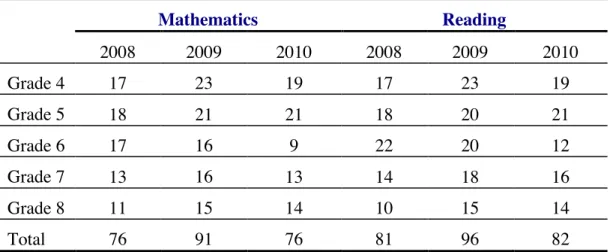
Table 3.2 Number of Teachers with Both VAM and SLOs by Grade and Subject ... 71
Table 3.3. The Number of Students and Teachers for VAM Analysis -‐-‐ Mathematics ... 72
Table 3.4. The Number of Students and Teachers for VAM Analysis -‐-‐ Reading ... 72
Table 3.5. Distribution of Students Linked to Each Teacher in Two Years ... 74
Table 3.6 Student Prior Achievement for Analyses by Grade and Subject ... 77
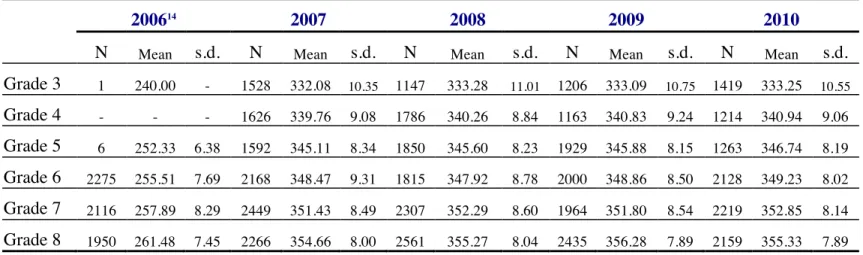
Table 4.1 The Means and Standard Deviations of Student Achievement Scores by Year and Grade – Mathematics ... 93
Table 4.2 The Means and Standard Deviations of Student Achievement Scores by Year and Grade -‐-‐ Reading ... 94
Table 4.3 Description of Student-‐level Variable: Average Gender Percentage across Grades ... 96
Table 4.4 Description of Teacher-‐level Variable: Means and Standard Deviations of Class Size ... 97
Table 4.5 Overall Descriptions of SLO Quality Scores ... 98
Table 4.6 Frequency of SLO Quality Scores by Subject, Grade, and Year ... 99
Table 4.7 Summary of Intra-‐class Correlation Coefficients by Year and Grade for Mathematics and Reading ... 101
Table 4.8 Amount of Variance Explained by Adding Student Prior Achievement into the Models ... 103
Table 4.9 Summary of Spearman’s Correlation Coefficients (standard errors) between VAM (based on models with Student Prior Achievement Accounted for) and SLO Quality by Year and Grade for Mathematics and Reading ... 105
Table 4.10 Results of HLMs for Research Question Two: 2008-‐Grade 4 ... 108
Table 4.11 Amount of Variance Explained by Adding Student-‐level Demographics into the Models (Numbers in parentheses indicate the % of variance explained by the models with Student Prior Scores only) ... 110
Table 4.12 Summary of Spearman’s Correlation Coefficients (standard errors) between VAM (based on Models with Student Prior Achievement and Student-‐level Covariates Adjusted for) and SLO Quality by Year and Grade for Mathematics and Reading ... 111
Table 4.13 Results of HLMs for Research Question Three: Estimated Regression
Coefficients for Class-‐size ... 113
Table 4.14 Amount of Variance Explained by Final Models ... 115
Table 4.15 Example of Variance Decompositions in Different Models (Mathematics-‐ 2008-‐Grade-‐4) ... 115
Table 4.16 Summary of Spearman’s Correlation Coefficients (standard error) between VAM (based on Models with Student Prior Achievement, Student and Teacher Level Covariates Adjusted for) and SLO Quality by Year and Grade for
Mathematics and Reading ... 117
Table 4.17 Comparisons of Quartile Group Rankings in Three Models Estimating the Correlations between VAM and SLO Quality ... 120
Table 4.18 Overall WLS Results for Research Question Four ... 124
Table 4.19 Comparisons of Transformed Correlation Coefficients among Different Years Holding Grade Constant ... 126
Table 4.20 Comparisons of Transformed Correlation Coefficients among Different Grade Levels Holding Year Constant ... 126
Table 4.21 Comparisons of Transformed Correlation Coefficients between School Types Holding Year and Grade Constant ... 127
Table 4.22 Logistic Regression Results for Research Question Five ... 129
LIST OF FIGURES
Figure 4.1 SLOs Attainment by Year and Grade for Mathematics ... 100
Figure 4.2 SLOs Attainment by Year and Grade for Reading ... 100
Figure 4. 3 Comparisons of the Correlations from Models 1 through 3 -‐ Mathematics ... 118
Figure 4. 4 Comparisons of the Correlations from Models 1 through 3 -‐ Reading ... 119
Figure 4.5 Correlation Distributions by Grade and Year for Mathematics ... 121
Figure 4.6 Correlation Distributions by Grade and Year for Reading ... 122
Figure 4.7 Comparisons of Correlation Coefficients and Their Fisher-‐Z Transformations for Mathematics ... 123
Figure 4.8 Comparisons of Correlation Coefficients and Their Fisher-‐Z Transformations for Reading ... 124
CHAPTER 1. INTRODUCTION
1.1 Description of the Problem
Student learning is fundamental to the mission of education and, therefore, has been deemed to be the focus of most educational institutions. A variety of factors contribute to student learning, and generally those associated with schools and
classrooms are believed to be essential. A number of recent studies argue that access to an effective teacher is the single most important school-related factor responsible for incremental student learning (Thum, 2003; Rivkin, Hanushek, & Kain, 2005; Haycock, 1998; Jordan, Mendro, & Weerasinghe, 1997; Sanders & Horn, 1998, 1995). During the last decade, holding schools and teachers accountable for student learning outcomes has gained unprecedented prevalence in K-12 education1.
Teachers demonstrate differential effectiveness in fostering student progress. Teaching quality matters with respect to student learning outcomes as measured by test performance. Jordan, Mendro, and Weerasinghe (1997) investigated teacher ranking estimates from the Dallas Classroom Effectiveness Indices model for three years to identify effective and ineffective teachers, and pointed out that a few years with effective teachers can put even the most disadvantaged students on the path to college. On the other hand, a few years with ineffective teachers can deal students an academic blow
1 As of January 2012, most of the 46 states including the Districts of Columbia that have adopted the
Common Core State Standards (CCSS) are changing their teacher preparation and evaluation systems (Center of Education Policy, 2012).
from which they may never recover. Clearly, such substantial differences in teacher effectiveness have meaningful consequences for student performance and growth. Some investigators have asserted that a student who is taught by an ineffective teacher for 2 years in a row can never recover the learning lost during those years (Sanders, 2000; Webster, Mendro, Orsak, and Weerasinghe, 1996, 1998).
Since teaching quality plays such an important role in student learning and
academic progress, identifying effective and ineffective teachers is of critical importance. A successful teacher evaluation system, therefore, is called for to perform a key duty in advancing student learning: Teacher evaluations, appropriately designed and
implemented, should identify and evaluate the instructional strategies, professional behaviors, and delivery of content knowledge that affect student learning (Danielson & McGreal, 2000; Shinkfield & Stufflebeam, 1995).
However, the reality of teacher evaluation in public school districts nationwide has been disappointing. Traditional classroom observations, as nearly the only source of evidence regarding measuring teacher effectiveness, have failed to distinguish great teaching from good, good from fair, and fair from poor. A teacher’s effectiveness—the most important factor for schools in improving student achievement—is not measured, recorded, or used to inform decision-making in any meaningful way (Weisberg et al, 2009).
Moreover, the extensive research on teacher quality in recent years has concluded that there are large and significant differences among teachers with respect to their capacity to promote student achievement. However, these differences are not well captured by common measures of teacher qualifications (Schacter & Thum, 2003;
Hanushek, 2003). The typical methods and practices of teacher evaluation currently employed are based on simplistic criteria with marginal relevance to what teachers need to perform to enhance student learning (Danielson & McGreal, 2000), and therefore are characterized as inaccurate, unsupportive (Peterson, 1995), superficial (Stiggens & Duke, 1988), and of low reliability and validity (Darling-Hammond, Wise, and Pease, 1983).
Discussions regarding the characteristics and indicators of teacher quality that can be utilized to measure teacher effectiveness are ongoing. Only recently have some states and districts begun to develop more useful systems for evaluating teacher performance and providing teachers with the feedback they need to improve their practice (Bill and Melinda Gates Foundation, 2012). With the increasing amount of attention directed toward teacher evaluation, there have been a number of studies investigating a range of teacher-relevant factors that may influence student learning. For instance, Darling-Hammond (2000) indicated that the variables presumed to be indicative of teachers’ competence which have been examined for their relationship to student learning include measures of academic ability, years of education, years of teaching experience, measures of subject matter and teaching knowledge, certification status, and teaching behaviors in the classroom. This assertion was re-emphasized in her latest book (Darling-Hammond, 2010).
In recent years, with the increasing availability of longitudinal student
achievement data, researchers and policy makers have started to explore more scientific ways to quantify the heterogeneity in students’ test score trajectories and how to use this rich data to measure a key aspect of teacher effectiveness. Value-added models, the complex statistical models that attempt to attribute some fraction of student progress to
their teachers based on those trajectories (National Research Council, 2011), are intensively studied and widely employed to examine the effectiveness of teachers in facilitating students’ progress in their academic achievement. Currently, many states and districts have begun to adopt the VAM approach for their teacher evaluation, for
example, nearly one fourth of the 65 member districts of the Council of Great City Schools have implemented some form of value-added based school or teacher rewards program (Hill, Kapitula & Umland, 2011)
Value-added models (VAMs) hold out the promise of isolating the effects of teachers or schools from that of other factors such as family background, poverty or school leadership. Employing a collection of complex statistical techniques to analyze multiple years of students’ test score data, VAMs attempt to quantify the extent to which changes in student performance can be attributed to the effect of students attending the class of a particular teacher or school rather than another. The estimates of relative effectiveness derived from a value-added analysis can be compared to one another or to that of the typical teacher or school. The VAM approach for estimating teacher
effectiveness is an increasingly popular, as well as a controversial education reform policy, and has garnered a great deal of attention among both policymakers and researchers (Kane, Rockoff & Staiger, 2008; Jacob & Lefgren, 2008; Goldhaber & Hansen, 2010). When compared to performance assessment in other fields or to evaluations of teachers based on other sources of information, VAM looks respectable and can still provide the best signal for measuring the effectiveness of teachers in improving student learning outcomes (Glazerman et al, 2010).
However, the inferences one can make from the VAM estimates still raise
concerns as researchers hope to link student learning outcomes with teacher effectiveness in this era of accountability. As Braun (2005) noted, causal attributions cannot be
confidently made about the quality of teaching due to the lack of randomization – no matter how complex the statistical model is and how sophisticated the method of analysis is. There could be many other unmeasured attributes associated with the results from VAM models, which, when used in high-stakes situations, can bring unintended negative consequences. Therefore, the results from student learning outcomes should be properly used so as “to inform decision making and improve teaching and learning”, rather than only with high-stakes accountability purposes (Kuh & Ikenberry, 2009, p.4).
As teacher evaluation attracts more and more attention, other approaches to measuring teacher effectiveness are emerging. Another popular approach to measuring teacher performance is called Student Learning Objectives (SLOs), which started to be tied to high-stakes decisions in Denver in 1999, when a performance-pay system was piloted in the Denver Public Schools that required teachers of both tested and non-tested grades and subjects to set “student growth objectives” (CTAC, 2001). Currently SLOs have been broadly known for their use in measuring teacher effectiveness for the non-tested subjects and grades, and many states and school districts take SLOs as the solution of choice to the challenge of integrating teachers of non-tested grades and subjects into the overall evaluation and compensation systems that require measuring student growth (Reform Support Network, 2012). The Race to the Top (RTTT) Technical Assistance (TA) Network defines SLOs as: “A participatory method of setting measurable goals, or objectives, based on the specific assignment or class, such as the students taught, the
subject matter taught, the baseline performance of the students, and the measurable gain in student performance during the course of instruction (RTT Technical Assistance, 2010)”.
With SLOs, teachers establish learning objectives for individual students, the class as a whole or particular target student groups based on their knowledge of the students and their instructional plans. Once the learning objectives are created for students, the extent to which these objectives are achieved during a particular learning period can be evaluated. SLOs can be implemented with a variety of assessment formats, such as nationwide standardized tests, state or district assessments, and even teacher-developed measures2. A key advantage of the SLO approach over traditional test-centered approaches to accountability is the active involvement of a teacher. SLOs are designed to reflect and incentivize good teaching practices such as setting clear learning targets, differentiating instruction for students, monitoring students’ progress toward these targets, and evaluating the extent to which students have met the targets (Marion et al, 2012). Therefore, SLOs should have instructional value as well as assessment value.
Professionals have different strengths in their own disciplines. In the field of teaching, some teachers have extraordinary success in fostering student success on assessments, while others are more skillful at daily classroom teaching practice, creating more vigorous and dynamic academic environment for students, and cultivating their interests. Hence, the extent to which different approaches to measuring teacher
2 For example, New York State Department of Education requires K-‐2 teachers must use one of the
assessment options for SLOs: State approved 3rd party assessment; District, regional, or BOCES-‐developed assessment; School-‐or BOCES-‐wide, group, or team results based on state assessments; Teachers at 3rd grade must use 3rd grade state assessment (ELA and math), and teachers of 4-‐8 grade must use State
effectiveness correspond to one other is an important question. Answering this question can provide insights to better understand teacher effectiveness and help improve the design and implementation of teacher evaluation in the future.
A number of studies have investigated a range of teacher-linked factors that may influence student learning. Variables presumed to be indicative of teachers’ competence are generally regarded as indicators of the effectiveness of teachers, which may comprise assorted aspects of teachers’ characteristics. Two types of indicators of teacher
effectiveness are investigated in this study: (i) VAM estimates, an indicator of teacher effectiveness based on student achievement; and (ii) SLO quality, an indicator of teacher effectiveness based on one aspect of classroom practice.
A common approach to SLOs is to treat them as the goals that students are expected to attain within a certain learning period of time, and the extent to which they are achieved can be used as an indicator of teacher effectiveness. Denver, Colorado and Charlotte-Mecklenburg, North Carolina are at the forefront of this approach (Buckley & Marion, 2011). This study focuses on one aspect of SLOs and employ a different
approach to understanding and analyzing SLOs; that is, teachers have been required to develop the SLOs for their students, either individually or focusing on a group of students or the class as a whole. The quality of these objectives for student learning provided by the teachers have been evaluated and accordingly is considered as an indicator of the effectiveness of these teachers, reflecting an aspect of the attribute of their classroom practice. In other words, SLOs are treated as the written objectives created by teachers, and the quality of these written SLOs is used as a proxy for teacher quality in this study.
Employing a dataset from a large school district in North Carolina, this
dissertation examines the extent to which teachers’ SLOs quality scores are related to the estimated teacher success in contributing to student achievement, as indicated by value-added model estimates. Analyses in this study involve generating a series of multi-level value-added models, structured by subject and grade level, to obtain the value-added estimates of teacher effectiveness based on their students’ test score trajectories with contextual characteristics accounted for. As a practice-based indicator of teacher
effectiveness, the SLOs quality scores are correlated with the VAM estimates in further analyses. In addition, an indicator of whether the SLOs have been achieved is also examined in conjunction with SLOs quality scores. The relationship between test-based value-added estimates of teacher effectiveness and practice-based estimates of teacher effectiveness are subsequently compared and contrasted across different models and settings. Results are also be aggregated by elementary and middle school levels.
1.2 Purpose and Research Questions
To help bring clarity, this study explores the problems and uncertainties in measuring teacher effectiveness by focusing on value-added methodology issues and on the quality of teacher developed SLOs. Here, the purpose of value-added modeling is to estimate relative teacher effectiveness with respect to their students’ progress on test-based outcomes, while taking into account students’ prior achievement and other associated factors (e.g. background characteristics) – both at the student and the teacher level. On the other hand, the quality of teacher-developed SLOs is employed to provide the estimates of teachers’ effectiveness based on their classroom practices.
The framework for the analyses proposed for this study comprises six research questions concerning the relationships between different approaches to measuring teacher effectiveness. Although the answers to these questions are of great interest in their own right, more broadly they offer insights into improved design of accountability systems. The research questions are:
1. How do rankings based on value-added estimates of teacher effectiveness compare (by grade and subject) to the rankings derived from the practice-based estimates of teacher effectiveness practice-based on SLOs quality scores? 2. To what extent do the student’s contextual characteristics impact these
relationships?
3. To what extent are the relationships between value-added estimates of teacher effectiveness and practice-based estimates of teacher effectiveness affected by teacher-level characteristics?
4. To what extent do the relationships between value-added estimates of teacher effectiveness and practice-based estimates of teacher effectiveness vary by grade, by year, by type of school?
5. To what extent do the SLOs quality scores correspond to whether the SLOs have been achieved?
6. To what extent do teachers’ VAM estimates agree with the achievement status of the SLOs?
The first three research questions aim to identify the student and teacher characteristics that may have an impact on the relationship between the different indicators of teacher effectiveness. The findings help to ensure the credibility of
employing teacher value-added estimates as an effectiveness indicator in the response to the fourth research question, where further comparisons with the indicator of teacher effectiveness based on an aspect of classroom practice are carried out. The last two research questions concern the credibility of using SLOs as measures of teacher effectiveness. Moreover, issues associated with using student learning objectives as an indicator of teacher effectiveness in high-stakes settings, as well as the implications of using assessment-as-accountability measures for educators and policy makers are discussed.
1.3 Significance of the Study
Because of the key role teachers play in improving student academic performance and the diverse problems with most teacher evaluation systems nationwide and
internationally, there are many important issues that are yet to be addressed. For one, the impact and validity of various approaches to measuring teacher effectiveness need be further investigated. In fact, as emphasized by the NRC report (2011) and the Measures of Effective Teaching (MET) study (Bill & Melinda Gates Foundation, 2012), validation of value-added estimates of teacher effectiveness remains an important area of research. The proposed study seeks to examine the relationship between different approaches to estimating teacher effectiveness, which could produce one type of validity evidence3 for using the value-added approach, as well as SLOs approach, to measuring teacher
effectiveness. Ideally, this can help provide criterion-related validity evidence for the use of the performance evaluation scores as the basis for a performance-based pay system or
3 Strictly speaking this is not a validity study of VAM or SLO quality scores as we couldn’t suggest whether
other decisions with consequences for teachers (Milanowski, 2004). Alternately, the findings could indicate significant problems with VAM and SLOs that policy makers should address before continuing with these assessment approaches.
Secondly, this study also helps examine other approaches to teacher evaluation, such as the validity of using SLOs for measuring teacher effectiveness. Through
investigating the extent to which the SLOs quality scores may correspond to the status of whether the SLOs can be achieved by students, the analyses reveals the association between teachers’ ability to develop the written SLOs and their efficacy in helping students achieve those SLOs. As such, this dissertation provides evidence for employing the SLOs quality as indicators of teacher effectiveness.
Furthermore, results in this study also provides evidence as to the extent to which different approaches to value-added models in estimating teacher effectiveness
correspond to one other, as well as how they are correlated to teacher classroom practice and performance. These findings also are likely to be useful to policy makers and can contribute to the growing research and debates on the reliability and validity of different kinds of VAM.
There is an urgent call for evidence regarding the validity of the different approaches to measuring teacher effectiveness. This research is highly relevant and topical in many nations that are working on improving teacher performance and appraisal. This research enables researchers and policy makers to better understand the relationship between teachers’ proficiency in one aspect of classroom practice and their effectiveness in fostering student academic achievement. These findings can, in turn,
inform the design and implementation of sound teacher evaluation systems as well as correct errors that may exist in current performance appraisals.
1.4 Outline of the Dissertation
After an introduction to the purpose and key research questions of the dissertation in this first chapter, chapter 2 reviews literature in the field of teacher evaluation
employing three perspectives: (1) the importance and impact of teacher quality; (2) the traditional approaches and current efforts in the field of teacher evaluation; and (3) indicators of teacher effectiveness.
Chapter 3 introduces the proposed methods of analysis for this study. Data used in this study are described and the methods that are employed to construct the variables are presented. Specifically, this chapter describes some widely used approaches to the value-added modeling. The statistical models for each research question are presented in detail. Finally, this chapter discusses the integrity of the research design and the
limitations of the results based on the research design and data collected.
In chapter 4, results from the empirical data analyses are provided. Beginning with a detailed description of the analysis sample, the chapter then delineates the results of the multi-level value-added statistical models. The preliminary results include those from the stages of variable construction, descriptive analyses of distributions and patterns on the SLOs quality variable, as well as other variables of interest. Results from each value-added model along with the corresponding correlational analyses with SLOs quality, are then presented. Further results from the subsequent Weighted Least Squares analyses, logistic regression analyses, as well as the point-biserial analyses are discussed.
Finally, chapter 5 reviews findings and their implications. The dissertation concludes with a discussion of limitations of the study and possible new research directions in the field.
CHAPTER 2. LITERATURE REVIEW
This chapter provides an overview of current research in measuring teacher effectiveness and demonstrates how this study relates to the broader issues in this field. The goal of this review of the literature is to demonstrate the significance of this dissertation by examining key aspects of the study. In this regard, this chapter is organized into three major sections.
First, a number of studies are discussed to document the importance of teacher quality. The differential impact of high- and low-quality teaching, as well as other factors that influence teaching and learning, are presented. The second section emphasizes the content of teacher evaluations, with a discussion of the traditional and current approaches to measuring teacher effectiveness. The third section focuses on a set of widely available indicators of teacher effectiveness based on student learning outcomes and teachers’ classroom practices, respectively. In particular, value-added analysis is highlighted as a method of measuring teacher effectiveness using student achievement growth, and Student Learning Objectives (SLOs) are introduced as a practice-based measure of teacher effectiveness.
2.1 Importance and Impact of Teacher Quality
2.1.1 Importance of Teacher Quality
Teacher quality has been seen as the crucial driving force for improving student achievement and thus promoting a nation’s economic competitiveness in the global
society.The National Academies (2007) addressed the importance of teacher quality in the study of Teacher Preparation Programs: “Teacher quality is widely recognized by policymakers, practitioners, and researchers alike to be the most powerful school-related influence on a child’s academic performance.” As student learning is a collective
responsibility and is influenced by a variety of factors such as school resources and environment, peer interaction and classroom climate, teachers’ contributions to student learning outcomes, when being evaluated, need to be isolated from those of other factors.
Although the importance and impact of teacher quality on student achievement is nearly universally acknowledged, the construct itself has been defined and measured in many ways since the criteria for defining teacher quality vary from person to person, from one community to another, and from one era to the next (National Research Council, 2001). Teacher quality is a broad construct that involves various aspects of teachers’ characteristics, such as knowledge, skills, abilities, and dispositions. In addition to the contributions to student academic achievement and socio-emotional development, teacher quality may also be signaled by its ability to create a positive classroom
environment that fosters and stimulates student learning. Besides, teacher quality has largely been measured by more distal characteristics such as teaching experience and formal qualifications, professional attitudes, skills in mentoring new teachers, and constructive cooperation with other staff. Further, due to the complexity of classroom dynamics and the role of exogenous factors, researchers have developed several different approaches to document and evaluate teaching practices, which include analysis of teacher assignments and student work, student evaluation of teachers, classroom
observations and videotapes of classroom observations, as well as combinations of these methods (Paek, Braun, Trapani, Ponte & Powers, 2010).
Although each of these characteristics could indicate a particular aspect of teacher quality, it might be difficult to achieve a uniform consensus on how to define teacher quality in a more comprehensive and unified way. For different purposes, teacher quality will likely need to be defined differently. For example, when used for making an initial hiring decision, in granting tenure, rewarding excellent performance or identifying and supporting struggling teachers, key aspects of teacher quality may well differ (Goe, 2007).
When teacher effects are compared to other factors, a number of important
assumptions have been made and need to be articulated explicitly. First, the class effect is assumed to be causal; that is, the differences in student learning outcomes among
students from different classes, if any, are completely attributed to the students being in one class rather than another, although there might be other factors involved, such as the differential levels of parental involvement and other types of external encouragement and support that may influence motivation and engagement. Second, the teacher effect is assumed to constitute the class effect; that is, teachers are entirely responsible for the differences in results among classrooms. These assumptions about teacher effect are also implicit in the present study.
Researchers have established the fact that teachers have a measurable effect on student learning and that teachers matter more than any other school-related factors with regard to student learning outcomes (National Academy of Education, 2005; Hanushek, 2011; National Research Council, 2010; Bill & Melinda Gates Foundation, 2012; RAND
Education, 2012). However, it is much more difficult to identify the specific characteristics of teachers or aspects of their pedagogy that can be linked to higher student achievement (Olson, 2003). Various approaches have been used to measure teacher quality and different conclusions regarding the variations of teacher quality are made. On the one hand, distributions of teacher quality scores based on teacher attributes and demographic characteristics tend to show very little variability. For example, studies typically found that less than 10 percent of the variation in teacher effectiveness can be attributed to readily observable credentials like degree and experience levels (e.g. Aaronson et al. 2007; Goldhaber et al. 2000). On the other hand, large variations in teacher quality are likely to be demonstrated while using student learning outcomes to measure teacher effectiveness. Studies have indicated that a variety of teacher
characteristics are associated with student learning outcomes, such as the selectivity of the teacher preparation program (Rice, 2003), the general teacher aptitude including the cognitive ability demonstrated by intelligence test scores (Rockoff, Jacob, Kane, & Staiger, 2011), the verbal skills from vocabulary or word tests (Wayne & Youngs, 2003), and the scores on certification and licensure tests (Goldhaber & Anthony, 2007;
Clotfelter, Ladd, and Vigdor, 2007).
While student achievement has been broadly used to measure teacher
effectiveness, teacher quality can also be assessed through rubrics that do not involve student test scores but are based on norms of professional practice, such as the
Danielson’s framework or the National Board Professional Teaching Standards (NBPTS) framework (Danielson, 2013; NBPTS, 2014). The extent to which the rankings of
growth remains an open question. Goldhaber and Anthony (2005) studied the relationship between the certification of teachers by NBPTS and elementary-level student
achievement, and concluded with consistent evidence that NBPTS can identify more effective teachers and that teachers with National Board Certifications are generally more effective than those who never applied to the program. A similar study from Goldhaber and Brewer (2000) also found that mathematics teachers with a regular subject
certification have a statistically significantly positive impact on student mathematics test scores than those who are not certified in their subject area.
In general, the extensive research on teacher quality in recent years has concluded that there are large and significant differences among teachers with respect to their capacity to improve student achievement that are not well captured by more commonly used measures of teacher qualifications (Schacter & Thum, 2003; Hanushek, 2003).
2.1.2 Impact of High- and Low- Quality Teaching
The concept of effectiveness is usually defined as the capability of producing a desired result, which suggests that measuring teacher effectiveness requires examining the quality of the main results of teaching – student learning. Therefore, educators and researchers need to agree on the desired outcomes of student learning and how to
measure them well. One important aspect of student learning that can be relatively easily measured is academic achievement as evaluated by test performance, though the
limitations regarding using tests to measure teacher effectiveness need be noted; that is, whether the valued learning objectives can be measured well by tests and how the
contributions of teachers should be isolated from those of other factors that influence student learning.
Apparently, differences in teacher effectiveness can have meaningful
consequences for student progress in academic achievement. However, certain ways of defining teacher effectiveness have raised serious issues and concerns. In many studies, teacher quality and effectiveness is defined and measured by the magnitude of
improvement in student test scores. In other words, differences in student learning outcomes determine, by definition, teacher effectiveness (Kuppermintz, 2003). These studies divided teachers into different “effectiveness” groups based on the rankings of their average student gains and obtained a variety of “findings” claiming that teacher effectiveness is the cause of student achievement gains. This type of reasoning is tautological, while the real interest regarding teacher effectiveness and student learning lies in the extent to which the difference in student performance can be expected from teachers at different percentiles in the effectiveness distribution. The effectiveness of teachers can be defined independent of student learning outcomes as well. For example, Weimer (2013) studied ways to define teacher effectiveness by collecting people’s opinions, and found the most important abilities agreed by teacher, students, and administrators are – “cultivate thinking skills, stimulate interest in the subject, and motivate students to learn.”
A variety of studies have demonstrated the magnitude of estimated differences in teacher effectiveness to be quite impressive. Using teacher ranking estimates computed from the student residuals of the Dallas Classroom Effectiveness Indices model, Jordan, Mendro, and Weerasinghe (1997) examined the effective and ineffective teachers in a
3-year period and pointed out that a few 3-years with effective teachers can put even the most disadvantaged students back on the pathway to college, while, conversely, a few years with ineffective teachers can deal students a major academic blow from which they may never recover. More recent studies have also replicated the findings regarding the impact of teacher effectiveness on student learning outcomes, for example, Clotfelter, Ladd & Vigdor (2007) explored the relationship between teacher quality and student achievement extensively using a dataset with 10 years of records, and concluded that a teacher’s characteristics as well as credentials, including experience, test scores and regular licensure, all exhibit positive and large effects on student achievement. The effects are larger for mathematics than for reading, and can be comparable to those of changes in class size and to the effects of socio-economic characteristics of students, such as those measured by the educational levels of their parents. It is worth noting that part of the results of this study was disputed (Goldhaber & Anthony, 2007), which found the effects of the National Board for Professional Teacher Standards (NBPTS) certification process was not related to teacher effectiveness.
Rockoff (2004) used panel data to estimate teacher fixed effects from linear regressions of test scores while controlling for fixed student characteristics and classroom specific variables, and found consistently large and statistically significant differences among teachers. A one standard deviation increase in teacher quality, comprised of observable and unobservable characteristics such as teacher experience and highest education levels, is associated with the increase of student test scores by approximately .20 standard deviations in reading and .24 standard deviations in mathematics on
nationally standardized distributions of achievement. In particular, teaching experience is found to significantly raise student test scores in reading subject area.
Convincing evidence that teacher quality is strongly associated with student achievement has been documented by several other studies as well. Nye,
Konstantopoulos, and Hedges (2004) applied a hierarchical linear model to sort out the between-class effects on student achievement gains as well as on achievement status and concluded that the teacher effects4, consistent with findings of other studies, are
substantial and are larger for mathematics than for reading. The estimated between-teacher variance components for reading is about half the size for mathematics.
Hanushek et al (2005) studied the matched data of students in Grades 3–8 and their classroom teachers in a single Texas district, and produced the lower bound estimates of the variance in teacher quality since the study was entirely based on within-school heterogeneity, and there was no control for within-school level factors such as the
effectiveness of school principals or the composition of the students. The authors found a one standard deviation in teacher quality, comprised of background characteristics such as experience and degree, is associated with a 0.22 to 0.32 standard deviation difference in achievement gains. Results from the study also suggested that the effects of a costly ten student reduction in class size are smaller than the benefit of moving one standard deviation up the teacher quality distribution.
4 The study (Konstantopoulos, and Hedges. 2004) mainly documented the between-‐classroom variations,
2.1.3 Compared to Other Factors Teacher Quality Matters the Most
A great deal of research has explored nearly all factors that may have a statistical association with student learning, including individual student factors, classroom effects, and school level characteristics. Many researchers have concurred that teacher
effectiveness is still the most critical school-related factor in terms of the influence on student learning and can be regarded a powerful predictor of student performance. For example, Rockoff (2004), Rivkin et al (2005), Aaronson et al (2007) all contended that the single most crucial factor affecting student achievement is from teachers, and the effects of teachers on student achievement are both additive and cumulative. Further, they believe that lower achieving students are the most likely to benefit from the increases in teacher effectiveness. Likewise, Hanushek (1992) analyzed the relationship between teacher effects and student achievement in his study and claimed that the influence of teacher quality on their students’ annual achievement can be more than one grade-level equivalent in test performance.
Rivkin et al (2001) used fixed effects and a value-added framework for variance decomposition in their analysis of the extraordinarily rich data set for student
achievement in Texas, with the very large samples of over 3000 schools and a half million students. They believed that school quality matters for student achievement, and variations among teachers within schools dominate school quality differences. In
contrast, class size, teacher education, and teacher experience appear to play only a small role. This portion of the findings conflicts with the study of Clotfelter, Ladd & Vigdor (2007), which concluded that a teacher’s characteristics as well as credentials, including
experience, test scores and regular licensure, all exhibit positive and large effects on student achievement.
Recent research has shown that teacher and classroom effects on student learning carry the largest weight in the education system (Goldhaber, 2007). The comparative analysis of teacher effects with other factors on student learning is implemented in the study by Sanders (2000), where teacher effects are shown to have greater statistical association with student learning than class size, spending differences and several other factors. In the analysis of teacher preparation and student achievement across states, Darling-Hammond (2000) argues that teacher quality is more strongly related to student achievement than other factors such as class size, overall spending on education, and teacher salaries.
In her later book, Darling-Hammond (2010) re-emphasized this assertion. After reviewing a number of studies, she concluded that the differences in student achievement associated with teacher qualifications (characterized by certification, preparation, license test scores, degree, and teaching experience) are larger than the average differences attributed to race or socioeconomic status (i.e. difference between a White student with college-educated parents and a Black student with high school-educated parents). She specifically stated that improving teacher quality can reduce the achievement gap
between the schools serving the poorest and most affluent student bodies by 25%. In fact, students’ achievement was hurt most by having an inexperienced teacher on a temporary license.
In comparing teacher and school effects, a few studies find that the variations in student achievement among classrooms within the same schools are actually larger than the variation among schools (Hanushek, Kain, & Rivkin, 1998; Meyer, 2001; Webster et al., 1996). Webster, Mendro, Orsak, and Weerasinghe (1996), in another study of school and teacher effects in the Dallas Public Schools, concluded that a school's effect could essentially represent an aggregation of the individual effects of its teachers.
To isolate the contributions of teachers to student learning outcomes from those of other factors, various statistical techniques have been employed to evaluate the variances from different levels of a model. Some studies found that teacher level variance far exceeds grade-level, school-level and district-level variance (Marzano, 2003; Rivkin et al., 2001; Thum, 2003; Sanders & Horn, 1995). Meyer (2001) also asserted from a study of the Denver Public Schools that the teacher-related variables account for more than twice the total variation in student test score changes than do the school-related variables.
In summary, recent research has concluded that teachers are a critical determinant of student achievement and have substantial impact on student learning. In a study of the Cincinnati school district, Milanowski (2004) pointed out that the teacher evaluation scores from a rigorous teacher evaluation system can be positively related to student achievement gains and provide criterion-related validity evidence for the use of the performance evaluation scores as the basis for a performance-based pay system or other decisions with consequences for teachers. Darling-Hammond (2007), while discussing various reform efforts to improve schools and the outcomes of education, indicated that an important lesson is that teachers are the fulcrum that determines whether any school initiative will result in success or failure. She contended that nearly every aspect of
school reform that is aimed to improve student learning, after all, depends on the efforts of highly-skilled teachers to implement new strategies related to improved curricula or assessment. These accumulated findings indicate the appropriateness and indeed, the imperative, of continued research into the best ways of appraising and improving teacher quality.
2.2 Teacher Evaluation: Traditional Approaches and Current Efforts
2.2.1 Traditional Approaches to Teacher Evaluation
It has been broadly agreed that a teacher evaluation system, when used appropriately, should identify and measure the instructional strategies, professional behaviors, and delivery of content knowledge that affect student learning (Danielson & McGreal, 2000). In addition, well-designed teacher evaluation programs could have a direct and lasting effect on individual teacher performance given that teachers, through more conversations with colleagues and administrators about effective practices, could gain information and feedback from the evaluation program and thereof become generally more self-reflective. Taylor & Tyler (2012) studied a sample of midcareer elementary and middle school teachers in the Cincinnati Public Schools who were evaluated based on a yearlong classroom observation program. The authors found that teachers are more effective at raising student achievement during the school year when they are being evaluated than they were previously, and even more effective in the years after evaluation.
(TAP) based on NBPTS and INTASC, as well as standards based assessment rubrics developed in Connecticut (Bill & Melinda Gates Foundation, 2010; Rothstein, 2011), found that the indicators of good teaching are practices associated with desired student outcomes. TAP teachers said this system, along with the intensive professional
development offered, is substantially responsible for improving their practice and for student achievement gains in many TAP schools (Solmon, White, Cohen, & Woo, 2007).
Darling-Hammond et al (2012) reviewed different approaches to evaluating teachers and concluded that standards-based evaluation processes, like the National Board Certification and Performance Assessments for beginning teacher licensing5 as well as district and school-level instruments based on professional teaching standards, have been found to be predictive of student learning gains and productive for teacher learning. Ideally, teacher evaluation can support accurate information about teachers, helpful feedback, well-grounded personnel decisions and be a useful part of a constantly improving teaching and learning system.
However, the reality of teacher evaluation in public school districts nationwide is generally disappointing. Traditional classroom observations, as nearly the only source of evidence regarding measuring teacher effectiveness, have failed to distinguish the teacher performance such as great teaching from good, good from fair, and fair from poor. A teacher’s effectiveness—the most important factor for schools in improving student achievement—has not been measured, recorded, or used to inform decision-making in any meaningful way (Weisberg et al, 2009).
5 American Association of Colleges for Teacher Education (AACTE) presented a new preservice teacher
performance assessment, edTPA (2013); however, no study of the relationship between this type of assessment and others is not yet available.
In most public school districts, individual teachers receive little feedback on the work they do and teacher evaluation becomes an obligatory but perfunctory exercise. In too many schools principals go through the motions of visiting classrooms with a checklist in hand. In the end, virtually all teachers receive the same “satisfactory” rating (Bill and Melinda Gates Foundation, 2010). According to the recent extensively quoted “The widget effect” report from the New Teacher Project which surveyed over 15,000 teachers in 12 large school districts and 4 states, teacher evaluation systems are
unsuccessful in differentiating performance among teachers. Most teacher evaluations are based on only two or fewer classroom observations, each 60 minutes or less, and they are even conducted by administrators without any extensive training. Evidently, such an evaluation system cannot reflect much variation among the teachers. Therefore, not surprisingly, a majority of teachers were highly evaluated. For example, in Denver schools that did not make adequate yearly progress (AYP), more than 98 percent of tenured teachers received the highest rating—“satisfactory.” Peterson (2000) concluded from his review of the literature that the present teacher evaluation practices neither improve teachers nor accurately represent what happens in the classroom.
2.2.1.1 Problems and Consequences of Traditional Approaches
Every classroom should have a well-educated, knowledgeable, skilled and compassionate teacher. For that to happen, school systems should conduct teacher evaluation in a fair and systematic way so that effective teachers can be retained, those with remediable shortcomings be further guided and trained, and ineffective teachers who do not improve should be removed. However, in practice, traditional evaluation programs are often seen as perfunctory, unreliable, and insufficient to provide incentives to
improve teacher performance, while adding administrative burdens (Halverson, Kelley & Kimball, 2004). A recent study found that under current evaluation systems, American public schools generally fall short in efforts to improve the performance of less effective teachers, and failing that, of removing them (Baker et al, 2010). Chait (2010) explored the barriers to remove chronically ineffective teachers, and concluded the reasons why teacher dismissal is rarely pursued: the weak teacher evaluation practices or systems, the time and cost of dismissal cases, the difficulty of winning cases, a school culture that is uncomfortable differentiating among teachers, and the difficulty of hiring replacements in some districts.
In traditional teacher evaluation, educators relied on the observations and
judgment of teacher performance in classroom; these methods are generally deemed to be of low reliability and validity (Darling-Hammond, 2008; Danielson & McGreal, 2000). Medley and Coker (1987) reviewed studies from the 1950s to 1970s and reckoned the relationship between a principal’s ratings of teacher performance and student
achievement as being generally weak. Their own study presumes the correlation between principal performance ratings and teacher effectiveness, which is estimated from
students’ pretest and posttest scores obtained at the beginning and the end of the same school year, to be quite low, in the range of 0.10 to 0.23.
In particular, many researchers believe that the traditional methods and practices of teacher evaluation are based on simplistic criteria with minimal relevance to the pedagogical practices that enhance student learning (Danielson & McGreal, 2000). They have been characterized, therefore, as inaccurate, unsupportive (Peterson, 1995), and superficial (Stiggens & Duke, 1988). Among other criticisms, teacher evaluation systems
have been discredited for lack of teacher buy-in and minimal district or school level commitment. Scholars contended that they have been based on criteria predicated upon narrow conceptions of teaching, inadequate feedback, and perceived subjectivity (Glazerman et al., 2011; Strong & Tucker, 1999; Johnson, 1997).
Teacher evaluation has frequently been used to weed out the poorest performing teachers rather than to hold all teachers accountable or to improve implementing teacher evaluation systems performance of all teachers (Darling-Hammond et al., 2009). Because of these constraints, teacher evaluation has had a limited impact on teacher performance and development (Peterson, 1995; Darling-Hammond, Wise & Pease, 1983).
One other common criticism of the current teacher accountability systems is that teacher seniority and credentials are often considered to be independent as well as
important factors for teacher evaluation and compensation. Recent research suggests that over the first several years of practice teacher effectiveness does improve; however, it tends to flatten out after seven to ten years. Further, with the exception of degrees in mathematics or the sciences, teachers’ additional educational credentials appear to be only weakly related to their students’ test performance (Goldhaber, 2008).
For a long time, states and school districts have attempted to structure teacher evaluation practices to promote teacher accountability and improvement in practice or both (Peterson, 1982). One purpose of educational accountability could be not only to hold teachers responsible for student learning outcomes but also to contribute to the improvement of practice; however, there are often tensions and even direct conflicts between the two purposes of improvement and accountability. These problems could
probably be mitigated by collaborative involvement in data collection and analysis, collective responsibility for improvement, and a consensus on the accurate, meaningful, fair, broad and balanced indicators and metrics (Hargreaves and Braun, 2013).
However, traditional evaluation systems and repeated reforms appear to have done little to enhance either accountability or practice (Glazerman et al., 2011; Peterson, 1995; Joint Committee on Standards for Educational Evaluation, 1988). Principals typically have too little time and training to get prepared for adequately completing the job of assessing and supporting teachers. In many school districts nearly all teachers are judged to perform satisfactorily. However, a number of statistical analyses of large datasets confirm the long-held intuition of most teachers, students, and parents: teachers do vary substantially in their ability to promote student achievement growth. The
ubiquity of “satisfactory”6 ratings stands in contrast to a rapidly growing body of research that reveals differences in teachers’ effectiveness at raising student achievement (Kane et al, 2011).
One of the other difficulties in establishing a good teacher evaluation system is related to the difficulty in maintaining objectivity and impartiality. Traditionally, evaluations of teachers’ performance have been conducted by principals or supervisors, peers, students, and at times, self-ratings performed by the teachers themselves. The concern with many of these practices is that they are clearly subjective and vulnerable to the quirks and frailties of the raters, or what Glass and Martinez call the “politics of teacher evaluation,” not to mention the professional incapacities of the raters (Alicias, 2005).