BIM AND KNOWLEDGE BASED RISK MANAGEMENT
SYSTEM
Thesis submitted in accordance with the requirements of the University of Liverpool for the degree of
Doctor of Philosophy by
Yang Zou
School of Engineering University of Liverpool September 2017DECLARATION
This work has not been submitted in substance for any other degree or award at this or any other university or place of learning, nor is being submitted concurrently in candidature for any degree or other award. This thesis is being submitted in partial fulfilment of the requirements for the degree of PhD. This thesis is the result of my own independent work/investigation, except where otherwise stated. Other sources are acknowledged by explicit references. The views expressed are my own. I hereby give consent for my thesis, if accepted, to be available for photocopying and for inter-library loan, and for the title and summary to be made available to outside organisations.
Signed:
Yang Zou (Candidate) 6 September 2017
ABSTRACT
The use of Building Information Modelling (BIM) for construction project risk management has become a growing research trend. However, it was observed that BIM-based risk management has not been widely used in practice and two important gaps leading to this problem are: 1) very few theories exist that can explain how BIM can be aligned with traditional techniques and integrated into existing processes for project risk management; and 2) current BIM solutions have very limited support on risk communication and information management during the project development process.
To overcome these limitations, this research proposes a new approach that two traditional risk management techniques, Risk Breakdown Structure (RBS) and Case-based Reasoning (CBR), can be integrated into BIM-Case-based platforms and an active linkage between the risk information and BIM can be established to support the project lifecycle. The core motivations behind the proposed solution are: 1) a tailored RBS could be used as a knowledge-based approach to classify, store and manage the information of a risk database in a proper structure and risk information in RBS could be linked to BIM for review, visualisation and communication; and 2) knowledge and experience stored in past risk reports could contribute to avoiding similar risks in new situations and the most relevant cases can be linked to BIM to support decision making during the project lifecycle. The scope of this research is limited to bridge projects; however, the basic methods and principles could be also applied to other types of projects.
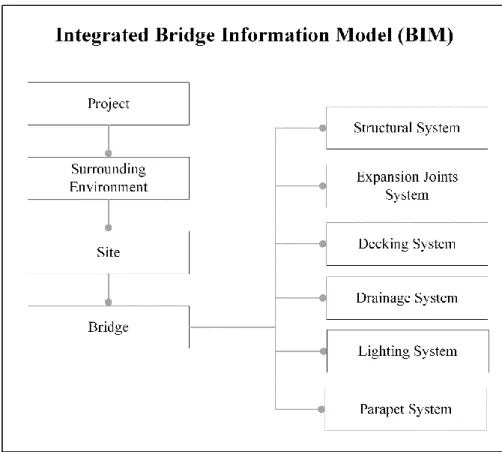
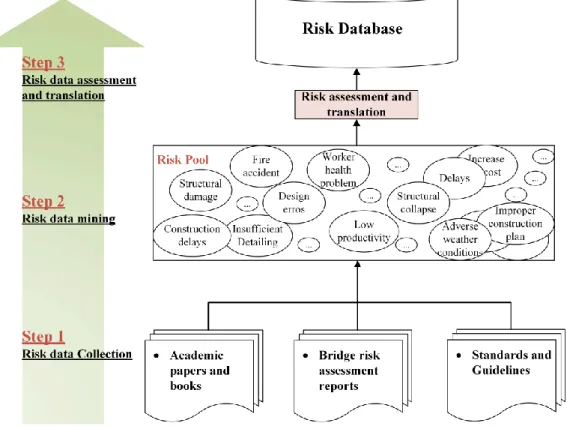
This research is in three phases. In the first stage, this research analysed the conceptual separation of BIM and the linkage rules between different types of risk and BIM. Specifically, an integrated bridge information model was divided into four Level of Contents (LOCs) and six technical systems based on the analysis of the Industry Foundation Classes (IFC) specification, a critical review of previous studies and the author’s project experience. Then a knowledge-based risk database was developed through an extensive collection of risk data, a process of data mining, and further assessment and translation of the data. Built on the risk database, a tailored RBS was developed to categorise and manage this risk information and a set of linkage rules
between the tailored RBS and the four LOCs and six technical systems of BIM was established. Secondly, to further implement the linkage rules, a novel method to link BIM, RBS, and Work Breakdown Structure (WBS) to be a risk management system was developed. A prototype system was created based on Navisworks and the Microsoft SQL Server to support the implementation of the proposed approach. The system allows not only the storage of risk information in a central database but also to link the related risk information in the BIM model for review, visualisation and simulation. Thirdly, to facilitate the use of previous knowledge and experience for BIM-based risk management, the research proposed an approach of combining the use of two Natural Language Processing (NLP) techniques, i.e. Vector Space Model (VSM) and semantic query expansion, and outlined a new framework for the risk case retrieval system. A prototype was developed using the Python programming language to support the implementation of the proposed method. Preliminary testing results show that the proposed system is capable of retrieving relevant cases automatically and to return, for example, the top 10 similar cases.
The main contribution of this research is the approach of integrating RBS and CBR into BIM through active linkages. The practical significance of this research is that the proposed approach enables the development of BIM-based risk management software to improve the risk identification, analysis, and information management during the project development process. This research provides evidence that traditional techniques can be aligned with BIM for risk management. One significant advantage of the proposed method is to combine the benefits of both traditional techniques and BIM for lifecycle project risk management and have the minimum disruption to the existing working processes.
ACKNOWLEDGEMENTS
First and most importantly, I would express my deepest love and gratitude to my parents, Wenying Huan and Kaijun Zou. It is them who have brought me into life, accompanied me to grow, and taught me how to know this world. Their positive attitudes towards study, working as well as life have influenced me profoundly and they always encourage me to do what I really want to. Although they have not been involved in any work of my PhD research, this thesis cannot be completed without their continuous support and concern.
I am grateful as well to my wife, Shancha Xu, for her full support on my dream of pursing a PhD. Making the decision to live in the UK for more than 2 years was not easy because this has totally changed her career path as well as the future plan of our family.
The key people making my PhD to become a reality are my supervisors, Professor Arto Kiviniemi and Dr Steve Jones, who accepted me as one of their PhD students, guided me to obtain research scholarships and supported my study from the first idea to its completion with their best patience. They always encourage me to keep my eyes open and give confidence on study, life and the future. I am honoured to be lucky enough that I could have worked with my supervisors during the two and a half years. I would apply the life philosophy, knowledge and research methodologies learned from my supervisors into my future work.
In the PhD process, I have received very valuable comments and suggestions from a number of industry experts, Alastair Soane, Gordon Crick, Martin Simpson, David Philp, and Benedict Wallbank. The Navisworks model was provided by James Walsh, a MEng Civil Engineering undergraduate of the University of Liverpool. In addition, I have enjoyed working with a group of lovely colleagues, Elaheh Gholami, Sujesh Sujan, Gulnaz Aksenova, Mohammad Qabshoqa, Sa’id Kori, Zuhair Nasar, Pooya Sanjari, who organised activities regularly and made me feel that I am part of their community.
The PhD research has been funded by the University of Liverpool, China Scholarship Council (CSC), and University of Liverpool Graduate Association (Hong Kong).
LIST OF PUBLICATIONS
Peer-Refereed Journal Articles
1. Zou, Y., Kiviniemi, A., and Jones, S.W. & Walsh, J., 2017. “A Framework and Prototype for Risk Information Management through Integrating Risk Breakdown Structure into 3D/4D BIM”, Journal of Construction Engineering and Management, ASCE. (submitted) (This paper is used in Chapter 6)
2. Zou, Y., Kiviniemi, A., and Jones, S.W., 2017. “Retrieving Similar Cases for Construction Project Risk Management Using Natural Language Processing
Techniques”, Automation in Construction, Elsevier, 80, pp. 66-76,
http://dx.doi.org/10.1016/j.autcon.2017.04.003. (This paper is used in Chapter 7) 3. Zou, Y., Kiviniemi, A., and Jones, S.W., 2017. “A Review of Risk Management through BIM and BIM-related Technologies”, Safety Science, Elsevier, 97, pp. 88-98, http://dx.doi.org/10.1016/j.ssci.2015.12.027. (This paper is used in Chapter 2)
4. Zou, Y., Kiviniemi, A., and Jones, S.W., 2016. “Developing a Tailored RBS Linking to BIM for Risk Management of Bridge Projects”, Engineering, Construction and Architectural Management (ECAM), Emerald, 23(6), pp. 727-750, http://dx.doi.org/10.1108/ECAM-01-2016-0009. (This paper is used in Chapter 5)
Peer-Refereed International Conference Papers
1. Zou, Y., Kiviniemi, A., and Jones, S.W., 2017. “A conceptual model of collaborative risk management system”, in Proceedings of 5th International Workshop of When Social Science Meets BIM and Lean in Aalborg, Denmark, 25-27 January 2017.
2. Zou, Y., Jones, S.W., and Kiviniemi, A., 2015. “BIM and Knowledge Based Risk Management System: A Conceptual Model”, in Proceedings of CITA BIM Gathering 2015 International Conference in Dublin, Ireland, 12-13 November 2015, Construction IT Alliance, Dublin, pp. 63-68.
3. Zou, Y., Kiviniemi, A., and Jones, S.W., 2015. “BIM-based Risk Management: Challenges and Opportunities”, in Proceedings of the 32nd CIB W78 International Conference in Eindhoven, The Netherlands, 27-29 October 2015, pp. 847-855.
TABLE OF CONTENT
Page DECLARATION i ABSTRACT ii ACKNOWLEDGEMENTS iv LIST OF PUBLICATIONS v TABLE OF CONTENT vi LIST OF TABLES x LIST OF FIGURES xiLIST OF ABBREVIATIONS AND SYMBOLS xiii
Chapter 1. Introduction 1
1.1 Problem description 1
1.1.1 Risks in the Architecture, Engineering and Construction Industry ... 1
1.1.2 Challenges in traditional risk management ... 2
1.1.3 Limitation in current BIM-based risk management ... 4
1.2 Research questions 7 1.3 Intuition 8 1.4 Overview of point of departure 9 1.5 Research aim and objectives 12 1.6 Research method 13 1.6.1 Literature Survey and Solution Development ... 13
1.6.2 Development of the RBS and CBRL ... 13
1.6.3 Development of linkage between BIM and RBS ... 14
1.6.4 Information retrieval from the CBRL ... 14
1.6.5 Validation of the research ... 14
1.7 Guide to the thesis 15
1.8 Scope and limitations of the research 17
Chapter 2. Background and Literature Review 19
2.1 The fundamentals of risk management 19 2.2 The general process of risk management 20 2.3 Information and Communication Technologies (ICT) for risk
2.4 Survey of BIM and BIM-related technologies for managing risks 23
2.4.1 Managing risks through BIM ... 24
2.4.2 Knowledge based systems ... 27
2.4.3 Automatic rule checking ... 28
2.4.4 Safety risk management through reactive IT-based safety systems ... 31
2.4.5 Proactive IT-based safety systems ... 35
2.5 Implications of BIM-based risk management 37 2.6 Discussions 39 2.6.1 A Multi-disciplinary system-thinking ... 39
2.6.2 Implementation method and process ... 40
2.6.3 Integration of BIM-based and traditional methods for risk management ... 41
2.6.4 BIM-based risk management as part of the development process ... 41
Chapter 3. Research Methodology 43 3.1 Introduction 43 3.2 Types of research 43 3.2.1 Qualitative research approach ... 44
3.2.2 Quantitative research approach ... 45
3.2.3 Mixed methods research ... 46
3.3 Methodology adopted 47 3.3.1 Literature review... 51
3.3.2 Development of RBS through a manual data mining method ... 53
3.3.3 Concept development of linkage ... 54
3.3.4 Development of CBRL using a web search method ... 55
3.3.5 Framework development for risk case retrieval ... 56
3.3.6 Prototype development and evaluation ... 57
3.3.7 Expert interviews ... 57
Chapter 4. Point of Departure 59 4.1 BIM as a systematic solution 60 4.1.1 The application of 3D/4D BIM ... 60
4.1.2 Separation of BIM into LOCs and Systems ... 61
4.1.3 Lifecycle risk information management ... 63
4.2 Hierarchy of project risks 66 4.3 Management and use of previous knowledge and experience 72 4.3.1 CBR in risk management ... 74
4.3.2 Natural Language Processing ... 77
Chapter 5. Risk Analysis and RBS Development 83 5.1 Separation of the integrated bridge information model 83 5.2 Developing a knowledge-based risk database 88 5.2.1 Step 1: Risk data collection ... 89
5.2.2 Step 2: Risk data mining ... 90
5.2.3 Step 3: Risk assessment and translation ... 91 5.3 Developing a tailored RBS linking to BIM 93
Chapter 6. Integrating RBM into 3D/4D BIM for Risk Identification and
Communication 99
6.2 Linkage rules between BIM and RBS 101
6.3 The RBM 107
6.4 Visualisation of risks in 4D BIM 108 6.5 System development and implementation 108
6.5.1 Prototype architecture and choice of development environment ... 108
6.5.2 Core components and operation process of the system ... 110
6.5.3 Prototype development and implementation ... 112
6.6 Illustrative case study 118 6.7 Benefits of system 122 Chapter 7. Retrieving Similar Risk Cases from the CBRL Using NLP Techniques 125 7.1 System architecture of the Risk Case Retrieval System 125 7.2 Risk case processing workflow 127 7.3 Query operation process 129 7.4 Retrieval application process 133 7.4.1 The classical VSM ... 133
7.4.2 The proposed score strategy and computational process ... 134
7.5 System development and implementation 136 7.5.1 Prototype development ... 136
7.5.2 Illustrative example ... 137
7.6 System testing 140 Chapter 8. Discussion and Conclusions 147 8.1 Comments from industry experts 147 8.2 Theoretical contributions 148 8.2.1 A Tailored RBS for bridge projects ... 149
8.2.2 Conceptual separation of BIM into LOCs and Systems ... 150
8.2.3 Linkage rules between RBS and BIM ... 151
8.2.4 An approach of linking RBM to 4D BIM for project risk management ... 151
8.2.5 A method of integrating NLP into CBR for risk case retrieval ... 152
8.3 Practical implications 154 8.4 Limitations and suggested future research 156 8.4.1 Improvement of the linkage approach ... 156
8.4.2 Use of previous knowledge and lessons ... 158
8.4.3 Expansion of the research to other project types ... 161
8.5 Summary of conclusions 161
REFRENCES 167
Appendix A. Knowledge-based Risk Database 183
A.1 External risks 183
A.2 Internal risks 186
Appendix B. Pre-defined Risk-related Lexicon 206
Appendix C. Interviews with Industry Experts 210
C.1 Invitation letter 210
C.2 Participant information sheet 211
C.3 Questionnaire 213
C.4 Expert evaluations 214
LIST OF TABLES
Page
Table 1. Examples for applying or developing BIM for risk management ... 25
Table 2. Background of interviewed experts ... 58
Table 3. Example of knowledge-based risk database ... 92
Table 4. Summary of methods of visualising and linking risk to BIM ... 116
Table 5. Three identified risks visualised by different methods ... 121
Table 6. Stop words used in this research ... 129
Table 7. Top 10 similar cases of “Worker Fall from Height” ... 139
Table 8. Confusion matrix ... 141
Table 9. Testing results ... 144
Table 10. Knowledge-based risk database – external risks ... 183
Table 11. Knowledge-based risk database – internal risks ... 186
LIST OF FIGURES
Page Figure 1. Establishing active linkages between BIM and Risk Management System . 9
Figure 2. Framework of the BKRMS ... 10
Figure 3. Structure of the thesis ... 17
Figure 4. General Risk Management Framework ... 21
Figure 5. CIFE Horseshoe Method (Kunz and Fischer, 2007) ... 49
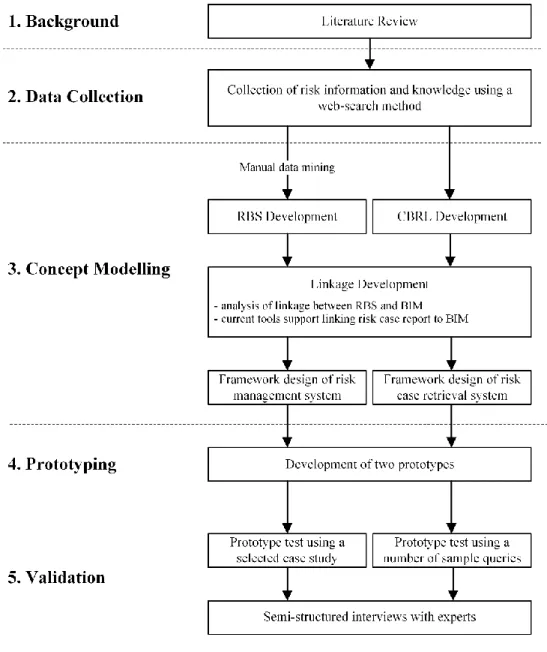
Figure 6. Diagram to show the research tasks, methods and validation ... 51
Figure 7. Source distribution of collected risk cases ... 56
Figure 8. Category distribution of collected risk cases ... 56
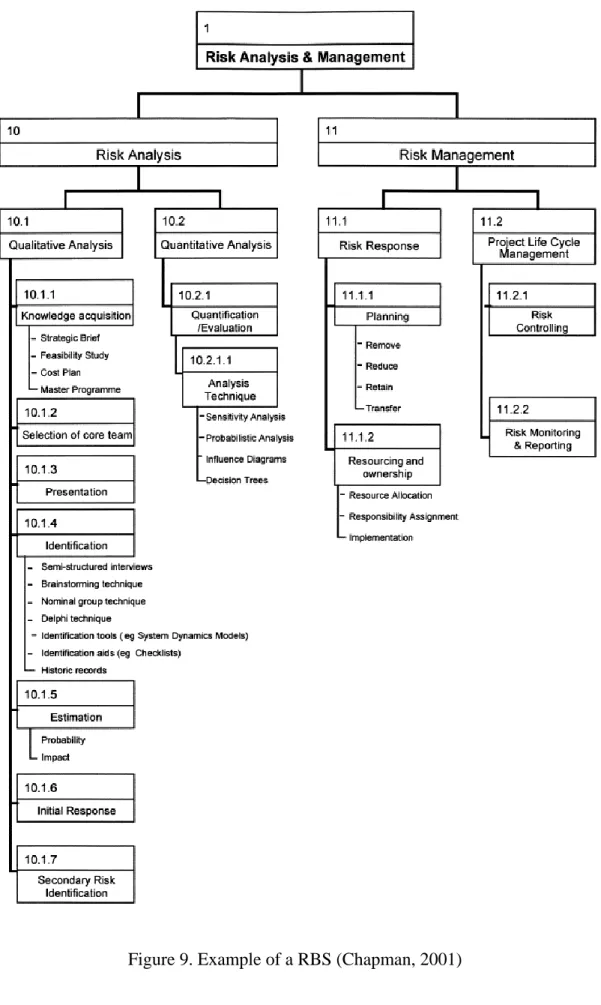
Figure 9. Example of a RBS (Chapman, 2001) ... 69
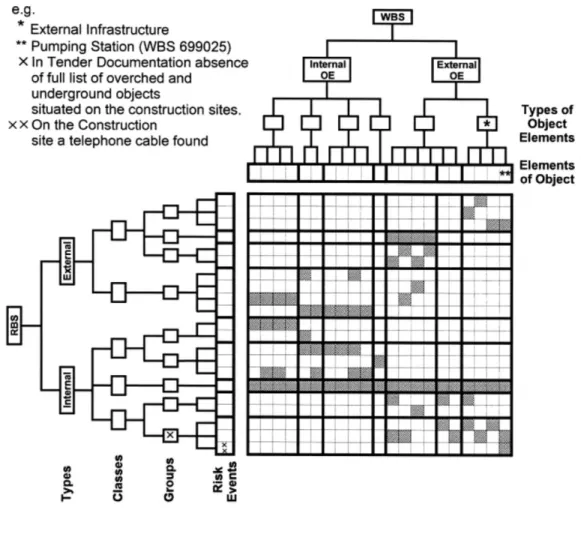
Figure 10. Example of RBM (Aleshin, 2001) ... 71
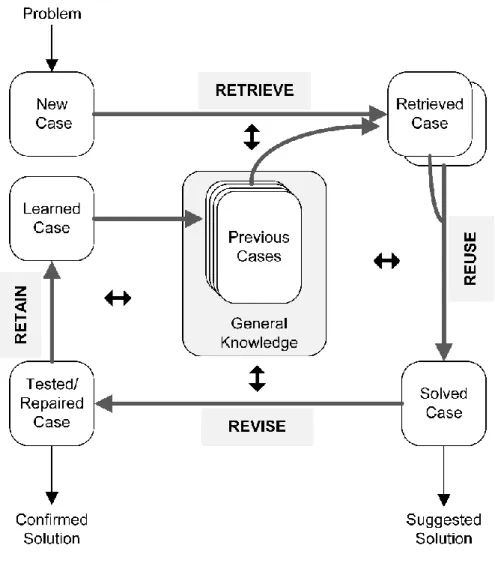
Figure 11. Classical model of a CBR system (Aamodt and Plaza, 1994) ... 75
Figure 12. Conceptual Division of an integrated bridge information model ... 85
Figure 13. Process of developing a knowledge-based risk database ... 89
Figure 14. Basic linkage between RBS and BIM ... 94
Figure 15. Linkage between structural risks and bridge information model ... 97
Figure 16. Linkage between health and safety risks and BIM ... 98
Figure17. Conceptual model of linking RBM to BIM ... 101
Figure 18. Basic relations between Risks and LOCs ... 102
Figure 19. Linkage between political, economic, social and cultural risks and BIM ... 102
Figure 20. Linkage between time related risks and BIM ... 103
Figure 21. Linkage between financial risks and BIM ... 103
Figure 22. Linkage between quality and organisational risks and BIM ... 104
Figure 23. Linkage between contractual and legal risks and BIM ... 104
Figure 24. Linkage between natural risks and BIM ... 105
Figure 25. Linkage between physical risks and BIM ... 105
Figure 26. Linkage between material and equipment risks and BIM ... 106
Figure 27. Linkage between design risks and BIM... 106
Figure 28. Linkage between construction risks and BIM ... 107
Figure29. Architecture of risk management system ... 109
Figure 30. Core components and operation process of the system ... 111
Figure 31. Snapshot of UI in Navisworks ... 113
Figure32. Example of implementing linkage rules ... 116
Figure 33. Risk markings used in this study ... 117
Figure 34. An example of highlighting risks in BIM ... 118
Figure 35. System implementation workflow ... 119
Figure 36. Simulation of the bridge construction... 120
Figure 37. Visualise risks in 4D BIM ... 122
Figure 38. System architecture of RCRS ... 126
Figure 39. An example of tokenisation ... 127
Figure 40. Example of risk-related lexicon ... 131
Figure 41. Work flow of query expansion ... 132
Figure 43. Computational process of retrieving “Worker Fall from Height” similar cases ... 137 Figure 44. Snapshot of searching results of “Worker Fall from Height” ... 140
LIST OF ABBREVIATIONS AND SYMBOLS
The following abbreviations and symbols have been used in this thesis:
2D Two-dimensional
3D Three-dimensional
4D Four-dimensional
4D CAD Four-dimensional computer aided design
AEC Architecture, Engineering and Construction
AI Artificial Intelligence
API Application Programming Interface
BIM Building Information Modelling
BIMKSM BIM-based Knowledge Sharing Management
BIM-VE BIM based virtual environment
BKRMS BIM and Knowledge Based Risk Management System
C# C-sharp
CBR Case-based Reasoning
CBRL Case-based Reasoning Library
CDE Common Data Environment
CDM Construction Design and Management
CMMS Computerised Maintenance Management System
CSHM Construction Safety and Health Monitoring
DFSP Design-for-safety-process
DSS Decision Support System
EDM Express Data Manager
EV Earned Value
FM Facility Management
FN False Negative
FP False Positive
FTA Fault Tree Analysis
GIS Geographic Information Systems
GPS Global Positioning System
ICT Information and Communication Technologies
ILO International Labour Organization
IR Information retrieval
KM Knowledge Management
LOC Level of Content
NBIMS National BIM Standard
NLP Natural Language Processing
NLTK Natural Language Toolkit
NN Neural Networks
POP Product, organisation and process
PPE Personal Protective Equipment
RBM Risk Breakdown Matrix
RBS Risk Breakdown Structure
RCRS Risk Case Retrieval System
RFID Radio Frequency Identification
SoA Sequence of Actions
SPMT Self-propelled Modular Transporter
SQL Structural Query Language
SWOT Strength-weakness-opportunity-threats
TF-IDF Term Frequency-Inverse Document Frequency
TN True Negative
TP True Positive
UCN Universal Circulation Network
UI User Interface
UWB Ultra-Wideband
VP Virtual Prototyping
VR Virtual Reality
VSM Vector Space Model
𝑞 Query
𝑑𝑗 Document
𝑘𝑖 Index term
𝑓𝑖,𝑗 Frequency of index term 𝑘𝑖 in a document
(𝑘𝑖, 𝑑𝑗) Term-document pair
𝑁 Total number of documents in the document set
𝑤𝑖,𝑗 TF-IDF weight
𝑛𝑖 Number of documents containing the term 𝑘𝑖
𝑠𝑖𝑚(𝑑𝑗, 𝑞) Degree of similarity between the document 𝑑𝑗 and the query 𝑞
|𝑞⃗| Norms of the query vectors
|𝑑⃗⃗⃗⃗|j Norms of the document vectors
𝑑j
⃗⃗⃗⃗ ∙ 𝑞⃗ Inner product of the document and query vectors.
𝑞𝑜 Original query
𝑞𝑒 Expanded query
𝜆 Coefficient for the effect of query expansion
Precision Fraction of retrieved documents that is relevant and is used to measure the percentage of relevant documents in all retrieved documents Recall Fraction of relevant documents that has been retrieved and used for
measuring the percentage of retrieved documents in all relevant documents
F Harmonic mean of 𝑝𝑟𝑒𝑐𝑖𝑠𝑖𝑜𝑛 and 𝑟𝑒𝑐𝑎𝑙𝑙
Chapter 1. I
NTRODUCTION1.1
Problem description
1.1.1 Risks in the Architecture, Engineering and Construction Industry
The Architecture, Engineering and Construction (AEC) industry has witnessed a rapid development all around the world during the last few decades. Large-scale projects have become widespread and international, new project delivery methodologies are being adopted, design theory and tools are constantly improving, creative and new approaches, methods, and materials of construction are being introduced (Bryde et al., 2013). AEC projects such as buildings and infrastructure systems are part of the fabric of urban spatial planning and design, and have an immediate impact on and a direct relation to the accommodation of land use for the future growth of cities (Colding, 2007). However, high accident rates and hazardous activities in the AEC industry not only lead to a poor reputation but pose a threat to its future innovation and evolution. The scope of a risk is very broad and consists of issues such as damage or failure of structures, injury or loss of life, budget overruns, and delays to the construction schedule, which are caused by various reasons such as design deficiency, material failure, inexperienced operatives, and weak management. For instance, in the United States, 503 bridge collapses were reported between 1989 and 2000 (Wardhana and Hadipriono, 2003), and according to official records over 26,000 workers lost their lives on construction sites from 1989 to 2013 (Zhang et al., 2013). It was estimated that over 60,000 on-site fatal accidents happen every year globally (ILO, 2005). In China, although the number of construction supervision companies has increased from
52 in 1989 to 5123 in 2000 (Liu et al., 2004), unwanted hazards related to safety, time, and cost were observed frequently due to poor risk management (Tam et al., 2004).
An AEC project starts with planning and design followed by the construction stage lasting for months or years, and eventually the project will come into the operational period that may last for decades before demolition. Different risks may be present in each of the different stages of the project and product lifecycle. There are a wide range of risks that may lead to hazards. In recent years, with the rapid development of society, risks are gradually growing because of the increasing structural complexity and project size, and the adoption of new and complex construction methods (Shim et al., 2012). To reduce the possibility of these hazards occurring and to achieve project goals successfully, there is a high demand for managing risks effectively throughout a project’s lifecycle.
1.1.2 Challenges in traditional risk management
With their complex and dynamic nature, construction projects normally last for many years through design, construction, and operation until demolition. They require a large amount of multi-disciplinary knowledge input and both internal and external collaboration and communication to manage project risks well. In the project development process, it is the minimum and mandatory requirement to check against regulations or standards, e.g. in the UK there are the Construction Design and Management (CDM) regulations (HSE, 2015). Other methods that are commonly used in the current construction culture for reducing risks include: design review and approval, construction progress meetings and site inspections, and education and safety training for workers (Goldenhar et al., 2001).
However, these are still static and traditional methods (Alaeddini and Dogan, 2011) which are heavily reliant on multi-disciplinary knowledge and experience (Shim et al., 2012). As a result, many researchers (Zhang et al., 2014, Hartmann et al., 2012, Shim
et al., 2012)point out that traditional methods are facing with a number of challenges in the real world:
Traditional risk management is a multi-disciplinary knowledge and experience
based manual undertaking, which is time-consuming, error-prone and inefficient (Zhang et al., 2013, Hartmann et al., 2012, Shim et al., 2012). For example, many designers and contractors are still working on 2D platforms and using 2D drawings to communicate project information. Detecting errors from 2D drawings is time-consuming and difficult. It is also a challenge to combine 2D drawings, site information, and text-based documents together when considering risks. As the methods are manual and mainly based on experience, observed results and decisions are often subjective and error-prone (Zhang et al., 2013).
Risk knowledge management is fragmented and insufficient, and risk
knowledge transfer from project to project is difficult (Zhang et al., 2013). Construction projects often last for several years and need teamwork and collaboration of a large number of participants from different disciplines. Team members gain valuable knowledge and experience from every project and most of them will leave the project after finishing their particular job. Significant project experience is held by individuals and it is difficult to capture and manage the large database of human knowledge effectively and extract valuable information for later use.
Risk sharing and communication tends to be incomplete and inconsistent (Tah
and Carr, 2001). Projects are completed by a team cooperatively, any common risks will be identified and treated individually, and the corresponding information will be documented and sometimes this work will be ignored or forgotten (Kazi, 2005). This may lead to the risk that information cannot be presented, shared, recorded, and updated effectively during the development process of a project.
1.1.3 Limitation in current BIM-based risk management
In response to these challenges in traditional risk management, there is currently a new research trend of utilising Building Information Modelling (BIM) and BIM-related tools to assist in early risk identification, accident prevention, risk communication, etc., which is defined as “BIM-based risk management” in this research.
BIM is a process involving the generation, exchange and management of accurate building information in digital formats, which allows better control and analysis than manual processes and could facilitate collaboration and communication (Eastman et al., 2011). In this way, the use of BIM allows the visualisation of a building and simulation of its construction in a computer environment before real implementation and improves the collaboration and communication by data interoperability (Laakso and Kiviniemi, 2012), which provides a solution for the challenges of traditional risk management discussed in Section 1.1.2. With the rapid development and use of BIM, some researchers have tried to implement BIM for managing project risks in the last few years. For example, physical clashes can be detected automatically in BIM and engineers can quickly make changes or modifications to models in a parametric way (Hartmann et al., 2008). Fast quantity calculation and accurate cost estimating leads
to better planning and management of the project budget (Azhar, 2011). The use of open data standards could improve the data exchange between software and reduce data loss (Laakso and Kiviniemi, 2012). In addition, BIM can be used for managing some specific risks, e.g. evacuation simulation for fire accidents in buildings (Wang et al., 2014), automatic checking of fall risks in BIM through model checkers (Zhang et al., 2013). It can be observed from these efforts that the visualisation feature of BIM can effectively improve risk identification and analysis at an early stage.
However, although the existing efforts of using BIM for risk management have both theoretical and practical significance to the industry, most of them are still at a conceptual or prototyping stage and have not been broadly used and tested in practice (Forsythe, 2014). An extensive literature review of risk management using BIM and BIM-related digital technologies is outlined in Chapter 2 and two main gaps in current BIM-based risk management are expanded as follows:
1.1.3.1 Very few theories exist that can explain how to align traditional techniques with BIM for construction project risk management
The current BIM-based design platforms do not have modules for risk identification, analysis and information documentation. Most of current research efforts in using BIM and BIM-related technologies for risk management focus on new developments from a technology-oriented perspective, while little is known about the possibility of integrating BIM into traditional risk management methods or existing organisational work processes. Design and construction organisations have their existing working structure and framework and it is naturally easier for them to accept new developments that have been proved to be reliable and effective.
To strengthen the practical applicability of BIM-based risk management, some studies (Hartmann et al., 2012, Shim et al., 2012) suggested aligning traditional techniques and processes with BIM as an integrated solution for managing project risks and have demonstrated its feasibility and benefits. For example, Shim et al. (2012) proposed a conceptual process model to visualise risk information in BIM for assisting design and construction management of a challenging cable stayed bridge project in Korea. Ding
et al. (2016) presented a framework for risk knowledge management and developed a prototype with a user interface that enables it to link risk information to objects in BIM. Another study, from a technology pull view, integrated BIM into traditional construction risk management and tested its practical performance in a large infrastructure project (Hartmann et al., 2012). A construction management tool called Vico Control (Vico Software, 2017) developed a risk analysis module which enables the extraction of a schedule and resource information from BIM for Monte Carlo simulation. However, very limited research or tools exists in this field. Both theoretical developments and practical studies need to be further explored.
1.1.3.2 Current BIM solutions have very limited support on risk communication and information management during the project development process
Today large construction projects are often complex in design, construction and management and their lifecycle may extend for decades, where different types of risk may exist and need to be treated in an appropriate manner. In the dynamic construction process, different disciplines need to collaborate and communicate mutually to construct a one-off product and project information is generated in and transferred between various platforms. However, a few existing studies (Kwak and Stoddard, 2004, Han et al., 2008) pointed out that the importance of risk management is often overlooked and it is difficult to share and communicate risk information. Without
effective information management, risk information may be lost or difficult to be transferred to the people in charge, which may lead to some major risks that are not identified and treated timely.
The current BIM-based design tools fail to support the generation and management of risk information during the project development process. Moreover, the current open BIM standards, e.g. Industry Foundation Classes (IFC), do not define schemas for risk management. A good feature of BIM is to provide a platform to support the dynamic process of construction projects through storing, using and managing digital information. For example, Goedert and Meadati (2008) demonstrated a method to integrate construction process documentation into BIM for management. In addition, Becerik-Gerber et al. (2011) proved that BIM can be used for facility data management. Therefore, the capability of BIM could be extended to support project risk information management and communication. The importance of effective risk information communication and management in complex construction projects as well as the potential of using BIM to facilitate communication and collaboration for project risk management have been discussed in a number of studies, e.g. (Han et al., 2008, Frewer, 2004). In addition, some recent studies (Shim et al., 2012) have discussed its potential and presented conceptual frameworks. Nevertheless, very limited research has been found in this area.
1.2
Research questions
In response to the two knowledge gaps discussed in Section 1.1.3, the following two main research questions were formulated after an extensive review of relevant
literature in Chapter 2 on managing construction project risks through both traditional methods and processes, and BIM-related technologies:
Research Question 1 (RQ1): How can existing techniques align with BIM for
construction project risk management?
Research Question 2 (RQ2): How can risk knowledge and information be
managed and visualised in the BIM environment during the project development process?
The two research questions are connected to each other. RQ1 explores why, what and how some existing risk management techniques can be integrated into BIM. RQ2 investigates how the generated risk knowledge and information can be visualised and managed in the BIM environment.
1.3
Intuition
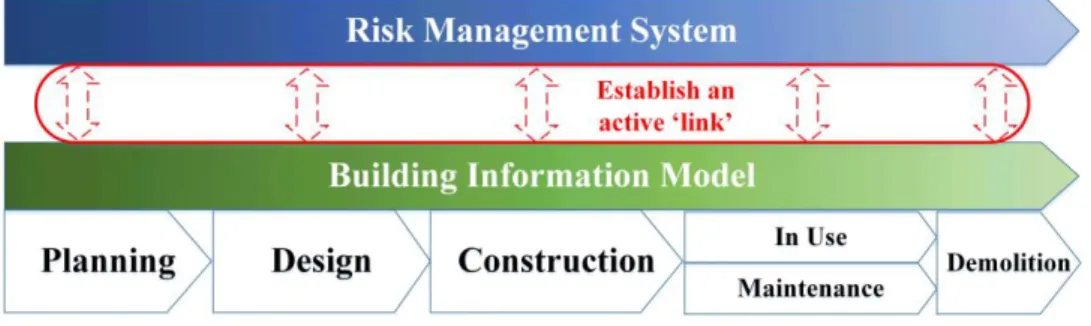
The intuition of this research is that some existing risk management techniques can be integrated into BIM-based platforms and an active linkage between the risk information and BIM can be established to support the project lifecycle. This proposed concept of a BIM and Knowledge based Risk Management System (BKRMS) is presented in Figure 1. The motivations of the proposed solution are described in Section 1.4 and the starting points for the proposed solution are discussed in detail in Chapter 4. The principle behind this solution is that traditional risk management techniques can be integrated into BIM-based platforms and an active linkage between the risk information and BIM can be established to support the project lifecycle.
Figure 1. Establishing active linkages between BIM and Risk Management System
1.4
Overview of point of departure
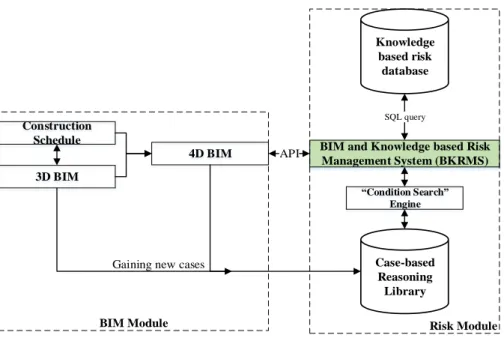
The proposed framework of BKRMS is illustrated in Figure 2 and consists of two main modules: the BIM Module and the Risk Module where the two modules are linked to each other. In the BIM Module, design, environmental and other general project information can be captured firstly to generate a 3D BIM. The second step is to collect and analyse the construction information, schedule and work breakdown tasks, which can be connected with the 3D BIM to generate a 4D BIM. The Risk Module provides a user interface for managing any updates and changes of identified risks in BIM and is supported by two traditional risk management techniques, Risk Breakdown Structure (RBS) and Case-based Reasoning (CBR). On one hand, the RBS can be used as a knowledge-based approach to classify, store and manage the information of a risk database in a proper structure and risk information in RBS could be linked to 3D/4D BIM for review, visualisation and communication. On the other hand, the Case-based Reasoning Library (CBRL) is a collection of both successful and unsuccessful cases that can provide risk management knowledge about project cases for analysing the ongoing project and helping decision makers investigate possible solutions. In addition, the CBRL is able to retain and update new cases from the BIM Module.
BIM and Knowledge based Risk Management System (BKRMS) Knowledge based risk database Case-based Reasoning Library SQL query Condition Search Engine Construction Schedule 3D BIM 4D BIM API
Gaining new cases
BIM Module Risk Module
Figure 2. Framework of the BKRMS
The idea of this research was motivated by the following observations. First, Kiviniemi (2005) demonstrated a methodology to manage user requirements during the lifecycle of a project by establishing an active link between requirements models and building information models, and successfully illustrated that user requirement information can be divided into different levels and linked with BIM. For this research, potentially the linkage approach can be adopted to address the risk information management and support the lifecycle project risk management. Its feasibility and benefits have been discussed and proved by a number of existing studies (Shim et al., 2012, Ding et al., 2016).
Secondly, the study conducted by Shim et al. (2012) presented a conceptual diagram for visualising risk information in BIM and pointed out that RBS has the ability to facilitate the understanding and communication of risks in risk identification and analysis processes. RBS, in concept, is a hierarchical structure that allows all types of risk factors and events to be organised by groups and categories (Holzmann and Spiegler, 2011). It is an open, flexible and easily updatable tool and could offer a global
view on risk exposure (Tah and Carr, 2001, Mehdizadeh et al., 2013). The main advantages of RBS include: 1) to increase overall understanding of risks and facilitate risk communication; 2) to help locate identified risks into relevant risk categories and make special strategies to treat them easily; and 3) to provide an architecture for managing the risk database and developing risk management software.
Thirdly, in general, the process of solving new problems based on experience of similar past problems is known as Case-Based Reasoning (CBR) (Jonassen and Hernandez-Serrano, 2002), which examines what has taken place in the past and applies it to a new situation (Kolodner, 1993). It could be of particular help in identifying and mitigating project risks at early stages, e.g. design and construction planning. In order to facilitate CBR for practical use in the construction industry, some efforts have been observed in collecting risk cases and establishing a risk case database, e.g. (Structural-Safety, 2016, Zhang et al., 2016). However, as a risk case database often contains a huge amount of data where reports are written in everyday human language, manually reviewing, analysing and understanding these reports is time-consuming, labour-intensive and inefficient work. Failure in extracting ‘correct’ cases and information within a limited time may mean that the importance of learning from past experience is missed. In recent years, with the development and growing use of Natural Language Processing (NLP) in the computer science discipline, some researchers have been trying to introduce NLP into the construction industry to address the analysis and management issues of textual documents, e.g. retrieval of CAD drawings (Hsu, 2013), automatic analysis of injury reports (Tixier et al., 2016), and automatic clustering of construction project documents based on textual similarity (Al Qady and Kandil, 2014). It could be seen that NLP is a promising technique in assisting the knowledge and case retrieval of CBR.
1.5
Research aim and objectives
The overall aim of this research is to develop a methodology of integrating traditional techniques with BIM for project risk management and information sharing and improve the applicability of BIM-based risk management.
In order to accomplish the research aim, conceptual frameworks were designed in Sections 1.3 and 1.4 on top of three main starting points (Chapter 4), and the following three research objectives were formulated:
Objective 1: To develop a RBS and a Case-based Reasoning Library (CBRL) for bridge projects.
The first research objective involves two tasks:
Collection and detailed analysis of project risks from a holistic view.
Development of a tailored RBS for classifying and managing these project risks
and a CBRL as a knowledge database.
Objective 2: To develop a linkage between Risks and BIM for bridge projects.
The second research objective consists of three tasks:
Development of the linkage rules between the proposed RBS and BIM.
Development of a tool prototype for implementation of the proposed linkage.
Validation of the linkage approach and tool prototype.
Objective 3: To develop a method to support the fast risk case retrieval from the CBRL.
The third research objective consists of three tasks:
Development of a NLP based approach for quickly and accurately retrieving
valuable data from risk and accident report documents.
Development of a tool prototype for implementation of the proposed approach.
Validation of the proposed method and tool prototype.
1.6
Research method
The research method is briefly introduced in Sections 1.6.1-1.6.5 and further explained and discussed in Chapter 3.
1.6.1 Literature Survey and Solution Development
A comprehensive literature review was conducted in the first stage of this research to: 1) identify the knowledge gaps that currently exist in BIM-based risk management, 2) explore the potential solution to fill the identified gaps, and 3) limit the scope of this research. The detailed analysis of literature and existing gaps are discussed in Chapter 2 and the Point of Departure of the proposed solution is introduced in Chapter 4.
1.6.2 Development of the RBS and CBRL
Based on the proposed solution, the next stage is to further collect, analyse and classify the risks to develop a RBS and establish the CBRL for bridge projects. The development process of the RBS is introduced in Chapter 5. The CBRL here refers to a collection of risk case documents written in everyday language and can be used to
support the risk identification and analysis, and decision making during the project process. The collection and development of the CBRL is illustrated in Section 7.2.
1.6.3 Development of linkage between BIM and RBS
With the observation that different types of risk can affect the project differently, an active linked relationship was established between the RBS and BIM. To support the linkage, a new framework of the BIM-based risk management system was proposed and prototyping was used for the implementation and validation of the proposed approach and tool prototype. This work is introduced in Chapters 5 and 6.
1.6.4 Information retrieval from the CBRL
Built on the established CBRL, this research proposed a method through combining the use of two NLP techniques, i.e. Vector Space Model (VSM) and semantic query expansion, for risk case retrieval and outlines a framework for this risk case retrieval system. A prototype system was developed using the Python programming language to support the implementation and validation of the proposed method. This work is presented in Chapter 7.
1.6.5 Validation of the research
The purposes of the validation are to check: 1) if the proposed solution is able to address the identified knowledge gaps in current BIM-based risk management, and 2) if the proposed BKRMS can be implemented for practical use and integrated into the risk management process.
The proposed methodology was primarily validated through prototype development and testing, where the prototype refers to the common practice in software engineering
to develop an early release or incomplete versions of a software to simulate and test a concept or process (Smith, 1991). Specifically, one prototype, i.e. a Navisworks plugin, was developed to support the linkage between the RBS and BIM, and its implementation process is illustrated by an example case study (Sections 6.3 and 6.6); another prototype, i.e. a risk case retrieval system, was developed for fast information retrieval from the CBRL and the system validation is discussed in Section 7.6.
In addition, a group of industry experts were invited to participate in semi-structured interviews to evaluate the feasibility and usefulness of BKRMS from an industry perspective, where comments and suggestions for future research were also noted (Section 8.1).
1.7
Guide to the thesis
The thesis is organised into eight chapters. The outline of the chapters is as follows:
Chapter 1 Introduction – summarises the observed problem, research questions, intuition to address the knowledge gaps, overview of the starting points, research objectives and methods.
Chapter 2 Background and Literature Review – presents a summary of existing risk management methods and processes, and the state of the art of BIM-based risk management. The research problems and knowledge gaps are concluded from the core findings of this chapter.
Chapter 3 Research methodology – discusses the methodology used in this research to determine the research questions.
Chapter 4 Point of Departure – describes what existing knowledge and methods contribute to the starting points for the proposed solution presented in Chapters 5-7.
Chapter 5 Risk Analysis and RBS Development – discusses the conceptual separation of BIM and the process of developing a tailored Risk Breakdown Structure (RBS) for bridge projects and formalising an active link between the resulting RBS and BIM.
Chapter 6 Integrating RBM into 3D/4D BIM for Risk Identification and Communication – builds on the results of Chapter 4 and introduces a method of interconnecting BIM, RBS and Work Breakdown Structure (WBS) as a risk management system. It then develops prototype and tests the implementability of the proposed system through a case study.
Chapter 7 Retrieving Similar Cases from the CBRL using NLP Techniques – describes a method for retrieving similar cases from the CBRL through combining the use of two NLP techniques. It then introduces the development of a prototype and tests the functionality of the proposed method using a number of sample queries.
Chapter 8 Discussion and Conclusions – firstly describes the validation of the usefulness of the proposed methods presented in Chapters 5-7 through interviews with industry experts. This chapter then completes the thesis through providing a summary of the work involving theoretical and practical contributions, limitations and suggested future research, and conclusion of the research.
Figure 3. Structure of the thesis
1.8
Scope and limitations of the research
The purpose of this research is to link risk knowledge and information to BIM. The risks of BIM technologies and implementation were not within the scope. The focus of the research has been identifying typical risks that may affect a construction project (e.g. design error, structural safety and financial risk) and developing the knowledge-based risk database and CBRL.
Bridges were chosen as the type of projects to study the RBS and the linkage between the resulting RBS and BIM. Although the scope of this research is limited to bridges,
the basic methods and principles presented in this research could be also applied to other types of AEC project.
Another aim of this research was to study the use of NLP into CBR to support lifecycle risk management and decision making. Generally the implementation cycle of CBR contains four main processes: RETRIEVE, REUSE, REVISE, and RETAIN (known as ‘the four REs’), where RETRIEVE is the first and the most important process in
any CBR systems (Lu et al., 2013). Only risk case retrieval (i.e. RETRIEVE) was within the scope of this research.
Chapter 2. B
ACKGROUND ANDL
ITERATURER
EVIEW2.1
The fundamentals of risk management
The term “risk” was known in the English language from the 17th century and was
derived from an original meaning to run into danger or to go against a rock (McElwee, 2007). Today the concept of risk is adopted in many different fields and with a variety of different words, such as “hazard”, “threat”, “challenge”, or “uncertainty”. In the
AEC industry, risks have a two-edged nature, e.g. “the likelihood of unwanted hazards and the corresponding consequences” (Zou et al., 2007), “the likelihood and consequence of risks” (Williams, 1996), “a combination of the likelihood and consequences of the hazard” (Vrouwenvelder et al., 2001).
Risk management is a system aiming to recognise, quantify, and manage all risks exposed in the business or project (Flanagan and Norman, 1993). PMBOK® (Project Management Body of Knowledge) describes it as a process in relation to planning, identifying, analysing, responding, and monitoring project risks and one of the ten knowledge areas in which a project manager must be competent (PMI, 2004). The International Organization for Standardization (ISO, 2009) defines the process of risk management involving applying a systemic and logical method for establishing the context, creating a communication and consultation mechanism, and constructing risk management identification, analysis, evaluation, treatment, monitoring, and recording in a project. In accordance with these definitions, risk management in the AEC context is a logical, systematic, and comprehensive approach to identifying and analysing risks, and treating them with the help of communication and consultation to successfully achieve project goals. The systematic process includes risk identification, analysis, evaluation, treatment, monitoring and review (Banaitiene and Banaitis, 2012, ISO,
2009, Zou et al., 2007), where risk identification aims to find out the range of potential risks and risk analysis plays a core role in the whole process. When risks cannot be eliminated, early and effective identification and assessment of risks become necessary for effective risk management in a successful project (Zou et al., 2007). All activities of a project involve risks (ISO, 2009) and there is an immediate and direct relationship of objectives between the whole project and risk management.
A set of techniques has been developed to identify, analyse and evaluate risks. The techniques, according to ISO (2009), can be divided into qualitative and quantitative analysis. The former includes Delphi, checklists, strength-weakness-opportunity-threats (SWOT) analysis, risk rating scales, etc., while the latter includes environmental risk assessment, neural networks (NN), row tie analysis, reliability centred maintenance, risk indices, and others. However, although the above methods are important techniques for risk management, they are confined to static control management and play only a limited role in practice (Zhang et al., 2014). The implementation of traditional risk management is still a manual undertaking, the assessment is heavily reliant on experience and mathematical analysis, and the decision making is frequently based on knowledge and experience based intuition, which always leads to a decreased efficiency in the real environment (Shim et al., 2012).
2.2
The general process of risk management
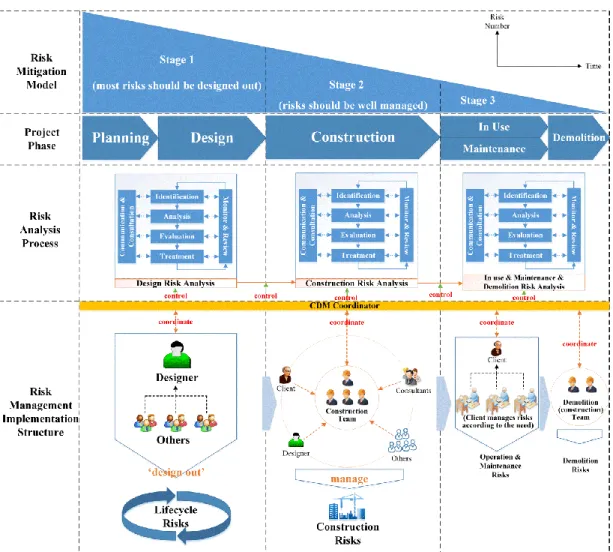
Based on a review of the literature, expert interviews, and the author’s project experience, the current general risk management framework used in the UK AEC industry is summarised in Figure 4. The framework prescribes a long-term risk
management strategy and a process that allows participants to work collaboratively to manage risks in a systematic way. The core philosophy of this method, defined in the Risk Mitigation Model, is that the main scope for identifying and mitigating risks should be as early as possible, especially in the design or planning phases, which is regulated in the UK’s Construction Design and Management (CDM) Regulations
(HSE, 2015). Ideally, most of the foreseeable risks should be “designed out” during the planning or design stages, and the residual risks should be managed during the construction and subsequent phases.
However, some challenges in the above process are: (1) in-time knowledge capture and analysis, (2) the management of multi-disciplinary knowledge and experience, and (3) effective communication environment. Valuable knowledge and experience are gained from previous projects and this can be used to contribute to future work. In this case, the effective management of this large database of human knowledge and experience, as well as flexible and accurate data extraction, become a precondition for the success of risk management. As the project is handed over from designer to contractor, and then from contractor to the client, people will normally leave the project after completing their tasks and large amounts of risk information may be lost if it is not properly recorded and communicated to other project participants (Kazi, 2005).
2.3
Information and Communication Technologies (ICT) for
risk management
To overcome these obstacles, ICT, e.g. BIM, 4D CAD, and Virtual Reality (VR), has been applied in the AEC industry to manage risks. For instance, construction safety risk planning and identification is an issue addressed by 3D/4D visualisation (Hartmann et al., 2008). BIM could help automatically detect physical spatial clashes (Chiu et al., 2011) and specific requirements of building codes could be interpreted to machine-read rules and checked automatically in Industry Foundation Classes (IFC) information models (Eastman et al., 2009). Heng Li et al. (2013) presented a proactive monitoring system using Global Positioning System (GPS) in combination with Radio Frequency Identification (RFID) to improve the safety of blind lifting of mobile/tower cranes. The next section will review and discuss these developments critically in detail.
Two reasons could explain the increasing interest and adoption of ICT for risk management. The first reason is that as the industry has benefited from salient technical advantages of BIM and other digital technologies, a natural consequence is to investigate their possibilities in risk management. These new techniques could not only provide new design tools and management methods (Eastman et al., 2011) but significantly facilitate the collaboration, communication, and cooperation for both within and between organisations (Dossick and Neff, 2011), which are essential requirements for managing risks successfully. The second reason comes from a strong thrust from the government policy makers who have realised the importance of integrating ICT with risk management. Evidence of this is the new version of CDM regulations that will cover ICT such as BIM after 2015 (Joyce and Houghton, 2014) replacing the older version that was introduced in the UK initially in 1996 for improving safety and risk management.
2.4
Survey of BIM and BIM-related technologies for
managing risks
The state-of-the-art of the use of BIM and BIM-related technologies for risk management is summarised in this section. The technologies referred here include BIM, automatic rule checking, knowledge based systems, reactive and proactive safety systems based on information technology. There is a distinct difference between reactive and proactive safety systems for risk management. Forsythe (2014) and Teizer
et al. (2010) pointed out reactive systems using information technologies such as VR, 4D CAD, and GIS seldom use real-time data and need a post data collection processing effort for analysis, while in contrast proactive technologies can collect and analyse real-time data, and provide real-time warning and immediate feedback to construction
site about dangers in time. It has been found that BIM, on one hand, can be used as a systematic risk management tool in the development process and, on the other, can perform as a core data generator and platform to allow other BIM-related tools for further risk analysis, where most of these technologies can be used interactively in related investigations.
2.4.1 Managing risks through BIM
Over the last few years, with the rapid development of theory and computer applications, BIM has achieved a remarkable awareness in the AEC industry and there is a significant increase of the adoption of BIM to support the planning, design, construction, operation and maintenance phases (Volk et al., 2014). Instead of being just considered as a technology, BIM is becoming a systematic method and process that is changing the project delivery (Porwal and Hewage, 2013), designing (Liu et al., 2014), and the communication and organisational management of construction (Hardin, 2011). Although most papers utilising BIM as an advanced tool to manage project risks such as design errors, quality, and budget do not often refer to risk management intentionally, the process of applying BIM can be seen, to some extent, as a systematic way for managing risks. Examples are presented in Table 1.
Table 1. Examples for applying or developing BIM for risk management
Functionality Benefits for risk management Research Practice
3D visualisation Facilitating early risk identification and risk communication
(Hartmann et al., 2008) (Liu et al., 2014, Shim
et al., 2012)
Clash detection Automation of detecting physical
conflicts in model
(Hartmann et al., 2008, Tang
et al., 2011) (Liu et al., 2014, Chiu et al., 2011) 4D construction scheduling/planning
Facilitating early risk identification and risk communication; improving construction management level
(Hartmann et al., 2008, Hardin, 2011, Whyte, 2002) (Liu et al., 2014, Chiu et al., 2011) 5D cost estimation or cash flow modelling
Planning, controlling and managing budget and cost reasonably
(Hartmann et al., 2008, Hardin, 2011, Whyte, 2002, Marzouk and Hisham, 2014)
(Motawa and Almarshad, 2013) Construction progress tracking
Improving management level for quality, safety, time, and budget
(Eastman et al., 2011, Bhatla
et al., 2012)
-
Safety management Reducing personnel safety hazards (Whyte, 2002, Teizer, 2008) -
Space management Improving the consideration of space distribution and management in design
(Hartmann et al., 2008, Kim
et al., 2012)
-
Quality control Improving construction quality (Chen and Luo, 2014) -
Structural analysis Improving structural safety (Sacks and Barak, 2008,
Seung-Il Lee et al., 2012, Shim et al., 2012)
(Liu et al., 2014) Risk scenario
planning
Reducing personnel safety hazards (Hardin, 2011, Azhar, 2011) (Hartmann
et al., 2012) Operation and maintenance (Q&M), facility management (FM)
Improving management level and reducing risks
(Volk et al., 2014, Becerik-Gerber et al., 2011)
-
Interoperability Reducing information loss of data exchange
(Laakso and Kiviniemi, 2012, Ji et al., 2013)
- Collaboration and
communication facilitation
Facilitating early risk identification and risk communication
(Dossick and Neff, 2011, Grilo and Jardim-Goncalves, 2010, Porwal and Hewage, 2013)
-
Urban planning and design
Integrating planning and design of urban space and AEC projects; facilitating land-use planning, design and management
(Ghang Lee et al., 2012, Kim et al., 2011, Rajabifard
et al., 2012)
(Ghang Lee et al., 2012)
In the planning and design stages, one of the main risks is how the design aligns with the determined project feasibility, secured budget, and established governance regime (Miller et al., 2001). This is an area where BIM has the potential to manage the risks. For example, the visualisation of preliminary design by 3D/4D models could help engineers build and modify the model quickly in a parametric way to meet the
stakeholders’ requirements (Hartmann et al., 2008). The short videos or virtual walkthroughs which simulate the view of a person walking through the building can rapidly improve stakeholders’ understanding of the project (Whyte, 2002). Meanwhile,
neutral data formats such as the IFC that store standard and customised data for all project elements could provide an interoperable digital representation of all project elements enabling interoperability between BIM software applications (Laakso and Kiviniemi, 2012), which could increase the repeated use of data and reduce the possibility of errors.
At the construction stage, there is often a huge pressure for the construction team to complete the project safely within budget and schedule, and various risks and uncertainties exist in this period. To identify construction risks at an early stage and optimise the construction sequences, Chiu et al. (2011) conducted a clash detection and a 4D simulation of the construction of a steel bridge. Chen and Luo (2014) extended the 4D model to cover quality management based on construction codes and established a quality control model in a product, organisation and process (POP) data definition structure, which was used and validated in the construction of the Wuhan International EXPO centre. In addition, Marzouk and Hisham (2014) used BIM’s ability of cost estimation to develop an application that integrates BIM with Earned Value (EV) for cost and schedule control, and determines the project status at specific reporting dates for infrastructure bridges.
It has also been found in this review that although the majority of efforts still focus on applying BIM to the design and construction phase, BIM can also be used in other processes and phases, e.g. facility management (Becerik-Gerber et al., 2011), maintenance management (Volk et al., 2014), and demolition (Cheng and Ma, 2013). In addition, a BIM-based collaboration and communication environment could
naturally facilitate the early risk identification and mitigation (Dossick and Neff, 2011, Grilo and Jardim-Goncalves, 2010).
2.4.2 Knowledge based systems
In the AEC industry, every project produces valuable knowledge and experience which can contribute significantly to managing risks in future projects. It is essential to manage this information properly and communicate it effectively in all stages of the whole project lifecycle (Tah and Carr, 2001). This idea has been recognised and adopted for a long time by researchers to manage project risks. For example, Total-Safety (Carter and Smith, 2006) is a method statement development module within an ICT tool that could assist engineers to formulate method statements with a high level of risk identification by extracting safety information from a knowledge based database. When a construction method is chosen, the tool can return all known risks associated with different tasks as the knowledge basis for further risk assessment. Similarly, Cooke et al. (2008) proposed a web-based decision support program named ToolSHeD to integrate assessment of safety risk into design process. The principle of ToolSHeD is to structure the knowledge obtained from industry standards, national guidelines and codes of Australia, and other information sources, and employ this knowledge for assessing risks in complicated situations of buildings.
The integration of BIM and knowledge based systems has been seen as a new trend. Deshpande et al. (2014) proposed a new method to capture, extract, and store information and knowledge from BIMs, and presented a framework for classification and dissemination of the knowledge. To strengthen its practical application, Ho et al.
(2013) developed a BIM-based Knowledge Sharing Management (BIMKSM) system that could enable managers and engineers to share knowledge and experience in the
BIM environment. Aiming at managing safety risks in design, Qi et al. (2011) developed a dictionary of construction worker suggestions and a constraint model to store the formalised suggestions. Then in the BIM environment, designers could utilise rule checking software for identifying safety risks during the planning and design phases, and mitigating risks and optimising their designs. The system consists of three parts: BIM as the main information input, a knowledge based system, and a risk identification module. Motamedi et al. (2014) integrated the use of knowledge management (KM) and BIM to investigate an approach for detecting failure root-cause which could help facility management (FM) technicians identify and solve problems from their cognitive and perceptual reasoning. Integrated with BIM, a Computerised Maintenance Management System (CMMS) was developed to store inspection and maintenance data. In addition, a knowledge based BIM system was presented by Motawa and Almarshad (2013) to capture and store various types of information and knowledge created by different participants in the construction project in order to support decision making for building maintenance.
2.4.3 Automatic rule checking
In definition, the term Automatic Rule Checking is the use of a computer program to assess a design based on objects’ configuration (Eastman et al., 2009) and its purpose is to encode rules and criteria by interpretation and thus building models could be checked against these machine-read rules automatically with results, for example, “pass”, “fail”, “warning”, or “unknown” (Borrmann et al., 2009).
Regulations and rules written by experts have traditionally been comprehended, interpreted and used in a manual way. Thus, these rules are sometimes conflictive and incomplete, and the corresponding implementation is often limited by people’s