PLEASE SCROLL DOWN FOR ARTICLE
On: 15 September 2008
Access details: Access Details: [subscription number 902475894] Publisher Routledge
Informa Ltd Registered in England and Wales Registered Number: 1072954 Registered office: Mortimer House, 37-41 Mortimer Street, London W1T 3JH, UK
Security Studies
Publication details, including instructions for authors and subscription information:
http://www.informaworld.com/smpp/title~content=t713636712
Who Cares about the Weather?: Climate Change and U.S. National Security Joshua W. Busby
Online Publication Date: 01 July 2008
To cite this Article Busby, Joshua W.(2008)'Who Cares about the Weather?: Climate Change and U.S. National Security',Security Studies,17:3,468 — 504
To link to this Article: DOI: 10.1080/09636410802319529 URL: http://dx.doi.org/10.1080/09636410802319529
Full terms and conditions of use: http://www.informaworld.com/terms-and-conditions-of-access.pdf
This article may be used for research, teaching and private study purposes. Any substantial or systematic reproduction, re-distribution, re-selling, loan or sub-licensing, systematic supply or distribution in any form to anyone is expressly forbidden.
The publisher does not give any warranty express or implied or make any representation that the contents will be complete or accurate or up to date. The accuracy of any instructions, formulae and drug doses should be independently verified with primary sources. The publisher shall not be liable for any loss, actions, claims, proceedings, demand or costs or damages whatsoever or howsoever caused arising directly or indirectly in connection with or arising out of the use of this material.
Copyright © Taylor & Francis Group, LLC ISSN: 0963-6412 print / 1556-1852 online DOI: 10.1080/09636410802319529
Who Cares about the Weather?:
Climate Change and U.S. National Security
JOSHUA W. BUSBY
Is climate change a national security threat to the United States? This question remains a subject of debate in academia and has received renewed emphasis in the policy community. Even taking a narrow definition of national security, climate change already constitutes a national security threat to the United States, both in terms of direct threats to the country as well as its broader extraterritorial interests. While some of these purported threats—abrupt climate change and sea-level rise—have been overstated by advocates, several concerns, mostly related to the effects of extreme weather events on the United States and its strategic interests overseas, are sufficient enough that they already constitute security threats. That climate change po-tentially poses a direct threat to theU.S.homeland and its overseas
interests suggests the subject warrants serious attention.
Is climate change a national security threat to the United States? This ques-tion remains a subject of debate in academia and has received renewed emphasis in the policy community.1 Moves to link climate change and other
Joshua W. Busby is an assistant professor at the LBJ School of Public Affairs at the Uni-versity of Texas, Austin. He has written extensively on the links between climate change and security, including pieces for the Council on Foreign Relations and the UN’s High Level Panel on Threats, Challenges and Change. Earlier versions of this article were presented at the 2006 American Political Science Association conference in Philadelphia, Pennsylvania; the 2005 In-ternational Studies Association conference in Honolulu, Hawaii; and the 2005 conference on Human Security and Climate Change in Oslo, Norway.
For their helpful comments, the author would like to thank colleagues at the LBJ School of Public Affairs, University of Texas, Austin and the Belfer Center for Science and International Affairs at Harvard University, as well as the advisory group for the author’s special report on the topic for the Council on Foreign Relations. For their counsel and comments on versions of this article, the author would also like to thank the following: Elizabeth Chalecki, Colin Kahl, Jennifer Mitzen, Patrick Meier, Idean Salehyan, Troy White, Michael J. Williams, Tom Wright, and the anonymous reviewers forSecurity Studies.
1Environmental security gained some traction in the policy community in the 1990s. For example,
theU.S.Department of Defense created a deputy undersecretary position for environmental security during
468
environmental issues to security date back to the late 1980s when scholars and advocates sought to widen the concept to encompass environmental concerns, health, human rights, and development.2 These efforts to broaden
the agenda, to “securitize” non-traditional harms, coalesced into the concept of “human security,” an expansive term that incorporates most non-military threats to human welfare.3 The motives of advocates and some scholars to
broaden security are similar. Security is regarded as a more potent hook to get the attention of political heavyweights. This is particularly true after September 11, 2001.
As Barry Buzan et al. note, issues acknowledged to be inside the security box—by virtue of their seriousness—warrant priority and may allow decision makers to pursue emergency measures outside the realm of normal politics.4
The attraction of framing environmental problems as security issues is under-standable, but some scholars have questioned this approach. Security may cease to mean anything if it means everything.5 By using the security frame,
the concept may be tied to militarized solutions that are inappropriate ways
the Clinton administration. While this position was eliminated during the George W. Bush administration, some military-to-military training exercises in environmental security continued thereafter. Efforts to assess the security implications of climate change were initiated in 2006 and 2007. In March 2007, Senators Dick Durbin and Chuck Hagel introduced a bill requesting a National Intelligence Estimate to assess the national security implications of climate change. In April 2007, theCNACorporation released a report overseen by
retired generals to document the links between climate and national security. In that same month, the United Nations Security Council also hosted its first ever meeting on whether climate change constituted a threat to international peace and security. In November 2007, two Washington think tanks, the Center for Strategic and International Studies (CSIS) and the Center for a New American Security (CNAS), released another report on climate and security.
2See Lester Russell Brown, Redefining National Security(Washington, DC: Worldwatch Institute,
1977); Richard Ullman, “Redefining Security,” International Security8, no. 1 (Summer 1983): 129–53; Jessica Tuchman Mathews, “Redefining Security,”Foreign Affairs68, no. 2 (Spring 1989): 162–77; Norman Myers, “Environment and Security,”Foreign Policy no. 74 (Spring 1989): 23–41; Michael Renner and Worldwatch Institute,National Security: The Economic and Environmental Dimensions(Washington,DC: Worldwatch Institute, 1989); David A. Wirth, “Climate Chaos,”Foreign Policyno. 74 (Spring 1989): 3–22; Peter H. Gleick, “Environment and Security: The Clear Connections,” Bulletin of the Atomic Scientists 47, no. 3 (1991): 16–21; Ian Rowlands, “The Security Challenges of Global Environmental Change,”The Washington Quarterly14, no. 1 (Winter 1991): 99–113; Edward A. Kolodziej, “Renaissance in Security Studies? Caveat Lector!”International Studies Quarterly36, no. 4 (December 1992): 421–38; Marvin S. Soroos, “Global Change, Environmental Security, and the Prisoner’s Dilemma,”Journal of Peace Research 31, no. 3 (August 1994): 317–32; Geoffrey D. Dabelko and David D. Dabelko,Environmental Security: Issues of Conflict and Redefinition(Washington,DC: Woodrow Wilson Center, 1995); Stephen J. Del Rosso,
“The Insecure State: Reflections on ‘The State’ and ‘Security’ in a Changing World,”Daedalus124, no. 2 (Spring 1995): 175–207.
3United Nations Development Program,New Dimensions in Human Security(New York: Oxford
University Press, 1994); Gary King and Christopher J. L. Murray, “Rethinking Human Security,”Political Science Quarterly 116, no. 4 (Winter 2001/2002): 585–610; Taylor Owen, “Human Security—Conflict, Critique and Consensus: Colloquium Remarks and a Proposal for a Threshold-Based Definition,”Security Dialogue35, no. 3 (September 2004): 373–87.
4Barry Buzan, Ole Wæver, and Jaap de Wilde,Security: A New Framework for Analysis(Boulder:
Lynne Rienner, 1998), 3.
5Daniel Deudney, “The Case Against Linking Environmental Degradation and National Security,”
Millennium 19, no. 3 (1990): 461–76; Marc A. Levy, “Is the Environment a National Security Issue?” International Security20, no. 2 (Autumn 1995): 35–62; Nils Petter Gleditsch, “Armed Conflict and the
of resolving the underlying issues or that divert attention from less nationalist problem-solving means.6Like environmental security, human security is also
faulted for being polemical rather than a useful analytic construct.7
Scholars of environmental security have pursued research in keeping with conventional understandings of security by looking at the connections between environmental scarcity and conflict. A decade of scholarship fo-cused on the relationship between environmental scarcity and violent con-flict in developing countries.8 This line of research highlighted the indirect
but important role environmental degradation may play in worsening socio-economic conditions and giving rise to violence. However, in abandoning the normative and political justification that inspired early advocates of en-vironmental security, the substantive agenda of the environment as a core foreign policy concern of great powers was largely left by the wayside.
Although a return to the definitional disputes of the 1990s could be a cul-de-sac, the study of environmentally inspired violent conflict is not the only direction for scholars interested in the environment and security. Even taking a narrow definition of national security, there are clearly ways in which climate change already constitutes a national security issue for the United States, both in terms of direct threats to the country as well as its broader extraterritorial interests. Some of these purported threats—abrupt climate change and sea-level rise—have been overstated by advocates, but several concerns, mostly related to the effects of extreme weather events on the United States and its strategic interests overseas, are of sufficient concern that they already constitute national security threats. That climate change potentially poses a direct threat to theU.S.homeland and its overseas interests
suggests the subject warrants serious attention.
Environment: A Critique of the Literature,”Journal of Peace Research35, no. 3 (1998): 381–400; Thomas F. Homer-Dixon,Environment, Scarcity, and Violence(Princeton: Princeton University Press, 1999).
6Deudney, “The Case Against Linking Environmental Degradation and National Security”; Ole
Waever, “Securitization and Desecuritization,” in On Security, ed. Ronnie D. Lipschutz (New York: Columbia University Press, 1995), 46–86; Ken Conca, “The Environment-Security Trap,”Dissent45, no. 3 (Summer 1998): 40–45; Rodger A. Payne, “Persuasion, Frames and the Construction of International Norms: Evidence From the Climate Change Debate” (paper presented at the International Studies Associ-ation, May 1999).
7Stephen M. Walt, “The Renaissance of Security Studies,”International Studies Quarterly35, no. 2
(June 1991): 211–39.
8Thomas F. Homer-Dixon, “On the Threshold: Environmental Changes as Causes of Acute
Con-flict,”International Security16, no. 2 (Autumn 1991): 76–116; Thomas F. Homer-Dixon, “Environmental Scarcities and Violent Conflict: Evidence from Cases,”International Security19, no. 1 (Summer 1994): 5–40; Dabelko and Dabelko,Environmental Security; Thomas F. Homer-Dixon and Marc A. Levy, “En-vironment and Security,”International Security20, no. 3 (Winter 1995): 189–98; Nils Petter Gleditsch, Conflict and the Environment(Dordrecht, Holland; Boston: Kluwer Academic Publishers, 1997); Carsten F. Ronnfeldt, “Three Generations of Environment and Security Research,”Journal of Peace Research34, no. 4 (November 1997): 473–82; Colin H. Kahl,States, Scarcity, and Civil Strife in the Developing World (Princeton: Princeton University Press, 2006); Gunther Baechler and Kurt R. Spillmann, eds., Environ-mental Degradation as a Cause of War(Zurich: Verlag Ruegger, 1996). For more citations, contact the author.
The links between climate change and security are not just of interest to policy makers: they also have important implications for security studies as an academic pursuit. National security threats are typically understood as emanating from purposive human agents seeking to inflict damage on another country and its interests. If the argument here is right, then—even with a relatively conservative definition of national security—we have created space for harms that lack intentionality (like climate change and disease) to constitute national security threats. In so doing, this approach opens up the field of security studies to new concerns without having as expansive a definition as human security.9
This article also raises questions about how political scientists can write about the future. Climate change is a novel problem. Never before has hu-manity had the capability to alter the planet in such a fundamental way. This makes empirical scholarship difficult. Little political science research is pre-dictive; most research seeks to explain past events from which we may infer something about the future.10These inter-temporal inferences, however, may
be invalid if the future is likely to be different from the past. How can politi-cal science talk about future problems without falling into mere speculation? Given the novelty of this problem and the uncertainty surrounding possible effects, it is hard to extrapolate from the physical effects of climate change to the likely political effects. The risk of making sweeping claims about the potential effects of climate change is two-fold: non-falsifiability and excessive alarmism. As one scholar noted:
Environmental organizations and other advocacy movements are prone to argue that we are now at a turning point in human history . . . In saying this, one may easily slip into prophesy. ‘There will be water wars in the future’ is no more a testable statement that than the proverbial ‘The End of the World is at Hand,’ unless terms such as ‘the future’ and ‘at hand’ are clearly specified.11
This article focuses on the physical effects of climate change that sci-entists believe are “likely.”12 From these likely effects, we can extrapolate
9For critiques of human security, see Roland Paris, “Human Security: Paradigm Shift or Hot Air?”
International Security26, no. 2 (Fall 2001): 87–102; Barry Buzan, “A Reductionist, Idealistic Notion that Adds Little Analytical Value,”Security Dialogue35, no. 3 (September 2004): 369–70; Roland Paris, “Still an Inscrutable Concept,”Security Dialogue35, no. 3 (September 2004): 370–72.
10For a similar discussion, see Nils Petter Gleditsch, Ragnhild Nord˚as, and Idean Salehyan, “Climate
Change and Conflict: The Migration Link” (Coping with Crisis Working Paper Series of the International Peace Academy, New York, May 2007), http://www.ipacademy.org/our-work/coping-with-crisis/working-papers (accessed 25 May 2008).
11Nils Petter Gleditsch, “Armed Conflict and the Environment: A Critique of the Literature,”Journal
of Peace Research35, no. 3 (1998): 394. For similar works, see Norman Myers,Ultimate Security: The Environmental Basis of Political Stability(New York: W.W. Norton, 1993); Paul Roberts,The End of Oil: On the Edge of a Perilous New World(Boston: Houghton Mifflin, 2004).
12The Intergovernmental Panel on Climate Change (IPCC) has developed specific language to describe
the probability of different potential outcomes associated with climate change. At the upper end are
a number, if not exhaustive set, of plausible national security implications in a manner that is theoretically informed. Scientific uncertainty about the effects of climate change increases the further out into the future and the more far-reaching and complex the potential consequences. A focus on more bounded, short-run climate effects allows us to identify the potential security consequences that can be tested empirically. For example, if climate change is likely to lead to more variable precipitation, we can test, as Marc Levy et al. have done, whether or not rainfall volatility has historically been correlated with a higher incidence of violent conflict.13
By focusing on processes that are reasonably well understood , the arti-cle may have a conservative bias and understate the gravity of the threat. For example, scholars like Thomas Homer-Dixon worry that non-linear effects and feedback mechanisms may make the problem of climate change worse than characterized here. With complex interdependence between countries and between systems, Homer-Dixon warns of “synchronous failures.” He worries climate change will come together with other economic, environ-mental, and demographic stresses with consequences so severe that they collectively precipitate broader economic and social breakdown.14 With,
however, the national security effects of climate change contentious in both academia and the policy world, a restrained approach makes a significant contribution—even with a narrow definition of national security and an em-phasis on most likely effects, climate change already poses a national security risk to the United States.
The article is divided into five sections. In the first section, I expand on the rationale for focusing on likely effects. I develop in the second sec-tion an analytical framework by which we can understand what constitute potential national security risks stemming from climate change, including di-rect effects on the homeland and threats to a country’s overseas interests. Next I evaluate the direct effects of climate change on the territorial United
outcomes it believes are “virtually certain,” those that have a greater than 99 percent probability of occurrence. From there, it identifies “extremely likely” as greater than 95 percent probability, “very likely” as greater than 90 percent, “likely” as greater than 66 percent, “more likely than not” as greater than 50 percent, “unlikely” as less than 33 percent, “very unlikely” as less than 10 percent, and “extremely unlikely as less than 5 percent. In the 2001 Third Assessment Report, theIPCCconcluded that the human contribution to climate change was “likely.” In the 2007 Working Group I contribution to the Fourth Assessment Report, the human contribution was upgraded to “very likely.” SeeIPCC, “Technical Summary,”Climate Change 2007: The Physical Science Basis, Contribution of Working Group I to the Fourth Assessment Report of theIPCC(New York: Cambridge University Press, April 2007), http://www.ipcc.ch/ipccreports/ar4-wg1.htm
(accessed 27 May 2008).
13Marc A. Levy et al., “Freshwater Availability Anomalies and Outbreak of Internal War: Results
from a Global Spatial Time Series Analysis” (paper presented at the Human Security and Climate Change, Oslo, Norway, November 2005), http://www.ciesin.columbia.edu/pdf/waterconflict.pdf (accessed 20 July 2008).
14Thomas F. Homer-Dixon,The Upside of Down: Catastrophe, Creativity, and the Renewal of
Civiliza-tion(Washington,DC: Island Press, 2006). For a more optimistic assessment, see John McNeill, “Diamond
in the Rough: Is There a Genuine Environmental Threat to Security?”International Security30, no. 1 (Summer 2005): 178-95.
States by looking at four areas: (1) abrupt climate change, (2) sea-level rise, (3) extreme weather events, and (4) Arctic ice melt. In the fourth section, I consider the effects of climate change on the country’s extraterritorial inter-ests including U.S. overseas assets and the links between (1) climate change
and violent conflict, (2) state failure, and (3) humanitarian disasters. Finally, I discuss the policy implications of the analysis in the preceding sections.
ON TIME HORIZONS, UNCERTAINTY, AND THE LIKELY EFFECTS OF CLIMATE CHANGE
To claim that an issue is or prospectively will be a national security threat implies that the effects of climate change will become manifest in a period of time about which decision makers care.U.S.policy makers seem to need high
certainty that the problem of climate change is real, severe, and amenable to public action. Policy makers seem more concerned about false alarms, so-called “Type I” errors, than they are in not taking action when they should have. As Andrew Dessler writes, “The ‘scientific uncertainty’ argument is not about science at all, but about a judgment about whether it is worse to under or overreact to climate change.”15
The issue of uncertainty looms large in the climate debate because many of the effects will occur far in the future. Possible effects become more se-vere and yet more uncertain the further out in time. Based on howU.S.policy
makers have responded to the variety of warnings from the scientific com-munity about climate change, their time horizons appear too short to allow them to focus on a distant problem of unknown probability, even one that could have potentially catastrophic effects.16
Even U.S. government institutions that plan for long-run contingencies
only look out twenty to thirty years into the future.17 Problems that may
potentially become severe in seventy-five years are unlikely to command the attention of U.S. policy makers besieged by immediate concerns. The
short-time horizons of decision makers pose a tough test for those seeking to make the case that climate change is a national security risk. If it can be demonstrated that even within a short period of time climate change threatens
U.S. national security, then the argument presented here is on even stronger
ground. While policy makers’ preoccupation with climate change may be
15Andrew Dessler, “Uncertainty,” (Boulder: University of Colorado Prometheus Weblog, 13 February
2006), http://sciencepolicy.colorado.edu/prometheus/archives/climate change/000717andrew dessler on un.html (accessed 21 February 2007).
16See Paul Pierson,Politics in Time: History, Institutions, and Social Analysis(Princeton: Princeton
University Press, 2004), 41–42.
17The National Intelligence Council (NIC), for example, in 2004 published theNIC2020 report on
future threats. The Quadrennial Defense Review report that is prepared every four years looks out twenty years.
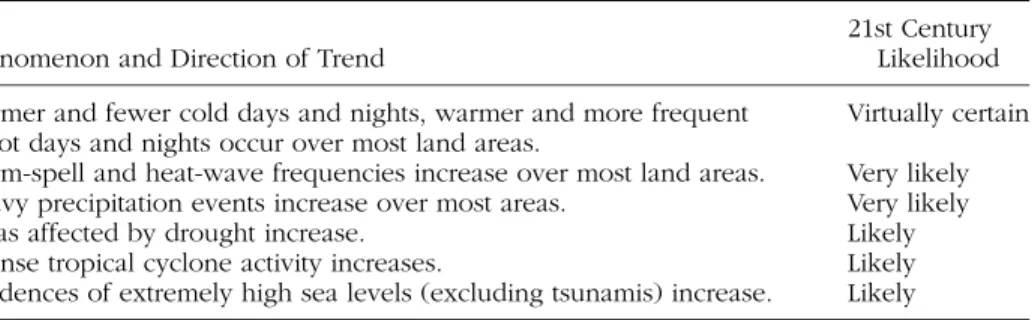
TABLE 1 Summary of Expected Effects inIPCC2007 Working Group I Report
21st Century
Phenomenon and Direction of Trend Likelihood
Warmer and fewer cold days and nights, warmer and more frequent Virtually certain hot days and nights occur over most land areas.
Warm-spell and heat-wave frequencies increase over most land areas. Very likely
Heavy precipitation events increase over most areas. Very likely
Areas affected by drought increase. Likely
Intense tropical cyclone activity increases. Likely
Incidences of extremely high sea levels (excluding tsunamis) increase. Likely
shifting as the effects become manifest, policy makers are still likely to be most responsive to consequences of climate change for which the scientific evidence is already compelling. This article therefore focuses on aspects of the climate problem that scientists already deem likely to emerge in the time horizon policy makers care about.
A 2007 Working Group report by the Intergovernmental Panel on Climate Change (IPCC) summarizes these effects by kind, likelihood, and impact on
different sectors such as agriculture and human health (see Table 1). The main conclusion is that “confidence has increased that some weather events and extremes will become more frequent, more widespread and/or more intense during the 21st century.”18
Not only does theIPCC consider the potential sectoral effects of climate
change, it also summarizes likely regional effects. Some areas (in Northern Europe, Russia, and the Arctic) may experience some positive effects of a warming climate in the short run, but long-run net consequences for all regions are likely to be negative. A number of regions, namely Africa and parts of Asia, are particularly vulnerable, given their geographic location and their limited governmental capacities to respond to flooding, droughts, and declining food production. Even the United States will face a number of negative consequences from droughts, heat waves, and storms.19
THEORIES OF NATIONAL SECURITY AND CLIMATE CHANGE National security has historically “meant protection from organized violence caused by armed foreigners.”20While national security traditionally refers to
protecting the state’s territorial integrity, it has a broader meaning than state
18All are likely continuations of trends already observed at the end of the twentieth century. See IPCC,Climate Change 2007: The Physical Science Basis.
19 IPCC, “Regional Climate Projections,”Climate Change 2007: The Physical Science Basis, http://www. ipcc.ch/pdf/assessment-report/ar4/wg1/ar4/wg1/ar4-wg1-chapter11.pdf (accessed 8 July 2007).
20The term “national security” was purportedly coined in the 1940s by James Forrestal,FDR’s secretary
of the navy. Del Rosso, “The Insecure State,” 183.
survival.21 Great powers like the United States have interests beyond their
borders for which they may be willing to fight. These vital interests may be tied to the country’s way of life and regarded as so important that a threat to them could be considered a challenge to national security.22
National security is often identified with the means of violence.23Policy
tools other than the use of force, however, could potentially better serve security goals. As Edward Kolodziej notes, America’s containment strategy for the Soviet Union was also built on support for “free governments and markets.”24 We can see the limits of thinking about strategy in primarily
military terms by looking at the costly U.S. occupation of Iraq that, by all
accounts, initially was focused on toppling Saddam Hussein’s government and paid less attention to Phase IV post-combat operations.
With interstate war less common and internal violent challenges becom-ing more important threats to state integrity, the discussion of state security being confined to external challenges makes less sense. Transnational terror-ism also suggests non-state actors can pose national security threats. Were the events of September 11, 2001 only a security concern because foreign agents carried them out? Are agency and intentionality required for a problem to constitute a national security threat? The characteristics of the attack—its suddenness, the large-scale loss of life, the impairment of the country’s crit-ical infrastructure, and the need for military mobilization to prevent mass hysteria—are perhaps more important than whether outside agents were re-sponsible. Some natural world phenomena, in their speed and level of inten-sity, could bring about results that resemble those wrought by armed external attack and trigger a similar kind of crisis response. In this view, direct na-tional security threats encompass those extraordinary harms that can swiftly kill or endanger large numbers of people and cause such large-scale dis-ruption that local public health, law enforcement, and emergency response agencies cannot contain the threat.25
What kinds of climate change effects could trigger such a situation? At the extreme end, a state ceasing to exist as an independent unit would be the worst consequence. Some island nations might be so vulnerable to climate change that they become virtually uninhabitable. Even if a country is too
21Robert J. Art,A Grand Strategy for America(Ithaca: Cornell University Press, 2003), 3. Protecting
the nation’s access to oil resources is an important national objective for which the United States (and countries like Japan) historically has been prepared to wage war.
22This was explicitly the Carter Doctrine which announcedU.S.willingness to defend interests in the
Persian Gulf through military means.
23Walt, “The Renaissance of Security Studies,” 21. 24Kolodziej, “Renaissance in Security Studies?” 428.
25This definition accords with that in Levy, “Is the Environment a National Security Issue?” 43; King
and Murray, “Rethinking Human Security,” 594. For a critique, see Paris, “Human Security: Paradigm Shift or Hot Air?” Another more expansive view sees national security threats as “problems that may cause extraordinary damage to the nation.” Peter Bergen and Laurie Garrett,Report of the Working Group on State Security and Transnational Threats(report prepared for the Princeton Project on National Security, 2006), http://www.princeton.edu/∼ppns/conferences/reports/fall/SSTT.pdf (accessed 24 August 2006).
large to be vulnerable to destruction, its seat of government could be decap-itated; physical threats to the seat of government itself are sometimes taken as a proxy of threats to the nation. For example, a badly located capital (such as Dhaka, Bangladesh) could be vulnerable from sea-level surges follow-ing storms. A storm-damaged capital might lack basic services—electricity, transport, and water—making it difficult for officials to report for work.
Even if the seat of government is unthreatened, the effects of natural world phenomena on the people may, when coupled with other triggers, do more to destabilize the government than an armed attack on the nation or its capital. A government that was unable or unwilling to respond to an extreme weather event or some epidemic might find itself unable to extend its monopoly on the use of force over its entire territory and challenged by armed rivals seeking to take advantage of the legitimation gap wrought by the state’s failure to respond. Those rivals could use the grievance of the failure to recruit supporters for acts of armed rebellion.26Climate change, if
it were to lead to an extreme weather event such as a heat wave or hurri-cane, could create the conditions for such a large-scale legitimation failure. The government, as the Sudanese did in Darfur, might also take advantage of latent tensions in that situation to foment unrest among different groups.27
We might also observe a humanitarian crisis involving large-scale numbers of people that a government is either unable or unwilling to help.28We might
also imagine that a weather event associated with climate change might dam-age a nation’s critical infrastructure (fuel refineries, electricity, water, sewdam-age, military installations) in ways that potentially put large numbers of people at risk, contribute to a government’s credibility problem, or threaten to se-riously undermine the country’s economy.29 In that instance, military assets
might be diverted for homeland humanitarian relief, taking them away from other tasks relevant to external security.
Countries may also have their national security affected by the spillover from neighbors. For example, if violence erupts in a neighboring state, refugees may cross the border, as they have between Sudan and Chad. This, in turn, may upset the demographic and political balance in the recipient country, as new arrivals potentially compete for resources with the existing population. Refugees may also, if they join with co-ethnics, destabilize the
26Kahl discusses this in terms of the “deprivation” hypothesis. Colin Kahl, “Demographic change,
Natural Resources and Violence:The Current Debate,” Journal of International Affairs56, no. 1 (Fall 2002): 261–63.
27Kahl writes of how the Moi government in Kenya used emergent land scarcities to encourage
armed violence against political rivals. Colin Kahl, “Population Growth, Environmental Degradation, and State-Sponsored Violence: The Case of Kenya, 1991–93,” International Security23, no. 2 (Fall 1998): 110–12.
28Nigel Purvis and Joshua Busby, “The Security Implications of Climate Change For TheUNSystem”
(submission to the United Nations High-Level Panel on Threats, Challenges, and Change, Woodrow Wilson International Center for Scholars, Washington,DC, 2004), http://www.wilsoncenter.org/topics/ pubs/ecspr10 unf-purbus.pdf (accessed 10 April 2007).
29The author thanks Troy White for this point.
country if they launch cross-border attacks or if other groups in the recipi-ent country worry about ethnic favoritism for the new arrivals.30 One could
imagine that persistent drought conditions or a hurricane could spur large numbers of people to cross borders in this way, requiring military mobiliza-tion to contain the populamobiliza-tion movement or provide essential services. To the extent that climate change is identified as potentially increasing the number or severity of extreme weather events, it would be implicated in these kinds of refugee crises. Finally, border disputes over territory and waters historically have been a major contributor to interstate disputes. A number of effects of climate change, such as extreme weather events or melting sea ice, could alter the territorial boundaries or waterways between states. In particular, melting of sea ice might open up previously inaccessible areas to transportation or to oil and gas exploration, potentially contributing to interstate competition over sovereign control of a territory and its natural resources.
In order for climate change to constitute a direct threat a country, at least one of the following conditions must be met (see Table 2).
TABLE 2 Criteria for Direct Threat to Homeland
Does climate change pose 1. Climate change threatens the existence of the country. a threat to the homeland? 2. Climate change could decapitate the seat of government.
3. Climate change threatens the country’s monopoly on the use of force.
4. Climate change could disrupt or destroy critical infrastructure.
5. Climate change could lead to such catastrophic short-run loss of life or general well-being as to undermine the government’s legitimacy.
6. Climate change could cause these effects on neighbors to spur refugee crises.
7. Climate change could alter the territorial borders or waters of the country.
Even if a country is not affected directly by climate change, it may feel its own national security is threatened by the effects of climate change on another country or region. Under what conditions might this occur? The region would have to be strategically significant in some way. A number of conditions would elevate a distant country’s strategic importance. I have identified a list, though not exhaustive, of different conditions that would plausibly inspire extraterritorial concern. Here I make specific reference to the United States, but the conditions could be applied to other countries that have regional (if not global) interests and reach.
First, countries typically are most worried about their own overseas mil-itary installations, embassies, and citizens. Because these diplomatic facilities and military installations are like extensions of the national territory, they take on more importance than their inherent strategic significance. A country’s
30Kahl calls this strategic use of scarcity “state exploitation.” Kahl,States, Scarcity, and Civil Strife,
26.
military would likely be called in to rescue government employees and cit-izens in the event of a weather emergency overseas. Climate change could have more strategic significance by threatening key overseas military instal-lations and therefore impair the country’s power projection internationally.
Aside from this more parochial interest, countries may be concerned about the broader security consequences of climate change on others. Those effects could be so large that they harm countries regarded as allies or crucial partners in a shared security venture, resulting in a disruption or impairment in security cooperation. The ally could find its stability threatened by climate change, requiring it to divert military resources from joint international efforts to contain domestic disorder. At an extreme, countries might be called upon to assist their allies in delivering emergency aid or containing disorder.
Climate change could also affect key nodes in the global economy with consequences so severe they might resemble the sort of supply and price disruptions experienced during the 1970s oil crisis. If a climate event could do damage on the scale of Katrina or the World Trade Center to an economically important location, other countries would be worried about the knock-on consequences for their economies and the potential need for economic or military intervention to stabilize markets and vulnerable places after the fact. Climate change, particularly through the effects of storms on key port cities or straits, could threaten important nodes, such as Shanghai, in the global economy. Relatedly, a country with important natural resource assets like petroleum-rich Nigeria could be vulnerable to the destabilizing effects of drought and other climate effects that, in turn, might have negative spillovers on the country’s exports through damage to pipelines, ports, etc.
The home country would be concerned about the effects of climate change on other countries that are perhaps less economically important to the global economy but where climate change-induced instability could lead to contagion or blowback. For example, a country like Indonesia could be buffeted by an extreme weather event, and the United States would be con-cerned for multiple reasons, including that the country with the largest Mus-lim population could become vulnerable to extremism (as well as uncertain-ties about an ally, sea-lanes, and access to oil).31
Finally, a country with a large diaspora population might have special affinity if the former home nation were to experience severe effects of cli-mate change. For example, if Cuba or Haiti were to experience an extreme weather disaster, Cuban- and Haitian-Americans would likely press the U.S.
government for a robust response. While this might not make those countries strategic in a traditional sense, it would be negligent for officials to fail to plan for a disaster that would inevitably draw in the United States.
31Indonesia, for example, is cited by a study by Marc Levy et al. as one of the world’s
coun-tries most vulnerable to both climate and political risk. Marc A Levy et al., “Assessment of Select Cli-mate Change Impacts on U.S.National Security” (working paper of the Center for International Earth
Science Information Network (CIESIN), Columbia University, 1 July 2008), http://www.ciesin.columbia.
edu/documents/Climate Security CIESIN July 2008 vl 0. ed.pdf (access 20 July 2008).
TABLE 3 Criteria for Strategic Importance
Is the region 1. The area is a location for an at-risk diplomatic mission, military base, or where a significant number of a country’s own expatriates live.
strategically significant?
2. The country is an ally in an important geostrategic mission. 3. The area is a conduit for transport of goods or military assets. 4. The region is a source of economically or militarily significant
natural resources.
5. The country is located in a politically sensitive region where instability could lead to contagion or blowback on the homeland.
6. The country is the original home of a large diaspora population.
Thus, in order for a country or region to qualify as one of high strategic importance, at least one (and possibly more) of the following conditions must be met (see Table 3).
For the final five conditions, however, where the country’s own over-seas assets are not threatened, other criteria would have to exist for the home country to feel threatened by these developments. In addition to geostrate-gic significance, the stakes involved must be high. A problem that is likely to remain internal to a country and not threaten the regime or the wider region has lower stakes than a conflict that potentially threatens to bring down the government or create broader cross-border disputes. The imminence of the threat, harkening back to the discussion in the first section, also has a bearing on the stakes. Threats that are likely to occur in the coming months or calen-dar year are going to be of more immediate concern to policy makers than those with long time horizons. Climate change is often implicated in glacier melting, as what appears to be taking place on the slopes of Mt. Kiliman-jaro in Tanzania.32 That glacier provides water for much of the surrounding
region. Its diminishment or disappearance could set in motion water short-ages that then contribute to resource scarcity-related conflicts. This, however, is something of a slow-motion tragedy. Thus, it would be harder to justify to policy makers thousands of miles removed that this problem carries the same urgency as more imminent dangers. An extreme weather event, how-ever, presents the kind of short-term shock and destabilizing effects that could generate interest from afar. Another consideration involves the num-ber of people potentially affected by a crisis. If the numnum-ber is small (in the hundreds or thousands), then, all else equal, a distant country would be less likely to feel that these developments will reach a threshold beyond which those effects could spillover, either regionally or transnationally. Moreover, aside from the strategic implications, such crises are more likely to engender humanitarian concern among domestic populations of distant countries when
32 IPCC, “Africa,”Climate Change 2007: Impacts, Adaptation and Vulnerability, Contribution of Work-ing Group II to Fourth Assessment Report of theIPCC(New York: Cambridge University Press, April 2007),
http://www.ipcc-wg2.org/ (accessed 19 July 2007).
the scale is identified as “large.” By large scale, tens of thousands of poten-tial victims seem a reasonable threshold that could command either strategic or humanitarian concern.33 Before threats become imminent, assessing the
stakes is harder, but analysts can rely on scientific evidence about physical vulnerability and indicators of political risk such as past history of conflict, inequality, and other well-known causes of internal conflict.
In order for an issue to be judged as one involving high stakes, at least one (and possibly two) of the following questions must be answered “yes” (see Table 4).
TABLE 4 Criteria for High-Stakes International Crises
Does the issue involve 1. The conflict threatens the regime.
high stakes? 2. The conflict potentially may spillover across borders. 3. The threat is imminent.
4. The conflict potentially endangers the lives of tens of thousands.34
Both attributes—strategic significance and scale—can take on either a high or low value,giving us four potential configurations (see Table 5). TABLE 5 Matrix for Extraterritorial Threat Assessment
Strategic Importance Stakes
High Strategic Importance Monitoring Situation (1) Strategic Threat (2) High
Low Strategic Importance Minor (3) Moral Challenge (4) ↑↓
Low Low stakes←−−−−−−−−−−−−→High stakes
In Figure 5, strategic threats are most likely cases where a state’s leaders will feel threatened by distant events. Minor cases are the least likely to engender foreign interest. Moving left to right, the stakes become higher. Moving south to north, the strategic significance of the region increases. Moral challenges are interesting cases where the stakes appear to be high, but the region lacks strategic significance. This typology can be useful in assessing the seriousness of specific threats once they emerge. In addition to direct threats to a state, climate change therefore potentially poses an extraterritorial threat to a country’s interests if a strategically important region faces a high-stakes threat.
33Whether or not ten thousand or more is large enough to induce attention could be tested
empiri-cally using opinion polls or records of past conflict casualty totals. One proxy for large-scale loss of life could be the number of refugees or internally displaced persons.
34Bergen and Garrett discuss similar criteria including the threat’s scale of material and
psycholog-ical impact, its speed and mobility, potential duration, and the adequacy and sustainability of response capabilities. Bergen and Garrett,Report of the Working Group on State Security, 12–13.
THE TERRITORIAL EFFECTS OF CLIMATE CHANGE ON THE UNITED STATES
To constitute a direct threat to U.S. national security, the effects of
cli-mate change would have to threaten the country’s existence, its capital, its monopoly on force, its critical infrastructure, or its broader legitimacy; create refugees; or alter the country’s territorial borders (including waterways).
Four proposed consequences of climate change potentially could im-pose these kinds of effects on the United States: (1) abrupt climate change, (2) rising sea levels, (3) extreme weather events, and (4) Arctic sea ice melt. Scientific uncertainty about abrupt climate change and the limited projected physical effects of rising sea levels before the latter part of the twenty-first century lead me to conclude that neither as yet constitutes a security threat for the United States. However, rising scientific concern about extreme weather events (hurricanes in particular) and Arctic summer sea ice melt are already sufficiently credible to warrant attention of security scholars and practitioners. Abrupt Climate Change
Futurists Peter Schwartz and Doug Randall in a widely cited 2003 paper com-missioned by the Pentagon wrote about the consequences of abrupt climate change for U.S.national security. They conjured a scenario of “thermohaline
collapse” beginning in 2010, precipitating a disruption in the flow of warm waters of the Gulf Stream that leads to a decline in temperature by more than five degrees Fahrenheit in North America and Europe.35
Until the late 1990s, climate change was thought to occur slowly over hundreds and thousands of years, thus giving human populations time to adapt. Scientists subsequently found significant evidence in the historical record that sharp changes in rainfall and temperature are possible over shorter periods of time, in as little as a few decades.36 Rising
concentra-tions of greenhouse gases may set in motion large-scale abrupt changes that could alter the possibilities for human habitation over large parts of the globe. Among the most worrisome consequences is a potential slowdown or col-lapse of thermohaline circulation (THC) of ocean currents, also referred to
as meridional overturning circulation (MOC). The Gulf Stream carries
tropi-cal warm water to the North Atlantic, contributing to more clement winter weather in Europe. Typically, water in the Gulf Stream becomes more dense as it loses its heat and becomes more saline from evaporation. By the time it reaches Europe, it is sufficiently dense to sink and then join the underwater conveyor back across the Atlantic to resurface later once warmed for the return trip. If that cooling salt water traveling across the Atlantic becomes
35Peter Schwartz and Doug Randall,An Abrupt Climate Change Scenario and Its Implications for
United States National Security(Emeryville,CA: Global Business Network, 2003).
36For an accessible account, see Eugene Linden,The Winds of Change: Climate, Weather, and the
Destruction of Civilizations(New York: Simon & Schuster, 2005).
too cool from increased ice-melt and rainfall, the water would stop sinking, and the conveyor could slow down, potentially setting off another ice age, with European temperatures most likely to plummet. A number of studies in recent years have found some preliminary evidence of a slow-down.37
Scientists do not understand these processes very well. They also believe these kinds of events are of low probability in the coming century. As the IPCC’s 2001 Third Assessment concludes, “The likelihood of many of
these changes in Earth systems is not well-known, but is probably very low; however, their likelihood is expected to increase with the rate, magnitude, and duration of climate change.”38 Six years later, understanding remained
patchy. Working Group I to the 2007IPCCFourth Assessment report concludes
that meridional overturning circulation (MOC) of the Atlantic Ocean will very
likely slow down during the twenty-first century but that it is very unlikely theMOC will “undergo a large abrupt transition during the 21st century.”39
The Schwartz paper, despite the imprimatur of the Pentagon and sci-entific basis, had more in common with the disaster movie, The Day After Tomorrow. Given the state of the science on abrupt climate change, the re-port’s discussion of scenarios is too alarmist and ultimately a distraction from the severe effects of climate change that scientists already believe are occur-ring. As paleoclimatologist Wallace Broecker writes, “As the one who first pointed out the link between the Atlantic’s conveyor circulation and abrupt climate changes, I take serious issue with both the timing and the severity of changes proposed in the Pentagon scenario.”40This is an area of climate
science where it is fair to say we need more information. Rising Sea Levels
One of the most provocative scenes in Al Gore’s documentaryAn Inconve-nient Truth shows images of the potential effects of sea-level rise on major populated areas around the world. Gore suggests that global warming might cause either the West Antarctic ice shelf or Greenland to melt or break up and slip into the sea. The consequence, he argues, would be a rise in sea levels by twenty feet, leaving parts of San Francisco, New York, Beijing, Shanghai, and Calcutta, among other coastal areas, under water and displacing hun-dreds of millions.41 Leaving aside the catastrophic international effects, the
37Wallace S. Broecker, “Thermohaline Circulation, the Achilles Heel of Our Climate System: Will
Man-Made Co2 Upset the Current Balance?”Science278, no. 5343 (28 November 1997): 1582–88; Ruth
Curry, Bob Dickson, and Igor Yashayaev, “A Change in the Freshwater Balance of the Atlantic Ocean over the Past Four Decades,”Nature426, no. 6968 (18–25 December 2003): 826–29.
38 IPCC, “The Potential for Large-Scale and Possibly Irreversible Impacts Poses Risks That Have Yet to be Reliably Quantified,” Climate Change 2001: Impacts, Adaptation and Vulnerability, http://www.grida.no/climate/ipcc tar/wg2/009.htm (accessed 8 April 2007).
39 IPCC, “Summary for Policymakers,” Climate Change 2007: The Physical Science Basis, 16, http://ipcc-wg1.ucar.edu/wg1/Report/AR4WG1 Print SPM.pdf (accessed 22 May 2008).
40Wallace Broecker, “Future Global Warming Scenarios,”Science304, no. 5669 (16 April 2004): 388. 41Albert Gore,An Inconvenient Truth: The Planetary Emergency of Global Warming and What We
Can Do About It(Emmaus,PA: Rodale Press, 2006), 198–208.
forced exodus of millions from New York and other low-lying American cities would clearly constitute unacceptable damage to the homeland and, if any-thing like Katrina, would require mobilization of the military to handle the humanitarian crisis.
Is a twenty-foot sea-level rise probable or potentially imminent? Gore does not spell out how quickly this process would occur, nor is he clear how likely this problem might be. Estimates of sea-level rise as a consequence of thermal expansion of the seas and glacier melt suggest only modest increases in sea level by 2080 or 2100. A 2004 study suggested that the estimates of mean global sea-level rise by 2080 range from twenty-five to thirty-seven centimeters. By 2050 the estimated number of additional people made vul-nerable to flooding as a consequence of rising sea levels range from five to sixteen million. Not until 2080 do any of the estimates rise to above fifty million additional vulnerable people. These high-end estimates are based on no change in coastal protection.42
The 2007 IPCC Working Group I projections also suggest only modest
sea-level rise by the end of the twenty-first century; across all emissions scenarios, the projections for the period 2090–99 compared to 1980–99 range from 0.18 meters to 0.59 meters. The report acknowledges these estimates do not include more dramatic changes to the Greenland or Antarctic ice sheets. If ice mass losses to Greenland are “sustained for millennia,” the report concludes this could eliminate the Greenland ice sheet and increase sea levels by seven meters. However, while there are some hints of more dynamic changes in ice sheets that could lead to greater sea-level rise, the
IPCC concludes, “understanding of these processes is limited and there is no
consensus on their magnitude.”43
Models of rising seas suggest the problem between now and 2100 is not especially serious, but they are not particularly good at capturing the already observed changes in glacier melt. Namely, they have difficulty explaining the sudden collapse of the Larson B Antarctic ice shelf between 1998 and 2002.44 Gore’s projection is ultimately based on analogs from one hundred
twenty thousand years ago when the earth was one degree warmer. Gavin Schmidt, aNASAscientist sympathetic to Gore’s movie, suggests that a
twenty-foot increase in sea levels might unfold over one thousand years.45We really
do not know what will happen. Thus, while the uncertainties associated with glacier melt deserve more investigation, this is not yet the core climate-related security challenge that we might think from media coverage.
42Robert J. Nicholls, “Coastal flooding and Wetland Loss in the 21st Century: Changes Under theSRES
Climate and Socio-Economic Scenarios,”Global Environmental Change14, no. 1 (2004): 79.
43 IPCC, “Summary for Policymakers,”Climate Change 2007: The Physical Science Basis, 17.
44Michael Oppenheimer, “Ice Sheets and Sea Level Rise: Model Failure is the Key Issue”
(commen-tary on Real Climate Weblog, 26 June 2006), http://www.realclimate.org/index.php/archives/2006/06/ice-sheets-and-sea-level-rise-model-failure-is-the-key-issue/#more-315 (accessed 15 February 2007).
45Katharine Mieszkowski, “Did Al Get the Science Right?” Spiegel Online, 21 July 2006,
http://www.spiegel.de/international/1,1518,427655,00.html (accessed February 2007). See also Richard A. Kerr, “A Worrying Trend of Less Ice, Higher Sea,”Science311, no. 5768 (24 March 2006): 1698–701.
Extreme Weather Events
Merely looking at the average level of sea-level rise misses two important aspects. First, there will be considerable variation. Some places, due to local geographic and geologic features, will experience higher sea-level rise than others in the next decades. Moreover, low-lying coastal areas, including New York City and southern Florida, will be subject to more frequent storm surges with extreme weather events, making the possibility for flooding and the need for emergency evacuation more urgent. Gradually rising sea levels cou-pled with extreme weather events thus pose a more pressing problem than sea-level rise on its own.
Until Hurricanes Katrina and Rita of 2005, most scholars believed that adaptive capabilities would in the short run insulate the United States from the worst effects of climate change.46 The intensity of those hurricanes—more
than any other event since the hot summer of 1988—put climate change on the radar of the U.S. policy community. Katrina was unprecedented in
modern history. The storm destroyed much of New Orleans, caused more than $80 billion in damages, killed more than one thousand eight hundred, and displaced more than two hundred seventy thousand people. Could the severity be related to climate change?
Scientists would not attribute a single event to climate change, but they might say climate change will make extreme storms like Katrina more likely. Among the hypothesized effects of climate change are the increased fre-quency and intensity of extreme weather events including hurricanes and days of extremely hot temperatures.47 Several recent studies make these
claims more plausible. A 2004 study by the United Kingdom’s Hadley Cen-tre on the European heat waves of 2003 (which contributed to the deaths of more than seventy thousand people48) found that human activity from
greenhouse gas emissions has likely doubled the risk of heat waves of that magnitude.49With respect to hurricanes, both assertions, that climate change
will increase their frequency and severity, are still debated, but there is more evidence to support the claim that climate change is contributing to the in-creased intensity of tropical storms. In the aftermath of Hurricane Katrina, the connection between hurricane intensity and climate change has become “per-haps the most hotly contested question in the scientific debate over climate
46Homer-Dixon and Levy, “Environment and Security”; Levy, “Is the Environment a National Security
Issue?” 189.
47 IPCC,Climate Change 2001: Impacts, Adaptation and Vulnerability, http://www.grida.no/climate/ ipcc tar/wg2/310.htm#7222 (accessed 1 February 2007).
48The International Disaster Database reported more than 71,807 deaths due to extreme temperature
in Europe in 2003, including the following country totals: Belgium (1,175), France (19,490), Germany (9,355), Italy (20,089), Netherlands (965), Portugal (2,696), Spain (15,090), Switzerland (1,039), and the United Kingdom (301).Center for Research on the Epidemiology of Disasters Emergency Events Database, http://www.emdat.be/ (accessed 28 May 2008).
49Peter A. Stott et al., “Human Contribution to the European Heat Wave of 2003,”Nature432, no. 2
(2 December 2004): 610–14.
change.”50 A 2005 study by Kerry Emanuel finds rising sea surface
temper-atures (which are thought to be a result of anthropogenic climate change) are correlated with the increased severity of cyclones.51 A 2006 paper by
Michael Mann finds rising sea-surface temperatures are also correlated with the frequency of cyclones.52 However, a 2006 study by Christopher Landsea
et al. attributes findings of increased severity of hurricanes to better data estimation methods.53A 2006 World Meteorological Society consensus
state-ment played down the possible connection, “The possibility that greenhouse gas induced global warming may have already caused a substantial increase in some tropical cyclone indices has been raised (e.g. Mann and Emanuel, 2006), but no consensus has been reached on this issue.”54That said, another
2006 study by Judith Curry et al. reviewed the evidence and concluded that only climate change can explain why there has been an increase in Category Four and Five hurricanes since the 1970s.55
The Working Group I contribution to the IPCC’s2007 Fourth Assessment
Report reinforces this finding and concludes that there has “likely” been an increase in the intensity of tropical cyclone activity in some areas, namely the North Atlantic, since 1970 and that trend is also “likely” to continue.56
The report also suggests, based on expert judgment rather than formal
50Juliet Eilperin, “Scientists Disagree on Link Between Storms, Warming,”Washington Post, 20 August
2006. For an accessible overview, see Chris Mooney,Storm World: Hurricanes, Politics, and the Battle Over Global Warming(New York: Harcourt, 2007).
51Kerry Emanuel, “Increasing Destructiveness of Tropical Cyclones Over the Past 30 Years,”Nature
436, no. 7051 (4 August 2005): 686–88.
52Michael E. Mann, “Atlantic Hurricane Trends Linked to Climate Change,”EOS87, no. 24 (13 June
2006): 233–44.
53Christopher W. Landsea et al., “Can We Detect Trends in Extreme Tropical Cyclones?”Science
313, no. 5786 (28 July 2006): 452–54. Similarly, Reid Basher and S´alvano Brice˜no, in their assessment of disasters in Africa, argue that increased vulnerability to weather events and better reporting may account for the rise in death and damages rather than any significant change in the numbers of events. Reid Basher and S´alvano Brice˜no, “Climate and Disaster Risk Reduction in Africa,” inClimate Change and Africa, ed. Pak Sum Low (Cambridge: Cambridge University Press, 2005), 269–81. For an overview of these debates, see http://www.realclimate.org/index.php/archives/category/climate-science/hurricanes/.
54World Meteorological Society (WMO),Statement on Tropical Cyclones and Climate Change
(state-ment presented at International Workshop on Tropical Cyclones,IWTC-6, San Jose, Costa Rica, November 2006), www.wmo.ch/pages/prog/arep/tmrp/documents/iwtc statement.pdf (accessed 21 February 2007).
55The proportion of Category Four and Five hurricanes increased by 100 percent between 1970 and
2004. Judith Curry et al., “Mixing Politics and Science in Testing the Hypothesis That Greenhouse Warming Is Causing a Global Increase in Hurricane Intensity,”Bulletin of the American Meteorological Society87, no. 8 (August 2006): 1025–37.
56The report concluded there was no clear trend that the number of hurricanes have increased. See IPCC, “Summary for Policymakers,”Climate Change 2007: The Physical Science Basis, 8. In an updated study, Kerry Emanuel finds methodology that climate change may reduce the frequency but increase the intensity of hurricanes in some places. Kerry Emanuel, “Hurricanes and Global Warming: Results from DownscalingIPCC AR4 Simulations,”Bulletin of the American Meteorological Society 89, no. 3 (March 2008): 347–67. Knutson et al., using a different method, model the effects of twenty-first century warming on hurricane numbers and intensity. They project that the frequency of Atlantic hurricanes will decline this century, but the frequency of the strongest storms (and the associated rainfall) will increase, though some elements of the destructive potential of hurricanes may decline. Thomas Knutson et al., “Simulated Reduction in Atlantic Hurricane Frequency under Twenty-first-century Warming Conditions,”Nature(May 2008, advanced on-line publication).
attribution studies, that the human contribution to this observed trend was identified as “more likely than not.” It makes the same conclusions for other extreme weather events including heavy precipitation events, areas affected by droughts, heat waves, and the incidence of extreme high sea levels.57
Not all regions of the world will be equally vulnerable to climate change, but even rich countries may find their adaptive capacity taxed by climate change. A 2006 Columbia University report sought to rank order the climate vulnerability of one hundred countries based on each country’s exposure to climate change and adaptive capacity. Looking out to 2050 and 2100, it compares a number of emissions scenarios and temperature ranges and finds that poor countries in Africa and South America will be most vulnerable, with rich countries of the advanced industrialized world in Europe and North America least vulnerable. When looking at the potential impact of extreme events for a range of scenarios, however, the study finds that even North America and Europe will be “extremely vulnerable” as early as 2050.58Thus,
unlike abrupt climate change and sea-level rise, the links between climate and extreme weather events, including but not limited to tropical cyclones, present a stronger case for what should worry policy makers.
This still begs the question of whether or not weather events such as Katrina represent a national security risk for the United States in terms of the criteria in Table 2. Unlike some smaller island nations, the United States is not at risk from some catastrophic weather event that would uniformly affect the whole country. As for theU.S. capital, extreme weather events are
not unknown to Washington,D.C.Hurricane Isabel in 2003 led to flooding in
nearby Alexandria, Virginia. A 1933 storm led to widespread flooding in the region, including Hains Point, only a few miles from the White House. Still, the capital is likely to be much less vulnerable than New Orleans due to that city’s peculiar dependence on ill-maintained levees.
The post-storm anarchy that affected New Orleans constituted a tempo-rary challenge to the state’s monopoly over violence. At its peak, the number of soldiers mobilized in the aftermath of Katrina exceeded seventy thousand, including twenty-two thousand active duty and more than fifty thousand of the National Guard (about 10 percent of the total Guard strength), in what resembled one of the overseas humanitarian missions to which the military has grown accustomed.59 In the 2006 Quadrennial Defense Review, the U.S.
57The terms “likely” and “more likely than not” have specific meaning in terms of assigned
prob-abilities, “likely” equal to greater than 66 percent with “more likely than not” equal to greater than 50 percent.IPCC, “Technical Summary,”Climate Change 2007: The Physical Science Basis, 23.
58Gary Yohe et al., “A Synthetic Assessment of the Global Distribution of Vulnerability to Climate
Change from theIPCCPerspective that Reflects Exposure and Adaptive Capacity,” (Palisades,NY:CIESEN, Columbia University, 2006), http://www.ciesin.columbia.edu/data/climate/ (accessed 16 April 2007).
59Congressional Research Service (CRS), National Guard Personnel and Deployments: Fact Sheet
(Washington,DC: Library of Congress, 10 January 2007), http://www.fas.org/sgp/crs/natsec/RS22451.pdf
(accessed 8 July 2007); Government Accountability Office,Hurricane Katrina: Betters Plans and Exercises
Department of Defense recognized the reality that military assets would likely be called upon in the event of future domestic emergencies and would need to coordinate with other agencies.60Does mobilization of the military for
dis-aster relief constitute a national security problem? To the extent the mobiliza-tion is large and lasts long enough to divert the country’s forces and strategic establishment from external defense for an extended period, then yes. If cli-mate change requires more frequent mobilization of the military for domestic disasters, then this could ostensibly take away from overseas missions.
In addition to producing humanitarian catastrophe and lawlessness, Katrina also posed a threat to the country’s critical infrastructure, notably oil refineries but also electricity and the port of New Orleans. Prior to the 2005 hurricanes, the Gulf Coast supplied about 56 percent of domestic crude oil (nearly 20 percent of the country’s total, including imports) and supplied 47 percent of the nation’s refinery capacity. Katrina and Rita, by damaging platforms, import terminals, refineries, and the electric grid, led to the re-gion’s oil and gas supply being shut-in for an unprecedented length of time. Thirty percent of the country’s refinery capacity was also affected in the im-mediate aftermath of the storms.61 By year’s end, the damage to refinery
capacity resulted in a loss of 188 million barrels of refined product, about 5 percent of that year’s total.62
Economist William Nordhaus ran a simulation of the potentialGDPlosses
from the increased frequency and intensity of hurricanes. He projected that the average annual hurricane damages will increase by 0.06 percent of GDP
(from 0.062 percent ofGDPto 0.126 percent ofGDP) due to the intensity effect
of a CO2-equivalent doubling. Looking at the United States, he estimates that
climate change will make a rare intense hurricane like Katrina more likely, a once in every twenty-eight years event with climate change and a once every eighty-six years without.63
Needed to Guide the Military’s Response to Catastrophic Natural Disasters(Washington,DC: GAO, May 2006),
http://www.gao.gov/new.items/d06643.pdf (accessed 7 July 2007).
60 U.S.Department of Defense,Quadrennial Defense Review Report(Washington,DC:DOD, 6 February 2006), http://www.defenselink.mil/pubs/pdfs/QDR20060203.pdf (accessed 8 July 2007).
61Paul J. Hibbard, U.S. Energy Infrastructure Vulnerability: Lessons from the Gulf Coast
Hur-ricanes (Boston: Analysis Group, March 2006), http://www.energycommission.org/files/contentFiles/ Infrastructure%20Vulnerability%20Hibbard 44873b7081ec6.pdf (accessed 1 February 2007).
62Kristi A. R. Darby, David E. Dismukes, and Seth E. Cureington, “Hurricane and Energy
Infras-tructure in the Gulf of Mexico: Impacts and Challenges” (paper presented at the Gulf Coast Associ-ation of Geological Societies 56th Annual Convention, Lafayette, Louisiana, 25–27 September 2006), www.searchanddiscovery.net/documents/2006/06086gcags sec abs/images/abstract.darby.et.al.pdf (ac-cessed 1 February 2007); Minerals Management Service,Hurricane Katrina/Hurricane Rita Evacuation and Production Shut-in Statistics Report as of Monday, June 19, 2006(report prepared forU.S.Department
of the Interior, 21 June 2006), http://www.mms.gov/ooc/press/2006/press0621.htm (accessed 1 February 2007).
63William Nordhaus, “The Economics of Hurricanes in the United States” (NBER working
pa-per no. 12813, National Bureau of Economic Research, Cambridge, Massachusetts, December 2006), http://www.nber.org/papers/w12813 (accessed 4 September 2007).