The research reported in this thesis was carried out at the Open Universiteit in the Netherlands at the Welten Institute – Research Centre for Learning, Teaching and Technology,
and under the auspices of SIKS, the Dutch Research School for Information and Knowledge Systems.
SIKS Dissertation Series No. 2017-48 © Angel Suarez, 2017
Printed by Datawyse | Universitaire Pers Maastricht Cover design: Johan Lataster
ISBN/EAN: 9789492739025
Collaborative inquiry-based learning
Proefschrift
ter verkrijging van de graad van doctor aan de Open Universiteit op gezag van de rector magnificus
prof. mr. A. Oskamp ten overstaan van een door het College voor promoties ingestelde commissie
in het openbaar te verdedigen op vrijdag 1 december 2017 te Heerlen
om 13:30 uur precies door
Ángel Suárez Fernández
Promotor Prof. dr. M.M. Specht Open Universiteit Co-promotor Dr. S.G.C. Ternier Open Universiteit
Overige leden van de beoordelingscommissie
Prof. dr. M. Milrad
Linnaeus University
Prof. dr. J. Multisilta
Tampere University of Technology
Prof. dr. U. Schroeder
RWTH Aachen
Prof. dr. H.J. Drachsler
Contents
List of Figures 8 List of Tables 10 List of Graphs 11 Preface 13 General introduction 15Outline of the thesis 17
Section I Theoretical Foundations 21
Chapter 1 A review of the types of mobile activities in inquiry-based learning 23
1.1 Introduction 25 1.2 Theoretical Background 26 1.3 Analytical framework 29 1.4 Method 30 1.5 Results 32 1.6 Discussion 40 1.7 Conclusions 43
Section II Design & Implementation 45
Chapter 2 Supporting inquiry-based learning with Google Glass® (GPIM) 47
2.1 Introduction 49
2.2 Background 49
2.3 Extending PIM for Google Glass 53
2.4 Discussion and future work 58
Chapter 3 DojoIBL: online inquiry-based learning 59
3.1 Introduction 61
3.2 Inquiry design 61
3.3 The DojoIBL cloud-based architecture 67
3.4 DojoIBL usage 68
3.5 Conclusion 70
Chapter 4 DojoAnalytics: A Learning Analytics interoperable component for
DojoIBL 71
4.1 Introduction 73
4.2 Background 74
4.4 Use case implementations 84
4.5 Conclusions 88
Chapter 5 Interoperable components for inquiry-based learning 91
5.1 Introduction 93
5.2 Related work 93
5.3 IBL architectural requirements 94
5.4 IBL architecture and components 95
5.5 Application scenarios 101
5.6 Conclusions and future work 106
Section III Evaluation 107
Chapter 6 Structuring engagement in mobile inquiry-based learning 109
6.1 Introduction 111
6.2 Structuring inquiry-based learning: the weSPOT model and toolkit 112
6.3 Method 114
6.4 Results and discussion 118
6.5 Conclusion 121
Chapter 7 Nurturing communities of inquiry: A formative study of the DojoIBL
platform 123
7.1 Introduction 125
7.2 Theoretical background 126
7.3 Research design 128
7.4 Affordances of DojoIBL 129
7.5 First formative assessment 133
7.6 Results 134
7.7 Discussion 135
7.8 Future work and conclusions 136
Chapter 8 The process is the product: Pursuing students’ agency throughout the
communities of inquiry 139 8.1 Introduction 141 8.2 Background 141 8.3 DojoIBL 144 8.4 Method 145 8.5 Results 149 8.6 Discussion 154
8.7 Conclusions and future work 158
General Discussion 159
Main findings and conclusions 161
Implications for educational practices 167
Implications in current society 168
Conclusions 170 References 171 Appendices 183 Appendix A 184 Appendix B 187 Appendix C 187 Appendix D 189 Summary 193 Samenvatting 197 Acknowledgements 201
List of Figures
Figure 1: Research methodology according to the PRISMA framework. 31
Figure 2: Inquiry-based learning model from weSPOT. 50
Figure 3: The weSPOT services used by the PIM. 52
Figure 4: Inquiry Workflow Engine (left) and the Personal Inquiry Manager
(right). 53
Figure 5: Learners' perspective from the Google Glass. 55
Figure 6: 1) Capture wonder moment, 2) record hypothesis and 3) collect
evidences. 56
Figure 7: Workflow of the GPIM. 57
Figure 8: Catalogue of inquiry templates offered by DojoIBL to create an
inquiry. 62
Figure 9: Learner's view of an inquiry group. 64
Figure 10: Phase view of an inquiry group. 65
Figure 11: Timeline view of the inquiry group. 65
Figure 12: Calendar view of an inquiry group. 66
Figure 13: Simplified DojoIBL architecture. 67
Figure 14: Student’s view of two phases and the activities of an inquiry
structure. 75
Figure 15: List of inquiry groups for one inquiry structure. 77
Figure 16: Left: Timeline show the last comments. Right: Chat messages sent
to the inquiry group. 78
Figure 17: The calendar for an inquiry group shows two activities. 78
Figure 18: The three layers of the DojoIBL architecture: Presentation Layer,
Application Layer and Data Layer. 80
Figure 19: Software component diagram depicting how the DojoIBL
components are wired together. 81
Figure 20: Learning path visualization in Lemo Tool. 86
Figure 21: Desired learning path. 86
Figure 22: Architectural disposition of both backend. 87
Figure 23: IBL data model. 96
Figure 24: Authorization flow based on OAUTH protocol. 98
Figure 25: Federation of notifications. 98
Figure 26: Data Collection in IWE (left - desktop) and PIM (right – mobile
app). 102
Figure 27: weSPOT architecture. 103
Figure 28: Software artefacts and APIs. 104
Figure 29: DojoIBL architecture. 105
Figure 31: Three screen shots of the Personal Inquiry Manager (PIM) mobile
app for android. 113
Figure 32: Summary of the research study design. Three conditions. 116
Figure 33: Changes in the motivation score over time for the HAVO and the
VWO cohorts. 120
Figure 34: Visualization of the inquiry process on the Colony on Mars activity. 130
Figure 35: Example of activity type: discussion. 132
Figure 36: Inquiry timeline with the chat visible on the right side. 133
Figure 37: Student’s view in DojoIBL with the chat placed at the right and the
structure of the inquiry on the middle. 144
Figure 38: The 12 types of mobile activities analyzed through the 6 agency
List of Tables
Table 1. Types of mobile activities supporting access to content. 33
Table 2. Learner’s agency dimensions for the types of mobile activities
providing direct instruction 34
Table 3. Types of mobile activities supporting access to content. 34
Table 4. Learner’s agency dimensions for the type of mobile activities
providing access to content. 36
Table 5. Types of mobile activities supporting data collection processes. 36
Table 6. Learner’s agency dimensions for the type of mobile activities
providing data collection. 37
Table 7. Types of mobile activities providing peer-to-peer interaction. 38
Table 8. Learner’s agency dimensions for types of mobile activities providing
peer-to-peer interaction support. 38
Table 9. Types of mobile activities providing contextual support. 39
Table 10. Learner’s agency dimensions for types of mobile activities providing
contextual support. 40
Table 11. Learner’s agency dimension for each type of mobile activities. 41
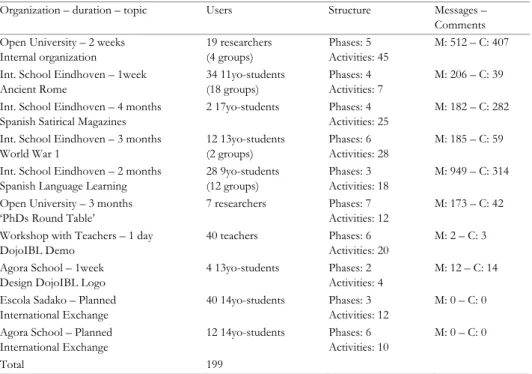
Table 12: Information about the recent usage of DojoIBL in real scenarios. 69
Table 13: Internal DojoAnalytics API to communicate with the rest of the
components in DojoIBL. 82
Table 14: xAPI specification for DojoAnalytics. 83
Table 15: IBL engine API and specification. 97
Table 16: Mobile notification API and specification. 99
Table 17. Messaging API and specification. 100
Table 18. Data collection API and specification. 101
Table 19: Overview of knowledge gain on the different groups as also in higher
and lower achiever groups. 118
Table 20: Cognitive effort for treatment groups and cohorts. 119
Table 21: Types of contributions. Group A = Atheneum + Gymnasium,
Group B = HAVO. 120
Table 22: Distribution of activities of the inquiry process. 147
Table 23: Roles selected by the students before the inquiry activity. 147
Table 24: Students’ turns taken during the inquiry project. 150
Table 25: Students’ turns per CoI presences in the different channel and
context of the inquiry project. 152
Table 26: Positive feedback and improvements for DojoIBL extracted from
the final reflexions. 153
Table 27: Complete list of reviewed studies. 184
List of Graphs
Graph 1: Example of the visualization of learning statements in LearningLocker. 85
Graph 2: Engagement comparison between the experimental groups with 6
phases with and without the PIM. 121
Graph 3: DojoIBL scores comparison to benchmark. 135
Preface
Richard P. Feynman said, “I was born not knowing and have had only a little time to change that here and there.” This way, the Nobel laureate physicist summed up his lifetime of learning in “The pleasure of finding things out.” Looking in retrospective, I completely identify myself with his idea. My memories from the school and college years bring me back to a place where the information was structured and the opportu-nities to question the information given were minimal. My generation has been trained to memorize facts and concepts and not so much on reflecting and deepen on the subjects taught. Nevertheless, I consider myself a privileged person, because I grew up at a time when opportunities for my generation to enter higher education were higher than ever before. I grew up in Asturias, a small region in the north of Spain in a middle class family of miners and farmers. I was blessed with their example, their principles, and the opportunities received to have such a comfortable and easy school and bache-lor live without any worries. In 2010, after I obtained my degree in Computer Science at the University of Oviedo (Spain), I gained –for two years– some professional expe-rience in a very small company that taught me valuable lessons about working in a team and being passionate about my work. By the end of 2011, while I was still work-ing at the company, I started a Master degree in Web Engineerwork-ing. Alternatwork-ing study and work strengthened my perseverance and resilience, and prepared me to what was about come. In 2013, I quitted my job and I accepted a grant to move to the Nether-lands for finishing my Master thesis at the Open Universiteit. Back then it was quite a change. I was leaving my comfort zone for the first time, without the proper English language proficiency nor any expectation. That was my first contact with such an in-credible team at CELSTEC (the former institution of the Welten Institute).
From those first six months at the Open Universiteit, I distinctly remember a warm morning before the summer, sharing a coffee with Prof. Dr. Marco Kalz at Bologna building (at the Open Universiteit). We were at the ground floor, on the little corner right in front of the cafeteria. Although this place does not exist anymore, at that time this small canteen bar with always dirty metal cups, a smelly fridge and certainly a really bad coffee was the meeting point for colleagues of our department. I still remember the taste of that sour metallic coffee, when he succinctly proposed the idea of becom-ing a PhD student at CELSTEC. Eventually, at that moment this journey that lasted for 4 roller-coaster-years began. By the end of the summer of 2013, I was facing the topic of ‘Inquiry-based Learning supported with Mobile Technology’.
Looking closely at the cover of this thesis the reader can see a Triskelion/Triskele, which is an ancient Celtic symbol rooted in the Asturian1 culture that represents the eternal evolution through knowledge. In this thesis, the Triskelion symbol is used to give structure. First, the legs resemble the three sections of thesis; the theoretical foun-dations, the design and implementation and the evaluation. Second, the Triskelion symbolises how the three fundamental elements of this thesis –inquiry-based learning, learners’ agency and technology– figuratively converge towards a unique construct that is the main research question. But, before presenting it, the theoretical underpinnings of these three fundamental elements will be explained. Right after, the outlining of sections will summarize how these fundamental elements have been developed across the thesis.
The first element of inquiry-based learning is collaboration. This thesis builds upon the Social Constructivism theory (Vygotsky, 1978) and the Community of Inquiry framework (Garrison, Anderson, & Archer, 2000; Pierce, 1955). On the one hand, the social constructivism theory emphasised a vision of learning in which knowledge is constructed through interactions with peers. It was developed by the soviet psycholo-gist Vygotsky, who challenged Piaget’s premise that learning could be understood without its social context. As a result, Vygotsky defined the “Zone of proximal opment” as an area between the actual development and the level of potential devel-opment that the learner can achieve working on collaboration with others. His idea deepened the argument that social interaction plays an essential role in the develop-ment of cognition. On the other hand, the Community of Inquiry (CoI) framework (Garrison et al., 2000), that defined learning as a continuous exploration of a topic of the students’ interest through sustainable social interactions, combined both the in-quiry and the collaborative aspect. In brief, the combination of both provides the first element of this dissertation, collaborative inquiry-based learning.
The second element is learners’ agency. Collaborative inquiry-based learning in or-der to be successful requires collective responsibility (Scardamalia, 2002), in which the responsibility of the success of the group is distributed across inquiry participants. One challenge of this thesis is to foster learners’ individual accountability in a way that learners are able to take control over their learning (Benson, 2007). However, the liter-ature suggests that implementing successful collaborative inquiry-based learning pro-cesses requires a tight support and structure from the teacher (Hmelo-Silver, Duncan, & Chinn, 2007; Kirschner, Sweller, & Clark, 2006). Therefore, another challenge relat-ed to the learners’ agency is to balance the support from the teacher for inquiry-basrelat-ed learning in a way that collaborative inquiry-based learning and learners’ agency are not hindered.
Last, the third element represents ubiquitous technology. The rise of technology and its fast adoption has enabled the possibility for technology to become mainstream for education. Technology has considerably changed the nature of learning since
top, mobile and wearable devices, together with cloud-based solutions made learning more accessible. Klopfer and Squire (2007) discussed how the relation between people and technology has affected the conditions for non-formal or informal learning. In-stant messaging, real-time feedback, push and pull mechanisms or the cloud-based solutions have also changed the relation between the learners, teachers and the envi-ronments. Thus, the challenge is to make use of these properties in order to flexibly support the first two fundamental elements in a wide variety of inquiry contexts.
All in all, in the same way the Triskelion symbolises a holistic vision of those inde-pendent elements converging towards the middle, the main research question unifies the three fundamental elements as follows:
How can an infrastructure be designed, implemented and evaluated in a way that it flexibly supports and structures collaborative inquiry-based learning pro-cesses making learners more accountable for their learning?
Outline of the thesis
This dissertation consists of eight chapters distributed in the following three sections: theoretical foundations (Section I), design and implementation (Section II) and eval-uation (Section III). The different sections focus on specific parts of the research question. In this way, the first section addresses the topic of learners’ agency in the context of mobile inquiry-based learning. The second section focuses on the design and implementation of tools to support collaborative inquiry-based learning. Finally, the third section covers the evaluation of the tools developed in section II and the theoretical background of section I.
Taking a look at the chapters, in section I, chapter 1 investigates the current op-portunities that learners have to exercise their agency in inquiry-based learning when supported with mobile technology. Since mobile devices have changed the nature of learning and the relation between people and technology, the objective of the chapter was to understand to what extent such adoption of mobile technology has influenced learners’ agency while doing inquiry-based learning. Besides the agency aspect, this chapter also provides a holistic vision of the instructional designs used in mobile in-quiry-based learning.
Section II focuses on the design and implementation of an infrastructure to sup-port inquiry-based learning. It builds upon four chapters that present the GPIM appli-cation, the DojoIBL platform, the DojoAnalytics component and the underlying infra-structure that supports all of them. Chapter 2 describes a wearable application for inquiry-based learning based on Google Glass (GPIM). Taking advantage of the Head-Up Displays (HUDs) technology, this chapter aims at supporting more personal and meaningful IBL experiences by offering hand-free interaction with the environment. The main idea is to enhance contextualized learning by having an unobtrusive device that enables learners to have more control over their learning. Chapter 3 presents
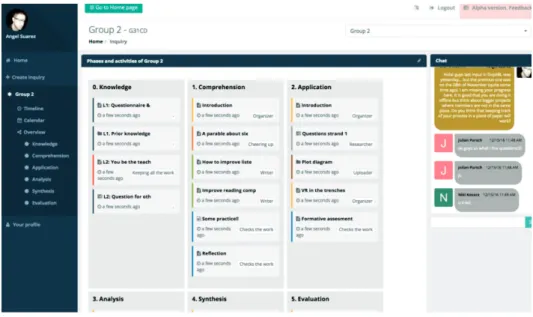
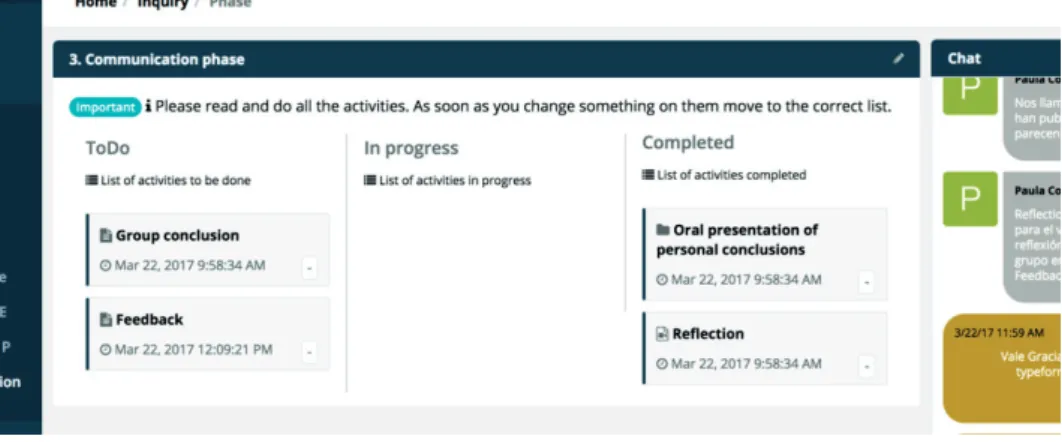
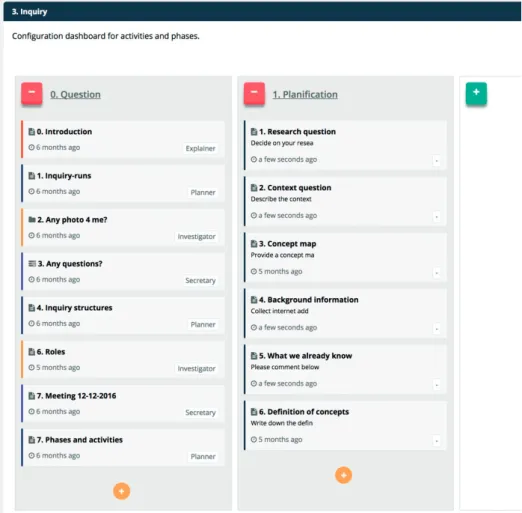
DojoIBL, a cloud-based solution to flexibly support collaborative inquiry-based learn-ing processes. DojoIBL is meant to facilitate teachers and students’ processes. Learners can structure, organize and collaborate with their peers through the platform. The teachers can flexibly create inquiry structures, orchestrate multiple inquiry processes and keep track of the learners’ progress. In this chapter, the DojoIBL functionalities like instant messaging, notifications, timeline and calendar are described. Additionally, this chapter stresses the capabilities of DojoIBL to blend formal (browser-based) learning and informal (mobile) learning, as well as to foster learners’ agency through the use of roles. As DojoIBL moves learning beyond the classroom walls, teachers and students need more means to keep track of the inquiry progress. In chapter 4 the integration of DojoIBL with a Learning Analytics dashboard is described. The chapter presents DojoAnalytics, a component that acts as a proxy to connect DojoIBL with external Learning Analytics dashboards. This allows teachers and learners to have visu-alizations and more detailed information both about their personal development and the inquiry topic. To demonstrate that DojoIBL interoperates with other external LA dashboards, two successful implementations are presented. Last, as a wrap up for this section II, chapter 5 describes the underlying architecture behind the three tools de-veloped in this section. The quick adoption of mobile/desktop technology to support based learning calls for the development of a reusable architecture for inquiry-based learning solutions. The chapter presents an inquiry-inquiry-based learning architecture that builds upon small, dedicated and reusable components. To demonstrate the ap-plicability of this inquiry-based architecture and components, two implementations are presented to illustrate how the specification facilitates building an inquiry-based learn-ing solution from scratch.
The evaluation section focuses on the research question as a whole. It consists of three chapters that present the evaluations done with the infrastructure. Chapter 6
begins with an experimental study about healthy food. The objective is to compare how using different inquiry structures influence students’ engagement, cognitive load, and motivation. For that, while the control group uses a less structured inquiry with one phase, the experimental group uses a more structured inquiry following the weSPOT inquiry model (six phases). In the experiment 164 secondary school students (age 13-15) have participated. Chapter 7 presents a formative study about the Do-joIBL platform. Besides the elaboration on the theoretical and technological underpin-nings of DojoIBL, the chapter describes an evaluation done with experts in the field of collaborative learning about perceived usability and user experience. Finally, chapter 8
reports on an intervention to investigate the capabilities of collaborative inquiry learn-ing in steerlearn-ing the co-creation of knowledge and shared understandlearn-ing. The objective is to understand how these processes can be supported and sustained more efficiently. For that, this chapter elaborates on the use of roles supported with DojoIBL as a vehi-cle to enact students’ agency and sustain better communities of inquiry. Using a non-experimental research design, the two groups of five participants were given the same
opportunities. The results provide a list of practical guidelines that can be used to max-imize the efficiency of DojoIBL supporting collaborative inquiry-based learning.
This dissertation concludes with the General Discussion, which summarizes the outcomes of each study, general interpretations and implications for practical education.
Section
I
Theoretical Foundations
Chapter
1
A review of the types of mobile activities in
inquiry-based learning
Inquiry-based learning is increasingly suggested as an efficient approach for fostering learners’ curiosity and motivation. It helps learners to develop their ability to work in com-plex and unpredictable environments making them more critical thinkers and agentic learners. Although, mobile technology is a suitable support for this learning process, there is a lack of practical strategies for educational practitioners to enact the right balance between enabling agency and supporting the students through the mobile technology. Thus, we con-ducted a literature review that analyzed 62 studies on mobile inquiry-based learning. The analysis focused on the level of agency supported by mobile technology. This review study provided two main results: first, a classification of the most common mobile activities used in inquiry-based learning. The second result consists of an analytical framework to assess the level of agency supported by the different types of mobile activities. Finally, the review presents insights on how this analytical framework can be used by educational practitioners to identify mobile activities that effectively balance learners’ agency and scaffolding with mobile technology.
This chapter is based on: Suárez, Á., Specht, M., Prinsen, F., Kalz, M., & Ternier, S. (2017). A review of the types of mobile activities in inquiry-based learning. Manuscript submitted for publication.
1.1 Introduction
The term inquiry-based learning (IBL) has been defined in multiple ways in literature. Originally, it referred to a continuous exploration of a topic of students’ interest, in which learners engage in social interactions to generate shared understanding (Piaget, 1959; Pierce, 1955; Vygotsky, 1978). De Jong & Joolingen (1998) defined it as an edu-cational strategy based on discovering knowledge that fosters active participation and learners’ responsibility. Pedaste in 2006 referred to inquiry-based learning as an ap-proach in learners solving problems by using their skills. Recently, inquiry-based learn-ing has been increaslearn-ingly suggested as an efficient approach for fosterlearn-ing students’ curiosity and motivation by linking science teaching in schools with informal learning and phenomena on everyday life (Specht, Bedek, Duval, & Held, 2012). Such strategy can help students to develop their ability to work on unpredictable and complex envi-ronments, especially in the current, ever-changing, technology driven, society. In this context, research has shown that mobile technology can be a great support for leverag-ing the opportunities for learners to engage in a broader range of informal learnleverag-ing activities, especially to make learners responsible for executing learning actions. Mobile technology provides opportunities for more personalized and autonomous seamless experiences across learning contexts (Thüs et al., 2012), in which learners have free-dom and power to make proactive decisions. Sharples, Taylor and Vavoula (2005) suggested that learners’ agency lies in a socio-cultural synergy between all the individu-als willing to advance knowing, instead of relying on the individual learner. The associ-ated shift in the locus of control over learning (Chen, Tan, Looi, Zhang, & Seow, 2008; Sharples et al., 2005) may be facilitated by seamless learning designs that distribute agency, to make learners more self-directed.
However, increasing learners agency and offering less support can lead to less de-sirable learning outcomes (Sawyer, 2005) or to learners struggling to select, organize and integrate relevant information (Kirschner et al., 2006; Mayer, 2004). The division of activities between teachers and students, the required level of teachers’ involvement, and the importance of students’ autonomy and agency in their own learning remain important concerns to achieve efficient inquiry-based learning processes (Brown & Campione, 1994; Drexler, 2010; Kirschner, Sweller, & Clark, 2006; Klahr & Nigam, 2004; Lumpe & Oliver, 1991; Mayer, 2004; Sha et al., 2012; Song, Wong, & Looi, 2012). The issue of learners’ agency in mobile inquiry-based learning has been superfi-cially addressed in Nouri, Cerratto-Pargman, Rossitto, and Ramber (2014). The study that compared two inquiry-based teaching approaches with and without mobile tech-nology, put the focus on the different actions that were supported with mobile technolo-gy and how those actions had an effect on the degree of learners’ agency and control. This review deepens on this analysis of the actions supported with mobile technology in inquiry-based learning and how learners’ agency is affected. In the remainder of this manuscript, these actions supported with mobile technology will be called mobile ac-tivities. Thus, the objective is to provide more guidance for practitioners to enable an
efficient balance of learners’ agency and scaffolding using mobile technology for in-quiry-based learning.
This review focuses on how mobile activities in inquiry-based learning enable the distribution of agency and the balance of student support. To this end, this review is structured as follows: Section 2 underpins the theoretical background upon which this review builds: self-directed learning and agency in mobile learning and seamless inquiry support. Section 3 presents the classification framework derived, used to analyse the studies. Section 4 summarizes the outline of the methodology used. Section 5 presents the results based on the classification framework. Section 6 elaborates on the results achieved and discusses its possible implications. Last, section 7 provides the conclu-sion of this review with the limitations of this study and the outline for further re-search on the field of mobile inquiry-based learning.
1.2 Theoretical Background
A considerable amount of review studies has been published lately on inquiry-based learning, mainly focusing on the effect of the inquiry approaches on learning outcomes and guidance. A recent literature study (Alfieri, Brooks, Aldrich, & Tenenbaum, 2011) investigated the effects of guidance in discovery learning approaches comparing unas-sisted discovery learning versus explicit instruction and enhanced discovery learning versus explicit and unassisted learning. The comparison showed that unassisted IBL did not benefit learners, while scaffolding and worked-out examples did. These results were aligned with the meta-analysis (Furtak, Seidel, Iverson, & Briggs, 2012) about experimental and quasi-experimental inquiry-based learning studies, in which it was suggested that teacher-led inquiry lessons had a larger effect on students’ learning than those that were student-led. Another analysis of the literature focused on the structure and phases of the inquiry (Pedaste et al., 2015). The results presented a synthesized framework that proposed a general structure for inquiry-based learning in order to ensure effective implementation of inquiry-based learning processes. More recently, a meta-analysis (Lazonder & Harmsen, 2016) has also confirmed that guidance is pivotal to successful inquiry-based learning. In this study authors compared the effectiveness of different types of guidance for a different range of age. The results demonstrated that learners who received some kind of guidance improved learning outcomes, but the specificity of the guidance received and the age of the learners did not affect the re-sults.
Other more recent reviews have been focusing on inquiry-based learning supported with mobile technology. Zydney & Warner (2016) identified typical designs with mo-bile apps (technology-based scaffolding, location-aware functionality and digital knowledge sharing and construction) but also suggested some recommendations for better alignment of the learning theories and the measured outcomes. This review determined that basic scientific knowledge or conceptual understanding were the main
outcomes measured in the studies, and more effort from researchers was needed to assess high-level cognitive outcomes like cognitive load or problem solving. Another analysis on the effects of mobile technology on inquiry-based learning (Sung, Chang, & Liu, 2016) focused on the shortcomings linked to the duration of interventions, the methods of measurement of higher-level skills, and also on the weak orchestrations of mobile activities in generic learning activities. This supports the idea that student’s activity alone is not enough to explain learning outcomes; scaffolding is often distrib-uted in the learning environment, across the curriculum materials or educational soft-ware, the teachers or facilitators, and the learners themselves (Puntambekar & Kolodner, 2005). Despite the results of earlier reviews on (mobile) inquiry-based learn-ing, none have yet analysed the relation and impact of using mobile technology on learners’ agency.
1.2.1 Designing seamless inquiry support
Sharples in Wong, Milrad, and Specht (2015) defined Seamless Learning as a continu-ous flow of meaning-making despite the changes in the physical and the social context. In the literature, different learner-centered approaches can be identified: for instance, contextual learning theories originating from distributed cognition and contextual immersion, the socio-cultural perspectives that stresses the importance of a systemic approach, constructivist approaches that highlight the importance of learner activity, and furthermore, for designing optimal learning experiences the idea of self-directed learning and scaffolding are discussed (Koole, 2009; Sharples, Taylor, & Vavoula, 2010).
In the field of inquiry-based learning, the integration of mobile technology enables new forms of guidance (Land et al., 2011), interactivity or immersion in technology-supported inquiries. Koole (2009) defines aspects of the device, aspects of the learner and social aspects as part of the complex interaction of mobile learning support. Based on her framework balanced and effective learning experiences can be designed by these aspects. In a similar approach, Luckin (2010) defines a framework in which learn-ing takes place in an Ecology of Resources (EoR). She uses the concept of filters to select relevant resources for supporting learning in the current context. Considering the special case of mobile language learning, Kukulska-Hulme (2009) points out that the focus of attention is actually on the pedagogical interactions and less on the nature of the technology being mobile or fixed. Taking learning outdoor benefits learning, as it facilitates an active interaction process between the learners and their environment (Fahraeus, 2004; Wilde, Harris, Rogers, & Randell, 2003).
The context-bound nature of learning is also emphasized in socio-cultural ap-proaches. As Säljö (2010) argues, our knowledge is built through our application of external tools (intellectual, physical, or both), which we integrate into the flow of our activities. Learning is mediated by conceptual and physical artefacts and by other peo-ple, in an interacting system of elements. Sharples, Taylor, & Vavoula (2010)
postulat-ed that knowlpostulat-edge is embodipostulat-ed in the elements of a distributpostulat-ed system and in the inter-actions between those elements. The capabilities of mobile technology enable learners to hold conversations across multiples contexts and to generate synergies to co-create knowledge.
De Jong, Specht, & Koper (2008) provided a reference model for mobile social software, engagement and immersion. In their framework they analysed the participat-ing stakeholders, embeddedness into the context, underlyparticipat-ing pedagogical paradigms and the data flow of different mobile social applications. Park (2011) proposed a framework to classify the pedagogical affordances of mobile designs based on the attributes of mobile devices; the mobility hierarchy defines four levels to cluster mobile devices and their pedagogical affordances as productivity, flexible physical access, cap-turing and integrating data, and communication and collaboration support.
Taken together, all these learner-centric approaches supported with mobile tech-nology offer suitable learning activities, at the right time and place. These different types of mobile activities –that will be used later for the classification framework– provide ubiquitous capabilities for learners to receive specific instruction, guidance and content when they need it (Kukulska-Hulme, 2009; Luckin, 2010). Learners can social-ly interact and co-create knowledge among distributed participants in a community (Koole, 2009; Säljö, 2010; Sharples et al., 2010). They can also back up their investiga-tions digitalizing evidences for later analysis and reflection (Tabuenca, Kalz, Drachsler, & Specht, 2015; Verpoorten, 2012). Mobile activities can also bridge learners and their environment for supporting more augmented experiences (Fahraeus, 2004; De Jong et al., 2008; Wilde et al., 2003). These properties were also mentioned in Zydney and Warner (2016) as part of the typical designs featured with mobile apps in inquiry-based learning. However, do these properties really lead to effective seamless learning? This question, that has been raised by Vogel, Kennedy, and Kwok (2009) and shared by Wong, Milrad, and Specht (2015) in their book, suggesting that just using mobile tech-nology for (inquiry) learning does not necessarily lead to meaningful seamless learning processes. Eventually, this also requires learners to be agents of their own learning in a way that they control their behaviour and cognition (Wong, Milrad, & Specht, 2015). So, the key question is to what extend those learner-centric approaches supported with mobile technology enable learners to take the responsibility on their learning process (learners’ agency).
1.2.2 Learners’ agency
During the last decades autonomy and agency have been central to education, and they have been used indistinctly to refer to the ability or capacity to take control of one’s own learning (Benson, 2007; Holec, 1979; Holec, 1981) or to refer to the capacity to act with initiative (or self-regulation) and effect in one’s own learning (Fay, 1996; Lantolf & Pavlenko, 2001). Some authors (Hunter & Cooke, 2007) have claimed that the initiative aspect is the differentiator between autonomy and agency. They argued
that learners’ agency comprises the initiative of the learner, whereas learners can act autonomously even when they have received specific instructions before. All in all, learners’ agency assumes learners to be responsible for the purpose of their learning, the content, the rhythm and the strategies they used as well as for monitoring the pro-gress and assessing its outcomes (Little, 2007). Controlling the process of one’s own learning is strongly linked to the concept of self-regulated learning. In its definition (Zimmerman, 1990), learners are characterized by having the control over their meta-cognition, motivation and behavior, which helps them to achieve desired learning out-comes. This definition was extended in the social cognitive theory of Bandura (2001) and Zimmerman and Schunk (2001), in which self-regulated learners should be also able to define their own motivational and metacognitive strategies, manage their own learning situations and choose the right amount of instruction needed. Moreover, as part of the social cognitive theory, Bandura (2001) defined agency as the capability of humans to set a goal and act on these choices. Additionally, he provided four main features that characterized human’s agency: a) intentionality, that refers to the power to originate actions. b) forethought, that suggests that an agent should anticipate his/her goals and take the appropriate action to achieve them, c) self-reactiveness, that refers to the power to not only plan and think ahead, but also to motivate and self-regulate as well and d) self-reflectiveness, as the capability to subjectively judge their own perfor-mance and assimilate also external feedback.
Several critiques in the literature associated to the lack of support and guidance in discovery learning processes (Kirschner et al., 2006; Mayer, 2004) claimed that enabling too much freedom can generate less desirable learning outcomes and make learners struggling to select, organize and integrate relevant information. Such critiques leverage the need to achieve more understanding of the role of mobile technology supporting learners’ agency. Although there has been some preliminary attempts to discuss this issue in the context of inquiry-based learning (Nouri et al., 2014), this manuscript aims at providing practical strategies to scrutinize how learners’ agency and scaffolding can be better identified when using mobile technology. Taken together, the agency defini-tions described in this section will be used in the next section to define the dimensions that will characterize learners’ agency.
1.3 Analytical framework
To ensure the identification of the opportunities for exercising learning agency in in-quiry-based learning supported with mobile technology, this review looks at the link between learners’ agency and the state-of-the-art of mobile device and mobile applica-tions found in literature. In order to conduct this research, this review proposes a re-view framework which is based on the definitions of learners’ agency.
Starting from the idea of agency as the capacity to take control over learning (Benson, 2007; Holec, 1979; Holec, 1981), and in order to conduct a comprehensive
analysis of the agency aspect of learners in inquiry-based learning supported with mo-bile technology, we developed an analytical framework that includes 6 agency dimen-sions. It is based on the following four definitions of agency proposed by Bandura (2001): goals, actions (extracted from intentionality feature), strategies (extracted from the forethought feature) and reflection (extracted from the self-reflectiveness and the self-reactiveness features). This framework was complemented with Little's (2007) definition that includes control, and with Zimmerman's (1990) definition that incorpo-rates monitor control (extracted from the self-regulation theory). The final analytical framework with the 6 dimensions is:
• Goals: Does the learner have any opportunity to set up his/her own learning goals/intention?
• Content: Does the learner have any opportunity to decide which information he/she wants to use?
• Action: Does the learner have any opportunity to decide what to do? • Strategy: Does the learner have any responsibility on how to do it?
• Reflection: Does the learner have any opportunity to reflect upon the strategies used to execute the process?
• Monitoring: Does the learner have any opportunity to monitor his/her progress?
1.4 Method
1.4.1 Selection
Following the structure proposed by the PRISMA statement, as a guideline for under-taking systematic reviews (Moher, Liberati, Tetzlaff, & Altman, 2009), the underlying exploration was conducted in April 2016 using the following databases: Elsevier and Web of Science were used because they contain journals that publish research combin-ing educational and technical aspects. ACM and Sprcombin-inger were selected because they contain one of the largest digital libraries for conference proceedings. And finally, Taylor & Francis was used for covering subjects in education, engineering and social science.
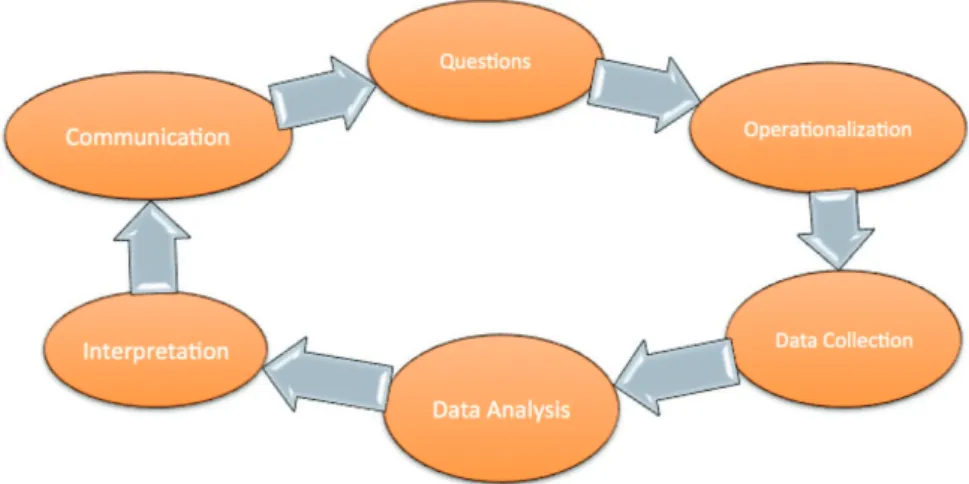
The search for articles was done in three iterations. The first iteration was per-formed using the keywords included in the identification phase (see Figure 1). In this case, we examined the abstracts of the articles looking for studies describing inquiry-based learning processes supported with mobile technology. This identification phase left 110 articles that were considered for further analysis. In the screening phase, 5 duplicates were removed. In the eligibility phase, we filtered out 43 articles without practical implementations of mobile inquiry-based learning, i.e. theoretical studies. Since not a lot of experimental studies were found, case studies and semi-experimental were also considered for the analysis. At the end, 62 studies were retained for an in-depth analysis.
We focused on inquiry-based learning, inquiry learning and science inquiry, because we considered these terms to be sufficient for our analysis. In addition, the review covered studies in the timeframe between the appearance of the first smartphone in 2006 until to 2016.
Figure 1: Research methodology according to the PRISMA framework.
1.4.2 Analysis
Previous review studies on inquiry-based learning (Furtak et al., 2012; Lazonder & Harmsen, 2016; Maaß & Artigue, 2013) and mobile inquiry-based learning (Sung et al., 2016; Zydney & Warner, 2016) have already addressed topics like learning outcomes, strategies for the practical uptake of IBL, effects of using mobile technology for IBL or the effects of guidance. However, the issue of learners’ agency has been addressed superficially in few occasions like e.g. in Nouri et al. (2014). Thus, to deepen in the analysis of how the different types of mobile activities affect learners’ agency, a three-step process analysis has been carried out.
Following a joint iterative coding approach (Bogdan & Biklen, 1998; Huberman & Miles, 2002), the first step of the analysis was to cluster all types of mobile activities found in the studies. For that, an initial classification of types of mobile activities has been created based on the ubiquitous pedagogical capabilities of mobile technology described in section 2.1. A ubiquitous pedagogical capability is a unique affordance that mobile technology provides to support learning. The initial types were: 1) direct in-struction, 2) access to content, 3) data collection, 4) enable communication and 5) contextual support. At the end of this first step, these types were refined and became the final 12 types of mobile activities supported in inquiry-based learning (see
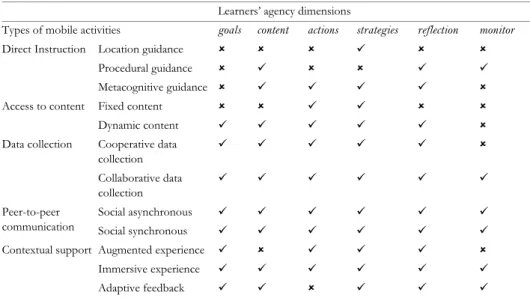
Appen-dix A). The second step consisted of the development of the analytical framework presented in section 3. Out of the existing definitions of learners’ agency, 6 dimensions were developed in order to define to what extent a type of mobile activity supports or limits agency. The last step of the analysis, the 12 types of mobile activities have been analysed according to the 6 dimensions of learners’ agency that focus on the learners’ control over goals, content, actions, strategies, reflection and monitoring. The results are presented in five sections (according to the initial types of mobile technology) that contain two tables each to indicate first the types of mobile activities under the initial category and second how they fulfil the agency dimensions.
1.5 Results
In this review, 62 studies were selected for further analysis. Out of the initial grouping phase, the distribution of types of mobile activities over the 5 major categories (see Appendix A) was the following: fostering teachers’ direct instruction (44/62 studies – 70%), access to content (43/62 studies – 69%), supporting data collection (57/62 studies – 91%), facilitating social interaction (20/62 studies – 32%) and enabling inter-actions between the context and the learner (16/62 studies – 25%). In this section, examples of the different types of mobile activities are given together with the analysis of the learners’ agency based on the 6 agency dimensions. Thus, two tables will be included in each sub-section; the first table contains examples of mobile activities, the number of times that they were found in the different studies and which technological affordances of the mobile devices were used. The second table contains the scores of each type of mobile activity based on the 6 agency dimensions: goal, content, action, strategy, reflection and monitoring. One check in the table, for a given type of mobile activity, means that at least one example (or more) has been found in the articles that support that dimension. Conversely, a cross can have two interpretations. First, it could mean that for a given type of mobile activity there were no evidences in the studies that support the agency dimension. Second, it could also mean that the agency dimension was limited, i.e. in location guidance one might think that learners are free to choose their content, however in most of the cases the purpose of the location guidance activities was to provide content to the learners in the different spots.
1.5.1 Direct instruction
The most basic form of support in formal and informal learning is direct instruction. Inquiry-based learning, especially when it takes place in out-of-the-classroom settings, is based on ill-structured inquiry activities that require a lot of support and guidance from the facilitators. This type of mobile activities facilitates such support even when participants are distributed across different locations. In the reviewed studies there is a continuum of direct instruction and guidance that works on different levels (location
guidance, procedures and metacognition). These 3 levels –represented in table 1– are 3 of the 12 types of mobile activities mentioned in 4.2.
Table 1. Types of mobile activities supporting access to content.
Direct instruction Number of studies Technological affordances
Location guidance 27 GPS, Radio Frequency Identification (RFID), Quick Response Codes (QR codes), Personal Digital Assistants (PDAs) & Geocaches
Procedural guidance16 Task/process execution, question-guided tours, process or collaboration scripts
Metacognitive support
4 Mental model construction, carry out interpretations, scaffolding to understand scientific concepts, reducing cognitive load in data collection & interpretation processes.
Location guidance instructions (used in 27 studies; see table 1 and Appendix A) cover types of mobile activities that explicitly move learners through different locations ei-ther in sequence or different forms of exploration. Examples of this type of mobile activities are fieldtrips or museum visits that usually are combined with technological affordances like GPS, RFID, QR codes of PDAs. Considering the dimensions of the analytical framework for learners’ agency, it only provides opportunities for learners to exercise their control over the strategies (see table 2). Despite the learners being in-structed about what to do (control over actions) and where to go, they can still decide how to do it. Although learners move around the place to get information, in the cases presented in the literature the information was given by the teacher or designer.
The direct instruction through procedural guidance (used in 16 studies; see table 1 and Appendix A) help the learner to carry out an activity or process. It helps learners executing and automatizing step-by-step processes. For example, in Hsiao, Chang, Lin, and Wang (2016) and Suarez, Ternier, Kalz, and Specht (2015) learners received ques-tion-guided instruction in order to help them during the data collection process. Other examples used list items or scripts to guide specific parts of the inquiry process (Anastopoulou et al., 2012; King, 2007). Regarding the dimensions of agency, the learners do have more autonomy to use their content, however their control over ac-tions, strategies and goals is limited by the step-by-step guidance. In this case also the type of mobile activities helps learners to monitor and reflect upon their learning. In Suarez et al. (2015)2, learners could visualize their performance after the activity, so they could reflect on action (monitoring of cognition see Akyol and Garrison (2011)).
The last level of direct instruction is the metacognitive guidance (used in 4 studies; see table 1 and Appendix A). It guides the students on what cues to reflect upon and how to construct mental models. Some examples of type of mobile activities that sup-port metacognition, instruct learners on how to carry out interpretations (Ahmed & Parsons, 2013). Other examples provide scaffolding on how to understand key scien-tific concepts like animal grouping (Looi et al., 2014; Parr, Jones, & Songer, 2004). This
type of direct instruction allows learners to have more control over actions, strategies and content, because this main goal of this type of direct instruction is to reflect about their cognitive processes.
Table 2. Learner’s agency dimensions for the types of mobile activities providing direct instruction
Direct instruction goals content actions strategies reflection monitor Location guidance
Procedural guidance
Metacognitive support
1.5.2 Access to content
The ubiquitous access to information is a common practice in our daily life, in which users seek, store, organize and categorize the information whenever they need it (Pachler, Cook, & Bachmair, 2012). In the context of inquiry-based learning, contextu-ally relevant information integrated with prior knowledge (Rogers & Price, 2008) be-comes essential to support ongoing observations and to create new knowledge in the physical environment. To this end, the appropriation of digital literacy is key to elicit good interpretations of the content delivered or consumed through the mobile device. In the reviewed studies, we found two types of mobile activities for accessing content (fixed and dynamic).
Table 3. Types of mobile activities supporting access to content.
Access to content Number of studies Technological affordances
Fixed content 25 Local repositories, preloaded e-libraries, preloaded mobile apps, RFID tags, QR codes, Geocaches and digital artifacts triggered with GPS and AR
Dynamic content 25 Browsing, filtering, interpreting information found on the web, remote databases, concept maps, discussion forums, KWL3 tables, online
blogging, wikis and social networks.
Table 3 shows a summary of how many times and how these types of mobile activities have been used. The fixed content type (used in 25 studies; see appendix A) refers to the type of mobile activities in which the content has been prepared before the inquiry activity starts. Although the content can be stored online, in the literature it is usually stored in the mobile device to enable also offline access. For example, through mobile functionalities like e.g. RFID tags (Chu, Hwang, Tsai, & Tseng, 2010) or QR codes (Eliasson, Knutsson, Ramberg, & Cerratto-Pargman, 2013; Nouri, Cerrato-pargman, & Zetali, 2013), learners can access relevant information for the inquiry process. Exam-ples of activities like jigsaw (Mulholland et al., 2012), scavenger hunt games or geo-caching activities (Jones, Scanlon, & Clough, 2013) integrate this type of mobile
ties while keeping the inquiry nature of the activity. From the analytical framework perspective, if the content consumed has been prepared by the facilitator before the inquiry activity starts like i.e. pre-loaded e-libraries (Ahmed & Parsons, 2013) or con-tent uploaded to a mobile app (Ternier, Klemke, Kalz, & Specht, 2012), the opportuni-ties for learners to setup their own goals can be reduced (see table 4). This is because learners will not be able to steer the inquiry process in the direction they wish to. It has been proven that ill-structured processes require a lot of guidance (Kirschner et al., 2006; Lazonder & Harmsen, 2016), but providing guidance is not strictly the same as delivering content. Guidance can be provided on how to explore learners’ objectives in an optimal way, whereas delivering specific content implies giving learners everything ready to use, which in turn, can move learners away from their own learning objectives. Thus, agency over content is also not well supported by fixed content type of instruc-tions. The next dimension for agency refers to the opportunities for reflection while accessing content. Providing fixed content to the learners generates less chances for learners’ reflection. With fixed content the learners focus on using the information given on the inquiry process, whereas with the dynamic access learners not only need to use the information but they also need to decide how suitable the content is for the purpose of the inquiry. This does not neglect the reflective capabilities that might be enacted through fixed content, but it emphasizes the bigger opportunities for learners’ reflection when using dynamic access to content.
The second subcategory is dynamic content access (used in 25 studies, see table 3 and Appendix A). It refers to the type of mobile activities in which learners actively access digital sources to browse, filter, retrieve, evaluate, and interpret content that can be valuable to advance their knowledge (Liu, 2009; Shih et al., 2010). Another example of dynamic access to content can be the use of remote repositories of information (Huang, Lin, & Cheng, 2010; Lai, Wu, Chou, & Lai, 2010), which are not as wide as the information that can be found on the internet but learners still need to browse and to filter the information. These types of mobile activities –that enable learners to man-age their information (dynamic access to content)– open up the opportunities for learners to exercise their agency (see table 4 and Appendix B). First, the control over the goals depends on the design around the use of this type of mobile activity. For instance, in Song et al. (2012), authors followed a goal-based approach in which KWL tables are essential to let the learners establish their own learning goals and plans. In this case, learners had the freedom to select their own information resources. Regard-ing the dimensions of content, actions, strategies and reflection, the learners have in-trinsically control over all of them. The reflection dimension is covered as the learners need to developed digital literacy skills like filtering or analysis in order to find suitable information online.
Table 4. Learner’s agency dimensions for the type of mobile activities providing access to content. Access to content goals content actions strategies reflection monitor
Fixed content
Dynamic content
1.5.3 Data collection
Since the appearance of the first handheld devices, data collection processes have played an essential role in supporting the development of complex reasoning (Parr, Jones, Songer, & Arbor, 2002) and minimizing the complexity of collecting accurate data in the field (Parr et al., 2004). Defined as the process of digitalize, persist in time and organize the data in a digital shared space, data collection processes are essential to any scientific investigation.
Table 5. Types of mobile activities supporting data collection processes.
Data collection Number of studies Technological affordances
Cooperative 57 Capturing multimedia data, taking notes, drawing schemas, multiple choice questions to guide data collection and collect information for KWL4 tables.
Collaborative 8 Collaborative concept maps and graphical data visualization of data jointly collected.
From table 5, one can see that the great majority of the reviewed studies (57/62) in-cluded the type of mobile activities involving data collection processes (see Appendix A for detailed information). Some examples of cooperative data collection are tradi-tionally activities like taking notes (Hung et al., 2013; Hwang, Wu, et al., 2011; Liljeström, Enkenberg, & Pöllänen, 2013; Shih et al., 2010; Song, 2014; Tan et al., 2007; Yang & Lin, 2010) or drawing ideas, schemas or concepts (Chiang et al., 2014a, 2014b; Chung et al., 2010; Looi et al., 2014; Song, 2014; Song & Kong, 2014; Sun, Looi, Wu, & Xie, 2015). However, mobile technology also offers specific affordances like annotating data samples taken, or conceptualized mental models in order to make them shareable (Chang et al., 2012; Hung et al., 2012; Razikin et al., 2009; Sha et al., 2012; Shelley, Dasgupta, Silva, Lyons, & Moher, 2015; Song et al., 2012; Yarnall et al., 2006). From our analytical framework point of view (see table 6 and Appendix B), most of the features of learners’ agency are covered in the type of mobile activities involving data collection. Learners are free to decide what to capture, how to do it and after the capturing the facilitators can ask the learners to reflect and to interpret it. Though, there is a difference on the opportunities for monitoring their progress be-tween the cooperative and the collaborative data collection processes provide. Before explaining such difference, the cooperative data collection processes refer to the most common form of data collection, in which students individually capture multimedia
data for later analysis or interpretation. Among the traditional techniques for data col-lection –taking notes, shooting videos, pictures or audios–, more specific functionali-ties like annotating data samples or conceptualize model are also widely used in in-quiry-based learning. Additionally, these technological affordances have been used in specific phases of the inquiry model e.g. brainstorming or idea collection for further investigation.
Conversely, the collaborative data collection processes refer to the type of mobile activities in which students collectively associate concepts, i.e. concept maps of jointly collected graphical visualizations. Technically, the main difference with the cooperative data collection is that the data is not automatically integrated, processed and merged into a unique data instance. Cooperative data collection requires a post-analysis of the collected data, while collaborative data collection allows learners to interpret the results and react immediately to them. Examples of collaborative data collection processes are i.e. associative concept mapping (Chiang et al., 2014a, 2014b; Looi et al., 2014; Song, 2014; Song & Kong, 2014; Sun et al., 2015) or jointly generated graphical visualization of the collected data during an inquiry (Rogers & Price, 2008; Sharples et al., 2015). In this particular case, the values recorded by the students were processed and combined in real time and shown to them in the form of a graph. From the learners’ agency point of view (see table 6), collaborative data collection processes enable monitoring oppor-tunities. For instance, as stated in Rogers (2006), learners could reflect and analyze the gathered data through collaborative data collection processes during their outdoor discoveries while still in the woodland. Such opportunities enable a reflection in action (collaborative data collection), rather than a reflection on action (cooperative data collection) that happens when the data collection process is over (Munby, 1989).
Table 6. Learner’s agency dimensions for the type of mobile activities providing data collection.
Data collection goals content actions strategies reflection monitor
Cooperative data collection
Collaborative data collection
1.5.4 Peer-to-peer interactions
Sharples, Taylor, & Vavoula (2010) stated that the use of mobile technology for learn-ing situates knowledge at the center of a distributed system, in which learners hold conversations across multiple contexts. Such distribution supports the concept of shared ownership that claims that agency lies with the community of learners, rather than with the individuals.
Table 7. Types of mobile activities providing peer-to-peer interaction.
Peer-to-peer communication Number of studies Technological affordances
Synchronous 10 Instant messaging, chats with notifications.
Asynchronous 15 Forums, online discussion panels, online platforms without notifications and social boards.
Out of the 62 reviewed studies, 20 included mobile activities to steer communication between students or between teachers and students. Table 7 shows that these studies refer to a great extent to learners interacting socially to achieve certain learning goals. In Jones, Scanlon, and Clough (2013), a system that provides means of communication was used in four projects. The results provided different levels of learners control (see table 8) regarding the choice for inquiry and process (content and strategy), ranging from limited control over the inquiry topics and process –in a birdwatching activity– until almost full learners’ control (besides the design of the caches) –in a geocaching activity–. In these examples, the communications were asynchronous. Learners were not notified about the communication, so it was difficult to follow up the communica-tions. More examples of asynchronous communications can be enacted with the use of forums (Chiang et al., 2014a, 2014b; Jones et al., 2013; Lai et al., 2010; Liljeström et al., 2013), online discussion panels (Marty et al., 2013; Wong, 2013) and comments in social boards (Anastopoulou et al., 2012; Aristeidou et al., 2015; Boticki et al., 2015; Song, 2016; Song & Kong, 2014; Wong, 2013).
The synchronous communications rely on push & pull technology to increase learners’ awareness about recent contributions in the inquiry or new messages availa-ble. These communications are volatile, elusive and they occur in real time, thus fea-tures like notifications are needed to keep the flow of the conversation. Some exam-ples of this type of mobile activity can be found in studies that used instant messaging together with notifications (Chiang et al., 2014a, 2014b, Song, 2014, 2016; Song & Kong, 2014; Suárez, Ternier, Prinsen, & Specht, 2016). Comparing synchronous and asynchronous interactions, they do not only differ on the underlying technology. Both provide opportunities to reflect, but the asynchronous communications allow learners to have more quality time for reflection. They are not urged to keep up the flow of the conversation, so they can elaborate more the message they wish to convey. This type of communication might be preferable when the goal is to achieve higher order cogni-tive skills (Garrison, Anderson, & Archer, 1999).
Table 8. Learner’s agency dimensions for types of mobile activities providing peer-to-peer interaction support.
Peer-to-peer interactions goals content actions strategies reflection monitor
Social asynchronous
1.5.5 Contextual support
De Jong et al. (2008) used the term contextual filters to refer to the support that mo-bile technology offers to learners filtering by the context the resources that can help them on their learning. Such contextual filtering or support, allow learners to explore, discuss and construct knowledge in real world scenarios (Donovan, Bransford, & Pellegrino, 1999). It bridges the gap between the learners and the environment that surrounds them.
Table 9. Types of mobile activities providing contextual support.
Instructional designs Number of studies Technological affordances Augmented experience 12 GPS, timer or accelerometer
Immersive experience 9 GPS, big display for immersive simulation, stargazing simulation, 3D weather simulation.
Adaptive feedback 7 intelligent systems that give hint for making further observations
Only 16 of the 62 studies included mobile activities for contextual support (see Ap-pendix A). Table 9 shows the three subcategories (augmented experience, immersive experience and adaptive feedback).
First, the augmented experiences (used in 12 studies, see table 9) prompt infor-mation to the learner when he/she steps into a specific location or when certain amount of time has passed. Thus, the context, through this type of mobile activity, creates the learning conditions for students, but the student has the control and cides what to do or to explore (Nathan & Robinson, 2001). The majority of the de-signs used the GPS to model this type of activity (Boticki et al., 2015; Chiang et al., 2014a, 2014b; Dunleavy et al., 2009; Huang et al., 2010; Hwang, Chu, et al., 2011; Jong & Tsai, 2016; Kamarainen et al., 2013; Laru et al., 2012; Schaal et al., 2012; Wong, 2013) (see table 10 and Appendix B). This type of mobile activities does not offer opportunities to monitor the learning progress, because they focus on the delivery of content through the context.
Second, the immersive experiences (used in 9 studies) refer to the type of mobile activities embedded in a digital simulation. Digital simulations are frequently used in inquiry-based learning to explain complex concepts or processes that cannot be easily reproduced in real life. Examples of this type of immersive experiences have been reported in Chen and Lin (2016) in which students could engage in a free-form of stargazing with simulated constellations or in Lui, Kuhn, Acosta, Quintana and Slotta (2014) in which students collected data in rainforest immersive simulation. Another example is the 3D weather simulation (Hsiao et al., 2016), in which learners combine factors like temperature or pressure to learn the implications those have on the weath-er. All in all, these immersive experiences are characterized by having learners interact-ing with a digital environment that augments their learninteract-ing experience. Concerninteract-ing
learners’ agency, these types of mobile activities showed options for learners to control all the agency dimensions.
Last, the adaptive feedback experiences (used in 7 studies) offer incremental sup-port based on learners’ performance. In this case, learners’ agency is supsup-ported but some considerations must be made depending on the inquiry activity. In Chu, Hwang, Tsai, and Tseng (2010) learners were guided to do field observations in conditional steps. Based on their performance they received different hints to continue the explo-ration. During the activity, the observation and the hints received were recorded so learners could monitor their steps. In this example, the learners’ agency is limited be-cause they received information about strategies to explore the field. However, in Hung, Hwang and Lin (2013) they used an automated feedback meant to motivate learners’ reflections. In this case, no constraints were found for goal, content or strate-gy decision on the inquiry activity. In both cases the control over the actions might be influenced by the adaptive feedback.
Table 10. Learner’s agency dimensions for types of mobile activities providing contextual support.
Contextual support goals content actions strategies reflection monitor
Augmented experience
Immersive experience
Adaptive feedback
1.6 Discussion
The inclusion of mobile technology to support inquiry-based learning processes, has provided ubiquitous opportunities for learners to carry out inquiry processes in a more self-directed way. However, little is known about the degree in which the type of mo-bile activities in inquiry-based learning provide real opportunities for learners to exer-cise their agency. Additionally, although research pointed out the need for tighter guid-ance and scaffolding in inquiry-based learning and open ended processes (Alfieri et al., 2011; Hmelo-Silver, Duyncan, & Chinn, 2007; Kirschner et al., 2006; Lazonder & Harmsen, 2016), there are not so many practical strategies for practitioners to enact the right balance between learner’s agency and scaffolding. Thus, this review provides a strategy to identify the level of agency support for a given type of mobile activity.
In order to deepen our research in the learners’ agency (Bandura, 2001; Zimmerman, 1990) –an aspect considered to be essential for inquiry-based learning–, our analysis implemented a three-step process analysis. It started with a state-of-the-art analysis of the ubiquitous properties in existent mobile frameworks. It revealed that in the context of inquiry-based learning 12 types of mobile activities for inquiry-based learning can be found (see Appendix A). In a second step, to characterize learners’ agency 6 dimensions were defined. The dimensions consisted of: 1) learners’ control over the goals, 2) learners’ control over the content, 3) learners’ control over the