i
ROLE OF KNOWLEDGE MANAGEMENT ENABLERS IN FACILITATING KNOWLEDGE MANAGEMENT PRACTICES IN SELECTED PRIVATE HIGHER
EDUCATION INSTITUTIONS IN BOTSWANA
BY
Ushe Makambe
submitted in fulfilment of the requirements for the degree of
DOCTOR OF ADMINISTRATION
in the subject
BUSINESS MANAGEMENT
at the
UNIVERSITY OF SOUTH AFRICA, PRETORIA
SUPERVISOR: PROFESSOR AREGBESHOLA RAFIU ADEWALE
FEBRUARY 2017
ii ABSTRACT
This research was set out to investigate the role of knowledge management as a coping strategy for PHE institutions in Botswana, especially given that they operate in a highly regulated environment. One of the major drivers of volatility in the educational sector is intensely volatile regulatory environment in which the institutions operate. Further, a large portion of the stakeholder community of these institutions hold a strong believe that these institutions offer poor quality education to maximise profit. The primary objective of this study is therefore to determine the role of knowledge management (KM) enablers in facilitating KM practices in selected PHE institutions in Botswana that operate in this highly regulated environment and to develop a model for effective KM in these institutions.
The study adopted a survey research design and collected quantitative data through a structured self-administered questionnaire and document reviews. The subjects comprised all five degree-awarding PHE institutions, which were strictly regulated by the Tertiary Education Council (TEC). The population surveyed came to 670 and sample size was 350. Data was analysed through various statistical measures such as Structural Equation Modelling (SEM) in the form of Analysis of Variance (ANOVA), multiple regression analysis, and Chi-square test.
The results of the study revealed that KM enablers were playing an insignificant role in facilitating KM practices in selected PHE institutions in Botswana. Results of the study can be generalised to similar institutions elsewhere operating in similar environments. In order to enhance KM practices in PHE institutions, it is recommended that the institutions adopt a systematic approach to KM, establish an organisational culture and structure that promote KM practices, and enhance the quality of their human capital including leadership. It should be noted that the state of KM in organisations operating in an uncertain environment can be enhanced if the leadership carefully controls the family-owned setting and organisational culture as these factors can detract from the organisation’s effective practising of KM. However, strategic leadership, organisational structure, and the role played by stakeholders played positive deterministic factors in ensuring an enhanced KM drive.
iii
Keywords: Knowledge management, strategic leadership, family management, organisational structure, organisational culture, stakeholder engagement, highly regulated environment, KM model
DEDICATION AND ACKNOWLEDGEMENTS
This thesis is dedicated to my late grandfather Petros Makambe who raised me but unfortunately could not live long enough to witness the fruition of this project. It is also dedicated to my grandmother Machivei Mudzikisi who fended for me and took responsibility for my education (especially the early phases). I further dedicate this work to my uncle Professor Elliot Makambe, who took over from his mother at secondary and high school levels.
A special mention goes to my family whose moral support made a huge difference between success and failure, especially my younger son, Takudzwa, who constantly asked “Daddy, when are you graduating?” These words always pushed me up a gear.
I would like to acknowledge and dedicate this project to my supervisor Professor Aregbeshola Rafiu Adewale at the University of South Africa (UNISA). He was always available for me at the click of a button and his swift response to my calls for help, his commitment to the quality of the project, and foresight led to where we are today. My supervisor never got tired even when I appeared slow to comprehend issues. His insightful comments kept me motivated and focused on the final goal. My sincere gratitude also goes to my friend Teresa Chikerema (Mai Tariro) whose immensurable information technology skills were a marvel to watch. She greatly assisted with technical issues in this project.
I would also want to thank UNISA’s Directorate of Student Funding for financing this project in the second year, especially Naome Bvumbi, my contact person in this department. Finally, I want to thank the Almighty for giving me more life and wisdom to undertake this challenging task when many fell by the wayside. Help me Lord to become more useful to my people and the outside world.
iv DECLARATION
I declare that “Role of knowledge management enablers in facilitating knowledge management practices in selected private higher education institutions in Botswana” is my own work and that all the sources that I have used or quoted have been indicated and acknowledged by means of complete references.
--- ---
v TABLE OF CONTENTS
LIST OF FIGURES ... X
CHAPTER 1 ... 1
INTRODUCTION AND BACKGROUND TO THE STUDY ... 1
1.1 Introduction ... 1
1.2. A highly regulated environment (contextual setting) ... 2
1.3 Research problem... 5
1.3.1 Research purpose ... 6
1.3.2 Research objectives and research questions ... 6
1.4 Justification for the study ... 7
1.4.1 Originality of the study ... 9
1.5 Significance of the study ... 10
1.6 Definition of key terms ... 10
1.6.1 Knowledge management ... 10
1.6.2 Strategic leadership ... 11
1.6.3 Organisational structure ... 12
1.6.4 Organisational culture ... 13
1.6.5 Stakeholder engagement (collaboration) ... 14
1.6.6 Highly regulated environment ... 14
1.7 Literature review ... 15
1.8. Research methodology ... 18
1.8.1 Research approach ... 18
1.8.2 Research design ... 18
1.8.3 Population ... 19
1.8.4 Sample size and sampling procedures ... 19
1.8.4.1 Sample size and sampling technique ... 19
1.8.5 Data collection methods ... 21
1.9 Data analysis, discussion and interpretation ... 21
1.10 Research ethics, validity and reliability of the study ... 22
1.10.1 Research ethics... 22
1.10.2 Validity ... 22
1.10.3 Reliability ... 23
vi
1.12 Structure of the thesis... 24
1.13 Chapter summary ... 25
CHAPTER 2 ... 26
PERSPECTIVES ON KNOWLEDGE MANAGEMENT ENABLERS IN ORGANISATIONS... 26
2.1 Introduction ... 26
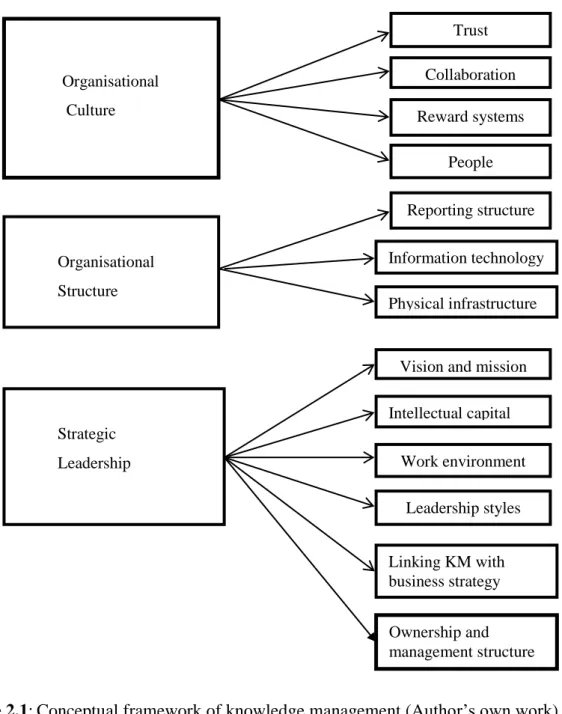
2.2 Knowledge management enablers in organisations ... 29
2.2.1 Organisational culture ... 30 2.2.1.1 Collaboration... 32 2.2.1.2 Trust ... 33 2.2.1.3 People ... 34 2.2.1.4 Reward systems ... 37 2.2.2 Organisational structure ... 39 2.2.2.1 Reporting structure... 39 2.2.2.2 Technology ... 41 2.2.3 Strategic leadership ... 43
2.2.3.1 Leadership and the creation and retention of intellectual capital ... 48
2.2.3.2 Leadership and knowledge creation... 50
2.2.3.3 Ownership, management structure and KM implications ... 52
2.3 Applying KM in higher education ... 58
2.4 Chapter summary ... 59
CHAPTER 3 ... 60
THE PRIVATE HIGHER EDUCATION ENVIRONMENT IN BOTSWANA AND IMPLICATIONS FOR KNOWLEDGE MANAGEMENT ... 60
3.1 Introduction ... 60
3.2 The PHE environment in Botswana ... 60
3.2.1 The regulatory framework ... 64
3.2.1.1 Quality assurance ... 66
3.2.1.2 Registering institutions ... 68
3.2.1.3 Accreditation process ... 70
3.3 Private higher education and the family business concept ... 73
3.4 Challenges facing PHE institutions in Botswana ... 75
vii
3.4.2 Quality and relevance of education provided by PHE institutions ... 76
3.4.2.1 Quality of curriculum and curriculum overlap ... 77
3.4.2.2 Dearth of human resources ... 78
3.4.2.3 Governance crisis ... 80
3.4.3 Private higher education institutions and funding of operational costs ... 81
3.5 Chapter summary ... 84
CHAPTER 4 ... 85
RESEARCH DESIGN AND METHODOLOGY ... 85
4.1 Introduction ... 85
4.2 Research design and methodology... 85
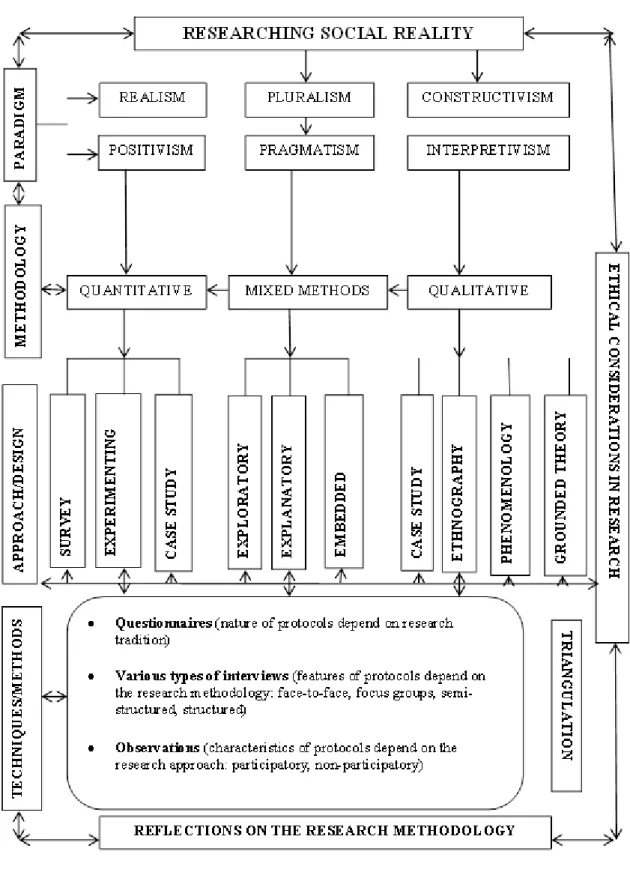
4.2.1 Research paradigms ... 87
4.2.2 Research design ... 88
4.2.3 Research methodology ... 90
4.3 Population and sampling frame ... 91
4.3.1 Sampling techniques ... 93 4.3.1.1 Probability sampling ... 94 4.3.2 Sample... 96 4.4 Data collection ... 97 4.4.1 Questionnaire ... 97 4.5 Data analysis ... 103
4.5.1 Measures of central tendency... 103
4.5.2 Data analysis using the SEM and other statistical tools ... 104
4.6 Research ethics... 106
4.7 Validity of the study... 107
4.7.1Internal validity ... 107
4.7.2 External validity ... 108
4.8 Reliability of the study ... 110
4.8.1External consistency procedures ... 110
4.8.2 Internal consistency procedures ... 110
4.9 Evaluation of research methodology ... 111
4.10 Chapter summary ... 112
CHAPTER 5 ... 113
viii
5.1 Introduction ... 113
5.2 Demographic analysis of respondents and KM implications ... 114
5.2.1 Gender and KM... 115
5.2.2 Respondents’ age and KM implications ... 118
5.2.3 Respondents’ level of education and KM implications ... 120
5.2.4 Employees’ work experience and KM implications ... 123
5.2.5 Type of employment and KM implications ... 128
5.3 State of KM in selected PHE institutions ... 130
5.3.1 Activities instituted by the organisations to promote knowledge creation and sharing 134 5.4 The role of knowledge management enablers in selected PHE institutions ... 136
5.4.1 Strategic leadership and KM ... 136
5.4.2 Effect of family management on KM in PHE institutions ... 143
5.4.3 Organisational structure and KM ... 151
5.4.4 Organisational culture and KM ... 157
5.4.5 Stakeholder engagement and KM ... 163
5.5 KM enablers, state of KM in PHE institutions and the KM model ... 170
5.5.1 Correlations between the constructs ... 170
5.6 Summary of findings... 181
5.6.1 Role of strategic leadership in facilitating KM practices of PHE institutions ... 181
5.6.2 Effect of family ownership and management on KM practices of PHE institutions .... 182
5.6.3 Role of organisational structure in facilitating KM practices in PHE institutions ... 182
5.6.4 Role of organisational culture in facilitating KM practices in PHE institutions ... 183
5.6.5 Extent of stakeholder involvement in activities of PHE institutions ... 183
5.7 Chapter summary ... 184
CHAPTER 6 ... 185
FINAL SUMMARY, RECOMMENDATIONS AND CONCLUSION ... 185
6.1 Introduction ... 185
6.2. Purpose of the study ... 185
6.3 Final summary ... 186
6.3.1 Strategic leadership ... 188
6.3.2 Organisational culture ... 189
6.3.3 Organisational structure ... 189
ix
6.3.5 Family management ... 190
6.4 Recommendations ... 190
6.4.1 Practical recommendations for PHE institutions ... 191
6.4.1.1Adoption of a systematic approach to KM ... 191
6.4.1.2 Establishment of a well-articulated KM vision, mission, and strategy... 192
6.4.1.3 Establishing an organisational culture that promotes KM practices ... 193
6.4.1.4 Redesigning organisational structure (reporting structure)... 198
6.4.1.5 Establishing adequate physical infrastructure ... 199
6.4.1.6 Enhancement of technology ... 200
6.4.1.7 Promotion of research ... 200
6.4.1.8 Enhancement of quality of human capital ... 202
6.4.1.9 Establishment of well-qualified academic leadership ... 202
6.4.2 Limitations and recommendations for further study ... 203
6.5 Conclusion ... 209
REFERENCES ... 211
LIST OF APPENDICES ... 241
Appendix 1: Research questionnaire ... 241
Appendix 2: Some of the hypotheses tested in the study... 250
Appendix 3: Sample size table ... 252
Appendix 4: Link between research objectives and research methods ... 253
Appendix 5: Letter of approval to carry out research ... 254
Appendix 6: Ethics approval ... 255
x LIST OF FIGURES
Figure 2.1: Conceptual framework of knowledge management ... 28
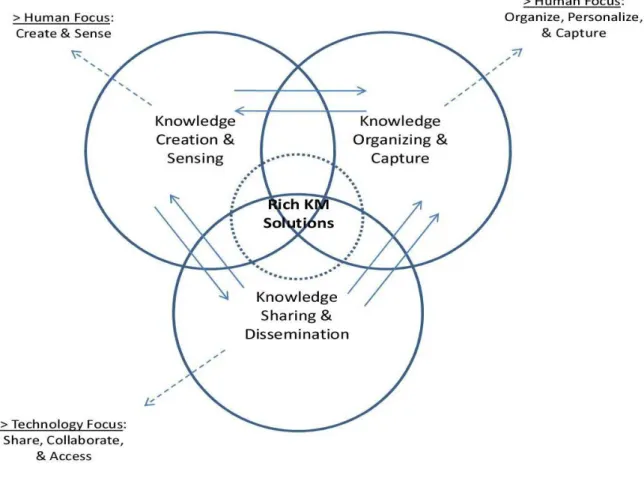
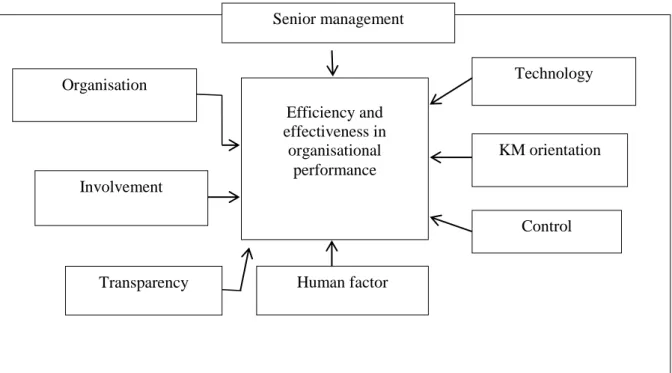
Figure 2.2: Organisational dimensions that promote knowledge sharing ... 29
Figure 2.3: An integrated KM framework ... 31
Figure 2.4: Assimilation of IT within other KM processes ... 42
Figure 2.5: Holsapple and Joshi's KM framework ... 44
Figure 2.6: The Knowledge Management Process Model ... 45
Figure 2.7: Model of analysis of practices in organisational KM ... 46
Figure 2.8: Skandia market value ... 49
Figure 2.9: The SECI Model ... 50
Figure 4.1: Mapping the research methodology discourse ... 86
Figure 4.2: Chart showing basic sampling designs . ... 94
Figure 5.1: Respondents’ gender ... 115
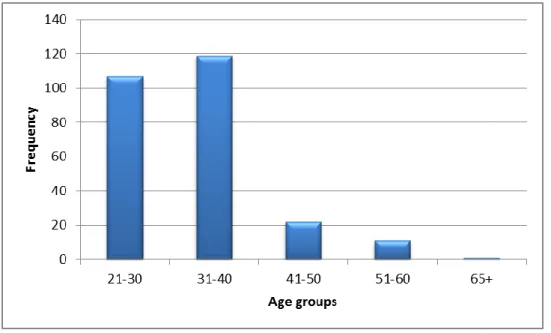
Figure 5.2: Distribution of respondents according to age groups ... 119
Figure 5.3: Respondents’ level of education ... 121
Figure 5.4: Work experience with current employer ... 124
Figure 5.5: Total work experience ... 125
Figure 5.6: Type of employment ... 128
Figure 5.7: Respondents’ views on organisations having instituted any KM activities ... 132
Figure 5.8: Presence of position of KM officer in my organisation ... 139
Figure 5.9: Presence of a board member championing KM ... 140
Figure 5.10: Organisational KM Model ... 142
Figure 5.11: Organisation managed by family members ... 143
Figure 5.12: Business partnerships with other business investors ... 147
Figure 5.13: Whether organisational structures of PHE institutions are hierarchical or not . 156 Figure 5.14: Structural equation model showing the nexus of the relationship between KM enablers and KM practices among selected PHE institutions ... 178
xi LIST OF TABLES
Table 1.1: Definitions of knowledge management ... 11
Table 1.2: Definitions of strategic leadership ... 12
Table1.3: Definitions of organisational structure ... 13
Table1.4: Definitions of organisational culture ... 13
Table1.5: Definitions of stakeholder engagement ... 14
Table1.6: Definitions of highly regulated environment ... 15
Table1.7: Sample strata ... 20
Table 3.1: Distribution of higher education institutions in Botswana by type ... 61
Table 3.2: Distribution of students in selected PHE institutions in Botswana – 2010 and 2012 ... 63
Table 4.1: Internal consistency reliability analysis ... 111
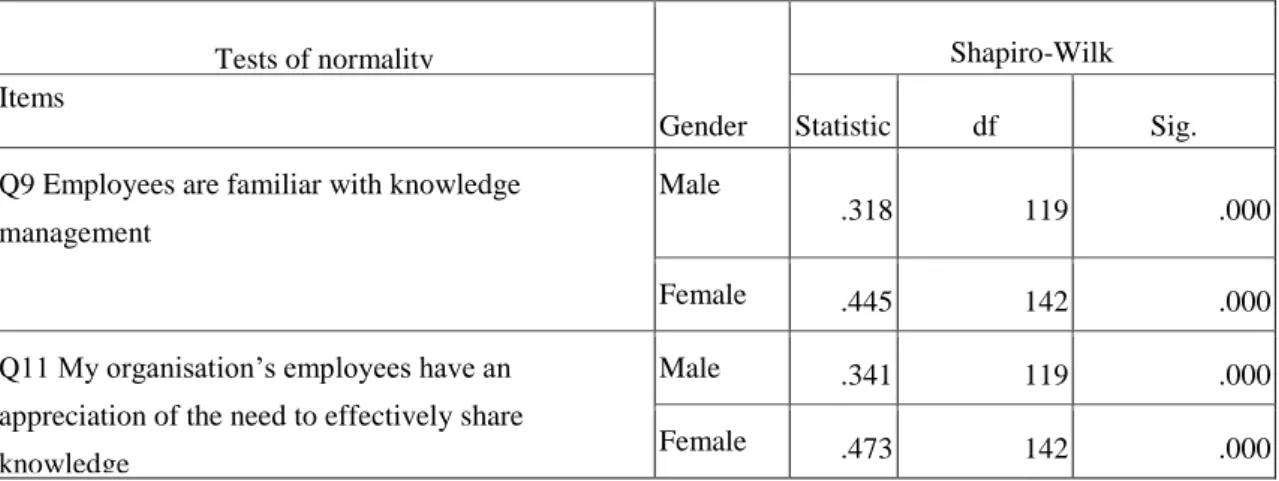
Table 5.1: Analysis of normality test of gender, employee awareness, employee appreciation of KM, and the need to effectively share knowledge ... 116
Table 5.2: The Mann Whitney test of difference between gender, employee awareness of KM, and appreciation of the need to share knowledge ... 117
Table 5.3: Respondents age and KM perception ... 120
Table 5.4: Respondents’ level of education and KM implications ... 122
Table 5.5: Years of work experience in the organisation ... 125
Table 5.6: Years of work experience (including with other organisations) ... 126
Table 5.7: State of KM in the selected PHE institutions ... 131
Table 5.8: Cross tabulation and Chi-square analysis of KM and supporting activities ... 133
Table 5.9: Relationship between employee awareness of KM and KM activities ... 134
Table 5.10: Psychometric properties of strategic leadership metrics in the selected PHE institutions ... 137
Table 5.11: The Psychometric Properties of family management metrics in PHE institutions ... 144
Table 5.12: Psychometric properties of organisational structure metrics in PHE institutions ... 151
Table 5.13: Psychometric properties of organisational culture metrics in PHE institutions. 158 Table 5.14: Psychometric properties of stakeholder involvement in KM activities of selected PHE institutions ... 164
xii
Table 5.15: Coefficient of correlation of relationship between the state of KM and the
constructs ... 171
Table 5.16: Correlations matrix showing association between KM enablers and KM practices ... 172
Table 5.17: Inter-item Model summary ... 173
Table 5.18: The ANOVA Results ... 174
Table 5.19: Analysis of coefficients for KM enablers sub constructs ... 175
Table 5.20: Regression coefficients explicating the nomological web between KM enablers and KM Practices ... 177
Table 5.21: Model summary for the nexus of the relationship between KM enablers and KM practices ... 178
Table 5.22: Assessment of normality (Group number 1) ... 179
Table 5.23: Regression weights: (Group number 1 - Default model) ... 180
Table 5.24: Standardized regression weights: (Group number 1 - Default model) ... 180
Table 5.25: Covariances: (Group number 1 - Default model) ... 181
xiii LIST OF ACRONYMS
Acronym Full version
AAT Association of Accounting Technicians
ANOVA Analysis of Variance
APDC Academic Planning and Development Committee
AVE Average Variance Extracted
BCA Botswana College of Agriculture
BIUST Botswana International University of Science and Technology
BOTA Botswana Training Authority
CEO Chief Executive Officer
CHE Council for Higher Education
CIMA Chartered Institute of Management Accountancy
CKO Chief Knowledge Officer
CoPs Communities of Practice
DTEF Department of Tertiary Education Financing
ED Executive Director
EQA External Quality Assurance
GIPS Gaborone Institute of Professional Studies
HC Human Capital
HE Higher Education
HR Human Resources
IC Intellectual Capital
IQA Internal Quality Assurance
IT Information Technology
KM Knowledge Management
KMO Keiser-Meyer Olkin
xiv
KMS Knowledge Management Systems
LUCT Limkokwing University of Creative Technology
MD Managing Director
MESD Ministry of Education and Skills Development
PHE Private Higher Education
RMSEA Root Mean Square Error of Approximation
NFI Normed Fit Index
PhD Doctor of Philosophy
PRE Proportional Reduction Error
SD Standard Deviation
SECI Socialisation, Externalisation, Combination, Internalisation
SEM Structural Equation Modelling
SI Statutory Instrument
SPSS Statistical Package for Social Sciences
SRC Student Representative Council
TEC Tertiary Education Council
UB University of Botswana
UNISA University of South Africa
1 CHAPTER 1
INTRODUCTION AND BACKGROUND TO THE STUDY
1.1 Introduction
Business success in a knowledge-based economy hinges on proper harnessing of knowledge as a strategic resource that gives an organisation a competitive advantage over its rivals (Halawi, Aronson, & McCarthy, 2016). This view is supported by Omotayo (2015) who posits that it is no longer controversial to argue that people live in a globalised world, which is characterised by fast information transfer across large geographical areas through modern technology - such as the Internet. The consequence of globalisation is the emergence of knowledge-based economies. In such economies, importance is placed on effective harnessing and management of human capital (HC) to ensure that a knowledge-imbibed workforce creates the right value for the economy (Van der Meer, 2014).
As further confirmation of the importance of knowledge in the 21st century organisations, Teng and Song (2011) argue that organisations no longer compete solely on the basis of financial capital strength but through knowledge which is the new competitive advantage in business. This postulation has been reinforced by some studies as well, as they concur on the postulation that growth rate of an economy is now determined by the quantum and quality of knowledge stock that is harnessed and applied in the production process in various sectors of the economy (Desouza & Paquette, 2011; Teng & Song, 2011). These knowledge-based economies require that good practices of knowledge management (KM) be put in place to improve organisational effectiveness.
Empirical research in business operations has proven that sustainable competitive advantage is no longer entirely embedded in the availability and management of capital (physical assets and finance), land, and labour but rests more firmly on effective mobilisation of intellectual capital (Nonaka & Konno, 1998; Wang, Noe, & Wang, 2014). It is therefore expedient for any 21st century business organisation, including educational institutions, to ensure effective management of knowledge assets for business success (Mavodza & Ngulube, 2012; Ramdhania, 2012). This view is further reinforced by El Aziz, Wahba, and El Sagheer (2013) who aver that society has become more and more knowledge-based. These authors contend
2
that organisations that succeed in identifying, valuing, creating and evolving their knowledge assets are more likely to outperform their laggard competitors.
In support of the importance of effective KM in business organisations, Lee and Hong (2014) posit that KM research has led to the identification of KM enablers which are mechanisms for organisations to develop their knowledge and stimulate KM practices. These KM practices include knowledge generation, knowledge storage and retrieval, knowledge sharing and transfer, and knowledge retention (Mavodza & Ngulube, 2012; Bosua & Venkitachalam, 2013;Hislop,2013).
With specific reference to private higher education (PHE) institutions in Botswana, the organisations that operate in this sector are confronted by a highly regulated, volatile and turbulent environment (Haslinda & Sarinah, 2009). These authors suggest that KM enablers that ensure synergy between technology and behavioural issues are critical in a business environment that is characterised by high levels of uncertainty and inability to predict the future with high precision. This is particularly so where the focus is not only on finding the right answers but also on finding the right questions (Jain, Sandhu and Sidhu, 2007). In this environment, organisations are confronted with the necessity to ensure the effective deployment of knowledge and intellectual capital as important strategic assets in order to conform to the industry volatility (Haslinda & Sarinah, 2009; Amayah, 2013; Lee & Fink, 2013).
Knowledge management enablers that facilitate KM practices in an uncertain environment include organisational structure, organisational culture, and strategic leadership (Kao, Wu, & Su, 2011; Jain & Jeppessen, 2013; Lee & Hong, 2014; Islam, Jasimuddin, & Hasan, 2015). These enablers, which are the primary focus of this study, support KM practices of knowledge creation, distribution, sharing, application, and retention. These KM enablers are discussed in more detail in Chapter 2 (section 2.2).
1.2. A highly regulated environment (contextual setting)
The Botswana PHE sector, unlike its public sector counterpart, is highly regulated. For instance, a 20% change or more in a course outline requires written permission from the Tertiary Education Council (TEC) or the Botswana Training Authority (BOTA) while a
3
change of less than 20% requires institutions to inform these regulatory authorities in writing (Tertiary Education Council, 2013). Failure to observe such regulations results in heavy sanctions ranging from a strongly worded reprimand, suspension of operating licences, or outright withdrawal of a licence and ultimately closure of the offending institution. The regulatory framework in which PHE institutions in Botswana are operating is discussed in more detail in Chapter 3 (section 3.2.1).
According to Baputaki (2016), there is a general perception that the future of private tertiary institutions in Botswana is uncertain partly due to the perception that the institutions are comparatively very expensive yet they lack quality as compared to their public university counterparts. This view is reinforced by Setume (2013) who suggests that the combination of comparatively high fees charged by PHE institutions and perceived lack of quality education that they offer resulted in mistrust between the institutions and key stakeholders. The resultant mistrust has led to the reduction in the number of government-sponsored students to these institutions (Baputaki, 2016).
The mistrust between some stakeholders and PHE institutions is responsible for the highly regulated environment (see Chapter 3, section 3.2). For example, a local newspaper, the Sunday Standard, had a headline reading “There is need to save UB against emerging bogus campuses”, referring to PHE institutions (Regonamanye, 2015, p.2). This kind of mistrust has resulted in a consistent decrease in number of government-sponsored students to PHE institutions over the years. For example, the number of government-sponsored students to PHE institutions stood at 25, 748 in 2014. It went down to 12, 387 in 2015 and an all-time low of 3, 965 in 2016 (Mouwane, 2016).
According to Regonamanye (2015), the mistrust alluded to above resulted in the Government of Botswana taking a long time to decide whether PHE institutions will receive any government-sponsored students each year yet all the selected PHE institutions rely 100% on government-sponsored students to fund their operational costs. For example, for the semester starting August 2016, PHE institutions became aware only in July 2016 that they were receiving very few students (Department of Tertiary Education Financing, 2016). On the 10th of May 2016, the Government posted a notice on the Facebook informing the public that submission of applications, and receiving and processing of sponsorship for the financial year
4
2016/2017 was commencing on the 3rd May 2016 (Department of Tertiary Education
Financing, 2016). This notification, coming in May for a semester that was starting in
August, was rather late. The PHE institutions did not know what to expect for 2016. Such a
volatile environment makes planning difficult.
As confirmation of the volatility of the PHE environment in Botswana, Mouwane (2016) retorts that a number of PHE institutions were forced to retrench staff due to an unexpected decline in the number of government-sponsored students in these institutions. Another reason for retrenchment of staff was the TEC’s sudden policy shift barring lecturers holding level 8 qualifications (Bachelor’s degree) to teach at the undergraduate level even as teaching assistants without any form of consultation (Mouwane, 2016).
The above explanation corroborates the observation that the PHE environment in Botswana is volatile and highly complex. These unique features make it imperative for the development and implementation of an effective KM programme that would culminate in effective management of these institutions. The PHE environment is dramatically different from public higher education institutions whose operations and facilities are not closely monitored by regulatory authorities unless there is a major concern. Yin (2012) argues that what makes a case compelling is that it covers a distinctive, extreme, unique, or revelatory event or subject. In this case, the regulatory environment is extreme, unique, and revelatory as compared to the public higher education environment.
Zack (2010) argues that a volatile and complex business environment such as the one enunciated above requires effective KM. In such an environment, expertise not shared quickly enough is lost through labour attrition that characterises the volatile work environment hence effective KM is imperatively required, especially to galvanise innovativeness and performance efficiency (Zack, 2010; Gloet, 2012).
The above view is supported by Kingsinger and Walch (2012) who contend that it is important to note that a volatile and uncertain environment requires agility and adaptability whereby leadership engenders transfusion of expertise (culture), process, technology, and structure which are critical KM enablers. Horney, Pasmore, and O’Shea (2010) concur that this kind of environment requires leadership flexibility and quickness in decision-making,
5
which are both important KM elements. These authors further posit that leadership flexibility and quickness in decision-making enable the generation of new knowledge and ideas, the creation of knowledge repositories, as well as the distribution and exchange of knowledge with key stakeholders. The effective management of these key KM enablers are expected to promote a positive reputation, business growth, and ultimately result in profitability. The PHE institutions need KM to make them adaptive firms that can easily adjust and learn better, faster, and more economically than their competitors, thus giving them an adaptive advantage.
1.3 Research problem
The intense regulation that governs PHE education sector in Botswana is linked with strong perceptive belief that PHE institutions exist to maximise profit. Some key stakeholders such as students, parents, government, and industry therefore feel that these institutions offer poor quality education to maximise profit. The highly regulated environment results in lack of creativity and also reduces leadership flexibility and quickness in decision-making. The volatility and uncertainty caused by the highly regulated environment also makes planning difficult and investment in physical infrastructure risky.
Limited research has been carried out on the existence and role of KM enablers in facilitating KM practices in PHE institutions operating in this kind of environment to determine their effectiveness in addressing some of the challenges they are facing. Ensuring the existence of KM enablers in PHE institutions is expected to enhance their operational efficiency and ameliorate hitherto negative perceptions that have tainted their reputation. Research on the role played by KM enablers in facilitating KM practices in PHE institutions is, therefore, necessary to identify possible knowledge gaps, in order to uncover a KM model that is capable of closing the identified gaps. Such a model is expected to result in more effective KM practices of knowledge generation, distribution, sharing, utilisation and retention. Effective KM practices are expected to enhance organisational performance and profitability for PHE institutions in Botswana.
6 1.3.1 Research purpose
The purpose of this study is to investigate the role of KM enablers in facilitating KM practices in selected PHE institutions in Botswana and develop a model for KM that can be used by these institutions operating in turbulent, volatile, and intensely regulated environment.
1.3.2 Research objectives and research questions
This section outlines the primary research objective and secondary research objectives. The primary research objective of this study is to determine the role of KM enablers in facilitating KM practices in selected PHE institutions in Botswana and develop a model for effective KM in these institutions. The secondary research objectives are as follows:-
i) To investigate the role of strategic leadership in enhancing KM practices in selected PHE institutions,
ii) To determine the effect of family management on KM practices in selected PHE institutions,
iii) To determine whether organisational structures of selected PHE institutions in Botswana promote KM,
iv) To investigate the extent to which the organisational culture of selected PHE institutions in Botswana facilitate KM practices,
v) To investigate the extent to which PHE institutions involve internal and external stakeholders in the affairs of their institutions.
Based on the above research objectives, this research therefore seeks to answer the following research questions:
i) What role does strategic leadership play in facilitating KM practices in selected PHE institutions in Botswana?
7
ii) What is the effect of family management on KM practices in selected PHE institutions?
iii) To what extent do organisational structures of selected PHE institutions in Botswana promote KM practices?
iv) To what extent do organisational cultures of selected PHE institutions in Botswana promote KM practices?
v) To what extent do selected PHE institutions involve internal and external stakeholders in the affairs of their institutions?
1.4 Justification for the study
Even in the developing world research on the relevance and application of KM in education is still relatively new. According to Petrides and Nodine (2003), in December 2002 the first professional conference in the United States to focus on the role of KM in education was held in San Francisco, California. A group of 40 professionals from K-12 schools, colleges, universities, and business attended. As expected in a field so new then, there were spirited agreements and disagreements on the most effective ways of implementing best KM practices in education. There was, however, consensus that KM leads to more effective decision-making about work processes, programme improvement, and, most importantly, student results.
Laal (2011) argues that higher education (HE) institutions in the 21st century need to be ready to embrace KM and that using KM techniques and technologies in HE is as vital as it is in the corporate sector. He further postulates that, if practised effectively, KM can lead to better decision-making capabilities, reduced product development cycle time, improved academic and administrative services, and reduced operational costs. This view is buttressed by Omona, Weide, and Lubega (2010) who argue that many researchers and practitioners have developed various frameworks and other relevant approaches to help the emergence of KM into practice. However, they posit that most of the existing frameworks seem to have been derived from the experiences and considerations of the corporate sector rather than HE institutions.
8
Commenting on the state of KM in HE in Uganda, Omona, Weide, and Lubega (2012) postulate that there are no common, standardised frameworks, procedures or programmes for KM in HE institutions in Uganda. These authors further argue that the lack of commonality exists despite the fact that there are approximately 28 state and private universities catering for around 84 000 students and 127 non-university tertiary institutions with an enrolment of about 45000 students.
There is tremendous value to PHE institutions in Botswana that develop effective practices to generate, share and apply knowledge to achieve business goals. Not much research is known to have been carried out to determine the extent of KM practices of PHE institutions in Botswana. Such research is critical considering that these institutions operate in a volatile and complex environment where KM is critical to mitigate the negative effects of uncertainty and rapid change. Research is therefore required to establish the role played by KM enablers in facilitating KM practices in PHE institutions. This will identify gaps in KM practices, and develop a model that can be used by PHE institutions to add value to their processes and gain competitive edge over their rivals in a volatile business environment.
Given the importance of KM in business organisations, it was necessary to conduct a study that investigated the role and effectiveness of KM enablers in facilitating KM practices in PHE institutions in Botswana and develop a model for effective KM practices. The model could be used by these institutions to enhance their operational efficiency and the quality of the country’s human resources coming out of the HE system. This study was, therefore, an attempt at filling the literature and research gaps concerning KM enablers and their effect on KM practices in PHE institutions in Botswana. The study also contributed to the enrichment of the body of knowledge on KM practices in PHE institutions operating under a highly regulated environment, that is, how these institutions can enhance their business performance and image through KM solutions.
PHE institutions in Botswana operate in a highly regulated, volatile, and uncertain environment where the need for innovativeness and new knowledge, hence effective generation of knowledge, its distribution, application, and retention is of paramount importance. An understanding of KM enablers and how they facilitate KM practices of knowledge generation, distribution, sharing, application and retention greatly assist
9
organisations’ effective management of knowledge. The study therefore developed a KM model that can be used by PHE institutions to help them boost their reputation and business performance, thus making the current strict regulation unnecessary.
1.4.1 Originality of the study
The word ‘originality’ emanates from ‘original’ which means not derived, copied, imitated or translated from anything else. It also means novel, creative, independent in invention, and a contribution to new knowledge (Clarke & Lunt, 2014). According to Phillips and Pugh (2010), originality does not necessarily imply a paradigm shift in one’s discipline but involves making a synthesis that has not been made by other researchers. This synthesis is made using already known material thus adding to already existing knowledge. The concept of originality is further emphasised by Cryer (2006) who suggests that “we can understand originality in research through an analogy with a travel expedition: the research student is the explorer and the expedition is the research programme” (p. 145). Cryer (2006) uses this analogy to suggest different forms of original research that include originality in tools, techniques and procedures; originality in exploring the unknown; originality in use of data, and originality in outcomes.
This study is an original contribution to the genre of KM. It makes a synthesis of the role of KM enablers in facilitating KM practices in PHE institutions in Botswana that operate in a highly regulated environment. In such an environment, knowledge discovery, diffusion, sharing, retention, and exploitation are of paramount importance. Not much research is known to have been carried out in this area. While the study extracted relevant information from existing literature, a new interpretation of the same was proffered, and new evidence was brought to bear on already existing KM issues. This study led to the confirmation of the ineffectiveness of KM enablers in facilitating KM practices in PHE institutions in Botswana and culminated in the development of a model for effective KM practices that will result in effective KM and business performance. This has not been done before in this particular sector.
10 1.5 Significance of the study
The significance of this study was to unravel the role of KM enablers in facilitating KM practices in selected PHE institutions in Botswana given the fact that these PHE institutions are operating in a highly regulated environment and thereby require systematic KM. The study was meant to establish the presence or absence (thus determine the role) of critical KM enablers that lead to effective KM practices. It was intended to establish whether there is evidence of existence or lack of appreciation of KM by organisational employees as well as by management itself.
In addition, the study was meant to establish the effect of family management, especially on issues such as promotion criteria, profit motive and preservation of family wealth against service delivery, as well as employee supervision. It was also aimed at determining how these KM enablers influenced employee innovativeness and KM practices – such as knowledge creation, distribution, sharing, and retention.
This study is important in revealing the extent to which the leadership of PHE institutions have put in place appropriate organisational structures that promote effective KM practices. Such structures include appropriate and user-friendly IT infrastructure, physical infrastructure, and organisational typologies, thus resulting in the availability of effective KM practices (see Chapter 2, section 2.2.2). The study is critical in establishing whether the right organisational culture exists which facilitates knowledge creation, sharing, and utilisation. Elements of organisational culture include trust, organisational reward systems, learning, employee involvement in decision-making and organisational and inter organisational collaboration (see Chapter 2, section 2.2.1).
1.6 Definition of key terms
Several authors have proffered different definitions of terminology like KM and strategic leadership. The tables below outline a number of researchers’ definitions of these constructs.
1.6.1 Knowledge management
11 Table 1.1: Definitions of knowledge management
Author Definition Discussion
Evans, Dalkir and Bidian (2013: 85)
Knowledge management consists of the systematic processes for acquiring, organizing, sustaining, applying, sharing, and renewing all forms of knowledge, to enhance the organisational performance and create value.
KM is about creating knowledge and then managing that knowledge effectively. It is about managing an environment where employees can effectively create, share, and use knowledge so that organisational performance is enhanced in a way that ultimately leads to customer satisfaction. If the environment does not allow the systematic creation, sharing and use of knowledge, the organisation will not perform well in the market thereby leading to a loss of competitive advantage.
Vanini and Bochert (2014: 221) Knowledge management comprises
of the systematic creation, application, integration, and documentation of organisational knowledge.
KM is about establishing
mechanisms that enable people and technology to come together. This may enhance the generation of new
knowledge, utilisation of
knowledge, diffusion of
knowledge, and documentation, storage and retrieval of knowledge in a systematic way. It ensures that
employees have the right
knowledge in the right place at the right time.
1.6.2 Strategic leadership
Authors of leadership have come up with many and varying definitions of strategic leadership. Some of the definitions are indicated in Table 1.2.
12 Table 1.2:Definitions of strategic leadership
Author Definition Discussion
Casey (2010: 13) Strategic leadership is the ability to
guide the achievement of the vision of the organisation within a larger enterprise by directing policy and strategy, building consensus, and allocating resources, influencing culture, and shaping complex and ambiguous external environments.
Strategic leaders should lead by
example to build effective
organisations, grow the next
generation of leaders, energise subordinates, seek opportunities to advance organisational goals, and balance personal and professional demands.
Gerras (2010: 18) Strategic leadership is the process
used by a leader to affect the achievement of a desirable and
clearly understood vision by
influencing the organisational
culture, allocating resources,
directing through policy and
directives, and building consensus
within a volatile, uncertain,
complex, and ambiguous global environment which is marked by opportunities and threats.
Strategic leadership needs to pick up a vision for an organisation and make followers clearly understand the vision. The leadership is expected to motivate and influence them to work towards achieving that vision. The leader is also
expected to be capable of
allocating resources efficiently and
effectively in pursuance of
organisational goals and objectives. The effectiveness of such an intervention would enable the organisation to take advantage of global opportunities and minimise the risk of threats from the external environment.
1.6.3 Organisational structure
Various definitions of organisational structure have been proffered by different authors. Some of these definitions are indicated in Table 1.3.
13 Table1.3: Definitions of organisational structure
Author Definition Discussion
Pugh (2014: 37) Organisational structure denotes
how responsibilities such as
allocation of tasks, and
coordination and supervision are
handled in pursuit of the
achievement of organisational
goals.
Organisational structures must be designed in a way that it becomes clear as to who is in charge of critical activities such as task allocation, coordination of people and resources, as well as reporting lines.
Cheng and Huang (2007: 76) Organisational structure denotes an
enduring configuration of activities and tasks that comprises three elements namely centralisation, formalisation, and integration.
Organisational structure outlines the extent to which jobs in organisation are standardised and employee behaviour is guided by rules and procedures. It also outlines the extent to which
decision‐ making power in an
organisation is concentrated at the top levels.
1.6.4 Organisational culture
Organisational culture has been defined in several ways by different authors. Some of these definitions are indicated in Table 1.4.
Table1.4: Definitions of organisational culture
Author Definition Discussion
Wang, Noe, and Wang (2014: 18) Organisational culture is a social consciousness that can assist in
shaping individual employee
behaviour towards innovativeness
Organisational culture shapes
employee behaviour in a manner that may support or impede
innovation. For example,
employees will eventually share and exchange knowledge and ideas with each other if top management of an organisation nurtures and promotes that kind of behaviour resulting in employees regrading
that behaviour as a natural
phenomenon in the organisation rather than being forced to behave that way.
McKinlay and Williamson (2010:31)
Organisational culture is a social phenomenon that determines the way things are done in the organisation and how people treat one another.
Organisational employees treat
each other in a way that determines how social aspects of behaviour are
promoted by organisational
leadership. These social aspects
include employee interaction,
attitude towards mistakes, and access to information.
14 1.6.5 Stakeholder engagement (collaboration)
Stakeholder engagement has been defined in different ways by many researchers. Table 1.5 outlines some of these definitions.
Table1.5: Definitions of stakeholder engagement
Author Definition Discussion
Bharwani (2006: 78) Stakeholder engagement refers to the
mechanisms and processes through which an organisation collaborates with individuals or networks who may be affected by decisions made by that organisation.
In order to enhance KM practices of
knowledge creation and sharing,
organisational leadership needs to inculcate a culture of collaboration with key stakeholders. Collaboration may enable organisational employees to collectively participate in problem-solving, and share information and insights thereby increasing work efficiency.
Jang and Koi (2014: 76) Stakeholder engagement refers to the
processes of consulting, listening, understanding, communicating and influencing those with a stake or interest in the activities of an organisation such as customers,
employees, colleagues, local
communities, investors, financiers, regulatory authorities, and the media with the objective of meeting their expectations, gaining approval and
support, or minimising their
opposition to the organisation’s activities.
Organisational leadership can enhance KM practices and business performance by ensuring that the organisation has a robust programme of consulting and influencing
its critical internal and external
stakeholders so that they have a positive image of the organisation. This will enable
these stakeholders to support and
participate in the organisation’s activities when called upon to do so.
1.6.6 Highly regulated environment
The PHE sector in Botswana has been described as a highly regulated environment. Some definitions of this kind of environment are proffered in Table 1.6.
15
Table1.6: Definitions of highly regulated environment
Author Definition Discussion
Cebula and Clark (2014: 58) A highly regulatory environment is simply put, strict laws, rules, and regulations put into place by federal, state, or other government entities and civilian organisations to control the behaviour and actions of business activities.
A highly regulated environment
comprises of strict rules, regulations, and requirements that empower a statutory body to force an organisation to conduct its business in a way
acceptable to customers, the
community, government and/or other stakeholders. The statutory body is empowered by the laws of the country to cause the withdrawal of operating
licences of non-complying
organisations
Bentham (2013: 23) A highly regulated environment is an
operating environment charecterised
by stringent compliance
requirements, rules, and regulations put in place by a statutory body that enforces compliance of rules and regulations as a cure and preventive measure against some misdeeds and intended to change the way an organisation operates. The sheer quantity of regulations in that environment is hard to grasp.
The intensity of the stringent regulatory environment usually emanate from the
misdeeds of the organisations
themselves. Such an environment leads to organisational leadership spending more time with regulators than with their own staff. That environment can have new regulations anytime which are expensive in terms of compliance as companies may need to change or acquire new infrastructure, processes, or organisational structures. At the same time, these regulations can restrict revenue growth and profitability, add costs, slow down processes and prohibit expansion.
1.7 Literature review
Friesl, Sackmann and Kremser (2011) posit that knowledge in KM is a systematic set of principles, processes, organisational structures, and technologies that assist employees to generate, share and leverage knowledge. Effective management of these critical KM tools facilitates knowledge sharing through formal and informal interactions and collaboration. Knowledge sharing and collaboration enhance business performance.
Previous research has identified organisational culture as one of the KM enablers that is critical in enhancing KM practices of knowledge creation, sharing, utilisation, and retention (Rau, 2011; Schilling, 2011; Saenz & Perez-Bouvier, 2014). Elements of organisational culture that facilitate KM practices include trust (Husted, Michailova, Minbaeva, & Pedersen, 2012; Amayah, 2013) and collaboration (Connell, Kriz, & Thorpe, 2014; Jang & Koi, 2014). There are other components of organisational culture that organisations need to manage to
16
facilitate KM practices. These elements are reward systems (Iyer & Ravindran, 2009; Wang & Noe, 2010; Sandhu, Jain, & Ahmad, 2011; Fullwood, Rowley, & Delbridge, 2013) and people (Schilling & Kluge, 2009; Neumann & Tome, 2011). These are discussed in detail in Chapter 2 (section 2.2.1).
Jang and Koi (2014) aver that besides organisational culture, another KM enabler that plays a critical role in facilitating KM practices is organisational structure. This KM enabler enhances KM effectiveness by influencing the way knowledge is created and distributed and establishing channels through which knowledge is communicated (Mladkova, 2011; Amayah, 2013). Organisational structures with a bearing on KM effectiveness include top-down structures (Nonaka & Takeuchi, 1995; Robbins, Millet, & Cacioppe, 2009) and bottom-up structures (Bommert, 2010; Cai, 2012). Mladkova (2011) further argues that KM effectiveness in organisations can also be enhanced through the utilisation of combined structures which are a fusion of top-down and bottom-up organisational structures.
Another critical element of organisational structure that facilitates or hinders KM practices is information technology (IT) in as far as it results in faster adoption of KM practices (Lehner & Haas, 2010; Bordoloi & Islam, 2012; Hafeez-Baig & Gururajan, 2012; Pandey & Dutta, 2013). More research alludes to the central role played by IT in facilitating KM practices through enhancement of the quality and speed of knowledge generation, transfer, and application (BenMoussa, 2009; Ajmal, Helo, & Kekale, 2010; Tiago, Tiago, & Conto, 2010; Ozlen, 2013). The role of organisational structure in facilitating KM practices is discussed in more detail in Chapter 2 (section 2.2.2).
According to Jain and Jeppessen (2013), while organisational culture and structure are important KM enablers, strategic leadership is the most critical as it influences both organisational culture and structure. Strategic leadership is crucial in implementing KM by providing direction that guides KM processes through the establishment of the vision statement for the organisation (Yu, Kim, & Kim, 2008). This position is supported by Jain and Jeppessen (2013) who postulate that the vision statement established by strategic leadership enables the organisation to identify opportunities that generate knowledge.
17
Furthering this line of thoughts, Jain and Jeppessen (2013) further argue that new knowledge generated due to the interventions of strategic leadership has the potential to influence cultural and organisational transformation that leads to effective organisational performance. This view is supported by Chen and Huang (2011) who concur that leadership provides vision, motivation, systems, and structures that facilitate KM initiatives. They suggest that, in order to ensure that the organisation adheres to the vision and direction set by its leadership, a KM officer needs to be appointed. The role of the KM officer would be to set the overall direction for the organisation’s KM programme and assuming responsibility for KM-related activities.
However, it must be pointed out that the overall success of KM programmes depends on the ability of top leadership of the organisation to adopt appropriate leadership styles and managerial direction. Previous research has established that right leadership styles facilitate effective coordination across organisational functions (Rego, Pinho, Pedrosa, & Cunha, 2009; Wendling, Oliveira, & Gustaud Macada, 2013). The role played by strategic leadership in facilitating KM practices is discussed in more detail in Chapter 2 (section 2.2.3).
To achieve the research objectives, this study adopted some models and theories that focus on the role of KM enablers in facilitating KM practices. Combining a number of these models results in an integrated view of KM. This leads to the development of an integrated KM model which best enhances KM practices and organisational performance. These models are listed below and discussed in more detail in Chapter 2 (section 2.2). Here, the proposed models are depicted synoptically:
Models that address knowledge creation
These include:
a) The SECI model: Nonaka and Takeuchi (1995) b) Extended SECI model:Salonius and Kapyla (2013)
c) SECI, Ba and Leadership: A Unified Model of Dynamic Knowledge Creation: Nonaka, Toyama, and Konno (2006)
Models that address knowledge sharing and application
18
Models that address knowledge generation, sharing, application and retention
These include:
a) An Integrated KM framework: Handzic (2004)
b) The Knowledge Management Process model: Botha, Kourie, and Snyman (2008) c) Model of analysis of practices in organisational KM: Oliva (2014)
1.8. Research methodology
This section looks at the research methodology used in this study by examining the research approach and the design adopted for this study.
1.8.1 Research approach
This study used the quantitative approach whereby a survey was used to obtain data concerning the role played by KM enablers in facilitating KM practices in selected PHE institutions in Botswana. The questionnaire items (see Appendix 1) in the survey were used to determine the presence or absence of appropriate KM enablers and the role they played in facilitating KM practices in these institutions. This led to the development of a model that could be adopted by PHE institutions to enhance KM. More discussion on the research approach is found in Chapter 4 (section 4.2).
1.8.2 Research design
McMillan and Schumacher (2003) view research design as the plan and structure of the investigation used to obtain evidence to answer research questions/objectives. This view is supported by Tashakkori and Teddlie (2010) who contend that research design describes the procedures for conducting the study. This procedure includes when, from whom, and under what conditions the data will be obtained. Research design serves the purpose of providing the most valid and accurate answers possible to questions. This study adopted a primary research approach (survey research); in that structured questionnaires were designed to collect the required data for analysis.
According to Isaac and Michael (1997), survey research is useful in answering questions that have been raised on certain phenomena under investigation. It enables the researcher to solve
19
problems concerning the phenomena that have been posed or observed. The research design is discussed in more detail in Chapter 4 (Section 4.2.2).
1.8.3 Population
The subjects in this study comprised all five family-owned PHE institutions in Botswana which were strictly regulated by the Tertiary Education Council (TEC) and which offered a series of higher education qualifications up to master’s and Doctor of Philosophy (PhD). All in all, the total population surveyed (that is, all teaching employees of these institutions, from the level of lecturer to Dean, who had been with these organisations for at least one year) numbered 670.
This particular population was chosen because regulatory requirements are targeted primarily towards the academic and not non-academic activities (Tertiary Education Council, 2008). Hence members of non-academic staff were excluded from the study. Again, the population was chosen on the basis of the time they had spent with the employer because new employees were not likely to have adequate organisational knowledge and experience to add value to the study. Population and sampling frame are discussed in more detail in Chapter 4 (section 4.3).
1.8.4 Sample size and sampling procedures
This section outlines the sample size and sampling procedures adopted for the quantitative research approach adopted in this study.
1.8.4.1 Sample size and sampling technique
Sample size was determined taking into account non-response, attrition and respondent mortality. That is, some participants failing to return questionnaires, opting out of the research process, returning incomplete or spoiled questionnaires (Cohen, Manion & Morrison, 2011). According to Gorard (2010) it is advisable to overestimate, rather than underestimate, the sample required to build in redundancy.
In determining the sample size, a sample size table developed by Research Advisors (2006) was used as shown in Appendix 3. According to the table, for a population size of 670 using a 95% confidence level and a 3.5% confidence interval for more precision, the sample size lies between 340 and 370 hence the figure 350 was decided upon constituting 52% of the
20
population. This figure is supported by Leedy and Ormrod (2005) who propose a sample size of 50% of the population as adequate.
The study adopted a form of probability sampling called ‘stratified sampling’. This technique is used to acquire a representative sample when the population to be sampled does not constitute a homogeneous group (Kothari, 2011). The population was stratified into several sub-populations (strata) that were individually more homogenous than the overall population. The different strata comprised of academic staff in middle management (heads of departments) and senior academic management (faculty deans), lower management (module/course leaders and team leaders) and non-managerial teaching staff (lecturers with no leadership position) from the five PHE institutions covered in this study. In the PHE context, due to the need to cut costs, senior academic leaders like deans also teach although their teaching loads are smaller. Units were then selected from each stratum to comprise a sample as shown in Table 1.7. A more detailed description of the sampling procedures is given in Chapter 4 (section 4.3.1).
Table1.7: Sample strata
Strata Limkokwing University Botho University Ba Isago University ABM University College GIPS Total (Ni) Sample size Middle and senior management (N1) 33 28 13 9 8 N1 = 91 p1 = 13.7% :. n = 48 Lower management (N2) 39 33 15 11 9 N2 = 107 p2 = 16% :. n = 56 Non-managerial teaching staff (N3) 181 142 58 47 44 N3 = 472 p3 = 70.3% :. n = 246 Total (N) 253 203 86 67 61 N = 670 n = 350 Key pi = stratum proportion
ni = derived sample sizes per stratum; where ni = pi*n Ni = Population size per stratum
N = Total population size n = Total sample size
21
After determining the sample size, the random sampling technique was adopted by writing the name of each element of a finite population on a slip of paper and putting all the slips in a box. These were mixed up thoroughly and then drawn out while blindfolded without replacement until the required number of slips to constitute a sample was reached. This was done for all strata until the predetermined sample size for each institution was achieved.
1.8.5 Data collection methods
Data was collected on KM enablers in selected PHE institutions in Botswana focussing on Botho University, Limkokwing University, ABM University College, Baisago University College, and Gaborone Institute of Professional Studies (GIPS). Besides an empirical investigation, an extensive literature review was carried out on KM enablers that facilitate KM practices and the PHE environment in Botswana. The literature review laid the conceptual and theoretical bases for the empirical field survey that followed.
Self-administered structured questionnaires were used to collect data because they are suitable for obtaining data beyond the physical reach of the observer (Brewer, 2009). Though they have their own shortcomings, if properly crafted and administered, questionnaires with both open-ended and closed-ended questions can be very effective in gathering the much needed quantitative data. One form (open-ended) is useful to compensate for the shortcomings the other (closed-ended) might have to ensure reliability and validity of the study (Cohen, Manion, & Morrison, 2011). Data was also collected from public documents such as newspapers and company websites. More details on data collection and research instruments are found in Chapter 4 (section 4.4).
1.9 Data analysis, discussion and interpretation
Information gathered from the questionnaires was analysed using the Statistical Package for Social Sciences (SPSS). This was carried out by assigning codes to the responses and entering the codes into the computer and then transferring them into SPSS software. The reason for coding the data was to allow numerical representation and manipulation of the responses in order to address the specific research questions as a way of achieving the research objectives.
22
The SPSS software was used to run descriptive statistics and cross tabulations to produce frequency tables, charts and graphs for easier and more effective analyses. Data was analysed through the parametric independent t-test or non-parametric Mann Whitney U test. Data was also analysed through the Structural Equation Modelling (SEM), in the form of Analysis of Variance (ANOVA), multiple regression analysis, and Chi-square test. A more detailed discussion of data analysis is found in Chapter 4 (section 4.5), while detailed data analyses and interpretation are presented in Chapter 5.
1.10 Research ethics, validity and reliability of the study
This section discusses how the issues of research ethics as well as validity and reliability of the study were dealt with as presented in the sub-sections that follow.
1.10.1 Research ethics
The study was carried out in conformity with University of South Africa (UNISA)’s research policy on research ethics. Cavan (2007) emphasises that researchers have a responsibility to take into account the effects of the research on participants and to act in a manner that preserves their dignity as human beings. According to this author, such a behavioural pattern is regarded as ethical behaviour. The author further defines ethics as a matter of principled sensitivity to the rights of others, and that, while truth is good, respect for human dignity is better. This means that a study should not seek to extract the truth at the expense of the dignity of the person involved. A more detailed discussion of research ethics is found in Chapter 4 (section 4.6).
1.10.2 Validity
Validity is a requirement for both quantitative and qualitative research. It is the ability of an instrument to measure what it is designed to measure, that is, the degree to which the researcher has measured what he/she has set out to measure (Ary, Jacobs, Sorensen & Razavieh, 2009). The researcher ensured that the study satisfied both internal and external validity (see Chapter 4, section 4.7). Validity was ensured at the design, data gathering, and data analysis stages of the study. This was done through selecting an appropriate methodology for addressing research objectives, ensuring standard procedure for gathering data, and avoiding subjective interpretation of data (Onwuegbuzie & Johnson, 2006).