DEVELOPING A FRAMEWORK FOR PUBLIC RELATIONS PRACTICE: A STUDY OF THE FINANCIAL SERVICES SECTOR IN GHANA.
by
ALBERT ADJEI ANANI-BOSSMAN
Submitted in accordance with the requirements for the degree of
DOCTOR OF LITERATURE AND PHILOSOPHY
in the subject
Communication
at the
UNIVERSITY OF SOUTH AFRICA
SUPERVISOR: Professor Takalani E. Mudzanani
ii Declaration
DECLARATION Name: Albert Adjei Anani-Bossman
Student number: 55716423
Degree: Doctor of Literature and Philosophy (Communication)
Thesis title Developing a framework for public relations practice: A study of the financial services sector in Ghana.
I declare that the above thesis is my own work and that all the sources that I have used or quoted have been indicated and acknowledged by means of complete references. I further declare that I submitted the thesis to originality checking software. I further declare that I have not previously submitted this work, or part of it, for examination at Unisa for another qualification or at any other higher education institution.
June, 2018
iii
Acknowledgments
Acknowledgement
The saying that ‘no man is an island’ definitely proved to be the case in the development of this thesis. I could not have completed this work without the assistance of the many people who played various parts in one way or the other. I would therefore like to thank the following:
I wish to extend my sincere thanks to the almighty God for the grace and strength he gave me throughout this period. Indeed, there were times I felt like giving up but His word always sustained and strengthened me.
Special appreciation goes to my supervisor, Professor Takalani E. Mudzanani, for his immense support and contribution to this work. Being a young scholar who had embarked on this new journey, I was not certain of what I needed to do, but his continuous support, guidance and suggestions have been immense in finishing this work. No amount of words can really express my gratitude to this wonderful man, except to say the Lord bless you a thousand fold for all the effort you put into this work.
This research would not have been completed without the contribution of the research participants. I therefore wish to extend my sincere gratitude to all the research participants who took time off their busy schedules to assist me with my data collection. To my beloved family, my wife Sheila and children Aileen, Shaun and Albert Jnr., for your patience and tolerance even as I left you alone for long periods at a time just to do this project. You have been a great support and God bless you.
To my colleagues at the Department of Communication Studies at the Pentecost University College, I thank you for your constant encouragement.
Finally, to my friend and mentor, Professor Kwabena Kwansah-Aidoo of Swinburne University of Technology, Australia, thank you for your advice and counselling during the initial stages of this thesis.
iv Dedication DEDICATION
This work is dedicated to my wonderful family, my wife Sheila and children Aileen, Shaun and Albert Jnr.
v Abstract ABSTRACT
The goal of the study was to develop a framework for public relations practice in the financial services sector. The study was based on four key objectives. In line with the first objective, chapters 2 and 3 reviewed how public relations was conceptualised and practiced by reviewing literature. Three worldviews, the North American, the European and African worldviews, were discussed by looking at their similarities and differences. The literature also reviewed the development of public relations from these three perspectives. Literature revealed that different models influence practices in different cultural settings and that effective PR practice cannot be premised on a single model.
Objectives 2, 3 and 4 empirically analysed the conceptualisation and practice of public relations in terms of the purpose (models) and roles (activities). The study employed the one-on-one interview technique to gauge the views of communication managers in the financial services sector. The result of the study was discussed and analysed in chapter 5. Findings showed that PR was not strategic and mostly had a marketing orientation. Significantly, most of the communication managers had marketing backgrounds, which invariably affected their concept and practice of public relations. Another key finding was that public relations measurement and evaluation was based on outputs and outtakes more than outcomes. Moreover, methods used were mostly unscientific in nature. PR strategies were based on audience satisfaction surveys rather than perception and attitudinal research. Practitioners are not part of the dominant coalition. The findings showed that practitioners faced a number of challenges that compromised the effectiveness of their work, including management’s value and perception of their work, lack of in-depth knowledge about the profession itself, budgetary constraints and inability to sometimes influence decisions because of their position in the organisational structure.
The findings of the study, together with findings in the literature, were used to develop a framework for effective PR practice in the sector. The framework differs in certain aspects from some of the recommendations made by literature for excellent public relations practice. The
vi
framework also incorporates recommendations aligning to the reality of public relations practice within the Ghanaian cultural and political environment.
Key words: framework, relationship management, symmetrical communication, public relations practice, culture, model, strategic, excellent communication, worldview, stakeholder, relationship building.
vii Opsomming OPSOMMING
Die doel van die studie was om 'n raamwerk vir openbare betrekkinge praktyk in die finansiële dienste sektor te ontwikkel. Die studie was gebaseer op vier sleutel doelwitte. In lyn met die eerste doel het hoofstukke 2 en 3 nagegaan hoe openbare betrekkinge gekonseptualiseer en beoefen word deur literatuur te hersien. Drie wêreldbeskouings, die Noord-Amerikaanse, die Europese en Afrika-wêreldbeskouings, is bespreek deur na hul ooreenkomste en verskille te kyk. Die literatuur het ook die ontwikkeling van openbare betrekkinge vanuit hierdie drie perspektiewe nagegaan. Literatuur het aan die lig gebring dat verskillende modelle praktyke in verskillende kulturele instellings beïnvloed en dat effektiewe PR praktyk nie op 'n enkele model voorgestel kan word nie.
Doelwitte 2, 3 en 4 het die konseptualisering en beoefening van openbare betrekkinge empiries ontleed ten opsigte van die doel (modelle) en rolle (aktiwiteite). Die studie het die een-tot-een-onderhoudstegniek gebruik om die sienings van kommunikasiebestuurders in die finansiële dienste sektor te meet. Die uitslag van die studie is in hoofstuk 5 bespreek en ontleed. Bevindinge het getoon dat PR nie strategies was nie en meestal bemarkingsoriëntering gehad het. Aansienlik het die meeste kommunikasiebestuurders bemarkingsagtergrond gehad, wat hul konsep en praktyk van openbare betrekkinge altyd beïnvloed het. Nog 'n belangrike bevinding was dat metings en evaluering van openbare betrekkinge gebaseer is op uitsette en uittreksels meer as uitkomste. Daarbenewens was die gebruik van metodes meestal onwetenskaplik van aard. PR strategieë was gebaseer op gehoor bevrediging opnames eerder as persepsie en houding navorsing. Praktisyns is nie deel van die dominante koalisie nie. Die bevindings het getoon dat praktisyns 'n aantal uitdagings gekonfronteer het wat die doeltreffendheid van hul werk bekamp het, insluitend die waarde van die bestuur en die persepsie van hul werk, 'n gebrek aan grondige kennis oor die professie self, begrotingsbeperkings en onvermoë om soms besluite te beïnvloed weens hul posisie in die organisasiestruktuur.
Die bevindinge van die studie, tesame met bevindings in die literatuur, is gebruik om 'n raamwerk vir effektiewe PR-praktyk in die sektor te ontwikkel. Die raamwerk verskil in sekere opsigte van sommige van die aanbevelings van die literatuur vir uitstekende openbare betrekkinge praktyk. Die raamwerk bevat ook aanbevelings wat ooreenstem met die realiteit van openbare betrekkinge praktyk binne die Ghanese kulturele en politieke omgewing.
Sleutelwoorde: raamwerk, verhoudingsbestuur, simmetriese kommunikasie, openbare betrekkinge praktyk, kultuur, model, strategiese, uitstekende kommunikasie, wêreldbeskouing, belanghebbende, verhoudingsgebou.
viii Table of contents TABLE OF CONTENTS Content Page TITLE PAGE ... i DECLARATION ... ii ACKNOWLEDGMENT ... iii DEDICATION ... iv ABSTRACTS ... v TABLE OF CONTENTS ... ix LIST OF ABBREVIATIONS ... xv
LIST OF FIGURES ... xvii
LIST OF TABLES ... xviii
CHAPTER 1: BACKGROUND AND ORIENTATION ... 1
1.1 INTRODUCTION ... 1
1.2 BACKGROUND TO THE STUDY ... 3
1.2.1 Overview of Ghana ... 5
1.2.1.1. The Economy….. ... 6
1.2.1.2. The economic sector..……….6
1.2.1.3. The financial services sector….. ... 7
1.3 STATEMENT OF THE PROBLEM ... 7
1.4 GOALS AND OBJECTIVES OF THE STUDY ... 9
1.5 RESEARCH OBJECTIVES ... 10
1.6 RESEARCH QUESTIONS ... 11
1.7 THE PUBLIC RELATIONS INDUSTRY ... 12
1.8 GLOBALISATION AND PUBLIC RELATIONS ... 13
1.8.1. Brief overview of globalisation ... 13
1.8.2. Impact of globalisation on the public relations industry ... 15
1.8.3. Implications for global theory building ... 16
1.8.3.1. Different public relations models practiced in different regions ... 17
ix
1.9 LITERATURE REVIEW... 22
1.9.1. An historical overview of public relations ... 22
1.9.2. Defining public relations ... 23
1.9.3. Towards a conceptualised theory of public relations ... 27
1.9.3.1. The Excellence Theory ... 27
1.9.3.2. Systems Theory ... 28
1.9.3.3. Models of public relations practice ... 28
1.9.4. Public relations roles ... 30
1.9.5. Public relations in the financial services sector ... 31
1.10 DEFINITION OF TERMS ... 32
1.11 RESEARCH DESIGN AND METHODOLOGY ... 33
1.11.1. The research method ... 35
1.11.2. Population ... 35
1.11.2.1. Accessible population... 36
1.11.3. Sampling design ... 36
1.11.4. Study area ... 38
1.11.5. Data collection method ... 39
1.11.5.1. Data collection techniques ... 39
1.11.6. Data analysis method ... 39
1.11.7. Data interpretation ... 41
1.12 SIGNFICANCE OF THE STUDY ... 42
1.13 FEASIBILITY OF THE STUDY ... 43
1.14 VALIDITY AND RELIABILITY ... 43
1.15 ANTICIPATED FINDINGS ... 45
1.16 ETHICAL CONSIDERATION ... 45
1.17 SCOPE AND LIMITATIONS OF THE STUDY ... 46
1.18 DELIMITATION OF THE STUDY ... 47
1.19 ORGANISATION OF THE THESIS ... 47
1.20 SUMMARY... 48
CHAPTER 2: WORLDVIEWS, PARADIGMS AND THEORIES OF THE STUDY ... 51
2.1 INTRODUCTION ... 51
2.2 CONCEPTUALISATION OF THE STUDY ... 51
2.2.1. Difference between worldviews, paradigms, meta-theories and theories ... 52
x
2.2.2.1. The relational paradigm ... 63
2.2.2.2. Reflective paradigm ... 66
2.2.2.3. Two-way symmetrical communication paradigm ... 67
2.2.2.3.1. Criticisms of the symmetric paradigm ... 70
2.2.3. Meta-theory used in the study ... 71
2.2.3.1. Inductive versus deductive reasoning ... 72
2.2.3.2. General excellence theory as a meta-theory ... 73
2.2.4. Theories used for the study ... 76
2.2.4.1. The systems theory ... 79
2.2.4.1.1. Systems theory as applied to public relations ... 81
2.2.4.1.2. Linking the systems theory to the study... 85
2.2.4.2. Relationship management theory ... 86
2.2.4.2.1. Linking the relationship management theory to the study ... 90
2.2.5. Public relations as practiced in the financial services sector ... 90
2.3 SUMMARY ... 92
CHAPTER THREE: DEVELOPMENT AND PRACTICE OF PUBLIC RELATIONS ... 95
3.1 INTRODUCTION ... 95
3.2 ORIGIN OF PUBLIC RELATIONS ... 95
3.2.1. North American development of public relations ... 99
3.2.2. Historical development of public relations in Europe ... 104
3.3 MODELS OF PUBLIC RELATIONS PRACTICE ... 106
3.3.1. Models of public relations practice: North American perspectives ... 107
3.3.2. Models of public relations practice: European perspectives ... 111
3.3.3. Models of public relations practice: Non-western perspective ... 115
3.3.3.1. The personal influence model ... 117
3.3.3.2. The cultural interpreter model ... 118
3.4 PUBLIC RELATIONS IN AFRICA ... 120
3.4.1. Early beginnings... 121
3.4.2. Development of public relations practice in Africa ... 122
3.4.3. Public relations and the African worldview ... 127
3.5 PUBLIC RELATIONS ROLE ... 131
xi
3.5.2. Public relations roles: European perspectives ... 133
3.5.3. Public relations roles in Africa ... 135
3.5.3.1. The strategist role of South Africa ... 137
3.6 DEVELOPMENT OF PUBLIC RELATIONS IN GHANA ... 139
3.6.1. Brief history of Ghana ... 140
3.6.2. The landscape of modern public relations in Ghana ... 141
3.6.3. PR roles in Ghana... 147
3.7 SUMMARY ... 148
CHAPTER 4: RESEARCH METHODOLOGY ... 151
4.1 INTRODUCTION ... 151
4.2 RESEARCH DESIGN ... 152
4.2.1 Qualitative research design ... 154
4.2.2 Sources of data ... 155
4.3 DATA COLLECTION ... 156
4.4 SAMPLING ... 157
4.4.1. Defining the research population ... 159
4.4.1.1. Selecting the target population ... 159
4.4.2. Selecting the sample type ... 160
4.4.3. Determining the sample size ... 160
4.4.4. Data collection methods ... 163
4.4.4.1. The interview schedule ... 164
4.4.4.2. The data gathering procedure ... 165
4.4.5. Data analysis and interpretation ... 166
4.5 VALIDITY AND RELIABILITY ... 170
4.6 ETHICAL CONSIDERATION ... 173
4.7 SUMMARY ... 175
CHAPTER FIVE: PRESENTATION AND INTERPRETATION OF THE RESEARCH RESULTS176 5.1 INTRODUCTION ... 176
5.2 OVERVIEW OF RESEARCH PARTICIPANTS ... 177
5.3 FINDINGS OF ONE-ON-ONE INTERVIEW... 180
5.3.1. Research objective 2 ... 180
xii
5.3.2.1. Press agentry/publicity ... 186
5.3.2.2. Public information ... 206
5.3.2.3. Two-way asymmetric communication ... 224
5.3.2.4. Two-way symmetric communication ... 235
5.3.3. Research objective 4 ... 243
5.3.3.1. Technician role ... 235
5.3.3.2. Managerial role ... 247
5.3.4. Concluding questions ... 260
5.4 A CONCEPTUAL FRAMEWORK FOR PUBLIC RELATIONS PRACTICE ... 266
5.4.1. Theoretical statements for the proposed framework ... 266
5.5 SUMMARY………...270
CHAPTER 6: SUMMARY OF FINDINGS, CONCLUSIONS, RECOMMENDATIONS AND FRAMEWORK FOR PUBLIC RELATIONS PRACTICE ……….272
6.1 INTRODUCTION………... 272
6.2 SUMMARY OF RESEARCH FINDINGS……….272
6.3 CONCLUSIONS ON RESEARCH OBJECTIVES………275
6.3.1. Conclusion on the conceptualisation of public relations by means of literature………..275
6.3.2. Conclusion on the conceptualisation of public relations by means of empirical data ………..276
6.3.3. Conclusion on the selected models by means of empirical data……...276
6.3.4. Conclusions on the public relations roles by means of empirical data277 6.4 RECOMMENDATIONS……….278
6.4.1. Training of department staff and management………278
6.4.2. Focus on formal environmental scanning and evaluative research…..279
6.4.3. Separation of public relations functions from other functions………...281
6.4.4. Empowerment of the public relations manager in the decision making process………...282
6.4.5. Integration of communication functions across departments…………282
6.4.6. Two- way communication………..283
6.4.7. Development of social network policy………285
6.4.8. A strong focus on advocacy role……….286
6.5 THE PROPOSED FRAMEWORK………....286
xiii
6.5.1.1. Strategic Approach………...288
6.5.1.2. Symmetrical Approach……….……289
6.5.1.3. Relational Approach……….…290
6.6 FRAMEWORK JUSTIFICATION AND IMPLICATION FOR THEORY, POLICY AND PRACTICE………292
6.7 CONTRIBUTION OF THE STUDY………...…..293
6.8 RECOMMENDATION FOR FUTURE STUDIES………..293
6.9 CONCLUSION OF THE STUDY……….394
LIST OF SOURCES CONSULTED………...296
ADDENDUM A: ONE-ON-ONE INTERVIEW GUIDE………....337
ADDENDUM B: LETTER REQUESTING PERMISSION TO CONDUCT RESEARCH…..340
ADDENDUM C: CONSENT INFORMATION SHEET AND ETHICAL CONSENT FORM..343
ADENDUM D: ETHICAL CLEARANCE CERTIFICATE………...348
xiv
List of abbreviations LIST OF ABBREVIATIONS AGM Annual General Meeting
AMEC Association for the Measurement and Evaluation of Communication APR Association in Public Relations
APRA African Public Relations Association
AUCC African University College of Communication AVE Advertising value equivalence
BC Before Christ
CAQDAS Computer Assisted Qualitative Data Analysis Software CIPR Chartered Institute of Public Relations
CRM Customer relationship management
EBOK European Public Relations Body of Knowledge
EPRERA European Public Relations Education and Research Association FAPRA Federation of African Public Relations Association
FDI Foreign Direct Investment
GAPRCM Global Alliance for Public Relations and Communication Management GDP Gross Domestic Product
GIJ Ghana Institute of Journalism
GIPC Ghana Investment Promotion Centre GNI Gross National Income
GOIL Ghana Oil Company
IABC International Association of Business Communicators ICCO International Communications Consultancy Organisation IMF International Monetary Fund
IPR Institute of Public Relations
xv IQPR International Quality in Public Relations
ISSER Institute of Statistical, Social and Economic Research KPMG Klynveld Peat Marwick Goerdeler
OPR Organisational-public relationships PRAG Public Relations Association of Ghana PRSA Public Relations Society of America ROE Return on equity
ROI Return on investment
UK United Kingdom
USA United States of America WW I/II World War 1 & 2
xvi List of figures LIST OF FIGURES
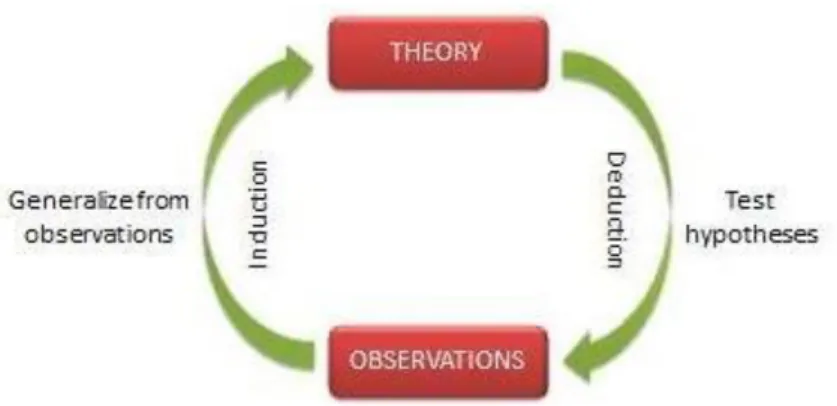
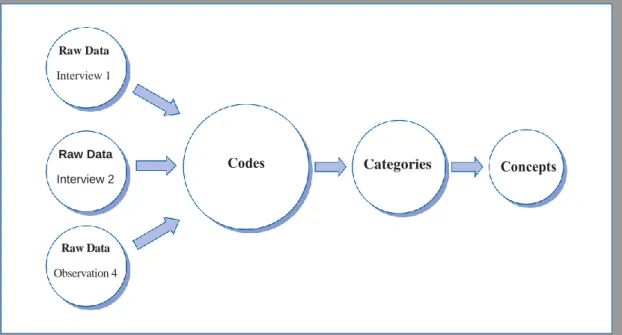
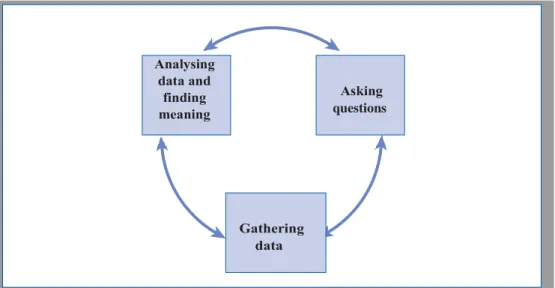
Figures page Figure 2.1. Inductive reasoning………..72 Figure 2.2. Deductive reasoning ………..………..72 Figure 2.3. The cycle of research……….73 Figure 4.1. The three Cs of data analysis: codes, categories, concepts.…...169 Figure 4.2. Relationship between questions, data, and meaning……….170 Figure 5.1. Educational level of participants……….………..180 Figure 6: Framework for effective public relations in the financial services sector ……….287
xvii List of tables
LIST OF TABLES
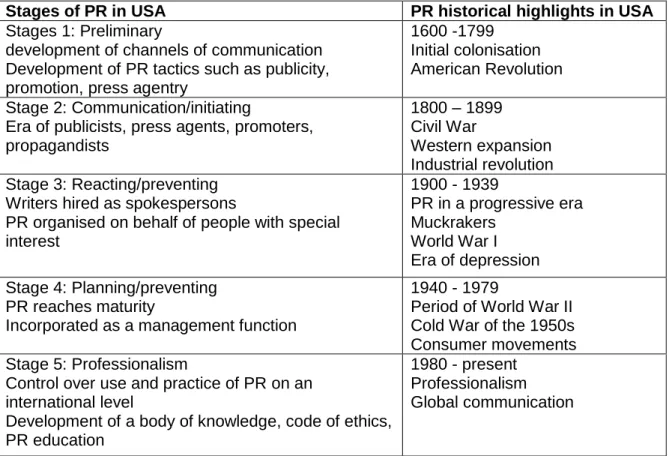
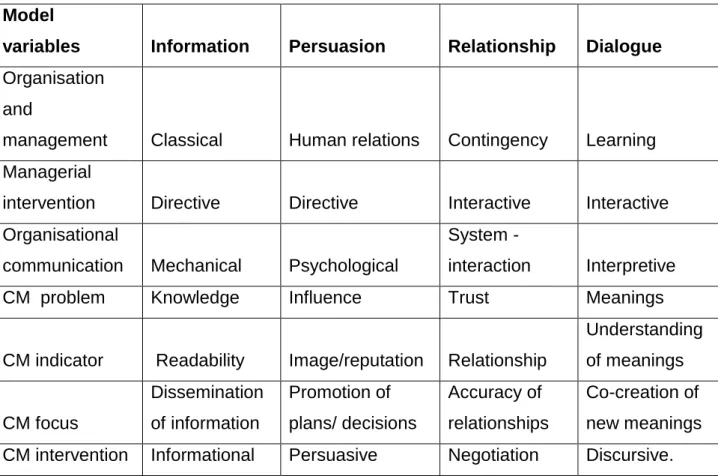
Table 1: Research objectives, methods of data collection, and chapter………...11 Table 2.1. Conceptualisation of the study ………...……….52 Table 2.2. Frameworks for organisation-public relationship measurement………..89 Table 3.1. Stages of PR development in the United States of America…………....100 Table 3.2. Characteristics of the four models of public relations.………109 Table 3.3. The four models of European public relations….……….113 Table 5.1. Demographics of participants….………..178
CHAPTER 1
BACKGROUND AND ORIENTATION 1.1. INTRODUCTION
Since the beginning of the 21st century public relations (PR) has seen an immeasurable growth as an industry both in numbers and respect. As an industry and profession PR has matured to the point of becoming an essential part of businesses worldwide. Contemporary PR as it is known today has moved beyond being an industry based in the United States of America (USA) to a worldwide profession. PR practice now spans countries with diverse cultures, economic and political systems, and levels of development (Curtin & Gaither, 2012: 1; Culbertson, 1996:1). Gregory (2004: 1) describes the nature of PR as “Dynamic, fast-moving, always developing, at the heart of the action.” This is because a lot more organisations, including developing/non-western countries, are gradually becoming aware of how communication/PR impacts on the success of their organisation. Waiyachote (2007:1), for instance, attributes the rise of the PR industry to the profession’s ability to distribute messages clearly. Duncan (2005: 543) asserts that PR has “the power to cut through messages” and is more cost-effective and sometimes more credible than advertising. Bowen, Rawlins and Martin (2012: 3) further emphasise the value of PR to organisational success when they posit that PR can mean the difference between “life and death” or the difference between “profitability and failure.”
The increasing value of PR within organisations has primarily been due to economic, societal, and technological advancement and communication across the globe. Many businesses now transcend national borders to conduct businesses, leading to a competitive environment. The increase in competition for foreign market among multinational organisations means that PR practitioners now service not only their environment, but a new, intercultural, worldwide audience (Chmielecki, 2012: 135, Jourde, 2007:1). Grunig (1992: 541) points out that “most organisations are affected by publics throughout the world or by competition with organisations in other countries.” This means organisations can no longer depend on a single strategy to communicate with its publics but must rather develop different strategies to address different situations (Gregory, 2002).
As globalisation is continuously increasing economic, social and political interdependencies, many organisations are also interacting, physically and virtually, with their publics outside their own country to build a dynamic relationship. Molleda (2009) believes that “trade, direct foreign investment, political coalitions, worthy global cases, information flow, and social networking, among other phenomena, are increasing the complexity of these relationships dramatically.” What this means is that there is a higher level of interdependence and interconnectivity among groups and organisations. The net effect is that there is now a strong demand on PR practitioners to manage communication and relationships between an organisation and its stakeholders at local as well as international levels (Vercic, Zerfass & Wiesenberg, 2015: 415; Wakefield, 2001: 639).
Scholars have, for several years, been studying how the profession is practiced globally as a way of contributing to the development of global theory and increasing the body of knowledge on the discipline. However, such research has largely been concentrated in western organisations/countries (Gupta & Bartlett, 2007:1; Cultberson, 1996:2). Very little research on the practice has been conducted in other parts of the world, especially in African countries. The purpose of this study is to investigate how PR is practiced in Ghana, with specific reference to corporate institutions in the financial sector. The desire to contribute to the body of knowledge on the practice and understand the uniqueness or otherwise of how the profession is practiced has occasioned this research. At the end of the research, the researcher hopes to develop a framework that will aid in the practice of PR in the financial services sector in Ghana.
This chapter will examine a number of issues. The chapter will discuss the overall context of the study, beginning with a discussion of the background, including an overview of the PR industry. Next, an overview is provided on the concept of globalisation and its impact on PR practice worldwide. Reference will be made to the different paradigms postulated by scholars in different regions particularly USA, Europe and Asia. Other issues that will be discussed in this chapter include: the purpose and relevance of the study, some theoretical concepts and related studies on the subject under investigation, historical overview of public relations, the research
setting, as well as the goals and objectives of the research. The chapter will conclude by looking at the formulation of the research problem(s), including the formulation of the sub-problems, various aspects of the methodology and the anticipated findings. The researcher will further link the contribution of the study to the discipline of communication.
1.2. BACKGROUND TO THE STUDY
PR efforts are generally seen as an attempt to manage communication between an organisation and its publics (Grunig & Hunt, 1984: 6). Johnson and Zawawi (2009: 6) also define PR as “a management function that uses communications to facilitate relationships and understanding between an organisation and its publics.” The practice of PR is found globally by corporate organisations, NGOs and governments in different roles and contexts. Organisations use PR as a means of enhancing reputation and building and maintaining relationships to achieve goals and objectives. Mehta and Xavier (2009: 192) note that the duty of a PR practitioner is to ensure successful communication between an organisation and its publics, including monitoring and responding to issues, expectations and maintaining an effective working environment.
PR is an intrinsic part of every organisation. It provides organisations the opportunity to monitor, dialogue, and respond to issues that affect key publics of the organisation (Lamb & McKee, 2005: 1). Lamb and McKee (2005: 1) define the profession as “the communication and action on the part of an organisation that supports the development and maintenance of mutually beneficial relationships between the organisation and the groups with which it is interdependent.”
The relevance of PR professionals to organisations is clearly found in the roles they play within the organisation. PR practitioners do not only manage information flow, they actively engage key publics, establish strong relationships, strive to maintain a sound reputation at all times and through all circumstances, and through PR measurement, help the organisation achieve strategic organisational goals (Public Relations Society of America – PRSA, 2012). PR practitioners ensure that organisations engage with stakeholders to succeed in an increasingly competitive, product-saturated, service-oriented marketplace. PR is now a fundamental part of
organisations in every country (McEllrath, Chen, Azarova & Shadrova, 2001: 665). The discussion so far shows how far the profession has developed during the new millennium and its importance to organisations not only in the western world but also other countries where the profession was not held in high esteem.
In the attempt to contribute to the discussion on increasing the global body of knowledge, it is important for scholars to look at how the profession is practiced in other countries. There is the need to broaden the discussion to other cultures, especially countries regarded as third world as these countries are poorly represented when debating scholarly literature on the subject. The need for country-by-country studies on the profession is even more urgent as the literature available is either scarce or non-existent. Despite showing signs of increasing development, very little is known about PR practice in Africa and Ghana, for that matter. In fact, Mersham, Skinner and Rensburg (2011: 1) note that most of the scholarly body of knowledge on PR since the beginning of the 21st century has mainly been in the USA and western Europe, a view shared by other scholars. The result is that conceptual frameworks/models developed to enhance the practice suit these countries. Mersham et al (2011: 1) therefore suggest the need for an African body of knowledge of PR and theory based on an African worldview. This will pave the way for Africa to effectively “engage in the global refocusing of world economics and discussions on how PR is practised in various countries and on different continents.” Gupta and Bartlet (2007: 1) also affirm that non-western practitioners often struggle in their attempt to implement such western-based models due to cultural, economic and societal differences. Although South Africa has led Africa’s effort to bridge the gap (Mersham, Skinner & Rensburg, 2011; Roux, 2010; Steyn, 2009; Van Heerden, 2004 etc), there is much more to be learnt by way of country-by-country studies. The current study therefore attempts to fill the gap by investigating how the profession is practiced in Ghana by first trying to understand the roles of practitioners in the selected organisations and the models that influence their practice. Secondly, the research will determine whether these models (if any) are effective in view of the cultural diversity between Ghana and the western countries where the models were developed. The previous section introduced the chapter by discussing the various contexts within which PR is practiced. The following section will briefly discuss the country Ghana and its economy. It will end with a discussion about the financial services sector in Ghana.
1.2.1. Overview of Ghana
Ghana is a lower middle income country situated in Sub-Saharan Africa. The country is flanked by French speaking countries, Cote D’Ivoire to the east, Burkina Faso to the north, Togo to the east, and the Atlantic Ocean to the south. Ghana currently has a population of over 25.1 million (July 2013 estimate) with a GNI per capita (US$) of 1,760 (World Bank Doing Business report, 2015). In 1957, Ghana became the first country south of the Sahara to gain its independence from their British colonial masters. The independence struggle was led by then Prime Minister Dr. Kwame Nkrumah, who later became its first president. The name of the country, which was then known as the Gold Coast because of its abundance of gold, was changed to Ghana after independence to reflect its new identity. After a series of coups in the 1980s Ghana witnessed historic elections as the country took the decision to return to multi-party democracy with the promulgation of a new constitution in 1992. Flt. Lt. Jerry John Rawlings, the then military ruler, became the first president of the fourth republic under the 1992 constitution. Since then Ghana has successfully held several elections and the country continues to grow economically and politically.
The people of Ghana are made up of various ethnic groups with its own unique cultural characteristics and lifestyles. The major ethnic groups consist of the Akans (47.5%), who constitute the largest group in terms of population. The others are the Ga-Dagme (16.6%), Ewe (13.9%), Mole-Dagme (7.4%), Guan (3.7%), Gurma (5.7%), Grusi (2.5%), Mande (1.1%), and others (1.4%) - (Tucci, 2017).
Ghana is currently one of Africa’s fastest growing economies thanks largely to its wealthy resources, democratic system and robust economy. The democratic credentials of the country have fast-tracked its growth in foreign direct investment (FDI) in recent years. Ghana’s GDP is now close to US$ 44 million (2013 estimate – Ghana Statistical Service, 2014).
1.2.1.1. The Economy
Ghana achieved middle income status in 2012 with a GDP per capita of US$1,563 with a GDP estimate of US$1,668 estimated for 2013 (PwC, 2014). Ghana is a country rich in natural resources. It is the second largest producer of cocoa and one of the leading producers of gold in the world. The quality of Ghana’s cocoa ensures that it enjoys good patronage on the world market. Cocoa presently accounts for nearly 20% of the country’s total merchandised exports. Apart from cocoa, the country also exports timber, crude oil, diamonds, bauxite, and aluminium, among others.
In 2010 Ghana commenced drilling of crude oil in commercial quantities and now produces close to 120,000 barrels per day. Production of oil is expected to increase after the government approved the commencement of production on the TEN (Tweneboa-Enyenra-Ntomme) oil field which is operated by Tullow Oil Ghana Ltd. Ghana commenced the export of natural gas in the latter part of 2014.
Ghana’s growth has remained fairly resilient despite the global recession. Even though the growth rate has slowed since 2011, the economy remains robust and fairly stable. The GDP growth rate as at 2013 stood at 5.4%. The economic growth rate was buoyed by oil exports, which accounted for a much larger proportion of GDP growth (ISSER, 2014: 7). There was a significant improvement in the industrial sector, which is the second largest and second fastest growing sector, primarily due to growth in mining and quarrying, with petroleum the main contributor (ISSER, 2013).
1.2.1.2. The economic sector
The economy of Ghana is based on a number of sectors including agriculture, financial services (banks and other financial institutions), real estate, energy (electricity, oil and gas), mining, tourism and Information and Communication Technologies (ICT). For the purpose of this research, the discussion will focus on the financial services sector. This sector is considered key due to its significant contribution to the country’s economy.
1.2.1.3. Financial services sector
The financial sector’s role in promoting economic development has been highlighted for decades (Armenta, 2007: 189). Sutton and Jenkins (2007: 6) also identify the fundamental role that the financial services sector plays in economic growth and development. Sutton and Jenkins posit that the financial services sector allows citizens to save money, protect themselves from an uncertain future, and enhance their credit value, at the same time ensuring they start and expand their businesses, enhance productivity, and compete effectively not only at a local level, but also internationally. Ghana’s financial services sector operates in three main areas, namely the banking and finance (including non-banking services and forex bureaus), insurance, and financial market/capital markets. The industry is regulated by the Bank of Ghana. The financial services sector is estimated to have contributed 10% to overall growth rate of the service during the third quarter of 2013 (Ghana Banking Survey, 2014). The financial services sector in Ghana has become essential in the resource mobilisation as well as an integral part of Ghana’s payment and settlement system. The sector assists start-up businesses and also enables existing businesses to expand their horizon. This process allows citizens to generate income, ultimately improving livelihoods. This also allows government to generate more revenue in terms of corporate tax which it uses to develop various aspects of the economy.
The previous section discussed Ghana, its economy and the financial services sector. The next session will outline the statement of the problem as well as the goals of the study.
1.3. STATEMENT OF THE PROBLEM
The body of knowledge on the practice of PR has experienced tremendous growth since the latter part of the 20th century. Evidence shows that the field will continue to evolve itself into an established discipline (Wilcox, 2006: 68). However, a comprehensive review of the current scholarly body of knowledge on PR practices indicates that the conceptual literature of the developments and practice of PR is uneven. In the opinion of Sriramesh and Vercic (2009: xxxvi), the focus of theory building has been restricted predominantly to the USA and a few western European countries. Empirical evidence on the growth and practice of PR in different parts of the world, especially non-western regions such as Africa, is very limited (Ming-Yi &
Baah-Boakye, 2008: 2). The result is that empirical evidence about the practice of the profession in other parts of the world is very scarce. They advocate for a descriptive account of PR practice from individual countries to enhance the body of knowledge currently in existence, especially as PR is now a global enterprise.
In view of the on-going debate about the different theoretical underpinnings that influence the practice of PR globally (as discussed previously), the question one then asks is “what influences the practice of PR among corporate organisations in Ghana? Is there a model that is unique to Ghana as it is in other parts of the world such as the two-way symmetrical in North America, the reflective paradigm in Europe or the strategist model as practiced in South Africa?” In consideration of these questions and based on literature reviewed (such as Ming-Yi & Baah-Boakye, 2008), the researcher believes that there is a significant gap in as far as knowledge of how PR is practiced is concerned, especially in the corporate world. The problem to be addressed will therefore be based on the following: To investigate how PR is practiced among corporate organisations in Ghana by executing a qualitative cross-sectional study of the financial services sector of the Ghanaian economy and developing a theoretical framework which will guide the practice of PR in the sector.
The study will investigate how PR is practiced in relation to its roles (activities) and models (purpose). This has become even more imperative as there is little or no information on how PR is practiced in Ghana and the models used in such practice. Available literature shows that the roles of PR, and for that matter the theoretical basis of the practice, is fashioned from the western perspective, specifically the USA and United Kingdom (UK) (Sriramesh 2009: xxxii; Verčič, van Ruler, Bütschi & Flodin, 2001: 373). Freitag and Stokes (2009: 183) admit that the practice of PR in sub-Saharan Africa, of which Ghana is a part, does not follow the same format as that which is practiced in the western world. The authors again note that the few studies done on the practice in Sub-Saharan countries have been evaluated “unfairly” based on western standards, as noticed by Gupta and Bartlett in their 2007 analysis of the differences between Asian and Western approaches to business and PR. Grunig et al (1995: 164) also acknowledge that many of the conditions that allow professional PR to thrive in the USA may not even exist in organisations in other countries, hence the practice of PR may not be as effective in other countries as it is in the USA as they
may not rely on the same models. The overall aim of this study is to develop a framework that will guide the practice of PR in the financial services sector in Ghana.
1.4. GOALS AND OBJECTIVES OF THE STUDY
The goal of the study is applied communication research as it aims to investigate issues of a practical nature, that is, determining the practice of PR among corporate organisations in the financial services sector of Ghana. Bhattacherjee (2012: 3) describes the goal of a scientific research as one that aims to discover laws and suggests theories that help explain natural or social phenomena or build scientific knowledge. Du Plooy (2001: 48) defines research goals as aims, purposes and overall outcomes of a research. He however acknowledges the confusion among scholars regarding the use of and meaning of the concepts of ‘goals’, ‘aims’, ‘purposes’, ‘objectives’, or ‘outcomes’ of research. Du Plooy (2001: 48) distinguishes between two goals of research, namely “applied communication research” and “basic communication research.” Du Plooy further states that a research study is regarded as basic when the aim is to develop theories that explain a particular communication phenomenon as a means of expanding communication as a science. On the other hand communication research is applied when the purpose is to investigate practical issues in order to ‘find solutions to problems that can be applied.’ A key aspect of applied communication research is that it allows a researcher to evaluate current practices of a phenomenon. Wimmer and Dominick (2011: 406) categorise research into three types, namely applied, basic and introspective. Applied research focuses on theory to solve “world problems.” In other words, it is used to solve specific problems such as communication campaigns. Broom and Dozier (1990: 23) categorise applied research into strategic (used to develop PR campaigns) and evaluative research (assesses the effectiveness of a PR programme). Basic research on the other hand attempts to proffer a framework for the practice of PR. It aims at creating knowledge that cuts across PR situations (Dozier, 2010: 10-11). The introspective examines the field of PR including experiences among members of the profession.
The overall objective of this research is exploratory. Exploratory objectives enable a researcher to obtain new insight into an issue of interest. In this case it will allow the researcher to obtain insight into how PR is practiced among selected corporate organisations in Ghana. The aim of exploratory research (Sue & Ritter, 2012: 2) is to
formulate problems, clarify concepts, and form hypothesis. Bhattacherjee (2012: 6) notes that exploratory research is mostly investigated in new areas of inquiry with the purpose of determining the scale or extent of a particular concept, problem, or behaviour, and to develop some preliminary ideas about that concept. Nagy, Biber and Leavy (2011: 10) also describe exploratory research as an “investigation into an area that has been under-researched.” Du Plooy (2001: 48) views exploratory objectives as examining unknown research areas as a means of obtaining new insight into a communication problem. These definitions agree with the nature of this research which seeks to understand how PR is practiced in selected corporate organisations, a view shared by Babbie (2008: 97).
Kothari (2004:36) also explains that exploratory studies allow a researcher to gain insight into an issue and discover new ideas. Hesse-Biber and Leavy (2011: 10) put it succinctly by indicating that the purpose of exploratory research is to investigate an area that has been ‘under-researched’ hence such data gathered virtually helps shape the direction of future research. In view of these assertions the researcher considers exploratory research as the right method to use in investigating how PR is practiced among corporate organisations in the studied organisations. The next section will detail the research objectives and research questions.
1.5. RESEARCH OBJECTIVES
Specifically, the objectives of this study will be to:
Investigate how PR is conceptualised and practiced by means of literature review.
Determine how PR is conceptualised by practitioners in the financial services sector in Ghana.
Analyse the views of Ghanaian PR practitioners in the financial services sector about the selected PR models.
Analyse the PR roles (activities) practitioners in the financial services sector in Ghana are engaged in.
Table 1: Research objectives, goal of the study, methods of data collection, and chapter Goal of study Research objectives Research method(s) Chapter 1 Applied communication Chapter 1 2 To investigate how PR is conceptualised and practiced
by means of literature review Literature review Chapter 1 to 4
3
To determine how PR is conceptualised by
practitioners in the financial
services sector in Ghana Interview Chapter 5
4
To analyse the views of Ghanaian PR practitioners in the financial services sector about the selected PR
models Interview Chapter 5
5
To analyse the PR roles (activities) practitioners in the financial services sector in
Ghana are engaged in. Interview Chapter 5
Source: Researcher’s own compilation
1.6. RESEARCH QUESTIONS
Based on the research objectives, the study will seek answers to the following questions:
How is PR conceptualised and practised according to literature?
How is PR conceptualised by Ghanaian PR practitioners in the financial services sector?
What are the views of Ghanaian PR practitioners in the financial services sector on the selected PR models?
What roles (activities) do Ghanaian PR practitioners in the financial services sector perform?
The next section will discuss the PR industry in general including the concept of globalisation and its impact on the profession at a global level. It will also briefly discuss the various models practiced in different cultural settings.
1.7. THE PUBLIC RELATIONS INDUSTRY
The PR industry has experienced a great transformation over the last 30 years. The industry has moved from being mere publicity or one-way communication to become a means by which organisations and their stakeholders engage in a two-way dialogue aimed at creating a mutual understanding. PR, from its modern conception in the early part of the 20th century to the present time, has undoubtedly developed into a multi-billion dollar industry and the fibre of every successful business and democratic process. In economic terms, the World PR industry report (The Holmes Report and the International Communications Consultancy Organisation - ICCO1) of May 2015 reveals that the industry grew by 7% in 2014 to more than $12 billion in 2015. This was however a decrease from the 11% increase in 2013, a situation attributed to currency volatility. The fact however remains that the industry continues to outperform the growth of the global economy. In terms of the number of practitioners, the Global Alliance estimate the number of actual PR professionals in the region of three million (Wilcox & Cameron, 2012: 5). However, this figure could be higher as more people get into the profession annually.
In Africa, political stability and rapid socio-economic development has also accelerated the growth of the profession. Several countries on the African continent, including South Africa, Ghana, Nigeria, Kenya, and Uganda have their own institution that supports the practice. Apart from this, Africa also has its umbrella body in the Federation of African Public Relations Association (FAPRA), which was established in 1975. These associations are making valuable contributions to the development of the practice. In Ghana, the Institute of Public Relations (IPR) constantly organises courses in various aspects of PR as a way of sharpening the skills of practitioners to come to terms with current practices. Practitioners on the continent are also making efforts to contribute to the global discussion on the practice through publications on the practice in Africa (Mersham & Skinner, 2009; Akpabio, 2009; Rensburg, 2007; Ming-Yi & Baah-Boakye, 2008; Van Heerden, 2005). Although not widely acknowledged due to the lack of literature, research on the practice has been growing during the last two decades (Akpabio, 2009). Mersham, Skinner and Ronsburg (2011: 3) believe that the growing nature of the practice also means that there is the need for
African practitioners to build a body of knowledge of PR and theory based on African perspectives. Scanlan (2004: 5) is of the opinion that African countries are the originators of and the focus of intense PR efforts. This statement feeds into efforts by practitioners, including those outside the continent, to evaluate the practice of PR given the continent’s diverse cultural and ethnic background. Although Freitag and Stokes (2009: 92) acknowledge the use of PR in many African countries as a tool for development or nation-building, they nevertheless believe that the profession is growing at a phenomenal rate.
1.8. GLOBALISATION AND PUBLIC RELATIONS
Available literature suggests a strong linkage between globalisation and PR practice. Scholars believe that globalisation has opened enormous opportunities for the growth of PR practice and scholarship (Sriramesh, 2009: 2; Sriramesh & Verčič, 2007: 335). Indeed, Sriramesh and Verčič (2007: 335) argue that both globalisation and PR have played a mutual role in contributing to each other’s growth while others such as Butterick (2011: 179) and Morley (2002: 192) describe PR as a global phenomenon permeating through cultures. This section will briefly review the concept of globalisation and then discuss its linkage with PR.
1.8.1. Brief overview of globalisation
Much has been discussed about the concept of globalisation and how it has encapsulated the political, economic, and cultural atmosphere of today. However, as some scholars have pointed out, the term is not new (Walker, 2010: 219). Sriramesh (2009: 2) for instance, argues that globalisation did take place at various points of human history as civilisations exchanged values and artefacts. L’Etang (2008: 232) also shows that globalisation began with “early human exploration and developed through trade, imperialism, diplomacy, tourism and cross-cultural exchange.”
Globalisation has been defined in many ways to mean different things in various fields including international business, global public policy and international relations. It has been argued that the difficulty in settling for a single definition is primarily due to its multifaceted nature. In the words of Lee (2005: 14): “although globalisation is a truly multifaceted trend that makes it hard to define within one discipline, it obviously relates to the emergence of new social relations that transcend traditional borders.” Diamond
(2006) links globalisation with the “growing interdependence and interconnectedness of the world - politically, militarily, economically and technologically.” Ritzer (2004: 72) also described it as “the world with diffusion of practice, expansion of relations across continents, organisation or social life on a global scale, and growth of a shared global consciousness.” L’Etang (2008: 231) describes the concept of globalisation as “compression of time and space that has been facilitated by communication technology and travel.” In simple terms, globalisation involves working with different employees, customers, vendors, communities and government officials in multiple countries (Wilcox & Cameron, 2011: 544). Sondzi (2006: 112) further describes the many dimensions of globalisation to include environmental, military, social and economic globalisation.
Globalisation is believed to have originated in the 1990s primarily due to the rapid increase in international trade to refer to the expansion of the world as an interconnection of economic, communications and social networks (Sriramesh, 2010: 692; Franklin, Hogan, Langley, Mosdell & Pill, 2009: 96). Globalisation was a term mooted to describe the idea of a ‘global village’, a term coined by Marshall McLuhan in the 1960s (Franklin et al 2009: 96). Sriramesh (2010: 692) notes that globalisation is primarily used in an economic sense to mean elimination of factors that inhibit effective trade among nations, thereby allowing for the smooth flow of goods, services, and labour with communication driving such exchange. Globalisation now shapes the way businesses, including small businesses, operate. Heath and Coombs (2012: 456), in affirming how globalisation has impacted on even small businesses, make the following comment:
Globalization, especially with the advantages of the Internet, has reshaped the way many small businesses can operate and has created challenges for large multinational organizations. Once, small businesses simply lacked the advertising and public relations budgets to reach markets around the world. The Internet, with its many search engine capabilities and specialized discussion groups and Weblogs, has brought these small companies and interested customers together. Search engines, discussion groups, and Weblogs create the “awareness” that cannot be accomplished with limited advertising
dollars. Faxes, the Internet, and the Web bring people closer together by speeding things up and making communication easier.
Thanks to globalisation, access to information has never been easier, especially with the continuous advancement of technology, specifically the Internet. Sriramesh (2009: 2) attributes the growth of globalisation to three principal factors, namely: (i) the elimination of trade barriers among nations of the world, causing countries to trade within, and among, trading blocs rather than as individual nations, (ii) the rapid development of ICT; and (iii) recognition among a majority of countries in the world of the need to address common issues such as environmental pollution, terrorism, nuclear proliferation, and overpopulation. Franklin et al (2009: 95) also attributes the growth of globalisation to rapid change in the international communication landscape. It is obvious that globalisation has made the world a smaller place by bringing together individuals, groups and organisations. The happenings in one country can have a ripple effect on others/organisations elsewhere. However, what does this mean for the practice and advancement of PR as a profession? The next section addresses this. 1.8.2. Impact of globalisation on the public relations industry
There is a general agreement among PR scholars that globalisation has opened immense opportunities for the development of PR. L’Etang (as quoted by Chudinova, 2015: 171) offers insight into such opportunities. According to L’Etang, globalisation affects PR for several reasons including:
- Globalisation offers the opportunity to formulate new ideas and newly presented goods and services in various markets.
- Globalisation increases communication opportunities and challenges.
- Globalisation changes organisations, key players, the public, key issues and relationships.
- More and more organisations are being globalised and use international labour and markets.
- PR is closely related to capital (economic power) and its maintenance (searching for new markets and cheaper materials, markets and knowledge). Sriramesh (2010: 693) also touches on the growth opportunities offered to the PR industry by globalisation. According to Sriramesh, companies, especially multinational
companies that have entered emerging markets such as Asia and Latin America, are now compelled to communicate with different stakeholders in different cultural settings. Organisations are now required to develop effective communications strategies not only to communicate with diverse publics but also maintain positive relationships with these publics. The advent of globalisation means that the need to ensure that businesses navigate cultural terrains has become even more imperative (Kent & Taylor, 2011: 50; Wakefield, 2008: 138; L’Etang 2008: 230; Yannas, 2006: 1). Gregory (2017: 172) note the need for practitioners who work for global organisations to be able to communicate across timelines, cultures, languages and different communication systems. Gregory further asserts that even the actions of local businesses have global implication. Taylor (2001: 629) agrees with the assertions made by Gregory. Sriramesh (2008: 409) acknowledges the role that globalisation has played in international PR by promoting cross-national communication, which every organisation needs.
On the business front, globalisation has opened new markets for multinational organisations to enter. The entries of these multinationals have impacted the way businesses run in these countries (Sriramesh, 2010: 698). Many western multinational organisations such as Coca-Cola, Tullow Oil, Goldfields and Unilever have moved into other countries, including developing countries like Ghana, and are using PR to build and maintain strong relationships. Moreover, top PR agencies such as Ogilvy, Weber Shandwick and Porter Novelli, have established offices all over the world (Ming-Yi & Baah-Boakye, 2009: 84) to meet the demands of local and multinational agencies that require their services in building and sustaining mutually beneficial relationships with their publics. PR practitioners are at the forefront of driving these communication activities to establish relationships that are acceptable within the culture of the society that the organisation finds itself in.
1.8.3. Implications for global theory building
The discussion on globalisation and its impact on the practice of PR across cultures has been a major study among scholars for decades. One area of concern commonly studied is whether PR can be practiced the same way in every country. The debate on whether the same theoretical concept can be applied to the practice of the profession everywhere has continued to this day. Despite the phenomenal growth of
the PR industry, research and writing about the profession across the world tend to be dominated by western models, suggesting a western bias in understanding the profession (Mersham, Skinner & Rensburg, 2011: 1; Fitch & Surma, 2006: 1; Botan, 1992: 149). Sriramesh (2004: 1) articulate that the PR ‘body of knowledge’ is “largely ethnocentric with the focus on theory building confined almost exclusively to the United States with input from a few western European countries.” This situation is not lost on other critics who argue that the debate over a generic model of PR has been largely one-sided with a prejudice towards the application of models that are western oriented to non-western, particularly developing countries, often with serious challenges (Halff & Gregory, 2014; Mersham, Rensburg, & Skinner, 2011 & 1995; Gupta & Bartlett, 2007; Holtzhausen, Petersen & Tindall, 2002).
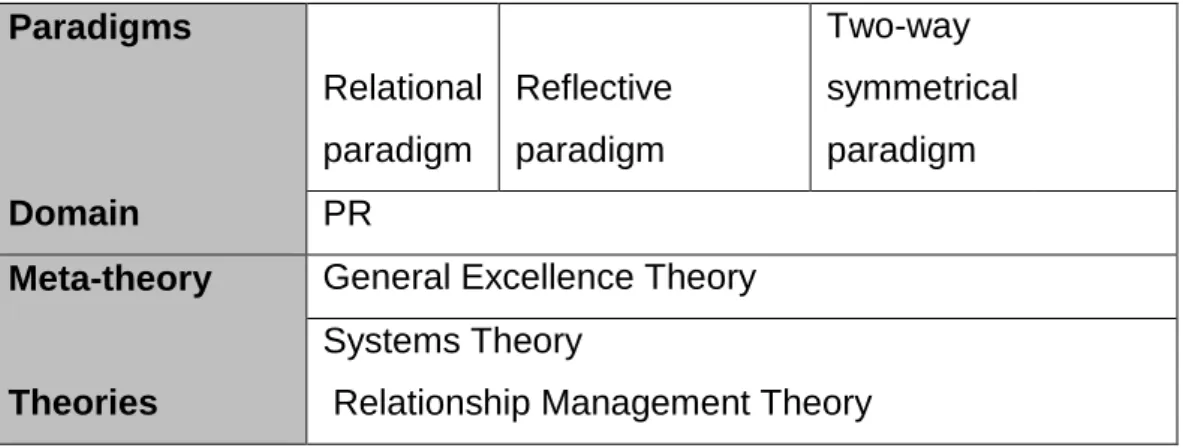
1.8.3.1. Different public relations models practiced in different regions A key issue that makes the practice of PR even more complex is the fact that there are different perspectives of how the profession is practiced in different countries. The last two decades has witnessed PR scholarship putting forward theories which seek to look at PR practice from both the local and global perspectives. For example, while PR practice in Europe is based on the reflective paradigm, the Americans support the relational paradigm. The European dimension of PR puts emphasis on the initiation of relationships with stakeholders. Changes in behaviour by the organisation is therefore deemed as essential for building and maintaining positive relationships with key stakeholders (van Ruler, Verčič, Butschi & Flodin, 2004; Holmström, 2004; Benteke & Verčič, 2002). The focus of PR in Europe is geared towards social responsibility, legitimacy of operation, i.e. obtaining the appropriate licence, ethical behaviour, focusing on long-term impact, and not focusing so much on profit. In view of this, Europe prefers to use the term reflective communication management to PR, which is seen as a US-based term (Van Ruler, 2003: 2, Verčič et al 2001: 377-382). In the bled manifesto, Van Ruler and Verčič concluded on the practice of PR in Europe with the following statement:
Seen from this standpoint public relations is not just a phenomenon to be described and defined. It is first, a strategic process of viewing an organisation from an “outside” view. Its primary concerns are
organisation’s inclusiveness and its preservation of the “license to operate”. As marketing is viewing organization from a market view, public relations is viewing organization from a public view (meant as “public sphere”). We, therefore, like to broaden the relational and communicative approaches to public relations with or into a public or reflective approach of which the relational and communicative approaches of public relations can be seen as parts (p. 16).
PR in Europe was categorised as being reflective (being socially responsible), educational (where organisational members are taught to be responsible in their communicative behaviour), and operational (implementation of communication plans) (Van Ruler et al 2001: 172-173). In effect the reflective model of PR is seen as a broadening of the relational and communicative approaches to public relations practice.
The North American perspective, which is mainly from the USA, suggests that stakeholders are selected by organisations and then relationships are formed with them. It seeks a balance between public interest and organisational interest through a two-way symmetrical system (Ledingham, 2003: 181). Within that viewpoint, PR is described as “the management function that establishes and maintains mutually beneficial relationships between an organization and the publics on whom its success or failure depends” (Broom & Sha, 2012: 7). The focus of the American model is on using communication as a tool to build a two-way mutually beneficial relationship between an organisation and its publics. Dutta and Kumar (2015: 269) quote Allen Center and Patrick Jackson’s observation of the relational paradigm: “The proper term for the desired outcomes of public relations practice is public relationships. An organization with effective public relations will attain positive public relationships.” The relational paradigm attempts to define the function of PR within the organisation, explain the role communication plays within that function, and offer guidelines for determining how PR contributes to the bottom-line (Ledingham, 2003: 182) and is consistent with the belief that public relations activities ought to benefit both the publics and the organisations (Grunig & Hunt, 1984; Ledingham & Bruning, 2001).
Grunig, Grunig, Sriramesh, Lyra and Huang (1995), after comprehensive studies of PR practice in India, Taiwan and Greece, proposed two other patterns of PR in the Asian region - the Cultural Interpreter and Personal Influence models. The personal influence model was mainly used to cultivate good relationships with external bodies including government, media, political, social or activists’ groups. The cultural interpreter model on the other hand is used by multinationals doing business in other countries. Grunig et al (1995: 183) also postulate that the model can work within a single environment with diverse groups. The cultural interpreter model allows global businesses to use citizens of the country as they understand the culture, customs, socioeconomic, legal and political systems of that society.
It is interesting to note that in all these scholarly discussions, Africa appears to be missing, thus begging the question of what the role of Africa has in the quest to develop a theory that reflects how PR is practiced globally. Most of the scholarly research on this issue has emanated from South Africa while the rest of Africa lags behind. Scholars in South Africa have variously explored the contribution of communication management to organisational success for over two decades. One of the significant contributions made was the distinction between ‘strategic communication management’ and ‘communication management’ taking place on different organisational levels (Steyn, 2007: 139-141). The result was a new paradigm which became known as the corporate communication ‘strategist’ role which is at the senior most/macro level of management. This role ensures that the corporate communication manager monitors the environment for relevant development while anticipating their possible effect on the policies and strategies of the organisation and consequences for the organisation’s policies and strategies, especially when it comes to stakeholder relationships (De Beer, Steyn & Rensburg, and 2013: 304). The PR strategist engages in environmental scanning and applies the mission, vision and values of the organisation to fit the environment (Steyn, 2007: 139, 141; Steyn & Puth, 2000: 17). Steyn (2000a) conceptualised three roles of corporate communication, namely the strategist, manager and technician. However, in a comparative study conducted by Steyn and Butschi (2003), these roles were found to be ‘theoretically similar’ and ‘practically identical’ to three of the reflective paradigms of Europe - reflective, managerial and operational (De Beer, Steyn & Rensburg, 2013: 308).
Africa as a continent does not have any identifiable means of verifying the models that it operates with unlike in Europe and the USA. In fact, with the exception of South Africa, there is no known model developed to reflect the role of PR in any particular African country. Mersham, Skinner and Rensburg (2011: 1) advocated the need for an African body of knowledge of PR and theory which is based on an African worldview. However, the diverse and complex cultural, geo-political and socio-economic factors make this task a challenging one. Moreover, research on the practice of PR on the continent is, in the words of Mersham and Skinner, ‘sparse and fragmented’ (2009: 265). Literature on PR practice usually tends to look at the roles/functions and/or contributions of PR to organisations. However, Van Heerden (2004), in her master’s dissertation on practice of PR in Africa, identified three main models - reflective/two-way symmetrical, two-way asymmetrical/symmetrical, and the public information/press agentry which influences the practice of PR in Africa. In their research on ‘Public relations in Ghana: work-related cultural values and public relations models,’ Ming-Yi and Baah-Boakye (2009) also concluded that the practice of public relations in Ghana tends to be a mixture of the Asian and American models, i.e. the cultural interpreter and personal influence models/two-way asymmetrical/symmetrical models. The Asian model however appears to be the most dominant. Kiambi and Nadler (2012), in their pioneer study to explore PR models that inform how the profession is practiced in Kenya, also identified the personal influence model as the most dominant. This may not be surprising as, like Asia, activities in Africa are based on strong cultural factors, including the fact that communities are built on strong relationships and the concept of ‘one family.’
Despite the different models practiced in different cultural settings, scholars James Grunig, Larissa Grunig and David Dozier (2002), based on a 15-year IABC sponsored research, developed what they called the excellence theory of PR which, they claimed, was applicable in every country regardless of cultural, economic or political differences. The next section briefly addresses this theory.
1.8.3.2. Towards a generic principle of public relations
The debate over the applicability of western-based, especially U.S., models of PR in a global context resulted in a series of attempts by scholars to develop a global public relations model in the 1990s. Even though there is a general agreement regarding the