Crack Detection and Parameter Estimation on
Road Images Using Prewitt Operator and Hough
Transformation
Er. Harjit Kaur1, AP Er. Rajandeep Kaur2 1,2
CSE (Computer Science and Engineering) SBBSU (Sant Baba Bhag Singh University)
Abstract: This paper shows the results on road images by detecting the edges of cracks on it with the help of prewitt and then calculates the parameter associated with the cracks because roads plays an important role in everybody’s life to reach their
destination. Due to constant use of roads crack comes on the roads and detecting these cracks manually is very difficult tasks. To eliminate this difficulty computerized systems are developed. The proposed system detects the cracks and then calculates the some parameters associated with it. For detection of cracks, an image is acquired and filtered with the help of median filter. After that enhancement is done with the help of histogram contrast stretching and prewitt edge detection method is used to detect the edges of the cracks. Moreover mathematical formulae are used for calculating the parameters. Hough transformation is used to calculate the shape of the cracks. The PSNR, SNR and MSE values are calculated for the output image, for comparing the different edge detection operator and result shows that prewitt operator is better than all other operator. For measuring the performance of the system recall and precision is also calculated and system has recall=97.56% and precision=98% (approx.) has performance=97.49%. All these work is performed in MATLAB R2011b.
Keywords: detection, deteriorate, classification, PSNR.MSE, SNR, cracks
I. INTRODUCTION
As the technology is increasing day by day, most of the daily work of people is done with the help of technology. Human Beings depend upon the technology for their small to small work. So this technology also helps the people in detecting the cracks in the things. If someone wants to detect the cracks on the road and they will do it manually, then it takes a lot of efforts and time. But if we detect these cracks with the help of computerized system, then it will be done with less efforts and time. The roads play an important role for our society. People use these roads to reach their destination. So roads are the main medium for Human Beings to reach their destination. So the roads are constantly used by people. Hence, cracks come on the surface of the roads. Cracks can come on the roads due to some environmental factors also.
The proposed system helps in detecting the cracks with the help of prewitt edge detection techniques of digital image processing technique. Some of the other edge detection techniques are:
A. Sobel Operator
The Sobel operator helps in extracting all the edges of an image without considering its direction. Sobel operator provides smoothing and differencing effect. It has a pair of 3×3 convolution kernels. One kernel is about 90 degree rotated from other kernel. [15]
B. Robert’s Cross Operator
Robert Cross operator is similar to Sobel operator but it consists of 2x2 convolution kernels. [15]
C. Prewitt Operator
A discrete differential operator is prewitt operator which computes the approximation of the gradients. It uses 3x3 convolution mask to detect horizontal and vertical edge of an image. It combines Gx and Gy to estimate absolute orientation and magnitude of the gradient at each pixel. [15]
D. Laplacian based Edge Detection
E. Canny Edge Detection Method
The Canny Edge Detection Operator was developed by John Canny in 1983 at MIT during his master’s thesis. This method sets two thresholding. These are high and low thresholding. If the pixel has value greater than high thresholding, then it set as edge pixel and a pixel value has a value below than low threshold value, then it does not set as edge pixel. [15]
For calculating the shape of the cracks the proposed system uses Hough Transformation. Hough Transformation is the feature extraction method which is used in digital image processing, image analysis and computer vision. It is the technique which is used to estimate the shape of an object with the help of its boundaries. It was firstly introduced by Paul Hough in 1962 and after that it was developed by the Peter Hart and Richard Duda in 1972. This technique is very easy to implement and accurate as compared with other techniques.
II. METHODOLOGY
The following are the steps which our system is going to perform for detecting cracks in an image and calculating the parameters associated with it.
Fig. 1: Flowchart of Crack Detection and Parameter Estimation
A. Image Acquisition
The first step is Image Acquisition. The images are acquired with the help of CanStock image database.
B. Image Enhancement
The second step of this system is Image Enhancement. The enhancement is done to enhance the images for removing the noise in images. Moreover enhancement is done to clearly understand the details of an image. It is also called preprocessing of an image. The enhancement is done by using histogram enhancement by contrast stretching technique for this system.
C. Image Edge Detection
The next step is the Image Edge detection. In this step, the edge detection operator is used to detect the edges of the things present in an image. There are number of edge detection operator but for this system edge detection is done by using the prewitt edge detection method.
D. Image Segmentation
E. Calculations
The last step performed by the system is to calculate the parameters associated with the cracks. This is calculated using mathematical formulae and for calculating shape Hough transformation is used.
III. RESULTS
The proposed system Crack Detection and Parameter Estimation on road images using Prewitt Edge Detection operator and Hough Transformation is tested by taking 40 images from different databases. For achieving the goals the proposed system is build in MATLAB R2011b. For detecting the cracks, the image is firstly acquired from the database and morphological technique is applied on it to clean an image, then the image is enhanced with the help of histogram contrast stretching technique, after that the edges of the cracks are detected with the help of Prewitt edge detection technique. In the last the parameters are calculated with the help of mathematical formulae. Moreover for finding the shape of the cracks Hough Transformation is used.
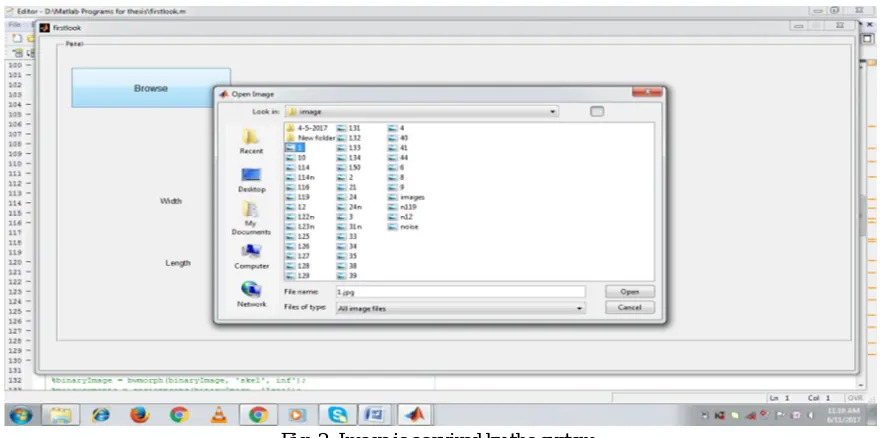
[image:4.612.93.533.245.464.2]The result given by the system is shown in the Figure 3.1 to Figure 3.4 Step 1: Acquiring an Image
Fig. 2: Image is acquired by the system.
Fig. 3: Stretched Image by using Histogram Contrast Stretching
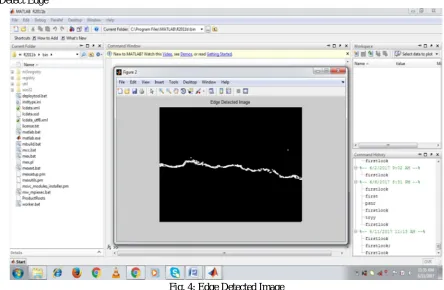
[image:5.612.87.531.102.392.2]Step 3: Detect Edge
Fig. 4: Edge Detected Image
[image:5.612.97.528.390.698.2]Step 4: Edge Detected Image with parameters calculated on it.
This system also calculates PSNR, MSE and SNR values for the output image. The following table shows PSNR, MSE and SNR values for the output image whose result is shown above in Fig. 3.4.
Table 1: PSNR, SNR, MSE values for Prewitt Edge Operator
Performance Measure Values
PSNR 32.4760
SNR 20.8005
MSE 0.2884
[image:6.612.168.448.290.371.2]The above Table 1 shows result for Prewitt Edge Detection Operator. PSNR value for prewitt is 32.4760. SNR value is 20.8005. MSE is 0.2884. If we compare prewitt operator with our operator, it shows better results than others.
Table 2: Table of Comparison of prewitt operator with other edge detected operators.
Method PSNR SNR MSE
Prewitt 32.4760 20.8005 0.2884
Sobel 31.0727 21.0043 0.3984
Canny 32.1775 10.2037 0.3089
For better results, PSNR and SNR values should be higher but MSE value should be low. Hence from above table it is clear that prewitt is the best.
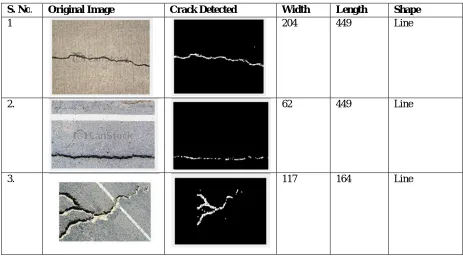
[image:6.612.74.537.456.712.2]The results shown by the system with different cases are shown in the following table number Table 3. The table has five columns showing original image, edge detected image, length, width, shape of different images.
Table 3: Results shown by the system with different test cases.
S. No. Original Image Crack Detected Width Length Shape
1 204 449 Line
2. 62 449 Line
measure the performance of the system recall and precision are calculated. As compared with existing method [1], the proposed system has recall= 97.56% and precision= 98% (approx.) and has performance =97.49%.
IV. CONCLUSION AND FUTURE SCOPE
Roads are used for various purposes. As a result, its maintenance is very important. The proposed system is tested on 40 two dimensional images. But existing system [1], conferred their experimental results on 20 images. The proposed system detects the edge of the cracks on two dimensional images and calculates the parameter like length, width and shape of the cracks. It uses the prewitt edge detection method to detect the edge and mathematical formula for calculating the length and width. Moreover, Hough transformation is used to calculate the shape of the crack. For handling noisy image, median filter is used. For comparing various edge detection methods, MSE, PSNR, SNR values are calculated. And results shows that prewitt method is very efficient than other edge detection method.
By comparing the proposed system with earlier existing system [1], the proposed system has approximately 98% precision and 97.56% recall and performance=97.49%. The proposed system works only on two dimensional images. In future, this system is extended to work for three dimensional images. This system is implemented on vehicles so that driver of the vehicle able to judge the cracks and also able to know the length, width and shape of the cracks. Moreover, in future, intensity and depth of the cracks can also be calculated.
REFERENCES
[1] B. Hari Prasath, S. Karthikeyan, Mrs.G. Mary Valantina, “Computerized Highway Defects Recognition and Classification System” inIJPTFI, March-2016,
Vol. 8, Issue No.1, page no. 11038-11048.
[2] Anan Banharnsakun, “Hybrid ABC-ANN for pavement surface distress detection and classification” in IJMLC, 2015, pp1-12.
[3] Henrique Oliveira, Paulo Lobato Correia, “Automatic Road Crack Segmentation Using Entropy And Image Dynamic Thresholding”, EUSIPCO 2009, August
24-28, 2009.
[4] Henrique Oliveira, Paulo Lobato Correia,”Automatic Crack Detection on Road Imagery Using Anisotropic Diffusion And Region Linkage” in EUSIPCO
2010, August 23-27, 2010.
[5] Aiguo Ouyang, Chagen Luo, and Chao Zhou, “Surface Distresses Detection of Pavement Based on Digital Image Processing”, in IFIP AICT 347, pp. 368–375,
2011.
[6] Liqin Ji, “Design and research of pavement crack detection system based on image processing” in BTAIJ, Volume10, Issue15, 2014.
4. 451 451 Square
5. 318 451 Rectangle
6. 299 451 Rectangle
[7] Suwarna Gothane, Dr. M. V. Sarode, “Case Study: Analysis and Study of Different Approaches for Road Network Maintenance” in IJSER, Volume 3 Issue 8, August 2015.
[8] Fanfan Liu, Guoai Xu et al., “Novel Approach to Pavement Cracking Automatic Detection Based on Segment Extending” in KAM 2008.
[9] Tien Sy Nguyen, Manuel Avila, Stephane Begot, “ Automatic Detection and Classication of Defect on road Pavement using Anisotropy Measure” in European
Signal Processing Conference, 2009, Glasgow, United Kingdom, pp.617-621, 2009.
[10] Qin Zou, Yu Cao, et al., “CrackTree: Automatic crack detection from pavement images”, in Elsevier, 2011.
[11] Akhila Daniel, Preeja. V, “A Novel Technique for Automatic Road Distress Detection and Analysis” in IJCA, Volume 101– No.10, September 2014.
[12] Shi Guiming, Suo Jidong, Huang Chao, “Research on vehicle-mounted pavement crack detection system based on image processing” in BTAIJ, 10(21), 2014.
[13] Miguel Gavilán, David Balcones, et al., “Adaptive Road Crack Detection System by Pavement Classification” in Sensors 2011.
[14] B. Santhi, G. Krishnamurthy, “Automatic Detection of Cracks in Pavements Using Edge Detection Operator” in JTAIT, Vol. 36, No.2, 2012.
[15] Pooja Sharma, Gurpreet Singh, Amandeep Kaur, “ Different Techniques Of Edge Detection In Digital Image Processing” in IJERA, Vol. 3, Issue 3, May-Jun
2013, pp.458-461.
[16] Muthukrishnan.R and M.Radha, “Edge Detection Techniques For Image Segmentation” in IJCSIT, Vol 3, No 6, Dec 2011.
[17] Jogendra Kumar, Dr. GVS Raj Kumar, R. Vijay Kumar Reddy, “Review on Image Segmentation Techniques” in IJSRET, Volume 3, Issue 6, September 2014.
[18] Peggy Subirats, Jean Dumoulin, et al., ‘Automation of Pavement Surface Crack Detection Using the Continuous Wavelet Transform’ in ICIP 2006.
[19] Amanpreet Kaur, “A Review Paper on Image Segmentation and its Various Techniques in Image Processing” in IJSR, Volume 3 Issue 12, December 2014.
[20] Ghada Moussa, Khaled Hussain, “A New Technique for Automatic Detection and Parameters Estimation of Pavement Crack” available at
www.iis.org/CDs2011SCI/IMET_2011/PapersPdf/FA884ZF.pdf.
[21] A. Miraliakbari, S. Sok, Y. O. Ouma, M. Hahn, “Comparative Evaluation of Pavement Crack Detection Using Kernel-Based Techniques in Asphalt Road
Surfaces” available at www.conftool.pro/.../Miraliakbari-Comparative_evaluation_of_kernel-based_techniques-1101_a.pdf.
[22] OUYANG Aiguo, Wang Yaping, “Edge Detection in Pavement Crack Image With Beamlet Transform” in EMEIT-2012.
[23] Wenyu Zhang, Zhenjiang Zhang, “Automatic Crack Detection and Classification Method for Subway Tunnel Safety Monitoring” in Sensors 2014.
[24] Liang Ying, “Beamlet Transform Based Technique for Pavement Image Processing and Classification” in IEEE International Conference available at
ieeexplore.ieee.org/5189598, December 2009.