DEVELOPING ARABIC
USABILITY GUIDELINES FOR
E-LEARNING WEBSITES IN
HIGHER EDUCATION
Mohamed Benaida
Ph.D. Thesis2014
P
h.
D
. Thes
is
2014
Moha
m
ed
B
enai
DEVELOPING ARABIC USABILITY GUIDELINES
FOR
E-LEARNING WEBSITES IN HIGHER EDUCATION
Mohamed Benaida
School of the Built Environment
University of Salford, Salford, UK
Submitted in Partial Fulfilment of the Requirements of the
Contents
Contents...I
Table of Figures ... IX
List of Tables...XII
Acknowledgements ... XV
Abstract ... 1
1 Chapter One: Introduction... 2
1.1 Overview ... 2
1.2 Background Review ... 3
1.3 Problem Statement ... 5
1.4 Research Aim ... 7
1.5 Research Objectives ... 7
1.6 Research Questions ... 8
1.7 Structure of the Thesis... 9
2 Chapter Two: Literature Review... 11
2.1 Introduction ... 11
2.2 E-learning... 12
2.2.1 Types of e-learning... 13
2.2.2 Theories... 13
2.2.4 Advantages and Disadvantages ... 17
2.2.5 E-learning and Higher Education ... 18
2.2.6 E-learning Market ... 19
2.3 Culture... 19
2.3.1 Definition of Culture ... 19
2.3.2 Hofstede and Cultural Dimensions... 21
2.3.3 The Importance of Understanding the Culture of Others ... 25
2.3.4 The Arab Culture... 26
2.3.5 Hofstede and the Arab Culture... 26
2.3.6 The Arab World ... 27
2.3.7 Comparing Arab Culture and British Culture using Hofstede’s Dimensions... 28
2.3.8 The Link between Arab Culture and Web Design ... 35
2.4 Usability ... 40
2.4.1 The Main Factors of Usability... 41
2.4.2 Importance of Usability... 42
2.4.3 Usability and Web Design... 43
2.4.4 Localisation of Usability ... 44
2.4.5 Globalisation of Usability ... 45
2.4.6 Usability and Aesthetics... 46
2.4.7 Usability Evaluation and Measurement ... 47
2.4.9 Usability and Language... 49
2.4.10 Usability and e-learning Systems ... 51
2.4.11 Usability Guidelines... 52
2.5 Language ... 57
2.5.1 Arabic Language ... 59
2.5.2 Language and Translation ... 61
2.5.3 Relationship between Language and Culture ... 67
2.5.4 The Link between Language and Web Design ... 68
2.5.5 Learning Domain... 68
2.5.6 Religion ... 72
2.6 Summary ... 73
3 Chapter Three: Research Methodology... 77
3.1 Introduction ... 77
3.2 Research Methodology and Research Methods ... 77
3.3 Research Philosophy ... 78
3.4 Epistemology... 79
3.5 Ontology... 82
3.6 Research Approach ... 82
3.7 Research Process ... 84
3.8 Objects of Investigation ... 90
3.9.1 English Version ... 90
3.9.2 Arabic Version ... 99
3.10 Use Case Diagram... 108
3.11 Data Collection Methods and Techniques... 110
3.11.1 Usability Inspection Methods... 112
3.11.2 Empirical Usability Methods ... 112
3.11.3 The Observation Method... 112
3.11.4 Performance Measurement... 113
3.11.5 Thinking Aloud Protocol... 113
3.11.6 Questionnaires... 114
3.12 Types of Data ... 114
3.12.1 Primary Data ... 114
3.12.2 Secondary Data ... 115
3.13 Data Collection Process ... 115
3.13.1 Questionnaires... 116
3.13.2 Interviews ... 119
3.13.3 Structured Interviews ... 120
3.13.4 Semi-Structured Interviews... 120
3.13.5 Unstructured Interviews ... 120
3.13.6 Observation Methods ... 121
3.14 Data Analysis ... 122
3.14.1 E-learning Area ... 123
3.14.2 Culture Area ... 123
3.14.3 Language Area ... 124
3.14.4 Usability Area ... 124
3.15 Quantitative and Qualitative Data Analysis Techniques... 124
3.15.1 Preparing the Data... 125
3.15.2 Analysing the Data ... 125
3.15.3 Interpreting the Data... 126
3.16 Case Study Method and Design ... 127
3.17 Fuzzy Set Theory ... 128
3.17.1 Technique for Order Preference by Similarity to Ideal Solution... 128
3.18 Validity and Reliability ... 129
3.19 Ethical Issues... 130
3.20 Summary ... 131
4 Chapter Four: Data Collection Planning ... 135
4.1 Introduction ... 135
4.2 Design and Development of the E-learning Websites... 135
4.3 Programming Languages... 138
4.4 Experiment ... 140
4.6 Interviews ... 142
4.6.1 Evaluation Questionnaire ... 144
4.6.2 E-learning Questionnaire... 145
4.6.3 Usability Questionnaire... 146
4.6.4 Aesthetics Questionnaire... 147
4.7 Summary ... 147
5 Chapter Five: Data Analysis and Results ... 149
5.1 Introduction ... 149
5.2 Demographics of Subjects... 149
5.2.1 Participants ... 149
5.2.2 Section A: Information about Participant Technology Use ... 150
5.2.3 Section B: Use of online tools... 152
5.3 Performance Data... 154
5.4 Evaluation of the Websites... 156
5.4.1 Images ... 156
5.4.2 Colour... 158
5.4.3 Language ... 160
5.4.4 Font ... 161
5.5 Usability of the Websites ... 162
5.5.1 Usability Questionnaire Data Analysis ... 162
5.6 Aesthetics of the Websites ... 168
5.6.1 Aesthetics Questionnaire Analysis Data ... 168
5.6.2 T-Test Results ... 172
5.7 Content Analysis of Qualitative Data... 173
5.8 Summary ... 177
6 Chapter Six: Case Study... 180
6.1 Introduction ... 180
6.2 Choice of E-learning Websites for Analysis ... 180
6.3 Describing and Analysing Data... 181
6.3.1 King Saud University ... 181
6.3.2 Cairo University ... 185
6.4 Summary ... 188
7 Chapter Seven: Comparative Evaluation of Usability of E-learning Websites... 190
7.1 Introduction ... 190
7.2 Evaluation of Usability of E-learning Websites... 190
7.2.1 Fuzzy Linguistic Variables and Fuzzy Numbers... 191
7.2.2 The TOPSIS Method... 192
7.2.3 Brief Description of Methodology ... 193
7.2.4 Application ... 196
7.2.5 Sensitivity Analysis... 204
8 Chapter Eight: Discussion... 209
8.1 Introduction ... 209
8.2 Usability Guidelines for Arabic E–Learning Websites ... 209
8.2.1 Images ... 209
8.2.2 Colour... 213
8.2.3 Font ... 218
8.2.4 Learnability ... 220
8.2.5 Language ... 224
8.2.6 Satisfaction ... 227
8.2.7 Information Content ... 230
8.2.8 Efficiency ... 234
8.2.9 Aesthetics ... 237
8.3 Summary ... 241
9 Chapter Nine: Conclusions and Future Work ... 244
9.1 Introduction ... 244
9.2 Hypotheses Results ... 245
9.3 Theoretical Contributions of this Research ... 246
9.4 Practical Implications... 247
9.5 Conclusions ... 249
9.6 Limitations of this Research... 250
APPENDICES... 252
Appendix A: Experiment Questionnaires ... 252
Appendix B: E-learning Participants Questionnaire ... 264
Appendix C: Usability Questionnaire ... 267
Appendix D: Aesthetics Questionnaire ... 269
Appendix E: Paired samples test performance data ... 273
Appendix F: Average Usability Rating of Arabic and English Version ... 274
Appendix G: Average Rating Scores for the Aesthetics Questionnaire... 276
Apendix H : Aesthetics questionnaire t-test results... 277
References ... 278
Table of Figures
FIGURE2-1. THE FOUR AREAS UNDER EXAMINATION... 11FIGURE2-2: ACOMPARISON OFHOFSTEDE’S DIMENSIONS BETWEENARABIC SOCIETIES AND BRITISH SOCIETY. ... 31
FIGURE2-3: ARABICSPEAKINGINTERNETUSERS’STATISTICS... 35
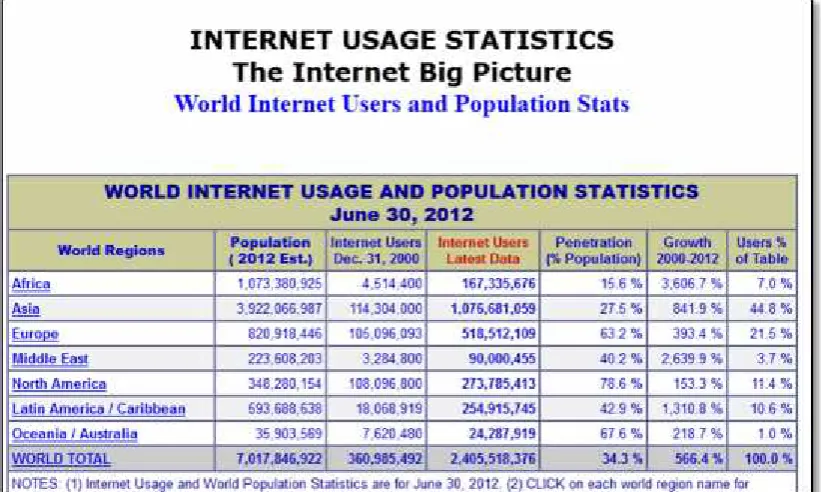
FIGURE2-4:INTERNETWORLDSTATS. INTERNETUSAGESTATISTICS THEINTERNETBIGPICTURE ... 46
FIGURE2-5:THE ROOTS OF EATING VERB... 65
FIGURE3-1: RESEARCHOPINIONS. ... 79
FIGURE3-3: PHASES OF THE RESEARCH METHODS... 89
FIGURE3-4: THEARABIC USABILITY GUIDELINES’FORMATION PROCESS... 90
FIGURE3-5: HOME PAGE OFSTUDENTPORTAL. ENGLISH VERSION. ... 91
FIGURE3-6: COURSES PAGE... 92
FIGURE3-7: TIMETABLE PAGE... 93
FIGURE3-8: ASSESSMENTS PAGE... 94
FIGURE3-9: EXAMS PAGE... 95
FIGURE3-10: QUESTIONNAIRE PAGE... 96
FIGURE3-11: ENQUIRIES PAGE... 97
FIGURE3-12: LIBRARY PAGE... 98
FIGURE3-13: CONTACTUS PAGE... 99
FIGURE3-14: HOME PAGE OFSTUDENTPORTALARABIC VERSION... 100
FIGURE3-15: COURSES PAGE, ARABIC VERSION. ... 101
FIGURE3-16: TIMETABLE PAGE... 102
FIGURE3-17: ASSESSMENTS PAGE... 103
FIGURE3-18: EXAMS PAGE... 104
FIGURE3-19: ENQUIRIES PAGE... 105
FIGURE3-20: QUESTIONNAIRE PAGE... 106
FIGURE3-21: LIBRARY PAGE... 107
FIGURE3-22: CONTACTUS PAGE... 108
FIGURE4-1: STRUCTURE OF THE E-LEARNING WEBSITES. ... 136
FIGURE4-2: ARABIC ANDENGLISH VERSIONS OF THE E-LEARNING WEBSITES. ... 140
FIGURE5-1 PARTICIPANT GENDER... 150
FIGURE6-1: KINGSAUDUNIVERSITY HOME PAGE TOP. ... 182
FIGURE6-2: KINGSAUDUNIVERSITY HOME PAGE FOOTER... 182
FIGURE6-3: CAIROUNIVERSITY HOMEPAGE. ... 186
FIGURE7-1: TRIANGULAR FUZZY NUMBER,... 192
FIGURE7-2: MEMBERSHIP FUNCTION OF THE FIVE LEVELS OF LINGUISTIC VARIABLES... 192
FIGURE7-3: THE HIERARCHICAL STRUCTURE OF THE COMPARATIVE EVALUATION OFENGLISH ANDARABIC E-LEARNING WEBSITES. ... 196
FIGURE7-4: RESULTS OF THE SENSITIVITY ANALYSIS... 207
FIGURE8-1 KINGKHALEDUNIVERSITY, SAUDIARABIA... 212
FIGURE8-2: THEUNIVERSITY OFSHEFFIELD, UK... 212
FIGURE8-3: TAIBAUNIVERSITY, SAUDIARABIA. ... 217
FIGURE8-4: UNIVERSITY OFSFAX, TUNISIA... 217
FIGURE8-5: CONSTANTINEUNIVERSITY E-LEARNING PAGE,ALGERIA. ... 220
FIGURE8-6: IRAQI LIBRARY OF ACADEMIC LECTURES... 223
FIGURE8-7:STUDENT PORTALARABIC VERSION... 227
FIGURE8-8: JORDANUNIVERSITY OFSCIENCE ANDTECHNOLOGYE-LEARNINGSYSTEM. 230 FIGURE8-9: STUDENTS’UNION, MANCHESTERUNIVERSITY... 234
FIGURE8-11: THEUNIVERSITY OFBAGHDAD, IRAQ. ... 240
FIGURE8-12: UNIVERSITY OFMOULAYISMAIL, MORROCO. ... 241
List of Tables
TABLE2-1: HOFSTEDEARABIC COUNTRIES’SCORES. ... 27TABLE2-2: THE DIFFERENCES BETWEENARAB ANDBRITISH CULTURES. ... 34
TABLE2-3: RESEARCH-BASEDWEBDESIGN ANDUSABILITYGUIDELINES... 55
TABLE2-4: BLOOM ET AL.'STAXONOMY OF THECOGNITIVEDOMAIN... 69
TABLE3-1: THE MAIN METHODS THAT USED IN THIS THESIS... 81
TABLE3-2: DIFFERENCES BETWEENQUANTITATIVE ANDQUALITATIVERESEARCH... 127
TABLE4-1: E-LEARNING TASKS IN THE EXPERIMENT. ... 141
TABLE5-1: INFORMATION ON TECHNOLOGY USE... 151
TABLE5-2: THE USE OF SOCIAL NETWORKS,CHAT TOOLS AND DISCUSSION TOOLS BY THE PARTICIPANTS... 153
TABLE5-3: PERFORMANCE DATA IN THE USABILITY STUDY-STATISTICAL SIGNIFICANCE,T -TEST,SHADED. ... 155
TABLE5-4: THE EFFECT OF COLOUR ON THE DESIGN OF E-LEARNING WEBSITES... 159
TABLE5-5: THE EFFECT OF LANGUAGE ON THE DESIGN OF E-LEARNING WEBSITES... 161
TABLE5-6: THE EFFECT OF TEXT FONT ON THE DESIGN OF E-LEARNING WEBSITES... 162
TABLE 5-7: USABILITYQUESTIONNAIRE-ENGLISH VERSION- RESULTS... 165
TABLE5-9: AESTHETICSQUESTIONNAIRE-ENGLISH VERSION- RESULTS... 170
TABLE5-10: USABILITYQUESTIONNAIRE-ARABIC VERSION- RESULTS... 171
TABLE5-11: RESULTS OFCONTENTANALYSIS OF THEQUALITATIVEDATA FOR THEARABIC ANDENGLISHVERSIONS OF THEE-LEARNINGSITE... 174
TABLE5-12: HYPOTHESES AND DATA ANALYSIS... 176
TABLE7-1: LINGUISTIC VARIABLES... 197
TABLE7-2: RATING OF USABILITY CRITERIA PRACTICES BY THE EXPERTS... 197
TABLE7-3: LINGUISTIC ASSESSMENT OF E-LEARNING WEBSITES... 198
TABLE7-4: REPRESENTATION OF THE RELATIVE IMPORTANCE WEIGHTS BYTFN ... 198
TABLE7-5: FUZZY DECISION MATRIX FOR E-LEARNING WEBSITES... 199
TABLE7-6: AGGREGATE FUZZY WEIGHTS... 200
TABLE7-7: AGGREGATE FUZZY DECISION MATRIX FOR E-LEARNING WEBSITES... 200
TABLE7-8: NORMALISED FUZZY DECISION MATRIX FOR E-LEARNING WEBSITES... 201
TABLE7-9: WEIGHTED NORMALISED FUZZY DECISION MATRIX FOR E-LEARNING WEBSITES202 TABLE7-10: DISTANCE d(A1,Ai*)AND d(A1,Ai)FOR E-LEARNING WEBSITES... 203
TABLE7-11: CLOSENESSCOEFFICIENT(CCI)FOR E-LEARNING WEBSITES... 204
TABLE7-12: CLOSENESSCOEFFICIENT(CCI)VALUES FOR DIFFERENT CRITERIA WEIGHT SETTINGS... 205
TABLE8-1: GUIDELINEONE: IMAGES... 211
TABLE8-2 GUIDELINETWO: COLOUR... 216
TABLE8-4 GUIDELINEFOUR: LEARNABILITY... 222
TABLE8-5 GUIDELINEFIVE: LANGUAGE... 226
TABLE8-6 GUIDELINESIX: SATISFACTION... 229
TABLE8-7 GUIDELINESEVEN: INFORMATIONCONTENT... 232
TABLE8-8 GUIDELINEEIGHT: EFFICIENCY... 235
TABLE8-9 GUIDELINENINE: AESTHETICS... 239
TABLE9-1: RESEARCH QUESTIONS AND THEIR ANSWERS... 244
Acknowledgements
This thesis would have never been completed successfully without the help from those who have contributed to this work directly or indirectly.
Firstly, I thankAllah (God) who has given me everything in this life: “And if you try to
count the favours of Allah, you will not be able to number them. Surely, Allah is Most
Forgiving, Merciful.” Al-Nahl, Chapter 16: Verse 19.
Secondly, I would like to thank my supervisor Professor Mohammed Arif for his patience, encouragement, motivation, interest and support. His comments always helped me to improve the quality of this thesis and kept me on the right track.
Thirdly, I would like to thank my special friend Dr Abdallah Namoun for his continuous help and for finding the time to read and discuss my thesis.
Fourthly, I would like to thank all the participants who took part in this study and gave up their valuable time. It was a privilege to spend time with them.
Fifthly, I would to thank my father and my mother for their continuous prayers all the time.
Sixthly, I would like to thank my wife and my children Abdelbar, Zineb, Abdelkader, Mariam, Youssef and Bushra for their patience. Without them, I would never have been able to complete this thesis.
Finally, I would like to acknowledge the support of my friends Emaduddin Nagi and Anis Gouissem for encouraging me to finish this research.
Abstract
Despite the widespread availability of e-learning websites in the Arab world, the link between Arabic culture, Arabic language and the usability of e-learning websites has been researched very little. Moreover, the Arab world lacks usability guidelines to support the creation of effective Arabic e-learning websites. Poor usability often means poor user interaction and hence reduced user acceptance and satisfaction.
This research undertakes an experiment with 50 Arab participants to investigate their judgement of an Arabic and English e-learning website. The participants completed seven e-learning tasks and completed an e-learning, evaluation, usability, and aesthetics questionnaire. The participants gave their feedback on the positive and negative features of each e-learning website following the experiment. This experiment was followed by a case study and fuzzy set theory analysis to validate the results. The findings are summarised in nine Arabic usability guidelines.
1 Chapter One: Introduction
1.1
Overview
The concept of usability has dramatically influenced and advanced technologies and interactive systems in the world, particularly in the West. The Arab world, however, is still far from this evolution (Abouchedid & Eid, 2004; Fraij, 2013; Guessoum, 2006), especially in the sector of education. In essence, there are two types of education, face-to-face and online. Face-face-to-face education is the traditional approach to delivering knowledge and training and involves direct contact between the teacher and the learner. However, online education is a modern approach to delivering knowledge and training and takes various forms such as distance learning and e-learning. This thesis focuses and investigates the use of Arabic e-learning websites.
Currently, e-learning plays a dominant role in the domain of education and business (Qi et al., 2009), and it is viewed as a medium that offers training for employees and education for students wherever they are. It opens up various opportunities to develop knowledge, abilities and skills (Trondsen, 2004). The adoption of, and the widespread use of, e-learning websites in different educational institutions contributes to the increase in their usage and thereby the number of their users. A key factor in the success of e-learning websites is good usability (Stara et al., 2005). As usability ensures a smooth interaction between the learner and the e-learning website, resulting in high satisfaction.
studies, the Arab world still lacks usability guidelines which can be used to steer the development of e-learning websites.
This thesis will focus on improving the usability of Arabic e-learning websites to facilitate higher education and on developing usability guidelines that explain to developers and researchers how usability affects the quality and success of e-learning websites, especially those using Arabic as their main interface language.
1.2 Background Review
The International Standard Organisation (ISO, p.7) defines usability as “effectiveness, efficiency and satisfaction with which a specified set of users can achieve a specified set of tasks in a particular environment”. According to Agarwal (2004, Nielsen (1993) and Murphy et al (1999) usability refers to how users can easily and quickly do what they want using the system, how users can avoid making mistakes during system use, and how users can remember to use the system if they decide to use it again on future occasions. If the system has poor usability the user may leave it permanently and never come back to it. Melis et al. (2003) confirmed the view that many e-learning systems fail because practitioners focus on improving the established methods of learning instead of improving the learning experience of learners.
However, Shackel (2009, p.2) viewed usability from a slightly different angle, suggesting that usability is not based only on the ease of use but also on efficiency. Thereby, Shackel proposed the following definition for theusability of a system: “The
capability in human functional terms to be used easily and effectively by the specified range of users, given specified training and user support, to fulfil the specified range of
Nielsen (1993) defined usability by five primary components: Learnability, Efficiency, Memorability, Satisfaction and Errors. These five components contribute to the definition of usability as follows:
Learnability: focuses on how easy it is to learn to use the system, even if the user
has never seen or used the system before.
Efficiency: focuses on how quickly the user can complete tasks.
Memorability: focuses on how the user can remember what functions and features
he/she has used before in order to use the system again correctly. In other words how to make the system easy to learn and remember.
Error: when the user makes some errors, the system should enable him to recover
from them easily. The rate of errors should be kept as low as possible.
Satisfaction: the user should be highly satisfied and happy with the system, leading
him/her to use it another time.
To sum up, usability primarily focuses on how users work with a new interactive technology and how they can use it easily, without any complications, during all the interaction stages from the beginning to the end (Tselios & Avouris, 2001).
Wong et al. (2003) showed that unusable e-learning systems impede the student learning experience, leading the learner to focus on how to use the system rather than learning the content. Usability evaluation is not usually included in the design of e-learning systems because it is expensive and time consuming (Kjeldskov et al., 2004).
The word “culture” has various meanings depending on its use. There are more than 300
symbols, values, norms, institutions, goals, constitutive rules, artefacts, and modifications of the physical environment”.
This definition provides an idea on how culture can have an impact on the usability of any system. For example, in the Arab world it is unacceptable to use the words
‘girlfriend’ or ‘boyfriend’ since these words imply a relationship between the two
genders outside marriage. However, the same words are acceptable in the Western culture. Although at first, this example seems relevant only to social relationships, it has a direct influence on the content of websites. Literature shows that the content directly influences the usability of websites (Belanche et al., 2012; Bringula & Basa, 2011; Nantel & Glaser, 2008; Thielsch et al., 2013). As such, Arab users are expected to disprove of web content, which reports on such social relationships that are naturally classified as abnormal in the Arab culture.
In information technology, Kerne (1998, p.2)defined culture as “the on-going, mutually recursive networks of processes, and resulting products that form our collective
subjectivities”. Chapter two sheds more light on the role of culture in web design and e-learning systems and discusses the link between culture, usability, websites and language. In this research, the concept of culture is used to investigate the effects of beliefs and social values and principles on the perception of Arabic users and its influence on the usability of websites.
1.3 Problem Statement
companies, e.g. Blackboard, or use e-learning open source systems, e.g. Moodle. Usually these e-learning tools are translated from English into Arabic directly without taking into account the evident cultural and linguistic differences between the two societies. Moreover, some of these e-learning tools mix the two languages together on the same page, translating only a few sentences and keeping the rest in English or French. The structure and navigation of some e-learning tools retain the original layout of English despite the right-left writing direction in Arabic.
The research challenge is to investigate the usability of such e-learning websites to enhance e-learning in the Arab world. Despite the large amount of money spent on buying Arabic e-learning systems, no systematic measures have been applied to test their usability, nor have any research efforts been undertaken to develop usability guidelines that suit the cultural and linguistic needs of Arab users. There is a lack of studies in the literature, which test the efficiency of current Arabic e-learning websites and their adoption amongst Arab users. For example, it is important to investigate whether such e-learning websites are successfully used by students with minimum problems and high satisfaction. It is important to ensure that e-learning websites accomplish what they are expected to deliver to their diverse users (i.e. students, staff and administrators). They need to be efficient, effective, engaging, easy to use, and to respect cultural values and linguistic principles in order to guarantee their successful adoption and use.
e-learning websites. This would improve the overall quality of e-learning and the interaction experience offered to Arab learners. In effect, making e-learning websites usable and
attractive would improve learners’ overall satisfaction and encourage them to re-use the e-learning website regularly.
Studies on the relationship between usability, language and culture in the Arab world are still in their early stages. Up until now, no systematic studies have attempted to show how usability is influenced by the Arabic culture and language, and how usability guidelines can be devised to help Arab users use interactive e-learning websites more efficiently. The principal aim of this research is to develop Arabic usability guidelines for e-learning websites in higher education. Usability is perceived to be an important criterion in developing high quality software artefacts. Thus, it is imperative to define usability guidelines specific to Arabic e-learning websites to facilitate e-learning.
1.4 Research Aim
This thesis aims to develop usability design guidelines for Arabic e-learning websites.
1.5 Research Objectives
In pursuing the general aim of this research, the researcher has established eight objectives focusing into the following aspects:
Reviewing current usability guidelines for English websites and Arabic websites.
Understanding the link between culture, language, web design features and usability perception by web users.
Exploring the differences between Arabic and English cultures using Hofstede’s
Designing and implementing an experimental e-learning website which includes both an Arabic and English version.
Performing an experiment with Arab users to investigate the link between culture, language, e-learning and usability.
Defining the key challenges for, and the barriers against, the successful use of Arabic e-learning websites.
Validate through a follow-up case study and fuzzy set theory.
Suggesting Arabic usability guidelines for e-learning websites to ensure barriers are minimised for students pursuing education in Arabic.
This research focuses on addressing the link between e-learning, usability, culture, and language. As such, it addresses how culture and language can be used to improve the usability of e-learning websites. However, other types of websites such as commercial websites and news websites are excluded from this research. Moreover, the effects of sound and animation are not studied in this research. This research does not study the effects of gender on the perceptions of usability.
1.6 Research Questions
The current research endeavours to answer the following research questions:
What are the differences in usability perception by Arab users between Arabic e-learning websites and English e-e-learning websites?
What are the main barriers and challenges that Arab web users face when using Arabic e-learning websites?
1.7 Structure of the Thesis
In general, this thesis is organised into nine chapters, structured logically as follows.
Chapter one: defines the problem statement, the motivation, the aim and the objectives
in carrying out this research.
Chapter Two: reviews the literature relevant to e-learning in general and discusses the
link between the usability of e-learning websites, culture, language, and e-learning.
Chapter Three: justifies the research methodology and presents the relevant research
methods for this thesis. Moreover, it presents the structure of the experimental e-learning website and details the data collection methods and process.
Chapter Four: highlights the preparation for the data collection with a focus on the
development of the experimental website and the experiment.
Chapter Five: focuses on describing the results of the experiment resulting from the
objective and subjective data. The objective data includes task completion time and number of clicks. The subjective data includes ratings of evaluation, usability, aesthetics, and the e-learning questionnaires.
Chapter Six: presents a case study investigating the usability of two existing e-learning
websites to confirm the results of chapter five.
Chapter Seven: validates the data collected from the experts using fuzzy set theory
analysis.
Chapter Eight: proposes and discusses the nine usability guidelines for Arabic
references from the literature and by the results of the experiment and the fuzzy set theory.
Chapter Nine: discusses the contributions made by this research and highlights its
2
Chapter Two: Literature Review
2.1 Introduction
This chapter reviews the previous research and the theories that relate to the areas of e-learning, culture, usability and language. This review aims to understand the relationship between the areas above, how they relate to each other, and to discover the main factors that affect their relationships. It starts by highlighting the different types of e-learning in higher education and their underlying theories. This chapter also describes the differences and similarities between Arabic culture and English culture and describes previous research studies in this area, with a particular focus on Hofstede’s
cultural dimensions. Moreover, chapter two describes the link between usability and web design, culture, e-learning, aesthetics and language. In the absence of Arabic usability guidelines, this chapter discusses the existing usability guidelines within Western culture.
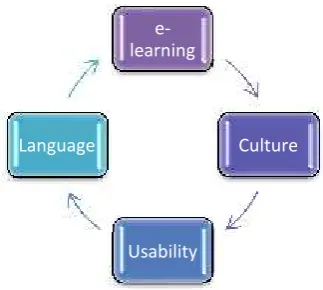
[image:28.595.215.377.577.722.2]This chapter also highlights the morphology and composition of Arabic language and how it may affect the usability of e-learning websites. This review is essential to examine the strengths and weaknesses of previous research studies in this area. The following figure (2-1) shows the four areas that will be examined.
Figure 2-1. The four areas under examination
e-learning
Culture Usability
2.2 E-learning
Rowlands (2003, p.125) defined e-learning as“a term used to help describe the various uses of technology for learning, teaching, training, and wider knowledge management”. E-learning solutions simplify the transfer of information and skills to the right people at the right time (Ruttenbur et al., 2000). At the end of the last century, the world of education expanded rapidly and the current revolution in technology has created radical changes in the methods of education. The Internet leads these changes and many schools and universities in the education sector are engaged in the domain of online courses.
E-learning impacts on the education domain everywhere and is crucial to any effective educational system. E-learning can be written in various ways (e-learning, elearning, eLearning, E-learning…). The definition of e-learning may differ from one person to another and from one culture to another; however there is a general definition that combines the principal elements of e-learning. Sun (2006) defined e-learning as follows: “E-learning is basically a web-based system that makes information or knowledge available to users or learners and disregards time restrictions or geographic proximity.”(Sunet al., 2008, p.2).
In general e-learning uses computer network technology to deliver information and educational materials to the users. Watson et al. (2004) referred to online learning as “education in which instruction and content are delivered primarily via the Internet”(Cavanaughet al., 2009, p.2). E-learning also plays a major role in training. It has become more important than before with the aim of keeping up with the speedy growth of technology in the world. It is for this reason that companies, such as Dell, CISCO and Microsoft, offer good training opportunities to their staff around the world through e-learning centres. This enables them to gain high quality skills and expertise rapidly and in a cost-efficient manner.
2.2.1 Types of e-learning
There are three types of learning environments: distance learning, e-learning, and online learning. Moore et al. (2011, p.1) defined distance learning thus: “describes the effort of providing access to learning for those who are geographically distant”. Because computers are now involved in the domain of education, definitions of distance learning focus on the delivery of instructional materials. All the definitions of distance learning emphasise the relationship between the learner and the instructor by their use of various instructional materials in different times and places.
2.2.2 Theories
2.2.2.1 Behaviourism
“Give me a dozen healthy infants, well-formed, and my own specified world to bring them up in andI’ll guarantee to take any one at random and train him to become any type of specialist I might select -- doctor, lawyer, artist, merchant-chief and, yes, even beggar-man and thief, regardless of his talents, penchants, tendencies, abilities, vocations, and race of his ancestors.”(John Watson, Behaviorism, 1930, p.82).
In the last century, many researchers (Ivan Pavlov, Thorndike, Skinner and Watson.) defined the behaviour of users in a learning situation as: “learning is a change in observable behaviour caused by external stimuli in the environment” (Ally, 2004, p.6). Behaviourism views behaviour as seeing a black box containing an inner process which is ignored. The focus is on the black box itself from the sense that all the study focuses around this black box.
“Stimulus-response”is behaviourism which starts by an external stimuli being applied on a unaffected passive learner. Behaviour is thus built up through positive and negative reinforcement which encourages this behaviour to happen again. both positive or negative discourage the behaviour from being repeated. Learning is, therefore, defined as a variation in the behaviour in the learner. Behaviourists commend a deductive and structured approach to designing online courses, in order to ensure that basic concepts, skills and factual information are rapidly acquired by the learners.
2.2.2.2 Cognitivism
develop in our mind? To answer this question, Piaget emphasised the cognitive and mental processes that make learning and thinking possible. The key to learning is how to remember information, how to think correctly and, furthermore, how to solve problems.
Piaget studied babies and observed when the information is repeated once the child maintains mental balance and integrates the information into a cognitive structure. If the information is new, the child will lose mental balance and accommodate the new conditions. Furthermore, the cognitivism theory focuses on the active nature of learning. T he learner explores the environment around him by himself and learns from what he discovers. Therefore, the individual is naturally interested in exploring the environment and will learn through discovery (Gallagherand Reid, 2002).
2.2.2.3 Constructivism
Constructivism theories assume knowledge construction in the mind of the human who is interactive rather than reactive (Demetria & Cole, 2004). Constuctivists try to answer the main question as to how humans construct knowledge. At the same time, there are many other questions waiting for answers; for instance, do we know what the term
individual's behaviour more viable given a particular environment; 3. Cognition organises and makes sense of one's experience, and is not a process to render an accurate representation of reality; and, 4. Knowing has roots both in biological/ neurological construction, and is social, cultural, and language-based”.
2.2.3 Differences between Traditional Learning and e-learning
There are striking differences between traditional learning and e-learning. Perhaps the cost is the most influential factor in this equation, with e-learning offering the lower cost (Brody, 2010). The fees paid for traditional learning is growing dramatically especially in the UK. Indeed many students cannot afford to pay the large amounts of money charged yet, at the same time; they want to gain a higher education degree. E-learning is a viable alternative for those who are unable to pay tuition fees. In addition, students do not have to pay for other additional costs (such as accommodation, travel, transport, etc.). This could encourage many sections of the society to benefit from this occasion possibility. E-learning may thus provide a promising solution for those who are unable to pay the tuition fees charged by educational institutions for traditional learning. Other differences include:
a) In traditional learning the provider controls the process from the beginning to the end without any significant role undertaken in the provision process by the recipient (student or trainee); in e-learning the provider (for example, the teacher or trainer) and recipient share the responsibility.
2.2.4 Advantages and Disadvantages
Nowadays, people who are interested in pursuing careers in education face many challenges including time, cost and distance. E-learning provides a good solution for such barriers and challenges. Flexibility is one of the major advantages of e-learning. The learner can resume his/her education wherever and whenever he/she wishes (provided he/she has access to a computer with an Internet connection) and all that is required from him/her is to choose the right time to do so. Moreover, e-learning offers different types of learning styles.
system for the provider and users of e-learning. E-learning often requires new skills that are necessary so that a user will be familiar with/can use the new technology (Cantoni et al., 2004).
2.2.5 E-learning and Higher Education
Higher education benefits in many ways from learning. Students and staff may use e-learning systems every day not just to retrieve information via search engines and transaction services, but also to deliver high quality infrastructure, content development and support. Furthermore, e-learning in higher education opens up learning opportunities and the opportunity to use learning tools.
2.2.6 E-learning Market
The e-learning market is growing every year particularly within the last decade. As an example, the USA market has risen from 1.1 billion dollars in 1999 (Van der Wende, 2002) to 18.2 billion dollars in 2010, and is expected to reach 24.8 billion dollars by 2015, with a growth of 5.9% (Adkins, 2011). These statistics show that the USA is the biggest market of e-learning in the world.
North America is expected to be top of the market for e-learning until at least until 2015. However, the second biggest market in the world comes from Asia, especially the South Korean market which covered 5.9% of the world market in 2007, with a market worth about 1.7 billion dollars. This state of affairs relates to the number of Internet users. Statistics shows that more than 79% of South Koreans use the Internet, 100% of South Korean schools are connected to the internet and more than 91% of South Korean universities use e-learning courses (Hwang, 2008). After South Korea, China is expected to be the second largest market by 2015. In Europe, the UK market is still the biggest market with a 4.76% growth in 2009, worth £472 million. With this growth rate the UK market will lose this leadership to France, Germany, or Eastern European countries like Poland, Slovakia, or Hungary (Glynn et al., 2010).
2.3 Culture
2.3.1 Definition of Culture
“Culture hides much more than it reveals, and strangely enough what it hides, it hides most effectively from its own participants.” Edward T. Hall(p.29). The word‘culture’
One of the most widely used definitions of culture is that put forward by Hofstede, the father of cross culture, who argued that culture is: “the collective programming of the
mind which distinguishes the members of one group from another” (Hofstede, 2001a, p.21) In essence, this states that a group of people somewhere share the beliefs, attitudes, behaviours, traditions and values that differentiate them from other groups. Our everyday actions are controlled by our behaviour and background, which are, in turn, controlled by major invisible cultural factors.
Fiske (2002, p.8) argued: “A culture is a socially-transmitted or socially-constructed constellation consisting of such things as practices, competencies, ideas, schemas, symbols, values, norms, institutions, goals, constitutive rules, artefacts, and modifications of the physical environment”. Fiske’s definition is morecomprehensive as it uses many factors that help construct and reinforce the culture of any nation. Fisk’sdefinition provides an idea as to how culture can have an impact on usability and how culture influences the usability of any system.
In information technology, Kerne (1998, p.38) defined culture as: “The on-going, mutually recursive networks of processes and resulting products that form our collective
Special attention must be given to the following points: the most common definition of the word culture in the world of social sciences is based on three facts: the way of life pursued by people (values, visions of life, skills, beliefs, social heritage, traditions and norms which lead the society), artistic achievement and knowledge (Barakat, 1993). These elements are gained through the development of society, as well as through contact with communities and other cultures.
Many studies have shown that culture affects global organisations around the world; for instance, Kotter and Heskett (1992) revealed that organisations which consider cultural elements in their strategy have increased their profits by 756% compared to those which have disregarded the cultural factor. Coopers and Lybrand discovered, after a study conducted on 100 companies, that 85% of participants confirmed that the main barriers when trying to merge were the management style and culture (Bader et al., 2012; Schneider, 2002).In conclusion, culture is a collection of many factors that affect the direction of thinking and how a person or a group judges something negatively or positively.
2.3.2 Hofstede and Cultural Dimensions
Nevertheless, there are a number of reasons why this study has been accepted by researchers: firstly, ease of access when it is used to measure different cultures; secondly, it gives a clear idea of the culture that will be studied, or with which the researcher is involved; thirdly, it is the most prevalent and satisfactory study from among the specialists in the field of culture studies. Therefore, research in this area in the Arab world needs a focused study that sheds light on the culture of the Arab world. Hofstede’s dimensions consist of five dimensions which focus on power distance, masculinity and femininity, individualism and collectivism, uncertainty avoidance, and long-term orientation.
Power Distance (PDI)
The power distance dimension is defined as“the extent to which less powerful members of a society accept and expect that power is distributed unequally” (Hofstede, 1997, p.61). In a high power distance, the supervisor manages and consults with those who are under his/her power and the employees look to him/her as a leader who is responsible for the project or work (Tsui, 2004).
Masculinity and Femininity (MF)
‘The dominant values in a masculine society are achievement and success; the dominant
Khastar et al. (2011) argued that masculine societies focus on the difficulty and competition for materiality and ideas. Likewise, income and progress are significant for employees. For example, in a masculine society, women take care of the household whilst men bring money to support the household. In feminine cultures, household work is shared more between husband and wife than in masculine cultures. Men also do more shopping in feminine cultures as they are more caring (De Mooij & Hofstede, 2010). In other words, masculinity focuses on materialism and achieving the goals, whilst femininity focuses on feelings and wellbeing.
Individualism and Collectivism (IC)
De Mooij and Hofstede (2010, p.5) argued that individualism and collectivism are defined as ‘people looking after themselves and their immediate family only, versus
people belonging to in-groups that look after them in exchange for loyalty’. Masakazu (1994, p.127) definedmodern individualism as “a view of humanity that justifies inner
Uncertainty Avoidance (UAI)
Uncertainty avoidance relates to the level of concern society members express when in unclear or unknown circumstances. Low uncertainty avoidance is more likely to reform than high uncertainty avoidance. Furthermore, high uncertainty avoidance has a traditional preference for ancient methods rather than new innovations. At the same time, avoiding uncertainty is primarily caused by worries and dissatisfaction with ambiguity(Veltri& Elgarah, 2009).
Long-term Orientation (LTO)
Long-term orientation refers to the level at which society holds together. In high long-term culture, the status in a relationship is the key point, besides personal flexibility. These dimensions can be used as a scale to rate the impact of culture from one country to another (Park & Lemaire, 2010).
Many factors influence a user’s satisfaction, a user’s needs and his/her behaviour. Perhaps the factors that have the most impact are: the user’sbackground and theuser’s
level of education, culture evaluation and time context (Lindahl & Granath, 2006). Short-term orientations are based on highlighting the value of consistency and the stability of the person with respect to customs and traditions. Establishing the principles of truthfulness and honesty requires specific attention, more so than any other meanings.
2.3.3 The Importance of Understanding the Culture of Others
Ethnic groups differ from one society to another and from one nation to another. The factors of the style of life, religion, background and tradition play a critical part in any decision that anyone can take to form or that any group can take to form an idea about others. Thus, a misunderstanding of the culture of consumers can lead any business or system to fail to reach the desired targets. A lack of respect and appreciation of the culture of others may also cause a similar effect. In such cases, it becomes difficult to accomplish the objectives of any project.
Distinguishing cultural differences is the right approach for the success of any company or organisation that desires to find a place in the global market; particularly when one realises that the competition is increasing between companies and organisations. Educational and commercial sites that do not pay attention to this aspect will face many obstacles that prevent them achieving any reasonable success around the world. Ball (2008) has shown that every culture has its own characteristics and beliefs that affect nearly all aspects of human behaviour and help bring order to a society and its individuals. However, the best way to understand any culture and society is to live in it. From daily observations, one can learn, appreciate and value the thinking of the people of that culture.
Fredric and Rohm (2010, p.9) suggested that “in order to communicate, work, and live with people in other cultures, it is important to understand one’s own ethnocentric lens
2.3.4 The Arab Culture
The Arab world is one of the most strategic regions of the world. This is due to a number of reasons:
(a) It produces more than half of the world’s production of oil and gas. (b) It is a large market with many rich countries when compared to Latin America or Eastern Europe or South Asia. (c) It is a very important geopolitical area due to its location (traversing three continents: Africa, Asia, and Europe).
The Arab world is an area of growing economic significance and offers investors and exporters many opportunities across many business sectors (Fattouh & El-Katiri, 2012). The Arab world has great economic, political and social diversity.
2.3.5 Hofstede and the Arab Culture
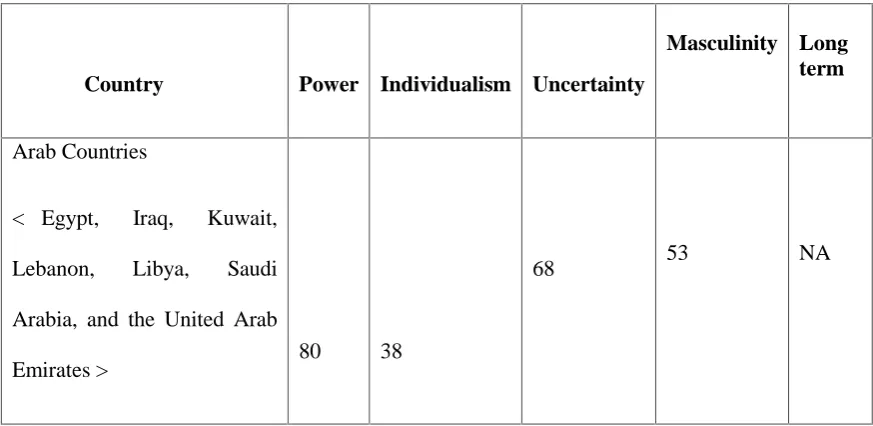
Hofstede (2010) argued that Arab people have a high power distance (80). Furthermore, the uncertainty avoidance is also high (68) whilst individualism is low. In Arab society, parents and family are the centre of attention and concern. The Arab family system is male-controlled and the role of the individual in the family is less influential than the role of the family. An Arab person can sacrifice the opportunity of a better job for the sake of staying close to his family, community and place of birth. To the contrary, a westerner places his comfort and profit on top of all social concerns. The hierarchy in the family is important in the Arab world. The father is at the top of this pyramid. An authoritarian father has full respect and his orders must be obeyed and implemented. This situation is quite different in the West. The individual is at the centre of everything and his/her needs come before the needs of family, parents, and community. The relationship between relatives is very strong and very close. In Hofstede’s
mentality, religion, and the accumulation of experience and expertise throughout the ages.
2.3.6 The Arab World
[image:44.595.79.516.350.563.2]The first observation that can be made is that the dimensions of Hofstede treat the Arab world as a unique entity and a single state although the Arab world is composed of twenty-three countries. In reality, there are some differences between the Arabs of North Africa and of the Gulf. This study has disregarded the role of religion in the shaping of the behaviour of Arabs.
Table 2-1: Hofstede Arabic countries’scores.
Country Power Individualism Uncertainty
Masculinity Long term
Arab Countries
< Egypt, Iraq, Kuwait, Lebanon, Libya, Saudi Arabia, and the United Arab
Emirates > 80 38
68 53 NA
education and background over the last century. Tang and Koveos (2008) argued the changes in economic conditions are the main part of cultural dynamics.
The Arab world can be divided into four groups: North Africa, the Gulf, West Asian Arab countries and the rest of the Arab world. The North African Arab countries include: Algeria, Morocco, Tunisia, Libya, Egypt and Mauritania. The Gulf countries include: Qatar, Saudi Arabia, UAE, Bahrain, Kuwait, and Oman. The West Asian Arab countries are Syria, Palestine, Jordan, Lebanon, and Iraq. The rest of the Arab world includes Sudan, Somalia, Yemen, Djibouti, and Comoros.
However, there are common similarities between Arab countries such as traditional, cultural, linguistic and religious factors. For example, males still dominate in society in general and women are expected to take care of the children and manage the home. Arabic society is still regarded as more conservative when compared to western society despite the increasing number of women in the work market in the last decade (Whiteoak et al., 2006).
In general, the Arab world links with Eastern countries rather than with Western countries, which mean that collectivism is more acceptable and practical in the Arab world than individualism.
2.3.7 Comparing Arab Culture and British Culture using Hofstede’s
Dimensions
enabled testing of the usability of the Arab system. Thirdly, famous e-learning systems (e.g. Blackboard) have been developed by the West for the countries of the Arab world and one needs to understand the needs of these countries.
In the last decade, a series of studies have focused on investigating the impact of culture on different societies (Leung & Bhagat, 2005, Mahajan 2012 Nangalia 2010, Triandis & Suh, 2002;). The majority of these studies have concentrated on the United States, which symbolises the West. The Arab world, however, has received little attention in regard to unravelling the link between culture and the influences of the society. Comparison-wise, there are no documented studies in the literature that have systematically compared the Arab culture and the British culture with the aim of identifying the differences and similarities of the two cultures. In particular, there is a lack of understanding of the factors, identities and impacts that constitute the two cultures.
The Arab world consists of 23 countries spread across North Africa and the Middle East. These countries share one language, one religion (more than 90% are Muslims), cultural values and traditions (Barakat, 1993). In addition, there are more than 380 million inhabitants today in the Arab world and this number is anticipated to reach 435 million by 2030 (El Sherif, 2012). Whilst Arab countries do share commonalities, there are admittedly some variations between Arab countries especially as regards the degree of cultural acceptance of certain practices such as the dress code. In general, the societies in North Africa are more similar to western societies than the Middle East societies are to western societies.
global economic crisis (Mahajan, 2012). It is, therefore, crucial for those companies and organisations that are considering initiating links and establishing business relationships with the Arab world to understand the culture and dynamics of this region. This is because misunderstanding a particular culture and its central tenets can negatively affect the performance and success of businesses and projects. Comprehending the culture of others also explains and answers why many projects, companies and programmes are successful in some areas and unsuccessful in others, why people look at programmes or software from different angles, and why, for example, transfer technology meets much resistance in some societies and cultures.
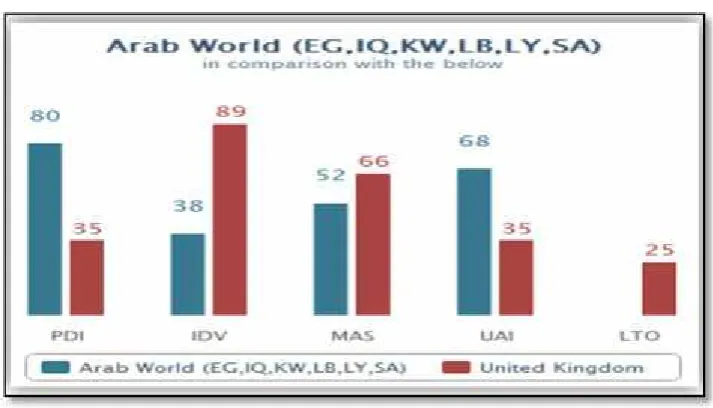
Figure 2-2: A comparison of Hofstede’s dimensions between Arabic societies and
British society.
decision process less centralised, enabling the supervisor to receive the necessary support to achieve his duties. Engaging employees also provide new ideas and assists in reaching well-rounded decisions. In effect, responsibility is shared between the supervisor or main manager and employees. Moreover, in the West openness and fairness allows an employee to complain to the manager in case of annoyance or disagreement about a particular decision and this complaint is usually taken into consideration. Such interaction and positive criticism are often two healthy elements in the decision-making process.
In the uncertainty avoidance (UA) element, the Arab world scores 68 in comparison with a UA score of 35 for the UK. High uncertainty avoidance refers to the act of taking minimum risks and resorting to established methods rather than trying new approaches. Indeed the closed cultures in the Arab world are usually bound to stick to existing and well-established approaches to performing tasks and solving challenges. They are usually reluctant to adopt new approaches because of a fear of what could result. This obviously restricts creativity and limits thinking ‘outside the box’. However, British culture is more willing to embrace new ideas, methods and challenges in order to achieve better results and improve on traditional ways of performing tasks.
The Arab world’s individualism score is 38because of its collectivist society where the concept of togetherness is very important and strong. Notably, this score is considerably
Arabic society often puts the family first as the main consideration above everything else. The relationship with family, friends, neighbours and general society is crucial in the lives of Arab people. An Arab person is typically concerned for the group. In contrast, British people are more self-interested and, in a sense, selfish. Individuals consider solely his/her interests and sometimes those of his/her close family rather than society as a whole. In fact, privacy and individualism is at the centre of any action that is undertaken in the West (Buda et al., 1998).
Notions such as reputation, dignity, shame and honour are less considered and recognised in British cultural society than in Arab society. In Arab society dignity is perceived as a very important and is a serious concern for every family and member of society. For example, it is unacceptable for a man and a woman who are not related to have a relationship outside marriage, such as being friends. In the majority of Arab societies, it is forbidden for unrelated opposite genders to kiss, hug, or even shake hands when socialising. In contrast, these very same examples are readily acceptable in the culture of the UK. Shame is a high-profile concept and thought to be brought onto a family, in Arab culture, if members of the family do something that defies the accepted principles and values of Arab culture. The consequences are usually severe for someone who brings shame onto a family. In some cases, the person may be disowned by his/her family and rejected by society. In addition, Arabs value reputation highly. A person is usually judged by his/her reputation in society. Thus, people avoid issues that can harm their reputation. Another factor that plays a big role in Arab society is family background and roots, which indicates the position of that particular person and family in society.
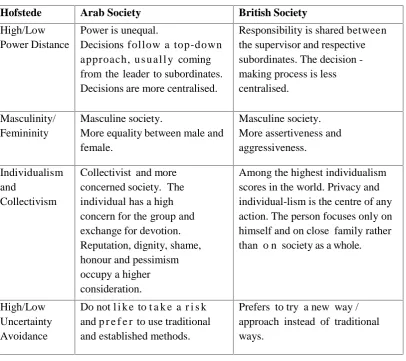
competition and assertiveness are more highly valued in society. The Arab world rating shows a more equal and balanced relationship between male and female as compared to UK society. The following table lists the differences between Arab and British cultures.
Table 2-2: The differences between Arab and British cultures.
Hofstede Dimensions
Arab Society British Society
High/Low Power Distance
Power is unequal.
Decisions follow a top-down approach, u s u a l l y coming from the leader to subordinates. Decisions are more centralised.
Responsibility is shared between the supervisor and respective subordinates. The decision -making process is less centralised.
Masculinity/ Femininity
Masculine society.
More equality between male and female.
Masculine society. More assertiveness and aggressiveness.
Individualism and
Collectivism
Collectivist and more concerned society. The individual has a high concern for the group and exchange for devotion. Reputation, dignity, shame, honour and pessimism occupy a higher consideration.
Among the highest individualism scores in the world. Privacy and individual-lism is the centre of any action. The person focuses only on himself and on close family rather than o n society as a whole.
High/Low Uncertainty Avoidance
Do not l i k e to t a k e a r i s k and p r e f e r to use traditional and established methods.
Prefers to try a new way / approach instead of traditional ways.
around us. Different cultures also mean different ways of thinking, styles of living and social lives. Such cultural differences must be taken into account when designing a website or producing a targeted programme for a different culture, particularly when the differences are evident and at the opposite end of the spectrum, such as in this case. This comparison provides initial insights into how these cultural differences can affect the usability of any system or software developed for an Arab audience.
2.3.8 The Link between Arab Culture and Web Design
Statistics on users of the Internet released by the Internet World Statistics in 2011 show that more than 2.2 billion people around the world use the Internet, with English speakers still leading in the use of the Internet (26.8%) followed by the Chinese (24.6%) and Spanish (7.8%). The Arab world comes in the seventh place (3.8%). Figure 2-3 gives more details. In 2011, the biggest growth in Internet users in these world records was the Arab world with a 2,500% increase. These statistics confirm that the Arab world has the fastest growing increase in Internet users. Moreover, the position of the Arab world in the global economy is influential as it is one of the fastest growing markets in the world.
Nowadays a website is not merely just putting together a combination of text, graphic, sounds and language. Designing a website requires expert skills in the areas of structural design, graphic design, and content design. A key criterion for designing successful websites is an understanding of the target users, their cultural practices and societal needs. In other words, a website that reflects the society and culture of its users is more likely to be accepted and impactful. A study of the elements of web design and the behaviour of users may help designers to redesign the system and deliver some useful guidelines at the same time (Würtz, 2005).
Studies (Cyr, 2013; Eristi, 2005; Ishak et al., 2012; Lee & Kacen, 2008) have shown that the most significant variable in web design is the cultural factor. Culture does not affect only the quality but also affects the aesthetics, functions and the whole design of the website. Taking cultural factors into account in the process of designing a web page increases the functionality, aesthetics, quality and success of the design. It is important when creating or developing any system to take into consideration these issues at all stages during the design of the system. Information and culture are more globalised than
ever before; therefore, designers’ websites today should consider and reflect cultural
factors.
and global web user interface design to examine various global websites by applying
Hofstede’s cultural dimensions. Sun (2001) carried out an exploratory study on web
pages and found that there is a cultural impact on the design of any website; indeed it is deemed as a crucial factor in increasing the usability of multicultural websites. Cyr and Trevor (2004) argued that culture affects colour, content, symbols, language and graphics.
Sapir and Whorf’s hypothesis suggested that colours are not objective but are determined by what our culture prepares us to perceive. However, other studies have objected to Sapir and Whorf’s view indicating that normal humans have similar sense perceptions of colour since all humans share the same physiology of the eye. However, the terms used to describe colours may differ across cultures (Kramsch, 1998).
Kim and Kuljis (2010) presented a study comparing UK and South Korean charity websites using Hofstede’s cultural dimensions. The authors concluded that differences exist between these two cultures as reflected in the design of the websites and the differences can affect a user’s assessment of a particular product. Simon (2001) found that e-commerce applications and websites in general reflect western culture and the reason behind this is that websites and e-commerce applications have been developed in western countries. The same point can be made for e-learning designs (Zaharias, 2008).
Arabic websites. Khushman (2009) study revealed that Hofstede’s dimensions do not reflect the design characteristics of Arabic user interfaces. However, this point may need further studies to explore to what extent culture affects the behaviour and judgment of Arab users on websites. Marcus (2009) studied the influence of culture on Arabic websites and chose three countries as samples from Arabic countries. Marcus’
study was based on Hofstede’s cultural dimensions and provided important insights on the link between Arab culture and web design. Arabic web users mainly prefer more representative pictures and links to external websites and also desire to see more multi-lingual content and interactive design features. However, Marcus’ study lacked precision, as it did not rely on a questionnaire and interviews with actual users to gather data. Instead, it relied only on empirical observation.
state, the designer can establish what the user needs and incorporate the factors that may affect the process of design.
These studies have proved mostly that designing a site for a particular culture might not make it an appropriate fit for other different cultures. Culture is controlled by language, customs, traditions and meanings of symbols and words. Every culture has its own characteristics that are unique and distinct from other cultures. However, this does not mean that there are no relationships and commonalities among cultures. Cultural differences should be taken into account when designing any website, whether educational or commercial or any other type, to ensure success and usability. Taking these factors into consideration will enhance the marketability of websites and systems to make them more competitive in the market. Such consideration will also enhance the trust of users from differing cultures, such as from the Arab world where concerns about privacy and security are high.
The empirical links between culture and designing websites for Arab users on the one
side and Hofstede’s dimensions on the other side emphasises the need for web designers (when designing websites for Arabic users) to consider the pattern of thinking of Arab users, which differs to that of English users. For instance, knowing the role of the family in Arab society may change the outlook of website design radically. Portraying a picture of a family on the web page instead of a single man, woman or child sitting alone may be more impactful. If the web designer is aware of this factor, it may play a significant role in the success of the website and provides a good opportunity for the designer to learn about the needs and desires of the target users.
The design of the interface is a crucial part as it is the face of the system with which the user interacts. If the user is satisfied with it then he/she will continue to browse the rest of the site. Otherwise, the user may leave the site and may never return. On a few occasions, when past users leave negative feedback about a particular system this may affect the future acceptance of the system by other users.
2.4 Usability
Usability is defined by the International Standard Organisation (ISO, 1998, p.7) as:
“effectiveness, efficiency and satisfaction with which a specified set of users can
achieve a specified set of tasks in a particular environment”. Usability is perceived as an important criterion in developing high quality software artefacts. It is imperative to define guidelines specific to Arabic e-learning websites to facilitate built environment education. Usability refers to how a user can easily and quickly do what is expected from the system, can avoid mistakes during the use of the system, and can remember how to use the system in the future. If the system has poor usability, then the user is more likely to avoid the system in the future, and the final consequence of that is that the whole system is a failure. A quick and easy way to test the usability of a system is to perform a usability expert review whereby an expert inspects the usability issues of the system. Another type of usability inspection method is called usability testing where actual end users are involved in the evaluation. End users are usually recruited via email, telephone calls, visits, schools and colleges.
of the system. A website with a good usability is likely to reach its objectives and goals. Usability focuses on satisfying users' needs and goals through appropriate interaction mechanisms and appropriate user interfaces.
2.4.1 The Main Factors of Usability
Usability does not just concern how a user can easily use a system but also how the system is made more effective, more efficient and enhances learning. Moreover, usability also considers the cost and training involved in order to support the user (Shackel, 2009). In this section, the researcher will discuss the three main factors of usability: Efficiency, Effectivenessand Satisfaction.
2.4.1.1 Efficiency
ISO 9241-11 defines efficiency as “the resources expended in relation to the accuracy
and completeness with which users achieve goals”(Lee et al., 2010, p.2). The efficiency of a system gives the developer a good opportunity to investigate the speed with which users complete particular tasks, and how a system reacts to different user input. The main components of efficiency comprise task learning time and task accomplishment time.