The London School of Economics and Political Science
Performance based contracting as a policy tool for
promoting timely exits from out-of-home care: A
comparative analysis
Clare Menozzi
Declaration
I certify that the thesis I have presented for examination for the MPhil/PhD degree of the London School of Economics and Political Science is solely my own work other than where I have clearly indicated that it is the work of others (in which case the extent of any work carried out jointly by me and any other person is clearly identified in it).
The copyright of this thesis rests with the author. Quotation from it is permitted, provided that full acknowledgement is made. This thesis may not be reproduced without my prior written consent.
I warrant that this authorisation does not, to the best of my belief, infringe the rights of any third party.
I declare that my thesis consists of <68330> words.
Abstract
Ever since the late 1950s, one of the main objectives of child protection policies in the United States has been to reduce the amount of time children spend in out-of-home care. For nearly four decades, policymakers have sought to achieve this goal primarily by providing various types of services to help children reunify with their parents more quickly. However, in recent years a new approach has emerged which emphasises the use of quantitative targets to expedite exits from care, even when this entails terminating parental rights or pursuing alternatives to family reunification such as child adoption. Since then, states have adopted very different policy approaches to promote timely exits from out-of-home care. Yet relatively few comparative studies have been undertaken to examine which approaches have yielded better outcomes. Further, the evidence base on whether some approaches may be associated with negative distortionary effects, particularly with regard to permanency outcomes, remains limited.
Acknowledgments
First, I would like to thank Wendy Sigle, my advisor on this project for many years, for the invaluable support I have received. I have learned so much under your guidance. You have pushed me to think in new ways and to challenge myself. Your patience,
kindness and uncompromising standards, have taught me so much. I am extremely grateful for the opportunity you have given me to learn and grow.
I would also like to thank Jane Lewis, Eileen Munro and Sarah Helias for their support and advice. I would also like to thank the examiners, Ian Sinclair and Lawrence Berger, for their thoughtful and insightful comments.
In working on this study, I have been privileged to be supported by wonderful colleagues and friends. Their encouragement and advice has been invaluable. I am particularly indebted to Patrick Gerland, Vladimira Kantorova, and Hania Zlotnik for their interest and support. Even when I lost confidence in myself you pushed me to go forward. I also grateful for the friendship and companionship of the many LSE students I have met throughout the years, with whom I shared many ideas and cups of tea.
I would also like to thank the staff in the various research libraries I have been fortunate to consult including the British Library, the New York Public Library and the United Nations Dag Hammarskjöld Library. Without you, part-time researchers such as myself would be in a very difficult position indeed.
I would like to thank staff of the NDACAN and particularly Andrés Arroyo for his support and advice. The data used in this publication were made available by the National Data Archive on Child Abuse and Neglect, Cornell University, Ithaca, NY, and have been used with permission. Data from the Adoption and Foster Care Analysis and Reporting System (AFCARS) were originally collected by the Children’s Bureau. Funding for the project was provided by the Children’s Bureau, Administration on Children, Youth and Families, Administration for Children and Families, U.S. Department of Health and Human Services. The collector of the original data, the funder, NDACAN, Cornell University and their agents or employees bear no responsibility for the analyses or interpretations presented here.
Table of contents
Declaration ... 2
Abstract ... 3
Acknowledgments ... 4
Table of contents ... 5
Table of tables ... 10
Table of figures ... 12
List of acronyms ... 15
1 Performance based contracting as a tool to improve the timeliness of permanency outcomes ... 16
1.1 The scope of the research: an overview ... 16
1.2 What is PBC and what factors contributed to its emergence as a policy tool? .... 17
1.3 Why is it important to study PBC? ... 21
1.4 Why focus on the timeliness of exits from care? ... 21
1.5 What do we know about PBC as a tool to improve the timeliness of exits? ... 24
1.6 Research questions ... 26
1.7 The hypothesized impact of the use of PBC on the timeliness of exits from out-of-home care ... 27
1.8 Expected contribution of my study and challenges encountered ... 30
1.9 Structure of the thesis ... 32
2 Theoretical underpinnings of my study: system theory, the relational models theory and the theory of social exchange ... 33
2.1 The three theoretical models underpinnings my research hypotheses ... 33
2.2 System theory and the “new” approach to child protection ... 34
2.3 The relational models theory and the PSBI/ND framework ... 37
2.4 Theory of social exchange: a theoretical framework for approaching PBC ... 41
3 Performance based contracting and the timeliness of permanency outcomes: an overview of the evidence base and gaps in knowledge ... 46
3.1 Scope and structure of the literature review ... 46
3.2 Evidence on the relationship between PBC and the timeliness of exits from care ... 47
3.3 Some of the methodological limitations of studies focused on the timeliness of exits from care ... 50
Validity of the outcome measure: PIT estimates or exit cohorts ... 51
Validity of the outcome measure: a limited spectrum of permanency outcomes 53 Validity of the research design: studies that focus only on one point in time or locality ... 55
3.4 Evidence regarding the possible distortionary impacts of PBC ... 60
Various gaming behaviours including “cherry picking” ... 61
Impacts on permanency outcomes ... 63
3.5 Various factors, including secular trends, that might confound the interpretation of findings ... 64
3.6 Summary of main findings and gaps in the evidence base ... 67
4 Methods ... 69
4.1 Addressing the research questions and hypotheses: structure and rationale of the chapter ... 69
4.2 The data source ... 69
4.3 Aspects related to the research design ... 71
The multiple baseline design ... 71
The selection of the control and treatment states ... 73
The selection of the time periods ... 75
4.4 The criteria for creating the entry cohorts ... 76
4.5 Outcome measures... 79
4.6 Independent variables ... 83
Characteristics of the child ... 84
Placement or permanency characteristics ... 87
County and state level variables ... 90
4.7 Estimators and other measures ... 90
Difference-in-difference estimator ... 90
Other measures: DTE and DAE ... 93
4.8 Statistical methods ... 94
Logistic regression ... 95
Regression for censored data ... 96
Multilevel logistic regression ... 96
5 PBC and non-PBC states: an overview of out-of-home care trends and the child protection system ... 98
5.1 Rationale and outline of the chapter ... 98
5.2 The number of children entering and exiting care... 98
5.3 Selected characteristics of children entering care: age and race ... 100
Age ... 100
Race ... 102
5.4 Permanency and placement characteristics ... 103
Placement settings ... 103
Permanency outcomes within thirty-six months of entry ... 105
5.5 Selected contextual variables and key features of the child protection and welfare system ... 106
Contextual variables ... 107
6 Differences in the timeliness of exits from out-of-home care among states that employ
and do not employ PBC ... 113
6.1 The use of PBC and its relationship with timely permanency outcomes: introduction and outline of the chapter ... 113
6.2 The timeliness of exits from care: differences between PBC states and the control states ... 113
The average amount of time children spend in care ... 114
The proportion of timely exits ... 114
Difference-in-difference estimator ... 116
6.3 The timeliness of exits controlling for various covariates ... 119
Model with time-invariant covariates ... 120
Model with time-varying covariates ... 122
Multilevel model ... 123
6.4 Summary of the main findings and discussion ... 126
7 Differences in the timeliness of exits from care among states that employ different models of PBC ... 130
7.1 Differences between states that employ PBC: introduction and outline of the chapter ... 130
7.2 Differences among states that employ different models of PBC in the timeliness of exits from care ... 131
The average amount of time children spend in care ... 131
The proportion of timely exits ... 132
Difference-in-difference estimator ... 133
7.3 The timeliness of exits controlling for various confounding factors ... 135
Model with time-invariant covariates ... 136
Model with time-varying covariates ... 137
Multilevel model ... 139
7.4 Why did the proportion of somewhat timely exits increase in North Carolina? 140 7.5 Summary of the main finding and discussion ... 142
8 Factors associated with the timeliness of exits from out-of-home care in states that employ PBC ... 147
8.1 The timeliness of children exiting care versus the composition of those entering care: an outline of the chapter ... 147
8.2 Changes in the timeliness of exits for different groups of children ... 148
The timeliness of exits for various groups of children ... 148
Disparity in timely exits ... 150
Two counterfactual scenarios based on DTE ... 152
8.3 Changes in the composition of children entering care ... 153
The share of children entering care known to be slower in achieving permanency ... 154
Two counterfactual scenarios based on DAE ... 157
8.4 Additional factors that could have contributed to improvements in timeliness, including “cherry picking” ... 159
The race and placement setting of children in care twenty-four months after entry ... 159
Racial disproportionality at entry ... 161
RDE for children substantiated or indicated for maltreatment ... 162
The geographical distribution of children entering care ... 164
8.5 Summary of main findings and discussion ... 165
Changes in the timeliness of exits ... 165
Changes in the composition of children entering care ... 169
Evidence of gaming behaviours, including “cherry picking” ... 170
9 The use of PBC and its relationship to permanency outcome for children exiting out-of-home care ... 174
9.1 PBC and its potential unintended consequences on permanency outcomes: overview of the chapter ... 174
9.2 Did reunifications decline as a proportion of all permanency outcomes compared to the non-PBC states? ... 175
9.3 Changes in permanency outcomes for various groups of children ... 176
Reunification ... 176
Adoption ... 178
Guardianship ... 180
9.4 Changes in permanency goals and in the proportion of children who achieved those goals ... 182
Permanency goals for children who exited care within thirty-six months of entry ... 183
Children who achieved their permanency goal within thirty-six months of entry ... 184
Permanency goals for children still in care thirty-six months after entry ... 186
9.5 Permanency outcomes controlling for various confounding factors: multivariate models ... 187
9.6 Summary of the main findings and discussion ... 188
Reunification ... 189
Adoption ... 191
Guardianship ... 194
10 Conclusions, limitations and implications for practice and further research ... 196
10.1 An overview of what this study sought to accomplish ... 196
10.2 Summary of the main empirical findings ... 198
Do states that employ PBC record more timely exits from care compared to states that do not employ PBC? ... 199
Is there evidence of various types of gaming, including “cherry picking” among states that employ PBC? What other mechanisms might influence the timeliness
of exits in PBC states? ... 201
Is the use of PBC accompanied by reductions in reunifications compared to other permanency outcomes? ... 203
10.3 Limitations of the study ... 204
Problems with outcome measures ... 205
Challenges with the research design ... 206
Limitations with the methods employed ... 209
10.4 Implications for practice ... 211
10.5 Implications for theory ... 214
10.6 Areas for future research ... 215
10.7 Conclusions ... 217
Table of tables
Table 1.1. Relationship between the research questions and hypotheses ... 29 Table 3.1. Selected studies that refer to the relationship between PBC and the timeliness of various permanency outcomes ... 49
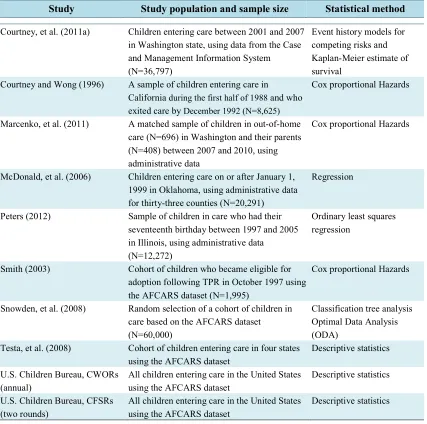
Table 3.2. Selected studies that employ entry cohorts to assess the timeliness of exits from out-of-home care ... 52
Table 3.3. Selected studies on permanency that have incorporated a time
component ... 55 Table 3.4. Selected studies on permanency that have incorporated a spatial
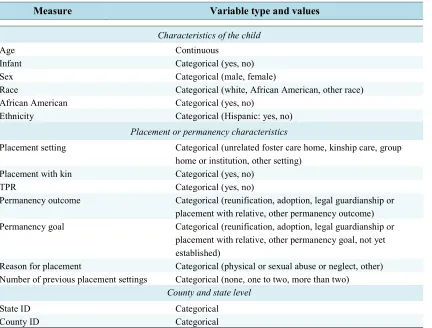
dimension... 57 Table 4.1. Main outcome measures ... 80 Table 4.2. Independent variables included in the analysis ... 84 Table 5.1. Selected demographic and social characteristics of the child
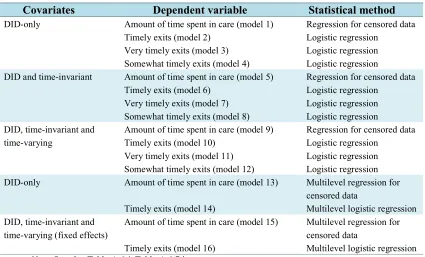
population in the four states ... 107 Table 6.1. Schematic representation of the multivariate models ... 118 Table 9.1. Schematic representation of the multivariate models ... 187 Table A.1.1. Composite CFSR and CWOR measures related to the timeliness of permanency ... 248
Table A.1.2. Summary of provisions contained in U.S. federal laws aimed at
promoting timely exits from out-of-home care ... 249 Table A.6.1. Marginal effects and predicted probabilities of DID for various
measures of timeliness for PBC and non-PBC states: DID-only model ... 250 Table A.6.2. Models for various measures of timeliness for PBC and non-PBC states: DID-only model ... 251
Table A.6.3. Marginal effects and predicted probabilities of DID for various
measures of timeliness for PBC and non-PBC states: time-invariant model ... 252 Table A.6.4. Models for various measures of timeliness for PBC and non-PBC states: time-invariant model ... 255
Table A.6.5. Marginal effects and predicted probabilities of DID for various
measures of timeliness for PBC and non-PBC states: time-varying model ... 258 Table A.6.6. Models for various measures of timeliness for PBC and non-PBC states: time-varying models ... 261
Table A.6.7. Marginal effects and predicted probabilities of DID for various measures of timeliness for PBC and non-PBC states: DID fixed-effects model and
time-varying fixed-effects model ... 267 Table A.7.1. Marginal effects and predicted probabilities of DID for various
measures of timeliness for Illinois, North Carolina and non-PBC states: DID-only
model ... 268 Table A.7.2. Models for various measures of timeliness for Illinois, North
Table A.7.3. Marginal effects and predicted probabilities of DID for various measures of timeliness for Illinois, North Carolina and non-PBC states: time-invariant model ... 270
Table A.7.4. Models for various measures of timeliness for Illinois, North
Carolina and non-PBC states: time-invariant model ... 271 Table A.7.5. Marginal effects and predicted probabilities of DID for various
measures of timeliness for Illinois, North Carolina and non-PBC states: time-varying model ... 272
Table A.7.6. Models for various measures of timeliness for Illinois, North
Carolina and non-PBC states: time-varying model ... 273 Table A.7.7. Marginal effects and predicted probabilities of DID for various
measures of timeliness for Illinois, North Carolina and non-PBC states: DID
fixed-effects model and time-varying fixed-fixed-effects model ... 275 Table A.7.8. Average annual number of children exiting care in North Carolina in a timely, very timely and somewhat timely manner by type of permanency
outcome ... 276 Table A.9.1. Predicted probabilities of DID for timeliness of adoption,
reunification and guardianship for Illinois and North Carolina and non-PBC states:
DID-only model ... 277 Table A.9.2. Models of DID for timeliness of adoption, reunification and
guardianship for Illinois and North Carolina and non-PBC states: DID-only model ... 278 Table A.9.3. Predicted probabilities of DID for timeliness of adoption,
reunification and guardianship for Illinois and North Carolina and non-PBC states:
time-invariant model ... 279 Table A.9.4. Models of DID for timeliness of adoption, reunification and
guardianship for Illinois and North Carolina and non-PBC states: time-invariant
Table of figures
Figure 1.1. Number of children in care, entering care and exiting care, 1980-2010 .... 19
Figure 2.1. Analytical model for describing how different policy approaches might relate to the timeliness of exits from care at the state level ... 35
Figure 2.2. The PSBI/ND framework ... 38
Figure 3.1. Percentage of children exiting care in a timely manner through reunification or adoption ... 53
Figure 4.1. Simplified representation of a multiple baseline design ... 72
Figure 4.2. Graphical representation of the selection of treatment and control states ... 74
Figure 4.3. Graphical representation of the criteria used for creating the entry cohorts ... 78
Figure 4.4. Visual representation of the DID estimator ... 91
Figure 5.1. Trend in the average annual number of children entering and exiting care in Illinois, New Jersey, North Carolina and Washington ... 99
Figure 5.2. Proportion of children entering care by age ... 101
Figure 5.3. Proportion of children entering care by race ... 102
Figure 5.4. Proportion of children entering care by placement setting ... 104
Figure 5.5. Proportion of children exiting care within thirty-six months of entry by type of permanency outcome ... 105
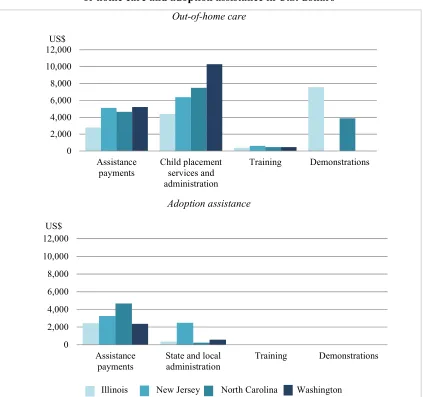
Figure 5.6. Estimated federal funding under title IV-E per caseload for out-of-home care and adoption assistance in U.S. dollars ... 110
Figure 6.1. The average amount of time spent in care in PBC states and non-PBC states ... 114
Figure 6.2. The percentage of timely and untimely exits in PBC states and non-PBC states ... 115
Figure 6.3. The percentage of very timely, somewhat timely and untimely exits in PBC states and non-PBC states ... 116
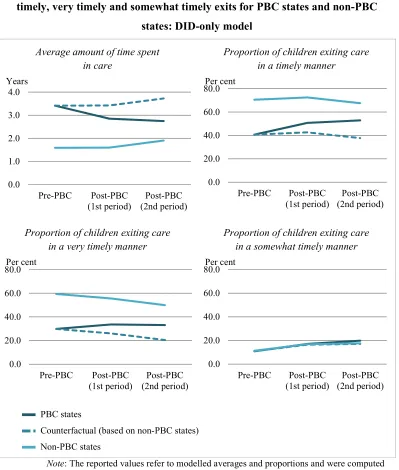
Figure 6.4. The average amount of time spent in care and the proportion of timely, very timely and somewhat timely exits for PBC states and non-PBC states: DID-only model ... 117
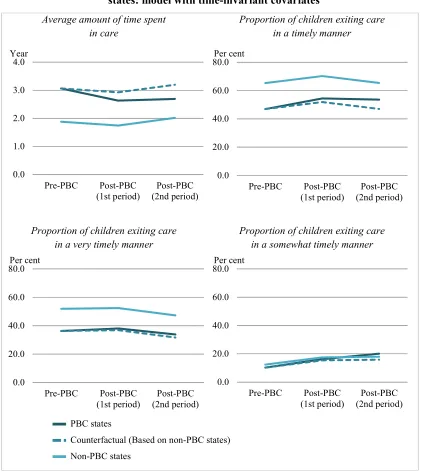
Figure 6.5. The average amount of time spent in care and the proportion of timely, very timely and somewhat timely exits for PBC states and non-PBC states: model with time-invariant covariates ... 121
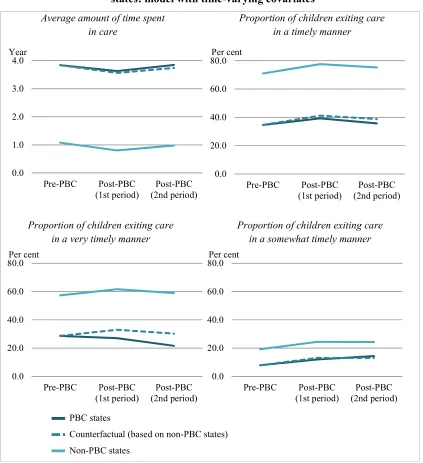
Figure 6.6. The average amount of time spent in care and the proportion of timely, very timely and somewhat timely exits for PBC states and non-PBC states: model with time-varying covariates ... 122
Figure 6.7. The average amount of time spent in care and the proportion of timely exits for PBC states and non-PBC states: fixed effect for the initial DID-only model and the model with time-varying covariates ... 125
Figure 7.2. The proportion of timely and untimely exits in Illinois and North
Carolina ... 132 Figure 7.3. The proportion of very timely, somewhat timely and untimely exits in Illinois and North Carolina ... 133
Figure 7.4. The average amount of time spent in care and the proportion of timely, very timely and somewhat timely exits for Illinois and North Carolina:
DID-only model ... 134 Figure 7.5. The average amount of time spent in care and the proportion of
timely, very timely and somewhat timely exits for Illinois and North Carolina: model
with time-invariant covariates ... 136 Figure 7.6. The average amount of time spent in care and the proportion of
timely, very timely and somewhat timely exits for Illinois and North Carolina: model
with time-varying covariates ... 138 Figure 7.7. The average amount of time spent in care and the proportion of timely exits for Illinois and North Carolina: fixed effect for the initial DID-only model and the model with time-varying covariates ... 140
Figure 7.8. Average annual number of children exiting care in North Carolina in a very timely and somewhat timely manner by type of permanency outcome ... 141
Figure 8.1. Proportion of timely exits in Illinois, North Carolina by race, age and placement setting ... 149
Figure 8.2. DTE in Illinois, North Carolina and non-PBC states by race, age and placement setting ... 151
Figure 8.3. Two scenarios for DTE by race and placement setting ... 153 Figure 8.4. Proportion of so-called “underperforming” children entering care in
Illinois and North Carolina ... 155 Figure 8.5. DAE in Illinois, North Carolina and non-PBC states by race, age and placement setting ... 156
Figure 8.6. Two scenarios for DAE by race and placement setting ... 158 Figure 8.7. Share of children still in care at twenty-four months in Illinois and
North Carolina by race and placement setting compared to the counterfactual based on the so-called “marginal” cases ... 160
Figure 8.8. RDE in Illinois and North Carolina compared to the counterfactual
based on the control states ... 162 Figure 8.9. RDE for children substantiated or indicated for maltreated in Illinois and North Carolina ... 163
Figure 9.1. Exits from care by type of permanency outcome for Illinois and North Carolina: DID-only model ... 175
Figure 9.2. The DID estimator for reunifications for Illinois and North Carolina by race, age and placement setting ... 177
Figure 9.3. The DID estimator for adoptions for Illinois and North Carolina by
Figure 9.5. The DID estimator for the proportion of children with the permanency goal of reunification, adoption and guardianship ... 183
Figure 9.6. The DID estimator for the proportion of children who achieved their permanency goal of reunification, adoption and guardianship... 185
Figure 9.7. The DID estimator for the proportion of children with the permanency goal of reunification, adoption and guardianship among those still in care thirty-six
List of acronyms
AFCARS Adoption and Foster Care Analysis and Reporting System APA Adoption Promotion Act
ARA Adoption Promotion Act ASFA Adoption and Safe Families Act ATE Average treatment effect BI/D Bureaucratic institutions/diffuse BI/N Bureaucratic institutions/narrow CFSR Child and Family Service Reviews CID Composite identifier
CPPP Center for Public Policy Priorities
CWOR Child Welfare Outcome Reports to Congress DAE Disparity at entry
DID Difference-in-difference DTE Disparity in timely exits EBP Evidence-based policy-making
FCSIAA FosteringConnections to Success and Increasing Adoptions Act IIA Independence of irrelevant alternatives
MBD Multiple baseline design MEPA Multiethnic Placement Act
OPPAGA Office of Program Policy Analysis and Government Accountability OVB Omitted variables bias
PBC Performance-based contracting PIP Program improvement plan
PIT Point-in-time
PSBI/ND Primordial solidarities-bureaucratic institutions/narrow-diffuse PSM Propensity score matching
QED Quasi-experimental designs SCM Synthetic control methods SSA Social Security Act
RCT Randomised controlled trials
RDE Racial disproportionality at entry (rate)
RE Randomised experiments
ROC Receiver operating characteristic
TANF Temporary Assistance to Needy Families TPR Termination of parental rights
1
Performance based contracting as a tool to improve the timeliness
of permanency outcomes
1.1 The scope of the research: an overview
Ever since the late 1950s, one of the main objectives of child protection policies in the United States of America (henceforth United States) has been to reduce the amount of time children spend in out-of-home care; defined here as any formal arrangement, whereby a child is cared for in a temporary, alternative residential setting (Lewit 1993).1 For nearly four decades, policymakers have sought to achieve the goal of timeliness2 primarily by providing various types of services to help children reunify with their parents more quickly. However, in recent years a new approach has emerged which emphasises the use of quantitative targets to expedite exits from care and achieve permanency,3 even when this entails terminating parental rights or pursuing alternatives to family reunification such as child adoption.
Since then, states have adopted very different policy approaches to promoting timely exits from out-of-home care. Yet relatively few comparative studies have been undertaken to examine which of these approaches has yielded better outcomes (examples of such
1
I use the term “formal” to convey the fact that my research focuses on children who are under the legal responsibility of the state. The term “temporary” was chosen to express the provisional nature of out-of-care arrangements, which are to be completed in the shortest time possible, without endangering the safety and wellbeing of the child. The expression “foster care” is used only when it is a direct citation. Throughout the study, the term “care” is used as a synonym of out-of-home care.
2
In this study, I consider placements that last more than twenty-four months from the time of entry to be long-term or untimely, while exits that occur within twenty-four months of the child entering care are considered to be timely. Exits that occur within twelve months are considered “very timely”, while those which occur after twelve months but within twenty-four months of placement are deemed to be of intermediate timeliness. The choice of these thresholds is based on the composite measures outlined in the Child Welfare Outcome Reports to Congress (CWOR) and in the Child and Family Service Reviews (CFSR)—the two main analytical tools used by the U.S. Children's Bureau to monitor the implementation of federal child welfare policies (see also Table A.1.1).
3
studies include Golden and Macomber 2009; Caplick Weigensberg 2009; Courtney, et al. 2011a, 2011b; Courtney and Hook 2012). In this research, I seek to address this gap by focusing on performance-based contracting (PBC); an approach to programme
management which links compensation of child welfare agencies to the achievement of quantitative targets. Specifically, I explore the extent to which the use of PBC is associated with the timeliness of exits from out-of-home care.
This chapter is structured as follows. First, I briefly describe the rationale for this study focusing on the policy relevance of PBC and timeliness. I then offer an overview of the evidence base on the relationship between PBC and timeliness and outline the expected as well as the actual contributions of my study to existing knowledge. I also present my research questions and define the research hypotheses explored in my analysis. Lastly, I outline the structure of the study.
1.2 What is PBC and what factors contributed to its emergence as a policy tool?
PBC is an approach to programme management whereby a contractor’s compensation is tied, in whole or part, to the achievement of certain quantitative targets. Instead of paying contractors through a flat, per diem rate based on the number of persons served, PBC “focuses on the outputs, quality and outcomes of service provision” (Martin 1999 p. 8). In practice this means that agencies that are unable to meet specific quantitative targets receive either a smaller amount per child—as in the case of the caseload models or the models based on incentives and penalties—or none at all such as in the case of the pure pay-for-performance model.4
PBC5 was first introduced in child protection and welfare services in the mid-1990s (Alpert and Meezan, 2012; McBeath 2006; McBeath and Meezan 2010; Stecher, et al.
4
In models based on incentives and penalties, providers receive a flat monthly fee for services as well as a small bonus for achieving certain quantitative targets. In caseload models, providers are required to accept a certain share of their caseload in new referrals, and move a certain percentage to permanency each year, while in the pure pay-for-performance model contracting agencies are compensated only when they have met specific quantitative targets (Planning and Learning Technologies, Inc. and The University of Kentucky 2006, 2009). The incentives and penalties model tend to present the lowest risk for providers while the pay-for perpay-formance model tend to be the highest.
5
2010). Since then, the number of states availing themselves of PBC has risen sharply (Collins-Camargo, et al. 2011a; U.S. Department of Health and Human Services, Office of the Assistant Secretary for Planning and Evaluation 2007). According to a 2009 survey by the Quality Improvement Center on the Privatization of Child Welfare Services, more than half of all states utilised some form of PBC in their child welfare service contracts;
compared to only a handful of states a decade earlier (Planning and Learning Technologies, Inc. and The University of Kentucky 2009).
In my opinion, three main factors help explain why the use of PBC became so widespread in the U.S. child protection and welfare system in so short a time span (see also Axford and Morpeth 2013; Collins-Camargo, et al. 2011a, 2011b; Flaherty, et al. 2008; Lynch-Cerullo and Cooney 2011).
First, there was mounting pressure on government entities to reduce the costs of child welfare and protection programmes. During the first half of the 1990s, the cost of
providing for children in care had risen rapidly, climbing to 4.2 billion U.S. dollars in 1996 up from less than 0.9 billion U.S. dollars a decade earlier (Anyon 2011; U.S. Congress, U.S. House of Representatives, Committee on Ways and Means 1998, 2000). In an attempt to cut costs, many state and local authorities began to hire external contractors to provide services on their behalf. Among the services frequently subcontracted were those related to placement, reunification and permanency, as well as various services aimed at promoting the safety and wellbeing of children in care. Government entities generally retained the role of “referring children for care, holding legal custody, and reporting to the court” (Berlin 2007 p. 6) as well as the responsibility for overseeing the performance of the various subcontracting agencies. 6
Faced with the need to cut costs, many policymakers turned to PBC as a means of inserting “quasi-market competition into a historically noncompetitive service
environment” (Shaver and Taylor 2010 p. 295). Specifically, by compelling providers to compete with one another for the renewal of contracts (Berlin 2007 p. 8), many
policymakers saw PBC as a tool for inducing private contractors to become more
6
efficient in order to remain profitable and “stay in business”.7 This, in turn, was expected to lower overall service delivery costs.
Second, there was growing public dissatisfaction with the quality of child protection and welfare services. Several high-profile cases of child abuse in the late 1980s and early 1990s had created a sense that children were not safe while in out-of-home care (Allen and Bissell 2004). At the same time, the number of children in care had doubled (see Figure 1.1). Policies such as the Family Preservation and the Support Services Program Act (FPSSPA) of 1993 with their emphasis on family reunification were blamed for the rising number of children seemingly “adrift” in care (Epstein 1999; Gainsborough 2010; Ingram 1996; Testa 2004). This contributed to a sense that the child welfare system was not doing enough to find permanent homes for children and help them exit care in a timely manner. By delinking providers’ compensation from the number of children served, PBC was seen as addressing the potential conflict of interest agencies might have to retain clients in care beyond what was strictly necessary.
Figure 1.1. Number of children in care, entering care and exiting care, 1980-2010
Sources: U.S. Department of Health and Human Services (2006a, 2012a); U.S. Congress, U.S. House of Representatives, Committee on Ways and Means (2000).
Third, an increasing number of state and federal policies began to embrace
quantitative targets as a way of promoting performance. In the domain of child protection,
7
While PBC often involves the use of private contractors, it should not be confused with privatization. Rather, as Stecher, et al. (2010 p. 6) point out, PBC aims to improve the efficiency of a system, “through goals, incentives and measures”, regardless of whether the provider of the services is a public or a private entity.
In care
Entering care
Exiting care
0 150,000 300,000 450,000 600,000
1980 1985 1990 1995 2000 2005 2010
federal laws such as the Adoption and Safe Families Act (ASFA) of 19978 made federal funding partially contingent on meeting a series of quantitative outcomes related to the children’s safety, permanency and wellbeing.9 Specifically, the ASFA was perceived to have shifted the emphasis away from merely fulfilling various administrative or service targets—the traditional benchmarks of performance for the out-of-home care system in the United States—to achieving better “outcomes” for children and their families (Beem 2006; Elder, et al. 2012).10 This focus on achieving concrete “results”, which is so central to the ASFA, is also viewed by authors such as Berlin (2007) and Shaver and Taylor (2010) as one of the main factors that contributed to the emergence of PBC. Shaver and Taylor (2010 p. 295), in particular, contend that PBC shifted provider agency accountability from “Did you do what you were told to do?” to “Did what you do work?” and “What difference did it make in the outcomes for children?”
In outlining these factors, I do not contend that this is how PBC works in practice. On the contrary, I question many of the assertions presented above—for instance, I am skeptical that an analytical framework developed to monitor PBC can shed light on such conceptually and methodologically complex child welfare outcomes as those outlined in the ASFA. Nonetheless, I believe that presenting these factors is important as it provides some insight into the context in which this policy tool emerged as well as its intended objectives.
8
According to Spar and Shuman (2004 p. i), the ASFA sought to ensure that “consideration of children’s safety is paramount in child welfare decisions, so that children are not returned to unsafe homes” and that “necessary legal procedures occur expeditiously, so that children who cannot return home may be placed for adoption or another permanent arrangement quickly.” In relation to these areas, namely the child’s safety, permanency and wellbeing, the U.S. Department of Health and Human Services created a series of outcomes measures to monitor and assesses state performance in operating child protection and child welfare systems. These measures are also discussed in chapter 2.
9
For instance, the ASFA’s Adoption Incentive Program stipulates that states should be compensated through monetary bonuses for performing above certain targets (Hansen 2007).
10
1.3 Why is it important to study PBC?
While the use of PBC in the child welfare system has become more widespread since the 1990s, it still remains highly controversial. Proponents, who believe that child welfare agencies perform better when fiscal accountability is linked to programmatic accountability (Kearney, et al. 2012a p. 96), tend to view such contracts as a useful management tool, which can lead to a greater focus on performance outcomes rather than the fulfilment of administrative or service measures (Martin 2005; Taylor and Shaver 2010). They also tend to view the free-market competition between various contactors occasioned by PBC as the best way to ensure an agency’s responsiveness to client needs (Steen and Smith 2012; Steenand Duran 2013), resulting in what Lawler and Foster (2013 p. 139) have referred to
as “a win-win-win to government, providers, and, most importantly, the people being served”.
Conversely, critics view PBC’s emphasis on competition as disruptive to organizational capacity as well as detrimental to institutional integrity and neutrality (Armstrong and McCullough 2010; Center for Public Policy Priorities 2008; Lee and Ensign 2007; Martin 2002; Zullo 2009). Further, a number of authors have expressed concern that the use of PBC may not necessarily prioritise the best interests of children and their families. Instead, it may give rise to conflicts of interest, whereby the decision-making process of agencies is shaped by the pressure to meet specific targets rather than the needs of their clients (Chuang 2010; Freundlich and Gerstenzang 2003; Johnston and Romzek 2008; Karatekin 2014; McBeath 2006; McBeath and Meezan 2008). According to Carnochan, et al. (2010 p. 5) this can lead to the so-called “performance paradox, in which external accountability designed to improve outcomes results in agency responses that either have no effect on true outcomes, or, in the worst cases, decrease service quality and lead to more negative outcomes.”
The lack of consensus that surrounds the use of this performance management tool in the literature, underscores, in my opinion, the need for more research on PBC (see also section 1.8). My analysis does not, however, address whether these views, some which are both theoretically complex and difficult to assess in practice, are well founded or not. This is something that, I argue, should be pursued in future research (see chapter 10).
1.4 Why focus on the timeliness of exits from care?
child welfare policies in the United States11 (Lawrence-Webb, et al. 2006; Raghavan 2010).12 Yet since the mid-1990s the emphasis on promoting timeliness has increased. Laws such as the ASFA of 199713 introduced a number of provisions aimed at reducing the amount of time children spend in careincluding some perceived as controversial such as the so-called 15 of 22 month standard (Beem 2007; Freundlich 2010).14 Subsequent federal laws in the United States have continued to emphasise expediting permanency outcomes, especially through adoption, as an important goal (Table A.1.2). The Adoption Promotion Act (APA) of 2003, for instance, added financial incentives to encourage the adoption of children known to be slower in achieving permanency. Likewise, the Fostering
Connections to Success and Increasing Adoptions Act (FCSIAA) of 2008 retained the importance accorded in the ASFA to promoting timely permanency outcomes by renewing the adoption incentives programme and doubling the financial incentives for the adoption of older children and other children with special needs15 (Golden and Macomber 2009).
As a result of this, nearly all states recognise the importance of promoting timely exits from care in their statutes. For instance, all fifty states and the District of Columbia have adopted the so-called fast-track provision, meaning that they exonerate child services from making reasonable efforts to reunite children with their families or prevent their
11
Both the CFSR and the CWOR contain a number of composite measures related to the timeliness of permanency (see Table A.1.1).
12
The theoretical assumptions underlying permanency planning are that children are best raised in a
permanent and stable family setting and that the child’s development depends on his or her capacity to create a continuous and stable bond with a parental figure (Breen 2002).
13
An example of another law that emphasised time-bound targets is the Personal Responsibility and Work Opportunity Reconciliation Act (PRWORA) of 1996.
14
Parents whose children remain in care longer than fifteen of the previous twenty-two consecutive months and who do not meet certain criteria can see their parental rights terminated. Such criteria include when: (1) the child is being cared for by a relative, (2) the Department of Human Resources has documented a compelling reason for determining that filing a petition would not be in the best interests of the child, or (3) the department has not provided the family of the child with the services deems necessary for the safe return of the child to his or her home (Child Welfare Information Gateway 2013a).
15
removal from home under a prescribed set of circumstances.16 Likewise, all but twelve states limit the maximum amount of time a child can spend in care before initiating
termination proceedings (Child Welfare Information Gateway 2010a). Overall, forty states plus the District of Columbia meet or exceed federal standards for timeliness, while ten states fall short of those provisions.
While improving the timeliness of exits from out-of-home care continues to be a widely shared policy objective in the United States, it also remains highly divisive. Those who support timeliness tend to cite the research on the psychological parent by Goldstein, Fraud and Solnit (1973, 1979) arguing that, because children perceive the passing of time differently than adults, permanency should be achieved in the shortest time possible. They also tend to cite the extensive body of literature suggesting that children who spend long amounts of time in out-of-home care may have more difficulties in forming intimate, trusting adult relationships as well as have a higher incidence of medical and developmental
problems as evidence for limiting long-term placements (Bellamy 2008; Buehler, et al. 2000; Clausen, et al. 1998; Connell, et al. 2009; Hollander 2002; Klee and Halfon 1987; Kools 1997; Lloyd and Barth 2011; Simms, et al. 2000; Villegas, et al. 2011; Villegas and Pecora 2012; Wexler 1990). Partially because of these arguments, proponents of timeliness often call for public funds to be used to promote various permanency options, including
adoption, rather than for long-term care (Barth, et al. 2006; Bartholet 1999; Hansen 2007). A number of studies, however, have expressed reservations about pursuing
timeliness as a goal in-of-itself. Specifically, they have cast doubt on the validity of the findings that long-term placement in care has a negative impact on children’s wellbeing (Beem 2007; Roberts 2002). Others have shown that children who exit care too quickly may have a higher likelihood of re-entering care and may be at higher risk of being
exposed to abuse and maltreatment (McDonald, et al. 2006; Wulczyn, et al. 2000; Wulczyn
16
Under the provisions of ASFA, reasonable efforts to preserve or reunify the family are not required when the court has determined that the parent: (1) subjected the child to aggravated circumstances as defined by State law, including, but not limited to, abandonment, torture, chronic abuse, and sexual abuse;
2004). Others still have raised concern that an excessive emphasis on timelines may arbitrarily attenuate parental rights and even lead to an unwarranted decision to terminate such rights, when, with appropriate support and services, parents might have been able to regain custody of their children (Beem 2006; Cowan 2004; Myers 2008; Wilkinson-Hagen 2004).
In my research, I do not seek to address these aspects, nor do I contend that long-term placements are predictive of, or associated with, the wellbeing of children in out-of-home care. Rather, I recognise that timeliness is currently an important policy objective in the United States. Having established this, my research seeks to explore how different approaches to promoting timely permanency outcomes, particularly through the use of PBC, are associated with this stated objective.
1.5 What do we know about PBC as a tool to improve the timeliness of exits?
At least fourteen states17 have employed PBC with either the direct or indirect purpose of reducing the amount of time children spend in care (Alpert and Meezan 2012; Chuang 2010; Steen and Dura 2013). States have employed different models of PBC to promote timeliness.18 In Illinois, for instance, private agencies are under contractual obligation to move at least one-quarter of their caseload to permanency within twelve months (Berlin 2007; Kearney, et al. 2012a). Contractors that do not meet those targets receive fewer resources per child and can be removed from the list of eligible providers. Missouri and Tennessee have employed a similar approach (Alpert and Meezan 2012; Planning and Learning Technologies, Inc. and The University of Kentucky 2009). In North Dakota, providers receive additional payments for completing adoptions in a timely manner,19 while in North Carolina contractors bare all costs for adoption, including for recruiting, supporting, and training prospective adoptive families, until the adoption had been finalised, implying that they have a considerable financial incentive in ensuring that
17
Some twenty-seven states were using PBC in their child welfare system in 2009; though not necessarily with the goal of reducing the amount of time children spend in care (Planning and Learning Technologies, Inc. and The University of Kentucky 2009).
18
See also note 4. 19
adoptions take place as quickly as possible (Planning and Learning Technologies, Inc. and The University of Kentucky 2006, 2009).
The evidence base on whether PBC has been effective in expediting exits from care remains quite limited (for a more detailed literature review see chapter 3). Further, many of the studies that have examined the relationship between PBC and the timeliness of permanency outcomes have been methodologically flawed, relying on point-in-time (PIT) estimates20 or exit cohorts, rather than perspective cohort measures. Other methodological limitations of these studies include focusing on a small number of permanency outcomes, restricting the scope of the analysis to one locality or point in time, or failing to control for various “compositional” effects, namely differences across states in the type of out-of-home care populations served.
In addition to the methodological limitations listed above, still relatively little is known about the mechanisms through which timeliness is affected in PBC states, including various negative effects—which I refer to henceforth collectively as negative distortionary effects—associated with the use of PBC. One concern, for instance, is that PBC might lead to creaming or “cherry picking” clients, whereby contractors favour clients who they perceive to be more likely to achieve a desirable outcome by providing additional services. Another, is that the use of PBC may be associated with another type of gaming behaviour known as “parking”, which occurs when providers “avoid serving more difficult children to improve their likelihood of achieving contract performance benchmarks” (Kearney, et al. 2012a p. 91).21 While various forms of gaming have been documented in the sphere of health or employment policies that tie compensation to the achievement of certain targets (see for example Courty, et al. 2011; Koning and Heinrich 2013), they remain largely unexplored in relation to child welfare policies.
The effect of PBC on permanency outcomes is another negative aspect which has been raised in the literature. In particular, a small number of studies have shown that the use of PBC may be associated with a lower likelihood of exiting care to reunification
20
Point-in-time estimates, in this study, refer to the out-of-home care population at a certain date in time. 21
(McBeath and Meezan 2006, 2008, 2010). This could be construed as a negative distortionary effect since, according to the Social Security Act (SSA),22 reunification remains the primary permanency objective in the United States.
1.6 Research questions
In this study I have identified four interconnected research questions. With regard to the first question, I seek to explore whether states that have employed PBC have been more successful in improving the timeliness of exits from out-of-home care compared to states that have not. I then focus on how different models of PBC might relate to differences in the amount of time children spend in out-of-home care. In the third question, I consider whether states that employ PBC experience various forms of gaming or whether other factors might also come into play in modifying the timeliness of exits. In the fourth, I examine whether the use of PBC is associated with different trends in terms of permanency outcomes and in particular distortionary effects on family reunifications.
My four research questions are as follows:
• Do states that employ PBC record more timely exits from care compared to states that do not employ PBC?
• Do states that employ different models of PBC experience different outcomes in terms of the timeliness of exits?
• Is there evidence of various types of gaming, including “cherry picking” among states that employ PBC? What other mechanisms might influence the timeliness of exits in PBC states?
• Is the use of PBC accompanied by reductions in reunifications compared to other permanency outcomes?
To address these questions I chose to utilise multi-year, multi-state entry cohorts (see chapter 4) and compare changes in the timeliness of permanency outcomes over time and across different localities. I also decided to control for factors commonly associated with
22
the timeliness of exits from care, namely selected characteristics of children entering care and their placement setting.23
1.7 The hypothesized impact of the use of PBC on the timeliness of exits from
out-of-home care
On the basis of these four research questions, I put forward six hypotheses. It is important to stress that these hypotheses do not reflect my own views about how PBC would relate to timeliness in the “real world” but rather what I believe to be the “intended” purpose for which this policy tool was developed (see also chapter 2 for a discussion of the theoretical and analytical underpinnings of my research hypotheses). By testing these hypotheses against what I view as their intended outcomes, I seek to cast light on whether PBC achieved its intended objectives. This is an important exercise given what Patton (2008 p. 349) has referred to as the need for testing “plausibility of theory and the likelihood that stated goals will be accomplished”.
My first hypothesis is that states that employ PBC24 would record more timely permanency outcomes compared to non-PBC states. Specifically, I hypothesise, based on the theory of social exchange (see section 2.4), that agencies operating in states where compensation is tied in whole or in part to the achievement of specific performance outcomes would have a greater incentive to meet their stated objective compared to other states which follow more traditional methods of programme management, which link compensation to caseload size.
Further elaborating on the theory of social exchange, I hypothesise that states which employ different models of PBC (see also section 1.2) would record different outcomes in terms of the timeliness of exits from care. In particular, my second hypothesis is that states which use a more stringent model of PBC such as the pure pay-for-performance model, which ties all compensation to the achievement of specific targets and goals, would experience more timely exits from care compared to states that use PBC merely as an incentive to promote better performance. Because child protection agencies operating in
23
Settings in care, or placement settings, include unrelated foster families, kinship care, group homes and institutions, and other settings including pre-adoptive homes, supervised independent homes and trial homes. 24
the former states have more to “lose” if they fail to meet their stated goals—namely they receive no compensation for their services—I expect their “culture” on the ground to be more supportive of the goal of promoting timely exits from care.
Based on the theory of social exchange, child welfare agencies operating in states that link compensation to the timeliness of permanency outcomes would have an incentive to reduce the average amount of time children spend in out-of-home care. I argue that there are at least three ways in which this goal might be achieved. The first way is for agencies to focus on improving the timeliness of groups of children known to be slowest in attaining permanency. As indicated in the literature review (see also section 3.3), African American children,25 infants, as well as children placed with relatives (kinship care)26 are less likely to exit care in a timely manner compared to other children (Becker, et al. 2007; Caplick Weigensberg 2009; Courtney, et al. 2011a, 2011b; Shaw 2010; Yampolskaya, et al. 2007; Wulczyn, et al. 2007). My third hypothesis, therefore, is that in states that
employ PBC, the timeliness of exits of the most “underperforming” groups would improve, narrowing the gap—i.e., the disparity—in the amount of time various groups of children spend in care. I expect these changes to account for some of the difference, post-PBC, in the timeliness of exits between treatment and control states.
While child welfare agencies have an incentive to improve the timeliness of their out-of-home care population by closing gaps in performance, at the same time they have limited ability or resources to influence those outcomes. For instance, parents with drug or alcohol dependencies, or who are incarcerated may not be able to care for their children simply because an agency has a financial incentive for them to do so. Further, the child protection system cannot generate would-be adoptive parents at will. After an initial outreach to persons who have not considered adoption as an option before, the “pool” of persons interested and willing to become adoptive parents of children in care is likely to plateau. Therefore, agencies that are operating under a rational assumption of self-interest have an incentive to modify the conditions which they can more easily affect and which are known to be associated with the timeliness of exits. Faced with these limitations, child welfare agencies operating in states that employ PBC could either: (1) focus on improving
25
Throughout this study, I use the terms African American and black interchangeably. 26
the timeliness of permanency for the so-called “marginal cases”, namely children for whom timely exits are more likely, or (2) attempt to alter the composition of children in care by, for example, placing fewer children in settings known to be associated with slower permanency outcomes.
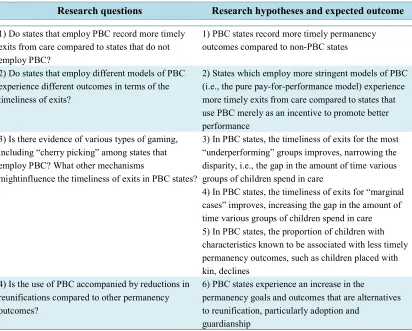
Table 1.1. Relationship between the research questions and hypotheses
Research questions Research hypotheses and expected outcome
My fourth hypothesis, therefore, is that the timeliness of exits of marginal cases would improve in PBC states, thus increasing the gap in the average amount of time various groups of children spend in care, while my firth hypothesis is that states which employ PBC would record a decline in the proportion of children with characteristics known to be associated with less timely permanency outcomes compared to the control states. The former could be construed as a form of “cherry picking”, with contractors favouring clients they consider to be more likely to exit care in a timely manner, while the latter could be interpreted as “parking” (see section 1.5), with providers reducing their reliance on, among others, settings perceived to be associated with longer permanency in care. I expect some of the difference in the timeliness of exits between PBC and non-PBC 1) Do states that employ PBC record more timely
exits from care compared to states that do not employ PBC?
1) PBC states record more timely permanency outcomes compared to non-PBC states 2) Do states that employ different models of PBC
experience different outcomes in terms of the timeliness of exits?
2) States which employ more stringent models of PBC (i.e., the pure pay-for-performance model) experience more timely exits from care compared to states that use PBC merely as an incentive to promote better performance
3) Is there evidence of various types of gaming, including “cherry picking” among states that employ PBC? What other mechanisms
mightinfluence the timeliness of exits in PBC states?
3) In PBC states, the timeliness of exits for the most “underperforming” groups improves, narrowing the disparity, i.e., the gap in the amount of time various groups of children spend in care
4) In PBC states, the timeliness of exits for “marginal cases” improves, increasing the gap in the amount of time various groups of children spend in care 5) In PBC states, the proportion of children with characteristics known to be associated with less timely permanency outcomes, such as children placed with kin, declines
4) Is the use of PBC accompanied by reductions in reunifications compared to other permanency outcomes?
6) PBC states experience an increase in the
permanency goals and outcomes that are alternatives to reunification, particularly adoption and
states to be associated with differences in those factors and how they have changed over time.
Lastly, I hypothesise that states which employ PBC would experience an increase in the permanency goals and outcomes that are alternatives to reunification, particularly adoption and guardianship (sixth hypothesis). The reason for this is that states which tie the compensation of child welfare agencies to expediting children’s exits from care would have an incentive to pursue alternative permanency outcomes, once timely reunification for a child has been ruled out.
1.8 Expected contribution of my study and challenges encountered
Initially I had expected my study to contribute to existing knowledge in two ways. My first expected contribution was to provide a more methodologically sound evaluation of differences in the timeliness of exits from care for PBC and non-PBC states than the one available in the literature. I viewed this as important since many of the studies available at the time had either focused on one state or county (Koh and Testa 2011; Rockhill, et al. 2007; Vericker, et al. 2007; Wells and Guo 1999, 2006; Wulczyn, et al. 2007), one type of permanency outcome (Blackstone, et al. 2004; Hansen 2007; Wulczyn, et al. 2009) or one point in time (Courtney, et al. 2011a, 2011b; McDonald, et al. 2006; Peters 2012;
Snowden, et al. 2008) (see also section 3.4). Having completed this study, I believe to have addressed some of the methodological limitations of previous research by using multi-year, multi-state entry cohorts. Further, my research considers differences in the timeliness of permanency outcomes both before and after the enactment of PBC, examines a more complete spectrum of permanency outcomes, and controls for differences among states in some of the factors known in the literature to be associated with the timeliness of exits from care, including some of the characteristics of children entering care and their placement setting.
However, in undertaking this study, I have also come to realise that I had initially underestimated the complexity inherent in measuring the relationship between a
My second expected contribution was threefold. First, I sought to add to the existing body of literature on the relationship between PBC and the timeliness of permanency outcomes as well as on the possible negative distortionary effects of PBC. I considered this an important objective since a number of previous studies had called for more research on policies and practices associated with reductions in the amount of time children stay in out-of-home care, including PBC (see for example Caplick Weigensberg 2009; Courtney, et al. 2011a, 2011b; Flaherty, et al. 2008;Golden and Macomber 2009; Wulczyn, et al. 2009). Further, much of the literature on the relationship between PBC and timeliness available at the time focused on one state: Michigan. Second, I expected my study to make a contribution from a policy perspective since several states including California,
Louisiana, Texas and Washington, as well as a number of countries outside of the United States were exploring the idea of introducing PBC in some part of their child welfare system (Haly 2010; Stanley et al. 2013), despite a relatively limited evidence base on the relationship between PBC and the timeliness of exits from care. Third, since the
theoretical framework underpinning PBC (see chapter 2 for a discussion and critique of this theory) presumed a positive relationship between the implementation of this programme management tool and the timeliness of permanency outcomes, I sought to explore whether this assumption might be true.
Having completed this study, I find that my analysis contributes to expanding the existing body of literature on the relationship between PBC and the timeliness of exits from care by shedding some light on this relationship in some additional states, namely Illinois and North Carolina. In conducting my analysis, however, I also came to realise that I am unable to make policy recommendations since both the data and research design utilised do not allow me causal to draw inferences regarding the relationship between PBC, timeliness and permanency outcomes. My findings suggest that states that employ PBC may
experience an improvement in the timeliness of exits for certain groups of children. I am, however, unable to conclude whether these outcomes are the result of PBC or a
outcomes are achieved as well as raises the need for a more nuanced theoretical framework to explain how PBC might shape the timeliness of permanency outcomes (see also chapters 2 and 10).
1.9 Structure of the thesis
2
Theoretical underpinnings of my study: system theory, the
relational models theory and the theory of social exchange
2.1 The three theoretical models underpinnings my research hypotheses
There are a number of possible analytical frameworks and theoretical constructs to explain how policy approaches such as PBC might be related to the amount of time children spend in care. In this chapter, I make reference to three distinct models, which provide the analytical or theoretical underpinnings of my research hypotheses outlined in the previous chapter.
The first, developed by Wulczyn, et al. (2010), serves as a framework for
conceptualising how the implementation of different policy approaches aimed at expediting children’s exits from care might relate to specific timeliness outcomes at the state level (the first research hypothesis outlined in section 1.7). The model, which draws on systems theory, also offers the theoretical justification for an important methodological objective of this study: namely, to better control for differences at the state and county level in selected characteristics of the out-of-home population and other contextual variables (see also chapter 4).
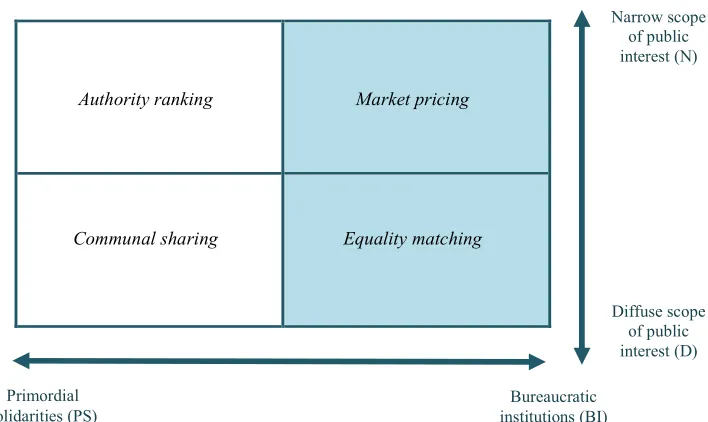
The second model, based on the analytical framework by Testa (2001, 2008), provides a conceptual tool for classifying different approaches to promoting timely exits from care. Specifically, I use the analytical categories identified by Testa to develop a simple typology, which serves as the basis for selecting the treatment and control states in my analysis. As seen in chapter 1, the distinction between treatment states (PBC) and control states (non-PBC) is central to my first, third, fourth, fifth and sixth hypotheses. This framework is also useful for addressing my second research hypothesis, which focuses on the relationship between various models of PBC and timeliness outcomes.
various gaming behaviours (my fourth and fifth hypotheses) and permanency outcomes (sixth hypothesis).
In the chapter, I present an overview of each of these models and describe how they are relevant for my research. In addition, I provide a justification for why I chose them and discuss some of their more salient strengths and limitations.
2.2 System theory and the “new” approach to child protection
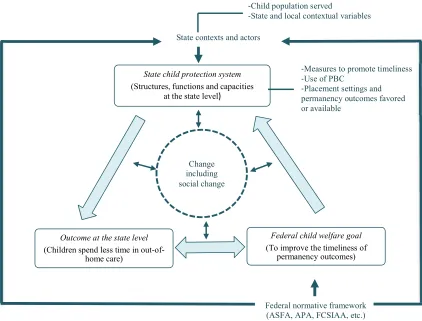
The analytical framework developed by Wulczyn, et al. (2010)—referred to by its authors as a “new” approach to child protection— represents a particularly useful model for conceptualising the relationship between a policy tool—in this case PBC—and a child welfare outcome such as reducing the amount of time children spend in out-of-home care. The model, which builds on system theory,27 identifies a number of elements which are central to my analysis (see Figure 2.1). I briefly discuss four of these below.
First, the framework recognises that systems—defined as “a collection of
components or parts that are organized (i.e., connected to each other) around a common purpose or goal” (p. 10)—are influenced by their stated objectives within the normative framework of “laws, policies and commitments”. In my research, the normative framework is represented by the various federal laws which emphasise timeliness as an important policy objective, including the ASFA, the APA and the FCSIAA (see chapter 1); while the child welfare goal is to expedite children’s exits from care in order to achieve permanency in a timely manner (see Figure 2.1).
Second, the framework acknowledges that there is a critical relationship between the stated objectives of a system and its functions, i.e., the organised activities the system undertakes to achieve its goals. In my research, federal laws have established a series of provisions aimed at reducing the amount of time children spend in care. These include, as indicated in chapter 1, time-sensitive measures for the termination of parental rights (TPR), shortened judicial and administrative timeframes for hearings as well as measures to promote adoptions as a permanency alternative for children who were unlikely to exit care in a timely manner (Freundlich 2010) (see also Table A.1.2). Yet, while many of these
27
federal laws are top-down, requiring states to modify their statutes or potentially lose all or part of their federal funding, states have followed different approaches to promoting timely exits from care (Beem 2006). For instance, some states have employed PBC, while others have relied on more traditional models which do not tie the compensation of child welfare agencies to specific performance outcomes. Wulczyn’s framework, therefore, recognizes that, while the functions of various state and local actors are shaped by the federal
[image:35.612.98.520.329.650.2]normative framework, they may pursue those objectives through different approaches and with different means. This distinction is important in the context of my research since I seek to compare changes in the timeliness of permanency outcomes in PBC and non-PBC states.
Figure 2.1. Analytical model for describing how different policy approaches
might relate to the timeliness of exits from care at the state level
Source: Based on Wulczyn, et al. (2010 p. 19).
Third, the framework recognises that policy goals are not pursued in isolation. Rather, individual factors related to the child, the family and community the child
State child protection system
(Structures, functions and capacities at the state level)
Federal child welfare goal
(To improve the timeliness of permanency outcomes)
Outcome at the state level
(Children spend less time in out-of-home care)
Federal normative framework (ASFA, APA, FCSIAA, etc.)
Change including social change
State contexts and actors
‐Measures to promote timeliness
‐Use of PBC
‐Placement settings and permanency outcomes favored or available
‐Child population served
originates from, as well as the state they live in—what Wulczyn, et al. (2010) refer to as “actors and contexts”—also influence the ability of a system to achieve its stated
objectives.28 Hence the amount of time children spend in care is not only related to various normative and policy frameworks at the state and local levels, but also to the characteristics of individual children, such as their age and race, as well as the characteristics of their families and their environment at large.
Fourth, while the objectives of the system influence its functions, structures and capacities, the latter are also shaped by contextual factors. For instance, even though states might share a common objective of reducing the amount of time children spend in care, they continue to differ in their availability and preference for certain types of placement settings, with some states, for instance, favouring placement with kin, and others placement with unrelated foster families (Mitchell, et al. 2005). These differences also relate to contextual and other factors at the state and local level, including the administration and structure of service provision within child welfare agencies (McBeath and Meezan 2010; Wulczyn, et al. 2009).
While these elements represent a useful starting point for framing my research, the framework by Wulczyn, et al. also relies on a number of assumptions that warrant further discussion. First, underlying the framework is a deterministic interpretation of the relationship between a policy intervention and a specific set of outcomes—what Lynch-Cerullo and Cooney (2011 p. 370) have referred to as “why, based on research, a
program’s key components are expected to achieve results”. Yet, in practice, being able to ascribe a cause-and-effect relationship between a policy tool and an outcome is far from straightforward. The fact that a policy is accompanied by a positive outcome, for instance, does not necessarily imply that the policy is effective; rather other confounding factors, which might have been neither observed nor controlled for, could have intervened to obtain that result. The same applies to negative outcomes. In addition, outcomes might be
positive for certain groups of children but not for others or be confined to a certain period time, as was the case in the state of Kansas where an initiative to “shorten stays and decrease the number of children in the foster care system” was so successful at first that it
28