S T U D Y P R O T O C O L
Open Access
Use of a smartphone app combined with
gamification to increase the level of
physical activity of adults and older adults:
protocol of a sequential multiple
assignment randomized trial
Maria do Socorro Morais Pereira Simões
1, Bárbara de Barros Gonze
1, Neli Leite Proença
1, Vinicius Tonon Lauria
1,
Vinícius Demarchi Silva Terra
1, Ricardo da Costa Padovani
2and Victor Zuniga Dourado
1*Abstract
Background:There is scientific evidence suggesting that app-based interventions targeted to increase the level of physical activity might be effective, although multicomponent interventions appear to be more effective than app-based interventions alone. Despite the motivating results, it remains unclear whether or not app-app-based
interventions can increase the level of physical activity and cardiovascular health. Our study aims to investigate the effect of a smartphone app combined with gamification on the level of physical activity of adults and older adults. The specific aims are (1) to verify the effects of the intervention on cardiometabolic and cardiovascular health, lung function, and cardiorespiratory fitness; and (2) to verify the relationship between age group and the response rate.
Methods/design:We will conduct a sequential multiple assignment randomized trial (SMART). The adaptive intervention protocol will last 6 months. After baseline assessments, participants will be randomized into one of three groups (group 1: app + tailored messages; group 2: app + tailored messages + gamification I; control group: physical activity counseling). For 12 weeks, we will record the average number of steps per day of participants from groups 1 and 2. At 6 weeks from initiation of recording, participants will be classified into responders and responders according to their increase in the average number of daily steps; all those considered as non-responders will be re-randomized, with the chance to participate in a third group–group 3: app + tailored messages + gamification II. Finally, at 12 weeks, participants will continue using the app but will no longer receive direct intervention from investigators. All participants will be reassessed at 3 and 6 months from baseline. Our pilot SMART will require 42 participants (14 per arm). Following the SMART pilot, we will calculate the sample size for the trial based on the variation of the average number of steps/day, including an up to 40% loss to follow-up and a less optimistic nonresponse rate of 65%.
Discussion:To our knowledge, this will be the first trial with adaptive intervention to test the effectiveness of using a smartphone app to increase the level of physical activity of adults and older adults.
Trial registration:Brazilian Clinical Trials Registry: RBR-8xtc9c. Registered on 3 August 2018,http://www. ensaiosclinicos.gov.br; UTN number: U1111–1218-1092.
Keywords:Cardiovascular diseases, physical activity, smartphone
© The Author(s). 2019Open AccessThis article is distributed under the terms of the Creative Commons Attribution 4.0 International License (http://creativecommons.org/licenses/by/4.0/), which permits unrestricted use, distribution, and reproduction in any medium, provided you give appropriate credit to the original author(s) and the source, provide a link to the Creative Commons license, and indicate if changes were made. The Creative Commons Public Domain Dedication waiver (http://creativecommons.org/publicdomain/zero/1.0/) applies to the data made available in this article, unless otherwise stated. * Correspondence:[email protected]
1Departamento de Ciências do Movimento Humano, Universidade Federal de São Paulo, Instituto de Saúde e Sociedade, 136 Silva Jardim st–room 338, Santos, SP 11015-020, Brazil
Background
Popular technologies such as smartphones and their ap-plications (apps) have been used as tools to engage people who do not meet the recommended levels of physical activity. There is scientific evidence with mod-erate effect (weighted effect size = 0.54) suggesting that app-based interventions targeted to increase the level of physical activity might be effective [1], although multi-component interventions appear to be more effective than app-based interventions alone [2]. Apps intended to improve cardiovascular health should include features such as privacy policy and reliable sources of informa-tion and should be mainly designed using behavior change theory [3]. It is believed that the development of apps based on behavioral change techniques may con-tribute to the emergence of cognitive patterns favorable to the practice of physical activity.
The main effective components of apps are most likely personalization and gamification [4]. Interestingly, the ad-herence rate to an app-based intervention was not signifi-cantly different in comparison to conventional intervention [5]. However, despite its increasing use, smartphone apps for physical activity lack a scientific basis. Among many health and fitness apps, only a few are based on behavior change techniques [2,6–8].
The use of games for promoting healthy lifestyle behaviors (such as physical activity) has been shown to be effective [9], introducing gaming elements as novel opportunities for behavior change techniques, increasing enjoyment and, thus, intrinsic motivation. The use of game elements outside of the game context is called gamification and has been increas-ingly used for promoting healthy lifestyle behaviors. Among gaming elements, goal-setting with feedback and rewards are the most frequently used. Social con-nection, progress bars, and challenges/quests have also been investigated in a smaller number of studies [10]. Studies have also shown that there is a limited theoretical foundation for gamification, and most studies have used goal-setting as a motivation strategy to engage people in playing the game [10].
Among the main limitations of the available apps, with or without game elements, is the long-term ad-herence to app-based interventions [10, 11]. Despite the motivating results, it remains unclear whether or not app-based interventions can increase the level of physical activity and cardiovascular health.
Methods
This study protocol was written according to the Stand-ard Protocol Items: Recommendations for Interventional Trials (SPIRIT) 2013, and the SPIRIT checklist is avail-able in Additional file1.
Aims and design
The primary aim of our study is to investigate the effect of a smartphone app combined with game elements on the level of physical activity of adults and older adults, measured by the average number of daily steps. The sec-ondary aims are (1) to verify the effects of the interven-tion on cardiometabolic and cardiovascular health, lung function, and cardiorespiratory fitness; and (2) to verify the relationship between age group and the response rate.
We will conduct a Sequential Multiple Assignment Randomized Trial (SMART). This study was ap-proved by the Ethics Committee of the Federal University of Sao Paulo (# 0499/2018) and is regis-tered in the Brazilian Clinical Trials Registry (RBR-8xtc9c).
The SMART design has been recommended over the classical randomized controlled trial for technology-based interventions [12, 13] as it allows adaptations over time based on the participants’ response to the intervention. Despite the large potential and shown feasibility [14], the SMART design has, thus far, hardly been conducted in smartphone and gamified interventions.
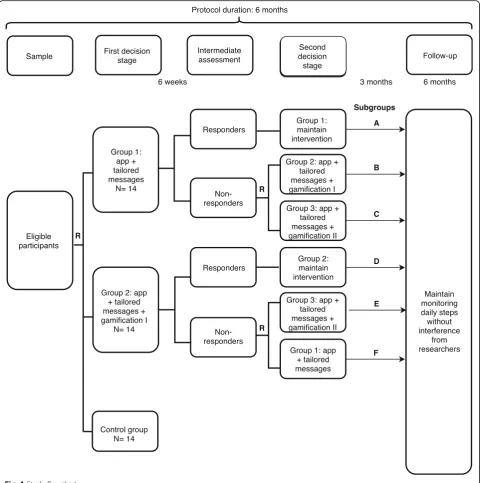
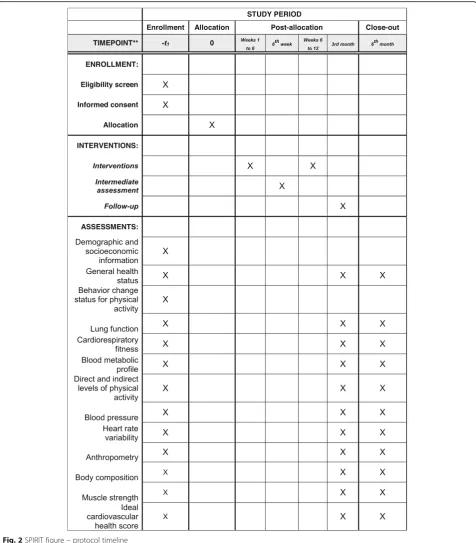
The adaptive intervention protocol will last 6 months. Initially, participants will be randomized into one of three groups (group 1: app + tailored messages; group 2: app + tailored messages + gamification I; control group: physical activity counseling) (Fig. 1). Over 12 weeks, we will record the average number of steps per day for each participant from groups 1 and 2. At 6 weeks from initi-ation, participants will be classified into responders and non-responders according to the targeted average num-ber of daily steps; all those considered as non-responders will be re-randomized, with the chance to participate in a third group – group 3: app + tailored messages + gamification II (Fig.1). At the end of the 12 weeks, participants will continue using the app but will no longer receive any direct intervention from investiga-tors. All participants, including those in the control group, will be reassessed at 3 and 6 months from base-line. The protocol timeline is shown in Fig.2.
Assessors will be blinded to group allocation. We will randomize participants in blocks of six (two to each group) using opaque sealed envelopes and the sequence of group allocation will be computer generated.
Participants from groups 1 and 2 will have a commercial freely available app installed on their smartphones. This app has gamification functionalities, and it will track their daily steps. Participants will be instructed about the use and functionalities of the app, and they will be encouraged to use the smartphone close to their waist during all activities.
Interventions
Group 1–App + tailored messages
Participants will use the app to track the number of daily steps and they will receive weekly text messages on their
smartphones, with information about their performance on last week and motivational phrases according to their behavior-change status at the end of the protocol, the re-sponders of Group 1 will end up in the subgroup A, while non-responders will end up in the subgroups B or C.
Group 2–App + tailored messages + gamification I
Additionally to monitoring the number of steps and individual messages, participants will be encouraged to join virtual challenges; for each challenge they complete, a virtual badge will be given. The
[image:3.595.58.540.88.572.2]challenges available will be related to the target num-ber of steps per day, target distance walked in the month, and group competitions where the total num-ber of steps is compared among the different groups of app users. Further, there will be rankings of the number of steps among all users at the end of the protocol, the responders of Group 2 will end up in
the subgroup D, while non-responders will end up in the subgroups E or F.
Control group
The control group will receive physical activity counsel-ing, provided by reinforcing the information of the video they watched prior to randomization.
[image:4.595.60.537.87.631.2]Group 3–App + tailored messages + gamification II
The second stage of gamification will be available in the protocol by the time of the intermediate assessment (6th week of intervention). Gamification II will include the same features of gamification I, plus opportunities for socialization among participants (biweekly group meet-ings) and discussion forums about physical activity.
Defining responders and non-responders
The American College of Sports Medicine recommenda-tions about the quantity and intensity of physical activity suggest increases of 2000 steps per day to achieve im-provements in cardiovascular health [15]. After a pre-test with persons from researchers’ networks using a smartphone app with a pedometer, we observed that the target of increasing 2000 steps/day would not be realistic to our population. Therefore, we decided to plot the average number of steps of participants in a graph using a linear tendency line and participants that present a positive slope, i.e., a tendency to increase step counts, will be considered as responders. Consequently, partici-pants with a zero or negative slope, i.e., a tendency to maintain or decrease step counts, will be considered as non-responders. Additionally, we will use the app’s first-week step count as a reference for both sending the tai-lored messages and analyzing participants’slopes. Thus, we believe that this way we will be able to set individual-ized and feasible goals for our population.
Intermediate assessment
The intermediate assessment to identify responders and non-responders will take place at week 6 from the begin-ning of the protocol. We will calculate the average num-ber of steps/day from weeks 1 to 6, and compare with the number of steps/day from the initial assessment. Participants identified as non-responders will then be re-randomized and will receive instructions about the new phase of intervention (Fig.1). We will collect the average number of steps per day using the app interface; all par-ticipants will use the app for 1 week after randomization prior to any intervention and we will consider the step count from the first week as a comparator for weekly and intermediate assessments.
Follow-up
After 3 months of intervention, all participants (includ-ing those in the control group) will be reassessed. Partic-ipants from groups 1, 2, and 3 will be advised to maintain the monitoring of daily steps by the app but will no longer receive any direct intervention from re-searchers (text messages, virtual challenges, or group meetings). Finally, after 3 months of self-monitoring of the number of steps, all participants will be reassessed and the protocol completed.
Sample size
The main objective of a SMART study relies on the feasibility of carrying out a future large-scale trial, rather than investigating the effects of the proposed set of treatments. To reach this goal, we must ensure that the number of subjects will be sufficient and balanced among all of the subgroups. According to Almirall et al. [16], a fixed probability k of about 80–90% should be considered so that at least mparticipants would end in non-responders’ subgroups B, C, E and F (Fig. 1). Con-sidering a range of non-response rates in SMART stud-ies of 35–65%, we calculated an mof 3 participants per subgroup as sufficient to ensure familiarity with the protocol, treatment delivery, and identification of poten-tial problems. For a non-response rate of q = 50% at the end of the 6th week, our pilot SMART study will require 42 participants (14 per arm) [16].
After conducting this SMART pilot, we will consider the variation on the average number of steps per day to calculate the sample size of the trial, including an up to 40% loss to follow-up and a less optimistic non-response rate of 65%. To increase the feasibility of a future large-scale trial, we will calculate the sample size considering groups A + B (maintain – switch to group 2), groups A + C (maintain – switch to group 3), groups D + E (maintain – switch to group 1), groups D + F (maintain –switch to group 3), and the control group.
Population and recruitment
Eligible participants will be community-dwelling adults aged 20 years and older, recruited from social networks, folder distribution, and digital media. The inclusion cri-teria are age 20 years and older, without previously diag-nosed or self-reported cardiopulmonary diseases, locomotor disturbances, or other health problems that would preclude the safe performance of physical activity (e.g., electrocardiographic abnormalities during exercise test), having a smartphone, and being familiar with its use.
The exclusion criteria are average baseline level of physical activity ≥10,000 steps per day, unable to walk without the use of gait-assistive devices, recent respira-tory tract infections, spirometric abnormalities, stable or unstable angina in the 4 weeks prior to examination, re-cent myocardial infarction, previous angioplasty or heart surgery, bradycardia or tachycardia, and refusal to par-ticipate. We set the limit of 10,000 steps per day because this is a well-known threshold for improving health [17].
Study measurements
function, cardiorespiratory fitness, blood metabolic pro-file, direct and indirect levels of physical activity, blood pressure, heart rate variability, anthropometry, body composition, ideal cardiovascular health score, and muscle strength.
Assessments will be carried out in 2 days, with a 7-day interval between them. On the first day, we will assess demographic and socioeconomic information, behavior-change status for practicing physical activity, general health status, lung function, and cardiorespiratory fit-ness. At this point, participants will receive a blood exam form and an accelerometer, which must be used for 7 days. In the second day of assessments, participants will give the accelerometer back and will be given an assess-ment of their indirect level of physical activity, body composition, heart rate variability, blood pressure, an-thropometry, muscle strength, and ideal cardiovascular health score.
Assessments
All interviews and tests will be carried out by trained staff and all equipment will be periodically checked re-garding calibration.
Demographic and socioeconomic information Age, sex, marital status, completed years of study, and socio-economic classification according to a Brazilian valid questionnaire [18] will be recorded.
General health status We will record information on personal and family diagnoses, medication use, and car-diovascular risk factors.
Behavior-change status for physical activity To evalu-ate the status of behavior change we will use an adapted and validated questionnaire [19]. This questionnaire as-sesses the current physical activity status (practicing or not practicing) and if the person is willing to change it.
Lung function Participants will perform spirometry (Quark PFT/CPET Cosmed, Pavona di Albano, Italy) fol-lowing international standards [20]. We will register the forced expiratory volume in the first second (FEV1), forced vital capacity (FVC), and relation between the two (FEV1/FVC).
Cardiorespiratory fitness Participants will perform a cardiopulmonary exercise testing on a treadmill (ATL, Inbrasport, Porto Alegre, Brazil) following a ramp proto-col [21]. We will measure ventilatory, cardiovascular and metabolic responses, breath by breath, using a gas analyzer (Quark PFT, COSMED, Italy).
Blood metabolic profileParticipants will have collected a blood sample at a certified laboratory. We will register the levels of total cholesterol, HDL-cholesterol, LDL-cholesterol, fasting glucose, and triglycerides.
Direct and indirect levels of physical activity The dir-ect level of physical activity will be assessed by a triaxial accelerometer (Actigraph, Pensacola, USA), which must be used for 7 consecutive days on participants’dominant hip. We will consider as valid data those registers of at least 4 days including at least 1 day of the weekend, for 10 h per day [22]. We will collect the number of steps per day, time in sedentary behavior, time in light activ-ities, and time in moderate-to-vigorous activities. The accelerometer step count will be used to the exclusion criteria of≥10,000 steps/day. The indirect level of phys-ical activity will be calculated using the International Questionnaire of Physical Activity (IPAQ) in its long form [23].
Blood pressure Participants will be comfortably sat and we will register three blood pressure measurements with a 1-min interval between them.
Heart rate variability Participants will be resting in a supine position. We will register the heart rate variability for 10 min using a cardiac monitor (RS800, Polar Elec-tro, Kempele, OY, Finland). The interval between R-waves will be analyzed using the software Polar ProTrai-ner 5 (Polar Electro™, OY, Kempele, Finland).
Anthropometry We will measure participant height (m), body mass (kg), and abdominal circumference (cm). We will also calculate the body mass index in kg/m2.
Body composition To assess body composition, we will use a bioelectrical impedance analyzer (310e Biodynam-ics, Detroit, USA), registering resistance, reactance, lean body mass (kg), and the percentage of body fat.
Muscle strength We will measure muscle strength by the handgrip strength using a hydraulic hand dynamom-eter (Saehan, Japan), with the participant in a seated pos-ition [24]. We will register the highest value of the three measurements.
Ideal cardiovascular health score The ideal cardiovas-cular health score will be calculated according to the American Heart Association recommendations [25].
Data analysis
levels, cardiovascular and metabolic health, lung function, and cardiorespiratory fitness among groups A + B + C and D + E + F pre- and post-intervention compared to the con-trol group. Additionally, we will use the same test to analyze the effect of interventions on the average number of daily steps comparing the final subgroups (A to F) against the control group as well as the subgroups A + F, B + D and C + E against the control group.
To analyze the relationship between age and the sponse rate to each intervention, we will group re-sponders and non-rere-sponders according to age ranges (20–30 years old, 31–40, 41–50, 51–60, 61–70, and 71 and older) and compare them in subgroups from A to F using Pearson or Spearman correlations (according to data distribution).
Discussion
To our knowledge, this will be the first trial with an adap-tive intervention to test the effecadap-tiveness of using a smart-phone app to increase the level of physical activity of adults and older adults. As stated above, the SMART design has been recommended over the classical randomized con-trolled trial for technology-based interventions [12,13].
One of the major challenges of the present study will be to engage Brazilians to track their daily steps using technol-ogy. Despite the large number of smartphones in use in Brazil, whether the proposed application will be effective in this population needs more clarification. Another challenge will be the lack of security to carry out outdoors physical activities in Brazil, regardless of the neighborhood. In our recent experience, many participants from our ptest re-ported not using a smartphone when practicing physical ac-tivity outdoors. We believe that creating favorable conditions for behavior change and the adoption of a healthy lifestyle will favor adherence and engagement of those involved in the study. Using the technology available on a smartphone to encourage the adoption of new ways of thinking and acting can be a new way of promoting the quality of life and well-being of the Brazilian population.
Finally, the sample size required for SMART studies is usually large and difficult to calculate. We are aware of the difficulty of involving enough people in a tight time-line. However, we are confident that we are prepared to run the protocol with sufficient statistical power, at least for some key health variables.
Trial status
The study is currently recruiting participants. Recruit-ment began on 15 October 2018, and is intended to be completed on 15 November 2020.
Protocol version and date: Version number 4, 23 October 2019.
Supplementary information
Supplementary informationaccompanies this paper athttps://doi.org/10. 1186/s13063-019-3879-1.
Additional file 1.SPIRIT checklist.
Abbreviations
app:application; FVC: forced vital capacity; FEV1: forced expiratory volume in the first second; SMART: Sequential Multiple Assignment Randomized Trial; SPIRIT: Standard Protocol Items: Recommendations for Interventional Trials
Acknowledgements
We are thankful for the support of the EPIMOV team and the ATS MECOR Latin America.
Authors’contributions
VZD was the main investigator responsible for the study conception and design; MSMPS, BBG, NLP, VTL, VDST, RCP, and VZD contributed on study and intervention design; MSMPS and VZD wrote the manuscript. All authors read, contributed to, and approved the final manuscript.
Funding
This study is financially supported by the Sao Paulo Research Foundation (FAPESP), grants #2016/50249–3 and #2018/11817–1. FAPESP will not interfere on data collection, management or decisions on publication.
Availability of data and materials
The data that support the findings of this study will be available from the authors upon reasonable request and with permission of Dr. Victor Dourado.
Ethics approval and consent to participate
This study was approved by the Ethics Committee of the Federal University of Sao Paulo (# 0499/2018; CAAE 89112418.8.0000.5505) and informed consent will be obtained from participants prior to inclusion in the trial. All participants’rights will be protected.
Consent for publication
Not applicable.
Competing interests
The authors declare that they have no competing interests.
Author details
1Departamento de Ciências do Movimento Humano, Universidade Federal de São Paulo, Instituto de Saúde e Sociedade, 136 Silva Jardim st–room 338, Santos, SP 11015-020, Brazil.2Departamento de Saúde, Educação e Sociedade, Universidade Federal de São Paulo, Instituto de Saúde e Sociedade, 136 Silva Jardim st–room 215, Santos, SP 11015-020, Brazil.
Received: 31 October 2018 Accepted: 4 November 2019
References
1. Fanning J, Mullen SP, McAuley E. Increasing physical activity with mobile devices: a meta-analysis. J Med Internet Res. 2012;14(6):e161.
2. Schoeppe S, Alley S, Rebar AL, Hayman M, Bray NA, Van Lippevelde W, et al. Apps to improve diet, physical activity and sedentary behaviour in children and adolescents: a review of quality, features and behaviour change techniques. Int J Behav Nutr Phys Act. 2017;14(1):83.
3. Chow CK, Ariyarathna N, Islam SM, Thiagalingam A, Redfern J. mHealth in cardiovascular health care. Heart Lung Circ. 2016;25(8):802–7.
4. Neubeck L, Lowres N, Benjamin EJ, Freedman SB, Coorey G, Redfern J. The mobile revolution--using smartphone apps to prevent cardiovascular disease. Nat Rev Cardiol. 2015;12(6):350–60.
6. Sun L, Wang Y, Greene B, Xiao Q, Jiao C, Ji M, et al. Facilitators and barriers to using physical activity smartphone apps among Chinese patients with chronic diseases. BMC Med Inform Decis Mak. 2017;17(1):44.
7. Middelweerd A, Mollee JS, van der Wal CN, Brug J, Te Velde SJ. Apps to promote physical activity among adults: a review and content analysis. Int J Behav Nutr Phys Act. 2014;11:97.
8. Vandelanotte C, Müller AM, Short CE, Hingle M, Nathan N, Williams SL, et al. Past, present, and future of eHealth and mHealth research to improve physical activity and dietary behaviors. J Nutr Educ Behav. 2016;48(3):219–28 e1.
9. DeSmet A, Van Ryckeghem D, Compernolle S, Baranowski T, Thompson D, Crombez G, et al. A meta-analysis of serious digital games for healthy lifestyle promotion. Prev Med. 2014;69:95–107.
10. Sardi L, Idri A, Fernández-Alemán JL. A systematic review of gamification in e-Health. J Biomed Inform. 2017;71:31–48.
11. Shin DW, Yun JM, Shin JH, Kwon H, Min HY, Joh HK, et al. Enhancing physical activity and reducing obesity through smartcare and financial incentives: A pilot randomized trial. Obesity. 2017;25(2):302–10. 12. Kumar S, Nilsen WJ, Abernethy A, Atienza A, Patrick K, Pavel M, et al. Mobile
health technology evaluation: the mHealth evidence workshop. Am J Prev Med. 2013;45(2):228–36.
13. Collins LM, Murphy SA, Strecher V. The multiphase optimization strategy (MOST) and the sequential multiple assignment randomized trial (SMART): new methods for more potent eHealth interventions. Am J Prev Med. 2007;32(5 Suppl):S112–8. 14. Martin SS, Feldman DI, Blumenthal RS, Jones SR, Post WS, McKibben RA, et al.
mActive: a randomized clinical trial of an automated mHealth intervention for physical activity promotion. J Am Heart Assoc. 2015;4(11):e002239. 15. Garber CE, Blissmer B, Deschenes MR, Franklin BA, Lamonte MJ, Lee IM,
et al. American College of Sports Medicine position stand. Quantity and quality of exercise for developing and maintaining cardiorespiratory, musculoskeletal, and neuromotor fitness in apparently healthy adults: guidance for prescribing exercise. Med Sci Sports Exerc. 2011;43(7):1334–59. 16. Almirall D, Compton SN, Gunlicks-Stoessel M, Duan N, Murphy SA.
Designing a pilot sequential multiple assignment randomized trial for developing an adaptive treatment strategy. Stat Med. 2012;31(17):1887–902. 17. Tudor-Locke C, Bassett DR. How many steps/day are enough? Preliminary
pedometer indices for public health. Sports Med. 2004;34(1):1–8. 18. Pesquisa ABdEd. Critério Brasil. 2018. p. 6.
19. Associação Brasileira de Empresas de Pesquisa. Critério Brasil, 2018. Available athttp://www.abep.org/criterio-brasil. Accessed 18 Dec 2019.
20. Miller MR, Hankinson J, Brusasco V, Burgos F, Casaburi R, Coates A, et al. Standardisation of spirometry. Eur Respir J. 2005;26(2):319–38. 21. Porszasz J, Casaburi R, Somfay A, Woodhouse LJ, Whipp BJ. A treadmill
ramp protocol using simultaneous changes in speed and grade. Med Sci Sports Exerc. 2003;35(9):1596–603.
22. Troiano RP, Berrigan D, Dodd KW, Mâsse LC, Tilert T, McDowell M. Physical activity in the United States measured by accelerometer. Med Sci Sports Exerc. 2008;40(1):181–8.
23. Matsudo S, Araújo T, Matsudo V, Andrade D, Andrade E, Oliveira LC, et al. Questionário internacional de atividade física (IPAQ): estudo de validade e reprodutibilidade/ International physical activity questionnaire (IPAQ): study of validity and reliability in Brazil. Rev Bras Ativ Fis Saúde. 2001;6(2):14. 24. Fess EE. Grip strength. In: Casanova JS, editor. Clinical assessment
recommendations. 2nd ed. Chicago: American Society of Hand Therapists; 1992. p. 41–5.
25. Mozaffarian D, Benjamin EJ, Go AS, Arnett DK, Blaha MJ, Cushman M, et al. Heart disease and stroke statistics–2016 update: a report from the American Heart Association. Circulation. 2016;133(4):e38–360.
Publisher’s Note