2018 3rd International Conference on Information Technology and Industrial Automation (ICITIA 2018) ISBN: 978-1-60595-607-7
Design and Implementation of Fire Equipment
Dynamic Management System Coupling Model
Ao Gao, Wenhui Dong and Fang Xu
ABSTRACT
Aiming at the present situation of fire equipment management, this paper intends to establish a dynamic management system for fire equipment, and uses object-oriented technology to model the system. It analyzes the work flow and business requirements of the dynamic management system for fire equipment in detail, designs the function realization method of the system, and displays the effect of system function realization and the image description and elimination. The system mainly realizes seven function modules: equipment account management, inspection and maintenance management, equipment maintenance management, spare parts management, warehouse management, query and statistics management and system management. By applying the system, without adding management workload, the system, standardization and meticulous management of firefighting equipment is realized. The work efficiency is greatly improved and the efficiency of firefighting equipment is improved.1
KEY WORDS
Firefighting equipment; dynamic management; equipment ledger; management system
INTRODUCTION
With the rapid development of society and economy, the scale of cities is expanding, followed by the increase in the number and scale of buildings, and
1
related disasters and accidents are more and more, and various types, which put forward higher requirements for firefighting and rescue, how to manage and use a wide range of firefighting and rescue equipment, the most high efficiency and maximizing the performance of equipment are urgent tasks for equipment management.
Existing firefighting equipment includes personal protective equipment, special protective equipment, emergency rescue equipment, firefighting and rescue equipment, including helmet, combat clothes, fire gloves, seat belts, air breathing apparatus, respirator, and so on. Its variety and quantity are various. If the traditional paper registration method is used to manage, it will cost a lot. At present, the management of firefighting equipment is mainly realized by manual operation. The information of fire fighters, vehicles and firefighting equipment is manually entered into a system. The workload of managers is heavy and the management efficiency of firefighting equipment is not high.
How to effectively manage the fire equipment used in fire rescue by combining the advanced computer technology, network technology and communication technology is an urgent problem for fire management personnel [1-3]. Therefore, the fire brigade put forward the requirement of establishing a set of dynamic management system of firefighting equipment, to carry out all-round tracking management of firefighting equipment, to realize real-time and dynamic management of firefighting equipment, and to provide a strong guarantee for efficient management and scientific decision-making of equipment [4, 5]. By applying this system, without increasing the management workload, the systematic, standardized and meticulous management of firefighting equipment will be realized, the work efficiency of firefighting team will be greatly improved, and the use efficiency of firefighting equipment will be improved.
SYSTEM OVERVIEW
The dynamic management system of firefighting equipment is a set of management system which integrates account registration, check and maintenance, maintenance management, spare parts management and warehouse management to ensure the normal use of firefighting equipment in the execution of firefighting tasks and to implement the routine inspection and maintenance of equipment. Now the equipment basic information registration, information query, daily inspection registration, maintenance registration, equipment maintenance management, spare parts procurement and application management, inventory management, as well as comprehensive query and other functions, the overall realization of a detachment of fire equipment dynamic management. Such
equipment from purchase to scrap the whole process of tracking management, so as to achieve fire fighters in the implementation of the elimination. The data and status of each firefighting equipment can be queried quickly during the firefighting task, which provides strong information support for the fire fighters who are carrying out the fire fighting task.
According to the business requirements, the system functions are divided into seven business functions: equipment account management, inspection and maintenance management, equipment maintenance management, spare parts management, warehouse management, integrated query management and system management. In this business, the system needs to complete the following four workflows:
Ledger, Data Management Process
[image:3.612.136.485.383.630.2]Account and data management process is mainly to input the basic information of fire equipment into the system, so that the system can track, record, modify and query the equipment information. Data management is mainly to record the audio, video and document data corresponding to the fire equipment account into the system for inquiring the relevant information of the fire equipment account. The workflow of inspection and maintenance is shown in Figure 1.
Check Maintenance Management Process
Inspection and maintenance management includes daily inspection management and maintenance management. It mainly records the results of daily inspection and maintenance of equipment into the system, so that staff can view the results of inspection and maintenance of equipment at any time and grasp the status of firefighting equipment in real time.
In the process of inspection and maintenance, first of all, according to the system of daily inspection or maintenance of firefighting equipment, the items of daily inspection or maintenance of equipment should be set up, then the plan of daily inspection or maintenance of equipment should be worked out, the routine inspection and maintenance of equipment should be carried out according to the plan, and then the results of routine inspection and maintenance of equipment should be made. Maintenance results are recorded in the system for staff to check. Such.
Equipment Maintenance Process
The equipment maintenance process is the process of equipment repair, repair and maintenance. During the daily inspection, maintenance and use of equipment, fire fighters should timely record the problems of equipment to the system and report them to the maintenance personnel for maintenance; maintenance personnel should make a maintenance budget for the problems and report them to the relevant supervisor for approval; after the leadership carries out the maintenance approval, the relevant personnel shall report to the relevant supervisor for approval. Business personnel carry out equipment repair or maintenance, and record the maintenance results in the system.
Process Audit
In the dynamic management system of firefighting equipment, the auditing process is set up and the auditing process is executed according to the information of equipment's account registration and data entry, as well as the information needed to be audited in the routine inspection and maintenance process of the equipment. In process audit, users can set up audit steps and auditors as required.
FUNCTIONAL ANALYSIS
Aiming at the dynamic management system of fire-fighting equipment, according to the user's business requirements, the business functions of equipment account management, inspection and maintenance management, equipment maintenance management, spare parts management, warehouse management, query and statistics management, system management and so on are preliminarily set up. The specific functional requirements of these businesses are analyzed below.
Account Management
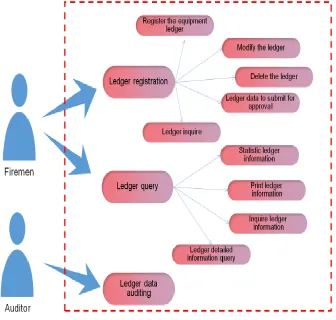
[image:5.612.144.480.338.658.2]Equipment ledger management includes the management of the basic information of the equipment and the information management of the equipment. Account management is to input the basic information of firefighting equipment into the system, and then modify, delete and query it, to set the audit steps of the account information for process audit operations. The function of account management is shown in Figure 2.
Ledger management subdivision account registration and ledger query. Account registration is to input basic information of equipment into the system, and then to modify, query, delete, report data and audit data. Account modification and deletion operations are conducted before the data audit; data has been audited out of date, could not be modified and deleted.
Account inquiry is the operation of inquiring, counting, printing and viewing detailed information of equipment account registration information. Data management is to register and upload equipment records registered and audited in the management of accounts, and add, delete, view, query operations. Data registration and data query function in data management. Data registration is about to add data and upload files to equipment information input system and audit, and modify, delete, query and view the added information. Data inquiry is to inquire the equipment information setting conditions of the input system, and to print and view the inquired information.
Check Maintenance Management
Inspection and maintenance management includes routine inspection and management of equipment and maintenance management of equipment. Daily inspection of equipment is to record the routine inspection plan and the results of routine inspection of equipment to the system, and to modify, delete and query the results of inspection. The daily inspection management is divided into three parts: daily inspection plan setting, daily inspection registration and inspection record query.
Set up business functions such as plan making, modifying plan, deleting plan, generation year plan, plan reporting and plan auditing in daily inspection plan setting. Among them, adult planning must be approved and approved. Daily inspection and registration is to register daily inspection information according to the daily inspection plan set in the plan, set up query, print and delete daily inspection and registration information and other business functions in the daily inspection and registration, as well as data reporting and data audit operations. Such
Check record query setting query, print check result operation, W and check equipment daily check details. Maintenance management of equipment is to input the maintenance plan of equipment into the system, and record the results of maintenance according to the maintenance plan to the system, and report the plan to the system, generate the year plan, modify and delete the equipment.
maintenance data records, print records and view the details of maintenance records and other functions.
Equipment Maintenance Management
Equipment maintenance management is to systematically manage the process of equipment repair, to be repaired, to be repaired, and to register the information of equipment repair, to be repaired, to be repaired into the system, and to modify, query, audit and other operations. In equipment maintenance management, the functions of registration, inquiry, management, inquiry and record inquiry are preliminarily set up. Repair registration is to register and inquire the equipment information which has been registered and checked in the management of account books, and set up the operation of checking, modifying and deleting the equipment. Equipment repair modification, deletion operations must be in the data audit before the data has been audited, will not be able to modify, delete. Such
Query and print operation of equipment registered and audited information. To repair the battalion is to inquire, order, modify, and withdraw the equipment repair business. When receiving the order, the maintenance supervisor confirms the fault information reported for repair and submits the maintenance budget to the supervisor for examination and approval; the refund of the order is that the maintenance supervisor disagrees with the fault information reported for repair, so that the repairman fills in the information again or disagrees with the maintenance. Such
Maintenance registration is equipment maintenance query, registration, data reporting, modification, deletion operation. The maintenance record query is to inquire and print the maintenance registration records that have been audited.
Spare Parts Management
Each department manages procurement, registration and stock query operations for spare parts and fire extinguishing agents. Purchasing registration refers to the purchase registration, data submission, modification, deletion, data audit and inquiry of spare parts and fire extinguishing agents in the warehouse of the user unit. Receiving registration is the operation of receiving and registering spare parts and fire extinguishing agents, submitting data for examination, modification, deletion, inquiry, data examination and printing. Inventory inquiry refers to the inquiry of spare parts and fire extinguishing agents, detailed information view, claim records view, print operation. The use case specification for spares details is shown in Table 3. List 3
Warehouse Management
requisition and return operation to the information when the equipment is purchased but not distributed to the unit. System settings for each vehicle, each equipment bar number and print bar code pasted on the vehicle or equipment tracking equipment. Warehouse registration is the operation of equipment inquiry, warehouse registration, registration, preservation, modification, deletion, bar code printing.
Stock inquiries are querying, statistics and printing operations on equipment inventory records. The leading management is to inquire, register, save and delete the equipment that has been put into storage. The allocation management is to inquire, allocate, register, save and delete the warehouses. It is also necessary to inquire, return, register, save and delete the equipment that is used for the purpose.
Query Statistics
Equipment query statistics set up equipment information query, statistics, printing, equipment information viewing, storage of vehicle information viewing, daily inspection information viewing, maintenance information viewing, maintenance information viewing and other functions. In the query and statistics of spare parts, the functions such as checking the information of spare parts, printing, viewing the information of spare parts and viewing the record of acquisition of spare parts are set up. In the statistics of fire extinguishing agent inquiry, the functions of information inquiry, printing, receiving records and detailed information of fire extinguishing agent are set up. Such
System Management
In system management, some basic information items needed by the system are set up, including unit information, personnel information, business process information, personnel role definition, etc. At the same time, daily vehicle inspection items, equipment daily inspection items, vehicle maintenance items, equipment maintenance items are put into the system management to manage the vehicle category, equipment category. Otherwise, the name of the equipment is set, and other information such as vehicle manufacturer, vehicle type, spare parts storehouse is set. All the permissions are granted to the system administrator to add, modify and delete these settings.
maintenance function, according to this setting for monthly, quarterly, annual maintenance plan setting, and according to the set cycle query equipment maintenance items. Business process management is to add, modify, delete business processes, set up a good workflow for each, other functions of the actual operation in accordance with this process. Personnel role definition is to add, modify, delete the personnel roles of the login system, and set the permissions of the personnel roles, so that the personnel can operate according to this permission after login. Process auditing is the business operation function of equipment information from account registration, data entry, daily inspection, maintenance plan formulation to inspection, maintenance result registration, etc. After setting up the information auditing step, it must be audited. The equipment category setting is to add, modify and delete the equipment category, and set up various equipment categories so as to select the equipment category in other functions of the system. Equipment name settings add, modify, delete equipment names, set up a variety of equipment names, and other functions of the system for equipment name selection. Spare parts warehouse setting is to add, modify, delete the operation of the spare parts warehouse, so as to other functions of the system warehouse selection settings. Such
CONCLUSIONS
REFERENCES
1. Qi, G.Y. and Zeng, S. X. Integration of Management Systems: A Process Based Model [J].
Journal of Northeast Agricultural University, 2005, 12(2): 8-11.
2. Douglas, M.K. and Charlene, R.A. Macro Approach to Relational Database Modeling [J].
Information Systems Education Journal, 2005, 3(35): 29-30.
3. Chiueh, T. Design Implementation and Evaluation of a Repairable Database Management System [J]. 21stInternational Conference on Data Engineering, 2005, 1024-1035.
4. Roy, R. Levels of Reuse in Educational Information Systems [J]. Campus-Wide Information Systems, 2001, 18(3): 21-22.