R E S E A R C H A R T I C L E
Open Access
The effect of kidney function on the urate
lowering effect and safety of increasing
allopurinol above doses based on
creatinine clearance: a post hoc analysis of
a randomized controlled trial
Lisa K. Stamp
1,2*, Peter T. Chapman
2, Murray Barclay
1, Anne Horne
3, Christopher Frampton
1, Paul Tan
3,
Jill Drake
1and Nicola Dalbeth
3Abstract
Background:The use of allopurinol in people with chronic kidney disease (CKD) remains one of the most controversial areas in gout management. The aim of this study was to determine the effect of baseline kidney function on safety and efficacy of allopurinol dose escalation to achieve serum urate (SU) <6 mg/dl.
Methods:We undertook a post hoc analysis of a 24-month allopurinol dose escalation treat-to-target SU
randomized controlled trial, in which 183 people with gout were randomized to continue current dose allopurinol for 12 months and then enter the dose escalation phase or to begin allopurinol dose escalation immediately. Allopurinol was increased monthly until SU was <6 mg/dl. The effect of baseline kidney function on urate lowering and adverse effects was investigated.
Results:Irrespective of randomization, there was no difference in the percentage of those with creatinine clearance (CrCL) <30 ml/min who achieved SU <6 mg/dl at the final visit compared to those with CrCL≥30 to <60 ml/min and those with CrCL≥60 ml/min, with percentages of 64.3% vs. 76.4% vs. 75.0%, respectively (p= 0.65). The mean allopurinol dose at month 24 was significantly lower in those with CrCL <30 ml/min as compared to those with CrCL≥30 to <60 ml/min or CrCL≥60 ml/min (mean (SD) 250 (43), 365 (22), and 460 (19) mg/day, respectively (p< 0.001)). Adverse events were similar among groups.
Conclusions:Allopurinol is effective at lowering urate even though and accepting that there were small numbers of participants with CrCL <30 ml/min, these data indicate that allopurinol dose escalation to target SU is safe in people with severe CKD. The dose required to achieve target urate is higher in those with better kidney function. Trial registration:Australian and New Zealand Clinical trials Registry, ACTRN12611000845932. Registered on 10 August 2011.
Keywords:Allopurinol, Chronic kidney disease, Gout, Serum urate
* Correspondence:[email protected]
1
Department of Medicine, University of Otago, Christchurch, P. O. Box 4345, Christchurch 8140, New Zealand
2Department of Rheumatology, Immunology and Allergy, Christchurch Hospital, Private Bag 4710, Christchurch 8140, New Zealand Full list of author information is available at the end of the article
Background
The use of allopurinol in people with chronic kidney dis-ease (CKD) remains one of the most controversial areas in gout management. While recommendations from the American College of Rheumatology (ACR) [1] and Euro-pean League Against Rheumatism (EULAR) [2] both ad-vocate allopurinol as a first-line urate lowering therapy (ULT), for dosing guidance the ACR advocates a gradual dose escalation even in those with CKD [1], while EULAR recommends dose restriction based on creatin-ine clearance (CrCL) [2]. This discrepancy is due to con-cerns over increased risk of adverse effects, particularly allopurinol hypersensitivity syndrome (AHS) and limited data on the use of allopurinol in CKD.
Since the initial allopurinol dosing guidelines by Hande et al., based on an association between allopur-inol dose, oxypurallopur-inol and AHS, were published [3], a number of other risk factors for AHS have been identi-fied [4]. The Hande dosing strategy does not differenti-ate between starting dose, which has been associdifferenti-ated with AHS [5], and maintenance dose (i.e. dose required to achieve target serum urate (SU)). Once AHS occurs, people with CKD have higher mortality [6].
Clinical trials of ULT have excluded those with signifi-cant CKD and restricted the allopurinol dose to≤ 300 mg daily even in those with normal kidney function [7–9]. We have previously reported results from a ran-domized controlled trial of allopurinol dose escalation to achieve target urate in which 52% of the 183 participants had CrCL <60 ml/min, suggesting that such an approach is effective and safe [10]. Herein we undertook a post hoc analysis to determine the effect of baseline kidney function on the safety and efficacy of the allopurinol dose escalation strategy.
Methods Study design
A 24-month open, randomized, controlled, parallel-group, comparative clinical trial was undertaken (ACTRN12611000845932). Ethical approval was ob-tained from the Multi-Regional Ethics Committee, New Zealand. Written informed consent was obtained from each participant. Full methods have been reported previ-ously [10, 11]. In brief, 183 people with gout as defined by the American Rheumatism Association 1977 prelim-inary classification criteria for gout [12], receiving at least the CrCl based dose of allopurinol for ≥1 month and with SU≥6 mg/dl were recruited. People with a his-tory of intolerance to allopurinol and those receiving azathioprine were excluded. Chronic kidney disease was not an exclusion criterion. Participants were randomized to continue current dose allopurinol for 12 months and then enter the dose escalation phase (control/DE) or to begin allopurinol dose escalation immediately (DE/DE).
Allopurinol was increased monthly until SU was <6 mg/ dl; in those with CrCL ≤60 ml/min allopurinol was in-creased by 50 mg increments and in those with CrCL >60 ml/min it was increased by 100 mg. Participants were not stratified by renal function at randomization. For the purposes of this post hoc analysis, participants were grouped according to kidney function at baseline as having (1) none/mild impairment, CrCL ≥60 ml/min (CKD stage 1 and 2), (2) moderate impairment, CrCL
≥30 to <60 ml/min (CKD stage 3) and (3) severe impair-ment, CrCL <30 ml/min (CKD stage 4 and 5).
Adverse and serious advent event reporting
Treatment-emergent adverse events (AE) were defined as any AE occurring after entry into the study until the end of month 24. Worsening laboratory-defined AEs were those where there was an increase in AE grade from baseline between month 12 and month 24, using the Common Terminology Criteria for Adverse Events (CTCAE v4.0).
Study outcomes
The primary efficacy outcome was reduction in SU at the final visit (month 24 or the final visit for those de-ceased or lost to follow up). Secondary efficacy out-comes included (1) the proportion of participants reaching target SU levels from baseline to months 12 and 24 and from months 12 to 24, (2) the percentage re-duction in SU from baseline to months 12 and 24 and from months 12 to 24 and (3) the dose of allopurinol re-quired to achieve SU <6 mg/dl. The primary safety out-come was serious adverse events (SAEs) and treatment-emergent or worsening AEs related to liver or kidney function.
Statistical analysis
Baseline demographics and clinical features were sum-marized using standard descriptive statistics including mean, standard deviation (SD), range, frequency and percent as appropriate.
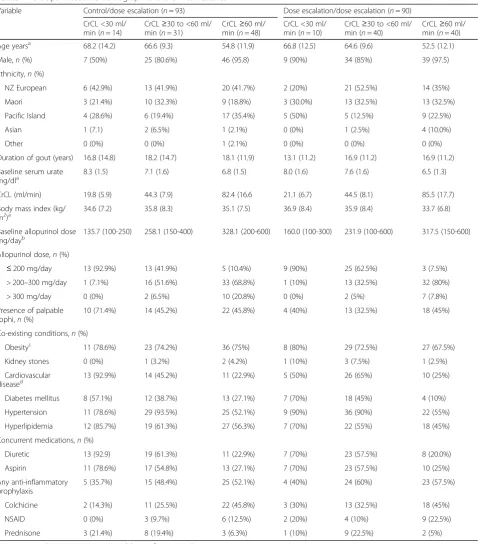
Table 1Participant baseline demographics and clinical features
Variable Control/dose escalation (n= 93) Dose escalation/dose escalation (n= 90)
CrCL <30 ml/ min (n= 14)
CrCL≥30 to <60 ml/ min (n= 31)
CrCL≥60 ml/ min (n= 48)
CrCL <30 ml/ min (n= 10)
CrCL≥30 to <60 ml/ min (n= 40)
CrCL≥60 ml/ min (n= 40)
Age yearsa 68.2 (14.2) 66.6 (9.3) 54.8 (11.9) 66.8 (12.5) 64.6 (9.6) 52.5 (12.1)
Male,n(%) 7 (50%) 25 (80.6%) 46 (95.8) 9 (90%) 34 (85%) 39 (97.5)
Ethnicity,n(%)
NZ European 6 (42.9%) 13 (41.9%) 20 (41.7%) 2 (20%) 21 (52.5%) 14 (35%)
Maori 3 (21.4%) 10 (32.3%) 9 (18.8%) 3 (30.0%) 13 (32.5%) 13 (32.5%)
Pacific Island 4 (28.6%) 6 (19.4%) 17 (35.4%) 5 (50%) 5 (12.5%) 9 (22.5%)
Asian 1 (7.1) 2 (6.5%) 1 (2.1%) 0 (0%) 1 (2.5%) 4 (10.0%)
Other 0 (0%) 0 (0%) 1 (2.1%) 0 (0%) 0 (0%) 0 (0%)
Duration of gout (years) 16.8 (14.8) 18.2 (14.7) 18.1 (11.9) 13.1 (11.2) 16.9 (11.2) 16.9 (11.2)
Baseline serum urate
mg/dla 8.3 (1.5) 7.1 (1.6) 6.8 (1.5) 8.0 (1.6) 7.6 (1.6) 6.5 (1.3)
CrCL (ml/min) 19.8 (5.9) 44.3 (7.9) 82.4 (16.6 21.1 (6.7) 44.5 (8.1) 85.5 (17.7)
Body mass index (kg/ m2)a
34.6 (7.2) 35.8 (8.3) 35.1 (7.5) 36.9 (8.4) 35.9 (8.4) 33.7 (6.8)
Baseline allopurinol dose
mg/dayb 135.7 (100-250) 258.1 (150-400) 328.1 (200-600) 160.0 (100-300) 231.9 (100-600) 317.5 (150-600)
Allopurinol dose,n(%)
≤200 mg/day 13 (92.9%) 13 (41.9%) 5 (10.4%) 9 (90%) 25 (62.5%) 3 (7.5%)
> 200–300 mg/day 1 (7.1%) 16 (51.6%) 33 (68.8%) 1 (10%) 13 (32.5%) 32 (80%)
> 300 mg/day 0 (0%) 2 (6.5%) 10 (20.8%) 0 (0%) 2 (5%) 7 (7.8%)
Presence of palpable tophi,n(%)
10 (71.4%) 14 (45.2%) 22 (45.8%) 4 (40%) 13 (32.5%) 18 (45%)
Co-existing conditions,n(%)
Obesityc 11 (78.6%) 23 (74.2%) 36 (75%) 8 (80%) 29 (72.5%) 27 (67.5%)
Kidney stones 0 (0%) 1 (3.2%) 2 (4.2%) 1 (10%) 3 (7.5%) 1 (2.5%)
Cardiovascular
diseased 13 (92.9%) 14 (45.2%) 11 (22.9%) 5 (50%) 26 (65%) 10 (25%)
Diabetes mellitus 8 (57.1%) 12 (38.7%) 13 (27.1%) 7 (70%) 18 (45%) 4 (10%)
Hypertension 11 (78.6%) 29 (93.5%) 25 (52.1%) 9 (90%) 36 (90%) 22 (55%)
Hyperlipidemia 12 (85.7%) 19 (61.3%) 27 (56.3%) 7 (70%) 22 (55%) 18 (45%)
Concurrent medications,n(%)
Diuretic 13 (92.9) 19 (61.3%) 11 (22.9%) 7 (70%) 23 (57.5%) 8 (20.0%)
Aspirin 11 (78.6%) 17 (54.8%) 13 (27.1%) 7 (70%) 23 (57.5%) 10 (25%)
Any anti-inflammatory prophylaxis
5 (35.7%) 15 (48.4%) 25 (52.1%) 4 (40%) 24 (60%) 23 (57.5%)
Colchicine 2 (14.3%) 11 (25.5%) 22 (45.8%) 3 (30%) 13 (32.5%) 18 (45%)
NSAID 0 (0%) 3 (9.7%) 6 (12.5%) 2 (20%) 4 (10%) 9 (22.5%)
Prednisone 3 (21.4%) 8 (19.4%) 3 (6.3%) 1 (10%) 9 (22.5%) 2 (5%)
CrCLcreatinine clearance,NSAIDnon steroidal anti-inflammatory drug a
Mean (SD) b
Mean (range) c
Obesity defined as body mass index≥30 kg/m2 d
Results Demographics
There were 183 participants who entered the study; 93 in the control/DE group (n= 14 with CrCL <30 ml/min;
n= 31 with CrCL≥30 to <60 ml/min;n= 48 with CrCL
≥60 ml/min 48) and 90 in the DE/DE group (n= 10 with CrCL <30 ml/min;n= 40 with CrCL≥30 to <60 ml/min;
n= 40 with CrCL ≥60 ml/min). There were 143 partici-pants who completed the month-12 visit; 73 in the con-trol/DE group (n= 8 with CrCL <30 ml/min;n= 24 with CrCL ≥30 to <60 ml/min; n= 41 with CrCL ≥60 ml/
min) and 70 in the DE/DE group (n= 7 with CrCL <30 ml/min; n= 35 with CrCL ≥30 to <60 ml/min; n= 28 with CrCL≥60 ml/min). There were 137 participants who completed the month-24 visit; 68 in the control/DE group (n= 7 with CrCL <30 ml/min; n= 22 with CrCL
≥30 to <60 ml/min; n= 39 with CrCL ≥60 ml/min) (73.1%) and 69 in the DE/DE group (n= 7 with CrCL <30 ml/min; n= 33 with CrCL ≥30 to <60 ml/min; n= 29 with CrCL ≥60 ml/min). Demographics for each of the randomized groups according to baseline kidney function group are outlined in Table 1.
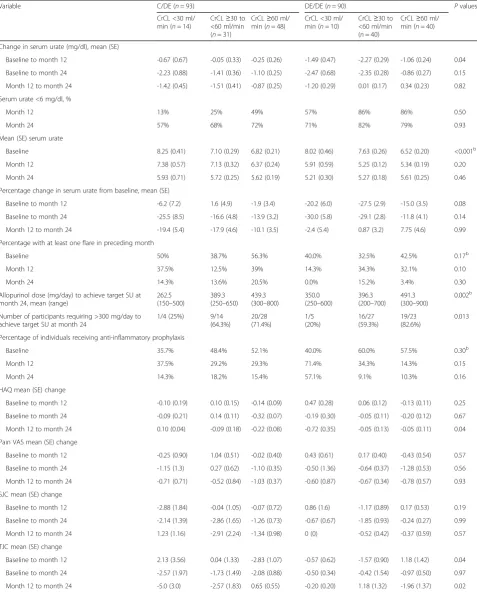
[image:4.595.62.538.235.693.2]Table 2Primary and secondary efficacy endpoints
Variable C/DE (n= 93) DE/DE (n= 90) Pvaluesa
CrCL <30 ml/ min (n= 14)
CrCL≥30 to <60 ml/min (n= 31)
CrCL≥60 ml/ min (n= 48)
CrCL <30 ml/ min (n= 10)
CrCL≥30 to <60 ml/min (n= 40)
CrCL≥60 ml/ min (n= 40)
Change in serum urate (mg/dl), mean (SE)
Baseline to month 12 -0.67 (0.67) -0.05 (0.33) -0.25 (0.26) -1.49 (0.47) -2.27 (0.29) -1.06 (0.24) 0.04
Baseline to month 24 -2.23 (0.88) -1.41 (0.36) -1.10 (0.25) -2.47 (0.68) -2.35 (0.28) -0.86 (0.27) 0.15
Month 12 to month 24 -1.42 (0.45) -1.51 (0.41) -0.87 (0.25) -1.20 (0.29) 0.01 (0.17) 0.34 (0.23) 0.82
Serum urate <6 mg/dl, %
Month 12 13% 25% 49% 57% 86% 86% 0.50
Month 24 57% 68% 72% 71% 82% 79% 0.93
Mean (SE) serum urate
Baseline 8.25 (0.41) 7.10 (0.29) 6.82 (0.21) 8.02 (0.46) 7.63 (0.26) 6.52 (0.20) <0.001b
Month 12 7.38 (0.57) 7.13 (0.32) 6.37 (0.24) 5.91 (0.59) 5.25 (0.12) 5.34 (0.19) 0.20
Month 24 5.93 (0.71) 5.72 (0.25) 5.62 (0.19) 5.21 (0.30) 5.27 (0.18) 5.61 (0.25) 0.46
Percentage change in serum urate from baseline, mean (SE)
Baseline to month 12 -6.2 (7.2) 1.6 (4.9) -1.9 (3.4) -20.2 (6.0) -27.5 (2.9) -15.0 (3.5) 0.08
Baseline to month 24 -25.5 (8.5) -16.6 (4.8) -13.9 (3.2) -30.0 (5.8) -29.1 (2.8) -11.8 (4.1) 0.14
Month 12 to month 24 -19.4 (5.4) -17.9 (4.6) -10.1 (3.5) -2.4 (5.4) 0.87 (3.2) 7.75 (4.6) 0.99
Percentage with at least one flare in preceding month
Baseline 50% 38.7% 56.3% 40.0% 32.5% 42.5% 0.17b
Month 12 37.5% 12.5% 39% 14.3% 34.3% 32.1% 0.10
Month 24 14.3% 13.6% 20.5% 0.0% 15.2% 3.4% 0.30
Allopurinol dose (mg/day) to achieve target SU at month 24, mean (range)
262.5 (150–500)
389.3 (250–650)
439.3 (300–800)
350.0 (250–600)
396.3 (200–700)
491.3 (300–900)
0.002b
Number of participants requiring >300 mg/day to achieve target SU at month 24
1/4 (25%) 9/14
(64.3%)
20/28 (71.4%)
1/5 (20%)
16/27 (59.3%)
19/23 (82.6%)
0.013
Percentage of individuals receiving anti-inflammatory prophylaxis
Baseline 35.7% 48.4% 52.1% 40.0% 60.0% 57.5% 0.30b
Month 12 37.5% 29.2% 29.3% 71.4% 34.3% 14.3% 0.15
Month 24 14.3% 18.2% 15.4% 57.1% 9.1% 10.3% 0.16
HAQ mean (SE) change
Baseline to month 12 -0.10 (0.19) 0.10 (0.15) -0.14 (0.09) 0.47 (0.28) 0.06 (0.12) -0.13 (0.11) 0.25
Baseline to month 24 -0.09 (0.21) 0.14 (0.11) -0.32 (0.07) -0.19 (0.30) -0.05 (0.11) -0.20 (0.12) 0.67
Month 12 to month 24 0.10 (0.04) -0.09 (0.18) -0.22 (0.08) -0.72 (0.35) -0.05 (0.13) -0.05 (0.11) 0.04
Pain VAS mean (SE) change
Baseline to month 12 -0.25 (0.90) 1.04 (0.51) -0.02 (0.40) 0.43 (0.61) 0.17 (0.40) -0.43 (0.54) 0.57
Baseline to month 24 -1.15 (1.3) 0.27 (0.62) -1.10 (0.35) -0.50 (1.36) -0.64 (0.37) -1.28 (0.53) 0.56
Month 12 to month 24 -0.71 (0.71) -0.52 (0.84) -1.03 (0.37) -0.60 (0.87) -0.67 (0.34) -0.78 (0.57) 0.93
SJC mean (SE) change
Baseline to month 12 -2.88 (1.84) -0.04 (1.05) -0.07 (0.72) 0.86 (1.6) -1.17 (0.89) 0.17 (0.53) 0.19
Baseline to month 24 -2.14 (1.39) -2.86 (1.65) -1.26 (0.73) -0.67 (0.67) -1.85 (0.93) -0.24 (0.27) 0.99
Month 12 to month 24 1.23 (1.16) -2.91 (2.24) -1.34 (0.98) 0 (0) -0.52 (0.42) -0.37 (0.59) 0.57
TJC mean (SE) change
Baseline to month 12 2.13 (3.56) 0.04 (1.33) -2.83 (1.07) -0.57 (0.62) -1.57 (0.90) 1.18 (1.42) 0.04
Baseline to month 24 -2.57 (1.97) -1.73 (1.49) -2.08 (0.88) -0.50 (0.34) -0.42 (1.54) -0.97 (0.50) 0.97
Month 12 to month 24 -5.0 (3.0) -2.57 (1.83) 0.65 (0.55) -0.20 (0.20) 1.18 (1.32) -1.96 (1.37) 0.02
C/DEcontrol/dose escalation phasegroup,DDimmediate dose escalation group,CrCLcreatinine clearance,SUserum urate,HAQhealth assessment questionnaire,VASvisual analogue scale,SJCswollen joint count,TJCtender joint count
Serum urate
In both the control/DE and DE/DE groups the mean base-line SU was significantly higher in those with CrCL <30 ml/ min compared to those with CrCL≥30 to <60 ml/min and
≥60 ml/min (Fig. 1a). Mean SU was below 6 mg/dl in all kidney function groups by month 24 (Fig. 1a). The percent-age with SU <6 mg/dl at the final visit by randomization and by kidney function groups is shown in Fig. 1b. Irre-spective of randomization, there was no significant differ-ence in the percentage of those with CrCL <30 ml/min who achieved SU <6 mg/dl at the final visit compared to those with CrCL≥30 to <60 ml/min and≥60 ml/min, with per-centages of 64.3% vs. 76.4% vs. 75.0%, respectively (p= 0.65). The mean (standard error (SE)) change in SU from baseline to month 24 irrespective of randomization, was sig-nificantly higher in those with CrCL <30mls/min; mean change -2.23 (0.88) mg/dl in those with CrCL <30mls/min, -1.98 (0.23) mg/dl in those with CrCL≥30 to <60 ml/min and -1.00 (0.79) mg/dl in those with CrCL≥60 ml/min (p= 0.002). The mean change in SU by kidney function and randomization group is shown in Table 2.
The mean percentage change in SU by randomization and by kidney function groups is shown in Fig. 1c. Irre-spective of randomization, the mean (SE) percentage change in SU from baseline to final visit in those with CrCL <30 ml/min was similar to those with CrCL≥30 to <60 ml/min and significantly higher than those with CrCL
≥60 ml/min (-27.7% (5.0%) vs. -24.1% (2.7%) vs. -13.0% (2.5%) (p= 0.003)).
Allopurinol dose
Mean allopurinol dose during the study period by randomization and by kidney function groups is shown in Fig. 1d. Irrespective of randomization, mean (SE) allopurinol dose at baseline was lower in those with lower CrCL; 146 (18) mg/day, 243 (10) mg/day and 323 (9) mg/day (p< 0.001) in those with CrCL <30mls/min, ≥30 to <60 ml/min and ≥60 ml/min, re-spectively. Irrespective of randomization, the mean (SE) allopurinol dose at month 24 was significantly lower in those with CrCL <30 ml/min as compared to those with CrCL ≥30 to <60 ml/min or CrCL
≥60 ml/min (250 (43) mg/day, 365 (22) mg/day and 460 (19) mg/day, respectively (p< 0.001)). Allopurinol dose in those with SU <6 mg/dl at month 24 is shown in Fig. 2.
The allopurinol dose required to achieve target SU was associated with baseline kidney function (Table 2). Of those with CrCL <30 ml/min (n = 14), only one participant in the control/DE and one in the DE/DE group required >300 mg/day to achieve target SU. In those with higher CrCL, the number of participants requiring >300 mg/day allopurinol to achieve target SU was higher (Table 2). Irre-spective of randomization, the mean (range) allopurinol
dose required to achieve target SU was higher in those with better kidney function (311.1 mg/day (150–600) vs. 393.9 mg/day (200–700) vs. 462.8 mg/day (300–900)).
Adverse events
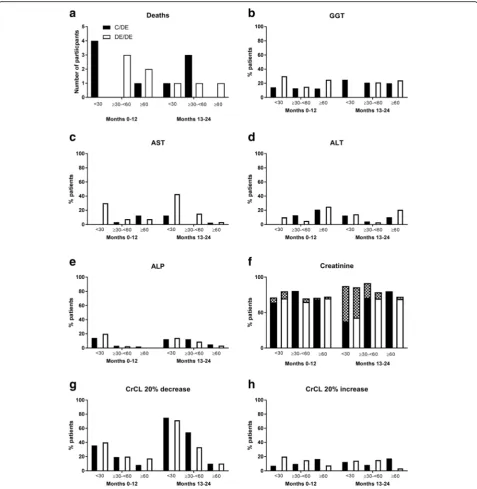
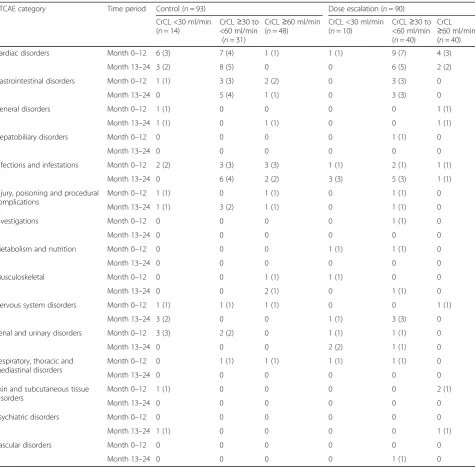
There were 17 deaths during the study period, details of these have been published previously [10, 11]. During the RCT phase of the study there were five deaths in the con-trol group of which four occurred in those with CrCL <30mls/min. In comparison none of the five deaths in the dose escalation groups had a CrCL <30 ml/min (Fig. 3). During the open extension phase of the study there were four deaths in the control/DE group, of which one oc-curred in those with CrCL <30mls/min. In comparison, there were three deaths in the DE/DE group, of which one occurred in those with CrCL <30mls/min. Of note there were high rates of co-morbidities and in particular cardio-vascular disease at baseline in those with CrCL <30 ml/ min (Table 1). The number of SAEs according to kidney function group and randomization group are shown in Table 3. The type and number of SAEs was as expected and was similar between groups. The percentage of partic-ipants with treatment emergent or worsening gamma glu-tamyl transferase (GGT), alanine transaminase (ALT), aspartate aminotransferase (AST), alkaline phosphatase (ALP), creatinine and CrCL by kidney function groups are shown in Fig. 3.
Discussion
Long-term urate lowering in the setting of CKD is chal-lenging and controversial. Although allopurinol is consid-ered first-line ULT, there are limited data in those with CKD. Herein, we showed that use of allopurinol is safe and effective even in those with CKD.
There are few treatment options for urate lowering in people with stage 4 and 5 CKD and gout. There are lim-ited data on the use of febuxostat in those with CrCL <30 ml/min [13]; uricosuric agents are either contraindi-cated or not effective in those with CrCL <30mls/min, and while pegloticase needs no dose adjustment in CKD, it is not widely available [14]. Thus it is important that
[image:6.595.306.540.589.703.2]clinicians can safely and effectively use allopurinol, given its widespread availability and low cost.
In the current study, similar proportions of participants in each kidney function group achieved target urate, sug-gesting the strategy is effective even in those with more se-vere CKD. The dose required to achieve target SU in
those with CrCL <30 ml/min was≤300 mg/day in the ma-jority of participants. Doses >300 mg/day are only infre-quently used in clinical practice even in those with normal kidney function, frequently due to physician inertia or concern about dose escalation [2, 15]. The data presented herein suggest that in people with CrCL <30 ml/min,
Fig. 3Deaths and treatment-emergent or worsening laboratory adverse events (AEs): number of individuals with at least one AE over the 24-month study period by kidney function groups in the dose escalation phase (control/DE) and immediate dose escalation (DE/DE) groups.a
[image:7.595.59.537.87.577.2]allopurinol doses >300 mg/day are rarely needed to achieve target SU.
The numbers and types of SAEs were similar in both groups but as expected the number of cardiac events was higher in those with CrCL <30 ml/min even during the first 12 months when dose escalation was not under-taken [16]. While a number of abnormalities in kidney function were noted, they were similar between random-ized groups over the study period.
There are several limitations to this study. There were only small numbers of participants with CrCL <30 ml/ min and the study was not powered to detect the rare
AHS. Further adequately powered studies of people with stage 4/5 CKD may be required to clarify the impact on clinical outcomes such as flares, activity limitation and health-related quality of life, and to confirm the safety of this approach. However, studies of sufficient size to detect the rare AHS are unlikely to be undertaken given the large numbers of participants that would be required.
Conclusion
[image:8.595.62.538.97.565.2]Allopurinol is effective at lowering urate even in those with severe CKD. The dose required to achieve target SU is higher in those with better kidney function. Accepting Table 3Serious adverse events during months 0–12 and months13–24 by kidney function group
CTCAE category Time period Control (n= 93) Dose escalation (n= 90)
CrCL <30 ml/min (n= 14)
CrCL≥30 to <60 ml/min
(n= 31)
CrCL≥60 ml/min (n= 48)
CrCL <30 ml/min (n= 10)
CrCL≥30 to <60 ml/min (n= 40)
CrCL ≥60 ml/min (n= 40)
Cardiac disorders Month 0–12 6 (3) 7 (4) 1 (1) 1 (1) 9 (7) 4 (3)
Month 13–24 3 (2) 8 (5) 0 0 6 (5) 2 (2)
Gastrointestinal disorders Month 0–12 1 (1) 3 (3) 2 (2) 0 3 (3) 0
Month 13–24 0 5 (4) 1 (1) 0 3 (3) 0
General disorders Month 0–12 1 (1) 0 0 0 0 1 (1)
Month 13–24 1 (1) 0 1 (1) 0 0 1 (1)
Hepatobiliary disorders Month 0–12 0 0 0 0 1 (1) 0
Month 13–24 0 0 0 0 0 0
Infections and infestations Month 0–12 2 (2) 3 (3) 3 (3) 1 (1) 2 (1) 1 (1)
Month 13–24 0 6 (4) 2 (2) 3 (3) 5 (3) 1 (1)
Injury, poisoning and procedural complications
Month 0–12 1 (1) 0 1 (1) 0 1 (1) 0
Month 13–24 1 (1) 3 (2) 1 (1) 0 1 (1) 0
Investigations Month 0–12 0 0 0 0 1 (1) 0
Month 13–24 0 0 0 0 0 0
Metabolism and nutrition Month 0–12 0 0 0 1 (1) 1 (1) 0
Month 13–24 0 0 0 0 0 0
Musculoskeletal Month 0–12 0 0 1 (1) 1 (1) 0 0
Month 13–24 0 0 2 (1) 0 1 (1) 0
Nervous system disorders Month 0–12 1 (1) 1 (1) 1 (1) 0 0 1 (1)
Month 13–24 3 (2) 0 0 1 (1) 3 (3) 0
Renal and urinary disorders Month 0–12 3 (3) 2 (2) 0 1 (1) 1 (1) 0
Month 13–24 0 0 0 2 (2) 1 (1) 0
Respiratory, thoracic and mediastinal disorders
Month 0–12 0 1 (1) 1 (1) 1 (1) 1 (1) 0
Month 13–24 0 0 0 0 0 0
Skin and subcutaneous tissue disorders
Month 0–12 1 (1) 0 0 0 0 2 (1)
Month 13–24 0 0 0 0 0 0
Psychiatric disorders Month 0–12 0 0 0 0 0 0
Month 13–24 1 (1) 0 0 0 0 1 (1)
Vascular disorders Month 0–12 0 0 0 0 0 0
Month 13–24 0 0 0 0 1 (1) 0
that there were small numbers of participants with CrCL <30 ml/min, these data indicate that allopurinol dose es-calation to target SU is safe in people with CKD.
Abbreviations
ACR:American College of Rheumatology; AE: Adverse event; AHS: Allopurinol hypersensitivity syndrome; ALP: Alkaline phosphatase; ALT: Alanine transaminase; ANOVA: Analysis of variance; AST: Aspartate aminotransferase; CKD: Chronic kidney disease; control/DE: Dose escalation phase group; CrCL: Creatinine clearance; CTCAE: Common Terminology Criteria for Adverse Events; DE/DE: Immediate dose escalation group; EULAR: European League Against Rheumatism; GGT: Gamma glutamyl transferase; HAQ: Health assessment questionnaire; N: Number; NSAID: Non steroidal anti-inflammatory drug; SAE: Serious adverse event; SD: Standard deviation; SE: Standard error; SJC: Swollen joint count; SU: Serum urate; TJC: Tender joint count; ULT: Urate lowering therapy; VAS: Visual analogue scale
Acknowledgements
We are grateful to the Health Research Council of New Zealand Independent Data Safety Monitoring Committee for monitoring the study.
Funding
This study was funded by the Health Research Council of New Zealand.
Availability of data and materials
The datasets used and/or analyzed during the current study are available from the corresponding author on reasonable request.
Authors’contributions
LS: literature search, study design, data collection, data analysis, data interpretation, manuscript preparation. PC: study design, data collection, data analysis, data interpretation, manuscript preparation. MB: study design, data analysis, data interpretation, manuscript preparation. AH: data collection, data analysis, data interpretation, manuscript preparation. CF: study design, data analysis, data interpretation, manuscript preparation. PT: data collection, data analysis, data interpretation, manuscript preparation. JD: study design, data collection, data analysis, data interpretation, manuscript preparation. ND: literature search, study design, data collection, data analysis, data interpretation, manuscript preparation. All authors read and approved the final manuscript.
Ethics approval and consent to participate
Ethical approval was obtained from the Multi-Regional Ethics Committee, New Zealand. Written informed consent was obtained from each participant.
Consent for publication
Not applicable.
Competing interests
Prof. Stamp reports grants from Health Research Council of New Zealand, outside the conduct of the study; grants from Ardea
Biosciences, grants from Health Research Council of the submitted work; Dr. Chapman has nothing to disclose; Prof. Barclay has nothing to disclose; Dr Horne reports grants from Health Research Council of New Zealand, during the conduct of the study; Prof. Frampton has nothing to disclose; Mrs. Drake has nothing to disclose; Mr Tan has nothing to disclose; Prof. Dalbeth reports grants from Health Research Council of New Zealand, during the conduct of the study, grants from Health Research Council of New Zealand, grants and personal fees from AstraZeneca, grants and personal fees from Ardea Biosciences, personal fees from Takeda, personal fees from Teijin, personal fees from Menarini, grants from Fonterra, personal fees from Pfizer, personal fees from Crealta and personal fees from Cymabay, outside the submitted work.
Publisher’s Note
Springer Nature remains neutral with regard to jurisdictional claims in published maps and institutional affiliations.
Author details
1Department of Medicine, University of Otago, Christchurch, P. O. Box 4345, Christchurch 8140, New Zealand.2Department of Rheumatology, Immunology and Allergy, Christchurch Hospital, Private Bag 4710, Christchurch 8140, New Zealand.3Department of Medicine, University of Auckland, Private Bag 92019, Auckland, New Zealand.
Received: 17 August 2017 Accepted: 1 December 2017
References
1. Khanna D, Fitzgerald J, Khanna P, Sangmee B, Singh M, Neogi T, Pillinger M, Merill J, Lee S, Prakash S, et al. 2012 American College of Rheumatology guidelines for the management of gout. Part 1: Systematic
nonpharmacologic and pharmacologic therapeutic approaches to hyperuricaemia. Arthritis Care Res. 2012;64(10):1431–46.
2. Richette P, Doherty M, Pascual E, Barskova V, Becce F, Castaneda-Sanabria J, Coyfish M, Guillo S, Janesen T, Janssens H, et al. 2016 updated EULAR evidence-based recommendations for the management of gout. Ann Rheum Dis. 2017;76(1):29–42.
3. Hande K, Noone R, Stone W. Severe allopurinol toxicity. Description and guidelines for prevention in patients with renal insufficiency. Am J Med. 1984;76:47–56.
4. Stamp L, Day R, Yun J. Allopurinol hypersensitivity: investigating the cause and minimizing the risk. Nat Rev Rheum. 2016;12(4):235–42.
5. Stamp L, Taylor W, Jones P, Dockerty J, Drake J, Frampton C, Dalbeth N. Starting dose, but not maximum maintenance dose, is a risk factor for allopurinol hypersensitivity syndrome: a proposed safe starting dose of allopurinol. Arthritis Rheum. 2012;64(8):2529–36.
6. Chung W-H, Chang W-C, Stocker S, Juo C-G, Graham G, Lee M-H, Williams KM, Tian YC, Juan KC, Jan Wu YJ, Yang C-H, et al. Insights into the poor prognosis of allopurinol-induced severe cutaneous adverse reactions: the impact of renal insufficiency, high plasma levels of oxypurinol and granulysin. Ann Rheum Dis. 2015;74(12):2157–64.
7. Becker M, Schumacher HR, Wortmann R, MacDonald P, Eustace D, Palo W, Streit J, Joseph-Ridge N. Febuxostat compared with allopurinol in patients with hyperuricaemia and gout. N Engl J Med. 2005;353:2450–61. 8. Sundy J, Baraf H, Yood R, Edwards N, Gutierrez-Urena S, Treadwell E,
Vázquez-Mellado J, White W, Lipsky P, Horowitz Z, et al. Efficacy and tolerability of pegloticase for the treatment of chronic gout in patients refractory to conventional treatment: two randomized controlled trials. JAMA. 2011;306(7):711–20.
9. Saag K, Fitz-Patrick D, Kopicko J, Fung M, Bhakta N, Adler S, Storgard C, Baumgartner S, Becker M. Lesinurad combined with allopurinol: randomized, double-blind, placebo-controlled study in gout subjects with inadequate response to standard of care allopurinol (a US-based study). Arthritis Rheum. 2017;69(1):203–12.
10. Stamp L, Chapman P, Barclay M, Horne A, Frampton C, Tan P, Drake J, Dalbeth N. A randomised controlled trial of the efficacy and safety of allopurinol dose escalation to achieve target serum urate in people with gout. Ann Rheum Dis. 2017;76:1522–8.
11. Stamp L, Chapman P, Barclay M, Horne A, Frampton C, Tan P, Drake J, Dalbeth N. Allopurinol dose escalation to achieve serum urate below 6 mg/ dl: an open label extension study. Ann Rheum Dis. 2017;76(12):2065–70. 12. Wallace S, Robinson H, Masi A, Decker J, McCarty D, Yu T. Preliminary criteria
for the classification of the acute arthritis of primary gout. Arthritis Rheum. 1977;20(3):895–900.
13. Saag K, Whelton A, Becker M, MacDonald P, Hunt B, Gunawardhana L. Impact of febuxostat on renal function in gout subjects with moderate-to-severe renal impairment. Arthritis Rheum. 2016;68(8):2035–43.
14. Vargas-Santos AB, Neogi T. Management of gout and hyperuricaemia in CKD. Am J Kidney Dis. 2017. https://doi.org/10.1053/j.ajkd.2017.01.055. 15. Becker M, Fitz-Patrick D, Choi H, Dalbeth N, Storgarde C, Cravetsf M,
Baumgartner S. An open-label, 6-month study of allopurinol safety in gout: the LASSO study. Semin Arthritis Rheum. 2015;2015(45):174–83.