Georgia State University
ScholarWorks @ Georgia State University
Nutrition Theses Department of Nutrition
Summer 7-11-2016
The Effects Of HIV Disease And Lifestyle Factors
On Cellular Aging In Trangender Women
scott s. sohn
Georgia State University
Follow this and additional works at:https://scholarworks.gsu.edu/nutrition_theses
This Thesis is brought to you for free and open access by the Department of Nutrition at ScholarWorks @ Georgia State University. It has been accepted for inclusion in Nutrition Theses by an authorized administrator of ScholarWorks @ Georgia State University. For more information, please contact [email protected].
Recommended Citation
sohn, scott s., "The Effects Of HIV Disease And Lifestyle Factors On Cellular Aging In Trangender Women." Thesis, Georgia State University, 2016.
AUTHOR'S STATEMENT
Inpreserfring thb thesb asapartial
ffillmerfr
of the requirernentsbr
the advanced degree from Georgia State University, I agree that ttrc library of Georgia State University shall rnake it avaihble for inspectbn and circuhtion in accordance with its reguhtbns goveming rsterials ofthb type. I agreetht
permissbn to quote, to copy fonr, ortopublish this tlresis rnay be grafied by tIrc professor under urhose directbn it was ranitten,
by ttre Byrdirre F. Lewis School ofNrnsing
ad
Heanh Professions director of graduatestudbs ard researcll or by nrc. Such quoting copying or prfillshing nust be sole$ for
schlarly puposes ard \ rill not involve potential frrancial gain It is urderstood that any
NOTICE TO BORROWERS
All theses deposited in the Georgia State University library must be used in accordance with the stipulations prescribed by the author in the preceding statement. The author of this thesis is:
Scott Stephen Sohn 1113 Forest Heights Road Stone Mountain, GA 30083
The director of this thesis is:
Anita M. Nucci, PhD, RD, LD Associate Professor Department of Nutrition
Byrdine F. Lewis School of Nursing and Health Professions Georgia State University
VITA
Scott Stephen Sohn
ADDRESS: 1113 Forest Heights Road
Stone Mountain, GA 30083
EDUCATION: M.S. 2016 Georgia State University
Health Sciences
B.A. 1993 Florida Atlantic University Business
PROFESSIONAL EXPERIENCE:
Dining Service Associate 2014-present
Emory University Hospital
Sales Manager 2008-2009
Energy Marketing Service
Board of Directors 1997-2008
Sohn Linen Service
Service Manager 2003-2008
Sohn Linen Service
Finance Manager 2000-2003
Sohn Linen Service
Production Manager 1997-2000 Sohn Linen Service
PROFESSIONAL SOCIETIES AND ORGANIZATIONS:
American Dietetic Association 2015-present
Georgia Dietetic Association 2015-present
ABSTRACT
THE EFFECTS OF HIV DISEASE AND LIFESTYLE FACTORS ON CELLULAR AGING IN TRANSGENDER WOMEN
by
Scott Stephen Sohn
Background: Telomeres are short tandem repeats of nucleotides at the ends of
chromosomes. These specialized structures serve as caps on the end of the chromosomes,
which protect DNA integrity. Telomeres get shorter each time a cell replicates, but the
DNA remains intact as long as the telomere caps are a sufficient length. In time,
telomeres become too short to protect DNA, which leads to cellular death. Previous
research has shown that disease and negative lifestyle factors play a role in accelerated
telomere attrition throughout the cellular lifecycle.
Objective: The purpose of this study was to determine if HIV infection and lifestyle
factors in a transgender population living in Atlanta Georgia are associated with telomere
length reduction.
Participants/setting: This study is a secondary analysis of data provided by a Georgia
State University study entitled “Telomere Length, Environmental Stressors and Health
Related Outcomes among Transgender Women”. The study included 92 transgender
women from Atlanta, Georgia with 49 reporting HIV infection. Two sources of data were
collected, survey responses collected during face to face interviews and a saliva sample
for DNA analysis.
Statistical analysis: Frequency statistics were used to describe the sample population. A
Mann Whitney U was used to evaluate telomere length using the T/S ratio by HIV status,
by physical activity level (healthy active or low active) and by fruit and vegetable intake
population. Multiple regression analysis was used to examine the association between
independent variables (activity level, body mass index, fruit and vegetable intake,
hormone use, race, HIV status and age) and telomere length.
Results: The majority of the population was Black (84%) with a median age of 33 years
(range, 18 to 65 years). No significant association was observed between HIV infection
and T/S ratio. The vast majority of the population reported low activity level and only
9% reported consuming >5 servings of fruits and vegetables daily. No significant
association was found between fruit and vegetable intake or physical activity level and
T/S ratio in this population.
Conclusion: HIV infection, Fruit and vegetable intake, and physical activity were not
found to impact telomere length in an urban population of transgender women. Future
research is needed to further understand the mechanisms that impact telomere length
THE EFFECTS OF HIV DISEASE AND LIFESTYLE FACTORS ON CELLULAR AGING IN TRANSGENDER WOMEN
by
Scott Stephen Sohn
A Thesis
Presented in Partial Fulfillment of Requirements for the Degree of
Master of Science in Health Sciences
The Byrdine F. Lewis School of Nursing and Health Professions
Department of Nutrition
Georgia State University
ii
ACKNOWLEDGMENTS
Thank you, so much to Dr. Anita Nucci for her guidance and patience throughout this process.
Without her influence, none of this would have been possible. I would also like to thank Barbara
Hopkins for her continued support and wisdom which has helped to make me a better scientist.
Also I would like to thank Dr. Laura Salazar for her invaluable input and insight. Finally, I am
grateful to my family and Andre who have supported me through this fantastic journey and put
iii
TABLE OF CONTENTS
List of Tables ... iv
Abbreviations ... v
Chapter I. INTRODUCTION ... 1
II. LITERATURE REVIEW... 5
Telomeres ... 5
HIV-1 Infection and Aging ... 7
HIV-1 Infection and Telomere Length ... 8
Environmental Factors and Telomere Length ... 9
Diet ... 9
Physical Activity ... 14
Body Composition and Telomere Length ... 15
III. METHODS………. 17
IV. RESULTS……… ... 20
V. DISCUSSION AND CONCLUSIONS………... 26
iv
LIST OF TABLES
Table Page
1. Demographic, Anthropometric and Telomere Length of the Total Population Data... 20
2. Race Distribution of the Total Population ... 21
3. HIV Status of the Total Population ... 22
4. Activity Level of the Total Population ... 23
5. Fruit and Vegetable Intake of the Total Population ... 24
6. T/S Ratio by HIV Status ... 24
7. T/S Ratio by Fruit and Vegetable Intake in the Total Population ... 25
v
ABBREVIATIONS
ADP Adenosine Diphosphate
AIDS Acquired Immunodeficiency Syndrome
aTL Absolute Telomere Length
BMI Body Mass Index
cART Combination Antiretroviral Therapy
cm Centimeters
CRP C-Reactive Protein
DHA Docosahexaenoic acid
DII Dietary Inflammatory Index
DNA Deoxyribonucleic acid
EPH Eicosapentaenoic acid
GA Georgia
Hcy Homocysteine
HIV Human Immunodeficiency Virus
HIV- HIV Negative
HIV+ HIV Positive
IQR Interquartile Range
kb Kilo-base Pairs
kg Kilograms
m Meters
MACS Multicenter AIDS Cohort Study
vi
miRNA Micro-Ribonucleic acids
PCR Polymerase Chain Reaction
RNA Ribonucleic acid
ROS Reactive Oxygen Species
SAM S-adenosyl-methionine
SN Seronegative
SP Seropositive
TERT Telomerase Reverse Transcriptase
TERC Telomerase RNA component
THF Tetrahydrofolate
TNF Tumor Necrosis Factor
TRF Terminal Restriction Fragment
1 CHAPTER I
THE EFFECTS OF HIV DISEASE AND LIFESTYLE FACTORS ON CELLULAR AGING
IN TRANSGENDER WOMEN
INTRODUCTION
The World Health Organization estimates that approximately 40 million people
worldwide are living with the Human Immunodeficiency Virus (HIV), which is the virus that
causes Acquired Immunodeficiency Syndrome (AIDS), the most advanced stage of HIV
infection.1 Additionally, another 2 million are infected throughout the world annually, and in
2014 roughly 1.2 million people died from AIDS. HIV seeks out and destroys the
infection-fighting CD4 cells of the immune system. Depletion of CD4 cells caused by HIV infection
inhibits the body’s ability to fight off infections and other neoplasms. Without treatment, HIV
slowly destroys the immune system and advances into full blown AIDS. Current treatment for
HIV includes a variety of drugs referred to as combination antiretroviral therapy (cART), which
can effectively control the virus and stop the progression to AIDS.2 The prevention of AIDS
related complications has been extremely successful through the use of Antiretroviral therapy.
However, patients using cART are still at a much higher risk for many diseases that are typically
seen within older age groups. Cardiovascular disease, neurocognitive impairment, osteoporosis,
cancer, and frailty are common within the HIV population. The incidence of HIV-associated
2
It is thought that disease and lifestyle factors, including diet, and physical activity play
important roles in the various aspects of aging. Those who eat healthy diets with plenty of
anti-oxidant rich foods, while engaging in regular physical activity, have increased life spans and
fewer incidences of several diseases3. Increased life spans, and healthy aging have been
attributed to chromosomal preservation of telomeres. Telomeres are the caps on the ends of
chromosomes that progressively shorten throughout life due to aging, disease, and environmental
factors. When telomere length decreases to a critical point, cellular death (senescence) ensues.
Several studies have shown that the length of telomeres is influenced by a combination of
disease and lifestyle factors. The length of telomeres decreases by approximately 100 bases per
cell division. After a child is born it is thought that the length of telomeres has already been
reduced to 10,000 base pairs.3 Throughout a lifetime, the length of telomeres decreases to around
5000 base pairs, at which time the cell can no longer divide. Chromosome telomeres are
important in regulating the lifecycle of human cells and therefore, telomere length is a marker of
biological aging. Evidence suggests that when the telomere shortens to a critical length, cell
senescence is triggered. Telomere degradation has been attributed to age-related conditions such
as cardiovascular disease, Parkinson’s disease, Alzheimer disease and cancer. Decreased
telomere length is also seen in age-related nutritional diseases, such as obesity, diabetes, and
atherosclerosis. In addition to age related conditions, decreased telomere length has been
associated with HIV infection, low physical activity and poor sleeping patterns. Studies suggest
that telomere length is influenced by inflammation and increased levels of reactive oxygen
species (ROS). Data from studies have supported the role of lifestyle factors in inhibiting the
3
on a chromosome. Alleles determine certain gene expressions that affect the prevalence of
disease onset and influence inherited traits such as eye color and blood type.
The associations between telomere length, HIV infection, environmental factors,
nutrition, and physical activity are unknown. Continued research elucidating the processes
involved in cellular aging is important for understanding and managing HIV worldwide.
Knowledge gained from these type of studies could help people living HIV make positive
lifestyle choices that may impact longevity and healthy aging. The purpose of this project is to
identify correlations between telomere length and independent variables including HIV infection,
diet and physical activity in a population of transgender women who participated in the Telomere
Length, Environmental Stressors and Health-related Outcomes among Transgender Women
study at Georgia State University. This study utilizes T/S ratio for determining relative telomere
lengths by quantitative polymerases chain reaction (PCR). Each DNA sample is measured, by
which the sample differed from a reference DNA sample, in its ratio of telomere repeat copy
number to a single gene copy number. This ratio should be proportional to the average telomere
length. This secondary analysis used demographic and environmental data collected during
face-to-face interview, and telomere length data that were collected using saliva sample for DNA
analysis.
Specific Aim 1: To examine the association between HIV status and T/S ratio in a population of
transgender women.
Research Hypothesis 1: T/S ratio will be smaller in transgender women with vs. without
HIV infection.
Specific Aim 2: To examine the association between dietary patterns and T/S ratio by HIV
4
Research Hypothesis 2: Transgender women with or without HIV who consume a
greater number of servings of anti-oxidant rich foods will have a higher T/S ratio than
those who consume fewer servings.
Specific Aim 3: To examine the association between physical activity level and T/S ratio by
HIV status.
Research Hypothesis 3: Transgender women with or without HIV who report greater
physical activity levels will have a higher T/S ratio than those who report a lower level of
5 CHAPTER II
Literature Review
Telomeres
The first identification of telomeres came from the discovery of the telomerec DNA
sequence in tetrahymena thermophile, a single celled animal with 40,000 chromosomes. The first
paper was published in 1978 by Elizabeth H. Blackburn and Joseph G. Gall, which showed the
existence of several copies of a repeated DNA sequence at the ends of chromosomes identified
as telomeres.4 Further research also revealed the existence of several accessory proteins, as well
as the enzyme telomerase, which is used for elongation of eukaryotic telomerec DNA.4, 5In
addition to telomerase, it was shown that chromosomes also use a recombination mechanism that
facilitates elongation in an alternative pathway.
The nucleus of a cell contains the DNA, which contains genetic information that is
assembled into structures called chromosomes. Each successive cell division duplicates the
chromosomes. However, the proteins that are necessary for copying the DNA may not reach the
end of the DNA strand, leading to progressively shorter chromosomes.5 It is thought that
telomeres have several functions within the chromosome. They may protect against attrition, aid
in reconstruction, and mitigate loss of DNA material. Additionally, telomeres prevent
chromosomes from fusing with each other and from being identified as double-strand breaks by
DNA repair proteins.
Due of the limited capacity of DNA polymerase to replicate chromosomes, telomeric
6
(TTAGGG) which function as caps at the ends of chromosomes. With successive cell divisions,
telomeres shorten until they reach a critical length. Telomeres, in fact act as a mitotic clock for
cellular life. Following a finite number of divisions, eukaryotic cells experience a growth arrest
in the G1 phase of the cell cycle referred to as “cellular senescence”. This termination of growth
is understood to be linked to the shortening of telomeres. Therefore, the length of telomeres is
considered to be a marker that indicates the number of cell divisions in conjunction with
environmental stressors.3
Upon conception, the length of telomeres in a human averages roughly 15,000 base pairs
or 2,500 (TTAGGG) repeats. These repeats are referred to as a rich overhang denoted as a
G-tail. While the ends of telomeres are shortened with each cell division, most eukaryotes use the
telomerase enzyme to extend telomerec DNA. Telomerase counteracts the effects of successive
shortening due to cell division and stressors.3 Telomerase is a ribonucleoprotein structure that
utilizes its RNA as a template to extend the 3” overhang of the telomere. The catalytic center of
telomerase is comprised of the telomerase reverses transcriptase (TERT) and the telomerase
RNA (TERC). The structure includes a reverse transcriptase (Est2), a template RNA (TLC1) and
two additional proteins (Est1 and Est3) that are required for telomerase activity.3
The usual method for determining telomere length in DNA samples identifies a mean
terminal restriction fragment (TRF) length. This procedure requires large amounts of DNA and
3-5 days to process. Additionally, TFR lengths may vary by 5% or more depending on the
restriction enzyme used. The method designed by Cawthon and used in this analysis determines
mean telomere length across all chromosomes for all cells sampled. Real-time PCR assay
includes identifying a Telomere-to-Single Copy Gene (T/S) ratio, which is shown to be
7
each subject. One reaction for a single copy gene (S) and one reaction in the telomerec repeat
region (T). Both reactions are compared to a standard reference sample prior to T/S ratio
calculation. The T/S ratio is equivalent to 1 if the sample is identical to the reference. The T/S
ratio of one sample compared to another should approximate the telomere length in DNA.6
HIV-1 Infection and Aging
Rickabaugh et al. (2011) estimated that the lifespan of HIV-infected subjects is reduced
by an average of 10 years despite cART, (combination anti-retrovirus treatment).7 Disease and
mortality within the HIV infected population is comparable with older uninfected populations
aged 50 and up. Diseases such as cancer, osteoporosis, cardiovascular disease, diabetes and
hypertension are common within HIV infected groups. This cross-sectional study included
twenty-eight HIV-1 SN (seronegative) participants aged 19-30 years, nineteen SN participants
aged 47-60, nine HIV-1 SP (Seropositive) participants 20-32, and ten SP participants 39-58 years
old.
Decreased lifespan and higher instances of various diseases has led researchers to
estimate that HIV infection causes accelerated aging throughout the body.7 Normal aging is
usually associated with qualitative changes within the naïve CD4+ T-Cell compartment. Shorter
telomeres, decreased capacity, hyporesponsiveness, reduced IL-2 production, and changes in cell
surface phenotype are usually seen in aging adults. It is thought that HIV-infected populations
may experience similar age related illnesses at earlier chronological periods. The results of the
Rickabaugh et al. (2011) study also suggests that HIV infection has a cumulative effect on the
naïve CD4+ T cell compartment. While drug therapy controls the HIV, damage to the immune
8
In a separate study conducted by Rickabaugh et al. (2015) on the effects of HIV infection
and age, the researchers observed that similar methylation sites are influenced by both age and
HIV infection.8 Participants in this study were recruited from the Multicenter AIDS Cohort
Study (MACS), a study of HIV infection in men who have sex with men. Two groups
participated in the data set. In the first group, twenty-four of the participants were 20-24 years of
age and twenty-four were 48-56 years old. Each age group consisted of twelve HIV-1 SP men
and twelve SN men. Data set two consisted of twenty-four individuals 27-35 years old and
twenty-four participants, 36-56 years old. Each age group included twelve HIV-1 SP men and
twelve HIV-1 SN men. Each HIV-1 SP sample was matched to a SN control according to
selection criteria. Methylation patterns were calculated at over 450,000 sites using Infinium
methylation arrays. The correlation between age and HIV infection on methylation levels was
examined and showed a strong association for both data sets. Sites that are normally
hypomethylated with age are comparable with the HIV infected population, while sites normally
hypermethylated with age showed further methylation in the HIV infected participants. This
study examined the associations between methylation patterns, age and HIV status. Strong
correlations were found with respect to age, HIV status and methylation patterns. The study
hypothesized that HIV infection accelerates age related methylation patterns in peripheral blood
mononuclear cells by an average of 13.7 years in data set one, and 14.7 years in data set two.8
HIV-1 Infection and Telomere Length
Current knowledge regarding telomere attrition has conclusively shown the correlation between
shorter telomeres and chronic disease states. HIV infection is one such condition that has been
of particular interest among scientists due to system wide evidence of shorter telomeres
9
(aTL) in peripheral leukocytes were measured from 231 infected adults and 691
uninfected adults. When compared to uninfected participants, the mean aTL in
HIV-infected subjects was noticeably shorter by 27 kbp/genome (p<0.001). The slopes of aTL vs. age
were not however different (p=0.469). Subjects with longer known durations of HIV infection
and lower CD4 counts had shorter aTLs, which was also found in older age, and smoking.
It is thought that HIV infection accelerates the aging process through several mechanisms.
Leukocyte telomere lengths are markers of cellular aging which have been shown to be
considerably shorter with HIV infection when compared to uninfected populations.9 Telomeres
become shorter with each successive cell cycle until a critical length is reached which triggers
cell senescence. Immune system activation and microbial translocation may be responsible for
telomere attrition, but the extent of shortening that results from the initial infection is still
unknown. While it’s been shown that accelerated telomere attrition occurs with HIV infection, it
is thought that initiation of treatment may stabilize telomere loss. This study hypothesized that
early intervention with cART therapy may slow the rapid aging process experienced by
HIV-infected patients. However, it appears that the initial infection with HIV causes a system wide
shortening of telomeres which cannot be reversed. After treatment begins, telomere attrition
stabilizes and normal age related telomere degradation ensues, which resembles an un-infected
population.
Environmental Factors and Telomere Length
Diet
Many external factors play a role in telomere attrition throughout the cell cycle. It is well
known that telomeres become shorter with age, stress, infection and disease.7 Inflammation has
10
telomerec DNA material. Additionally, elevated C-reactive protein (CRP) levels have been
associated with shorter telomere length. Inflammation is also known to create oxidative stress
which causes base modifications and breaks in DNA. Telomeres are highly susceptible to
oxidative damage which causes a loss of functionality, leaving them vulnerable to fusion with
other chromosomes and double stranded breaks. Fusion with other chromosomes causes
alterations of DNA material which destabilizes the gemome.10 Diet and nutritional status may be
associated with telomere length, with anti-oxidant rich diets and healthy lifestyles shown to
increase telomerase activity in mononuclear cells.10
A variety of vitamins and minerals are necessary for cellular maintenance and may
mitigate damage to telomerec DNA induced by oxidative stress. Folate is required for
methylation and DNA integrity.10 Tetrahydrofolate (THF) is necessary as precursor for DNA
synthesis as a component in the production of pyrimidine thymidylate and of purines.
Additionally, Methyl-THF provides methyl groups for the conversion of homocysteine (Hcy) to
methionine, which is the precursor of S-adenosyl-methionine (SAM). Lack of folate may create
imbalances in the nucleotide pool, which may disrupt replication and cause telomere attrition.10
Vitamin A may also protect against telomere attrition. Tumor necrosis factor (TNF) is
thought to be reduced by increased plasma levels of vitamin A, while higher intake of the
vitamin may increase concentrations of the anti-inflammatory cytokine interleukin-10.10
Decreased vitamin D levels have been associated with high concentrations of (CRP) which may
cause attrition of telomeres. Additionally, vitamins C and E are thought to aid in telomere
stability by reducing plasma levels of ROS which mitigates oxidative stress.10 Similarly, plasma
magnesium levels are believed to be positively correlated with telomere length in two ways. Low
11
oxidative stress.10 Zinc may also play a protective role against telomere loss through many
different pathways. Reverse transcriptase, RNA polymerase, and DNA polymerase enzymes
within the cells are all dependent on zinc for functionality. The enzyme telomerase is a reverse
transcriptase that depends on zinc for functionality as well. Poly (ADP-ribose) also requires zinc
for activation and is involved in DNA repair. It is thought that zinc may compete with prooxidant
metals for cysteine binding sites which could prevent the formation of free radicals. Furthermore,
low levels of zinc are associated with higher infection rates, which cause inflammation that is
linked to telomere attrition.10
Omega-3 fatty acids have also been associated with decelerated telomere attrition due to
their anti-oxidative properties. Eicosapentaenoic acid (EPH) and docosahexaenoic acid (DHA)
inhibit the formation of (ROS), which target telomeric DNA and result in telomere attrition.10
Omega-3s have cardioprotective properties including reducing arrhythmias and interfering with
the production of prostaglandins, thereby reducing inflammation and supporting platelet and
endothelial function.11 Current research elucidates the importance of these components in human
diets.
In a prospective cohort study of 608 ambulatory outpatients with stable coronary artery
disease, Farzaneh-Far et al. (2010) measured leukocyte telomere length at baseline and again
after 5 years.12 Results showed those patients with lowest concentrations of plasma DHA/EPA
exhibited the fastest rates of telomere shortening, while those with the highest concentrations
experienced the least amount of attrition. The study found each 1-standard deviation increase in
DHA/EPA levels was associated with a 32% reduction in the odds of telomere shortening.
The Nurses’ Health Study, Crous-Bou et al. (2014) sought to examine whether
12
an ongoing prospective cohort of 121,700 nurses enrolled in 1976, with 32,825 providing blood
samples and 4676 participants completing a food frequency questionnaire. This study found that
greater adherence to a Mediterranean style diet was associated with longer telomeres. The
Mediterranean Diet includes a high intake of fruits, vegetables, legumes and whole grains, as
well as a high intake of olive oil. Additionally, the diet contains a moderate intake of fish with
limited intake of meats, poultry and dairy, and moderate intake of alcohol. This diet is linked to
lowered mortality, less chronic disease, and healthier aging. Studies have shown that telomere
attrition can be modified through diet, as considerable variability exists in the pace of telomere
reduction, which is independent of chronological age. The study proposes that variability in
telomere length may be partly due to lifestyle factors, including dietary patterns. High
anti-oxidant and anti-inflammatory components of the diet are thought to limit telomere attrition and
reduce disease onset.13
In a prospective study conducted by Garcia-Calzone et al. (2015), five hundred twenty
participants at high cardiovascular risk were recruited into the PREDIMED-NAVARRA
(Prevencion con Dieta Mediterranea-NAVARRA) trial.14 Telomere length was measured at
baseline and after 5 years of follow-up. Those patients who consumed a Mediterranean diet
(MD) consisting of a low dietary inflammatory index (DII) were observed to have longer
telomeres. Additional analysis revealed that increased anti-inflammatory content of this diet may
reduce the rate of telomere attrition. Conversely, diets with the highest pro-inflammatory values
after a 5-year follow-up were associated with nearly a 2-fold increased risk of accelerated
telomere loss as compared to diets with low DII values. This study suggests that telomere length
13
adherence to a Mediterranean diet is related to a slowing of age related telomere shortening, and
may decrease the cumulative inflammatory burden on human cells.14
Recent data on life expectancy in Mediterranean countries show male life expectancy
close to 80 years, and female life expectancy close to 85 years.15 These findings suggest that a
Mediterranean diet may have a protective factor against telomere attrition and correlates to
lowered risk for several chronic diseases such as cardiovascular disease, hypertension, diabetes
mellitus, and cancer. Consumption of fresh fruits, vegetables, cereals, red wine, nuts and
legumes is considered to be the main factor for protection from several diseases.16 The beneficial
effects of the Mediterranean diet has been attributed to compounds such as polyphenols
(catechins, flavonols, flavones, anthocyanins, proanthocyanidins and phenolic acids) and
antioxidant vitamins, which have been shown to reduce oxidative stress.
Polyphenols are considered as secondary metabolites of plants that provide protection from
ultra-violate rays and pathogens. Over 8000 polyphenolic structures have been identified in several
plant species. Phenolic acids, flavonoids, stilbenes, and ligands have been shown to protect
against several diseases such as cardio-vascular disease, diabetes, neuro-degenerative disease,
and cancer.17
Shorter telomere length has been linked to age-related diseases and decreased life
expectancy while telomere maintenance is thought to be a major determinant of good health in
aging populations.15,16 It is thought that telomere length could be a more accurate indicator of life
14
Physical Activity
Regular physical activity has several positive metabolic outcomes and is a key factor in
human health and longevity.18 The Physical Activity Guidelines for Americans, released by the
U.S. Department of Health and Human Services recommends that adults have at least 150
minutes of moderate intensity physical activity per week. For substantial health benefits, adults
should perform at least 150 minutes per week of moderate intensity, or 75 minutes per week of
vigorous-intensity aerobic physical activity.19
Chilton et al. (2014) used a sample of twenty-two, non-smoking males with a mean age
of 24 years. Subjects engaged in a 30 minutes of continuous treadmill running at 80% of
previously determined O2peak.18 Blood samples were taken at three intervals: prior to exercise;
immediately following; and 60 minutes after completion. Pooled white blood cell RNA was
analyzed to test the effects of intense physical activity on a variety of telomeric genes. This study
showed that acute exercise could lead to transcriptional regulation of several telomeric genes in
immune cells. Both Telomerase Reverse Transcriptase (TERT) and micro-RNAs (miRNA) were
shown to be regulated by physical activity. TERT is a major component involved in telomere
maintenance, while miRNAs are thought to control expression of certain genes responsible for
telomere stability. The study concluded that 30 minutes of intense physical exercise is sufficient
to up regulate the telomeric gene TERT mRNA. Additionally, the study showed the regulation of
56 miRNAs which may have a possible influence on telomeric gene transcripts. Peripheral blood
mononuclear cells were analyzed and showed that 34 mRNAs were significantly regulated by
physical activity. These mRNAs influence genes associated with various signaling pathways
15
shows a clear association between TERT mRNA expression and telomerase activation in several
tissues.18
The positive effects of physical activity on health are well documented, while sedentary
lifestyles are associated with higher mortality and increased risk for many diseases.18 Physical
activity has been shown to reduce mortality rates even when exercise starts later in life.20 Melk et
al. (2014) examined the association between telomerase activity and physical activity in 59
middle-aged men 45-65 years of age with a previously sedentary lifestyle. A mean training
duration of 214 minutes per week was maintained with a measurable increase in
cardiorespiratory fitness over a six-month period. Increased telomerase activity was observed
throughout the duration of the exercise intervention, as evidenced by longer telomere length in
CD8+ T-cells. This longitudinal study showed that physical activity improves biological markers
of age in a group of middle-aged men despite previously sedentary lifestyle patterns.
Body Composition and Telomere Length
It is thought that telomere shortening may be accelerated by both ROS and obesity.21
Genome association studies have concluded the role between lifestyle factors in mitigating the
expression of risk alleles. Increased waist circumference and higher body mass index (BMI) is
thought to be linked to telomere attrition.21 However, dietary changes that effect anthropometric
measurements can be easily obtained through caloric restriction and increased physical activity
levels. In a study conducted by Rode et al. (2014), it was found that high BMI was associated
with short telomere length observationally. It was thought that elevated CRP levels, responsible
for telomere attrition, are common in those with a high BMI. Elevated BMI contributes to both
16
accelerating telomere attrition. However, this study did not show an association between
elevated BMI and shorter telomere length.21
In a separate study conducted by Zannolli et al. (2008), telomere length was examined in
53 children and 23 adults. Healthy, normal weight and obese adults and children were included
in this study. The telomere lengths were not shown to differ between the two groups of obese and
normal weight children. Interestingly though, variations in telomere length between obese and
normal weight adults was significant. The reason for these differences between adolescent
comparisons and adult comparisons is unknown. Persistent chronic obesity is an unproven cause,
17 CHAPTER III
Methods
This study is a secondary analysis of data provided by the Georgia State University IRB
approved “Telomere Length, Environmental Stressors and Health-related Outcomes among
Transgender Women” study conducted by Dr. Laura Salazar in the School of Public Health at
Georgia State University. The study included 92 transgender women with 49 (54%) of the
participants reporting HIV infection. The original study was an anonymous, cross-sectional study
design. Two sources of data were collected: survey responses collected during a face-to-face
interview and a saliva sample for DNA analysis of telomere length. The targeted population were
individuals who identify as transgender (male to female), between the ages of 18-65 years, born
biologically male (born as a male), English proficient, and who indicated that they have had sex
with a man in the past 6 months.
The qualtrics survey used in this study was a comprehensive questionnaire covering a
wide range of areas involving mental health, physical health, disease history and consumption
patterns. Specific sections of the questionnaire regarding HIV status, dietary patterns, and
physical activity were used for the purpose of this study. Questions pertaining to physical
activity levels, and a fruit and vegetable consumption frequency, determined levels of physical
activity and dietary patterns among participants. The questions were obtained from the
American College Health Association National College Health Assessment.23 Physical activity
was defined as low active for participants who reported <150 minutes of moderate-intensity
18
week. The survey question asked if the subject participated in vigorous exercise for at least 20
minutes or moderate exercise for at least 30 minutes. The answer was scored from 0 through 7
days per week. Subjects who scored from 0 through 4 were considered low active while those
scoring 5 through 7 days were considered to be within healthy active guidelines. Fruit and
vegetable intake was determined using four categories representing consumption patterns.
Respondents were asked to report average daily fruit and vegetable intake by selecting one of
four choices; Don’t eat, 1-2 servings, 3-4 servings, or 5 or more servings. Fruit and vegetable
intake were categorized into low intake (don’t eat, 1-2 servings/day or 3-4 servings/day) or high
intake (5 or more servings/day).
Genotec performed the analysis of telomere length. Technologies at Genotec are
comprised of different established protocols that allow the determination of telomere length at
the individual level, both from cellular (blood) and tissue samples. For this study, telomere
length was determined in DNA extracted from saliva samples by the Terminal Restriction
Fragment analysis (TRF), in which telomere length parameters were obtained using Southern
blots of terminal restriction fragments. After DNA isolation and extraction, DNA was inspected
for integrity, digested, resolved by gel electrophoresis, transferred to a membrane, hybridized
with labeled probes and exposed to X-ray film using chemiluminescence. Telomere length was
recorded as the number of kilo-base (kb) pairs. For the current study T/S ratio was used as the
19
Data management
Data collected for this study were kept anonymous and housed in the School of Public Health at
Georgia State University under the supervision of Dr. Laura Salazar. The only personal identifier
collected was zip code. Expedited IRB approval was given for this secondary analysis.
Statistical Analyses
Frequency statistics were used to describe the study population. The Mann Whitney U
test was used to evaluate T/S ratio by HIV status, by physical activity level and by fruit and
vegetable intake category in the total population. Multiple regression analysis was used to
determine which variables significantly contributed to attrition or elongation of telomeres.
Telomere length (as indicated by T/S ratio) was the dependent variable. HIV infection, reported
dietary consumption of fruits and vegetables, and reported physical activity were independent
variables. The interaction of fruit and vegetable intake category and HIV status as well as
physical activity level and HIV status was evaluated using moderation analysis. This analysis
will determine whether fruit and vegetable intake or physical activity moderate the association
between HIV status and T/S ratio. All statistical analyses were performed using SPSS (version
20 CHAPTER IV
Results
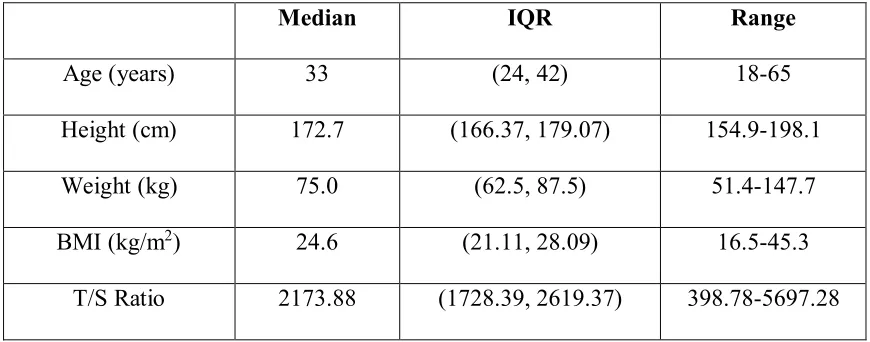
The demographic and anthropometric characteristics and telomere length of the
population are shown in Table 1. Normality testing revealed that the age, anthropometric
measures and T/S ratio variables were not normally distributed. Therefore, non-parametric
statistics were used in the analyses. The median age of the study population (n=92) was 33.5
years (range, 18-65 years). The majority of the population was Black (83.7%) with 6.5%
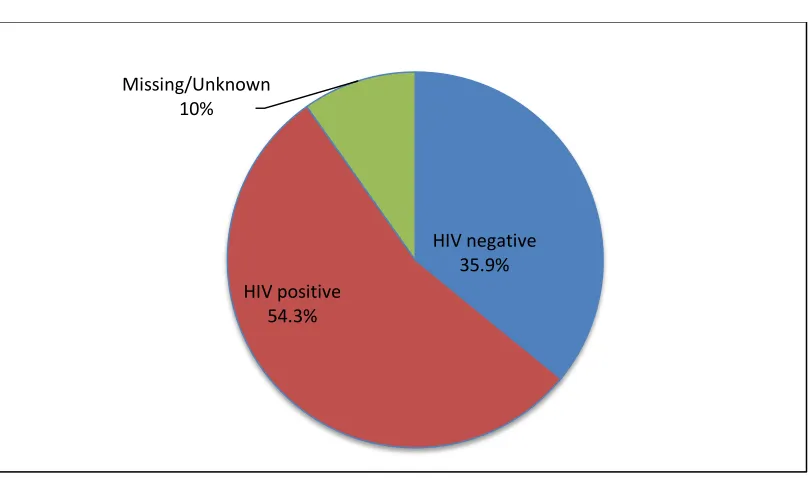
reporting Hispanic ethnicity (Figure 1). Infection with HIV was reported in just over half of the
study population (54.3%) (Figure 2). Approximately half of the total population (45.7%)
reported current treatment with combination cART.
[image:33.612.76.511.485.656.2]
Table 1. Demographic, Anthropometric and Telomere Length of the Total Population Data
(N=92)
Median IQR Range
Age (years) 33 (24, 42) 18-65
Height (cm) 172.7 (166.37, 179.07) 154.9-198.1
Weight (kg) 75.0 (62.5, 87.5) 51.4-147.7
BMI (kg/m2) 24.6 (21.11, 28.09) 16.5-45.3
T/S Ratio 2173.88 (1728.39, 2619.37) 398.78-5697.28
cm – centimeters; kg – kilograms; BMI – body mass index; m – meters; IQR – interquartile
21
Figure 1. Race Distribution of the Total Population
Black 84% White
11% Indian
3%
Asian 1%
22
Figure 2. HIV Status of the Total Population
HIV – human immunodeficiency virus
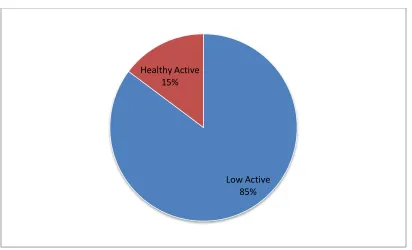
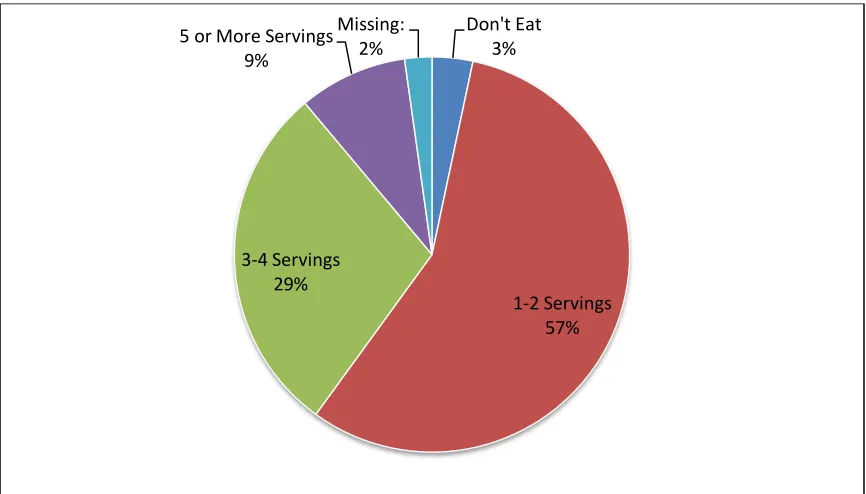
The vast majority of the total population reported a low activity level while 15% reported
activity within healthy active recommended guidelines (Figure 3). Approximately half of the
participants (57%) reported consuming 1-2 servings of fruits and vegetables per day while only
(9%) reported 5 or more servings (Figure 4).
HIV negative 35.9% HIV positive
54.3% Missing/Unknown
23
Figure 3. Activity Level of the Total Population
Low Active: <150 minutes of moderate-intensity aerobic physical activity or <100 minutes of vigorous-intensity aerobic activity throughout the week.
Healthy Active: 150 minutes or greater of moderate-intensity aerobic physical activity or 100 minutes or greater of vigorous-intensity aerobic activity throughout the week.
Low Active 85% Healthy Active
24
Figure 4. Fruit and Vegetable Intake of the Total Population
Table 2. T/S Ratio by HIV Status (n=81)
Don't Eat 3%
1-2 Servings 57% 3-4 Servings
29% 5 or More Servings
9%
Missing: 2%
HIV Status HIV -
(n=32)
HIV +
(n=49)
P-Value
T/S Ratio* 2214.28
(2007.34, 2756.22)
2106.12
(1564.06, 2534.49)
0.195
*Median (IQR; 25%, 75%)
[image:37.612.75.512.454.574.2]25
Research Hypothesis 2: Transgender women with or without HIV who consume a greater
number of servings of anti-oxidant rich foods will have a higher T/S ratio than those who
consume fewer servings.
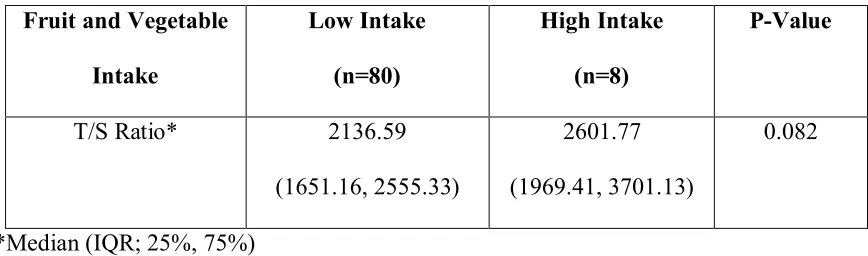
No significant difference in T/S ratio was found by reported intake of fruits and
vegetables (Table 3). The moderation analysis model using fruit and vegetable intake category
and HIV status as a main effect and an interaction term of Fruit and Vegetable Intake x HIV
status was not statistically significant (p=0.165). However, in the moderation analysis the fruit
and vegetable category was independently significant (p=0.048).
Table 3. T/S Ratio by Fruit and Vegetable Intake in the Total Population
Fruit and Vegetable
Intake
Low Intake
(n=80)
High Intake
(n=8)
P-Value
T/S Ratio* 2136.59
(1651.16, 2555.33)
2601.77
(1969.41, 3701.13)
0.082
*Median (IQR; 25%, 75%)
Low Intake –don’t eat, 1-2 servings/day or 3-4 servings/day
[image:38.612.75.509.365.493.2]26
Research Hypothesis 3: Transgender women with or without HIV who report greater
physical activity levels will have a higher T/S ratio than those who report a lower level of
physical activity.
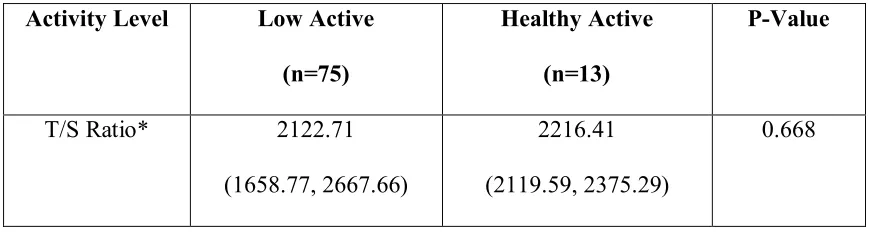
The median T/S ratio by physical activity level in the total population is shown in Table
4. No significant difference in telomere length was found between those with low vs. healthy
active levels. The moderation analysis model using physical activity level and HIV status as a
main effect and an interaction term of PA x HIV status was not statistically significant
(p=0.510).
Table 4. T/S Ratio by Activity Level in the Total Population
Activity Level Low Active
(n=75)
Healthy Active
(n=13)
P-Value
T/S Ratio* 2122.71
(1658.77, 2667.66)
2216.41
(2119.59, 2375.29)
0.668
*Median (IQR; 25%, 75%)
Multiple regression analysis was used to determine which variables significantly
contributed to attrition or elongation of telomeres. Activity level, BMI, fruit and vegetable
intake category, hormone use, race, HIV status and age were the independent variables used. The
predictors explained only 6.1% of the variance in telomere length and the model was not
statistically significant (p=0.690). In the multivariable model, none of the independent variables
[image:39.612.76.512.366.482.2]26 CHAPTER V
Discussion and Conclusions
The purpose of this study was to examine the association between HIV disease and
lifestyle factors on telomere attrition. Decreased telomere length has been shown to occur with
HIV infection as well as other negative lifestyle factors such as poor diet, lack of substantial
exercise and intake of toxic substances such as alcohol and tobacco. This study did not reveal
any significant associations between telomere lengths and HIV infection in a population of
transgender women from Atlanta, GA. Additionally, no associations were observed with respect
to fruit and vegetable intake or exercise patterns on the telomere length. Therefore, we reject our
hypotheses that the T/S ratio will be smaller in transgender women with HIV infection, and that
transgender women who consume a greater quantity of fruits and vegetables and who report a
greater physical activity level will have a higher T/S ratio than those who consume fewer
antioxidant rich foods and who report a low level of activity.
Previous studies have reported a correlation between HIV infection and decreased
telomere length. In a study by Liu et al. (2015), shortened lifespan and higher instances of
several diseases in the HIV-infected population compared to similar aged uninfected controls led
the researchers to hypothesize that HIV infection causes accelerated telomere loss. Compared to
HIV-uninfected subjects, the mean aTL in HIV-infected patients was shown to be considerably
shorter by 27 kbp/genome. The researchers measured absolute telomere length (aTL) in
HIV-27
uninfected individuals from a population-based sample. This study showed an association
between HIV infection and telomere attrition within a broad population base. In contrast, our
study included transgender females exclusively. The transgender population may experience
higher levels of stress compared to other population samples, regardless of HIV status, due to
social pressures and higher exposure to negative lifestyle factors. Increased telomere attrition
associated with high stress levels has been previously reported. Using a bioassay, Shalev et al,
(2012) found an association between stress and telomere degradation.
Exposure to stressors during childhood is thought to cause detrimental health outcomes
later in life. Systems throughout the body including the immune system, the sympathetic nervous
system, and the hypothalamus-pituitary-adrenal axis are all thought to be negatively impacted by
stress. Additionally, early stress exposure has been associated with respiratory problems,
cardiovascular disease, metabolic disorders, and neurological problems.24 While stress is thought
to be a factor in telomere attrition, previous studies have also observed a relationship between
shorter telomere length and low fruit and vegetable intake as well as low exercise levels.
Researchers with the Nurses’ Health Study proposed that variability in telomere length might be
partly due to lifestyle factors, including dietary patterns.13 High oxidant and
anti-inflammatory components of the Mediterranean Diet are thought to limit telomere attrition and
reduce disease onset. The Nurses’ Health Study population consists of an ongoing cohort of
32,825 nurses, of which 825 submitted blood samples for analysis between 1989 and 1990. The
women selected were healthy controls from nested case-control studies within the Nurses’ Health
Study. Each woman had a previously measured leukocyte telomere length and had completed a
food frequency questionnaire at the time of the blood draw. The average relative leukocyte
28
number (T/S ratio). The researchers reported that Nurses who had longer telomeres reported
greater adherence to the Mediterranean Diet. Our study sample was very small in comparison to
the Nurses’ Health Study subsample, and included only transgender women. In addition, the
food frequency questionnaire used in the Nurses ‘study was more comprehensive, whereas the
diet questions used to assess fruit and vegetable intake in the current study were limited.
In addition to HIV infection and dietary patterns, exercise has been linked to changes in
telomere length. A study conducted by Chilton et al. (2014) revealed that acute exercise could
lead to the transcriptional regulation of several key telomeric genes in immune cells. Both
Telomerase Reverse Transcriptase (TERT), and micro-RNAs (miRNA) were shown to be
regulated by physical activity. Thus, it is thought that increased physical activity leads to
stimulation of telomerase activity, which may lead to the elongation of telomeres, hence cellular
longevity. Chilton used a sample of twenty-two non-smoking males with a mean age of 24 years.
The mean age for this group was younger than the mean age in our study, and the Chilton study
measured telomere length following high intensity aerobic activity sessions in a controlled
setting. Our study used subjective recall data that approximated physical activity levels
throughout the week.
Our study has several limitations. The population consisted of a small sample of
transgender women with and without HIV. Therefore, our results may not be generalizable to
the larger transgender population or to those who are not transgender. The dietary and exercise
questions in the survey were limited and have not been validated in the transgender population.
Anti-oxidant levels of fruits and vegetables consumed were not available, therefore the data has
29
consumption patterns and exercise frequency throughout the week. Additionally, this study did
not include alcohol and tobacco use as independent variables when analyzing telomere lengths.
Examination of T/S ratios between non-transgender groups including straight, gay, and
bi-sexual orientation may reveal variations in T/S ratios based on sexual orientation and lifestyle
factors. Additional studies are needed to further clarify the effects of HIV infection, diet, and
physical activity level on telomere attrition in transgender women. Prospective study of the
complex cascade leading from stress exposure and lifestyle factors during early life to cellular
aging via telomere biology among transgender women will aid in the understanding of the aging
process and the effects of diseases and lifestyle factors on those processes. Future research is
needed to further understand the complexities and mechanisms that impact telomere length
29 REFERENCES
1. WHO | Data and statistics. WHO. http://www.who.int/hiv/data/en/. Accessed October 16,
2015.
2. Horvath S, Levine AJ. HIV-1 Infection Accelerates Age According to the Epigenetic Clock.
J Infect Dis. 2015;212(10):1563-1573.
3. Aviv A. Leukocyte telomere lengths: the telomere tale continues. Am J Clin Nutr.
2009;89(6):1721-1722.
4. Telomeres and Telomerase: Past, Present and Future | Berkeley Graduate Lectures.
http://gradlectures.berkeley.edu/lecture/telomeres-telomerase/. Accessed October 4, 2015.
5. Schmidt JC, Dalby AB, Cech TR. Identification of human TERT elements necessary for
telomerase recruitment to telomeres. eLife. 3.
6. Cawthon RM. Telomere measurement by quantitative PCR. Nucleic Acids Res.
2002;30(10):e47.
7. Rickabaugh TM, Kilpatrick RD, Hultin LE, et al. The Dual Impact of HIV-1 Infection and
Aging on Naïve CD4+ T-Cells: Additive and Distinct Patterns of Impairment. PLoS ONE.
2011;6(1):1-10.
8. Rickabaugh TM, Baxter RM, Sehl M, et al. Acceleration of Age-Associated Methylation
Patterns in HIV-1+ Adults. PLoS ONE. 2015.
9. Liu JCY, Leung JM, Ngan DA, et al. Absolute Leukocyte Telomere Length in HIV-Infected
and Uninfected Individuals: Evidence of Accelerated Cell Senescence in HIV-Associated
30
10.Paul L. Diet, nutrition and telomere length. J Nutr Biochem. 2011;22(10):895-901.
11.Defilippis AP, Blaha MJ, Jacobson TA. Omega-3 Fatty acids for cardiovascular disease
prevention. Curr Treat Options Cardiovasc Med. 2010;12(4):365-380.
12.Farzaneh-Far R, Lin J, Epel ES, Harris WS, Blackburn EH, Whooley MA. Association of
marine omega-3 fatty acid levels with telomeric aging in patients with coronary heart disease.
JAMA. 2010;303(3):250-257.
13.Crous-Bou M, Fung TT, Prescott J, et al. Mediterranean diet and telomere length in Nurses’
Health Study: population based cohort study. BMJ. 2014;349:g6674.
14.García-Calzón S, Zalba G, Ruiz-Canela M, et al. Dietary inflammatory index and telomere
length in subjects with a high cardiovascular disease risk from the PREDIMED-NAVARRA
study: cross-sectional and longitudinal analyses over 5 y. Am J Clin Nutr.
2015;102(4):897-904.
15.Ginter E, Simko V. Resent data on Mediterranean diet, cardiovascular disease, cancer,
diabetes and life expectancy. Institute of Preventative and Clinical Medicine. Available at:
http://www.elis.sk/download. Accessed September 18, 2015.
16.Russo MA, Sansone L, Polletta L, et al. Sirtuins and resveratrol-derived compounds: a model
for understanding the beneficial effects of the Mediterranean diet. Endocr Metab Immune
Disord Drug Targets. 2014;14(4):300-308.
17.Pandey KP, Rizvi SI. Plant Polyphenols as dietary antioxidants in Human Health and
Disease. Oxid Med Cell Longev. 2009;2(5):270-278.
18.Chilton WL, Marques FZ, West J, et al. Acute Exercise Leads to Regulation of
Telomere-Associated Genes and MicroRNA Expression in Immune Cells. PLoS ONE. 2014; 9(4):
31
19.Dietary Guidelines for Americans 2015-2020. http://www.health.gov.
20.Melk A, Tegtbur U, Hilfiker-Kleiner D, et al. Improvement of biological age by physical
activity. Int J Cardiol. 2014;176(3):1187-1189.
21.Rode L, Nordestgaard B, Weischer M, et al. Increased Body Mass Index, Elevated C-reactive
Protein, and Short Telomere Length. J Clin Endocrinol Metab. 2014;99.
22.Zannolli R, Mohn A, Buoni S, et al. Telomere length and Obesity. Acta Paediatrica.
2008;97(7):952-954.
23.American College Health Association National College Health Assessment.
http://www.acha-ncha.org/overview.html. Accessed July 10, 2016.
24.Shalev I. Early life stress and telomere length: Investigating the connection and possible