THE IMPACT OF THE MARKET
ORIENTED REFORMS IN THE UK AND
SWEDEN: CASE STUDY CATARACT
SURGERY
Marianna Fotaki
The London School of Economics and
Political Science
Thesis Submitted to the University of London
for the Degree of Doctor of Philosophy
Faculty of Economics
UMI Number: U615451
All rights reserved
INFORMATION TO ALL USERS
The quality of this reproduction is dependent upon the quality of the copy submitted.
In the unlikely event that the author did not send a complete manuscript and there are missing pages, these will be noted. Also, if material had to be removed,
a note will indicate the deletion.
Dissertation Publishing
UMI U615451
Published by ProQuest LLC 2014. Copyright in the Dissertation held by the Author. Microform Edition © ProQuest LLC.
All rights reserved. This work is protected against unauthorized copying under Title 17, United States Code.
ProQuest LLC
789 East Eisenhower Parkway P.O. Box 1346
I
K £ I
-S
F
OF POLITICAL
Acknowledgments
First of all, my thanks should go to my supervisor Professor Julian Le Grand for his unfailing support throughout all these very important years. He encouraged me throughout all the stages of this project but also when other trajectories of my life interfered with it. I benefited enormously from Professor Le Grand’s clarity of thinking and structured approach but also from his insight and understanding of the social policy issues. Nonetheless, has it not been for his tactful and humane manners the accomplishment of this project would have seemed much more difficult and less stimulating. I shall always be grateful to him for giving me all these opportunities.
Secondly, my deep thanks and gratefulness is with all who provided me with funds that were indispensable for making this research happen. My appreciation goes to the Directorate XII Research and Development of the European Union for selecting this project and giving it a decisive impetus for taking off by means of generous grant. On the other hand, Greek Scholarship Foundation enabled me to finish this research when it was still far from completion.
Different people who are too numerous to be mentioned by their name offered their time and genuinely shared with me their experience, which helped me both to formulate my research hypotheses and to test them. Among those to whom I feel most indebted for facilitating the field work are the clinical directors of the eye units: Miss Helen Seward of the Mayday Hospital, Miss Claire Davey and Mr Brian Little of the Royal Free Hospital, Miss Gillian Vafidis, Mr Jeremy Joseph and Mr Timothy Fallon of the Central Middlesex Hospital and Mr Matthew Harris of the Edgeware Hospital. Dr Berrit Calissendorf and Professor Bengt Tengroth of the St. Eriks’ Hospital in Stockholm, Thorbjom Malm and Ralf Jonsson of the County Councils in Stockholm and Professor Stefan Hakansson of the SPRI Institute were those who helped me the most with my work in Sweden. I would also like to thank all who participated in this research for their time and patience, especially the General Practitioners and patients from several areas of London and Stockholm and Val Taylor of the Language Institute at the London School of Economics who proof-read the whole text.
I want to extend my thanks to my friends and family who seem to be unrelated to this project but whose trust and belief in my abilities helped me to continue work when I found myself in doubt and uncertainty. However, my foremost gratitude goes to my husband, Dr Evangelos Sioras. His inquisitive mind, specialist knowledge in ophthalmology and personal contacts were all indispensable preconditions for giving shape to this research project while his wisdom kindness and understanding served as sources of inspiration throughout the whole process. Last but not least, I am deeply grateful to him for providing me with a thinking space even when it meant taking up quite a disproportionate share of parental responsibilities for prolonged periods of time.
Finally, I have to thank the youngest members of my family Ion and Ellie, who grew up together with the progress of my thesis and have shown much more patience and understanding than could be realistically expected of the children of their age. I strongly feel that their very presence helped me to finish this work.
Abstract
In the early 1990s, a set of market oriented reforms was introduced into health care systems of the UK and Sweden, two exemplary cases of the reliance on planned budgeting and integrated provision of services. In the pursuit of increased efficiency, several County Councils in Sweden have followed public competition model while in the UK internal market reforms were introduced. It was expected, that the separation of functions of planners and purchasers from those of providers, would achieve higher allocative efficiency but it would also enhance users’ satisfaction with care.
This thesis used cataract surgery as a case study to trace the impact of competition among providers and the separation of purchasers’ functions from the former on the set of selected indicators: choice, information, quality, responsiveness and efficiency.
Qualitative research methods were employed to record the perception of changes of those indicators for patients, primary care providers, eye surgeons, managers and purchasers. A set of open ended and standardised questionnaires was designed to elicit the views of all actors involved and to measure the likely transformations. These data were then compared with quantitative figures obtained from hospital registers and national league tables where numbers of operations performed as day/inpatient cases, prices for service and waiting times for the first specialist appointment and cataract surgery were examined. Four study sites from outer London and the only existing large provider of eye services to Stockholm County Council were selected and used for the purpose of international comparison.
The analysis of the data showed that the quasi-market reforms have resulted in a change of the attitude of secondary providers, which had some positive influence on quality of care expressed in reduction of waiting times at the outpatients’ department and as tailored appointments for the surgery. Some improvements in the amount and type of information given to purchasers and patients could be detected, although as far as direct users were concerned, the demand for it has not been fully satisfied.
However, the impact on choice available to patients and purchasers alike seemed to be adverse, an effect that was particularly strong in the UK case and which was precisely the opposite of what reforms proclaimed. This was partly a result of disincentives introduced by the reforms but it also reflected the ambivalence that patients had towards enacting their choices. Another finding was that General Practitioners were on the whole poorly informed about the changes and were unable to comment on many of the issues asked. This raises questions about the uncritical endorsement of vast responsibilities into the hands of intermediaries alongside the recent changes of the NHS.
Responsiveness measured as changes in the waiting times for the first specialist appointment and for the cataract surgery itself showed an uneven trend. Both decreased in the short-term and then increased to the pre-reform levels after this issue ceased to be the priority on the governments’ agendas, implying that these short lived effects must have been rather a result of specific interventions and not the consequence of the market’s work. It was also demonstrated that those providers who successfully responded to the market incentives and delivered services of high quality efficiently, were also more keen to shift to the technologies with cost-saving potential. However, there was no clear evidence of the impact of those changes on the prices of service despite the increases in the numbers of operations.
Table o f contents
Acknowledgements page 2
Abstract page 3
Table of contents pp. 4-9
List of Tables and Boxes pp. 10-11
List of Figures pp. 12-13
I. BACKGROUND page 14
CHAPTER 1 INTRODUCTION pp.15-20
1.1. Research question pp.16-18
1.2. Addressing gaps in previous research pp.18-19
1.3. Plan of the thesis pp.19-20
CHAPTER 2 BACKGROUND pp. 21 -47
2.1. Health care systems of the UK and Sweden pp. 21-31
2.1 . 1 Similarities and differences pp. 21-31
2.2. Market oriented reforms in the UK and Sweden pp. 31-46
2.2.1 Rationale of the reforms pp. 32-36
2.2.2 Objectives of the market-oriented reforms pp. 36-42
2.2.3 Content of the reforms pp. 42-46
2.3. Conclusions page 47
CHAPTER 3 INDICATORS OF THE MARKET’S IMPACT AND
JUSTIFICATION FOR THEIR USE pp.48-78
3.1. The pre-requisites of markets in health care page 48
3.2. The indicators selected and justification for their use page 51
3.2.1 Choice - concept and framework page 51 3.2.2 Information - concept and framework page 56 3.2.3 Quality of care - concept and framework page 62 3.2.4 Responsiveness - concept and framework page 69 3.2.5 Efficiency - concept and framework page 74
CHAPTER 4 THE IMPACT OF THE REFORMS AS REVEALED IN
THE LITERATURE page 79-106
4.1. Problems with the evaluation page 80
4.2. Choice 4.3. Information 4.4. Quality
page 83 page 86 page 87
4.4.1 Waiting times for a specialist sen/ice, including waiting time at the outpatients’ clinics
4.4.2 Changes in the attitude of providers - adoption of a user-friendly approach
4.4.3 Quality in terms of information provided in contracts
page 89
page 90 page 92
4.5. Responsiveness page 93
4.6. Efficiency page 96
4.6.1 Throughput and cost of services - productive efficiency 4.6.2 Structural changes - efficiency implications
4.6.3 Clinical Outcomes
4.6.4 The impact of reforms on introduction of cost saving technologies
page 97 page 102 page 104
page 105
4.7. Conclusions page 106
II. METHODS
page 108CHAPTER 5 METHODOLOGY pp. 109-144
5.1. Selection of cataract surgery as a tracer condition page 109
5.1.1 Chtena used for service selection page 109 5.1.2 Cataract surgery and its suitability for measuring the impact
of the reforms pag e 110
5.2. Methodological considerations page 114
5.2.1 General considerations
5.2.2 Service specific methodological considerations 5.2.3 Problems of counterfactual evidence
5.2.4 Methodological constraints
page 114 page 117 page 119 page 122
5.3. Detailed methodology page 126
5.3.1 Methodological framework used
5.3.2 Development of the structured and semi-structured questionnaire
5.3.3 Description of the study sites
page 126
5.3.4 Time scale, size and the characteristics of the sample
5.4. Measuring the market’s impact using selected indicators
5.5. Conclusions
III. RESULTS: DATA PRESENTATION AND ANALYSIS
Foreword to the Part III
CHAPTER 6 CHOICE
6.1. Interviews with all groups of respondents
Patients’ views
Primary care providers’ views Consultant eye surgeons’ views Managers’ and purchasers’ views
6.2. Key findings
CHAPTER 7 INFORMATION
7.1. Interviews with all groups of respondents
Patients’ views
Primary care providers’ views Consultant eye surgeons’ views Managers’ and purchasers’ views
7.2. Key findings
CHAPTER 8 QUALITY
8.1. Quality - Information Aspects: Interviews with all groups of respondents
Patients’ views
Primary care providers' views Consultant eye surgeons’ views Managers’ and purchasers’ views
8.2. Quality - Waiting Times at the Outpatients’ Department: Interviews with all respondent groups
Patients’ views
Primary care providers’ views Consultant eye surgeons' views Managers’ and purchasers' views
page 137
page 140-134
page 143-144
page 145
page 146
pp. 147-187
8.3. Quality: The Attitude of Health Professionals: Interviews with all respondent groups Patients' views
Primary care providers’ views Consultant eye surgeons’ views Managers’ and purchasers’ views
8.4. Key findings
CHAPTER 9 RESPONSIVENESS: WAITING TIMES
9.1. Waiting Times for the First Specialist Appointment: Interviews with all groups of respondents
Patients’ views
Primary care providers’ views Consultant eye surgeons’ views Managers' and purchasers’ views
9.2. Waiting Times for Cataract Surgery: Interviews with some groups of respondents
Primary care providers' views Consultant eye surgeons’ views Managers’ and purchasers' views
9.3. Comparison of the study's findings with the national data on waiting times
9.4. Key findings
CHAPTER 10 EFFICIENCY
10.1. Comparison of the cataract figures in eye units in the UK and Sweden
10.2. Analysis of the data on prices for cataract surgery in London and Stockholm
10.3. Audit on clinical outcomes at the unit P in the UK
10.4. Changes in rates of day care surgery in outer London
and Stockholm
10.5. Changes in the Numbers of Operations Performed:
Interviews with some groups of respondents
Primary care providers' views Consultant eye surgeons' views Managers’ and purchasers’ views
page 238 page 238 page 241 page 243 page 245 page 248-250
pp. 251-284
page 251 page 251 page 254 page 257 page 262 page 263 page 263 page 266 page 270 page 276 page 283
pp. 285-322
10.6. Changes in the Price of the Service: Interviews
with some respondent groups page 304
Primary care providers' views page 304
Consultant eye surgeons' views page 305
Managers' and purchasers’ views page 307
10.7. Changes in Discharge Policy, Clinical Outcomes and the
Use of Cost Saving Technologies: Interviews with some
respondent groups page 310
Primary care providers' views page 310
Consultant eye surgeons’ views page 313
Managers’ and purchasers’ views page 318
10.8. Key findings page 321
IV DISCUSSION AND POLICY IMPLICATIONS
page 323CHAPTER 11 DISCUSSION pp. 324-388
11.1. Limitations and constraints of the methodological approach
used pp. 324-326
11.2. Choice page 326
11.2.1 Evaluation of changes - the evidence page 327 11.2.2 Comparison between the UK and Sweden page 335
11.2.3 Conclusions page 337
11.3. Information page 339
11.3.1 Evaluation of changes - the evidence page 341 11.3.2 Comparison between the UK and Sweden page 346
11.3.3 Conclusions page 348
11.4. Quality page 349
11.4.1 Evaluation of changes - the evidence page 350 11.4.2 Comparison between the UK and Sweden page 359
11.4.3 Conclusions page 361
11.5. Responsiveness page.362
11.5.1 Evaluation of changes - the evidence page 364 11.5.2 Comparison between the UK and Sweden page 368
11.6. Efficiency page 371
11.6.1 Evaluation of changes - the evidence page 372 11.6.2 Comparison between the UK and Sweden page 381
11.6.3 Conclusions page 383
11.7. Addressing the methodological limitations and constraints pp. 385-388
CHAPTER 12 POLICY IMPLICATIONS pp. 385-414
12.1 Expectations fulfilled, failed or neither? pp. 390 -397
12.2 Policy implications of the actual findings of research pp. 397-402
12.3 Experience learned, abandoned or neither? pp. 402-413
12.4 Concluding remarks pp. 413-414
13. REFERENCES pp 415-456
14. APPENDICES AND ANNEXES pp. 457-475
Appendix I Indicators of the market’s impact page 458
Appendix II Questionnaire page 460
Appendix III Characteristics of the samples of respondents page 468
Annex I Audit results on clinical outcomes in hospital P, UK page 474
List of Tables and Boxes
Table 2.1. Life expectancy, infant mortality and low weight at birth in selected
OECD countries, 1997 page 22
Table 2.2. Total expenditure on health per capita (PPP in US$) and as % of GDP in the UK and Sweden in 1970, 1980, 1990
and 1995 and their ranking against other OCED countries page 23
Table 2.3. Spending on health care in Sweden in the years 1990-1996,
including adjustment for the consequences of the Adel reform page 25
Table 2.4. Key features of the two health systems: the UK and Sweden page 26
Table 2.5. Health reforms introduced in the UK and Sweden in the late 1980s and at the beginning of the 1990s page 40
Table 4.1. Effects of the pro-market reforms in Sweden and the UK as
revealed in the literature page 107
Table 5.1. Day care surgery in selected OECD countries in years 1994-96 page 121
Table 8.1. Patients’ views on the seniority grade of the doctors/nurses who saw them on their first visit in the eye units in Outer London and
Stockholm page 218
Table 8.2. Advance information about the operation date given to patients in eye units in the UK and Sweden (median values) page 219
Table 8.3. Changes in waiting times at the outpatients’ department
(all ophthalmology) in unit T page 237
Table 9.1. Changes in waiting times for the first appointment (by consultant)
in unit T (inner city) page 258
Table 9.2. Number of patients waiting over three months (total for day cases and ordinary admissions - all ophthalmology services) in unit S
(Southern London) page 259
Table 9.3. Waiting times for cataract surgery in all eye hospitals in the County Council of Stockholm (expressed as numbers of
patients and waiting times) in the years 1992-1995 page 259
Table 9.4. Percentage of appointments fulfilled according to
“The Patients’ Charter" standards - all ophthalmology services page 275
Table 9.5. Waiting times for cataract surgery in eye hospitals in Stockholm and selected County Councils in South East Sweden
(expressed as numbers of patients waiting and weeks of waiting time)
Table 10.1. Number of cataract operations performed in S, U, T, and K in
years 1988-1997 page 286
Table 10.2. Ophthalmology prices in years 1991/92-1995/96 in Pounds
Sterling -Unit S page 287
Table 10.3. Cost of cataract surgery OPCS4 according to the hospital data
- unit T page 288
Table 10.4. Cost of cataract surgery OPCS4 according to the hospital data
- sample P page 288
Table 10.5. Prices for cataract surgery as inpatient care procedures in the Stockholm County Council area in years 1992-1996
(median prices in SEK for each financial year are used) page 289
Table 10.6. Prices for cataract surgery for day care procedures in Stockholm County Council in years 1992-1996 (median prices in SEK for
each financial year are used) page 289
Table 10.7. Prices for cataract surgery operations performed as day cases using small incision surgery (phacoemulsification) 039C in
hospital K (Sweden) including the cost of the visit page 290
Table 10.8. Prices for cataract surgery operations performed as an inpatient procedure using small incision surgery (phacoemulsification)
039C in hospital K (Sweden) page 291
Table 10.9. Cataract operations performed as day cases in the years 1989-1997 in S, U. T, P and K
(expressed as a percentage of total number of operations) page 293
Table 10.10. Operations performed by different eye units in the County Council of Stockholm area in numbers and their percentage
of market share page 309
Box 2.1. Rationale for the introduction of pro-market reforms
in the UK and Sweden page 37
Box 2.2. Key features of the reforms in the UK - the internal market
Model page 43
Box 2.3 Key features of the reforms in Sweden - the public competition
List of Figures
Figure 2.1. Counties in Sweden that have adopted different forms of
market-oriented reforms (coloured and shaded) from SPRI page 30
Figure 2.2. The structure of the Stockholm Model page 45
Figure 3.1. Quality stages according to Donabedian (Donabedian, 1966) page 64
Figure 3.2. Different perspectives when service outcomes are evaluated page 65
Figure 5.1. Diagramatic section of the human eye page 118
Figure 5.2. Actual and projected proportion of the elderly to the total
Population page 124
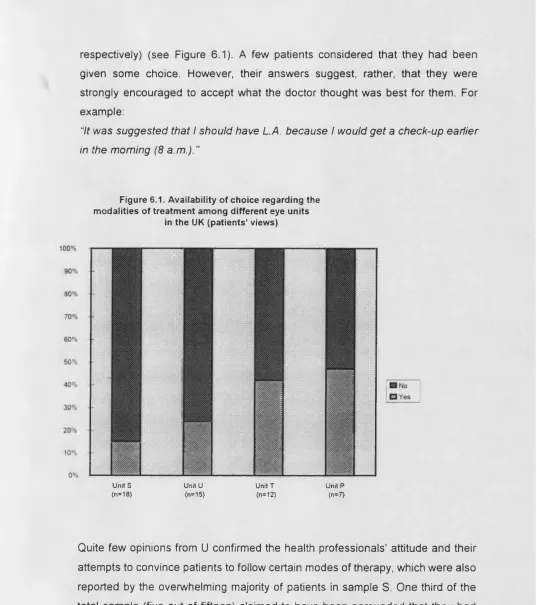
Figure 6.1. Availability of choice regarding the modalities of treatment within different eye units in the UK (patient’s view) page 149
Figure 6.2. Patients' satisfaction with choice over the modalities of treatment of cataracts in Outer London and Stockholm page 154
Figure 6.3. The impact of the reforms on the choice of hospital or primary care provider in the UK and Sweden (patients’ views) page 160
Figure 6.4. Patients' views on increased choices of forms of treatment after the reforms in London and Stockholm (n=81) page 184
Figure 6.5. Patients' satisfaction and wish for more choice in their treatment in different eye units in the UK and Sweden page 185
Figure 6.6. Patients' views on the reforms and on the usefulness of "The Patient's Charter" in promoting choice in London
and Stockholm (n=81) page 185
Figure 6.7. The status of the referral doctor (GPFH or not) and the choice of hospital (patients' views) in the UK page 186
Figure 7.1. Patients' satisfaction with the type and amount of information received
in London and Stockholm (n=81) page 211
Figure 7.2. Satisfaction with information received in different eye units in London
and Stockholm (patients’ views) page 212
Figure 7.3. Patients' views on written information provided in different units
in London and Stockholm ._ page 213
Figure 8.1. Time spent on waiting in the outpatients' in different units in the UK and Sweden (patients' and consultants' views) page 231
Figure 9.1. Patients’ views on the length of waiting time for the first specialist appointment in different eye units in the UK and Sweden (unit K)
in 1995/96 page 253
Figure 9.2. Waiting times for the first specialist appointment at eye units in area U for patients of fund-holders and non fund-holders in the UK in
1995/96 page 256
Figure 9.3. Waiting times for cataract surgery in hospitals in area U
for fund-holders and non fund-holders in the UK in 1995/1996 page 264
Figure 9.4. The average waiting time for the first specialist appointment in different eye units in the UK and Sweden in the views of different
actors in years 1993/94-1995/96 page 278
Figure 9.5. Patients’ views on the length of waiting time for the first specialist appointment in different eye units in the UK and Sweden
(unit K) in 1995/96 page 283
Figure 10.1. Cataract operations performed as day care procedures in unit S in
1990-1995 page 293
Figure 10.2. Cataract operations performed as day care procedures in unit U in
1991-1995 page 294
Figure 10.3. Cataract operations performed as day care procedures in unit K in
1991-1995 page 295
Figure 10.4. Cataract operations performed as day care procedures in all eye units in Sweden during 1991-1995 (SPRI, 1994,
CHAPTER 1
INTRODUCTION
Many countries in Europe faced the problem of the escalating cost of health care
expenditure during the 1960s and 1970s. However, only the protracted period of
slow economic growth combined with inflation in health costs in the 1980s,
known as “stagflation", prompted most of them to embark on a search for
different ways of improving the efficiency of health care delivery. This trend was
seen in the UK and Sweden, and also in many other countries throughout the
world.
Market-oriented reforms introducing competition into both the demand and
supply side (New Zealand and part of the Netherlands), and internal market
reforms dealing only with improving efficiency of supply, were introduced during
this period (in the UK and Sweden). In each case, the reforms adopted reflected
the traditions and aspirations of the country. Thus, for example, in the UK it
resulted in a centrally initiated and directed large scale overhaul of the system,
while in Sweden different models of public competition were introduced in a
limited way at the regional level.
The health care systems of the UK and Sweden were chosen for the purpose of
this comparative analysis, because they share a number of common features,
both when their vertically integrated structures are examined, and when the
strengths and weaknesses resulting from these are considered. In addition, the
solutions proposed for overcoming the deficiencies of their systems, while not
being identical, follow a similar market-oriented pattern.
In both cases, the reforms can be summarised as the rejection of the model of
rational planning in social policy, present throughout most of the time during their
post-war history, on the grounds of its limitations in achieving micro-efficiency
gains and in meeting the increasing expectations of its users. Thus the top-down
responsiveness to the population's needs and the command economy was
recognised as creating obvious disincentives in terms of enhancing providers’
productivity. But did these market-oriented reforms in the UK and Sweden bring
about the desired outcomes? Did they increase the responsiveness and
efficiency of the health care systems concerned? It is these questions that this
thesis, in a small way, attempts to answer.
1.1 Research Question
The fundamental research question that this study considers is: what was the
impact of the internal market reforms in the UK and Sweden on a set of
indicators related to explicit criteria used to evaluate the redesign of the system
such as choice, information, quality, responsiveness and efficiency.
All of these criteria are important. First, the availability of choice and information
are essential conditions for both quasi- and full internal markets to work properly
(Le Grand and Bartlett, Chapter Two, 1993). If there is no choice, there can be
no competition and, hence, little incentive to increase efficiency, quality or
responsiveness. If there is little information, purchasers and users will be in a
poor position to judge quality, and hence, again, incentives for improvements will
be blunted. In addition, they are worthy and welcome outcomes in and of
themselves because they empower patients and may also be regarded as
broader aspects of the quality of care (Ovretveit, 1992; Maxwell, 1990).
Second, quality standards are important in controlling undesirable effects, which
may result from public services being provided in a market environment. From
the start of the reforms, fears were raised that the likely micro-efficiency gains
could be achieved only at the expense of quality of care (Boufford, 1993; Le
Grand et al 1994; Roberts, 1995). “Quality” in health care is, of course,
enormously difficult to define and for the purpose of this study, it was necessary
to narrow to a range of possible interpretations of the concept. Accordingly
quality was defined primarily in "process” terms: specifically, in terms of changes
outpatients' clinics, some aspects of information, and changes in the attitudes of
providers.
Third, responsiveness to users’ needs is seen as an important attribute of
modem health care systems whose absence in the pre-existing health care
systems of both the UK and Sweden created dissatisfaction and which reforms
aimed to address. Changes in the waiting times for both cataract surgery and the
first specialist appointment were used as a proxy measure of responsiveness to
patients’ needs on the assumption that waiting times must represent some
estimate of the need for service provision.
Fourth, the above changes were interpreted in the context of efficiency gains that
might have been achieved, and an attempt was made to outline the trade-offs
involved with other policies that were simultaneously being pursued. The search
for higher efficiency was arguably the most important driving force behind the
reforms in both countries and it justifies its central role against which the other
indicators are considered in this evaluation.
Reforms’ impact on equity, which is possibly the second most important objective
of publicly financed health care systems, is not addressed in this study. This is
because of two reasons. First, improving equity was not the intention of the
reforms in the UK; to the contrary as one researcher noted it “was conspicuously
absent from the reforms agenda" (Whitehead, 1992). In Sweden the government
was more preoccupied with maintaining the equity but there were no specific
references on how reforms could affect it.
Second, the attempt to measure the differences in waiting times for cataract
between fund-holders’ and non fund-holders’ patients, produced results that were
inconclusive despite the anecdotal evidence of the alleged negative impact,
which came mostly from the health professionals interviewed in this study. For
these reasons and for the matter of space equity is not part of this study.
It was also decided that the outcomes of the reforms were to be measured using
procedure well suited to reflecting the likely changes in delivery of service that
could be attributed to the reforms. Cataract surgery is an elective procedure, with
increasing worldwide demand and relatively well-established effectiveness
(Williams et al, 1994). It was also widely used by market supporters as one of the
cases that would illustrate the likely gains that could accrue in the aftermath of
the introduction of the reforms.
Furthermore, the choice of this particular service was also influenced by the fact
that the diffusion of certain technologies, which resulted in efficiency gains, such
as day-case surgery, might have been significantly speeded up by the
organisational incentives brought about by the reforms.
The principal methodology involved qualitative interviews. The views of the main
participants, such as the health professionals, purchasers, managers and
patients, were sought in order to draw conclusions on the impact of the reforms.
Observations from each perspective - professional, patient or organisation of the
service under assessment - were made. These observations were broken down
into components. Each perspective concentrated on some further sub
components, which attempted to capture the specific perception of the key
players in the system, reflecting the different priorities attached by the observer
and the objectives of their assessment.
1.2 Addressing gaps in previous research
This study attempted to address some of the gaps in these aspects of health
care delivery which, while considered important, have been very little evaluated,
if at all. These concerned, primarily, the likely changes in the level of choice and
information and the changes in attitude of the main actors. The study's focus on
these aspects of care is justified, because they represent the values that users
increasingly expect health services to deliver, and also because the markets are
seen as instrumental in bringing about these differences.
A particular service was used to serve as the tracer condition to illustrate some
surgery was used as a case study for the evaluation of the reforms, and it was
hoped that it would provide an insight into an area that was relatively under-
researched. There was little published research that provided evidence of the
impact of the changes introduced into specific treatments. An additional aspect
this study attempts to address by means of an international comparison was the
response to a similar set of reforms introduced into distinct cultural environments,
which shared a number of common characteristics in the pre-reform organisation
of their systems and in the type of reforms adopted.
Despite the limitations involved in international comparisons, important
conclusions about the interrelation between the different elements of chosen
policies, the methods of their implementation and their final outcome, as well as
internal and external determinants of their success, could be reached. Also, quite
often the context of international comparisons that allows for a better
understanding of the specific features of each system and of the factors that led
to their establishment, may also help to explain their individual differences.
1 .3 Plan of the thesis
The thesis is divided into four major parts. Part I provides background information
and outlines the purpose and scope of the research. Chapter Two compares the
similarities and differences of the pre-reform health care systems of the UK and
Sweden and briefly outlines the design and objectives of the reforms in both
countries. Chapter Three discusses the concepts and framework of the indicators
that were selected to show the market’s impact and attempts to provide some
justification for their use. Chapter Four summarises previous attempts to evaluate
market-oriented reforms revealed in the literature and identifies the existing gaps
in research. Some of these, such as the relative absence of evaluations dealing
with particular services, and also the limited number of international
comparisons, are addressed in this study.
Part II provides the research methodology of the study and Part III its results.
of the sample, the procedures and the tools used. The methodological limitations
of the project are also discussed here.
Part III of this thesis is concerned with data analysis and the presentation of
results with regard to all indicators (where their different aspects are highlighted)
and the perspectives of all involved actors. Chapter Six presents the results of
the research with respect to choice, Chapter Seven aspects of information,
Chapter Eight aspects of quality, Chapter Nine aspects of responsiveness and
Chapter Ten aspects of efficiency. In each case, a comparative analysis between
the UK and Sweden is carried out. The analysis is densely interspersed with
large amount of quotations and consists of a fairly detailed reference to the
material from transcribed interviews. For a quick review of the principal results
the reader should refer to the end of each chapter.
The final part of the thesis, Part IV, consists of Chapter Eleven, which is devoted
to an interpretation of the findings and Chapter Twelve, which concludes the
thesis and delineates some of the policy implications that could be drawn from
the results. Chapter Twelve also presents some recommendations as to how the
lessons from the experience of market -oriented reforms might be incorporated in
future developments in the UK and Sweden.
The appendixes consist of tables summarising the research methodology
(Appendix I) the questionnaires used (Appendix II) and characteristics of the
samples of respondents (Appendix III). The detailed findings of the audit on
clinical outcomes in hospital P in the UK are presented in Annex I, and indicators
of clinical outcomes used in Sweden in Annex II. The copy of publications that
CHAPTER 2
BACKGROUND
This chapter is divided into two major parts. The first part discusses the health
care systems of the UK and Sweden. It provides some background information
and serves as a justification for their selection for the purpose of this comparison.
In the second part, the rationale for the introduction of the reforms is outlined and
the major points of content of the reforms, in both the UK and Sweden, are
presented.
2.1 Health care systems in the UK and Sweden
The health care systems of the UK and Sweden were chosen for comparison in
this study, as they share a number of common features in their pre-existing
structure and in the content of the reforms introduced in the late 1980s (the UK)
and the early 1990s (Sweden). Despite important similarities, the differences in
historical origin and organisational aspects of the two systems have determined
the model of reforms adopted in each case; they would also eventually shape the
outcome of the reforms.
2.1.1 Similarities and Differences
The principles behind the inception of both health systems and their organisation
of health care were similar in many respects. These were almost equally mirrored
in their achievements and also in the problems and challenges they faced. For a
long time, both countries served as model health care systems - to be emulated
in many less developed and developing countries. Their success was
internationally recognized when the social, demographic and clinical dimensions
of the performance of the systems were taken into account. Both countries
indicators, such as life expectancy at birth for females and males, infant mortality
rate per 1,000 live births, and low weight at birth for hospital deliveries, are used
(See Table 2.1).
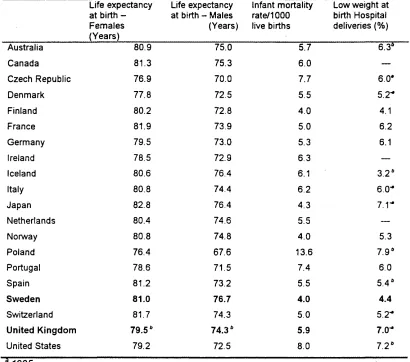
Table 2.1 Life expectancy, infant mortality and low weight at birth in selected OECD countries, 1997__________________________________________________________
Life expectancy at birth -Females (Years)
Life expectancy at birth - Males (Years)
Infant mortality rate/1000 live births
Low weight at birth Hospital deliveries (%)
Australia 80.9 75.0 5.7 6.3°
Canada 81.3 75.3 6.0 —
Czech Republic 76.9 70.0 7.7 6.0*
Denmark 77.8 72.5 5.5 5.2*
Finland 80.2 72.8 4.0 4.1
France 81.9 73.9 5.0 6.2
Germany 79.5 73.0 5.3 6.1
Ireland 78.5 72.9 6.3 —
Iceland 80.6 76.4 6.1 3.2*
Italy 80.8 74.4 6.2 6. O'*
Japan 82.8 76.4 4.3 7 . r
Netherlands 80.4 74.6 5.5
-Norway 80.8 74.8 4.0 5.3
Poland 76.4 67.6 13.6 7 .9 6
Portugal 78.6 71.5 7.4 6.0
Spain 81.2 73.2 5.5 5 .4 6
Sweden 81.0 76.7 4.0 4.4
Switzerland 81.7 74.3 5.0
5.2-United Kingdom 79.5b 74.36 5.9
7.0-United States 79.2 72.5 8.0 7 .2 6
b1996
Source: OECD Health Data 99
The table demonstrates that, overall, Sweden’s outcomes are superior to many
and among the best of the industrialized countries. On the whole they, can
indeed only be compared to those of Japan that has higher life expectancy for
females than Sweden which is even a little bit lower than in Switzerland and
Spain. The UK’s outcomes, on the other hand, are comparable to those of Italy
and the Netherlands, but are slightly worse than the indicators of some countries
[image:25.596.67.477.199.561.2]income, such as Germany. In addition to a weaker performance when compared
to most Scandinavian countries (except for Denmark), the UK's overall indicators
are also worse than those of Canada, Australia and Switzerland and most of the
indicators for France; but they are better than the outcomes of Ireland, the United
States and Portugal.
There are three principal areas of similarity. First, the health care systems of both
the UK and Sweden shared the characteristic of being relatively cost-effective,
although a different amount of GDP was spent on health care in each case. The
UK devoted, and still devotes, a lower percentage of GDP to its health care
expenditure than Sweden - around 6.7% and 8.4% respectively; although this
persists, whether expressed in real prices or purchasing parities, it is not as great
as it used to be (Getzen et al, 1991; Schieber et al, 1993; OCED, 1999).
For instance during the 1970s Sweden and the UK occupied the second and
fifteenth place in spending among the OECD countries which in the late 1990s
was respectively the twelve and eighteenth. Similarly there is a tendency towards
a narrowing the gap in the percentage of GDP that was devoted to health care in
the 1970s and 1990s, which for Sweden increased only from 7.1% to 8.4% but
for the UK the increase was from 4.5% to 6.7% (for details, see Table 2.2 and
Table 2.3).
Table 2.2 Total expenditure on health per capita (PPP in US$) and as % of GDP in the UK and Sweden in 1970, 1980, 1990 and 1995 and their ranking against other OCED countries
1970 1980 1990 1997
Sweden 458 (7.1%) 1145 (9.4%) 1571 (8.8%) 1762 (8.4%)
United 296 (4.5%) 848 (5.6%) 1042 (6.0%) 1391 (6.7%)
Kingdom
Ranking in 2 and 15 2 and 20 7 and 18 12 and 18 comparison
with OCED (respectively) (respectively) (respectively) (respectively) countries
Source: OECD Health Data 99
The international comparisons that relate spending to the outcomes of health
usual problem of the reliability of data and the same indictors being measured
differently (Rublee and Schneider, 1991), there is another equally fundamental
problem. This relates to the use of non-standardised and internationally agreed
definitions of different components of health (Schieber et al, 1993). In this case,
the significant reduction of the difference in the amounts spent, which has
occurred during recent years between the two countries, reflects wider economic
trends and corresponds with Sweden’s decline in economic growth. It also
confirms what has been known for quite a long time, that spending on health care
is strongly correlated with the size of GDP, and also more importantly, with the
pace of economic growth (Newhouse, 1977; Parkin et al, 1987; Hakansson,
1999).
Nonetheless, there are also less obvious reasons that may influence this
outcome. In Sweden, for example, the dramatic reduction in spending which
occurred from 1990 to 1995 and which, according to the data presented, may be
as high as 1% of GDP, has coincided with the shift of social care from the county
councils to the municipal government, introduced in 1992, known as the Adel
reform (named after the minister that passed it).
Thus, by not appearing on the balance sheets of the county councils, whose
principal responsibility is the financing and provision of health services to their
populations, it is also no longer calculated as part of health care expenditure. In
reality, however, if the amount subtracted from spending on social care is added
to what is currently spent on health, the figures demonstrate that there has been
Table 2.3 Spending on health care in Sweden in the years 1990-1996, including adjustment for the consequences of the Adel reform_________________________
Year of
measurement
Expressed as current prices (in
bln SEK)
Expressed as fixed costs (in bln SEK)
Expressed as the percentage of
GDP
1990 119 119 8.8
1991 125 118 8.7
1992 112 103 7.8
1993 114 103 7.9
1994 118 102 7.7
1995 123 102 7.5
1996 128 101 7.6
1996* 145 114 8.6
‘ Including the amount spent on social care, which after the Adel reform is in not calculated as health care expenditure
Source: Eckerlund et al (1998), Socialstyrelsen (National Board of Health and Welfare)
Although both systems are financed from a single source, there are,
nevertheless, some differences in this respect between the two countries. The
UK's health care is almost solely financed out of general taxation, while in
Sweden a large proportion of health care expenditure is covered through a
regionally determined level of taxation. In both systems, however, strong control
of overall spending was one of their predominant features, which in the UK was,
and still is, decided at the central government level, while in Sweden it is
determined by the various regional governments.
Success in controlling the overall cost of health care is widely attributed to the
mode of financing of the health care system (Abel-Smith, 1992a). Another factor,
also seen as contributing to the relative cost-effectiveness of a health system's
delivery, are the incentives for health professionals reflected in the methods of
remuneration (Barr, 1992). In both countries, these are characterised by the
absence of third party payments and/or fee-for-service provision, which is known
to place inflationary pressures on health care expenditure (Evans, 1974; Abel-
Smith, 1992a; Abel-Smith, 1992b) and rely on payment methods that are
The second similarity is in their low administrative costs when compared to other
industrialized countries (the USA being the most extreme example), which
enable most of the resources to be spent on direct care for patients (Ham, 1993;
OECD, 1994). This could probably be regarded as a result of the relative
centralisation of decision-making in health care delivery (either by regional or
central government) resulting in vertical integration that is a characteristic of
some publicly funded and operated health systems (Anell, 1996). The absence of
a competitive environment, which, in itself, creates a multiplicity of agents and
intermediaries in the contracting and commissioning procedures, might have also
contributed to the efficiency of the systems.
Third, the concept of equity is an important component pertaining to the
philosophy of both systems (Whitehead, 1994a; Whitehead, 1994b; Garpenby,
1992; Berleen et al, 1994). In this respect they are quite favourably placed in the
context of international comparisons and are, by most criteria, evaluated as
providing relatively equitable access to comprehensive services. However, when
regarding the concern for equity, important distinctions that exist between the two
countries have to be taken into account for a better understanding of the system.
These, together with some other key differences, are analysed below and
summarized in Table 2.4.
Table 2.4 Key features of the two health systems: the UK and Sweden
UNITED KINGDOM SWEDEN
MAIN SOURCE OF FINANCE: central MAIN SOURCE OF FINANCE:
taxation Local taxation
ORGANISATION ORGANISATION
highly centralized decentralised to the County level REFERRALS TO HOSPITALS - tightly REFERRALS TO HOSPITALS -controlled by primary care doctors largely uncontrolled, patients’ self
referrals common
SPENDING AS % OF GDP - app. SPENDING AS % OF GDP - app.
6.0% 8.0%
HEALTH OUTCOMES HEALTH OUTCOMES
Very good Excellent
EQUITY OF ACCESS EQUITY OF ACCESS
very high very high
SATISFACTION OF USERS - high SATISFACTION OF USERS - very high
When discussing the differences, one of the most important is the pronounced
contrast in the perception of the equity concept and the place it occupies in the policy
agendas of the two countries. While in the UK it is more often declared as a political
statement, in Sweden it seems to be more a case of actively sought policy, and this
is reflected in agendas of each government (Garpenby, 1992; Berleen et al, 1994;
Bergman, 1994). Thus, in Sweden there is an absence of major political overtones
attached, in contrast to the UK where, equity seems to be an important concern and
a subject of debates while the expression of equity or even equality as a policy goal
is carefully omitted. There are also some further differences, which have their
foundations in the inception of the system and in the political origins of the idea.
In the UK, equity can be undoubtedly regarded as one of the founding principles of
the NHS, and it has shaped and justified the broad vision and scope of the system.
Its roots, as explained by Klein, can be sought in the long nurtured social
expectations which, before 1948, were not properly reflected in the health care
system of the country, and which the NHS came to fulfill (Klein, 1989). Klein regards
the origin of the NHS as the result of political boldness that was eventually diluted by
a series of political compromises (Klein, 1995), one may argue also with respect to
its dedication to equity.
The same does not seem to hold true for Sweden, where there is a longer and more
continuous tradition of commitment to equity principles. In this context, the Swedish
health care system should be viewed more as the final result of incremental
advancements in social policy, which have been taking place over the last century
(Garpenby, 1992; Rhenberg, 1990; Culyer, 1991).
In addition, as a large trans-national comparative study demonstrated the
implications for the equity of access may not be the same in both countries. One
of the criteria used in this study, in which both the UK and Sweden were
included, measured the income-related inequalities that were expressed as self
assessed health. It demonstrated that, although in all countries there were
inequalities in health care in favour of higher income groups, these were most
pronounced in the UK and least pronounced in Sweden (van Doorslaer et al,
Even more of a contrast is the kind and degree of commitment to democratic
participation that is present in each system. In the case of Sweden, there is a
long and strong tradition of local participation as a result of the decentralised
structure of the decision-making processes (Garpenby, 1992; Rhenberg, 1990).
This is retained and developed further in more than one of the models of reforms
and even more in the proposals preceding the actual introduction of the reforms
where elected city councilors were considered as the only purchasers of health
care services (Anell et al, 1993).
By contrast, the UK can be characterised by policy-making based on negotiation
among representatives of different pressure groups carried out at the central
level and then only followed by direct participation at many other levels, including
local ones, whose influence is much more diffuse (Jones and Cavannagh, 1991).
This probably becomes more clearly illustrated through examining the position
that health care reforms occupy in the political discussion in both countries.
As pointed out by Garpenby in Sweden, reforming health care has. so far. never
been an issue for national debate whether in parliament or during electoral
campaigning (Garpenby, 1992), probably because all the power, in terms of
managing and financing health care, is delegated to the regional governments. In
the UK, by contrast, any major restructuring of the NHS constitutes a highly
sensitive topic on each government’s agenda and is a subject of public debate.
At the end it is usually negotiated through a long process, involving different
representatives and pressure groups (Hogwood and Gunn, 1984; Jones and
Cavannagh, 1991).
Also, the pace of the reforms and the way that they were implemented in both
countries highlights important differences that are typical of the UK and Sweden.
In the case of the former, the initiative came from central government and was
aimed at nothing less than the wholesale redesign of the system. This was
clearly demonstrated when arguably rather simplistic market mechanisms were
phased into complex and intricate environments throughout the country, without
any previous experience or evidence of their chances of success or failure. The
political overtones, which often obscured the real content of the intended
reforms.
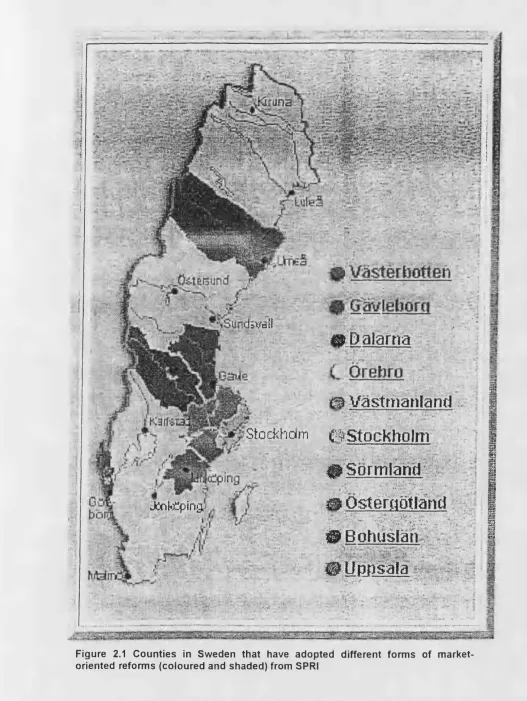
In Sweden, in the true spirit of decentralised decision-making, twelve counties
gradually adopted different types of market-oriented reforms between 1991 and
1995; this roughly constituted half of the total number of counties (for details, see
Fig. 2.1). Their initial introduction was on a limited scale, which allowed for
evaluation and modifications where needed. The set of reforms was not uniform
either, varying from quite radical arrangements (Dalama) to cautious experiments
with elements that suited local needs (Stockholm, Bohus). Also, the Swedish
policy makers were not reluctant to learn from the experience of others, including
British academics and politicians, which according to some might even have
;
^ Vastmanland
stockhdm ^S tockholm
j l Sormland
.\ “ s - , ; o '* ;; ; ; . \
m
Ostemdtland
' " • \ 'v.W'
# B ohusIan
H U p psala
Jfoklping,
L “p' • ‘ ' ' ' ' - - “V' . - ' •: '
i»Va(i . v
# u a i l £ M
J v - s •
[image:33.597.27.554.46.747.2]The other distinct feature of the two systems is the organisation of primary health
care delivery. The British system has a well-functioning GP ‘gate- keeping’
device, which, in fact, constitutes the backbone of the NHS and contributes
highly to its efficiency (Glennerster et al, 1994a; Glennerster et al, 1994b). The
Swedish system, together with a number of other European countries like
France, Germany and Belgium, allows patients to refer themselves for specialist
care at their own discretion (Abel-Smith, 1992a; Giraud 1992). However, despite
the relatively lesser importance attached to the primary care gate-keeping function in
Sweden, primary care network schemes operate in the health care centres, with
multidisciplinary staff employed to secure provision of a comprehensive range of
primary care services.
This explains why the particular model of market-orientated health care reforms
that gave a unique power to family doctors, enabling them to become competing
health care providers and purchasers at the same time, was implemented only in
the UK, despite the similar proposals being voiced in Sweden. What was
suggested in the latteris case would, according to some researchers, have
largely resembled the GP fund-holding scheme if implemented (Le Grand, 1993;
Rhenberg, 1990). There were also others who thought that the experiment in
Dalama County, where general practitioners were given more power, with the
purpose of ultimately assisting city councilors in decision-making processes, was
already a movement in this direction (Glennerster et al, 1994b).
2.2 Market-oriented reforms in the UK and Sweden
The search for higher efficiency, prompted by an apparently limitless increase in
demand for health care, has been a driving force behind the changes introduced
into many health care systems during the last decade (Abel-Smith, 1992b;
Bennett, 1991; Hurst, 1991; OECD, 1992; Glennerster and Le Grand, 1995). In
the case of publicly operated health systems, such as those in the UK and
Sweden, this reform process has often been initiated as organisational
restructuring, aimed primarily at achieving better value for money and promoting
users’ satisfaction with the health care service. Global trends and internal fiscal
efficiency, responsiveness and choice, were in need of improvement, both in the
UK and Sweden.
2.2.1 Rationale of the reforms
The common features of the pre-reform systems in both the UK and Sweden
were public financing and ownership of production, coupled with central planning
of the delivery of services. Although their respective structures produced
remarkable achievements, whether measured in terms of health care indicators,
universality and equity of access, or technical efficiency (Saltman, 1994), at the
same time, they were subject to persistent criticism for their poor management
and low responsiveness to the needs and wants of users (Enthoven, 1985). As
market proponents argued, the very same payment methods that kept the cost of
the system down had, at the same time, acted as disincentives for increasing
productivity and improving quality of the care provided (Enthoven, 1985;
Enthoven, 1988).
Set against the strengths of both health care systems, a number of commonly
shared weaknesses became increasingly apparent. These shortcomings and the
shift in the public mood in favour of the market's potential were the factors that
created an environment conducive to change and which eventually found their
way on to the reforms’ agendas. Although the reforms reflected a perception that
seemed principally confined to interventions aimed at a micro-efficiency level, the
organisational changes intended for correcting pre-existing deficiencies had also,
in fact, diffuse effects at the macro-level, expressed in both economic and social
terms.
As a result, the reformers intentionally or unintentionally prompted a whole-scale
shake up of the welfare state philosophy that had formed the foundations of the
systems. According to the categorization of the reform processes, proposed by
Ham, the UK, together with Israel and New Zealand, followed a 'big bang' reform,
while Sweden pursued its own bottom-up and an incremental path of reform
(Ham, 1997). This typology in a way confirms that, regardless of the approaches
the content of the reforms chosen was quite similar despite the differences in
expectations placed upon them.
The internal problems that were at the root of the restructuring of the health
systems in both countries were the existence of long waiting lists for some hospital
procedures (mostly for elective surgery), a lack of patient choice and
responsiveness, as well as evidence of inefficiency in the use of resources which
was loudly articulated in the UK (Ham, 1993).
One of the best-documented examples was the huge variation in operating rates
among consultants in the UK. Cataract surgery, used as the tracer condition in
this study, illustrated this phenomenon: the differences in operating rates were as
much as three times between the bottom and the top values (Drummond et al,
1991). This was amplified even further when variations in length of stay and
operating rates per 100,000 resident populations, between different providers
units in the same area for the same procedure, were examined. For instance, a
study examining the rates of cataract surgery in the Southwest Thames Region,
found that operating rates among consultant eye surgeons varied by as much as
three times (Williams et al, 1993).
Similar evidence from Sweden suggested that there were variations in operating
rates between different regions of the country. Not only were huge differences
reported in the use of procedures but also were significant differences in waiting
times between urban and rural areas and between the Southern and Northern parts
of the country (Eckerlund et al, 1992; Swedish Ophthalmology Association
Registers, 1993,1994,1995). In Sweden, the waiting times, although not as long the
British ones, contributed to widespread dissatisfaction with system’s performance,
and the conservative government saw it as an important issue to be addressed.
The unmet demand for cataract surgery in both countries, which was estimated
at 65,000 cases awaiting surgery in 1991 in the UK (Thomas et al, 1992) and to
50,900 patients on waiting lists in 1991 in Sweden (a similar figure despite the
enormous difference in population) prompted the debate towards the search for
to be the low productivity and measures reflected in the reforms' agenda were
primarily aimed at tackling this problem (Charpentier and Samuelson, 1994).
All these happened against the backdrop of the realisation that long waiting lists were
not necessarily a true reflection of demand for care (Frankel, 1991); in fact many
questioned the direct relation between the two. For example Goldacre et al suggested
that there is little correlation between increased throughput and the length of waiting lists
in case of cataract surgery (Goldacre et al, 1987). Others found that the way that lists
were constructed and updated did not reflect the real number of people in need of the
particular service (Davidge et al, 1987; Radical Statistics Group, 1992).
Furthermore, poor co-ordination between primary and secondary care units and a
relatively low priority attached to primary health care, were important factors
prompting the re-examination of the systems. Poor co-ordination was not only
apparent for different tiers of health care but also for social care in the UK, and
between health and social forms of insurance in Sweden. Meanwhile, the
services remained traditionally too much hospital-oriented despite the differences
existing between the two countries. In the UK, this was demonstrated, among
others, in the King’s Fund report devoted to this issue, which advocated for a
shift in priorities and resources allocation in favour of primary care in the London
area.
Despite the many political statements about commitments to the promotion of
primary care proffered at different times, the ultimate proof of the honesty of
politicians’ intentions, as reflected in resources allocated for the cause they
championed, was invariably modest. When examining the pattern of the resource
allocations for different tiers of care, it could be legitimately doubted whether primary
health care had ever constituted a real priority in the health policy agenda in either of
the two countries.
Analysing these factors and ranking them according to their priority, the long
waiting-lists phenomenon seemed to be an important preoccupation on policy
makers’ minds, although the users’ reaction to this was less known. These were
whose image was tarnished by the evidence of unresponsive services being
tolerated at the heart of the public sector, something skillfully exploited by the media
and the political opposition. For example, in 1986 over 600,000 patients were on
waiting lists in the UK, a quarter of whom remained there for more than a year
(Davidge et al, 1987). Again in the UK, in 1986 the waiting time for a first
appointment with a specialist consultant was around 16 weeks (Goldacre et al,
1987). The liberal government astutely recognized it as a sign of inefficiency
resulting from lack of incentives.
In Sweden, long waiting lists for elective procedures also constituted a serious
problem that resulted in dissatisfaction among users and pointed at the system’s
low productivity. Although the rates of cataract surgery of 4.5 operations per
1,000 inhabitants were among the highest in the world (Courtney, 1992; Desai,
1993), there were long waits in County Council owned hospitals in which, in
1992, 92% of all cataract operations were performed (Lundstrom et al, 1996).
During the time of the UK’s reforms, in Sweden a conservative government came
to power in the early 1990s, after a long monopoly presence of the socialists in
office. Possibly following the UK’s suit and in reflection of the Zeitgeist, it made
introducing more consumerism into health care (by offering choices to patients)
and creating a service that would be more responsive to the users’ needs as
some of its aims.
Consequently, and apart from systemic causes there was also a range of factors
influencing and shaping the form of the response to internal challenges. The
roots of these should be sought in the wider changes that were either outside the
health sector or outside the internal affairs of each country or both. Thus the
convergence in the timing of the response and the form of the major restructuring
of the health care systems of the industrialised world (Ham, 1990), without being
solely confined to it (World Bank, 1987; World Bank, 1993), was, to an important
degree, conditioned by global events.
These were primarily related to the major political changes in Central and
Eastern Europe, which were precipitated by a complete failure of the alternative
superiority of the market economy as the most efficient way of delivery for both
economic and social goods.
Coincidentally, while Enthoven laid the framework for changes in Western
Europe, the first experiment with a purchaser-provider split actually took place in
Leningrad and other places in the Soviet Union (Hakansson et al, 1989,
Hakansson et al, 1991). This was conducted as part of the wider attempt by
Gorbachev’s administration to use incentives for stimulating performance of the
ossified economy and, in 1988, experiments with new methods of payment for
hospitals and fund-holding for primary care providers were