Sibert, Anne (2010) Quantitative easing and currency wars. Other. European
Parliament.
Downloaded from:
Usage Guidelines:
Please refer to usage guidelines at or alternatively
DIRECTORATE GENERAL FOR INTERNAL POLICIES
POLICY DEPARTMENT A: ECONOMIC AND SCIENTIFIC POLICIES
ECONOMIC AND MONETARY AFFAIRS
Quantitative Easing and Currency Wars
NOTE
Abstract
To much hysteria from the rest of the world, the US has announced the launching of a new round of quantitative easing combined with a maturity twist. In the first part of this note I explain how this operation will work and why it is unlikely to greatly enhance US competitiveness. In the second part of the note I explain what the global reaction is really about and why policy makers are reacting the way they are.
This document was requested by the European Parliament's Committee on Economic and Monetary Affairs.
AUTHOR
Prof. Anne SIBERT
Birbeck, University of London and CEPR
RESPONSIBLE ADMINISTRATOR
Doris KOLASSA
Policy Department Economic and Scientific Policies European Parliament
B-1047 Brussels
E-mail: [email protected]
LINGUISTIC VERSIONS
Original: [EN]
ABOUT THE EDITOR
To contact the Policy Department or to subscribe to its monthly newsletter please write to: [email protected]
Manuscript completed in November 2010. Brussels, © European Parliament, 2010.
This document is available on the Internet at:
http://www.europarl.europa.eu/activities/committees/studies.do?language=EN
DISCLAIMER
The opinions expressed in this document are the sole responsibility of the author and do not necessarily represent the official position of the European Parliament.
Contents
Executive Summary
2
1. The Likely Effects of the Federal Reserve’s New Round of
Quantitative Easing
3
1.1 Monetary Policy in Normal Times 3
1.2 Why Usual Monetary Policy is not Working Now 4
1.3 What the Federal Reserve has Done so Far 5
1.4 How Effective has Monetary Policy Been? 6
1.5 What is the Likely Effect of QEII? 8
2. Currency Wars and Global Imbalances
8
2.1 Why is QEII so Controversial? 8
2.2 The Conflict Between the United States and China 9
2.3 The Conflict Between the United States and Germany 10
Executive Summary
In November 2010 it was announced that the US Federal Open Market Committee (FOMC) intends to purchase a further $600 billion of longer-term Treasury securities and that it will reinvest an additional $250 billion to $300 billion in Treasury securities with the proceeds of its earlier investments. This quantitative easing with a maturity twist is nicknamed “QE II” and is has led to an hysterical outcry.
Conventional quantitative easing is unlikely to be successful in a low interest rate environment. Theory also predicts that the maturity twist is unlikely to provide a significant enhancement.
Recent experience, as well as theory, suggests that most of the increase in the monetary base resulting from QEII will end up as depository institutions’ excess reserves. There will be little impact on either US inflation or US competitiveness.
The furore over QEII reveals deeper tensions over real exchange rates and global imbalances.
The critical conflict is between the United States and emerging market nations that are running current account surpluses, in particular China. Another conflict is between the United States and advanced economies running surpluses, in particular Germany.
The United States accuses China of keeoing down the value of the renminbi1 by intervening in currency markets and purchasing $2.4 trillion worth of reserves. This policy has subsidised their exports and allowed China to grow at the expense of the rest of the world.
Unemployment in the United States is high and the numbers of long-term unemployed are rising. In such an environment protectionism may be an appealing populist political strategy and the US President is no instinctive supporter of free trade.
Taking what steps it can to help avoid a Sino-American trade war would be a good policy for the Eurozone.
The United States has announced a new round of quantitative easing. According to former Federal Reserve chairman Alan Greenspan, it is “pursuing a policy of currency weakening”. This is denied by President Obama but foreign officials are not convinced. Japanese Prime Minister Naoto Kan said the US is pursuing a “weak-dollar policy”. Angela Merkel said the programme would "create extra problems for the world"; German Finance Minister Wolfgang Schäuble called the Federal Reserve’s move “clueless” and the German Economy Minister Rainer Brüderle accused the US of indirectly manipulating foreign exchange markets to its economic advantage. Brazilian central bank president Henrique Meirelles said it would cause "risks for everyone". China's Vice Finance Minister Zhu Guangyao said the US is not living up to its responsibility as an issuer of a global reserve currency.
In the first half of this note I describe how the Federal Reserve’s version of quantitative easing works and why this new round is unlikely to significantly improve US competitiveness. In the second half I explain what the rest of the world is really angry about and what the US position is. I describe the major risk of this conflict for the Eurozone and the sensible Eurozone response.
1 Renminbi means ‘the people’s currency’ and is the official generic name of the currency of China. Yuan is the
Anne Sibert – Quantitative Easing and Currency Wars
3
1. The Likely Effects of the Federal Reserve’s New Round of
Quantitative Easing
In November 2010 it was announced that the Federal Reserve intends to purchase a further $600 billion of longer-term Treasury securities, proceeding at a rate of about $75 billion per month. It also announced that it will reinvest an additional $250 billion to $300 billion in Treasury securities with the proceeds of its earlier investments. This second round of quantitative easing combined with a maturity twist, nicknamed QE II, has led to wide criticism. In this section I explain why the Federal Reserve has resorted to this measure and what it entails. I evaluate its likely effectiveness.
1.1 Monetary Policy in Normal Times
To see why the Federal Reserve has resorted to this quantitative easing, it is necessary to understand how monetary policy is normally done and why conventional monetary policy has stopped working. To explain this, I consider the simplified Federal Reserve System balance sheet in Figure 1 below.
Figure 1. Simplified Federal Reserve System Balance Sheet
Assets Liabilities
Securities Currency in circulation
Repos Loans
Other Assets
Depository institutions’ balances Reverse Repos
Other Assets Net worth
On the left-hand side of the balance sheet are the assets of the Federal Reserve. The first component of assets is the Federal Reserve’s holdings of public and private securities. The second component is repos, securities it temporarily holds as a result of its open-market operations. The third component is its loans to eligible counterparties. On the right-hand side of the balance sheet are the liabilities of the Federal Reserve. The first two components, currency in circulation and private deposit-taking institutions’ reserves held at the Federal Reserve, make up the monetary base. The third component is the Federal Reserve’s reverse repos, the depository institutions’ reserves temporarily held as a result of the Federal Reserve’s open market operations. Also on the right-hand side is the central bank’s net worth: the difference between its assets and its liabilities.
In normal times it is typical for modern central banks to make monetary policy by choosing a target short-term policy interest rate. The Federal Open Market Committee (FOMC) of the Federal Reserve System targets the federal funds rate, the rate at which private deposit-taking institutions lend balances at the Federal Reserve overnight to each other. The Federal Reserve Bank of New York, acting as agent for the FOMC, conducts open-market operations to attain this targeted rate. In usual times this entails offsetting transitory changes in depository institutions’ reserves. If the central bank wants to increase these reserves it engages in repurchase agreements (“repos”). These operations are equivalent to short-term collateralised loans but technically they are arrangements where the Federal Reserve buys securities in exchange for reserves and agrees to subsequently resell them.2 As a result, the Federal Reserve’s balance sheet temporarily expands: the monetary base component of its liabilities rises, as does the repo component of its assets. If the Federal Reserve wants to decrease depository institutions’ reserves it engages in reverse repos. These are similar to short-term collateralised borrowing but technically they are an arrangement where the Federal Reserve sells assets in exchange for reserves and agrees to
2
subsequently repurchase them. Reverse repos have the effect of changing the composition of the Federal Reserve’s liabilities: the monetary base component falls and the reverse repo component rises.
To offset more permanent factors that would keep the federal funds rate from its target, the Federal Reserve must make a more permanent change in its balance sheet. To permanently increase liquidity the Federal Reserve expands its balance sheet: purchasing securities and increasing the monetary base. To decrease liquidity it contracts its balance sheet: selling securities and decreasing the monetary base.
1.2 Why Usual Monetary Policy is not Working Now
Unfortunately for the FOMC, as well as other monetary policy committees around the world, by the time the global financial crisis started in earnest in September 2008, policy interest rates were already quite low and there was little scope to reduce them further. After the onset of the credit crisis in August 2007 the FOMC had cut its policy interest rate sharply. As seen in Figure 2 below, the federal funds target rate was 2.0 percent in September 2008; by December of that year it had been reduced to 0 - .25 percent.
The rate chosen on 16 Dec 2008 was 0 - .25 percent. Source: Board of Governors of the Federal Reserve System
Unable to make monetary policy by announcing lower target interest rates and achieving them through open-market operations, central banks have sought alternatives.3 A potential idea was that instead of announcing a policy interest rate, the central bank would simply engage in further expansionary open-market operations, selling home-currency denominated securities to increase the monetary base. This idea, referred to then as
quantitative easing, was tried in Japan in 2000.
Unfortunately, this simple type of quantitative easing did not work well there and theory suggests that simply increasing the monetary base is not effective when interest rates are near zero. In such a scenario the private sector is already holding as much money as it wants for transaction purposes and it perceives money and low-interest-bearing
3
Anne Sibert – Quantitative Easing and Currency Wars
5
government securities as good substitutes. An increase in the monetary base accompanied by an equal-sized increase in central bank holdings of low-interest-bearing government securities, therefore produces little change in the behaviour of households and firms and hence, little change in nominal variables. With little change in nominal variables, even unanticipated monetary policy cannot produce much change in real variables. Conventional open-market operations are of little effect in a low-interest-rate environment.
1.3 What the Federal Reserve has Done so Far
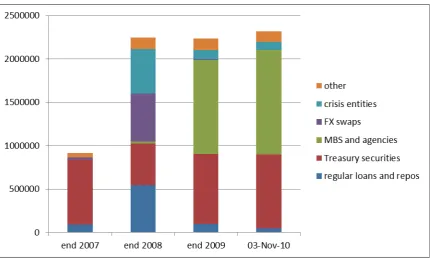
[image:8.595.74.505.307.566.2]In an attempt to free up illiquid markets and deal with failed financial institutions, central banks began to explore more unusual types of monetary policy. In the United States, the Federal Reserve bought the debt of Fannie Mae, Freddie Mac and the Federal Home Loan banks, as well as mortgage-backed obligations guaranteed by Fannie Mae, Freddie Mac and Ginnie Mae. It also engaged in other crisis-related activities such as the creation of the Maiden Lanes I, II and III vehicles. As shown in Figure 3 below, between the end of 2007 and the end of 2008 the assets of the Federal Reserve System mushroomed from about $915 billion to $2,316 billion.
Figure 3. The Composition of the Federal Reserve System’s Assets
Source: Federal Reserve Board
The change in the Federal Reserve’s Balance Sheet between the end of 2007 and the end of 2008 was the result of a combination of garden-variety quantitative easing that increased the size of the Federal Reserve’s assets by about 250 percent and a change in the composition of its assets that increased their riskiness and reduced their liquidity. Such a change in the composition is referred to as qualitative easing, credit easing or – at the ECB –enhanced credit support.
lowered, this would boost demand directly, and also indirectly, by boosting the value of long-dated real assets such as equity, land and real estate and weakening the exchange rate.
Source: Federal Reserve
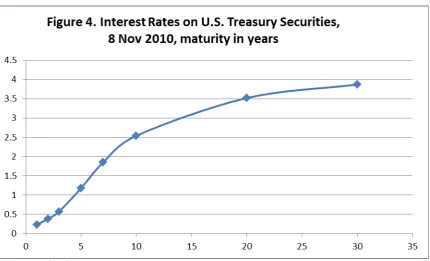
This $300 billion operation was equivalent to conventional quantitative easing, where the Federal Reserve expands its holdings of low-interest-bearing short-maturity government debt, and an additional operation where the Fed swaps its short-maturity government debt for longer-term government debt. I have explained that the first part of the operation tends to be ineffective in a low-interest-rate environment so the success of this combined operation depends on the effectiveness of the swap component.
The idea of the Fed swapping debt of different maturities to change the yield curve is not new: it was tried briefly, with little obvious success, in the 1960s and was called Operation Twist. Unfortunately, as long as markets are efficient, economic theory predicts that such a move should have no impact. The government has a monopoly on issuing money; hence, its price depends on its supply. But, any household, firm or institution can issue debt and any debt held is one party’s asset and another’s liability. Its net supply is always zero in equilibrium and its price does not depend on the amount issued by any particular party.
1.4 How Effective has Monetary Policy Been?
[image:9.595.74.505.108.369.2]Anne Sibert – Quantitative Easing and Currency Wars
[image:10.595.69.509.82.353.2]7
Figure 5. Excess Reserves and the Monetary Base
Source: Federal Reserve
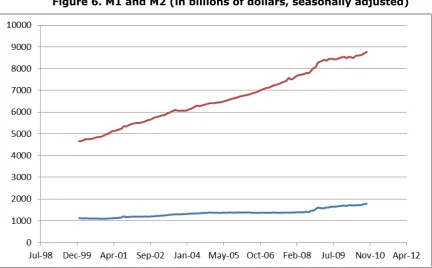
As banks are not lending the increase in liquidity, the effect of the increase in the monetary base on broader measures of the money supply has been modest. This is seen in Figure 6 below.
Figure 6. M1 and M2 (in billions of dollars, seasonally adjusted)
[image:10.595.72.505.414.682.2]While obviously affected by other factors than monetary policy, inflation remains subdued. This is seen in Figure 7 below.
Source: InflationData.com
1.5 What is the Likely Effect of QEII?
As previously described the Federal Reserve recently announced a second round of quantitative easing combined with a maturity twist. If this QEII does work as intended, it will lower US long-term interest rates and weaken the dollar. Then, to the extent that the policy was unanticipated when currently outstanding contracts were signed, US competitiveness should increase at the expense of the United States’ trading partners. In practice, despite its hefty size – equal to roughly a quarter of the Federal Reserve System’s balance sheet – theory and the history of the past three years suggests that the operation is likely to produce a muted response. Most of the increase in Federal Reserve assets is likely to be matched by an increase in excess bank reserves. Changes in nominal variables are thus likely to be small and any change in competitiveness smaller still.
To sum up matters, the Federal Reserve’s planned quantitative easing with a twist is aggressive in its scale. While affecting the exchange rate might not be the primary motive for this operation, if it is successful then – as is the case with any monetary policy that is more expansionary than that of the rest of the world – the US might temporarily gain in competitiveness at the expense of its trading partners. However, recent experience suggests that the impact this current endeavour on the real exchange rate is likely to be small.
2. Currency Wars and Global Imbalances
In this section I explain why QEII is so controversial and what the underlying motives of involved policy makers are. I describe the real threat to the Eurozone.
2.1 Why is QEII so Controversial?
Anne Sibert – Quantitative Easing and Currency Wars
9
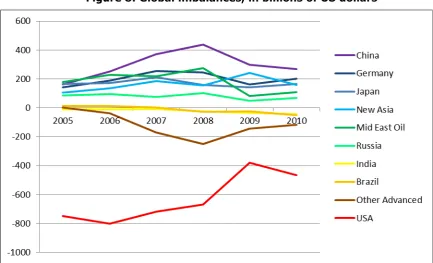
[image:12.595.71.505.183.446.2]effective and that a lower real value of the dollar will threaten the ability of other countries to pursue export-led growth. However, this is probably not the entire reason: the anger, as well as recent the furore over currency wars is a symptom of the dissatisfaction with global imbalances, depicted in Figure 8 below and the policies that are believed to support them. In this section I discuss two separate issues. The first is the conflict between the United States and emerging market economies; the second is the conflict between the United States and the advanced economies that are running current account surpluses. I discuss how worried the Eurozone should be about these conflicts and what it can do.
Figure 8: Global imbalances, in billions of US dollars
New Asian economies: Hong Kong, Korea, Singapore, Taiwan, Malaysia, Philippines and Thailand Middle East Oil economies: Iran, Kuwait, Saudi Arabia, Unite Arab Emerates
Other Advanced economies: Eurozone countries other than Germany, Australia, the United Kingdom, Sweden, Norway and Switzerland
Source: IMF
2.2 The Conflict Between the United States and China
I first consider the conflict between the United States and emerging markets, and in particular the conflict between the United States and China. The most obvious features of Figure 8 are the mammoth US current account deficit, which had fallen sharply after the onset of the financial crisis but is now growing again, and the huge Chinese current account surplus.
In the aftermath of the financial crisis, developed economies are moribund: capital should be flowing from the developed world to the developing world, not the other way around. This has led to tensions, most notably between the United States and China.
In the second version of events, the Chinese surplus is due to an overvaluation of the renminbi.4 This overvaluation was accomplished by the Chinese intervening in currency markets and purchasing $2.4 trillion worth of reserves. This blatantly beggar-thy-neighbour policy has subsidised their exports and allowed China to grow at the expense of the rest of the world.5
After years of tolerating an over-valued Chinese currency, the United States has lost patience. In June of this year the Chinese permitted a small appreciation of the renminbi, but not enough to mollify the United States. On 29 September 2010 the US House of Representatives passed a bill giving the executive branch the authority to impose rather minimal trade sanctions on any country whose exchange rate is “fundamentally overvalued”.
One theory about the change in the United States’ attitude is that as long as the Chinese government was willing to invest its burgeoning reserves in US government securities, the US would look the other way. However, over the past year, China has apparently preferred to invest elsewhere.6 A supporting theory is that after the crisis, the United States would generally like emerging market countries to allow their exchange rates to appreciate and to remove barriers to the developed world’s exports. It believes that a successful campaign against China would pave the way to other countries acceding to its wishes. A third theory is that protectionism is an appealing political strategy in an economic slump.
It is likely that it is this new attitude of the United States towards China’s and other developing countries’ real exchange rates that has provoked the latest tempest. The United States may be seen as hypocritical in engaging in a policy that might temporarily lower the value of dollar. Or, perhaps, other countries find that focussing attention on QEII is a useful way of diverting attention from their own exchange rate policies.
2.3 The Conflict Between the United States and Germany
The second conflict that is highlighted by the response to QEII is the one between the United States and Germany. As seen in Figure 8 and Figure 9 (below), Germany has been running a sizable current account surplus.
From a German point of view, Germany’s aging population make a savings rate that is high by international standards but sensible. Moreover, it is typical that German recoveries are export led and a further expansion of German exports is desirable. The current level is certainly not due to currency manipulation or trade restrictions.
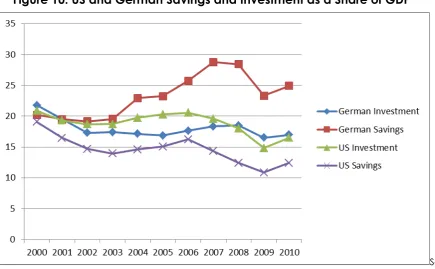
It is also seen from Figure 10 below that the obvious problem is not Germany, but the extraordinarily low level of US savings. Moreover, the recent dip in US savings cannot be accounted for by the US private sector. The IMF reports that US private savings as a percent of GDP was 15.2 and 17.3 in 2008 and 2009, respectively, and is projected to be 19.3 in 2010. Rather, the US savings numbers are low because of irresponsible US fiscal policies. General government savings as a percent of GDP was -2.6 and -6.5 in 2008 and 2009, respectively, and is projected to be -6.8 in 2010. The way to restore a sustainable US current account is US fiscal consolidation.
4
While acknowledging Chinese conerns, the most recent Article IV report says that IMF Staff believe that the renminbi remains substantially below the level that is consistent with medium-term fundamentals.
5
See, for example, Krugman, Paul, “Taking on China,” New York Times, New York Times, 30 Sep 2010.
6
Anne Sibert – Quantitative Easing and Currency Wars
[image:14.595.75.500.87.338.2]11
Figure 9. Current Account Imbalances in the Eurozone
(in billions of US dollars)
-100 -50 0 50 100 150 200 250
Germ an
Nether lands
Euro a rea
Aust ria
Luxem
bourgFinlan d
Belgi um
Sloveni a
MaltaSlovak CyprusIreland Portug
al
Greece Fran ce
Italy Spain
Source: IMF
Figure 10. US and German Savings and Investment as a Share of GDP
So uSource: IMF
From a US point of view, however, the provocative feature of Figure 10 is German investment. While temporarily higher as a percent of GDP than US investment, it has been significantly lower for much of the past decade. Indeed, Germany’s net domestic investment as a percent of net national product was the lowest in the OECD for the period 1995 – 2008.7 The reason can be seen in Figure 11, below.
7
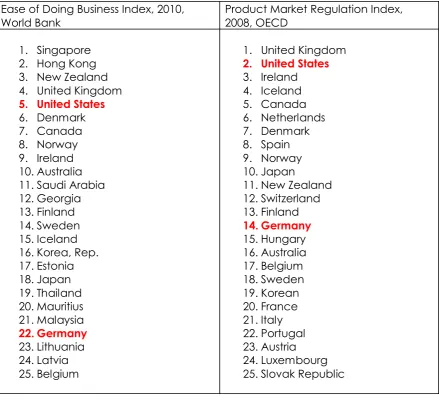
[image:14.595.91.527.373.642.2]Figure 11. The United States has a More Flexible Economy than does Germany
Ease of Doing Business Index, 2010, World Bank
Product Market Regulation Index, 2008, OECD
1. Singapore 2. Hong Kong 3. New Zealand 4. United Kingdom
5. United States
6. Denmark 7. Canada 8. Norway 9. Ireland 10. Australia 11. Saudi Arabia 12. Georgia 13. Finland 14. Sweden 15. Iceland 16. Korea, Rep. 17. Estonia 18. Japan 19. Thailand 20. Mauritius 21. Malaysia 22. Germany 23. Lithuania 24. Latvia 25. Belgium
1. United Kingdom
2. United States
3. Ireland 4. Iceland 5. Canada 6. Netherlands 7. Denmark 8. Spain 9. Norway 10. Japan
11. New Zealand 12. Switzerland 13. Finland 14. Germany 15. Hungary 16. Australia 17. Belgium 18. Sweden 19. Korean 20. France 21. Italy 22. Portugal 23. Austria 24. Luxembourg 25. Slovak Republic
Source: World Bank, OECD
The table in Figure 11 indicates that the US economy is far more flexible than that of Germany. On the World Bank’s Ease of Doing Business Index, the United States is fifth place, while Germany languishes at 22nd – behind Mauritius and Malaysia. According to the OECD’s index of product market regulation, the United States has the second least regulation; Germany the 14th. Given its demographics, it may be sensible for Germany to be running surpluses. But the excessive size of these surpluses owes much to distortionary economic policies: the US has been a more attractive place to invest.
In addition, the United States would argue that it has a right to stimulate its economy in the current environment. If the Eurozone is worried about the effect of this on the exchange rate, it could engage in further stimulus as well. If Germany in particular is perturbed, some have suggested that additional German fiscal stimulus may be in order.8
While the tiff between the German government and the United States over their current account imbalances is probably not exactly at the top of the list of pressing Eurozone problems, the US squabble with China is of more importance. A full-blown trade war between these two nations could have serious global repercussions.
8
Anne Sibert – Quantitative Easing and Currency Wars
13
2.4 The Threat to the EurozoneSo far the skirmishes in the US – China currency conflict have been small. The outlook, however, is worrying.
At 9.3 percent, unemployment in the United States is high, both by historical standards and compared to other countries. In Germany and the UK, for example, comparably measured unemployment is 7.8 and 7.7 percent, respectively.9 Moreover, the number of long-term unemployed has increased sharply in the United States. In the second quarter of 2010, 46 percent of the unemployed had been jobless for more than 27 weeks and 31 percent had been jobless for more than 53 weeks. This is the sort of scenario that leads to a resentment of imported goods and a search for scapegoats. There is the disturbing possibility that a Democratic party that was badly behind in the polls before the next election might decide that protectionism is a policy with populist appeal.10 The decision to impose a tariff on Chinese tires in 2009, the “Buy American” provision in the stimulus package and the Patriot Employer Act all suggest that President Obama is no instinctive supporter of free trade.11
Averting a trade war is something that is in the Eurozone’s best interests. While it was not necessary, or even desirable, to support the US proposal for “indicative guidelines” on current account balances, a bit more equanimity on the part of German officials might have been helpful. Promoting a balanced debate would have been preferable to fanning the flames of a currency war. The world should not count on the United States acting as the world’s international consumer of last resort indefinitely and Eurozone policymakers should support the United States’ call for the major emerging economies to allow more flexibility in their exchange rates and to rely more on domestic-led demand for growth.
9
US Bureau of Labor Statistics.
10
See Rogoff, Kenneth, “Beware of Wounded Lions,” Project Syndicate, 2 Nov 2010, http://www.project-syndicate.org/commentary/rogoff74/English.
11