R E S E A R C H A R T I C L E
Open Access
Antibacterial activities of selected edible plants
extracts against multidrug-resistant
Gram-negative bacteria
Doriane E Djeussi
1, Jaurès AK Noumedem
1, Jackson A Seukep
1, Aimé G Fankam
1, Igor K Voukeng
1,
Simplice B Tankeo
1, Antoine HL Nkuete
2and Victor Kuete
1*Abstract
Background:In response to the propagation of bacteria resistant to many antibiotics also called multi-drug resistant (MDR) bacteria, the discovery of new and more efficient antibacterial agents is primordial. The present study was aimed at evaluating the antibacterial activities of seven Cameroonian dietary plants (Adansonia digitata, Aframomum alboviolaceum, Aframomum polyanthum, Anonidium. mannii, Hibiscus sabdarifa, Ocimum gratissimum
andTamarindus indica).
Methods:The phytochemical screening of the studied extracts was performed using described methods whilst the liquid broth micro dilution was used for all antimicrobial assays against 27 Gram-negative bacteria.
Results:The results of the phytochemical tests indicate that all tested extracts contained phenols and triterpenes, other classes of chemicals being selectively present. The studied extracts displayed various degrees of antibacterial activities. The extracts ofA. digitata, H. sabdarifa, A. polyanthum, A. alboviolaceumandO. gratissimumshowed the best spectra of activity, their inhibitory effects being recorded against 81.48%, 66.66%, 62.96%, 55.55%, and 55.55% of the 27 tested bacteria respectively. The extract ofA. polyanthumwas very active againstE. aerogenesEA294 with the lowest recorded minimal inhibitory concentration (MIC) of 32μg/ml.
Conclusion:The results of the present work provide useful baseline information for the potential use of the studied edible plants in the fight against both sensitive and MDR phenotypes.
Keywords:Antibacterial, Multi-drug resistant bacteria, Dietary plants
Background
Pathogenic bacteria have always been considered as a major cause of morbidity and mortality in humans. Even though pharmaceutical companies have produced a num-ber of new antibacterials in the last years, resistance to these drugs has increased and has now became a global concern [1]. The global emergence of multi-drug resistant (MDR) bacteria is increasingly limiting the effectiveness of current drugs and significantly causing treatment failure [2]. Bacterial resistance to chemically unrelated antimicro-bial agents is public health concern [3] and may be caused by over-expression of MDR efflux pumps [4]. In
Gram-negative bacteria, the effect of the efflux pumps in com-bination with the reduced drug uptake (due to the pres-ence of a double membrane barrier) is responsible for the high inherent and acquired antibiotic resistance often as-sociated with this group of organisms [5]. Among Gram-negative bacteria, many of these MDR efflux pumps belong to the RND (resistance-nodulation-cell division) type fam-ily of tripartite efflux pumps.
Due to the increase of resistance to antibiotics, there is a pressing need to develop new and innovative anti-microbial agents. Among the potential sources of new agents, plants have long been investigated. Because, they contain many bioactive compounds that can be of inter-est in therapeutic. Because of their low toxicity, there is a long tradition of using dietary plants in the treatment of infectious disease in Cameroonian folk medicine. * Correspondence:[email protected]
1
Department of Biochemistry, Faculty of Science, University of Dschang, Dschang, Cameroon
Full list of author information is available at the end of the article
Consequently, we focused one of the objective of our research group at investigating the antibacterial poten-tials of such plants against MDR phenotypes. In previous studies we demonstrated the antimicrobial activity of many Cameroonian dietary plants against MDR bacte-ria [6-9]. In our continuous search of the antibacte-rial activities of Cameroonian edible plants, we designed the present work to determine the activity of seven se-lected Cameroonian dietary plants (Adansonia digitata, Aframomum alboviolaceum, Aframomum polyanthum, Anonidium mannii, Hibiscus sabdarifa, Ocimum gratis-simum and Tamarindus indica) against MDR Gram-negative bacteria.
Methods
Plant materials and extraction
The herbal sample consisted of seven different Cameroon-ian dietary plants namely the leaves ofAdansonia digitata and Anonidium mannii, the rhizomes of Aframomum alboviolaceum, Aframomum polyanthum,the whole plants of Hibiscus sabdarifa and Ocimum gratissimum, and the fruits of Tamarindus indica. The plants were purchased from markets in the West region of Cameroon in January 2011. They were further identified at the National Herbar-ium (Yaoundé, Cameroon) where the voucher specimens were deposited under reference numbers (Table 1). Each plant was dried at room temperature and the powdered material was then weighed (300 g), soaked in 1 L of metha-nol (MeOH) for 48 h and filtered using Whattman No1 filter paper. The filtrate obtained was concentrated under reduced pressure (at 68°C) in a rotary evaporator to obtain the crude extract. The crude extracts were kept at 4°C until further uses.
Preliminary phytochemical screening
The plant materials were screened for the presence of different classes of secondary metabolites including alka-loids, flavonoids, phenols, saponins, tannins, anthocyanins, anthraquinones, sterols, and triterpenes using previously described methods [34].
Bacterial susceptibility determinations
The minimal inhibitory concentrations (MICs) of the seven plant extracts were determined using a rapid p -Iodonitrotetrazolium chloride (INT; Sigma-Aldrich, St Quentin Fallavier, France) colorimetric assay [35,36]. Briefly, the test samples were first dissolved in dimethylsulfox-ide (DMSO, Sigma-Aldrich)-Mueller Hinton Broth (MHB; Sigma-Aldrich). The solution obtained was then added
incubated at 37°C for 18 h. The final concentration of DMSO was less than 2.5%, and thus did not affect the microbial growth. Wells containing MHB, 100μl of inocu-lum, and DMSO at a final concentration of 2.5% served as the negative control (this internal control with DMSO 2.5% was systematically added). Chloramphenicol (Sigma-Aldrich) was used as reference antibiotic. The MICs of each extract were detected after 18 h of incubation at 37°C fol-lowing addition of 40μl INT (0.2 mg/ml) and incubation at 37°C for 30 min. Viable bacteria reduced this yellow dye to pink. The MIC of each sample was defined as its lowest concentration that prevented this change and then resulted in the complete inhibition of microbial growth. The Mini-mum Bactericidal Concentration (MBC) was determined by sub-culturing samples from the wells with concentra-tions above the MIC on new plates of Mueller Hinton broth (MHB). The MBC was considered as the lowest concentration of the extract associated with no bacterial culture.
Each assay was performed three independent times in triplicate. In case where they were different, the MIC or MBC were taken as the most frequently occurring values. Chloramphenicol was tested alone and in the presence of Phenylalanine arginine-ß-naphtylamide (PAßN) at a final concentration of 30μg/ml, as described previously [37].
Results
Phytochemical analysis
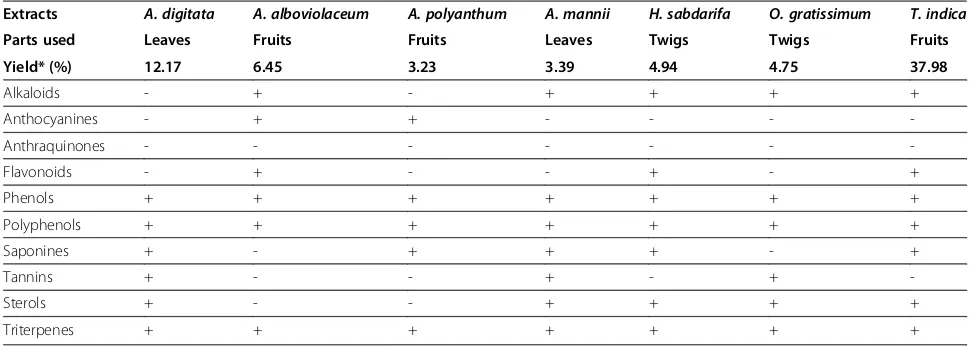
Freshly prepared extracts were subjected to a prelimin-ary phytochemical screening for various constituents. The results (Table 2) revealed the presence of phenols, polyphenols and triterpenes. Anthraquinones were not detected in any of the extracts while anthocyanins were found only in the extracts of the genus Aframomum (A. alboviolaceumandA. polyanthum).
Antibacterial activity of the plant extracts
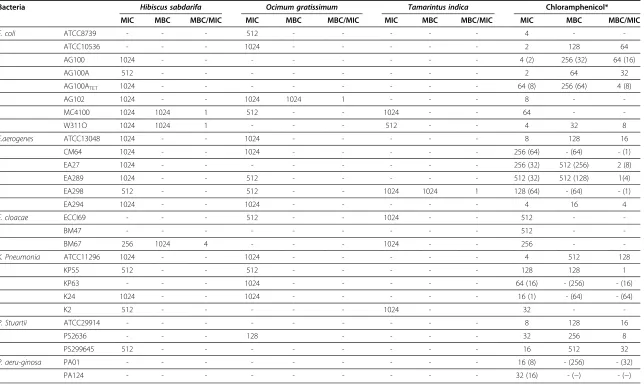
The antibacterial activity of the plant extracts are depicted in Table 3. The results indicated that the plants extracts showed antibacterial activities at variable de-grees against MDR bacteria, with MICs values varying from 32 to 1024 μg/ml. Extracts ofA. digitatadisplayed the most important spectrum of activity, its inhibitory effects being observed against 81.48% of the bacterial strains, followed by the extracts ofH. sabdarifa(66.66%), A. polyanthum (62.96%), A. alboviolaceum (55.55%) and O. gratissimum (55.55%). The extract of A. polyanthum showed the highest activity against E. aerogenes EA294 with a MIC value of 32 μg/ml. The extracts of T. indica
Djeussiet al. BMC Complementary and Alternative Medicine2013,13:164 Page 2 of 8
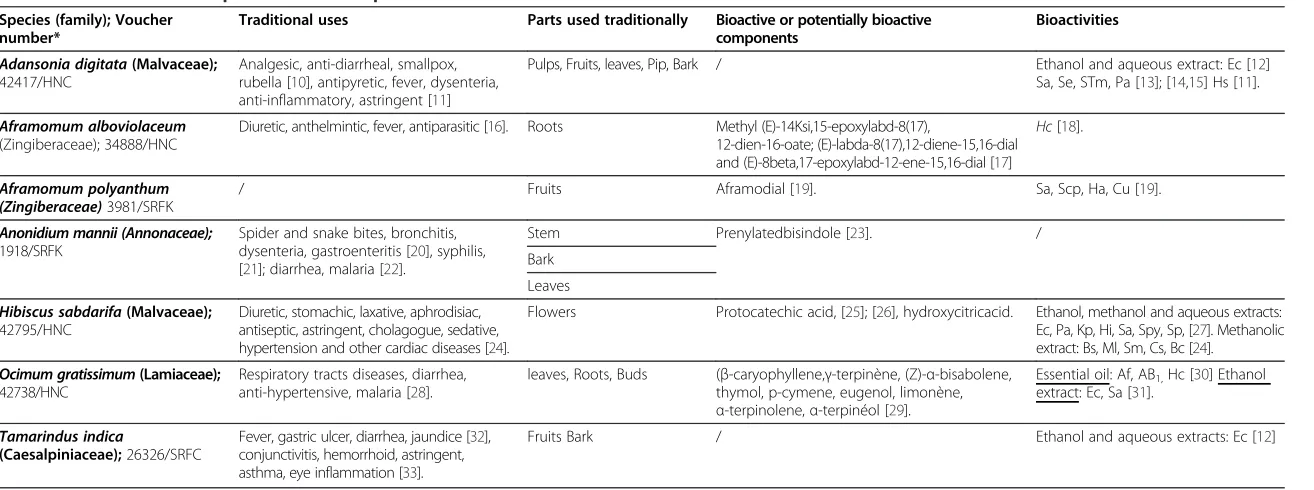
Table 1 Information on the plants used and report on evidence of their activities
Species (family); Voucher number*
Traditional uses Parts used traditionally Bioactive or potentially bioactive
components
Bioactivities
Adansonia digitata(Malvaceae);
42417/HNC
Analgesic, anti-diarrheal, smallpox, rubella [10], antipyretic, fever, dysenteria, anti-inflammatory, astringent [11]
Pulps, Fruits, leaves, Pip, Bark / Ethanol and aqueous extract: Ec [12] Sa, Se, STm, Pa [13]; [14,15] Hs [11].
Aframomum alboviolaceum
(Zingiberaceae); 34888/HNC
Diuretic, anthelmintic, fever, antiparasitic [16]. Roots Methyl (E)-14Ksi,15-epoxylabd-8(17),
12-dien-16-oate; (E)-labda-8(17),12-diene-15,16-dial and (E)-8beta,17-epoxylabd-12-ene-15,16-dial [17]
Hc[18].
Aframomum polyanthum (Zingiberaceae)3981/SRFK
/ Fruits Aframodial [19]. Sa, Scp, Ha, Cu [19].
Anonidium mannii (Annonaceae);
1918/SRFK
Spider and snake bites, bronchitis, dysenteria, gastroenteritis [20], syphilis, [21]; diarrhea, malaria [22].
Stem Prenylatedbisindole [23]. / Bark
Leaves
Hibiscus sabdarifa(Malvaceae);
42795/HNC
Diuretic, stomachic, laxative, aphrodisiac, antiseptic, astringent, cholagogue, sedative, hypertension and other cardiac diseases [24].
Flowers Protocatechic acid, [25]; [26], hydroxycitricacid. Ethanol, methanol and aqueous extracts: Ec, Pa, Kp, Hi, Sa, Spy, Sp, [27]. Methanolic extract: Bs, Ml, Sm, Cs, Bc [24].
Ocimum gratissimum(Lamiaceae);
42738/HNC
Respiratory tracts diseases, diarrhea, anti-hypertensive, malaria [28].
leaves, Roots, Buds (β-caryophyllene,γ-terpinène, (Z)-α-bisabolene, thymol, p-cymene, eugenol, limonène,
α-terpinolene,α-terpinéol [29].
Essential oil: Af, AB1,Hc [30] Ethanol
extract: Ec, Sa [31].
Tamarindus indica
(Caesalpiniaceae);26326/SRFC
Fever, gastric ulcer, diarrhea, jaundice [32], conjunctivitis, hemorrhoid, astringent, asthma, eye inflammation [33].
Fruits Bark / Ethanol and aqueous extracts: Ec [12]
*(HNC): Cameroon National Herbarium; (SRFC):Société des Réserves Forestières du Cameroun; AB1:Aflatoxin;Af;Aspergillus flavus; Bc:Bacillus cereus; Bs:Bacillus stearothermophilus; Cu:Candida ufilis;Cs:Clostridium
sporogenes; Ec:Escherichia coli; Ha:Hansenula anomala;Hc:Haemonchus contortus;Hi:Haemophilus influenza;Kp:Klebsiella pneumoniae; Ml:Micrococcus luteus; Pa:Pseudomonas aeruginosa; Sa:Staphylococcus aureus; Sc: Saccharomyces cerevisiae; Se:Staphylococcus epidermidis; Scp:Schizosaccharomyces pombe;Sm:Serratia mascences; STm:Streptococcus mutans;Sp:Streptococcus pneumoniae; Spy:Streptococcus pyogenes; (/): not documented.
BMC
Comple
mentary
and
Alterna
tive
Medici
ne
2013,
13
:164
Page
3
o
f
8
ntral.com/1
their multi-resistance to drugs, were resistant to all the plant extracts tested in this work (with MIC > 1024μg/ml). Some of the studied extracts showed bactericidal ef-fects on few numbers of bacteria. These efef-fects were observed with the crude extracts of A. digitata, against E. coliMC4100 andK. pneumoniaeKP55 with the ratios minimal bactericidal versus minimal inhibitory concen-trations (MBC/MIC) equal to 1 and 2 respectively. For A. polyanthum’s extract, the ratio MBC/MIC was equal to 2 onK. pneumoniaeKP55.O. gratissimumalso showed ratios MBC/MIC equal to 1 onE. coliAG 102. The crude extract ofH. sabdarifawas also bactericidal againstE. coli MC4100 and W3110 and against E. cloacaeBM67 with the ratio equal to 1; 1 and 4 respectively. Chloramphenicol used as reference antibiotic showed variable inhibitory activity on different strains of bacteria with MIC values ranging from 2 to 512μg/ml. These activities of chloram-phenicol was bacteristatic on the majority of bacteria (MBC/MIC > 4) and in some cases, its MICs were equal to those obtained with some plant extracts (A. digitataon K. pneumoniae KP55,H. sabdarifaonE. cloacaeBM 67 andO. gratissinum on E. cloacae ECCI69).
Discussion
Each of the extract tested in the present study displayed antibacterial activity on at least 6 of 27 bacterial strains tested. However differences were observed between anti-bacterial activities of the extracts. These differences could be due to the differences in the chemical composition of these extracts as the secondary metabolites of plants have many effects including antibacterial and antiviral
proper-of this plant has already been reported against E. coli [12]. Therefore, the inhibitory activity found herein against reference and multi-resistant strains of E. coli as well as other Gram-negative species is complementary to Yagoub’s [12] report.
Phytochemical screening results ofH. sabdarifawas in accordance with the results previously obtained [24]. This latter suggested that the presence of alkaloids (which interfere with cell division) inH. sabdariffacould account for its antimicrobial activity. They demonstrated that methanol extract of H. sabdarifa possess inhibitory activities against E. coli, P. aeruginosa and S. aureus. In this report, the antibacterial activity was not observed againstP. aeruginosa, but the results obtained herein are not in contradiction with those previously reported since the previous MIC of 1300 μg/ml was higher than the highest concentration used in this work. The results of the present work also bring additional data on the anti-bacterial activity ofH. sabdarifa, since we report for the first time its activity againstE. aerogenes, P. stuartiiand K. pneumoniae.
To the best of our knowledge, phytochemical compos-ition ofA. alboviolaceumandA. polyanthumis described here for the first time. The different phytochemicals found here should then explain its antibacterial activity against different bacterial strains tested. The plants of the genus Aframomum was already found to possess flavonoids, diterpenoids and arylalkaloids which could explain their antibacterial activity [39].
[image:4.595.55.542.100.273.2]All the phytochemical constituent found in the extract ofO. gratissinumwas previously reported by Akinmoladun Table 2 Parts used, extraction yields, and phytochemical composition of the plant extracts
Extracts A. digitata A. alboviolaceum A. polyanthum A. mannii H. sabdarifa O. gratissimum T. indica
Parts used Leaves Fruits Fruits Leaves Twigs Twigs Fruits
Yield* (%) 12.17 6.45 3.23 3.39 4.94 4.75 37.98
Alkaloids - + - + + + +
Anthocyanines - + + - - -
-Anthraquinones - - -
-Flavonoids - + - - + - +
Phenols + + + + + + +
Polyphenols + + + + + + +
Saponines + - + + + - +
Tannins + - - + - +
-Sterols + - - + + + +
Triterpenes + + + + + + +
(+): Present; (−): Absent; * yield calculated as the ratio of the mass of the obtained methanol extract/mass of the plant powder.
Djeussiet al. BMC Complementary and Alternative Medicine2013,13:164 Page 4 of 8
MIC MBC MBC/MIC MIC MBC MBC/MIC MIC MBC MBC/MIC MIC MBC MBC/MIC
E. coli ATCC8739 1024 - - - 1024 - - - -
-ATCC10536 - - - 512 - - -
-AG100 512 - - 1024 - - -
-AG100A 128 - - 1024 - - -
-AG100ATET 1024 - - 256 - - 1024 - - 1024 -
-AG102 256 512 2 1024 - - 512 - - - -
-MC4100 1024 1024 1 1024 - - - 512 -
-W311O 512 - - - 512 - - - -
-E.aerogenes ATCC13048 128 512 4 512 - - -
-CM64 1024 - - - 1024 - - - -
-EA27 - - - 1024 - - - 1024 -
-EA289 512 - - 1024 - - 1024 - - 1024 -
-EA298 1024 1024 1 - - - 1024 - - - -
-EA294 1024 - - 256 - - 32 512 16 - -
-E. cloacae ECCI69 512 - - - 1024 - - 1024 -
-BM47 1024 - - - 1024 - - -
-BM67 1024 - - 1024 - 512 - - 1024 -
-K. Pneumonia ATCC11296 512 - - - 256 1024 4 - -
-KP55 128 256 2 512 1024 2 - - -
-KP63 1024 - - 1024 - - -
-K24 512 - - 512 - - 1024 - - - -
-K2 1024 - - 512 - - 1024 - - 1024 -
-P. Stuartii ATCC29914 - - - 512 - - -
-PS2636 1024 - - 1024 - - 1024 - - - -
-PS299645 1024 - - -
-P. aeru-ginosa PA01 - - -
-PA124 - - -
-BMC
Comple
mentary
and
Alterna
tive
Medici
ne
2013,
13
:164
Page
5
o
f
8
ntral.com/1
[image:5.794.63.711.69.468.2]Table 3 Minimal inhibitory concentration (MIC), minimal bactericidal (MBC) and MBC/MIC ratios of the plant extracts and CHL on the studied bacterial species
(Continued)
Bacteria Hibiscus sabdarifa Ocimum gratissimum Tamarintus indica Chloramphenicol*
MIC MBC MBC/MIC MIC MBC MBC/MIC MIC MBC MBC/MIC MIC MBC MBC/MIC
E. coli ATCC8739 - - - 512 - - - 4 -
-ATCC10536 - - - 1024 - - - 2 128 64 AG100 1024 - - - 4 (2) 256 (32) 64 (16)
AG100A 512 - - - 2 64 32
AG100ATET 1024 - - - 64 (8) 256 (64) 4 (8)
AG102 1024 - - 1024 1024 1 - - - 8 -
-MC4100 1024 1024 1 512 - - 1024 - - 64 -
-W311O 1024 1024 1 - - - 512 - - 4 32 8
E.aerogenes ATCC13048 1024 - - 1024 - - - 8 128 16
CM64 1024 - - 1024 - - - 256 (64) - (64) - (1) EA27 1024 - - - 256 (32) 512 (256) 2 (8) EA289 1024 - - 512 - - - 512 (32) 512 (128) 1(4) EA298 512 - - 512 - - 1024 1024 1 128 (64) - (64) - (1)
EA294 1024 - - 1024 - - - 4 16 4
E. cloacae ECCI69 - - - 512 - - 1024 - - 512 -
-BM47 - - - 512 -
-BM67 256 1024 4 - - - 1024 - - 256 -
-K. Pneumonia ATCC11296 1024 - - 1024 - - - 4 512 128
KP55 512 - - 512 - - - 128 128 1
KP63 - - - 1024 - - - 64 (16) - (256) - (16) K24 1024 - - 1024 - - - 16 (1) - (64) - (64)
K2 512 - - - 1024 - 32 -
-P. Stuartii ATCC29914 - - - 8 128 16
PS2636 - - - 128 - - - - 32 256 8
PS299645 512 - - - 16 512 32
P. aeru-ginosa PA01 - - - 16 (8) - (256) - (32)
PA124 - - - 32 (16) - (−) - (−)
(−): >1024μg/ml for extracts and >512μg/ml for chloramphenicol and not calculated for MBC/MIC.
Djeussi
et
al.
BMC
Comple
mentary
and
Alterna
tive
Medici
ne
2013,
13
:164
http://ww
w.biomedce
ntral.com/1
additional information of the antibacterial activities of this plant against multi-resistant bacteria.
Previous reports showed good antibacterial effect of T. indica againstE. coli strains isolated from urine and water samples. Another plant of the present work namely A. manni is used traditionally for treatment of different ailments including different infectious diseases like gastro-enteritis and syphilis. PAßN, is a potent inhibitor of the RND efflux systems is especially active on AcrAB-TolC and MexAB-OprM. The wide range enhancement (on all the strains) of the antibacterial activity by PAβN observed herein with chloramphenicol confirmed that an active efflux system expressed by tested bacteria is responsible for their resistance to chloramphenicol. The wide substrate specifi-city of these pumps could allow them to provoke extru-sion of various active antibacterial compounds, preventing their inhibitory effects [9]. Therefore, the low antibacterial activities of these plants shown in the present work should thus be due to the resistance of bacteria strains tested (see Additional file 1: Table S1). The contrast between high number of secondary metabolite classes found in these extracts reinforces the idea that the detection of the classes of phytochemicals in plants is not a guarantee for a good antibacterial properties [9]. A sample is bactericidal when the ratio MBC/MIC≤4 and bacteriostatic when this ratio is >4 [9]. It therefore appeared that bactericidal effects were obtained with the extract fromA. alboviolaceum, T. indica and O. gratissimum against 1 of the 27 tested bacterial strains andA. digitataagainst 5/27 (Table). No bactericidal activity was obtained withA. manniiextract on all the stud-ied bacteria. This shows that the studstud-ied extract mostly exhibited bacteriostatic effects.
Conclusion
The results of the present study support the traditional use of the studied plants in the treatment of bacterial in-fections. They also provide an important basis for the use of methanol extract of the edible plants used to con-trol infectious diseases caused by Gram-negative bacteria including MDR strains.
Additional file
Additional file 1: Table S1.Bacterial strains and features.
Abbreviations
ATCC:American Type Culture Collection; CFU: Colonies forming unit; CHL: Chloramphenicol; DMSO: Dimethylsulfoxyde; INT: p-iodonitrotetrazolium chloride; MDR: Multidrug Resistant; MHB: Mueller Hinton Broth; MIC: Minimal Inhibitory Concentration; PAßN: Phenylalanine Arginineß-Naphthylamide; RND: Resistance Nodulation-cell Division.
Competing interests
The authors declare that they have no competing interest.
Authors’contributions
DED, JAKN, AGF, IKV, SBT, AHLN and AJS carried out the study; VK designed the experiments, supervised the work; JAKN and VK wrote the manuscript; VK provided the bacterial strains; All authors read and approved the final manuscript.
Acknowledgements
Authors are thankful to Pr Jean-Marie Pagès for Chair of theUMR-MD1 Unit, Université de la Méditerranée, Francefor his support to afford MDR bacteria, the Cameroon National Herbarium (Yaounde) for plants identification and Mr Elvis Ndzukong for language editing.
Author details
1Department of Biochemistry, Faculty of Science, University of Dschang,
Dschang, Cameroon.2Department of Organic Chemistry, Faculty of Science, University of Dschang, Dschang, Cameroon.
Received: 22 March 2013 Accepted: 8 July 2013 Published: 10 July 2013
References
1. Adwan G, Mhanna M:Synergistic effects of plant extracts and antibiotics onstaphylococcus aureusstrains isolated from clinical specimens. Journal of Scientific Research2008,3:134–139.
2. Hancock EW:Mechanisms of action of newer antibiotics for Gram-positive pathogens.Lancet Infect Dis2005,5:209–218.
3. Sharma R, Sharma CL, Kapoor B:Antibacterial resistance: current problems and possible solutions.Indian J Med Sci2005,59:120–129.
4. Li XZ, Nikaido H:Efflux-mediated drug resistance in bacteria.Drugs2004, 64:159–204.
5. Lomovskaya O, Bostian KA:Practical applications and feasibility of efflux pump inhibitors in the clinic–a vision for applied use.Biochem Pharmacol 2006,71:910–918.
6. Fankam A, Kuete V, Voukeng I, Kuiate J, Pages J-M:Antibacterial activities of selected Cameroonian spices and their synergistic effects with antibiotics against multidrug-resistant phenotypes.BMC Complement Altern Med2011,11:104.
7. Voukeng IK, Kuete V, Fankam AG, Dzoyem JP, Noumedem JAK, Kuiate J-R, Pages J-M:Antibacterial and antibiotic-potentiation activities of the methanol extract of some Cameroonian spices against Gram-negative multi-drug resistant Phenotypes.BMC Research Notes2012,5:299. 8. Lacmata ST, Kuete V, Dzoyem JP, Tankeo SB, Teke GN, Kuiate JR, Pages J-M:
Antibacterial activities of selected Cameroonian plants and their synergistic effects with antibiotics against bacteria expressing MDR phenotypes.Evidence-Based Complementary and Alternative Medicine 2012,2012:11.
9. Noumedem J, Mihasan M, Lacmata S, Stefan M, Kuiate J, Kuete V: Antibacterial activities of the methanol extracts of ten Cameroonian vegetables against Gram-negative multidrug-resistant bacteria. BMC Complement Altern Med2013,13:26.
10. Tanko Y, Yerima M, Mahdi MA, Yaro AH, Musa KY, Mohammed A: Hypoglycemic activity of methanolic stem bark ofadansonnia digitata
extract on blood glucose levels of streptozocin-induced diabetic wistar rats.International Journal of Applied Research in Natural Products 2008,1:32–36.
11. Kaboré D, Sawadogo-Lingani H, Diawara B, Compaoré CS, Dicko MH, Jakobsen M:A review of baobab (adansonia digitata) products: effect of processing techniques, medicinal properties and uses.African Journal of Food Science2011,5:833–844.
12. Yagoub S:Antimicrobial activity ofTamarindus indicaandAdansonia digitataextracts againstE. coliisolated from urine and water specimens. Research Journal of Microbiology2008,3:193–197.
13. Majorie MC:Plant product as antimicrobial agents.Clin Microbiol Rev1999, 12:564–582.
14. Atawodi SE, Ameh DA, Ibrahim S, Andrew JN, Nzelibe HC, Onyike E, Anigo KM, Abu EA, James DB, Njoku GC, Sallau AB:Indigenous knowledge system for treatment of trypanosomiasis in Kaduna state of Nigeria. J Ethnopharmacol2002,79:279–282.
16. Abreu PM, Noronha RG:Volatile constituents of the rhizomes of
Aframomum alboviolaceum (Ridley) K. Schum.from Guinea-Bissau. Flavour and Fragrance Journal1997,12:79–83.
17. Marlier M, Le Guellec G, Lognay G, Wathelet JP, Severin M:Characterization of three labdane diterpenes fromAframomum alboviolaceum. Planta Medica Paper Phytochemistry1993,455–457:59.
18. Kone WM, Atindehou KK, Dossahoua T, Betschart B:Anthelmintic activity of medicinal plants used in Northern Cote d’Ivoire against intestinal helminthiasis.Pharm Biol2005,43:72–78.
19. Ayafor JF, Tchuendem MHK, Nyasse B, Tillequin F, Anke H:Aframodial and other bioactive diterpenoids fromAframomumspecies.Pure Appl Chem 1994,66:2327–2330.
20. Thomas JMC, Bahuchet S, Epelboin A, Furnis S:Encyclopédie des Pygmées Aka: techniques, langage et société des chasseurs cueilleurs de la forêt centrafricaine(Sud-Centrafrique et Nord-Congo).Paris: Société d'études linguistiques et anthropologiques de France; 2003:11.
21. Noumi E, Eloumou MER:Syphilis ailment: prevalence and herbal remedies in ebolowa subdivision. South region, Cameroon.International Journal of Biomedical and Pharmaceutical Science2011,2:20–28.
22. Betti JL:An ethnobotanical study of medicinal plants among the baka pygmies in the Dja biosphere reserve, Cameroon.African Study Monographs2004,1–27:25.
23. Achenbach H, Renner C:Constituents of West African medicinal plants. XVIII: the annonidines - a new class of prenylated bisindole alkaloids fromAnnonidium mannii.Heterocycles1985,23:2075–2081.
24. Olaleye MT:Cytotoxicity and antibacterial activity of methanolic extract ofHibiscus sabdariffa.Journal of Medicinal Plants Research 2007,1:009–013.
25. Liu C-L, Wang J-M, Chu C-Y:In vivoprotective effect of protocatechuic acid on tertbutyl hydroperoxide-induced rat hepatotoxicity.Food Chem Toxicol2002,40:635–641.
26. Lin WL, Hsieh YJ, Chou FP, Wang CJ, Cheng MJ, Tseng TH:Hibiscus
protocatechuic acid inhibits lipopolysaccharide-induced rat hepatic damage.Arch Toxicol2003,77:42–47.
27. Kamali HHE, Mohammed MF:Antibacterial activity ofHibiscus sabdariffa, Acacia seyalvar. seyal andSphaeranthus suaveolensvar. suaveolens against upper respiratory tract pathogens.Sudan Journal of Medical Sciences2006,2:121–126.
28. Bruneton J:Plantes Médicinales, Pharmacognosie, Phytochimie.Paris: Tec et Doc; 1999.
29. Ngassoum MB, Essia-Ngang JJ, Tatsadjieu LN, Jirovetz L, Buchbauer G, Adjoudjia O:Antimicrobial study of essential oils ofOcimum gratissimum
leaves andZanthoxylum xanthoxyloidesfruits from Cameroon. Fitoterapia2003,74:284–287.
30. Pessoa LM, Morais SM, Bevilaqua CML, Luciano JHS:Anthelmintic activity of essential oil ofOcimum gratissimumLinn. and eugenol against
Haemonchus contortus.Vetenary Parasitology2002,109:59–63.
31. Obinna NC, Nwodo CS, Olayinka AO, Chinwe IO, Kehinde OO:Antibacterial effects of extracts ofOcimum gratissimumandpiper guineenseon
Escherichia coliandStaphylococcus aureus.African Journal of Food Science 2009,3:077–081.
32. Escalona-Arranz JC, Péres-Roses R, Urdaneta-Laffita I, Camacho-Pozo MI, Rodríguez-Amado J, Licea-Jiménez I:Antimicrobial activity of extracts from
Tamarindus indicaL. leaves.Pharmacogn Mag2010,6:242–247. 33. Morton J:Tamarind in: fruits of warm climates.Miami, Fl, USA: Creative
resources systems Inc.; 1987.
34. Harbone JB:Phytochemical methods: a guide to modern techniques of plant analysis.London: Chapman & Hall; 1973.
35. Eloff JN:A sensitive and quick microplate method to determine the minimal inhibitory concentration of plant extracts for bacteria.Planta Med1998,64:711–713.
36. Kuete V, Ngameni B, Simo CCF, Tankeu RK, Ngadjui BT, Meyer JJM, Lall N, Kuiate JR:Antimicrobial activity of the crude extracts and compounds fromFicus chlamydocarpaandFicus cordata(Moraceae).
–
39. Tane P, Tatsimo SD, Ayimele GA, Conolly JD:Bioactive metabolites from
Afromomumspecies.In11th NAPRECA Symposium Book of Proceedings. Antananarivo, Madagascar; 2005:214–223.
40. Akinmoladun AC, Ibukun EO, Afor E, Obuotor EM, Farombi EO:Phytochemical constituent and antioxidant activity of extract from the leaves ofOcimum gratissimum.Scientific Research and Essays2007,2:163–166.
doi:10.1186/1472-6882-13-164
Cite this article as:Djeussiet al.:Antibacterial activities of selected edible plants extracts against multidrug-resistant
Gram-negative bacteria.BMC Complementary and Alternative Medicine
201313:164.
Submit your next manuscript to BioMed Central and take full advantage of:
• Convenient online submission
• Thorough peer review
• No space constraints or color figure charges
Djeussiet al. BMC Complementary and Alternative Medicine2013,13:164 Page 8 of 8