Georgia State University Georgia State University
ScholarWorks @ Georgia State University
ScholarWorks @ Georgia State University
Public Health Theses School of Public Health
Spring 5-16-2014
The Association between Maternal Age and Low Birth Weight
The Association between Maternal Age and Low Birth Weight
Offspring, NHANES 2007-2008
Offspring, NHANES 2007-2008
Dianna Johnson
Follow this and additional works at: https://scholarworks.gsu.edu/iph_theses
Recommended Citation Recommended Citation
Johnson, Dianna, "The Association between Maternal Age and Low Birth Weight Offspring, NHANES 2007-2008." Thesis, Georgia State University, 2014.
https://scholarworks.gsu.edu/iph_theses/329
1
The Association between Maternal Age and Low Birth Weight
Offspring, NHANES 2007-2008
Dianna Johnson
B.S., Biology
GEORGIA STATE UNIVERSITY
A Thesis Submitted to the Graduate Faculty
of Georgia State University in Partial Fulfillment
of the Requirements for the Degree
MASTER OF PUBLIC HEALTH
GEORGIA STATE UNIVERSITY
2
APPROVAL PAGE
The Association between Maternal Age and Low Birth Weight Offspring,
NHANES 2007-2008
By: Dianna Johnson
Approved:
Dr. Ike S. Okosun
_____________________________________ Committee Chair
Dr. Carol Thurman
_____________________________________ Committee Member
4/24/2014
3
Acknowledgements
I would to thank my thesis chair Dr. Okosun for his guidance not only on this project, but
throughout my entire MPH program. Thank you for always encouraging me and making
me continue to strive to great heights even when I didn’t think I could do it. I would also
like to thank my co-chair Dr. Thurman for always being there when I needed her
assistance and for being understanding. I would like to thank my parents Clemsie and
Bruce Johnson for always supporting my dreams and encouraging me to chase them.
To my sister Karen, you inspire me to shoot for the stars. This thesis is dedicated to my
son, Stinson Smith IV. This road has not been easy but you make it worth it. Mommy
loves you dearly and I hope to continue to make you proud. It’s an honor to be your
4
In presenting this thesis as a partial fulfillment of the requirements for an advanced degree from Georgia State University, I agree that the Library of the University shall make it available for inspection and circulation in accordance with its regulations
governing materials of this type. I agree that permission to quote from, to copy from, or to publish this thesis may be granted by the author or, in his/her absence, by the professor under whose direction it was written, or in his/her absence, by the Associate Dean, College of Health and Human Sciences. Such quoting, copying, or publishing must be solely for scholarly purposes and will not involve potential financial gain. It is understood that any copying from or publication of this dissertation which involves potential financial gain will not be allowed without written permission of the author.
Dianna Johnson, 4/24/2014
5
Notice to Borrowers Page
All theses deposited in the Georgia State University Library must be used in accordance with the stipulations prescribed by the author in the preceding statement.
The author of this thesis is:
Student‘s Name: Dianna Johnson
Street Address: 5828 Broadleaf Way
City, State, and Zip Code: College Park, GA. 3034 The Chair of the committee for this thesis is: Professor‘s Name: Dr. Ike S Okosun
Department: School of Public Health
Georgia State University P.O. Box 3995
Atlanta, Georgia 30302-3995
6 ABSTRACT
Background: Low birth weight (LBW) is a public health issue in the United States and
around the globe. Although Low birth weight is an important predictor of subsequent
health outcomes, the role of maternal age as a LBW risk factor is poorly understood.
Determining whether or not maternal age is a risk factor for low birth weight can help
reduce the incidence of LBW and maximize the health of offspring.
Objective: This study examined the association between young mothers and LBW risk
in a representative sample of Non-Hispanic Whites, Non-Hispanic Blacks and Hispanic
American women. Factors such as mother’s age, smoking status, level of education,
income, and marital status were evaluated to assess their associations with LBW
outcome.
Methodology: The selected study factors were analyzed using SPSS version 20. Data
were obtained from the 2007-2008 National Health and Nutrition Examination Survey
(NHANES). Young mothers were defined as females between the ages of 14 and19
years old that have a baby. A live born infant weighing less than 2,500 grams was
considered to have LBW. Frequencies for the selected factors were created. Univariate
and multivariate logistic regression analyses were also run to examine the association
between young motherhood and LBW adjusting for maternal age, smoking, education,
income and marital status.
Results: There was no statistically significant association between young mothers and
LBW in Non-Hispanic Whites (OR=.51; 95% CI=.12-2.13), Non-Hispanic Blacks
7
women, after adjusting for maternal age, smoking, education, income and marital
status.
Conclusion: Although, the results of this study indicating the lack of association
between young mothers and LBW is consistent with findings by some investigators
(Reichman et al., 1997), there are several studies that have reported contrary results
(Okosun et al., 2000). In light of these mixed findings, further research is necessary to
examine the impact of young mothers on adverse birth outcomes, including, LBW.
8
Table of Contents
Abstract………...………...06
List of Table and Figures……….………..10
Chapter I Introduction……….11
1a. Background………...………11
1b. Purpose of Study………...………...12
1c. Hypothesis………...………...13
Chapter II Literature Review………..………...14
2a. Low Birth Weight………..………...14
2b. Maternal Age………..……….….15
2c. Ethnicity………..……….…..17
2d. Smoking………..………..17
2e. Education.………..………...19
2f. Income Status……….……….….21
2g. Marital Status……….……….…….21
2h. Long term Effects.……….……….……….22
2i. Prevention Strategies.……….……….…………23
Chapter III Methodology……….………....24
3a. Data Source……….……….…24
3b. Inclusion and Exclusion Criteria……….…...25
3c. Studied Variables……….………25
3d. Data Analysis ………...………..……….26
Chapter IV Results………..……….28
4a. Descriptive Statistics………..……….28
4b. Univariate and Multivariate Analysis………...………...………..29
Chapter V Discussion………..………...36
5a. Strengths………..………….41
9
5c. Future Study………...………..………42
Chapter VI Conclusion……….……….………..43
10
List of Tables and Figures
Table 1.Percentage of Mothers exposed to risk factor associated with low birth by Race/Ethnicity.
Table 2. Univariate Association with mothers and other selected independent variables associated with low birth weight.
Table 3. Association between mothers age and low birth weight adjusted for all independent variables.
Figure 1.Pregnant smokers in the 2007-2008 NHANES Data
11
CHAPTER 1
INTRODUCTION
1a. Background
Low birth weight (LBW) is an important indicator in public health because it can
help to predict health outcomes later in life. A healthy start in life begins in utero and
requires making sure that the mother goes through pregnancy and childbirth safely. For
this reason, it is imperative that the incidence of low birth weight be minimized for
optimal health. The World Health Organization and United Nations Children’s Fund
(UNICEF) published the first global, regional, and country estimates for low birth weight
in 1992. Since then, the World Health Organization has set forth 8 Millennium
Development Goals to be achieved by the year 2015. The purpose of these
development goals is to help increase the health of billions of people around the world.
Relevant to this study is Millennium Development goal number 4, neonatal causes,
which is focused on the reduction of child mortality (WHO, 2013). Additionally, A World
Fit for Children is the Declaration and Plan of Action adopted by the United Nations
General Assembly in 2002 whose goal is to reduce low birthrate incidence by one third.
Across the world, 20 million low birth weights are recorded annually and this equates to
15.5% of all births (WHO, 2004). It is estimated that 8% of all babies born in the United
States have low birth weight (Sachdeva et al., 2013). Although the majority of low birth
weight babies are born in developing countries, low birth weight incidence continues to
12
because more than 40% of infants born in developing countries are not weighed and
only approximately 60% of all births worldwide are registered (WHO, 2004). These
babies, whose weights go unrecorded, are at a disadvantage because their birth weight,
if low, associates them with fetal and neonatal mortality and morbidity, inhibited growth,
cognitive development, and chronic diseases later in life (WHO, 2004).
The reasons why these babies are not weighed are varied including the lack of access
to technology in some remote areas and offspring not born in facilities. The
underreporting of births presents a problem in measuring the incidence of low birth
weight offspring and impedes the ability to combat this important public health issue. In
spite of these challenges, however, there is substantial evidence to link low birth rate
babies to maternal age. Furthermore, research has shown that the complex nature of
the body and its processes change over time and can have adverse effects on the
health of offspring (Geronimus, 1996). Additionally, socioeconomic and behavioral
factors such as smoking and the consumption of alcohol may be associated with
differences in low birth baby rates between younger–aged and older-aged mothers
(James, 1992, Stevens-Simon et al., 1988).
1b. PURPOSE OF STUDY
The purpose of this study is to assess whether young motherhood is associated with a
low birth weight infant. This thesis will build upon previous research on the role of
maternal age on low birth weight. There has been previous research completed which
13
While controlling for several variables, we will examine the association of maternal age
with low birth weight in Non-Hispanic Whites, Non-Hispanic Blacks and Hispanic
Americans using 2007-2008 NHANES data. Understanding race/specific association
between maternal age and LBW is critical for prescribing race/ethnic specific
interventions for averting the incidence of LBW in American populations.
1c. HYPOTHESIS
This study posits that young motherhood will be associated with greater odds of having
low birth weight offspring. There are several factors that have influenced this
hypothesis. One, young mothers are more likely to engage in risky behaviors that are
linked to low birth weight babies such as smoking and alcohol use (Stevens-Simon et
al., 1988). Two, these young mothers are also more likely to be unmarried, be of a lower
socioeconomic status, earn less-wages, have less education, and inadequate prenatal
care. These factors are precursors for delivering a baby who falls in the low birth weight
category (Stevens-Simon et al., 1988). Three, young mothers are more likely to not be
fully biologically developed, thus, inhibiting fetal intrauterine development, including low
birth weight (Roth et al., 1998). The null hypothesis for this study is: there is no positive
14
CHAPTER 2
LITERATURE REVIEW
The literature review will contain compiled research from various studies about low birth
weight and maternal age. The review will be composed of several different risk factors
that have been associated with giving birth to an offspring with low birth weight. These
risk factors include maternal age, ethnicity, smoking, socioeconomic status, income,
education, prenatal care and marital status. The literature is designed to understand the
many factors and the way in which they are associated with low birth weight. There will
be a review done of several studies concerning birth weight and the aforementioned risk
factors. The results from those studies will be used to compile information.
2a. LOW BIRTH WEIGHT
Low birth weight is defined by the first weight of the fetus after birth. (WHO, 2004) For
live births, it is suggested that the offspring’s weight be taken within an hour before
there is postnatal weight loss. (WHO, 2004) Low birth weight is when an infant weighs
less than 5 pounds 8 ounces, which equates to less than 2,500 grams. This has been
determined to be the cut off weight for LBW due to the increase in complications to
offspring that do not possess this birth weight (WHO, 2004). A healthy and expected
weight for an offspring is 2,500-3,999 grams. Weight has an impact on offspring
15
child’s life (Hussaini et al., 2011). Although the infant mortality rate has declined steadily
over the past decades, the risk of infant mortality is 20 times higher for low birth weight
babies when compared to normal weight babies (Hussaini et al., 2011). In addition, the
infant mortality rate is 40 times higher in the first 28 days for LBW babies when
compared to normal birth weight babies (Roth et al., 1998). Thirty eight percent of child
mortality that occurs in the first month is directly related to birth weight (Nazari et al.,
2013). Between 60-80% of all neonatal deaths can be attributed to low birth weight
(Sachdeva et al., 2013).
Since the introduction of the neonatal intensive care (NICU) in the 1960’s, however, low
birth weight infants’ outcomes have drastically improved (Hack et al., 2002). There are
two processes that cause a child to be born with low birth weight and they are preterm
birth (i.e., less than 37 weeks) and slow intrauterine growth (Hussaini et al., 2011). The
underlying causes of LBW, however, are many. Research has shown that the mortality
range can vary up to 100-fold across the spectrum of birth weight and rises continuously
as the weight decreases (WHO, 2004). It is very difficult for researchers to get an
accurate count of low birth weights because so many offspring are not weighed at birth.
This means that low birth weight is more prevalent than the numbers suggest.
2b. MATERNAL AGE
For the purposes of this thesis and based upon previous research studies (Gibbs et al.,
2012), the age range for young motherhood is considered to occur between the ages of
16
mothers, who are younger than 15 years of age, have the worst outcomes in relation to
the health of their offspring (Reichman and Padilla, 1997). Each year, approximately
11% of all births worldwide are to mothers aged 15-19 years old (Gibbs et al., 2012).
Research has shown an association of poor infant and child health with adolescent
childbearing (Gibbs et al., 2012, Reichman et al., 1997, Stevens-Simon et al., 1988).
These younger mothers are at a higher risk of having adverse birth outcomes such as
low birth weight when compared to older mothers (Okosun et al., 2000). In a study
conducted by Gibbs et al., 2012, there was a dose-response relationship between
maternal age and low birth weight that decreased in magnitude as maternal age
increased. It has been hypothesized that the underdeveloped body of an adolescent
increases the risk of having a low birth weight offspring (Roth et al., 1998,
Stevens-Simon et al., 1988). Young age is associated with a short cervix and a small uterine
volume which is associated with preterm birth and consequently low birth weight (Gibbs
et al., 2012). Adolescents typically gain more weight during pregnancy than older
women but when the food supply is decreased, the mother’s metabolic need will usually
come before the fetuses growth needs (Gibbs et al., 2012). Additionally, glycine, an
important amino acid necessary for many metabolic processes in the body including the
proper growth of a fetus, may be compromised in young mothers and poor placental
glycine transfer has been identified as a contributing factor in preterm and low birth
17
2c. ETHNICITY
Several research studies have shown an association between low birth rate offspring
and mothers ethnicity (DuPlessis et al., 1997). Study findings have revealed that
Non-Hispanic Whites experience more favorable outcomes in pregnancy (Rich-Edwards et
al., 2003), but what is unclear are the reasons why this is so. In the United States, the
prevalence of low birth weight offspring is higher in Non-Hispanic Blacks and Hispanics
Americans than it is in Non-Hispanic Whites (Okosun et al., 2000). Non-Hispanic Black
adolescents aged 15-19 have the highest birthrate among White and Hispanics teens
and they account for 23% of all births among African American women (DuPlessis et al.,
1997). African American mothers in the United States also have twice the risk of having
a baby with low birth weight when compared to White women (Edwards et al., 2003).
When African American mothers who are born in the United States are compared to
Black mothers that were born in foreign countries, the US born mothers have less
favorable pregnancy outcomes (James, 1993). Additionally, Hispanic women that were
born in Mexico are less likely to have low birth weight babies than Hispanics Americans
that were born in the United States (James, 1993). The overall birthrates of Hispanic
American women bearing low birth weight infants do not show that there is a significant
increased risk of having low birth rate babies when compared to non-Hispanic Whites.
2d. SMOKING
For several years, it has been documented that smoking during pregnancy could have
18
been documented and include gestational bleeding, abuptio placentae (a condition
when the placenta prematurely separates from the uterus), placenta previa (a condition
when the placenta grows too close to the cervix), and premature rupturing of
membranes (Horta et al., 1997). In 2003, maternal smoking history was added to birth
certificates and this addition has led to more accurate data when researching topics
such as LBW and maternal age. Although smoking rates among women in the U.S.
have been decreasing, it is estimated that between 75-82% of women continue to
smoke even after they have learned of their pregnancy (Batech et al., 2013). Maternal
smoking is a modifiable risk factor and choosing to abstain from smoking once a
pregnancy is discovered is the modification. The perceived stress reducing abilities of
cigarette smoking is perhaps one reason why pregnant women continue to smoke.
Maternal smoking, however, is a cause of intrauterine growth retardation (IUGR) which
is a precursor for low birth weight (Horta et al., 1997). Furthermore, there is a
dose-response relationship between the amount of cigarettes smoked and the risk of
intrauterine growth retardation. The more cigarettes smoked daily, the greater the
chance of giving birth to a low birth weight baby due to IUGR (Horta et al., 1997).
Research has shown that mothers who stopped smoking during pregnancy had an
increase in the weight of their babies by delivery, in comparison to mothers who smoked
for the entirety of their pregnancy (Horta et al., 1997).
There are 3 different mechanisms by which smoking affects the intrauterine growth. The
first is fetal hypoxia which reduces the maternal blood supply to the placenta and results
in insufficient oxygen transfer between mother and baby (Horta et al., 1997). The
19
catecholamines causing a deficit of oxygen to the infant (Horta et al., 1997). The third
mechanism is the cyanide that has the potential to interfere with the fetal oxidative
metabolism (Horta et al., 1997). The prevalence of smoking tobacco, particularly
cigarettes, increases for pregnant Black mothers with age while it decreases with age
for pregnant White mothers (Rich-Edwards et al., 2003). In 2003, 9.7% of all pregnant
mothers smoked and the prevalence of low birth weight babies increased from 7.6 to
8.2% (Batech et al., 2013). This is especially important because Non-Hispanic Black
mothers already have increased odds of delivering a low birth weight baby without the
contribution of a smoking risk factor. It should also be noted that mothers whose
partners smoke, are also at an increased risk for intrauterine growth retardation (Horta
et al., 1997). Additionally, alcohol and smoking are risk factors that are typically unison
behaviors (Stevens-Simon et al., 1988). Furthermore, alcohol has been listed as a
causal factor for delivering low birth weight babies but this risk factor will not be
analyzed in this study because NHANES does not ask a survey question pertaining to
drinking alcohol while pregnant. It was listed here for informational purposes only.
2e. EDUCATION
In almost every study concerning low birth weight infants, education as a risk factor has
been mentioned as an important indicator for low birth weight. “Education is the
strongest socioeconomic predictor of health status, when considered alone, and the
most important determinant of birth weight in a population” (Silvestrin et al., 2013, p.
344). When a mother is able to finish high school, she has increased chances for more
20
factor against low birth weight (Sachdeva et al., 2013). The lower the education level,
the greater the vulnerability of delivering a baby with a low birth weight (Silvestrin et al.,
2013) Mothers that have less than 12 years of education have an increased risk of
delivering a low birth weight baby, while 12 or more years of education reduces that risk
(Batech et al., 2013). There is a 33% protection effect against LBW for women that have
a higher education and a 9% higher probability of having a LBW child if the mother has
not finished high school (Silvestrine et al., 2013). Silvestrine also noted that mothers
who have less than eight years of formal education are 1.5 times more likely to have a
low birth weight baby. Women that are in the young mother aged group have typically
attained a lower education status than mothers in the normal aged group because the
average age for a high school graduate in the United States is 18 years old. With
education, most women are able to find jobs that pay more and offer benefits such as
medical insurance. These women are more inclined to take better care of themselves
and to make more informed decisions about their care as well as the care of their
unborn child. They will typically visit a prenatal care facility early in the pregnancy and
will have at least six consultations than a mother with lower education (Silvestrin et al.,
2013). A mother’s education is a variable that has been considered to measure
inequality in healthcare and to assess the outcome of pregnancy (Silvestrine et al.,
2013). Education plays an important role in pregnancy and ties directly into many other
risk factors such as socioeconomic status, income, prenatal care and the avoidance of
risky behaviors. Therefore, an increase in education is vital for better access to
necessary healthcare to ensure a healthy and safe delivery.
21
2f. INCOME & SOCIOECONOMIC STATUS
Poverty is usually the culprit and the physical demands on these mothers to earn wages
can contribute to poor fetal growth (WHO, 2004). Mothers in deprived socioeconomic
conditions frequently have low birth weight babies (WHO, 2004). These mothers
typically do not receive the proper care or health to in turn, deliver a healthy offspring.
Mothers, regardless of race who earn income less than the poverty level, typically do
not have a job that offers benefits such as medical insurance. The lack of insurance can
cause a delay in seeking medical attention and can ultimately lead to negative
outcomes such as low birth weight. It is a common denominator in determining if a
mother will ever seek prenatal care for her unborn infant. Mothers without insurance that
consequently do not seek prenatal care show increased risk for low birth weight babies
when they are compared to insured mothers who received prenatal care (Batech et al.,
2013). Young mothers are usually in the lower income bracket and have a lower
socioeconomic status when compared to older women. Typically, blacks have a rate of
poverty that is three to four times that of whites (Reichman et al., 2008). In addition,
members of most minority groups are more than likely to be poorer that non-Hispanic
whites (Reichman et al., 2008).
2g. MARITAL STATUS
Previous research has found that marital status has an impact on low birth weight. In
2003, 34.6% of all births were to unmarried women and this number has increased
22
married than Non-Hispanic Blacks but that number is less than that for Non-Hispanic
Whites (Leslie et al., 2003). Unmarried mothers are easily identifiable and typically
economically disadvantaged (Reichman et al., 2008). It is important to identify the
relationship that marital status has on low birth weight because of the large number of
unmarried mothers giving birth to offspring. An understanding of this relationship will be
one step closer to preventing babies from being born with a low birth weight.
2h. LONGTERM EFFECTS
There are several long term effects associated with LBW. As stated earlier in this thesis,
a low birth weight baby is at a disadvantage and has an increased risk of developing
several chronic diseases as well as other disorders. Low birth weight is a precursor for
poor development and growth in childhood (WHO, 2004). It is also associated with a
higher incidence of adulthood chronic illnesses such as hypertension, type 2 diabetes
and cardiovascular disease (WHO, 2004). Infants who are born with low birth weight
often have changed physiology and metabolism that could lead to chronic illnesses
such as obesity, stroke, and diabetes (Okosun et al., 2000). They also have poorer
cognitive function and academic performance when compared to normal birth weight
offspring (Hack et al., 2002). In a study by Hack et al., 40% of low birth weight children
had to repeat a grade versus 27% for normal birth weight children and only 16% of
subjects in this cohort went on to post-secondary school versus the 44% of normal
weight children. As this data suggest, being a low birth weight baby has health
23
2i. PREVENTION STRATEGIES
Modifying behaviors and the avoidance of risk factors can reduce the prevalence of low
birth weight. One method for prevention of low birth weight is to delay motherhood until
after the normal maternal age has been reached. If these adolescent women wait to
have their babies later in life, they increase the chances of survival for the infant. By
delaying pregnancy, these adolescent women would give their body time to mature
internally and this makes for a better pregnancy and delivery.
Smoking while pregnant is definitely a behavior that should be modified to reduce the
chances of delivering a low birth weight infant. There are several programs available to
help people quit smoking who are having a hard time kicking this habit. A mother’s level
of education has been shown to be positively associated with pregnancy and the
subsequent health of the offspring. The chances of earning more money are greater for
those who are more educated than for those who are less educated. This increase in
income yields better pregnancy outcomes as well and these mothers are less likely to
have a low birth weight baby. The more positive pregnancy outcomes could be due to
several reasons such as better insurance, access to better health care, less stress, etc.
but education can impact several different aspects of a person’s life. Finally, women
should try to wait until they are married to have a child because married women have
yielded better results with delivering normal weight babies than mothers who are
unmarried. There are obviously some risk factors that cannot be avoided or modified
(such as ethnicity) but all attempts to modify risk factors that have shown negative
results should be avoided in an effort to deliver offspring who have normal weight and
24 CHAPTER 3
METHODOLOGY
3a. Data Source
The data source for this thesis was the National Health and Nutrition Examination
Survey (NHANES) years 2007-2008. NHANES is a major program of the National
Center for Health Statistics (NCHS) which is part of the Centers for Disease Control and
Prevention (CDC). In 1956, the National Health Survey Act was passed and it allowed
for a survey that would collect statistical data on the amount, distribution and effects of
illness and disability in the United States. Born from this law, the National Health and
Nutrition Examination Survey is designed to assess the health of adults and children in
the United States. It has been conducted since the 1960’s and has surveyed over
140,000 people to date (www.cdc.gov). The participants are selected through a complex
statistical process (stratified multistage probability sampling of the civilian
non-institutionalized population of the U.S.) that uses information obtained in the census.
Random households are selected and they are asked a short list of questions by
interviewers to make sure they are eligible for the study. The actual survey consists of
two parts, a home interview and a health examination. The NHANES interview includes
demographic, socioeconomic, dietary, and health-related questions. The examination
component consists of medical, dental, and physiological measurements, as well as
25
survey examines a nationally representative sample of about 5,000 persons located in
counties across the country.
3b. Inclusion and Exclusion Criteria
The sample for this thesis consisted of 1434 mothers who had answered all the
questions for the variables used in the analysis. Analysis was restricted to infants and
children whose mothers had reported their age at the time of delivery, smoking status,
years of formal education, marital status and income. The maternal age was restricted
to 14-45 year olds. Subjects with missing values for any of the studied variables were
excluded from this study.
3c. Studied Variables
The following variables were used in the analysis.
SEX: In NHANES, subject’s gender was by self-report and only women were eligible for
this investigation.
RACE/ETHNICITY: Although in NHANES subject’s race/ethnicity included Mexican
Americans, other Hispanics, non-Hispanic Whites, non-Hispanic Blacks, and a
multiracial group, this study was restricted toHispanicAmericans, non-Hispanic Whites,
non-Hispanic Blacks and coded as 1 for non-Hispanic Whites, 2 for non-Hispanic
26
EDUCATION: In NHANES, subjects self-reported their years of schooling. However, in
this study education was categorized as less than high school and greater than high
school level of education. Education was coded as 1 for no high school diploma and 2
for high school diploma or greater.
MARITAL STATUS: Married and unmarried subjects were coded as 1 and 2,
respectively.
ANNUAL FAMILY INCOME: Income was coded as 1 for subjects with family income of
less than $20,000 family annual income and 2 for more than $20,000 family annual
income.
SMOKING: Maternal smoking during pregnancy was determined, and categorized as
smokers and non-smokers.
YOUNG MOTHERHOOD: Subject’s age was coded as 1 and 2, representing ages
14-19 and ages 20-45, respectively. Subjects in the 14-14-19 age category were regarded as
mothers who had babies at young age, and those in the 20-45 age category were
regarded as mothers who had babies in older motherhood.
LOW BIRHT WEIGHT: Low birth weight variable was defined as birth weight less than
2500 grams (ref).
3d. Data Analysis
Statistical Package for the Social Sciences (SPSS) 20.0 was used for all data analysis.
27
variables. Univariate logistic regression was performed and crude odds ratios were
determined to ascertain the relative measure of effect. Variables were also included in a
multivariate logistic regression model to control for each covariate. The model included
low birth weight (dependent variable) as the binary outcome variable and the
demographic and early childhood data (maternal age, smoking, education, income and
marital status) as the exposures/risk factors. P<.05 and 95% CI were used to determine
28
Chapter 4
Results
4a. Descriptive Statistics
The total sample size for this study population was 1,434 mothers with 456
Non-Hispanic white, 357 Non-Non-Hispanic black, and 621 Non-Hispanic Americans making up the
data set. As shown in table 1, non-Hispanic women had the lowest percentage of low
birth weight babies among all ethnicities. However, their rate of smoking, not having a
high school diploma, less than $20,000 annual income and not being married were
higher when compared to non-Hispanic Blacks and Hispanic Americans. Table 1 lists
the percentage of mothers that had low birth weight offspring and were exposed to the
29
Table 1. Percentage of Mothers exposed to risk factor associated with low birth by Race/Ethnicity.
Variable Name Non-Hispanic
White
Non-Hispanic Black
Hispanics
Mothers Age
-Young Age 14-19 9.2% (42) 12.3% (44) 13.0% (81)
Mother Smoked
-Yes 26.8% (122) 10.1% (36) 5.6%(35)
Education
-No HS diploma 27.2% (124) 24.1% (86) 27.5% (171)
Income
-Less than 20K 22.6% (103) 20.7% (74) 18.7% (116)
Marital Status
-Not married 25.4% (116) 24.4% (87) 23.3% (145)
Low Birth Weight
-Yes 8.6% (39) 9.0% (32) 10.1% (63)
4b. Univariate Analysis
Univariate logistic regression analysis was performed using the data set to examine the
influence of each risk factor on low birth weight. The first univariate analysis was not
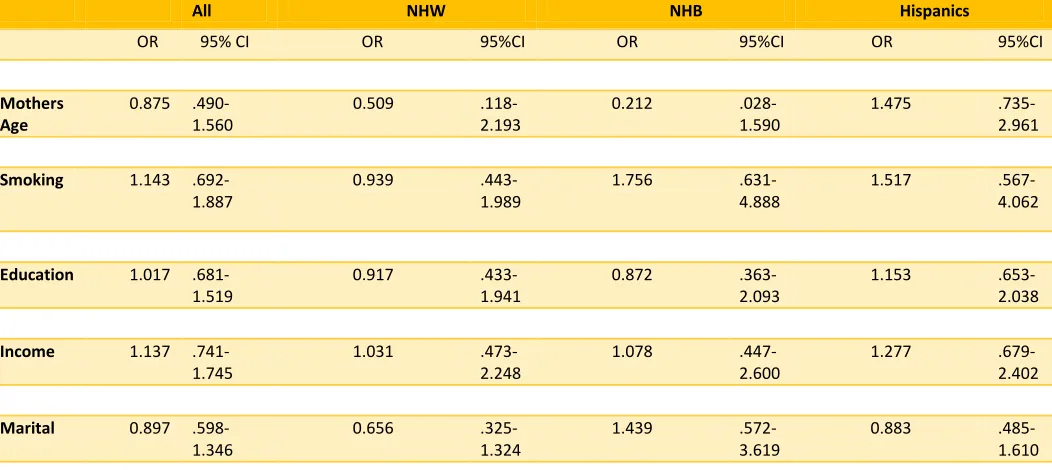
stratified by ethnicity. As shown in table 2, young mothers (n=167) were .875 times less
likely to deliver a low birth weight offspring compared to older mothers (OR=.875; 95%
CI=.49-1.56 p=0.76). Mothers who smoked (n=193) were 1.143 times more likely to
deliver a low birth weight offspring than those mothers who did not smoke while
pregnant (OR=1.14; 95% CI=.69-1.89 p=0.70). Mothers who did not obtain a high
30
when compared to mothers who had a high school diploma (OR=1.02; 95% CI=.68-1.52
p=1.00). Mothers who did not have an income of twenty thousand or greater (n=293)
were 1.137 times more likely to have a low birth weight offspring than mothers who
earned more than twenty thousand annually (OR=1.14; 95% CI=.74-1.75 p=0.63).
Finally, mothers who were not married (n=348) were at a .897 decreased odds for
having a low birth weight offspring (OR=.90; 95% CI=.60-1.35 p=0.68). All p-values
were not significant at >0.05.
In race-specific univariate logistic regression models, non-Hispanic whites in the young
mothers group were .509 times less likely to have a low birth weight baby compared to
other non-Hispanic whites in the older mother age group (OR=.51; 95% CI=.12-2.20
p=0.53). Non-Hispanic whites who smoked while pregnant were .939 times less likely to
have a low birth weight baby compared to other non-Hispanic whites who did not smoke
during pregnancy (OR=.94; 95% CI=.44-1.99 p=1.00). Non-Hispanic whites who did not
have a high school diploma were .917 times less likely to have a low birth weight baby
compared to other non-Hispanic whites who have received their high school diploma
(OR=.92; 95% CI=.43-1.94 p=0.97). Non-Hispanic whites in the low income group were
1.031 times more likely to have a low birth weight baby compared to other non-Hispanic
whites who made more than twenty thousand annually (OR=1.03; 95% CI=.47-2.25
p=1.00). Non-Hispanic whites who were in the non-married group were .656 times less
likely to have a low birth weight baby compared to other non-Hispanic whites that were
married (OR=.66; 95% CI=.33-1.32 p=0.32).
-Non-Hispanic blacks in the young mothers group were .212 times less likely to have a
31
(OR=.21; 95% CI=.03-1.60 p=0.17). Non-Hispanic blacks who smoked while pregnant
were 1.756 times more likely to have a low birth weight baby compared to other
non-Hispanic blacks who did not smoke during pregnancy (OR=1.76; 95% CI=.63-4.89
p=0.43). Non-Hispanic blacks who did not have a high school diploma were .872 times
less likely to have a low birth weight baby compared to other non-Hispanic blacks who
have received their high school diploma (OR=.87; 95% CI=.36-2.10 p=0.93).
Non-Hispanic blacks in the low income group were 1.078 times more likely to have a low
birth weight baby compared to other non-Hispanic blacks who made more than twenty
thousand annually (OR=1.08; 95% CI=.45-2.60 p=1.00). Non-Hispanic blacks who
were in the non-married group were 1.439 times more likely to have a low birth weight
baby compared to other non-Hispanic blacks that were married (OR=1.44; 95%
CI=.57-3.62 p=0.58).
- Hispanic Americans in the young mothers group were 1.475 times more likely to have
a low birth weight baby compared to other Hispanic Americans in the older mothers
group (OR=1.48; 95% CI=.74-2.96 p=0.37). Hispanic Americans who smoked while
pregnant were 1.517 times more likely to have a low birth weight baby compared to
other Hispanic Americans who did not smoke during pregnancy (OR=1.52; 95%
CI=.57-4.06 p=0.58). Hispanic Americans who did not have a high school diploma were 1.153
times more likely to have a low birth weight baby compared to other Hispanic Americans
who have received their high school diploma (OR=1.15; 95% CI=.65-2.04 p=0.73).
Hispanic Americans in the low income group were 1.277 times more likely to have a low
birth weight baby compared to other Hispanic Americans who made more than twenty
32
in the non-married group were .883 times less likely to have a low birth weight baby
compared to other Hispanic Americans that were married (OR=.88; 95% CI=.49-1.61
[image:33.612.78.604.240.475.2]p=0.80). All p values were >0.05 so all results were not statistically significant.
Table 2. Univariate Association with mothers and other selected independent variables associated with low birth weight.
All NHW NHB Hispanics
OR 95% CI OR 95%CI OR 95%CI OR 95%CI
Mothers Age
0.875 .490-1.560
0.509 .118-2.193
0.212 .028-1.590
1.475 .735-2.961
Smoking 1.143 .692-1.887
0.939 .443-1.989
1.756 .631-4.888
1.517 .567-4.062
Education 1.017 .681-1.519
0.917 .433-1.941
0.872 .363-2.093
1.153 .653-2.038
Income 1.137 .741-1.745
1.031 .473-2.248
1.078 .447-2.600
1.277 .679-2.402
Marital 0.897 .598-1.346
0.656 .325-1.324
1.439 .572-3.619
0.883 .485-1.610
Multivariate Analysis
Multivariate logistic regression analysis was performed using the data set. The purpose
of the multivariate analysis is to assess the impact a risk factor has on the low birth
weight outcome while adjusting for all the other variables (age, smoking, education,
income and marital status). The multivariate analysis results that were not stratified by
ethnicity are as follows: Mothers in the young mothers group (n=167) group were .860
33
study population (OR=.86; 95% CI=.48-1.54 p=0.61). Mothers who smoked during
pregnancy were 1.234 times more likely to deliver a low birth weight baby than those
who did not smoke during pregnancy (OR=1.23; 95% CI=.73-2.09 p=0.43). Those who
did not earn a high school diploma were 1.005 times more likely to have a low birth
weight baby than mothers who earned a high school diploma (OR=1.01; 95%
CI=.67-1.50 p=0.98). If their income was less than twenty thousand, they were 1.130 times
more likely to have a low birth weight baby (OR=1.13; 95% CI=.74-1.74 p=0.58).
Mothers who were not married were .908 times less likely to have a low birth weight
baby than married mothers (OR=.91; 95% CI=.60-1.37 p=0.64). All p-values were not
significant at >0.05.
When the multivariate analysis was stratified for ethnicity and adjusted for all other
variables, the results were as follows:
-Non-Hispanic whites in the young mothers group were .501 times less likely to have a
low birth weight baby compared to other non-Hispanic whites in the older mothers group
(OR=.50; 95% CI=.12-2.19 p=0.36). Non-Hispanic whites who smoked while pregnant
were .935 times less likely to have a low birth weight baby compared to other
non-Hispanic whites who did not smoke during pregnancy (OR=.94; 95% CI=.44-2.01
p=0.86). Non-Hispanic whites who did not have a high school diploma were .929 times
less likely to have a low birth weight baby compared to other non-Hispanic whites who
have received their high school diploma (OR=.93; 95% CI=.44-1.97 p=0.85).
Non-Hispanic whites in the low income group were .984 times less likely to have a low birth
weight baby compared to other non-Hispanic whites who made more than twenty
34
in the non-married group were .642 times less likely to have a low birth weight baby
compared to other non-Hispanic whites that were married (OR=.64; 95% CI=.32-1.31
p=0.22).
-Non-Hispanic blacks in the young mothers group were .224 times less likely to have a
low birth weight baby compared to other non-Hispanic blacks in the older mothers group
(OR=.22; 95% CI=.03-1.69 p=0.15). Non-Hispanic blacks who smoked while pregnant
were 1.655 times more likely to have a low birth weight baby compared to other
non-Hispanic blacks who did not smoke during pregnancy (OR=1.66; 95% CI=.59-4.63
p=0.34). Non-Hispanic blacks who did not have a high school diploma were .850 times
less likely to have a low birth weight baby compared to other non-Hispanic blacks who
have received their high school diploma (OR=.85; 95% CI=.35-2.06 p=0.72).
Non-Hispanic blacks in the low income group were 1.062 times more likely to have a low
birth weight baby compared to other non-Hispanic blacks who made more than twenty
thousand annually (OR=1.06; 95% CI=.44-2.58 p=0.90). Non-Hispanic blacks who were
in the non-married group were 1.342 times more likely to have a low birth weight baby
compared to other non-Hispanic blacks that were married (OR=1.34; 95% CI=.53-3.42
p=0.54).
- Hispanic Americans in the young mothers group were 1.499 times more likely to have
a low birth weight baby compared to other Hispanic Americans in the older mothers
group (OR=1.50; 95% CI=.74-3.03 p=0.26). Hispanic Americans who smoked while
pregnant were 1.450 times more likely to have a low birth weight baby compared to
other Hispanic Americans who did not smoke during pregnancy (OR=1.45; 95%
35
times more likely to have a low birth weight baby compared to other Hispanic Americans
who have received their high school diploma (OR=1.12; 95% CI=.63-1.99 p=0.70).
Hispanic Americans in the low income group were 1.298 times more likely to have a low
birth weight baby compared to other Hispanic Americans who made more than twenty
thousand annually (OR=1.30; 95% CI=.69-2.46 p=0.42). Hispanic Americans who were
in the non-married group were .900 times less likely to have a low birth weight baby
compared to other Hispanic Americans that were married (OR=.90; 95% CI=.49-1.65
[image:36.612.77.605.320.696.2]p=0.73). All p values were >0.05 so all results were not statistically significant.
Table 3. Association between mothers age and low birth weight adjusted for all independent variables.
All NHW NHB Hispanics
OR 95% CI
OR 95%CI OR 95%CI OR 95%CI
Mothers Age
0.86 .480- 1.538
0.501 .115-2.187
0.224 .030-1.694
1.499 .741-3.029
Smoking 1.234 .730-2.087
0.935 .435-2.009
1.655 .592-4.631
1.45
.539-3.902
Education 1.005 .672-1.503
0.929 .438-1.973
0.85
.351-2.062
1.121 .632-1.986
Income 1.13 .735-1.740
0.984 .449-2.154
1.062 .437-2.579
1.298 .685-2.461
Marital 0.908 .603-1.366
0.642 .315-1.307
1.342 .526-3.422
0.900 .492-1.647
NHW Reference
NHB 0.908 .551-1.497
p value 0.71
Hispanics 0.781 .504-1.210
p value 0.27
36
Chapter 5
Discussion
The purpose of this study was to examine the association of maternal age and low birth
weight. Maternal age was not associated with increased odds of low birth weight
offspring. While controlling for age, other variables such as smoking, education, income,
and marital status were included in the analysis due to previous studies about low birth
weight risk factors. The data set was further stratified by ethnicity to determine how a
risk factor affected low birth weight within the race. According to literature review, it was
expected that age would be significantly associated with increased odds of having a low
birth weight offspring (Okosun et al., 2000). The odds ratio in Non-Hispanic Whites and
Non-Hispanic Blacks suggests that young mother’s age may be a protective factor. The
results of the analysis were odds ratios greater than 1 in Hispanic Americans, but it was
not statistically significant. The lack of association may be explained by conflicting
studies that suggest low birth weight increases with increasing maternal age.
Rich-Edwards et al., 2003 presented the results of a study of 887 births where mothers in the
20-45 year aged group had a higher prevalence of low birth weight in comparison to the
younger aged mothers. A study in Poland determined that normal maternal age was an
associated factor for low birth weight (Nazari et al., 2013). A study conducted in Taiwan
yielded results that suggested mothers aged 40 plus can be a strong risk factor for low
birth weight (Nazari et al., 2013). The risk of low birth weight among older mothers could
possibly be related to several factors such as cardiovascular disease, hypertension,
diabetes, and other diseases that can be associated with older age (Nazari et al., 2013).
37
weathering effect. Social inequality on health, compounds with age and can ultimately
affect fetal health and birth weight (Geronimus, 1996).
There was a lack of association between smoking during pregnancy and low birth
weight. Previous studies have determined that smoking was not a risk factor that
increased the odds of having a low birth weight offspring. Studies have shown that
smoking cessation during pregnancy increased the birth weight similar to mothers who
never smoked (Horta et al., 1997). In the NHANES survey, if a mother had smoked one
cigarette and answered yes, she was placed in the “smoked during pregnancy”
category. NHANES does not specify how many cigarettes were smoked during
pregnancy. It was a dichotomous variable and could not be stratified by the amount. If a
mother smoked one cigarette while pregnant and had a normal weight baby, the results
could be skewed to appear that smoking during pregnancy is not a risk factor low birth
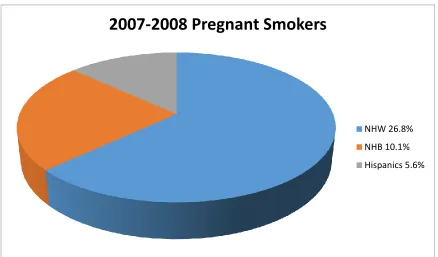
weight. As shown in figure 1, the sample population used for this analysis had
characteristic differences between the non-Hispanic whites and the minority groups.
The below pie chart shows that the non-Hispanic blacks and HispanicAmerican
mothers did not have near as many pregnant smokers as the non-Hispanic whites
38
Figure 1. Pregnant smokers in the 2007-2008 NHANES Data
Because smoking was shown as a protective factor in non-Hispanic whites, figure 2
below displays that the smokers had a lower percentage of low birth weights when
compared to nonsmokers. As suggested by the odds ratio of non-Hispanic blacks and
Hispanic Americans although not significant, the percentage of low birth weight babies
increased in the smoking mothers versus the nonsmokers.
2007-2008 Pregnant Smokers
NHW 26.8%
NHB 10.1%
39
Figure 2. The percentage of mothers who smoked and had low birth weight babies.
As of 2014, there have only been 4 studies identified where the causal effects of
education on low birth weight have been estimated. Those studies yielded conflicting
results (Grytten et al., 2014). McCrary and Royer (2011) completed a study in which
they found that one additional year of education was associated with increased
probability of low birth weight by 0.014 (Grytten et al., 2014). In this study, education is
a protective factor of low birth weight. The data set was comprised of a large number of
mothers that had obtained their high school diploma. Figure 3 below shows the
education level for this data set.
0 2 4 6 8 10 12 14 16
NHW p=.935 NHB p=1.655 Hispanics p=1.450
% of pregnant mothers who
smoked
Race/Ethnicity
Smoked
40
Figure3. Education level of mothers in the study population
Studies that have been conducted on low birth weight have taken into account
the marital status of the mother at the time of delivery. NHANES did not ask the
question of marriage at the time of delivery. The marital status question was concerning
their marital status at the time of the survey. The survey question should include
marriage status at the time of delivery and the length of marriage in years. This would
allow for stratification to determine if length affects the probability of having a low birth
weight baby. NHANES should also incorporate the number of times the participant has
been married and determine the effect this may have on the low birth weight outcome.
In this study, income was positively associated with low birth weight across all
ethnicities, although it was not statistically significant.
0 20 40 60 80
HS Diploma 73.4% No HS Diploma 26.6%
Percent %
Education of Mothers in Data Set
2007-2008 NHANES
HS Diploma 73.4%
41
It is imperative that we are distributing accurate information to the public so that
they can make better decisions regarding their health and the health of their offspring. It
is vital that we are collecting accurate information and disseminating truths to the public
in regards of their health. As in this case, we would not want to let mothers know that it
is better to wait until later in reproductive years to bear children if it is in fact, more
detrimental or vice versa. Ramifications of this could cause an increase in low birth
weight babies with possible long-term effects that could potentially be a burden on our
already burdened health care system.It is clear that we need a standard when studying
low birth weight and its causes as well as a survey directed at ascertaining information
that is pertinent to the success of finding the variables that increase the odds of
delivering a low birth weight baby.
MAJOR STRENGTHS
There are major strengths associated with using NHANES data.
1. It is a national data set that is person based.
2. The data is representative of the entire population making it generalizable.
3. There are repeated variables making it consistent content over time.
4. The questionnaires are standard.
LIMITATIONS
There were several limitations to this study and this can help to explain why the results
42
1. The first limitation is the fact that this study was completed using secondary data.
The questions asked by the NHANES surveyors were not relevant to this study.
This could have introduced bias into the sample.
2. The data is self-reported by the study population and there may be bias
introduced such as recall or selection bias.
3. The sample size used for this study was smaller than the overall NHANES study
population. This was due to excluding missing variables and the cleaning of the
data. When there is an increase the sample size, you increase the probability of
being able to generalize your results.
4. This study did not account for the number of births that were preterm.
FUTURE STUDY
Future studies could benefit from having more accurate data collected in surveys. As
mentioned previously, the NHANES question regarding smoking during pregnancy did
not provide information of the number of cigarettes smoked per day and duration.
NHANES questions should be reworded to gain more information during the actual
pregnancy. In reference to the higher prevalence of low birth weights in minority groups,
studies need to account for acculturation. This could introduce new variables that affect
43
Chapter 6
CONCLUSION
The results of this study did not indicate young maternal age increases odd of low birth
weight. It is at variance with many studies but consistent with some investigators
findings. Due to the results, future study is warranted to determine the role that young
maternal age has on birth outcomes, including low birth weight which continues to be a
44
REFERENCES
1. Batech, M. M., Tonstad, S. S., Job, J. S., Chinnock, R. R., Oshiro, B. B., Merritt,
T. A., & Singh, P. N. (2013). Estimating the impact of smoking cessation during
pregnancy: the San Bernardino County experience. Journal of Community Health,
38(5), 838-846. doi:10.1007/s10900-013-9687-8
2. DuPlessis, H. M., Bell, R., & Richards, T. (1997). Adolescent Pregnancy:
Understanding the impact of age and race on outcomes. Journal of Adolescent Health,
20: 187-197.
3. Friesen, R.W., Novak, E.M., Hasman, D., & Innis, S.M. (2007) Citation for glycine
example. Relationship of Dimethylglycine, Choline, and Betaine with Oxoproline in
Plasma of Pregnant Women and Their Newborn Infants1, 2. Journal of Nutrition.
137(12), 2641-2646.
4. Geronimus, A. (1996) Black/White Differences in the Relationship of Maternal
Age to Birthweight: A population-based test of the Weathering Hypothesis. Social
Science & Medicine, 42(4) 589-597
5. Gibbs, C. M., Wendt, A. A., Peters, S. S., & Hogue, C. J. (2012). The impact of
early age at first childbirth on maternal and infant health. Paediatric And Perinatal
Epidemiology, 26(s1), 259-284. doi:10.1111/j.1365-3016.2012.01290.x
6. Grytten, J., Skau, I., & Sorensen, R. J. (2014) Educated mothers, healthy
infants:The impact of a school reform on the birth weight of Norwegian infants
45
7. Hack, M., Flannery, D.J., Schluchter, M., Cartar, L., Borawski, E., & Klein, N.
(2002). Outcomes in young adulthood for very-low-birth-weight infants. The New
England Journal of Medicine, 346(3).
8. Horta, B.L., Victora, C.G., Menezes, A.M., Halpern, R., & Barros F.C. (1997) Low
birthweight, preterm births and intrauterine growth retardation in relation to maternal
smoking. Paediatric and Perinatal Epidemiology, 11, 140-151.
9. Hussaini, S., Holley, P., & Ritenour, D. (2011). Reducing low birth weight infancy:
assessing the effectiveness of the health state program in Arizona. Maternal & Child
Health Journal, 15(2), 225-233. Doi:10.1007/s10995-009-0556-0
10. James, S. (1993) Racial and Ethnic Differences in Infant Mortality and Low Birth
Weight: A Psychosocial Critique. AEP, 3(2), 130-136.
11. Leslie, J.C., Galvin, S.L., Diehl, S.J., Bennett, T.A., & Buescher, P.A. (2003)
Infant mortality, low birth weight, and prematurity among Hispanic, white, and African
American women in North Carolina. American Journal of Obstetrics and Gynecology,
188(5).
12. Nazari, M. M., Sharifah Zainiyah, S. Y., Lye, M. S., Zalilah, M. S., & Heidarzadeh,
M. M. (2013). Comparison of maternal characteristics in low birth weight and normal
birth weight infants. Eastern Mediterranean Health Journal, 19(9), 775-781.
13. NHANES - About the National Health and Nutrition Examination Survey.”
46
14. Okosun, I., Halbach, S., Dent, M., & Cooper, R. (2000) Ethnic Differences in the
Rates of Low Birth Weight Attributable to Differences in Early Motherhood: A study form
the Third National Health and Nutrition Examination Survey. Journal of Perinatology, 2,
105-109.
15. Reichman, N., & Pagnini, D. (1997). Maternal age and birth outcomes: data from
New Jersey. Family Planning Perspectives, 29(6), 268.
16. Reichman, N., Hamilton, E.R., Hummer, R.A., & Padilla, Y.C. (2008). Racial and
Ethnic Disparities in Low Birthweight Among Urban Unmarried Mothers. Maternal Child
Health Journal, 12, 204-215.
17. Rich-Edwards, J. W., Buka, S. L., Brennan, R. T., & Earls, F. F. (2003). Diverging
associations of maternal age with low birth weight for black and white mothers.
International Journal of Epidemiology, 32(1), 83-90. doi:10.1093/ije/dyg008
18. Roth, J., & Hendrickson, J. (1998). The risk of teen mothers having low birth
weight babies: Implications of recent medical research. Journal of School Health, 68(7),
271.
19. Sachdeva, S. S., Nanda, S. S., & Sachdeva, R. R. (2013). Comparative analysis
of birth weight in a hospital over a decade: low birth weight still a major problem. Journal
Of Nepal Paediatric Society, 33(1), 15-20.
20. Silvestrina, S. S., Silva, C., Hirakata, V. N., Goldani, A. S., Silveira, P. P., &
Goldanie, M. Z. (2013). Maternal education level and low birth weight: a meta-analysis.
47
21. Stevens-Simon, C. (1988) Adolescent maternal weight gain and low birth weight:
A multifactorial model. The American Journal of Clinical Nutrition, 47(6), 948-953.
22. World Health Organization. 2004 and 2013. http://www.who.int/en/. Accessed